
Functional neuroanatomy of vision — MCQs

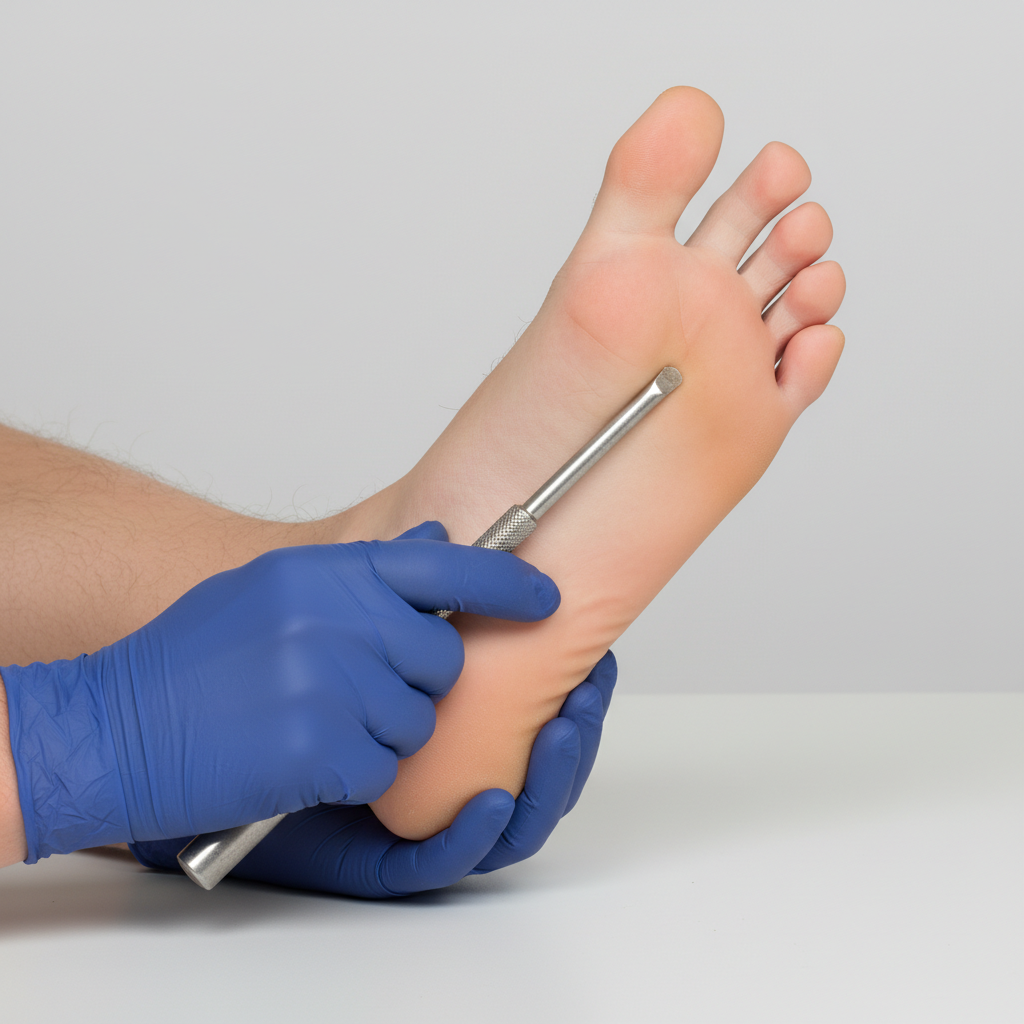
You are seeing a patient in clinic who presents with complaints of weakness. Her physical exam is notable for right sided hyperreflexia, as well as the reflex finding shown in the image below. Where is the most likely location of this patient's lesion?
A 58-year-old woman presents with vision loss in her right eye. She noticed the visual changes the morning of presentation and has never experienced this visual disturbance before. Her medical history is significant for hypertension, hypercholesterolemia, and type II diabetes mellitus. She is currently on lisinopril, lovastatin, and metformin. She has smoked a pack of cigarettes daily for the last 25 years and also is a social drinker. On physical exam, her lids and lashes appear normal and there is no conjunctival injection. Both pupils are equal, round, and reactive to light; however, when the penlight is swung from the left eye to the right eye, there is bilateral pupillary dilation. The nerve that is most likely defective in this patient relays information to which of the following?
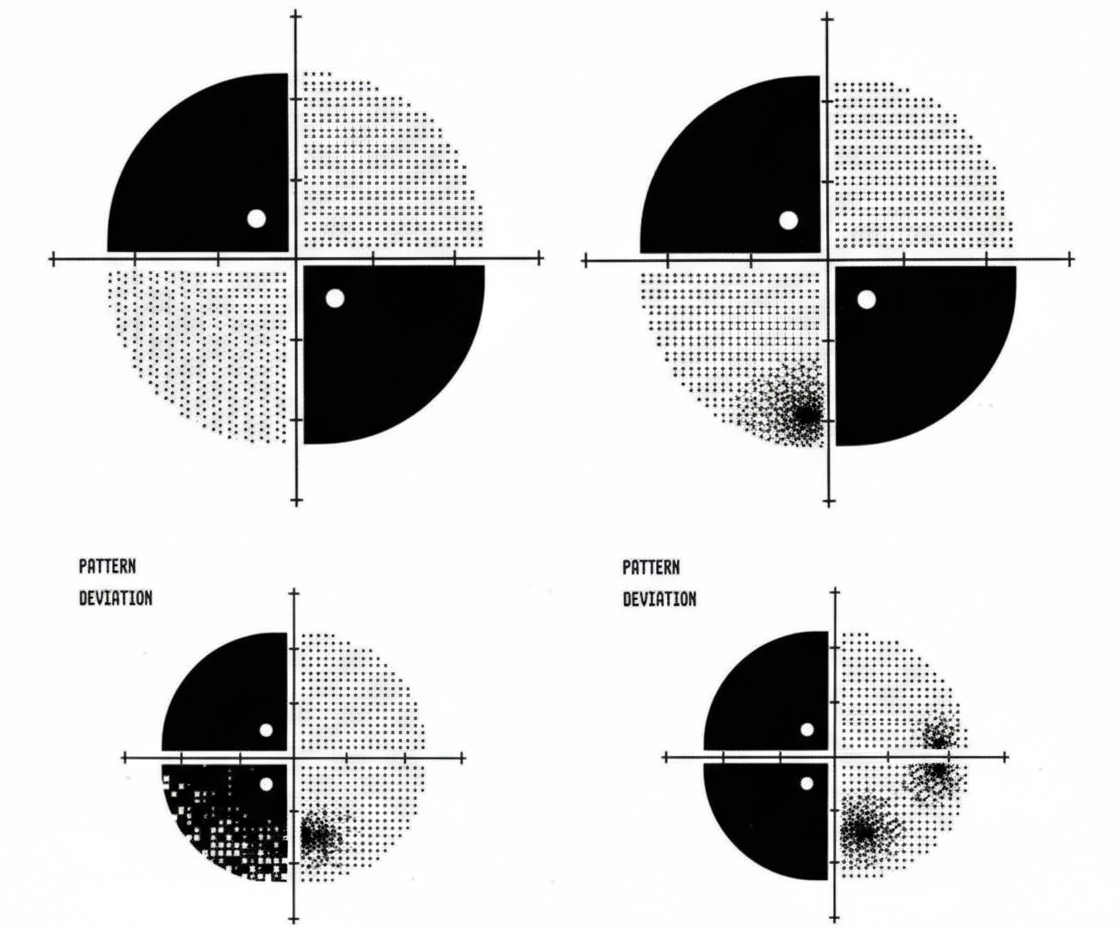
A 62-year-old woman comes to the physician for decreased vision and worsening headaches since this morning. She has hypertension and hypercholesterolemia. Pulse is 119/min and irregular. Current medications include ramipril and atorvastatin. Ocular and funduscopic examination shows no abnormalities. The findings of visual field testing are shown. Which of the following is the most likely cause of this patient's symptoms?
A 34-year-old woman comes to the physician because she has not had her period for 4 months. Menses had previously occurred at regular 28-day intervals with moderate flow. A home pregnancy test was negative. She also reports recurrent headaches and has noticed that when she goes to the movies she cannot see the outer edges of the screen without turning her head to each side. This patient's symptoms are most likely caused by abnormal growth of which of the following?
A 22-year-old man is brought to the physician by his mother because of concerns about his recent behavior. Three months ago, the patient first reported hearing loud voices coming from the ceiling of his room. During this time, he has also become increasingly worried that visitors to the house were placing secret surveillance cameras. Mental status examination shows tangential speech with paranoid thoughts. Treatment for this patient's condition predominantly targets which of the following dopaminergic pathways?
An 82-year-old right-handed woman is brought in by ambulance after being found down in her home. On presentation, she is found to be awake but does not follow directions or respond to questions. She is able to speak and produces a fluent string of nonsensical words and sounds. She does not appear to be bothered by her deficits. Subsequent neurologic exam finds that the patient is unable to comprehend any instructions and is also unable to repeat phrases. CT scan reveals an acute stroke to her left hemisphere. Damage to which of the following structures would be most likely to result in this pattern of deficits?
A 78-year-old right-handed man with hypertension and hyperlipidemia is brought to the emergency department for sudden onset of nausea and vertigo one hour ago. Physical examination shows 5/5 strength in all extremities. Sensation to light touch and pinprick is decreased in the right arm and leg. A CT scan of the brain shows an acute infarction in the distribution of the left posterior cerebral artery. Further evaluation of this patient is most likely to show which of the following findings?
A 54-year-old man with hypertension and congenital blindness comes to the physician because he is unable to recognize objects by touch with his right hand. The symptoms started about 2 hours ago. When given a house key, he can feel the object in his right hand but is not able to identify what it is. This patient's condition is most likely caused by a lesion in which of the following locations?
A 25-year-old previously healthy woman presents to her PCP reporting cessation of menses for the past 6 months. Previously, her period occurred regularly, every 30 days. She also complains of decreased peripheral vision, most noticeably when she is driving her car. She denies any recent sexual activity and a pregnancy test is negative. Upon further work-up, what physical exam finding is most likely to be identified?
A 32-year-old previously healthy female presents to her primary care physician with double vision. She first noted the double vision yesterday and saw no improvement this morning. She does not think it is worsening. She has not had any changes in her normal routine though she recalls one episode of right arm weakness 2 months ago. She did not seek treatment and the weakness subsided after several days. She does not have a history of head trauma. She denies headache, fever, chills, nausea, vomiting, paresthesias, extremity pain, or weakness. On exam she has right adduction palsy on leftward gaze. She has no focal weakness. Which of the following additional physical exam findings is associated with the lesion responsible for her ocular findings?
Want unlimited practice?
Get full access to all questions, explanations, and performance tracking.
Scan to download app