
CSF production and circulation — MCQs

A 61-year-old male is given acetazolamide to treat open-angle glaucoma. Upon diuresis, his urine is found to be highly alkaline. Which of the following accounts for the alkaline nature of this patient’s urine?
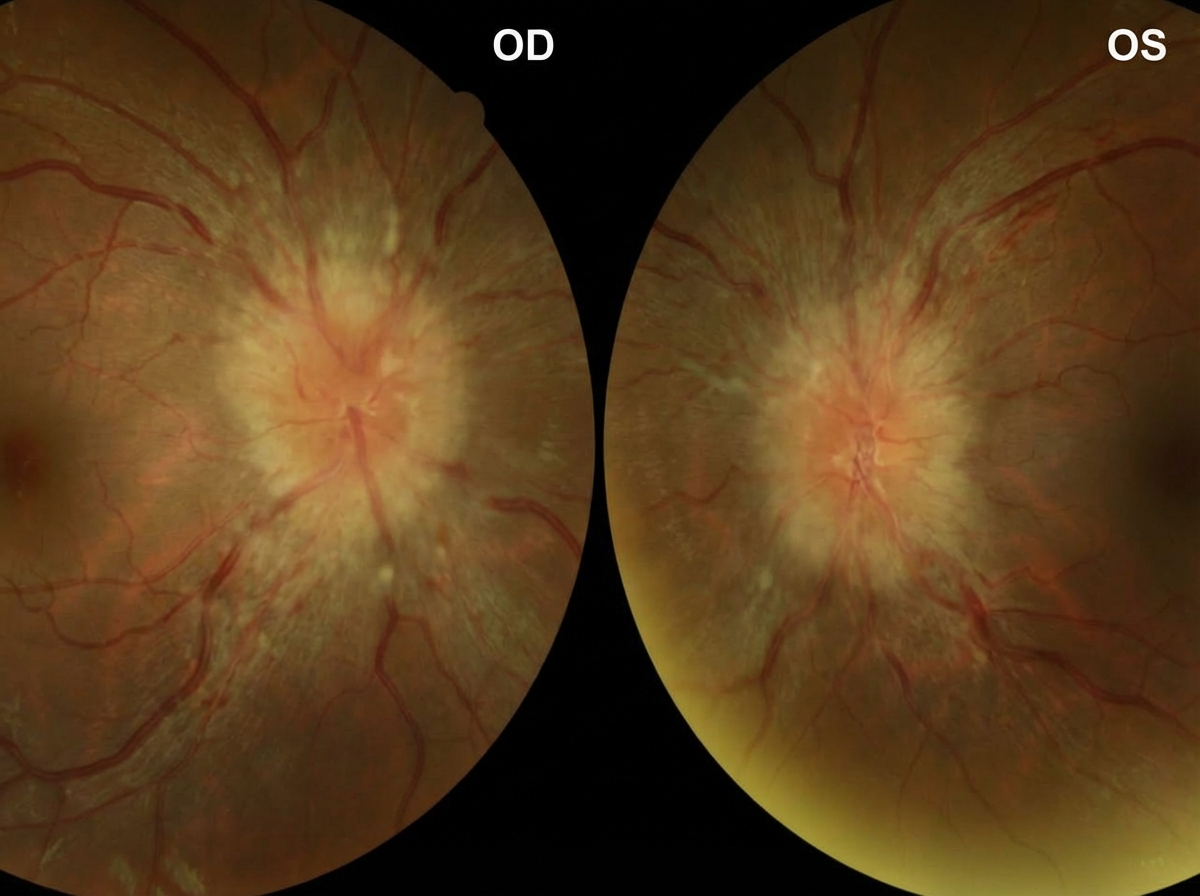
A 22-year-old woman comes to the emergency department because of frontal throbbing headaches for 3 weeks. Yesterday, the patient had blurry vision in both eyes and a brief episode of double vision. She has been taking ibuprofen with only mild improvement of her symptoms. She has polycystic ovarian syndrome, type 2 diabetes mellitus, and facial acne. She has not had any trauma, weakness, or changes in sensation. Her current medications include metformin and vitamin A. She is 158 cm (5 ft 2 in) tall and weighs 89 kg (196 lbs); BMI is 36 kg/m2. Vital signs are within normal limits. Examination shows decreased peripheral vision. Fundoscopic examination of both eyes is shown. MRI of the brain shows an empty sella. Which of the following is the most appropriate next step in management?
A 65-year-old patient presents with rapidly progressive dementia, myoclonus, and ataxia over 3 months. Laboratory studies, including serum vitamin B12 (cyanocobalamin), thyroxine (T4), and thyroid-stimulating hormone concentrations, are within normal limits. A lumbar puncture is performed. Cerebrospinal fluid (CSF) analysis is most likely to show which of the following?
A 25-year-old man with no significant past medical history is brought in by ambulance after a witnessed seizure at home. On physical exam, temperature is 102.3 deg F (39.1 deg C), blood pressure is 90/62 mmHg, pulse is 118/min, and respirations are 25/min. He is unable to touch his chin to his chest and spontaneously flexes his hips with passive neck flexion. Appropriate empiric treatment is begun. CT head is unremarkable, and a lumbar puncture sample is obtained. Gram stain of the cerebrospinal fluid (CSF) reveals gram-positive diplococci. Which of the following would you expect to see on CSF studies?
A 23-year-old female presents to the emergency department with monocular blindness. She states that early this morning she lost her vision seemingly "out of nowhere." She denies trauma or any precipitating factors. She does state though that over the past year she has had occasional episodes of weakness and even an episode of urinary incontinence, which always resolve on their own. On exam, pain is elicited with eye movement and nystagmus is appreciated. The emergency physician performs a lumbar puncture. What is most likely to be observed in the CSF of this patient?
An 18-month-old boy is brought to the physician for a well-child examination. His mother is concerned because he is unable to walk on his own. He has been increasingly irritable over the past month, has been feeding poorly, and has had multiple episodes of vomiting. His immunizations are up-to-date. He is at the 50th percentile for height, 40th percentile for weight, and 98th percentile for head circumference. He appears lethargic. His vital signs are within normal limits. Examination shows a bulging anterior fontanelle. The child is unable to stand without support and falls if he attempts to walk. Muscle tone is increased and deep tendon reflexes are 4+ in the lower extremities. Examination of the back is unremarkable. An MRI of the brain shows symmetrical enlargement of all four ventricles. Which of the following is the most appropriate treatment in this patient?
A 26-year-old man presents to his primary doctor with one week of increasing weakness. He reports that he first noticed difficulty walking while attending his sister's graduation last week, and yesterday he had difficulty taking his coffee cup out of the microwave. He remembers having nausea and vomiting a few weeks prior, but other than that has no significant medical history. On exam, he has decreased reflexes in his bilateral upper and lower extremities, with intact sensation. If a lumbar puncture is performed, which of the following results are most likely?
A 62-year-old man is brought to the physician by his wife for increased forgetfulness and unsteady gait over the past 3 months. He is a journalist and has had difficulty concentrating on his writing. He also complains of urinary urgency recently. His temperature is 36.8°C (98.2°F) and blood pressure is 139/83 mm Hg. He is oriented only to person and place. He is able to recall 2 out of 3 words immediately and 1 out of 3 after five minutes. He has a slow, broad-based gait and takes short steps. Neurological examination is otherwise normal. Urinalysis is normal. Which of the following is the most likely diagnosis?
A 25-year-old woman presents to the physician with a complaint of several episodes of headaches in the past 4 weeks that are affecting her school performance. These episodes are getting progressively worse, and over-the-counter medications do not seem to help. She also mentions having to raise her head each time to look at the board while taking notes; she cannot simply glance up with just her eyes. She has no significant past medical or family history and was otherwise well prior to this visit. Physical examination shows an upward gaze palsy and convergence-retraction nystagmus. What structure is most likely to be affected in this patient?
An 8-year-old boy is brought to the physician by his mother because of a 3-week history of irritability and frequent bed wetting. She also reports that he has been unable to look upward without tilting his head back for the past 2 months. He is at the 50th percentile for height and weight. His vital signs are within normal limits. Ophthalmological examination shows dilated pupils that are not reactive to light and bilateral optic disc swelling. Pubic hair development is Tanner stage 2. The most likely cause of this patient's condition is a tumor in which of the following locations?
Want unlimited practice?
Get full access to all questions, explanations, and performance tracking.
Scan to download app