
X-ray principles and interpretation — MCQs

A 57-year-old man presents to his family physician for a routine exam. He feels well and reports no new complaints since his visit last year. Last year, he had a colonoscopy which showed no polyps, a low dose chest computerized tomography (CT) scan that showed no masses, and routine labs which showed a fasting glucose of 93 mg/dL. He is relatively sedentary and has a body mass index (BMI) of 24 kg/m^2. He has a history of using methamphetamines, alcohol (4-5 drinks per day since age 30), and tobacco (1 pack per day since age 18), but he joined Alcoholics Anonymous and has been in recovery, not using any of these for the past 7 years. Which of the following is indicated at this time?
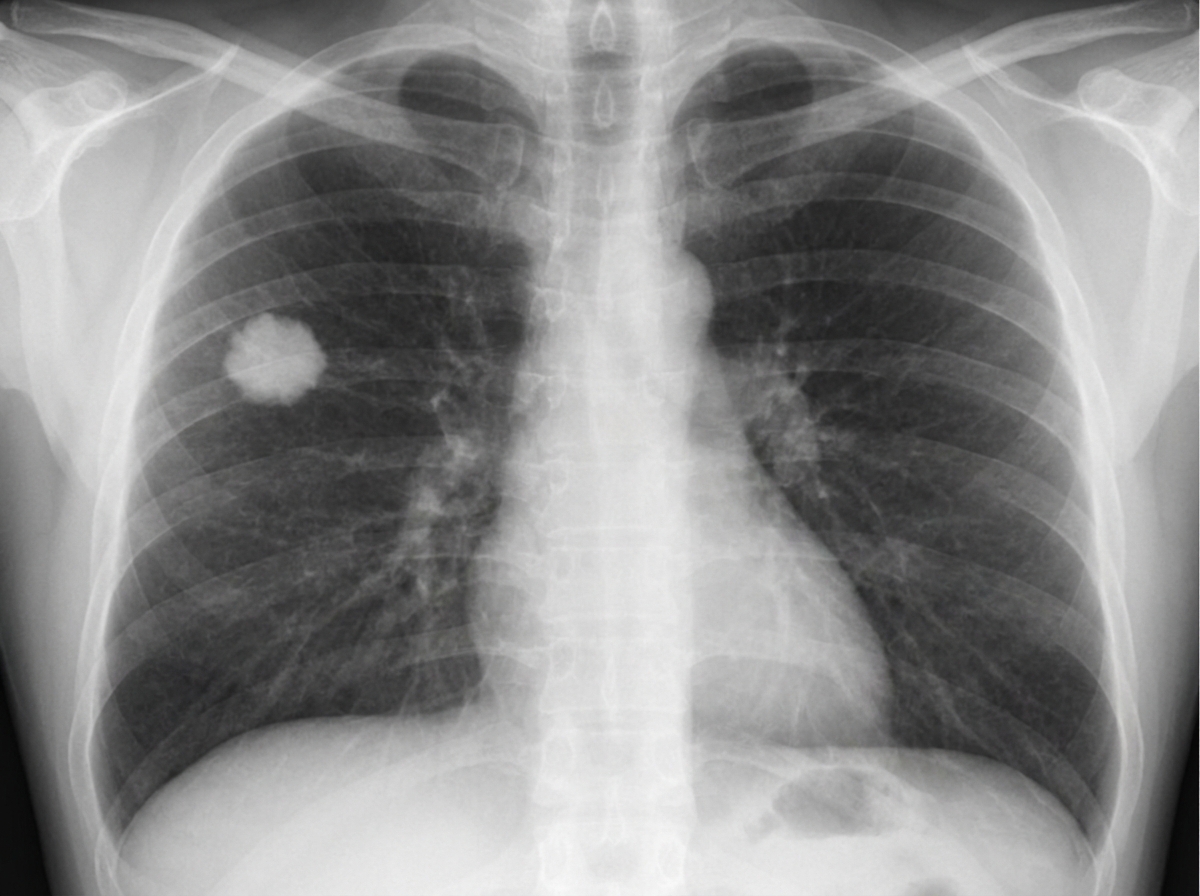
A 60-year-old man comes to the physician for an examination prior to a scheduled cholecystectomy. He has hypertension treated with hydrochlorothiazide. His mother had chronic granulomatous disease of the lung. He works in a glass manufacturing plant. He has smoked two packs of cigarettes daily for 38 years. His vital signs are within normal limits. Examination shows no abnormalities. Laboratory studies are within the reference range. An x-ray of the chest is shown. Which of the following is the most appropriate next step in management?
A 36-year-old male is taken to the emergency room after jumping from a building. Bilateral fractures to the femur were stabilized at the scene by emergency medical technicians. The patient is lucid upon questioning and his vitals are stable. Pain only at his hips was elicited. Cervical exam was not performed. What is the best imaging study for this patient?
A 45-year-old man in respiratory distress presents to the emergency department. He sustained a stab to his left chest and was escorted to the nearest hospital. The patient appears pale and has moderate difficulty with breathing. His O2 saturation is 94%. The left lung is dull to percussion. CXRs are ordered and confirm the likely diagnosis. His blood pressure is 95/57 mm Hg, the respirations are 22/min, the pulse is 87/min, and the temperature is 36.7°C (98.0°F). His chest X-ray is shown. Which of the following is the next best step in management for this patient?
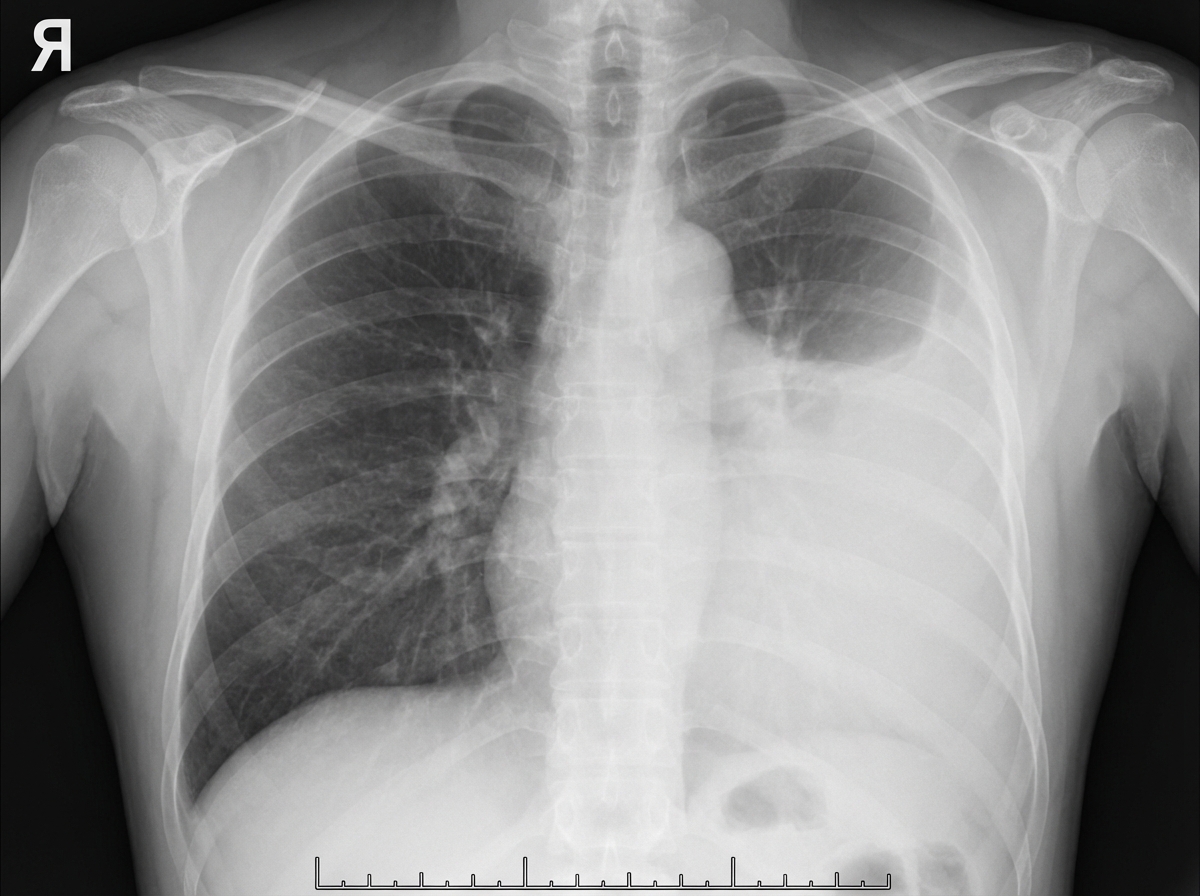
A tall, slender 32-year-old man comes to the emergency room because of sudden chest pain, cough, and shortness of breath. On physical examination, he has decreased breath sounds on the right. Chest radiography shows translucency on the right side of his chest. His pCO2 is elevated and pO2 is decreased. What is the most likely cause of his symptoms?
A 64-year-old man presents to the office for an annual physical examination. He has no complaints at this visit. His chart states that he has a history of hypertension, chronic obstructive pulmonary disease (emphysema), Raynaud’s disease, and glaucoma. He is a 30 pack-year smoker. His medications included lisinopril, tiotropium, albuterol, nifedipine, and latanoprost. The blood pressure is 139/96 mm Hg, the pulse is 86/min, the respiration rate is 16/min, and the temperature is 37.2°C (99.1°F). On physical examination, his pupils are equal, round, and reactive to light. The cardiac auscultation reveals an S4 gallop without murmur, and the lungs are clear to auscultation bilaterally. However, the inspection of the chest wall shows an enlarged anterior to posterior diameter. Which of the following is the most appropriate screening test for this patient?
A 45-year-old man presents for a follow-up visit as part of his immigration requirements into the United States. Earlier this week, he was administered the Mantoux tuberculin skin test (TST). Today’s reading, 3 days after being administered the test, he shows an induration of 10 mm. Given his recent immigration from a country with a high prevalence of tuberculosis, he is requested to obtain a radiograph of the chest, which is shown in the image. Which of the following is true regarding this patient’s chest radiograph (CXR)?
During an evaluation of a new diagnostic imaging modality for detecting salivary gland tumors, 90 patients tested positive out of the 100 patients who tested positive with the gold standard test. A total of 80 individuals tested negative with the new test out of the 100 individuals who tested negative with the gold standard test. What is the positive likelihood ratio for this test?
A 6-month-old boy is brought to the emergency department by his mother, who informs the doctor that her alcoholic husband hit the boy hard on his back. The blow was followed by excessive crying for several minutes and the development of redness in the area. On physical examination, the boy is dehydrated, dirty, and irritable and when the vital signs are checked, they reveal tachycardia. He cries immediately upon the physician touching the area around his left scapula. The doctor strongly suspects a fracture of the 6th, 7th, or 8th retroscapular posterior ribs. Evaluation of his skeletal survey is normal. The clinician is concerned about child abuse in this case. Which of the following is the most preferred imaging technique as the next step in the diagnostic evaluation of the infant?
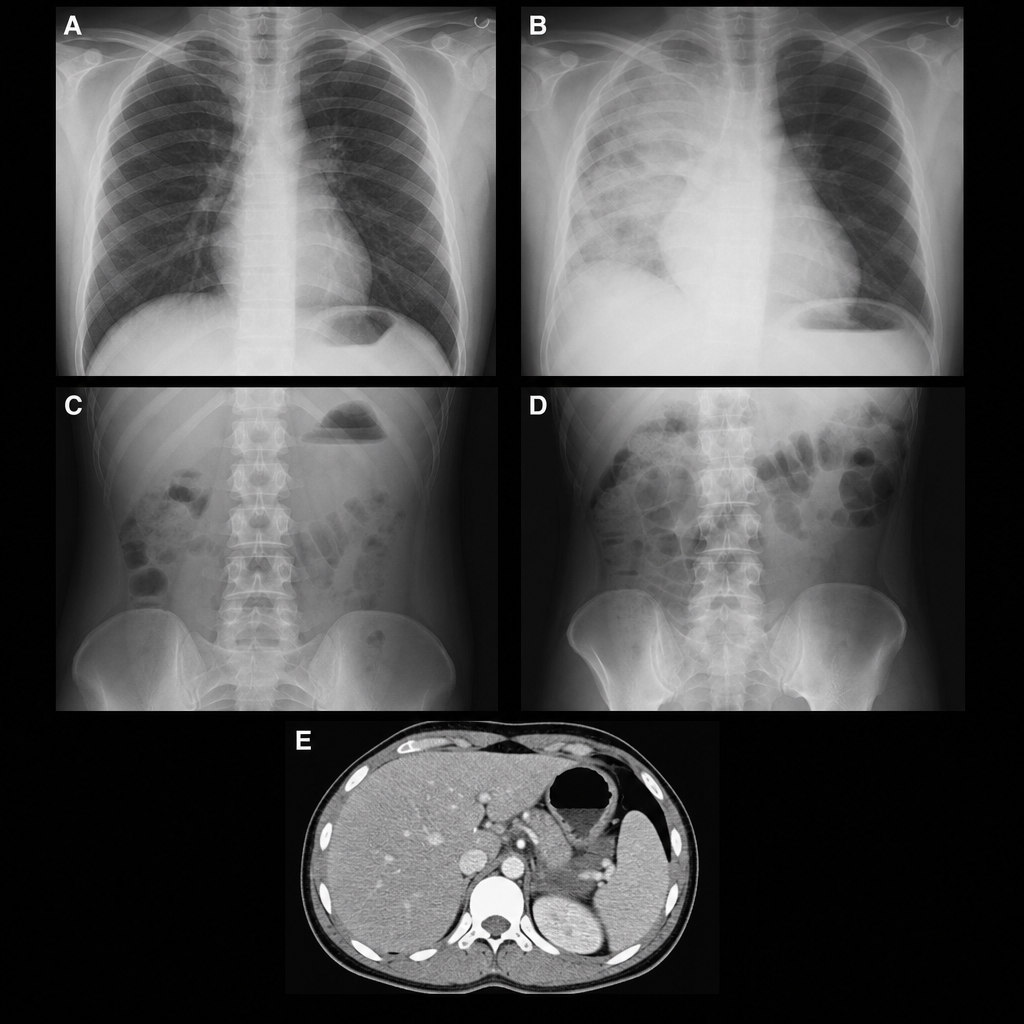
A 24-year-old male is brought in by fire rescue after being the restrained driver in a motor vehicle accident. There was a prolonged extraction. At the scene, the patient was GCS 13. The patient was boarded and transported. In the trauma bay, vitals are T 97.2°F, HR 132 bpm, BP 145/90 mmHg, RR 22/min, and O2 Sat 100%. ABCs are intact with a GCS of 15, and on secondary survey you note the following (Figure F). FAST exam is positive at Morrison's pouch. Abdominal exam shows exquisite tenderness to palpation with rebound and guarding. Which of the following radiographs is most likely to be present in this patient?
Want unlimited practice?
Get full access to all questions, explanations, and performance tracking.
Scan to download app