
Cardiac looping — MCQs

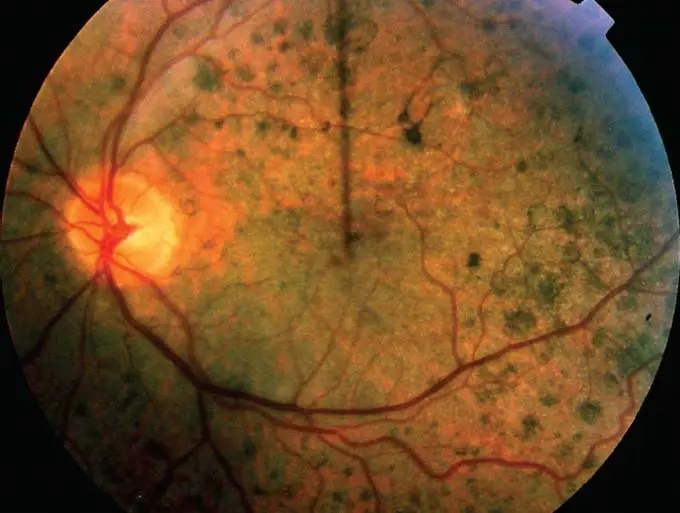
A male neonate is being examined by a pediatrician. His mother informs the doctor that she had a mild fever with rash, muscle pain, and swollen and tender lymph nodes during the second month of gestation. The boy was born at 39 weeks gestation via spontaneous vaginal delivery with no prenatal care. On physical examination, the neonate has normal vital signs. Retinal examination reveals the findings shown in the image. Which of the following congenital heart defects is most likely to be present in this neonate?
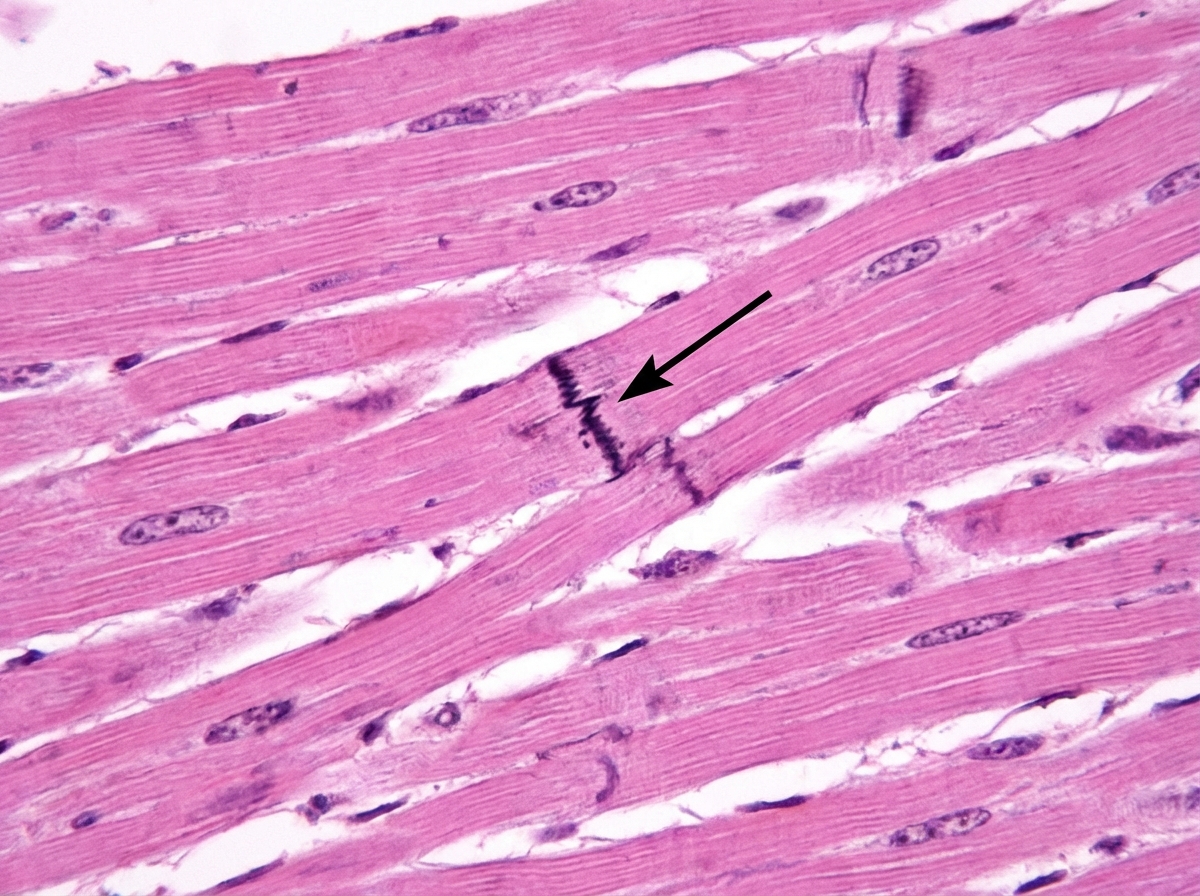
Cardiac muscle serves many necessary functions, leading to a specific structure that serves these functions. The structure highlighted is an important histology component of cardiac muscle. What would be the outcome if this structure diffusely failed to function?
A 4-year-old male is brought into your office because his mother states he has been fatigued. He has not been acting like himself and has been getting tired easily while running around and playing with other children. As of last week, he has also been complaining of being short of breath. His vitals are temperature 98.6 deg F (37.2 deg C), blood pressure 100/75 mmHg, pulse 98/min, and respirations 22/min. On exam, the patient is short of breath, and there is a holosystolic murmur with an appreciable thrill along the left sternal border. There are no other noticeable abnormalities, and the mother states that the child's prenatal course along with genetic testing was normal. What is the most likely diagnosis?
A child is in the nursery one day after birth. A nurse notices a urine-like discharge being expressed through the umbilical stump. What two structures in the embryo are connected by the structure that failed to obliterate during the embryologic development of this child?
A 26-year-old woman comes to the physician for evaluation of nausea and fatigue. Her last menstrual period was 8 weeks ago. She has a history of bipolar disorder controlled by a drug known to sometimes cause hypothyroidism and nephrogenic diabetes insipidus. She does not smoke cigarettes or drink alcohol. A urine pregnancy test is positive. An ultrasound of the pelvis shows a viable intrauterine pregnancy. The fetus is most likely at increased risk for which of the following anomalies?
Shortly after delivery, a female newborn develops bluish discoloration of the lips, fingers, and toes. She was born at term to a 38-year-old primigravid woman. Pregnancy was complicated by maternal diabetes mellitus. Pulse oximetry on room air shows an oxygen saturation of 81%. Echocardiography shows immediate bifurcation of the vessel arising from the left ventricle; the vessel emerging from the right ventricle gives out coronary, head, and neck vessels. An abnormality in which of the following developmental processes most likely accounts for this patient's condition?
A newborn is rushed to the neonatal ICU after becoming cyanotic shortly after birth. An ultrasound is performed which shows the aorta coming off the right ventricle and lying anterior to the pulmonary artery. The newborn is given prostaglandin E1 and surgery is planned to correct the anatomic defect. Which of the following developmental processes failed to occur in the newborn?
A 28-year-old woman with corrected transposition of the great arteries (L-TGA) who has been asymptomatic presents for preconception counseling. She has a systemic right ventricle supporting systemic circulation and asks about pregnancy risks. Her cardiologist notes mild tricuspid regurgitation. Evaluate the embryologic basis of her condition and synthesize recommendations regarding pregnancy.
A newborn presents with severe cyanosis, hypoplastic right ventricle, pulmonary atresia, and an intact ventricular septum. The cardiologist notes this differs from tetralogy of Fallot despite both having pulmonary atresia. The neonatologist questions whether to maintain ductal patency or pursue immediate surgical intervention. Evaluate the embryologic differences and synthesize the optimal management strategy.
A pregnant woman at 18 weeks gestation with poorly controlled phenylketonuria undergoes fetal echocardiography showing coarctation of the aorta and a VSD. Her obstetrician is concerned about the timing of teratogenic exposure. Evaluate the critical periods of cardiac development to determine when the damage likely occurred and synthesize a management approach.
Want unlimited practice?
Get full access to all questions, explanations, and performance tracking.
Scan to download app