
Cranial nerves and their pathways — MCQs

An otherwise healthy 45-year-old man comes to the physician because of a painful ulcer on his tongue for 3 days. Examination shows a shallow, tender 5-mm wide ulcer on the lateral aspect of the tongue, adjacent to his left first molar. There is no induration surrounding the ulcer or cervical lymphadenopathy. A lesion of the cranial nerve responsible for the transmission of pain from this ulcer would most likely result in which of the following?
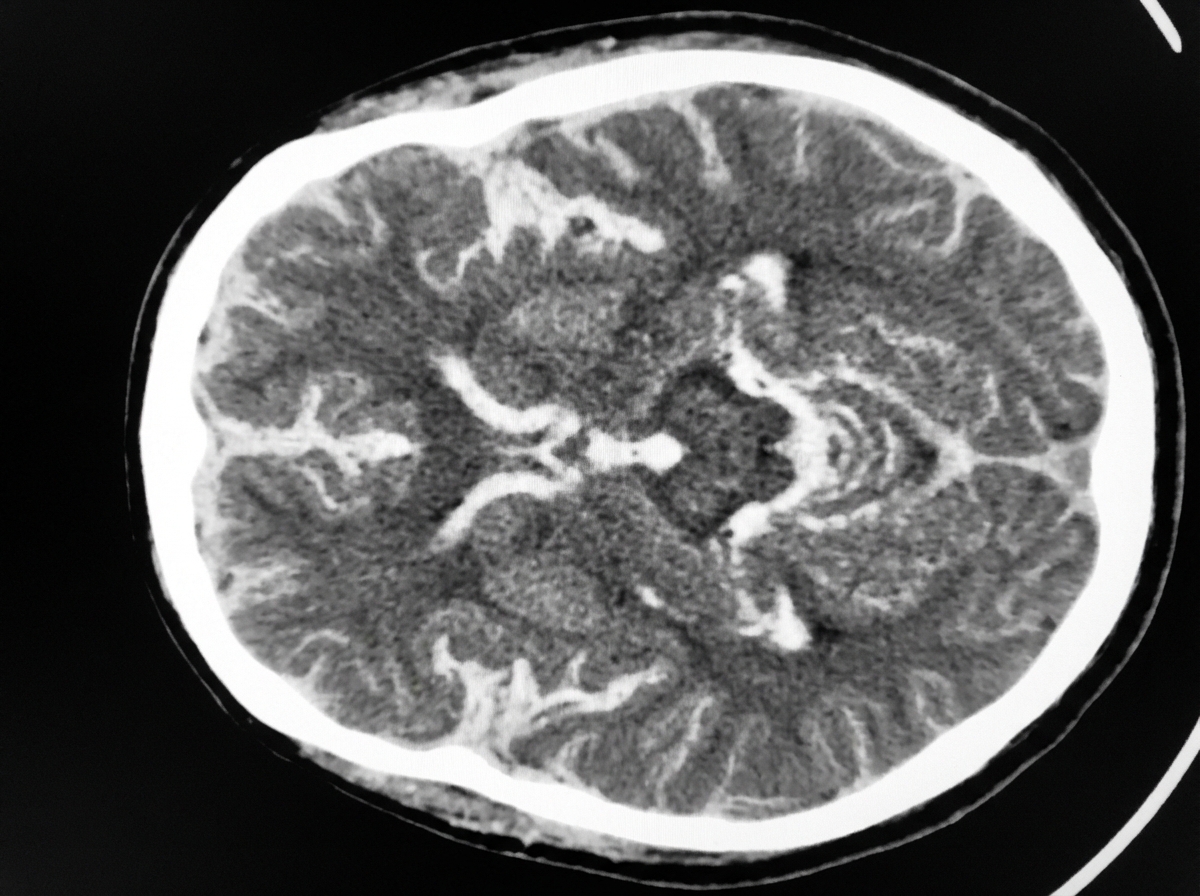
A 54-year-old man is brought to the emergency department 30 minutes after being hit by a car while crossing the street. He had a left-sided tonic-clonic seizure and one episode of vomiting while being transported to the hospital. On arrival, he is not oriented to person, place, or time. Physical examination shows flaccid paralysis of all extremities. A CT scan of the head is shown. This patient's symptoms are most likely the result of a hemorrhage in which of the following structures?
A 55-year-old woman with a 1-year history of left-sided tinnitus is diagnosed with a tumor at the left cerebellopontine angle affecting the glossopharyngeal nerve. Sialometry shows decreased production of saliva from the left parotid gland. The finding on sialometry is best explained by a lesion of the nerve that is also responsible for which of the following?
A 72-year-old woman is brought in to the emergency department after her husband noticed that she appeared to be choking on her dinner. He performed a Heimlich maneuver but was concerned that she may have aspirated something. The patient reports a lack of pain and temperature on the right half of her face, as well as the same lack of sensation on the left side of her body. She also states that she has been feeling "unsteady" on her feet. On physical exam you note a slight ptosis on the right side. She is sent for an emergent head CT. Where is the most likely location of the neurological lesion?
A 47-year-old man presents to you with gradual loss of voice and difficulty swallowing for the past couple of months. The difficulty of swallowing is for both solid and liquid foods. His past medical history is insignificant except for occasional mild headaches. Physical exam also reveals loss of taste sensation on the posterior third of his tongue and palate, weakness in shrugging his shoulders, an absent gag reflex, and deviation of the uvula away from the midline. MRI scanning was suggested which revealed a meningioma that was compressing some cranial nerves leaving the skull. Which of the following openings in the skull transmit the affected cranial nerves?
A 26-year-old man comes to the physician for a follow-up examination. Two weeks ago, he was treated in the emergency department for head trauma after being hit by a bicycle while crossing the street. Neurological examination shows decreased taste on the right anterior tongue. This patient's condition is most likely caused by damage to a cranial nerve that is also responsible for which of the following?
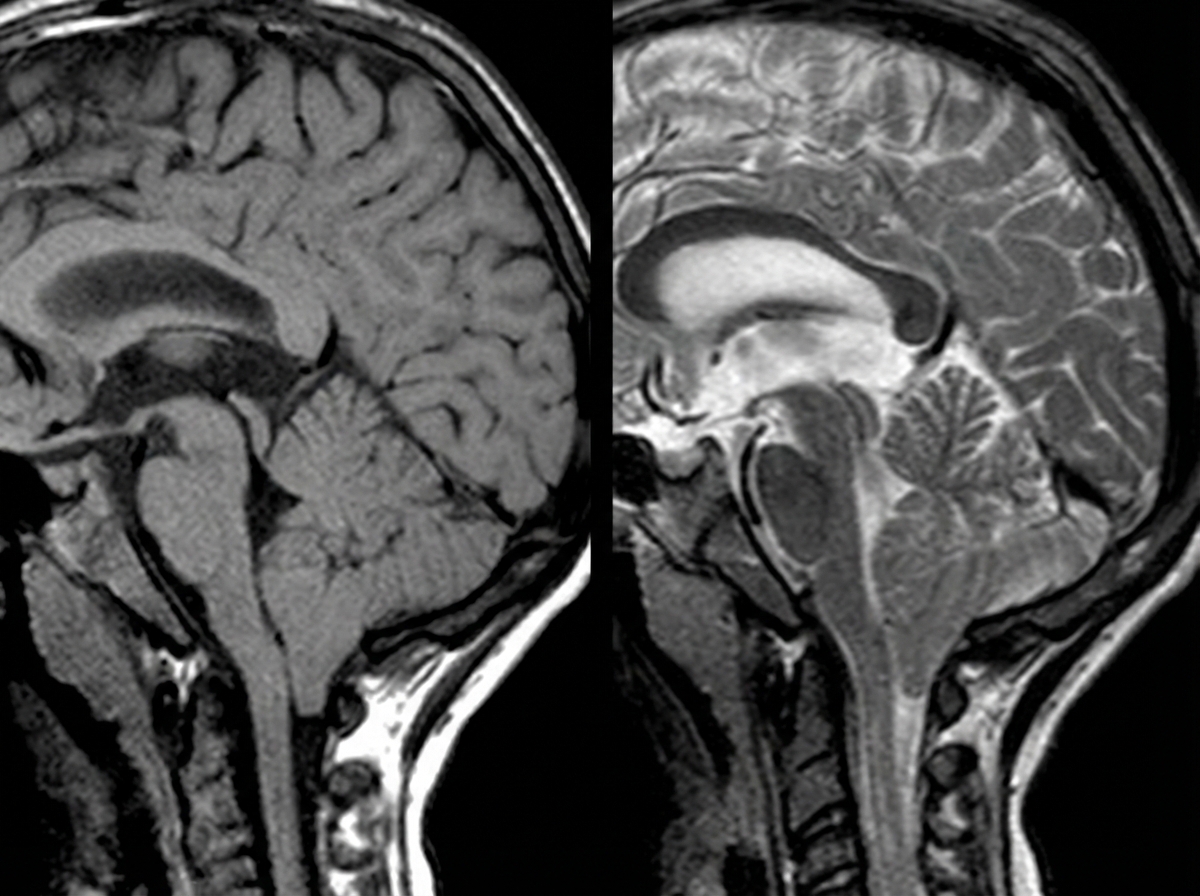
A 4-year-old boy is brought to the physician because of a progressive headache and neck pain for 2 weeks. During this period, he has had multiple episodes of dizziness and tingling sensations in his arms and hands. A year ago, he underwent closed reduction of a dislocated shoulder that he suffered after a fall. He underwent surgical removal of a sac-like protuberance on his lower back, soon after being born. His temperature is 36.7°C (98°F), pulse is 80/min, and blood pressure is 100/80 mm Hg. His neck is supple. Neurological examination shows sensorineural hearing loss bilaterally and normal gross motor function. Fundoscopy reveals bilateral optic disk swelling. An MRI of the brain is shown. Which of the following is the most likely cause of this patient's symptoms?
A 28-year-old man presents with visual disturbances. He says that he is having double vision since he woke up this morning. His past medical history is insignificant except for occasional mild headaches. The patient is afebrile and his vitals are within normal limits. On physical examination of his eyes, there is paralysis of left lateral gaze. Also, at rest, there is esotropia of the left eye. A noncontrast CT scan of the head reveals a tumor impinging on one of his cranial nerves. Which of the following nerves is most likely affected?
A 65-year-old female with a past medical history of hypertension presents to her primary care doctor with a 3 month history of spasmodic facial pain. The pain is located in her right cheek and seems to be triggered when she smiles, chews, or brushes her teeth. The pain is sharp and excruciating, lasts for a few seconds, and occurs up to twenty times per day. She denies headaches, blurry vision, facial weakness, or changes in her memory. She feels rather debilitated and has modified much of her daily activities to avoid triggering the spasms. In the clinic, her physical exam is within normal limits. Her primary care doctor prescribes carbamazepine and asks her to follow up in a few weeks. Which cranial nerve is most likely involved in the patient's disease process?
Where does the only cranial nerve without a thalamic relay nucleus enter the skull?
Want unlimited practice?
Get full access to all questions, explanations, and performance tracking.
Scan to download app