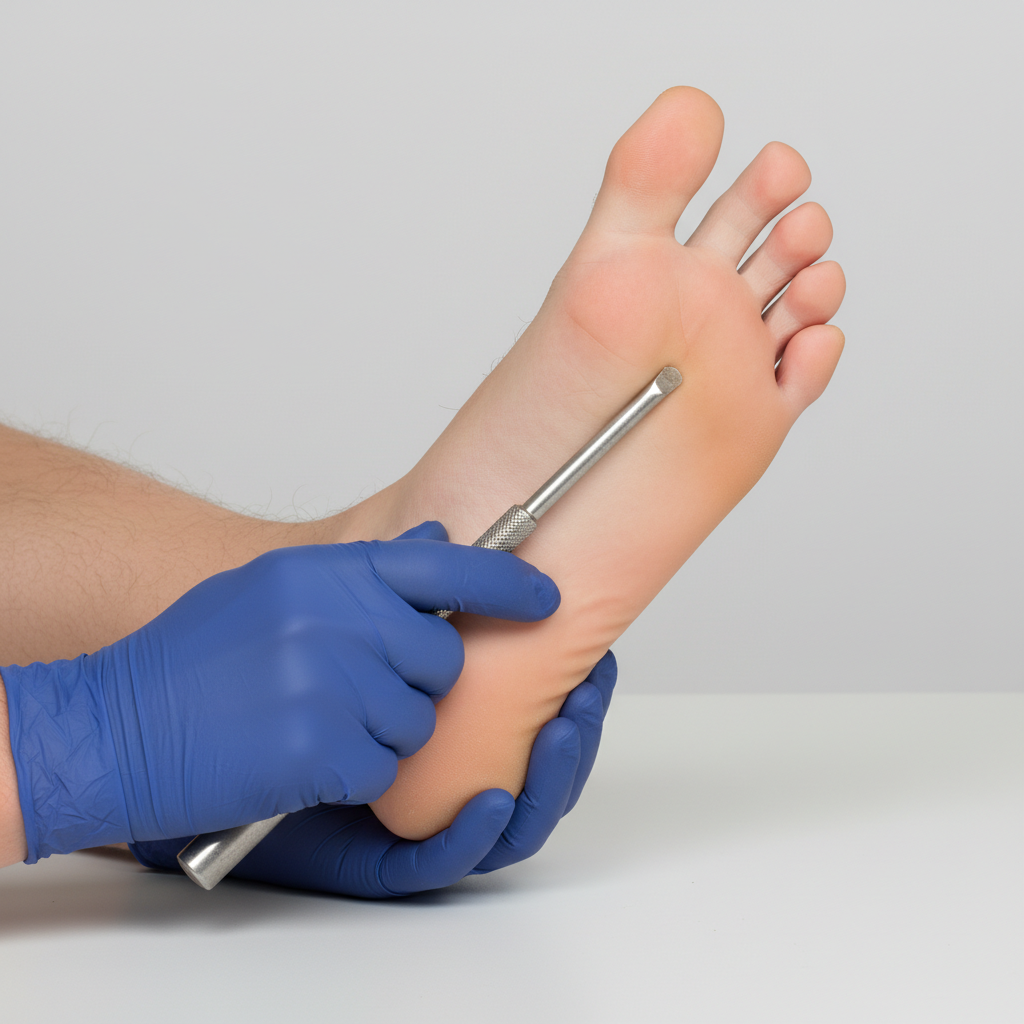
A 45-year-old man presents to the physician with complaints of burning pain in both feet and lower legs for 3 months. He reports that the pain is especially severe at night. He has a history of diabetes mellitus for the past 5 years, and he frequently skips his oral antidiabetic medications. His temperature is 36.9°C (98.4°F), heart rate is 80/min, respiratory rate is 15/min, and blood pressure is 120/80 mm Hg. His weight is 70 kg (154.3 lb) and height is 165 cm (approx. 5 ft 5 in). The neurologic examination reveals loss of sensations of pain and temperature over the dorsal and ventral sides of the feet and over the distal one-third of both legs. Proprioception is normal; knee jerks and ankle reflexes are also normal. The tone and strength in all muscles are normal. The hemoglobin A1C is 7.8%. Involvement of what type of nerve fibers is the most likely cause of the patient’s symptoms?
Q2
A 32-year-old woman presents to the clinic with the complaint of excessive fatigue for the past few weeks. After returning home from the office, she feels too tired to climb up the stairs, comb her hair, or chew her food. She has occasionally experienced double vision. She denies any history of fever, cough, weight loss, night sweats, or snoring. Past history is unremarkable. Physical examination reveals: blood pressure 124/86 mm Hg, heart rate 85/min, respiratory rate 14/min, temperature 37.0°C (98.6°F), and body mass index (BMI) 22.6 kg/m2. On examination, the right upper eyelid is slightly drooping when compared to the left side. Her eye movements are normal. Flexion of the neck is mildly weak. Muscle strength is 5/5 in all 4 limbs. When she is asked to alternately flex and extend her shoulder continuously for 5 minutes, the power in the proximal upper limb muscles becomes 4/5. The muscle tone and deep tendon reflexes are normal. What is the most appropriate test to diagnose this condition?
Q3
An investigator is developing a drug that selectively inhibits the retrograde axonal transport of rabies virus towards the central nervous system. To achieve this effect, this drug must target which of the following?
Q4
A 62-year-old woman is brought to the physician because of 6 months of progressive weakness in her arms and legs. During this time, she has also had difficulty swallowing and holding her head up. Examination shows pooling of oral secretions. Muscle strength and tone are decreased in the upper extremities. Deep tendon reflexes are 1+ in the right upper and lower extremities, 3+ in the left upper extremity, and 4+ in the left lower extremity. Sensation to light touch, pinprick, and vibration are intact. Which of the following is the most likely diagnosis?
Q5
A 32-year-old woman presents with diplopia. She says that she has been experiencing drooping of her eyelids and severe muscle weakness. She reports that her symptoms are worse at the end of the day. Which of the following additional findings would most likely be seen in this patient?
Q6
Which neurotransmitter is primarily responsible for parasympathetic effects on heart rate?
Q7
A 5-year-old boy who recently emigrated from Nigeria is brought to the emergency department because of a 2-day history of lower leg weakness, swallowing difficulty, and drooling of saliva. He has not yet received any childhood vaccinations. Two days after admission, the patient develops shortness of breath. Pulse oximetry shows an oxygen saturation of 64%. Despite resuscitative efforts, the patient dies of respiratory failure. At autopsy, examination of the spinal cord shows destruction of the anterior horn cells. Neurological examination of this patient would have most likely shown which of the following findings?
Q8
During a physical examination, a physician tests the strength of hip adduction against resistance. Which of the following nerves innervates the primary muscles responsible for this action?
Q9
A 46-year-old man comes to the physician because of a 2-month history of hoarseness and drooling. Initially, he had difficulty swallowing solid food, but now he has difficulty swallowing foods like oatmeal as well. During this period, he also developed weakness in both arms and has had an 8.2 kg (18 lb) weight loss. He appears ill. His vital signs are within normal limits. Examination shows tongue atrophy and pooled oral secretions. There is diffuse muscle atrophy in all extremities. Deep tendon reflexes are 3+ in all extremities. Sensation to pinprick, light touch, and vibration is intact. An esophagogastroduodenoscopy shows no abnormalities. Which of the following is the most likely cause of this patient's symptoms?
Q10
A 61-year-old man is brought to the emergency department because of increasing weakness of his right arm and leg that began when he woke up that morning. He did not notice any weakness when he went to bed the night before. He has hypertension and hypercholesterolemia. Current medications include hydrochlorothiazide and atorvastatin. He is alert and oriented to person, time, place. His temperature is 36.7°C (98°F), pulse is 91/min, and blood pressure is 132/84 mm Hg. Examination shows drooping of the right side of the face. Muscle strength is decreased in the right upper and lower extremities. Deep tendon reflexes are 4+ on the right side. Sensation is intact. His speech is normal in rate and rhythm. The remainder of the examination shows no abnormalities. An infarction of which of the following sites is the most likely cause of this patient's symptoms?
Lower motor neuron anatomy US Medical PG Practice Questions and MCQs
Question 1: A 45-year-old man presents to the physician with complaints of burning pain in both feet and lower legs for 3 months. He reports that the pain is especially severe at night. He has a history of diabetes mellitus for the past 5 years, and he frequently skips his oral antidiabetic medications. His temperature is 36.9°C (98.4°F), heart rate is 80/min, respiratory rate is 15/min, and blood pressure is 120/80 mm Hg. His weight is 70 kg (154.3 lb) and height is 165 cm (approx. 5 ft 5 in). The neurologic examination reveals loss of sensations of pain and temperature over the dorsal and ventral sides of the feet and over the distal one-third of both legs. Proprioception is normal; knee jerks and ankle reflexes are also normal. The tone and strength in all muscles are normal. The hemoglobin A1C is 7.8%. Involvement of what type of nerve fibers is the most likely cause of the patient’s symptoms?
A. Aδ & C fibers (Correct Answer)
B. Aα & Aβ fibers
C. Aγ & B fibers
D. Aγ & C fibers
E. Aβ & Aγ fibers
Explanation: ***Aδ & C fibers***
- The patient's symptoms of **burning pain** and loss of **pain and temperature sensations** are characteristic of small fiber neuropathy, which primarily involves **Aδ and C fibers**.
- These are **unmyelinated or thinly myelinated** fibers responsible for transmitting pain (nociception) and thermal sensations, and they are frequently affected in **diabetic neuropathy**.
*Aα & Aβ fibers*
- **Aα fibers** are large, myelinated fibers involved in **proprioception** and motor function; **Aβ fibers** transmit touch and pressure sensations.
- The patient's **normal proprioception** and motor strength indicate that these fibers are largely spared.
*Aγ & B fibers*
- **Aγ fibers** innervate muscle spindles and are involved in **motor control** and stretch reflexes.
- **B fibers** are preganglionic autonomic fibers; neither is directly responsible for pain and temperature sensation.
*Aγ & C fibers*
- While **C fibers** are involved in pain and temperature, **Aγ fibers** are primarily motor, controlling muscle spindle sensitivity.
- The combination does not accurately represent the sensory deficits observed in this patient.
*Aβ & Aγ fibers*
- **Aβ fibers** are involved in touch and pressure, and **Aγ fibers** are motor.
- The patient's primary complaint is burning pain and loss of temperature sensation, not deficits related to these fiber types.
Question 2: A 32-year-old woman presents to the clinic with the complaint of excessive fatigue for the past few weeks. After returning home from the office, she feels too tired to climb up the stairs, comb her hair, or chew her food. She has occasionally experienced double vision. She denies any history of fever, cough, weight loss, night sweats, or snoring. Past history is unremarkable. Physical examination reveals: blood pressure 124/86 mm Hg, heart rate 85/min, respiratory rate 14/min, temperature 37.0°C (98.6°F), and body mass index (BMI) 22.6 kg/m2. On examination, the right upper eyelid is slightly drooping when compared to the left side. Her eye movements are normal. Flexion of the neck is mildly weak. Muscle strength is 5/5 in all 4 limbs. When she is asked to alternately flex and extend her shoulder continuously for 5 minutes, the power in the proximal upper limb muscles becomes 4/5. The muscle tone and deep tendon reflexes are normal. What is the most appropriate test to diagnose this condition?
A. CT scan chest
B. Plasmapheresis
C. Tensilon test
D. Single-fiber electromyography (Correct Answer)
E. Presynaptic calcium channel antibodies
Explanation: ***Single-fiber electromyography***
- This patient presents with symptoms highly suggestive of **myasthenia gravis**, including **fatigue**, **ptosis**, **diplopia**, and **fatigable weakness** of proximal muscles exacerbated by repetitive use.
- **Single-fiber electromyography (SFEMG)** is the **most sensitive** electrodiagnostic test for myasthenia gravis, detecting impaired neuromuscular transmission with a sensitivity of **95-99%**.
- While **acetylcholine receptor (AChR) antibodies** are often the first-line test in clinical practice (85-90% sensitivity), SFEMG is superior when antibody tests are negative or when the highest diagnostic sensitivity is required, making it the most appropriate test overall.
*CT scan chest*
- A CT scan of the chest is used to look for a **thymoma**, which is associated with myasthenia gravis in 10-15% of cases, but it is not a diagnostic test for the condition itself.
- While important for prognostication and treatment planning (particularly in patients with confirmed MG), it does not confirm the diagnosis of myasthenia gravis.
*Plasmapheresis*
- **Plasmapheresis** is a treatment for myasthenia gravis, particularly in myasthenic crisis or during exacerbations, by removing anti-acetylcholine receptor antibodies.
- It is not a diagnostic test; diagnostic tests are performed to identify the condition before treatment initiation.
*Tensilon test*
- The **Tensilon (edrophonium) test** was historically used to diagnose myasthenia gravis by transiently improving muscle weakness upon administration of the anticholinesterase drug.
- However, due to potential side effects (e.g., **bradycardia, syncope**) and the availability of more sensitive and safer diagnostic methods like SFEMG and antibody testing, it is **less commonly used** as a primary diagnostic tool today.
*Presynaptic calcium channel antibodies*
- Presynaptic calcium channel antibodies (specifically **P/Q-type voltage-gated calcium channel antibodies**) are characteristic of **Lambert-Eaton myasthenic syndrome (LEMS)**, a disorder of the neuromuscular junction distinct from myasthenia gravis.
- LEMS typically presents with **proximal weakness that improves with exercise** (unlike MG where weakness worsens), autonomic dysfunction, and association with small cell lung cancer.
- This patient's symptoms (fatigable weakness worsening with activity, ptosis, diplopia) are more consistent with myasthenia gravis, which involves postsynaptic acetylcholine receptor antibodies.
Question 3: An investigator is developing a drug that selectively inhibits the retrograde axonal transport of rabies virus towards the central nervous system. To achieve this effect, this drug must target which of the following?
A. Dynein (Correct Answer)
B. Tubulin
C. Nidogen
D. Kinesin
E. Acetylcholine
Explanation: ***Dynein***
- **Dynein** is a microtubule-dependent motor protein responsible for **retrograde axonal transport**, moving cargo (like rabies virus) away from the axon terminals towards the cell body and ultimately the central nervous system.
- Inhibiting dynein would therefore prevent the **rabies virus** from traveling from the site of infection (e.g., muscle cell) to the central nervous system.
*Tubulin*
- **Tubulin** is the primary protein subunit that polymerizes to form **microtubules**, which serve as the tracks for axonal transport.
- Inhibiting tubulin polymerization would disrupt both **anterograde** and **retrograde transport** nonspecifically, leading to severe neurotoxicity rather than selective inhibition of rabies virus transport.
*Nidogen*
- **Nidogen** (also known as entactin) is a glycoprotein component of the **basal lamina**, an extracellular matrix structure.
- It plays a role in cell adhesion and tissue organization but is not directly involved in the intracellular motor processes of axonal transport.
*Kinesin*
- **Kinesin** is a microtubule-dependent motor protein primarily responsible for **anterograde axonal transport**, moving cargo from the cell body towards the axon terminals.
- Inhibiting kinesin would disrupt the outward movement of vesicles and organelles, but would not prevent the **inward retrograde transport** of the rabies virus.
*Acetylcholine*
- **Acetylcholine** is a neurotransmitter that plays a role in synaptic transmission in both the peripheral and central nervous systems.
- While rabies virus can affect neuronal function, acetylcholine itself is not a motor protein or a structural component directly involved in the physical process of **axonal transport**.
Question 4: A 62-year-old woman is brought to the physician because of 6 months of progressive weakness in her arms and legs. During this time, she has also had difficulty swallowing and holding her head up. Examination shows pooling of oral secretions. Muscle strength and tone are decreased in the upper extremities. Deep tendon reflexes are 1+ in the right upper and lower extremities, 3+ in the left upper extremity, and 4+ in the left lower extremity. Sensation to light touch, pinprick, and vibration are intact. Which of the following is the most likely diagnosis?
A. Guillain-Barré syndrome
B. Amyotrophic lateral sclerosis (Correct Answer)
C. Spinal muscular atrophy
D. Myasthenia gravis
E. Syringomyelia
Explanation: ***Amyotrophic lateral sclerosis***
- The patient presents with a combination of **upper motor neuron (UMN)** signs (hyperreflexia at 3+ and 4+, possibly stiffness contributing to difficulty holding head up) and **lower motor neuron (LMN)** signs (progressive weakness, decreased muscle tone, pooling of oral secretions due to bulbar involvement). This coexistence is pathognomonic for **ALS**.
- The **progressive nature** of the weakness in arms and legs, encompassing both UMN and LMN features without sensory deficits, is characteristic of ALS.
*Guillain-Barré syndrome*
- Typically presents with **acute or subacute onset (days to weeks)** of ascending weakness, often post-infectious, and characteristically causes **areflexia** or severely diminished deep tendon reflexes.
- This patient's symptoms have been progressive over **6 months**, and she exhibits significantly **increased reflexes** in some limbs, which is inconsistent with GBS.
*Spinal muscular atrophy*
- This is a group of **autosomal recessive disorders** that primarily affect **lower motor neurons**, leading to progressive muscle weakness and atrophy, usually presenting in infancy or childhood.
- The patient's age of presentation (62 years old) and the presence of **upper motor neuron signs** (hyperreflexia) rule out SMA.
*Myasthenia gravis*
- Presents with **fluctuating muscle weakness** that worsens with activity and improves with rest, often affecting ocular, bulbar, and limb muscles. It does not typically cause hyperreflexia or sustained upper motor neuron signs.
- While the patient has difficulty swallowing and pooling oral secretions, the **progressive, sustained weakness** and varied deep tendon reflexes (hypo to hyper) are not typical of myasthenia gravis without specific triggers like exertion.
*Syringomyelia*
- Characterized by a **syrinx (cyst) within the spinal cord**, leading to sensory deficits (often **"cape-like" loss of pain and temperature sensation**) and weakness/atrophy due to LMN damage, usually affecting the upper extremities.
- This patient's **intact sensation** and the presence of widespread UMN signs (hyperreflexia in lower limb) make syringomyelia an unlikely diagnosis.
Question 5: A 32-year-old woman presents with diplopia. She says that she has been experiencing drooping of her eyelids and severe muscle weakness. She reports that her symptoms are worse at the end of the day. Which of the following additional findings would most likely be seen in this patient?
A. Increased acetylcholine receptor antibody (Correct Answer)
B. Albuminocytological dissociation in the cerebrospinal fluid
C. Increased calcium channel receptor antibodies
D. Increased serum creatine kinase levels
E. Increased antinuclear antibodies
Explanation: ***Increased acetylcholine receptor antibody***
- The patient's symptoms of **diplopia**, **ptosis** (drooping eyelids), and severe muscle weakness that worsens with activity (end of the day) are classic manifestations of **myasthenia gravis**.
- **Myasthenia gravis** is an autoimmune disorder characterized by the destruction of **acetylcholine receptors** at the neuromuscular junction, which is confirmed by the presence of **acetylcholine receptor antibodies**.
*Albuminocytological dissociation in the cerebrospinal fluid*
- This finding, characterized by **elevated CSF protein** with a normal white blood cell count, is a hallmark of **Guillain-Barré syndrome**.
- **Guillain-Barré syndrome** typically presents with ascending paralysis and areflexia, which is distinct from the fluctuating, fatigable weakness seen in this patient.
*Increased calcium channel receptor antibodies*
- The presence of **voltage-gated calcium channel (VGCC) antibodies** is characteristic of **Lambert-Eaton Myasthenic Syndrome (LEMS)**.
- While LEMS also causes muscle weakness, it often improves with activity and is frequently associated with **small cell lung cancer**, differentiating it from myasthenia gravis where weakness worsens with activity.
*Increased serum creatine kinase levels*
- Elevated **creatine kinase (CK)** levels are indicative of **muscle damage or inflammation**, as seen in conditions like **myositis** or **muscular dystrophies**.
- Myasthenia gravis is a disorder of neuromuscular transmission, not primary muscle damage, so CK levels are typically normal.
*Increased antinuclear antibodies*
- **Antinuclear antibodies (ANA)** are a common finding in **systemic autoimmune diseases** like **systemic lupus erythematosus (SLE)** or **Sjögren's syndrome**.
- While some autoimmune conditions can have overlapping features, the specific symptom complex presented (diplopia, ptosis, fatigable weakness) strongly points to myasthenia gravis rather than a systemic autoimmune connective tissue disease.
Question 6: Which neurotransmitter is primarily responsible for parasympathetic effects on heart rate?
A. Norepinephrine
B. Dopamine
C. Acetylcholine (Correct Answer)
D. Epinephrine
Explanation: ***Acetylcholine***
- **Acetylcholine** is the primary neurotransmitter released by postganglionic parasympathetic neurons.
- It acts on **muscarinic receptors** (M2 receptors) in the heart to decrease heart rate.
*Norepinephrine*
- **Norepinephrine** is primarily associated with the **sympathetic nervous system**, increasing heart rate and contractility.
- It acts on **beta-1 adrenergic receptors** in the heart.
*Dopamine*
- **Dopamine** is a precursor to norepinephrine and epinephrine, and primarily functions as a neurotransmitter in the **central nervous system** and in regulating renal blood flow.
- While it can have cardiac effects, it is not the primary neurotransmitter for parasympathetic actions on heart rate.
*Epinephrine*
- **Epinephrine** (adrenaline) is a hormone released by the adrenal medulla and a neurotransmitter in the sympathetic nervous system, causing an **increase in heart rate** and contractility.
- It works through **beta-1 adrenergic receptors**, antagonistic to parasympathetic effects.
Question 7: A 5-year-old boy who recently emigrated from Nigeria is brought to the emergency department because of a 2-day history of lower leg weakness, swallowing difficulty, and drooling of saliva. He has not yet received any childhood vaccinations. Two days after admission, the patient develops shortness of breath. Pulse oximetry shows an oxygen saturation of 64%. Despite resuscitative efforts, the patient dies of respiratory failure. At autopsy, examination of the spinal cord shows destruction of the anterior horn cells. Neurological examination of this patient would have most likely shown which of the following findings?
A. Sensory loss
B. Positive Babinski sign
C. Hyporeflexia (Correct Answer)
D. Myoclonus
E. Pronator drift
Explanation: ***Hyporeflexia***
- The destruction of **anterior horn cells** in the spinal cord is characteristic of **poliomyelitis**, a disease that primarily affects **lower motor neurons**.
- Lower motor neuron lesions lead to symptoms like **flaccid paralysis**, **weakness**, and **hyporeflexia** (diminished or absent reflexes).
*Sensory loss*
- Poliomyelitis specifically targets **motor neurons** and typically spares **sensory pathways**, meaning sensory function remains intact.
- Therefore, **sensory loss** is not a characteristic finding in poliomyelitis.
*Positive Babinski sign*
- A positive Babinski sign (**upgoing plantar reflex**) is indicative of an **upper motor neuron lesion** affecting the **corticospinal tract**.
- Since poliomyelitis involves lower motor neurons, a positive Babinski sign would not be expected.
*Myoclonus*
- **Myoclonus** refers to brief, involuntary twitching of a muscle or a group of muscles, often associated with disorders affecting the **cerebellum**, **brainstem**, or **cortex**.
- It is not a typical neurological finding in **poliomyelitis**, which primarily causes muscle weakness and paralysis.
*Pronator drift*
- **Pronator drift** is a sign of **upper motor neuron weakness** affecting the **contralateral corticospinal tract**, particularly in the arm.
- As **poliomyelitis** is a **lower motor neuron disease**, pronator drift would not be expected as a primary finding.
Question 8: During a physical examination, a physician tests the strength of hip adduction against resistance. Which of the following nerves innervates the primary muscles responsible for this action?
A. Sciatic nerve
B. Superior gluteal nerve
C. Femoral nerve
D. Obturator nerve (Correct Answer)
Explanation: ***Obturator nerve***
- The **obturator nerve** primarily innervates the **adductor muscles** of the thigh, including the adductor longus, adductor brevis, adductor magnus (adductor part), gracilis, and pectineus (variable innervation).
- These muscles are responsible for **adducting the hip**, which is the action tested when a physician checks hip adduction strength against resistance.
*Sciatic nerve*
- The **sciatic nerve** innervates the **hamstring muscles** (semitendinosus, semimembranosus, biceps femoris) and all muscles below the knee.
- It does not significantly contribute to the innervation of the primary hip adductors.
*Superior gluteal nerve*
- The **superior gluteal nerve** mainly innervates the **gluteus medius**, **gluteus minimus**, and **tensor fasciae latae** muscles.
- These muscles are primarily involved in **hip abduction** and medial rotation, not adduction.
*Femoral nerve*
- The **femoral nerve** innervates the **quadriceps femoris muscles** (rectus femoris, vastus lateralis, vastus medialis, vastus intermedius) and the sartorius.
- Its primary actions are **knee extension** and hip flexion, with no direct role in hip adduction.
Question 9: A 46-year-old man comes to the physician because of a 2-month history of hoarseness and drooling. Initially, he had difficulty swallowing solid food, but now he has difficulty swallowing foods like oatmeal as well. During this period, he also developed weakness in both arms and has had an 8.2 kg (18 lb) weight loss. He appears ill. His vital signs are within normal limits. Examination shows tongue atrophy and pooled oral secretions. There is diffuse muscle atrophy in all extremities. Deep tendon reflexes are 3+ in all extremities. Sensation to pinprick, light touch, and vibration is intact. An esophagogastroduodenoscopy shows no abnormalities. Which of the following is the most likely cause of this patient's symptoms?
A. Destruction of upper and lower motor neurons (Correct Answer)
B. Autoimmune destruction of acetylcholine receptors
C. Multiple cerebral infarctions
D. Dilation of the central spinal canal
E. Demyelination of peripheral nerves
Explanation: ***Destruction of upper and lower motor neurons***
- This patient's presentation with **hoarseness, drooling, dysphagia, diffuse muscle atrophy**, and **hyperreflexia (3+ deep tendon reflexes)** points to both **upper motor neuron (UMN)** and **lower motor neuron (LMN)** signs.
- The combination of UMN and LMN involvement, particularly bulbar symptoms (hoarseness, drooling, dysphagia), diffuse muscle atrophy, and progressive weakness, is highly characteristic of **amyotrophic lateral sclerosis (ALS)**, which involves the progressive destruction of UMNs and LMNs.
*Autoimmune destruction of acetylcholine receptors*
- This describes **myasthenia gravis**, which typically presents with **fluctuating muscle weakness** that worsens with activity and improves with rest.
- While it can cause dysphagia and hoarseness, it usually spares deep tendon reflexes, and diffuse muscle atrophy is not a primary feature, nor are UMN signs like hyperreflexia.
*Multiple cerebral infarctions*
- Multiple cerebral infarctions, or **multi-infarct dementia**, can cause various neurological deficits depending on their location, but they rarely present with a diffuse, progressive picture of both UMN and LMN signs.
- The patient's symptoms are more consistent with a **neurodegenerative disease** rather than acute or subacute vascular events affecting widespread motor pathways in this specific, combined fashion.
*Dilation of the central spinal canal*
- This refers to **syringomyelia**, which typically causes **cape-like sensory loss** (loss of pain and temperature sensation across the shoulders and arms) due to damage to the spinothalamic tracts, often with **LMN weakness** in the upper extremities.
- It would not explain the prominent UMN signs (hyperreflexia), diffuse muscle atrophy in all extremities, or bulbar symptoms like hoarseness and drooling.
*Demyelination of peripheral nerves*
- This is characteristic of **peripheral neuropathies** such as **Guillain-Barré syndrome** or chronic inflammatory demyelinating polyneuropathy (CIDP).
- These conditions primarily cause **LMN signs** like **flaccid paralysis**, **hyporeflexia or areflexia**, and sensory loss, which is inconsistent with the prominent hyperreflexia seen in this patient.
Question 10: A 61-year-old man is brought to the emergency department because of increasing weakness of his right arm and leg that began when he woke up that morning. He did not notice any weakness when he went to bed the night before. He has hypertension and hypercholesterolemia. Current medications include hydrochlorothiazide and atorvastatin. He is alert and oriented to person, time, place. His temperature is 36.7°C (98°F), pulse is 91/min, and blood pressure is 132/84 mm Hg. Examination shows drooping of the right side of the face. Muscle strength is decreased in the right upper and lower extremities. Deep tendon reflexes are 4+ on the right side. Sensation is intact. His speech is normal in rate and rhythm. The remainder of the examination shows no abnormalities. An infarction of which of the following sites is the most likely cause of this patient's symptoms?
A. Base of the left pons
B. Left cerebellar vermis
C. Left posterolateral thalamus
D. Posterior limb of the left internal capsule (Correct Answer)
E. Left lateral medulla
Explanation: ***Posterior limb of the left internal capsule***
- The patient presents with sudden onset of **right-sided weakness**, including the face, arm, and leg (hemiparesis), consistent with a **pure motor stroke**.
- The **posterior limb of the internal capsule** contains UMN fibers of the **corticospinal and corticobulbar tracts**, which project to the contralateral side of the body, thus lesions here cause contralateral pure motor deficits.
*Base of the left pons*
- A lesion here would typically cause **contralateral hemiparesis or hemiplegia** (right side in this case).
- However, pontine lesions also often include **cranial nerve palsies** (e.g., abducens or facial nerve) or **ataxia**, which are not described.
*Left cerebellar vermis*
- Damage to the cerebellar vermis primarily results in **truncal ataxia** and disorders of gait and balance.
- It would not cause contralateral hemiparesis or facial droop, as seen in this patient.
*Left posterolateral thalamus*
- An infarct in this area would primarily cause **contralateral sensory deficits**, such as hemianesthesia or dysesthesia.
- While motor deficits can occur, they are typically less prominent than sensory issues and would not be the isolated pure motor syndrome described.
*Left lateral medulla*
- A lesion in the lateral medulla (e.g., Wallenberg syndrome) typically presents with **contralateral pain and temperature loss**, ipsilateral Horner's syndrome, ataxia, and dysphagia.
- It would not manifest as an isolated pure motor hemiparesis.
Want unlimited practice?
Get full access to all questions, explanations, and performance tracking.