
Visceral afferent pathways — MCQs

A 50-year-old male is brought to the dermatologist's office with complaints of a pigmented lesion. The lesion is uniformly dark with clean borders and no asymmetry and has been increasing in size over the past two weeks. He works in construction and spends large portions of his day outside. The dermatologist believes that this mole should be biopsied. To prepare the patient for the biopsy, the dermatologist injects a small amount of lidocaine into the skin around the lesion. Which of the following nerve functions would be the last to be blocked by the lidocaine?
Which receptor type mediates the slow phase of synaptic transmission in autonomic ganglia?
A 52-year-old man presents to his primary care physician for generalized pain. The patient states that he feels like his muscles and bones are in constant pain. This has persisted for the past several weeks, and his symptoms have not improved with use of ibuprofen or acetaminophen. The patient has a past medical history of alcohol abuse, repeat episodes of pancreatitis, constipation, and anxiety. He has a 22 pack-year smoking history. His temperature is 99.5°F (37.5°C), blood pressure is 140/95 mmHg, pulse is 70/min, respirations are 15/min, and oxygen saturation is 99% on room air. On physical exam, you note generalized tenderness/pain of the patient's extremities. Abdominal exam reveals normoactive bowel sounds and is non-tender. Dermatologic exam is unremarkable. Laboratory values are ordered as seen below. Hemoglobin: 12 g/dL Hematocrit: 36% Leukocyte count: 7,500/mm^3 with normal differential Platelet count: 147,000/mm^3 Serum: Na+: 138 mEq/L Cl-: 100 mEq/L K+: 4.2 mEq/L HCO3-: 24 mEq/L BUN: 20 mg/dL Glucose: 99 mg/dL Creatinine: 1.0 mg/dL Ca2+: 10.2 mg/dL Alkaline phosphatase: 252 U/L Lipase: 30 U/L AST: 12 U/L ALT: 10 U/L Which of the following is associated with this patient's condition?
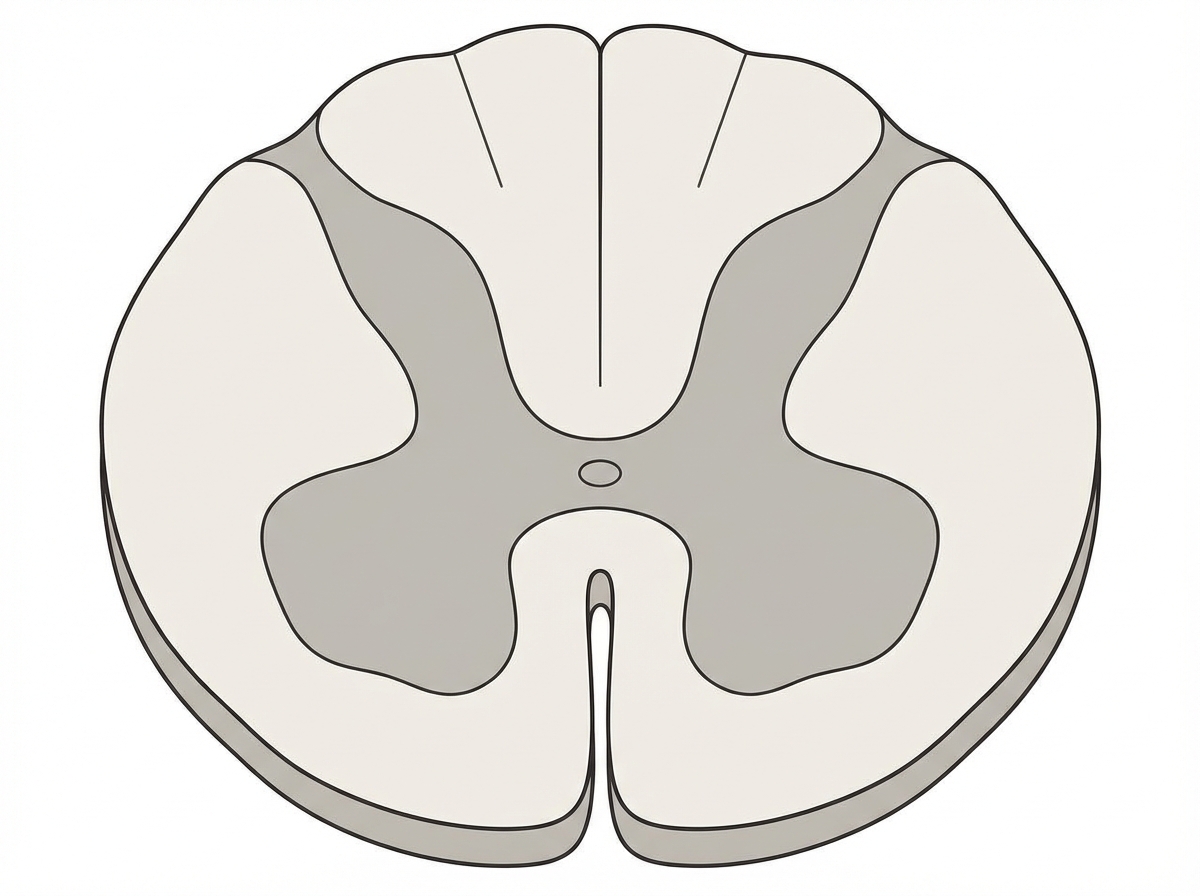
A 45-year-old man is brought to the emergency department by ambulance after a motor vehicle collision. He is not responsive to verbal commands and is unable to provide any history. His pulse is 108/min and regular. Physical examination shows ecchymoses over the neck and back. Neurological examination indicates damage to the spinal cord at the level shown in the illustration. This patient's injury is most likely located at which of the following levels of the spinal cord?
A 26-year-old woman presents to her gynecologist with complaints of pain with her menses and during intercourse. She also complains of chest pain that occurs whenever she has her menstrual period. The patient has a past medical history of bipolar disorder and borderline personality disorder. Her current medications include lithium and haloperidol. Review of systems is notable only for pain when she has a bowel movement relieved by defecation. Her temperature is 98.2°F (36.8°C), blood pressure is 114/74 mmHg, pulse is 70/min, respirations are 14/min, and oxygen saturation is 98% on room air. Pelvic exam is notable for a tender adnexal mass. The patient's uterus is soft, boggy, and tender. Which of the following is the most appropriate method of confirming the diagnosis in this patient?
A 42-year-old woman presents to the emergency department complaining of abdominal pain, nausea, and vomiting for the last 4 hours. She says that symptoms onset right after she had 2 generous portions of pizza. She notes that she had prior similar episodes which resolved spontaneously within an hour. However, the pain today has persisted for 5 hours and is much more severe. She says the pain is located in the right upper quadrant of her abdomen and radiates to her upper back. She describes the pain as dull and cramping. She has had hypertension for the past 10 years, managed medically. Her vital signs are a blood pressure of 148/96 mm Hg, a pulse of 108/min, a respiratory rate of 18/min, and a temperature of 37.7°C (99.9°F). Her BMI is 28 kg/m2. On physical examination, the patient appears uncomfortable and is clutching her abdomen in pain. Abdominal exam reveals severe tenderness to palpation in the right upper quadrant with guarding. A positive Murphy’s sign is present. Her serum chemistry levels, including amylase, lipase, bilirubin, and liver function tests and urinalysis are normal. Urine hCG level is < 0.5 IU/L. Abdominal ultrasound reveals a large stone lodged in the neck of the gallbladder. Which of the following is the most likely pathway for referred pain in this patient?
A 37-year-old man presents to his primary care provider complaining of bilateral arm numbness. He was involved in a motor vehicle accident 3 months ago. His past medical history is notable for obesity and psoriatic arthritis. He takes adalimumab. His temperature is 99.3°F (37.4°C), blood pressure is 130/85 mmHg, pulse is 90/min, and respirations are 18/min. On exam, superficial skin ulcerations are found on his fingers bilaterally. His strength is 5/5 bilaterally in shoulder abduction, arm flexion, arm extension, wrist extension, finger abduction, and thumb flexion. He demonstrates loss of light touch and pinprick response in the distal tips of his 2nd and 5th fingertips and over the first dorsal web space. Vibratory sense is intact in the bilateral upper and lower extremities. Which of the following nervous system structures is most likely affected in this patient?
One day after undergoing surgery for a traumatic right pelvic fracture, a 73-year-old man has pain over his buttocks and scrotum and urinary incontinence. Physical examination shows right-sided perineal hypesthesia and absence of anal sphincter contraction when the skin around the anus is touched. This patient is most likely to have which of the following additional neurological deficits?
A 48-year-old man with retroperitoneal sarcoma requires extensive resection including portions of the sympathetic chain from T10-L2 and the celiac/superior mesenteric ganglia. Preoperative evaluation is needed to predict postoperative autonomic consequences. The multidisciplinary team must evaluate which combination of deficits is most likely based on the precise anatomical structures being resected and the potential for compensation.
A 62-year-old man with atrial fibrillation undergoes catheter ablation of the pulmonary vein ostia. Post-procedure, he develops gastroparesis, but his cardiologist notes preserved heart rate variability and normal baroreceptor responses. Surgical anatomy review suggests the ablation may have damaged autonomic structures. Evaluate the most likely anatomical explanation for isolated gastric dysmotility with preserved cardiovascular autonomic function.
Want unlimited practice?
Get full access to all questions, explanations, and performance tracking.
Scan to download app