
Sympathetic trunk anatomy — MCQs

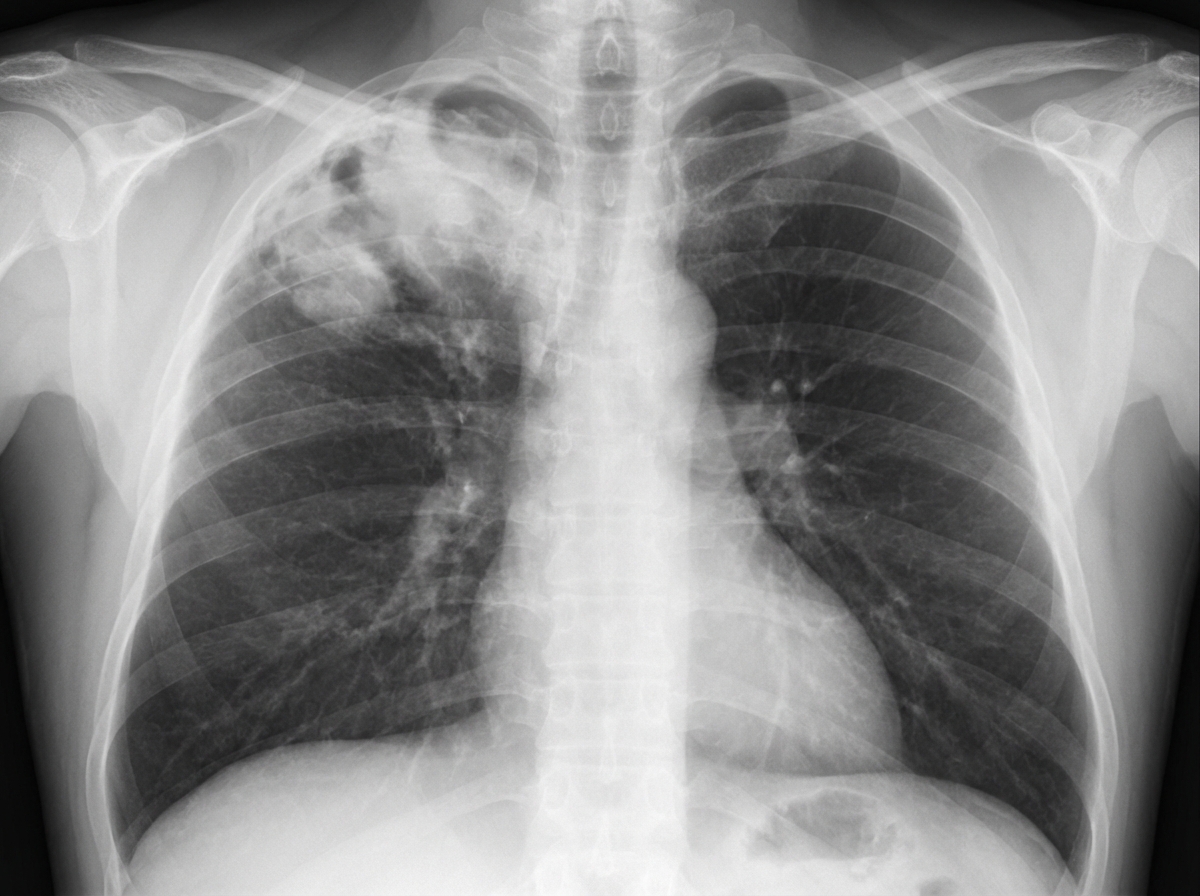
A 68-year-old male is diagnosed with squamous cell carcinoma in the upper lobe of his right lung. A chest radiograph can be seen in image A. Which of the following would you most expect to find in this patient?
A 50-year-old man presents to his primary care provider complaining of double vision and trouble seeing out of his right eye. His vision started worsening about 2 months ago and has slowly gotten worse. It is now severely affecting his quality of life. Past medical history is significant for poorly controlled hypertension and hyperlipidemia. He takes amlodipine, atorvastatin, and a baby aspirin every day. He smokes 2–3 cigarettes a day and drinks a glass of wine with dinner every night. Today, his blood pressure is 145/85 mm Hg, heart rate is 90/min, respiratory rate is 14/min, and temperature is 37.0°C (98.6°F). On physical exam, he appears pleasant and talkative. His heart has a regular rate and rhythm and his lungs are clear to auscultation bilaterally. Examination of the eyes reveals a dilated right pupil that is positioned inferolateral with ptosis. An angiogram of the head and neck is performed and he is referred to a neurologist. The angiogram reveals a 1 cm berry aneurysm at the junction of the posterior communicating artery and the posterior cerebral artery compressing the oculomotor nerve. Which of the following statements best describes the mechanism behind the oculomotor findings seen in this patient?
A 72-year-old man presents to his primary care physician because he feels like his vision has been changing over the last 6 months. In particular, he feels that he cannot see as well out of his right eye as previously. His past medical history is significant for myocardial infarction as well as Lyme disease. On presentation, he is found to have a droopy right eyelid as well as persistent constriction of his right pupil. Additionally, the skin on his right half of his face is found to be cracked and dry. Which of the following is most likely associated with this patient's symptoms?
A 21-year-old man was involved in a motor vehicle accident and died. At autopsy, the patient demonstrated abnormally increased mobility at the neck. A section of cervical spinal cord at C6 was removed and processed into slides. Which of the following gross anatomic features is most likely true of this spinal cord level?
A 47-year-old woman comes to the physician because of involuntary leakage of urine for the past 4 months, which she has experienced when bicycling to work and when laughing. She has not had any dysuria or urinary urgency. She has 4 children that were all delivered vaginally. She is otherwise healthy and takes no medications. The muscles most likely affected by this patient's condition receive efferent innervation from which of the following structures?
During a physical examination, a physician tests the strength of hip adduction against resistance. Which of the following nerves innervates the primary muscles responsible for this action?
A 61-year-old man sustains an intracranial injury to a nerve that also passes through the parotid gland. Which of the following is a possible consequence of this injury?
A 39-year-old woman is brought to the emergency department following a stab wound to the neck. Per the patient, she was walking her dog when she got robbed and was subsequently stabbed with a knife. Vitals are stable. Strength examination reveals 2/5 right-sided elbow flexion and extension, wrist extension, and finger motions. Babinski sign is upward-going on the right. There is decreased sensation to light touch and vibration on the patient's right side up to her shoulder. She also reports decreased sensation to pinprick and temperature on her left side, including her lower extremities, posterior forearm, and middle finger. The patient's right pupil is 2 mm smaller than the left with drooping of the right upper eyelid. Which of the following is the most likely cause of the patient’s presentation?
A 48-year-old man with retroperitoneal sarcoma requires extensive resection including portions of the sympathetic chain from T10-L2 and the celiac/superior mesenteric ganglia. Preoperative evaluation is needed to predict postoperative autonomic consequences. The multidisciplinary team must evaluate which combination of deficits is most likely based on the precise anatomical structures being resected and the potential for compensation.
A 62-year-old man with atrial fibrillation undergoes catheter ablation of the pulmonary vein ostia. Post-procedure, he develops gastroparesis, but his cardiologist notes preserved heart rate variability and normal baroreceptor responses. Surgical anatomy review suggests the ablation may have damaged autonomic structures. Evaluate the most likely anatomical explanation for isolated gastric dysmotility with preserved cardiovascular autonomic function.
Want unlimited practice?
Get full access to all questions, explanations, and performance tracking.
Scan to download app