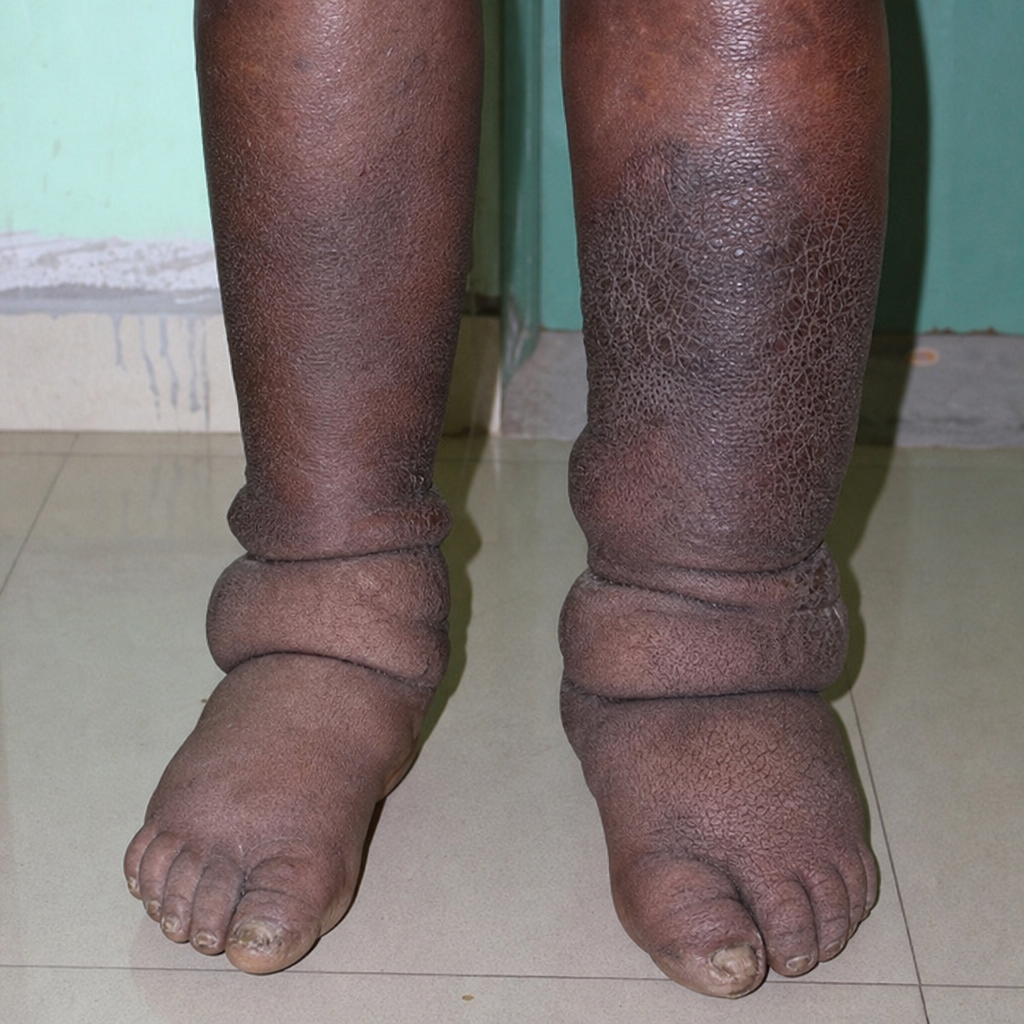
In the CEAP clinical classification, what does C-4b indicate?
What is Stemmer's sign?
SEPS is a procedure used for what?
What is the most common complication following varicose vein surgery?
Which of the following is NOT true about berry aneurysms?
What is the most common site of Berry's aneurism?
A 40-year-old woman is suspected of having a carotid body tumor. Which one of the following is most characteristic of such a tumor?
A 63-year-old woman with a history of aortic stenosis and left ventricular hypertrophy experienced cardiac arrest and died. Which of the following predisposes to sudden cardiac death?
Allen test detects insufficiency of which artery?
A 55-year-old man with recent onset of atrial fibrillation presents with a cold, pulseless left lower extremity. He complains of left leg paresthesia and is unable to dorsiflex his toes. Following a successful popliteal embolectomy, with restoration of palpable pedal pulses, the patient is still unable to dorsiflex his toes. What is the next step in management?
Explanation: The **CEAP classification** is the international standard for describing Chronic Venous Disorders. The "C" component stands for **Clinical signs**, graded from 0 to 6 based on severity. ### **Explanation of the Correct Answer** **C4** represents skin and subcutaneous tissue changes secondary to chronic venous hypertension. It is subdivided into: * **C4a:** Minor changes such as **pigmentation** (hemosiderin deposition) or **eczema** (stasis dermatitis). * **C4b:** More advanced, fibrotic changes including **lipodermatosclerosis** (induration and scarring of the skin/fat) or **atrophie blanche** (white, stellate scar tissue). Therefore, **Option D** is the correct classification for C4b. ### **Analysis of Incorrect Options** * **Option A (Edema):** This corresponds to **C3**. It is typically pitting edema at the ankle level. * **Option B (Pigmentation/Eczema):** These are the milder skin changes classified as **C4a**. * **Option C (Healed venous ulcer):** This corresponds to **C5**. An active, open venous ulcer is classified as **C6**. ### **NEET-PG High-Yield Pearls** * **C0:** No visible or palpable signs of venous disease. * **C1:** Telangiectasias or reticular veins (Spider veins). * **C2:** Varicose veins (distinguished from C1 by being >3mm in diameter). * **Lipodermatosclerosis** often gives the lower leg an **"Inverted Champagne Bottle"** appearance due to proximal swelling and distal fibrosis. * **Atrophie blanche** is also known as *livedoid vasculopathy*. * The **"E, A, P"** in CEAP stand for Etiology (Congenital, Primary, Secondary), Anatomy (Superficial, Perforator, Deep), and Pathophysiology (Reflux, Obstruction).
Explanation: **Stemmer’s Sign** is a pathognomonic clinical finding used to diagnose **chronic lymphedema**. It is considered positive when the skin over the dorsum of the second toe (or finger) cannot be pinched or lifted due to progressive subcutaneous fibrosis and epidermal thickening. ### Why Option C is Correct: In lymphedema, the accumulation of protein-rich fluid in the interstitial space triggers a chronic inflammatory response. This leads to **fibroblast proliferation** and collagen deposition (fibrosis). As the skin and underlying subcutaneous tissues become thickened and indurated, the skin loses its pliability, making it impossible to pinch a fold at the base of the second toe. ### Why Other Options are Incorrect: * **Option A & D:** While swelling and pitting edema occur in the early stages of lymphedema (including filariasis), Stemmer’s sign specifically refers to the **inability to pinch the skin** due to late-stage fibrotic changes. Pitting is characteristic of early lymphedema or venous edema, whereas Stemmer's sign indicates non-pitting, chronic changes. * **Option B:** The loss of perimalleolar shape (filling of the hollows around the ankles) is a general sign of lower limb edema but is not the definition of Stemmer’s sign. ### NEET-PG High-Yield Pearls: * **Specificity:** A positive Stemmer’s sign is virtually diagnostic of lymphedema. However, a **negative sign** does not rule it out (especially in early stages). * **Location:** Always look for it at the **dorsum of the second toe**. * **Stages of Lymphedema:** * *Stage I:* Reversible, pitting edema. * *Stage II:* Irreversible, non-pitting edema (Stemmer’s sign becomes positive here). * *Stage III:* Lymphostatic Elephantiasis (marked fibrosis, skin papillomas). * **Differential:** Unlike lymphedema, edema caused by venous insufficiency usually spares the toes and has a negative Stemmer’s sign.
Explanation: **Explanation:** **SEPS (Subfascial Endoscopic Perforator Surgery)** is a minimally invasive surgical technique used specifically in the management of **Chronic Venous Insufficiency (CVI)**. **Why Veins is the correct answer:** The primary pathology in advanced CVI (CEAP classes C4–C6) is often **perforator vein incompetence**. These veins normally allow blood to flow from the superficial to the deep venous system. When they become incompetent, high pressure from the deep veins is transmitted to the superficial system, leading to skin changes and venous ulcers. SEPS involves using an endoscope inserted into the subfascial space of the leg to visualize and ligate these incompetent perforators. This is preferred over the traditional open **Linton’s procedure**, as it significantly reduces wound healing complications in areas with compromised skin. **Why other options are incorrect:** * **Arteries:** Arterial pathologies (like PAD) are managed via bypass grafts, endarterectomy, or angioplasty. SEPS does not address arterial flow. * **Lymphatics:** Lymphedema is managed conservatively or via lymphovenous anastomosis; SEPS has no role in lymphatic drainage. * **AV Fistula:** These are connections between arteries and veins (congenital or for dialysis) and are managed by ligation or surgical creation, not subfascial endoscopy. **High-Yield Clinical Pearls for NEET-PG:** * **Indication:** Most commonly used for **Venous Ulcers (CEAP Class C6)** that fail to heal with compression therapy. * **Anatomy:** It targets the **Cockett’s perforators** (lower leg). * **Advantage:** Lower risk of "wound dehiscence" compared to the open Linton’s procedure. * **Contraindications:** Presence of Deep Vein Thrombosis (DVT) or severe arterial ischemia.
Explanation: **Explanation:** The correct answer is **Ecchymosis (Option A)**. **1. Why Ecchymosis is correct:** Ecchymosis (bruising) is the **most common** complication following varicose vein surgery, particularly after Trendelenburg procedure with stripping of the Great Saphenous Vein (GSV). It occurs due to the tearing of small tributary veins during the stripping process, leading to localized extravasation of blood into the subcutaneous tissues. While it is benign and usually resolves within 2–3 weeks, it occurs in nearly all patients to some degree. **2. Why the other options are incorrect:** * **Deep Vein Thrombosis (DVT):** This is the most **serious/dreaded** complication, but it is relatively rare (occurring in <1% of cases) due to early post-operative mobilization. * **Recurrence of varicosity:** This is a common **long-term** complication (occurring in 20–30% of cases over 10 years), often due to neovascularization or inadequate initial ligation. However, it is not as frequent in the immediate post-operative period as ecchymosis. * **Venous ulcer:** This is a clinical manifestation of chronic venous insufficiency (CVI), not a direct complication of the surgery itself. In fact, surgery is often performed to *heal* such ulcers. **3. High-Yield Clinical Pearls for NEET-PG:** * **Most common complication:** Ecchymosis/Bruising. * **Most common nerve injured:** **Saphenous nerve** (during stripping below the knee), leading to numbness along the medial aspect of the leg/foot. * **Most common nerve injured in Short Saphenous Vein surgery:** Sural nerve. * **Most common site of recurrence:** The saphenofemoral junction (due to tactical error or neovascularization). * **Gold Standard Investigation:** Venous Duplex Ultrasound.
Explanation: **Explanation:** Berry (saccular) aneurysms are acquired lesions resulting from a structural defect in the arterial wall. **1. Why Option C is the correct answer (The False Statement):** The hallmark of a berry aneurysm is the **absence of the tunica media (smooth muscle) and the internal elastic lamina** at the site of the aneurysm. The wall of the sac is composed only of thickened hyalinized intima and adventitia. Therefore, the statement that the wall contains smooth muscle is histologically incorrect. **2. Analysis of Incorrect Options (True Statements):** * **Option A:** They are associated with genetic conditions, most notably **Autosomal Dominant Polycystic Kidney Disease (ADPKD)**, Ehlers-Danlos syndrome (Type IV), and Marfan syndrome. * **Option B:** Rupture typically occurs at the **apex (dome)** of the sac because it is the thinnest part. This leads to blood entering the subarachnoid space, causing a **Subarachnoid Hemorrhage (SAH)**. * **Option C:** Approximately **90%** of berry aneurysms occur in the **anterior circulation** (Circle of Willis), specifically at arterial branching points where hemodynamic stress is highest. **High-Yield Clinical Pearls for NEET-PG:** * **Most common site:** Junction of the **Anterior Communicating Artery (ACoA)** and Anterior Cerebral Artery. * **Clinical Presentation:** "Worst headache of my life" (Thunderclap headache). * **Risk Factors:** Hypertension and smoking are the most important modifiable risk factors. * **Associated Nerve Palsy:** Aneurysms at the **Posterior Communicating Artery (PCoA)** can cause 3rd Cranial Nerve palsy (dilated pupil, ptosis).
Explanation: ### Explanation **Berry aneurysms** (saccular aneurysms) are thin-walled protrusions at arterial bifurcations in the Circle of Willis. They occur due to a congenital deficiency in the **tunica media** (muscular layer), combined with hemodynamic stress. **Why Option B is Correct:** The most common site for Berry aneurysms is the **Anterior Communicating Artery (A-com)**, specifically at its junction with the **Anterior Cerebral Artery (ACA)**. This site accounts for approximately **30–35%** of all intracranial aneurysms. **Analysis of Incorrect Options:** * **Option A (Internal Carotid Artery):** The junction of the ICA and the Posterior Communicating Artery (P-com) is the *second* most common site (approx. 30%). Aneurysms here often present with **3rd Nerve Palsy** (mydriasis and ptosis). * **Option D (Middle Cerebral Artery):** The MCA bifurcation is the third most common site (approx. 20%). While common, it is statistically less frequent than the A-com junction. * **Option C (Basilar Artery):** The basilar artery tip is the most common site in the **posterior circulation**, but posterior circulation aneurysms overall account for only about 10% of cases. **Clinical Pearls for NEET-PG:** 1. **Risk Factors:** Polycystic Kidney Disease (ADPKD), Ehlers-Danlos syndrome, Coarctation of the aorta, and Hypertension. 2. **Presentation:** Rupture leads to **Subarachnoid Hemorrhage (SAH)**, characterized by a "Thunderclap headache" (worst headache of life). 3. **Diagnosis:** Non-contrast CT is the initial investigation; Digital Subtraction Angiography (DSA) is the gold standard. 4. **Location Rule:** 90% of Berry aneurysms occur in the **anterior circulation**.
Explanation: **Explanation:** **Carotid Body Tumors (CBTs)**, also known as chemodectomas or paragangliomas, are the most common head and neck paragangliomas. **1. Why Option D is Correct:** The carotid body is a **chemoreceptor** located at the bifurcation of the common carotid artery. Its primary physiological role is to sense changes in arterial blood gas composition, specifically responding to **decreased PO2 (hypoxia)**, increased PCO2, and decreased pH. Tumors arising from these structures retain their identity as chemoreceptors. **2. Why Other Options are Incorrect:** * **Option A:** While they are paragangliomas, carotid body tumors are usually **non-functional** (less than 5% secrete catecholamines). This distinguishes them from adrenal pheochromocytomas. * **Option B:** They are actually **more common at high altitudes**. Chronic hypoxia at high altitudes leads to compensatory hyperplasia of the carotid body, increasing the risk of tumor development. * **Option C:** Structures that respond to changes in blood volume/pressure are **baroreceptors** (located in the carotid sinus). The carotid body is a chemoreceptor, not a baroreceptor. **3. High-Yield Clinical Pearls for NEET-PG:** * **Fontaine’s Sign:** The tumor is vertically fixed but **horizontally mobile** (because it is attached to the carotid bifurcation). * **Lyre Sign:** On angiography, there is a characteristic widening/splaying of the carotid bifurcation. * **Shamblin Classification:** Used to grade the tumor based on its involvement/encasement of the carotid vessels. * **Inheritance:** Most are sporadic, but familial cases (often bilateral) are associated with **SDHD gene mutations**. * **Treatment:** Surgical excision is the gold standard; preoperative embolization may be used to reduce vascularity.
Explanation: ### Explanation **Correct Option: B. Hypokalemia** In patients with **Aortic Stenosis (AS)** and **Left Ventricular Hypertrophy (LVH)**, the myocardium is highly susceptible to electrical instability. Hypokalemia lowers the resting membrane potential and prolongs ventricular repolarization (QT prolongation), which significantly increases the risk of life-threatening ventricular arrhythmias (VT/VF) and sudden cardiac death (SCD). In the context of LVH, the thickened muscle already has altered conduction properties, making electrolyte imbalances particularly lethal. **Analysis of Incorrect Options:** * **A. Split first heart sound:** A split S1 is a common physiological finding (closure of mitral then tricuspid valves) and does not predispose to SCD. In AS, the more relevant finding is a **reversed (paradoxical) splitting of S2**. * **C. Soft murmur at the left sternal border that varies with inspiration:** This describes a physiological or mild tricuspid regurgitation murmur. Murmurs that increase with inspiration are right-sided and generally benign in the context of SCD risk. * **D. Failure of the CVP to rise (Negative Hepato-jugular Reflux):** A positive HJR (rise in CVP >3 cm H2O) indicates fluid overload or right heart failure. A negative HJR is a normal finding and does not correlate with an increased risk of sudden death. **High-Yield Clinical Pearls for NEET-PG:** * **AS Triad (SAD):** Syncope, Angina, and Dyspnea. Once symptoms appear, the risk of SCD increases dramatically. * **ECG in Hypokalemia:** Look for flattened T-waves, prominent **U-waves**, and ST-segment depression. * **Critical AS:** Defined by a valve area **<1.0 cm²** or a mean gradient **>40 mmHg**. * **Avoid in AS:** Vasodilators (like ACE inhibitors or Nitrates) should be used with extreme caution as they can cause a catastrophic drop in preload/afterload, leading to syncope or arrest.
Explanation: **Explanation:** The **Allen test** is a clinical bedside assessment used to evaluate the **patency of the arterial supply to the hand**, specifically the adequacy of the collateral circulation between the radial and ulnar arteries via the palmar arches. **Why Radial Artery is the Correct Answer:** The test is most commonly performed before procedures that involve instrumentation of the radial artery (e.g., **Arterial Blood Gas (ABG) sampling** or radial artery cannulation). By compressing both the radial and ulnar arteries and then releasing only the ulnar artery, the clinician observes the "blush" (return of color) to the palm. If the hand remains pale, it indicates **ulnar artery insufficiency**, meaning the hand is dependent solely on the **radial artery**. Therefore, the test is designed to detect if the radial artery is the "insufficient" or "sole" provider, preventing ischemic complications if that radial artery were to be damaged during a procedure. **Analysis of Incorrect Options:** * **B. Ulnar artery:** While the test involves the ulnar artery, the primary clinical goal is to ensure the ulnar artery is *functional* so that the radial artery can be safely accessed. * **C. Popliteal artery:** This is located behind the knee; its patency is assessed via the popliteal pulse or the Foucher’s sign (for cysts). * **D. Aorta:** Aortic patency is assessed via central pulses, blood pressure differentials, or imaging (CT/MRI). **High-Yield Clinical Pearls for NEET-PG:** * **Modified Allen Test:** The standard version used today where only the ulnar artery is released. A "positive" or normal result is a return of color within **5–15 seconds**. * **Indication:** Mandatory before radial artery harvesting for **CABG** or radial artery cannulation. * **Alternative:** If the Allen test is inconclusive, **Pulse Oximetry** or **Doppler ultrasound** can be used to confirm collateral flow.
Explanation: ### Explanation The patient is presenting with **Reperfusion Injury** leading to **Acute Compartment Syndrome (ACS)**. **1. Why Immediate Fasciotomy is Correct:** The clinical triad of recent onset atrial fibrillation, a cold pulseless limb, and successful embolectomy confirms an embolic event followed by reperfusion. Reperfusion of ischemic muscle leads to capillary leakage and significant tissue edema. Because the muscles are confined within non-distensible fascial compartments, this swelling increases intracompartmental pressure. The **anterior compartment** of the leg is most commonly affected; it contains the deep peroneal nerve and the muscles responsible for **toe dorsiflexion**. The persistence of neurological deficits (inability to dorsiflex) despite the restoration of pulses is a hallmark of ACS. This is a surgical emergency requiring **immediate fasciotomy** to prevent permanent muscle necrosis and nerve damage. **2. Why Other Options are Incorrect:** * **Electromyography (EMG):** This is a diagnostic tool for chronic nerve/muscle conditions. In an acute setting, it delays definitive treatment and provides no therapeutic benefit. * **Measurement of compartment pressure:** While useful in unconscious patients or equivocal cases, ACS is a **clinical diagnosis**. If the clinical suspicion is high (as in this case with motor loss), one should not waste time measuring pressures; immediate surgery is indicated. * **Elevation of the left leg:** This is **contraindicated** in compartment syndrome. Elevating the limb reduces arterial inflow and further compromises perfusion pressure, worsening the ischemia. **3. Clinical Pearls for NEET-PG:** * **The 6 P’s of Ischemia:** Pain (out of proportion), Pallor, Pulselessness, Paresthesia, Paralysis, and Poikilothermia. * **Earliest sign of ACS:** Pain on passive stretching of the involved muscles. * **Late sign of ACS:** Loss of pulses (pulses often remain palpable in early compartment syndrome). * **Delta Pressure:** Compartment pressure within 30 mmHg of the diastolic blood pressure is diagnostic of ACS. * **Standard Procedure:** A double-incision four-compartment fasciotomy is the gold standard for the leg.
Atherosclerotic Disease
Practice Questions
Aortic Aneurysms
Practice Questions
Peripheral Arterial Disease
Practice Questions
Carotid Artery Disease
Practice Questions
Venous Thromboembolism
Practice Questions
Chronic Venous Insufficiency
Practice Questions
Mesenteric Vascular Disease
Practice Questions
Vascular Trauma
Practice Questions
Vascular Access for Hemodialysis
Practice Questions
Endovascular Techniques
Practice Questions
Diabetic Foot Vascular Disease
Practice Questions
Vasculitis
Practice Questions
Get full access to all questions, explanations, and performance tracking.
Start For Free