A patient complains of breathlessness following trauma. The trachea is shifted to the opposite side, a resonant percussion note is heard with absent breath sounds. What is a false statement regarding the insertion of an intercostal drain (ICD)?
What is the antibiotic of choice for lymphedema?
Cirsoid aneurysms most commonly occur in which of the following vessels?
Which of the following is true regarding popliteal aneurysms, except?
Neointimal hyperplasia causes vascular graft failure as a result of hypertrophy of which of the following?
Which of the following is a method of treating venous ulcer?
Which of the following is NOT true about congenital lymphedema?
A patient presents with varicose veins due to sapheno-femoral incompetence and normal perforators. Which of the following is NOT an appropriate management option?
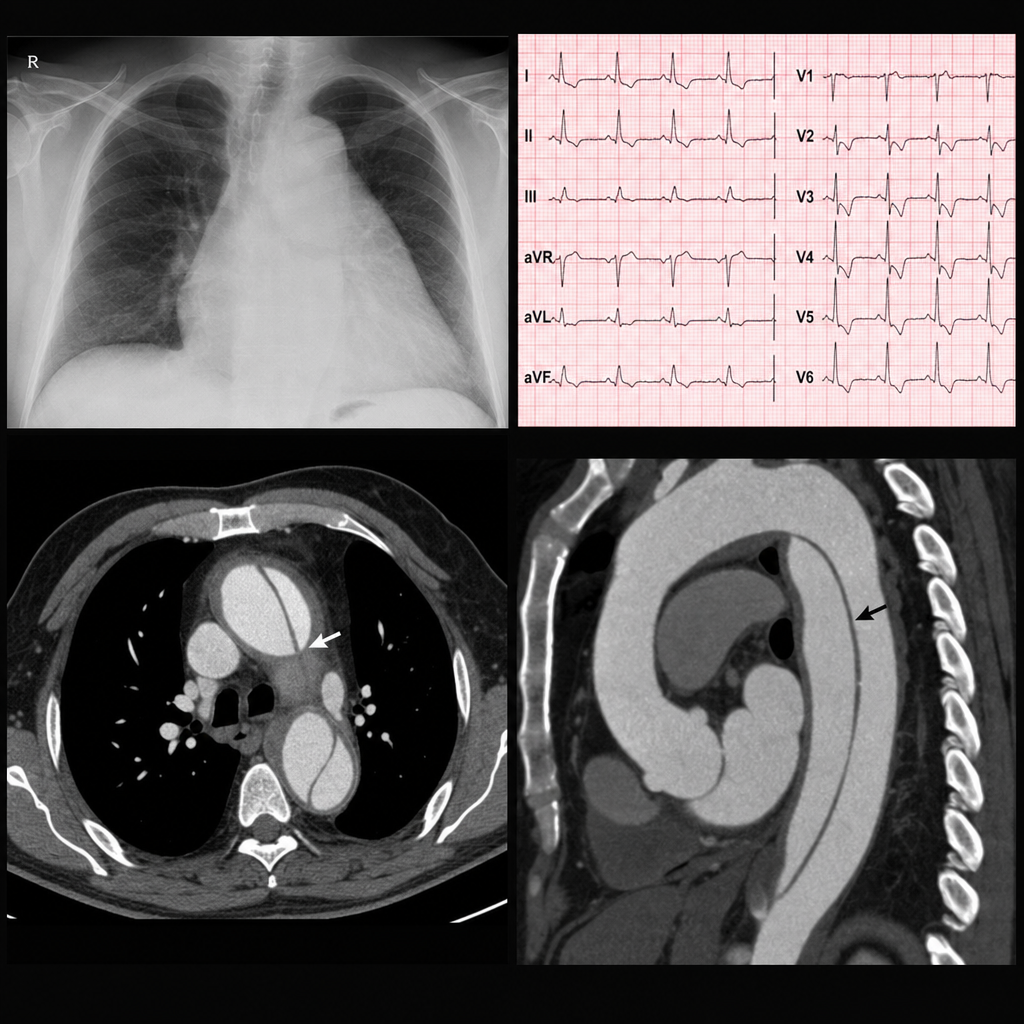
All of the following are risk factors for thoracic aortic aneurysm rupture except?
Bastio surgery for refractory left ventricular hypertrophy is:
Explanation: ### Explanation **Diagnosis:** The clinical triad of breathlessness, tracheal shift to the opposite side, hyper-resonant percussion, and absent breath sounds following trauma indicates a **Tension Pneumothorax**. **1. Why Option C is the False Statement (Correct Answer):** The standard site for Intercostal Drain (ICD) insertion is the **"Safe Triangle,"** bounded by the lateral border of the pectoralis major, the anterior border of the latissimus dorsi, and the 5th intercostal space (level of the nipple). This corresponds to the **4th or 5th intercostal space in the mid-axillary or anterior-axillary line**, not the scapular line. The scapular line is located posteriorly; inserting a tube here is uncomfortable for the patient (who would be lying on it) and risks injury to posterior structures. **2. Analysis of Other Options:** * **Option A:** For a pneumothorax (air), the tube is directed **posteriorly and superiorly** because air rises to the apex of the pleural cavity. (For fluid/effusion, it is directed inferiorly). * **Option B:** Digital palpation (inserting a finger into the incision) is a mandatory step to ensure the pleural space is entered and to check for lung adhesions, preventing accidental injury to the lung or diaphragm. * **Option D:** The neurovascular bundle (intercostal vein, artery, and nerve) runs in the **subcostal groove** at the inferior border of the rib. Therefore, the tube must be inserted over the **upper border of the lower rib** to avoid life-threatening hemorrhage or nerve damage. **High-Yield Clinical Pearls for NEET-PG:** * **Emergency Management:** In tension pneumothorax, the immediate step is **needle decompression** (5th ICS, mid-axillary line in adults; 2nd ICS, mid-clavicular line in children) followed by ICD insertion. * **Safe Triangle Boundaries:** Pectoralis major (anterior), Latissimus dorsi (posterior), 5th ICS (inferior), and Apex of axilla. * **Tube Size:** Large bore (28-32 Fr) is preferred for hemothorax; smaller bore for simple pneumothorax.
Explanation: **Explanation:** The primary goal of antibiotic therapy in lymphedema is to treat and prevent recurrent episodes of **cellulitis and lymphangitis**, which are the most common complications. 1. **Why Penicillin is Correct:** Lymphedematous limbs have impaired immune clearance, making them highly susceptible to infections. The most common causative organisms are **Group A Beta-hemolytic Streptococci** (e.g., *Streptococcus pyogenes*) and occasionally *Staphylococcus aureus*. **Penicillin** remains the gold standard and drug of choice because of its high efficacy against Streptococci. In patients with recurrent attacks (more than two episodes per year), long-term prophylactic low-dose Penicillin (e.g., Penicillin V or Benzathine Penicillin) is often prescribed to prevent further lymphatic damage and worsening of the edema. 2. **Why other options are incorrect:** * **Amikacin:** An aminoglycoside primarily used for Gram-negative infections (like *Pseudomonas*). It has no activity against the Gram-positive cocci that typically cause cellulitis in lymphedema and carries risks of nephrotoxicity and ototoxicity. * **Metronidazole:** An antiprotozoal and anaerobic antibiotic. It is ineffective against the aerobic Streptococci responsible for lymphedema-associated infections. * **Ceftazidime:** A third-generation cephalosporin with excellent anti-pseudomonal activity but relatively weak activity against Gram-positive cocci compared to Penicillin or first-generation cephalosporins. **Clinical Pearls for NEET-PG:** * **Stemmer’s Sign:** Inability to pinch the skin on the dorsal surface of the base of the second toe; a pathognomonic sign of lymphedema. * **Milroy’s Disease:** Congenital lymphedema (present at birth) due to VEGFR3 mutation. * **Stewart-Treves Syndrome:** A rare, highly aggressive **angiosarcoma** arising in a limb with chronic long-standing lymphedema (classically post-mastectomy). * **Gold Standard Investigation:** Lymphoscintigraphy.
Explanation: **Explanation:** **Cirsoid aneurysm** is a clinical misnomer; it is not a true aneurysm but rather an **acquired arteriovenous malformation (AVM)** or fistula. It consists of a complex, pulsating mass of dilated, tortuous subcutaneous arteries and veins that communicate directly without an intervening capillary bed. 1. **Why the Correct Answer is Right:** The **superficial temporal artery** (specifically its branches on the scalp) is the most common site for cirsoid aneurysms. They often follow trauma but can be congenital. Clinically, they present as a "bag of worms" appearance on the scalp, exhibiting a palpable thrill and an audible bruit. They are clinically significant because they can cause skin necrosis, headache, or life-threatening hemorrhage if injured. 2. **Analysis of Incorrect Options:** * **Aortic arch:** Typically associated with true aneurysms (e.g., atherosclerotic or syphilitic) or dissections, not cirsoid malformations. * **Splenic artery:** The most common site for visceral artery aneurysms, usually associated with pregnancy or portal hypertension, but these are saccular/true aneurysms. * **Saphenous vein:** Involved in varicose veins or AV fistulas, but the term "cirsoid aneurysm" is specifically reserved for the arterial-dominant plexiform malformations of the scalp. **NEET-PG High-Yield Pearls:** * **Pathophysiology:** Direct communication between the superficial temporal artery and the accompanying veins. * **Clinical Sign:** **Nicoladoni-Branham sign** (Bradycardia occurs when the artery proximal to the AV fistula is compressed) may be positive. * **Treatment of Choice:** Surgical excision or selective embolization. * **Differential Diagnosis:** Must be distinguished from a cavernous hemangioma (which does not pulsate).
Explanation: **Explanation:** Popliteal artery aneurysms (PAAs) are the **most common peripheral artery aneurysms**, accounting for approximately 70–80% of all peripheral cases. Therefore, Option D is the correct answer as it is a false statement. * **Why Option D is False (Correct Answer):** PAAs are not uncommon; they are the most frequent peripheral aneurysms. They are highly associated with other aneurysms: 50% of patients with a PAA have one on the contralateral side (bilateral), and 30–50% have a co-existing Abdominal Aortic Aneurysm (AAA). * **Option A is True:** The most common clinical sign is a pulsatile mass or swelling located in the popliteal fossa (behind the knee). * **Option B is True:** Most PAAs are asymptomatic until a complication occurs. The most common complication is **thromboembolism** (leading to acute limb ischemia) rather than rupture. * **Option C is True:** Surgery (bypass or endovascular stenting) is indicated for symptomatic aneurysms, those with complications, or asymptomatic ones >2 cm in diameter to prevent limb-threatening ischemia. **High-Yield Clinical Pearls for NEET-PG:** 1. **Rule of 50s:** 50% are bilateral; 50% are associated with AAA. 2. **Gender Predilection:** Predominantly seen in elderly males (95%). 3. **Complication Profile:** Unlike AAA (which tends to rupture), PAAs tend to **thrombose or embolize** ("Blue Toe Syndrome"). 4. **Diagnosis:** Duplex Ultrasound is the initial investigation of choice; CT Angiography is used for surgical planning.
Explanation: **Explanation:** **Neointimal hyperplasia (NIH)** is the most common cause of late-stage vascular graft failure (typically occurring between 3 months and 2 years post-surgery). It is a physiological healing response gone awry in response to vessel wall injury or hemodynamic stress. **Why Smooth Muscle Cells (SMCs) are correct:** The hallmark of NIH is the migration and proliferation of **vascular smooth muscle cells**. Following vascular injury (e.g., at the site of an anastomosis), SMCs shift from a "contractile" phenotype to a "synthetic" phenotype. These cells migrate from the tunica media to the tunica intima, where they proliferate and deposit an abundant extracellular matrix, leading to thickening of the arterial wall and subsequent luminal narrowing (stenosis). **Why other options are incorrect:** * **Endothelial cells:** While endothelial injury triggers the process, these cells do not hypertrophy to cause stenosis; rather, their dysfunction or loss initiates the inflammatory cascade. * **Collagen and Elastic fibers:** These are components of the extracellular matrix produced by the synthetic smooth muscle cells. While they contribute to the bulk of the lesion, the primary cellular driver and the entity undergoing proliferation/hypertrophy is the smooth muscle cell itself. **High-Yield NEET-PG Pearls:** * **Timeline:** NIH is the primary cause of graft failure between **1 month and 2 years**. Failure <30 days is usually due to technical errors or thrombosis; failure >2 years is usually due to progressive atherosclerosis. * **Location:** In bypass grafts, NIH occurs most frequently at the **distal anastomosis** due to turbulent flow and compliance mismatch. * **Prevention:** Antiplatelet therapy (Aspirin/Clopidogrel) and statins are used to mitigate this response.
Explanation: ### Explanation **Correct Answer: C. Bisgaard method** **Bisgaard’s Method** (also known as the "Bisgaard regimen") is a conservative treatment approach for chronic venous ulcers. It is based on the principle of reducing venous hypertension and improving lymphatic drainage. The method consists of a triad: 1. **Massage:** To reduce edema and soften the indurated (lipodermatosclerosis) tissue around the ulcer. 2. **Exercises:** Specific ankle movements to activate the calf muscle pump. 3. **Compression:** Using inelastic bandages or heavy-duty elastic stockings to support the venous return. --- ### Analysis of Incorrect Options: * **A. Hilton’s Method:** This is a surgical technique used for the **drainage of deep-seated abscesses** located near vital structures (e.g., axillary or neck abscesses). It involves incising only the skin and using a hemostat for blunt dissection to avoid injuring nerves or vessels. * **B. Trivex Method:** This refers to **Transilluminated Powered Phlebectomy (TIPP)**. It is a minimally invasive surgical procedure used to remove varicose veins using a powered resector under the guidance of transillumination. While it treats the underlying cause (varicose veins), it is not a specific method for ulcer care itself. * **D. Tessari Method:** This is the standardized technique for **creating foam** for sclerotherapy. It involves using two syringes connected by a three-way stopcock to mix a liquid sclerosant (like Polidocanol) with air to create a stable foam used to treat varicose veins. --- ### High-Yield Clinical Pearls for NEET-PG: * **Gaiter Zone:** The most common site for venous ulcers (medial malleolus) due to the presence of Cockett’s perforators. * **Cockett and Elving’s Operation:** A historical surgical treatment for venous ulcers involving the subfascial ligation of incompetent perforators. * **SEPS (Subfascial Endoscopic Perforator Surgery):** The modern gold standard for surgical management of incompetent perforators in patients with venous ulcers (CEAP Class C5-C6). * **Marjolin’s Ulcer:** A high-yield complication where a chronic venous ulcer (or any chronic wound/scar) undergoes malignant transformation into **Squamous Cell Carcinoma**.
Explanation: This question tests your knowledge of the classification and clinical presentation of primary lymphedema. Primary lymphedema is categorized based on the age of onset: **Lymphedema Congenita** (birth to 2 years), **Lymphedema Praecox** (2 to 35 years), and **Lymphedema Tarda** (after 35 years). ### **Explanation of Options** * **Option A (Bilateral involvement):** Congenital lymphedema is frequently bilateral. While it may be asymmetrical, the underlying lymphatic dysplasia (hypoplasia or aplasia) often affects both limbs. * **Option B (Lower limb involvement):** The lower extremities are the most common site of involvement in all forms of primary lymphedema, including the congenital type. * **Option C (Manifests before puberty):** By definition, "congenital" lymphedema is present at birth or appears within the first two years of life. Therefore, it almost always manifests well before the onset of puberty. Since all three statements (A, B, and C) are clinically accurate descriptions of congenital lymphedema, **Option D (None of the above)** is the correct choice. ### **High-Yield Clinical Pearls for NEET-PG** * **Milroy’s Disease:** A specific autosomal dominant form of congenital lymphedema associated with mutations in the **VEGFR-3** gene. It typically presents with painless, "woody" edema of the lower limbs at birth. * **Lymphedema Praecox:** The most common type of primary lymphedema (approx. 80%). It is more common in females and usually manifests at puberty (Meige’s disease). * **Stemmer’s Sign:** Inability to pinch the skin on the dorsal surface of the base of the second toe; a pathognomonic physical finding for lymphedema. * **Imaging:** **Lymphoscintigraphy** is the gold standard investigation for diagnosing and characterizing lymphatic flow.
Explanation: The management of varicose veins is a high-yield topic for NEET-PG, focusing on identifying the anatomical site of reflux to determine the appropriate intervention. ### **Explanation of the Correct Answer (B)** **Sclerotherapy** is considered inappropriate as a primary treatment for **sapheno-femoral incompetence (SFI)**. The underlying pathology in SFI is a faulty valve at the saphenofemoral junction (SFJ), leading to high-pressure reflux from the deep system into the superficial system. Sclerotherapy involves injecting a chemical irritant to fibrose the vein; however, if the high-pressure reflux at the SFJ is not addressed first, the recurrence rate is extremely high, and there is a significant risk of the sclerosant entering the deep venous system (causing DVT). Sclerotherapy is best reserved for minor branch varicosities, "spider veins," or residual veins *after* the junctional reflux has been corrected. ### **Analysis of Incorrect Options** * **C & D (Sapheno-femoral flush ligation +/- Stripping):** This is the traditional "Gold Standard" (Trendelenburg procedure). Flush ligation at the SFJ addresses the source of reflux. Adding stripping (Option D) reduces the risk of recurrence compared to ligation alone. * **A (Endovascular stripping/ablation):** Modern management often utilizes endovenous thermal ablation (RFA or EVLA). While "stripping" usually refers to open surgery, endovascular techniques serve the same purpose of obliterating the Great Saphenous Vein (GSV) and are highly effective for SFI. ### **Clinical Pearls for NEET-PG** * **Gold Standard Investigation:** Duplex Ultrasound (to confirm reflux and mark the SFJ). * **Trendelenburg Procedure:** Includes flush ligation of the SFJ and all its tributaries (superficial epigastric, circumflex iliac, external pudendal). * **Complication of Stripping:** Injury to the **Saphenous nerve** (sensory loss on the medial aspect of the leg/foot). * **CEAP Classification:** Used for staging chronic venous insufficiency (C2 = Varicose veins).
Explanation: **Explanation:** The risk of **Thoracic Aortic Aneurysm (TAA) rupture** is primarily determined by the structural integrity of the aortic wall and the hemodynamic stress applied to it. **Why Anticoagulation use is the correct answer:** While anticoagulation increases the risk of bleeding complications and can worsen the outcome *after* a rupture has occurred, it is **not** a primary risk factor for the mechanical failure or rupture of the aneurysm wall itself. The rupture of an aneurysm is a mechanical event driven by wall tension (Laplace’s Law) and structural degradation, rather than a failure of the coagulation cascade. **Analysis of Incorrect Options:** * **Symptomatic aneurysm:** The development of new symptoms (e.g., chest or back pain) often indicates rapid expansion or impending rupture. It is one of the strongest clinical predictors of an acute event. * **Concurrent dissection:** Aorta with a pre-existing dissection has a significantly weakened media. The presence of a "false lumen" and structural instability makes these aneurysms much more prone to rupture compared to simple degenerative aneurysms. * **Increased patient age:** Advancing age is associated with increased degeneration of elastic fibers and collagen in the aortic media (cystic medial necrosis), which correlates with a higher risk of rupture. **High-Yield Clinical Pearls for NEET-PG:** * **Size Threshold:** The most important predictor of rupture is the **maximum diameter**. For TAA, the risk increases significantly above **5.5 cm** (Ascending) or **6.0 cm** (Descending). * **Growth Rate:** Expansion >0.5 cm in 6 months or >1 cm in a year is a high-risk feature. * **Law of Laplace:** Wall Tension = (Pressure × Radius) / Wall Thickness. This explains why increasing diameter (Radius) leads to higher tension and eventual rupture. * **Associated Conditions:** Marfan syndrome, Ehlers-Danlos (Type IV), and bicuspid aortic valve are high-yield genetic risk factors for TAA.
Explanation: **Explanation:** **Batista Surgery** (Partial Left Ventriculectomy) was developed by Dr. Randas Batista. The procedure is based on **Laplace’s Law**, which states that wall tension ($T$) is proportional to the product of intraventricular pressure ($P$) and radius ($R$) ($T = P \times R$). In refractory heart failure or severe left ventricular hypertrophy/dilation, the increased radius leads to massive wall tension, decreasing myocardial efficiency. By surgically removing a wedge of the left ventricular wall (ventriculectomy), the radius is reduced, thereby lowering wall tension and improving the heart's contractile efficiency. **Analysis of Options:** * **Option C (Ventriculectomy):** This is the correct answer. The procedure involves the excision of a portion of the viable but dilated left ventricular myocardium (usually between the papillary muscles) to reduce the volume of the dilated chamber. * **Option A (Patch repair):** This refers to procedures like the **Dor procedure** (Endoventricular Circular Patch Plasty), used specifically for ventricular aneurysms, not general refractory hypertrophy. * **Option B (Mitral regurgitation repair):** While mitral repair may be done concurrently with Batista surgery if functional MR is present, it is not the definition of the surgery itself. * **Option D (Ventriculoplasty):** This is a broader term for reshaping the ventricle. While Batista is a form of ventriculoplasty, "Ventriculectomy" is the specific surgical action that defines the procedure. **High-Yield Clinical Pearls for NEET-PG:** * **Indication:** End-stage dilated cardiomyopathy as an alternative to cardiac transplantation. * **Key Principle:** Reduction of LV diameter to decrease wall stress (Laplace Law). * **Current Status:** Largely superseded by medical management and Ventricular Assist Devices (VADs) due to high long-term failure rates, but remains a classic surgical concept in exams.
Atherosclerotic Disease
Practice Questions
Aortic Aneurysms
Practice Questions
Peripheral Arterial Disease
Practice Questions
Carotid Artery Disease
Practice Questions
Venous Thromboembolism
Practice Questions
Chronic Venous Insufficiency
Practice Questions
Mesenteric Vascular Disease
Practice Questions
Vascular Trauma
Practice Questions
Vascular Access for Hemodialysis
Practice Questions
Endovascular Techniques
Practice Questions
Diabetic Foot Vascular Disease
Practice Questions
Vasculitis
Practice Questions
Get full access to all questions, explanations, and performance tracking.
Start For Free