A drug abuser developed a pseudoaneurysm. Which of the following should be included in the treatment modalities?
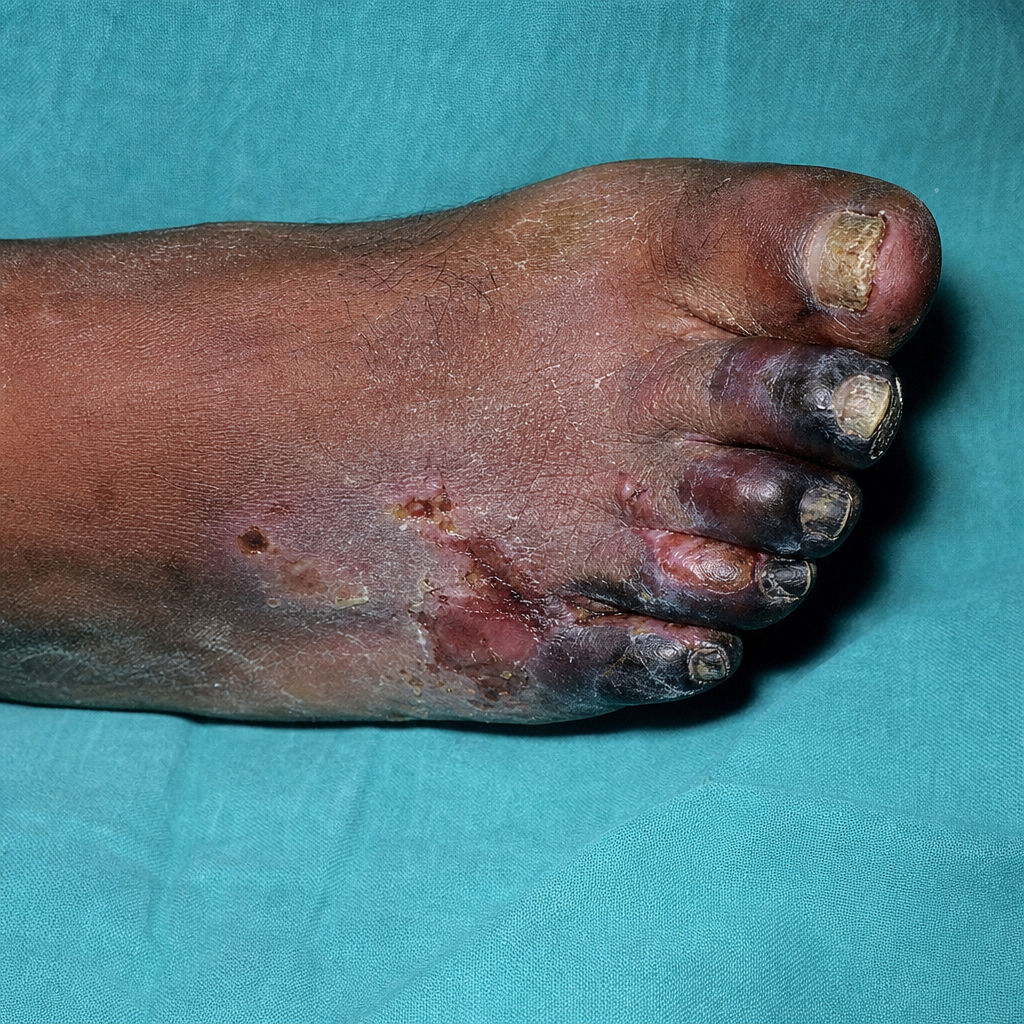
In Buerger disease, which is the site of pain?
What is the most common site of subclavian artery obstruction in subclavian steal syndrome?
Trendelenburg's operation is indicated in the treatment of:
Three days after undergoing an operation for an abdominal aortic aneurysm, a patient has moderate fever, abdominal pain, and rectal bleeding. What is the most helpful investigation?
What is true about lymphangioma?
Critical limb ischemia occurs when the ankle brachial index falls to below?
What is the suture of choice for vascular anastomosis?
Which drug is used for Buerger's disease?
Pain in varicose veins is due to all EXCEPT:
Explanation: **Explanation:** The management of a pseudoaneurysm in a drug abuser (often referred to as an "infected pseudoaneurysm" or "mycotic pseudoaneurysm") differs significantly from non-infected cases due to the high risk of **sepsis and graft infection.** **1. Why Option A is Correct:** In intravenous drug abusers, pseudoaneurysms (most commonly in the femoral artery) are almost always **infected** due to non-sterile injection techniques. The gold standard treatment is **triple ligation** (ligation of the proximal, distal, and profunda femoris arteries) followed by **wide surgical debridement** of all necrotic and infected tissue. This "ligate and wait" approach prioritizes life over limb, as placing any graft in an infected field leads to catastrophic graft failure and secondary hemorrhage. **2. Why Other Options are Incorrect:** * **Option B:** Immediate revascularization is generally avoided in an infected field. Revascularization is only considered later if the limb becomes non-viable (critical limb ischemia) and the infection has cleared. * **Option C:** Synthetic materials (like PTFE or Dacron) are strictly contraindicated in an infected field as they act as a nidus for persistent infection, leading to suture line breakdown and fatal hemorrhage. * **Option D:** While autogenous grafts (like the Great Saphenous Vein) are more resistant to infection than synthetic ones, they still carry a high risk of "blowout" if placed directly into an actively infected groin. **Clinical Pearls for NEET-PG:** * **Most common site:** Common Femoral Artery (CFA). * **Classic Presentation:** Pulsatile mass, "to-and-fro" murmur on auscultation, and signs of inflammation (fever, leukocytosis). * **Diagnostic Modality:** Duplex Ultrasound is the initial investigation; CT Angiography is used for surgical planning. * **The "Ligate and Abandon" Rule:** In the presence of gross purulence, ligation without immediate reconstruction is the safest strategy. Collateral circulation often maintains limb viability.
Explanation: **Explanation:** **Buerger’s Disease (Thromboangiitis Obliterans)** is a non-atherosclerotic, segmental, inflammatory disease that primarily affects small and medium-sized arteries and veins of the extremities. It is strongly associated with heavy tobacco use. **Why Calf Pain is the Correct Answer:** The hallmark clinical presentation of Buerger’s disease is **claudication**. While the disease starts distally (in the fingers and toes), the most common site of symptomatic muscle pain during exertion is the **calf**. This occurs because the disease frequently involves the infrapopliteal vessels (posterior tibial and peroneal arteries). Ischemia in these vessels leads to exercise-induced pain in the calf muscles, which is the most classic presentation in clinical exams. **Analysis of Incorrect Options:** * **B. Foot Pain:** While "instep claudication" (pain in the arch of the foot) is highly characteristic and specific to Buerger’s, it is statistically less common as the primary site of pain compared to the calf. * **C. Hand Pain:** Raynaud’s phenomenon and digital ischemia occur in about 40% of cases, but lower limb involvement is more frequent and typically precedes upper limb symptoms. * **D. Thigh Pain:** This is incorrect because Buerger’s disease is a **distal** tapering disease. Thigh pain (claudication) suggests involvement of the iliofemoral segments, which is characteristic of Atherosclerosis Obliterans (ASO), not Buerger’s. **High-Yield Clinical Pearls for NEET-PG:** * **Demographics:** Young male smokers (<45 years). * **Triad:** Claudication (calf/foot), Raynaud’s phenomenon, and Migratory Superficial Thrombophlebitis. * **Angiography Finding:** "Corkscrew" collaterals (Martorell’s sign) due to recanalization. * **Allen’s Test:** Often positive, indicating distal ulnar/radial artery occlusion. * **Treatment:** Absolute smoking cessation is the only way to halt disease progression. Sympathectomy may be used for symptomatic relief.
Explanation: **Explanation:** **Subclavian Steal Syndrome (SSS)** occurs due to a high-grade stenosis or total occlusion of the subclavian artery **proximal** to the origin of the **vertebral artery**. 1. **Why the First Part is Correct:** The subclavian artery is divided into three parts by the scalenus anterior muscle. The **first part** (medial to the muscle) is the segment from which the vertebral artery originates. For "steal" to occur, the obstruction must be proximal to this takeoff. When the first part is blocked, the pressure in the distal subclavian artery drops. During exercise of the ipsilateral arm, blood is "stolen" from the contralateral vertebral artery; it flows retrogradely down the ipsilateral vertebral artery to supply the arm, leading to vertebrobasilar insufficiency (dizziness, syncope). 2. **Why Other Options are Incorrect:** * **Second Part:** This lies posterior to the scalenus anterior. Obstruction here is distal to the vertebral artery origin; therefore, it would cause limb ischemia but **not** retrograde vertebral flow (no "steal"). * **Third Part:** This lies lateral to the scalenus anterior. Similar to the second part, it is distal to the vertebral origin. * **Fourth Part:** Anatomically, the subclavian artery only has three parts. **Clinical Pearls for NEET-PG:** * **Most common side:** Left side (due to direct aortic origin and sharper angulation). * **Clinical Sign:** A significant difference in blood pressure between the two arms (usually >20 mmHg). * **Diagnosis:** Duplex Ultrasonography is the initial screening tool (shows retrograde flow); Digital Subtraction Angiography (DSA) is the gold standard. * **Association:** Often associated with atherosclerosis (elderly) or Takayasu arteritis (younger females).
Explanation: **Explanation:** **Trendelenburg’s operation**, also known as **Juxta-femoral flush ligation**, is a classic surgical procedure for **Varicose Veins**. It is specifically indicated when there is **Saphenofemoral Junction (SFJ) incompetence**. The procedure involves ligating the Great Saphenous Vein (GSV) exactly at its confluence with the Common Femoral Vein. A critical step is the ligation of all proximal tributaries (e.g., superficial circumflex iliac, superficial epigastric, and pudendal veins) to prevent future recurrence via collateral circulation. **Analysis of Options:** * **Deep Vein Thrombosis (A):** Surgery is rarely the primary treatment. Management focuses on anticoagulation (heparin/warfarin). Trendelenburg’s operation is contraindicated in DVT because the superficial system acts as a vital collateral pathway when deep veins are occluded. * **Buerger’s Disease (B):** Also known as Thromboangiitis Obliterans (TAO), this is an occlusive arterial disease. Treatment involves smoking cessation and lumbar sympathectomy, not venous ligation. * **Obturator Hernia (D):** While the "Howship-Romberg sign" is associated with this hernia, the "Trendelenburg sign/test" refers to hip stability or venous assessment. There is no "Trendelenburg operation" for hernias. **High-Yield Clinical Pearls for NEET-PG:** * **Trendelenburg Test:** Used to differentiate between SFJ incompetence and perforator incompetence. * **Brodie-Trendelenburg Test:** Specifically assesses the valvular competency of the GSV and communicating veins. * **Modern Trend:** While the Trendelenburg operation is historically significant, it is now frequently replaced by minimally invasive endovenous thermal ablation (EVLA or RFA). * **Distinction:** Do not confuse the **Trendelenburg Operation** (vascular) with the **Trendelenburg Position** (head-down tilt) or the **Trendelenburg Sign** (gluteus medius palsy).
Explanation: **Explanation:** The clinical presentation of fever, abdominal pain, and rectal bleeding following an abdominal aortic aneurysm (AAA) repair is highly suggestive of **Ischemic Colitis**. This is a known complication occurring in 1–2% of elective cases and up to 10% of emergency repairs for ruptured aneurysms. **Why Sigmoidoscopy is the Correct Answer:** The most common site affected is the **sigmoid colon** because the **Inferior Mesenteric Artery (IMA)** is frequently ligated during AAA repair. While collateral circulation usually suffices, inadequate flow leads to ischemia. **Sigmoidoscopy** (flexible or rigid) is the investigation of choice because it allows direct visualization of the colonic mucosa to identify signs of ischemia, such as cyanosis, friability, or ulceration. It is performed without bowel preparation to avoid increasing intraluminal pressure. **Why Other Options are Incorrect:** * **Angiography (A):** Ischemic colitis is usually a low-flow state or due to ligation, not necessarily an acute arterial occlusion that requires mapping. It is invasive and delays diagnosis. * **Upper GI Endoscopy (B):** Rectal bleeding and lower abdominal pain point toward a pathology distal to the ligament of Treitz; UGI endoscopy would not reach the site of ischemia. * **Abdominal Ultrasound (C):** It is non-specific and cannot reliably evaluate mucosal integrity or diagnose early bowel ischemia. **NEET-PG High-Yield Pearls:** * **Watershed Areas:** The most vulnerable areas for colonic ischemia are **Griffith’s point** (splenic flexure) and **Sudek’s point** (rectosigmoid junction). * **IMA Ligation:** The risk of ischemia increases if the Internal Iliac arteries are also compromised. * **Management:** Mild cases are managed conservatively (NPO, antibiotics); full-thickness gangrene requires laparotomy and resection (Hartmann’s procedure).
Explanation: **Explanation:** **Lymphangiomas** are benign malformations of the lymphatic system, rather than true neoplasms. 1. **Why Option B is correct:** Lymphangiomas arise due to the **congenital sequestration of lymphatic channels**. During embryonic development, certain lymphatic buds fail to establish a connection with the main lymphatic system. These sequestered primitive lymphatic sacs continue to produce lymph but lack drainage, leading to the formation of cystic or cavernous spaces. They are most commonly found in the neck (Cystic Hygroma). 2. **Why other options are incorrect:** * **Option A:** Lymphangiomas are strictly **benign** lesions. They do not metastasize, though they can be locally infiltrative and cross anatomical planes. * **Option C:** While lasers (like CO2 or Nd:YAG) are sometimes used for superficial mucosal lymphangiomas, **surgical excision** (complete removal) remains the gold standard for definitive treatment. Laser is not the primary "excision" modality for deep-seated cystic hygromas. * **Option D:** While sclerotherapy (using agents like OK-432, Bleomycin, or Doxycycline) is an emerging treatment, it is primarily effective for **macrocystic** types. However, in the context of standard surgical teaching and classical MCQ patterns, the **pathological definition** (Option B) is considered the "most true" fundamental fact about the disease. **High-Yield Clinical Pearls for NEET-PG:** * **Most common site:** Posterior triangle of the neck (Cystic Hygroma). * **Clinical Sign:** They are brilliantly **transilluminant** because they contain clear lymph. * **Classification:** Capillary (simple), Cavernous, and Cystic (Cystic Hygroma). * **Complications:** Sudden increase in size usually indicates hemorrhage into the cyst or secondary infection. * **Association:** Often associated with chromosomal abnormalities like **Turner syndrome** and Down syndrome.
Explanation: **Explanation:** **Ankle-Brachial Index (ABI)** is the ratio of the systolic blood pressure at the ankle to the systolic blood pressure in the arm. It is the primary non-invasive screening tool for Peripheral Arterial Disease (PAD). 1. **Why 0.3 is correct:** Critical Limb Ischemia (CLI) represents the end-stage of PAD, characterized by rest pain, ulceration, or gangrene. It is clinically defined by an **ABI < 0.3** (or an absolute ankle pressure < 50 mmHg). At this level, the perfusion pressure is insufficient to maintain tissue viability even at rest, leading to a high risk of limb loss. 2. **Analysis of Incorrect Options:** * **0.5:** An ABI between **0.4 and 0.9** typically correlates with **Intermittent Claudication**. While 0.5 indicates significant disease, it does not meet the threshold for "critical" ischemia unless tissue loss is present. * **0.9:** This is the **cutoff for diagnosing PAD**. An ABI of 0.91–1.30 is considered normal/borderline. Any value ≤ 0.90 is diagnostic of PAD. * **1.0:** This is a **normal** value. A normal ABI range is generally 1.0–1.3. **High-Yield Clinical Pearls for NEET-PG:** * **ABI > 1.3:** Suggests **calcified, non-compressible vessels** (commonly seen in Diabetics and Chronic Kidney Disease). In such cases, **Toe-Brachial Index (TBI)** is more reliable. * **CLI Definition:** Requires symptoms for >2 weeks plus hemodynamic evidence (ABI < 0.4, Ankle pressure < 50 mmHg, or Toe pressure < 30 mmHg). * **TASC II Classification:** Used to guide management (Endovascular vs. Surgical) based on lesion length and location. * **Leriche Syndrome Triad:** Claudication (buttock/thigh), Impotence, and absent femoral pulses (Aortoiliac occlusion).
Explanation: **Explanation:** In vascular surgery, the primary goal of an anastomosis is to create a secure, leak-proof, and non-thrombogenic connection. **Polypropylene (Prolene)** is the gold standard suture for this purpose due to several key properties: 1. **Non-thrombogenic:** It is a synthetic monofilament with a very smooth surface, minimizing platelet activation and thrombus formation. 2. **High Tensile Strength:** It maintains its strength indefinitely, which is crucial because vascular grafts or repairs are under constant arterial pressure. 3. **Low Tissue Reactivity:** Being inert, it causes minimal inflammatory response, reducing the risk of anastomotic narrowing or scarring. 4. **Handling:** It has a "plastic" memory that allows for secure knotting and smooth passage through delicate vessel walls without "sawing" through them. **Analysis of Incorrect Options:** * **Chromic Catgut:** This is an absorbable, natural suture. It loses strength rapidly and causes significant tissue inflammation, making it entirely unsuitable for high-pressure vascular structures. * **Silk:** Although it has excellent handling, silk is a braided multifilament. It can harbor bacteria (increasing infection risk) and induces a significant tissue reaction that can lead to intimal hyperplasia and late failure of the anastomosis. * **Nylon:** While it is a monofilament, nylon is susceptible to "hydrolytic degradation" over time, meaning it eventually loses its tensile strength. In vascular surgery, permanent support is required. **High-Yield Clinical Pearls for NEET-PG:** * **Suture Technique:** Vascular anastomoses are typically performed using a **continuous over-and-over (Blalock) technique** to ensure a water-tight seal. * **Double-Armed Needles:** Prolene sutures used in vascular surgery usually have needles at both ends to facilitate suturing from the back wall to the front. * **PTFE (Gore-Tex) Suture:** Sometimes used for synthetic grafts as it reduces "needle-hole bleeding" due to its unique compression properties.
Explanation: **Explanation:** **Buerger’s Disease (Thromboangiitis Obliterans - TAO)** is a non-atherosclerotic, segmental, inflammatory disease that primarily affects small and medium-sized arteries and veins of the extremities. It is strongly associated with heavy tobacco use. **Why Xanthinol Nicotinate is correct:** Xanthinol nicotinate is a peripheral vasodilator. It acts by causing direct relaxation of the vascular smooth muscles and improving peripheral blood flow. In Buerger’s disease, where there is significant ischemia due to vessel narrowing, vasodilators are used as adjuvant therapy to improve distal perfusion and relieve rest pain. Other drugs used in TAO include **Iloprost** (a prostacyclin analogue) and **Cilostazol** (a PDE3 inhibitor). **Why the other options are incorrect:** * **Propranolol:** This is a non-selective beta-blocker. It is generally **contraindicated** in peripheral vascular diseases like Buerger’s because blocking beta-2 receptors leads to unopposed alpha-adrenergic activity, causing further vasoconstriction and worsening ischemia. * **Glyceryl Trinitrate (GTN):** While GTN is a potent vasodilator, it acts primarily on the venous system and coronary arteries. It is not a standard or effective treatment for the chronic, segmental arterial inflammation seen in Buerger’s disease. **High-Yield Clinical Pearls for NEET-PG:** * **Gold Standard Treatment:** The only definitive way to stop disease progression is **absolute smoking cessation**. * **Classic Presentation:** Young male smoker with a triad of distal ischemia (claudication/ulcers), Raynaud’s phenomenon, and **migratory superficial thrombophlebitis**. * **Angiographic Finding:** "Corkscrew collaterals" (Martorell’s sign). * **Surgical Option:** Lumbar Sympathectomy (to relieve pain and improve skin perfusion) or Omental Transposition.
Explanation: **Explanation:** The pathophysiology of pain in varicose veins is primarily related to mechanical and metabolic changes within the venous wall rather than the secondary effects on the microcirculation. **Why "Increased Capillary Permeability" is the correct answer:** While increased capillary permeability is a hallmark of **Chronic Venous Insufficiency (CVI)**, it is responsible for **edema, skin changes (lipodermatosclerosis), and ulceration**, rather than the acute sensation of pain itself. Pain in varicosities is a nociceptive response originating from the vessel wall, not the interstitial fluid shift. **Analysis of Incorrect Options:** * **Increased venous wall tension (A):** Venous hypertension causes stretching of the vein wall. This mechanical distension stimulates intramural nociceptors, leading to the characteristic "aching" or "heaviness." * **Hyperviscosity of RBCs (C):** Stasis in dilated veins leads to local hemoconcentration and RBC aggregation. This increases blood viscosity, which further impairs micro-rheology and contributes to dull, throbbing pain. * **Hypoxia of tunica media (D):** In varicose veins, the *vasa vasorum* (vessels supplying the vein wall) may become compromised due to high intraluminal pressure. This leads to hypoxia of the tunica media, triggering the release of inflammatory mediators (like bradykinin and prostaglandins) that sensitize nerve endings. **High-Yield Clinical Pearls for NEET-PG:** * **Nature of Pain:** Typically described as a dull ache or heaviness that **worsens at the end of the day** or after prolonged standing and is **relieved by elevation** or walking (calf pump activation). * **Gold Standard Investigation:** Duplex Ultrasound (to assess reflux at the saphenofemoral/saphenopopliteal junctions). * **CEAP Classification:** Remember that pain is a subjective symptom and can occur at any stage (C0-C6), but skin changes (C4-C6) are specifically due to capillary leak and fibrin cuff formation.
Atherosclerotic Disease
Practice Questions
Aortic Aneurysms
Practice Questions
Peripheral Arterial Disease
Practice Questions
Carotid Artery Disease
Practice Questions
Venous Thromboembolism
Practice Questions
Chronic Venous Insufficiency
Practice Questions
Mesenteric Vascular Disease
Practice Questions
Vascular Trauma
Practice Questions
Vascular Access for Hemodialysis
Practice Questions
Endovascular Techniques
Practice Questions
Diabetic Foot Vascular Disease
Practice Questions
Vasculitis
Practice Questions
Get full access to all questions, explanations, and performance tracking.
Start For Free