Which of the following is NOT a feature of acute arterial occlusion?
The triad of revascularization injury includes all of the following except:
A patient with critical lower limb ischemia presents with which of the following clinical features?
What is the gold standard for the diagnosis of carotid body tumors?
A 65-year-old man with a long history of diabetes mellitus was hospitalized for treatment of a left great toe ulcer. Below-knee amputation was performed due to non-resolution despite multiple courses of oral antibiotics. On the first postoperative day, he developed fever, which worsened by day 2. His amputation stump was mottled with purplish discoloration and distal necrosis. Crepitus was palpable up to his patella. What is the likely pathogen causing these postoperative complications?
What is the most common site for an atherosclerotic aneurysm?
Which of the following is NOT true about Raynaud's disease?
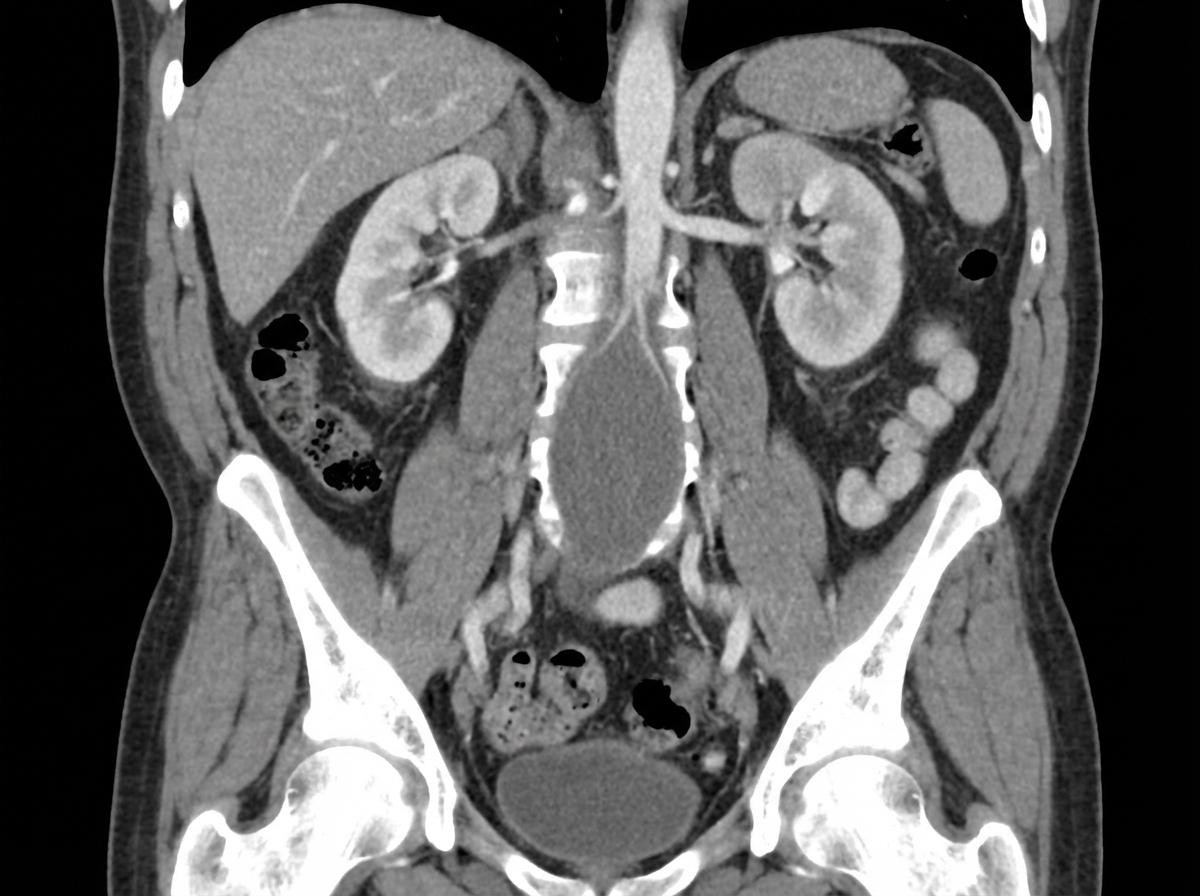
A 70-year-old man presents with abdominal pain and an abdominal mass. Angiography reveals an aneurysm of the abdominal aorta. What is the most likely cause?
For aortic grafts, what is the best available material?
What is the typical sequence of color changes observed in Raynaud's disease?
Explanation: In acute arterial occlusion, the hallmark clinical presentation is defined by the **"6 Ps"**: Pain, Pallor, Pulselessness, Paresthesia, Paralysis, and Poikilothermia (coldness). ### Why Cyanosis is the Correct Answer **Cyanosis** is typically a sign of venous congestion or chronic deoxygenation, not acute arterial blockage. In an acute arterial event, there is a sudden and complete cessation of blood flow to the distal limb. Because no blood (oxygenated or deoxygenated) is reaching the capillaries, the skin becomes **waxy white (Pallor)** rather than blue. Cyanosis may only appear in the very late stages of tissue death (gangrene), but it is not a primary feature of the acute occlusion phase. ### Explanation of Incorrect Options * **Pallor (Option B):** This is the earliest sign. The lack of erythrocyte inflow leads to an empty capillary bed, resulting in a characteristic "cadaveric" white appearance. * **Paralysis (Option C):** This is a late and ominous sign indicating profound muscle ischemia. It suggests that the limb is potentially non-viable and requires immediate surgical intervention. * **Paresthesia (Option D):** Nerve fibers are highly sensitive to hypoxia. "Pins and needles" sensations or loss of light touch are often the first neurological deficits to appear. ### High-Yield Clinical Pearls for NEET-PG * **The Golden Period:** Revascularization should ideally occur within **6 hours** to prevent irreversible muscle necrosis and "crush syndrome" upon reperfusion. * **Most Common Cause:** Embolism (usually originating from the heart due to Atrial Fibrillation). * **Most Common Site of Embolism:** The **Femoral artery bifurcation**. * **Muscle Sensitivity:** Nerve tissue is the most sensitive to ischemia, followed by muscle (which can survive roughly 4 hours of total ischemia). Skin and bone are the most resistant.
Explanation: The question refers to **Revascularization Injury** (also known as **Ischemia-Reperfusion Injury**), which occurs when blood flow is restored to a limb after a prolonged period of acute ischemia. ### Explanation of the Correct Answer: **D. Gangrene** is the correct answer because it is a **pre-requisite** or a consequence of prolonged ischemia, not a component of the revascularization triad itself. Gangrene represents irreversible tissue death. Revascularization injury, by definition, occurs when blood flow is restored to *viable* (though damaged) tissue. Once gangrene is established, revascularization is usually futile or contraindicated due to the massive systemic release of toxins. ### Explanation of the Incorrect Options (The Triad): The classic triad of revascularization injury (often associated with **Haimovici’s Syndrome**) consists of: * **Muscle Infarction (C):** During ischemia, muscle cells lose membrane integrity. Upon reperfusion, there is an influx of calcium and reactive oxygen species, leading to further muscle necrosis and rhabdomyolysis. * **Myoglobinuria (A):** As muscle cells necrose, they release myoglobin into the systemic circulation. This is filtered by the kidneys, leading to dark-colored urine. * **Acute Renal Failure (B):** Myoglobin is nephrotoxic. In the acidic environment of the renal tubules, it precipitates into Tamm-Horsfall proteins, causing tubular obstruction and acute tubular necrosis (ATN). ### High-Yield Clinical Pearls for NEET-PG: * **Haimovici’s Syndrome:** The systemic metabolic complications following revascularization, characterized by metabolic acidosis, hyperkalemia, and myoglobinuric renal failure. * **Electrolyte Hallmark:** **Hyperkalemia** is the most immediate life-threatening electrolyte abnormality following reperfusion. * **Management:** Treatment involves aggressive hydration, alkalization of urine (to prevent myoglobin precipitation), and potentially fasciotomy if **Compartment Syndrome** (a common local complication) develops. * **Key Enzyme:** Serum **Creatine Phosphokinase (CPK)** levels are the most sensitive marker for the extent of muscle injury.
Explanation: **Explanation:** **Critical Limb Ischemia (CLI)** represents the most severe stage of Peripheral Arterial Disease (PAD), where the arterial supply is insufficient to maintain the metabolic demands of the tissue even at rest. **Why Option C is Correct:** According to the **Fontaine Classification** and the **Rutherford Criteria**, CLI is defined by the presence of chronic ischemic **rest pain** (lasting >2 weeks), **ischemic ulcers**, or **gangrene**. Rest pain typically occurs at night when the limb is horizontal (gravity is removed), often felt in the forefoot or toes, and is relieved by hanging the leg over the side of the bed. **Analysis of Incorrect Options:** * **Option A & D:** **Intermittent claudication** (pain on walking relieved by rest) characterizes *Chronic Stable Ischemia* (Fontaine Stage II). While patients with CLI may have a history of claudication, the defining feature of "Critical" ischemia is the progression to rest pain or tissue loss. * **Option B:** While gangrene is a feature of CLI, the combination of rest pain and ulcers (Option C) more comprehensively covers the clinical spectrum of CLI as defined by standard surgical guidelines. **High-Yield Clinical Pearls for NEET-PG:** * **Fontaine Classification:** * Stage I: Asymptomatic * Stage II: Intermittent Claudication * **Stage III: Rest Pain (CLI)** * **Stage IV: Ulceration/Gangrene (CLI)** * **Ankle-Brachial Index (ABI):** In CLI, the ABI is typically **<0.4**. * **Toe Pressure:** A toe systolic pressure of **<30 mmHg** is diagnostic of CLI. * **Management:** CLI is a surgical emergency requiring urgent revascularization (Endovascular or Bypass) to prevent limb loss.
Explanation: **Explanation:** Carotid body tumors (CBTs), also known as chemodectomas or paragangliomas, are highly vascular tumors located at the carotid bifurcation. **Why MRI is the Gold Standard:** MRI is considered the gold standard for diagnosis because it provides superior soft-tissue contrast and anatomical detail. On T2-weighted images, CBTs classically exhibit a **"salt and pepper" appearance**—the "salt" represents areas of high-signal hemorrhage or slow flow, while the "pepper" represents flow voids from high-velocity tumor vessels. Magnetic Resonance Angiography (MRA) further helps in assessing the relationship of the tumor with the carotid vessels without the need for ionizing radiation or nephrotoxic contrast. **Analysis of Other Options:** * **Duplex Scanning:** Usually the initial screening tool. It shows a hypervascular mass at the bifurcation but lacks the anatomical detail required for surgical planning. * **Computed Tomography (CT):** Useful for showing a contrast-enhancing mass that splayed the internal and external carotid arteries, but it is inferior to MRI in characterizing the tumor's internal matrix. * **Cerebral Angiography:** Historically the gold standard, it is now reserved for preoperative **embolization** of large tumors. It demonstrates the classic **"Lyre Sign"** (widening of the carotid bifurcation). **High-Yield Clinical Pearls for NEET-PG:** * **Clinical Sign:** **Fontaine’s Sign**—The tumor is mobile horizontally but fixed vertically (due to its attachment to the carotid artery). * **Classification:** **Shamblin Classification** (Groups I, II, and III) is used to predict surgical morbidity based on the degree of vessel encirclement. * **Origin:** Arises from the **Type 1 (Chief) cells** of the carotid body. * **Rule of 10s:** Approximately 10% are bilateral, 10% are familial, and 10% are malignant.
Explanation: **Explanation:** The clinical presentation of rapid-onset postoperative fever, purplish skin discoloration (mottling), distal necrosis, and **palpable crepitus** (gas in tissues) is classic for **Gas Gangrene (Clostridial Myonecrosis)**. **1. Why Clostridium perfringens is correct:** *Clostridium perfringens* is a Gram-positive, anaerobic, spore-forming bacillus. In patients with diabetes and peripheral vascular disease, the low-oxygen environment of an amputation stump is ideal for its growth. It produces the **Alpha-toxin (lecithinase)**, which destroys cell membranes, leading to rapid tissue necrosis, hemolysis, and systemic toxicity. The "crepitus" is caused by gas produced during fermentation by the bacteria, a hallmark of this infection. **2. Why the other options are incorrect:** * **Escherichia coli:** While it can cause necrotizing infections (often polymicrobial), it is not the primary cause of classical gas gangrene with rapid myonecrosis. * **Actinomyces israelii:** This causes chronic, slow-growing "lumpy jaw" abscesses with sulfur granules, not acute postoperative gas gangrene. * **Staphylococcus aureus:** This is the most common cause of surgical site infections, typically presenting with localized pus, erythema, and warmth, but it does not produce gas or cause rapid crepitant myonecrosis. **Clinical Pearls for NEET-PG:** * **Incubation Period:** Very short (usually <24 hours). * **Diagnosis:** Primarily clinical; X-ray may show "feathering" of gas in muscle planes. * **Management:** Emergency surgical debridement (or re-amputation), high-dose Penicillin G + Clindamycin, and Hyperbaric Oxygen Therapy. * **Key Sign:** Dishwater-colored discharge with a foul/sweet odor.
Explanation: **Explanation:** **1. Why Abdominal Aorta is Correct:** The **infrarenal abdominal aorta** is the most common site for an atherosclerotic aneurysm (Abdominal Aortic Aneurysm or AAA). Atherosclerosis is the primary underlying pathology for most true aneurysms. The abdominal aorta is particularly susceptible because it has a lower density of vasa vasorum compared to the thoracic aorta, making the media more dependent on luminal diffusion and thus more prone to ischemic weakening and elastic fiber degradation. Approximately 90% of AAAs occur below the level of the renal arteries. **2. Why Other Options are Incorrect:** * **Aorta (General):** While technically true, it is too broad. In competitive exams like NEET-PG, the most specific anatomical site is preferred. * **Thoracic Aorta:** Aneurysms here are less common than abdominal ones. When they do occur, they are often associated with cystic medial necrosis or connective tissue disorders (e.g., Marfan syndrome) rather than just atherosclerosis. * **Arch of Aorta:** This is a specific segment of the thoracic aorta and is a much rarer site for atherosclerotic aneurysms compared to the infrarenal segment. **3. Clinical Pearls for NEET-PG:** * **Definition:** An aneurysm is defined as a permanent focal dilatation of an artery to at least **1.5 times** its normal diameter. * **Risk Factors:** Smoking is the strongest risk factor for AAA; others include male gender, age >65, and hypertension. * **Triad of Rupture:** Hypotension, pulsatile abdominal mass, and back/abdominal pain. * **Screening:** USG is the investigation of choice for screening; CT Angiography is the gold standard for surgical planning. * **Surgical Threshold:** Repair is generally indicated if the diameter is **>5.5 cm in men** or **>5.0 cm in women**, or if it expands >0.5 cm in 6 months.
Explanation: ### Explanation Raynaud’s phenomenon is characterized by episodic digital ischemia manifesting as a triphasic color change (White/Pallor → Blue/Cyanosis → Red/Hyperemia). It is classified into **Primary Raynaud’s (Raynaud’s Disease)** and **Secondary Raynaud’s (Raynaud’s Syndrome)**. **Why Option C is the correct answer (False statement):** Raynaud’s **Disease** (Primary) is an idiopathic condition occurring in isolation without an underlying systemic disease. A hallmark of primary Raynaud’s is the **absence of autoantibodies**; therefore, the Antinuclear Antibody (ANA) test is typically **negative**. A positive ANA strongly suggests Secondary Raynaud’s, usually associated with connective tissue disorders like Systemic Sclerosis (most common) or SLE. **Analysis of other options:** * **Option A:** Raynaud’s disease is significantly more common in **females** (ratio approx. 5:1 to 9:1), typically presenting between ages 15 and 30. * **Option B:** It has a **good prognosis**. Unlike the secondary form, the primary disease is usually bilateral, symmetrical, and rarely leads to tissue gangrene or digital loss. * **Option D:** While Primary Raynaud’s is more frequent in the general population, in a clinical/surgical context, the term "Raynaud’s Phenomenon" often necessitates ruling out **secondary causes** (like Buerger’s disease, cervical rib, or scleroderma) which are clinically significant. *Note: In many textbooks, Primary is more common than Secondary, but the presence of underlying pathology is what defines the "Phenomenon" in a diagnostic workup.* **Clinical Pearls for NEET-PG:** * **Triphasic Response:** Pallor (vasospasm), Cyanosis (deoxygenation), Rubor (reactive hyperemia). * **Capillaroscopy:** Nailfold capillary microscopy is **normal** in Raynaud’s disease but shows dilated/absent loops in secondary causes (Scleroderma). * **Treatment:** Avoid cold; **Calcium Channel Blockers (Nifedipine)** are the first-line medical therapy. Sympathectomy is reserved for refractory cases.
Explanation: **Explanation:** **Atherosclerosis** is the most common cause of Abdominal Aortic Aneurysms (AAA). In elderly patients, chronic atherosclerosis leads to the formation of plaques that cause thinning and weakening of the aortic media. This loss of structural integrity, combined with the degradation of elastin and collagen by matrix metalloproteinases (MMPs), results in the permanent dilation of the vessel wall. **Analysis of Options:** * **Trauma (A):** While trauma can cause "pseudoaneurysms" or aortic dissection (especially at the aortic isthmus), it is a rare cause of true abdominal aneurysms compared to degenerative processes. * **Syphilis (C):** Tertiary syphilis typically causes **Thoracic Aortic Aneurysms** (specifically the ascending aorta) due to endarteritis obliterans of the vasa vasorum. It rarely involves the abdominal aorta because the abdominal segment has fewer vasa vasora. * **Congenital (D):** Congenital causes (like Marfan syndrome or Ehlers-Danlos) usually present in younger patients and more frequently involve the thoracic aorta. **High-Yield Facts for NEET-PG:** * **Location:** Most AAAs are **infrarenal** (90%), located between the renal arteries and the aortic bifurcation. * **Risk Factors:** Smoking is the strongest risk factor for development and rupture; Male gender and age >65 are also significant. * **Screening:** USG is the investigation of choice for screening. * **Management:** Surgery (EVAR or Open repair) is indicated if the diameter is **>5.5 cm in men** or **>5.0 cm in women**, or if it is rapidly expanding (>0.5 cm in 6 months). * **Classic Triad of Rupture:** Hypotension, pulsatile abdominal mass, and back/abdominal pain.
Explanation: **Explanation:** The choice of material for vascular reconstruction depends primarily on the diameter of the vessel and the flow rate. For **large-diameter, high-flow vessels** like the aorta, **Dacron (knitted or woven polyester)** is the gold standard and the best available material. **1. Why Dacron is the Correct Answer:** Dacron is a synthetic polyester material favored for aortic surgery because of its excellent long-term durability and high tensile strength, which is essential to withstand the high pressures of the aorta. It acts as a scaffold that promotes **pseudointima formation** (incorporation into host tissue). Knitted Dacron is porous, allowing for better tissue ingrowth, while woven Dacron is less porous and often used in emergency ruptured aneurysms to minimize blood loss through the graft wall. **2. Why other options are incorrect:** * **Gore-Tex (ePTFE):** While widely used, it is generally preferred for **medium-sized vessels** (like the femoropopliteal artery) or as an arteriovenous shunt for dialysis. It is less compliant than Dacron for large-bore aortic reconstruction. * **Vein (Autologous):** Autologous veins (like the Great Saphenous Vein) are the "gold standard" for **small-vessel bypass** (e.g., coronary arteries or below-the-knee bypass) because they resist infection and thrombosis better. However, they are unsuitable for the aorta due to size mismatch and the risk of aneurysmal dilation under high aortic pressure. **High-Yield Clinical Pearls for NEET-PG:** * **Aorta/Large Vessels:** Dacron is the material of choice. * **Small Vessels (<6mm):** Autologous vein is the material of choice. * **Infection Resistance:** Autologous tissue (vein) is superior to all synthetic grafts in an infected field. * **Pre-clotting:** Older non-coated Dacron grafts required "pre-clotting" with the patient's blood to prevent leaking; modern grafts are often impregnated with **collagen or albumin** to eliminate this need.
Explanation: **Explanation:** Raynaud’s phenomenon is a vasospastic disorder characterized by episodic digital ischemia in response to cold or emotional stress. The classic sequence of color changes follows a specific pathophysiological progression: 1. **White (Pallor):** This is the initial phase caused by intense **vasoconstriction** of the digital arteries and arterioles, leading to a lack of blood flow to the capillaries. 2. **Blue (Cyanosis):** As the ischemia persists, the stagnant blood in the capillaries becomes deoxygenated, resulting in a dusky blue appearance. 3. **Red (Rubor):** Once the stimulus (cold) is removed, **reactive hyperemia** occurs. The vessels dilate, and oxygenated blood rushes back into the digits, often accompanied by pain or tingling. **Analysis of Incorrect Options:** * **Options A, C, and D** are incorrect because they do not follow the physiological order of ischemia (pallor) followed by stasis (cyanosis) and finally reperfusion (rubor). **High-Yield Clinical Pearls for NEET-PG:** * **Primary Raynaud’s (Raynaud’s Disease):** Idiopathic, usually bilateral, symmetrical, and occurs in young women without an underlying systemic disease. * **Secondary Raynaud’s (Raynaud’s Phenomenon):** Associated with connective tissue disorders, most commonly **Scleroderma** (CREST syndrome) or SLE. It is often asymmetrical and can lead to digital ulceration or gangrene. * **Diagnosis:** Primarily clinical; Nailfold capillaroscopy is used to differentiate primary from secondary causes. * **Management:** * *First-line:* Lifestyle modification (avoiding cold, smoking cessation). * *Drug of Choice:* **Calcium Channel Blockers** (e.g., Nifedipine). * *Surgical:* Cervicodorsal sympathectomy (reserved for refractory cases).
Atherosclerotic Disease
Practice Questions
Aortic Aneurysms
Practice Questions
Peripheral Arterial Disease
Practice Questions
Carotid Artery Disease
Practice Questions
Venous Thromboembolism
Practice Questions
Chronic Venous Insufficiency
Practice Questions
Mesenteric Vascular Disease
Practice Questions
Vascular Trauma
Practice Questions
Vascular Access for Hemodialysis
Practice Questions
Endovascular Techniques
Practice Questions
Diabetic Foot Vascular Disease
Practice Questions
Vasculitis
Practice Questions
Get full access to all questions, explanations, and performance tracking.
Start For Free