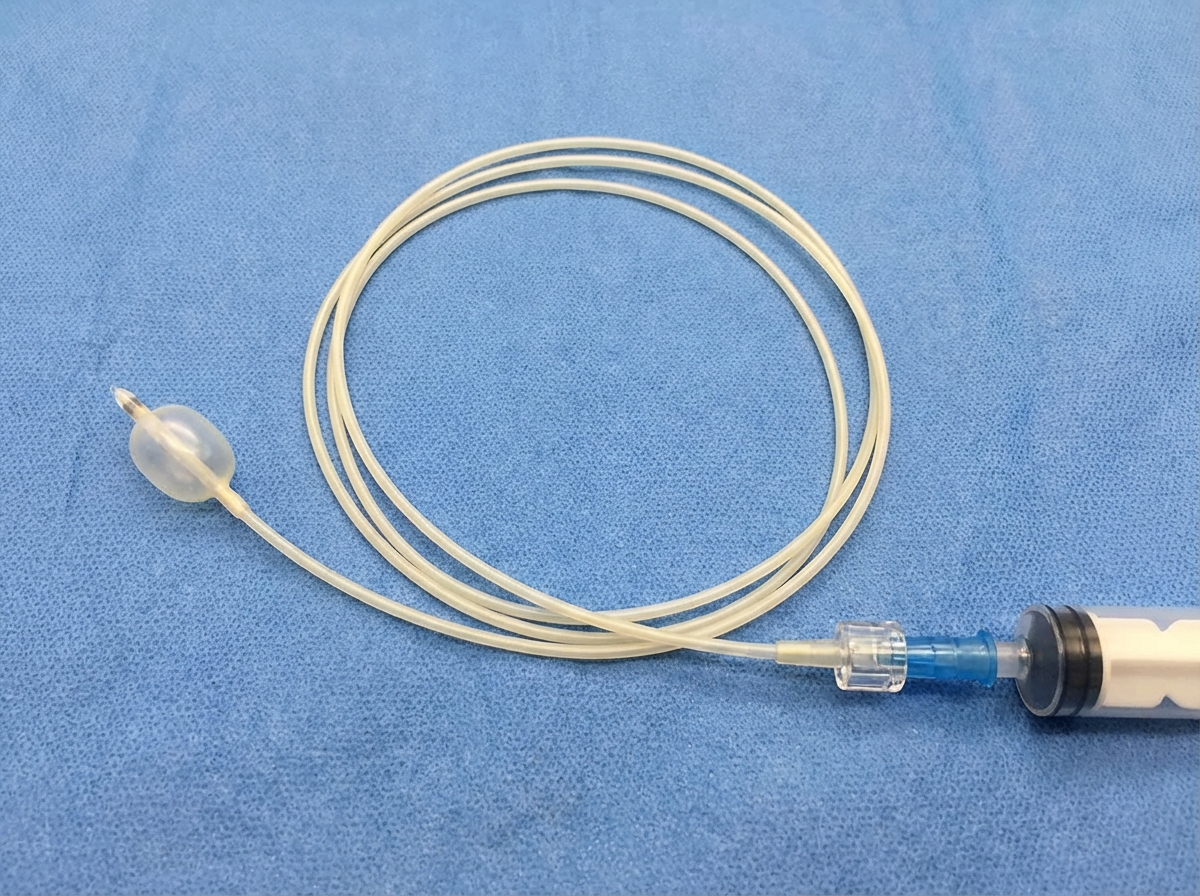
What is the preferred type of graft for an infrainguinal bypass surgery?
Abdominal aortic aneurysm most commonly ruptures into which space?
Which of the following suture material characteristics is preferred for vascular anastomosis?
Lymphovenous anastomosis is done for:
Buerger's disease is primarily caused by:
A 67-year-old man with an 18-year history of type 2 diabetes mellitus presents for a routine physical examination. His temperature is 98.5 F, his blood pressure is 158/98 mm Hg and his pulse is 82/minute and regular. On examination, the physician notes a non-tender, pulsatile, mass in the mid-abdomen. A plain abdominal x-ray film with the patient in the lateral position reveals spotty calcification of a markedly dilated aortic wall. The patient is taken to surgery and the abdominal aorta and proximal common iliac arteries are replaced with a graft. Which of the following aneurysm diameters is usually considered the threshold above which elective surgery is recommended, unless contraindicated by other disease?
Which of the following statements about varicocele is FALSE?
Following aortic reconstruction, the viability of the sigmoid colon can most reliably be evaluated by?
Subclavian steal syndrome is caused by stenosis of the subclavian artery at which location?
What is the most common cause of acute superior mesenteric arterial obstruction?
Explanation: **Explanation:** In infrainguinal bypass surgery (such as femoro-popliteal or femoro-distal bypass), the choice of conduit is critical for long-term success. **Why Autologous Vein is the Correct Answer:** The **Great Saphenous Vein (GSV)** is the "gold standard" conduit for infrainguinal bypass. Autologous veins are superior because they possess a viable endothelial lining that produces nitric oxide and prostacyclin, providing natural **thromboresistance**. They also exhibit better compliance (elasticity) matching the native artery and have significantly higher **long-term patency rates** (especially for targets below the knee) compared to synthetic materials. **Analysis of Incorrect Options:** * **A, B, & C (Dacron, PTFE, Polyester):** These are synthetic prosthetic grafts. While acceptable for large-diameter, high-flow vessels like the aorta (suprainguinal), they perform poorly in the infrainguinal position. * **PTFE (Polytetrafluoroethylene)** and **Dacron (Polyester)** are prone to neointimal hyperplasia at the distal anastomosis and have a high risk of early graft thrombosis in low-flow, small-diameter distal vessels. They are generally reserved only when a suitable autologous vein is unavailable. **High-Yield Clinical Pearls for NEET-PG:** * **Gold Standard:** The Great Saphenous Vein (GSV) is the preferred graft. * **Patency:** 5-year patency for vein grafts is ~70-80%, whereas synthetic grafts below the knee drop to <40%. * **Technique:** Vein grafts can be used "In-situ" (valves are lysed) or "Reversed" (valves don't need lysis but the graft is tapered). * **Infection:** Autologous veins are much more resistant to infection than prosthetic grafts, making them mandatory in contaminated fields.
Explanation: **Explanation:** The abdominal aorta is a **retroperitoneal structure**. When an Abdominal Aortic Aneurysm (AAA) ruptures, it most commonly occurs through the posterolateral wall. This allows the resulting hematoma to be initially contained within the **retroperitoneum** (Option A). This containment is clinically significant as it can provide a temporary "tamponade" effect, potentially allowing the patient to survive long enough to reach the hospital. **Analysis of Incorrect Options:** * **Peritoneal Cavity (Option C):** While an AAA can rupture anteriorly into the peritoneal cavity, this is less common. Such ruptures are usually catastrophic and rapidly fatal because the peritoneal space is large and cannot provide a tamponade effect, leading to massive exsanguination. * **Pelvic Cavity (Option B):** While blood can track down into the pelvis from the retroperitoneum, the primary and most common site of initial rupture is the immediate retroperitoneal space surrounding the aorta. * **Subhepatic Space (Option D):** This is a localized intraperitoneal compartment (Morison’s pouch). It is a site for fluid collection (like bile or blood) but is not the primary anatomical site for an aortic rupture. **Clinical Pearls for NEET-PG:** * **Classic Triad of Ruptured AAA:** Hypotension, pulsatile abdominal mass, and severe back/abdominal pain. * **Most Common Site of AAA:** Infrarenal (below the origin of renal arteries). * **Screening:** Ultrasonography is the investigation of choice for screening; CT Angiography is the gold standard for surgical planning. * **Surgical Threshold:** Intervention is generally indicated if the aneurysm diameter is **>5.5 cm in men** or **>5.0 cm in women**, or if it is rapidly expanding (>0.5 cm in 6 months).
Explanation: **Explanation:** In vascular surgery, the primary goal of an anastomosis is to maintain a leak-proof, permanent connection between vessels that can withstand high arterial pressures over a lifetime. **1. Why Non-absorbable and Non-elastic is Correct:** * **Non-absorbable:** Vascular healing does not result in a strong enough biological bond to maintain the integrity of the anastomosis under constant pulsatile pressure. Therefore, the suture must provide **permanent mechanical support**. Materials like **Polypropylene (Prolene)** are the gold standard because they retain their tensile strength indefinitely. * **Non-elastic:** A suture must be non-elastic to prevent the "bellows effect." If a suture stretches (elasticity) under systolic pressure, the anastomosis site would expand and contract, leading to potential gaps, blood leakage, and eventual pseudoaneurysm formation. **2. Why Other Options are Incorrect:** * **Absorbable (C & D):** These materials (e.g., Vicryl, Monocryl) lose tensile strength over weeks or months. If used in major vessels, the anastomosis would fail once the suture degrades, leading to catastrophic hemorrhage or aneurysm. * **Elastic (A & C):** As mentioned, elasticity allows for movement at the suture line, which compromises the water-tight seal required for vascular surgery. **Clinical Pearls for NEET-PG:** * **Suture of Choice:** Monofilament, non-absorbable **Polypropylene (Prolene)** is the most commonly used. * **Handling:** It has a low coefficient of friction, allowing it to glide through tissues easily (atraumatic). * **Suture Technique:** Continuous suturing is standard for adult vessels, but **interrupted sutures** are preferred in pediatric vascular surgery to allow for the vessel's future growth. * **Needle Type:** Taper-point needles are used to minimize the hole size in the vessel wall, preventing needle-hole bleeding.
Explanation: **Explanation:** **Lymphovenous Anastomosis (LVA)** is a specialized super-microsurgical procedure used to treat obstructive lymphedema. The underlying concept involves bypassing the lymphatic obstruction by creating a shunt between the congested lymphatic vessels and the nearby subdermal venules. This allows the trapped lymph fluid to drain directly into the venous system, reducing limb girth and the frequency of cellulitis. * **Why Option D is Correct:** In **Filarial Lymphedema**, the *Wuchereria bancrofti* parasite causes chronic inflammation and fibrosis of the lymph nodes and vessels, leading to mechanical obstruction. LVA is most effective in early-stage (Stage I-III) lymphedema where lymphatic vessels are still functional and not yet completely obliterated by extensive fibrosis. **Why the other options are incorrect:** * **A. Ascites:** This is the accumulation of fluid in the peritoneal cavity, usually due to portal hypertension or malignancy. It is managed with diuretics, paracentesis, or a TIPS procedure, not peripheral lymphovenous shunts. * **B. Varicose Veins:** This is a venous pathology caused by valvular incompetence. Treatment involves compression, sclerotherapy, or venous ablation (EVLA/RFA), not lymphatic surgery. * **C. Leprosy:** While leprosy can cause trophic ulcers and nerve palsies, it does not primarily cause the type of lymphatic obstruction treated by LVA. **High-Yield Clinical Pearls for NEET-PG:** * **Gold Standard Diagnosis:** Lymphoscintigraphy is the investigation of choice to confirm lymphatic obstruction before LVA. * **Indication:** LVA is best suited for **Secondary Lymphedema** (post-filarial or post-mastectomy). * **Charles Operation:** A radical surgery (excision of skin and subcutaneous tissue down to the fascia) used for late-stage, "woody" lymphedema where LVA is no longer feasible. * **Drug of Choice for Filariasis:** Diethylcarbamazine (DEC).
Explanation: **Explanation:** **Buerger’s Disease**, also known as **Thromboangiitis Obliterans (TAO)**, is a non-atherosclerotic, segmental, inflammatory disease that affects small and medium-sized arteries and veins of the extremities. 1. **Why Cigarette Smoking is Correct:** Tobacco use (primarily cigarette smoking) is the **essential** factor in the initiation and progression of Buerger’s disease. The underlying pathophysiology involves a delayed-type hypersensitivity reaction to tobacco components, leading to inflammatory thrombi that occlude the vessel lumen. It is almost exclusively seen in young male smokers (usually <45 years). Cessation of smoking is the only effective way to halt the disease; continued use leads to inevitable gangrene and amputation. 2. **Why Other Options are Incorrect:** * **Asbestosis:** This is a respiratory condition caused by inhaling asbestos fibers, leading to pulmonary fibrosis and mesothelioma; it has no link to peripheral vascular inflammation. * **Alcohol consumption:** While alcohol is a risk factor for various systemic diseases, it is not an etiological factor for TAO. * **Drug abuse:** Certain intravenous drugs can cause vascular damage or "puffy hand syndrome," but they do not cause the specific segmental inflammatory pathology characteristic of Buerger’s. **High-Yield Clinical Pearls for NEET-PG:** * **Triad of TAO:** Distal ischemia (claudication/ulcers), Raynaud’s phenomenon, and **Migratory Superficial Thrombophlebitis**. * **Angiographic Finding:** "Corkscrew collaterals" (Martorell’s sign) due to recanalization of the occluded vessels. * **Pathology:** Characterized by highly cellular "microabscesses" within the thrombus, surrounded by inflammatory cells (giant cells). * **Allen’s Test:** Often positive, indicating involvement of the radial or ulnar arteries. * **Treatment:** Absolute smoking cessation is the gold standard. Sympathectomy may be used for pain relief, and Iloprost (prostacyclin analogue) helps in severe ischemia.
Explanation: **Explanation:** The patient presents with a classic **Abdominal Aortic Aneurysm (AAA)**, characterized by a pulsatile abdominal mass and calcification on X-ray. The decision for elective surgical intervention is based on the balance between the risk of spontaneous rupture and the risks associated with major surgery (Open Repair or EVAR). **Why 6 cm is the correct answer:** The risk of AAA rupture increases exponentially with diameter. For an average-risk male patient, the standard threshold for elective repair is **≥ 5.5 cm**. In clinical practice and standard surgical textbooks (like Sabiston or Bailey & Love), **5.5 cm to 6 cm** is the critical cut-off where the annual risk of rupture (approx. 10-15%) outweighs the operative mortality risk. In the context of this specific question and the provided options, **6 cm** represents the established threshold for mandatory intervention. **Analysis of Incorrect Options:** * **A (1 cm) & B (2 cm):** The normal diameter of the infrarenal aorta is approximately 2 cm. An aneurysm is defined as a focal dilation >1.5 times the normal diameter (usually >3 cm). These sizes are considered normal or sub-aneurysmal and require no intervention. * **D (10 cm):** While a 10 cm aneurysm is at extremely high risk of rupture (>25% per year), waiting for this size is dangerous and negligent, as many aneurysms rupture well before reaching this diameter. **NEET-PG High-Yield Pearls:** * **Definition:** AAA is defined as an aortic diameter **>3 cm**. * **Indications for Surgery:** 1. Diameter **≥ 5.5 cm** in men (≥ 5.0 cm in women). 2. Rapid expansion: **>0.5 cm in 6 months** or **>1 cm in 1 year**. 3. Any **symptomatic** aneurysm (tenderness, back pain) regardless of size. * **Screening:** A one-time USG is recommended for men aged 65–75 who have ever smoked. * **Most common site:** Infrarenal (between renal arteries and aortic bifurcation). * **Most common cause:** Atherosclerosis (associated with smoking and hypertension).
Explanation: **Explanation:** A varicocele is the abnormal dilation and tortuosity of the pampiniform plexus of veins within the spermatic cord. **1. Why Option C is the correct (False) statement:** The management of varicocele is primarily conservative unless specific indications are met. **Asymptomatic varicoceles do not require surgical intervention.** Surgery (Varicocelectomy) is indicated only if there is: * Documented infertility with abnormal semen analysis. * Significant testicular atrophy (especially in adolescents). * Severe, persistent pain or discomfort. **2. Analysis of other options:** * **Option A (True):** The primary pathophysiology involves **incompetent valves** in the internal spermatic (testicular) vein, leading to retrograde blood flow and venous hypertension. * **Option B (True):** **90% occur on the left side** due to anatomical factors: the left testicular vein enters the left renal vein at a **90-degree angle**, it lacks effective valves at its junction, and it may be compressed between the SMA and Aorta (Nutcracker phenomenon). * **Option D (True):** Percutaneous embolization/ablation via femoral or jugular catheterization is a recognized minimally invasive treatment, often preferred for **recurrent varicoceles** after failed primary surgery. **Clinical Pearls for NEET-PG:** * **Sudden onset right-sided varicocele:** Always rule out a retroperitoneal mass (e.g., **Renal Cell Carcinoma**) obstructing the IVC. * **Gold Standard Investigation:** Color Doppler Ultrasound (shows venous diameter >2mm and reversal of flow on Valsalva). * **Surgical Gold Standard:** Microsurgical Subinguinal Varicocelectomy (lowest recurrence and complication rates). * **Grading:** Grade I (Palpable only with Valsalva); Grade II (Palpable without Valsalva); Grade III (Visible through scrotal skin).
Explanation: **Explanation:** Ischemic colitis is a significant complication following abdominal aortic aneurysm (AAA) repair, occurring in approximately 1–7% of cases due to the ligation of the Inferior Mesenteric Artery (IMA). **Why Postoperative Sigmoidoscopy is Correct:** Postoperative fiberoptic sigmoidoscopy is the **gold standard** and most reliable method for evaluating sigmoid viability. It allows for direct visualization of the mucosa, which is the layer most sensitive to ischemia. Clinical signs are often masked by postoperative analgesia, and intraoperative assessments can be deceptive. Sigmoidoscopy can identify various grades of ischemia—from mucosal hyperemia and submucosal hemorrhage to frank gangrene—allowing for timely surgical intervention (resection) if transmural necrosis is present. **Why Other Options are Incorrect:** * **IMA Stump Pressure (A):** While a mean pressure >40 mmHg suggests adequate collateral flow from the SMA (via the marginal artery of Drummond), it is a physiological measurement, not a direct assessment of tissue viability. * **Doppler Arterial Signal (B):** The presence of a Doppler signal indicates blood flow in the mesentery but does not guarantee adequate microvascular perfusion to the bowel wall itself. * **Observation of Peristalsis (C):** Peristalsis and bowel color are notoriously unreliable intraoperative indicators. A bowel may appear pink and peristaltic initially but still undergo delayed ischemic necrosis. **High-Yield Clinical Pearls for NEET-PG:** * **Most common site of ischemia:** The **Griffith’s point** (splenic flexure) and **Sudek’s point** (rectosigmoid junction) are the most vulnerable watershed areas. * **Early Sign:** Bloody diarrhea in the early postoperative period is a classic warning sign of ischemic colitis. * **Management:** Mucosal ischemia is managed conservatively; transmural gangrene requires immediate laparotomy and Hartmann’s procedure.
Explanation: **Explanation:** **Subclavian Steal Syndrome (SSS)** is a clinical phenomenon caused by a high-grade stenosis or total occlusion of the **subclavian artery proximal to the origin of the vertebral artery**. **1. Why Option A is correct:** When the subclavian artery is blocked *proximal* to the vertebral artery takeoff, the pressure in the distal subclavian artery drops below that of the basilar artery. To compensate for the ischemia in the ipsilateral arm (especially during exercise), blood flow is "stolen" from the contralateral vertebral artery. The blood flows up the healthy vertebral artery, across the basilar artery, and **retrogradely (downward)** through the ipsilateral vertebral artery to supply the arm. This reversal of flow results in vertebrobasilar insufficiency. **2. Why other options are incorrect:** * **Option B & C:** If the stenosis is **distal** to the vertebral artery origin or in the **mid-subclavian** region (beyond the takeoff), the vertebral artery remains unaffected by the pressure drop. While the arm may suffer from ischemia, there is no hemodynamic trigger to reverse the flow in the vertebral artery; hence, no "steal" occurs. **Clinical Pearls for NEET-PG:** * **Most Common Side:** Left subclavian artery (due to its direct origin from the aorta). * **Classic Presentation:** A triad of exercise-induced arm claudication, syncopal attacks/dizziness during arm activity, and a significant **blood pressure difference (>20 mmHg)** between the two arms. * **Diagnosis:** Duplex Ultrasonography is the initial investigation (shows reversal of flow). Digital Subtraction Angiography (DSA) is the gold standard. * **Treatment:** Endovascular stenting is currently the preferred first-line management. Surgical bypass (Carotid-subclavian) is reserved for complex cases.
Explanation: **Explanation:** Acute Mesenteric Ischemia (AMI) is a surgical emergency characterized by a sudden decrease in blood flow to the bowel. The **Superior Mesenteric Artery (SMA)** is the most common site of involvement due to its narrow take-off angle from the aorta. **1. Why Embolism is Correct:** **Embolism (40–50%)** is the most common cause of acute SMA obstruction. These emboli typically originate from the heart (left atrium or ventricle) due to conditions like **Atrial Fibrillation**, recent myocardial infarction, or valvular heart disease. Because the SMA emerges from the aorta at a non-acute angle, it acts as a "straight path" for traveling emboli, which usually lodge 3–10 cm distal to the origin, often sparing the proximal jejunum. **2. Why Other Options are Incorrect:** * **Thrombosis (25–30%):** This is the second most common cause. It usually occurs at the **origin** of the SMA in patients with pre-existing **atherosclerosis**. These patients often have a history of "intestinal angina" (postprandial pain). * **Non-occlusive Mesenteric Ischemia (NOMI):** This results from low-flow states (e.g., heart failure, shock, or use of vasopressors) leading to vasoconstriction, rather than a physical obstruction. * **Atherosclerosis:** While atherosclerosis is the underlying *predisposing factor* for arterial thrombosis, it is a chronic process. The *acute* event is triggered by the sudden formation of a thrombus over an atherosclerotic plaque. **High-Yield Clinical Pearls for NEET-PG:** * **Classic Presentation:** "Pain out of proportion to physical findings"—severe abdominal pain with a relatively soft, non-tender abdomen initially. * **Gold Standard Investigation:** CT Angiography (CTA). * **Early Sign on X-ray:** Usually normal; late signs include "thumbprinting" (mucosal edema) or pneumatosis intestinalis. * **Management:** Immediate resuscitation, anticoagulation (heparin), and surgical exploration (embolectomy or bowel resection).
Atherosclerotic Disease
Practice Questions
Aortic Aneurysms
Practice Questions
Peripheral Arterial Disease
Practice Questions
Carotid Artery Disease
Practice Questions
Venous Thromboembolism
Practice Questions
Chronic Venous Insufficiency
Practice Questions
Mesenteric Vascular Disease
Practice Questions
Vascular Trauma
Practice Questions
Vascular Access for Hemodialysis
Practice Questions
Endovascular Techniques
Practice Questions
Diabetic Foot Vascular Disease
Practice Questions
Vasculitis
Practice Questions
Get full access to all questions, explanations, and performance tracking.
Start For Free