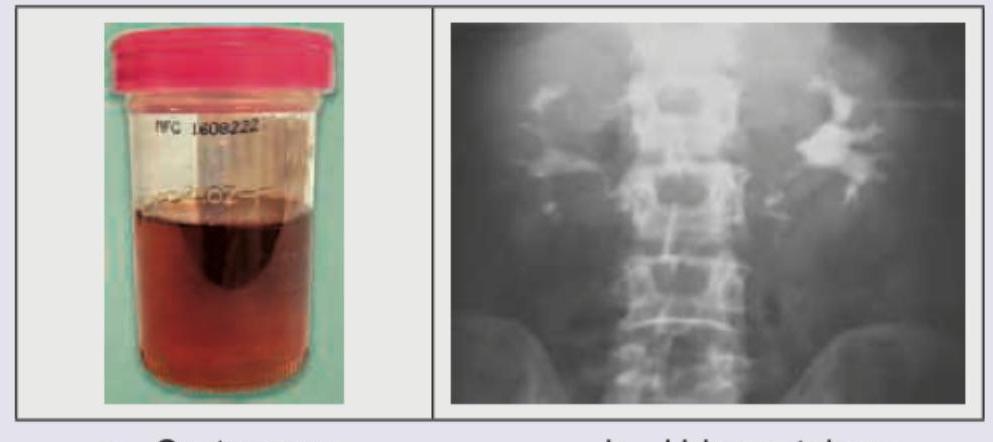
A 60-year-old male smoker presents with discoloration of urine and has brought a sample to your clinic. He denies any pain or discomfort while passing urine. No history of fever is present. IVU of the patient is shown. Which is the next best investigation to be done?
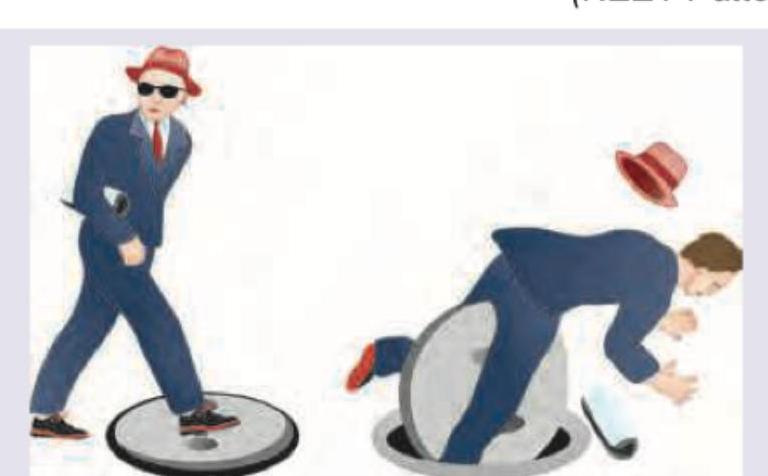
A person could not pass urine after a fall shown below. On examination vitals are stable but bladder is palpable. What is the probable diagnosis? (NEET Pattern 2018)
A 25-year-old gentleman complains of dragging pain in the scrotum. The examination reveals the scrotum full of bag of worms which disappear on lying down. The usual first line option for relief is :
Extracorporeal Shock Wave Lithotripsy (ESWL) is most commonly used for the treatment of
Anderson-Hynes plasty is a type of repair of
Which method of vasectomy has the highest failure rate ?
The most frequent complication of fracture pelvis is injury to :
Regarding varicocele, all of the following are true except :
Consider the following statements in respect of prostatic carcinoma : 1. Most originate from peripheral zone 2. Prostatic needle biopsy is better performed under trans rectal ultrasound 3. Prostate specific antigen is the specific test 4. L.H.R.H. analogues are used as medical treatment for metastatic disease Which of the statements given above is/are correct ?
A patient is diagnosed to have a Stage T3a carcinoma of the prostate. Clinically, this implies
Explanation: ***Cystoscopy*** - The patient presents with **painless hematuria** and a history of smoking, which are classic indicators of **bladder cancer**. The IVU may also suggest filling defects or abnormalities in the bladder. - Cystoscopy offers **direct visualization of the bladder and urethra**, allowing for biopsy of any suspicious lesions, which is crucial for diagnosis and staging of bladder cancer. *Urine cytology* - While urine cytology can detect malignant cells, its **sensitivity for low-grade tumors is limited**, and it cannot pinpoint the exact location or extent of the lesion. - A definitive diagnosis of bladder cancer requires **histopathological confirmation**, which cytology alone cannot provide. *USG abdomen* - USG can detect some renal and bladder abnormalities, but it is **not as sensitive or specific as cystoscopy** for detecting small or flat bladder lesions. - It's a good initial screening tool but **lacks the diagnostic precision** needed to investigate painless hematuria suspected to be from the bladder. *DMSA scan* - A DMSA scan is primarily used to assess **renal cortical function** and identify cortical scarring or anomalies, not for investigating hematuria or bladder pathologies. - It provides no information about the **urethra or bladder lumen**, which are critical for evaluating the cause of painless hematuria in this patient.
Explanation: ***Posterior urethra rupture*** - The mechanism of injury, a **fall causing blunt perineal trauma** (as depicted by the man falling into a manhole), is a classic cause of posterior urethral injury, often associated with **pelvic fractures**. - The inability to pass urine with a **palpable distended bladder** indicates urinary retention due to complete urethral disruption, preventing urine flow from the bladder. - Classical triad: inability to void, blood at urethral meatus, and palpable bladder. *Anterior urethra rupture* - This typically results from a "straddle injury" (e.g., falling astride a beam or bike bar), which is different from the fall shown. - Anterior urethral injuries often manifest with **perineal extravasation of urine and blood (butterfly hematoma)**, and the bladder might still be palpable if retention occurs. *Penile avulsion* - This is a severe injury involving the **tearing away of penile skin or the entire penis**, which is not immediately suggested by the described symptoms of inability to urinate. - It would present with **obvious external hemorrhage** and tissue loss, not just urinary retention. *Recto-urethral injury* - This involves damage to both the **rectum and urethra**, usually from penetrating trauma or severe crush injuries. - While it could cause dysuria or inability to urinate, it would also likely present with **rectal bleeding or a palpable rectal injury**, which is not mentioned in the clinical scenario.
Explanation: ***Surgical varicocelectomy (ligation of testicular veins)*** - The "bag of worms" sensation that disappears on lying down is **pathognomonic for varicocele**, representing dilated pampiniform plexus veins - **Varicocelectomy** (surgical ligation of the internal spermatic/testicular veins) is the **gold standard first-line treatment** for symptomatic varicoceles causing pain or infertility - Common approaches include **open (Palomo or Ivanissevich technique)**, **laparoscopic**, or **microscopic subinguinal** varicocelectomy with success rates of 90-95% - The procedure involves **ligation** (tying off) the dilated veins, not excision of the entire pampiniform plexus *Radio frequency ablation of testicular veins* - **Radiofrequency ablation** is not a standard treatment modality for varicoceles - The testicular veins are not amenable to standard RFA techniques used for other venous insufficiencies - This is **not considered a first-line option** in clinical practice *Percutaneous embolization of gonadal veins* - **Percutaneous embolization** is an alternative **minimally invasive first-line treatment** option for symptomatic varicoceles, particularly in resource-rich settings - Success rates are comparable to surgery (90-95%) with potentially lower complication rates and faster recovery - However, in the context of **traditional Indian surgical practice** and most PG examinations, **surgical varicocelectomy remains the conventional first-line answer** - Embolization involves retrograde catheterization and occlusion of the testicular vein with coils or sclerosants *Laparoscopic excision of affected testes* - **Orchiectomy** (testicular excision) is completely inappropriate for varicocele management - This radical procedure is reserved for **testicular malignancy**, severe trauma with non-viable testis, or torsion with necrosis - **Never a treatment option** for simple symptomatic varicocele
Explanation: ***Urinary tract stones*** - **Extracorporeal Shock Wave Lithotripsy (ESWL)** is a non-invasive procedure primarily used to break down **kidney stones** and **ureteral stones** into smaller fragments. - The shock waves are generated outside the body and focused on the stone, allowing the fragments to be passed naturally in the urine. *Gallbladder stones* - **Gallbladder stones (cholelithiasis)** are typically treated with **cholecystectomy** (surgical removal of the gallbladder) or medications for dissolution, not ESWL. - While some research has explored ESWL for gallbladder stones, it is not the most common or preferred treatment due to high recurrence rates and limited efficacy. *Abdominal stony-hard tumour* - ESWL is designed to fragment **calcifications or stones**, not cellular masses or tumors. - Abdominal tumors, regardless of their consistency, require **biopsy for diagnosis** and subsequent treatment such as surgery, chemotherapy, or radiation, specialized based on pathophysiology. *Salivary gland stones* - **Sialolithiasis** (salivary gland stones) can sometimes be treated with **lithotripsy**, but this typically involves specific techniques like **endoscopic lithotripsy** or **interventional removal**, distinct from the general application of ESWL for urinary stones. - The most common treatments for salivary gland stones focus on hydration, massage, and, if necessary, surgical removal of the stone or gland.
Explanation: ***ureteropelvic junction*** - The **Anderson-Hynes pyeloplasty** is a widely used surgical procedure for the correction of a **ureteropelvic junction (UPJ) obstruction**. - It involves **excision of the stenotic or obstructed UPJ segment** and **reconstruction** to create a wide, funnel-shaped connection between the renal pelvis and the ureter. *lower ureter* - Repairs of the lower ureter, such as for distal ureteral strictures or reflux, typically involve procedures like ureteral re-implantation into the bladder or ureteroureterostomy, not the Anderson-Hynes plasty. - While these can address obstruction, the specific technique of Anderson-Hynes is designed for the UPJ. *glans penis* - The glans penis is part of the male external genitalia, and surgical repairs in this area, such as for hypospadias or strictures, are entirely unrelated to the ureter or kidney. - Surgical procedures for the glans penis would involve plastic and reconstructive techniques specific to the urethra and foreskin. *urinary bladder* - Repairs of the urinary bladder involve procedures for conditions like bladder diverticula, fistulae, or augmentation cystoplasty, which are distinct from managing obstructions in the upper urinary tract. - These procedures aim to restore bladder function and integrity, not to address blockages at the junction of the kidney and ureter.
Explanation: ***Open ended vasectomy with granulation formation*** - This method involves either leaving the testicular end of the **vas deferens** open or allowing the formation of a **sperm granuloma**, which is believed to reduce post-vasectomy pain and congestion. - However, this approach carries a higher risk of **recanalization** and failure because sperm can potentially find a pathway through the granuloma or the open end, leading to unintended pregnancy. *Use of hemoclips with 1-4 cm gap after cutting proximal and distal ends* - The use of **hemoclips** with a significant gap (1-4 cm) between the clipped ends of the vas deferens is a common and generally effective method. - While failure is possible due to clip displacement or recanalization, the gap and mechanical obstruction provided by the clips make it more reliable than open-ended techniques. *Cutting and ligating vas to occlude the proximal and distal lumen* - **Cutting and ligating** both the proximal and distal ends of the vas deferens creates a clear physical barrier, preventing sperm transport. - This method is considered highly effective as it involves both severance and occlusion, significantly reducing the chance of recanalization. *Cutting the vas and turning the ends backwards and ligating with suture material* - This technique, often referred to as **fascial interposition** or burying the ends, involves cutting the vas, turning one or both ends back, and ligating them into the fascial sheath. - This creates an additional anatomical barrier, further separating the cut ends and making recanalization much more difficult, thus offering a very high success rate.
Explanation: ***membranous urethra*** - The membranous (posterior) urethra is the **most frequently injured genitourinary structure** in pelvic fractures, occurring in **10-20% of major pelvic fractures** in males. - It is particularly vulnerable due to its **relatively fixed position** between the urogenital diaphragm and prostate, making it susceptible to shearing forces during anteroposterior compression or straddle-type injuries. - **Associated with pubic rami fractures and diastasis of the pubic symphysis** - the "pie in the sky" bladder sign on cystography suggests associated posterior urethral injury. - Clinical signs include **blood at the urethral meatus, high-riding prostate, and inability to void**. *urinary bladder* - Bladder injury occurs in approximately **5-10% of pelvic fractures**, making it less common than posterior urethral injuries. - Can present as **intraperitoneal rupture** (dome injury from increased intravesical pressure) or **extraperitoneal rupture** (base injury from bone fragments). - More common with pubic rami fractures, but still **less frequent than urethral injury overall**. *penile urethra* - Injury to the penile (anterior) urethra is **rarely associated with pelvic fractures** as it is mobile and not in direct proximity to pelvic bones. - More commonly injured by **straddle injuries, instrumentation, or direct penile trauma**. *rectum* - Rectal injury is a **rare complication** occurring in less than 1-5% of pelvic fractures. - Typically seen with **open pelvic fractures, open-book fractures with severe displacement**, or penetrating injuries where sharp bone fragments lacerate the rectum. - Much less common than genitourinary injuries.
Explanation: ***Varicosity of cremasteric veins*** - A varicocele is specifically the **dilation of the pampiniform plexus** of testicular veins, not the cremasteric veins. - The cremasteric veins are a separate venous system, and their varicosity is not what defines a varicocele. *May lead to infertility* - Varicoceles can **impair spermatogenesis** due to increased scrotal temperature and reflux of adrenal/renal metabolites, leading to reduced sperm count and motility. - This is a well-established complication and a common cause of **male factor infertility**. *Left side is affected usually* - The left side is more commonly affected because the **left testicular vein drains into the left renal vein** at a perpendicular angle, leading to higher hydrostatic pressure and a longer course. - The right testicular vein drains directly into the inferior vena cava (IVC) at an acute angle, which is less prone to reflux and dilation. *Feels like a bag of worms* - The characteristic palpation of a varicocele is described as a **"bag of worms"** due to the palpable dilated and tortuous veins within the pampiniform plexus. - This sensation is a key diagnostic clinical finding on physical examination.
Explanation: ***1, 2 and 4*** - **Most prostatic carcinomas originate from the peripheral zone** (approximately 70%), making this statement correct. This zone is palpable on digital rectal examination. - **Prostatic needle biopsy is indeed better performed under transrectal ultrasound (TRUS) guidance**, which allows for targeted and accurate sampling of suspicious areas. - **LHRH (Luteinizing Hormone-Releasing Hormone) analogues are a cornerstone of medical treatment for metastatic prostate cancer** as they suppress testosterone production, which fuels tumor growth. *1 and 3* - While statement 1 is correct (most prostate cancers originate from the peripheral zone), **prostate-specific antigen (PSA) is not a specific test** for prostate cancer. - **Elevated PSA can be caused by various conditions** such as benign prostatic hyperplasia (BPH), prostatitis, and even normal aging, making it a marker for prostate health rather than a definitive diagnostic test for cancer. *1 and 2 only* - Statements 1 and 2 are correct individually, but this option **incorrectly excludes statement 4**, which is also correct regarding the use of LHRH analogues in metastatic disease. - Therefore, this option is incomplete as it misses a true statement about prostate cancer management. *2, 3 and 4* - This option is incorrect because **statement 3 regarding PSA being a specific test is false**. - While PSA is used for screening and monitoring, its lack of specificity means it cannot definitively diagnose cancer.
Explanation: ***Extraprostatic extension through the prostatic capsule*** - **T3a prostate cancer** indicates **extraprostatic extension** of the tumor, meaning it has grown beyond the boundaries of the prostate capsule [1]. - This stage specifically denotes microscopic or macroscopic extension through the capsule but without involvement of seminal vesicles or other adjacent structures [1]. *Involvement of the pelvic wall* - **Pelvic wall involvement** signifies a more advanced stage, typically **T4**, where the tumor has invaded adjacent organs or structures beyond the seminal vesicles. - This description goes beyond the definition of a T3a tumor, which is contained within the immediate periprostatic tissue. *Involvement of the seminal vesicles* - **Seminal vesicle invasion** is classified as **T3b** in the TNM staging system for prostate cancer, differentiating it from T3a [1]. - T3a specifically excludes seminal vesicle involvement, focusing solely on extraprostatic extension [1]. *Involvement of both the lobes but the disease is limited to within the prostatic capsule* - **Involvement of both lobes** while remaining within the prostatic capsule is characteristic of a **T2c** stage prostate cancer. - T3a implies extension *beyond* the capsule, which contradicts the statement that the disease is limited to within it.
Urological Anatomy
Practice Questions
Hematuria Evaluation
Practice Questions
Urinary Calculi
Practice Questions
Benign Prostatic Hyperplasia
Practice Questions
Prostate Cancer
Practice Questions
Bladder Cancer
Practice Questions
Renal Cell Carcinoma
Practice Questions
Testicular Tumors
Practice Questions
Urinary Tract Infections
Practice Questions
Urinary Incontinence
Practice Questions
Genitourinary Trauma
Practice Questions
Pediatric Urology Basics
Practice Questions
Get full access to all questions, explanations, and performance tracking.
Start For Free