What is the most common cause of acute epididymitis in young males?
Dupuytren's contracture is associated with which of the following conditions?
A 23-year-old male presents with mild, intermittent right iliac fossa pain that worsens at night, leading to exhaustion. Examination reveals mild hematuria. Urine analysis shows numerous RBCs, 50 WBCs/hpf, and a pH of 5.5. What is the most likely diagnosis?
A patient with positive biopsy findings and negative workup undergoes a radical prostatectomy. The pathology report reveals Gleason score 9/10 and involvement of several pelvic lymph nodes. Which is the most likely site for prostatic cancer metastasis?
A patient presents with an inguinal mass. What is the most likely diagnosis?
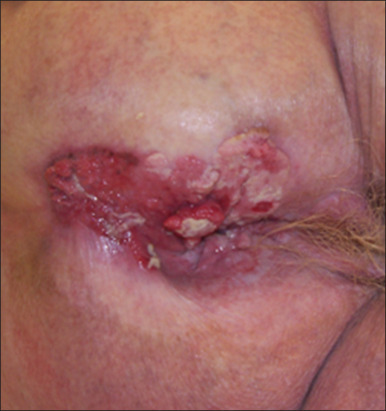
All of the following statements about renal calculi are true, EXCEPT:
Which of the following is NOT a predisposing factor for penile carcinoma?
What is the most common site for the lentigo maligna subtype of malignant melanoma?
Indications of circumcision are all except:
The prognosis of rhabdomyosarcoma is likely to be poor if the site of the tumour is?
Explanation: The etiology of acute epididymitis is primarily determined by the patient's age and sexual activity. In **young males (typically <35 years)**, the condition is most commonly caused by sexually transmitted infections (STIs). ### Why Chlamydia is Correct **Chlamydia trachomatis** is the most frequent pathogen identified in young, sexually active men. It typically spreads via retrograde ascent of the pathogen from the urethra through the vas deferens to the epididymis. While *N. gonorrhoeae* is also a significant cause, epidemiological studies consistently show a higher prevalence of *Chlamydia*. ### Analysis of Incorrect Options * **B. E. coli:** This is the most common cause of epididymitis in **children** (associated with congenital urinary tract anomalies) and in **older men >35 years** (associated with Benign Prostatic Hyperplasia, catheterization, or urinary tract infections). * **C. N. gonorrhoeae:** While a common cause of STI-related epididymitis, it is statistically less frequent than *Chlamydia*. It often presents with more acute, purulent urethral discharge. * **D. Proteus:** This is a common cause of urinary tract infections but is rarely the primary cause of epididymitis unless there is an underlying structural abnormality or instrumentation of the urinary tract. ### NEET-PG High-Yield Pearls * **Age-based Rule:** * <35 years: *C. trachomatis* (Most common) and *N. gonorrhoeae*. * >35 years: *E. coli* (Most common) and *Pseudomonas*. * **Prehn’s Sign:** Elevation of the scrotum relieves pain in epididymitis (Positive Prehn's sign), helping differentiate it from **Testicular Torsion** (Negative Prehn's sign). * **Treatment:** For young males, the regimen must cover both Chlamydia and Gonorrhea (e.g., Ceftriaxone IM + Doxycycline). For older males, Fluoroquinolones (e.g., Levofloxacin) are preferred to cover coliforms.
Explanation: **Explanation:** **Dupuytren’s contracture** is a fibroproliferative disorder of the palmar fascia characterized by the formation of nodules and cords, leading to progressive flexion contracture of the fingers. The correct answer is **Peyronie’s disease**, as both conditions share a common underlying pathophysiology involving systemic fibromatosis. 1. **Why Peyronie’s Disease is Correct:** Peyronie’s disease involves the formation of fibrous plaques in the *tunica albuginea* of the penis, causing curvature and painful erections. Approximately **5–10%** of patients with Dupuytren’s contracture also have Peyronie’s disease. Both are part of a group of "superficial fibromatoses" linked by abnormal collagen deposition (Type III collagen) and TGF-beta signaling pathways. Other associated conditions include **Ledderhose disease** (plantar fibromatosis) and **Garrod’s pads** (knuckle pads). 2. **Why Incorrect Options are Wrong:** * **Hypospadias:** A congenital anomaly where the urethral meatus is on the ventral aspect of the penis; it is an embryological fusion defect, not a fibrotic disorder. * **Epispadias:** A rare congenital defect where the urethra opens on the dorsal aspect of the penis, often associated with bladder exstrophy. * **Exstrophy:** A complex malformation (Bladder Exstrophy-Epispadias Complex) involving the musculoskeletal, urinary, and reproductive systems due to a failure of the infraumbilical abdominal wall to close. **High-Yield Clinical Pearls for NEET-PG:** * **Risk Factors:** Dupuytren’s is strongly associated with **diabetes mellitus**, **chronic alcoholism**, **smoking**, and **epilepsy drugs** (phenytoin). * **Genetic Link:** It has a strong hereditary component (Autosomal Dominant with variable penetrance) and is most common in Northern European populations (Viking disease). * **Treatment:** Gold standard surgical treatment is **Fasciectomy**; non-surgical options include **Collagenase *Clostridium histolyticum*** injections.
Explanation: ### Explanation The clinical presentation is classic for a **Ureteral Calculus** (Ureterolithiasis). **1. Why Ureteral Calculus is correct:** * **Pain Pattern:** Right iliac fossa pain suggests a stone lodged in the lower third of the ureter. The "worsening at night" is a high-yield clinical feature; ureteral peristalsis and changes in hydrostatic pressure during recumbency often exacerbate the colic, leading to exhaustion. * **Hematuria:** Physical irritation of the ureteral mucosa by the stone causes hematuria (both gross and microscopic). * **Urinalysis:** The presence of RBCs and WBCs (pyuria) is common in urolithiasis even without infection, due to local inflammation. A **pH of 5.5 (acidic)** is highly suggestive of **Uric Acid** or **Calcium Oxalate** stones, which are the most common types. **2. Why the other options are incorrect:** * **Glomerulonephritis:** Typically presents with painless hematuria, RBC casts, significant proteinuria, and systemic features like hypertension or edema, rather than localized iliac fossa pain. * **Carcinoma of the Urinary Bladder:** While it causes hematuria, it is usually **painless** and occurs in an older age group (typically >50 years). * **Cystitis:** While it causes pyuria and hematuria, the primary symptoms are irritative (frequency, urgency, dysuria) and suprapubic pain, rather than episodic iliac fossa pain that worsens at night. **3. NEET-PG High-Yield Pearls:** * **Gold Standard Investigation:** Non-Contrast CT (NCCT) KUB is the investigation of choice for ureteral calculi. * **Most Common Site of Impaction:** The Vesicoureteric Junction (VUJ), which is the narrowest part of the ureter. * **Pain Referral:** Ureteral colic typically radiates from "loin to groin." * **Management:** Stones <5 mm usually pass spontaneously with medical expulsive therapy (Alpha-blockers like Tamsulosin).
Explanation: **Explanation:** Prostate cancer has a high predilection for hematogenous spread, with the **skeletal system (Bone)** being the most common site of distant metastasis, occurring in approximately 80-90% of patients with metastatic disease. **Why Bone is the Correct Answer:** The spread to the bone occurs primarily via the **Batson venous plexus**, a valveless vertebral venous system that connects the deep pelvic veins and thoracic veins to the internal vertebral venous plexuses. This allows retrograde flow of tumor cells directly to the axial skeleton (lumbar vertebrae, pelvis, and ribs) without passing through the lungs. Characteristically, prostate cancer metastases to the bone are **osteoblastic** (sclerotic), appearing as dense white areas on X-ray, though mixed lesions can occur. **Analysis of Incorrect Options:** * **A. Liver:** While the liver is a site of visceral metastasis, it is significantly less common than bone and usually occurs in the very late stages of the disease. * **B. Kidney:** The kidney is an extremely rare site for secondary metastasis from the prostate; prostate cancer is more likely to cause obstructive uropathy (hydronephrosis) rather than parenchymal metastasis. * **C. Lung:** The lung is the most common site for **visceral** metastasis, but it ranks second overall behind bone. **NEET-PG High-Yield Pearls:** * **Most common site of metastasis:** Bone (specifically the Lumbar Spine). * **Nature of bone lesions:** Predominantly **Osteoblastic** (Increased Alkaline Phosphatase). * **Gleason Scoring:** Based on glandular architecture. A score of 9/10 (as in this case) indicates high-grade, aggressive disease with a high risk of nodal and distant spread. * **Lymphatic spread:** The **Obturator nodes** are typically the first involved.
Explanation: ***Anal carcinoma*** - **Anal margin carcinomas** below the **dentate line** drain via **superficial inguinal lymph nodes**, causing inguinal lymphadenopathy. - **Squamous cell carcinoma** of the anal margin commonly presents with **inguinal masses** due to this specific lymphatic drainage pattern. *Prostate carcinoma* - Prostate cancer typically drains to **obturator**, **internal iliac**, and **presacral lymph nodes**, not inguinal nodes. - Usually presents with **urinary symptoms** and **elevated PSA**, without inguinal lymphadenopathy. *Testicular carcinoma* - Testicular tumors drain along **gonadal vessels** to **para-aortic lymph nodes** at the level of **L1-L2**. - Does not typically cause **inguinal lymphadenopathy** due to retroperitoneal drainage pattern. *Penile carcinoma* - While penile cancer can drain to **inguinal lymph nodes**, the clinical context suggests a **perianal primary lesion**. - Penile carcinoma would present with a **visible penile lesion** rather than isolated inguinal mass.
Explanation: **Explanation:** The correct answer is **D**. Uric acid stones are actually **highly fragile** and respond well to Extracorporeal Shock Wave Lithotripsy (ESWL). The primary challenge with uric acid stones is not their resistance to fragmentation, but their **radiolucency**, which makes them difficult to localize under fluoroscopy during ESWL (requiring ultrasound guidance or retrograde pyelography). **Analysis of Options:** * **A. Cystine stones form in acidic urine:** This is true. Cystinuria leads to stone formation in acidic environments (pH < 7.0). Management involves urinary alkalinization (pH > 7.5). * **B. Struvite stones form in alkaline urine:** This is true. These "triple phosphate" stones are associated with urease-producing bacteria (e.g., *Proteus*), which split urea into ammonia, raising the urinary pH. * **C. Oxalate stones are radiopaque:** This is true. Calcium oxalate (the most common renal stone) is highly radiopaque due to the high atomic number of calcium, making them easily visible on X-ray KUB. **High-Yield Clinical Pearls for NEET-PG:** * **Hardest Stones (ESWL Resistant):** Calcium oxalate monohydrate, Cystine, and Brushite stones. * **Softest Stones (ESWL Sensitive):** Uric acid and Calcium oxalate dihydrate. * **Radiolucent Stones:** Remember the mnemonic **"U Are Soft"** (Uric acid, Xanthine, 2,8-Dihydroxyadenine, and Sulfonamide stones). * **Struvite Stones:** Characteristically form "Staghorn" calculi and are associated with chronic UTIs. * **Cystine Stones:** Show a characteristic "hexagonal crystal" appearance on microscopy and a "ground glass" appearance on X-ray.
Explanation: **Explanation:** The correct answer is **Circumcision**. In fact, neonatal circumcision is a well-documented **protective factor** against penile carcinoma. It prevents the accumulation of smegma (a byproduct of desquamated epithelial cells and bacteria) under the prepuce, which acts as a chronic chemical irritant and carcinogen. It also reduces the risk of phimosis and HPV infection, both of which are major risk factors. **Analysis of Options:** * **Paget’s Disease (Extramammary):** This is a form of intraepithelial neoplasia (CIS). If it involves the penile or scrotal skin, it carries a significant risk of underlying or subsequent invasive adenocarcinoma. * **Genital Warts (HPV):** Human Papillomavirus (specifically types 16 and 18) is a major predisposing factor. HPV DNA is found in approximately 40-50% of penile cancer cases. * **Leukoplakia:** This is a premalignant condition characterized by white patches on the glans or meatus. It is often associated with chronic irritation and can progress to squamous cell carcinoma (SCC). **High-Yield Clinical Pearls for NEET-PG:** * **Most Common Histology:** Squamous Cell Carcinoma (SCC) is the most common type (>95%). * **Phimosis:** Present in 75-90% of patients with penile cancer; it is the strongest clinical predisposing factor. * **Premalignant Lesions (CIS):** * *Bowen’s Disease:* Involves the shaft (leukoplakia-like). * *Erythroplasia of Queyrat:* Involves the glans or prepuce (velvety red lesion). * **Lymphatic Spread:** Penile cancer primarily spreads to the **Inguinal lymph nodes** (sentinel node: Node of Cloquet).
Explanation: **Explanation:** **Lentigo Maligna Melanoma (LMM)** is a subtype of malignant melanoma that arises from a pre-existing **Lentigo Maligna** (Hutchinson’s freckle). The primary underlying medical concept is **chronic, cumulative sun exposure**. Unlike other forms of melanoma that may be triggered by intermittent blistering sunburns, LMM occurs on skin that has undergone extensive actinic damage over decades. Therefore, it is most commonly found on the **face** (especially the cheeks and nose) of elderly individuals. **Analysis of Options:** * **Face (Correct):** As the most chronically sun-exposed area of the body, the face is the classic site for Lentigo Maligna. It typically presents as a slow-growing, irregularly pigmented macule. * **Palms and Soles (Incorrect):** These are the characteristic sites for **Acral Lentiginous Melanoma**, which is the most common subtype in dark-skinned individuals (Asians and African Americans) and is not related to sun exposure. * **Trunk (Incorrect):** The trunk is the most common site for **Superficial Spreading Melanoma** (the most common subtype overall) in men, often associated with intermittent sun exposure. * **Buttocks (Incorrect):** This is a sun-protected area; melanoma here is rare and would not be the Lentigo Maligna subtype. **High-Yield Clinical Pearls for NEET-PG:** 1. **Most common subtype overall:** Superficial Spreading Melanoma. 2. **Best prognosis:** Lentigo Maligna Melanoma (due to long radial growth phase). 3. **Worst prognosis:** Nodular Melanoma (due to early vertical growth phase). 4. **ABCDE Criteria:** Asymmetry, Border irregularity, Color variation, Diameter >6mm, Evolving. 5. **Breslow’s Depth:** The most important prognostic factor (measures vertical thickness in mm).
Explanation: **Explanation:** Circumcision is the surgical removal of the foreskin (prepuce) of the penis. To answer this question, one must distinguish between conditions involving the prepuce and those involving the penile shaft. **Why Peyronie’s Disease is the Correct Answer:** Peyronie’s disease is a connective tissue disorder characterized by the formation of fibrous collagen plaques within the **tunica albuginea** of the penile shaft. This leads to penile curvature, pain, and erectile dysfunction. Since the pathology is deep within the shaft tissues and not the foreskin, circumcision is not a treatment or indication for this condition. Management typically involves collagenase injections, traction therapy, or surgical plication/grafting. **Analysis of Incorrect Options:** * **Balanoposthitis:** This is inflammation of both the glans penis (balanitis) and the prepuce (posthitis). Recurrent episodes lead to scarring and secondary phimosis, making circumcision the definitive treatment. * **Religious Beliefs:** This is the most common non-medical indication globally (e.g., in Jewish and Islamic traditions). In the context of exams, "social/religious" reasons are considered valid elective indications. * **Paraphimosis:** A surgical emergency where a retracted foreskin becomes trapped behind the glans, causing edema and vascular compromise. While initial management is manual reduction, circumcision is indicated electively to prevent recurrence. **High-Yield Clinical Pearls for NEET-PG:** * **Absolute Medical Indication:** Pathological Phimosis (often due to Balanitis Xerotica Obliterans - BXO). * **Contraindications:** Hypospadias (the foreskin is needed for future reconstructive flaps) and acute local infection. * **Protective Benefit:** Circumcision is associated with a decreased risk of Penile Carcinoma and reduced transmission of HIV and HPV. * **Complication:** The most common acute complication is hemorrhage.
Explanation: **Explanation:** The prognosis of Rhabdomyosarcoma (RMS) is primarily determined by the **anatomic site of origin**, which is a key component of the clinical grouping and staging system. **Why "Extremity" is the correct answer:** Tumors arising in the **extremities** are associated with a significantly poorer prognosis. This is because extremity RMS is frequently of the **Alveolar subtype** (associated with FOXO1 gene translocations), which is more aggressive, has a higher propensity for early lymphatic and hematogenous metastasis, and often presents with larger tumor volumes compared to other sites. **Analysis of Incorrect Options:** * **Orbit:** This is considered a **favorable site**. Orbital RMS has an excellent prognosis (survival >90%) as it presents early due to visible proptosis and rarely spreads to regional lymph nodes. * **Paratesticular:** This is a **favorable site**. These tumors are usually of the Embryonal subtype, are easily detectable as a scrotal mass, and respond well to multimodal therapy. * **Urinary Bladder:** While the bladder/prostate region is considered a "non-favorable" site compared to the orbit, it still generally carries a better prognosis than the extremities. Bladder RMS often presents as "Sarcoma Botryoides" (grape-like clusters), which has a relatively good surgical outcome. **High-Yield Clinical Pearls for NEET-PG:** * **Favorable Sites:** Orbit, Non-parameningeal Head & Neck, Paratesticular, and Vagina/Uterus. * **Unfavorable Sites:** Extremities, Parameningeal (skull base), Bladder, Prostate, and Trunk. * **Most Common Subtype:** Embryonal (better prognosis; common in younger children). * **Worst Prognosis Subtype:** Alveolar (common in adolescents; extremity involvement). * **Genetic Association:** Alveolar RMS is linked to **t(2;13)** or **t(1;13)** translocations.
Urological Anatomy
Practice Questions
Hematuria Evaluation
Practice Questions
Urinary Calculi
Practice Questions
Benign Prostatic Hyperplasia
Practice Questions
Prostate Cancer
Practice Questions
Bladder Cancer
Practice Questions
Renal Cell Carcinoma
Practice Questions
Testicular Tumors
Practice Questions
Urinary Tract Infections
Practice Questions
Urinary Incontinence
Practice Questions
Genitourinary Trauma
Practice Questions
Pediatric Urology Basics
Practice Questions
Get full access to all questions, explanations, and performance tracking.
Start For Free