Epispadias is associated with which of the following?
Which of the following statements regarding testicular tumors is false?
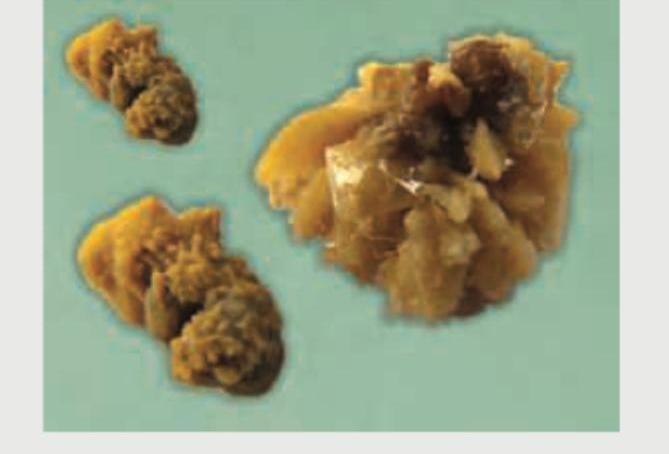
Which of the following statements is NOT true about this condition?

Anorchia is best diagnosed by which of the following investigations?
A middle-aged diabetic female presented with flank pain and fever. On ultrasound, the kidney was irregular and showed fat density with calculi. What is the most probable diagnosis?
A 40-year-old patient with a single kidney presents with a solitary exophytic mass of 4 cm localized at its lower pole. Which of the following is the best recommended management option?
A prenatal ultrasound showed bilateral hydronephrosis in a male fetus. A repeat ultrasound scan done a few days later showed bilateral hydronephrosis with a full bladder and reduced amniotic fluid. An emergency Cesarean section was conducted. What is the first likely investigation for the newborn?
Which of the following is NOT true about torsion of the testis?
What is the period of trial required for maximum response when treating benign prostatic hyperplasia with finasteride?
During an operation on an unstable, critically ill patient, the left ureter is lacerated through 50% of its circumference. If the patient's condition is too serious to allow time for definitive repair, what is an alternative method of management?
Explanation: **Explanation:** **Epispadias** is a rare congenital malformation where the urethral meatus opens on the dorsal (upper) surface of the penis. It is part of the **Exstrophy-Epispadias Complex (EEC)**. 1. **Why Chordee is correct:** In epispadias, the urethral plate is short and the corpora cavernosa are often underdeveloped or tethered dorsally. This results in **dorsal chordee** (an upward curvature of the penis), which is a hallmark clinical feature. While chordee is more commonly associated with hypospadias (ventral curvature), it is a consistent finding in epispadias as well. 2. **Why the other options are incorrect:** * **Bifid pubic symphysis (Option A):** While this is a classic feature of **Bladder Exstrophy**, it is not a defining feature of isolated epispadias. In the spectrum of EEC, as the severity increases from epispadias to exstrophy, the pubic diastasis becomes prominent. * **Anal atresia (Option C) & Intestinal obstruction (Option D):** These are more commonly associated with **Cloacal Exstrophy** (the most severe form of the complex) or VACTERL association, rather than isolated epispadias. **High-Yield Clinical Pearls for NEET-PG:** * **Location:** Urethral opening is on the **dorsal** aspect (Hypospadias is ventral). * **Association:** Most cases of epispadias are associated with some degree of **urinary incontinence** due to poorly developed bladder necks. * **Gender:** More common in males (3:1 ratio). * **Surgical Repair:** The **Cantwell-Ransley procedure** is the gold standard for epispadias repair, involving tubularization of the urethra and correction of the dorsal chordee.
Explanation: **Explanation:** Testicular tumors are a high-yield topic for NEET-PG, characterized by their excellent prognosis and specific treatment modalities. **1. Why Option B is the "False" Statement (Correct Answer):** The question asks for the **false** statement. While it is medically true that Seminomas are highly radiosensitive, in the context of this specific MCQ (often sourced from standard textbooks like Bailey & Love), the options are designed to test your knowledge of epidemiology and prognosis. However, looking at the options provided: * **Option A is False:** Testicular tumors are the most common malignancy in **young men** (ages 15–35), not older men. In older men (>60 years), the most common testicular tumor is actually **Lymphoma**. * **Option D is False:** Testicular cancer is the poster child for "curable" metastatic disease. With cisplatin-based chemotherapy (BEP regimen), even metastatic disease has a high cure rate (>80%). *Note: There appears to be a discrepancy in the provided key. In standard surgical teaching, A, C, and D are technically false statements, while B is a true clinical fact. If the key marks B as the answer to "which is false," it is likely a typographical error in the source material, as Seminomas are indeed the most radiosensitive testicular tumors.* **2. Analysis of Other Options:** * **Option C:** Historically, Stage 1 Non-Seminomatous Germ Cell Tumors (NSGCT/Teratomas) had a higher recurrence rate, but with modern surveillance and adjuvant treatment, the cure rate is much higher. * **Option D:** This is false because chemotherapy (BEP: Bleomycin, Etoposide, Cisplatin) is highly effective even in Stage III disease. **Clinical Pearls for NEET-PG:** * **Most common type:** Seminoma (overall). * **Tumor Markers:** AFP is **never** raised in pure seminomas. If AFP is high, treat it as a non-seminoma. * **Lymphatic Spread:** Initially to **Para-aortic nodes** (not inguinal nodes, unless the scrotum is involved). * **Best Prognosis:** Seminoma (due to extreme radiosensitivity). * **Worst Prognosis:** Choriocarcinoma (early hematogenous spread).
Explanation: ***Condition affects adolescent males*** - **Peyronie's disease** typically affects **middle-aged to older men** (40-70 years), not adolescents. - The condition is characterized by **fibrous plaque formation** in the tunica albuginea, which is more common with aging and associated comorbidities. *Patient presents with complaints of painful erection* - **Painful erections** are a common presenting complaint, especially during the **acute inflammatory phase** of Peyronie's disease. - Patients often experience **pain during erection** along with **penile curvature** due to the fibrous plaque. *Galezia's Triad includes Dupuytren's contracture, Peyronie's disease, and retroperitoneal fibrosis* - **La Peyronie's triad** (also known as Galezia's triad) is a recognized association of **fibrotic conditions**. - These three conditions share similar **pathophysiology** involving abnormal **collagen deposition** and fibrosis. *Nesbitt's operation is performed* - **Nesbitt's procedure** is a surgical technique used to correct **penile curvature** in Peyronie's disease. - The operation involves **plication of the tunica albuginea** on the convex side to straighten the penis.
Explanation: **Explanation:** **Anorchia** (vanishing testis syndrome) refers to the complete absence of testicular tissue in a phenotypic male with a 46,XY karyotype. The diagnostic challenge lies in distinguishing an intra-abdominal testis from true anorchia. **Why Laparoscopy is the Correct Answer:** Diagnostic **laparoscopy** is the **gold standard** for evaluating a non-palpable testis. It provides direct visualization of the internal inguinal ring and the pelvic cavity. Anorchia is confirmed laparoscopically when the surgeon identifies a "blind-ending" spermatic vessel and vas deferens above the internal ring. If these structures are seen entering the inguinal canal, the testis is likely present but located in the canal or scrotum (atrophic). **Why Other Options are Incorrect:** * **Ultrasound (USG):** While often the first-line screening tool, USG has very low sensitivity (approx. 45%) for detecting intra-abdominal testes, especially in obese patients or when the testis is high in the retroperitoneum. A negative USG never confirms anorchia. * **CT Scan:** CT involves significant radiation exposure and is less effective than laparoscopy or MRI at identifying small, dysplastic, or intra-abdominal gonads. It is rarely used in pediatric urology for this purpose. * **SPECT:** This is a functional nuclear imaging modality and has no established role in the anatomical localization of a non-palpable testis. **High-Yield Clinical Pearls for NEET-PG:** * **Initial Investigation:** Physical examination (under anesthesia if necessary). * **Best Initial Imaging:** Ultrasound (though often inconclusive). * **Gold Standard/Definitive Investigation:** Laparoscopy. * **Hormonal Profile in Anorchia:** High FSH/LH levels and an undetectable **Anti-Müllerian Hormone (AMH)** level. * **hCG Stimulation Test:** In bilateral non-palpable testes, a failure of testosterone to rise after hCG injection suggests anorchia. However, laparoscopy is still required to confirm the anatomy.
Explanation: **Explanation:** The clinical presentation of a middle-aged diabetic female with fever, flank pain, and specific imaging findings is classic for **Xanthogranulomatous Pyelonephritis (XGP)**. **1. Why Option B is Correct:** XGP is a chronic inflammatory process characterized by the destruction of renal parenchyma and its replacement with lipid-laden foamy macrophages (**xanthoma cells**). * **The "Fat Density":** On imaging (USG/CT), these lipid-laden macrophages appear as areas of fat density, which is a pathognomonic finding. * **The "Calculi":** XGP is almost always associated with chronic urinary obstruction, often due to a large **staghorn calculus** (Proteus or E. coli infections). * **Demographics:** It most commonly affects middle-aged women, particularly those with diabetes. **2. Why Other Options are Incorrect:** * **A. Tuberculosis of Kidney:** While it causes chronic inflammation and "putty kidney" (calcification), it does not typically present with fat-density replacement of the parenchyma. * **C. Chronic Pyelonephritis:** This leads to a small, scarred, shrunken kidney with blunted calyces, but it lacks the specific "fat-density" masses seen in XGP. * **D. Renal Abscess:** This presents as a localized fluid collection (pus) with a thick wall. While it causes fever and pain, it does not explain the presence of diffuse fat density and chronic calculi. **Clinical Pearls for NEET-PG:** * **"Bear’s Paw Sign":** On CT, the cross-sectional appearance of dilated calyces surrounding a central calcification in XGP is known as the Bear’s Paw sign. * **The Great Mimicker:** XGP is often mistaken for Renal Cell Carcinoma (RCC) because it can be locally invasive. * **Treatment:** The gold standard treatment for the diffuse form is **Nephrectomy**.
Explanation: ### **Explanation** The management of renal masses has shifted significantly toward **Nephron Sparing Surgery (NSS)**, such as **Partial Nephrectomy**, whenever oncologically feasible. **1. Why Partial Nephrectomy is Correct:** In this clinical scenario, the patient has a **solitary kidney**. Performing a radical nephrectomy would render the patient anephric, necessitating lifelong dialysis or transplantation. * **Indications for NSS:** Partial nephrectomy is the "Gold Standard" for **T1a tumors (<4 cm)** and is increasingly preferred for **T1b (4–7 cm)** if technically possible. * **Mandatory Indication:** A solitary kidney, bilateral renal tumors, or pre-existing renal insufficiency are **absolute indications** for partial nephrectomy to preserve maximum renal function and avoid the morbidity of chronic kidney disease (CKD). The exophytic nature and lower pole location make this mass technically favorable for NSS. **2. Why Other Options are Incorrect:** * **Option A:** Radical nephrectomy in a solitary kidney leads to immediate renal failure. It is reserved only for cases where the tumor is centrally located or so large that NSS is technically impossible. * **Options B & C:** These are "salvage" strategies. While dialysis and transplant are options for end-stage renal disease, the primary goal in surgical oncology is to preserve native organ function if the tumor can be safely excised with negative margins. ### **Clinical Pearls for NEET-PG:** * **TRIAD of RCC:** Hematuria, Flank pain, and Palpable mass (seen in only 10% of cases today). * **Standard of Care:** Partial Nephrectomy is the treatment of choice for **T1 tumors (<7 cm)**. * **Cold Ischemia Time:** During partial nephrectomy, the renal artery is often clamped. To prevent tubular necrosis, the kidney is cooled with ice slush; the safe "cold ischemia time" is up to **35–45 minutes**. * **Most Common Histology:** Clear cell carcinoma (associated with VHL gene on Chromosome 3p).
Explanation: **Explanation:** The clinical presentation of a male fetus with **bilateral hydronephrosis, a distended (full) bladder, and oligohydramnios** (reduced amniotic fluid) is the classic triad for **Posterior Urethral Valves (PUV)**. PUV is the most common cause of bladder outlet obstruction in male newborns and represents a urological emergency. 1. **Why Micturating Cystourethrogram (MCUG) is correct:** MCUG is the **gold standard** and the investigation of choice for diagnosing PUV. It confirms the diagnosis by demonstrating a dilated posterior urethra, a "valve" member, and a thick-walled, trabeculated bladder. It also helps assess for associated Vesicoureteral Reflux (VUR), which occurs in nearly 50% of these cases. 2. **Why other options are incorrect:** * **Ultrasonography (USG):** While USG is the initial screening tool (often showing the "keyhole sign"), it cannot definitively diagnose the cause of obstruction or differentiate between PUV and other conditions like prune belly syndrome. * **DMSA Scan:** This is a nuclear medicine scan used to detect renal scarring or functional cortical mass. It is not used in the acute diagnostic phase of outlet obstruction. * **Renal Doppler:** This assesses blood flow to the kidneys (e.g., renal artery stenosis) and has no role in diagnosing anatomical bladder outlet obstructions. **Clinical Pearls for NEET-PG:** * **Keyhole Sign:** On prenatal USG, the dilated posterior urethra and thick-walled bladder resemble a keyhole; this is highly suggestive of PUV. * **Initial Management:** The first step in management after birth is **bladder catheterization** (using a small feeding tube) to decompress the system, followed by an MCUG for diagnosis. * **Definitive Treatment:** Primary endoscopic fulguration of the valves. * **Potter Sequence:** Severe oligohydramnios due to PUV can lead to pulmonary hypoplasia, the most common cause of death in these neonates.
Explanation: **Explanation:** Testicular torsion is a surgical emergency caused by the twisting of the spermatic cord, leading to vascular compromise and potential infarction of the testis. **Why Option B is the Correct Answer (The False Statement):** Pyuria (pus cells in urine) is a hallmark of **Urinary Tract Infection (UTI) or Acute Epididymo-orchitis**, which is the primary differential diagnosis for torsion. Testicular torsion is a mechanical/vascular event, not an infectious one; therefore, the urinalysis is typically normal. The presence of pyuria strongly points away from torsion and toward an inflammatory etiology. **Analysis of Incorrect Options (True Statements):** * **Option A:** Torsion typically presents with a **sudden, agonizing onset of pain** in the groin or lower abdomen, often associated with nausea and vomiting. * **Option C:** **Color Doppler Ultrasound** is the investigation of choice. A positive finding for torsion is the absence or significant reduction of arterial blood flow to the affected testis. * **Option D:** Torsion often occurs due to a congenital anatomical anomaly known as the **"Bell-clapper deformity"** (high investment of tunica vaginalis). Since this anatomical defect is usually bilateral, **prophylactic contralateral orchidopexy** is mandatory to prevent future torsion on the opposite side. **High-Yield Clinical Pearls for NEET-PG:** * **Golden Period:** Salvage rate is nearly 100% if detorsion occurs within **6 hours**; it drops to <10% after 24 hours. * **Prehn’s Sign:** Negative in torsion (pain is not relieved by elevating the testis) but positive in epididymo-orchitis. * **Cremasteric Reflex:** Characteristically **absent** in testicular torsion. * **Angel’s Sign:** The affected testis lies in a high, horizontal position.
Explanation: **Explanation:** **Finasteride** is a 5-alpha reductase inhibitor (5-ARI) used in the management of Benign Prostatic Hyperplasia (BPH). Its mechanism involves inhibiting the conversion of testosterone to dihydrotestosterone (DHT), the primary androgen responsible for prostatic growth. **Why 6 months is correct:** Unlike Alpha-blockers (e.g., Tamsulosin), which provide rapid symptomatic relief by relaxing smooth muscles, 5-ARIs work by inducing **epithelial atrophy**, leading to a physical reduction in prostate volume (approximately 20–25%). This process is slow and time-dependent. Clinical studies demonstrate that while some improvement may be seen earlier, it takes **6 months** of continuous therapy to achieve the **maximum clinical response** and significant reduction in prostate size. **Analysis of Incorrect Options:** * **1 month (A):** Too short for any significant structural change or volume reduction. * **3 months (B):** Onset of action begins, but peak efficacy regarding symptom score improvement and flow rate is not yet reached. * **18 months (D):** While the drug is taken long-term to prevent progression, the "trial period" to assess maximum initial response is established at 6 months. **High-Yield Clinical Pearls for NEET-PG:** * **Indication:** Best suited for patients with large prostates (**>30-40 grams**). * **PSA Effect:** Finasteride reduces serum PSA levels by **50%**. For screening purposes, the measured PSA in a patient on Finasteride should be **doubled** to estimate the true value. * **Clinical Benefits:** Reduces the risk of acute urinary retention (AUR) and the need for surgical intervention (TURP). * **Side Effects:** Erectile dysfunction, decreased libido, and gynecomastia.
Explanation: ### Explanation The management of ureteral injuries depends on the **location** of the injury, the **extent** of the damage, and the **hemodynamic stability** of the patient. **Why Option A is Correct:** In a "damage control" surgery scenario involving a critically ill or unstable patient, the primary goal is to control hemorrhage and contamination quickly. Definitive ureteral repair (like ureteroureterostomy or ureteroneocystostomy) is time-consuming and technically demanding. The safest approach is to **ligate the ureter** (to prevent urinoma and sepsis) and perform an **ipsilateral percutaneous nephrostomy** (either immediately or post-operatively) to divert urine and preserve renal function. This allows for a delayed, elective definitive repair once the patient is stabilized. **Why Other Options are Incorrect:** * **Option B (Nephrectomy):** This is overly aggressive. Even in trauma, every effort is made to preserve renal units, especially since the kidney itself is not injured. * **Option C (Distal catheterization):** Placing a catheter from the distal ureter to the skin (ureterostomy) is technically difficult, prone to strictures, and does not provide reliable drainage compared to a nephrostomy. * **Option D (Suction drain only):** Simply placing a drain without proximal diversion or ligation will lead to a persistent urinary fistula, electrolyte imbalances, and potential retroperitoneal sepsis. **Clinical Pearls for NEET-PG:** * **Most common site of iatrogenic ureteral injury:** Lower third of the ureter (often during gynecological surgeries near the uterine artery). * **Gold standard for diagnosis (Acute):** IVU (Intravenous Urogram) or Contrast CT. * **Management Rule:** * *Stable patient:* Immediate primary repair over a double-J (DJ) stent. * *Unstable patient:* Damage control (Ligate + Nephrostomy). * **Ureteric injury <2cm from bladder:** Ureteroneocystostomy (re-implantation) is preferred. * **Ureteric injury >2cm from bladder:** Ureteroureterostomy.
Urological Anatomy
Practice Questions
Hematuria Evaluation
Practice Questions
Urinary Calculi
Practice Questions
Benign Prostatic Hyperplasia
Practice Questions
Prostate Cancer
Practice Questions
Bladder Cancer
Practice Questions
Renal Cell Carcinoma
Practice Questions
Testicular Tumors
Practice Questions
Urinary Tract Infections
Practice Questions
Urinary Incontinence
Practice Questions
Genitourinary Trauma
Practice Questions
Pediatric Urology Basics
Practice Questions
Get full access to all questions, explanations, and performance tracking.
Start For Free