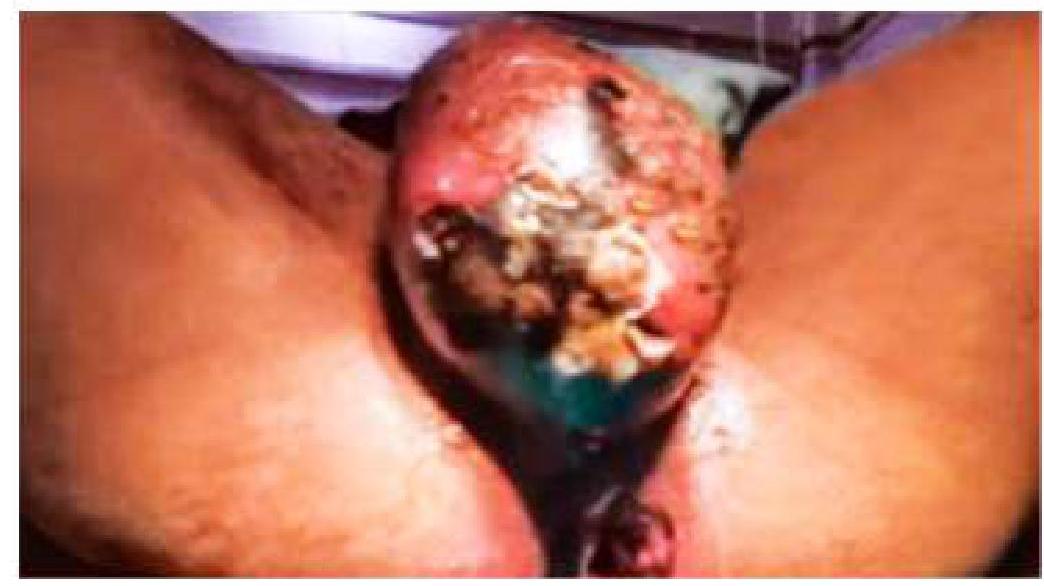
What is the most common organism involved in acute bacterial prostatitis?
Which of the following is false about hypospadias?
A 60-year-old male undergoes TURP. After 3 days, the patient develops altered consciousness and drowsiness. What is the most probable diagnosis?
What is the risk of HIV transmission after a needle-stick injury?
What is the primary medical treatment for hyperprolactinemia?
Chordee is associated with which of the following conditions?
Surgically used suture material polydioxanone (PDS) undergoes which of the following processes?
What is the earliest and often the only presentation of TB kidneys?
Which condition is characterized by an improvement in urine stream after its initial onset?
What is an indication for surgery in Benign Prostatic Hyperplasia (BPH)?
Explanation: **Explanation:** Acute bacterial prostatitis is a serious systemic infection of the prostate gland. The correct answer is **Escherichia coli (C)** because the pathogenesis of prostatitis typically involves the reflux of infected urine from the bulbous urethra into the prostatic ducts. 1. **Why E. coli is correct:** Gram-negative enteric bacilli are the most common causative agents. *Escherichia coli* is the predominant pathogen, accounting for approximately **60–80% of cases**. Other common gram-negative organisms include *Proteus mirabilis*, *Klebsiella* species, and *Pseudomonas aeruginosa*. 2. **Why the other options are incorrect:** * **Streptococcal viridans (A):** These are commensals of the oral cavity and are rarely implicated in urinary tract infections or prostatitis. * **Peptostreptococci (B):** These are anaerobic bacteria. While anaerobes can occasionally cause prostatic abscesses, they are not the primary cause of acute bacterial prostatitis. * **Streptococci agalactiae (D):** Also known as Group B Streptococcus, it is a common cause of neonatal sepsis and occasionally UTIs in pregnant women or the elderly, but it is far less common than *E. coli* in prostatitis. **Clinical Pearls for NEET-PG:** * **Route of Infection:** Most commonly ascending urethral infection or intraprostatic reflux of infected urine. * **Clinical Presentation:** High-grade fever, chills, perineal pain, and obstructive voiding symptoms. * **Physical Exam:** On Digital Rectal Examination (DRE), the prostate is **exquisitely tender, boggy, and warm.** * **Contraindication:** Prostatic massage is **strictly contraindicated** in acute prostatitis as it may precipitate bacteremia/sepsis. * **Treatment:** Fluoroquinolones (e.g., Ciprofloxacin) or Trimethoprim-sulfamethoxazole for 4–6 weeks to ensure adequate penetration into the prostatic tissue.
Explanation: **Explanation:** Hypospadias is a common congenital anomaly of the penis characterized by the incomplete development of the anterior urethra. **1. Why Option A is the Correct Answer (False Statement):** In hypospadias, the urethral meatus opens on the **ventral (underside)** aspect of the penis, anywhere from the glans to the perineum. A defect on the **dorsal (top)** aspect is characteristic of **Epispadias**, which is often associated with bladder exstrophy. Therefore, stating the defect is on the dorsal aspect is incorrect. **2. Analysis of Other Options (True Statements):** * **Option B (Chordee):** This refers to the ventral curvature of the penis, often caused by fibrous bands or skin deficiency. It is a classic feature associated with hypospadias. * **Option C (Hooded Prepuce):** Due to the failure of the ventral foreskin to fuse, there is an excess of dorsal skin, leading to a "hooded" appearance. * **Option D (Circumcision avoidance):** This is a critical clinical rule. The prepuce (foreskin) must be preserved because it is frequently used as a vascularized flap or graft for surgical reconstruction (urethroplasty). **Clinical Pearls for NEET-PG:** * **Incidence:** Approximately 1 in 300 live male births. * **Associated Anomalies:** Cryptorchidism (undescended testis) and inguinal hernias are the most common. * **Management:** The ideal age for surgical repair is **6 to 12 months**. * **Common Procedures:** Snodgrass technique (TIP - Tubularized Incised Plate), MAGPI (for distal cases), and Mathieu’s repair.
Explanation: **Explanation:** The patient is presenting with **TURP Syndrome**, a classic complication occurring due to the systemic absorption of large volumes of non-conductive irrigation fluid (traditionally 1.5% Glycine) through opened prostatic venous sinuses during Transurethral Resection of the Prostate. **1. Why Hyponatremia is Correct:** The absorption of hypotonic irrigation fluid leads to **dilutional hyponatremia** and hypervolemia. As serum sodium levels drop (typically below 120 mEq/L), cerebral edema develops. This manifests clinically as altered consciousness, drowsiness, confusion, seizures, and in severe cases, coma. Glycine itself can also act as an inhibitory neurotransmitter, contributing to visual disturbances and encephalopathy. **2. Why Other Options are Incorrect:** * **Hypernatremia:** TURP involves the absorption of water/hypotonic fluids, which decreases sodium concentration; it never causes an increase in sodium. * **Stroke:** While possible in elderly patients, the temporal relationship with a TURP procedure and the specific metabolic risk makes TURP syndrome significantly more probable. * **Meningitis:** While spinal anesthesia can cause "Post-Dural Puncture Headache," acute altered sensorium after 3 days without fever or nuchal rigidity makes meningitis highly unlikely. **High-Yield Clinical Pearls for NEET-PG:** * **Prevention:** Limit resection time to **<60 minutes**, keep irrigation bag height **<60 cm**, and use Bipolar TURP (which allows the use of Normal Saline, eliminating the risk of hyponatremia). * **Treatment:** Mild cases require fluid restriction and diuretics (Furosemide). Severe symptomatic hyponatremia requires **3% Hypertonic Saline** (corrected slowly to avoid Central Pontine Myelinolysis). * **Early Sign:** If the patient is under spinal anesthesia, the earliest sign is often **bradycardia and hypertension** (due to fluid overload) or sudden apprehension/confusion.
Explanation: The risk of transmission following a needle-stick injury is a high-yield topic in NEET-PG, focusing on the probability of seroconversion after occupational exposure. ### **Explanation of the Correct Answer** The risk of HIV transmission after a percutaneous (needle-stick) injury involving HIV-infected blood is approximately **0.3% (1 in 300)**. This risk is relatively low compared to other blood-borne pathogens because HIV exists in lower titers in the blood and is a fragile virus that does not survive long outside the host. The risk is further influenced by the viral load of the source patient and the depth of the injury. ### **Analysis of Incorrect Options** * **Option B (0.5–1%):** This range is too high for percutaneous HIV exposure. However, the risk for **mucous membrane exposure** (e.g., blood splash to the eye) is even lower, at approximately **0.09%**. * **Option C (2–3%):** This is the approximate risk for **Hepatitis C (HCV)** transmission after a needle-stick injury (quoted as ~1.8% to 3%). * **Option D (10–20%):** This is significantly higher than HIV risks. The risk of **Hepatitis B (HBV)** transmission in a non-immune individual is the highest, ranging from **6% to 30%** (depending on the HBeAg status of the source). ### **High-Yield Clinical Pearls for NEET-PG** * **Rule of 3s for Needle-stick Risks:** * **HIV:** 0.3% * **HCV:** 3% * **HBV:** 30% (if HBeAg positive) * **Post-Exposure Prophylaxis (PEP):** Should be started as soon as possible, ideally within **2 hours** and definitely within **72 hours**. The standard duration is **28 days**. * **First Aid:** Immediately wash the site with soap and water. Do not scrub or use antiseptics like bleach, as they can cause tissue inflammation and potentially increase viral entry.
Explanation: **Explanation:** The primary medical treatment for hyperprolactinemia involves **Dopamine Agonists**. Prolactin secretion is uniquely regulated by the hypothalamus through tonic inhibition via dopamine (Prolactin Inhibiting Factor). By stimulating D2 receptors on pituitary lactotrophs, dopamine agonists suppress prolactin synthesis and secretion, and can even shrink prolactin-secreting adenomas. * **Bromocriptine (Option A):** This is a classic ergoline dopamine agonist. It is the traditional first-line treatment, especially preferred in patients seeking pregnancy due to its long-standing safety record. While **Cabergoline** is now often preferred in clinical practice due to higher efficacy and fewer side effects, Bromocriptine remains a standard correct answer in many examinations. **Why the other options are incorrect:** * **Methyldopa (Option B):** A centrally acting antihypertensive that depletes dopamine stores. This actually **causes** hyperprolactinemia as a side effect. * **Haloperidol (Option C) & Chlorpromazine (Option D):** These are antipsychotics that act as **Dopamine Antagonists**. By blocking D2 receptors, they remove the inhibitory effect on prolactin, leading to drug-induced hyperprolactinemia, galactorrhea, and gynecomastia. **High-Yield Clinical Pearls for NEET-PG:** 1. **Drug of Choice:** Cabergoline is currently the drug of choice (more potent, twice-weekly dosing) over Bromocriptine (daily dosing). 2. **Hook Effect:** In cases of giant prolactinomas with paradoxically low prolactin levels, a laboratory "hook effect" should be suspected; dilution of the sample is required for accurate measurement. 3. **Physiological Causes:** Pregnancy, lactation, and stress are the most common physiological causes of elevated prolactin. 4. **Surgical Indication:** Transsphenoidal surgery is reserved for patients who are refractory to or intolerant of medical therapy.
Explanation: **Explanation:** **Hypospadias** is a congenital anomaly characterized by the urethral opening being located on the ventral aspect of the penis. **Chordee**, which refers to the ventral curvature of the penis, is a hallmark association of hypospadias. It is caused by the presence of a fibrous band of tissue (rudimentary corpus spongiosum) or skin tethering distal to the ectopic urethral meatus. During an erection, this fibrous tissue does not expand, causing the penis to bend ventrally. **Analysis of Options:** * **Epispadias (Option A):** In this condition, the urethral opening is on the **dorsal** aspect of the penis. While it can be associated with dorsal curvature, the classic term "chordee" is specifically linked to the ventral curvature seen in hypospadias. * **Phimosis (Option B):** This is the inability to retract the prepuce (foreskin) over the glans penis. It is an anatomical issue of the skin, not the urethral development or corporal curvature. * **Posterior Urethral Valve (Option D):** This is an obstructive developmental anomaly in the urethra of male newborns. It presents with voiding dysfunction and hydronephrosis, but does not involve external penile curvature. **Clinical Pearls for NEET-PG:** * **Triad of Hypospadias:** 1. Ectopic urethral meatus (ventral), 2. Chordee (ventral curvature), 3. Hooded prepuce (deficient ventrally, redundant dorsally). * **Management:** Circumcision is **contraindicated** in these infants because the preputial skin is required for surgical reconstruction (Urethroplasty). * **Timing of Surgery:** Ideally performed between **6 to 12 months** of age. * **Commonest Type:** Glandular/Coronal (Distal) hypospadias.
Explanation: **Explanation:** **Polydioxanone (PDS)** is a synthetic, monofilament, absorbable suture material. The core mechanism of its disappearance from the body is **non-enzymatic hydrolysis**. 1. **Why Option B is Correct:** Synthetic absorbable sutures (like PDS, Vicryl, and Monocryl) are broken down by hydrolysis—a process where water penetrates the polymer chains, causing them to fragment. PDS is known for its prolonged tensile strength (lasting up to 6 weeks) and is completely absorbed by the body within **180 to 210 days**. 2. **Why Options A, C, and D are Incorrect:** * **Option A:** Non-absorbable sutures (e.g., Silk, Prolene, Nylon) remain encapsulated by fibrous tissue; PDS is designed to be absorbed. * **Option C:** Phagocytosis and enzymatic degradation are characteristic of **natural absorbable sutures** (e.g., Surgical Catgut). Synthetic sutures are specifically engineered to avoid this inflammatory pathway to minimize tissue reaction. * **Option D:** Heart valves and synthetic grafts require permanent fixation, necessitating non-absorbable sutures like **Polypropylene (Prolene)** or **PTFE**. **High-Yield Clinical Pearls for NEET-PG:** * **Tensile Strength:** PDS retains ~50% of its strength at 4 weeks, making it ideal for tissues that heal slowly (e.g., abdominal fascia/rectus sheath closure). * **Monofilament Advantage:** Unlike braided sutures (Vicryl), PDS is a monofilament, which reduces the risk of "wicking" bacteria and surgical site infections. * **Metabolism:** The end products of PDS hydrolysis are primarily excreted in the urine. * **Comparison:** Remember: **Natural = Enzymatic/Proteolysis**; **Synthetic = Hydrolysis.**
Explanation: **Explanation:** Genitourinary Tuberculosis (GUTB) is the second most common site of extrapulmonary TB. Understanding its presentation is crucial for NEET-PG, as it often presents insidiously. **1. Why "Increased frequency of urination" is correct:** The earliest and most common symptom of renal tuberculosis is **increased frequency of micturition**. Initially, this occurs due to the presence of mycobacteria and inflammatory products in the urine, which irritate the bladder mucosa. As the disease progresses, the frequency becomes persistent (both day and night) due to secondary bladder involvement, leading to a "thimble bladder" (fibrosis and reduced capacity). A classic diagnostic hallmark is **sterile pyuria** (pus cells in urine without bacterial growth on routine culture). **2. Why other options are incorrect:** * **Colicky pain:** This is usually a late feature. It occurs only if there is a passage of blood clots or debris (secondary to papillary necrosis) or if the patient develops secondary renal calculi. * **Hematuria:** While common (seen in about 50% of cases), it is typically a later manifestation resulting from ulceration in the renal pelvis or bladder. It is usually terminal and painless. * **Renal calculi:** These are a complication of chronic TB due to stasis and secondary infection, not an early presentation. **Clinical Pearls for NEET-PG:** * **Gold Standard Diagnosis:** Culture on **Lowenstein-Jensen (LJ) medium** (takes 6–8 weeks). * **Earliest Radiological Sign:** "Moth-eaten" appearance of the calyces on IVP. * **Putty Kidney:** A late-stage finding where the kidney is non-functional and autonephrectomized due to caseous calcification. * **Classic Triad:** Increased frequency + Sterile pyuria + Acidic urine.
Explanation: **Explanation:** In **Urethral Stricture**, the narrowing of the urethral lumen creates high resistance to urine flow. At the start of micturition, the stream is weak or thin. However, as the bladder contracts more vigorously to overcome the obstruction, the high proximal pressure causes the strictured segment to dilate slightly. This physiological expansion leads to a paradoxical **improvement in the urine stream** after the initial onset. **Analysis of Options:** * **Prostate Enlargement (BPH):** Characterized by hesitancy, a weak stream that remains weak or worsens towards the end (terminal dribbling), and a feeling of incomplete emptying. The stream does not improve during the act. * **Marion’s Disease (Bladder Neck Obstruction):** This involves congenital hypertrophy of the internal sphincter. It typically presents with a consistently poor stream and difficulty initiating voiding, similar to BPH but in younger patients. * **Posterior Urethral Valves (PUV):** This is the most common cause of bladder outlet obstruction in male infants. It is characterized by a weak, dribbling stream from birth, often associated with a palpable bladder and bilateral hydronephrosis. **High-Yield Clinical Pearls for NEET-PG:** * **Gold Standard Investigation:** Retrograde Urethrogram (RGU) is the investigation of choice to define the site and length of the stricture. * **Most Common Site:** The bulbar urethra is the most common site for post-inflammatory and idiopathic strictures. * **Management:** Short strictures (<2cm) are managed by **Direct Vision Internal Urethrotomy (DVIU)** or dilatation; long strictures require **Urethroplasty** (e.g., BMG - Buccal Mucosa Graft).
Explanation: In the management of Benign Prostatic Hyperplasia (BPH), indications for surgical intervention (typically TURP) are categorized into absolute and relative indications. Surgery is indicated when medical management fails or when complications of bladder outlet obstruction (BOO) arise. **Why Option C is Correct:** **Recurrent Urinary Tract Infections (UTIs)** are a definitive indication for surgery. Chronic urinary retention leads to significant post-void residual (PVR) volume, which acts as a nidus for bacterial growth. If a patient experiences repeated infections despite medical therapy, it signifies that the obstruction is severe enough to compromise the bladder's immunological and mechanical defenses. **Analysis of Incorrect Options:** * **Option A (Acute bilateral hydronephrosis):** While chronic renal failure or progressive hydronephrosis due to BPH is an indication, "acute bilateral hydronephrosis" is usually a medical emergency requiring immediate drainage (catheterization or nephrostomy) rather than elective BPH surgery as the first step. * **Option B (Nocturnal frequency):** This is an irritative Lower Urinary Tract Symptom (LUTS). While bothersome, it is initially managed with lifestyle modifications or medical therapy (Alpha-blockers/5-ARIs) and is not a standalone indication for surgery unless symptoms become refractory and severely impact quality of life. * **Option D (Voiding bladder pressure >50 cm water):** While high voiding pressures indicate obstruction, there is no specific "50 cm" cutoff used as a standard surgical indication. Urodynamic studies are reserved for complex cases, but clinical complications take precedence. **High-Yield Clinical Pearls for NEET-PG:** * **Absolute Indications for Surgery (Mnemonic: "WASH"):** 1. **W**—Water (Refractory Urinary Retention/failed trial without catheter). 2. **A**—Azotemia (Renal insufficiency due to BPH). 3. **S**—Stones (Bladder calculi). 4. **H**—Hematuria (Recurrent/Persistent gross hematuria) and **H**—Infections (Recurrent UTIs). * **Gold Standard Surgery:** Transurethral Resection of the Prostate (TURP). * **Size Cut-off:** TURP is generally preferred for glands <60-80g; Open Prostatectomy (Frever’s or Millin’s) or HoLEP is considered for larger glands (>80-100g).
Urological Anatomy
Practice Questions
Hematuria Evaluation
Practice Questions
Urinary Calculi
Practice Questions
Benign Prostatic Hyperplasia
Practice Questions
Prostate Cancer
Practice Questions
Bladder Cancer
Practice Questions
Renal Cell Carcinoma
Practice Questions
Testicular Tumors
Practice Questions
Urinary Tract Infections
Practice Questions
Urinary Incontinence
Practice Questions
Genitourinary Trauma
Practice Questions
Pediatric Urology Basics
Practice Questions
Get full access to all questions, explanations, and performance tracking.
Start For Free