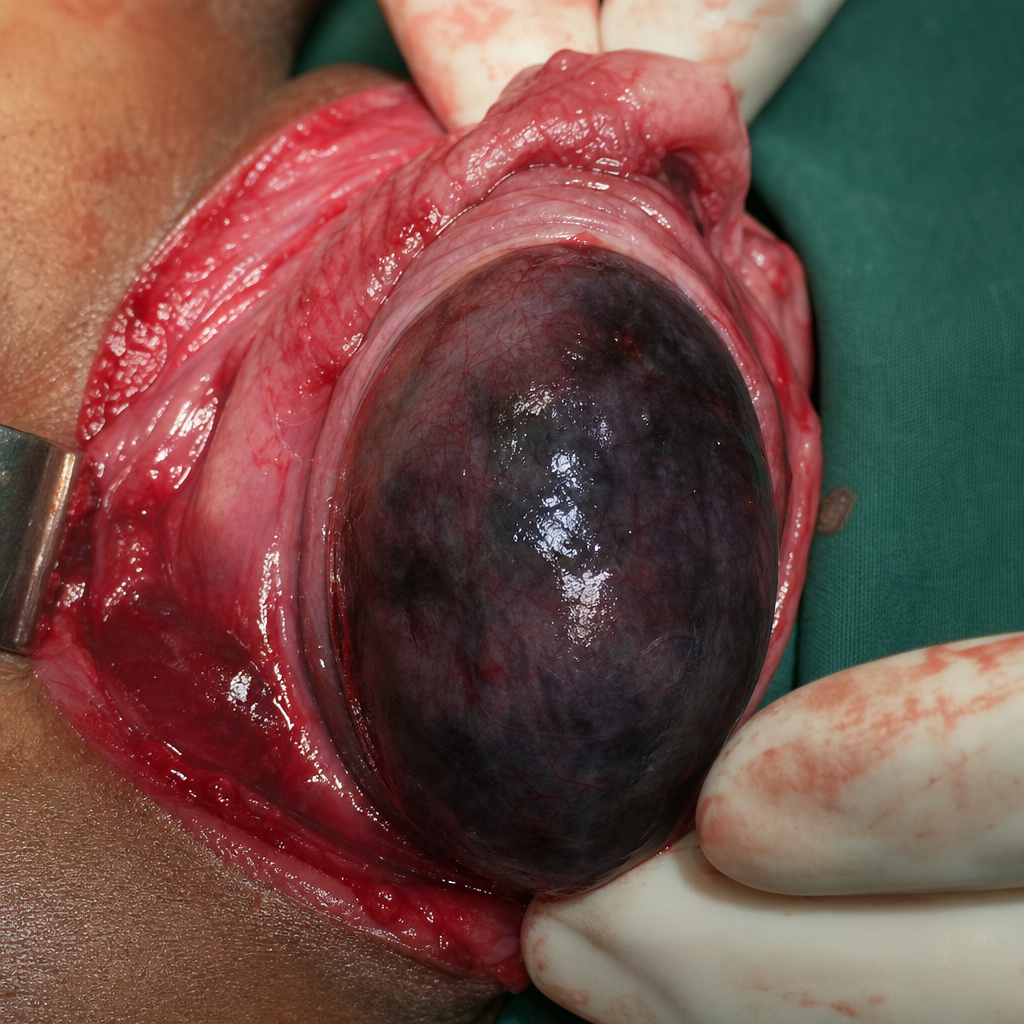
What is the recommended treatment for preputial adhesions causing ballooning of the prepuce during micturition in a 2-year-old boy?
Which of the following cancers predominantly presents with osteoblastic metastases?
The 'Brown sign' is characteristically seen in which of the following conditions?
Palpable fibrous plaque on the dorsal penile shaft indicates which of the following conditions?
Dietl crisis is seen in:
Which of the following is a known complication of modified retroperitoneal lymph node dissection (RPLND) performed for non-seminomatous germ cell tumors of the testis?
What is the most common site of colorectal malignancy?
Recurrent infection is a leading cause of which type of urinary calculi?
A 29-year-old male complains of flank pain that radiates from the loin to the groin region. What is the first investigation to be done?
After agreeing to have no more children, a man and his wife decided he should have a vasectomy. What structure would then be surgically ligated?
Explanation: **Explanation:** The clinical presentation of **ballooning of the prepuce** during micturition indicates significant **pathological phimosis**. While physiological phimosis (non-retractile foreskin) is normal in a 2-year-old, the presence of ballooning signifies that the preputial opening is so narrow that it creates a functional obstruction to urinary flow. **Why Circumcision is the Correct Answer:** In cases of pathological phimosis where there is symptomatic interference with voiding (ballooning), recurrent balanoposthitis, or urinary tract infections, **circumcision** is the definitive surgical treatment. It involves the complete removal of the prepuce, thereby eliminating the obstruction and preventing future complications like paraphimosis or scarring. **Analysis of Incorrect Options:** * **Observation and monitoring (A):** While physiological phimosis is managed expectantly, ballooning is a sign of obstruction that requires intervention to prevent pressure-related complications or infections. * **Dorsal slit procedure (C):** This is typically an emergency procedure used to relieve acute paraphimosis or severe infection when circumcision cannot be performed immediately. It is not the definitive elective treatment for routine phimosis. * **Release and dilatation (D):** Forceful dilatation is no longer recommended as it often causes micro-tears, leading to secondary scarring (cicatricial phimosis), which worsens the condition. **Clinical Pearls for NEET-PG:** * **Physiological Phimosis:** Present in 90% of newborns; usually resolves by age 3–5. No treatment is needed unless symptomatic. * **Balanitis Xerotica Obliterans (BXO):** The most common cause of pathological phimosis in older children; it appears as a white, scarred preputial ring. Circumcision is mandatory. * **Contraindication:** Never perform circumcision in a child with **Hypospadias**, as the foreskin is required for future reconstructive surgery (urethroplasty).
Explanation: **Explanation:** Bone metastases are broadly categorized into **osteolytic** (bone-destroying) and **osteoblastic** (bone-forming). The nature of the lesion depends on whether the tumor cells primarily activate osteoclasts or osteoblasts. **1. Why Prostate Carcinoma is Correct:** Prostate cancer is the classic example of a malignancy that produces **osteoblastic (sclerotic) metastases**. This occurs because prostate cancer cells secrete factors like **Bone Morphogenetic Proteins (BMPs)**, Endothelin-1, and TGF-β, which stimulate osteoblast proliferation and new bone formation. On X-ray or CT, these appear as dense, white, radio-opaque spots. **2. Why the Other Options are Incorrect:** * **Renal Cell Carcinoma (RCC):** Characteristically produces purely **osteolytic** lesions. These are often described as "blow-out" metastases because they are highly vascular and expansile. * **Thyroid Carcinoma:** Like RCC, thyroid cancer (especially follicular type) typically presents with **osteolytic** metastases that are often hypervascular. * **Breast Carcinoma:** Breast cancer is unique because it usually presents with **mixed** lesions (both lytic and blastic), though the lytic component often predominates. **Clinical Pearls for NEET-PG:** * **Most common site for bone metastasis:** Spine (via Batson’s venous plexus in prostate cancer). * **Investigation of choice:** While a **Bone Scan (Technetium-99m)** is highly sensitive for osteoblastic lesions (showing "hot spots"), it may be false-negative in purely lytic lesions like RCC or Multiple Myeloma. * **Serum Marker:** Osteoblastic activity in prostate metastasis often leads to an isolated rise in **Serum Alkaline Phosphatase (ALP)**. * **Mnemonic for Blastic Lesions:** "**P**rostate **S**econdaries **B**last" (**P**rostate, **S**mall cell lung cancer, **B**reast - sometimes).
Explanation: **Explanation:** The **Brown sign** is a classic clinical finding associated with **Glomus tumors** (specifically Glomus jugulare and Glomus tympanicum). These are highly vascular, slow-growing tumors arising from paraganglia cells. **Why it occurs:** The Brown sign is observed during pneumatic otoscopy. When positive pressure is applied to the external auditory canal using a Siegle’s speculum, the pulsating, reddish-blue mass behind the intact tympanic membrane **blanches** (turns pale). This occurs because the external pressure exceeds the capillary pressure within the vascular tumor, temporarily impeding blood flow. **Analysis of Incorrect Options:** * **B. Cholesteatoma:** Characterized by a "pearly white" mass in the middle ear or attic. It is associated with the *Fistula test*, not the Brown sign. * **C. Acoustic neuroma:** A tumor of the 8th cranial nerve. It presents with sensorineural hearing loss and vertigo; there are no visible middle ear signs like the Brown sign. * **D. Hypothyroidism:** While it can cause hearing loss or myxedema, it does not present with vascular middle ear masses. **NEET-PG High-Yield Pearls:** * **Aquino’s Sign:** Pulsations of the glomus tumor cease upon manual compression of the ipsilateral common carotid artery. * **Phelps’ Sign:** Loss of the bony plate between the jugular bulb and the middle ear (seen on CT). * **Rising Sun Appearance:** The characteristic red/blue hue seen behind the tympanic membrane in Glomus tympanicum. * **Treatment of Choice:** Surgical excision; preoperative embolization is often used to reduce vascularity.
Explanation: **Explanation:** The correct answer is **Peyronie's disease**. This condition is characterized by the formation of **fibrous plaques** (non-cancerous scars) within the **tunica albuginea** of the penis. These plaques are most commonly located on the **dorsal aspect**, leading to an upward curvature of the penis during erection, which can be painful and may cause erectile dysfunction. **Analysis of Options:** * **Peyronie's Disease (Correct):** It is an acquired inflammatory condition. The hallmark is a palpable, firm, non-tender plaque on the penile shaft. It is often associated with **Dupuytren’s contracture** (palmar fascia fibrosis). * **Paget's Disease:** In a urological context, Extramammary Paget's Disease (EMPD) presents as a slow-growing, red, eczematous, or velvety plaque on the skin of the scrotum or penis. It is a form of intraepithelial adenocarcinoma, not a fibrous plaque of the shaft. * **Potter's Syndrome:** This is a congenital sequence resulting from **oligohydramnios**, typically due to bilateral renal agenesis. It presents with pulmonary hypoplasia, limb deformities, and characteristic facial features (Potter facies), not penile plaques. * **Prehn's Sign:** This is a clinical maneuver used to differentiate between **acute epididymitis** and **testicular torsion**. A "positive" Prehn's sign occurs when elevation of the scrotum relieves pain (suggestive of epididymitis). **High-Yield Clinical Pearls for NEET-PG:** * **Association:** Up to 20% of men with Peyronie’s disease also have **Dupuytren’s contracture**. * **Treatment:** Medical management includes **Pentoxifylline** or intralesional injections (e.g., Collagenase *Clostridium histolyticum*). Surgery (Nesbit procedure) is reserved for stable, severe curvature. * **Diagnosis:** Primarily clinical; Ultrasound/Doppler can be used to assess the extent of calcification and vascular status.
Explanation: **Explanation:** **Dietl’s Crisis** is a classic clinical phenomenon associated with **Intermittent Hydronephrosis (Option A)**. It is characterized by sudden, paroxysmal episodes of severe colicky renal pain, nausea, and vomiting, followed by the passage of a large volume of dilute urine as the pain subsides. The underlying pathophysiology involves a temporary obstruction at the **Pelvi-Ureteric Junction (PUJ)**. This is most commonly caused by an **aberrant renal artery** crossing the ureter or by **nephroptosis** (floating kidney), where the kidney drops when the patient stands, causing the ureter to kink. When the obstruction spontaneously resolves, the built-up pressure is released, leading to polyuria and immediate relief of symptoms. **Analysis of Incorrect Options:** * **B & C (Unilateral/Bilateral Hydronephrosis):** While Dietl’s crisis occurs in a unilateral kidney, these terms describe the anatomical state rather than the *functional pattern* of the obstruction. Chronic unilateral or bilateral hydronephrosis is often dull or asymptomatic; the "crisis" specifically requires the **intermittent** nature of the blockage. * **D (Refractory Hydronephrosis):** This refers to hydronephrosis that does not respond to standard treatment. It does not describe the episodic clinical presentation of Dietl’s crisis. **High-Yield Clinical Pearls for NEET-PG:** * **Classic Triad:** Episodic loin pain, nausea/vomiting, and polyuria (post-episode). * **Diagnosis:** Often confirmed via **Anderson-Hynes pyeloplasty** if the obstruction is significant. * **Imaging:** An IVP or ultrasound performed *during* the crisis will show hydronephrosis, but may appear normal between episodes. * **Differential:** Must be distinguished from renal calculi; however, the massive diuresis following pain relief is pathognomonic for Dietl's.
Explanation: **Explanation:** The primary complication of Retroperitoneal Lymph Node Dissection (RPLND) is the disruption of the **sympathetic postganglionic nerve fibers** (T12–L2) and the **hypogastric plexus**. These nerves are responsible for the coordination of the bladder neck closure and seminal emission during ejaculation. 1. **Why Retrograde Ejaculation is Correct:** During a standard or modified RPLND, damage to the sympathetic nerves prevents the internal urethral sphincter (bladder neck) from closing during ejaculation. Consequently, semen follows the path of least resistance into the bladder rather than through the urethra, leading to **retrograde ejaculation**. While "modified" templates and "nerve-sparing" techniques aim to preserve these fibers, retrograde ejaculation remains the most characteristic and frequently tested complication. 2. **Why Incorrect Options are Wrong:** * **Impotence (Erectile Dysfunction):** Erection is primarily mediated by **parasympathetic** fibers (S2–S4 nervi erigentes). Since RPLND involves the sympathetic chain in the retroperitoneum and not the pelvic parasympathetic plexus, erectile function usually remains intact. * **Bladder Atony:** This results from damage to the detrusor muscle's parasympathetic supply (pelvic nerves). RPLND does not typically involve the deep pelvic dissection required to cause bladder paralysis. * **Dry Ejaculation:** This refers to a total lack of seminal emission (failure of the vas deferens and prostate to contract). While often used interchangeably with retrograde ejaculation in clinical shorthand, "retrograde ejaculation" specifically describes the mechanical failure of the bladder neck, which is the classic description for RPLND sequelae. **Clinical Pearls for NEET-PG:** * **Nerve-Sparing RPLND:** Modern techniques can preserve antegrade ejaculation in over 90% of patients. * **Boundaries:** The modified template limits dissection to the side of the tumor to avoid bilateral sympathetic chain damage. * **Infertility:** Retrograde ejaculation is a major cause of infertility post-RPLND; however, it can sometimes be treated with sympathomimetic drugs (e.g., Pseudoephedrine) or sperm retrieval from urine.
Explanation: **Explanation:** Colorectal cancer (CRC) is one of the most common malignancies worldwide. In the context of surgical anatomy and oncology, the **Rectum** is the most common site for colorectal malignancy, accounting for approximately **35–40%** of all cases. This is followed closely by the **Sigmoid colon (25–30%)**. Together, the "rectosigmoid" region accounts for more than half of all colorectal cancers. **Analysis of Options:** * **Rectum (Correct):** It is the single most frequent site. Tumors here often present with early symptoms like hematochezia (bright red blood per rectum) and tenesmus, leading to earlier clinical detection compared to proximal lesions. * **Sigmoid colon (Incorrect):** While it is the second most common site and the most common site for diverticular disease, it ranks just below the rectum in malignancy frequency. * **Caecum (Incorrect):** This is the most common site for **Right-sided** (proximal) colon cancers. These often present with occult bleeding and iron deficiency anemia rather than obstruction. * **Splenic flexure (Incorrect):** This is one of the least common sites for primary colorectal malignancy. **High-Yield Clinical Pearls for NEET-PG:** * **Most common site overall:** Rectum > Sigmoid > Caecum. * **Most common site for Volvulus:** Sigmoid colon (followed by Caecum). * **Morphology:** Left-sided cancers (Rectum/Sigmoid) tend to be **annular/stenosing** ("napkin-ring" appearance), leading to early obstruction. Right-sided cancers (Caecum) tend to be **exophytic/polypoid** masses. * **Screening:** Colonoscopy is the gold standard for diagnosis and screening. * **Genetic Predisposition:** Lynch Syndrome (HNPCC) typically presents with more proximal (Right-sided) lesions compared to sporadic cases.
Explanation: **Explanation:** **Struvite stones** (Magnesium Ammonium Phosphate) are also known as **"infection stones."** They are directly caused by recurrent urinary tract infections (UTIs) with **urease-producing organisms**, most commonly *Proteus mirabilis*, but also *Klebsiella*, *Pseudomonas*, and *Staphylococcus*. These bacteria produce the enzyme urease, which hydrolyzes urea into ammonia and carbon dioxide. This process increases urinary pH (alkaline urine, pH > 7.2), which decreases the solubility of phosphate and leads to the formation of struvite crystals. These stones often grow rapidly and fill the renal pelvis, forming **Staghorn calculi**. **Why other options are incorrect:** * **Calcium Oxalate:** The most common type of urinary stone worldwide. They are typically associated with metabolic factors (hypercalciuria, hyperoxaluria) rather than infection. * **Calcium Phosphate:** These stones often form in alkaline urine but are primarily associated with metabolic conditions like **Renal Tubular Acidosis (Type 1)** or primary hyperparathyroidism. * **Cystine:** These are caused by an autosomal recessive genetic defect in the transport of dibasic amino acids (COLA: Cystine, Ornithine, Lysine, Arginine) in the proximal tubule. **High-Yield Clinical Pearls for NEET-PG:** * **Radiology:** Struvite stones are **radio-opaque**. On X-ray, they often present as a "Staghorn" appearance. * **Microscopy:** Struvite crystals have a characteristic **"Coffin-lid"** appearance. * **Management:** Complete surgical removal is necessary because the stone itself acts as a reservoir for bacteria, leading to recurrence if any fragment remains. * **Chemical Composition:** Magnesium Ammonium Phosphate ($MgNH_4PO_4 \cdot 6H_2O$).
Explanation: **Explanation:** The clinical presentation of flank pain radiating from the loin to the groin is classic for **ureteric colic**, most commonly caused by urolithiasis (urinary stones). **1. Why USG Abdomen is the Correct Answer:** In clinical practice and for exam purposes, **Ultrasonography (USG)** is considered the **first-line (initial) investigation** for suspected renal colic. It is non-invasive, radiation-free, readily available, and highly effective at detecting hydronephrosis (proximal dilatation) and stones in the radiopaque or radiolucent categories. While not as sensitive as CT for small ureteric stones, its safety profile makes it the starting point in the diagnostic algorithm. **2. Analysis of Incorrect Options:** * **Plain CT scan abdomen (NCCT):** This is the **Gold Standard** (most accurate) investigation for urolithiasis because it can detect almost all types of stones (except Indinavir stones) and their precise location. However, it is not the "first" investigation due to cost and radiation exposure. * **CECT abdomen:** Contrast-enhanced CT is generally avoided in acute renal colic as the excreted contrast can mask the presence of a stone (both appear white/hyperdense). It is used primarily to assess renal function or alternative pathologies. * **X-ray abdomen (KUB):** While useful for follow-up of radiopaque stones, it misses 10-20% of stones (radiolucent stones like uric acid) and has lower sensitivity compared to USG. **Clinical Pearls for NEET-PG:** * **Initial/First Investigation:** USG Abdomen. * **Gold Standard/Best Investigation:** Non-Contrast Computed Tomography (NCCT) KUB. * **Investigation of Choice in Pregnancy/Children:** USG. * **Most common site of stone obstruction:** Ureterovesical Junction (UVJ). * **Radiolucent stones on X-ray:** Uric acid, Xanthine, and Indinavir stones.
Explanation: **Explanation:** **Vasectomy** is a permanent method of male sterilization. The procedure involves the surgical excision and ligation of a segment of the **Ductus deferens** (Vas deferens). **Why the Ductus deferens is the correct target:** The Ductus deferens is a thick-walled muscular tube that transports mature spermatozoa from the epididymis to the ejaculatory duct. By ligating this structure, the path for sperm to enter the ejaculate is physically blocked. Since the testes continue to produce sperm and testosterone, the sperm are simply reabsorbed by the body, and hormonal balance remains unaffected. **Analysis of Incorrect Options:** * **B. Ejaculatory duct:** This is formed by the union of the ductus deferens and the duct of the seminal vesicle within the prostate. It is surgically inaccessible for a simple sterilization procedure and its ligation would also block seminal vesicle fluid. * **C. Epididymis:** This is the site of sperm maturation and storage. While blocking it would prevent sperm transport, it is a complex, coiled structure that is technically difficult to ligate compared to the easily palpable vas deferens in the scrotal sac. * **D. Fossa navicularis:** This is the dilated distal portion of the male urethra located within the glans penis. It serves as a passage for both urine and semen; ligating it would cause urinary obstruction. **Clinical Pearls for NEET-PG:** * **Anatomy:** The vas deferens is a component of the spermatic cord. During a "No-Scalpel Vasectomy," it is isolated by palpation through the scrotal skin. * **Post-Op Counseling:** Vasectomy is **not immediately effective**. Patients must use alternative contraception until "azoospermia" is confirmed by semen analysis (usually after 12 weeks or 20 ejaculations) to clear stored sperm distal to the ligation site. * **Complications:** The most common long-term complication is a sperm granuloma or chronic post-vasectomy pain syndrome.
Urological Anatomy
Practice Questions
Hematuria Evaluation
Practice Questions
Urinary Calculi
Practice Questions
Benign Prostatic Hyperplasia
Practice Questions
Prostate Cancer
Practice Questions
Bladder Cancer
Practice Questions
Renal Cell Carcinoma
Practice Questions
Testicular Tumors
Practice Questions
Urinary Tract Infections
Practice Questions
Urinary Incontinence
Practice Questions
Genitourinary Trauma
Practice Questions
Pediatric Urology Basics
Practice Questions
Get full access to all questions, explanations, and performance tracking.
Start For Free