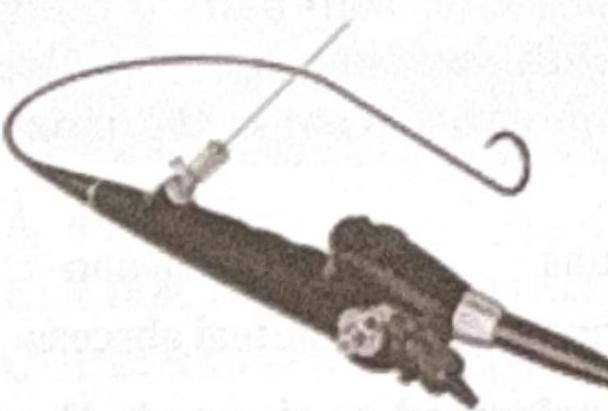
What is the commonest cause of an obliterative stricture of the membranous urethra?
A tumor invades the corpus spongiosum with or without urethral invasion. To which stage of carcinoma of the penis does this finding belong?
Which of the following is the hardest type of renal stone?
All of the following are true about hypospadias, except:
What is the most common cause of urethral obstruction in male children?
A stone in the male urinary tract causes pain radiating to the medial side of the thigh and perineum. At which location is the stone most likely lodged?
In renal injury following blunt abdominal trauma, which of the following procedures is not indicated?
Hippocratic facies is seen in which of the following conditions?
What is the most common site of ectopic testis?
What is the most common malignant testicular neoplasm?
Explanation: ### Explanation The **membranous urethra** is the segment of the male urethra that passes through the urogenital diaphragm. It is the least distensible part and is fixed in position, making it highly susceptible to injury during major pelvic trauma. **1. Why Option B is Correct:** The most common cause of an **obliterative stricture** (complete loss of luminal continuity) in the membranous urethra is a **Road Traffic Accident (RTA) involving a fractured pelvis**. When the pelvic ring is fractured, the puboprostatic ligaments are often torn, causing the prostate to be displaced superiorly. This "shearing force" leads to a partial or complete transection (rupture) of the membranous urethra. The subsequent healing by fibrosis results in a dense, obliterative stricture. **2. Why Other Options are Incorrect:** * **Fall-astride injury (Option A):** This typically causes injury to the **bulbar urethra** (the segment below the urogenital diaphragm) due to compression against the pubic symphysis. * **Prolonged catheterization (Option C):** This usually leads to pressure necrosis and ischemic strictures, most commonly at the **penoscrotal junction** or the **fossa navicularis**. * **Gonococcal infection (Option D):** Inflammatory/post-infectious strictures are typically multiple, long, and involve the **bulbar urethra**. **3. High-Yield Clinical Pearls for NEET-PG:** * **Site-Specific Injuries:** * **Bulbar Urethra:** Most common site for *all* urethral injuries (usually due to falling astride). * **Membranous Urethra:** Most common site for injuries associated with *pelvic fractures*. * **Classic Sign:** "High-riding prostate" on Digital Rectal Examination (DRE) suggests a membranous urethral tear. * **Investigation of Choice:** **Retrograde Urethrogram (RGU)** is the gold standard for diagnosing the site and extent of a stricture. * **Management:** Obliterative strictures usually require surgical reconstruction, such as **End-to-End Anastomotic Urethroplasty**.
Explanation: This question tests your knowledge of the **AJCC TNM Staging (8th Edition)** for Carcinoma of the Penis, which is a high-yield topic in Urology. ### **Explanation of the Correct Answer (T2)** The staging of penile cancer depends heavily on the depth of invasion into the anatomical compartments of the penis. * **T2 Stage:** Defined as a tumor invading the **corpus spongiosum** (with or without urethral invasion). * **Key Concept:** The corpus spongiosum is the vascular tissue surrounding the urethra. Invasion here is staged lower than invasion into the corpora cavernosa because the spongiosum is anatomically distinct and less deep than the cavernosa. ### **Why Other Options are Incorrect** * **T1:** The tumor invades the subepithelial connective tissue (lamina propria). It is further divided into **T1a** (no lymphovascular invasion, well-differentiated) and **T1b** (lymphovascular invasion present or poorly differentiated). * **T3:** This stage is reserved for tumors invading the **corpus cavernosum** (with or without urethral invasion). This represents deeper structural involvement than T2. * **T4:** The tumor invades adjacent structures such as the scrotum, prostate, or pubic bone. ### **High-Yield Clinical Pearls for NEET-PG** 1. **Urethral Invasion:** Note that urethral invasion can occur in both T2 and T3. The distinguishing factor is whether the **spongiosum (T2)** or the **cavernosum (T3)** is involved. 2. **Most Common Type:** Squamous Cell Carcinoma (SCC) is the most common histological type. 3. **Risk Factors:** Phimosis, chronic inflammation (balanitis), and HPV (Types 16 and 18) are significant risk factors. 4. **Lymphatic Spread:** Penile cancer primarily spreads to the **inguinal lymph nodes**. The "Sentinel Node" (Cabanas' node) is the first site of metastasis.
Explanation: **Explanation:** The hardness of a renal stone is clinically significant as it determines the success rate of Extracorporeal Shock Wave Lithotripsy (ESWL). The harder the stone, the more resistant it is to fragmentation. **1. Why Calcium Oxalate is Correct:** Calcium oxalate stones are the most common and the hardest renal stones. Specifically, **Calcium Oxalate Monohydrate (Whewellite)** is the hardest variety, characterized by a dense, crystalline structure that makes it highly resistant to ESWL. While Calcium Oxalate Dihydrate (Weddellite) is slightly softer, the group as a whole remains the most difficult to break. **2. Analysis of Incorrect Options:** * **Struvite (Magnesium Ammonium Phosphate):** These are "triple phosphate" stones associated with proteus infections. They are typically soft, friable, and radiopaque. They often form large staghorn calculi but fragment easily with lithotripsy. * **Xanthine:** These are rare stones caused by a genetic deficiency of xanthine oxidase. They are generally radiolucent and relatively soft compared to calcium-based stones. * **Cystine:** While cystine stones are notoriously difficult to treat because they have a "smooth" surface that reflects shock waves, they are technically less "hard" on the Mohs scale than calcium oxalate monohydrate. They are often described as having a "waxy" consistency. **Clinical Pearls for NEET-PG:** * **Hardest Stone:** Calcium Oxalate Monohydrate. * **Softest Stone:** Uric Acid (also the most common radiolucent stone). * **Most Common Stone:** Calcium Oxalate (overall). * **Stone most resistant to ESWL:** Calcium Oxalate Monohydrate and Cystine. * **HU (Hounsfield Units) on CT:** Stones >1000 HU (like Calcium Oxalate Monohydrate) predict poor ESWL outcomes.
Explanation: **Explanation:** Hypospadias is a congenital anomaly characterized by the urethral opening being on the ventral aspect of the penis, often associated with **chordee** (ventral curvature) and a **hooded prepuce**. **Why Option B is the Correct Answer (The False Statement):** Modern pediatric surgery guidelines recommend that hypospadias repair be performed early, typically between **6 to 18 months of age**. Early surgery is preferred because it utilizes the child’s high healing potential, reduces psychological trauma (genital awareness develops after age 2), and ensures the child has a functional penis before toilet training. Waiting until puberty is contraindicated as it complicates the surgery due to erections and increased psychological stress. **Analysis of Other Options:** * **Option A:** Circumcision is strictly **contraindicated** because the preputial skin is essential for surgical reconstruction (used as a flap or graft). * **Option C:** Glandular hypospadias is the mildest form. If there is no chordee and the urinary stream is straight, it is often considered a cosmetic issue, and surgical intervention may not be mandatory. * **Option D:** While many cases are now managed in a single stage, a **two-stage operation** (e.g., Bracka’s repair) is a standard approach when severe chordee is present, ensuring the penis is straightened before the urethra is reconstructed. **High-Yield Clinical Pearls for NEET-PG:** * **Most common site:** Glanular/Coronal (Distal). * **Associated anomalies:** Cryptorchidism (10%) and Inguinal hernia (10%). * **Key Surgical Procedures:** Snodgrass (TIP) repair (most common), MAGPI (for distal), and Mathieu’s flap. * **Most common complication:** Urethrocutaneous fistula.
Explanation: **Explanation:** **Posterior Urethral Valve (PUV)** is the most common cause of bladder outlet obstruction in male infants and children. It results from the persistence of abnormal mucosal folds (Type I being most common) within the prostatic urethra, which act as a one-way valve obstructing urinary flow. This leads to high intravesical pressures, causing bladder hypertrophy, vesicoureteral reflux (VUR), and potentially irreversible renal dysplasia or failure. **Analysis of Options:** * **Posterior Urethral Valve (Correct):** It is the classic "high-yield" diagnosis for congenital obstructive uropathy in males. It typically presents with a poor urinary stream, a palpable bladder, or bilateral hydronephrosis on antenatal ultrasound. * **Meatal Stenosis:** While common, it usually occurs in circumcised boys due to chronic irritation (ammoniacal dermatitis) and affects the distal-most part of the urethra. It causes a narrow, high-velocity stream but is rarely the primary cause of significant proximal obstruction compared to PUV. * **Urinary Tract Infection (UTI):** UTI is a *consequence* of urinary stasis caused by obstruction, not the cause of the obstruction itself. * **Urethral Duplication:** This is an extremely rare congenital anomaly and is seldom the cause of clinical obstruction. **Clinical Pearls for NEET-PG:** * **Gold Standard Investigation:** Voiding Cystourethrogram (VCUG) is the investigation of choice; it classically shows a dilated posterior urethra and a "narrowing" at the level of the valves (the **"spinning top"** appearance). * **Antenatal Sign:** The **"Keyhole Sign"** on ultrasound (dilated bladder and proximal urethra). * **Management:** Initial stabilization involves bladder drainage (via feeding tube); definitive treatment is **Primary Endoscopic Valve Ablation**. * **Potter’s Sequence:** Severe PUV can lead to oligohydramnios, resulting in pulmonary hypoplasia and limb deformities.
Explanation: **Explanation:** The location of a ureteric stone determines the site of referred pain due to the specific spinal segments involved. **1. Why Pelvic Brim is Correct:** When a stone is lodged at the **pelvic brim** (where the ureter crosses the common or external iliac artery), it irritates the **genitofemoral nerve** (L1, L2). This nerve provides sensory innervation to the **medial side of the thigh** (via the femoral branch) and the **scrotum/perineum** (via the genital branch). Therefore, pain radiating to these specific areas is a classic clinical sign of a stone at the pelvic brim. **2. Why Other Options are Incorrect:** * **Junction of ureter and renal pelvis (UPJ):** Pain typically remains localized to the **loin** (T10-T12) and does not radiate to the thigh. * **Crossing of gonadal vessels:** While this is a potential site of narrowing, it is not a classic anatomical constriction point associated with this specific radiation pattern. * **Intramural opening (UVJ):** This is the narrowest part of the ureter. Stones here typically cause **vesical irritability** (frequency, urgency) and pain radiating to the tip of the penis or labia majora, rather than the medial thigh. **Clinical Pearls for NEET-PG:** * **Three Anatomical Constrictions of the Ureter:** 1. Ureteropelvic junction (narrowest in some texts), 2. Pelvic brim (crossing iliacs), 3. Ureterovesical junction (narrowest point clinically). * **T11-L2:** The general spinal segments for ureteric colic. * **Boas’ Sign:** Hyperesthesia below the right scapula (associated with cholecystitis, not urolithiasis), often confused in exams with referred pain patterns. * **Imaging:** Non-contrast CT (NCCT) KUB is the gold standard for diagnosing ureteric stones.
Explanation: In the management of blunt renal trauma, the primary goal is **renal preservation**. Most renal injuries (Grades I-III and many Grade IV) are managed conservatively. ### **Explanation of the Correct Answer** **A. Prophylactic nephrectomy:** This is **never indicated**. Nephrectomy is a "last resort" procedure reserved for life-threatening hemorrhage or a shattered kidney (Grade V) that is non-reconstructible. Removing a kidney "prophylactically" (to prevent future complications) violates the principle of conservative management and unnecessarily renders the patient monorenal. ### **Analysis of Incorrect Options** * **B. Diagnostic Peritoneal Lavage (DPL):** While largely replaced by FAST, DPL remains a valid (though invasive) tool in hemodynamically unstable patients with blunt abdominal trauma to detect hemoperitoneum. * **C. Intravenous Pyelogram (IVP):** Although Contrast-Enhanced CT (CECT) is the gold standard, a **"One-shot IVP"** is specifically indicated in the operating room for unstable patients undergoing emergency laparotomy to confirm the presence of a functional contralateral kidney before contemplating any renal intervention. * **D. Exploratory Laparotomy:** This is indicated if there is hemodynamic instability, an expanding/pulsatile retroperitoneal hematoma, or associated intra-abdominal visceral injuries (e.g., bowel perforation). ### **NEET-PG High-Yield Pearls** * **Gold Standard Investigation:** CECT with delayed films (to visualize the collecting system). * **Most Common Organ Injured in Blunt Trauma:** Spleen (Renal is the most common urinary organ). * **Absolute Indications for Surgery in Renal Trauma:** Hemodynamic instability, expanding/pulsatile hematoma, and Grade V vascular pedicle avulsion. * **AAST Grading:** Grade I (Contusion/Hematoma) to Grade V (Shattered kidney/Ureteropelvic avulsion).
Explanation: **Explanation:** **Hippocratic Facies** is a classic clinical sign described by Hippocrates, representing the "face of impending death." It is most characteristically seen in patients with advanced, generalized **peritonitis** or those in the terminal stages of exhaustive diseases like cholera or starvation. 1. **Why Peritonitis is Correct:** In acute generalized peritonitis, the combination of severe dehydration, electrolyte imbalance, and systemic sepsis leads to a distinct facial appearance. The features include sunken eyes, hollow temples, a pinched nose, cold/clammy ears with turned-out lobes, and dry, parched skin. This reflects the severe fluid sequestration (third-spacing) and circulatory collapse associated with intra-abdominal catastrophes. 2. **Why Other Options are Incorrect:** * **Pancreatitis:** While severe pancreatitis can lead to shock and a "toxic" look, it is more specifically associated with signs of retroperitoneal hemorrhage like **Cullen’s sign** (periumbilical ecchymosis) or **Grey Turner’s sign** (flank ecchymosis). * **Facial/Marginal Mandibular Nerve Injury:** These result in motor deficits (facial asymmetry, drooping of the corner of the mouth, or inability to close the eye) rather than the systemic, cachectic, and dehydrated appearance of Hippocratic facies. **Clinical Pearls for NEET-PG:** * **Hippocratic Facies** = Sunken eyes + Pinched nose + Hollow temples + Dehydration. * **Risus Sardonicus:** The "sardonic grin" seen in Tetanus due to spasms of facial muscles. * **Mask-like Facies:** Seen in Parkinsonism (hypomimia). * **Leonine Facies:** Seen in Lepromatous Leprosy. * **Bovine Facies:** Seen in Craniofacial Dysostosis (Apert syndrome).
Explanation: **Explanation:** The descent of the testis is a complex process guided by the gubernaculum. When the testis deviates from its normal path of descent after exiting the external inguinal ring, it is termed an **Ectopic Testis**. **1. Why Option A is correct:** The **Superficial Inguinal Pouch (of Denis Browne)**, located just superficial to the external (superficial) inguinal ring and deep to the fascia of Scarpa, is the **most common site** for an ectopic testis. This occurs because the testis exits the inguinal canal normally but is diverted into the subcutaneous tissue of the abdominal wall rather than entering the scrotum. **2. Why the other options are incorrect:** * **B. Perineum:** This is the second most common site for ectopia. The testis is found posterior to the scrotum, near the anus. * **C. Root of the penis:** A rare site where the testis is found at the base of the dorsal or lateral aspect of the penis. * **D. Femoral triangle:** An uncommon site where the testis passes through the femoral canal to lie in the thigh near the femoral vessels. **Clinical Pearls for NEET-PG:** * **Ectopic vs. Undescended Testis (UDT):** An ectopic testis has a **normal length of spermatic cord** but is in an abnormal position. In contrast, UDT (Cryptorchidism) is arrested along the normal path of descent and has a short cord. * **Clinical Sign:** An ectopic testis can never be manipulated into the scrotum (unlike a retractile testis). * **Management:** The treatment of choice is **Orchidopexy**. Hormonal therapy (hCG) is ineffective for ectopic testis because the anatomy is mechanical, not hormonal. * **Complications:** Similar to UDT, ectopic testes carry a higher risk of trauma, torsion, and infertility, though the risk of malignancy is slightly lower than in intra-abdominal UDT.
Explanation: **Explanation:** **Seminoma** is the most common malignant testicular neoplasm, accounting for approximately 40–50% of all germ cell tumors (GCTs). It typically presents in the 4th decade of life (ages 30–40). Seminomas are characterized by their slow growth, late metastasis, and exquisite sensitivity to radiotherapy. **Analysis of Options:** * **A. Teratoma:** While common in children (mature type), in adults, they are usually part of mixed germ cell tumors and are considered malignant. They are less frequent than pure seminomas. * **C. Choriocarcinoma:** This is the most aggressive but rarest form of testicular cancer. It is characterized by early hematogenous spread and very high levels of β-hCG. * **D. Lymphoma:** This is the most common testicular tumor in men **over the age of 60**. It is usually a secondary manifestation of systemic Non-Hodgkin Lymphoma rather than a primary germ cell tumor. **High-Yield Clinical Pearls for NEET-PG:** 1. **Tumor Markers:** Seminomas are usually associated with normal AFP levels. If AFP is elevated, a non-seminomatous component (like Yolk Sac Tumor) must be suspected. LDH is often used as a marker for tumor burden in seminomas. 2. **Microscopy:** Classic seminoma shows "large polyhedral cells with clear cytoplasm (glycogen-rich) and distinct cell borders," arranged in lobules separated by fibrous septa containing **lymphocytic infiltrates**. 3. **Risk Factor:** Cryptorchidism (undescended testis) is the most significant risk factor; orchiopexy reduces the risk of malignancy but does not eliminate it. 4. **Management:** The initial step for any suspected testicular malignancy is **Radical Inguinal Orchidectomy**. Trans-scrotal biopsy is strictly contraindicated due to the risk of lymphatic seeding to inguinal nodes.
Urological Anatomy
Practice Questions
Hematuria Evaluation
Practice Questions
Urinary Calculi
Practice Questions
Benign Prostatic Hyperplasia
Practice Questions
Prostate Cancer
Practice Questions
Bladder Cancer
Practice Questions
Renal Cell Carcinoma
Practice Questions
Testicular Tumors
Practice Questions
Urinary Tract Infections
Practice Questions
Urinary Incontinence
Practice Questions
Genitourinary Trauma
Practice Questions
Pediatric Urology Basics
Practice Questions
Get full access to all questions, explanations, and performance tracking.
Start For Free