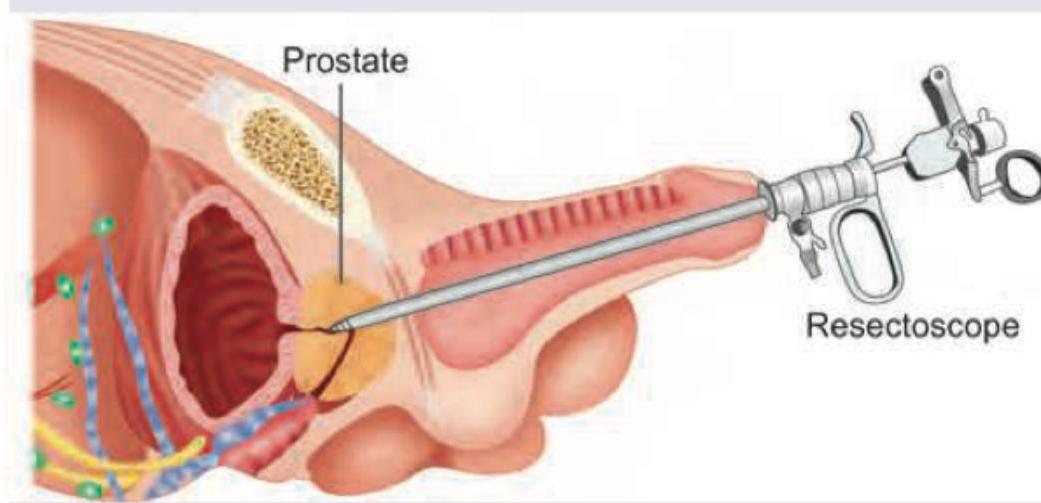
Which of the following symptoms is NOT related to benign prostatic hyperplasia (BPH)?
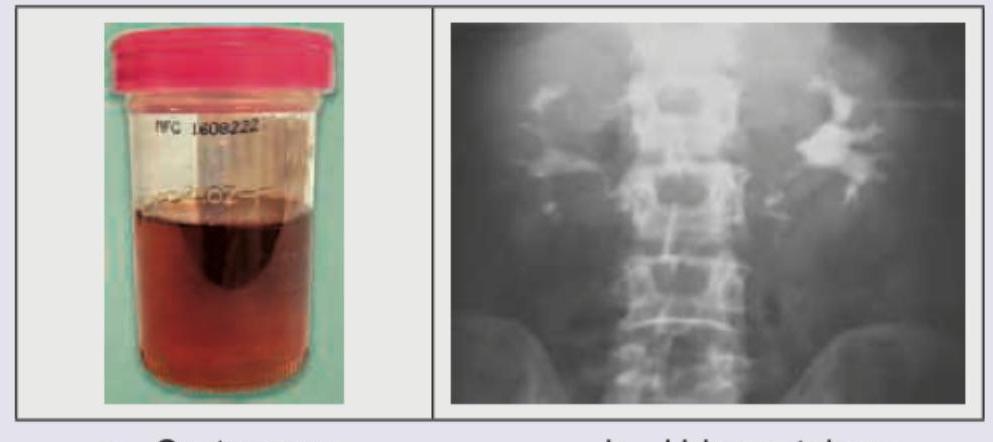
Jack stone calculi are made up of which of the following?
What is the investigation of choice for a ureteric stone?
A male patient presents with azoospermia. On examination, the testicular size is normal, and both FSH and testosterone levels are within normal limits. What is the most probable cause?
In carcinoma of the prostate, which of the following statements is false?
Which of the following is NOT true about paraphimosis?
Which of the following conditions is NOT considered precancerous?
Which of the following local anesthetics is used in circumcision?
Which of the following presents as a symptom of pelvic abscess?
Which of the following statements is incorrect regarding the variables used to calculate the MELD score?
Explanation: In the context of **Benign Prostatic Hyperplasia (BPH)**, symptoms are clinically categorized into two groups: **Voiding (Obstructive)** symptoms and **Storage (Irritative)** symptoms. ### Explanation of the Correct Answer The question asks which symptom is **NOT** related to BPH. However, there is a common clinical nuance often tested in NEET-PG: **Frequency** is a classic **Storage (Irritative)** symptom. While it is a hallmark of BPH clinical presentation, it is technically a secondary response of the bladder (detrusor overactivity/instability) rather than a direct result of the mechanical obstruction itself. *Note: In many standard textbooks, all four options are listed as BPH symptoms. If "Frequency" is marked as the correct answer in this specific MCQ context, it is likely distinguishing between **primary obstructive mechanical symptoms** and **secondary storage symptoms**.* ### Analysis of Incorrect Options (Voiding/Obstructive Symptoms) These symptoms are directly caused by the mechanical narrowing of the prostatic urethra: * **B. Dribbling:** Terminal dribbling occurs because the bladder cannot generate enough pressure to clear the final drops of urine from the obstructed urethra. * **C. Poor flow:** A weak urinary stream is the most common presenting obstructive symptom due to increased urethral resistance. * **D. Intermittent stream:** This refers to the starting and stopping of the flow during a single act of micturition, caused by the detrusor muscle struggling against the prostatic obstruction. ### Clinical Pearls for NEET-PG * **LUTS (Lower Urinary Tract Symptoms):** The modern term for BPH symptoms. * **Storage Symptoms (FUN):** **F**requency, **U**rgency, **N**octuria. These are due to bladder hypertrophy and decreased compliance. * **Voiding Symptoms (WISE):** **W**eak stream, **I**ntermittency, **S**training, **E**mptying (incomplete). * **First-line Medical Management:** Alpha-blockers (e.g., Tamsulosin) provide rapid relief by relaxing smooth muscle; 5-alpha-reductase inhibitors (e.g., Finasteride) reduce prostate volume over 6 months.
Explanation: **Explanation:** **Jack stone calculi** are a specific morphological subtype of urinary stones, almost exclusively composed of **Calcium oxalate monohydrate**. The correct answer is **Calcium oxalate (Option D)**. These stones derive their name from their resemblance to the metal pieces used in the children's game "Jacks." They are characterized by a dense central core with multiple radiating spicules or "arms." Clinically, they are most commonly found in the **urinary bladder** and are typically associated with chronic bladder outlet obstruction or stasis. Their unique shape is thought to result from the jagged edges repeatedly hitting the bladder wall, breaking off fragile attachments while allowing the dense crystalline arms to grow. **Analysis of Incorrect Options:** * **A. Ammonium urate:** These are associated with malnutrition and chronic diarrhea; they typically form "hedgehog" stones but are not Jack stones. * **B. Uric acid:** These stones are radiolucent and usually smooth or faceted, forming in acidic urine. * **C. Struvite:** Also known as "Triple Phosphate" or "Infection stones," these are associated with Proteus infections and typically form large **Staghorn calculi** that fill the renal pelvis. **High-Yield Clinical Pearls for NEET-PG:** * **Composition:** Jack stones = Calcium oxalate monohydrate (Whewellite). * **Radiology:** They are **radio-opaque** due to their calcium content. * **Common Site:** Urinary bladder (rarely found in the upper urinary tract). * **Microscopy:** Calcium oxalate monohydrate crystals appear as **dumbbell-shaped**, whereas dihydrate crystals (Weddellite) appear as **envelope-shaped**.
Explanation: The investigation of choice for a ureteric stone is a **Non-Contrast Computed Tomography (NCCT) of the Kidney, Ureter, and Bladder (KUB)**. ### Why CT Scan is the Correct Answer NCCT KUB is the gold standard because it has the highest sensitivity (95-97%) and specificity (96-98%) for detecting urolithiasis. * **Detection:** It can identify almost all types of stones (including uric acid and xanthine stones, which are radiolucent on X-ray), except for rare indinavir stones. * **Secondary Signs:** It helps identify complications like hydroureteronephrosis, perinephric stranding, and the "rim sign" (edema around the stone). * **Planning:** It provides precise stone size, location, and **Hounsfield Units (HU)**, which helps predict stone hardness and the success of ESWL. ### Why Other Options are Incorrect * **USG (Ultrasonography):** While safe and radiation-free, it is operator-dependent and often misses small ureteric stones, especially in the mid-ureter, due to overlying bowel gas. It is the investigation of choice only in **pregnant women** and **children**. * **MIBG Scan:** This is a nuclear medicine study used to localize neuroendocrine tumors, specifically **pheochromocytoma** and neuroblastoma. It has no role in stone disease. * **DMSA Scan:** This is a static renal scan used to assess **functional renal cortical mass** and detect renal scarring (common in pediatric reflux or pyelonephritis). It does not visualize stones. ### High-Yield Clinical Pearls for NEET-PG * **Gold Standard:** NCCT KUB. * **Initial Investigation (Emergency):** USG + X-ray KUB (often used in clinical practice, though NCCT is the definitive choice). * **Investigation of choice in Pregnancy:** USG (1st line); MRI (2nd line, though stones are hard to see); Low-dose CT (last resort in 2nd/3rd trimester). * **Hardness Correlation:** Stones >1000 HU are generally resistant to ESWL.
Explanation: **Explanation:** The clinical scenario describes **Obstructive Azoospermia**. The key to solving this is the triad of **azoospermia** (absence of sperm), **normal testicular volume**, and **normal hormonal profile** (FSH and Testosterone). 1. **Why Vas Obstruction is correct:** In obstructive azoospermia, the "machinery" (testis) is functioning perfectly, and the "fuel" (hormones) is adequate. Since FSH is normal, it indicates that spermatogenesis is occurring normally. The absence of sperm in the ejaculate is therefore due to a physical blockage in the exit pathway, most commonly in the epididymis or the vas deferens (e.g., post-inflammatory or congenital absence). 2. **Why other options are incorrect:** * **Non-descended testis:** Usually leads to testicular atrophy and impaired spermatogenesis due to higher intra-abdominal temperatures, often resulting in elevated FSH. * **Klinefelter’s Syndrome (47, XXY):** This is a form of primary testicular failure. It presents with **small, firm testes**, azoospermia, **elevated FSH/LH**, and low testosterone. * **Kallmann’s Syndrome:** This is hypogonadotropic hypogonadism. It presents with **low FSH/LH**, low testosterone, and small testes, often accompanied by anosmia. **NEET-PG High-Yield Pearls:** * **FSH is the best marker for spermatogenesis:** If FSH is >2x the upper limit of normal, it strongly suggests non-obstructive (primary) testicular failure. * **Normal FSH + Azoospermia + Normal Testis = Obstruction.** * **Most common site of obstruction:** Epididymis. * **Congenital Bilateral Absence of Vas Deferens (CBAVD):** Strongly associated with **CFTR gene mutations** (Cystic Fibrosis). Always check for the presence of the seminal vesicles and renal anomalies.
Explanation: **Explanation:** The correct answer is **D** because skeletal metastases from prostate cancer are characteristically **osteoblastic** (sclerotic), not osteolytic. While many cancers (like lung or kidney) cause bone destruction (osteolytic), prostate cancer stimulates osteoblasts, leading to increased bone density on X-rays. **Analysis of Options:** * **Option A:** This is a true statement. Over 95% of prostate cancers are **adenocarcinomas**, typically arising from the acini of the prostatic ducts. * **Option B:** This is a true statement. The **Gleason Scoring System** is the gold standard for grading. It is based solely on the architectural pattern (differentiation) of the glands rather than cytological features. The score ranges from 2 to 10 (sum of the two most common patterns). * **Option C:** This is a true statement. Prostate cancer has a high affinity for bone. The axial skeleton (pelvis, lumbar spine, femur) is the most common site for distant metastasis, often spreading via the **Batson venous plexus**. **NEET-PG High-Yield Pearls:** * **Most common site:** Peripheral zone (70%), which is why it is detectable via Digital Rectal Examination (DRE). * **Tumor Marker:** PSA (Prostate Specific Antigen) is organ-specific but not cancer-specific. * **Osteoblastic lesions:** On imaging, these appear as "radiodense" or white spots. Prostate cancer is the classic example of purely osteoblastic lesions in males. * **Definitive Diagnosis:** Transrectal Ultrasound (TRUS) guided biopsy.
Explanation: **Explanation:** **Paraphimosis** is a urological emergency where the prepuce (foreskin), once retracted behind the glans penis, cannot be reduced to its original position. This leads to a constricting ring that impairs venous and lymphatic drainage, causing edema and, if untreated, arterial compromise. **Why Option B is the Correct Answer (The False Statement):** While **Phimosis** (the inability to retract the foreskin) is strongly associated with Diabetes Mellitus due to recurrent balanoposthitis and scarring, **Paraphimosis** is not specifically a disease "seen in" or caused by Diabetes. It is a mechanical complication resulting from the failure to pull the foreskin back over the glans after retraction. **Analysis of Other Options:** * **Option A (Iatrogenic):** This is true. It often occurs in hospitals when a healthcare provider retracts the foreskin for catheterization or physical examination and forgets to replace it. * **Option C (Gangrene):** This is true. The constricting band causes progressive edema, which eventually leads to arterial occlusion, ischemia, and necrosis (gangrene) of the glans penis. * **Option D (Circumcision):** This is true. While the initial management involves manual reduction or the "Dorsal Slit" procedure, **circumcision** is the definitive elective treatment to prevent recurrence. **High-Yield Clinical Pearls for NEET-PG:** * **Emergency Management:** Manual compression to reduce edema followed by manual reduction. * **Dorsal Slit:** Indicated if manual reduction fails. * **Phimosis vs. Paraphimosis:** Phimosis is "cannot retract"; Paraphimosis is "cannot reduce." * **Key Risk Factor:** Chronic balanoposthitis (often in diabetics) leads to Phimosis, which is a prerequisite for Paraphimosis. However, the act of paraphimosis itself is an acute mechanical event.
Explanation: ### Explanation The key to answering this question lies in the distinction between a **premalignant (precancerous) condition** and a **malignant neoplasm**. **Why Verrucous Carcinoma is the correct answer:** Verrucous carcinoma (also known as **Ackerman’s tumor**) is not a precancerous condition; it is a **well-differentiated, low-grade variant of Squamous Cell Carcinoma (SCC)**. While it is slow-growing and rarely metastasizes, it is already a malignancy (cancer) at the time of diagnosis. Therefore, it cannot be "precancerous" because it has already crossed the threshold into neoplasia. **Analysis of Incorrect Options:** * **Leukoplakia:** This is the most common premalignant lesion of the oral cavity. It is a clinical term for a white patch that cannot be characterized clinically or pathologically as any other disease. It carries a significant risk of transformation into SCC. * **Submucous Fibrosis (OSMF):** A chronic, progressive condition primarily caused by areca nut chewing. It leads to juxta-epithelial inflammatory reaction and progressive fibrosis of the oral soft tissues, carrying a high risk of malignant transformation. * **Lichen Planus:** Specifically the erosive and atrophic forms of oral lichen planus are recognized as having a small but definitive potential for malignant transformation into SCC. **High-Yield Clinical Pearls for NEET-PG:** * **Verrucous Carcinoma:** Classically presents as a "cauliflower-like" or "warty" exophytic growth. In the urogenital tract, it is known as **Buschke-Löwenstein tumor** (Giant Condyloma Acuminatum). * **Treatment of choice:** Wide local excision. It is notably **radioresistant**; radiotherapy may actually trigger transformation into a more aggressive, undifferentiated SCC. * **Precancerous Lesions vs. Conditions:** A *lesion* is a morphologically altered tissue (e.g., Leukoplakia), while a *condition* is a generalized state associated with a significantly increased risk of cancer (e.g., Xeroderma pigmentosum).
Explanation: **Explanation:** The primary principle in choosing a local anesthetic for circumcision is the avoidance of vasoconstrictors. **1. Why 1% Lignocaine without Adrenaline is correct:** The penis is an anatomical structure supplied by **end-arteries**. The use of adrenaline (epinephrine) causes intense vasoconstriction of these terminal vessels. In the case of the penis, this can lead to prolonged ischemia, resulting in **gangrene and necrosis** of the distal tissue. Therefore, "plain" lignocaine is mandatory. 1% concentration is preferred over 2% to minimize the risk of systemic toxicity while providing adequate anesthesia for a dorsal nerve block or ring block. **2. Why the other options are incorrect:** * **Options B & C (With Adrenaline):** These are strictly contraindicated in surgeries involving "appendages" or areas with end-arterial supply (fingers, toes, nose, ears, and penis) due to the risk of ischemic necrosis. * **Option D (2% Lignocaine without Adrenaline):** While "without adrenaline" is correct, 2% lignocaine is generally avoided for routine circumcision blocks because the total dose required to achieve a circumferential block might approach toxic limits more quickly than the 1% concentration, especially in pediatric patients. **Clinical Pearls for NEET-PG:** * **Safe Sites for Adrenaline:** Scalp, trunk, and limbs (excluding digits). * **Maximum Dose of Lignocaine:** 4 mg/kg (without adrenaline) and 7 mg/kg (with adrenaline). * **Nerve Block for Circumcision:** The **Dorsal Penile Nerve Block (DPNB)** is the gold standard. The nerves are located in the sub-fascial space (deep to Buck’s fascia). * **Complication:** If accidental adrenaline injection occurs, the antidote is local infiltration of **Phentolamine** (an alpha-blocker) to induce vasodilation.
Explanation: **Explanation:** A pelvic abscess typically occurs as a complication of appendicitis, pelvic inflammatory disease, or post-operative leakage. The correct answer is **Mucoid diarrhea** due to the anatomical proximity of the abscess to the rectum. **Why Mucoid Diarrhea is Correct:** The pelvic abscess rests in the Rectovesical pouch (in men) or the Pouch of Douglas (in women), directly abutting the anterior wall of the rectum. The inflammatory mass causes **biochemical and mechanical irritation** of the rectal mucosa. This irritation leads to: 1. **Tenesmus:** A constant, painful urge to defecate. 2. **Mucus Hypersecretion:** The irritated rectal lining produces excess mucus, which is passed as "spurious diarrhea" or mucoid stools. **Analysis of Incorrect Options:** * **A. Pain in the perineum:** While pelvic pathology can cause referred pain, it is not a classic diagnostic symptom of a localized pelvic abscess compared to rectal symptoms. * **C. Abdominal distension & D. Vomiting:** These are features of generalized peritonitis or intestinal obstruction. A pelvic abscess is a **localized** collection; unless it ruptures or causes a secondary paralytic ileus, these systemic obstructive symptoms are less characteristic than localized rectal irritation. **High-Yield Clinical Pearls for NEET-PG:** * **Gold Standard Diagnosis:** Contrast-Enhanced CT (CECT) of the abdomen and pelvis. * **Classic Physical Sign:** On **Digital Rectal Examination (DRE)**, one finds a tender, boggy swelling on the anterior rectal wall. * **Treatment:** Surgical drainage is required. This is often done via the route where the abscess is "pointing"—most commonly **transrectal drainage** (proctotomy) or transvaginal drainage (colpotomy). * **Mnemonic:** Remember the "Pelvic 3": **P**ain (suprapubic), **P**us (collection), and **P**oop (mucoid diarrhea/tenesmus).
Explanation: The **MELD (Model for End-Stage Liver Disease)** score is a critical scoring system used to predict the 3-month mortality risk in patients with chronic liver disease and to prioritize patients for liver transplantation. ### Why Serum Albumin is the Correct Answer Serum albumin is **not** a component of the MELD score. While albumin is a marker of the liver's synthetic function and is included in the **Child-Pugh classification**, it was excluded from the original MELD formula because its levels can be easily influenced by external factors like intravenous albumin infusion or nutritional status, making it a less objective predictor of acute mortality compared to the other variables. ### Explanation of Incorrect Options The original MELD score is calculated using three objective laboratory variables: * **Serum Bilirubin (Option C):** Reflects the liver’s excretory function. * **INR (Option A):** Reflects the liver’s synthetic function (specifically coagulation factors). * **Serum Creatinine (Option D):** Reflects renal function, which is a powerful predictor of survival in patients with cirrhosis (e.g., Hepatorenal Syndrome). ### High-Yield Clinical Pearls for NEET-PG * **MELD-Na:** The modern version of the score now includes **Serum Sodium**, as hyponatremia is a strong independent predictor of mortality in waitlisted patients. * **PELD Score:** Used for children under 12 years; it includes Albumin, Bilirubin, INR, age (<1 year), and growth failure. * **Mnemonic for MELD:** "**I** **C**an **B**e **S**aved" (**I**NR, **C**reatinine, **B**ilirubin, **S**odium). * **Range:** Scores range from 6 to 40; a higher score indicates a higher priority for transplantation.
Urological Anatomy
Practice Questions
Hematuria Evaluation
Practice Questions
Urinary Calculi
Practice Questions
Benign Prostatic Hyperplasia
Practice Questions
Prostate Cancer
Practice Questions
Bladder Cancer
Practice Questions
Renal Cell Carcinoma
Practice Questions
Testicular Tumors
Practice Questions
Urinary Tract Infections
Practice Questions
Urinary Incontinence
Practice Questions
Genitourinary Trauma
Practice Questions
Pediatric Urology Basics
Practice Questions
Get full access to all questions, explanations, and performance tracking.
Start For Free