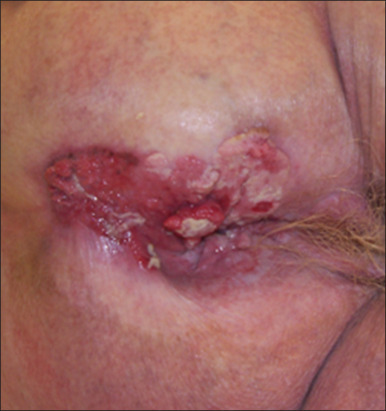
What is the commonest type of hypospadias?
What is the management of hormone-resistant prostate carcinoma in a 72-year-old man with no lymph node or distant metastases?
Following an automobile accident, a 20-year-old woman is found by a retrograde urethrogram to have an extraperitoneal bladder rupture. What is the initial management of this injury?
What is the preferred treatment option for a 1.5 cm stone located in the lower third of the ureter?
Indurated seminal vesicle is characteristic of which condition?
Posterior urethral valves are most commonly observed in which of the following groups?
Smoking is most commonly associated with which of the following carcinomas?
Catgut is preserved in which of the following solutions?
Which investigation is the investigation of choice in case of vesicoureteric reflux?
A 65-year-old male smoker presents with gross total painless hematuria. What is the most likely diagnosis?
Explanation: **Explanation:** Hypospadias is a congenital anomaly characterized by the abnormal ventral displacement of the urethral meatus, chordee (ventral curvature), and a hooded prepuce. **Why Penile is the Correct Answer:** In clinical practice and standard surgical textbooks (like Bailey & Love), hypospadias is classified based on the anatomical location of the meatus. **Penile hypospadias** (specifically the mid-shaft and distal penile varieties) is the most frequently encountered type, accounting for approximately **50-60%** of all cases. While some classifications group glanular and subcoronal under "anterior" hypospadias, the penile shaft remains the most common site for the ectopic orifice. **Analysis of Incorrect Options:** * **Glanular (B) & Subcoronal (D):** These are categorized as **Anterior (Distal)** hypospadias. While they are common (approx. 20-30%), they occur less frequently than the various penile shaft types combined. * **Scrotal (C):** This is a form of **Posterior (Proximal)** hypospadias. It is the least common type (approx. 10-15%) and is often associated with more severe chordee and potential intersex disorders. **NEET-PG High-Yield Pearls:** * **Embryology:** Failure of the urethral folds to fuse in the midline (occurs between 8-14 weeks of gestation). * **Triad of Hypospadias:** Ectopic urethral meatus, Chordee (ventral curvature), and Hooded prepuce (deficient ventrally). * **Management Rule:** **Circumcision is strictly contraindicated** in these infants because the preputial skin is required for future surgical reconstruction (urethroplasty). * **Best time for surgery:** Ideally between **6 to 12 months** of age. * **Commonest associated anomaly:** Cryptorchidism (undescended testis) and Inguinal hernia.
Explanation: **Explanation:** The management of **Hormone-Refractory Prostate Cancer (HRPC)**, also known as Castration-Resistant Prostate Cancer (CRPC), represents a stage where the disease progresses despite testosterone levels being at castrate levels (<50 ng/dL). **Why Chemotherapy is Correct:** In patients who have already failed primary hormonal manipulation (androgen deprivation therapy), the standard of care to improve survival and quality of life is **Chemotherapy**. **Docetaxel** (a taxane) combined with Prednisone is the first-line gold standard treatment. It works by stabilizing microtubules, thereby inhibiting cell division in rapidly multiplying cancer cells. **Analysis of Incorrect Options:** * **Subcapsular Orchidectomy:** This is a form of surgical androgen deprivation therapy (ADT). Since the patient is already "hormone-resistant," further surgical or medical castration will not provide additional therapeutic benefit. * **Vaccine:** While Sipuleucel-T (an immunotherapy vaccine) is used in asymptomatic or minimally symptomatic metastatic CRPC, it is not the primary management choice compared to the established efficacy of chemotherapy in the general HRPC population. * **Radiotherapy:** This is typically used for localized disease (curative intent) or for palliating painful bone metastases. It does not address the systemic nature of hormone-resistant progression. **NEET-PG High-Yield Pearls:** * **First-line Chemo:** Docetaxel + Prednisone. * **Second-line Chemo:** Cabazitaxel (used if Docetaxel fails). * **Definition of CRPC:** Rising PSA, new lesions on imaging, or clinical progression despite castrate levels of serum testosterone. * **Newer Agents:** Abiraterone (CYP17 inhibitor) and Enzalutamide (Androgen receptor signaling inhibitor) are also used in CRPC management.
Explanation: **Explanation:** The management of bladder rupture depends primarily on whether the injury is **extraperitoneal** or **intraperitoneal**. **Why the correct answer is right:** Extraperitoneal bladder rupture (the most common type, often associated with pelvic fractures) occurs when the bladder wall tears below the peritoneal reflection. In these cases, urine extravasates into the prevesical space (Space of Retzius). The standard of care is **conservative management** using **large-bore Foley catheter drainage** for 10–14 days. This allows the bladder to remain decompressed, facilitating spontaneous healing of the tear. Surgery is only indicated if there is bone protruding into the bladder, concomitant rectal/vaginal injury, or if the patient is already undergoing laparotomy for other injuries. **Why the incorrect options are wrong:** * **Options A & B:** Celiotomy (laparotomy) and open repair are the treatments of choice for **intraperitoneal bladder ruptures**, where urine leaks into the peritoneal cavity, posing a high risk of chemical peritonitis and sepsis. It is not required for uncomplicated extraperitoneal leaks. * **Option D:** Observation alone is insufficient. Without active drainage via a catheter, the bladder will distend, preventing the wound edges from apposing and leading to persistent leakage or abscess formation. **NEET-PG High-Yield Pearls:** * **Gold Standard Investigation:** Retrograde Cystogram (showing "flame-shaped" extravasation in extraperitoneal and "bowel loop outlining" in intraperitoneal). * **Mechanism:** Extraperitoneal is usually due to "burst" injury or pelvic bone fragments; Intraperitoneal is usually due to a blow to a full bladder (dome rupture). * **Management Rule:** Extraperitoneal = Catheter; Intraperitoneal = Surgical Repair.
Explanation: **Explanation:** The management of ureteric stones depends on the size, location, and composition of the stone. For a **1.5 cm stone in the lower third (distal) ureter**, **Ureteroscopy (URS)** with laser lithotripsy or pneumatic lithotripsy is the gold standard and preferred treatment. **Why URS is correct:** URS offers the highest stone-free rate for distal ureteric stones. Modern flexible and semi-rigid ureteroscopes allow direct visualization and fragmentation of the stone. For stones >1 cm in the lower ureter, URS is significantly more effective than ESWL because the pelvic bones can sometimes interfere with shock wave delivery, and the stone-free rate for URS in this region approaches 95-100%. **Why other options are incorrect:** * **ESWL:** While non-invasive, ESWL is less effective for stones >1 cm in the lower ureter. It is generally preferred for stones <1 cm in the upper ureter. * **PCNL:** This is the treatment of choice for large renal calculi (>2 cm) or staghorn calculi. It is not indicated for isolated lower ureteric stones as it involves a percutaneous tract into the kidney. * **Ureterolithotomy:** This is an open or laparoscopic surgical procedure. It is reserved for "salvage" cases where endoscopic methods (URS/ESWL) have failed or for exceptionally large, impacted stones. **High-Yield Clinical Pearls for NEET-PG:** * **Upper Ureter (<1 cm):** ESWL is often the first line. * **Upper Ureter (>1 cm):** URS (Retrograde Intrarenal Surgery - RIRS) or ESWL. * **Lower Ureter (Any size):** URS is generally superior to ESWL. * **Medical Expulsive Therapy (MET):** Tamsulosin (Alpha-blocker) can be used for small distal stones (<5-6 mm) that are likely to pass spontaneously. * **Steinstrasse:** A "stone street" or column of stone fragments obstructing the ureter, a known complication after ESWL.
Explanation: **Explanation:** The correct answer is **Tuberculosis (A)**. In the context of the male reproductive system, Genitourinary Tuberculosis (GUTB) is a common manifestation of extrapulmonary TB. When TB involves the seminal vesicles, it leads to chronic granulomatous inflammation and extensive fibrosis. This pathological process results in a characteristically **indurated (hardened)**, thickened, and often "beaded" or nodular feel on digital rectal examination (DRE). **Why other options are incorrect:** * **Syphilis (B):** While syphilis can cause indurated lesions (like the primary chancre or gummas), it rarely involves the seminal vesicles. Testicular involvement (painless gumma) is more common in tertiary syphilis. * **Gonorrhea (C) and Chlamydia (D):** These are common causes of acute vesiculitis and epididymo-orchitis. They typically present with acute inflammation, tenderness, and purulent discharge rather than chronic induration. While they can lead to scarring and infertility, they do not produce the classic "indurated" stony-hard feel associated with TB. **High-Yield Clinical Pearls for NEET-PG:** * **GUTB Presentation:** The most common symptom of GUTB is **"sterile pyuria"** (pus cells in urine with no growth on routine culture). * **DRE Findings:** In GUTB, the prostate may feel nodular and the seminal vesicles indurated. * **Beaded Vas Deferens:** Chronic TB of the reproductive tract often leads to a "beaded" feel of the vas deferens due to multiple granulomatous strictures. * **Imaging:** On IVP (Intravenous Pyelogram), look for the **"Putty kidney"** (autonephrectomy) or **"Thimble bladder"** (small, fibrotic bladder), which are classic late-stage TB findings.
Explanation: **Explanation:** **Posterior Urethral Valves (PUV)** are the most common cause of bladder outlet obstruction in male infants and children. They are congenital mucosal folds within the prostatic urethra that act as a one-way valve, obstructing the flow of urine. 1. **Why Option A is Correct:** PUV is an embryological abnormality occurring exclusively in **males**. It results from the abnormal integration of the Wolffian ducts into the posterior urethra. Because the prostatic urethra is a male-specific anatomical structure, this condition is only seen in boys. It is typically diagnosed prenatally via ultrasound or in the neonatal period. 2. **Why Other Options are Incorrect:** * **Options B & D (Girls/Adult Females):** Females do not possess a prostatic urethra or the embryological precursors that lead to valve formation. Therefore, PUV cannot occur in females. * **Option C (Adult Males):** While a very mild case might occasionally be diagnosed later in life, PUV is fundamentally a **pediatric congenital anomaly**. Most cases present in infancy with severe obstructive symptoms or renal failure; it is not a primary condition of adulthood. **High-Yield Clinical Pearls for NEET-PG:** * **Gold Standard Investigation:** Voiding Cystourethrogram (VCUG). The classic finding is a **dilated posterior urethra** with a "spinning top" or "keyhole" appearance. * **Most Common Type:** Young’s Type I (oblique folds extending distally from the verumontanum). * **Clinical Presentation:** Poor urinary stream, palpable distended bladder, and bilateral hydroureteronephrosis. * **Initial Management:** Catheterization (to decompress the bladder) followed by definitive **Endoscopic Valve Ablation**.
Explanation: **Explanation:** **Urinary bladder carcinoma** (specifically Urothelial/Transitional Cell Carcinoma) is the correct answer because smoking is its most significant and well-established modifiable risk factor. Cigarettes contain aromatic amines (like beta-naphthylamine) and polycyclic aromatic hydrocarbons. These carcinogens are absorbed into the bloodstream, filtered by the kidneys, and concentrated in the urine. Prolonged contact between these metabolites and the bladder mucosa leads to DNA damage and malignant transformation. Approximately 50% of all bladder cancer cases are attributed to smoking. **Why other options are incorrect:** * **Liver Carcinoma:** The primary risk factors are chronic Hepatitis B and C infections, cirrhosis, and aflatoxin exposure. While smoking is a minor risk factor, it is not the "most commonly associated" one. * **Gallbladder Carcinoma:** This is most strongly associated with chronic cholelithiasis (gallstones), porcelain gallbladder, and chronic *Salmonella typhi* infection. * **Stomach Carcinoma:** The strongest associations are with *H. pylori* infection, dietary nitrates/nitrites, and genetic factors (CDH1 mutation). Smoking increases risk, but the association is less potent than that seen in bladder cancer. **High-Yield Clinical Pearls for NEET-PG:** * **Most common type:** Transitional Cell Carcinoma (TCC) is the most common bladder cancer in smokers. * **Occupational risk:** Exposure to aniline dyes, rubber, and leather industries is the second most common risk factor. * **Schistosomiasis:** Associated specifically with **Squamous Cell Carcinoma** of the bladder (common in Egypt). * **Presentation:** The classic presentation is **painless gross hematuria** in an elderly male smoker. * **Field Cancerization:** Smoking affects the entire urothelium, leading to a high rate of recurrence across the urinary tract.
Explanation: **Explanation:** **Catgut** is a natural, absorbable surgical suture derived from the submucosa of sheep intestine or the serosa of bovine intestine. Because it is composed of collagen, it is highly susceptible to hydration and bacterial degradation. 1. **Why Isopropyl Alcohol is Correct:** Catgut is preserved in a solution of **90% Isopropyl alcohol** (often with a small percentage of water or conditioning agents like glycerol). The primary reason is to maintain the **tensile strength** and **pliability** of the suture. Alcohol prevents the collagen fibers from swelling or becoming macerated, which would happen if stored in a purely aqueous solution. It also maintains the sterility of the suture material within its foil packet. 2. **Why Other Options are Incorrect:** * **Glutaraldehyde (A):** This is a high-level disinfectant (e.g., Cidex) used for cold sterilization of endoscopes and heat-sensitive instruments, not for suture preservation. * **Iodine (C):** While iodine is used to treat "Chromic Catgut" to delay absorption or as an antiseptic, the liquid medium in the packet remains alcohol-based. * **Cetrimide (D):** This is a quaternary ammonium disinfectant used for wound cleaning and skin preparation, not for the long-term storage of biological sutures. **High-Yield Clinical Pearls for NEET-PG:** * **Absorption:** Catgut is absorbed by **proteolysis** (enzymatic degradation) and triggers a significant inflammatory tissue reaction. * **Absorption Time:** Plain catgut loses tensile strength in 7–10 days; Chromic catgut (treated with chromic acid salts) lasts 14–21 days. * **Contraindication:** Never use catgut in biliary or urinary tracts, as it can act as a nidus for **stone formation** (calculogenesis). * **Handling:** Catgut should be used immediately after removal from the packet; if it dries out, it becomes brittle and loses its handling properties.
Explanation: **Explanation:** **Vesicoureteric Reflux (VUR)** is the retrograde flow of urine from the bladder into the ureters and kidneys, primarily due to an incompetent vesicoureteric junction. **Why Micturating Cystourethrogram (MCUG/VCUG) is the Correct Answer:** MCUG is the **gold standard (Investigation of Choice)** for VUR. It is essential for both diagnosis and grading (Grades I-V based on the International Reflux Study classification). The procedure involves filling the bladder with contrast via a catheter and taking fluoroscopic images during voiding. This is crucial because reflux often occurs only during the high-pressure phase of micturition. It also provides anatomical detail of the urethra (e.g., ruling out Posterior Urethral Valves). **Why Other Options are Incorrect:** * **Intravenous Pyelogram (IVP):** While it visualizes the collecting system, it is a "downstream" study and cannot reliably demonstrate "upstream" reflux. It is no longer the primary modality for VUR. * **Cystography:** Static cystography only shows the bladder and may miss reflux that occurs specifically during voiding. * **Radionuclide Study (RNC):** While highly sensitive and involving lower radiation than MCUG, it lacks anatomical detail. It is primarily used for **follow-up** of known VUR or screening siblings, rather than initial diagnosis and grading. **High-Yield Clinical Pearls for NEET-PG:** * **Grading:** Grade I (ureter only), Grade II (ureter and pelvis, no dilation), Grade III (mild dilation), Grade IV (moderate dilation/tortuosity), Grade V (severe dilation/gross tortuosity). * **Initial Screening:** Ultrasound is often the first step to look for hydronephrosis, but MCUG is required for definitive diagnosis. * **Management:** Low-grade VUR (I-III) often resolves spontaneously with prophylactic antibiotics; high-grade (IV-V) or breakthrough infections may require surgical reimplantation (e.g., Cohen’s procedure).
Explanation: **Explanation:** **1. Why Carcinoma of the Urinary Bladder is Correct:** The classic clinical triad for **Bladder Cancer** (specifically Transitional Cell Carcinoma) is **painless, gross, and total hematuria** in an elderly patient. * **Painless:** Unlike stones or infections, malignancy often presents without pain until advanced stages. * **Total:** Hematuria occurs throughout the act of micturition, suggesting the source is at or above the bladder neck. * **Risk Factor:** Smoking is the most significant risk factor for bladder cancer, increasing the risk by 3–4 times due to alpha and beta-naphthylamines. **2. Analysis of Incorrect Options:** * **Benign Prostatic Hyperplasia (BPH):** While BPH can cause hematuria due to friable surface veins, it typically presents with **Lower Urinary Tract Symptoms (LUTS)** like frequency, urgency, and poor stream. Hematuria is usually terminal (at the end of micturition). * **Carcinoma of the Prostate:** This rarely presents with hematuria unless it has locally invaded the bladder neck or urethra. It more commonly presents with LUTS or bone pain from metastasis. * **Cystolithiasis (Bladder Stone):** This typically causes **painful** hematuria. The pain is often "referred" to the tip of the penis and is aggravated by movement (exercise hematuria). **3. NEET-PG High-Yield Pearls:** * **Gold Standard Investigation:** Cystoscopy with biopsy is the definitive investigation for bladder cancer. * **Initial Investigation of Choice:** Ultrasonography (USG) KUB. * **Most Common Histology:** Transitional Cell Carcinoma (Urothelial Carcinoma) is the most common type worldwide. * **Occupational Risk:** Workers in dye, rubber, and leather industries are at high risk. * **Rule of Thumb:** Any elderly smoker with painless hematuria is "Bladder Cancer until proven otherwise."
Urological Anatomy
Practice Questions
Hematuria Evaluation
Practice Questions
Urinary Calculi
Practice Questions
Benign Prostatic Hyperplasia
Practice Questions
Prostate Cancer
Practice Questions
Bladder Cancer
Practice Questions
Renal Cell Carcinoma
Practice Questions
Testicular Tumors
Practice Questions
Urinary Tract Infections
Practice Questions
Urinary Incontinence
Practice Questions
Genitourinary Trauma
Practice Questions
Pediatric Urology Basics
Practice Questions
Get full access to all questions, explanations, and performance tracking.
Start For Free