Which of the following is NOT a contraindication for extracorporeal shockwave lithotripsy for renal calculi?
What is the cell of origin of primary lymphoma of the gastrointestinal tract associated with celiac disease?
All of the following clinicopathologic features are seen more often in seminomas as compared to nonseminomatous germ cell tumors of the testis except?
All the following statements are true regarding torsion of testis EXCEPT?
Which of the following statements regarding finasteride is FALSE?
A 50-year-old male presents with a hard scrotal swelling. Which of the following investigations is NOT indicated?
What is the most common presentation of renal tuberculosis?
Which of the following statements about pyonephrosis is FALSE?
A 42-year-old paraplegic woman with a neurogenic bladder requires an indwelling urinary catheter. She develops a urinary tract infection and is seen by a urologist. Radiographic studies demonstrate a large stone that fills and follows the contours of the renal pelvis. The stone is most likely composed of which of the following?
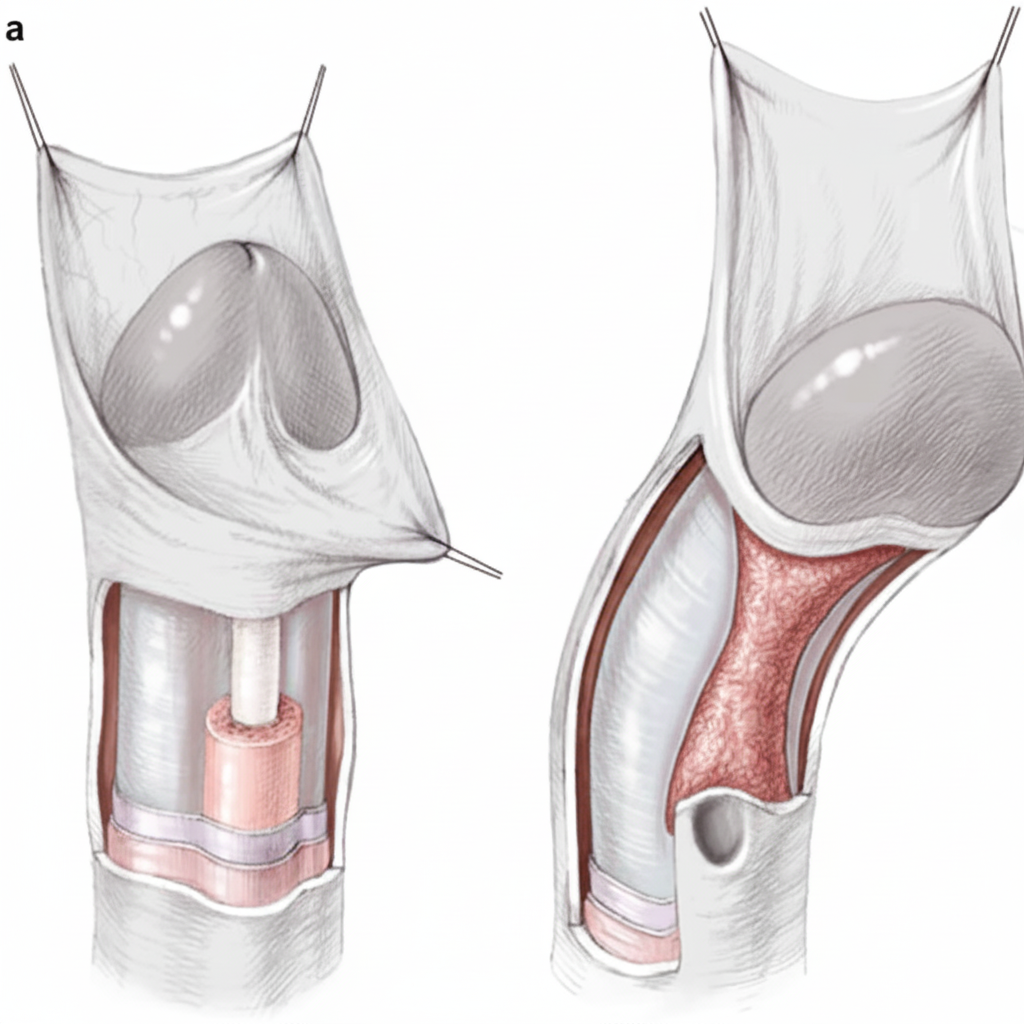
Which of the following is a communicating hydrocele?
Explanation: **Explanation:** Extracorporeal Shockwave Lithotripsy (ESWL) is a non-invasive treatment for renal calculi, but its success depends on the ability of the fragmented stones to pass through the urinary tract. **Why "Stone in a calyceal diverticulum" is the correct answer:** A stone in a calyceal diverticulum is considered a **relative contraindication** or a factor for poor clearance, but it is **not an absolute contraindication**. While ESWL can fragment the stone, the narrow neck of the diverticulum often prevents the passage of fragments. However, ESWL may still be attempted for symptomatic relief in specific cases, unlike the other options which pose significant safety risks. **Analysis of Incorrect Options:** * **Pregnancy (Option A):** This is an **absolute contraindication**. Shockwaves can cause fetal injury, placental abruption, or miscarriage. * **Bleeding Disorder (Option B):** Uncorrected coagulopathy is an **absolute contraindication** due to the high risk of life-threatening perinephric hematoma. * **Stone >2 cm (Option C):** Large stones (>2 cm) are a **relative contraindication**. They have a low clearance rate and carry a high risk of *Steinstrasse* (stone street), where fragments obstruct the ureter. Percutaneous Nephrolithotomy (PCNL) is the preferred treatment for stones >2 cm. **High-Yield Clinical Pearls for NEET-PG:** * **Best candidate for ESWL:** Small (<1.5 cm), radiopaque, friable stones (e.g., Calcium oxalate dihydrate) located in the upper or middle calyx. * **Hardest stones to fragment:** Calcium oxalate monohydrate, Cystine, and Brushite stones. * **Anatomical Contraindications:** Distal obstruction (fragments won't pass), uncontrolled UTI, and abdominal aortic aneurysm (risk of rupture). * **Ideal Location:** Lower pole stones have the poorest clearance rates due to gravity.
Explanation: **Explanation:** The correct answer is **T-cell**. Primary gastrointestinal lymphoma associated with celiac disease is specifically known as **Enteropathy-Associated T-cell Lymphoma (EATL)**. **Why T-cell is correct:** Celiac disease is characterized by a chronic inflammatory response to gluten, leading to the proliferation of intraepithelial lymphocytes (IELs). In a small subset of patients, these IELs undergo malignant transformation. Since these IELs are primarily of T-cell lineage (specifically CD3+ and CD8+), the resulting malignancy is a T-cell lymphoma. It typically involves the proximal small intestine (jejunum) and carries a poor prognosis. **Why other options are incorrect:** * **B-cell:** While B-cell lymphomas (like MALToma) are the most common type of primary GI lymphoma overall, they are not specifically associated with celiac disease. MALToma is more commonly linked to *H. pylori* infection in the stomach. * **Histiocyte:** Histiocytic malignancies are extremely rare in the GI tract and do not have a known pathophysiological link to gluten-sensitive enteropathy. * **Dendritic cell:** These are antigen-presenting cells. While they play a role in the immune response to gluten, they do not undergo malignant transformation in the context of celiac disease. **High-Yield Clinical Pearls for NEET-PG:** * **EATL Type 1:** Strongly associated with Celiac disease and HLA-DQ2/DQ8. * **Presentation:** Often presents with intestinal perforation, obstruction, or refractory malabsorption despite a gluten-free diet. * **Most common site of GI Lymphoma:** Stomach (usually B-cell/MALToma). * **Most common site of EATL:** Jejunum. * **Refractory Celiac Disease (Type II):** Often considered a "pre-lymphoma" state due to the presence of clonal T-cell populations.
Explanation: ### Explanation The correct answer is **D: They are often associated with raised levels of serum AFP and HCG.** #### Why Option D is Correct In testicular germ cell tumors (GCTs), serum markers are crucial for diagnosis and staging. **Seminomas never produce Alpha-fetoprotein (AFP).** If a patient has a biopsy-proven seminoma but elevated AFP, it must be managed as a Non-Seminomatous Germ Cell Tumor (NSGCT), as this indicates a yolk sac component. While about 10–15% of seminomas may show mildly elevated **beta-HCG** (due to syncytiotrophoblastic giant cells), high levels of both markers are characteristic of NSGCTs. #### Analysis of Incorrect Options * **Option A:** Seminomas are generally slow-growing and tend to remain localized to the testis (Stage I) for a longer duration compared to NSGCTs, which are more aggressive and prone to early systemic spread. * **Option B:** Seminomas are exquisitely **radiosensitive**. This is a hallmark feature; NSGCTs are relatively radioresistant and are primarily managed with surgery and chemotherapy. * **Option C:** Seminomas spread predominantly via the **lymphatic system** to the retroperitoneal (paraaortic) lymph nodes in a predictable stepwise fashion. NSGCTs also use lymphatics but have a much higher propensity for early **hematogenous** spread (e.g., to lungs and liver). #### Clinical Pearls for NEET-PG * **Most common testicular tumor:** Seminoma (4th decade). * **AFP Rule:** Seminoma = AFP is **always** normal. * **LDH:** Correlates with tumor burden in both types. * **Microscopic hallmark of Seminoma:** Large cells with clear cytoplasm ("fried egg" appearance) and fibrous septa infiltrated by lymphocytes. * **Treatment:** Stage I Seminoma is often treated with Orchidectomy followed by surveillance or single-agent Carboplatin; NSGCT often requires RPLND (Retroperitoneal Lymph Node Dissection).
Explanation: **Explanation** Testicular torsion is a surgical emergency caused by the twisting of the spermatic cord, leading to vascular compromise and potential testicular infarction. **1. Why Option A is the Correct Answer (The False Statement):** The anatomical defect predisposing to torsion (most commonly the **"Bell-clapper deformity"**) is typically a **bilateral** developmental abnormality. Because the underlying lack of fixation to the tunica vaginalis often exists on both sides, the contralateral testis is at high risk for future torsion. Therefore, **prophylactic orchidopexy of the contralateral testis is mandatory** during the same surgical session. **2. Analysis of Other Options:** * **Option B:** Torsion is a "time-is-tissue" emergency. Salvage rates are >90% if detorsion occurs within 6 hours, dropping to <10% after 24 hours. Immediate surgical exploration, detorsion, and fixation (orchidopexy) are the definitive treatments. * **Option C:** Torsion has a bimodal distribution but is most frequently seen in the peripubertal period (10–25 years) due to the rapid increase in testicular volume and cremasteric reflex activity. * **Option D:** **Inversion of the testis** (where the testis lies horizontally or is rotated within the tunica vaginalis) is a major predisposing factor, as it allows the testis to rotate more freely on its vascular pedicle. **Clinical Pearls for NEET-PG:** * **Golden Period:** 6 hours. * **Diagnosis:** Primarily clinical. **Prehn’s sign** is negative (elevation of the scrotum does not relieve pain), and the **Cremasteric reflex** is typically absent. * **Investigation of Choice:** Color Doppler Ultrasound (shows decreased or absent blood flow). * **Surgical Technique:** Fixation is usually done using non-absorbable sutures at three points to prevent recurrence.
Explanation: **Explanation:** The correct answer is **C**. This statement is false because Finasteride actually blocks the conversion of **Testosterone to Dihydrotestosterone (DHT)**, not the other way around. **1. Understanding the Mechanism (Why C is correct):** Finasteride is a competitive inhibitor of the enzyme **5-alpha reductase (Type II)**. In the prostate, this enzyme is responsible for converting circulating testosterone into its more potent metabolite, dihydrotestosterone (DHT). DHT is the primary androgen responsible for prostatic growth; by lowering intraprostatic DHT levels by approximately 80-90%, finasteride induces apoptosis of epithelial cells and reduces prostate volume. **2. Analysis of Other Options:** * **Option A:** Finasteride is a first-line medical therapy for **BPH**, specifically in patients with significantly enlarged prostates (>30-40 cc), as it reduces the risk of acute urinary retention and the need for surgery. * **Option B:** Sexual dysfunction, including **decreased libido, erectile dysfunction (impotence), and ejaculation disorders**, are well-documented side effects occurring in approximately 3-8% of patients. * **Option D:** Finasteride is the prototype **5-alpha reductase inhibitor (5-ARI)**. **Clinical Pearls for NEET-PG:** * **PSA Levels:** Finasteride reduces serum PSA levels by approximately **50%**. For clinical screening, the measured PSA value in a patient on finasteride should be **doubled**. * **Dutasteride vs. Finasteride:** Finasteride inhibits Type II 5-alpha reductase, while Dutasteride inhibits both Type I and Type II. * **Other Uses:** It is also FDA-approved for the treatment of **Androgenetic Alopecia** (Male pattern baldness) at lower doses (1mg). * **Teratogenicity:** It is highly teratogenic; pregnant women should not even handle crushed tablets due to the risk of hypospadias in a male fetus.
Explanation: In a 50-year-old male presenting with a hard scrotal swelling, the primary clinical suspicion is **Testicular Cancer** until proven otherwise. ### **Why Testicular Biopsy is Contraindicated (Correct Answer)** A trans-scrotal testicular biopsy is strictly **contraindicated** in suspected testicular tumors. This is due to the risk of **"Scrotal Seeding"** or **"Tumor Spillage."** The lymphatic drainage of the testis is to the para-aortic lymph nodes, whereas the scrotum drains to the inguinal lymph nodes. Violating the scrotal wall alters the natural lymphatic drainage, potentially spreading the malignancy to the inguinal region and upstaging the disease. ### **Analysis of Other Options** * **Chest X-ray:** Indicated to screen for pulmonary metastases (the most common site of distant spread in germ cell tumors). * **Inguinal Exploration:** This is the standard surgical approach. If a tumor is suspected, a **Radical Inguinal Orchidectomy** is performed. The spermatic cord is clamped at the internal inguinal ring before mobilizing the testis to prevent intraoperative hematogenous spread. * **CT Abdomen:** Essential for staging, specifically to evaluate the **para-aortic lymph nodes**, which are the primary site of nodal metastasis. ### **High-Yield Clinical Pearls for NEET-PG** * **Gold Standard Diagnosis:** Radical Inguinal Orchidectomy (both diagnostic and therapeutic). * **Lymphatic Drainage:** Testis → Para-aortic nodes; Scrotum → Superficial Inguinal nodes. * **Tumor Markers:** Always check AFP, beta-hCG, and LDH before surgery. Note: AFP is *never* elevated in pure seminomas. * **Most Common Type:** Seminoma is the most common testicular tumor in this age group.
Explanation: **Explanation:** Renal tuberculosis (Genitourinary TB) is the most common site of extrapulmonary tuberculosis. It occurs due to the hematogenous spread of *Mycobacterium tuberculosis* to the renal cortex, forming microscopic granulomas. **1. Why "Sterile Pyuria" is correct:** Sterile pyuria is defined as the presence of white blood cells (pus cells) in the urine in the absence of growth on routine bacterial culture media. In renal TB, the mycobacteria cause chronic inflammation and ulceration of the pelvicalyceal system, leading to the discharge of pus into the urine. Since *M. tuberculosis* does not grow on standard agar, the culture remains "sterile," making this the **most common and characteristic laboratory presentation.** **2. Analysis of Incorrect Options:** * **Renal Colic:** While possible if a blood clot or a piece of sloughed papilla obstructs the ureter ("clot colic"), it is an infrequent presentation compared to pyuria. * **Intractable Urgency:** This is a classic symptom of a "Thimble Bladder" (fibrosed, low-capacity bladder) in late-stage TB. While highly suggestive, it is a late manifestation rather than the most common initial presentation. * **Painful Micturition:** Dysuria is common in urinary tract infections, but in TB, the presentation is often more insidious and chronic rather than acute painful micturition. **Clinical Pearls for NEET-PG:** * **Gold Standard Diagnosis:** Urine culture on **Lowenstein-Jensen (LJ) medium** (requires 6–8 weeks). * **Earliest Radiological Sign:** "Moth-eaten" appearance of the calyces due to erosions. * **Putty Kidney:** A late-stage finding where the kidney is non-functioning and autonephrectomized due to caseous necrosis and calcification. * **Investigation of Choice:** Contrast-enhanced CT (CECT) to assess the extent of the disease.
Explanation: **Explanation:** **Pyonephrosis** is a surgical emergency characterized by the accumulation of purulent debris (pus) within an obstructed collecting system. **Why Option B is the Correct (False) Statement:** Pyonephrosis is **not always unilateral**. While it is most commonly seen on one side due to a localized obstruction (like a stone), it can be **bilateral** in cases of bladder outlet obstruction (e.g., Benign Prostatic Hyperplasia or Posterior Urethral Valves) or bilateral ureteric involvement (e.g., advanced pelvic malignancy). In medical exams, absolute terms like "always" are frequently markers of false statements. **Analysis of Other Options:** * **Option A (Commonly associated with renal calculi):** This is **True**. Nephrolithiasis is the most common cause of the obstruction that leads to pyonephrosis. * **Option C (Complication of hydronephrosis):** This is **True**. When a pre-existing hydronephrotic kidney (dilated due to obstruction) becomes infected, it transforms into pyonephrosis. * **Option D (Follows acute pyelonephritis):** This is **True**. Severe acute pyelonephritis in the presence of an obstruction can lead to the formation of pus within the renal pelvis. **Clinical Pearls for NEET-PG:** * **Classic Triad:** Fever/chills, flank pain, and a palpable tender mass. * **Diagnosis:** **Ultrasound** is the initial investigation of choice (shows persistent echoes/debris in a dilated system). **CT scan** is the most accurate for identifying the cause of obstruction. * **Management:** It is a **urological emergency**. The priority is urgent decompression via **Percutaneous Nephrostomy (PCN)** or retrograde stenting (DJ stent). Antibiotics alone are insufficient because they cannot penetrate the obstructed, pus-filled system.
Explanation: **Explanation:** The clinical presentation describes a **Staghorn Calculus** (a stone filling the renal pelvis and calyces) in a patient with a neurogenic bladder and a history of recurrent urinary tract infections (UTIs). **1. Why Magnesium Ammonium Phosphate is correct:** These stones, also known as **Struvite** or **Triple Phosphate** stones, are strongly associated with UTIs caused by **urease-producing bacteria** (e.g., *Proteus mirabilis*, *Klebsiella*, *Pseudomonas*). Urease hydrolyzes urea into ammonia and carbon dioxide, increasing urinary pH (alkaline urine). In this alkaline environment, magnesium ammonium phosphate and carbonate apatite precipitate to form large, branched stones that take the shape of the renal collecting system (Staghorn appearance). Paraplegic patients with indwelling catheters are at high risk due to urinary stasis and frequent colonization by these organisms. **2. Why the other options are incorrect:** * **Calcium salts:** Calcium oxalate is the most common type of renal stone overall, but it typically presents as small, radiopaque stones rather than massive staghorn calculi. * **Cholesterol:** These are found in the gallbladder (gallstones), not the urinary tract. * **Cystine:** These result from an autosomal recessive defect in amino acid transport. While they can occasionally form staghorn shapes, they are much rarer and typically occur in younger patients without the specific context of urease-producing infections. **Clinical Pearls for NEET-PG:** * **Radiopacity:** Struvite stones are **radio-opaque** (though less dense than calcium). * **Microscopy:** Look for **"Coffin-lid"** shaped crystals in the urine sediment. * **Treatment:** Requires complete surgical removal (usually PCNL) because the stone acts as a reservoir for bacteria, leading to recurrent sepsis. * **Chemical composition:** Magnesium Ammonium Phosphate + Carbonate Apatite.
Explanation: ### Explanation The classification of hydroceles is based on the degree of patency of the **processus vaginalis (PV)**, the embryonic fold of peritoneum that precedes the descent of the testis. **Why Funicular Hydrocele is Correct:** In a **funicular hydrocele**, the processus vaginalis remains open at the internal ring (communicating with the peritoneal cavity) but is obliterated just above the epididymis. This allows peritoneal fluid to flow into the sac, making it a **communicating** type. A key clinical feature is that the swelling reduces in size when the patient lies down or with pressure, as fluid drains back into the abdomen. **Analysis of Incorrect Options:** * **Vaginal Hydrocele (A):** This is the most common type. The PV is obliterated except for the portion surrounding the testis (tunica vaginalis). It is **non-communicating**; fluid accumulates due to an imbalance between secretion and absorption. * **Hydrocele of the Cord (B):** Both the upper and lower ends of the PV are obliterated, leaving a persistent fluid-filled segment in the middle. It is **non-communicating** and does not change in size with position. * **Infantile Hydrocele (C):** The PV is obliterated at the internal ring but remains patent down to the tunica vaginalis. Because it is closed off from the peritoneal cavity at the internal ring, it is **non-communicating**. **High-Yield Clinical Pearls for NEET-PG:** * **Gold Standard Diagnosis:** Transillumination test (hydroceles are brilliantly translucent). * **Congenital vs. Acquired:** All congenital hydroceles are technically "communicating" or related to a patent PV. In children, the treatment is **High Ligation** of the sac (not Jaboulay’s). * **Lord’s Procedure:** Indicated for thin-walled sacs; involves plication of the sac. * **Jaboulay’s Procedure:** Indicated for large, thick-walled sacs; involves eversion of the sac. * **Differential:** A communicating hydrocele is a precursor to an indirect inguinal hernia.
Urological Anatomy
Practice Questions
Hematuria Evaluation
Practice Questions
Urinary Calculi
Practice Questions
Benign Prostatic Hyperplasia
Practice Questions
Prostate Cancer
Practice Questions
Bladder Cancer
Practice Questions
Renal Cell Carcinoma
Practice Questions
Testicular Tumors
Practice Questions
Urinary Tract Infections
Practice Questions
Urinary Incontinence
Practice Questions
Genitourinary Trauma
Practice Questions
Pediatric Urology Basics
Practice Questions
Get full access to all questions, explanations, and performance tracking.
Start For Free