Which of the following is not a variant of PSA?
Jackstone calculi are seen in which anatomical part?
Which of the following statements is NOT true regarding Renal Cell Carcinoma?
What is the best treatment for a urethral caruncle?
What is the indication for radical prostatectomy?
Which of the following is used for screening of prostate cancer?
A couple presents with infertility. The husband is found to have azoospermia on semen analysis. The vas was not palpable on rectal examination. Semen has low volume, high viscosity, and fructose is present. What is the next best step?
In triage, what does the green color indicate?
Lord's and Jaboulay's operation is indicated for which condition?
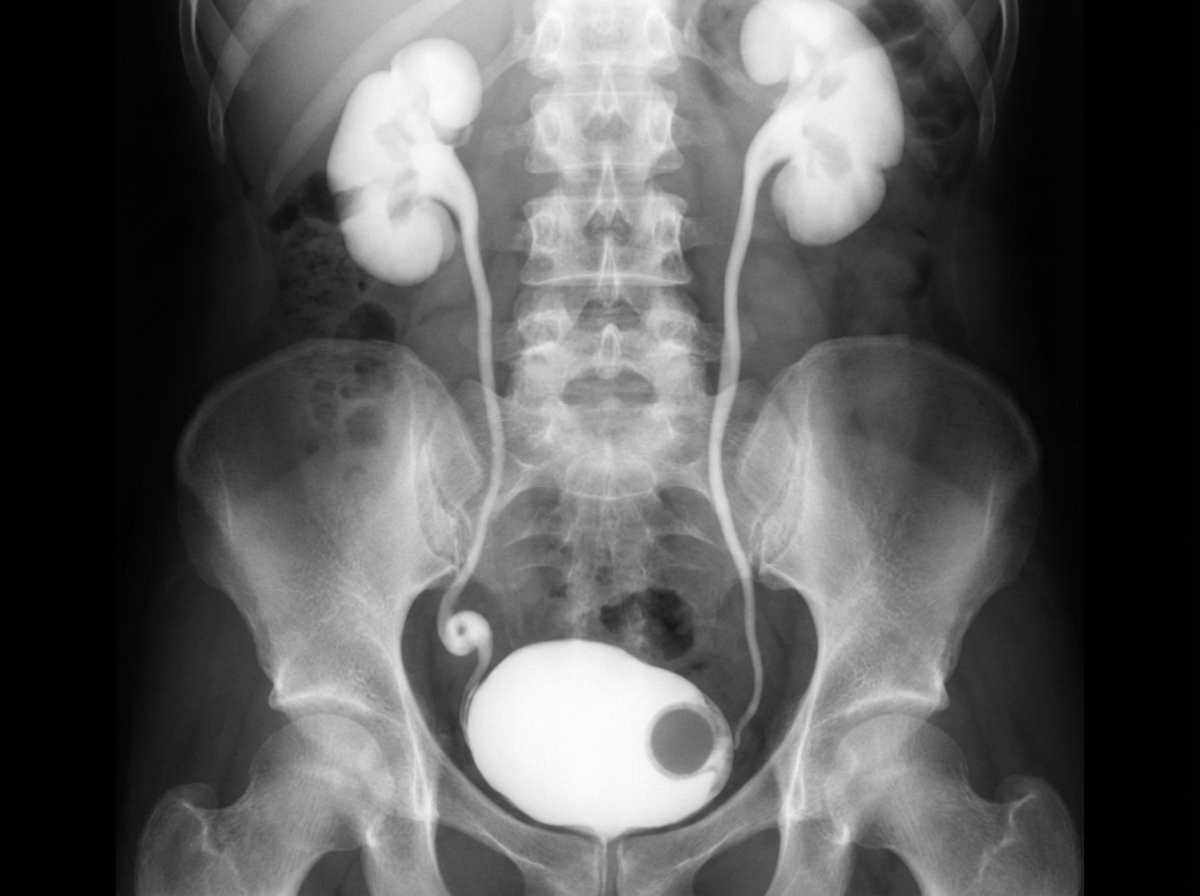
Thimble bladder is typically seen in which of the following conditions?
Explanation: **Explanation:** Prostate-Specific Antigen (PSA) is a glycoprotein produced by the prostatic epithelium. While a total PSA level >4 ng/mL is traditionally considered suspicious, its low specificity for prostate cancer (as it also rises in BPH and prostatitis) has led to the development of several **PSA derivatives or variants** to improve diagnostic accuracy. **Why "PSA Nodularity" is the correct answer:** There is no clinical or biochemical parameter known as "PSA nodularity." Nodularity refers to a physical finding on **Digital Rectal Examination (DRE)**, where a hard, irregular surface suggests malignancy. It is a clinical sign, not a laboratory variant of the PSA molecule or its kinetics. **Analysis of incorrect options:** * **PSA Density (PSAD):** This is the total PSA divided by the volume of the prostate (measured via TRUS). A value **>0.15** is more suggestive of malignancy than BPH. * **PSA Velocity (PSAV):** This measures the rate of change in PSA levels over time. A rise of **>0.75 ng/mL per year** is highly suspicious for cancer, even if the total PSA is within the normal range. * **Ratio of Free to Bound PSA (f/t PSA):** PSA circulates in free and complexed (bound) forms. In prostate cancer, the percentage of free PSA decreases. A ratio **<10-15%** indicates a higher risk of malignancy. **High-Yield Clinical Pearls for NEET-PG:** * **PSA Doubling Time (PSADT):** Measures how quickly the PSA level doubles; it is a crucial prognostic marker for recurrence after treatment. * **Age-Specific PSA:** PSA levels naturally rise with age due to prostate growth (e.g., <2.5 for age 40-49; <6.5 for age 70-79). * **Most common bound form:** PSA is most commonly bound to **Alpha-1 Antichymotrypsin (ACT)**. * **Half-life of PSA:** Approximately **2.2 to 3.2 days**. Wait at least 4-6 weeks after biopsy or surgery to recheck levels.
Explanation: **Explanation:** **Jackstone calculi** are a specific morphological type of urinary stone characterized by a central core with multiple radiating spicules, resembling the metal "jacks" used in the children's game. **Why Bladder is Correct:** Jackstone calculi are almost exclusively found in the **urinary bladder**. They are typically composed of **calcium oxalate monohydrate**. Their unique shape is attributed to the constant tumbling motion within the bladder during micturition and body movement. As the stone rolls, the fragile protrusions are broken off except for those that are structurally reinforced, leading to the characteristic "star-shaped" or "jagged" appearance. They are often associated with bladder outlet obstruction (e.g., BPH) or chronic cystitis. **Why Other Options are Incorrect:** * **Prostate:** Prostatic calculi are usually small, multiple, and composed of calcium phosphate. they are often asymptomatic and found within the glandular tissue, not the lumen. * **Kidney:** Renal stones (like Staghorn calculi) take the shape of the renal pelvis and calyces. The space constraints in the kidney do not allow for the "tumbling" motion required to form a Jackstone. * **Ureter:** Ureteral stones are typically small, oval, or elongated (seed-like) as they transit through the narrow lumen. **High-Yield Clinical Pearls for NEET-PG:** * **Composition:** Primarily Calcium Oxalate Monohydrate (Whewellite). * **Radiology:** They appear highly radiopaque on X-ray. * **Staghorn Calculus:** Associated with *Proteus* infections (Struvite stones) and found in the Renal Pelvis. * **Bladder Stone Triad:** Frequency, dysuria, and sudden interruption of the urinary stream.
Explanation: **Explanation:** Renal Cell Carcinoma (RCC), also known as Grawitz tumor or Hypernephroma, is the most common primary malignancy of the kidney. **Why Option D is the correct answer (NOT true):** Hematuria is, in fact, the **most common presenting symptom** of RCC, occurring in approximately 60% of patients. It is typically intermittent, painless, and total (present throughout the stream). The classic "Robson’s Triad" of RCC includes hematuria, flank pain, and a palpable abdominal mass; however, this triad is only seen in about 10% of cases and usually indicates advanced disease. **Analysis of other options:** * **Option A (True):** RCC shows a distinct male preponderance, with a male-to-female ratio of approximately 2:1. * **Option B (True):** RCC is notorious for its **angiotropism**. It has a unique tendency to invade the renal vein and can extend as a tumor thrombus into the Inferior Vena Cava (IVC), sometimes reaching as far as the right atrium. * **Option C (True):** These tumors are typically cortical and most commonly arise from the tubular epithelium at the **upper or lower poles** of the kidney. **High-Yield Clinical Pearls for NEET-PG:** * **Risk Factors:** Smoking (most significant), obesity, hypertension, and acquired cystic kidney disease (in dialysis patients). * **Genetic Association:** Most common type is **Clear Cell RCC**, associated with the **VHL gene** on chromosome 3p. * **Paraneoplastic Syndromes:** RCC is known as the "Internist's Tumor" because it can secrete various hormones leading to polycythemia (Erythropoietin), hypercalcemia (PTHrP), and hypertension (Renin). * **Stauffer’s Syndrome:** Reversible hepatic dysfunction (elevated LFTs) in the absence of liver metastases. * **Metastasis:** Most common site is the **Lung** (Cannon-ball secondaries). It also spreads to bones (osteolytic lesions).
Explanation: ### Explanation A **urethral caruncle** is a benign, red, vascularized polypoid outgrowth typically found at the posterior margin of the external urethral meatus. It occurs most commonly in **postmenopausal women** due to chronic irritation and urogenital atrophy caused by estrogen deficiency. **Why Option B is Correct:** The definitive management for a symptomatic or large urethral caruncle is **surgical excision**. However, because the excision involves the urethral meatus, the resulting scar tissue can lead to **urethral stenosis (stricture)**. Therefore, the standard surgical protocol involves complete excision followed by **repeated urethral dilatation** to ensure patency of the meatus during the healing process. **Why Other Options are Incorrect:** * **Option A:** Antibiotics are ineffective as the condition is inflammatory/proliferative, not primarily infectious. * **Option C:** Resection and end-to-end anastomosis is a major reconstructive procedure used for long-segment urethral strictures or trauma, not for a small superficial caruncle. * **Option D:** Chemical cauterization is outdated, carries a high risk of recurrence, and may cause uncontrolled tissue damage compared to precise surgical excision. **NEET-PG High-Yield Pearls:** * **Most common site:** Posterior lip of the female external urethral meatus. * **Clinical presentation:** Often asymptomatic, but can present with spotting (postmenopausal bleeding), dysuria, or a painful "raspberry-like" mass. * **Differential Diagnosis:** Must be differentiated from **Urethral Carcinoma**; if the lesion is firm, friable, or atypical, a biopsy is mandatory. * **Initial Conservative Management:** Mild cases are often treated first with **topical estrogen cream** and sitz baths.
Explanation: **Explanation:** Radical Prostatectomy (RP) is the surgical removal of the entire prostate gland, seminal vesicles, and surrounding tissue. The primary goal of RP is the complete eradication of cancer while the disease is still confined to the organ. **Why Option B is Correct:** The ideal candidate for radical prostatectomy is a patient with **localized prostate cancer (T1 or T2)** who is fit enough to undergo major surgery and has a **life expectancy of >10 years**. Since prostate cancer is often slow-growing, patients with a shorter life expectancy are more likely to die *with* the disease rather than *from* it; thus, the surgical risks would outweigh the long-term survival benefits. **Analysis of Incorrect Options:** * **Option A:** If life expectancy is <10 years, conservative management (like Watchful Waiting) is preferred to avoid the morbidity of surgery (incontinence and impotence). * **Option C:** In locally advanced disease with limited life expectancy, palliative treatments or hormonal therapy are preferred over aggressive surgery. * **Option D:** Extension to the lateral pelvic fascia (T4 disease) indicates the tumor is fixed or invades adjacent structures. Surgery is generally not curative in these cases; radiotherapy and androgen deprivation therapy (ADT) are the mainstays of treatment. **High-Yield Clinical Pearls for NEET-PG:** * **Definition of Localized:** Stages T1 and T2 (confined within the prostatic capsule). * **Nerve-Sparing RP:** Aimed at preserving the **cavernous nerves** to maintain erectile function. * **Most Common Complications:** Stress urinary incontinence and erectile dysfunction. * **PSA Monitoring:** After a successful radical prostatectomy, PSA levels should drop to **undetectable levels (<0.2 ng/mL)**. A rising PSA post-surgery indicates biochemical recurrence.
Explanation: **Explanation:** The screening for prostate cancer is traditionally based on two primary bedside/outpatient modalities: **Digital Rectal Examination (DRE)** and **Prostate-Specific Antigen (PSA)**. **Why Digital Rectal Examination (DRE) is the correct choice:** In the context of standard surgical teaching and traditional MCQ patterns, DRE is considered a fundamental screening tool. It allows the clinician to palpate the posterior and lateral aspects of the prostate, where most cancers (70%) arise in the peripheral zone. A suspicious finding (nodularity, induration, or asymmetry) warrants further investigation regardless of PSA levels. While PSA is more sensitive, DRE remains a cornerstone of the initial screening duo. **Analysis of Incorrect Options:** * **C. Prostate-specific antigen (PSA) test:** While PSA is a vital screening marker, in many standardized exams, if only one option must be chosen and DRE is present, DRE is often highlighted as the clinical starting point. However, modern guidelines emphasize that **PSA + DRE combined** provide the highest predictive value. * **A. Transrectal Ultrasound (TRUS):** TRUS is not a screening tool. It lacks the sensitivity to detect small tumors and is primarily used to **guide biopsies** once a suspicion is raised by DRE or PSA. * **D. CT Scan:** CT has no role in screening. It is used for **staging** (detecting lymphadenopathy or distant metastasis) in patients already diagnosed with high-risk prostate cancer. **High-Yield Clinical Pearls for NEET-PG:** * **Most common site:** Peripheral Zone (70%). * **Best initial screening:** PSA + DRE (starting at age 50 for average risk; age 45 for high risk/African Americans). * **Confirmatory Gold Standard:** TRUS-guided systematic 12-core biopsy. * **PSA Velocity:** An increase of >0.75 ng/mL per year is suspicious even if the total PSA is <4 ng/mL. * **Osteoblastic Metastasis:** Prostate cancer characteristically spreads to the bone (lumbar spine) causing sclerotic/blastic lesions.
Explanation: ### Explanation The clinical presentation of **azoospermia** combined with **non-palpable vas deferens** (Congenital Bilateral Absence of the Vas Deferens - CBAVD) strongly suggests a genetic link to **Cystic Fibrosis (CF)**. **Why CFTR gene mutation analysis is correct:** CBAVD is responsible for 1–2% of male infertility. Approximately **70–80% of men with CBAVD** carry a mutation in the **CFTR gene**, even if they do not exhibit pulmonary or gastrointestinal symptoms of Cystic Fibrosis. In this case, the presence of **fructose** and low semen volume suggests that the seminal vesicles are likely present (as they produce fructose), but the absence of the vas deferens makes CFTR testing the mandatory next step for both the patient and his partner (genetic counseling) before any assisted reproductive techniques (ART). **Why other options are incorrect:** * **Karyotype:** This is indicated for suspected chromosomal abnormalities like Klinefelter Syndrome (47, XXY). Klinefelter presents with small, firm testes and elevated FSH, not specifically the absence of the vas deferens. * **PSA test:** PSA is a marker for prostate cancer or BPH and has no diagnostic value in the evaluation of obstructive azoospermia or CBAVD. * **Transrectal ultrasound (TRUS):** While TRUS can visualize the seminal vesicles or ejaculatory duct obstruction, the physical finding of a non-palpable vas deferens is a clinical diagnosis that necessitates genetic screening over imaging. **Clinical Pearls for NEET-PG:** * **CBAVD Triad:** Azoospermia + Low semen volume (<1.5 ml) + Acidic pH (though fructose presence varies depending on seminal vesicle involvement). * **Spermatogenesis:** In CBAVD, spermatogenesis is usually **normal**. Sperm can be retrieved via MESA or TESE for IVF/ICSI. * **Renal Anomalies:** 10–20% of men with unilateral absence of the vas deferens have **ipsilateral renal agenesis**. If CFTR is negative, perform a renal ultrasound. * **Fructose:** Produced by seminal vesicles. Its absence in semen indicates either seminal vesicle agenesis or ejaculatory duct obstruction.
Explanation: **Explanation:** Triage is the process of prioritizing patients based on the severity of their condition when resources are limited (e.g., mass casualty incidents). The most widely used system is the **START (Simple Triage and Rapid Treatment)** protocol, which uses a four-tier color-coding system. **1. Why Option A is Correct:** The **Green color** is assigned to "Minor" injuries. These patients are often referred to as the **"walking wounded" or ambulatory patients**. They have stable vital signs and non-life-threatening injuries (e.g., minor lacerations or sprains) that can wait several hours for treatment. In a disaster scene, these patients are often asked to move to a designated safe area, effectively self-triaging. **2. Analysis of Incorrect Options:** * **Option B (Dead or Moribund):** These are assigned the **Black color**. This includes patients who are deceased or have injuries so severe that survival is unlikely even with maximal care. * **Option C (High Priority):** These are assigned the **Red color (Immediate)**. These patients have life-threatening injuries (e.g., airway obstruction, tension pneumothorax, or massive hemorrhage) but have a high chance of survival if treated immediately. * **Option D (Medium Priority):** These are assigned the **Yellow color (Delayed)**. These patients require systemic care (e.g., stable fractures, large wounds without major bleeding) but are not in immediate danger of death; they can wait 45–60 minutes. **Clinical Pearls for NEET-PG:** * **Mnemonic (RPM):** To distinguish Red from Yellow, check **R**espirations (>30/min), **P**erfusion (Capillary refill >2s), and **M**ental status (Can't follow commands). If any are abnormal, the patient is **Red**. * **Reverse Triage:** In military medicine or lightning strikes, the most salvageable are treated last to save the greatest number; however, in standard civilian triage, Red is always first. * **Blue/Grey Tag:** Some systems use these for "expectant" patients (moribund but still breathing), though Black is the standard for NEET-PG.
Explanation: **Explanation:** **Lord’s and Jaboulay’s operations** are classic surgical procedures used for the definitive management of a **Primary Vaginal Hydrocele**. A hydrocele occurs due to an abnormal accumulation of serous fluid within the tunica vaginalis of the scrotum. 1. **Jaboulay’s Procedure (Eversion of Sac):** This is the procedure of choice for large, thin-walled hydroceles. The sac is opened, and the redundant tunica vaginalis is folded back (everted) behind the testis and epididymis and sutured. This allows the fluid to be absorbed by the scrotal lymphatics. 2. **Lord’s Procedure (Plication of Sac):** This is preferred for smaller, thin-walled hydroceles. Instead of eversion, the sac is "bunched up" or plicated using interrupted catgut sutures. This technique is associated with less postoperative trauma and reduced risk of hematoma compared to Jaboulay’s. **Why other options are incorrect:** * **Varicocele:** Managed by procedures like **Ivanissevich** (high ligation) or **Palomo’s** (sub-inguinal) operations. * **Seminoma & Teratoma:** These are malignant germ cell tumors. The standard management is a **Radical (High) Orchidectomy** via an inguinal approach. Scrotal approaches (like Lord’s/Jaboulay’s) are strictly contraindicated in suspected malignancy due to the risk of altering lymphatic drainage (scrotal skin drains to inguinal nodes, while testes drain to para-aortic nodes). **Clinical Pearls for NEET-PG:** * **Gold Standard Diagnosis:** Transillumination test (positive in hydrocele). * **Complication:** The most common complication after hydrocele surgery is a **scrotal hematoma**. * **Note:** If the hydrocele sac is thick-walled or calcified, a **Subtotal Excision** of the sac is performed instead of plication or eversion.
Explanation: **Explanation:** **Thimble bladder** is a classic radiological and pathological hallmark of **Genitourinary Tuberculosis (GUTB)**. 1. **Why Tuberculosis is correct:** In GUTB, chronic inflammation leads to extensive ulceration of the bladder mucosa. As these ulcers heal, they undergo progressive **fibrosis and cicatrization** involving the detrusor muscle. This results in a permanent reduction in bladder capacity, making the bladder small, thick-walled, and non-distensible—resembling a "thimble." Patients typically present with "sterile pyuria" and increased frequency of micturition that does not respond to conventional antibiotics. 2. **Why other options are incorrect:** * **BPH:** Leads to a **"thick-walled, trabeculated bladder"** due to detrusor hypertrophy from outflow obstruction, but the bladder is usually enlarged or normal in size, not a small-capacity thimble bladder. * **Malignancy:** Bladder cancer typically presents with filling defects or irregular wall thickening, but does not cause uniform concentric contraction of the entire organ. * **Schistosomiasis:** Characteristically causes **bladder calcification** (fetal head appearance or "egg-shell" calcification) and increases the risk of Squamous Cell Carcinoma, rather than a thimble bladder. **High-Yield Clinical Pearls for NEET-PG:** * **Earliest sign of GUTB on IVP:** "Moth-eaten" appearance of calyces (due to erosions). * **Putty Kidney:** Autonephrectomy occurring in end-stage renal TB due to caseous necrosis and calcification. * **Golf-hole Ureter:** Retraction and gaping of the ureteric orifice due to fibrosis. * **Sterile Pyuria:** Presence of WBCs in urine with negative routine bacterial cultures; always rule out TB.
Urological Anatomy
Practice Questions
Hematuria Evaluation
Practice Questions
Urinary Calculi
Practice Questions
Benign Prostatic Hyperplasia
Practice Questions
Prostate Cancer
Practice Questions
Bladder Cancer
Practice Questions
Renal Cell Carcinoma
Practice Questions
Testicular Tumors
Practice Questions
Urinary Tract Infections
Practice Questions
Urinary Incontinence
Practice Questions
Genitourinary Trauma
Practice Questions
Pediatric Urology Basics
Practice Questions
Get full access to all questions, explanations, and performance tracking.
Start For Free