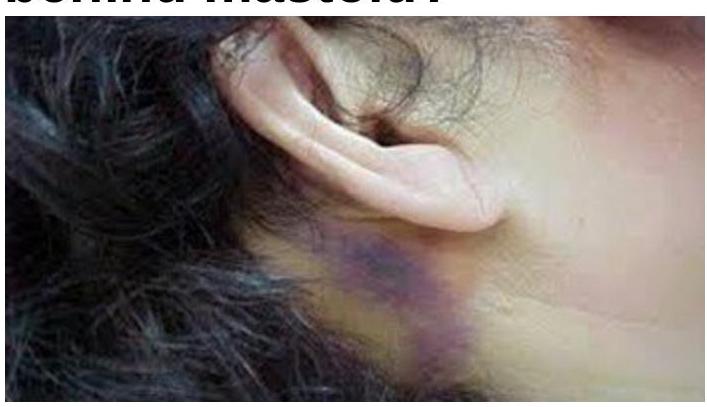
After rupture of middle meningeal artery bleeding occurs in which region?
IV fluid replacement (volume & rate) in a trauma patient is determined by:
True about Aortic transection:
Babu is brought to the emergency department as a case of road traffic accident. He is hypotensive. Most likely ruptured organ is -
Back examination of polytrauma patient is done by which method:-
A 40 year old male brought to the emergency room with a stab injury to the chest. On examination, the patient is found to be hemodynamically stable. The neck veins are engorged and the heart sounds are muffled. The following statements are true for this patient except:
Steps in review of patient's history during secondary survey of trauma care can be summarised as
Most common cause of death in burns patients is
Electrical contact burn usually causes
Superficial second degree burns heal within
Explanation: ***Extradural bleed*** - A rupture of the **middle meningeal artery** is the classic cause of an **extradural (epidural) hematoma**. - This type of bleed occurs between the **dura mater** and the **inner surface of the skull**. *Subdural bleed* - A **subdural bleed** typically results from tearing of **bridging veins**, not arteries. - This bleeding occurs between the **dura mater** and the **arachnoid mater**. *Subarachnoid bleed* - A **subarachnoid bleed** most commonly results from the rupture of an **aneurysm** or arteriovenous malformation. - This bleed occurs in the space between the **arachnoid mater** and the **pia mater**, where cerebrospinal fluid circulates. *Intracerebral bleed* - An **intracerebral bleed** involves bleeding directly into the **brain parenchyma**. - This is often caused by **hypertension**, trauma, or an underlying vascular malformation, not typically a ruptured meningeal artery.
Explanation: ***Urine output*** - **Urine output** is a sensitive indicator of **renal perfusion** and overall **hemodynamic stability**, reflecting adequate tissue perfusion and fluid resuscitation in trauma patients. - Maintaining a urine output of **0.5-1.0 mL/kg/hour** is a common target during fluid resuscitation, demonstrating effective restoration of circulating volume. *Chest condition* - The **"chest condition"** (interpreted as respiratory status or thoracic trauma) primarily guides management of ventilatory support and thoracic interventions, not directly IV fluid rates. - While significant chest trauma can impact hemodynamics, it does not alone determine the specific **volume and rate** of IV fluid resuscitation. *BP* - **Blood pressure (BP)** can be a delayed and insensitive indicator of **hypovolemia** in trauma, as compensatory mechanisms can maintain BP until significant blood loss has occurred. - Relying solely on BP may lead to inadequate resuscitation or fluid overload, especially in patients with pre-existing hypertension. *CVP* - **Central Venous Pressure (CVP)** reflects **right atrial pressure** and can be influenced by multiple factors, including cardiac function, intrathoracic pressure, and venous tone, making it an unreliable sole indicator of fluid status in trauma. - CVP measurements can be misleading in situations like **cardiac tamponade** or **tension pneumothorax**, which are common in severe trauma.
Explanation: ***All of the options*** - All three statements about aortic transection are medically accurate, making this the correct answer. - **Aortic transection** is typically caused by **deceleration injury** (especially in motor vehicle accidents), has **extremely high mortality if untreated** (approaching 90% within 24 hours), and requires **urgent surgical or endovascular repair** as definitive management. - The injury occurs when sudden deceleration causes **shearing forces** at the **aortic isthmus** (near the ligamentum arteriosum), where the mobile aortic arch meets the fixed descending aorta. *Surgical repair is the definitive treatment - Incomplete alone* - While this statement is true, selecting only this option would miss the critical information about etiology and prognosis. - Treatment options include **open surgical repair** or **TEVAR (thoracic endovascular aortic repair)**, with endovascular approaches increasingly preferred when anatomically feasible. *Associated with high mortality if untreated - Incomplete alone* - This is accurate but doesn't capture the mechanism of injury or treatment approach. - Without treatment, **80-90% of patients die within 24 hours** due to free rupture and exsanguination. *Most commonly caused by deceleration injury in motor vehicle accidents - Incomplete alone* - True regarding mechanism, but omits the critical prognostic and therapeutic information. - **High-speed MVA** and **falls from height** are classic causes, with the descending aorta tethered by intercostal arteries while the heart and arch continue moving forward.
Explanation: ***Spleen*** - The **spleen** is one of the most frequently injured abdominal organs in blunt trauma due to its superficial location and friability. - Its rich vascularity means that rupture can lead to significant intra-abdominal bleeding and **hypotension**. *Mesentery* - Mesenteric injuries can occur in blunt trauma, but typically involve small tears or hematomas, which may cause bleeding but are less likely to lead to rapid, profound **hypotension** compared to solid organ rupture. - Isolated mesenteric injury causing severe hypotension without other organ involvement is less common. *Kidney* - Kidney injuries are usually associated with flank pain, hematuria, and sometimes a flank mass, rather than isolated **hypotension** as the primary immediate symptom of severe internal bleeding. - While significant renal injury can cause hypovolemia, the spleen is generally more prone to rapid, life-threatening hemorrhage. *Rectum* - Rectal injuries are rare in blunt abdominal trauma and are typically associated with penetrating trauma or pelvic fractures. - They primarily cause peritonitis, sepsis, or fecal soilage, rather than immediate massive internal hemorrhage leading to **hypotension**.
Explanation: ***Logroll*** - The **logroll technique** is used to safely turn a polytrauma patient onto their side to examine their back while maintaining spinal immobilization. - It requires multiple personnel (typically 3-5) to turn the patient as a single unit, preventing **unnecessary spinal movement** and potential injury. *Barrel roll* - This term is not a recognized medical technique for examining a polytrauma patient's back. - It might refer to a maneuver in aviation or gymnastics, unrelated to patient care. *Primary survey* - The **primary survey** is the initial rapid assessment of a trauma patient focusing on life-threatening injuries (ABCDE: Airway, Breathing, Circulation, Disability, Exposure). - While back examination is part of the "Exposure" component, the **logroll** is the *method* used for the examination, not the survey itself. *Chin lift* - The **chin lift** maneuver is used to open the airway in an unresponsive patient by lifting the chin upwards and supporting the jaw. - It is an airway management technique and does not involve assessing the patient's back.
Explanation: ***Immediate emergency room thoracotomy should be done.*** - The patient is described as **hemodynamically stable**, which typically contraindicates an **immediate emergency room thoracotomy**. - **Emergency room thoracotomy** is usually reserved for patients with **hemodynamic instability**, **cardiac arrest**, or **penetrating chest trauma** who have failed resuscitation efforts. *Cardiac tamponade is likely to be present.* - **Engorged neck veins**, **muffled heart sounds**, and a **penetrating chest injury** strongly suggest the presence of **cardiac tamponade** (Beck's triad, though hypotension is missing here due to stability). - The accumulation of blood in the pericardial sac from a stab wound can compress the heart, leading to these signs. *The entry wound should be sealed with an occlusive dressing.* - Sealing the entry wound with an **occlusive dressing** (e.g., a three-sided dressing) is a crucial initial step for **penetrating chest wounds** to prevent **tension pneumothorax**. - This helps to maintain negative intrathoracic pressure and minimizes further air entry into the pleural space. *Echocardiogram should be done to confirm pericardial blood.* - An **echocardiogram** is the most sensitive and specific diagnostic tool to confirm the presence and quantify the amount of **pericardial fluid** or **blood** in cases of suspected cardiac tamponade. - This would be an appropriate next step after initial stabilization to definitively diagnose and guide further management.
Explanation: ***AMPLE*** - The **AMPLE history** is a mnemonic used during the **secondary survey** in trauma care to gather crucial patient information - It stands for **Allergies, Medications, Past medical history/Pregnancy, Last meal, and Events** surrounding the injury. *TRIAGE* - **Triage** is the process of prioritizing patients based on the severity of their condition and the likelihood of benefit from immediate treatment. - It is an initial assessment done to determine the urgency of care, not a detailed historical review for a single patient. *ABCDE* - The **ABCDE approach** (**Airway, Breathing, Circulation, Disability, Exposure**) is part of the **primary survey** in trauma care. - It focuses on identifying and managing immediate life-threatening conditions. *None of the options* - This option is incorrect because **AMPLE** specifically describes the historical review process during the secondary survey.
Explanation: ***Septic shock*** - **Septic shock** is the leading cause of death in burn patients, particularly in cases involving **large surface area burns**, due to compromised skin barrier allowing bacterial entry and systemic inflammatory response. - The extensive tissue damage, altered immune response, and requirement for invasive procedures (e.g., catheters, ventilator support) significantly increase the risk of developing **severe infections** leading to sepsis. *Asphyxia* - While **asphyxia** can be an immediate cause of death in fire-related incidents due to smoke inhalation and airway obstruction, it is less common as the primary cause of death overall in burn patients who survive the initial injury. - Patients who develop asphyxia often die at the **scene of the fire** or shortly after arrival, not during later stages of burn care. *Cardiac arrest* - **Cardiac arrest** can occur as a complication of severe burns due to **hypovolemia**, electrolyte imbalances, or direct cardiac injury, but it is often a *consequence* of other primary issues like sepsis or severe hypovolemic shock. - It is not typically cited as the most common *initial* or *primary* cause of death across the entire course of burn injury management. *Hypovolemic shock* - **Hypovolemic shock** is a major concern in the **initial phase** of burn injury due to massive fluid loss through the damaged skin. - While critical and a significant contributor to early mortality, effective **fluid resuscitation** protocols usually manage and prevent death from hypovolemic shock in patients who receive timely medical care.
Explanation: ***Third degree burns*** - Electrical burns often cause **deep tissue damage** because electrical current generates significant heat as it passes through the body, leading to destruction of all skin layers and underlying tissues. - The entry and exit points of an electrical current can appear relatively small, but the damage internally can be extensive and severe, justifying a **third-degree classification**. *Superficial second degree burns* - These burns involve the epidermis and superficial dermis, characterized by **blisters** and significant pain. - Electrical burns typically cause much deeper tissue destruction than what is seen in superficial partial-thickness burns. *First degree burns* - First-degree burns only affect the epidermis, causing **redness** and **mild pain** without blistering. - Electrical contact, even brief, almost invariably causes more severe damage than a superficial first-degree burn. *Deep second degree burns* - Deep second-degree burns extend into the deep dermis, often presenting with **blisters** and potentially some loss of sensation due to nerve damage. - While electrical burns can cause deep partial-thickness injuries, the current's path often leads to complete destruction of skin layers and underlying structures, making a full-thickness (third-degree) burn more common.
Explanation: ***2 weeks*** - **Superficial second-degree burns** (also known as **partial-thickness burns**) involve the epidermis and superficial part of the dermis. - These burns typically heal within **10-14 days** (approximately 2 weeks) without scarring, as the **dermal appendages** (hair follicles, sweat glands) remain intact to facilitate re-epithelialization. *3 weeks* - Healing duration of **3 weeks** is more characteristic of **deep partial-thickness burns**, which involve the deeper layers of the dermis and may take longer to heal, often with some scarring. - This option incorrectly states the typical healing time for superficial second-degree burns. *4 weeks* - **4 weeks** healing time is atypical for superficial second-degree burns and would suggest **complications** like infection or progression to a deeper injury. - Such a prolonged healing period is more commonly seen with very deep burns or in cases where **skin grafting** might be required. *1 week* - **1 week** is the typical healing time for **first-degree burns** (only involving the epidermis), which are characterized by redness and pain but no blistering. - Superficial second-degree burns, with their characteristic **blistering** and involvement of superficial dermis, require a longer healing period than first-degree burns.
Initial Assessment of Trauma Patient
Practice Questions
Advanced Trauma Life Support (ATLS) Principles
Practice Questions
Chest Trauma
Practice Questions
Abdominal Trauma
Practice Questions
Head Trauma
Practice Questions
Spinal Trauma
Practice Questions
Extremity Trauma
Practice Questions
Vascular Trauma
Practice Questions
Genitourinary Trauma
Practice Questions
Burns Management
Practice Questions
Mass Casualty Management
Practice Questions
Damage Control Surgery
Practice Questions
Get full access to all questions, explanations, and performance tracking.
Start For Free