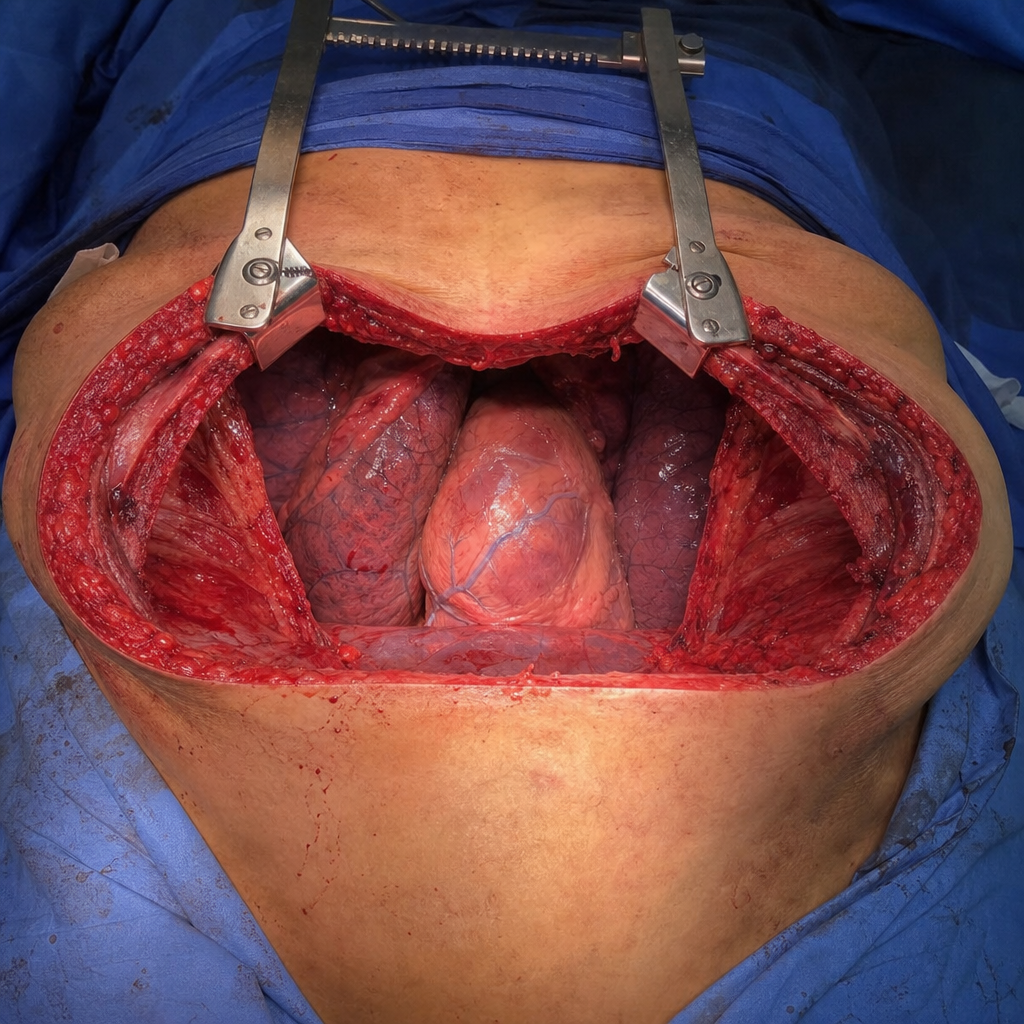
A patient of road traffic accident presents to the emergency with increasing restlessness and difficulty in breathing. The respiratory rate is 26 breaths/minute; there are distended neck veins; trachea is deviated to the right side with hyper-resonant note and absence of breath sounds on the left side. Which of the following statements are correct? 1. The most probable clinical diagnosis is left tension pneumothorax 2. Immediate chest decompression using wide bore cannula in left 2nd intercostal space is to be done 3. Immediate chest X-ray should be done to confirm the clinical diagnosis 4. Definitive chest tube insertion in left fifth intercostal space should be done
A patient with suspected head injury is brought to the emergency following road traffic accident. At the time of examination, patient is conscious with GCS 14/15 and stable vitals. There is bleeding from right ear and CSF leak from nose. Bruising is present behind the right ear. The most probable clinical diagnosis in this patient is
An electrical contact burn is considered to be:
Traumatic haemothorax is best managed by:
Which of the following are contraindications to salvaging accidentally injured spleen during operation? 1. Labile blood pressure 2. Presence of intraperitoneal infection 3. Pre-existing splenic disease 4. Age below 50 years Select the correct answer using the code given below:
A 30 year old lady sustained chest injury in an accident and presented with massive haemothorax on right side. Tube thoracostomy drained 1800 ml of blood. What is the most appropriate treatment?
A young boy riding a motorcycle met with a road traffic accident. On examination he had maxillofacial trauma with paraesthesia of the lower lip. Most likely underlying fracture he has is:
A 70-year-old man on anticoagulants due to some heart disease suffered a minor head injury. One month later he has severe headache with slowly developing neurological signs. The probable diagnosis is:
Diaphragmatic injury is suspected in a 50 year old gentleman with history of blunt abdominal trauma, having a normal chest X-ray. He is best managed by:
What is true about the management of a corrosive injury of oesophagus?
Explanation: ***1, 2 and 4*** - The clinical presentation with **increasing restlessness**, **difficulty in breathing**, **distended neck veins**, **tracheal deviation away from the affected side** (to the right for a left-sided collection), **hyper-resonant note**, and **absent breath sounds on the left** is pathognomonic for **left tension pneumothorax** (Statement 1 is correct). - **Immediate needle decompression** with a wide-bore cannula in the **2nd intercostal space** along the mid-clavicular line on the affected side is a **life-saving intervention** that must be performed immediately (Statement 2 is correct). - After needle decompression, **definitive chest tube insertion** in the **5th intercostal space** (mid-axillary line) should be performed (Statement 4 is correct). - Statement 3 is **incorrect** because tension pneumothorax is a **clinical diagnosis** requiring immediate treatment without delaying for imaging, which could be fatal. *2, 3 and 4* - This combination is incorrect because Statement 3 is wrong. - **Immediate chest X-ray should NOT be done** for suspected tension pneumothorax as it is a **clinical emergency** requiring immediate decompression without delay for imaging. - Statement 1 (the correct diagnosis) is also missing from this option. *1, 2 and 3* - This combination is incorrect because Statement 3 is wrong. - **Delaying treatment to obtain imaging** can be **fatal** due to cardiovascular collapse from mediastinal shift and impaired venous return. - Statement 4 (definitive chest tube insertion) is also missing from this option. *1, 3 and 4* - This combination is incorrect because Statement 3 is wrong. - The diagnosis is **clinical**, and treatment (needle decompression - Statement 2) should be initiated immediately to prevent hemodynamic compromise and death. - Statement 2 (immediate needle decompression) is also missing from this option.
Explanation: ***Fracture of the base of skull*** - The combination of **bleeding from the ear (otorrhagia)**, **CSF leak from the nose (rhinorrhea)**, and **bruising behind the ear (Battle's sign)** are classic indicators of a **basilar skull fracture**. - These signs suggest a breach in the bone separating the brain from the external environment, often involving the **temporal bone** or the **anterior cranial fossa**. *Extradural haematoma* - This typically presents with a **lucid interval** followed by rapid neurological deterioration due to arterial bleeding, which is not suggested by the stable GCS of 14/15. - While it can be associated with skull fractures, the specific signs of **CSF leak** and **Battle's sign** point more directly to a basilar fracture. *Cerebral concussion* - A concussion involves a transient disturbance of brain function without macrostructural damage, characterized by symptoms like confusion, dizziness, and memory problems. - It does not involve **CSF leaks**, **otorrhagia**, or **Battle's sign**, which are indicative of a more severe structural injury. *Traumatic subarachnoid haemorrhage* - This involves bleeding into the **subarachnoid space**, typically causing a **sudden severe headache**, nuchal rigidity, and altered consciousness. - It does not directly explain **otorrhagia**, **rhinorrhea**, or **Battle's sign**, which are specific to a breach in the skull base.
Explanation: ***Full thickness burn*** - Electrical contact burns are characterized by **high heat** generated at the point of contact, leading to **deep tissue destruction** that extends through the entire dermis and often into subcutaneous fat, muscle, or bone - The current pathway through the body causes additional damage internally, but the contact point itself typically reflects a **third-degree (full thickness) injury** due to intense localized heat - Entry and exit wounds from electrical burns characteristically show **charred, dry tissue** with central necrosis *Superficial partial thickness burn* - This type of burn involves only the **epidermis and superficial portion of the dermis**, typically presenting with blistering and redness - Electrical burns, especially contact burns, rarely result in such shallow injury due to the **intense and deep nature** of the energy transfer - The high voltage and current density at contact points cause damage far beyond superficial layers *Superficial scalding with blisters* - **Scald burns** are caused by hot liquids or steam and are typically **superficial or superficial partial thickness** - An electrical contact burn is distinct in its mechanism (electrical current) and the **severity of tissue damage** it causes, which extends far beyond the superficial layers - The mechanism of injury is fundamentally different from thermal scalding *Deep partial thickness burn* - Deep partial thickness burns extend into the **deeper dermis**, causing fluid-filled blisters and often mottled or waxy white areas - While electrical burns can involve deeper structures, the direct point of contact in an electrical contact burn usually causes damage that is **full thickness or beyond**, going past just the deep dermis - The concentrated heat and current flow at entry/exit sites result in complete destruction of all skin layers
Explanation: ***Intercostal tube drainage*** - **Intercostal tube drainage** is the most effective initial management for traumatic haemothorax as it allows continuous evacuation of blood and re-expansion of the lung. - It helps in quantifying blood loss, preventing clot formation, and improving respiratory mechanics by reducing pleural space compression. *Use of streptokinase* - **Streptokinase** is a fibrinolytic agent used to break down clots, but its primary role is in established, organized haemothoraces (fibrothorax) and is not the acute management for traumatic haemothorax. - Administering streptokinase in acute bleeding can worsen haemorrhage and is contraindicated in the immediate post-traumatic period. *Open drainage* - **Open drainage**, typically via thoracotomy, is reserved for massive haemothorax (e.g., >1500 mL initially or >200 mL/hr for 2-4 hours) or ongoing severe bleeding that cannot be controlled by tube thoracostomy. - It is a more invasive procedure with higher risks and is not the first-line management for all traumatic haemothoraces. *Aspiration of blood from pleural cavity* - **Aspiration of blood from the pleural cavity** (thoracentesis) can be diagnostic but is often insufficient for adequately draining a traumatic haemothorax, especially if there is ongoing bleeding or significant clot formation. - It is often reserved for small, uncomplicated haemothoraces or for diagnostic purposes, not as the definitive management in trauma.
Explanation: ***1, 2 and 3*** - **Labile blood pressure** (1) indicates ongoing hemodynamic instability, making splenic salvage risky due to the potential for further hemorrhage and the need for immediate control. - **Presence of intraperitoneal infection** (2) makes splenic salvage dangerous as the injured spleen provides a niche for bacterial proliferation, increasing the risk of abscess formation and sepsis. - **Pre-existing splenic disease** (3) such as lymphoma or significant architectural changes, can compromise the spleen's integrity and function, making successful and safe salvage unlikely. *1, 3 and 4* - This option incorrectly includes age below 50 years as a contraindication. **Age below 50 years** (4) is generally not a contraindication to splenic salvage; in fact, younger patients, especially children, often have a greater imperative for splenic preservation due to higher risks of **overwhelming post-splenectomy infection (OPSI)**. - While choices 1 and 3 are correct contraindications, choice 4 is not. *2, 3 and 4* - This option incorrectly includes age below 50 years as a contraindication. **Labile blood pressure** (1) is a critical contraindication but is omitted. - Choices 2 and 3 are valid contraindications, but excluding the crucial factor of hemodynamic instability makes this option incomplete. *1, 2 and 4* - This option correctly identifies **labile blood pressure** (1) and **intraperitoneal infection** (2) as contraindications but incorrectly includes **age below 50 years** (4). - It also omits **pre-existing splenic disease** (3), which is another significant reason to avoid salvage.
Explanation: ***Resuscitation and prepare for urgent thoracotomy*** - A **massive hemothorax**, defined as draining >1500 ml of blood initially or >200 ml/hour for 2-4 hours, indicates significant ongoing bleeding requiring surgical intervention. - Urgent **thoracotomy** is necessary to identify and control the source of hemorrhage in such cases. *Clamp the chest tube to cause the tamponade* - Clamping the chest tube in a massive hemothorax can lead to **cardiac tamponade** or worsening **respiratory distress** by trapping blood in the pleural space. - This action would dangerously increase **intrathoracic pressure** and is contraindicated as it prevents proper drainage and exacerbates hypovolemic shock. *Put one more chest tube* - While additional chest tubes might be considered for inadequate drainage in certain situations, a massive hemothorax (1800 ml) signifies a major vascular injury, making multiple tubes insufficient to control the bleeding. - The priority is to stop the bleeding surgically, not just to drain more blood, which would only accelerate **exsanguination**. *Correction of hypovolemic shock* - **Resuscitation** is a critical initial step, but it is not the definitive treatment for a massive hemothorax with ongoing bleeding. - Without addressing the source of the bleeding via **thoracotomy**, simply managing the **hypovolemic shock** would be futile as the patient would continue to bleed out.
Explanation: ***Fracture of the mandibular body*** - **Paraesthesia of the lower lip** is a classic symptom of injury to the **inferior alveolar nerve**, which runs within the mandibular canal through the body of the mandible. - A fracture in the mandibular body can directly damage or compress this nerve, leading to altered sensation. *Fracture involving infraorbital foramen* - A fracture involving the **infraorbital foramen** would affect the **infraorbital nerve**, causing paraesthesia in the midface region, including the cheek, upper lip, and side of the nose, not the lower lip. - This nerve is a branch of the **trigeminal nerve (V2)**, whereas the nerve supplying the lower lip is a branch of **V3**. *Fracture of temporal bone* - A **temporal bone fracture** is more likely to cause symptoms related to the **facial nerve (cranial nerve VII)**, leading to facial paralysis, or hearing/balance issues due to damage to the inner ear structures. - It does not typically cause isolated paraesthesia of the lower lip. *Fracture involving floor of orbit* - A fracture of the floor of the orbit, often a **blowout fracture**, can entrap the **inferior rectus** or **inferior oblique muscles** and cause **diplopia** (double vision). - It may also involve the **infraorbital nerve**, leading to paraesthesia of the cheek, upper lip, and upper teeth, but not specifically the lower lip.
Explanation: ***Chronic subdural haematoma*** - This diagnosis fits the clinical picture of a **minor head injury** followed by a **delayed** presentation (one month later) of **slowly developing neurological signs** and headache, especially in an **elderly patient on anticoagulants**. - **Anticoagulation** increases the risk for bleeding, and the elderly are more susceptible due to brain atrophy, which stretches and makes bridging veins more vulnerable to tearing from minor trauma. *Acute subdural haematoma* - An acute subdural haematoma typically presents within **72 hours** of the initial trauma, with **rapidly progressive neurological deficits**, unlike the delayed and gradual onset described. - While anticoagulation increases risk, the **timeframe** of symptom onset is inconsistent with an acute presentation. *Extradural haematoma* - Extradural haematomas are usually associated with a **lucid interval** followed by rapid deterioration due to arterial bleeding, often from the **middle meningeal artery**, and rarely occur in the elderly or from minor trauma. - It would present much **sooner** after the injury, typically within hours, and is less common in this age group without significant impact. *Subarachnoid haemorrhage* - Subarachnoid haemorrhage typically presents with a **sudden onset**, **"thunderclap" headache**, often described as the "worst headache of my life," and is not typically associated with a minor head injury followed by a delayed, slowly progressive course. - While anticoagulants could worsen bleeding, the **temporal profile** and **gradual neurological decline** are not characteristic of a subarachnoid haemorrhage.
Explanation: ***Diagnostic laparoscopy*** - **Diagnostic laparoscopy** is the **most sensitive and specific method** for detecting diaphragmatic injuries, especially when initial imaging like X-ray is normal but suspicion remains high after blunt trauma. - It allows **direct visualization** of the diaphragm for tears, herniation of abdominal contents, and associated visceral injuries, enabling simultaneous repair. *CECT abdomen* - While a **CECT abdomen** can show some diaphragmatic injuries, its sensitivity is **limited, especially for small tears**. - It may identify associated organ damage but might miss non-displaced diaphragmatic ruptures, particularly in the acute phase. *Diagnostic peritoneal lavage and proceed* - **Diagnostic peritoneal lavage (DPL)** is primarily used to detect intra-abdominal hemorrhage or viscus perforation, not specifically diaphragmatic injury. - A positive DPL (indicating bleeding) does not directly localize diaphragmatic trauma. *Upper GI contrast study* - An **Upper GI contrast study** is useful for diagnosing a **herniated stomach or small bowel** into the thoracic cavity in chronic or delayed presentations of diaphragmatic injury. - It is **less effective for acute detection** of diaphragmatic tears without significant herniation and does not allow for direct visualization or repair.
Explanation: ***Early skilled endoscopy is a must*** - **Early endoscopy** within 12-24 hours is crucial to assess the extent and depth of corrosive injury - Helps determine severity (Grade I-III burns) and guide further management - Identifies patients needing aggressive treatment vs. conservative management - **Contraindicated** only in suspected perforation or severe respiratory distress *Broad spectrum antibiotics should be started as soon as possible* - **Prophylactic antibiotics are NOT routinely recommended** for corrosive injuries - Risk of promoting antibiotic resistance without proven benefit - Antibiotics indicated only when signs of infection present: **fever, leukocytosis, or suspected perforation** *Immediate surgery with oesophagectomy is advisable* - **Immediate oesophagectomy is NOT standard management** - Reserved for severe complications: **perforation, extensive necrosis, mediastinitis, or uncontrolled bleeding** - Most patients initially managed conservatively with supportive care - Surgery considered only if conservative measures fail *Immediate NG tube insertion and gastric lavage should be performed* - **Both are CONTRAINDICATED** in corrosive ingestions - **Gastric lavage** can induce vomiting, causing re-exposure of esophagus and risking perforation - **NG tube insertion** can traumatize damaged esophageal mucosa and cause perforation - Management focuses on NBM (nil by mouth), fluid resuscitation, and pain control
Initial Assessment of Trauma Patient
Practice Questions
Advanced Trauma Life Support (ATLS) Principles
Practice Questions
Chest Trauma
Practice Questions
Abdominal Trauma
Practice Questions
Head Trauma
Practice Questions
Spinal Trauma
Practice Questions
Extremity Trauma
Practice Questions
Vascular Trauma
Practice Questions
Genitourinary Trauma
Practice Questions
Burns Management
Practice Questions
Mass Casualty Management
Practice Questions
Damage Control Surgery
Practice Questions
Get full access to all questions, explanations, and performance tracking.
Start For Free