What is the investigation of choice in pancreatic trauma?
Triple H therapy in the management of subarachnoid hemorrhage includes all except?
What is the meaning of triage?
A 25-year-old woman presents to the emergency department with multiple gunshot wounds to the abdomen. Her blood pressure is 70 mm Hg and her abdomen is massively distended. Large intravenous lines are placed, and a nasogastric tube and Foley catheter are inserted. The patient is taken immediately to the operating room. After 2 L of normal saline infusion, her blood pressure remains 75/0 mm Hg, pulse rate is 140 bpm, and respiration rate is 30 breaths per minute. What is the next step in management?
Burns with destruction of the epidermis and papillary dermis are classified as which degree?
A 40-year-old female patient complains of excessive bleeding following a road traffic accident 6 hours ago. She presents with altered mental status, a blood lactate level of 2.5 mmol/L, reduced urine output, blood pressure of 80/50 mmHg, pulse of 130 bpm, and a respiratory rate of 24/minute. In which stage of shock is this patient?
In limb reconstruction, what is the first step undertaken?
Clicking jaw is due to:
Acidosis in shock is best treated by?
Which of the following is a characteristic feature of a third-degree burn?
Explanation: **Explanation:** **Contrast-enhanced computed tomography (CECT)** is the investigation of choice for pancreatic trauma in hemodynamically stable patients. The pancreas is a retroperitoneal organ, making it difficult to evaluate via physical examination or basic imaging. CECT provides high sensitivity and specificity for detecting parenchymal lacerations, hematomas, and associated injuries to other intra-abdominal organs. It is essential for the **AAST (American Association for the Surgery of Trauma) grading** of pancreatic injuries, which guides management (conservative vs. surgical). **Why other options are incorrect:** * **Ultrasonography (USG):** While useful as a FAST (Focused Assessment with Sonography for Trauma) scan to detect hemoperitoneum, it is poor at visualizing the retroperitoneum. Bowel gas and the organ's deep location often obscure the pancreas. * **MRI:** Although MRCP is excellent for evaluating ductal integrity, MRI is time-consuming and impractical in an acute trauma setting. * **Radionuclide scan:** This has no role in the acute evaluation of blunt or penetrating abdominal trauma. **High-Yield Clinical Pearls for NEET-PG:** * **Ductal Integrity:** The most critical factor in determining prognosis and treatment (Grade III+ involves ductal injury). If CECT is inconclusive regarding the pancreatic duct, **MRCP** is the non-invasive investigation of choice, while **ERCP** is the gold standard (and allows for stenting). * **Timing:** A CECT performed too early (within 6–12 hours) may underestimate the severity of the injury; evolution of necrosis may require a repeat scan. * **Mechanism:** Always suspect pancreatic injury in "handlebar injuries" in children or steering wheel impacts in adults (crushing the pancreas against the vertebral column).
Explanation: **Explanation:** The management of **Subarachnoid Hemorrhage (SAH)**, particularly after securing the aneurysm (via clipping or coiling), focuses on preventing and treating **Delayed Cerebral Ischemia (DCI)** caused by vasospasm. **Triple H Therapy** was historically the cornerstone of this management. It aims to increase cerebral blood flow (CBF) to areas of the brain where vessels have narrowed due to vasospasm. * **Why Hypothermia is the correct answer:** Hypothermia is **not** part of the Triple H triad. While therapeutic hypothermia has been studied for neuroprotection in cardiac arrest or traumatic brain injury, it is not a standard component of the hemodynamic augmentation strategy for SAH-induced vasospasm. **The Components of Triple H Therapy:** 1. **Hypervolemia (Option B):** Achieved using crystalloids and colloids to maintain a high-normal circulating volume, ensuring adequate cardiac output. 2. **Hemodilution (Option A):** A byproduct of hypervolemia, this reduces blood viscosity (target hematocrit ~30-33%), which improves microcirculatory flow through narrowed vessels. 3. **Hypertension (Option C):** This is the most critical component. By inducing hypertension (often using vasopressors), the mean arterial pressure (MAP) is raised to overcome the resistance of vasospastic arteries and maintain cerebral perfusion. **Clinical Pearls for NEET-PG:** * **Current Trend:** Modern guidelines are moving away from "Hypervolemia" and "Hemodilution" due to risks of pulmonary edema and decreased oxygen-carrying capacity. The current focus is primarily on **Euvolumic Induced Hypertension**. * **Drug of Choice:** **Nimodipine** (a calcium channel blocker) is given to all SAH patients to improve neurological outcomes, though it does not significantly reduce the visible vasospasm on angiography. * **Gold Standard Diagnosis:** Digital Subtraction Angiography (DSA) is the gold standard for detecting vasospasm.
Explanation: **Explanation:** **Triage** is derived from the French word *trier*, meaning "to sort." In trauma surgery and emergency medicine, it refers to the process of prioritizing patients based on the **severity of their condition** and the **likelihood of survival** with available medical resources. The primary goal is to provide the greatest good for the greatest number of people, especially in mass casualty incidents (MCI). * **Why Option A is correct:** Triage is not just about who is the most injured; it is a dynamic process that balances clinical urgency against resource constraints. For example, in a resource-limited disaster, a patient with a non-survivable injury may be prioritized lower than a salvageable patient to ensure efficient use of staff and equipment. * **Why Option B is incorrect:** While the word root implies "three," modern triage systems (like the START protocol) typically use **four** color-coded categories: Red (Immediate), Yellow (Delayed), Green (Minor), and Black (Deceased/Expectant). * **Why Option C is incorrect:** While triage originated in military medicine (Napoleonic Wars), it is now a standard protocol in civilian emergencies. Furthermore, the "severely injured" are not always attended to first; if their injuries are deemed non-survivable under the circumstances, they are categorized as "Expectant" (Black) to save others. **High-Yield Clinical Pearls for NEET-PG:** * **Color Coding:** * **Red:** Highest priority (e.g., tension pneumothorax, airway obstruction). * **Yellow:** Stable but requires systemic care (e.g., large bone fractures). * **Green:** "Walking wounded." * **Black:** Dead or unsalvageable. * **Reverse Triage:** Used in military/combat situations where those who can be returned to the front lines most quickly are treated first. * **START Protocol:** Simple Triage and Rapid Treatment; focuses on Respirations, Perfusion, and Mental Status (RPM).
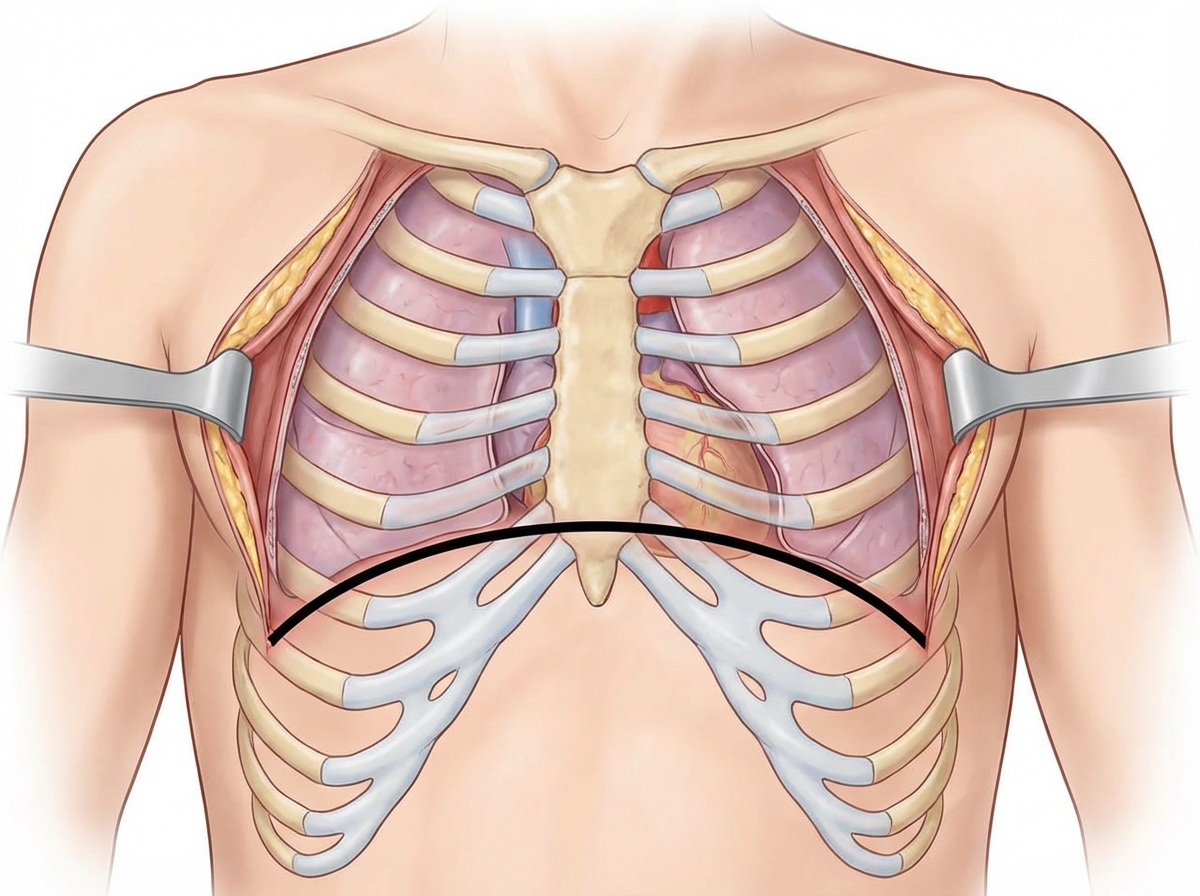
Explanation: **Explanation:** The patient is in **decompensated hemorrhagic shock** (Class IV) due to penetrating abdominal trauma. Her lack of response to initial fluid resuscitation (refractory hypotension) indicates ongoing, massive intra-abdominal exsanguination. **Why Option A is Correct:** In a patient with massive hemoperitoneum and profound hypotension, the priority is **immediate surgical hemorrhage control**. Upon entering the abdomen, the most effective way to stabilize the patient and maintain cerebral and coronary perfusion is **proximal aortic control**. Compressing the abdominal aorta against the vertebral column at the diaphragmatic hiatus (using a hand or a Richardson retractor) provides rapid temporary occlusion, allowing the anesthesia team to catch up with resuscitation while the surgeon identifies the source of bleeding. **Why Incorrect Options are Wrong:** * **Option B:** While a resuscitative thoracotomy with aortic cross-clamping is an option for patients who arrest or are peri-arrest, it is more invasive. In this case, the patient is already being taken to the OR for a laparotomy; direct trans-abdominal control is faster and avoids the morbidity of a second major incision. * **Option C:** PASG (or MAST suits) are largely obsolete in modern trauma protocols. They do not address the source of bleeding and can worsen outcomes by delaying definitive surgery and causing compartment syndrome. * **Option D:** Waiting for blood products in the face of refractory hypotension is a fatal delay. Hemorrhage control must occur simultaneously with (or even precede) volume replacement in "exsanguinating" patients. **Clinical Pearls for NEET-PG:** * **Lethal Triad of Trauma:** Acidosis, Coagulopathy, and Hypothermia. * **Damage Control Surgery (DCS):** The goal is not definitive repair but rapid control of hemorrhage and contamination, followed by stabilization in the ICU. * **Zone 1 of Retroperitoneum:** Contains the abdominal aorta and IVC. Hematomas here must always be explored in penetrating trauma.
Explanation: **Explanation:** The classification of burns is based on the depth of tissue destruction. The correct answer is **Second-degree burn**, specifically a **Superficial Partial-Thickness burn**. * **Why Second-degree is correct:** Second-degree burns involve the entire epidermis and extend into the dermis. They are subdivided into: * **Superficial Partial-Thickness:** Involves the **epidermis and the papillary (superficial) dermis**. Characteristically, these present with **blisters**, are extremely painful, and blanch on pressure. * **Deep Partial-Thickness:** Extends into the reticular (deep) dermis. **Analysis of Incorrect Options:** * **First-degree (A):** Limited to the **epidermis** only (e.g., sunburn). They are painful and erythematous but do not form blisters. * **Third-degree (C):** Also known as **Full-thickness burns**. These involve the destruction of the entire epidermis and the entire dermis (including appendages). They appear leathery, charred, or pearly white and are **painless** due to the destruction of nerve endings. * **Fourth-degree (D):** These extend beyond the skin into underlying structures such as **subcutaneous fat, fascia, muscle, or bone**. **High-Yield Clinical Pearls for NEET-PG:** 1. **The "Pain" Rule:** Superficial burns are the most painful; Full-thickness (3rd degree) burns are anesthetic (painless). 2. **Healing:** Superficial 2nd-degree burns typically heal within 7–14 days with minimal scarring, whereas deep 2nd-degree burns may require grafting. 3. **Rule of Nines:** Used for TBSA (Total Body Surface Area) estimation; remember that 1st-degree burns are **excluded** from TBSA calculations for fluid resuscitation. 4. **Parkland Formula:** $4 \, \text{ml} \times \text{kg} \times \% \text{TBSA}$ (using Ringer’s Lactate) is the gold standard for initial resuscitation.
Explanation: ### Explanation The patient is in **Class III Hemorrhagic Shock**, also known as **Moderately Decompensated Shock**. #### 1. Why "Moderately Decompensated" is Correct: According to the **ATLS Classification of Hemorrhagic Shock**, Class III shock is characterized by a blood loss of **1500–2000 mL (30-40%)**. The clinical hallmarks present in this patient that confirm this stage are: * **Hypotension:** A drop in systolic blood pressure (80/50 mmHg) is the definitive sign that compensatory mechanisms have failed, marking the transition from compensated to decompensated shock. * **Altered Mental Status:** The patient is anxious or confused due to decreased cerebral perfusion. * **Tachycardia & Tachypnea:** Pulse >120 bpm and RR >20-30 bpm are typical. * **Oliguria:** Reduced urine output (5–15 mL/hr) indicates significant renal hypoperfusion. #### 2. Why Other Options are Incorrect: * **A. Compensated (Class I & II):** In these stages, the blood pressure is **maintained** via compensatory mechanisms (tachycardia and vasoconstriction). The patient would be alert or only slightly anxious with normal urine output. * **B. Mild Decompensated:** This is not a standard ATLS term; however, Class II is sometimes called "mild," but it lacks the hypotension and significant mental status changes seen here. * **D. Severely Decompensated (Class IV):** This involves >40% blood loss. It is characterized by extreme tachycardia (>140 bpm), negligible urine output (anuria), and a lethargic or comatose state. #### 3. High-Yield Clinical Pearls for NEET-PG: * **Earliest Sign of Shock:** Tachycardia (except in patients on beta-blockers or with pacemakers). * **Definition of Hypotension in Trauma:** SBP <90 mmHg or a 20-30% drop from baseline. * **Lactate & Base Deficit:** These are better indicators of **tissue perfusion** and "occult shock" than vital signs alone. A lactate >2.0 mmol/L suggests anaerobic metabolism. * **Management:** Class III and IV shock require **blood products** (Massive Transfusion Protocol) in addition to crystalloids.
Explanation: In limb reconstruction following trauma (especially in cases of mangled extremities or replantation), the sequence of repair is critical for a successful outcome. ### **Why Bone Fixation is the First Step** The primary goal of starting with **Bone Fixation** is to provide a **stable skeletal framework**. Without a rigid foundation, any subsequent repairs to soft tissues—specifically delicate vascular anastomoses and nerve sutures—would be at high risk of disruption, stretching, or kinking during limb manipulation. Establishing length and alignment first ensures that the tension on vessels and nerves is appropriate. ### **Analysis of Incorrect Options** * **B & D (Arterial and Vein Repair):** While restoring circulation is urgent, vascular repair performed before bone stabilization is prone to failure. If the bone shifts during later fixation, the newly sutured vessels can tear. *Exception:* If the warm ischemia time is critically high, a temporary vascular shunt may be placed before bone fixation, but definitive repair still follows stabilization. * **C (Nerve Repair):** Nerves are the most delicate structures and are repaired last. They require a stable bed and a tension-free environment, which can only be guaranteed after the bone is fixed and blood flow is restored. ### **NEET-PG High-Yield Sequence (mnemonic: BEV-N)** The standard surgical order in limb replantation/reconstruction is: 1. **B**one Fixation (K-wires or External Fixator) 2. **E**xtensor Tendon repair 3. **V**ascular repair (Veins first, then Arteries—to reduce blood loss) 4. **N**erve repair (and Flexor tendons) 5. **S**kin closure/Grafting **Clinical Pearl:** In the emergency management of a mangled extremity, the "Life over Limb" principle applies. If the patient is hemodynamically unstable, a temporary **external fixator** is the preferred method of bone stabilization due to its speed.
Explanation: ### Explanation **Correct Answer: A. Lax temporomandibular joint** The "clicking" sound in the jaw is a classic clinical sign of **Internal Derangement of the Temporomandibular Joint (TMJ)**, specifically **Anterior Disc Displacement with Reduction**. The underlying mechanism involves a **laxity of the joint capsule** and the collateral ligaments that normally hold the articular disc in place over the condyle. When the joint is lax, the disc is pulled anteriorly by the lateral pterygoid muscle. As the patient opens their mouth, the condyle slides forward and "jumps" back onto the thick posterior band of the disc, creating an audible and palpable **click**. --- ### Why the other options are incorrect: * **B. Fracture of the mandible:** This typically presents with malocclusion, localized pain, swelling, sublingual hematoma (Coleman’s sign), and step deformity. While crepitus may be felt, a rhythmic "clicking" is not a feature. * **C. Fracture of the maxilla:** Le Fort fractures present with midface mobility, "donkey face" deformity (lengthening of the face), and epistaxis, but do not involve the TMJ mechanism required for clicking. * **D. Dislocation of the symphysis menti:** The symphysis menti is a solid midline fusion in adults. A "dislocation" is anatomically impossible; a fracture in this region would cause instability and pain but not functional clicking. --- ### NEET-PG High-Yield Pearls: * **TMJ Dislocation:** Usually occurs **anteriorly** (the condyle moves in front of the articular eminence). It is often bilateral and occurs during yawning or dental procedures. * **Reduction Technique:** The **Nelaton’s maneuver** (downward and backward pressure on the molars) is used to reduce an acute TMJ dislocation. * **Trismus (Lockjaw):** Most commonly caused by dental infections, peritonsillar abscess (Quinsy), or tetanus. * **Golden Rule:** In any suspected mandibular fracture, always check for a **second fracture** (the "Pretzel rule"), as the mandible is a ring-like structure.
Explanation: ### Explanation In the context of trauma and shock, the primary cause of acidosis is **lactic acidosis** resulting from tissue hypoperfusion. When the body enters a state of shock, inadequate oxygen delivery forces cells to switch from aerobic to anaerobic metabolism, leading to the accumulation of lactate and hydrogen ions. **Why Volume Resuscitation is the Correct Answer:** The definitive treatment for metabolic acidosis in shock is to restore **tissue perfusion**. Volume resuscitation (using crystalloids or blood products) increases the intravascular volume, improves cardiac output, and restores oxygen delivery to the tissues. Once perfusion is restored, the liver can metabolize the accumulated lactate, and the kidneys can excrete excess acids, thereby correcting the pH naturally. **Analysis of Incorrect Options:** * **Increased Ventilation (A):** While hyperventilation can induce a compensatory respiratory alkalosis to temporarily raise the pH, it does not address the underlying cause (hypoperfusion) and can lead to respiratory muscle fatigue. * **Oxygen Support (C):** Oxygen is essential, but without adequate volume to transport that oxygen to the tissues (the "conveyor belt" problem), oxygenation alone cannot reverse anaerobic metabolism. * **Intravenous Sodium Bicarbonate (D):** This is generally **contraindicated** in early shock. Bicarbonate shifts the oxyhemoglobin dissociation curve to the left (reducing oxygen release to tissues) and can cause intracellular acidosis by producing excess $CO_2$. It is only considered in extreme cases (pH < 7.1) after adequate resuscitation has failed. **High-Yield Clinical Pearls for NEET-PG:** * **Lethal Triad of Trauma:** Acidosis, Coagulopathy, and Hypothermia. * **Best Indicator of Resuscitation:** Base deficit and Serum Lactate levels are better markers of the severity of shock and the adequacy of resuscitation than blood pressure alone. * **End-point of Resuscitation:** Normalization of serum lactate (usually <2 mmol/L) is a key goal in trauma management.
Explanation: **Explanation:** **Third-degree burns**, also known as **full-thickness burns**, involve the destruction of the entire epidermis and the full depth of the dermis, often extending into the subcutaneous fat. 1. **Why Option C is correct:** The defining anatomical characteristic of a third-degree burn is the complete destruction of the dermal layer. Because the regenerative elements (hair follicles and sweat glands) located in the dermis are destroyed, these wounds cannot re-epithelialize spontaneously and typically require skin grafting. 2. **Why the other options are incorrect:** * **Option A (Pain):** Third-degree burns are characteristically **painless (anesthetic)** because the nerve endings in the dermis are completely destroyed. Pain is a hallmark of first and second-degree burns. * **Option B (Transudation):** Fluid transudation and blistering are features of **second-degree (partial-thickness)** burns. In third-degree burns, the surface is typically dry, leathery, and charred (eschar). * **Option D (Erythematous):** Erythema (redness) that blanches is seen in first-degree burns. Third-degree burns appear waxy white, leathery brown, or charred black and **do not blanch** with pressure. **NEET-PG High-Yield Pearls:** * **Rule of Nines:** Used for rapid estimation of Total Body Surface Area (TBSA) in adults. * **Parkland Formula:** $4 \text{ mL} \times \text{kg} \times \% \text{TBSA}$ (Ringer’s Lactate). Give half in the first 8 hours. * **Jackson’s Zones of Thermal Injury:** Zone of coagulation (irreversible necrosis), Zone of stasis (potentially salvageable), and Zone of hyperemia. * **Inhalation Injury:** The most common cause of early mortality in burn patients; look for singed nasal hairs and carbonaceous sputum.
Initial Assessment of Trauma Patient
Practice Questions
Advanced Trauma Life Support (ATLS) Principles
Practice Questions
Chest Trauma
Practice Questions
Abdominal Trauma
Practice Questions
Head Trauma
Practice Questions
Spinal Trauma
Practice Questions
Extremity Trauma
Practice Questions
Vascular Trauma
Practice Questions
Genitourinary Trauma
Practice Questions
Burns Management
Practice Questions
Mass Casualty Management
Practice Questions
Damage Control Surgery
Practice Questions
Get full access to all questions, explanations, and performance tracking.
Start For Free