Which of the following is true about grade 4 burns?
What does the return of the bulbocavernous reflex signify in the context of spinal shock?
An ulcer that may develop in burn tissue is called?
Triage in casualty is done for what purpose?
Which of the following is an indication for emergency thoracotomy?
Which of the following is used for 'Figure of eight' wiring for stabilization of subluxated teeth in alveolar injuries?
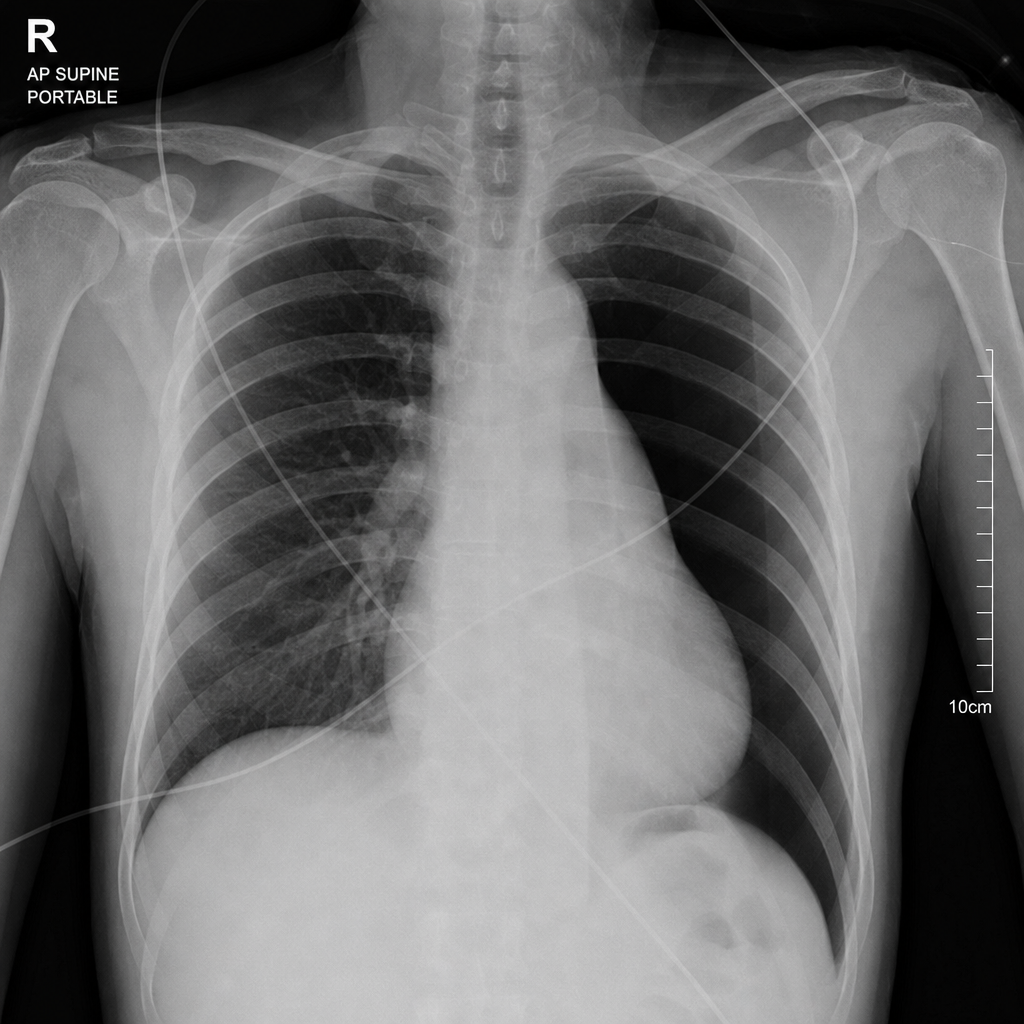
A patient presents with a blood pressure of 100/70 mmHg, a pulse rate of 110 beats/min, and respiratory distress indicated by accessory muscle use. What is the most likely diagnosis?
What is the recommended temperature for rapid rewarming in frostbite treatment?
All of the following are true about rib fractures except:
A 45-year-old male presented to the ER with swelling in the scrotal region along with the anterior abdominal wall and upper thigh. The patient reported a history of injury to the perineal region from falling on the cross beam of a bicycle 1 day prior. Given the history, clinical examination, and relevant investigations, a urethral tear was suspected. What is the most probable location of the tear in the urethra in this patient?
Explanation: **Explanation:** The classification of burn depth is a high-yield topic in surgical trauma. Burns are categorized based on the depth of tissue destruction: * **Grade 1 (First-degree):** Involves only the epidermis (e.g., sunburn). * **Grade 2 (Second-degree):** Involves the epidermis and varying depths of the dermis. * **Grade 3 (Third-degree/Full-thickness):** Involves the entire thickness of the skin (epidermis and dermis). * **Grade 4 (Fourth-degree):** This is the deepest classification. It extends beyond the skin to involve **subcutaneous fat, underlying fascia, muscle, or even bone.** Therefore, Option B is the most accurate description of the extent of tissue involvement in Grade 4 burns. **Analysis of Incorrect Options:** * **Option A:** This describes a Grade 3 (Full-thickness) burn, where all layers of the skin are lost, but deeper structures remain intact. * **Option C:** While electric burns are a common *cause* of deep tissue damage (often resulting in Grade 4 injuries), the definition of Grade 4 is based on the **depth of anatomical involvement**, not the mechanism of injury. * **Option D:** This describes a Grade 2 (Partial-thickness) burn, specifically a superficial or deep partial-thickness burn depending on the level of dermal involvement. **NEET-PG Clinical Pearls:** 1. **Appearance:** Grade 4 burns often appear charred or "mummified." 2. **Sensation:** Like Grade 3 burns, Grade 4 burns are **painless** (anesthetic) because the nerve endings in the dermis have been completely destroyed. 3. **Management:** These injuries always require surgical intervention (debridement, grafting, or flaps) and often result in significant functional impairment or amputation. 4. **Rule of Nines:** Remember that this rule is used to estimate Total Body Surface Area (TBSA) for Grade 2 and Grade 3 burns to guide fluid resuscitation (Parkland Formula).
Explanation: ### Explanation **Concept Overview:** Spinal shock is a state of transient physiological reflex depression following an acute spinal cord injury. It is characterized by the loss of all sensorimotor functions and autonomic reflexes below the level of the lesion. The **Bulbocavernous Reflex (BCR)**—elicited by squeezing the glans penis or tugging on a Foley catheter while palpating the anal sphincter for contraction—is one of the first spinal reflexes to return as spinal shock resolves. **Why Option A is Correct:** The return of the BCR marks the **end of spinal shock**. It signifies that the spinal cord segments below the level of injury have regained their reflex arc activity, even if they remain disconnected from the brain. Until the BCR returns, a clinician cannot accurately determine the true extent of the neurological deficit (complete vs. incomplete). **Why Other Options are Incorrect:** * **Options B, C, and D:** The return of the BCR does **not** indicate the severity or type of the lesion (partial, complete, or incomplete). It only confirms that the "shock" phase is over. Once the BCR is present, any remaining sensory or motor deficit is then considered permanent or representative of the actual cord injury. For example, if the BCR has returned but there is still no motor or sensory function, the injury is classified as a **complete** spinal cord injury. **NEET-PG High-Yield Pearls:** * **First reflex to return:** Bulbocavernous reflex (usually within 24–48 hours). * **First sign of recovery from spinal shock:** Return of the BCR. * **Definition of Spinal Shock:** Total loss of reflexes, motor, and sensory function (flaccid paralysis). * **Neurogenic Shock vs. Spinal Shock:** Do not confuse the two. Neurogenic shock is a **hemodynamic** phenomenon (hypotension + bradycardia) due to loss of sympathetic tone, whereas spinal shock is a **neurological** phenomenon (loss of reflexes).
Explanation: **Explanation:** **Marjolin’s Ulcer (Correct Answer):** A Marjolin’s ulcer is a **Squamous Cell Carcinoma (SCC)** that arises in areas of chronic inflammation, long-standing scars, or non-healing wounds. It is most classically associated with **old burn scars** (cicatrix). The underlying mechanism involves chronic irritation and poor lymphatic drainage in the scar tissue, leading to malignant transformation. These ulcers are typically aggressive, have everted edges, and carry a higher risk of metastasis compared to SCC arising in healthy skin. **Analysis of Incorrect Options:** * **Rodent Ulcer:** This is a clinical term for **Basal Cell Carcinoma (BCC)**. It typically occurs on sun-exposed areas (above the line joining the tragus to the angle of the mouth) and is characterized by a pearly rolled-out border and slow local invasion. It is not specifically associated with burn scars. * **Melanoma:** This is a malignancy of melanocytes. While it can occur anywhere on the skin, it is not a characteristic complication of chronic burn scars. * **Curling’s Ulcer:** This is an **acute gastric erosion/ulcer** resulting from severe burns (hypovolemia leads to reduced mucosal blood flow). While it is associated with burns, it occurs in the **gastrointestinal tract**, not the burn tissue itself. **High-Yield Clinical Pearls for NEET-PG:** * **Latency Period:** Marjolin’s ulcer usually develops 20–30 years after the initial burn injury. * **Biopsy:** Any ulcer developing in a chronic scar that shows new growth, bleeding, or induration must undergo biopsy to rule out malignancy. * **Treatment:** Wide local excision (usually with 2 cm margins) is the treatment of choice; lymph node dissection is indicated if nodes are palpable. * **Prognosis:** Marjolin’s ulcers are more aggressive than standard SCC because the scar tissue lacks protective lymphatics, allowing for late but rapid spread once the basement membrane is breached.
Explanation: ### Explanation **Triage** is a clinical process used in mass casualty incidents or busy emergency departments to prioritize patients based on the severity of their condition and the urgency of treatment required. **Why "Case Segregation" is Correct:** The word "Triage" is derived from the French word *trier*, meaning "to sort" or "to choose." In a medical context, it refers to the **segregation of cases** into different categories (usually color-coded) to ensure that patients with life-threatening injuries receive immediate care, while those with minor injuries wait. The primary goal is to provide the "greatest good for the greatest number" when resources are limited. **Analysis of Incorrect Options:** * **A. Prevention of casualties:** This falls under public health policy, safety regulations, and disaster mitigation, not the clinical process of triage. * **B. Treating patients:** While triage *leads* to treatment, the triage process itself is a diagnostic/sorting tool, not the definitive treatment phase. * **D. Predicting after-effects:** This refers to prognosis or long-term morbidity studies, which are secondary to the immediate life-saving sorting required during a casualty event. **High-Yield Clinical Pearls for NEET-PG:** * **Color Coding in Triage:** * **Red (Immediate):** Life-threatening injuries but treatable (e.g., tension pneumothorax, airway obstruction). * **Yellow (Delayed):** Serious but not immediately life-threatening (e.g., stable fractures, large wounds). * **Green (Minor):** "Walking wounded" (e.g., minor abrasions). * **Black (Dead/Moribund):** Deceased or injuries so severe that survival is unlikely even with care. * **START Protocol:** Simple Triage and Rapid Treatment is the most common algorithm used, focusing on Respiration, Perfusion, and Mental Status (RPM). * **Reverse Triage:** Used in military/war settings where those with minor injuries are treated first to return them to the front lines.
Explanation: ### Explanation The decision to perform an emergency thoracotomy (specifically a formal operative thoracotomy in the OR) is based on the volume and rate of hemorrhage from the chest, indicating a major vascular or hilar injury. **1. Why Option B is Correct:** The standard indications for surgical intervention in hemothorax are: * **Initial drainage:** >1500 ml of blood immediately upon chest tube (ICD) insertion. * **Ongoing hemorrhage:** >200 ml/hour for 2 to 4 consecutive hours. Option B fits these criteria (200 ml/hr over 3 hours), suggesting a persistent arterial bleed (e.g., intercostal or internal mammary artery) that is unlikely to stop spontaneously. **2. Why Other Options are Incorrect:** * **Option A:** An initial output of >1 L (1000 ml) is significant but does not meet the classic threshold of **>1.5 L (1500 ml)** required for immediate thoracotomy. Most patients with 1 L of blood can be managed with a chest tube and observation unless they are hemodynamically unstable. * **Option C:** Penetrating chest trauma itself is not an absolute indication for thoracotomy. Over 80-85% of penetrating chest injuries are successfully managed with a simple intercostal chest tube alone. Surgery is only indicated if there is massive hemorrhage, cardiac tamponade, or an esophageal/tracheal injury. **High-Yield Clinical Pearls for NEET-PG:** * **Resuscitative Thoracotomy (EDT):** Performed in the ER for patients with penetrating trauma who lose vitals just before or upon arrival. * **Indications for Thoracotomy in Trauma:** 1. Initial drainage >1500 ml. 2. Continuous bleeding >200 ml/hr for 3-4 hours. 3. Increasing hemothorax on X-ray despite chest tube. 4. Patients who remain hemodynamically unstable despite adequate blood transfusion. * **Most common source of massive hemothorax:** Laceration of systemic arteries (Intercostal or Internal Mammary).
Explanation: **Explanation:** In the management of alveolar fractures and dental trauma, stabilization of subluxated or luxated teeth is crucial to allow periodontal ligament healing. The **'Figure of eight' wiring** (also known as Essig’s splinting) is a common technique used for this purpose. **1. Why 0.35mm is the Correct Answer:** The standard wire used for dental splinting and intermaxillary fixation (IMF) in maxillofacial surgery is **0.35 mm (28 gauge)** stainless steel wire. This specific thickness provides the ideal balance between **tensile strength** (to stabilize the tooth against occlusal forces) and **malleability** (allowing the surgeon to twist and adapt the wire around the cervical margins of the teeth without snapping). **2. Analysis of Incorrect Options:** * **0.23 mm (Option A):** This wire is too thin and fragile. It lacks the structural integrity to provide rigid or semi-rigid stabilization and is prone to breakage during the tightening process. * **0.45 mm & 0.55 mm (Options C & D):** These wires are too thick and rigid. They are difficult to contour around the dental anatomy and can exert excessive orthodontic forces on the injured teeth, potentially hindering the healing of the periodontal ligament or causing further trauma. **Clinical Pearls for NEET-PG:** * **Duration of Splinting:** For subluxated teeth or alveolar fractures, the splint is typically kept for **4 weeks**. If the injury involves a root fracture, the duration may extend to **2–4 months**. * **Ideal Splint Characteristics:** A good splint should be passive (not moving the tooth), allow for physiological mobility, and be easy to clean to prevent gingival inflammation. * **Other uses of 0.35mm wire:** It is also the standard wire used for securing **Eyelet (Ivy) wiring** and **Arch bars** in mandibular or maxillary fractures.
Explanation: **Explanation:** The patient presents with signs of **respiratory distress** (accessory muscle use) and **hemodynamic instability** (tachycardia and borderline hypotension). In the context of trauma, these findings are classic for a **Pneumothorax**, specifically a tension pneumothorax if it progresses. **1. Why Pneumothorax is correct:** Pneumothorax occurs when air enters the pleural space, causing lung collapse. This leads to immediate respiratory distress and hypoxia, triggering compensatory tachycardia (110 bpm). As intrapleural pressure increases (Tension Pneumothorax), it causes a mediastinal shift, compressing the vena cava and decreasing venous return (preload), which leads to hypotension. The hallmark is the combination of respiratory distress with signs of obstructive shock. **2. Why other options are incorrect:** * **Hemothorax:** While it also causes tachycardia and hypotension (hemorrhagic shock), the primary feature is usually dullness on percussion and decreased breath sounds. Respiratory distress is present, but the hemodynamic collapse is due to blood loss rather than air pressure. * **Cardiac Tamponade:** This presents with **Beck’s Triad** (hypotension, muffled heart sounds, and JVD). While it causes tachycardia and hypotension, it typically does *not* present with significant respiratory distress or accessory muscle use unless there is associated lung injury. **Clinical Pearls for NEET-PG:** * **Tension Pneumothorax** is a **clinical diagnosis**. Do NOT wait for an X-ray; immediate needle decompression (4th/5th ICS mid-axillary line in adults) is required. * **Differentiating Tip:** Hyper-resonance on percussion = Pneumothorax; Dullness = Hemothorax. * **Tracheal deviation** is a late sign and occurs away from the side of the tension pneumothorax.
Explanation: The management of frostbite focuses on restoring tissue temperature quickly to prevent progressive ischemia and necrosis. ### **Explanation of the Correct Answer** The gold standard for treating frostbite is **rapid rewarming** in a controlled water bath. The recommended temperature is **40°C to 42°C** (104°F–108°F). This specific range is high enough to thaw frozen tissues efficiently but remains below the threshold for thermal injury. Rewarming should continue until the distal part of the affected extremity becomes flushed (hyperemic) and soft, which typically takes 20–30 minutes. ### **Analysis of Incorrect Options** * **A. 37°C:** While this is normal body temperature, it is too cool for effective rapid rewarming. It prolongs the thawing process, which can lead to increased tissue damage. * **C. 45°C:** This temperature is too high. Frozen tissue is extremely vulnerable; temperatures above 42°C significantly increase the risk of causing a secondary **thermal burn** on top of the frostbite. * **D. 30°C:** This is considered "slow rewarming." Slow rewarming is contraindicated as it promotes the formation of intracellular ice crystals and increases inflammatory mediators, leading to worse clinical outcomes. ### **High-Yield Clinical Pearls for NEET-PG** * **Never start rewarming if there is a risk of refreezing:** Refreezing a thawed limb causes massive, irreversible tissue destruction. * **Avoid "Dry Heat":** Never use fire, heating pads, or friction (rubbing with snow) as these cause uneven heating and mechanical trauma. * **Analgesia:** Rapid rewarming is **exceedingly painful**; parenteral opioids are usually required. * **Blister Management:** Clear blisters (contain prostaglandins/thromboxanes) should be aspirated or debrided, while hemorrhagic blisters (indicate deeper damage) should be left intact. * **Prognosis:** "Pink and soft" is good; "Dark and hard" is bad. The final demarcation of necrotic tissue can take weeks ("Freeze in January, amputate in July").
Explanation: ### Explanation **Why Option D is the correct answer (The "Except" statement):** Historically, Intermittent Positive Pressure Ventilation (IPPV) was the mainstay of treatment for flail chest ("internal splinting"). However, modern management has shifted. The **preferred treatment** for flail chest today is **aggressive pain control** (usually via epidural analgesia or regional blocks) and **vigorous pulmonary toilet**. IPPV is no longer the first line; it is reserved only for patients who develop respiratory failure despite adequate analgesia or those with severe associated lung contusions. **Analysis of other options:** * **Option A:** The middle ribs (**4th to 6th**) are the most frequently fractured during CPR and blunt trauma because they are relatively fixed and lack the protection of the shoulder girdle or the flexibility of the lower "floating" ribs. * **Option B:** Fractures of the **1st and 2nd ribs** are uncommon because they are protected by the clavicle and scapula; their presence indicates high-energy trauma. The **11th and 12th ribs** are mobile ("floating"), making them less likely to snap unless direct force is applied. * **Option C:** This is the classic anatomical definition of **Flail Chest**: two or more contiguous ribs fractured in two or more places, creating a segment that moves paradoxically (inward during inspiration, outward during expiration). **High-Yield Clinical Pearls for NEET-PG:** * **Most common complication of rib fractures:** Pneumonia (due to pain-induced splinting and atelectasis). * **Associated injuries:** 1st–3rd rib fractures (Aorta/Bronchus injury); 9th–12th rib fractures (Liver/Spleen injury). * **Flail Chest Management:** The primary cause of hypoxia in flail chest is the underlying **pulmonary contusion**, not the paradoxical movement itself. * **Surgical Fixation:** Indicated for patients who cannot be weaned from a ventilator or have severe chest wall deformity.
Explanation: ### Explanation The clinical presentation describes a classic case of **extravasation of urine** following a urethral injury. The key to identifying the site of the tear lies in the anatomical boundaries defined by the pelvic and perineal fasciae. **1. Why Membranous Urethra is Correct:** In this specific scenario, the injury is to the **membranous urethra** (part of the posterior urethra) associated with a breach in the **perineal membrane**. When the perineal membrane is torn, urine escapes from the deep perineal pouch into the superficial perineal pouch. Because the superficial fascia of the scrotum, penis, and abdominal wall (Colles' fascia) is continuous with Scarpa’s fascia, the extravasated urine tracks into the **scrotum, penis, anterior abdominal wall, and upper thighs**. *Note: While "straddle injuries" typically affect the bulbar urethra, the specific involvement of the anterior abdominal wall and thighs in the context of a posterior/membranous rupture indicates a breach of the fascial planes described above.* **2. Analysis of Incorrect Options:** * **Bulbar Urethra:** While common in straddle injuries, an isolated bulbar rupture (if Buck’s fascia remains intact) usually results in a localized hematoma. If Buck’s fascia is breached, it follows a similar pattern to the membranous rupture, but the membranous site is the classic association for extensive extravasation in many standardized PG questions when the perineal membrane is involved. * **Prostatic Urethra:** Injuries here are usually associated with pelvic fractures. Urine typically extravasates into the **pelvic extraperitoneal space** (retropubic space of Retzius), not the scrotum or thighs. * **Penile Urethra:** Injury here usually results in localized swelling of the penis unless Buck’s fascia is torn. **3. Clinical Pearls for NEET-PG:** * **Colles' Fascia:** Continuous with Scarpa’s fascia of the abdominal wall; it prevents urine from tracking into the **ischiorectal fossa** or **posterior thigh** because it attaches to the perineal body and fascia lata. * **Butterfly Bruising:** Classic sign of perineal hematoma in straddle injuries. * **Investigation of Choice:** Retrograde Urethrogram (RUG) is the gold standard for diagnosing the site and extent of the tear. * **Management:** Initial management involves a suprapubic cystostomy (SPC) to divert urine; primary repair is usually delayed.
Initial Assessment of Trauma Patient
Practice Questions
Advanced Trauma Life Support (ATLS) Principles
Practice Questions
Chest Trauma
Practice Questions
Abdominal Trauma
Practice Questions
Head Trauma
Practice Questions
Spinal Trauma
Practice Questions
Extremity Trauma
Practice Questions
Vascular Trauma
Practice Questions
Genitourinary Trauma
Practice Questions
Burns Management
Practice Questions
Mass Casualty Management
Practice Questions
Damage Control Surgery
Practice Questions
Get full access to all questions, explanations, and performance tracking.
Start For Free