A patient presents 48 hours after blunt abdominal trauma. Ultrasound is normal, but the patient has tenderness in the left lumbar region. What is the most appropriate diagnostic investigation?
Which one of the following electrolyte abnormalities will be present in a patient who has suffered burns over 56% of his body?
What is true about the Glasgow Coma Scale?
Which of the following is the first line of defense in coagulopathic hemorrhage?
A 24-year-old patient has sustained a third-degree burn of the right upper limb, second-degree burns of the right lower limb, and a first-degree burn of the entire back. What is the total percentage of the body surface area affected by the burns?
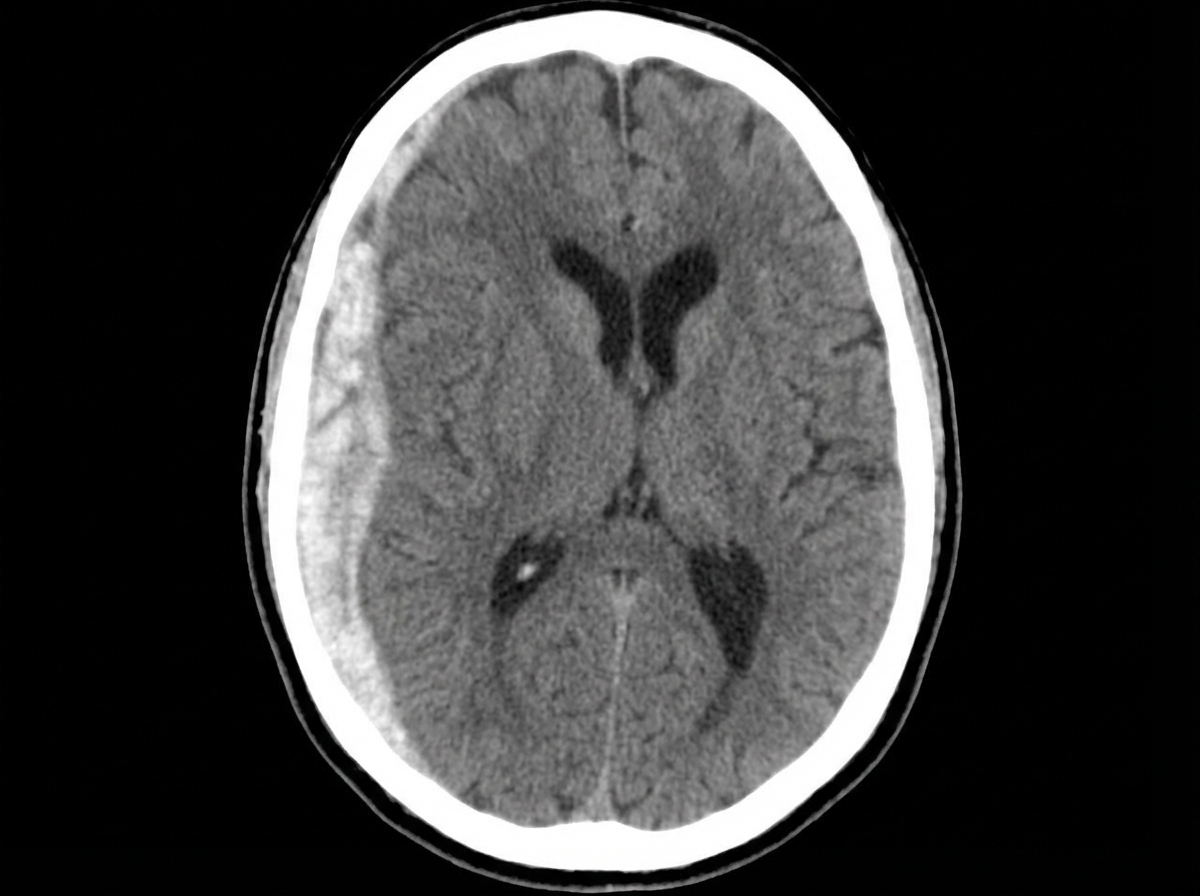
In general, what is the most common type of hemorrhage following a head injury?
Healing below the knee joint is slow primarily because of which factor?
The cold water treatment of burns has the disadvantage that it increases the chances of which of the following?
A patient with an unfavorable fracture of the angle of the mandible is best treated by:
All of the following are ominous signs in a case of severe head injury, EXCEPT:
Explanation: **Explanation:** The gold standard for evaluating hemodynamically stable patients with blunt abdominal trauma (BAT) is **Contrast-Enhanced Computed Tomography (CECT) of the abdomen**. **Why CECT is the correct answer:** While Ultrasound (FAST) is excellent for detecting free intraperitoneal fluid (hemoperitoneum) in the acute setting, it has low sensitivity for **retroperitoneal injuries** and solid organ lacerations without significant bleeding. In this case, the patient presents 48 hours post-trauma with localized tenderness in the left lumbar region, raising suspicion for a delayed presentation of a renal injury, pancreatic injury, or a retroperitoneal hematoma. CECT is highly sensitive and specific for identifying the grade of organ injury, assessing the retroperitoneum, and detecting active contrast extravasation. **Analysis of Incorrect Options:** * **MCU:** Used primarily to evaluate the bladder and urethra (e.g., suspected urethral injury or vesicoureteral reflux); it does not visualize abdominal or retroperitoneal organs. * **IVP:** Historically used for renal trauma, it has been entirely superseded by CECT, which provides far superior anatomical detail. * **Repeat USG:** If the initial USG was normal but clinical symptoms (tenderness) persist or evolve, repeating a test with low sensitivity for retroperitoneal structures is inappropriate and delays definitive diagnosis. **Clinical Pearls for NEET-PG:** * **Hemodynamically Stable + BAT:** CECT is the investigation of choice (IOC). * **Hemodynamically Unstable + BAT:** FAST (Focused Assessment with Sonography for Trauma) or DPL (Diagnostic Peritoneal Lavage) is the IOC. * **Seat-belt Sign:** Always suspect hollow viscus (bowel) injury or lumbar spine fractures (Chance fracture); CECT is the preferred modality. * **Delayed presentation** of trauma often points toward retroperitoneal organ injuries (e.g., Duodenum or Pancreas) which are "hidden" from routine USG.
Explanation: In a patient with major burns (56% Total Body Surface Area), the primary electrolyte and acid-base disturbance is **Hyperkalemic Acidosis**. ### **Why Hyperkalemic Acidosis is Correct:** 1. **Hyperkalemia:** Major burns cause extensive thermal destruction of cells (cytolysis). Since Potassium ($K^+$) is the primary intracellular cation, the rupture of cell membranes releases massive amounts of $K^+$ into the extracellular fluid. Additionally, impaired renal perfusion due to hypovolemic shock reduces $K^+$ excretion. 2. **Metabolic Acidosis:** Burn injury leads to hypovolemia and decreased tissue perfusion, resulting in anaerobic metabolism and the accumulation of **lactic acid**. Furthermore, in acidosis, the body attempts to buffer excess hydrogen ions ($H^+$) by moving them into cells in exchange for $K^+$ moving out, further exacerbating the hyperkalemia. ### **Why Other Options are Incorrect:** * **Hyperkalemic Alkalosis:** Alkalosis typically causes *hypokalemia* as $K^+$ shifts into cells to allow $H^+$ to move out into the serum. * **Hypokalemic Acidosis/Alkalosis:** While hypokalemia can occur in the *late* diuretic phase of burn recovery (due to fluid resuscitation and renal excretion), the immediate and most life-threatening acute phase abnormality is hyperkalemia. ### **NEET-PG High-Yield Pearls:** * **Early Phase (0-48h):** Hyperkalemia, Hyponatremia (due to shift into interstitium), and Metabolic Acidosis. * **Late Phase (>48h):** Hypokalemia (due to diuresis) and Hypoproteinemia. * **Gold Standard for Fluid Resuscitation:** Parkland Formula ($4 \text{ ml} \times \text{kg} \times \% \text{TBSA}$). * **Indicator of Adequate Resuscitation:** Urine output ($0.5\text{--}1 \text{ ml/kg/hr}$ in adults).
Explanation: The **Glasgow Coma Scale (GCS)** is a clinical tool used to objectively assess the level of consciousness in patients with acute brain injury. It evaluates three specific components of neurological function: **Eye opening (E), Verbal response (V), and Motor response (M).** ### **Analysis of Options:** * **A. Includes verbal response (Correct):** The GCS is calculated by summing scores from three categories: Eye (1–4), Verbal (1–5), and Motor (1–6). The verbal component assesses orientation and speech (e.g., 5 = Oriented, 1 = No response). * **B. Includes pupillary reflex (Incorrect):** While the pupillary light reflex is a vital part of a neurological exam, it is **not** part of the traditional GCS. However, the newer "GCS-P" (GCS-Pupils) does incorporate it by subtracting points for non-reactive pupils. * **C. High score means poor prognosis (Incorrect):** The GCS ranges from **3 to 15**. A higher score (15) indicates a fully awake/oriented patient, while a lower score (3) indicates deep coma or death. * **D. Includes measurement of intracranial pressure (Incorrect):** ICP measurement requires invasive monitoring (like an EVD) and is not a component of this bedside clinical scale. ### **High-Yield Clinical Pearls for NEET-PG:** * **Minimum Score:** 3 (Never zero). * **Maximum Score:** 15. * **Head Injury Classification:** * Mild: 13–15 * Moderate: 9–12 * Severe: ≤ 8 (**"GCS of 8, Intubate!"**) * **Most Important Component:** The **Motor response (M)** is the most reliable predictor of clinical outcome. * **Intubated Patients:** Recorded as **T** (e.g., GCS 5t), where the verbal score is omitted.
Explanation: **Explanation:** In the context of trauma and massive transfusion, the "Lethal Triad" consists of acidosis, hypothermia, and **coagulopathy**. Coagulopathic hemorrhage occurs when clotting factors are depleted or diluted (dilutional coagulopathy) due to massive blood loss and subsequent resuscitation with crystalloids or packed red cells alone. **Why Fresh Frozen Plasma (FFP) is the Correct Answer:** FFP is considered the first line of defense because it contains all the soluble coagulation factors (including Factor V and VIII), albumin, and fibrinogen. In trauma-induced coagulopathy, the primary goal is to replace these depleted clotting factors to restore the coagulation cascade. Current trauma protocols (like the Damage Control Resuscitation) emphasize early administration of FFP, often in a **1:1 or 1:2 ratio** with Packed Red Blood Cells (PRBCs), to prevent the onset of "bloody vicious cycle." **Analysis of Incorrect Options:** * **A. Packed Red Cells:** These provide oxygen-carrying capacity but do not contain clotting factors or platelets. Excessive use of PRBCs alone actually worsens coagulopathy via dilution. * **C. Cryoprecipitate:** While rich in Fibrinogen and Factor VIII, it is typically used as a second-line agent when fibrinogen levels drop below 100–150 mg/dL, rather than as the initial broad-spectrum factor replacement. * **D. Platelets:** These are essential for primary hemostasis, but in the hierarchy of massive transfusion protocols, FFP is prioritized to address the global deficit of clotting proteins. **High-Yield Clinical Pearls for NEET-PG:** * **Damage Control Resuscitation (DCR):** Focuses on permissive hypotension, limiting crystalloids, and early use of FFP and Platelets. * **The 1:1:1 Rule:** Modern massive transfusion protocols aim for a balanced ratio of 1 Unit PRBC : 1 Unit FFP : 1 Unit Platelets. * **Fibrinogen:** Often the first coagulation factor to reach critically low levels during major hemorrhage.
Explanation: The correct answer is **27%**. This question tests your ability to apply the **Wallace Rule of Nines** while understanding which types of burns are included in the Total Body Surface Area (TBSA) calculation. ### 1. Why Option A is Correct To calculate TBSA for fluid resuscitation (e.g., Parkland Formula), we **only include second-degree (partial-thickness) and third-degree (full-thickness) burns.** First-degree burns (erythema only) are excluded. Using the Rule of Nines: * **Right Upper Limb (Third-degree):** 9% * **Right Lower Limb (Second-degree):** 18% * **Entire Back (First-degree):** 0% (Excluded from calculation) * **Total:** 9% + 18% = **27%** ### 2. Why Other Options are Incorrect * **Option B (36%):** This would be the result if the entire back (18%) was included but the arm was excluded, or if the arm and half the back were included. * **Option C (45%):** This is the result if you incorrectly include the first-degree burns on the back (27% + 18% = 45%). * **Option D (54%):** This overestimates the surface area significantly, likely by doubling the limb values. ### 3. Clinical Pearls for NEET-PG * **Rule of Nines (Adults):** Head & Neck (9%), Each Upper Limb (9%), Each Lower Limb (18%), Anterior Trunk (18%), Posterior Trunk (18%), Perineum (1%). * **Lund and Browder Chart:** The most accurate method for TBSA calculation, especially in **pediatrics**, as it accounts for changes in body proportions with age. * **Palmar Method:** The patient’s palm (including fingers) represents approximately **1% TBSA**; useful for small or patchy burns. * **Fluid Resuscitation:** Remember that the Parkland Formula ($4 \text{ mL} \times \text{kg} \times \% \text{TBSA}$) uses the TBSA calculated here. Including first-degree burns leads to dangerous over-resuscitation (fluid creep).
Explanation: **Explanation:** The correct answer is **Subdural Hemorrhage (SDH)**. In the context of general head trauma (ranging from mild falls in the elderly to high-velocity road traffic accidents), SDH is statistically the most frequent type of intracranial hemorrhage encountered in clinical practice. **Why Subdural Hemorrhage is Correct:** SDH occurs due to the tearing of **bridging veins** as they traverse the subdural space to drain into the dural venous sinuses. Because these veins are thin-walled and vulnerable to shearing forces (acceleration-deceleration injuries), they bleed more easily than the thick-walled arteries responsible for other types of hematomas. SDH is particularly common in elderly patients (due to brain atrophy stretching the bridging veins) and chronic alcoholics. **Analysis of Incorrect Options:** * **Subarachnoid Hemorrhage (SAH):** While traumatic SAH is very common, it is often associated with other primary injuries (like contusions). However, in many standard surgical textbooks (like Bailey & Love), SDH is cited as the most common significant mass lesion following trauma. * **Extradural Hemorrhage (EDH):** This is less common than SDH. It usually involves an arterial bleed (typically the **Middle Meningeal Artery**) associated with a temporal bone fracture. It is characterized by the classic "lucid interval." * **Intraventricular Hemorrhage:** This is usually a sign of severe deep-seated brain injury or extension from an intraparenchymal bleed; it is rarely an isolated or the most common finding in general trauma. **Clinical Pearls for NEET-PG:** * **Shape on CT:** SDH is **Crescentic/Concave** (crosses suture lines); EDH is **Biconvex/Lenticular** (does not cross suture lines). * **Source of Bleed:** SDH = Bridging Veins; EDH = Middle Meningeal Artery. * **Chronic SDH:** Presents with fluctuating consciousness and is a "great mimic" of dementia in the elderly.
Explanation: **Explanation:** The primary reason for delayed wound healing below the knee joint, particularly in the pretibial region and the lower third of the leg, is **poor vascularity**. 1. **Why Poor Vascularity is Correct:** The skin over the anterior aspect of the tibia is thin and lies almost directly over the bone (periosteum). This area has a relatively sparse blood supply compared to the thigh or trunk. Furthermore, the venous return in the lower limbs must work against gravity, often leading to venous stasis, which further compromises arterial inflow and tissue oxygenation—both of which are critical for collagen synthesis and fibroblast activity. 2. **Analysis of Incorrect Options:** * **Decreased subcutaneous fat (A):** While the lack of fat makes the area more prone to injury (lack of cushioning), it is not the physiological driver of slow cellular repair; blood supply is. * **Increased movement (B):** While movement can disrupt wound edges, the knee joint itself is often immobilized in trauma. Movement is a secondary factor compared to the metabolic demands of healing. * **Weight bearing (C):** Weight bearing can cause mechanical stress, but even in non-weight-bearing patients, pretibial wounds heal slowly due to the inherent lack of a robust vascular bed. **Clinical Pearls for NEET-PG:** * **The "Danger Zone":** The lower third of the leg is notorious for poor healing and is a common site for chronic ulcers (venous, arterial, or neuropathic). * **Anatomical Factor:** The tibia is a "subcutaneous bone," meaning its anteromedial surface is not covered by muscle. Muscles provide a rich vascular bed; their absence here significantly slows the granulation process. * **Management:** Because of this poor vascularity, large defects in the lower leg often require **flaps** (like the sural artery flap or gastrocnemius flap) rather than simple skin grafts, as the recipient bed may not support a graft.
Explanation: ### Explanation The primary goal of immediate first aid in burns is to stop the burning process and dissipate heat. While cooling with running tap water (ideally 10–25°C) for 20 minutes is recommended, prolonged or improper "cold water treatment" (especially using ice or non-sterile stagnant water) carries significant risks. **Why Infection is the Correct Answer:** Cooling the burn wound causes local **vasoconstriction**, which reduces blood flow to the injured tissue. While this helps limit edema, prolonged vasoconstriction impairs the delivery of immune cells and nutrients to the site. Furthermore, if the water used is not sterile or if the cooling leads to systemic hypothermia, the body's natural defense mechanisms are compromised, significantly increasing the risk of **secondary bacterial infection** and wound sepsis. **Analysis of Incorrect Options:** * **A. Pain:** Cold water is actually a potent analgesic. It numbs the nerve endings and reduces the release of pain-mediating autacoids, thereby *decreasing* pain, not increasing it. * **B. Exudation:** Cold water causes vasoconstriction, which *reduces* capillary permeability and limits the formation of edema and exudate in the early stages. * **D. None of the above:** Incorrect, as infection is a documented risk of improper cooling. **High-Yield Clinical Pearls for NEET-PG:** * **The "Rule of 10s":** For cooling, use water at ~15°C for 20 minutes. **Never use ice**, as it causes frostbite and worsens tissue necrosis (ice burn). * **Hypothermia Risk:** In large surface area burns (>10-15% BSA), aggressive cooling can lead to systemic hypothermia, which is part of the lethal triad in trauma. * **Jackson’s Zones of Burn:** Cooling aims to save the **Zone of Stasis** (the area surrounding the central necrotic zone) from progressing to irreversible coagulation. * **Silver Sulfadiazine:** The most common topical antibiotic used, but it should be avoided in patients with sulfa allergies or on the face (risk of greyish discoloration).
Explanation: ### Explanation The management of mandibular angle fractures depends primarily on whether the fracture is **favorable** or **unfavorable**. This classification is determined by the direction of the fracture line in relation to the pull of the masticatory muscles (masseter, medial pterygoid, and temporal). **Why Open Reduction and Internal Fixation (ORIF) is correct:** In an **unfavorable fracture**, the muscle pull tends to displace the fragments further apart rather than bringing them together. Because the fracture line runs in a direction that allows the proximal segment to be pulled upward and medially by the elevator muscles, **closed reduction is insufficient** to counteract these powerful forces. **Open reduction with bone plate fixation (ORIF)** is the gold standard because it provides rigid internal stability, allows for direct anatomical alignment, and facilitates primary bone healing without the prolonged need for intermaxillary fixation (IMF). **Analysis of Incorrect Options:** * **A & B (Closed Reduction/Cap Splint):** These methods rely on external stabilization. In unfavorable fractures, the lack of internal stability leads to malunion or non-union because the muscles continuously displace the fragments. Closed reduction is generally reserved for minimally displaced, favorable fractures. * **D (Circum-mandibular wiring):** This technique is primarily used in pediatric patients or for securing dentures/splints in edentulous patients. It does not provide the rigid fixation required to overcome the displacing forces in an unfavorable angle fracture. **NEET-PG High-Yield Pearls:** * **Champy’s Principle:** Mandibular angle fractures are often treated with a single non-compression miniplate placed along the **ideal osteosynthesis line** (superior border/external oblique ridge). * **Muscle Pull:** The **Masseter, Medial Pterygoid, and Temporalis** displace the proximal fragment superiorly and medially in unfavorable angle fractures. * **Nerve Injury:** The **Inferior Alveolar Nerve** is the most commonly injured nerve in mandibular body and angle fractures.
Explanation: In the context of severe head injury, "ominous signs" refer to clinical findings that indicate impending or active brainstem herniation and severe neurological deterioration. ### **Explanation of the Correct Answer** **D. Development of Diabetes Insipidus (DI):** While DI is a serious complication resulting from trauma to the hypothalamus or posterior pituitary (leading to a deficiency of ADH), it is **not** considered an immediate sign of brainstem herniation or imminent death in the acute phase of a head injury. It is a metabolic/endocrine complication that can be managed with fluid replacement and desmopressin. Unlike the other options, it does not directly reflect the mechanical failure of the brainstem. ### **Analysis of Incorrect Options** * **A. Anisocoria:** Asymmetrical pupils (specifically a dilated, non-reactive pupil) indicate compression of the **3rd Cranial Nerve (Oculomotor)**. This is a classic sign of **uncal herniation**, where the medial temporal lobe pushes against the brainstem. * **B. Decorticate Posturing:** Abnormal flexion (arms like "Cs") indicates a lesion **above the red nucleus** (midbrain). While slightly better than decerebrate, it represents significant cortical damage and progression toward herniation. * **C. Decerebrate Posturing:** Abnormal extension (arms like "Es") indicates a lesion **below the red nucleus** (brainstem). This is a grave prognostic sign indicating severe brainstem dysfunction. ### **NEET-PG High-Yield Pearls** * **Cushing’s Triad:** A late sign of increased ICP consisting of **Hypertension, Bradycardia, and Irregular Respirations**. * **GCS Scoring:** A GCS of **≤ 8** defines a "severe" head injury and is the threshold for intubation ("8, intubate"). * **Pupillary Dilation:** In uncal herniation, the pupil dilates on the **ipsilateral** (same) side as the lesion due to parasympathetic fiber compression. * **Lucid Interval:** Classically associated with **Epidural Hematoma (EDH)**, usually due to rupture of the Middle Meningeal Artery.
Initial Assessment of Trauma Patient
Practice Questions
Advanced Trauma Life Support (ATLS) Principles
Practice Questions
Chest Trauma
Practice Questions
Abdominal Trauma
Practice Questions
Head Trauma
Practice Questions
Spinal Trauma
Practice Questions
Extremity Trauma
Practice Questions
Vascular Trauma
Practice Questions
Genitourinary Trauma
Practice Questions
Burns Management
Practice Questions
Mass Casualty Management
Practice Questions
Damage Control Surgery
Practice Questions
Get full access to all questions, explanations, and performance tracking.
Start For Free