Which type of mandibular fracture causes facial widening?
What is the first line of therapy for shock in a trauma patient?
A patient presents with deep, severe burns. What is the preferred route of analgesia?
In a triage system in a trauma center, what does the color yellow indicate?
A 40-year-old female patient complains of breathlessness 4 hours after sustaining chest trauma. On examination, she has an altered mental status, blood pressure of 80/60 mmHg, heart rate of 120 bpm, muffled heart sounds, raised jugular venous pressure, and pulsus paradoxus. Which type of shock is most likely present?
A patient presents with fractures in the symphysis and left angle regions of the mandible. What is the recommended treatment?
Which organ is most commonly affected by blunt abdominal trauma?
Which of the following statements is false regarding extradural hematoma?
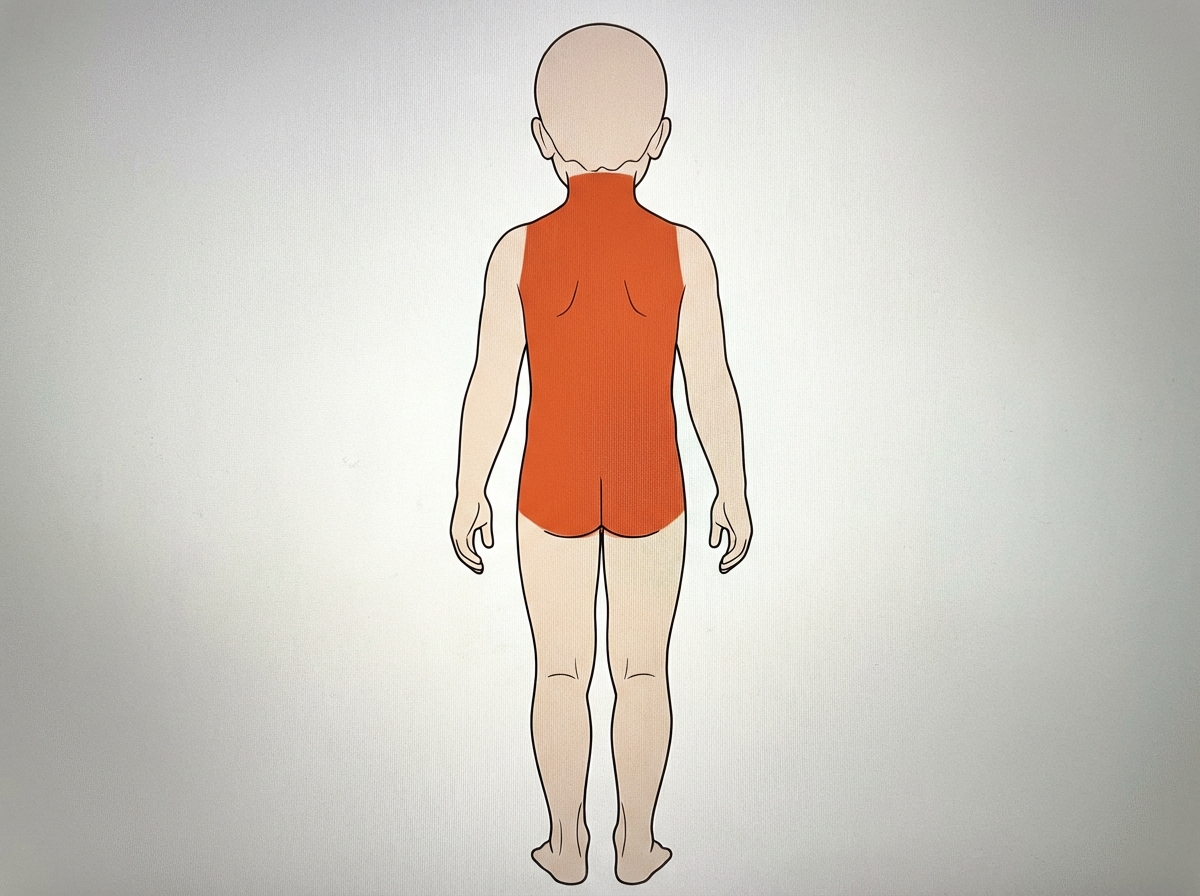
Who introduced the Rule of Nine to estimate the surface area of a burnt patient?
A patient presents with cerebrospinal fluid leakage from the nose following head trauma. What type of fracture is most likely responsible?
Explanation: **Explanation:** The correct answer is **Symphysis and bilateral condylar fracture**. This specific injury pattern is often referred to as a **"Guardsman fracture"** (commonly seen when a soldier faints and falls directly onto the chin). **Mechanism of Facial Widening:** The mandible is a U-shaped bone. In a combined symphysis and bilateral condylar fracture, the structural integrity of the arch is lost at three points. The **lateral pterygoid muscles**, which insert into the condylar necks, pull the condylar fragments forward and medially. Simultaneously, the **mylohyoid and digastric muscles** pull the mandibular bodies downward and outward. This lateral displacement of the mandibular segments results in a characteristic **increase in facial width** and a shortened lower facial height (due to vertical collapse at the condyles). **Analysis of Incorrect Options:** * **Parasymphysis fracture:** Usually results in a shift of the midline or step deformity, but the intact contralateral side prevents the splaying required for facial widening. * **Angle fracture:** Typically causes vertical displacement of the posterior fragment due to the masseter and medial pterygoid muscles, but does not alter the overall width of the face. * **Condylar fracture (Unilateral):** Leads to a deviation of the jaw toward the side of the injury upon opening and a premature contact on the ipsilateral side, but not facial widening. **High-Yield Clinical Pearls for NEET-PG:** * **Guardsman Fracture:** Symphysis + Bilateral Condylar fractures. * **Most common site of Mandibular fracture:** Condyle (followed by Angle and Symphysis). * **Clinical Sign:** "Step-off" deformity and deranged occlusion are hallmark signs of mandibular fractures. * **Imaging:** **Orthopantomogram (OPG)** is the screening gold standard; **NCCT with 3D reconstruction** is the definitive investigation for complex trauma.
Explanation: In a trauma patient, the most common cause of shock is **hypovolemia** due to hemorrhage. According to the **ATLS (Advanced Trauma Life Support) guidelines**, the primary goal of initial resuscitation is to restore intravascular volume and maintain organ perfusion. **Why Crystalloids are the First Line:** Crystalloids (specifically **Isotonic solutions** like Normal Saline or Ringer’s Lactate) are the initial fluids of choice because they are readily available, inexpensive, and effective for immediate volume expansion. They rapidly equilibrate across the extracellular space to stabilize hemodynamics. Current ATLS protocols recommend an initial bolus of **1 liter** of warmed isotonic crystalloid for adults. **Analysis of Incorrect Options:** * **Colloids (B):** These are not superior to crystalloids in trauma and are associated with higher costs, potential coagulopathy, and risk of acute kidney injury. * **Inotropes (C):** These increase myocardial contractility but are contraindicated as first-line therapy in hemorrhagic shock. Giving inotropes to an "empty heart" can worsen ischemia; volume must be replaced first. * **Blood Transfusion (D):** While essential for Class III and IV shock, it is generally reserved for patients who are "non-responders" or "transient responders" to initial crystalloid therapy, or in cases of massive exsanguination. **High-Yield Clinical Pearls for NEET-PG:** * **Fluid of Choice:** Ringer’s Lactate is often preferred over Normal Saline to avoid hyperchloremic metabolic acidosis. * **Permissive Hypotension:** In non-compressible torso trauma, avoid over-resuscitation (target SBP ~90 mmHg) to prevent "popping the clot" until surgical control is achieved. * **Golden Hour:** The first 60 minutes post-injury where prompt resuscitation significantly improves survival. * **Lethal Triad of Trauma:** Acidosis, Coagulopathy, and Hypothermia. Always use warmed fluids.
Explanation: **Explanation:** In the management of severe burns, the **Intravenous (IV) route** is the gold standard for analgesia. The primary physiological reason is the altered pharmacokinetics caused by the burn injury. Severe burns lead to systemic inflammatory response syndrome (SIRS) and significant fluid shifts, resulting in peripheral vasoconstriction and unpredictable tissue perfusion. * **Why Intravenous is Correct:** The IV route provides rapid, predictable, and titratable delivery of opioids (like Morphine or Fentanyl) directly into the central circulation. This bypasses the need for absorption through damaged or poorly perfused tissues, ensuring immediate pain relief in a critical setting. **Why other options are incorrect:** * **Intramuscular (IM) & Subcutaneous (SC):** These routes are strictly contraindicated in the acute phase of major burns. Due to hypovolemia and peripheral vasoconstriction, absorption from muscle or skin is delayed and erratic. Furthermore, as the patient is resuscitated, "bolus absorption" can occur from these depots, leading to delayed respiratory depression. * **Topical:** While some topical agents exist, they are ineffective for the deep, systemic pain associated with severe burns and do not provide the rapid stabilization required in trauma. **High-Yield Clinical Pearls for NEET-PG:** * **Drug of Choice:** Morphine is traditionally the drug of choice for severe burn pain. * **Avoid Oral Route:** Burn patients often develop paralytic ileus; hence, oral medications are poorly absorbed. * **Rule of Thumb:** In any trauma or shock state where peripheral perfusion is compromised, always prefer the IV route over IM/SC.
Explanation: ### Explanation Triage is the process of prioritizing patients based on the severity of their condition and the urgency of treatment required, especially during mass casualty incidents. The standard international color-coding system is used to categorize patients: **1. Why Option A is Correct:** The **Yellow tag (Urgent/Delayed)** is assigned to patients who have serious, potentially life-threatening injuries but are currently stable. These patients are often **immobile** (e.g., large wounds, stable fractures, or severe burns without airway involvement) and require significant medical care, but their treatment can be safely delayed for 1–2 hours while "Red" category patients are stabilized. **2. Why the Other Options are Incorrect:** * **Option B (Simple fractures):** These fall under the **Green tag (Minor/Walking Wounded)**. These patients are mobile and have minor injuries that can wait several hours for treatment. * **Option C (Emergency case):** This describes the **Red tag (Immediate)**. These patients have life-threatening injuries (e.g., tension pneumothorax, airway obstruction, or massive hemorrhage) requiring immediate intervention within the "Golden Hour." * **Option D (Morbid patient):** This refers to the **Black tag (Dead/Expectorant)**. These are patients who are either deceased or have injuries so severe (e.g., open brain matter) that survival is unlikely even with maximal care in a resource-limited setting. ### High-Yield Clinical Pearls for NEET-PG: * **Mnemonic (R-P-M):** Triage is often based on **R**espiration, **P**erfusion, and **M**ental status (START Triage). * **Red Tag Criteria:** Respiratory rate >30/min, absent radial pulse (or capillary refill >2 sec), or inability to follow simple commands. * **Reverse Triage:** In military settings or specific disasters, those with minor injuries are treated first to return them to the front lines/service quickly. * **Triage Sieve:** The initial rapid assessment used to separate patients into the four priority groups.
Explanation: **Explanation:** The clinical presentation described—**muffled heart sounds, raised jugular venous pressure (JVP), and hypotension**—constitutes the classic **Beck’s Triad**, which is pathognomonic for **Cardiac Tamponade**. Additionally, the presence of **pulsus paradoxus** (an exaggerated drop in systolic BP >10 mmHg during inspiration) further confirms this diagnosis. **Why the Correct Answer is B (Obstructive Shock):** Cardiac tamponade is a classic cause of **Obstructive Shock**. In this condition, fluid (blood) accumulates in the pericardial sac, increasing intrapericardial pressure. This prevents the heart from filling properly during diastole, leading to decreased stroke volume and cardiac output, despite a normal heart muscle and adequate fluid volume. *Note: There appears to be a discrepancy in the provided key. Based on the clinical features (Beck's Triad + Pulsus Paradoxus), the diagnosis is Cardiac Tamponade, which falls under **Obstructive Shock**.* **Why other options are incorrect:** * **Neurogenic Shock:** Typically presents with hypotension but **bradycardia** and warm extremities due to loss of sympathetic tone (usually following spinal cord injury). This patient has tachycardia (120 bpm). * **Hypovolemic Shock:** While it causes hypotension and tachycardia, it presents with **flat neck veins** (low JVP), not raised JVP. * **Distributive Shock:** (e.g., Sepsis/Anaphylaxis) Characterized by peripheral vasodilation and decreased systemic vascular resistance; it does not present with muffled heart sounds or pulsus paradoxus. **High-Yield Clinical Pearls for NEET-PG:** * **Beck’s Triad:** Hypotension, Muffled heart sounds, Distended neck veins (Cardiac Tamponade). * **Kussmaul’s Sign:** Paradoxical rise in JVP on inspiration (more common in Constrictive Pericarditis, but can be seen in Tamponade). * **Management:** Immediate **Pericardiocentesis** (subxiphoid approach) followed by surgical exploration if traumatic. * **Electrical Alternans:** The characteristic ECG finding in tamponade due to the "swinging heart."
Explanation: This question tests the application of **Champy’s Principle** and the biomechanics of internal fixation in mandibular fractures. ### **Explanation of the Correct Answer (A)** The management of mandibular fractures is governed by the distribution of tension and compression forces: * **Symphysis/Parasymphysis Region:** This area is subject to high torsional (twisting) forces and strong muscle pulls (geniohyoid, genioglossus, digastric). To counteract these forces and prevent rotation, **two miniplates** are required: one at the inferior border (to resist compression) and one at the superior border (to resist tension/distraction). * **Angle Region:** According to Champy’s lines of osteosynthesis, the angle is primarily a tension zone. A **single non-compression miniplate** placed along the external oblique ridge (superior border) is biomechanically sufficient to neutralize the tension forces in this region. ### **Analysis of Incorrect Options** * **Option B:** Placing two plates at the angle is generally unnecessary and increases the risk of damaging the inferior alveolar nerve. One plate at the symphysis is insufficient to resist torsional forces. * **Option C:** A single plate in the symphysis is inadequate for stability due to the high muscular distraction forces in the midline. * **Option D:** Intermaxillary Fixation (IMF) is a conservative/closed reduction method. While it can be used as an adjunct, Open Reduction and Internal Fixation (ORIF) with plates is the modern gold standard for displaced fractures to allow early mobilization. ### **High-Yield Clinical Pearls for NEET-PG** * **Champy’s Principle:** Ideal line of osteosynthesis is along the "tension zone" at the superior border of the mandible. * **Most common site of Mandible Fracture:** Condyle (overall), followed by Angle and Symphysis. * **Nerve at risk:** The **Mental Nerve** is at risk during symphysis/parasymphysis surgery; the **Inferior Alveolar Nerve** is at risk in angle fractures. * **Guardsman Fracture:** A specific pattern involving a fracture of the symphysis and both condyles (usually from a fall on the chin).
Explanation: **Explanation:** In the context of blunt abdominal trauma (BAT), the **Spleen** is the most commonly injured solid organ. This is primarily due to its anatomical position in the left upper quadrant, its highly vascular nature, and its relatively thin capsule, which makes it susceptible to deceleration injuries and direct impact (e.g., rib fractures). * **Spleen (Correct):** It remains the top answer for blunt trauma in most standard surgical textbooks (Bailey & Love, Sabiston). It is particularly vulnerable to "shattering" or subcapsular hematomas during rapid deceleration. * **Liver (Incorrect):** The liver is the **second** most common organ injured in blunt trauma but is the **most common** organ injured in **penetrating** trauma (like stab wounds). It is also the most common organ to cause fatal hemorrhage in trauma patients. * **Intestine (Incorrect):** Hollow viscus injuries are less common than solid organ injuries in blunt trauma. When they do occur, the proximal jejunum is frequently involved due to its fixation at the Ligament of Treitz. * **Mesentery (Incorrect):** Mesenteric tears are relatively rare and are usually associated with high-velocity "seatbelt" injuries. **High-Yield Clinical Pearls for NEET-PG:** 1. **Most common organ in Blunt Trauma:** Spleen. 2. **Most common organ in Penetrating Trauma:** Liver. 3. **Most common organ in Firearm/Gunshot wounds:** Small Intestine. 4. **Kehr’s Sign:** Referred pain to the left shoulder due to diaphragmatic irritation from a splenic rupture. 5. **Investigation of Choice:** **CECT** (Contrast-Enhanced CT) is the gold standard for hemodynamically stable patients; **FAST** (Focused Assessment with Sonography for Trauma) is used for unstable patients.
Explanation: **Explanation:** **Extradural Hematoma (EDH)** occurs when blood collects between the inner table of the skull and the dura mater. **Why Option D is the correct (false) statement:** The **Lucid Interval** is the classic clinical hallmark of EDH, occurring in approximately **20-50% of cases**. It is a period of temporary improvement in consciousness between the initial concussion (impact) and the subsequent neurological deterioration caused by the expanding hematoma and rising intracranial pressure. Therefore, stating there is "no lucid interval" is incorrect. **Analysis of other options:** * **Option A (True):** EDH is associated with a skull fracture in over **75-90% of cases**. The fracture typically lacerates the **middle meningeal artery**, leading to the hematoma. * **Option B (True):** It is most common in **young males** (2nd and 3rd decades). It is rare in the elderly (dura is tightly adherent to the bone) and infants (skull is more compliant). * **Option C (True):** While the majority (85%) are **arterial** (Middle Meningeal Artery), they can be **venous** (15%) due to injury to the dural venous sinuses (e.g., superior sagittal or transverse sinus) or meningeal veins. **High-Yield Clinical Pearls for NEET-PG:** * **Shape on CT:** Biconvex or **Lentiform** (Lens-shaped), hyperdense, and does not cross suture lines. * **Most common site:** Temporoparietal region (where the bone is thinnest at the **Pterion**). * **Management:** Urgent surgical evacuation via **burr hole or craniotomy** if the volume is >30cm³ or GCS <9. * **Prognosis:** Generally excellent if treated promptly, as the underlying brain parenchyma is often uninjured.
Explanation: **Explanation:** The correct answer is **Alexander Wallace**. In 1951, Pulaski and Tennison initially described the concept, but it was **Alexander Wallace** who popularized and published the "Rule of Nines" as a rapid clinical tool to estimate the Total Body Surface Area (TBSA) involved in burn injuries. This estimation is critical for calculating fluid resuscitation requirements using formulas like the Parkland Formula. **Analysis of Options:** * **Alexander Wallace (Correct):** He standardized the division of the body into sections of 9% (or multiples thereof) to simplify bedside assessment. * **Moritz Kaposi:** A Hungarian dermatologist known for describing **Kaposi Sarcoma**, an opportunistic vascular tumor often associated with HIV/AIDS. * **Joseph Lister:** Known as the "Father of Antiseptic Surgery," he introduced **carbolic acid (phenol)** to sterilize surgical instruments and clean wounds. * **Thomas Barclay:** While a noted plastic surgeon who contributed to burn care literature, he did not introduce the Rule of Nines. **Clinical Pearls for NEET-PG:** * **The Rule of Nines (Adults):** Head and neck (9%), each upper limb (9%), each lower limb (18%), anterior trunk (18%), posterior trunk (18%), and perineum (1%). * **Pediatric Variation:** In children, the head is larger (18%) and the lower limbs are smaller (14% each). * **Lund and Browder Chart:** This is the **most accurate** method for TBSA estimation, especially in children, as it accounts for age-related changes in body proportions. * **Palmar Method:** The patient’s palm (including fingers) represents approximately **1%** of their TBSA; useful for small or patchy burns.
Explanation: ### Explanation **1. Why Option A is Correct:** Cerebrospinal fluid (CSF) rhinorrhea occurs when there is a communication between the subarachnoid space and the nasal cavity. This requires a breach in the **dura mater**, the **arachnoid membrane**, and the **bony floor of the anterior cranial fossa**. The most common site for this is a fracture of the **cribriform plate of the ethmoid bone**, which is a component of the **base of the skull**. Because the dura is tightly adherent to the skull base, any fracture in this region is highly likely to cause a dural tear, leading to the leakage of CSF through the nose (rhinorrhea) or ears (otorrhea). **2. Why Other Options are Incorrect:** * **Fracture of the Mandible (B):** The mandible is the lower jaw bone and does not articulate with the neurocranium or the dural compartments. Fractures here cause malocclusion or trismus but cannot cause CSF leakage. * **Fracture of the Maxilla (C):** While Le Fort II and III fractures involve the midface and can occasionally involve the ethmoid area, a pure maxillary fracture typically involves the upper jaw and palate, which are extracranial structures. CSF leakage specifically points to a skull base involvement. **3. Clinical Pearls for NEET-PG:** * **Target/Halo Sign:** If CSF is mixed with blood, dropping the fluid on a piece of gauze produces a central red spot (blood) surrounded by a clear ring (CSF). * **Biochemical Marker:** **Beta-2 transferrin** is the most specific and sensitive marker to confirm that the fluid is indeed CSF. * **Associated Signs:** Look for **Battle’s sign** (post-auricular ecchymosis) or **Raccoon eyes** (periorbital ecchymosis), which are classic indicators of a basilar skull fracture. * **Management:** Most cases resolve with conservative management (bed rest, head elevation). Prophylactic antibiotics are generally not recommended as they do not prevent meningitis.
Initial Assessment of Trauma Patient
Practice Questions
Advanced Trauma Life Support (ATLS) Principles
Practice Questions
Chest Trauma
Practice Questions
Abdominal Trauma
Practice Questions
Head Trauma
Practice Questions
Spinal Trauma
Practice Questions
Extremity Trauma
Practice Questions
Vascular Trauma
Practice Questions
Genitourinary Trauma
Practice Questions
Burns Management
Practice Questions
Mass Casualty Management
Practice Questions
Damage Control Surgery
Practice Questions
Get full access to all questions, explanations, and performance tracking.
Start For Free