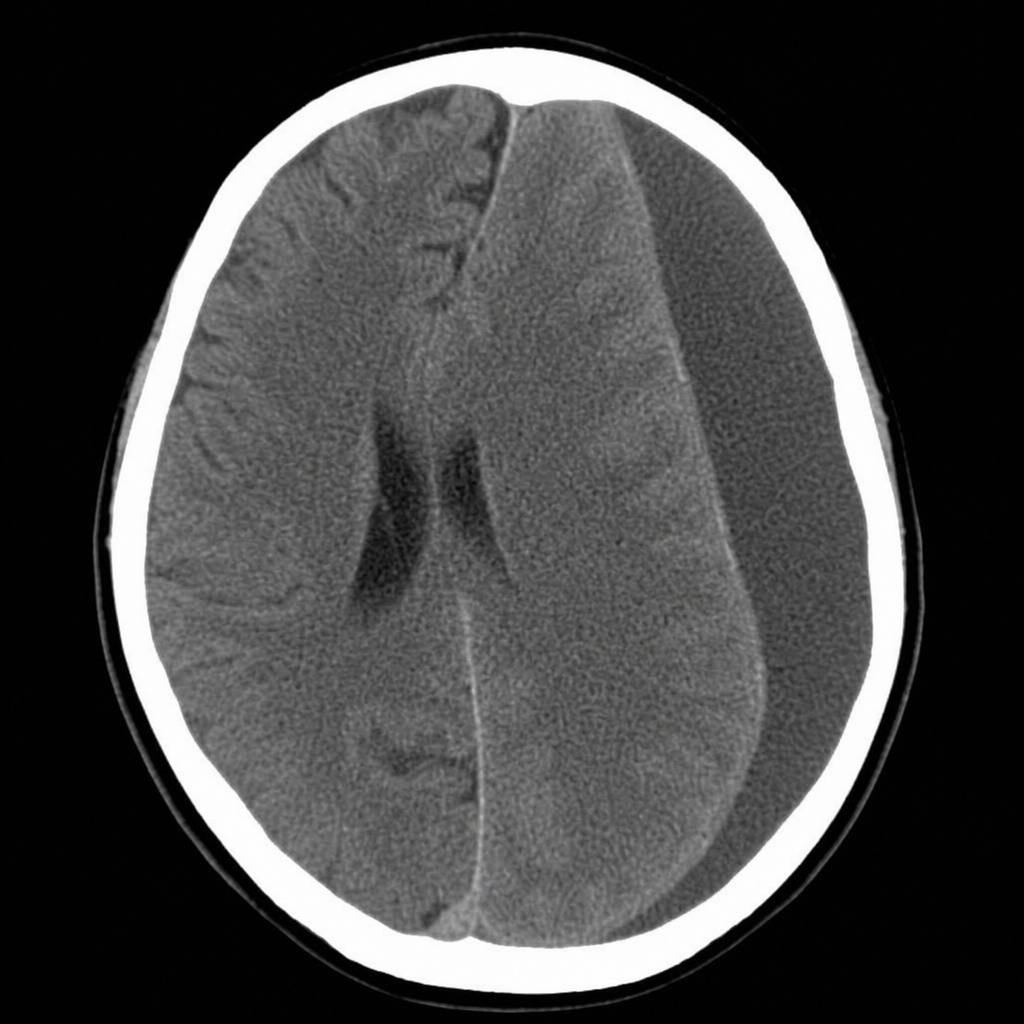
All are criteria for CT head in trauma except?
In hypovolemic shock, which of the following is characteristic?
All of the following can be done in a case of pelvic fracture with pelvic hematoma and absence of urine output since trauma EXCEPT?
Following extraction of an impacted mandibular canine using a micromotor, the patient developed severe pain and ecchymosis. What is the most likely cause?
The deadly triad of trauma includes all of the following except:
In a patient with head injury, brain damage is aggravated by which of the following conditions?
What is the appropriate treatment for an acute stable hematoma of the pinna of the ear?
A 28-year-old male sustained a severe crush injury in an accident. What complication is he most likely to develop?
Craniofacial dysjunction is seen in which type of fracture?
A 28-year-old woman presents with burns over the head, neck, and anterior trunk. What is the percentage of body surface area affected by the burns?
Explanation: This question is based on the **NICE Guidelines** and the **Canadian CT Head Rule (CCHR)**, which are the gold standards for determining the need for a CT scan in patients with minor head injury. ### **Explanation of the Correct Answer** **D. One episode of vomiting:** According to the NICE guidelines, CT head is indicated if there are **two or more episodes of vomiting**. A single episode of vomiting in an adult, in the absence of other high-risk factors, is not a mandatory indication for an immediate CT scan. ### **Analysis of Incorrect Options** * **A. GCS <13 at presentation:** This is a high-risk criterion. Any patient presenting with a GCS less than 13 on initial assessment in the Emergency Department requires an immediate CT to rule out intracranial hemorrhage or mass effect. * **B. GCS 14 at 2 hours:** If the GCS has not reached 15 within two hours of the injury, it indicates a failure of neurological improvement and necessitates imaging. * **C. Distention of mouth:** This is a clinical surrogate for a **Basal Skull Fracture** (e.g., Battle’s sign, Raccoon eyes, CSF rhinorrhea/otorrhea, or facial deformity). Any clinical sign of a basal skull fracture is a definitive indication for a CT scan. ### **High-Yield Clinical Pearls for NEET-PG** * **NICE Guidelines for Immediate CT (within 1 hour):** * GCS <13 at any time or GCS <15 at 2 hours post-injury. * Suspected open or depressed skull fracture. * Signs of basal skull fracture. * Post-traumatic seizure. * Focal neurological deficit. * **More than one episode of vomiting.** * **Amnesia Rule:** If there is amnesia (retrograde >30 mins) AND the patient is >65 years, on anticoagulants, or had a dangerous mechanism of injury, a CT is indicated within 8 hours. * **Pediatric Note:** In children, even a **single** episode of vomiting (if persistent) or a loss of consciousness >5 minutes often warrants a CT scan.
Explanation: **Explanation:** In hypovolemic shock, the primary pathology is a decrease in effective circulating volume. To maintain perfusion to vital organs (heart and brain), the body activates the **sympathetic nervous system**. This leads to a massive release of catecholamines, causing **peripheral vasoconstriction** (to shunt blood centrally) and activation of sweat glands. Consequently, the skin becomes **pale** (due to vasoconstriction), **cold** (due to reduced peripheral perfusion), and **clammy/sweating** (diaphoresis). **Analysis of Incorrect Options:** * **A. Central Venous Pressure (CVP) is high:** In hypovolemia, there is reduced venous return to the heart. Therefore, CVP is characteristically **low**. High CVP is seen in cardiogenic or obstructive shock. * **C. There is always a site of bleeding:** While hemorrhage is the most common cause, hypovolemic shock can occur without bleeding due to **fluid loss** (e.g., severe vomiting, diarrhea, burns, or "third-spacing" in pancreatitis). * **D. Urine output is unaffected:** As a compensatory mechanism to preserve volume, the Renin-Angiotensin-Aldosterone System (RAAS) and ADH are activated. This leads to **oliguria** (urine output <0.5 ml/kg/hr). Reduced urine output is one of the earliest clinical signs of shock. **High-Yield Clinical Pearls for NEET-PG:** * **Earliest sign of shock:** Tachycardia (except in patients on beta-blockers or with pacemakers). * **Shock Index:** Heart Rate / Systolic BP (Normal: 0.5–0.7). An index >0.9 indicates significant hypovolemia. * **Class III Hemorrhage:** This is the stage where **blood pressure starts to fall** (decompensated shock), typically after 15-30% (1500ml) volume loss. * **Lethal Triad of Trauma:** Acidosis, Coagulopathy, and Hypothermia.
Explanation: In a patient with a **pelvic fracture** and **absence of urine output**, the primary concern is a **urethral injury** (specifically a posterior urethral tear, common in pelvic trauma). ### Why Option A is the Correct Answer (Contraindicated) In the presence of a suspected urethral injury, **blind insertion of an indwelling urethral catheter is strictly contraindicated.** Attempting to pass a catheter can convert a partial urethral tear into a complete transection and introduce infection into the pelvic hematoma. Before catheterization, one must look for signs of urethral injury: * Blood at the external meatus. * High-riding prostate on DRE. * Perineal ecchymosis (butterfly hematoma). If these are present, a **Retrograde Urethrogram (RUG)** must be performed first to confirm urethral integrity. ### Why the other options are incorrect: * **B. IV fluid infusion:** This is a standard part of the ATLS protocol for trauma resuscitation. Pelvic fractures are associated with significant retroperitoneal hemorrhage; maintaining hemodynamic stability is a priority. * **C. IV pyelography (IVP):** While CT is now the gold standard, IVP can be used in trauma settings to assess the functional status of the kidneys and the integrity of the ureters/bladder if a rupture is suspected. * **D. Digital Rectal Examination (DRE):** This is a mandatory step in pelvic trauma to assess for a "high-riding prostate" (suggestive of urethral injury) and to check for rectal injury or sphincter tone. ### Clinical Pearls for NEET-PG: * **Gold Standard Investigation:** For suspected urethral injury, the first step is a **Retrograde Urethrogram (RUG)**. For suspected bladder injury, it is a **Retrograde Cystogram**. * **Management:** If the urethra is injured, a **Suprapubic Catheter (SPC)** should be placed to drain the bladder. * **Associated Injuries:** Pelvic fractures are most commonly associated with **Posterior Urethral** injuries (membranous part), whereas straddle injuries are associated with **Anterior Urethral** injuries (bulbar part).
Explanation: **Explanation:** The clinical presentation of severe pain and ecchymosis following the surgical extraction of an impacted tooth is most consistent with **Post-surgical ecchymosis**. **1. Why Post-surgical ecchymosis is correct:** Surgical extraction of impacted teeth, especially when using a micromotor for bone guttering, involves significant tissue manipulation and trauma to the vascular periosteum. Bleeding into the subcutaneous or submucosal tissue spaces (extravasation) leads to the formation of a hematoma or ecchymosis. As the blood breaks down, it causes localized inflammation, resulting in pain and characteristic skin discoloration. This is a common sequela of invasive oral surgery. **2. Why the other options are incorrect:** * **Herpes labialis activation:** While stress can trigger a viral breakout, it typically presents as localized vesicular lesions and burning sensations on the vermilion border, not diffuse ecchymosis. * **Air emphysema:** This occurs when air is forced into tissue planes (often via high-speed air-driven handpieces). It presents as sudden swelling and **crepitus** on palpation, rather than ecchymosis. * **Sodium hypochlorite injection:** This is a complication of endodontic therapy (root canals), not surgical extraction. It causes immediate, excruciating pain and rapid edema due to tissue necrosis, but the context here is a surgical extraction. **High-Yield Clinical Pearls for NEET-PG:** * **Ecchymosis Management:** Usually self-limiting. It follows gravity (may move down the neck) and changes color (purple to green to yellow) as hemoglobin degrades. * **Prevention:** Use of cold compresses for the first 24 hours post-surgery helps minimize extravasation. * **Differential:** Always rule out **subcutaneous emphysema** if the patient reports a "crackling" sound or sensation (crepitus) post-procedure.
Explanation: The **Deadly Triad of Trauma** (also known as the Lethal Triad) describes the devastating cycle of physiological deterioration in severely injured patients. The correct answer is **Hypotension**, as it is a *sign* or *consequence* of trauma, but not one of the three specific components that form this self-exacerbating cycle. ### 1. Why Hypotension is the Correct Answer While hypotension (low blood pressure) is common in trauma due to hemorrhage, it is not part of the triad. The triad focuses on the metabolic and biochemical collapse that leads to irreversible shock. In modern trauma surgery, we use **Damage Control Surgery** to interrupt the triad rather than attempting definitive repair in a physiologically unstable patient. ### 2. Explanation of the Triad Components * **Hypothermia (Option A):** Defined as a core temperature <35°C. It is caused by blood loss and environmental exposure. It halts enzyme functions, particularly those required for the clotting cascade. * **Acidosis (Option B):** Massive hemorrhage leads to poor tissue perfusion and anaerobic metabolism, causing **lactic acidosis**. Low pH further impairs myocardial contractility and worsens coagulopathy. * **Coagulopathy (Option D):** This is the most critical end-point. Hypothermia and acidosis inhibit clotting factors, leading to non-surgical bleeding ("bloody vicious cycle"). ### 3. High-Yield Clinical Pearls for NEET-PG * **The Vicious Cycle:** Acidosis + Hypothermia = Worsening Coagulopathy. * **Damage Control Surgery (DCS):** The primary goal is to control hemorrhage and contamination, then move the patient to the ICU to correct the triad before definitive repair. * **Lethal Diamond:** Recent literature adds a fourth component—**Hypocalcemia**—to form the "Lethal Diamond of Trauma," as citrate in blood transfusions binds calcium, further impairing coagulation. * **Permissive Hypotension:** This is a management strategy where a lower-than-normal BP is tolerated to prevent "popping the clot" until surgical control is achieved.
Explanation: In head injury management, the primary goal is to prevent **Secondary Brain Injury**. This occurs due to metabolic and physiological derangements that exacerbate the initial mechanical damage. ### **Why Hyperglycemia is Correct** Hyperglycemia is a potent mediator of secondary brain injury. In the ischemic or injured brain, glucose is metabolized via **anaerobic glycolysis**, leading to the excessive production of **lactic acid**. This intracellular acidosis triggers: * Disruption of the blood-brain barrier. * Increased production of free radicals. * Exacerbation of cerebral edema. * Enhanced neuronal apoptosis. Clinical studies consistently show that high blood glucose levels correlate with poorer neurological outcomes and increased mortality in trauma patients. ### **Analysis of Incorrect Options** * **Hypothermia:** Therapeutic hypothermia is actually **neuroprotective**. It reduces the cerebral metabolic rate of oxygen ($CMRO_2$), decreases glutamate release, and stabilizes cell membranes. * **Hypocapnia:** Low $PaCO_2$ causes cerebral **vasoconstriction**, which is sometimes used therapeutically to acutely lower intracranial pressure (ICP). While extreme hypocapnia can cause ischemia, it is not a primary "aggravator" in the same metabolic sense as hyperglycemia. * **Serum Osmolality:** High serum osmolality (induced by Mannitol or Hypertonic Saline) is a standard treatment to reduce cerebral edema. It is the *decrease* in osmolality (hyponatremia) that worsens brain swelling. ### **High-Yield Clinical Pearls for NEET-PG** * **The "Deadly Triad" of Secondary Injury:** Hypotension (SBP < 90 mmHg), Hypoxia ($PaO_2$ < 60 mmHg), and Hyperthermia. * **Target Glucose:** In neuro-ICU settings, blood glucose should be maintained between **140–180 mg/dL**. Both hypoglycemia and extreme hyperglycemia must be avoided. * **Cerebral Perfusion Pressure (CPP):** $CPP = MAP - ICP$. Maintaining CPP (ideally 60–70 mmHg) is critical to preventing secondary ischemia.
Explanation: **Explanation:** The primary goal in managing an auricular hematoma is to evacuate the blood collection and prevent its recurrence. The pinna's cartilage relies on the overlying perichondrium for its blood supply. A hematoma creates a space between these layers, leading to ischemic necrosis of the cartilage if not treated promptly. **Why Option D is Correct:** **Incision and Drainage (I&D)** followed by a **pressure bandage** is the gold standard. I&D ensures complete evacuation of the clot (which may be too viscous for a needle). The pressure bandage is crucial because it obliterates the "dead space," preventing the re-accumulation of blood and ensuring the perichondrium re-adheres to the cartilage. **Why Other Options are Incorrect:** * **Option A:** Ice packs may reduce swelling but will not remove the existing extravasated blood. Antibiotics are supportive but do not address the mechanical problem. * **Option B:** Excision implies removing tissue; only the blood collection needs removal, not the ear tissue itself. * **Option C:** Needle aspiration is associated with a high rate of recurrence (up to 70%) because the small bore cannot evacuate organized clots and the space often refills immediately without a formal pressure dressing. **High-Yield Clinical Pearls for NEET-PG:** * **Cauliflower Ear:** The classic complication of untreated or inadequately treated hematoma, where fibrocartilage overgrowth leads to permanent deformity. * **Timeframe:** Treatment should ideally occur within **48–72 hours** of injury. * **Incision Site:** Usually made along the natural curvature of the helical rim to minimize scarring. * **Antibiotics:** Post-procedure antibiotics should cover *Pseudomonas aeruginosa* (e.g., Fluoroquinolones), as it is the most common cause of secondary perichondritis.
Explanation: ### Explanation **Correct Answer: A. Acute Renal Failure** The primary complication of a severe crush injury is **Crush Syndrome**, which leads to **Acute Renal Failure (ARF)**, specifically via **Rhabdomyolysis**. When muscle tissue is crushed, the sarcolemma is damaged, releasing massive amounts of **myoglobin**, potassium, and phosphate into the circulation. Myoglobin causes renal injury through three mechanisms: 1. **Intratubular obstruction:** Myoglobin precipitates within the renal tubules (forming pigmented casts). 2. **Direct cytotoxicity:** Myoglobin is toxic to the proximal convoluted tubule cells. 3. **Renal vasoconstriction:** Leading to pre-renal ischemia. **Analysis of Incorrect Options:** * **B. Hypophosphatemia:** Incorrect. Muscle cell lysis releases intracellular phosphate, leading to **Hyperphosphatemia**. * **C. Hypercalcemia:** Incorrect. In the acute phase of rhabdomyolysis, **Hypocalcemia** occurs because calcium deposits into the damaged muscle (dystrophic calcification) and binds with the excess phosphate. (Note: Hypercalcemia may occur later during the recovery phase). * **D. Acute Myocardial Infarction:** While hyperkalemia from muscle death can cause cardiac arrhythmias or arrest, a primary myocardial infarction is not a standard direct complication of a limb crush injury in a young patient. **High-Yield Clinical Pearls for NEET-PG:** * **Classic Triad of Rhabdomyolysis:** Muscle pain, weakness, and **tea-colored (dark) urine**. * **Urinalysis:** Dipstick will be positive for "blood" (due to myoglobin), but microscopy will show **no RBCs**. * **Early Management:** Aggressive **intravenous hydration** (Normal Saline) is the most important step to prevent ARF. Forced alkaline diuresis (using Sodium Bicarbonate) helps prevent myoglobin precipitation in tubules. * **Electrolyte Hallmark:** Hyperkalemia, Hyperphosphatemia, Hyperuricemia, and Hypocalcemia.
Explanation: **Explanation:** The correct answer is **Le Fort III fracture**. This injury is characterized by **Craniofacial Dysjunction**, a complete separation of the midface skeleton from the cranial base. **1. Why Le Fort III is correct:** In a Le Fort III fracture, the fracture line passes through the nasofrontal suture, the maxillofrontal suture, the orbital wall, and the zygomaticofrontal suture. Because the entire facial complex (including the maxilla, zygoma, and nasal bones) is detached from the skull base, it is termed "craniofacial dysjunction." Clinically, this presents with a "dish-face" deformity and significant lengthening of the face. **2. Why other options are incorrect:** * **Le Fort I (Guerin fracture):** This is a horizontal fracture above the level of the teeth apices, separating the alveolar process of the maxilla from the rest of the face. It is known as a **"Floating Palate."** * **Le Fort II:** This is a pyramidal fracture involving the nasal bones and the infraorbital rim. It is known as **"Pyramidal Dysjunction."** **Clinical Pearls for NEET-PG:** * **Le Fort III** is the only Le Fort fracture that involves the **Zygomatic arch**. * **CSF Rhinorrhea** is most common in Le Fort II and III due to involvement of the ethmoid bone/cribriform plate. * **Guerin’s Sign:** Ecchymosis in the region of the greater palatine artery (seen in Le Fort I). * **Dish-face deformity:** Classic appearance of Le Fort III due to the backward and downward displacement of the midface. * **Imaging:** Non-contrast CT (NCCT) with 3D reconstruction is the gold standard for diagnosis.
Explanation: ### Explanation The percentage of Total Body Surface Area (TBSA) involved in burns is calculated using the **Wallace Rule of Nines**, which is a standardized tool used in emergency settings to estimate burn size in adults. **Breakdown of the Calculation:** * **Head and Neck:** 9% * **Anterior Trunk:** 18% (The entire trunk is 36%; the anterior portion is 18% and the posterior portion is 18%). * **Total:** 9% (Head/Neck) + 18% (Anterior Trunk) = **27%**. #### Analysis of Options: * **Option A (9%):** This represents only the head and neck or one entire upper limb. It underestimates the involvement of the trunk. * **Option B (18%):** This represents either the anterior trunk alone, the posterior trunk alone, or both upper limbs combined. * **Option D (36%):** This would be the correct answer if the patient had burns on the *entire* trunk (anterior and posterior) plus the head and neck (18% + 18% + 9% = 45%) or if other limbs were involved. #### NEET-PG High-Yield Pearls: 1. **Rule of Nines (Adults):** Head (9%), Each Arm (9%), Each Leg (18%), Anterior Trunk (18%), Posterior Trunk (18%), Perineum (1%). 2. **Pediatric Variation:** In infants, the head is relatively larger (**18%**) and the legs are smaller (**14% each**). 3. **Palmar Method:** For small or patchy burns, the patient’s palm (including fingers) represents approximately **1%** of their TBSA. 4. **Lund and Browder Chart:** This is the most accurate method for TBSA estimation, especially in children, as it accounts for age-related changes in body proportions. 5. **Clinical Significance:** TBSA calculation is the first step in determining fluid resuscitation requirements using the **Parkland Formula** (4mL × weight in kg × % TBSA).
Initial Assessment of Trauma Patient
Practice Questions
Advanced Trauma Life Support (ATLS) Principles
Practice Questions
Chest Trauma
Practice Questions
Abdominal Trauma
Practice Questions
Head Trauma
Practice Questions
Spinal Trauma
Practice Questions
Extremity Trauma
Practice Questions
Vascular Trauma
Practice Questions
Genitourinary Trauma
Practice Questions
Burns Management
Practice Questions
Mass Casualty Management
Practice Questions
Damage Control Surgery
Practice Questions
Get full access to all questions, explanations, and performance tracking.
Start For Free