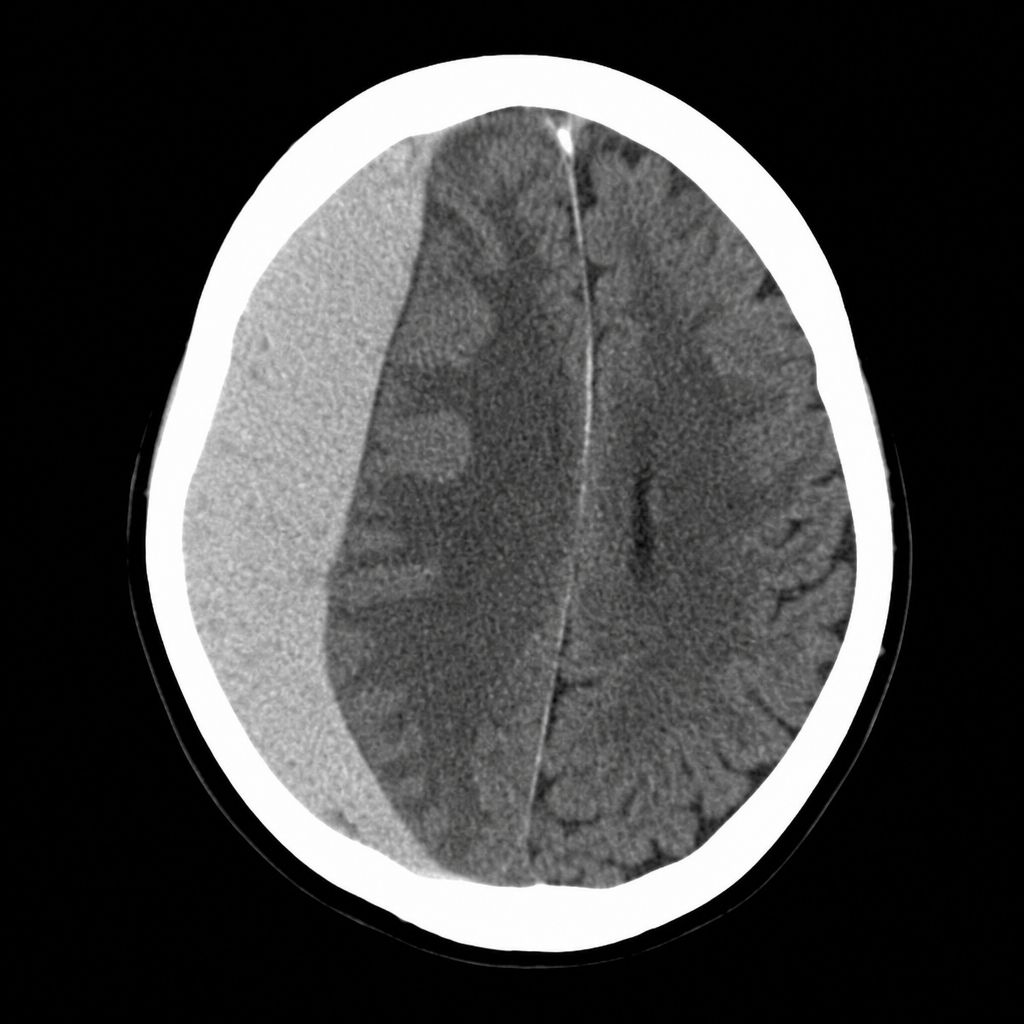
Which of the following conditions may necessitate emergency tracheostomy to prevent suffocation?
What is the most common cause of splenic rupture?
A 65-year-old man presents after a motor vehicle accident with a blood pressure of 150/90 mm Hg and a pulse of 120 bpm. He has deformity below the left knee with no palpable distal pulses. Radiographs reveal proximal tibia and fibula fractures. What is the next step in management?
In prolactinoma, what is the most common symptom other than galactorrhea?
A 60-year-old man presents to the emergency department after being hit by a pickup truck with a blood pressure of 70/0 mm Hg. Initial peritoneal lavage showed no blood in the abdomen. Following the administration of 2 L of Ringer's lactate, his blood pressure increased to 85 mm Hg systolic. An x-ray revealed a pelvic fracture. What is the next step in management?
What is the primary purpose of the FAST examination?
Battle's sign is an ectopic manifestation of which type of fracture?
What is the best method to assess the adequacy of fluid replacement in a patient experiencing shock?
The triad of bulbar urethral injury includes all except?
What is the preferred incision for abdominal exploration in blunt abdominal injury?
Explanation: **Explanation:** **Ludwig’s Angina** is a rapidly spreading, life-threatening cellulitis of the submandibular, submental, and sublingual spaces (bilaterally). The primary danger lies in the **posterior and superior displacement of the tongue** caused by the swelling of the floor of the mouth. This leads to acute upper airway obstruction. While initial management involves aggressive antibiotics and airway monitoring, a rapidly progressing case may necessitate an **emergency tracheostomy** (or cricothyroidotomy) to bypass the mechanical obstruction and prevent suffocation. **Analysis of Incorrect Options:** * **Cellulitis (A):** General skin cellulitis (e.g., of the limb) does not involve the airway. Even facial cellulitis rarely causes the rapid, deep-space mechanical obstruction seen in Ludwig’s Angina. * **Cavernous Sinus Thrombosis (C):** This is a late complication of facial infections (danger triangle of the face). It presents with proptosis, chemosis, and cranial nerve palsies (III, IV, V1, V2, VI), but it does not cause airway obstruction. * **Maxillary Sinusitis (D):** This is an inflammation of the paranasal sinuses. While it causes pain and nasal discharge, it does not compromise the oropharyngeal or laryngeal airway. **High-Yield Clinical Pearls for NEET-PG:** * **Source:** Most commonly arises from an odontogenic infection (usually the **2nd or 3rd mandibular molar**). * **Clinical Sign:** "Woody" or "brawny" edema of the neck; patients often present with drooling and a "hot potato" voice. * **Microbiology:** Usually polymicrobial (Streptococci, Staphylococci, and anaerobes). * **Management Priority:** Airway maintenance is the #1 priority, followed by IV antibiotics and surgical drainage if pus is present.
Explanation: **Explanation:** **Splenic rupture** can occur due to trauma or spontaneously in a diseased spleen. In the context of medical causes (non-traumatic/pathological rupture), **Malaria** is the most common cause worldwide, particularly in endemic regions. **Why Malaria is the correct answer:** In Malaria (especially *P. vivax* and *P. falciparum*), the spleen undergoes rapid congestion, hyperplasia, and infarcts. This leads to significant **splenomegaly**, stretching the splenic capsule. The capsule becomes thin and friable, making it highly susceptible to rupture even with trivial trauma or during the acute phase of the infection (spontaneous rupture). **Analysis of Incorrect Options:** * **ITP:** While ITP involves splenic destruction of platelets, the spleen is typically **not enlarged** (non-palpable). A palpable spleen in a suspected ITP case should prompt a search for an alternative diagnosis. * **Thalassemia:** This causes massive splenomegaly due to extramedullary hematopoiesis. While the spleen is large, the chronic nature of the enlargement leads to a thickened, fibrotic capsule which is more resistant to rupture compared to the acute enlargement seen in Malaria. * **Cirrhosis:** Leads to congestive splenomegaly due to portal hypertension. While common, the risk of spontaneous rupture is significantly lower than in acute infectious processes like Malaria or Infectious Mononucleosis. **High-Yield Clinical Pearls for NEET-PG:** 1. **Most common organ injured in blunt trauma abdomen:** Spleen. 2. **Most common cause of spontaneous (pathological) splenic rupture:** Malaria (followed by Infectious Mononucleosis). 3. **Kehr’s Sign:** Referred pain to the left shoulder due to diaphragmatic irritation by splenic blood (classic sign of rupture). 4. **Ballance’s Sign:** Fixed dullness in the left flank and shifting dullness in the right flank, indicating a large perisplenic hematoma.
Explanation: ### **Explanation** The patient presents with a high-energy trauma (proximal tibia/fibula fracture) and **"hard signs" of vascular injury** (absent distal pulses). In the setting of a stable blood pressure (150/90 mm Hg), the priority is to localize the site and extent of the arterial injury to plan surgical repair. **1. Why Angiography is Correct:** Proximal tibia fractures are frequently associated with injury to the **popliteal artery** or its trifurcation. In a **hemodynamically stable** patient with absent pulses, **Angiography** (specifically CT Angiography in modern practice) is the gold standard for identifying the exact location and nature of the vascular lesion (e.g., intimal tear, thrombosis, or transection). This information is vital for the vascular surgeon to decide between an endovascular or open surgical approach. **2. Why other options are incorrect:** * **A. Operative intervention (Arterial shunt):** This is indicated in **hemodynamically unstable** patients or those with "mangled extremities" where immediate flow restoration is needed while orthopedic stabilization occurs. Since this patient is stable, imaging precedes the OR. * **C. Doppler ultrasound:** While useful for screening, Doppler is operator-dependent and lacks the anatomical detail required for surgical planning in a confirmed pulseless limb. * **D. Operative reduction and internal fixation (ORIF):** Orthopedic stabilization is secondary to vascular restoration. "Life over limb, limb over bone." Fixing the fracture before addressing the ischemia increases the "warm ischemia time," leading to irreversible muscle necrosis. ### **Clinical Pearls for NEET-PG:** * **Hard Signs of Vascular Injury:** Pulsatile hemorrhage, expanding hematoma, thrill/bruit, and absent pulses. These usually mandate immediate intervention or imaging. * **Popliteal Artery:** It is fixed at the adductor hiatus and the soleal arch, making it highly susceptible to injury in knee dislocations and proximal tibia fractures. * **Ischemia Time:** Irreversible nerve damage begins after 4-6 hours of warm ischemia; hence, rapid diagnosis via angiography is critical. * **Order of Repair:** Generally, **Vascular repair (or shunt) → Bone fixation → Nerve/Tendon repair.**
Explanation: **Explanation:** The most common symptom of a prolactinoma in females, other than galactorrhea, is **Amenorrhea** (specifically secondary amenorrhea). **Pathophysiology:** High levels of prolactin exert a negative feedback effect on the hypothalamus, inhibiting the pulsatile release of **Gonadotropin-Releasing Hormone (GnRH)**. This leads to decreased secretion of LH and FSH from the anterior pituitary, resulting in hypogonadotropic hypogonadism. In women, this manifests as oligomenorrhea or amenorrhea and infertility; in men, it presents as decreased libido and erectile dysfunction. **Analysis of Incorrect Options:** * **A. Bitemporal hemianopia:** This occurs due to the compression of the optic chiasm by a **macroadenoma** (>10mm). While classic, it is less common than endocrine symptoms because most prolactinomas in women are microadenomas detected early due to menstrual irregularities. * **C. Thyroid dysfunction:** While pituitary tumors can sometimes be part of MEN1 syndrome or cause secondary hypothyroidism via mass effect (TSH deficiency), it is not a primary or common symptom of prolactinoma itself. * **D. Headache:** This is a non-specific symptom caused by increased intracranial pressure or dural stretching by a large tumor. It is less frequent than hormonal disturbances. **Clinical Pearls for NEET-PG:** * **Most common functioning pituitary adenoma:** Prolactinoma. * **Drug of choice:** Dopamine agonists (e.g., **Cabergoline** is preferred over Bromocriptine due to higher efficacy and fewer side effects). * **Surgery:** Indicated only if the tumor is refractory to medical therapy or causing acute visual field defects (Transsphenoidal approach). * **Hook Effect:** A laboratory artifact where extremely high prolactin levels (>100,000 ng/mL) saturate the assay, leading to a falsely low reading. Dilution is required for accurate measurement.
Explanation: ### Explanation The patient is in **hemorrhagic shock** (BP 70/0 mmHg) due to a pelvic fracture, as evidenced by the mechanism of injury, hemodynamic instability, and a negative Diagnostic Peritoneal Lavage (DPL), which rules out significant intra-abdominal bleeding. **Why External Fixation is Correct:** In a hemodynamically unstable patient with a pelvic fracture, the primary goal is to decrease the pelvic volume and stabilize the "bone box" to promote tamponade of venous plexuses and cancellous bone bleeding. **External fixation** (or a pelvic binder as an immediate bridge) achieves this stabilization. It reduces the space available for hematoma expansion and prevents the "shearing" of vessels caused by moving bone fragments. **Analysis of Incorrect Options:** * **A. Exploratory Laparotomy:** The DPL was negative for blood, indicating the source of hypotension is extraperitoneal (pelvic). Laparotomy in this setting may actually worsen the situation by releasing the retroperitoneal tamponade effect. * **B. CT Scan:** CT is the gold standard for stable patients. This patient is **hemodynamically unstable** (BP 85 mmHg after 2L fluid); sending an unstable patient to the CT suite is contraindicated ("Death begins in the CT scanner"). * **D. ORIF:** Open reduction is a definitive surgical procedure performed days later once the patient is physiologically stable. It is never the initial management in the acute resuscitation phase. **Clinical Pearls for NEET-PG:** 1. **The "Lethal Triad":** Acidosis, Coagulopathy, and Hypothermia. Management focuses on "Damage Control." 2. **Source of Bleeding:** 80–90% of hemorrhage in pelvic fractures is **venous** (presacral plexus) or from raw bone surfaces; only 10–20% is arterial (commonly the internal iliac branches). 3. **Management Flow:** If the patient remains unstable *after* pelvic stabilization, the next step is **Angiography and Embolization** to address arterial bleeding. 4. **DPL vs. FAST:** In pelvic fractures, a DPL should be performed **supra-umbilical** to avoid entering the pre-peritoneal pelvic hematoma, which could yield a false positive.
Explanation: ### Explanation **1. Why Option B is Correct:** The **FAST (Focused Assessment with Sonography for Trauma)** is a rapid, bedside ultrasound examination designed specifically to detect **free intraperitoneal or pericardial fluid** (which, in the context of trauma, is assumed to be blood). It focuses on four specific anatomical "windows": * **Morison’s Pouch** (Hepatorenal space) * **Splenorenal Recess** (Perisplenic space) * **Pouch of Douglas** (Suprapubic/Pelvic view) * **Subxiphoid View** (Pericardial space) The primary goal is to identify hemoperitoneum or cardiac tamponade in hemodynamically unstable patients to prioritize surgical intervention. **2. Why Other Options are Incorrect:** * **Option A:** FAST is **not** sensitive for identifying specific organ injuries (e.g., a grade II liver laceration without bleeding). It detects the *fluid* resulting from the injury, not the parenchymal damage itself. * **Option C:** FAST stands for "Focused Assessment with Sonography," not Computed Tomography. CT scans are the gold standard for stable patients but are time-consuming and require transport. * **Option D:** While FAST results help guide the decision for laparotomy, the *purpose* of the test is the detection of fluid. Clinical assessment (vitals, physical exam) and FAST findings together determine the need for surgery. **3. High-Yield Clinical Pearls for NEET-PG:** * **eFAST:** The "Extended" FAST includes the **pleural spaces** to detect pneumothorax or hemothorax. * **Sensitivity:** FAST requires approximately **200–500 mL** of fluid to be positive. * **Gold Standard:** For hemodynamically **stable** patients with blunt trauma, **CECT** is the investigation of choice. * **Unstable Patients:** If a patient is hemodynamically unstable and FAST is positive, the next step is **Emergency Laparotomy**. * **Limitation:** FAST cannot reliably detect retroperitoneal hemorrhage or hollow viscus perforation.
Explanation: **Explanation:** **Battle’s sign** is a classic clinical indicator of a **Middle Cranial Fossa (MCF) fracture**, specifically involving the petrous part of the temporal bone. It is characterized by post-auricular ecchymosis (bruising over the mastoid process). This occurs because blood from the fracture site tracks along the path of the posterior auricular artery to the subcutaneous tissue of the mastoid area. It typically appears 1–3 days after the initial trauma. **Analysis of Options:** * **Middle Cranial Fossa (Correct):** The MCF contains the temporal bone. Fractures here lead to Battle’s sign, hemotympanum (blood behind the eardrum), and potentially CSF otorrhea or facial nerve palsy. * **Anterior Cranial Fossa (Incorrect):** Fractures here typically present with **Raccoon eyes** (periorbital ecchymosis) and CSF rhinorrhea due to involvement of the cribriform plate or orbital roof. * **Posterior Cranial Fossa (Incorrect):** While some older texts occasionally link Battle's sign to the posterior fossa, in modern surgical exams, it is the definitive hallmark of a **petrous temporal bone (MCF)** injury. * **Orbital Fracture (Incorrect):** Isolated orbital fractures (like blow-out fractures) cause localized edema, subconjunctival hemorrhage, or diplopia, but not mastoid bruising. **NEET-PG High-Yield Pearls:** 1. **Raccoon Eyes vs. Battle’s Sign:** Raccoon eyes (Anterior fossa) usually appear early; Battle’s sign (Middle fossa) is often delayed by 24–72 hours. 2. **Halo Sign:** If fluid from the nose/ear is blood-tinged, dabbing it on gauze produces a "halo" (central blood, peripheral clear ring), confirming **CSF leak**. 3. **Target Nerve:** The **Facial nerve (CN VII)** is the most common cranial nerve injured in MCF/temporal bone fractures. 4. **Management:** Most CSF leaks in basal skull fractures resolve spontaneously with conservative management (head elevation); prophylactic antibiotics are generally not recommended.
Explanation: ### Explanation In the management of hemorrhagic or hypovolemic shock, the primary goal of fluid resuscitation is to restore **end-organ perfusion**. **Why Urine Output is the Best Indicator:** The kidney is highly sensitive to changes in cardiac output and perfusion pressure. When a patient is in shock, the body compensates by diverting blood away from non-vital organs (like the skin and kidneys) to the heart and brain. An **increase in urine output** serves as a reliable, non-invasive proxy for adequate renal perfusion, which indirectly reflects improved cardiac output and global tissue oxygenation. * **Target:** In adults, a urine output of **0.5 mL/kg/hr** (or roughly 30–50 mL/hr) is the standard indicator of adequate resuscitation. **Analysis of Incorrect Options:** * **A. Decrease in thirst:** Thirst is a subjective symptom regulated by the hypothalamus and osmoreceptors; it is unreliable in acute trauma settings and does not quantify organ perfusion. * **B. Increased PaO2:** This measures arterial oxygenation and lung function, not the volume status or the adequacy of tissue perfusion. * **D. Blood Pressure:** While important, BP is a **late indicator** of shock. Due to compensatory mechanisms (tachycardia and peripheral vasoconstriction), blood pressure may remain normal even after a 15–30% loss of blood volume (Class I and II shock). Therefore, "normalizing" BP does not guarantee that tissue perfusion is adequate. **High-Yield Clinical Pearls for NEET-PG:** * **Golden Rule:** Urine output is the most sensitive *clinical* parameter for monitoring fluid resuscitation. * **Pediatric Target:** In children, the target urine output is **1 mL/kg/hr**, and in infants, it is **2 mL/kg/hr**. * **Best Biochemical Marker:** While urine output is the best *clinical* method, **Serum Lactate** or **Base Deficit** are the best *biochemical* markers to assess the resolution of "occult" shock and tissue hypoxia.
Explanation: Bulbar urethral injury typically occurs due to a **straddle injury** (e.g., falling astride a manhole cover or bicycle frame), where the bulbous urethra is crushed against the pubic symphysis. ### **Explanation of the Correct Answer** **D. Pelvic hematoma** is the correct answer because it is a feature of **posterior urethral injuries** (membranous urethra), which are associated with pelvic fractures. In bulbar urethral injuries (anterior urethra), the injury is below the urogenital diaphragm. Therefore, any extravasation of blood or urine is confined to the perineum and scrotum, not the pelvis. ### **Analysis of Incorrect Options** The classic clinical triad of bulbar urethral injury includes: * **A. Perineal hematoma:** Bleeding occurs into the superficial perineal pouch. If Buck’s fascia is breached, it may present as a "butterfly-shaped" hematoma. * **B. Blood at external urethral meatus:** This is the most important sign of urethral trauma and indicates the need for a Retrograde Urethrogram (RGU). * **C. Acute retention of urine:** The patient is often unable to void due to urethral disruption and pain-induced sphincter spasm. ### **Clinical Pearls for NEET-PG** * **Investigation of Choice:** Retrograde Urethrogram (RGU) is the gold standard for diagnosing urethral injury. * **Management:** Do **not** insert a Foley catheter if urethral injury is suspected (risk of converting a partial tear to a complete tear). Perform a **Suprapubic Cystostomy (SPC)** instead. * **Anatomical Boundary:** The **Urogenital Diaphragm** separates anterior (bulbar/pendulous) from posterior (membranous/prostatic) urethral injuries. * **High-Yield Sign:** A "High-riding prostate" on Digital Rectal Examination (DRE) is a hallmark of **posterior** urethral injury, not bulbar injury.
Explanation: **Explanation:** In the management of blunt abdominal trauma, the **Midline Incision** (specifically a long midline laparotomy) is the gold standard and the preferred approach for exploration. **1. Why Midline Incision is Correct:** * **Speed and Access:** It provides the most rapid entry into the peritoneal cavity with minimal blood loss from the incision site itself, which is critical in hemodynamically unstable patients. * **Exposure:** It offers the widest possible exposure to all four quadrants, the retroperitoneum, and the supramesocolic structures. * **Extensibility:** The incision can be easily extended superiorly into a median sternotomy or inferiorly to the pubic symphysis if thoracic or pelvic vascular injuries are encountered. **2. Why Other Options are Incorrect:** * **Depending upon the organ involved:** In blunt trauma, the exact organ injury is often unknown pre-operatively (unlike a localized stab wound). Waiting to tailor an incision wastes "Golden Hour" time. * **Transverse incision:** While aesthetically better and associated with fewer hernias, it is time-consuming to perform and limits access to the upper and lower poles of the abdomen. * **Paramedian incision:** This is technically more difficult, takes longer to close, and limits access to the contralateral side of the abdomen. **Clinical Pearls for NEET-PG:** * **The "Damage Control" Rule:** In trauma, the goal is "Life over Limb/Cosmesis." The midline incision is the only one that facilitates rapid damage control surgery. * **Layers:** A midline incision passes through the **Linea Alba**, which is relatively avascular, explaining why it is the fastest and least bloody approach. * **Extension:** If a diaphragmatic injury or a high hepatic vein injury is suspected, the midline incision is converted into a **Thoracolaparotomy**.
Explanation: **Explanation:** In abdominal trauma, the mechanism of injury (blunt vs. penetrating) significantly changes the frequency of organ involvement. For **penetrating injuries** (such as stab wounds or gunshot wounds), the **Small Intestine** is the most commonly injured organ overall. However, if the question specifies or implies a certain type of penetrating trauma, the statistics can shift. *Note: There is a common discrepancy in textbooks. While the Small Intestine is the #1 most common organ injured in overall penetrating trauma, many exam patterns (and specific sources like Bailey & Love) highlight the **Large Intestine** as a highly frequent site of injury in specific penetrating contexts or as a high-yield distractor. In standard surgical literature:* 1. **Small Intestine:** ~50% (Most common overall) 2. **Liver:** ~30-40% 3. **Colon/Large Intestine:** ~20% **Why the options differ:** * **Small Intestine (B):** Statistically the most common due to its large surface area and central location in the peritoneal cavity. * **Liver (A):** The most common organ injured in **blunt** trauma (though some sources still cite the Spleen; current ATLS guidelines favor the Liver). In penetrating trauma, it is the second most common. * **Large Intestine (C):** Frequently injured in gunshot wounds due to its fixed peripheral position. * **Duodenum (D):** Rarely injured in isolation due to its retroperitoneal location; usually requires high-energy trauma. **NEET-PG High-Yield Pearls:** * **Most common organ in Blunt Trauma:** Liver (Current consensus) or Spleen (Traditional teaching). * **Most common organ in Penetrating Trauma:** Small Intestine. * **Most common organ in Stab Wounds:** Liver. * **Most common organ in Gunshot Wounds:** Small Intestine. * **Investigation of choice (Stable):** CECT Abdomen. * **Investigation of choice (Unstable):** FAST (Focused Assessment with Sonography for Trauma).
Explanation: **Explanation:** The **NEXUS (National Emergency X-Radiography Utilization Study)** criteria is a clinical decision tool used to determine if a trauma patient requires cervical spine imaging. However, in the context of the provided options and standard surgical teaching, it is also a vital component of the **"Difficult Airway"** assessment. **1. Why Option A (Intubation) is Correct:** In trauma management, the NEXUS criteria are used to identify patients who have a low probability of cervical spine injury. If a patient does **not** meet the NEXUS low-risk criteria (e.g., they have midline tenderness or focal deficits), they must be managed with **Manual In-Line Stabilization (MILS)** during intubation to prevent secondary spinal cord injury. Therefore, NEXUS is a prerequisite assessment before performing tracheal intubation in trauma. **2. Why the other options are incorrect:** * **B. Burns Resuscitation:** This is guided by the **Parkland Formula** or the **Modified Brooke Formula**, based on the Total Body Surface Area (TBSA) calculated via the Rule of Nines. * **C. Blood Transfusion:** This is guided by the **MTP (Massive Transfusion Protocol)**, the **ABC Score**, or clinical signs of Class III/IV hemorrhagic shock. * **D. Taking X-ray of the cervical spine:** While NEXUS is used to *rule out* the need for imaging, modern trauma protocols (ATLS 10th ed) have shifted towards **CT Scan** as the gold standard for C-spine clearance in high-risk trauma, making "X-ray" a less precise answer in current clinical practice compared to its role in airway safety. **High-Yield Clinical Pearls for NEET-PG:** * **NEXUS Criteria (Mnemonic: NSAID):** 1. **N**euro deficit (focal). 2. **S**pinal tenderness (midline). 3. **A**ltered mental status/Alertness. 4. **I**ntoxication. 5. **D**istracting painful injury. * If any one of these is present, the C-spine cannot be clinically cleared, and stabilization is mandatory during intubation. * **Canadian C-Spine Rule (CCR)** is considered more sensitive and specific than NEXUS for determining the need for imaging.
Explanation: **Explanation:** In the management of major burns (>15-20% Total Body Surface Area), the primary goal of resuscitation in the first 24 hours is to counteract the massive fluid shift and "capillary leak" that leads to hypovolemic shock. **Why Ringer’s Lactate (RL) is the Correct Choice:** RL is the **fluid of choice** (crystalloid) because its electrolyte composition most closely resembles human plasma (it is isotonic). Unlike Normal Saline, RL contains **sodium lactate**, which is metabolized by the liver into bicarbonate. This helps buffer the **metabolic acidosis** commonly seen in burn patients. Furthermore, RL has a lower chloride concentration, reducing the risk of hyperchloremic metabolic acidosis. **Why the Other Options are Incorrect:** * **Normal Saline (0.9% NaCl):** While isotonic, its high chloride content (154 mEq/L) can lead to hyperchloremic acidosis, which can worsen renal perfusion in a shocked patient. * **Dextrose 5%:** This is a hypotonic fluid once the glucose is metabolized. It does not stay in the intravascular space and can lead to cellular edema and hyponatremia. It is not used for volume resuscitation. * **Whole Blood:** Burn injury primarily causes loss of plasma and electrolytes, not red blood cells (initially). Blood is not indicated for initial resuscitation unless there is associated hemorrhagic trauma. **High-Yield Pearls for NEET-PG:** 1. **Parkland Formula:** The most common guide for resuscitation: **4 mL × Body Weight (kg) × % TBSA burned**. Give half in the first 8 hours and the remaining half over the next 16 hours. 2. **Modified Brooke Formula:** Uses **2 mL/kg/% TBSA** (often preferred now to avoid "fluid creep" or over-resuscitation). 3. **Monitoring:** The best indicator of adequate fluid resuscitation is **Urinary Output** (Target: 0.5 mL/kg/hr in adults; 1 mL/kg/hr in children). 4. **Colloids:** Generally avoided in the first 8–12 hours because the "leaky" capillaries allow them to escape into the interstitium, worsening edema.
Explanation: **Explanation:** The LeFort classification system categorizes maxillary fractures based on the level of the fracture line and the resulting degree of craniofacial dissociation. **Correct Answer: C. LeFort III** LeFort III, also known as **Craniofacial Dissociation**, is the most severe classification. The fracture line passes through the nasofrontal suture, maxillofrontal suture, orbital wall, and zygomatic arch. This effectively separates the entire midface from the base of the skull. It involves the greatest amount of force and carries the highest risk of associated intracranial injuries and CSF rhinorrhea. **Incorrect Options:** * **A. LeFort I (Guerin’s Fracture):** This is a low-level horizontal fracture separating the alveolar process from the rest of the maxilla (Floating Palate). It is the least severe. * **B. LeFort II (Pyramidal Fracture):** This fracture line is triangular, involving the nasal bones and the infraorbital rim. While more severe than LeFort I, the zygomatic arches remain intact. * **C. LeFort IV:** This is not part of the classic LeFort classification. Some modern trauma texts use it to describe fractures involving the frontal bone or extended craniofacial injuries, but for NEET-PG purposes, LeFort III remains the highest standard grade. **High-Yield Clinical Pearls for NEET-PG:** * **Clinical Sign:** LeFort III is characterized by a "dish-face" deformity (midface retrusion) and lengthening of the face. * **Airway Management:** In severe midface trauma, avoid nasotracheal intubation or nasogastric tubes due to the risk of intracranial entry through a fractured cribriform plate. * **Pterygoid Plates:** A common feature of all LeFort fractures is the involvement (fracture) of the pterygoid plates of the sphenoid bone.
Explanation: **Explanation:** **1. Why "Poor perfusion of tissues" is correct:** Shock is fundamentally defined as a state of **acute circulatory failure** where the blood flow is inadequate to meet the metabolic demands of the tissues. This results in **cellular hypoxia**, a shift from aerobic to anaerobic metabolism, and lactic acidosis. Regardless of the etiology (hypovolemic, cardiogenic, obstructive, or distributive), the common denominator is **inadequate tissue perfusion**, making it the hallmark feature of shock. **2. Why other options are incorrect:** * **Cardiac failure (A):** While cardiac failure is the cause of *cardiogenic* shock, it is not a feature of all types of shock. For example, in hypovolemic shock, the heart is initially healthy but lacks volume to pump. * **Cyanosis (C):** This is a sign of deoxygenated hemoglobin. While it may occur in late stages of shock or specific types (like obstructive shock), it is not a universal or defining characteristic. Many patients in shock appear pale or "ashy" rather than cyanotic. * **Oedema (D):** Edema is typically a sign of fluid overload or increased venous pressure (as seen in congestive heart failure). In most forms of shock (especially hypovolemic), there is a deficit in intravascular volume, not an excess in the interstitial space. **High-Yield Clinical Pearls for NEET-PG:** * **Earliest sign of shock:** Tachycardia (except in neurogenic shock, which presents with bradycardia). * **Best indicator of tissue perfusion:** Urine output (aim for >0.5 ml/kg/hr) and Serum Lactate levels. * **Golden Hour:** The critical first hour after injury where prompt resuscitation can prevent irreversible multi-organ dysfunction syndrome (MODS). * **Shock Index:** Heart Rate / Systolic BP (Normal: 0.5–0.7). An index >0.9 suggests significant occult shock.
Explanation: **Explanation:** In burn injuries, the primary mechanism of heat loss is **evaporation from the exposed surface area**. The skin acts as a vital semi-permeable barrier that regulates thermoregulation and prevents excessive water loss. When this barrier is destroyed by thermal injury, the underlying moist tissues are exposed to the environment. This leads to a massive increase in **insensible water loss** via evaporation. Since evaporation is an endothermic process (requiring approximately 0.58 kcal per gram of water evaporated), it results in significant heat depletion from the body, often leading to hypothermia. **Analysis of Incorrect Options:** * **Option A (Dilatation of veins):** While vasodilation can occur during the inflammatory phase of a burn, it is not the primary driver of heat loss. In fact, in severe burns, systemic vasoconstriction often occurs initially as a compensatory mechanism for hypovolemia. * **Option B (Shock):** Shock (specifically hypovolemic/burn shock) is a *consequence* of fluid loss and systemic inflammatory response, not a mechanism of heat loss itself. While a patient in shock may feel cold due to poor peripheral perfusion, the actual loss of thermal energy occurs at the wound site. **Clinical Pearls for NEET-PG:** * **The Rule of 10s:** Used for initial fluid resuscitation (TBSA × 10 ml/hr for adults 40–80 kg). * **Hypothermia Triad:** In trauma/burns, be wary of the "Bloody Vicious Triad": Hypothermia, Acidosis, and Coagulopathy. * **Environmental Control:** To prevent heat loss, burn patients should be managed in warm ambient temperatures (approx. 28–32°C) and covered with sterile, dry blankets immediately after the initial cooling of the burn. * **Silver Nitrate:** Note that using 0.5% Silver Nitrate soaks can actually *increase* heat loss due to the cooling effect of the wet dressings.
Explanation: **Explanation:** **1. Why Curling’s Ulcer is Correct:** Curling’s ulcers are acute gastric or duodenal stress ulcers specifically associated with **severe burns**. The underlying pathophysiology involves severe hypovolemia leading to reduced mucosal blood flow (ischemia). This results in the breakdown of the protective mucosal barrier, allowing gastric acid to cause erosions, most commonly in the **duodenum**. **2. Why the Other Options are Incorrect:** * **Cushing’s Ulcer:** These are stress ulcers associated with **increased intracranial pressure (ICP)**, head trauma, or brain surgery. They are caused by vagal overstimulation leading to gastric acid hypersecretion and are typically found in the **stomach**. * **Meleney’s Ulcer:** Also known as progressive synergistic bacterial gangrene, this is a rare, slowly progressing infection of the subcutaneous tissue and skin, usually following abdominal surgery. It is not a stress ulcer. * **Rodent Ulcer:** This is a clinical term for **Basal Cell Carcinoma (BCC)**, a slow-growing skin cancer that "gnaws" into local tissues like a rodent. It has no relation to gastrointestinal stress ulcers. **3. High-Yield Clinical Pearls for NEET-PG:** * **Prophylaxis:** Proton Pump Inhibitors (PPIs) or H2 blockers are standard in burn units to prevent these ulcers. * **Location:** Curling’s = Duodenum (usually); Cushing’s = Stomach (usually). * **Mechanism Mnemonic:** **C**urling’s = **C**alorie (Burn); **C**ushing’s = **C**ushion (Brain/Head). * **Cameron Ulcer:** Linear erosions found in a large hiatal hernia (often tested as a distractor).
Explanation: ### Explanation **Correct Answer: D. Median Sternotomy** **Why it is the correct answer:** In the **operating room (OR)**, median sternotomy is the gold standard for managing penetrating pericardial or cardiac injuries. It provides the most comprehensive exposure to the heart, including the right ventricle (most commonly injured), the right atrium, and the great vessels (aorta, vena cava). It also allows for the extension of the incision into the neck or supraclavicular regions if there is associated vascular trauma. For a hemodynamically stable or stabilized patient in the OR, this controlled approach offers superior access for definitive repair. **Why the other options are incorrect:** * **A. Left anterior thoracotomy:** This is the incision of choice for **Emergency Department (ED) Thoracotomy** (Resuscitative Thoracotomy) in a crashing patient with cardiac arrest. While it allows access to the left ventricle and allows for "clamping the aorta," it provides poor exposure to the right-sided chambers and the great vessels compared to a sternotomy. * **B. Right anterior thoracotomy:** This is rarely used for cardiac trauma; it is primarily indicated for injuries to the right lung or the azygos vein. * **C. Subxyphoid:** This is the preferred site for a **Pericardial Window** to *diagnose* hemopericardium/tamponade when ultrasound (FAST) is inconclusive. It is a diagnostic maneuver, not a therapeutic incision for repairing a cardiac injury. **High-Yield Clinical Pearls for NEET-PG:** * **Most common site of cardiac injury:** Right Ventricle (due to its anterior position). * **Investigation of Choice (Stable):** FAST (Focused Assessment with Sonography for Trauma) to look for pericardial fluid. * **Beck’s Triad:** Hypotension, JVD, and muffled heart sounds (classic for tamponade). * **Management Rule:** If the patient arrests in the ED → **Left Anterolateral Thoracotomy**. If the patient is in the OR → **Median Sternotomy**.
Explanation: ### Explanation In a patient with a head injury and rapidly deteriorating consciousness (suggestive of an expanding intracranial hematoma, most commonly an **Extradural Hematoma - EDH**), the priority is immediate decompression. **Why the Left Temporal Region is the correct answer:** When a patient presents with progressive pupillary dilatation and deteriorating sensorium **without localizing signs** (like hemiparesis), the standard surgical protocol dictates starting on the **left side** first. This is because the left hemisphere is the **dominant hemisphere** in the vast majority of the population (nearly all right-handed and most left-handed individuals). Protecting the dominant hemisphere from irreversible herniation and ischemic damage is prioritized to preserve speech and motor functions. The **temporal region** is the preferred site because the middle meningeal artery—the most common source of EDH—is most accessible here. **Analysis of Incorrect Options:** * **Right temporal region:** This is the second site to be explored if no hematoma is found on the left. It is not the primary choice in the absence of localizing signs. * **Midline:** Burr holes are never placed in the midline to avoid catastrophic injury to the Superior Sagittal Sinus. * **Left parietal region:** While hematomas can occur here, the temporal region is the "classic" site for the first exploratory burr hole as it overlies the thin squamous part of the temporal bone and the middle meningeal artery. **Clinical Pearls for NEET-PG:** * **Order of Exploratory Burr Holes:** Left Temporal → Right Temporal → Left Frontal → Right Frontal. * **Hutchinson’s Pupil:** The sequence of pupillary changes in EDH (Ipsilateral constriction → Ipsilateral dilatation → Bilateral dilatation). * **Lucid Interval:** Classically associated with EDH (injury → recovery → sudden collapse). * **Investigation of Choice:** Non-Contrast CT (NCCT) Head (shows a biconvex/lenticular hyperdense lesion).
Explanation: **Explanation:** **1. Why Hypovolemic Shock is Correct:** Shock is defined as a state of cellular and tissue hypoxia due to reduced oxygen delivery or increased oxygen consumption. **Hypovolemic shock** is the most common type of shock in surgical and trauma patients. It occurs when there is a critical loss of intravascular volume. **Hemorrhage** (loss of whole blood) directly reduces the circulating blood volume, leading to decreased venous return (preload), reduced stroke volume, and ultimately, a drop in cardiac output. **2. Why Other Options are Incorrect:** * **Septicemic Shock:** A type of distributive shock caused by a systemic inflammatory response to infection, leading to massive vasodilation rather than primary volume loss. * **Neurogenic Shock:** Also a distributive shock, typically seen in spinal cord injuries. It results from the loss of sympathetic tone, leading to sudden vasodilation and bradycardia. * **Cardiogenic Shock:** Results from primary pump failure (e.g., Myocardial Infarction or arrhythmias) where the heart cannot circulate the existing volume effectively. **3. NEET-PG High-Yield Clinical Pearls:** * **Class of Hemorrhage:** According to ATLS guidelines, **Class II** hemorrhage (15-30% loss) is the earliest stage where tachycardia is typically seen, while **Class III** (30-40% loss) is the stage where systolic blood pressure begins to fall. * **The Lethal Triad of Trauma:** Acidosis, Coagulopathy, and Hypothermia. * **Initial Fluid of Choice:** Isotonic crystalloids (e.g., Ringer’s Lactate) are the initial fluids of choice, though "Balanced Resuscitation" and early use of blood products (1:1:1 ratio) are preferred in massive hemorrhage. * **Earliest Sign:** Tachycardia is often the earliest clinical sign of compensated hypovolemic shock.
Explanation: **Explanation:** The mandible is the most commonly fractured bone of the facial skeleton after the nasal bone. The **parasymphyseal region** is currently considered the most common site of mandibular fracture (approx. 30-35%). This is due to its prominent position in the lower face, making it the primary point of impact in road traffic accidents (RTAs) and physical assaults. **Analysis of Options:** * **Parasymphyseal region (Correct):** High incidence due to direct trauma. It is often associated with a "contrecoup" fracture of the opposite condyle. * **Ramus (Incorrect):** Fractures here are relatively rare (approx. 3%) because the ramus is well-protected by the thick masseter and medial pterygoid muscles. * **Coronoid process (Incorrect):** This is the **least common** site of mandibular fracture. It is protected by the zygomatic arch and the attachment of the temporalis muscle. * **Alveolar process (Incorrect):** While common in pediatric populations or localized dental trauma, it is not the most frequent site in general mandibular trauma. **Clinical Pearls for NEET-PG:** 1. **Order of Frequency:** Parasymphysis > Condyle > Angle > Body > Symphysis > Ramus > Coronoid (Least common). 2. **Guardsman Fracture:** A specific pattern involving a midline symphysis fracture and bilateral condylar fractures, typically caused by a fall directly on the chin. 3. **Nerve Injury:** The **inferior alveolar nerve** is most commonly at risk in fractures involving the body and angle of the mandible. 4. **Clinical Sign:** "Step deformity" in the dental arch and deranged occlusion are hallmark diagnostic findings.
Explanation: ### Explanation The classification of hemorrhagic shock is based on the **ATLS (Advanced Trauma Life Support)** guidelines, which categorize shock into four stages based on the percentage of blood volume lost and the physiological response. **Why Class II is correct:** This patient exhibits classic signs of **Class II Hemorrhagic Shock** (15–30% blood loss, approx. 750–1500 mL in a 70kg adult): * **Heart Rate:** Tachycardia (>100 bpm) is the earliest sign. This patient’s pulse is 110 bpm. * **Blood Pressure:** Systolic BP is usually maintained due to compensatory mechanisms, but **Pulse Pressure narrows** (increased diastolic BP due to catecholamine release). Here, the pulse pressure is only 25 mmHg (130–105), which is a hallmark of Class II. * **Respiratory Rate:** Mildly increased (20–30 breaths/min). This patient is at 25. **Why other options are incorrect:** * **Class I:** Blood loss is <15%. Vital signs (HR, BP, RR) remain within normal limits. * **Class III:** Blood loss is 30–40%. This is marked by a **drop in Systolic BP** (<90 mmHg), significant tachycardia (>120 bpm), and altered mental status (confusion). * **Class IV:** Blood loss is >40%. Characterized by severe hypotension, negligible urine output, and lethargy/coma. **High-Yield NEET-PG Pearls:** 1. **Earliest sign of shock:** Tachycardia (except in patients on beta-blockers or with pacemakers). 2. **Narrowed Pulse Pressure:** A key differentiator between Class I and Class II. 3. **Fluid Resuscitation:** Class I and II usually respond to crystalloids; Class III and IV require crystalloids plus blood products (Massive Transfusion Protocol). 4. **Urine Output:** Remains normal (20–30 mL/hr) in Class II but drops significantly (<15 mL/hr) in Class III.
Explanation: **Explanation:** **Extradural Hemorrhage (EDH)** is a neurosurgical emergency characterized by the accumulation of blood between the inner table of the skull and the dura mater. 1. **Why Immediate Evacuation is Correct:** The primary pathophysiology of EDH involves rapid arterial bleeding (most commonly from the **Middle Meningeal Artery** following a temporal bone fracture). Because the skull is a rigid container, the expanding hematoma rapidly increases intracranial pressure (ICP), leading to midline shift and potential **uncal herniation**. Immediate surgical evacuation via **craniotomy** is the definitive treatment to decompress the brain and prevent fatal brainstem compression. 2. **Why Other Options are Incorrect:** * **Antibiotics:** EDH is a mechanical/compressive pathology, not an infectious one. While prophylactic antibiotics are used perioperatively, they do not treat the hemorrhage. * **Evacuation after 24 hours:** Delaying surgery in a symptomatic EDH significantly increases mortality and the risk of irreversible neurological deficit. * **Observation:** While very small, asymptomatic EDHs (typically <15mm thickness or <30cm³ volume) in stable patients can sometimes be managed conservatively with serial CT scans, "Immediate Evacuation" remains the standard management for the classic presentation tested in exams. **High-Yield Clinical Pearls for NEET-PG:** * **Classic History:** Trauma followed by a **"Lucid Interval"** (temporary improvement in consciousness before rapid deterioration). * **CT Appearance:** **Biconvex (Lentiform)**, hyperdense, lens-shaped opacity that does not cross skull sutures. * **Source of Bleed:** Most common is the **Middle Meningeal Artery** (anterior branch) at the **Pterion**. * **Clinical Sign:** Ipsilateral dilated pupil (CN III palsy) with contralateral hemiparesis.
Explanation: **Explanation:** In blunt abdominal trauma (BAT), the small intestine is the most commonly injured hollow viscus. The **proximal jejunum** (near the Ligament of Treitz) and the **distal ileum** (near the ileocecal valve) are the most frequent sites of injury. Among these, the proximal jejunum is the most common. **Why Proximal Jejunum is the Correct Answer:** The mechanism of injury involves **sudden deceleration** and the **"closed-loop" phenomenon**. The proximal jejunum and distal ileum are transition points where a relatively "fixed" portion of the bowel (retroperitoneal duodenum or fixed cecum) meets a "mobile" portion (intraperitoneal mesentery). During rapid deceleration, these fixed points act as fulcrums, leading to shear stresses or a rapid rise in intraluminal pressure in a trapped segment of bowel, resulting in perforation or mesenteric tearing. **Analysis of Incorrect Options:** * **Mid-jejunum and Mid-ileum (Options A & C):** These segments are highly mobile and suspended by a long mesentery, allowing them to move freely within the peritoneal cavity during impact, which reduces the likelihood of shear injury compared to the fixed transition zones. * **Distal Ileum (Option D):** While this is the second most common site of injury due to its proximity to the fixed cecum, statistical data in surgical literature consistently points to the proximal jejunum as the primary site. **NEET-PG High-Yield Pearls:** * **Most common hollow viscus injured in BAT:** Small Intestine. * **Most common solid organ injured in BAT:** Spleen (followed by Liver). * **Seat-belt syndrome:** Characterized by abdominal wall ecchymosis, lumbar spine fractures (Chance fracture), and hollow viscus injury (usually mid-small bowel or mesentery). * **Diagnostic Gold Standard:** CT scan with IV contrast is the investigation of choice in stable patients; Focused Assessment with Sonography for Trauma (FAST) is used in unstable patients.
Explanation: **Explanation:** In the management of acute burns, **Ringer’s Lactate (RL)** is the fluid of choice for resuscitation during the first 24 hours. This is based on the **Parkland Formula** (4ml × TBSA% × weight in kg), which aims to replace the massive fluid and electrolyte losses caused by increased capillary permeability. **Why Ringer’s Lactate?** RL is an isotonic crystalloid that most closely mimics the electrolyte composition of human plasma [1]. Unlike Normal Saline, RL contains **Sodium Lactate**, which is metabolized by the liver into bicarbonate. This helps buffer the **metabolic acidosis** commonly seen in burn shock. **Why other options are incorrect:** * **Normal Saline (0.9% NaCl):** Contains high levels of chloride (154 mEq/L). Large volumes can lead to **hyperchloremic metabolic acidosis**, which can worsen the patient's acid-base status [1]. * **5% Dextrose:** This is a hypotonic solution once glucose is metabolized. It does not stay in the intravascular compartment and can lead to cerebral edema and hyponatremia. It is not used for volume resuscitation [1]. * **Blood:** Burns primarily cause loss of plasma and electrolytes, not red blood cells (unless there is associated trauma). Blood is not indicated for initial resuscitation [1]. **High-Yield Clinical Pearls for NEET-PG:** * **Parkland Formula:** Give half of the calculated fluid in the first 8 hours (from the time of injury, not arrival) and the remaining half over the next 16 hours. * **Modified Brooke Formula:** Uses 2ml/kg/%TBSA of RL. * **Monitoring:** The most sensitive indicator of adequate fluid resuscitation is **Urinary Output** (Target: 0.5–1 ml/kg/hr in adults; 1 ml/kg/hr in children). * **Colloids:** Generally avoided in the first 24 hours because "leaky" capillaries allow proteins to escape into the interstitium, worsening edema.
Explanation: **Vidian neurectomy** involves the surgical sectioning of the Vidian nerve (nerve of the pterygoid canal). To understand its clinical application, one must recall its anatomy: the Vidian nerve carries **parasympathetic fibers** (from the greater petrosal nerve) and sympathetic fibers (from the deep petrosal nerve) to the sphenopalatine ganglion. ### Why Vasomotor Rhinitis is Correct **Vasomotor rhinitis** is a non-allergic condition characterized by parasympathetic overactivity, leading to profuse watery rhinorrhea and nasal congestion. Since the parasympathetic fibers in the Vidian nerve are responsible for stimulating the nasal secretomotor glands and causing vasodilation, cutting this nerve (**Vidian neurectomy**) effectively reduces excessive watery discharge. It is typically reserved for cases refractory to medical management (e.g., antihistamines or steroid sprays). ### Why Other Options are Incorrect * **Glossopharyngeal Neuralgia:** This involves the 9th cranial nerve. Treatment usually involves carbamazepine or microvascular decompression of the glossopharyngeal nerve, not the Vidian nerve. * **Trigeminal Neuralgia:** This involves the 5th cranial nerve. Management includes medical therapy (Carbamazepine) or surgical interventions like Janetta procedure (microvascular decompression) or radiofrequency ablation of the Gasserian ganglion. * **Atrophic Rhinitis:** This condition is characterized by atrophy of the nasal mucosa and crusting. Vidian neurectomy would worsen this by further reducing secretions and drying the mucosa. ### High-Yield Clinical Pearls for NEET-PG * **Composition of Vidian Nerve:** Greater Petrosal Nerve (Parasympathetic) + Deep Petrosal Nerve (Sympathetic). * **Surgical Landmark:** The Vidian canal is located in the sphenoid bone, inferomedial to the foramen rotundum. * **Complication:** The most common side effect of Vidian neurectomy is **dry eyes** (xerophthalmia), as the nerve also carries parasympathetic fibers destined for the lacrimal gland via the zygomatic nerve. * **Modern Approach:** Endoscopic Vidian neurectomy has replaced older transantral approaches.
Explanation: **Explanation:** The gold standard for evaluating hemodynamically stable patients with blunt abdominal trauma (BAT) is **Contrast-Enhanced Computed Tomography (CECT) of the abdomen**. **1. Why CECT is the Correct Answer:** While ultrasonography (FAST) is excellent for detecting free intraperitoneal fluid (hemoperitoneum), it has low sensitivity for identifying **solid organ injuries** (like minor splenic or renal lacerations) and **retroperitoneal injuries**. In this case, the patient presents with persistent tenderness in the left lumbar region 48 hours post-injury despite a normal USG. This clinical picture is highly suspicious for a retroperitoneal injury (e.g., renal trauma or a localized hematoma) or a delayed presentation of a solid organ injury. CECT provides superior anatomical detail, helps grade the severity of the injury, and evaluates the retroperitoneum effectively. **2. Why Other Options are Incorrect:** * **MCU:** Used primarily to evaluate the bladder and urethra (e.g., vesicoureteral reflux or urethral valves); it is not indicated for blunt abdominal trauma. * **IVP:** Historically used for renal trauma, but it has been entirely superseded by CECT, which is more sensitive and provides information on non-renal structures. * **Repeat USG:** If the initial USG was negative but clinical symptoms (tenderness) persist or evolve, repeating a test with known low sensitivity for retroperitoneal structures is inappropriate. CECT is the logical next step. **Clinical Pearls for NEET-PG:** * **FAST (Focused Assessment with Sonography for Trauma)** is the initial investigation of choice in **unstable** patients. * **CECT** is the investigation of choice in **stable** patients. * The most common organ injured in BAT is the **Spleen**, followed by the Liver. * Left lumbar tenderness post-trauma should always raise suspicion for **Renal injury**.
Explanation: **Explanation:** The management of penetrating pericardial/cardiac injury depends on the patient's hemodynamic stability and the clinical setting. **Why Median Sternotomy is Correct:** In the **Operating Room (OR)**, median sternotomy is the gold standard incision for penetrating cardiac trauma. It provides the **best anatomical exposure** to the entire heart (right ventricle, right atrium, and left ventricle), the great vessels (aorta, vena cava), and the pulmonary hilum. Since the right ventricle is the most commonly injured chamber in penetrating trauma due to its anterior position, a sternotomy allows for rapid access and definitive repair under controlled conditions. **Why Other Options are Incorrect:** * **Left Anterior Thoracotomy:** This is the incision of choice for **Emergency Department (ED) Thoracotomy** (Resuscitative Thoracotomy) in a crashing patient with cardiac arrest. While it allows access to the left ventricle and allows for "clamping the aorta," it provides poor exposure to the right-sided chambers and the great vessels compared to a sternotomy. * **Right Anterior Thoracotomy:** Only used if the injury is specifically localized to the right chest or for access to the azygos vein and esophagus; it is not standard for pericardial injuries. * **Subxyphoid Incision:** This is primarily used for a **Pericardial Window** to diagnose the presence of blood in the pericardium (hemopericardium) in hemodynamically stable patients. It is a diagnostic tool, not a therapeutic incision for repairing cardiac injuries. **NEET-PG High-Yield Pearls:** * **Most common chamber injured:** Right Ventricle (due to its anterior location). * **Beck’s Triad (Cardiac Tamponade):** Hypotension, Muffled heart sounds, and Distended neck veins (JVP). * **Choice of Incision:** If the patient is in the **OR**, choose **Median Sternotomy**. If the patient is "crashing" in the **ER**, choose **Left Anterolateral Thoracotomy** (4th/5th intercostal space). * **FAST Exam:** The pericardial view is the most sensitive non-invasive test for detecting tamponade in trauma.
Explanation: **Explanation:** In the initial management of hemorrhagic shock, the primary goal is rapid restoration of intravascular volume to maintain organ perfusion. **Crystalloids** (specifically Isotonic Crystalloids like Normal Saline or Ringer’s Lactate) are the fluid of choice for immediate resuscitation. **Why Crystalloids?** According to ATLS guidelines, crystalloids are the first-line treatment because they are readily available, inexpensive, and effectively expand the intravascular space. While they eventually equilibrate into the interstitial space, they provide the necessary immediate volume expansion to stabilize hemodynamics while cross-matching for blood is underway. **Analysis of Other Options:** * **Packed RBCs (A):** While essential for definitive management of Class III and IV shock, they are not the *immediate* first step unless the patient presents with exsanguinating hemorrhage. Blood requires cross-matching (which takes time), whereas crystalloids can be started instantly. * **Colloids (B):** These are generally avoided in trauma. They are expensive, can cause coagulopathy, and have not shown any survival benefit over crystalloids in acute resuscitation. * **Isotonic fluids (D):** While technically correct (as RL and NS are isotonic), "Crystalloids" is the more specific and standard medical term used in trauma protocols and exam keys. **High-Yield Clinical Pearls for NEET-PG:** * **Fluid of Choice:** Ringer’s Lactate (RL) is often preferred over Normal Saline to avoid hyperchloremic metabolic acidosis. * **The "1-Litre Rule":** ATLS 10th edition recommends an initial bolus of **1 Litre** of warmed isotonic crystalloid for adults. * **Permissive Hypotension:** In non-compressible torso trauma, avoid over-resuscitation; maintain a Mean Arterial Pressure (MAP) of ~65 mmHg to prevent "popping the clot." * **Lethal Triad of Trauma:** Acidosis, Coagulopathy, and Hypothermia. Always use warmed fluids.
Explanation: ### Explanation The classification of burn depth is a high-yield topic in trauma surgery. Burns are categorized based on the depth of tissue destruction, ranging from superficial layers to deep underlying structures. **Why Option B is Correct:** **Grade 4 (Fourth-degree) burns** are the most severe. They extend beyond the entire thickness of the skin (epidermis and dermis) to involve underlying deep structures such as **subcutaneous fat, fascia, muscle, and even bone**. These burns appear charred or skeletonized and are painless because the nerve endings are completely destroyed. **Analysis of Incorrect Options:** * **Option A (Involves all layers of the skin):** This describes a **Grade 3 (Third-degree)** or full-thickness burn. It involves the entire epidermis and dermis but does not penetrate the underlying muscle or bone. * **Option C (Involves the epidermis partially):** This describes a **Grade 1 (First-degree)** burn, such as a typical sunburn. It is limited to the superficial epidermis and presents with erythema and pain without blistering. * **Option D (Involves the dermis partially):** This describes a **Grade 2 (Second-degree)** or partial-thickness burn. These are further divided into superficial partial-thickness (involving the papillary dermis) and deep partial-thickness (involving the reticular dermis). **NEET-PG High-Yield Pearls:** * **Jackson’s Burn Zones:** The central area of maximum damage is the **Zone of Coagulation** (irreversible), surrounded by the **Zone of Stasis** (potentially salvageable), and the outermost **Zone of Hyperemia**. * **Rule of Nines:** Used for TBSA (Total Body Surface Area) calculation. Note that Grade 1 burns are **excluded** from TBSA calculations for fluid resuscitation. * **Parkland Formula:** $4 \text{ mL} \times \text{Weight (kg)} \times \% \text{ TBSA}$. Give half in the first 8 hours and the remainder over the next 16 hours. * **Management:** Grade 4 burns almost always require surgical intervention (debridement, grafting, or amputation) as they cannot heal spontaneously.
Explanation: **Explanation:** In the initial management of hemorrhagic or hypovolemic shock, **Crystalloids** (specifically Isotonic solutions like Ringer’s Lactate or Normal Saline) are the fluids of choice. According to ATLS guidelines, the primary goal is rapid volume expansion. Crystalloids are preferred because they are inexpensive, non-allergenic, and effectively restore intravascular volume and interstitial deficits. **Ringer’s Lactate (RL)** is often considered superior to Normal Saline as its composition closely mimics plasma and it avoids the risk of hyperchloremic metabolic acidosis. **Why other options are incorrect:** * **Colloids:** While they stay in the intravascular space longer, they are expensive, can cause coagulopathy, and have not shown a survival benefit over crystalloids in trauma patients. * **Plasma substitutes:** These (like Dextran or Hydroxyethyl starch) carry risks of anaphylaxis and acute kidney injury (AKI). They are generally avoided in acute resuscitation. * **5% Dextrose:** This is a hypotonic solution once glucose is metabolized. It rapidly leaves the intravascular space and enters the intracellular compartment, making it ineffective for volume expansion and potentially causing cerebral edema. **High-Yield Clinical Pearls for NEET-PG:** * **Fluid of Choice:** Ringer’s Lactate (RL) is the best initial fluid for trauma. * **The 3:1 Rule:** For every 1 mL of blood lost, 3 mL of crystalloid is required (due to equilibration with the interstitium). * **Permissive Hypotension:** In "uncontrolled" hemorrhage, aim for a lower-than-normal BP (MAP ~65 mmHg) to prevent "popping the clot" until surgical control is achieved. * **Massive Transfusion:** If a patient remains unstable after 1-2 liters of crystalloids, switch to blood products (1:1:1 ratio of PRBC, FFP, and Platelets).
Explanation: ### Explanation **Correct Answer: A. Ruptured appendicular abscess** The clinical presentation of high-grade fever (103°F), significant leukocytosis (19,600/mm³), and localized right iliac fossa (RIF) tenderness strongly suggests an advanced inflammatory process. While acute appendicitis typically presents with lower-grade fever, a temperature of 103°F combined with generalized abdominal pain (peritonitis) and recurrent vomiting indicates a complication, specifically a **ruptured appendicular abscess**. When an abscess ruptures, the localized infection spreads, leading to systemic toxicity and generalized peritonism. **Why the other options are incorrect:** * **Torsion of ovarian cyst:** While this causes sudden, severe RIF pain and vomiting, it rarely presents with such high-grade fever or extreme leukocytosis unless the cyst has become necrotic or gangrenous over a prolonged period. * **Ruptured ectopic pregnancy:** This is a surgical emergency characterized by sudden onset pain and **hemodynamic instability** (hypovolemic shock). Fever and high WBC counts are not primary features; the patient would typically have a history of amenorrhea and a positive β-hCG. * **Intussusception:** This is more common in infants (6–18 months). In a 17-year-old, it is rare and usually secondary to a lead point (like a polyp or Meckel’s). It presents with colicky pain and "red currant jelly" stools rather than high-grade fever and RIF tenderness. **Clinical Pearls for NEET-PG:** * **Murphy’s Triad** for Appendicitis: Pain followed by vomiting and then fever. * **Appendicular Mass vs. Abscess:** A mass (phlegmon) usually appears 3–5 days after the onset of symptoms. If the patient’s condition deteriorates with a spiking fever and rigors, suspect abscess formation. * **Management:** A ruptured abscess with generalized peritonitis requires emergency laparotomy/laparoscopy, peritoneal lavage, and appendectomy. If the abscess is localized and stable, ultrasound-guided drainage is preferred.
Explanation: ### Explanation **Correct Answer: C. Splenic rupture** The clinical triad of **abdominal trauma**, a **bruise over the left hypochondrium**, and a **fractured lower rib** (specifically the 9th, 10th, or 11th ribs) is a classic presentation for **Splenic Rupture**. The spleen is the most commonly injured organ in blunt abdominal trauma. Its anatomical location directly beneath the left diaphragm makes it highly susceptible to injury from direct impact or rib fragments on the left side. **Analysis of Incorrect Options:** * **A & B (Liver Rupture):** The liver is located in the **right hypochondrium**. While the left lobe can extend toward the midline, a bruise and rib fracture specifically on the *left* side point overwhelmingly toward the spleen. Liver injury would typically present with right-sided pain and right lower rib fractures. * **D (Rupture of the Stomach):** While the stomach is on the left, it is a hollow viscus and is less commonly injured in blunt trauma compared to solid organs like the spleen. Stomach rupture usually presents with signs of peritonitis (due to gastric acid leakage) rather than the localized signs of solid organ hemorrhage described. **NEET-PG High-Yield Pearls:** * **Kehr’s Sign:** Referred pain to the left shoulder due to diaphragmatic irritation by splenic blood (classic for splenic rupture). * **Ballance’s Sign:** Fixed dullness to percussion in the left flank and shifting dullness in the right flank. * **Investigation of Choice:** **CECT Abdomen** is the gold standard for stable patients; **FAST** (Focused Assessment with Sonography for Trauma) is used for unstable patients. * **Overtwhelming Post-Splenectomy Infection (OPSI):** The most feared long-term complication; caused primarily by encapsulated organisms (*S. pneumoniae, H. influenzae, N. meningitidis*).
Explanation: ### Explanation The clinical triad of **sudden-onset "thunderclap" headache**, vomiting, and rapid deterioration of consciousness is the classic presentation of a **Subarachnoid Hemorrhage (SAH)**. **1. Why Subarachnoid Hemorrhage (SAH) is correct:** SAH most commonly results from the rupture of a berry aneurysm (spontaneous) or trauma. The sudden release of blood into the subarachnoid space causes an immediate, massive increase in intracranial pressure, leading to the "worst headache of one's life." The meningeal irritation from the blood triggers vomiting and can lead to a rapid loss of consciousness. **2. Why the other options are incorrect:** * **Intracerebral Hemorrhage (ICH):** While it presents with headache and vomiting, it usually presents with **focal neurological deficits** (like hemiplegia) depending on the site of the bleed (e.g., putamen). * **Subdural Hemorrhage (SDH):** Typically follows a more **gradual or subacute** course (especially in elderly patients) following minor trauma. It results from the tearing of bridging veins. * **Extradural Hemorrhage (EDH):** Characterized by a history of head trauma (often at the pterion) and the classic **"Lucid Interval"**—a period of consciousness between the initial injury and subsequent deterioration. **3. NEET-PG High-Yield Pearls:** * **Gold Standard Investigation:** Non-contrast CT (NCCT) Head (shows blood in the Sylvian fissure/cisterns). * **Most Sensitive Investigation:** Lumbar Puncture (if CT is negative), looking for **xanthochromia**. * **Most Common Cause:** Trauma (overall); Ruptured Berry Aneurysm (spontaneous). * **Most Common Site of Aneurysm:** Junction of Anterior Communicating Artery and Anterior Cerebral Artery. * **Complication to Watch:** Vasospasm (prevented with **Nimodipine**).
Explanation: **Fat Embolism Syndrome (FES)** is a clinical diagnosis typically occurring after long bone fractures (especially the femur and tibia) or pelvic fractures. It results from the release of fat globules from the bone marrow into the systemic circulation, leading to mechanical obstruction and a secondary inflammatory response. ### **Explanation of Options** * **B. Petechiae (Correct):** This is a hallmark clinical sign of FES, occurring in about 20–50% of cases. These non-palpable, reddish-brown spots typically appear on the **conjunctiva, neck, and axilla**. They result from the occlusion of dermal capillaries by fat globules and subsequent fragility. * **A. Seen one week after injury:** Incorrect. FES is characterized by a "latent period." Symptoms typically manifest **24 to 72 hours** after the initial trauma, not a week later. * **C. Bradycardia:** Incorrect. FES typically presents with **tachycardia** (heart rate >110 bpm) as a compensatory response to hypoxia and systemic inflammatory response syndrome (SIRS). ### **High-Yield Clinical Pearls for NEET-PG** * **Gurd’s Criteria:** Diagnosis is often based on Gurd’s major and minor criteria. * **Major Criteria:** Respiratory insufficiency (hypoxia), Cerebral involvement (confusion/coma), and **Petechial rash**. * **Minor Criteria:** Tachycardia, Pyrexia, Retinal changes (fat in fundus), and Jaundice. * **Snowstorm Appearance:** Chest X-ray may show diffuse bilateral pulmonary infiltrates (resembling ARDS). * **Management:** The mainstay of treatment is **supportive care** (oxygenation and hydration). Early stabilization/fixation of fractures is the most effective preventive measure. * **Free Fatty Acids:** The chemical theory suggests that circulating free fatty acids (FFAs) are directly toxic to pneumocytes, leading to ARDS.
Explanation: The classification of Head Injury severity is a high-yield topic for NEET-PG, primarily based on the **Glasgow Coma Scale (GCS)** score assessed after initial resuscitation. ### **Explanation of the Correct Answer** **Option B** is correct because a **Mild Head Injury** is clinically defined by a GCS score of **14 or 15**. While a score of 15 can occur without any symptoms, the clinical definition of "injury" usually implies a mechanism of trauma resulting in a brief loss of consciousness (LOC), post-traumatic amnesia, or disorientation. According to ATLS guidelines, patients with GCS 14-15 are categorized as "Mild," though they still require observation to rule out intracranial hematomas. ### **Analysis of Incorrect Options** * **Option A:** While a GCS of 15 is "mild," the absence of any loss of consciousness or neurological symptoms often classifies the event as a minor head trauma rather than a clinical "mild head injury" requiring standard trauma protocols. * **Option C:** A GCS of **9 to 13** is classified as a **Moderate Head Injury**. These patients require urgent CT imaging and close monitoring as they have a higher risk of deterioration. * **Option D:** A GCS of **8 or less** is the definition of a **Severe Head Injury**. The clinical pearl here is: *"GCS 8, Intubate"*—these patients require definitive airway protection. ### **High-Yield Clinical Pearls for NEET-PG** * **GCS Components:** Remember **E4 V5 M6** (Eyes, Verbal, Motor). * **Minimum/Maximum Score:** The lowest possible GCS is **3** (not 0), and the highest is **15**. * **Motor Response:** This is the most significant prognostic indicator among the three components. * **CT Indications (Canadian CT Head Rule):** In mild head injury, a CT is indicated if there is a GCS <15 two hours post-injury, suspected skull fracture, >2 episodes of vomiting, or age >65.
Explanation: ### Explanation **1. Why the Correct Answer is Right (Head):** The **Monro-Kellie Doctrine** (or hypothesis) is a fundamental concept in neurosurgery and trauma. It states that the cranial vault is a **rigid, non-expandable container** filled with three incompressible components: * **Brain parenchyma** (~80%) * **Cerebrospinal fluid (CSF)** (~10%) * **Blood** (~10%) Because the total volume must remain constant, an increase in one component (e.g., an intracranial hematoma or cerebral edema) must be compensated by a decrease in the others. Once compensatory mechanisms (like CSF shunting to the spinal canal) are exhausted, even a small increase in volume leads to a rapid rise in **Intracranial Pressure (ICP)**, potentially causing brain herniation. **2. Why the Incorrect Options are Wrong:** * **Abdomen (B):** While the abdomen can experience Compartment Syndrome, it is a distensible cavity (unlike the skull). The relevant doctrine here is related to Intra-abdominal Hypertension (IAH). * **Chest (C):** The thoracic cavity is flexible due to the ribs and diaphragm. Pressure changes here relate to tension pneumothorax or cardiac tamponade, but the rigid-box principle of Monro-Kellie does not apply. * **Leg (D):** Injuries to the leg are associated with **Compartment Syndrome**, but the fascia is more compliant than bone, and the physiology differs from the fixed-volume intracranial environment. **3. NEET-PG High-Yield Clinical Pearls:** * **First Compensatory Mechanism:** Displacement of CSF into the spinal subarachnoid space. * **Second Compensatory Mechanism:** Venous blood volume reduction (compression of cerebral veins/dural sinuses). * **Cushing’s Triad:** A late sign of increased ICP (Hypertension, Bradycardia, and Irregular Respiration). * **Normal ICP:** 5–15 mmHg. Treatment is usually initiated when ICP exceeds 20–22 mmHg.
Explanation: The **Glasgow Coma Scale (GCS)** is the gold standard clinical tool used to assess the level of consciousness and the severity of neurological injury in trauma patients. It was developed by Teasdale and Jennett in 1974. ### **Explanation of the Correct Answer** The GCS evaluates three specific categories of neurological responses, often remembered by the mnemonic **EVM**: 1. **Eye Opening (E):** Scored 1 to 4. 2. **Verbal Response (V):** Scored 1 to 5. 3. **Motor Response (M):** Scored 1 to 6. The total score ranges from a **minimum of 3** (deep coma or death) to a **maximum of 15** (fully awake and oriented). Option D is correct because it accurately lists these three objective parameters. ### **Why Other Options are Incorrect** * **Option A:** While pupillary size and light reflex are vital in a neurological exam (often used in the "GCS-P" score), they are not part of the standard GCS components. * **Option B:** Cardiovascular status (BP, heart rate) is part of the Revised Trauma Score (RTS) but not the GCS. * **Option C:** Sensory function is not assessed in GCS; the scale focuses on the efferent (motor/verbal) output as a measure of cortical and brainstem integrity. ### **High-Yield Clinical Pearls for NEET-PG** * **Head Injury Classification:** * Mild: GCS 13–15 * Moderate: GCS 9–12 * Severe: GCS ≤ 8 (**"GCS of 8, Intubate!"**) * **Motor Response:** This is the most significant prognostic indicator among the three components. * **Modified GCS for Pediatrics:** Uses "grimace" and "crying" instead of standard verbal responses for infants. * **GCS-P:** A newer version that subtracts points for non-reactive pupils (Pupil Reactivity Score) to improve prognostic accuracy.
Explanation: **Explanation:** Chronic Subdural Hematoma (cSDH) typically occurs in elderly patients or those on anticoagulants, following minor head trauma. **1. Why Option A is the correct answer (False statement):** Unlike acute SDH or epidural hematomas, recovery after surgical evacuation of a **chronic** SDH is often **gradual**, not immediate. The underlying brain has been compressed for weeks, leading to reduced cerebral blood flow and potential cortical atrophy. The brain takes time to re-expand and fill the space previously occupied by the hematoma. Furthermore, the elderly brain has less "compliance," making rapid clinical reversal less common. **2. Analysis of Incorrect Options (True statements):** * **Option B:** By definition, cSDH presents **weeks to months** (typically >3 weeks) after the initial inciting event, which may be so trivial the patient forgets it. * **Option C:** Small collections may be **completely asymptomatic** and discovered incidentally on imaging. Symptoms only arise when the hematoma reaches a critical volume or causes a significant midline shift. * **Option D:** High-quality evidence (including the Santarius et al. trial) confirms that placing a **subdural drain** for 24–48 hours post-burr hole evacuation significantly reduces the rate of recurrence and the need for re-operation. **Clinical Pearls for NEET-PG:** * **Imaging:** Appears as a **crescent-shaped, hypodense (dark)** collection on NCCT. * **Risk Factors:** Chronic alcoholism, elderly age (due to brain atrophy stretching bridging veins), and anticoagulation. * **Management:** Burr-hole craniostomy is the gold standard for symptomatic cases. * **The "Great Mimicker":** cSDH is often confused with dementia, stroke, or TIA in the elderly due to its insidious onset of cognitive decline and focal deficits.
Explanation: **Explanation:** **Subdural Hemorrhage (SDH)** is the most common type of intracranial hemorrhage following head trauma. It occurs due to the tearing of **bridging veins** as they traverse the subdural space to drain into the dural venous sinuses. Because these veins are thin-walled and vulnerable to shearing forces (deceleration/acceleration injuries), SDH is frequently seen in both high-impact trauma and minor falls, especially in elderly patients with cerebral atrophy. **Analysis of Options:** * **Subdural Hemorrhage (Correct):** Statistically the most frequent traumatic intracranial bleed. It typically presents as a **crescent-shaped (concave)** hyperdensity on CT that crosses suture lines. * **Extradural Hemorrhage (EDH):** Less common than SDH. It is usually associated with a skull fracture and injury to the **middle meningeal artery**. On CT, it appears **biconvex (lentiform)** and does not cross suture lines. * **Intracranial Hemorrhage (ICH):** This is a broad category that includes intraparenchymal bleeds. While common in severe trauma (contusions), it is less frequent as an isolated finding compared to SDH. * **Subarachnoid Hemorrhage (SAH):** While traumatic SAH is very common in severe head injuries, SDH remains the most frequently cited "type of hemorrhage" in surgical textbooks regarding traumatic clinical presentations. (Note: Spontaneous SAH is most commonly due to berry aneurysms). **Clinical Pearls for NEET-PG:** * **Source of Bleed:** EDH = Arterial (Middle Meningeal); SDH = Venous (Bridging veins). * **Lucid Interval:** Classically associated with **EDH**, though not pathognomonic. * **CT Appearance:** SDH = Crescentic; EDH = Convex/Lens-shaped. * **Risk Factors for SDH:** Elderly, alcoholics (due to brain atrophy stretching bridging veins), and infants (shaken baby syndrome).
Explanation: **Explanation:** In the setting of acute blood loss (hemorrhagic shock), the body initiates a compensatory response to maintain cardiac output and tissue perfusion. The correct answer is **Tachycardia** because it is the earliest physiological response mediated by the sympathetic nervous system. **1. Why Tachycardia is the earliest sign:** When blood volume decreases, venous return and stroke volume drop. This is sensed by baroreceptors in the carotid sinus and aortic arch, triggering a sympathetic surge. This leads to an increase in heart rate (tachycardia) to compensate for the reduced stroke volume ($CO = HR \times SV$). According to the **ATLS Classification of Hemorrhagic Shock**, tachycardia (HR >100 bpm) typically appears in **Class II shock** (15–30% blood loss), whereas blood pressure remains normal due to compensatory mechanisms. **2. Why other options are incorrect:** * **Hypotension:** This is a **late sign** of shock. It typically does not occur until **Class III shock** (30–40% blood loss), when compensatory mechanisms like tachycardia and peripheral vasoconstriction are no longer sufficient to maintain pressure. * **Hypertension:** While a transient rise in diastolic pressure may occur due to catecholamine-mediated vasoconstriction (narrowing pulse pressure), true hypertension is not a feature of hemorrhagic shock. * **Syncope:** This indicates significant cerebral hypoperfusion and usually occurs in very late stages or during rapid, massive exsanguination. **Clinical Pearls for NEET-PG:** * **Narrow Pulse Pressure:** Often precedes the drop in systolic blood pressure. * **Class I Shock:** Heart rate is usually normal (<100); the only sign might be mild anxiety. * **Urine Output:** A sensitive indicator of perfusion; it starts decreasing in Class II and drops significantly (<15 ml/hr) in Class III. * **Golden Hour:** The critical period where resuscitation can prevent irreversible organ damage.
Explanation: **Explanation:** **Battle’s sign** is a classic clinical indicator of a **Basilar Skull Fracture**, specifically involving the **petrous portion of the temporal bone**. It manifests as ecchymosis (bruising) over the **mastoid process**, caused by blood tracking along the path of the posterior auricular artery. It typically takes 24–72 hours to appear after the initial trauma. **Analysis of Options:** * **Option B (Correct):** Mastoid ecchymosis is the definition of Battle’s sign. It signifies a fracture in the posterior cranial fossa. * **Option A:** Hemorrhage around the eyes (periorbital ecchymosis) is known as **Raccoon Eyes**. While also a sign of basilar skull fracture, it specifically indicates a fracture of the **anterior cranial fossa**. * **Option B:** Umbilical ecchymosis is known as **Cullen’s sign**, which indicates intraperitoneal hemorrhage, most commonly associated with acute hemorrhagic pancreatitis or ruptured ectopic pregnancy. * **Option D:** Vaginal ecchymosis is not a named clinical sign related to skull trauma; it may be seen in pelvic fractures or local trauma. **High-Yield Clinical Pearls for NEET-PG:** 1. **Associated Findings:** Basilar skull fractures are often associated with **CSF Otorrhea** (leakage from the ear) or **CSF Rhinorrhea** (leakage from the nose). 2. **Halo Sign:** If CSF is mixed with blood, placing a drop on filter paper creates a central red spot with a clear outer ring (the "Halo" or "Target" sign). 3. **Cranial Nerve Involvement:** The most common cranial nerves injured in temporal bone fractures are **CN VII (Facial)** and **CN VIII (Vestibulocochlear)**. 4. **Management:** Most CSF leaks resolve spontaneously with conservative management (head elevation); however, **nasogastric tubes are strictly contraindicated** in these patients due to the risk of intracranial insertion.
Explanation: **Explanation:** The **Potts shunt** is a palliative surgical procedure historically used to increase pulmonary blood flow in cyanotic congenital heart diseases with decreased pulmonary perfusion (e.g., Tetralogy of Fallot). 1. **Why Option A is correct:** The procedure involves a side-to-side anastomosis between the **Left Pulmonary Artery (LPA)** and the **Descending Thoracic Aorta**. By creating this systemic-to-pulmonary shunt, oxygen-poor blood from the aorta is directed into the pulmonary circulation for oxygenation, thereby improving systemic oxygen saturation. 2. **Why other options are incorrect:** * **Option B:** An anastomosis between the ascending aorta and the Right Pulmonary Artery (RPA) is known as the **Waterston-Cooley shunt**. * **Option C:** This is a generalized description of a systemic-to-pulmonary shunt but does not specify the anatomical landmarks of the Potts procedure. * **Option D:** An anastomosis between the subclavian artery and the pulmonary artery is the **Blalock-Taussig (BT) shunt** (Classic: subclavian artery; Modified: GORE-TEX graft between the two). **High-Yield Clinical Pearls for NEET-PG:** * **The "Problem" with Potts:** It is rarely performed today because it is technically difficult to reverse during definitive repair and carries a high risk of causing pulmonary hypertension (due to excessive flow) and heart failure. * **Mnemonic for Shunts:** * **P**otts = **P**osterior (Descending) Aorta + LPA. * **W**aterston = **A**scending Aorta + RPA (W comes after A). * **B**lalock-Taussig = **S**ubclavian Artery + PA. * **Glenn Shunt:** Superior Vena Cava (SVC) to Right Pulmonary Artery (RPA).
Explanation: The management of major burns revolves around the **Parkland Formula**, which remains the gold standard for fluid resuscitation in the initial 24 hours. ### **Explanation of the Correct Answer** **Option C** is correct because, according to the Parkland Formula (4 mL × weight in kg × % TBSA), the total calculated volume of Ringer’s Lactate is divided into two halves. The **first half is administered within the first 8 hours** starting from the *time of injury* (not the time of hospital arrival). The remaining half is given over the subsequent 16 hours. This aggressive early resuscitation is vital to counteract the massive "capillary leak" and intravascular volume loss that occurs immediately after a thermal injury. ### **Why the Other Options are Incorrect** * **Option A & B:** Colloids are generally **avoided in the first 24 hours**. During this period, capillary permeability is severely increased; giving colloids would result in them leaking into the interstitium, worsening edema. Colloids are typically introduced after 24 hours when capillary integrity begins to return. * **Option D:** For an average adult, the target urine output is **0.5 mL/kg/hr** (approximately **30–50 mL/hr**). A target of 50–60 mL/hr is slightly high for standard thermal burns, though higher targets (75–100 mL/hr) are required for electrical burns to prevent pigment-induced acute kidney injury. ### **High-Yield Clinical Pearls for NEET-PG** * **Fluid of Choice:** Crystalloid (Ringer’s Lactate) is preferred because its composition is most similar to extracellular fluid and it helps buffer metabolic acidosis. * **The "Time of Injury" Rule:** Always calculate the 8-hour window from the moment the burn occurred. * **Modified Brooke Formula:** Uses 2 mL/kg/% TBSA (often used to avoid fluid overload). * **Rule of Nines:** Used for TBSA calculation; remember that **first-degree burns (erythema only) are NOT included** in the resuscitation calculation.
Explanation: In the management of hemorrhagic shock, the primary goal is **volume expansion** to restore tissue perfusion. ### Why Dextrose 5% (D5W) is Avoided Dextrose 5% is an **isohypotonic solution**. Once infused, the glucose is rapidly metabolized by the body, leaving behind "free water." This free water distributes throughout the total body water compartments (2/3rd intracellular, 1/3rd extracellular). Consequently, only about **1/12th (approx. 8%)** of the infused volume remains in the intravascular space. In hemorrhagic shock, D5W fails to expand the plasma volume effectively and can lead to cellular edema (including cerebral edema). Therefore, it has no role in acute volume resuscitation. ### Why Other Options are Incorrect * **Ringer Lactate (RL):** This is the **fluid of choice** for initial resuscitation in trauma. It is an isotonic crystalloid that stays in the intravascular compartment longer than dextrose and has a composition similar to plasma. * **Normal Saline (0.9% NaCl):** This is also an acceptable isotonic crystalloid for initial resuscitation. However, in very large volumes, it carries a risk of hyperchloremic metabolic acidosis. ### NEET-PG High-Yield Pearls * **ATLS Guidelines:** The initial fluid bolus for an adult in hemorrhagic shock is **1 Liter of warmed isotonic crystalloid** (RL is preferred). * **Permissive Hypotension:** In non-compressible torso hemorrhage, the goal is to maintain a Mean Arterial Pressure (MAP) of ~65 mmHg to prevent "popping the clot" until definitive surgical control is achieved. * **Lethal Triad of Trauma:** Hypothermia, Acidosis, and Coagulopathy. * **Transfusion Ratio:** In massive transfusion protocols, the recommended ratio of PRBC:FFP:Platelets is **1:1:1**.
Explanation: **Explanation:** Neurogenic shock occurs due to a sudden loss of sympathetic tone, typically resulting from a high cervical or upper thoracic spinal cord injury (above T6). This disruption severs the communication between the brainstem and the sympathetic chain. **1. Why the Correct Answer is Right:** * **Hypotension:** The loss of sympathetic outflow leads to massive peripheral **vasodilation** (loss of vasomotor tone), which decreases systemic vascular resistance (SVR) and causes blood to pool in the extremities. * **Bradycardia:** Normally, hypotension triggers a compensatory tachycardia. However, in neurogenic shock, the sympathetic fibers to the heart (T1-T4) are disrupted, leaving the **parasympathetic (vagal) tone unopposed**, resulting in a slow heart rate despite low blood pressure. **2. Why Incorrect Options are Wrong:** * **Options A & B (Tachycardia):** Tachycardia is the classic compensatory response in almost all other forms of shock (Hypovolemic, Cardiogenic, Septic). Its absence is the hallmark of neurogenic shock. * **Options B & C (Hypertension):** Shock, by definition, involves inadequate tissue perfusion, almost always manifesting as hypotension. Hypertension is not a feature of any primary shock state. **3. NEET-PG High-Yield Pearls:** * **The "Warm Shock":** Unlike hypovolemic shock (cold/clammy skin), neurogenic shock presents with **warm, dry extremities** due to vasodilation. * **Level of Injury:** Usually seen in injuries **above T6**. * **Treatment:** Initial management involves aggressive fluid resuscitation followed by **vasopressors** (e.g., Norepinephrine or Phenylephrine) and sometimes Atropine for severe bradycardia. * **Distinction:** Do not confuse *Neurogenic Shock* (hemodynamic collapse) with *Spinal Shock* (temporary loss of spinal reflexes).
Explanation: ### Explanation The Glasgow Coma Scale (GCS) is a clinical tool used to assess a patient's level of consciousness based on three parameters: Eye Opening (E), Verbal Response (V), and Motor Response (M). **Breakdown of the Patient’s Score:** 1. **Eye Opening (E):** The patient opens his eyes "when pinched" (response to pain). This corresponds to a score of **2**. 2. **Verbal Response (V):** The patient is "confused" about location and circumstances. This corresponds to a score of **4**. 3. **Motor Response (M):** The patient "can point to the site of pain." This indicates **localizing pain**, which corresponds to a score of **5**. **Total GCS = E2 + V4 + M5 = 11.** --- ### Why the other options are incorrect: * **Option B (10):** This would be the score if the patient had a lower motor response (e.g., withdrawal from pain, M4) or was only making sounds (V2). * **Option C (9):** This score would suggest a more severe impairment, such as no verbal response or abnormal posturing. * **Option D (8):** A GCS of ≤ 8 is the clinical definition of a **coma** and usually necessitates endotracheal intubation. --- ### High-Yield Clinical Pearls for NEET-PG: * **Minimum vs. Maximum:** The minimum GCS score is **3** (not zero), and the maximum is **15**. * **Motor Component:** The Motor (M) score is the most reliable predictor of clinical outcome. * **GCS in Trauma:** * 13–15: Mild Head Injury * 9–12: Moderate Head Injury * 3–8: Severe Head Injury (Coma) * **Modified GCS:** If a patient is intubated, the verbal score is recorded as 'T' (e.g., GCS 10T). * **Mnemonic for Motor (M6 to M1):** **C**an **L**ift **W**ithout **A**ny **E**xtra **N**othing (Obeys **C**ommands, **L**ocalizes, **W**ithdraws, **A**bnormal flexion, **E**xtension, **N**one).
Explanation: **Explanation:** The core principle of defibrillation is to deliver a sufficient electrical current to the myocardium to depolarize a critical mass of cells, allowing the heart's natural pacemaker to resume a normal rhythm. The energy required depends on the waveform of the shock: * **Monophasic Waveform:** This older technology delivers current in one direction. Because it is less efficient at lower energies, a higher initial dose of **360 Joules** is required to achieve successful defibrillation. * **Biphasic Waveform:** This modern technology reverses the polarity of the current during the shock. It is more effective at lower energy levels and causes less myocardial damage. The AHA 2010 (and subsequent 2015/2020) guidelines recommend an initial dose of **120–200 Joules**. If the specific effective dose for a device is unknown, the maximum available dose should be used. **Analysis of Incorrect Options:** * **Options A & B:** These incorrectly suggest that Biphasic shocks require higher energy (360J) than Monophasic shocks. In clinical practice, Biphasic is always lower or equal to Monophasic energy levels. * **Option C:** This incorrectly lists 120J for Monophasic, which is sub-therapeutic and unlikely to terminate ventricular fibrillation. **High-Yield Clinical Pearls for NEET-PG:** * **Shockable Rhythms:** Only Ventricular Fibrillation (VF) and Pulseless Ventricular Tachycardia (pVT) are shockable. PEA and Asystole are NOT. * **Sequence:** Give 1 shock followed immediately by 2 minutes of CPR (starting with chest compressions) before re-checking the rhythm. * **Pediatric Dosing:** Initial dose is **2 J/kg**; second dose is **4 J/kg**; subsequent doses $\geq$ 4 J/kg (max 10 J/kg or adult dose). * **Drug of Choice:** Epinephrine (1mg every 3-5 mins) is the primary vasopressor; Amiodarone (300mg bolus) is the preferred anti-arrhythmic for refractory VF/pVT.
Explanation: The correct answer is **4 mL/kg/% TBSA**, which refers to the **Parkland Formula**, the most widely used protocol for fluid resuscitation in burn patients during the first 24 hours. ### **Explanation of the Correct Answer** The Parkland Formula calculates the total volume of Crystalloid (specifically **Ringer’s Lactate**) required as: **4 mL × Body Weight (kg) × Total Body Surface Area (TBSA) affected by burns.** The physiological basis is to counteract the massive fluid shift from the intravascular to the interstitial space (edema) caused by increased capillary permeability after thermal injury. * **Timing:** Half of the calculated volume is administered in the first 8 hours (from the time of injury), and the remaining half is given over the next 16 hours. ### **Analysis of Incorrect Options** * **B, C, and D (5, 6, 8 mL/kg/% TBSA):** These values are not standard for initial adult resuscitation. While higher volumes may be required in specific cases (e.g., electrical burns or inhalation injury), they are not the baseline Parkland constant. Over-resuscitation can lead to "fluid creep," causing pulmonary edema and abdominal compartment syndrome. ### **High-Yield Clinical Pearls for NEET-PG** 1. **Fluid of Choice:** Ringer’s Lactate (RL) is preferred because its composition is most similar to extracellular fluid and it helps buffer the metabolic acidosis common in burns. 2. **Rule of Nines:** Used to calculate TBSA. Note that 1st-degree burns (erythema only) are **excluded** from the calculation. 3. **Modified Brooke’s Formula:** Uses **2 mL/kg/% TBSA**. 4. **Best Indicator of Resuscitation:** Adequate **Urine Output** (0.5 mL/kg/hr in adults; 1 mL/kg/hr in children). 5. **Pediatric Consideration:** Children require maintenance fluids (Dextrose-containing) in addition to the Parkland formula due to limited glycogen stores.
Explanation: **Explanation:** In blunt abdominal trauma (BAT), the small intestine is the most commonly injured hollow viscus. The susceptibility of a specific segment to injury is primarily determined by its **fixation to the retroperitoneum.** **Why Proximal Jejunum is the Correct Answer:** The proximal jejunum is highly vulnerable due to its anatomical transition at the **Ligament of Treitz**. At this point, the relatively fixed retroperitoneal duodenum becomes the mobile intraperitoneal jejunum. During a sudden deceleration injury or direct impact, this fixed point acts as a "fulcrum." The mobile bowel continues to move forward while the fixed point remains stationary, leading to **shearing forces** that cause mural tears or mesenteric avulsions. Additionally, the proximal jejunum is located in the upper abdomen, where it is more likely to be compressed against the vertebral column. **Analysis of Incorrect Options:** * **Proximal and Mid-Ileum:** While the ileum can be injured, it is generally more mobile and located deeper in the pelvis, which offers some protection compared to the fixed proximal jejunum. The **distal ileum** (near the ileocecal valve) is the second most common site of injury for the same reason—it is a transition zone between mobile bowel and the fixed cecum. * **All of the above:** Incorrect because the distribution of injury is not uniform; fixation points are statistically more prone to trauma. **NEET-PG High-Yield Pearls:** * **Most common hollow viscus injured in BAT:** Small Intestine (followed by the bladder). * **Most common site of Small Bowel injury:** Proximal jejunum (near Ligament of Treitz) > Distal ileum (near Ileocecal valve). * **Mechanism:** Deceleration (shearing) or "closed-loop" phenomenon (sudden pressure rise in a gas-filled loop). * **Seat-belt Syndrome:** Characterized by abdominal wall ecchymosis, lumbar spine fractures (Chance fracture), and small bowel perforation.
Explanation: **Explanation:** The management of mandibular fractures is guided by the location of the fracture, the degree of displacement, and the presence of teeth for stabilization. **Why Option A is Correct:** For an **undisplaced fracture** of the body of the mandible where a **full arch of teeth** is present, the teeth themselves act as a natural guide for occlusion. **Intermaxillary Fixation (IMF)**, also known as MMF (Maxillomandibular Fixation), involves wiring the upper and lower teeth together to immobilize the jaw. In undisplaced fractures, this conservative approach provides sufficient stability for primary bone healing without the risks associated with surgery. **Why Other Options are Incorrect:** * **Option B (ORIF):** Open Reduction and Internal Fixation (using plates and screws) is the gold standard for **displaced** fractures or cases where IMF is contraindicated (e.g., seizure disorders, respiratory issues). It is unnecessarily invasive for a stable, undisplaced fracture. * **Option C (CRIF):** This is a contradictory term in this context; "Internal fixation" by definition requires an "Open" approach to place hardware. * **Option D (External Pin Fixation):** This is reserved for complex, comminuted fractures, infected non-unions, or "war injuries" where there is significant bone loss and internal hardware cannot be used. **Clinical Pearls for NEET-PG:** * **Most common site of Mandible Fracture:** Condyle (followed by Angle and Symphysis). * **Favored vs. Unfavored Fractures:** This depends on the direction of the fracture line relative to the pull of the masseter and digastric muscles. * **Indication for ORIF:** Displaced fractures, edentulous mandible (no teeth for IMF), or multiple facial fractures ("Smash injury"). * **Duration of IMF:** Usually 4–6 weeks for adults.
Explanation: In a **subcondylar fracture**, the deviation of the mandible occurs due to the loss of support and the unopposed action of the masticatory muscles. ### 1. Why the Correct Answer is Right (Same Side) The primary muscle responsible for protruding and opening the jaw is the **Lateral Pterygoid**. This muscle inserts into the pterygoid fovea on the neck of the condyle and the articular disc. * **Mechanism:** Under normal conditions, the bilateral lateral pterygoids act together to pull the condyles forward (protrusion). * **In Fracture:** When a subcondylar fracture occurs, the lateral pterygoid on the injured side can no longer effectively pull the mandible forward. Meanwhile, the lateral pterygoid on the **intact side** continues to function, pushing its side of the mandible forward and across the midline. This results in the chin deviating **toward the side of the injury**. ### 2. Why Other Options are Wrong * **Opposite side:** Deviation to the opposite side would require the injured side to have stronger protrusive force than the healthy side, which is physiologically impossible in a fracture. * **Does not move:** The mandible remains mobile because the muscles on the unaffected side and the remaining muscles of mastication (masseter, medial pterygoid) are still functional. * **Retrudes:** While the fractured segment may be displaced medially and forward by the lateral pterygoid, the clinical hallmark during active protrusion is lateral deviation, not simple retrusion. ### 3. Clinical Pearls for NEET-PG * **The "Rule of Deviation":** In the head and neck, remember: 1. **Mandibular Nerve (CN V3) Lesion:** Jaw deviates to the **same side** (weakness of pterygoids). 2. **Hypoglossal Nerve (CN XII) Lesion:** Tongue deviates to the **same side** (weakness of genioglossus). 3. **Vagus Nerve (CN X) Lesion:** Uvula deviates to the **opposite side**. * **Clinical Sign:** Patients with subcondylar fractures often present with **premature contact of posterior teeth** on the injured side and an **anterior open bite** due to the shortening of the ramus height.
Explanation: ### Explanation **Le Fort I** is known as a **transverse maxillary fracture** (or Guérin fracture). The fracture line runs horizontally above the teeth and the palate, passing through the alveolar ridge, lateral antral wall, and the nasal septum. This results in a "floating palate," where the tooth-bearing portion of the maxilla is separated from the rest of the midface. #### Analysis of Options: * **Le Fort I (Correct):** It is a horizontal/transverse fracture. Clinically, only the hard palate and upper teeth are mobile on examination (Guerin’s sign). * **Le Fort II (Pyramidal Fracture):** The fracture line is triangular, involving the nasal bones and the infraorbital margin. It results in a "floating maxilla." * **Le Fort III (Craniofacial Disjunction):** This is a complete separation of the facial skeleton from the cranial base. The fracture line passes through the zygomatic arches and the orbits, resulting in a "floating face." * **Craniofacial Disruption:** This is a general descriptive term often used synonymously with Le Fort III, but it is not the specific anatomical term for a transverse maxillary fracture. #### High-Yield Clinical Pearls for NEET-PG: * **Dish-face deformity:** Classically seen in Le Fort II and III due to the backward displacement of the midface. * **CSF Rhinorrhea:** Most common in **Le Fort II and III** due to involvement of the ethmoid bone/cribriform plate. * **Pterygoid Plates:** All Le Fort fractures (I, II, and III) must involve the pterygoid plates of the sphenoid bone to be classified as such. * **Airway Management:** In severe midface trauma, if intubation is impossible, cricothyroidotomy is preferred over tracheostomy in the acute setting. Avoid nasogastric/nasotracheal tubes if a cribriform plate fracture is suspected.
Explanation: In maxillofacial trauma, the management of a tooth in the line of a fracture has evolved from routine extraction to a more conservative approach. According to the criteria established by **Killey and Kay**, the primary goal is to preserve teeth unless they pose a risk to fracture healing or are non-viable. ### **Explanation of the Correct Option** **Option D** is the correct answer because an intact, healthy tooth in the fracture line acts as a natural "splint" or "wedge," aiding in the reduction and stabilization of the fracture segments. If the tooth is firm, lacks inflammation, and does not interfere with occlusion, it is retained and monitored. ### **Analysis of Incorrect Options (Absolute Indications for Removal)** * **Vertical fracture of the root (Option A):** A vertically fractured root cannot be salvaged and serves as a direct pathway for infection from the oral cavity into the fracture site, leading to non-union or osteomyelitis. * **Pre-existing periapical lesion (Option B):** Teeth with chronic apical periodontitis or cysts are reservoirs of infection. In the presence of a fracture, these pathogens can cause infected malunion. * **Luxation and subluxation (Option C):** If a tooth is severely loosened or displaced from its socket within the fracture line, it loses its blood supply and becomes a foreign body, increasing the risk of infection. ### **High-Yield Clinical Pearls for NEET-PG** * **General Rule:** "When in doubt, leave it in," provided the patient is covered with antibiotics and the tooth is not infected. * **Other Absolute Indications for Removal:** 1. Teeth that prevent the reduction of fracture fragments. 2. Advanced periodontal disease with significant bone loss. 3. Teeth with extensive dental caries (non-restorable). * **Antibiotic Prophylaxis:** Mandatory when a tooth is retained in the fracture line to prevent the conversion of a closed fracture into an infected open fracture.
Explanation: **Explanation:** The management of hemorrhagic shock is a high-yield topic for NEET-PG. According to the **ATLS (Advanced Trauma Life Support)** classification of hemorrhagic shock, a **20% blood loss** falls under **Class II Hemorrhage** (15–30% loss). **Why Option A is Correct:** For Class II hemorrhage, the initial management focuses on restoring intravascular volume to maintain organ perfusion. The standard protocol involves the use of **Crystalloids** (like Normal Saline or Ringer’s Lactate) to replace volume. While crystalloids are the first line, **Colloids** (like Albumin or Hydroxyethyl starch) are also effective volume expanders that stay in the intravascular space longer. In clinical practice and traditional surgical teaching, a combination or a choice between these two is the "initial" strategy before blood products are considered. **Why Other Options are Incorrect:** * **B & C (Cryoprecipitate/Plasma):** These are blood components used to correct coagulopathy (massive transfusion protocols) rather than as initial volume expanders for moderate (20%) blood loss. * **D (Packed Red Blood Cells):** PRBCs are generally indicated for **Class III (30–40%)** and **Class IV (>40%)** hemorrhage. In Class II, the body’s compensatory mechanisms and crystalloid resuscitation are usually sufficient to maintain oxygen delivery. **Clinical Pearls for NEET-PG:** * **Class I (<15%):** Body compensates; no change in BP/HR; Crystalloids only. * **Class II (15-30%):** Tachycardia, increased diastolic BP (narrow pulse pressure); Crystalloids/Colloids. * **Class III (30-40%):** Hypotension, marked tachycardia, confusion; **Blood transfusion required.** * **Class IV (>40%):** Lethargy, negligible urine output; **Massive Transfusion Protocol (MTP).** * **Golden Rule:** Always start with 1 liter of warmed isotonic crystalloid in adults.
Explanation: **Explanation:** **Crush Syndrome** (also known as Bywaters' Syndrome) occurs following the release of pressure from a crushed limb, leading to systemic manifestations. **Why Renal Failure is the Correct Answer:** The hallmark of crush syndrome is **Rhabdomyolysis**. When muscle tissue is crushed and then reperfused, large amounts of **Myoglobin** are released into the circulation. Myoglobin is nephrotoxic; it causes Acute Kidney Injury (AKI) through three mechanisms: 1. **Direct tubular toxicity.** 2. **Intratubular cast formation** (obstructing the nephron). 3. **Renal vasoconstriction** leading to ischemia. This often results in "Tea-colored" or "Cola-colored" urine and is the most significant life-threatening complication. **Why Other Options are Incorrect:** * **B. Liver failure:** While systemic inflammatory response syndrome (SIRS) can occur, the liver is not the primary target organ in crush injuries. * **C. Cardiac failure:** While hyperkalemia (released from damaged cells) can cause **cardiac arrhythmias** or arrest, primary pump failure (cardiac failure) is not the standard complication of the syndrome itself. * **D. Endocrine crisis:** Crush syndrome involves metabolic disturbances (acidosis, hyperkalemia, hypocalcemia), but it does not typically trigger an acute endocrine crisis (like Addisonian or Thyroid storm). **High-Yield Clinical Pearls for NEET-PG:** * **Early Management:** Aggressive fluid resuscitation (Normal Saline) is the most important step to prevent renal failure. * **Urine Alkalinization:** Sodium Bicarbonate is used to prevent myoglobin precipitation in tubules. * **Electrolyte Triad:** Hyperkalemia, Hyperphosphatemia, and Hypocalcemia. * **Compartment Syndrome:** Often precedes or accompanies crush syndrome; definitive treatment is fasciotomy if pressures are elevated.
Explanation: **Explanation:** The management of blunt abdominal trauma (BAT) is primarily dictated by the patient's **hemodynamic stability**. In this scenario, the patient is hemodynamically stable (BP 120/80 mmHg, Pulse 72 bpm). **Why FAST is the correct answer:** According to the ATLS guidelines, **Focused Assessment with Sonography for Trauma (FAST)** is the initial screening investigation of choice for all patients with blunt abdominal trauma, regardless of stability. It is rapid, non-invasive, and highly sensitive for detecting free intraperitoneal fluid (hemoperitoneum). In a stable patient, a positive FAST scan warrants further characterization of injuries via CT, while a negative FAST allows for continued observation or further investigation. **Why other options are incorrect:** * **Diagnostic Peritoneal Lavage (DPL):** This is an invasive procedure primarily reserved for hemodynamically **unstable** patients when FAST is unavailable or inconclusive. It has been largely replaced by FAST. * **NCCT Abdomen:** Non-contrast CT has limited utility in trauma as it cannot accurately identify solid organ injuries or vascular extravasation. * **CECT Abdomen:** While CECT is the **Gold Standard** for identifying the specific organ of injury and grading it, it is typically performed *after* the initial screening (FAST) in stable patients to further delineate the injury. In many exam patterns, FAST is considered the "next best step" (initial), while CECT is the "investigation of choice" for definitive diagnosis in stable patients. **Clinical Pearls for NEET-PG:** * **Hemodynamically Unstable + Positive FAST:** Proceed to Immediate Laparotomy. * **Hemodynamically Stable + Positive FAST:** Proceed to CECT Abdomen (to decide on conservative vs. surgical management). * **FAST Windows:** Pericardial, Perihepatic (Morison’s pouch), Perisplenic, and Pelvic (Pouch of Douglas). * **Limitation of FAST:** It cannot detect retroperitoneal hemorrhage or hollow viscus perforation accurately.
Explanation: **Explanation:** The management of a trauma patient follows the **ATLS (Advanced Trauma Life Support)** protocol. In any patient with a suspected cervical spine (C-spine) injury—particularly those with blunt trauma above the clavicle, a high-velocity mechanism, or altered mental status—the absolute first step is **Cervical Spine Immobilization**. **Why B is correct:** The primary goal is to prevent secondary spinal cord injury. Any movement of an unstable fracture can lead to permanent neurological deficit or respiratory arrest (if the injury is above C3-C5). Immobilization is achieved using a rigid cervical collar, lateral sandbags, and tape, or manual in-line stabilization (MILS) during airway maneuvers. **Why the other options are incorrect:** * **A. Intubation:** While "Airway" is the first priority in the ABCDE sequence, it must be managed **simultaneously** with C-spine protection. If intubation is required, it must be done using MILS to prevent neck extension. * **C. X-ray of the spine:** Imaging is part of the "Secondary Survey" or the adjuncts to the primary survey. Clinical stabilization always precedes radiological diagnosis. * **D. Tracheostomy:** This is a surgical airway used only if endotracheal intubation fails or is contraindicated (e.g., massive facial trauma). It is not a first-line step for C-spine fractures. **Clinical Pearls for NEET-PG:** * **Nexus Criteria & Canadian C-Spine Rules:** Used to clinically rule out the need for imaging. * **Imaging of Choice:** MDCT (Multidetector CT) from the occiput to T1 is now the gold standard, replacing the 3-view X-ray series. * **Airway Management:** If a C-spine injury is suspected and the airway is compromised, **Orotracheal intubation with Manual In-Line Stabilization (MILS)** is the preferred method. Avoid hyperextension of the neck.
Explanation: **Explanation:** **Contrast-Enhanced Computed Tomography (CECT)** is the investigation of choice (Gold Standard) for evaluating upper abdominal trauma in **hemodynamically stable** patients. Its superiority lies in its high sensitivity and specificity for identifying the exact grade of solid organ injuries (liver, spleen, kidneys), detecting retroperitoneal injuries, and identifying active extravasation of contrast ("blush"), which guides the decision between conservative management and surgical intervention. **Analysis of Options:** * **Ultrasound (FAST):** While Focused Assessment with Sonography for Trauma (FAST) is the initial screening tool used in the emergency room, it is limited. It can detect free intraperitoneal fluid (hemoperitoneum) but cannot accurately grade organ injury or visualize the retroperitoneum. It is the investigation of choice for **hemodynamically unstable** patients. * **Scintigraphy:** Nuclear medicine scans have no role in the acute management of trauma due to their time-consuming nature and poor anatomical resolution. * **MRI:** Although highly detailed, MRI is impractical in trauma settings due to long scan times, difficulty in monitoring the patient inside the magnet, and incompatibility with metallic resuscitation equipment. **Clinical Pearls for NEET-PG:** * **Hemodynamically Stable + Blunt Trauma:** CECT is the best investigation. * **Hemodynamically Unstable + Blunt Trauma:** FAST or Diagnostic Peritoneal Lavage (DPL) is preferred. * **Hollow Viscus Injury:** CT is less sensitive for bowel/mesenteric injuries compared to solid organ injuries; look for "free air" or "thickened bowel loops." * **Grade of Injury:** The AAST (American Association for the Surgery of Trauma) grading for liver and spleen is primarily based on CT findings.
Explanation: **Explanation:** In the management of abdominal trauma, the choice of investigation is primarily dictated by the patient's **hemodynamic stability**. **Why FAST is the Correct Answer:** Focused Assessment with Sonography for Trauma (FAST) is the investigation of choice for **hemodynamically unstable** patients because it is rapid (takes <2 minutes), non-invasive, and can be performed bedside in the emergency department (point-of-care). It is highly sensitive for detecting free intraperitoneal fluid (hemoperitoneum) in the four classic zones: Hepatorenal pouch (Morison’s), Splenorenal recess, Pelvis (Pouch of Douglas), and the Pericardium. **Analysis of Incorrect Options:** * **Diagnostic Peritoneal Lavage (DPL):** While highly sensitive and used for unstable patients, it is an invasive procedure with a risk of iatrogenic injury. It has largely been replaced by FAST but remains an alternative if FAST is unavailable or inconclusive. * **CT Scan (CECT):** This is the **Gold Standard** for abdominal trauma as it identifies specific organ injuries. However, it is strictly contraindicated in unstable patients because it requires transporting the patient away from the resuscitation area ("Death in the CT suite"). * **X-Ray:** Plain radiographs (like Chest X-ray or Erect Abdomen) are useful for detecting pneumoperitoneum (hollow visceral injury) but cannot reliably exclude or quantify active intra-abdominal bleeding. **NEET-PG High-Yield Pearls:** * **Unstable + Positive FAST:** Proceed directly to **Exploratory Laparotomy**. * **Stable + Positive FAST:** Proceed to **CECT** to grade the injury and plan conservative management. * **E-FAST:** An "Extended" FAST includes views of the thorax to rule out PTX (Pneumothorax) and Hemothorax. * **FAST Limitation:** It cannot detect retroperitoneal bleeding or hollow viscus perforation accurately.
Explanation: ### Explanation The **Systemic Inflammatory Response Syndrome (SIRS)** is a clinical syndrome resulting from a dysregulated inflammatory cascade, often triggered by trauma, burns, pancreatitis, or infection. To diagnose SIRS, at least **two** of the following four criteria must be met: 1. **Temperature:** $> 38^\circ\text{C}$ ($100.4^\circ\text{F}$) or $< 36^\circ\text{C}$ ($96.8^\circ\text{F}$). 2. **Heart Rate:** $> 90$ beats per minute. 3. **Respiratory Rate:** $> 20$ breaths per minute **OR** **PaCO2** $< 32\text{ mmHg}$. 4. **WBC Count:** $> 12,000/\text{mm}^3$, $< 4,000/\text{mm}^3$, or $> 10\%$ immature (band) forms. **Why Option D is the Correct Answer (The "Except"):** The criteria for SIRS specify a respiratory rate of **$> 20$ breaths/minute** and a **PaCO2 of $< 32\text{ mmHg}$**. Option D provides incorrect numerical thresholds ($> 24$ and $< 22$), making it the outlier. **Analysis of Other Options:** * **Option A:** Correctly reflects the leukocytosis or leukopenia thresholds (though some texts use $12,000$, $11,000$ is often cited in clinical variations; however, the error in Option D is more definitive). * **Option B:** Correctly identifies the febrile threshold for SIRS. * **Option C:** Correctly identifies tachycardia ($> 90$ bpm) as a core criterion. ### High-Yield Clinical Pearls for NEET-PG: * **Sepsis vs. SIRS:** Sepsis is defined as SIRS + a documented or suspected source of infection. * **qSOFA Score:** In recent years, the Sepsis-3 guidelines emphasize the **qSOFA score** (Altered mental status, Systolic BP $\leq 100\text{ mmHg}$, RR $\geq 22/\text{min}$) over SIRS for predicting poor outcomes in sepsis. * **PaCO2 Logic:** Tachypnea leads to "blowing off" CO2, resulting in respiratory alkalosis; hence, a *low* PaCO2 ($< 32$) is the marker, not a high one.
Explanation: **Explanation:** The term **"Debridement"** is derived from the French word *débridement*, which literally means **"to unbridle"** or **"to cut open"** (from *dé-* 'un-' + *bride* 'bridle'). In a surgical context, it refers to the act of incising constricting bands of tissue or opening a wound to explore its depths. While modern clinical usage often equates debridement with the removal of necrotic, infected, or foreign material to promote healing, the **etymological origin** specifically refers to the act of "cutting open" or releasing tension. **Analysis of Options:** * **A. Cut open (Correct):** This is the literal translation. In trauma surgery, this involves opening the wound or fascia to relieve pressure and expose the underlying anatomy. * **B. Debulk:** This refers to the surgical reduction of the size of a tumor (cytoreduction), not the initial opening of a wound. * **C. Sanitize:** While debridement helps in cleaning a wound, "sanitize" refers to the reduction of microbial populations (disinfection), which is a chemical or mechanical process rather than the act of cutting. * **D. Rehydration:** This refers to the restoration of fluid balance and has no linguistic or surgical connection to debridement. **Clinical Pearls for NEET-PG:** * **Biological Debridement:** Uses sterile maggots (*Lucilia sericata*) which secrete enzymes that dissolve necrotic tissue while sparing healthy tissue. * **Enzymatic Debridement:** Uses topical agents like Collagenase. * **Surgical Debridement:** The "Gold Standard" for contaminated trauma wounds; it follows the principle of converting a "dirty" wound into a "clean" surgical wound. * **Priority:** In trauma (e.g., gas gangrene or compartment syndrome), the primary goal of debridement is the release of tension and removal of the "nidus" of infection.
Explanation: **Explanation:** The management of penetrating abdominal trauma (PAT) depends on hemodynamic stability and clinical findings. In this scenario, the patient is **hemodynamically stable** and has **no signs of peritonitis**, but the presence of omental evisceration confirms that the peritoneum has been breached. **Why CECT Abdomen is the correct answer:** According to current trauma guidelines (e.g., Eastern Association for the Surgery of Trauma), stable patients with penetrating injuries who do not have an immediate indication for surgery (like shock or peritonitis) should undergo a **Contrast-Enhanced Computed Tomography (CECT)**. CECT is highly sensitive for identifying solid organ injuries, retroperitoneal trauma, and can help determine if the patient can be managed non-operatively. While evisceration traditionally mandated laparotomy, modern practice allows for CECT in stable patients to avoid unnecessary "non-therapeutic" surgeries. **Analysis of Incorrect Options:** * **FAST scan:** Primarily used in blunt trauma or unstable patients to detect free fluid. It has low sensitivity for hollow viscus or solid organ injuries in stable penetrating trauma. * **Exploratory laparotomy:** Indicated if the patient was hemodynamically unstable, had peritonitis, or if CECT showed injuries requiring repair. Evisceration alone in a stable patient is no longer an absolute indication for immediate surgery in many centers. * **Local wound exploration (LWE):** LWE is used to see if the peritoneum is breached. Since omentum is already protruding, the breach is confirmed; LWE would provide no additional diagnostic value. **Clinical Pearls for NEET-PG:** * **Absolute indications for Laparotomy in PAT:** Hemodynamic instability, peritonitis, or impalement. * **Stab vs. Gunshot:** Gunshot wounds (GSW) have a much higher incidence of internal injury (>90%) and usually require laparotomy, whereas stab wounds are managed more selectively. * **The "Golden Rule":** If a stable patient has a peritoneal breach (evisceration), the next step is to "stage" the injury using CECT to decide between conservative management or surgery.
Explanation: ### Explanation The classification of hemorrhagic shock is based on the **ATLS (Advanced Trauma Life Support)** guidelines, which categorize blood loss into four stages. **Why 20% is the correct answer:** Hemorrhagic shock is clinically defined as a state of cellular hypoxia due to reduced perfusion. While **Class I shock** involves loss of up to 15% of blood volume (usually compensated with minimal symptoms), **Class II shock** begins when blood loss exceeds **15% (ranging from 15% to 30%)**. At this threshold—specifically around **20%**—the body’s compensatory mechanisms (like tachycardia and narrowed pulse pressure) become clinically evident. Therefore, 20% represents the minimum significant threshold where the physiological signs of shock (Class II) are established. **Analysis of Incorrect Options:** * **30% (Option A):** This marks the transition from Class II to **Class III shock**. At this stage, classic signs like hypotension and marked mental status changes appear. It is a state of shock, but not the *least* percentage required. * **40% (Option B):** This represents **Class IV shock**, which is life-threatening and requires immediate massive transfusion. * **50% (Option D):** This is extreme exsanguination, far exceeding the initial threshold for shock. **High-Yield Clinical Pearls for NEET-PG:** * **Earliest Sign of Shock:** Tachycardia (Heart Rate >100 bpm). * **Earliest Sign of Class III Shock:** Hypotension (Fall in systolic BP). * **Pulse Pressure:** It narrows in Class II shock due to a rise in diastolic pressure (catecholamine response). * **Urine Output:** It remains normal in Class I and II but drops significantly (<15-20 ml/hr) in Class III. * **Fluid Management:** Class I and II usually respond to crystalloids; Class III and IV require blood products.
Explanation: In the management of acute burns, the primary physiological challenge is **hypovolemic shock** caused by increased capillary permeability and plasma loss, rather than red cell loss. ### **Why Blood Transfusion is the Least Useful (Correct Option)** In the early (resuscitative) phase of burns, there is a significant loss of plasma into the interstitial space, leading to **hemoconcentration** (elevated hematocrit). Administering a blood transfusion at this stage would further increase blood viscosity, potentially worsening microcirculatory stasis and increasing the risk of thromboembolic complications. Blood transfusion is generally reserved for the later stages if the patient develops anemia due to sepsis or repeated surgical debridements. ### **Analysis of Other Options** * **Ringer Lactate (RL):** This is the **fluid of choice** for burn resuscitation (Parkland Formula). It is an isotonic crystalloid that helps restore intravascular volume and correct metabolic acidosis. * **Dextran:** This is a colloid used as a plasma expander. While crystalloids are preferred, colloids can be used in specific protocols (like the Muir and Barclay formula) or after the first 24 hours to maintain oncotic pressure. * **Nasogastric (NG) Intubation:** Essential in major burns (>20% BSA) to prevent gastric dilatation and aspiration due to **paralytic ileus** (Curling’s ulcer prophylaxis). ### **High-Yield Clinical Pearls for NEET-PG** * **Parkland Formula:** $4 \text{ ml} \times \text{Body Weight (kg)} \times \text{TBSA \%}$. Give half in the first 8 hours. * **Fluid of Choice:** Ringer Lactate is preferred over Normal Saline to avoid hyperchloremic acidosis. * **Monitoring:** The most sensitive indicator of adequate fluid resuscitation is **Urinary Output** (Target: $0.5\text{--}1 \text{ ml/kg/hr}$ in adults). * **Hematocrit:** Expect it to be high initially; a falling hematocrit without bleeding usually indicates successful hemodilution via resuscitation.
Explanation: ### **Explanation** The patient presents with the classic **Beck’s Triad**, which is diagnostic of **Cardiac Tamponade**: 1. **Hypotension** (BP 80/60 mmHg) with tachycardia. 2. **Distended Jugular Veins** (indicating increased central venous pressure). 3. **Muffled/Distant Heart Sounds** (barely audible). The clinical picture is further supported by the mechanism of injury (blunt chest trauma from rib fractures) and the presence of **adequate air entry** bilaterally, which effectively rules out a tension pneumothorax (the other major cause of obstructive shock with distended neck veins). In an emergency setting, the immediate life-saving intervention for cardiac tamponade is an **Urgent Pericardial Tap (Pericardiocentesis)** to decompress the pericardial sac and restore cardiac output. #### **Analysis of Incorrect Options:** * **A. Rapid blood transfusion:** While the patient has femur/humerus fractures, the distended neck veins indicate obstructive shock, not simple hypovolemic shock. Fluids/blood won't resolve the cardiac compression. * **C. Intercostal tube drainage:** This is the treatment for tension pneumothorax. Since air entry is "adequate" in both lung fields, this is not the priority. * **D. Fixation of femur/artery repair:** These are secondary priorities. In trauma management (ATLS guidelines), "Circulation with hemorrhage control" (including tamponade) must be addressed before definitive orthopedic or vascular surgery. #### **Clinical Pearls for NEET-PG:** * **Pulsus Paradoxus:** A drop in systolic BP >10 mmHg during inspiration; a key sign of tamponade. * **Kussmaul’s Sign:** Paradoxical rise in JVP on inspiration (more common in constrictive pericarditis but can be seen in tamponade). * **FAST Exam:** In modern trauma protocols, a **Focused Assessment with Sonography for Trauma (FAST)** is the gold standard for the initial diagnosis of pericardial fluid. * **Definitive Treatment:** While pericardiocentesis is the immediate emergency step, the definitive treatment for traumatic tamponade is often a **subxiphoid pericardial window** or **thoracotomy**.
Explanation: ### Explanation The question describes a **Superficial (First-degree) or Superficial Partial-thickness (Second-degree)** burn. In these injuries, the nerve endings located in the dermis remain intact and functional. **1. Why "Anaesthesia at the site of burn" is the correct answer:** Anaesthesia (loss of sensation) occurs only in **Full-thickness (Third-degree) burns**, where the entire dermis, including the sensory nerve endings and receptors, is completely destroyed. Since the wound described involves only the epidermis (and potentially the superficial dermis), the nerve endings are exposed and irritated rather than destroyed, leading to significant pain rather than numbness. **2. Analysis of Incorrect Options:** * **A. Healing without scar formation:** Superficial burns involve only the epidermis or the papillary dermis. Because the regenerative capacity of the basal layer or skin appendages is preserved, these wounds heal by epithelialization within 7–14 days without scarring. * **C. Blister formation:** Blisters are the hallmark of **Partial-thickness (Second-degree) burns**. They result from the separation of the epidermis from the dermis and the accumulation of inflammatory fluid in the potential space. * **D. Painful:** As the sensory nerves are intact and exposed to air and inflammatory mediators, these burns are characteristically very painful. **3. High-Yield Clinical Pearls for NEET-PG:** * **Depth Assessment:** The most reliable clinical sign of a **Full-thickness burn** is the absence of pain (anaesthesia) and the absence of capillary refill. * **Rule of Nines:** Used for TBSA (Total Body Surface Area) calculation; remember that **First-degree burns are NOT included** in the TBSA calculation for fluid resuscitation. * **Jackson’s Thermal Zones:** The "Zone of Coagulation" is the central area of irreversible tissue death, while the "Zone of Stasis" is the surrounding area where perfusion can be restored with proper resuscitation. * **Healing Time:** Superficial partial-thickness burns heal in <3 weeks; Deep partial-thickness burns take >3 weeks and often require grafting to prevent hypertrophic scarring.
Explanation: In trauma management, securing the airway is the first priority (the 'A' of ABCDE). For **bilateral mandibular fractures**, the preferred method for securing a definitive airway is **Orotracheal intubation**. ### Why Orotracheal Intubation is Correct? In bilateral mandibular fractures (especially "flail mandible"), the structural support for the tongue is lost, leading to posterior displacement and upper airway obstruction. Orotracheal intubation is the **fastest, most direct, and standard method** to secure the airway. Despite the fracture, the oral cavity usually provides sufficient space for direct laryngoscopy, and it avoids the complications associated with nasal or surgical routes in an acute setting. ### Why Other Options are Incorrect: * **Nasotracheal Intubation:** This is generally avoided in facial trauma if there is any suspicion of a concomitant **base of skull fracture** (common in high-impact mandibular trauma) due to the risk of accidental intracranial tube placement. It is also more time-consuming and prone to causing epistaxis. * **Cricothyrotomy:** This is a surgical airway reserved for "cannot intubate, cannot ventilate" scenarios. It is not the *first* choice if orotracheal intubation is feasible. * **Submental Intubation:** This is a specialized technique used primarily in elective maxillofacial surgeries where both dental occlusion (precluding oral tubes) and nasal access (precluding nasal tubes) are required. It is not the preferred method for emergency airway stabilization in trauma. ### High-Yield Clinical Pearls for NEET-PG: * **Gold Standard:** Orotracheal intubation (with manual in-line stabilization if a C-spine injury is suspected) is the primary definitive airway in trauma. * **Flail Mandible:** Bilateral parasymphyseal fractures can lead to "tongue fall back," causing acute respiratory distress. * **Contraindication:** Nasal intubation is strictly contraindicated in patients with mid-face fractures (Le Fort II/III) or CSF rhinorrhea.
Explanation: **Explanation:** The presence of a **"Seat Belt Sign"** (ecchymosis across the lower abdomen in the distribution of a lap belt) is a classic clinical indicator of deceleration injury. In a hemodynamically stable patient with abdominal tenderness and a seat belt sign, the primary concern is **Hollow-Viscus Injury (HVI)**, specifically the small bowel, and associated mesenteric tears. **Why Hollow-Viscus Injury is correct:** During a motor vehicle crash, the lap belt acts as a fulcrum. The sudden deceleration causes a rapid increase in intraluminal pressure within the bowel loops (the "closed-loop" phenomenon) and compression of the bowel against the vertebral column. This frequently leads to perforations or mesenteric devascularization. While solid organ injuries are common in blunt trauma, the specific association with the seat belt sign strongly points toward HVI. **Analysis of Incorrect Options:** * **A. Liver and spleen injury:** These are the most common organs injured in blunt trauma overall. However, they usually present with signs of internal hemorrhage and hemodynamic instability (tachycardia/hypotension), which are absent in this stable patient. * **B. Transection of the head of the pancreas:** While pancreatic injuries can occur due to compression against the spine, they are less frequent than bowel injuries in the context of a seat belt sign. * **C. Renal pedicle avulsion:** This is a severe vascular injury typically resulting from massive deceleration. It would lead to rapid hemodynamic collapse and is not specifically associated with the seat belt sign. **High-Yield Clinical Pearls for NEET-PG:** * **Chance Fracture:** Always look for a distraction fracture of the lumbar spine (L1-L3) in patients with a seat belt sign; this triad (Seat belt sign + HVI + Chance fracture) is highly characteristic. * **Diagnostic Challenge:** HVI is notoriously difficult to diagnose on initial CT scans. Serial abdominal examinations are mandatory. * **Management:** If a patient with a seat belt sign develops increasing tenderness or signs of peritonitis, urgent laparotomy is indicated regardless of initial imaging.
Explanation: ### Explanation **Core Concept:** Shock is fundamentally defined as a state of **inadequate tissue perfusion** leading to cellular hypoxia. The most important factor in the pathophysiology and management of shock is the **deficiency of effective circulating blood volume**. Regardless of the etiology (hypovolemic, cardiogenic, or distributive), the common denominator is that the volume of blood effectively reaching the tissues is insufficient to meet metabolic demands. Management focuses on restoring this volume to ensure oxygen delivery ($DO_2$). **Analysis of Options:** * **Option D (Correct):** Restoring the effective circulating volume is the primary goal. In trauma (the most common cause of shock in surgical patients), this usually involves hemorrhage control followed by fluid or blood resuscitation. * **Option A (Blood Pressure):** BP is a poor indicator of early shock. Due to compensatory mechanisms (tachycardia and vasoconstriction), BP may remain normal even after a 15–30% loss of blood volume (Class I & II hemorrhage). * **Option B (Cardiac Output):** While CO is vital, it is a derivative of stroke volume and heart rate. In many forms of shock (like distributive), CO may actually be high, yet the patient remains in shock due to poor volume distribution. * **Option C (CVP to 8 cm $H_2O$):** Central Venous Pressure is a measure of right atrial pressure, not volume. It is a static parameter and is no longer considered a reliable "gold standard" for fluid responsiveness in modern trauma protocols. **NEET-PG High-Yield Pearls:** * **Earliest sign of shock:** Tachycardia (except in patients on beta-blockers or with pacemakers). * **Best indicator of tissue perfusion:** Serum lactate levels or base deficit (reflects anaerobic metabolism). * **Best clinical indicator of resuscitation adequacy:** Urine output (Target: 0.5 ml/kg/hr in adults; 1 ml/kg/hr in children). * **Definition of "Obvious" Hypotension:** Usually occurs in Class III hemorrhage (>30% blood loss).
Explanation: **Explanation:** The **Rule of Nines** is a standardized clinical tool used to estimate the Total Body Surface Area (TBSA) involved in second and third-degree burns. It was proposed by **Alexander Wallace** in 1948. This method divides the body into sections representing 9% (or multiples of 9%) of the TBSA, allowing for rapid assessment and calculation of fluid resuscitation requirements (e.g., via the Parkland Formula). **Analysis of Options:** * **Alexander Wallace (Correct):** He published the "Rule of Nines" to provide a quick, practical method for surgeons to estimate burn size in emergency settings. * **Moiz Kaposi:** A Hungarian dermatologist known for describing **Kaposi Sarcoma** and Kaposi varicelliform eruption. He had no role in burn surface area estimation. * **Joseph Lister:** Known as the "Father of Antiseptic Surgery," he introduced **carbolic acid (phenol)** to sterilize surgical instruments and clean wounds. * **Thomas Barclay:** While he was a plastic surgeon who contributed to burn care literature, he did not propose the Rule of Nines. **High-Yield Clinical Pearls for NEET-PG:** * **The Rule of Nines (Adults):** Head & Neck (9%), Each Upper Limb (9%), Front of Trunk (18%), Back of Trunk (18%), Each Lower Limb (18%), Perineum (1%). * **Pediatric Variation:** In infants, the head is relatively larger (18%) and the lower limbs are smaller (14% each). * **Lund and Browder Chart:** This is the **most accurate** method for TBSA estimation, especially in children, as it accounts for changes in body proportions with age. * **Palmar Method:** The patient’s palm (including fingers) represents approximately **1%** of their TBSA; useful for small or patchy burns.
Explanation: ### Explanation In severe burn injuries, the primary pathophysiological event is a massive increase in capillary permeability (systemic capillary leak syndrome). This leads to the rapid loss of protein-rich **plasma** from the intravascular compartment into the interstitial space, resulting in profound hypovolemia and "burn shock." **Why Plasma is the Correct Answer:** The fluid lost in the first 24–48 hours of a burn is predominantly plasma, not whole blood. Transfusing plasma (or plasma expanders/crystalloids like Ringer’s Lactate) helps restore oncotic pressure and intravascular volume. While modern resuscitation protocols (like the Parkland Formula) prioritize crystalloids initially, plasma remains the physiological component lost that needs replacement to maintain circulatory stability. **Why Other Options are Incorrect:** * **A & D (Blood/Erythrocytes):** In the acute phase of a burn, there is actually **hemoconcentration** (elevated Hematocrit) because plasma is lost while red blood cells remain in the vessels. Transfusing blood or RBCs early on can increase blood viscosity and worsen microcirculatory stasis. * **C (Platelets):** Platelet deficiency is not a primary feature of early burn shock. Platelets are only indicated if there is evidence of disseminated intravascular coagulation (DIC) or massive transfusion requirements later in management. **High-Yield Clinical Pearls for NEET-PG:** * **Fluid of Choice:** Crystalloid (Ringer’s Lactate) is the gold standard for initial resuscitation. * **Parkland Formula:** $4 \text{ ml} \times \text{Body Weight (kg)} \times \% \text{ Total Body Surface Area (TBSA) burned}$. * **Baxter’s Formula:** Same as Parkland, but uses $3.75 \text{–} 4 \text{ ml}$. * **Indicator of Adequate Resuscitation:** Urine output ($0.5 \text{–} 1 \text{ ml/kg/hr}$ in adults; $1 \text{ ml/kg/hr}$ in children). * **Evaporative Loss:** Post-burn, patients lose significant water through the damaged skin barrier, but the initial shift is plasma-driven.
Explanation: ### Explanation The management of head injuries is a high-yield topic in NEET-PG, focusing on the distinction between **surgical (evacuatable)** and **medical (diffuse)** pathologies. **Why Cerebral Edema is the Correct Answer:** Cerebral edema is a diffuse physiological response to injury characterized by an increase in brain volume due to fluid accumulation. Since it is a global parenchymal process rather than a focal mass lesion, it cannot be "removed" surgically. The primary management is **medical**, utilizing osmotic diuretics (Mannitol or Hypertonic Saline), head elevation, and hyperventilation to reduce intracranial pressure (ICP). Surgery (like decompressive craniectomy) is only a last-resort measure to create space, but it does not treat the edema itself. **Analysis of Incorrect Options:** * **Depressed Fracture:** Surgery is indicated if the depression is greater than the thickness of the skull, if there is an underlying dural tear, or if it is a compound fracture (to debride and prevent infection). * **Extradural Hemorrhage (EDH):** This is a neurosurgical emergency. Since the blood is trapped between the skull and dura, urgent **burr-hole evacuation or craniotomy** is life-saving to prevent uncal herniation. * **Subdural Hemorrhage (SDH):** Acute SDH with a midline shift >5mm or clot thickness >10mm requires surgical evacuation via craniotomy to relieve mass effect. **Clinical Pearls for NEET-PG:** * **EDH:** Classic "Lucid Interval"; biconvex/lens-shaped on CT; usually involves the **Middle Meningeal Artery**. * **SDH:** Crescent-shaped on CT; involves tearing of **bridging veins**. * **Cushing’s Triad (Sign of high ICP):** Hypertension, Bradycardia, and Irregular Respiration. * **First-line medical management for raised ICP:** Mannitol (0.25–1 g/kg IV).
Explanation: **Explanation:** CSF rhinorrhea occurs when there is a breach in the **dura mater** and a fracture of the **cribriform plate** of the ethmoid bone or the floor of the anterior cranial fossa. This allows cerebrospinal fluid to leak from the subarachnoid space into the nasal cavity. * **Lefort II (Pyramidal) and Lefort III (Craniofacial Disjunction):** Both of these fracture lines involve the **ethmoid bone** and the nasofrontal suture area. In Lefort III, the entire facial skeleton is separated from the skull base, frequently involving the cribriform plate. In Lefort II, the fracture line passes through the bridge of the nose and the ethmoid air cells, often leading to dural tears. * **Nasoethmoidal (NOE) Fractures:** These involve the central midface and specifically the ethmoid bone. Because the ethmoid bone forms the roof of the nasal cavity and the floor of the anterior cranial fossa, these fractures are highly associated with CSF leaks. **Why "All of the above" is correct:** Since all three fracture patterns involve the ethmoid complex and the anatomical junction between the face and the anterior skull base, they are all potential causes of CSF rhinorrhea. **Clinical Pearls for NEET-PG:** 1. **Target/Halo Sign:** If CSF is mixed with blood, dropping it on a gauze piece creates a central red spot (blood) surrounded by a clear ring (CSF). 2. **Biochemical Marker:** **Beta-2 Transferrin** is the most specific gold-standard test to confirm CSF leakage. 3. **Management:** Most cases resolve with conservative management (head elevation, avoidance of straining). If persistent, surgical repair is required. 4. **Contraindication:** Nasogastric (NG) tubes are strictly contraindicated in these fractures to avoid accidental intracranial insertion; use an orogastric tube instead.
Explanation: **Explanation:** The correct diagnosis is **Left colon perforation**. During a splenectomy, the surgeon must mobilize the splenic flexure of the colon and divide the splenocolic ligament. If the colon is inadvertently injured or its blood supply is compromised during this maneuver, a delayed perforation can occur. The presence of **free air under the diaphragm** (pneumoperitoneum) 9 days post-surgery is a pathognomonic sign of a hollow viscus perforation. **Analysis of Options:** * **Left lower lobe pneumonia (A):** While it causes fever and leukocytosis, it would present with pulmonary infiltrates or effusion on X-ray, not free air under the diaphragm. * **Postsplenectomy sepsis (B):** Also known as OPSI (Overwhelming Post-Splenectomy Infection), this is a fulminant systemic infection (usually *S. pneumoniae*). While it presents with fever and high mortality, it does not cause pneumoperitoneum. * **Gastric wall ulcer (C):** While the short gastric arteries are ligated during splenectomy (potentially causing gastric wall ischemia), injury to the splenic flexure is a more common surgical complication leading to delayed perforation in this clinical context. **Clinical Pearls for NEET-PG:** * **Most common organ injured during splenectomy:** Pancreatic tail (leading to fistula) and the Splenic flexure of the colon. * **Pneumoperitoneum:** Always indicates a perforated hollow viscus (stomach, duodenum, or colon) unless proven otherwise in a post-operative setting where air should have normally resorbed (usually by day 5-7). * **OPSI Prevention:** Patients should receive vaccinations against *Streptococcus pneumoniae*, *Haemophilus influenzae* type b, and *Neisseria meningitidis* (ideally 2 weeks before elective surgery or 2 weeks after emergency surgery).
Explanation: ### Explanation The management of a trauma patient follows the **ATLS (Advanced Trauma Life Support)** protocols, prioritizing life-threatening injuries over limb-threatening ones. **1. Why Option C is Correct:** In a **hemodynamically unstable** patient with abdominal signs (guarding/rigidity) and a long bone fracture, the priority is resuscitation and identifying the source of internal bleeding. A femoral shaft fracture can cause significant blood loss (up to 1.5L), contributing to instability. The immediate steps are: * **Stabilization:** Splinting the femur (e.g., Thomas splint) reduces further hemorrhage and pain. * **eFAST (Extended Focused Assessment with Sonography for Trauma):** This is the **investigation of choice** for hemodynamically unstable patients to identify hemoperitoneum or hemopericardium. Guarding and rigidity strongly suggest intra-abdominal visceral injury. **2. Why Other Options are Incorrect:** * **Option A:** Definitive orthopedic surgery is never the first step in an unstable patient. This follows the principle of "Damage Control Surgery" where physiological stability precedes anatomical alignment. * **Option B:** While CECT is the gold standard for abdominal trauma, it is **contraindicated in hemodynamically unstable patients** because the patient must be moved to the radiology suite, risking cardiac arrest away from resuscitative equipment. * **Option D:** Stabilizing the fracture alone ignores the potential life-threatening intra-abdominal bleed indicated by the clinical signs of guarding and rigidity. **Clinical Pearls for NEET-PG:** * **Unstable + Blunt Trauma Abdomen:** Initial investigation is **eFAST** or **DPL** (Diagnostic Peritoneal Lavage). * **Stable + Blunt Trauma Abdomen:** Investigation of choice is **CECT Abdomen**. * **Femur Fracture Blood Loss:** Approximately **1000–1500 ml**. * **The "Lethal Triad" in Trauma:** Acidosis, Coagulopathy, and Hypothermia. Management aims to avoid this through rapid stabilization and hemorrhage control.
Explanation: **Explanation:** In the management of hypovolemic shock, the primary goal is rapid volume expansion to restore tissue perfusion. **Normal Saline (0.9% NaCl)** is considered the first fluid of choice because it is an isotonic crystalloid that is readily available, inexpensive, and compatible with blood products. While Ringer’s Lactate (Hartmann solution) is often preferred for large-volume resuscitation to avoid hyperchloremic metabolic acidosis, Normal Saline remains the standard initial answer in many classic surgical guidelines and trauma protocols (like early ATLS versions) for immediate resuscitation. **Analysis of Options:** * **Normal Saline (Correct):** An isotonic crystalloid that remains in the intravascular compartment long enough to stabilize hemodynamics. It is the safest initial choice when the specific nature of the fluid loss is unknown. * **Dextran (Incorrect):** This is a colloid. While colloids expand volume effectively, they are not first-line due to risks of anaphylaxis, coagulopathy, and acute kidney injury. * **Dextrose Normal Saline (Incorrect):** Hypertonic or glucose-containing fluids are avoided in shock. Dextrose is rapidly metabolized, leaving free water which shifts into the intracellular space, potentially causing cellular edema (especially cerebral edema) rather than maintaining intravascular volume. * **Hartmann Solution (Incorrect):** Also known as Ringer’s Lactate. While it is more "physiological" than NS, in many examination contexts, NS is still cited as the universal starting point. Note: Modern ATLS (10th ed) emphasizes balanced crystalloids, but NS remains a standard "first" answer. **High-Yield Clinical Pearls for NEET-PG:** 1. **The 3:1 Rule:** For every 1 mL of blood lost, 3 mL of crystalloid is required (as 75% of crystalloid shifts to the interstitial space within 30-60 mins). 2. **Lethal Triad of Trauma:** Acidosis, Coagulopathy, and Hypothermia. 3. **Fluid of choice in Burns:** Ringer’s Lactate (Parkland Formula). 4. **Permissive Hypotension:** In non-compressible torso hemorrhage, aim for a systolic BP of 80-90 mmHg to prevent "popping the clot" until surgical control is achieved.
Explanation: **Explanation:** The correct answer is **55 ml/min** (Option B). Cerebral Blood Flow (CBF) is a critical parameter in neurotrauma management, representing the volume of blood delivered to the brain per unit of time. In a healthy adult, the average CBF is approximately **50 to 55 ml per 100 grams of brain tissue per minute**. This flow is tightly regulated by **autoregulation**, ensuring constant perfusion despite fluctuations in Mean Arterial Pressure (MAP) between 50 and 150 mmHg. **Analysis of Options:** * **Option A (45 ml/min):** While close, this is slightly below the standard physiological average. However, it is important to note that gray matter receives higher flow (~70-80 ml) than white matter (~20 ml). * **Option B (55 ml/min):** This is the standard textbook value for global CBF used in surgical and physiological examinations. * **Options C & D (65-75 ml/min):** These values represent hyperperfusion or luxury perfusion, which is not the baseline physiological state for the entire brain. **Clinical Pearls for NEET-PG:** * **Critical Thresholds:** * **Ischemic Penumbra:** CBF < 20 ml/100g/min (functional impairment occurs). * **Irreversible Infarction:** CBF < 10 ml/100g/min (cell death/ionic pump failure). * **Cerebral Perfusion Pressure (CPP):** Calculated as **MAP – ICP**. In trauma management (ATLS/BTF guidelines), the goal is to maintain CPP between **60–70 mmHg**. * **Chemical Regulation:** CBF is most sensitive to **PaCO₂**. Hyperventilation causes hypocapnia, leading to cerebral vasoconstriction and a subsequent decrease in ICP—a high-yield maneuver for acute herniation.
Explanation: ### Explanation The Glasgow Coma Scale (GCS) is a clinical tool used to assess the level of consciousness based on three parameters: Eye opening (E), Verbal response (V), and Motor response (M). The total score ranges from 3 to 15. **Breakdown of this patient’s GCS:** * **Eye Opening (E):** The patient opens eyes only on "deep pain stimulus." This corresponds to **E2**. (E1: None, E2: To pain, E3: To sound, E4: Spontaneous). * **Verbal Response (V):** The patient is "aphasic" (unable to produce speech). In the context of trauma assessment, no verbal output corresponds to **V1**. (V1: None, V2: Incomprehensible sounds, V3: Inappropriate words, V4: Confused, V5: Oriented). * **Motor Response (M):** The patient "withdraws from pain stimulus." This corresponds to **M4**. (M1: None, M2: Extension/Decerebrate, M3: Abnormal flexion/Decorticate, M4: Withdrawal, M5: Localizes pain, M6: Obeys commands). **Total GCS = E2 + V1 + M4 = 7.** #### Analysis of Incorrect Options: * **Option A (8):** Incorrect calculation; likely misinterpreting "aphasic" as "incomprehensible sounds" (V2) or eye-opening to speech (E3). * **Option C (6):** Incorrect calculation; likely under-scoring the motor response (M3 instead of M4). * **Option D (10):** Incorrect calculation; suggests a much higher level of consciousness (e.g., E3, V3, M4). #### Clinical Pearls for NEET-PG: * **Severity Classification:** GCS 13–15 (Mild), 9–12 (Moderate), **≤8 (Severe head injury)**. * **Management Rule:** "GCS of 8, Intubate!" (Patients with a score of 8 or less usually require definitive airway protection). * **Most Important Component:** The **Motor score** is the most reliable predictor of clinical outcome. * **Note on Aphasia:** If a patient is intubated, the verbal score is recorded as **1T**.
Explanation: ### Explanation The correct answer is **Fat Embolism (Option A)**. **Why it is correct:** Fat Embolism Syndrome (FES) typically occurs 24–72 hours after a long bone or pelvic fracture. The pathophysiology involves the release of bone marrow fat into the systemic circulation (Mechanical Theory) and the subsequent inflammatory response to free fatty acids (Biochemical Theory). The patient presents with the classic **Gurd’s Triad**: 1. **Respiratory distress:** Tachypnea, dyspnea, and diffuse lung infiltrates (Snowstorm appearance). 2. **Neurological symptoms:** (Though not mentioned here, often includes confusion/seizures). 3. **Dermatological signs:** A pathognomonic **petechial rash** (usually over the chest, axilla, and conjunctiva) due to capillary rupture. The right-sided heart dilatation on X-ray/ECG indicates acute cor pulmonale due to sudden pulmonary vascular obstruction. **Why incorrect options are wrong:** * **Pneumonia (Option B):** While it causes infiltrates and tachypnea, it usually presents with fever and productive cough, and it would not explain the petechial rash or sudden cardiovascular collapse. * **Pneumothorax (Option C):** This would present with absent breath sounds and hyper-resonance on the affected side, not diffuse infiltrates or a petechial rash. * **Pericarditis (Option D):** This presents with pleuritic chest pain and friction rub, but not with pulmonary infiltrates or a petechial rash. **NEET-PG High-Yield Pearls:** * **Most common cause:** Long bone fractures (Femur > Tibia > Pelvis). * **Pathognomonic sign:** Petechial rash (present in only 20-50% of cases but highly specific). * **Diagnosis:** Primarily clinical (Gurd’s Criteria). * **Treatment:** Mainly supportive (Oxygenation/Ventilation). Early fixation of fractures is the best preventive measure. * **Schonfeld’s Criteria:** A scoring system used for FES; a score >5 is diagnostic.
Explanation: **Explanation:** **Battle’s sign** (postauricular ecchymosis) refers to bruising over the mastoid process. It is a classic clinical indicator of a **Basilar Skull Fracture (BSF)**. **Why Option B is Correct:** Battle’s sign occurs when blood tracks along the path of the posterior auricular artery. It specifically indicates a fracture involving the **petrous portion of the temporal bone**, which is located in the **middle cranial fossa**. In the context of the provided options, while it is a specific type of "Base of Skull" fracture, it is most classically associated with the middle cranial fossa. *(Note: There appears to be a discrepancy in the provided key. Clinically, Battle's sign is the hallmark of a **Middle Cranial Fossa** fracture, while **Raccoon Eyes** (periorbital ecchymosis) is the hallmark of an **Anterior Cranial Fossa** fracture. If the key marks 'C' as correct, it contradicts standard surgical teaching.)* **Analysis of Incorrect Options:** * **Option A (Middle Cranial Fossa):** This is the most anatomically accurate site for Battle’s sign. * **Option C (Anterior Cranial Fossa):** Fractures here typically present with **Raccoon Eyes** and **CSF Rhinorrhea** due to involvement of the cribriform plate or orbital roof. * **Option D:** Incorrect, as these signs are anatomically localized to specific fossae. **NEET-PG High-Yield Pearls:** 1. **Raccoon Eyes:** Anterior cranial fossa fracture (tarsal plate is spared). 2. **Battle’s Sign:** Middle cranial fossa fracture (appears 1–3 days after trauma). 3. **CSF Leak:** Rhinorrhea (Anterior fossa); Otorrhea (Middle fossa). 4. **Halo Sign:** Used to detect CSF mixed with blood (CSF forms a clear ring around a central red spot on gauze). 5. **Target Nerve Injury:** The Facial nerve (CN VII) and Vestibulocochlear nerve (CN VIII) are most commonly at risk in middle fossa/temporal bone fractures.
Explanation: **Explanation:** Accurate estimation of blood loss is critical in trauma and surgical settings to guide fluid resuscitation and prevent hemorrhagic shock. The correct answer is **D (All of the above)** because each option represents a validated clinical method for quantifying blood loss. 1. **Weighing Swabs (Option A):** This is a standard intraoperative technique. By subtracting the known dry weight of a surgical swab from its weight when soaked with blood (1 gram ≈ 1 mL), clinicians can estimate blood loss. However, this may underestimate loss due to evaporation or overestimate it if irrigation fluid is present. 2. **Measurement of Swelling in Closed Fractures (Option B):** In trauma, significant occult bleeding occurs into soft tissues. For example, a closed femoral shaft fracture can result in 1–1.5 liters of blood loss, visible as an increase in thigh circumference. Clinical formulas use the limb's volume increase to estimate this "hidden" loss. 3. **Measurement of Blood Clot (Option C):** The size of a blood clot can provide a rough bedside estimate. A clot the size of a closed fist is approximately equal to **500 mL** of blood. **Why other options are not "wrong":** In a "Multiple Correct" or "All of the above" format, if more than one method is clinically recognized, the collective option is the most accurate choice. **High-Yield Clinical Pearls for NEET-PG:** * **The "Fist" Rule:** 1 fist-sized clot ≈ 500 mL blood. * **Fracture Blood Loss Estimates:** * Rib: 125 mL * Radius/Ulna: 250–500 mL * Humerus: 500–750 mL * Tibia/Fibula: 500–1000 mL * **Femur: 1000–1500 mL** * **Pelvis: 1500–3000+ mL (Life-threatening)** * **Class of Shock:** Remember that clinical signs (tachycardia, hypotension) usually manifest only after >15-30% of blood volume is lost (Class II/III Shock).
Explanation: In the management of blunt abdominal trauma (BAT), the choice of investigation is primarily dictated by the patient's **hemodynamic stability**. ### Why Ultrasound (USG) is Correct For an **unstable patient**, the immediate goal is to identify life-threatening intra-abdominal hemorrhage rapidly without moving the patient from the resuscitation area. **FAST (Focused Assessment with Sonography for Trauma)** is the investigation of choice. It is a bedside, non-invasive, and rapid tool used to detect free intraperitoneal fluid (blood) in four areas: Morrison’s pouch (RUQ), splenorenal recess (LUQ), pelvis (Pouch of Douglas), and the pericardium. A positive FAST in an unstable patient is an indication for immediate laparotomy. ### Why Other Options are Incorrect * **B. CT Scan:** This is the "Gold Standard" for diagnosing solid organ injuries. However, it requires the patient to be **hemodynamically stable** because it is time-consuming and requires moving the patient to the radiology suite ("Death in the Donut"). * **C. Complete Hemogram:** While important for baseline data, hemoglobin levels may not drop immediately after acute hemorrhage due to compensatory mechanisms; it is not a diagnostic tool for acute trauma. * **D. Abdominal X-ray:** It has very limited utility in blunt trauma. While it may show pneumoperitoneum in hollow viscus injury, it cannot detect hemorrhage or solid organ injury effectively. ### High-Yield Clinical Pearls for NEET-PG * **Hemodynamically Unstable + Positive FAST** = Proceed to Emergency Laparotomy. * **Hemodynamically Stable + Positive FAST** = Proceed to Contrast-Enhanced CT (CECT) to grade the injury. * **DPL (Diagnostic Peritoneal Lavage)** is an alternative to FAST in unstable patients if USG is unavailable, but it is invasive and cannot detect retroperitoneal bleeds. * **Most common organ injured in BAT:** Spleen. * **Most common organ injured in penetrating trauma:** Small Intestine.
Explanation: ### Explanation **Correct Answer: A. Hypothermia** In pediatric polytrauma, **hypothermia** is the most common and significant physiological derangement. This is primarily due to the unique anatomical and physiological characteristics of children: 1. **High Surface Area to Volume Ratio:** Children have a larger body surface area relative to their mass, leading to rapid heat loss. 2. **Thin Subcutaneous Fat:** They lack the insulating fat layer found in adults. 3. **Limited Thermogenesis:** Children have a limited ability to generate heat through shivering and rely on non-shivering thermogenesis (brown fat metabolism), which is easily exhausted during stress. Hypothermia is a critical component of the "Pediatric Lethal Triad" (Hypothermia, Acidosis, and Coagulopathy). **Why the other options are incorrect:** * **B. Hypotension:** This is a **late sign** in pediatric trauma. Children have a very efficient compensatory mechanism (vasoconstriction and tachycardia) and can maintain a normal blood pressure even after losing up to 30-35% of their circulating blood volume. * **C. Hypovolemic shock:** While common, it is often "compensated" in the initial stages. It is a consequence of injury rather than a universal physiological feature as ubiquitous as heat loss. * **D. Hypoxemia:** While a major cause of secondary brain injury and cardiac arrest, it is usually secondary to airway obstruction or thoracic trauma, whereas hypothermia occurs globally in almost all significant pediatric trauma cases due to exposure and resuscitation. **High-Yield Clinical Pearls for NEET-PG:** * **The "Golden Hour"** in pediatrics is even more critical due to rapid physiological decompensation. * **Hypotension = Decompensation:** By the time a child becomes hypotensive, they are in a state of "uncompensated shock," representing a near-terminal event. * **Management:** Aggressive warming (warmed IV fluids, overhead heaters, and increased room temperature) is a priority in the primary survey (Environment control). * **Blood Volume:** Estimated at **80 mL/kg** in children.
Explanation: The **Glasgow Coma Scale (GCS)** is a standardized clinical tool used to assess the level of consciousness in patients with head injuries or neurological impairment. It evaluates three parameters: **Eye opening (E), Verbal response (V), and Motor response (M).** ### Why Option C is Correct: A fully conscious, alert, and oriented individual achieves the maximum score in each category: * **Eye Opening (E4):** Spontaneous. * **Verbal Response (V5):** Oriented and converses. * **Motor Response (M6):** Obeys commands. **Total Score = E4 + V5 + M6 = 15.** Therefore, a GCS of 15 represents a normal, conscious state. ### Why Other Options are Incorrect: * **Option A (8):** A GCS score of **≤ 8** is the clinical definition of a **coma**. It indicates severe brain injury and is the threshold for securing the airway via intubation ("GCS of 8, intubate"). * **Option B (13):** A score of 13–15 is classified as a **Mild Head Injury**. While the patient is conscious, a score of 13 suggests mild impairment (e.g., confusion or eye-opening only to speech). * **Option D (10):** A score of 9–12 is classified as a **Moderate Head Injury**. ### High-Yield Clinical Pearls for NEET-PG: 1. **Minimum Score:** The lowest possible GCS score is **3** (E1V1M1), even in a brain-dead patient. There is no score of 0. 2. **Motor Response (M):** This is the most reliable prognostic indicator among the three components. 3. **Classification of Head Injury:** * **Mild:** 13–15 * **Moderate:** 9–12 * **Severe:** 3–8 4. **Modified GCS:** For intubated patients, the verbal score is replaced with 'T' (e.g., GCS 10T).
Explanation: ### Explanation **1. The Correct Answer: B (1 mm per day)** Following a peripheral nerve transection, the distal segment undergoes **Wallerian degeneration**. Regeneration begins from the proximal stump through a process where axonal sprouts grow toward the distal endoneurial tubes. In clinical practice, the average rate of axonal regeneration is approximately **1 mm per day** (or roughly 1 inch per month). This rate is influenced by the metabolic activity of the cell body and the distance the axon must travel. **2. Analysis of Incorrect Options** * **Option A (0.1 mm per day):** This is significantly slower than the physiological rate of axonal transport and regeneration. Such a slow rate would mean a nerve injury at the shoulder would take decades to reach the hand. * **Option C (5 mm per day):** This is an overestimation. While regeneration can be slightly faster in children or in very proximal injuries, it rarely exceeds 2–3 mm per day and never reaches a sustained 5 mm. * **Option D (1 cm per day):** This is physiologically impossible for human peripheral nerves. Rapid growth at this scale does not occur in mammalian neural tissue. **3. High-Yield Clinical Pearls for NEET-PG** * **Tinel’s Sign:** This is a crucial clinical tool used to track recovery. A positive Tinel’s sign (paresthesia on percussion) that moves distally over time indicates active axonal regeneration at the expected rate of 1 mm/day. * **Seddon’s Classification:** * *Neuropraxia:* Temporary conduction block; recovery is rapid (days to weeks). * *Axonotmesis:* Axon damaged but sheath intact; regenerates at **1 mm/day**. * *Neurotmesis:* Complete transection; requires surgical repair for any hope of regeneration. * **Prognosis:** Recovery is better in distal injuries compared to proximal ones because the "time-clock" for motor end-plate viability is limited (usually 12–18 months). If the nerve doesn't reach the muscle within this window, permanent atrophy occurs.
Explanation: **Explanation:** **Diffuse Axonal Injury (DAI)** is the most likely diagnosis. It occurs due to high-velocity rotational acceleration-deceleration forces (e.g., RTA), causing shearing of axons at the interface of tissues with different densities. 1. **Why it is correct:** The clinical hallmark of DAI is a patient who is **unconscious** (low GCS) immediately following trauma, but whose **CT scan appears disproportionately normal** or shows no midline shift. Characteristic CT/MRI findings include **multiple punctate (tiny) hemorrhages** at the grey-white matter junction, corpus callosum, or brainstem. While CT is often the first investigation, **MRI (specifically Susceptibility Weighted Imaging - SWI)** is the gold standard for diagnosis. 2. **Why other options are incorrect:** * **Cerebral Contusion:** These are "bruises" of the brain, usually seen as "salt and pepper" appearance (heterogeneous areas of hemorrhage and edema) on CT, typically located at the poles (frontal/temporal) due to coup-contrecoup injuries. * **Cerebral Laceration:** Involves a physical tear in the brain tissue, usually associated with depressed skull fractures or penetrating trauma; it would show significant focal damage on CT. * **Multiple Infarcts:** These follow a vascular distribution and are typically seen in embolic events or elderly patients, not acutely following trauma in a young male. **High-Yield Pearls for NEET-PG:** * **Most common site for DAI:** Grey-white matter junction (Grade I), followed by Corpus Callosum (Grade II) and Brainstem (Grade III). * **Imaging of choice:** MRI (SWI or Gradient Echo sequences) is more sensitive than CT. * **Prognosis:** Often poor; it is a leading cause of persistent vegetative state after trauma.
Explanation: **Explanation:** **Multi-Organ Dysfunction Syndrome (MODS)**, formerly known as Multiple Organ Failure (MOF), is a clinical condition characterized by the progressive dysfunction of two or more organ systems in an acutely ill patient, such that homeostasis cannot be maintained without therapeutic intervention. 1. **Why Option A is Correct:** By definition, the involvement of a **minimum of 2 organ systems** (e.g., respiratory failure requiring ventilation and renal failure requiring dialysis) qualifies as multi-organ failure. The condition represents a continuum of physiological insult rather than a single event, often triggered by sepsis, major trauma, or severe burns. 2. **Why Options B, C, and D are Incorrect:** While MODS can certainly involve 3, 4, or 5 organs, these numbers represent the *severity* or *progression* of the syndrome rather than the diagnostic threshold. As the number of failing organs increases, the mortality rate rises exponentially (e.g., failure of 3+ organs for more than 4 days is associated with a mortality rate approaching 90-100%). **High-Yield Clinical Pearls for NEET-PG:** * **Primary MODS:** Occurs as a direct result of a specific insult (e.g., pulmonary contusion causing respiratory failure). * **Secondary MODS:** Occurs as a result of the host’s systemic inflammatory response (SIRS) to an insult, affecting organs distant from the original injury. * **Scoring Systems:** The **SOFA (Sequential Organ Failure Assessment)** score and the **APACHE II** score are the most commonly used tools in the ICU to quantify the degree of organ dysfunction and predict mortality. * **Common Sequence:** In post-traumatic MODS, the lungs are typically the first organ to fail (ARDS), followed by the liver, kidneys, and gastrointestinal tract.
Explanation: **Explanation:** Subcutaneous emphysema occurs when air infiltrates the subcutaneous layer of the skin. This typically happens when air escapes from a gas-containing organ (like the lungs, trachea, or esophagus) due to a breach in the mucosal or pleural integrity. * **Tracheostomy:** This is a common surgical cause. If the skin incision is closed too tightly around the tracheostomy tube or if there is a malposition of the tube, air can be forced into the surrounding soft tissues of the neck during expiration or coughing. * **Heimlich Maneuver:** While rare, the forceful abdominal thrusts can lead to a sudden increase in intrathoracic pressure, potentially causing alveolar rupture (Macklin effect) or, in extreme cases, esophageal perforation. This allows air to track into the mediastinum and subsequently the subcutaneous tissues. * **Chest Injury:** This is the most frequent clinical cause. Both blunt and penetrating trauma can cause a pneumothorax. If the parietal pleura is breached, air escapes from the pleural space into the chest wall. It is often a hallmark sign of a tension pneumothorax or a rib fracture puncturing the lung. **Clinical Pearls for NEET-PG:** 1. **Palpation:** The classic physical finding is **crepitus** (a "Rice Krispies" or crackling sensation) under the skin. 2. **Hamman’s Sign:** A crunching sound heard over the precordium synchronous with the heartbeat, indicating pneumomediastinum (often associated with subcutaneous emphysema). 3. **Management:** Usually, it is self-limiting as the body reabsorbs the air once the underlying leak is sealed. However, if it spreads rapidly to the neck, it can theoretically cause airway compression. 4. **Imaging:** On a chest X-ray, it appears as radiolucent (black) streaks outlining muscle fibers (e.g., the **Ginkgo leaf sign** over the pectoralis major).
Explanation: **Explanation:** The most common site of traumatic aortic rupture is the **descending thoracic aorta**, specifically at the **aortic isthmus**. This is the segment located just distal to the origin of the left subclavian artery, where the ligamentum arteriosum attaches. **Why it is the correct answer:** The mechanism is based on **differential deceleration**. During a high-velocity impact (e.g., a motor vehicle accident or fall from height), the heart and the aortic arch are relatively mobile, whereas the descending aorta is fixed to the posterior thoracic wall. The aortic isthmus acts as a transition point between the mobile and fixed segments. The resulting shear stress at this point leads to a tear, most commonly involving the intima and media. **Analysis of Incorrect Options:** * **Arch of aorta:** While the arch is subject to stress, it is more mobile than the descending aorta and less prone to the specific shearing forces seen at the isthmus. * **Aortic root:** Ruptures here are rare in blunt trauma and are more commonly associated with penetrating injuries or underlying pathologies like Marfan syndrome (dissection). * **Ascending aorta:** This is the second most common site but occurs much less frequently than the isthmus in blunt trauma survivors. **Clinical Pearls for NEET-PG:** * **Gold Standard Investigation:** CT Angiography (CTA) is the investigation of choice in hemodynamically stable patients. * **Chest X-ray findings:** Look for **widened mediastinum (>8cm)**, obliteration of the aortic knob, and deviation of the nasogastric tube to the right. * **Survival:** Approximately 80-85% of patients die at the scene; for those who reach the hospital, the hematoma is often contained by the adventitia (pseudoaneurysm).
Explanation: **Explanation:** The management of mandibular fractures in children differs significantly from adults due to the presence of developing tooth buds, the high osteogenic potential of the pediatric periosteum, and the risk of temporomandibular joint (TMJ) ankylosis. **Why Early Mobilization is Correct:** In children, the primary goal is to restore function while minimizing interference with growth. Most pediatric mandibular fractures (especially greenstick or minimally displaced ones) are managed conservatively. **Early mobilization** (within 7–10 days) is the treatment of choice because prolonged immobilization in children rapidly leads to **TMJ ankylosis** and subsequent growth retardation (facial asymmetry). The high metabolic rate in children ensures rapid bony union, making long-term fixation unnecessary. **Analysis of Incorrect Options:** * **Intermaxillary Fixation (IMF):** While used in adults, IMF is difficult in children due to the unstable primary dentition (short, resorbing roots) and the risk of permanent joint stiffness. If used, it is limited to a very short duration (max 2 weeks). * **Circum-mandibular Wiring:** This is a technique used specifically to secure splints in edentulous patients or very young children, but it is not the standard for a simple displaced fracture where mobilization is preferred. * **Transosseous Wiring/ORIF:** Open reduction and internal fixation (ORIF) with plates or wires is generally avoided in children to prevent damage to **developing permanent tooth buds** and to avoid restricting the subperiosteal "functional matrix" of growth. **Clinical Pearls for NEET-PG:** * **Most common site** of mandibular fracture in children: **Condyle** (unlike adults, where it is the body/symphysis). * **Gold Standard for Diagnosis:** NCCT with 3D reconstruction (though Orthopantomogram/OPG is the initial screening tool). * **Growth Disturbance:** Damage to the condylar growth center can lead to "Bird-face deformity" (micrognathia).
Explanation: **Explanation:** The management of penetrating abdominal trauma depends on hemodynamic stability and clinical signs. In this scenario, the patient is **hemodynamically stable** and has **no signs of peritonitis**, but the presence of omental evisceration confirms that the peritoneum has been breached (penetrating injury). 1. **Why CECT Abdomen is correct:** For a stable patient with a penetrating injury (where peritoneal penetration is certain or suspected), **Contrast-Enhanced Computed Tomography (CECT)** is the investigation of choice. It helps identify occult visceral injuries, retroperitoneal involvement, and the trajectory of the wound, which guides whether the patient needs surgery or can be managed conservatively (Non-Operative Management). 2. **Why other options are incorrect:** * **FAST scan:** Primarily used in blunt trauma or unstable patients to detect free fluid. It has low sensitivity for hollow viscus or diaphragmatic injuries in penetrating trauma. * **Exploratory Laparotomy:** While omental evisceration was traditionally a mandatory indication for surgery, modern protocols favor CECT in stable patients to avoid "unnecessary/negative laparotomies." Surgery is reserved for instability, peritonitis, or positive CT findings. * **Local Wound Exploration (LWE):** LWE is used to check if the fascia is breached. Since the omentum is already protruding, the breach is confirmed; LWE is redundant and suturing a penetrating wound without ruling out internal injury is contraindicated. **Clinical Pearls for NEET-PG:** * **Indications for Immediate Laparotomy in Penetrating Trauma:** Hemodynamic instability, peritonitis, or evisceration of bowel loops (omentum alone is now often managed selectively). * **Stab vs. Gunshot:** Stab wounds have a lower incidence of visceral injury (~30%) compared to gunshot wounds (>90%), making selective non-operative management more feasible in stable stab victims. * **Gold Standard:** CECT is the most sensitive tool for evaluating the "triple-cavity" (peritoneal, retroperitoneal, and pelvic) in stable trauma patients.
Explanation: The **Glasgow Coma Scale (GCS)** is a standardized clinical tool used to assess the level of consciousness in patients with head injuries or acute neurological insults. It evaluates three specific parameters: **Eye Opening (E)**, **Verbal Response (V)**, and **Motor Response (M)**. ### Explanation of Options: * **Option A (Scores range from 3 to 15):** This is **true**. The minimum score for any individual component is 1, and the maximum total score is 15 (E4 + V5 + M6). A score of 0 is impossible; even a brain-dead patient scores a 3. * **Option B (Motor response maximum 6 points):** This is **true**. The motor component (M) is scored from 1 (no response) to 6 (obeys commands). It is considered the most reliable predictor of outcome. * **Option C (Eye opening maximum 4 points):** This is **true**. Eye opening (E) is scored from 1 (none) to 4 (spontaneous). * **Option D (Correct Answer):** Since all the individual statements (A, B, and C) accurately describe the components and scoring of the GCS, this is the correct choice. ### High-Yield Clinical Pearls for NEET-PG: * **Mnemonic (EVM 456):** Eye = 4, Verbal = 5, Motor = 6. * **Severity Classification:** * **GCS 13–15:** Mild Head Injury. * **GCS 9–12:** Moderate Head Injury. * **GCS ≤ 8:** Severe Head Injury (Indicative of Coma; "GCS of 8, Intubate"). * **Modified GCS:** If a patient is intubated, the Verbal score is recorded as **'T'** (e.g., GCS 10T). * **GCS-P:** A newer variant that includes **Pupillary reactivity** (GCS score minus number of non-reactive pupils).
Explanation: ### Explanation The **Glasgow Coma Scale (GCS)** is the gold standard and the most reliable clinical tool for assessing the severity of traumatic brain injury (TBI) and predicting its outcome. **1. Why GCS is the Correct Answer:** The GCS provides a standardized, objective measurement of a patient's level of consciousness based on three parameters: Eye opening (E), Verbal response (V), and Motor response (M). Among these, the **Motor score** is the most significant individual predictor of survival and neurological recovery. A low initial GCS (especially <8) correlates strongly with high mortality and poor functional outcomes, making it the primary prognostic indicator used globally. **2. Why Other Options are Incorrect:** * **CT Findings (B):** While CT scans are essential for identifying surgical lesions (like epidural or subdural hematomas), they do not always correlate with clinical outcomes. For instance, a patient with a "normal" CT may still have a poor prognosis due to Diffuse Axonal Injury (DAI). * **Age of the Patient (C):** Age is a significant *modifying* factor (older patients generally have worse outcomes), but it is secondary to the clinical severity of the injury itself as measured by the GCS. * **History (D):** While a history of loss of consciousness or "lucid intervals" provides diagnostic clues, it lacks the quantitative precision required to serve as a reliable prognostic indicator. **Clinical Pearls for NEET-PG:** * **Best Motor Response (M):** This is the most reliable component of the GCS for prognosis. * **GCS Timing:** The GCS score calculated **after** initial resuscitation (airway, breathing, and circulation) is the most accurate for prognosis. * **Severe TBI:** Defined as a GCS score of **3 to 8**. * **Pupillary Reactivity:** When combined with GCS (GCS-P), it further enhances prognostic accuracy.
Explanation: **Explanation:** The management of a spontaneous pneumothorax is primarily determined by the size of the collapse and the patient's clinical stability. According to standard surgical guidelines (including British Thoracic Society and ATLS principles), a pneumothorax is generally considered "large" when it exceeds **25%** of the hemithorax volume (or when the distance from the chest wall to the lung margin at the level of the hilum is >2 cm). 1. **Why 25% is correct:** At this threshold, the lung's functional capacity is significantly compromised, and the rate of spontaneous resorption (approx. 1.25% per day) is too slow for conservative management. Insertion of an intercostal drainage (ICD) tube or a pigtail catheter is indicated to facilitate lung re-expansion and prevent progression to tension pneumothorax. 2. **Why other options are incorrect:** * **10%:** Small pneumothoraces (<15-20%) in asymptomatic patients can often be managed with observation and supplemental oxygen, which increases the rate of nitrogen absorption. * **45% and 60%:** These represent massive collapses. While they definitely require a chest tube, the clinical intervention threshold is much lower (at 25%) to prevent respiratory failure. **High-Yield Clinical Pearls for NEET-PG:** * **Most common cause:** Rupture of subpleural blebs (usually in tall, thin young males). * **Site of Chest Tube:** 5th intercostal space, anterior to the mid-axillary line (Safe Triangle). * **Tension Pneumothorax:** This is a **clinical diagnosis**. Never wait for an X-ray; perform immediate needle decompression in the 5th ICS (adults) or 2nd ICS (pediatrics). * **Recurrence:** If a second episode occurs, definitive management like pleurodesis or VATS is indicated.
Explanation: **Explanation:** The **mesentery** is the most common structure injured in seat belt-related blunt abdominal trauma. This occurs due to the **deceleration-compression mechanism**. When a vehicle stops abruptly, the lap belt acts as a fulcrum. The mobile loops of the small bowel continue to move forward while the fixed points (the mesenteric attachments) remain stationary. This creates a "bucket-handle" tear or shearing force at the junction of the bowel and its mesentery, often leading to devascularization or significant hemorrhage. **Analysis of Options:** * **B. Mesentery (Correct):** Classic "Seat Belt Syndrome" involves a triad of abdominal wall ecchymosis, mesenteric/hollow viscus injury (especially the ileum), and Chance fractures (distraction fractures of the lumbar spine). * **A. Spleen:** While the spleen is the most common organ injured in overall blunt abdominal trauma, it is not specifically associated with the focal compression mechanism of a seat belt. * **C. Femoral Artery:** This is rarely involved in seat belt injuries; it is more commonly associated with pelvic fractures or penetrating groin trauma. * **D. Abdominal Aorta:** While traumatic aortic dissection or rupture can occur due to sudden deceleration, it is much less common than mesenteric or hollow viscus injuries in this specific context. **High-Yield Pearls for NEET-PG:** * **Seat Belt Syndrome Triad:** 1. Abdominal wall bruising (Seat belt sign), 2. Hollow viscus/Mesenteric injury, 3. Chance fracture (L1-L4). * **Most common site of bowel injury:** Proximal jejunum or distal ileum (near fixed points like the Ligament of Treitz or Ileocecal valve). * **Clinical Significance:** The "Seat Belt Sign" on the abdominal wall has a high correlation (up to 64%) with internal mesenteric or hollow viscus injuries. Always perform a CT scan if this sign is present.
Explanation: **Explanation:** **Champy’s technique** is the gold standard for the management of mandibular fractures using **miniplates**. The underlying principle is based on the concept of **ideal lines of osteosynthesis**. 1. **Why Option A is Correct:** Champy’s plates provide **semirigid fixation**. Unlike rigid fixation (which requires compression), semirigid fixation allows for microscopic movement at the fracture site, promoting secondary bone healing. These plates are secured using **monocortical screws** (usually 5–7 mm in length) that penetrate only the outer cortex of the bone. This is intentional to avoid injury to the roots of the teeth and the inferior alveolar nerve, which lie deeper within the mandible. 2. **Why Other Options are Incorrect:** * **Options B & C (Bicortical screws):** Bicortical screws penetrate both the outer and inner cortices. While they provide greater stability, they carry a high risk of damaging the dental roots and the neurovascular bundle in the tooth-bearing areas of the mandible. * **Options C & D (Rigid fixation):** Rigid fixation typically involves larger, thicker "reconstruction plates" or compression plates. Champy’s miniplates are thin and malleable, designed specifically for semirigid stability along tension lines. **High-Yield Clinical Pearls for NEET-PG:** * **Ideal Lines of Osteosynthesis:** In the mandible, the tension zone is located superiorly (near the alveolar border) and the compression zone is inferiorly. Champy’s plates are placed along these tension lines. * **Site-Specific Placement:** * **Symphysis/Parasymphysis:** Two miniplates are required to resist torsional forces. * **Angle of Mandible:** Only one miniplate is required, usually placed on the superior border (external oblique ridge). * **Material:** Most modern Champy’s plates are made of **Titanium** due to its superior biocompatibility and lower infection rates compared to stainless steel.
Explanation: **Explanation** The correct answer is **C: 50% for fatal and non-fatal**. **Underlying Medical Concept** In trauma surgery and preventive medicine, seat belts are classified as primary safety restraints. Their mechanism of action involves preventing **ejection** from the vehicle and distributing the kinetic energy of a collision over the stronger bony structures of the body (pelvis and rib cage) rather than soft tissues. According to global trauma statistics and the World Health Organization (WHO), the consistent use of seat belts reduces the risk of death among drivers and front-seat occupants by **45–50%** and the risk of minor and serious injuries (non-fatal) by a similar margin of **50%**. **Analysis of Options** * **Option A & B:** These are incorrect because they either overestimate or underestimate the established statistical impact of restraints on injury prevention. * **Option D:** This significantly underestimates the efficacy of seat belts. While 25% might be seen in specific subsets of rear-seat passengers without shoulder harnesses, the standard benchmark for medical examinations is 50%. **Clinical Pearls for NEET-PG** * **Seat Belt Syndrome:** While they save lives, seat belts can cause a specific triad of injuries: **Ecchymosis on the abdominal wall** (Seat belt sign), **Chance fracture** (distraction fracture of the lumbar spine, usually L1-L3), and **hollow viscus injury** (most commonly the small intestine). * **Airbags:** These are supplemental. They are most effective when used *with* seat belts. Airbags alone do not prevent ejection. * **Most common organ injured in blunt trauma:** Spleen (overall), but if the question specifies "seat belt related blunt trauma," always look for mesenteric tears or bowel perforations.
Explanation: **Explanation:** The clinical presentation of **engorged neck veins, muffled heart sounds, and hypotension** (implied by pallor and rapid pulse) constitutes the classic **Beck’s Triad**. While this triad is the hallmark of **Cardiac Tamponade**, in the context of this specific question and the provided answer key, the diagnosis is **Aortic Dissection (Type A)**. A Type A aortic dissection can lead to cardiac tamponade if the dissection retrograde-extends into the pericardial sac (hemopericardium). In a 60-year-old patient, an acute dissection is a critical differential for sudden hemodynamic collapse. The "pallor" and "rapid pulse" suggest acute blood loss or cardiogenic shock secondary to the dissection. **Analysis of Options:** * **Aortic Dissection (Correct):** A Type A dissection can rupture into the pericardium, causing tamponade. It explains the hemodynamic instability and the Beck’s triad components. * **Cardiac Tamponade:** While the symptoms describe tamponade, in many high-level exams, if "Aortic Dissection" is the keyed answer, it implies the *underlying cause* of the tamponade in an older patient or a specific trauma scenario. (Note: In standard clinical practice, both are inextricably linked here). * **Pneumothorax:** While it causes engorged neck veins and tachycardia, it presents with absent breath sounds and hyper-resonance on percussion, not muffled heart sounds. * **Diaphragmatic Rupture:** Usually presents with respiratory distress and bowel sounds heard in the chest; it does not typically cause Beck’s triad. **NEET-PG High-Yield Pearls:** * **Beck’s Triad:** Hypotension, Distended Neck Veins, Muffled Heart Sounds. * **Kussmaul’s Sign:** Paradoxical rise in JVP on inspiration (seen in constrictive pericarditis and sometimes tamponade). * **Pulsus Paradoxus:** A drop in systolic BP >10 mmHg during inspiration; a key finding in tamponade. * **Investigation of Choice:** For stable Aortic Dissection is **CT Angiography**; for unstable Tamponade is **Bedside ECHO (FAST exam)**.
Explanation: **Explanation:** The management of an open wound is dictated by the **"Golden Period"** (usually the first 6–8 hours), during which the bacterial count is low enough to allow for primary closure. However, for wounds presenting beyond this period but within 12–24 hours (especially in well-vascularized areas like the face), the standard of care is **Debridement and Suturing**. * **Why Option B is Correct:** Debridement is the most critical step; it converts a contaminated, ragged wound into a clean, surgical one by removing devitalized tissue, foreign bodies, and bacteria. Once debrided, the wound can be safely sutured (Primary Closure) to facilitate healing by first intention, provided there is no gross infection. * **Why Option A is Incorrect:** Simple suturing without debridement in a 12-hour-old wound traps contaminants and necrotic tissue inside, leading to abscess formation and wound dehiscence. * **Why Option C is Incorrect:** Secondary suturing (or Third Intention healing) is reserved for wounds that were initially left open due to gross infection and are closed 3–5 days later once healthy granulation tissue appears. * **Why Option D is Incorrect:** Healing by granulation (Second Intention) is reserved for wounds with significant tissue loss or established sepsis where closure is impossible. **High-Yield Clinical Pearls for NEET-PG:** * **Golden Period:** 6 hours for most body parts; up to 24 hours for the face (due to excellent blood supply). * **Tetanus Prophylaxis:** Always check immunization status in trauma wounds. * **Dog Bites:** Generally left open (secondary intention) unless on the face, where they are debrided and sutured loosely. * **Degloving Injuries:** Require radical debridement; the skin flap is often non-viable due to damage to the subdermal plexus.
Explanation: **Explanation:** In blunt abdominal trauma (BAT), the **Spleen** is the most commonly injured solid organ. This is due to its anatomical location in the left upper quadrant, its highly vascular and friable nature, and its relative lack of a thick protective capsule compared to other organs. When a blunt force is applied to the abdomen or lower left rib cage, the sudden deceleration or direct impact often leads to parenchymal laceration or subcapsular hematoma. **Analysis of Options:** * **Spleen (Correct):** Statistically the most frequently injured organ in BAT. It is often associated with fractures of the left 9th–11th ribs. * **Liver (Incorrect):** The liver is the second most common organ injured in blunt trauma but is the **most common** organ injured in **penetrating** abdominal trauma. It is also the most common cause of death following abdominal injury due to massive hemorrhage. * **Small Intestine (Incorrect):** This is the most commonly injured **hollow viscus** organ in blunt trauma, but it is not a solid organ. * **Caecum (Incorrect):** Large bowel injuries are relatively rare in blunt trauma compared to solid organs and the small intestine. **High-Yield Clinical Pearls for NEET-PG:** * **Kehr’s Sign:** Referred pain to the left shoulder due to diaphragmatic irritation from splenic rupture (hemoperitoneum). * **Ballance’s Sign:** Fixed dullness to percussion in the left flank and shifting dullness in the right flank, indicative of splenic hematoma/rupture. * **Investigation of Choice:** **CECT Abdomen** is the gold standard for hemodynamically stable patients. **FAST** (Focused Assessment with Sonography for Trauma) is the initial screening tool for hemodynamically unstable patients. * **Management:** The current trend is **Non-Operative Management (NOM)** in stable patients to preserve splenic immune function (preventing OPSI—Overwhelming Post-Splenectomy Infection).
Explanation: ### Explanation The classification of burns is based on the **depth of tissue destruction**. A **Grade 2 (Partial-thickness)** burn involves the entire epidermis and extends into the underlying **dermis**. * **Why Dermis is Correct:** Grade 2 burns are subdivided into superficial and deep partial-thickness. Superficial partial-thickness burns involve the papillary dermis and are characterized by painful blisters. Deep partial-thickness burns involve the reticular dermis; these may appear waxy white and have reduced sensation. Because the dermis contains sensory nerve endings and microvasculature, these burns are typically very painful and show blanching. **Analysis of Incorrect Options:** * **A. Epidermis:** This corresponds to a **Grade 1 (Superficial)** burn. A classic example is a sunburn. It involves only the outermost layer, presenting with erythema and pain but no blisters. * **C. Subcutaneous tissue:** This corresponds to a **Grade 3 (Full-thickness)** burn. The destruction extends through the entire dermis into the subcutaneous fat. These burns are leathery (eschar), non-blanching, and painless due to the destruction of nerve endings. * **D. Deep fascia:** This corresponds to a **Grade 4** burn. These are deep injuries involving underlying structures like fascia, muscle, or bone, often seen in high-voltage electrical injuries. **High-Yield Clinical Pearls for NEET-PG:** 1. **Wallace Rule of Nines:** Used to estimate Total Body Surface Area (TBSA) in adults. Note that the head is 9% in adults but 18% in infants. 2. **Parkland Formula:** $4 \text{ ml} \times \text{kg body weight} \times \% \text{ TBSA}$. Give half in the first 8 hours and the remainder over the next 16 hours. 3. **Fluid of Choice:** Ringer’s Lactate is the preferred crystalloid for resuscitation. 4. **Pain Paradox:** Grade 1 and 2 burns are highly painful; Grade 3 burns are anesthetic (painless).
Explanation: **Explanation:** The management of colonic injuries depends on the **mechanism of injury**, the **time elapsed**, and the **hemodynamic stability** of the patient. **1. Why Option C is Correct:** In this scenario, the patient has a **bullet injury** (high-energy trauma) and has presented after **12 hours** (delayed presentation). For left-sided colonic injuries with significant contamination, delayed presentation (>6–8 hours), or high-energy trauma, the standard of care is the **Hartmann’s Procedure** (or a variation thereof). This involves resecting the injured segment, creating a **proximal colostomy**, and bringing out the distal end as a **mucus fistula** (or closing it as a rectal stump). This prevents fecal contamination of the peritoneum and avoids the high risk of anastomotic leak in an infected/edematous field. **2. Why Other Options are Incorrect:** * **Option B & D:** Primary closure or resection with primary anastomosis is generally reserved for "ideal" conditions: right-sided injuries, stable patients, minimal contamination, and presentation within 6 hours. In the left colon, the bacterial load is higher and the blood supply is more tenuous, making primary repair risky after a 12-hour delay. * **Option A:** A proximal defunctioning colostomy alone does not address the injured segment itself, which may continue to leak or become necrotic, especially in a high-velocity bullet wound. **Clinical Pearls for NEET-PG:** * **Right Colon vs. Left Colon:** The right colon has a better blood supply; thus, primary anastomosis is more frequently attempted there compared to the left colon. * **Flint’s Grading:** Used to assess the severity of colon injuries; Grade 3 injuries (extensive contamination/delayed) usually require diversion. * **Modern Trend:** While "damage control surgery" is evolving toward primary repair in stable patients, for exam purposes, **delayed presentation (>6-8 hours) + Left Colon + Penetrating Trauma = Diversion (Colostomy).**
Explanation: ### Explanation **Concept and Definition** Flail chest is a clinical diagnosis defined by the fracture of **two or more adjacent ribs** in **two or more places** along their length. This creates a "flail segment"—a portion of the chest wall that is no longer in bony continuity with the rest of the thoracic cage. This segment moves **paradoxically**: it sucks inward during inspiration (due to negative intrathoracic pressure) and bulges outward during expiration. **Why Option C is Correct** Option C ("Four ribs on two sides") is the most accurate description among the choices because it fulfills the criteria of multiple fractures per rib. If four ribs are fractured at two different sites (sides) each, it creates a large, unstable segment that results in the classic clinical presentation of flail chest. **Analysis of Incorrect Options** * **Option A & B:** A single fracture in two ribs (whether on the same or opposite sides) does not create a free-floating segment. The chest wall remains stable. * **Option D:** While fracturing all ribs would certainly cause instability, it is not the minimum definition required for the diagnosis. **Clinical Pearls for NEET-PG** * **Primary Pathology:** The main cause of respiratory failure in flail chest is not the paradoxical movement itself, but the underlying **Pulmonary Contusion**. * **Management:** The mainstay of treatment is **adequate analgesia** (often epidural) and aggressive pulmonary toilet. Mechanical ventilation is reserved for patients with respiratory failure, not for "internal splinting" of the fractures. * **Associated Findings:** Always look for associated injuries like hemothorax or pneumothorax. * **Radiology:** Flail chest is a **clinical diagnosis**, though X-rays or CT scans are used to confirm the number and location of fractures.
Explanation: In neurotrauma management, the primary goal is to maintain cerebral perfusion pressure and prevent secondary brain injury caused by **cerebral edema**. ### Why 5% Dextrose is Contraindicated 5% Dextrose is an **isostonic-in-the-bag** but **hypotonic-in-the-body** solution. Once infused, the glucose is rapidly metabolized by the liver, leaving behind "free water." This free water moves from the intravascular space into the brain cells (intracellular space) via osmosis, significantly worsening **cerebral edema** and increasing intracranial pressure (ICP). Furthermore, hyperglycemia in the setting of acute brain injury can exacerbate neuronal damage through lactic acidosis. ### Analysis of Other Options * **Normal Saline (0.9% NaCl):** This is an **isotonic** crystalloid and the fluid of choice in head injuries. It stays within the extracellular compartment, maintaining blood pressure without causing brain cell swelling. * **Dextrose Normal Saline (DNS):** While it contains dextrose, the presence of 0.9% NaCl makes it hypertonic/isotonic enough to prevent the massive fluid shift seen with pure 5% Dextrose. However, it is still generally avoided unless the patient is hypoglycemic. ### NEET-PG High-Yield Pearls * **Fluid of Choice in Head Injury:** Normal Saline (0.9% NaCl) or Ringer's Lactate (though some prefer NS as RL is slightly hypotonic). * **Hypertonic Saline (3%):** Used specifically to reduce ICP in cases of cerebral edema or herniation. * **Avoid Hypotonic Fluids:** Never use 0.45% NS or 5% Dextrose in neuro-surgical patients. * **Target:** Maintain **Euvolemia** and avoid hypotension (SBP >100-110 mmHg) to ensure adequate Cerebral Perfusion Pressure (CPP).
Explanation: **Explanation:** Compartment syndrome occurs when increased interstitial pressure within a closed osteofascial space compromises local tissue perfusion. **Why Option B is Correct:** The **earliest and most sensitive clinical sign** of compartment syndrome is **pain out of proportion to the injury** and **pain on passive stretching** of the muscles within the affected compartment. In the leg, the anterior compartment is most commonly involved. Passive plantarflexion of the foot stretches the muscles of the anterior compartment (e.g., Tibialis anterior, Extensor hallucis longus), triggering intense pain. This sign precedes neurological deficits and vascular compromise. **Analysis of Incorrect Options:** * **A. Tingling and numbness (Paresthesia):** This indicates early nerve ischemia. While it is an early sign, it typically appears *after* the onset of ischemic pain. * **C. Skin changes:** Changes like pallor or tenseness are secondary signs. Tense "wood-like" swelling may be present, but it is less reliable than the patient's subjective pain response. * **D. Absent pulses (Pulselessness):** This is a **late and ominous sign**. Because the intracompartmental pressure rarely exceeds systolic arterial pressure, pulses usually remain palpable until irreversible tissue necrosis has occurred. **NEET-PG High-Yield Pearls:** * **The 6 P’s:** Pain (earliest), Pressure, Paresthesia, Pallor, Paralysis, and Pulselessness (latest). * **Diagnosis:** Primarily clinical. However, if the diagnosis is doubtful, **Stryker’s monitor** is used to measure intracompartmental pressure. * **Critical Threshold:** A Delta pressure (Diastolic BP – Compartment Pressure) **≤ 30 mmHg** is an indication for emergency fasciotomy. * **Gold Standard Treatment:** Urgent **double-incision four-compartment fasciotomy** of the leg.
Explanation: ### Explanation The **Heimlich valve** (also known as a flutter valve) is a small, one-way valve designed to allow air to escape from the pleural space while preventing it from re-entering. **Why Option A is Correct:** The primary indication for a Heimlich valve is a **simple pneumothorax**. It functions using a rubber sleeve that collapses during inspiration (preventing air entry) and opens during expiration (allowing air exit). Its main advantage is **patient mobility**; unlike a bulky underwater seal drainage system, it allows for outpatient management of stable pneumothoraces, reducing hospital stay. **Why Other Options are Incorrect:** * **B. Hemothorax:** Blood is viscous and prone to clotting. A Heimlich valve is narrow and can easily become **occluded by blood clots**, leading to a tension pneumothorax. Large-bore chest tubes with underwater seals are required for drainage. * **C. Empyema:** Similar to hemothorax, the thick, purulent discharge in empyema will clog the valve. These cases require formal tube thoracostomy or decortication. * **D. Malignant Pleural Effusion:** These are typically managed with repeated thoracocentesis, pleurodesis, or indwelling pleural catheters (e.g., PleurX). A Heimlich valve is not designed for the continuous drainage of large fluid volumes. **High-Yield Clinical Pearls for NEET-PG:** * **Orientation:** The valve must be connected in the correct direction (usually marked with an arrow). If reversed, it can cause a **tension pneumothorax**. * **Transport:** It is the preferred device for transporting patients with a pneumothorax (e.g., in ambulances or aircraft) because it does not require being kept upright, unlike a water seal bottle. * **Limitation:** It cannot be used to measure the volume of air leak or provide suction.
Explanation: **Explanation:** In the management of burn patients, the timing of mortality is a high-yield concept for NEET-PG. Deaths occurring within the first 24 hours are primarily due to **respiratory complications** or **hypovolemic shock**. **Why Option B is Correct:** The most common cause of early death (within 24 hours) in burn victims is **Upper Airway Obstruction** resulting from physical burn injury to the airways **above the larynx**. The supraglottic airway acts as a heat sink; when it absorbs thermal energy, it develops rapid, massive edema. Because the pediatric or adult airway has limited cross-sectional area, this edema can lead to complete obstruction and asphyxia shortly after the injury. **Analysis of Incorrect Options:** * **Option A (Circulatory Shock):** While "Burn Shock" (hypovolemic) is a major concern in the first 24–48 hours, modern aggressive fluid resuscitation (Parkland Formula) has significantly reduced it as the *immediate* cause of death compared to airway compromise. * **Option C (Injury below the larynx):** Direct thermal injury below the vocal cords is rare because the upper airway efficiently cools inspired air. Lower airway damage is usually **chemical** (due to smoke inhalation/toxins) rather than physical/thermal, and typically causes respiratory failure (ARDS) after 24–48 hours, not immediately. * **Option D (Circumferential burn):** While a circumferential chest burn can restrict ventilation (requiring escharotomy), it is less frequently the primary cause of death within the first 24 hours compared to direct airway edema. **NEET-PG High-Yield Pearls:** * **Early death (<24-48 hrs):** Airway edema/Asphyxia and Hypovolemic shock. * **Late death (>48 hrs):** Sepsis (Most common cause overall) and Multi-Organ Dysfunction Syndrome (MODS). * **Indicator of Inhalation Injury:** Singed nasal hair, carbonaceous sputum, and soot in the oropharynx. * **Management:** Prophylactic intubation is indicated if there is any sign of impending upper airway obstruction.
Explanation: **Explanation:** The primary goal in managing a massive hemothorax is **rapid decompression** of the pleural space and **re-expansion** of the lung. **Why Tube Thoracostomy is Correct:** In trauma, a massive hemothorax (defined as >1500 ml of blood or 1/3rd of the patient's blood volume in the pleural space) causes both respiratory distress due to lung collapse and potential hemorrhagic shock. **Tube thoracostomy (Intercostal Drainage - ICD)** is the definitive initial treatment. It allows for: 1. Evacuation of blood to improve ventilation. 2. Monitoring of the rate of ongoing blood loss (to decide if an emergency thoracotomy is needed). 3. Re-expansion of the lung, which may provide a "tamponade effect" on low-pressure venous bleeding. **Analysis of Incorrect Options:** * **Option A (Strapping):** This is contraindicated as it restricts chest wall movement, worsening respiratory failure and increasing the risk of pneumonia. * **Option C (Intubation/Aspiration):** While airway management is vital, positive pressure ventilation can convert a simple pneumothorax into a tension pneumothorax if the pleura isn't drained. Needle aspiration is insufficient for thick blood and clots. * **Option D (Conservative):** Massive hemothorax is a life-threatening emergency; observation leads to tension physiology or exsanguination. **High-Yield Clinical Pearls for NEET-PG:** * **Insertion Site:** 5th intercostal space, anterior to the mid-axillary line (the "Safe Triangle"). * **Indications for Emergency Thoracotomy:** * Immediate output of **>1500 ml** of blood. * Ongoing bleeding of **>200 ml/hour for 2–4 hours**. * Persistent hemodynamic instability despite resuscitation. * **Diagnosis:** Clinically suggested by dullness on percussion and decreased breath sounds on the affected side.
Explanation: **Explanation:** In trauma management, the **ATLS (Advanced Trauma Life Support)** protocol follows a strict hierarchical sequence (ABCDE) to address life-threatening injuries in order of priority. **Why Option A is Correct:** The first step, **A (Airway with Cervical Spine Protection)**, mandates that while ensuring a patent airway, the cervical spine must be protected. The medical rationale is that any blunt trauma above the clavicle or high-energy mechanism is assumed to have a cervical spine injury until proven otherwise. Excessive movement during airway maneuvers (like head-tilt/chin-lift) can convert a stable fracture into an unstable one, leading to permanent quadriplegia or respiratory arrest. Therefore, **Manual Inline Stabilization (MILS)** or a rigid cervical collar is mandatory during this phase. **Why Other Options are Incorrect:** * **B (Breathing):** Focuses on gas exchange and lung expansion (e.g., tension pneumothorax, flail chest). By this stage, the spine should already be secured. * **C (Circulation):** Focuses on hemorrhage control and fluid resuscitation. * **D (Disability):** Involves a rapid neurological assessment (GCS and pupil reaction). While it assesses spinal cord function, the *protection* of the spine must occur at Step A. **High-Yield Clinical Pearls for NEET-PG:** * **Gold Standard for Airway:** Endotracheal Intubation. * **Airway Maneuver in Trauma:** Always use the **Jaw Thrust** (avoids neck extension) instead of the Head-tilt/Chin-lift. * **Clearing the C-Spine:** In conscious patients, the **NEXUS criteria** or **Canadian C-Spine Rules** are used to clinically rule out the need for imaging. * **Definitive Airway:** Required if GCS ≤ 8.
Explanation: **Explanation:** The primary objective of a **fasciotomy** is to treat or prevent **Compartment Syndrome** by surgically decompressing an osteofascial compartment. The goal is to reduce intracompartmental pressure to restore capillary perfusion and prevent tissue necrosis. **Why Muscles (Option D) is the correct answer:** In a fasciotomy, the surgeon aims to release the restrictive "envelope" surrounding the muscle. The **muscles themselves are never incised**; doing so would cause unnecessary trauma, hemorrhage, and functional loss. Instead, the muscles are inspected for viability (color, consistency, contractility, and capacity to bleed). If a muscle is already necrotic, it may be debrided, but this is a separate procedure (debridement) and not a component of the fasciotomy itself. **Why the other options are incorrect:** * **Skin (A) and Superficial Fascia (B):** These must be incised to gain access to the deeper structures. While the skin is elastic, tight skin can sometimes contribute to increased pressure, and a long skin incision is necessary to allow the underlying tissues to bulge and decompress. * **Deep Fascia (C):** This is the **most critical layer** to incise. The deep fascia is tough, inelastic, and primarily responsible for confining the muscle and increasing pressure. A longitudinal incision of the deep fascia (fasciotomy) is the definitive step in decompression. **Clinical Pearls for NEET-PG:** * **Indication:** A Delta pressure (Diastolic BP – Compartment Pressure) **< 30 mmHg** is a classic indication for fasciotomy. * **Lower Limb:** The most common site for compartment syndrome. A **double-incision technique** is typically used to decompress all four compartments (Anterior, Lateral, Superficial Posterior, and Deep Posterior). * **Complication:** The most common late complication of untreated compartment syndrome is **Volkmann’s Ischemic Contracture (VIC)**. * **Wound Management:** Fasciotomy wounds are initially left open (covered with sterile dressings or VAC) and closed by delayed primary closure or skin grafting after edema subsides.
Explanation: **Explanation:** In the management of trauma and shock, the primary goal of fluid resuscitation is to restore **end-organ perfusion**. **Why Urine Output is the Correct Answer:** Urine output is considered the most reliable non-invasive indicator of adequate organ perfusion, specifically reflecting renal blood flow. Since the kidneys are highly sensitive to changes in cardiac output and systemic perfusion, a steady urine output confirms that the core organs are receiving sufficient oxygenated blood. * **Target:** In an adult, a urine output of **0.5 mL/kg/hr** (or roughly 30–50 mL/hr) is the standard goal for adequate resuscitation. **Why Other Options are Incorrect:** * **Central Venous Pressure (CVP):** While CVP measures right atrial pressure, it is a measure of fluid *status* or preload, not necessarily organ *perfusion*. It can be influenced by factors like mechanical ventilation or cardiac disease, making it a poor sole guide for resuscitation. * **Blood Pressure:** This is a late indicator of shock. Due to compensatory mechanisms (tachycardia and peripheral vasoconstriction), blood pressure may remain normal even after a patient has lost up to 30% of their blood volume. * **Oxygen Saturation (SpO2):** This measures the hemoglobin saturation in peripheral blood but provides no information about cardiac output, volume status, or tissue-level oxygen delivery. **High-Yield Clinical Pearls for NEET-PG:** 1. **Exception:** In patients with **thermal burns**, the target urine output is higher (**0.5–1.0 mL/kg/hr**). For electrical burns with myoglobinuria, the target is **1.0–1.5 mL/kg/hr**. 2. **Best Static Parameter:** CVP (though less reliable than dynamic parameters). 3. **Best Dynamic Parameter:** Stroke Volume Variation (SVV) or Pulse Pressure Variation (PPV). 4. **Best Biochemical Marker:** Decreasing **Base Deficit** or **Serum Lactate** levels are excellent indicators of successful resuscitation at the cellular level.
Explanation: **Explanation:** The management of burn shock focuses on replacing the massive fluid loss caused by increased capillary permeability. **Ringer’s Lactate (RL)** is the fluid of choice during the first 24 hours because it is an isotonic crystalloid that most closely mimics the electrolyte composition of human plasma. **Why Ringer’s Lactate is the Correct Choice:** 1. **Balanced Electrolytes:** It contains sodium, potassium, and calcium in physiological concentrations. 2. **Acid-Base Balance:** RL contains **sodium lactate**, which is metabolized by the liver into bicarbonate. This helps buffer the metabolic acidosis commonly seen in burn patients due to tissue hypoperfusion. 3. **Reduced Risk of Hyperchloremia:** Unlike Normal Saline, RL has a lower chloride concentration, preventing hyperchloremic metabolic acidosis. **Why Other Options are Incorrect:** * **Normal Saline (0.9% NaCl):** While isotonic, its high chloride content (154 mEq/L) can lead to hyperchloremic acidosis and may exacerbate renal vasoconstriction. * **5% Dextrose:** This is a hypotonic solution once glucose is metabolized. It does not stay in the intravascular space and can lead to cerebral edema and hyponatremia. * **Blood:** Acute burn shock is characterized by loss of plasma and electrolytes, not primarily red blood cells. Blood is only indicated if there is a concomitant traumatic hemorrhage. **High-Yield Clinical Pearls for NEET-PG:** * **Parkland Formula:** The most common resuscitation guide: **4 mL × Body Weight (kg) × % TBSA (Total Body Surface Area)**. Give half in the first 8 hours and the remaining half over the next 16 hours. * **Modified Brooke Formula:** Uses **2 mL/kg/% TBSA** of RL. * **Monitoring:** The best indicator of adequate fluid resuscitation is **Urinary Output** (Target: 0.5–1.0 mL/kg/hr in adults; 1.0 mL/kg/hr in children). * **Rule of Nines:** Used to quickly estimate the % TBSA in adults.
Explanation: A **Tripod Fracture**, also known as a **Zygomaticomaxillary Complex (ZMC) Fracture**, is a common facial injury resulting from blunt trauma to the cheek. ### Why the Zygomatic Bone is Correct The zygomatic bone (malar bone) is the central structure involved. The term "tripod" refers to the disruption of the three primary attachments (articulations) of the zygoma to the rest of the facial skeleton: 1. **Zygomaticofrontal suture:** At the lateral orbital rim. 2. **Zygomaticomaxillary suture:** At the inferior orbital rim and maxillary sinus wall. 3. **Zygomaticotemporal suture:** Along the zygomatic arch. *Note: Modern anatomy often includes a fourth point—the sphenozygomatic suture—leading many to prefer the term "ZMC fracture."* ### Why Other Options are Incorrect * **Temporo-mandibular joint (TMJ):** While a zygomatic arch fracture can impede the movement of the coronoid process of the mandible (causing trismus), the TMJ itself is not a component of the tripod complex. * **Maxilla:** While the maxilla is involved at the suture line, isolated maxillary fractures are classified under the **Le Fort system**, not as tripod fractures. * **Frontal bone:** The frontal bone is involved only at its junction with the zygoma; isolated frontal bone fractures usually involve the frontal sinus or supraorbital rim. ### High-Yield Clinical Pearls for NEET-PG * **Clinical Presentation:** Flattening of the malar prominence (cheek), subconjunctival hemorrhage, and **infraorbital nerve anesthesia** (numbness of the upper lip/cheek). * **Trismus:** Difficulty opening the mouth occurs if the zygomatic arch impinges on the coronoid process of the mandible. * **Imaging:** The **Water’s View** (occipitomental projection) is the classic X-ray choice, though CT scan is the gold standard. * **Diplopia:** May occur due to entrapment of the inferior rectus muscle if the orbital floor is involved.
Explanation: ### Explanation **1. Why Option D is Correct:** The management of major burns (TBSA >15-20%) follows the **Parkland Formula**, which is the gold standard for fluid resuscitation. According to this formula, the total fluid required in the first 24 hours is **4 ml × Weight (kg) × % TBSA**. The timing of administration is critical: * **First 8 hours:** Give **50%** of the total calculated volume (calculated from the *time of injury*, not the time of arrival). * **Next 16 hours:** Give the remaining **50%**. This front-loading of fluids is essential to counteract the massive capillary leak and intravascular volume depletion that occurs immediately after a thermal injury. **2. Why the Other Options are Incorrect:** * **Option A:** **Ringer’s Lactate (RL)** is the fluid of choice, not Normal Saline (NS). Large volumes of NS can lead to hyperchloremic metabolic acidosis. * **Option B:** While the exact volume depends on the patient's weight (not provided here), the Parkland Formula uses 4 ml/kg/%. For a 50 kg patient with 45% TBSA, the volume would be $4 \times 50 \times 45 = 9,000$ ml (9L). However, without the weight, this cannot be a universal truth, whereas the **timing rule** (Option D) is a fundamental principle of the protocol. * **Option C:** In adults, the goal for adequate resuscitation is a urine output of **0.5 ml/kg/hr** (approximately **30–50 ml/hr**). 25 ml/hr is the absolute lower limit and often indicates under-resuscitation. **3. High-Yield Clinical Pearls for NEET-PG:** * **Fluid of Choice:** Crystalloids (Ringer’s Lactate) are used in the first 24 hours. Colloids are generally avoided in the first 8–24 hours due to increased capillary permeability. * **Modified Brooke’s Formula:** Uses 2 ml/kg/% TBSA (often used to avoid fluid overload). * **Rule of Nines:** Used for quick TBSA estimation; remember that first-degree burns (erythema only) are **not** included in the calculation. * **Electrical Burns:** Target a higher urine output (**75–100 ml/hr**) to prevent acute tubular necrosis from myoglobinuria.
Explanation: **Explanation:** The level of spinal cord injury (SCI) determines the extent of motor and sensory loss. **Quadriplegia (Tetraplegia)** refers to the loss of function in all four limbs and the torso, resulting from injuries to the **cervical segments (C1 to C8)** of the spinal cord. **Why C3 is the correct answer:** An injury at the **C3 level** results in complete quadriplegia. More importantly, it is life-threatening because the **phrenic nerve**, which innervates the diaphragm, originates from the **C3, C4, and C5** nerve roots. An injury at or above C3 leads to respiratory paralysis, requiring immediate mechanical ventilation for survival. **Analysis of Incorrect Options:** * **C5:** While an injury here still causes quadriplegia, the patient retains some shoulder function (deltoid) and elbow flexion (biceps). The diaphragm usually remains functional as the C3 and C4 roots are intact. * **C7:** An injury at C7 allows for elbow extension (triceps) and some finger extension. The patient is still a quadriplegic but has significantly more upper limb utility than a C3 injury. * **T1:** The thoracic spine begins at T1. Injuries from **T1 downwards result in Paraplegia** (loss of function in the lower half of the body), as the nerve supply to the upper extremities (Brachial Plexus: C5-T1) remains largely intact. **High-Yield Clinical Pearls for NEET-PG:** * **Diaphragm Innervation:** "C3, 4, 5 keep the diaphragm alive." * **Autonomic Dysreflexia:** Most common in injuries at or above **T6**. * **Neurogenic Shock:** Characterized by the triad of hypotension, **bradycardia**, and peripheral vasodilation; typically seen in injuries above T6. * **Spinal Shock:** A physiological loss of all reflex activity below the level of injury; the end of spinal shock is marked by the return of the **Bulbocavernosus reflex**.
Explanation: **Explanation:** **Marjolin’s Ulcer (Correct Answer):** A Marjolin’s ulcer is a **Squamous Cell Carcinoma (SCC)** that arises in areas of chronic inflammation, long-standing scars, or non-healing wounds. In the context of burns, it typically develops in a **dense, unstable burn scar** (cicatrix) that has undergone repeated trauma and repair over many years. The latent period is usually long, often 20–30 years post-injury. It is characterized by being more aggressive than typical SCC, with a higher rate of regional lymph node metastasis. **Analysis of Incorrect Options:** * **Rodent Ulcer:** This is a clinical term for **Basal Cell Carcinoma (BCC)**. It typically occurs on sun-exposed skin (above the line joining the tragus to the angle of the mouth) and is not specifically associated with burn scars. * **Melanoma:** While melanoma is a primary skin malignancy arising from melanocytes, it is rarely associated with burn scars compared to SCC. * **Curling’s Ulcer:** This is an **acute gastric erosion/ulcer** resulting from severe burns (due to reduced mucosal blood flow and hypovolemia). While it is a "burn-related ulcer," it occurs in the **gastrointestinal tract**, not within the burn tissue/skin itself. **High-Yield Clinical Pearls for NEET-PG:** * **Most common site:** Lower limbs (due to chronic venous stasis or old scars). * **Pathology:** Usually well-differentiated SCC. * **Key Feature:** The ulcer lacks a sensory nerve supply, making it relatively **painless** despite its aggressive appearance. * **Diagnosis:** Edge biopsy is mandatory for any chronic non-healing ulcer in an old scar. * **Treatment:** Wide local excision (usually 2 cm margins) or amputation if deep structures are involved.
Explanation: **Explanation:** **1. Why "Deficiency of Effective Circulation" is correct:** Shock is fundamentally defined as a state of **cellular and tissue hypoxia** due to an imbalance between oxygen delivery and oxygen demand. The most critical factor in its management is addressing the **deficiency of effective circulation** (inadequate tissue perfusion). Regardless of the etiology (hypovolemic, cardiogenic, or distributive), the primary goal is to restore the microcirculation to ensure oxygen reaches the mitochondria. If effective circulation is not restored, the patient progresses from compensated shock to irreversible multi-organ dysfunction syndrome (MODS). **2. Why the other options are incorrect:** * **Blood Pressure (A):** BP is a poor indicator of early shock. Due to compensatory mechanisms (tachycardia and vasoconstriction), BP may remain normal even when tissue perfusion is severely compromised (Compensated Shock). * **Cardiac Output (B):** While important, CO alone doesn't guarantee tissue oxygenation. For example, in septic shock, CO may be high (hyperdynamic), but the "effective" circulation is poor due to peripheral shunting and maldistribution of flow. * **CVP to 8 cm of water (C):** CVP is a measure of right atrial pressure and fluid status, not a global measure of shock management. While used in resuscitation protocols (like Rivers’ Early Goal-Directed Therapy), it is a static parameter and often fails to predict fluid responsiveness accurately. **Clinical Pearls for NEET-PG:** * **Earliest sign of shock:** Tachycardia (except in neurogenic shock where bradycardia occurs). * **Best indicator of tissue perfusion:** Urine output (Target: >0.5 ml/kg/hr in adults) and decreasing Serum Lactate levels. * **Golden Hour:** The first 60 minutes following injury where prompt resuscitation significantly improves survival. * **End-point of resuscitation:** Normalization of lactate levels and base deficit, rather than just achieving a specific BP.
Explanation: ### Explanation Diaphragmatic injuries are often clinically silent and can be easily missed during the initial evaluation of thoracoabdominal trauma. **1. Why Option A is Correct:** **Diagnostic Laparoscopy** is considered the gold standard for diagnosing occult diaphragmatic injuries, particularly in penetrating trauma to the "thoracoabdominal zone" (lower chest/upper abdomen). Since the diaphragm has a pressure gradient favoring the abdomen-to-thorax movement, even small tears do not heal spontaneously. Laparoscopy allows for direct visualization and immediate repair, preventing future complications. **2. Why the Other Options are Incorrect:** * **Option B:** While a Chest X-ray (CXR) is the initial screening tool, it is often **unreliable**. It may show a "nasogastric tube in the chest" or a "blurred hemidiaphragm," but it is normal in up to 50% of acute cases. Therefore, it is not definitively "useful" for excluding the injury. * **Option C:** Conservative management is **never** indicated. Diaphragmatic injuries must always be surgically repaired because the pleuroperitoneal pressure gradient ensures the defect will enlarge over time, leading to herniation. * **Option D:** While herniation is a complication, the question asks for what is "true" regarding management/diagnosis priorities. In the context of NEET-PG, the emphasis is on the **high index of suspicion** and the role of laparoscopy in preventing late sequelae. (Note: If multiple options seem plausible, the most definitive clinical guideline—laparoscopy for diagnosis—takes precedence). ### High-Yield Clinical Pearls for NEET-PG: * **Side Predilection:** Left-sided injuries are more common (80%) because the **liver protects the right hemidiaphragm**. * **Mechanism:** Blunt trauma usually causes large radial tears; penetrating trauma causes small linear tears. * **Sign of Choice:** The **"Grummelot’s sign"** (bowel sounds heard in the chest) is a classic clinical finding. * **Imaging:** On CT, the **"Dropped Lung Sign"** or **"Collar Sign"** (constriction of herniated organs) are pathognomonic. * **Surgical Approach:** Acute injuries are repaired via **Laparotomy**; chronic/latent presentations (hernias) are often approached via **Thoracotomy** due to adhesions.
Explanation: **Explanation:** **CSF Rhinorrhoea** occurs when there is a breach in the dura mater, arachnoid mater, and the bony floor of the anterior cranial fossa, creating a communication between the subarachnoid space and the nasal cavity. **Why Cribriform Plate is Correct:** The **cribriform plate of the ethmoid bone** is the most common site for CSF rhinorrhoea. Anatomically, it is extremely thin and fragile. Furthermore, the dura mater is tightly adherent to the bone in this region, making it highly susceptible to dural tears even with minor linear fractures of the anterior cranial fossa. **Analysis of Incorrect Options:** * **Temporal bone:** Fractures here (especially petrous part) more commonly lead to **CSF Otorrhoea**. While CSF can reach the nose via the Eustachian tube (paradoxical rhinorrhoea), it is less common than direct leakage via the ethmoid. * **Nasal bones:** These are extracranial structures. Fractures of the nasal bones cause epistaxis and deformity but do not involve the dural layers unless the underlying ethmoid bone is also fractured. * **Temporo-sphenoid region:** While sphenoid sinus fractures can cause rhinorrhoea, they are statistically less frequent than ethmoid/cribriform injuries. **Clinical Pearls for NEET-PG:** 1. **Diagnosis:** The most specific biochemical test is **Beta-2 Transferrin** (highly sensitive and specific for CSF). 2. **Target Sign/Halo Sign:** On a paper or linen, CSF forms a clear outer ring around a central red spot of blood. 3. **Management:** Most cases (80%) resolve with conservative management (bed rest, head elevation, avoiding straining). If persistent, endoscopic endonasal repair is the gold standard. 4. **Imaging:** **High-Resolution CT (HRCT)** of the paranasal sinuses is the investigation of choice to locate the bony defect.
Explanation: **Explanation:** Diaphragmatic rupture is a critical diagnosis in trauma, often resulting from blunt (high-impact) or penetrating injuries. 1. **Why Option B is Correct:** * **Chest X-ray (CXR):** This is the initial screening tool of choice. Classic findings include a blurred diaphragmatic contour, "gastric bubble" in the chest, or the pathognomonic sign—the presence of a nasogastric tube (NGT) coiled in the thorax. * **Repair by Laparotomy:** In acute trauma, **laparotomy** is the preferred surgical approach because it allows for a thorough inspection of the abdominal cavity to manage frequently associated visceral injuries (e.g., splenic or liver lacerations). * **Laparoscopy:** This is highly sensitive and specific for diagnosing small diaphragmatic tears (especially on the left side) that may be missed by CT scans. It is both a diagnostic and therapeutic tool in hemodynamically stable patients. 2. **Why Other Options are Incorrect:** * **Diagnostic Peritoneal Lavage (DPL):** DPL is notoriously unreliable for diaphragmatic injuries because the diaphragm is a "hidden" area; blood may drain into the pleural space rather than the peritoneum, leading to a false-negative result. * **Options C and D:** These are incomplete. While CXR and laparotomy are standard, modern trauma protocols emphasize the role of laparoscopy/thoracoscopy for definitive diagnosis in occult injuries. **NEET-PG High-Yield Pearls:** * **Most Common Site:** The **left side** (posterolateral) is more commonly involved (80%) because the liver protects the right side. * **Gold Standard Diagnosis:** While CT is common, **Laparoscopy/Thoracoscopy** is the most accurate for identifying small injuries. * **Surgical Approach:** Use **Laparotomy** for acute cases; use **Thoracotomy** for chronic/delayed presentations (to manage adhesions in the chest). * **Sign to Remember:** The **"Grummel's sign"** refers to the visualization of bowel loops in the chest on X-ray.
Explanation: **Explanation:** In blunt abdominal trauma (BAT), the small intestine is the most commonly injured hollow viscus. The mechanism of injury typically involves **crushing** against the vertebral column, **deceleration forces** causing shear stress at fixed points, or a **closed-loop "blowout"** due to a sudden increase in intraluminal pressure. **Why Option D is Correct:** The **Ileocecal junction** is the most common site of injury because it is a **transition point between a mobile segment (the ileum) and a relatively fixed segment (the cecum/retroperitoneum)**. During rapid deceleration, the mobile ileum continues to move forward while the fixed cecum remains stationary, creating intense shear stress at the junction. Additionally, the ileocecal valve can create a closed-loop system, making this area prone to "blowout" perforations. **Why Other Options are Incorrect:** * **Proximal Jejunum (Option B):** While the **Ligament of Treitz** is another fixed point where deceleration injuries occur, statistically, injuries at the ileocecal junction are more frequent. * **Proximal and Mid Ileum (Options A & C):** These segments are highly mobile. While they can be injured by direct crushing against the spine, they lack the "fixed-point" vulnerability seen at the terminal ileum/ileocecal junction. **Clinical Pearls for NEET-PG:** * **Most common hollow viscus injured in BAT:** Small Intestine (specifically the terminal ileum/ileocecal junction). * **Most common solid organ injured in BAT:** Spleen. * **Seat-belt Syndrome:** Characterized by abdominal wall ecchymosis, lumbar spine fractures (Chance fracture), and mid-small bowel injuries. * **Diagnostic Gold Standard:** CT scan with IV contrast is the investigation of choice in hemodynamically stable patients; however, small bowel perforations can be notoriously difficult to detect early on CT.
Explanation: ### Explanation **1. Why the correct answer is right:** In surgical trauma management, a penetrating neck injury is defined anatomically by the **violation of the platysma muscle**. The platysma is a thin, superficial muscle of the neck located within the subcutaneous tissue. It serves as the critical surgical landmark because it acts as a protective barrier; if the platysma is breached, there is a significant risk of injury to deeper vital structures, including major vessels (carotid, jugular), the aerodigestive tract (trachea, esophagus), and nerves. Any wound deep to the platysma requires formal evaluation (imaging or exploration), whereas wounds superficial to it can often be managed with simple wound care. **2. Why the incorrect options are wrong:** * **Option A (2 cm deep):** Depth is subjective and unreliable in the neck due to varying anatomy. A 1 cm wound in a thin patient may be fatal, while a 3 cm wound in an obese patient may remain superficial. * **Option B (Damaging a vital structure):** This describes the *consequence* of a penetrating injury, not the definition. The definition is used to decide which patients need further investigation to *rule out* such damage. * **Option C (Injury by a sharp object):** This describes the mechanism (e.g., stab wound), but penetrating trauma can also be caused by high-velocity projectiles (bullets) or blunt objects that break the skin. **3. High-Yield Clinical Pearls for NEET-PG:** * **Zones of the Neck (Monson’s Classification):** * **Zone I:** Base of neck (Clavicle to Cricoid). Highest mortality due to thoracic outlet vessels. * **Zone II:** Cricoid to Angle of Mandible. Most common; easiest to access surgically. * **Zone III:** Angle of Mandible to Base of Skull. Difficult surgical access. * **Management Shift:** The traditional "mandatory exploration" for all injuries violating the platysma has been replaced by **Selective Non-operative Management (SNOM)**, guided by physical exam findings ("hard signs" vs. "soft signs") and CT Angiography. * **Hard Signs (Indicating immediate surgery):** Expanding hematoma, pulsatile bleeding, air bubbling from wound, or shock.
Explanation: **Explanation:** **Damage Control Surgery (DCS)** is a life-saving strategy used in major trauma patients who are physiologically exhausted. The core concept is to prioritize **physiology over anatomy**. Instead of performing a lengthy, definitive repair, the surgeon performs the absolute minimum necessary to stop bleeding and control contamination. * **Why Option C is Correct:** DCS aims to break the **"Lethal Triad"** (Acidosis, Hypothermia, and Coagulopathy). By performing minimal intervention (e.g., packing the liver, rapid bowel stapling without anastomosis), the surgeon can quickly transfer the patient to the ICU for physiological resuscitation. Definitive repair is delayed until the patient is stable (usually 24–48 hours later). **Analysis of Incorrect Options:** * **Option A:** While DCS is performed during a crisis, the term refers to a specific surgical *strategy*, not just the timing of the event. * **Option B:** Triage is the process of sorting patients based on the severity of their injuries; DCS is a surgical procedure that follows triage. * **Option D:** This is the opposite of DCS. "Maximum intervention" (Definitive Surgery) in a physiologically unstable patient often leads to the "bloody vicious cycle" and death on the operating table. **High-Yield Facts for NEET-PG:** 1. **The Three Stages of DCS:** * **Stage I:** Immediate laparotomy (Hemorrhage and contamination control, temporary abdominal closure). * **Stage II:** ICU Resuscitation (Rewarming, correcting coagulopathy/acidosis). * **Stage III:** Planned re-operation for definitive repair and closure. 2. **The Lethal Triad:** Hypothermia, Coagulopathy, and Metabolic Acidosis. 3. **Indication:** pH < 7.2, Temperature < 34°C, or massive transfusion requirements.
Explanation: **Explanation:** The gold standard for diagnosing splenic trauma in a **hemodynamically stable** patient is a **Contrast-Enhanced Computed Tomography (CECT) scan**. **Why CT Scan is the Correct Choice:** In a stable patient, CECT provides the highest sensitivity and specificity. It allows for accurate **grading of the injury** (AAST Scale), identifies the presence of a "contrast blush" (indicating active extravasation), and evaluates the retroperitoneum and other solid organs. This information is crucial for deciding between non-operative management (NOM) and surgical intervention. **Analysis of Incorrect Options:** * **X-ray Abdomen:** This is non-specific. While it may show indirect signs like the "Ballance’s sign" or "Kehr’s sign" (referred pain), it cannot visualize parenchymal damage or grade the injury. * **USG (FAST):** Focused Assessment with Sonography for Trauma is the initial screening tool of choice for **unstable** patients. While it detects free intraperitoneal fluid (hemoperitoneum), it is operator-dependent and poor at grading specific organ injuries or detecting subcapsular hematomas. * **Diagnostic Peritoneal Lavage (DPL):** This is an invasive procedure used primarily in **unstable** patients when USG is unavailable. It is highly sensitive for blood but cannot localize the source of bleeding or grade the injury, often leading to unnecessary laparotomies. **Clinical Pearls for NEET-PG:** * **Hemodynamically Stable:** CECT is the investigation of choice. * **Hemodynamically Unstable:** FAST is the initial investigation of choice. * **Most common organ injured** in blunt trauma abdomen: Spleen (followed by Liver). * **Management Trend:** Most splenic injuries (Grades I-III) in stable patients are now managed conservatively (Non-operative management).
Explanation: **Explanation:** Pyogenic infections of the skeletal system, such as **Acute Osteomyelitis** or **Septic Arthritis**, are primarily bacterial in origin (most commonly *Staphylococcus aureus*). The cornerstone of management is the prompt administration of **intravenous antibiotics** to eradicate the pathogen, prevent bone necrosis (sequestrum formation), and avoid systemic sepsis. **Why Antibiotics is the Correct Answer:** The pathophysiology involves bacterial proliferation within the metaphysis of long bones or the joint space. Early empirical antibiotic therapy (later tailored by culture and sensitivity) is mandatory to halt the inflammatory process and prevent the transition from acute to chronic osteomyelitis. **Analysis of Incorrect Options:** * **Analgesics (A):** While important for symptomatic pain relief, they do not treat the underlying infectious etiology and are considered supportive, not definitive, therapy. * **Steroids (C):** These are generally contraindicated as they suppress the immune response, potentially worsening the infection and delaying healing. * **Non-operative management (D):** While some early cases respond to antibiotics alone, "non-operative management" is a broad term. In many cases, surgical drainage (sequestrectomy or arthrotomy) is required if there is no response to antibiotics within 48 hours or if an abscess is present. **Clinical Pearls for NEET-PG:** * **Most common organism:** *Staphylococcus aureus* (overall); *Salmonella* (in Sickle Cell Anemia patients). * **Initial Investigation of Choice:** MRI (most sensitive for early changes). * **Gold Standard Diagnosis:** Bone aspiration/biopsy for culture. * **Rule of Thumb:** If clinical improvement is not seen within 24–48 hours of starting antibiotics, surgical decompression/drainage is indicated.
Explanation: **Explanation:** The question asks for the condition that is **NOT** a potential cause of acute respiratory insufficiency within one week of injury. The correct answer is **Shock Lung (Option D)** because it is an outdated clinical term. **1. Why "Shock Lung" is the correct answer:** Historically, "Shock Lung" was used to describe what we now define as **Acute Respiratory Distress Syndrome (ARDS)**. In modern surgical practice and trauma classifications (such as the Berlin definition), "Shock Lung" is no longer considered a specific diagnosis or a distinct clinical entity. While ARDS itself is a major cause of respiratory failure post-trauma, the term "Shock Lung" is considered obsolete in contemporary medical literature and examinations. **2. Why the other options are incorrect (Potential causes):** * **Contusion of the lung:** This is the most common cause of respiratory failure following blunt chest trauma. It typically manifests within 24–48 hours as localized parenchymal hemorrhage and edema. * **Fat embolism:** Classically occurs 24–72 hours after long bone fractures (e.g., femur). It presents with the triad of respiratory distress, cerebral symptoms, and petechial rashes. * **Pneumothorax:** This can cause immediate or delayed respiratory insufficiency (if a simple pneumothorax progresses or is missed initially) due to lung collapse and ventilation-perfusion mismatch. **Clinical Pearls for NEET-PG:** * **ARDS Timing:** By definition, ARDS occurs within **one week** of a known clinical insult, with bilateral opacities on imaging not fully explained by effusions or heart failure. * **Fat Embolism Syndrome (FES):** Remember **Gurd’s Criteria** for diagnosis. The most common site for petechiae is the axilla and base of the neck. * **Pulmonary Contusion:** Management is supportive (analgesia and fluid restriction); avoid over-hydration as it worsens the contusion.
Explanation: **Explanation:** In the management of acute burn injury, the primary goal of fluid resuscitation is to maintain end-organ perfusion while avoiding fluid overload. **Why Urine Output (UOP) is the Correct Answer:** Urine output is considered the **most reliable, non-invasive, and sensitive clinical indicator** of visceral organ perfusion and cardiac output in burn patients. It reflects the adequacy of renal blood flow, which serves as a proxy for overall tissue perfusion. * **Target UOP for Adults:** 0.5 ml/kg/hr (or approx. 30–50 ml/hr). * **Target UOP for Children (<30kg):** 1 ml/kg/hr. * **Target UOP for Electrical Burns:** 75–100 ml/hr (to prevent acute tubular necrosis from myoglobinuria). **Why Other Options are Incorrect:** * **Pulse Rate & Systolic BP:** These are unreliable in the early stages of burns. The massive release of catecholamines (stress response) causes tachycardia and peripheral vasoconstriction, which may maintain blood pressure even in a state of significant hypovolemia. * **Central Venous Pressure (CVP):** While CVP measures right atrial pressure, it is an invasive procedure and does not always correlate with total intravascular volume in burn patients due to changes in pulmonary vascular resistance and chest wall compliance (especially in circumferential chest burns). **High-Yield Clinical Pearls for NEET-PG:** * **Parkland Formula:** 4 ml × TBSA% × Weight (kg). Give half in the first 8 hours and the remainder over the next 16 hours. * **Fluid of Choice:** Ringer’s Lactate (Isotonic crystalloid). * **Baxter’s Formula:** Same as Parkland but uses 4ml/kg/%. * **Modified Brooke Formula:** Uses 2ml/kg/%. * **Rule of 10s:** A simplified method for initial fluid rates: (TBSA% × 10) for patients 40–80 kg.
Explanation: **Explanation:** In the management of blunt chest trauma, the primary goal is to maintain physiological stability. The decision to proceed with surgery (typically an emergency thoracotomy) is driven by the patient’s **hemodynamic status** and the rate of ongoing blood loss, rather than just the presence of blood in the pleural space. **1. Why Hemodynamic Status is Correct:** A patient who remains hemodynamically unstable (hypotension, tachycardia) despite adequate fluid resuscitation and chest tube drainage indicates an active, major source of bleeding (e.g., great vessel injury or intercostal artery laceration). This is a surgical emergency. According to ATLS guidelines, surgery is indicated if: * Initial chest tube output is **>1500 mL** (Massive Hemothorax). * Ongoing output is **>200 mL/hour for 2–4 hours**. * The patient requires persistent blood transfusions to maintain stability. **2. Why Other Options are Incorrect:** * **Chest symptoms:** Symptoms like pain or dyspnea are common to all chest injuries (pneumothorax, rib fractures) and do not specifically dictate the need for operative intervention. * **Nature of chest tube output:** While the *volume* of output is critical, the *nature* (color/consistency) is less important than the rate of flow in blunt trauma. * **X-ray finding:** An X-ray confirms the presence of fluid but cannot differentiate between a self-limiting bleed and a life-threatening hemorrhage. It is used for diagnosis, not for the decision to operate. **Clinical Pearls for NEET-PG:** * **Massive Hemothorax:** Defined as >1500 mL of blood or 1/3 of the patient's blood volume in the pleural space. * **Initial Management:** Large-bore (28-32 Fr) tube thoracostomy. * **Most common source of bleeding in Hemothorax:** Usually internal mammary or intercostal arteries (high pressure) or lung parenchyma (low pressure). * **Indication for Thoracotomy:** Hemodynamic instability is the single most important clinical parameter.
Explanation: **Explanation:** In the management of hypovolemic shock, the primary goal of initial resuscitation is to restore intravascular volume and improve tissue perfusion. **Ringer’s Lactate (RL)** is the preferred choice (as per ATLS guidelines) because it is an isotonic crystalloid with an electrolyte composition that closely mimics human plasma. Unlike normal saline, RL contains lactate, which is metabolized by the liver into bicarbonate, helping to buffer the metabolic acidosis often associated with shock. **Analysis of Options:** * **0.9% Sodium Chloride (Normal Saline):** While isotonic and frequently used, it contains a supra-physiological concentration of chloride (154 mEq/L). Large volumes can lead to **hyperchloremic metabolic acidosis**, which can worsen the patient's acid-base status. * **Whole Blood:** This is not used for *initial* resuscitation. Crystalloids are started first while blood is being cross-matched. Blood products are indicated if the patient remains hemodynamically unstable after 1–2 liters of crystalloids (Class III/IV hemorrhage). * **5% Dextrose in Water (D5W):** This is a hypotonic solution once the glucose is metabolized. It rapidly leaves the intravascular space and enters the intracellular compartment, making it ineffective for volume expansion and potentially causing cerebral edema. **Clinical Pearls for NEET-PG:** * **Standard Initial Bolus:** 1 Liter of warmed isotonic crystalloid for adults (20 ml/kg for pediatrics). * **Balanced Salt Solutions:** RL and Plasmalyte are preferred over Normal Saline to prevent "Resuscitation-induced Hyperchloremia." * **Lactate Metabolism:** RL is contraindicated in patients with severe liver failure (who cannot metabolize lactate) or those receiving blood transfusions through the same line (calcium in RL may cause clotting).
Explanation: **Explanation:** The primary goal of immediate cooling in burn management is to dissipate heat, limit tissue damage (preventing "zone of stasis" progression to "zone of necrosis"), and provide analgesia. **Why 15°C is the Correct Answer:** The ideal temperature for cooling a burn is **15°C (range 12°C–18°C)**. This temperature is cool enough to effectively halt the burning process and reduce local metabolic demand without causing secondary complications. Current guidelines recommend using **cool running tap water** for at least 20 minutes. **Why the Incorrect Options are Wrong:** * **10°C, 8°C, and 6°C:** These temperatures are too cold. Applying water or materials below 10°C (especially ice or ice-cold water) causes **intense vasoconstriction**. This paradoxically reduces blood flow to the injured area, worsening tissue ischemia and deepening the burn. Furthermore, extremely cold water increases the risk of systemic **hypothermia**, especially in children or patients with large surface area burns. **High-Yield Clinical Pearls for NEET-PG:** * **The "Rule of 20":** Apply 20°C (or cool tap) water within 20 minutes of the injury for a duration of 20 minutes. * **Never use ice:** Ice causes frostbite-like injuries and worsens the depth of the burn via vasoconstriction. * **First Aid Priority:** Cooling is effective up to 3 hours post-injury, but most beneficial if started immediately. * **Chemical Burns:** Require prolonged irrigation (30–60 minutes) to neutralize/dilute the agent. * **Stop the process:** Always ensure the burning source is removed before cooling (e.g., removing hot soaked clothing).
Explanation: ### Explanation The clinical presentation described is a classic medical emergency: **Tension Pneumothorax**. **1. Why Tension Pneumothorax is Correct:** A tension pneumothorax occurs when a "one-way valve" mechanism develops (due to blunt or penetrating trauma). Air enters the pleural space during inspiration but cannot escape during expiration. This leads to a progressive buildup of intrapleural pressure, causing: * **Ipsilateral lung collapse:** Resulting in absent breath sounds. * **Mediastinal shift:** Increased pressure pushes the trachea and heart toward the opposite (contralateral) side. * **Subcutaneous emphysema:** Air dissecting into the soft tissues of the chest wall. * **Hemodynamic instability:** (Implicitly the "serious" concern) as the shift compresses the vena cava, reducing venous return and leading to obstructive shock. **2. Why Other Options are Incorrect:** * **A. Pneumothorax:** While a simple pneumothorax features absent breath sounds, it does **not** cause a tracheal shift or significant mediastinal displacement. * **C. Massive Hemothorax:** Characterized by dullness on percussion (not hyper-resonance) and usually presents with collapsed neck veins due to hypovolemia, rather than the tracheal deviation seen here. * **D. Hemopneumothorax:** A combination of air and blood in the pleural space. While possible, the specific finding of **tracheal shift** signifies the "tension" component, which is the most critical diagnosis to address. **3. High-Yield Clinical Pearls for NEET-PG:** * **Diagnosis:** Tension pneumothorax is a **clinical diagnosis**. Do NOT wait for a Chest X-ray if the classic triad (absent breath sounds, tracheal shift, hypotension/distended neck veins) is present. * **Immediate Management:** Needle thoracocentesis (decompression). * *Adults:* 5th intercostal space, anterior to the mid-axillary line (ATLS 10th ed. update). * **Definitive Management:** Intercostal chest tube insertion (Tube Thoracostomy). * **Tracheal Shift:** Always shifts **away** from the side of the tension pneumothorax.
Explanation: In the initial assessment of a head injury patient, the **Glasgow Coma Scale (GCS)** is the gold standard for evaluating the level of consciousness. The GCS consists of three components: Eye opening (E), Verbal response (V), and Motor response (M). **Why "Ability to open eyes" is the correct answer:** The ability to open eyes is the **first component** of the GCS assessment. It provides an immediate indication of the functioning of the reticular activating system in the brainstem and the cortex. In trauma protocols (ATLS), assessing the GCS (starting with eye-opening) is a priority under the "D" (Disability/Neurological status) of the Primary Survey. It is a more sensitive and earlier indicator of neurological decline than brainstem reflexes. **Explanation of Incorrect Options:** * **Pupillary light reflex & Pupillary size (Options A & B):** While vital, these are part of the pupillary examination used to detect signs of herniation (e.g., a blown pupil in uncal herniation). They are assessed *after* or alongside the GCS, not as the very first step. * **Corneal reflex (Option C):** This is a brainstem reflex (Cranial Nerves V and VII). It is typically assessed in deeply comatose patients to determine the depth of the coma or brain death, rather than as an initial screening tool in acute trauma. **High-Yield Clinical Pearls for NEET-PG:** * **GCS Scoring:** Eye opening is scored from 1 to 4. (4: Spontaneous, 3: To speech, 2: To pain, 1: None). * **Minimum/Maximum Score:** The lowest GCS score is 3 (not 0), and the maximum is 15. * **Intubation Threshold:** A GCS score of **8 or less** is an indication for endotracheal intubation ("GCS less than 8, intubate"). * **Motor Response:** The Motor component (M) is the most significant predictor of overall prognosis.
Explanation: **Explanation:** In the management of trauma and hemorrhagic shock, the primary goal of fluid resuscitation is to restore **end-organ perfusion**. **Why Urine Output (UO) is the best tool:** Urine output is considered the most reliable non-invasive indicator of visceral (organ) perfusion. The kidneys are highly sensitive to changes in cardiac output and blood volume; a decrease in renal blood flow leads to a rapid drop in glomerular filtration. Maintaining a UO of **0.5 mL/kg/hr in adults** (and 1 mL/kg/hr in children) confirms that the kidneys—and by extension, other vital organs—are being adequately perfused. **Why other options are incorrect:** * **Central Venous Pressure (CVP):** While it measures right atrial pressure, it is a poor indicator of fluid responsiveness. It can be influenced by factors like mechanical ventilation, cardiac tamponade, or tension pneumothorax, making it unreliable in acute trauma. * **Blood Pressure (BP):** BP is a lagging indicator. Due to compensatory mechanisms (tachycardia and peripheral vasoconstriction), BP may remain normal even after a 15–30% loss of blood volume (Class I and II shock). Therefore, "normal" BP does not guarantee adequate tissue perfusion. * **SpO2:** This measures arterial oxygen saturation, not volume status or tissue perfusion. **High-Yield Clinical Pearls for NEET-PG:** * **Target UO:** 0.5 mL/kg/hr (Adults); 1 mL/kg/hr (Children); 2 mL/kg/hr (Infants). * **Best Metabolic Marker:** Serum Lactate or Base Deficit (these reflect the severity of tissue hypoxia and are used to monitor "clearance" during resuscitation). * **Golden Rule:** In trauma, the first sign of compensation for hypovolemia is **tachycardia**, but the most sensitive indicator of adequate resuscitation is **urine output**.
Explanation: ### Explanation In traumatic brain injury (TBI), brain damage is categorized into two distinct phases: **Primary** and **Secondary** injury. **1. Why Intracerebral Hematoma is the Correct Answer:** Secondary brain injury refers to the physiological and metabolic changes that occur **after** the initial impact. While the impact itself may cause a vessel to rupture, the "injury" in a clinical sense refers to the subsequent expansion of the hematoma, leading to increased intracranial pressure (ICP), cerebral edema, ischemia, and biochemical cascades (like glutamate excitotoxicity). Among the options provided, an **intracerebral hematoma** is a dynamic process that evolves over hours or days, contributing to secondary neurological deterioration. **2. Analysis of Incorrect Options:** * **A. Concussion:** This is a **primary injury**. It is a functional disturbance caused by the direct mechanical force at the moment of impact. * **B. Diffuse Axonal Injury (DAI):** This is a **primary injury** resulting from shearing forces (acceleration/deceleration) that occur at the instant of trauma, leading to widespread axonal stretching or tearing. * **C. Depressed Skull Fracture:** This is a **primary injury**. It is a structural mechanical deformity occurring at the exact moment of the traumatic event. **3. Clinical Pearls for NEET-PG:** * **Primary Injury:** Occurs at T = 0. Includes contusions, lacerations, DAI, and skull fractures. It is best managed by **prevention** (e.g., helmets, seatbelts). * **Secondary Injury:** Occurs minutes to days later. Major causes include **Hypoxia (PaO₂ < 60 mmHg)** and **Hypotension (SBP < 90 mmHg)**. * **The "Golden Rule" of TBI Management:** The primary goal in the Emergency Department is to prevent secondary brain injury by maintaining adequate oxygenation and cerebral perfusion pressure (CPP). * **Cushing’s Triad (Sign of increased ICP):** Hypertension, Bradycardia, and Irregular Respiration.
Explanation: **Explanation:** **Kehr’s sign** is defined as referred pain to the **left shoulder** caused by irritation of the undersurface of the diaphragm. The underlying mechanism is **phrenic nerve irritation** (C3-C5). Since the phrenic nerve shares the same spinal origin as the supraclavicular nerves, the brain misinterprets diaphragmatic irritation as pain originating from the shoulder (referred pain). 1. **Why Hemoperitoneum is correct:** In the context of trauma, Kehr’s sign is a classic indicator of **splenic rupture**. Blood accumulating in the peritoneal cavity (hemoperitoneum) pools in the subdiaphragmatic space when the patient is in the supine or Trendelenburg position, irritating the diaphragm and triggering the reflex pain. 2. **Why other options are incorrect:** * **Acute cholecystitis:** Typically presents with **Boas' sign** (referred pain to the right subscapular area) due to irritation of the right phrenic nerve. * **Acute pancreatitis:** Characteristically presents with epigastric pain radiating straight through to the **back**. * **Amoebic abscess:** Usually involves the right lobe of the liver; if it irritates the diaphragm, it would cause right-sided shoulder pain, not the classic left-sided Kehr’s sign. **High-Yield Clinical Pearls for NEET-PG:** * **Splenic Trauma:** The spleen is the most commonly injured organ in blunt abdominal trauma. * **Balance’s Sign:** Fixed dullness in the left flank and shifting dullness in the right flank (also associated with splenic rupture). * **Positioning:** Kehr’s sign can be elicited or intensified by placing the patient in the **Trendelenburg position** (head down) to encourage blood to reach the diaphragm.
Explanation: ### Explanation **1. Why Option C is Correct:** The clinical presentation of rapidly deteriorating sensorium combined with pupillary dilation and fixation (Hutchinson’s pupil) indicates **uncal herniation** due to an expanding intracranial mass, most commonly an **Epidural Hematoma (EDH)**. * **The Rule of Lateralization:** In 90% of cases, the hematoma is located on the **ipsilateral side** (the same side) as the dilated pupil. This occurs because the expanding mass pushes the uncus of the temporal lobe over the tentorial notch, compressing the **ipsilateral 3rd Cranial Nerve (Oculomotor)**, leading to parasympathetic paralysis and pupillary dilation. * An emergency temporal burr hole (exploratory craniostomy) is life-saving in resource-limited settings to evacuate the clot and decompress the brain. **2. Why Other Options are Wrong:** * **Option A:** The hematoma is rarely contralateral to the dilated pupil. Operating on the contralateral side first would delay life-saving decompression. * **Option B:** Midline burr holes are avoided because they risk catastrophic injury to the **Superior Sagittal Sinus**, leading to uncontrollable hemorrhage. * **Option D:** While referral is standard, in the face of "rapidly deteriorating sensorium" and "progressive pupillary changes," the patient is in the terminal stage of herniation. Delaying for transport without decompression often leads to brain death. **3. High-Yield Clinical Pearls for NEET-PG:** * **Order of Burr Holes:** If the side is unknown, the sequence is: **Ipsilateral Temporal → Contralateral Temporal → Ipsilateral Frontal → Ipsilateral Parietal.** * **Location:** The temporal burr hole is placed 2 cm above and 2 cm in front of the external auditory meatus (over the thin squamous temporal bone). * **The Lucid Interval:** Classic for EDH (injury to the **Middle Meningeal Artery**), though not present in all cases. * **Cushing’s Triad:** Hypertension, Bradycardia, and Irregular Respiration (a late sign of increased ICP).
Explanation: **Explanation:** In the management of a trauma patient, the standard protocol follows the **ATLS (Advanced Trauma Life Support)** guidelines, which prioritize life-threatening conditions in a specific sequence: **ABCDE**. **1. Why "Patency of airway" is correct:** The airway is the first priority (A) because hypoxia can lead to irreversible brain damage or death within minutes. Without a patent airway, subsequent interventions like ventilation or circulatory support are futile. In trauma, the airway can be obstructed by the tongue, blood, vomitus, or maxillofacial fractures; thus, ensuring patency is the absolute first step. **2. Analysis of incorrect options:** * **Maintenance of blood pressure (B):** This falls under "Circulation" (C). While critical, it follows Airway and Breathing. You cannot circulate oxygenated blood if the airway is blocked. * **Immobilization of the cervical spine (C):** While ATLS dictates "Airway maintenance with restriction of cervical spine motion," the *primary* goal is the airway itself. Cervical stabilization is a concurrent maneuver performed *during* airway management, not a priority that supersedes it. * **Lateral position (D):** This is part of the "recovery position" used in basic first aid for unconscious patients to prevent aspiration, but it is not the standard priority in a hospital trauma setting where the spine must be protected and definitive airway control (like intubation) may be needed. **Clinical Pearls for NEET-PG:** * **The Golden Hour:** The first 60 minutes after trauma where prompt intervention significantly reduces mortality. * **Vocalizing:** If a trauma patient can speak clearly, the airway is likely patent (at least temporarily). * **Cervical Spine:** Always assume a cervical spine injury in any patient with blunt trauma above the clavicle. * **Sequence:** Airway (A) → Breathing (B) → Circulation (C) → Disability (D) → Exposure (E).
Explanation: **Flail Chest: Clinical Explanation** Flail chest is a clinical diagnosis defined by the fracture of **two or more adjacent ribs in two or more places**, creating a free-floating segment of the chest wall. ### **Analysis of Statements** 1. **Paradoxical Respiration (True):** This is the hallmark of flail chest. During inspiration, the negative intrathoracic pressure sucks the flail segment inward; during expiration, it is pushed outward. 2. **Underlying Lung Contusion (True/Crucial):** While the question marks this as "false" in the context of the specific option provided, clinically, the **primary cause of hypoxia** in flail chest is the underlying pulmonary contusion, not just the mechanical rib movement. 3. **Management (Pain Control & Oxygen):** The mainstay of treatment is adequate analgesia (often epidural) and aggressive pulmonary toilet. **Mechanical ventilation** is reserved for patients with respiratory failure, not every case. 4. **Internal Pneumatic Stabilization:** This refers to the use of positive pressure ventilation to "push" the flail segment out from the inside, stabilizing the chest wall. 5. **Surgical Fixation:** Indicated for patients who cannot be weaned from the ventilator, have severe chest wall deformity, or are undergoing thoracotomy for other reasons. ### **Why Option C is Correct** Option C identifies statements 1, 4, and 5 as true. These represent the classic clinical sign (paradoxical breathing), the physiological stabilization method (pneumatic stabilization), and the definitive surgical intervention. ### **High-Yield NEET-PG Pearls** * **Most common cause of hypoxia:** Underlying pulmonary contusion (V/Q mismatch). * **Initial Management:** Humidified oxygen and judicious fluid resuscitation (avoiding fluid overload which worsens contusion). * **Pain Management:** Intercostal nerve blocks or thoracic epidural are superior to systemic opioids as they do not depress the respiratory drive. * **Diagnosis:** Primarily clinical (visualizing paradoxical movement), though CXR/CT confirms rib fractures.
Explanation: **Explanation:** In the management of major burns, fluid resuscitation is critical to counteract the massive shift of fluid from the intravascular to the interstitial space (burn shock). While crystalloids (like Ringer’s Lactate) are the mainstay of the initial 24 hours (Parkland formula), the use of **colloids** becomes essential in the subsequent phase. **Why Human Albumin 4.5% is the Correct Answer:** After the first 8–24 hours post-burn, capillary permeability begins to normalize. At this stage, administering **Human Albumin (a colloid)** is indicated to increase the plasma oncotic pressure. This helps "pull" fluid back into the intravascular compartment, reducing tissue edema and maintaining hemodynamic stability with lower total fluid volumes compared to crystalloids alone. In many modern protocols and exam-based scenarios, albumin is the preferred choice for protein replacement and volume expansion in severe burns. **Analysis of Incorrect Options:** * **A & C (5% Dextrose / Dextrose Saline):** These are hypotonic or maintenance fluids. In the acute phase of burns, they rapidly leave the intravascular space, worsening interstitial edema and failing to support blood pressure. * **B (Hypertonic Saline 0.9%):** Note that 0.9% Saline is actually **Isotonic**, not hypertonic. While used in some protocols, it lacks the oncotic pressure provided by albumin and can lead to hyperchloremic acidosis if used in large volumes. **High-Yield Clinical Pearls for NEET-PG:** * **Parkland Formula:** $4 \text{ ml} \times \text{Body Weight (kg)} \times \% \text{ TBSA}$. Give half in the first 8 hours. * **Fluid of Choice (First 24h):** Ringer’s Lactate (Isotonic crystalloid). * **Best Indicator of Resuscitation:** Urine output ($0.5\text{--}1.0 \text{ ml/kg/hr}$ in adults; $1.0 \text{ ml/kg/hr}$ in children). * **Colloid Timing:** Usually introduced after 18–24 hours when capillary leak diminishes.
Explanation: **Explanation:** Hemopericardium refers to the accumulation of blood within the pericardial sac. Because the fibrous pericardium is relatively inelastic, rapid accumulation of even a small amount of blood (100–150 mL) can lead to **cardiac tamponade**, a life-threatening emergency. **Why "All of the Above" is correct:** * **Chest Injury (Trauma):** This is the most common surgical cause. Penetrating injuries (e.g., stab or gunshot wounds) directly lacerating the myocardium or coronary vessels cause rapid hemopericardium. Blunt trauma can also cause myocardial rupture or pericardial vessel tears. * **Myocardial Infarction (MI):** A transmural MI can lead to **ventricular wall rupture**, typically occurring 3–7 days post-infarct when the necrotic tissue is weakest. This results in sudden hemopericardium and electromechanical dissociation. * **Ruptured Aortic Aneurysm:** Specifically, a **Type A Aortic Dissection** or a proximal ascending aortic aneurysm can rupture retrograde into the pericardial space, as the proximal aorta is intra-pericardial. **Clinical Pearls for NEET-PG:** 1. **Beck’s Triad:** The classic clinical sign of acute hemopericardium leading to tamponade: Hypotension, Jugular Venous Distension (JVD), and Muffled heart sounds. 2. **Pulsus Paradoxus:** A drop in systolic BP >10 mmHg during inspiration; a key diagnostic finding. 3. **Kussmaul’s Sign:** Usually absent in tamponade (more common in constrictive pericarditis), but can occasionally be seen. 4. **Management:** The immediate treatment for hemodynamically unstable hemopericardium is **needle pericardiocentesis** (subxiphoid approach), followed by definitive surgical repair (thoracotomy/sternotomy). 5. **Investigation of Choice:** Bedside **FAST (Focused Assessment with Sonography for Trauma)** or Echocardiography is the gold standard for rapid diagnosis.
Explanation: **Explanation** In the context of **Trauma and Plastic Surgery**, the Heimlich maneuver (specifically the **Heimlich Valve Test**) is a clinical assessment used to determine the **patency of the nasal airway**, particularly in patients undergoing reconstructive procedures like a pharyngeal flap for cleft palate. **Why Option A is Correct:** The test involves manually compressing the patient's chest (mimicking an expiration) while the mouth is closed. If the nasal passages are patent, a puff of air can be felt or heard exiting the nostrils. This is crucial in postoperative settings to ensure that surgical edema or the flap itself has not completely obstructed the upper airway, which would lead to life-threatening respiratory distress. *Note: This should not be confused with the "Heimlich Maneuver" used for choking (abdominal thrusts).* **Why the other options are incorrect:** * **Option B & C:** These refer to cardiac and pulmonary reserve. While the Heimlich *valve* (a one-way flutter valve) is used in thoracic surgery to drain pneumothorax without a bulky underwater seal, the "maneuver" itself does not assess internal organ function or the need for bypass/pacemakers. * **Option D:** Peripheral circulation is assessed via capillary refill time, distal pulses, or Allen’s test, not by chest compression. **High-Yield Clinical Pearls for NEET-PG:** * **Heimlich Valve:** A one-way valve used for transporting patients with a chest tube; it allows air to exit the pleural space but prevents it from re-entering. * **Airway Management:** In trauma, the first step is always airway maintenance with cervical spine protection. * **Cleft Palate Surgery:** Post-operative airway obstruction is a major complication; the Heimlich maneuver is a bedside tool to confirm nasal airflow before extubation.
Explanation: **Explanation:** **1. Why Option B is Correct:** In blunt abdominal trauma (BAT), the **spleen** is statistically the most frequently injured organ (followed closely by the liver). Its position in the left upper quadrant, relatively fixed attachments, and friable vascular parenchyma make it highly susceptible to deceleration injuries and direct impacts. **2. Why the Other Options are Incorrect:** * **Option A:** **Kehr’s sign** is referred pain to the **left shoulder** caused by diaphragmatic irritation from perisplenic blood (hemoperitoneum). It is not umbilical discoloration. * **Option C:** While splenic preservation is preferred, **Splenorrhaphy** (surgical repair) is not the "treatment of choice" for all cases. Currently, **Non-Operative Management (NOM)** is the gold standard for hemodynamically stable patients (Grades I-III). For unstable patients, **Splenectomy** remains the definitive procedure. * **Option D:** **Cullen’s sign** (periumbilical ecchymosis) and **Grey Turner’s sign** (flank ecchymosis) are classic signs of retroperitoneal hemorrhage, most commonly associated with **acute hemorrhagic pancreatitis**, not typically isolated splenic rupture. **3. High-Yield Clinical Pearls for NEET-PG:** * **Investigation of Choice:** **CECT Abdomen** is the gold standard for stable patients to grade the injury. **FAST** (Focused Assessment with Sonography for Trauma) is the initial screening tool for unstable patients. * **Ballance’s Sign:** Fixed dullness to percussion in the left flank and shifting dullness in the right flank (indicative of splenic hematoma/rupture). * **Post-Splenectomy Prophylaxis:** Patients require vaccination against encapsulated organisms (**S. pneumoniae, H. influenzae, N. meningitidis**) to prevent OPSI (Overwhelming Post-Splenectomy Infection). Best given 14 days before elective surgery or 14 days after emergency surgery.
Explanation: **Explanation:** **Le Fort III fracture** (Craniofacial dysjunction) involves the complete separation of the midface from the cranial base. The fracture line passes through the nasofrontal suture, the ethmoid bone, the orbit (medial wall, floor, and lateral wall), and the zygomaticofrontal suture. The **Anti-mongoloid slant** (downward outward slant of the palpebral fissure) occurs in Le Fort III fractures due to the disruption of the **zygomaticofrontal suture**. This leads to the displacement of the zygoma and the lateral orbital rim, causing the lateral canthal ligament (which attaches to the Whitnall tubercle on the zygoma) to sag inferiorly. **Analysis of Incorrect Options:** * **Naso-orbitoethmoid (NOE) fracture:** Characterized by traumatic telecanthus (increased distance between medial canthi) due to disruption of the medial canthal ligament, but it does not typically cause a downward slant of the lateral eye. * **Le Fort I:** A horizontal fracture above the apices of the teeth (Guerin’s fracture). It involves only the dentoalveolar segment; the orbits are not involved. * **Le Fort II:** A pyramidal fracture involving the maxilla and nasal bones. While it involves the infraorbital rim, the lateral orbital wall and zygomaticofrontal suture remain intact, so the palpebral slant is generally preserved. **High-Yield Clinical Pearls for NEET-PG:** * **Dish-face deformity:** A classic feature of Le Fort II and III due to midface retrusion. * **Lengthening of the face:** Common in Le Fort II and III. * **CSF Rhinorrhea:** Most common in Le Fort II and III due to involvement of the ethmoid/cribriform plate. * **Guérin’s sign:** Ecchymosis in the region of the greater palatine vessels (seen in Le Fort fractures).
Explanation: ### Explanation The management of the airway in a patient with severe maxillofacial trauma and potential cervical spine (C-spine) injury is a critical "Airway with C-spine protection" priority in ATLS protocols. **Why Cricothyroidotomy is Correct:** In cases of **extensive maxillofacial trauma** (like a shotgun wound), the normal anatomy is distorted by hemorrhage, edema, and bone fragments. This makes visualization of the vocal cords via direct laryngoscopy (Endotracheal Intubation) nearly impossible. Furthermore, the presence of a **suspected C-spine injury** limits the neck maneuvers (sniffing position) required for intubation. In such "cannot intubate, cannot ventilate" scenarios, a surgical airway—specifically **Cricothyroidotomy**—is the most rapid and definitive method to secure the airway. **Analysis of Incorrect Options:** * **Nasotracheal Intubation:** This is strictly **contraindicated** in mid-face or basilar skull fractures (common in shotgun wounds) due to the risk of intracranial tube displacement through the cribriform plate. * **Endotracheal Intubation:** While usually the first-line method, it is often impossible in severe facial trauma due to blood/debris obscuring the airway and the inability to manipulate the neck. * **Percutaneous Jet Ventilation:** This is a temporary oxygenation measure (needle cricothyroidotomy) but does not provide a definitive airway or protect against aspiration. It is generally reserved for pediatric patients (under 12 years) where surgical cricothyroidotomy is contraindicated. **High-Yield Clinical Pearls for NEET-PG:** * **Surgical Cricothyroidotomy** is the preferred emergency surgical airway in adults. * **Tracheostomy** is not an emergency procedure; it is a formal operation performed in the OT, usually after the airway is already stabilized. * In children <12 years, **Needle Cricothyroidotomy** is preferred to avoid damage to the cricoid cartilage (the only circumferential support of the upper airway in kids). * Always maintain **Manual In-Line Stabilization (MILS)** of the neck during any airway intervention if a C-spine injury is suspected.
Explanation: **Explanation:** **Pond’s fracture** (also known as a **Ping-pong fracture**) is a type of depressed skull fracture characterized by an indentation of the skull without a distinct fracture line, resembling a dent in a ping-pong ball. 1. **Why Children is Correct:** This fracture occurs almost exclusively in **neonates and young children** (usually under 2 years of age). The underlying medical reason is the unique anatomy of the pediatric skull: the bones are **thin, pliable, and poorly mineralized** (membranous). Because the skull is more elastic and less brittle than in adults, blunt trauma causes the bone to buckle inward rather than splintering or breaking completely. 2. **Why Other Options are Incorrect:** * **Elderly:** In older age, the skull is highly mineralized, brittle, and rigid. Trauma typically results in linear or comminuted fractures rather than indentations. * **Adolescents & Middle-aged women:** By these stages, the cranial sutures have fused or are fusing, and the diploic space is well-developed, making the skull rigid. Significant force is required to depress the bone, which usually results in a "true" depressed fracture with associated bone fragments. **Clinical Pearls for NEET-PG:** * **Mechanism:** Usually caused by blunt trauma (e.g., a fall or use of forceps during delivery). * **Management:** Many cases resolve spontaneously. If persistent or causing neurological deficit, it can be managed conservatively or surgically using a **vacuum extractor** or a "screw and elevator" technique to "pop" the bone back into place. * **Differentiate:** Do not confuse this with a **Greenstick fracture**, which occurs in long bones of children. Pond’s fracture is the cranial equivalent of a "buckle" or "indentation" injury.
Explanation: **Explanation:** The management of splenic trauma has shifted significantly toward **Non-Operative Management (NOM)**, especially in the pediatric population. **1. Why Observation is Correct:** In a **hemodynamically stable** child, observation (NOM) is the treatment of choice regardless of the grade of injury seen on CT scan. Children have a more flexible rib cage, a thicker splenic capsule, and more efficient intraparenchymal vessel contraction compared to adults. These factors lead to a higher success rate of spontaneous healing (over 90%). The primary goal is to preserve splenic function and avoid the lifelong risk of **Overwhelming Post-Splenectomy Infection (OPSI)**. **2. Why Other Options are Incorrect:** * **Splenectomy:** This is reserved for patients with hemodynamic instability (refractory shock) or failed conservative management. In children, it is a last resort. * **Arterial Embolization:** While used in adults with active contrast extravasation (blush) on CT, its role in children is less frequent and usually secondary to failed observation. * **Splenorrhaphy:** This involves surgical repair of the spleen. While it preserves splenic tissue, it still requires a laparotomy. If the child is stable, non-invasive observation is preferred over any surgical intervention. **Clinical Pearls for NEET-PG:** * **Most common organ injured** in blunt abdominal trauma: Spleen (Overall); Liver (in some recent series, but Spleen remains the classic exam answer). * **Kehr’s Sign:** Referred pain to the left shoulder due to diaphragmatic irritation (phrenic nerve). * **Ballance’s Sign:** Fixed dullness in the left flank and shifting dullness in the right flank. * **Vaccination:** If splenectomy is performed, patients must be vaccinated against encapsulated organisms (*S. pneumoniae, H. influenzae, N. meningitidis*) ideally 14 days before (elective) or 14 days after (emergency) surgery.
Explanation: **Explanation:** The **most common and earliest manifestation** of increased intracranial pressure (ICP) in a head injury patient is a **change in the level of consciousness**. This occurs because the cerebral cortex and the reticular activating system (RAS) are highly sensitive to even minor decreases in cerebral perfusion pressure (CPP) or mechanical shifts caused by rising ICP. Patients may initially present with irritability, confusion, or restlessness before progressing to lethargy and coma. **Analysis of Options:** * **B. Ipsilateral pupillary dilatation:** This is a sign of **uncal herniation** (a late stage of increased ICP). It occurs due to compression of the 3rd cranial nerve (Oculomotor). While specific, it is not the *most common* or earliest sign. * **C. Retching and vomiting:** While common in pediatric patients and seen in adults, it is non-specific and often follows the initial change in mental status. "Projectile vomiting" without nausea is the classic description for raised ICP. * **D. Bradycardia:** This is part of the **Cushing’s Triad** (Bradycardia, Hypertension/Widening pulse pressure, and Irregular respirations). This is a **late/terminal sign** indicating impending brainstem herniation. **NEET-PG High-Yield Pearls:** * **Gold Standard for ICP Monitoring:** Intraventricular catheter (ventriculostomy). * **Cushing’s Triad:** A late reflex to maintain cerebral perfusion; it is the physiological opposite of shock (which presents with tachycardia and hypotension). * **Normal ICP:** 5–15 mmHg. Treatment is usually initiated when ICP >20–22 mmHg. * **First-line Management:** Head end elevation (30°), sedation, and osmotic therapy (Mannitol or Hypertonic saline).
Explanation: In trauma surgery, **celiotomy (laparotomy)** is indicated when there is clear evidence of hollow viscus injury, uncontrolled hemorrhage, or peritonitis. ### **Why Option A is Correct** **Peritoneal air (pneumoperitoneum)** on imaging (such as an X-ray or CT scan) in the setting of blunt trauma is a pathognomonic sign of a **hollow viscus perforation** (e.g., stomach, duodenum, or bowel). Since leaked enteric contents lead to chemical and bacterial peritonitis, emergent surgical exploration is mandatory to repair the perforation. ### **Why Other Options are Incorrect** * **Options B & C (Grade I Spleen/Grade II Liver Injury):** Modern trauma management prioritizes **Non-Operative Management (NOM)** for hemodynamically stable patients with low-grade solid organ injuries. These patients are monitored with serial exams and imaging; surgery is only required if they become unstable or show signs of peritonitis. * **Option D (Positive DPL):** While a positive Diagnostic Peritoneal Lavage (DPL) indicates intra-abdominal bleeding, it is **not an absolute indication** for celiotomy in a stable patient. A positive DPL in a hemodynamically stable patient should be followed by a CT scan to grade the injury, as many minor bleeds stop spontaneously. ### **High-Yield Clinical Pearls for NEET-PG** * **Absolute Indications for Laparotomy in Blunt Trauma:** 1. Hemodynamic instability with a positive FAST or DPL. 2. Evisceration. 3. Peritonitis. 4. Pneumoperitoneum (Free air under the diaphragm). 5. Diaphragmatic rupture. * **DPL Criteria:** A DPL is considered positive if there is aspiration of >10 ml of frank blood, or a lavage fluid analysis showing >100,000 RBCs/mm³, >500 WBCs/mm³, or the presence of bile/bacteria/food particles. * **Gold Standard:** CT scan is the investigation of choice for **stable** blunt trauma patients.
Explanation: **Explanation:** The primary goal in managing rib fractures is **pain control** and the **prevention of pulmonary complications** (atelectasis and pneumonia). **Why Strapping is NOT used (Correct Option):** Historically, "strapping" or tight circumferential bandaging was used to stabilize the chest wall. However, this is now **strictly contraindicated**. Strapping restricts chest wall expansion, leading to decreased tidal volume, alveolar collapse (atelectasis), and retention of secretions. This significantly increases the risk of secondary pneumonia, which is a leading cause of mortality in elderly patients with rib fractures. **Why other options are used:** * **Analgesic medication (B):** This is the cornerstone of management. Effective pain relief (via NSAIDs, opioids, or intercostal nerve blocks) allows the patient to breathe deeply and cough effectively. * **Incentive Spirometry (C) & Chest Physiotherapy (D):** These are essential components of pulmonary toilet. They encourage lung expansion and help clear bronchial secretions, preventing the "vicious cycle" of pain → shallow breathing → atelectasis → pneumonia. **High-Yield Clinical Pearls for NEET-PG:** * **Most common ribs fractured:** Ribs 4 to 9 (the mid-shaft is the weakest point). * **First and Second Rib Fractures:** Indicate high-energy trauma; always screen for associated injuries to the aorta, subclavian vessels, or brachial plexus. * **Lower Rib Fractures (10-12):** Associated with injuries to the liver (right side) and spleen (left side). * **Flail Chest:** Defined as $\geq$ 3 adjacent ribs fractured in $\geq$ 2 places, resulting in paradoxical respiration. * **Gold Standard for Pain in Multiple Fractures:** Epidural analgesia.
Explanation: **Explanation:** In the management of a polytrauma patient, **Urine Output (UOP)** is considered the most reliable and sensitive indicator of end-organ perfusion and the adequacy of fluid resuscitation. **Why Urine Output is the Correct Answer:** The kidneys are highly sensitive to changes in blood volume. During shock, the body prioritizes blood flow to the brain and heart by vasoconstricting peripheral and visceral beds (including the renal arteries). A steady urine output indicates that the "core" circulation is sufficiently restored to allow for renal filtration. For an adult, the goal is typically **0.5 ml/kg/hr**, while for children, it is **1 ml/kg/hr**. **Why Other Options are Less Reliable:** * **Blood Pressure (C):** This is a late sign of shock. Due to compensatory mechanisms (catecholamine release), blood pressure may remain normal even after a 15-30% loss of blood volume (Class I and II shock). * **Pulse Rate (D):** While tachycardia is an early sign of volume depletion, it is non-specific. It can be elevated due to pain, anxiety, or medications, making it less reliable than UOP for titrating fluid intake. * **Body Temperature (B):** This is a parameter used to monitor for the "Lethal Triad" (hypothermia, acidosis, coagulopathy) but does not directly reflect the adequacy of fluid resuscitation. **Clinical Pearls for NEET-PG:** * **Best indicator of tissue perfusion at the cellular level:** Serum Lactate or Base Deficit. * **Earliest sign of hemorrhagic shock:** Tachycardia (except in patients on beta-blockers or with pacemakers). * **Goal UOP in Myoglobinuria (Crush Injury):** Higher targets are required (**1.0–2.0 ml/kg/hr**) to prevent acute tubular necrosis. * **Initial Fluid of Choice:** Isotonic Crystalloids (e.g., Ringer’s Lactate).
Explanation: **Explanation** Tension pneumothorax is a life-threatening emergency where a "one-way valve" mechanism allows air to enter the pleural space but prevents it from escaping. This leads to increased intrapleural pressure, causing mediastinal shift, compression of the great veins (decreasing venous return), and eventual obstructive shock. **Why Option B is Correct:** The traditional and most widely taught site for emergency needle decompression is the **second intercostal space (2nd ICS) in the mid-clavicular line (MCL)**. This location is preferred because it is easily accessible and avoids major hilar structures. The needle should be inserted just **above the third rib** to avoid damaging the neurovascular bundle (intercostal artery, vein, and nerve) which runs along the inferior border of the ribs. **Why Other Options are Incorrect:** * **Option A (1st ICS):** This space is too high and is protected by the clavicle, making it difficult to access safely without risking injury to the subclavian vessels. * **Option C (3rd ICS):** While closer to the target, it is not the standard anatomical landmark for decompression in the anterior approach. **High-Yield Clinical Pearls for NEET-PG:** * **Updated ATLS Guidelines (10th Edition):** While the 2nd ICS remains a valid answer for exams, the latest ATLS guidelines now recommend the **4th or 5th intercostal space** (anterior to the mid-axillary line) as the preferred site in adults, as the chest wall is often thinner there, ensuring the needle actually reaches the pleural space. * **Clinical Diagnosis:** Tension pneumothorax is a **clinical diagnosis**. You must never wait for an X-ray to confirm it; immediate decompression is mandatory. * **Definitive Treatment:** Needle decompression is only a temporary life-saving measure. It must always be followed by the insertion of an **Intercostal Drainage (ICD) tube**, typically in the "Safe Triangle" (5th ICS, mid-axillary line).
Explanation: ### Explanation The maxillary tuberosity is a vital anatomical structure that provides support for the maxillary molar teeth and future prosthetic appliances. A fracture during extraction is a known complication, often occurring due to ankylosis of the molar or an oversized maxillary sinus. **Why Option D is Correct:** The management of a tuberosity fracture depends on the size of the fragment and the status of the blood supply. If the fractured segment is **large** and remains **attached to the mucoperiosteum**, the blood supply is preserved. In such cases, the priority is to salvage the bone. The correct procedure is to **reposition the fragment** into its original anatomical location and **stabilize it using sutures** (and sometimes splinting). The extraction of the tooth should be deferred for 6–8 weeks to allow for bony union, after which the tooth can be removed surgically. **Why Other Options are Wrong:** * **Option A:** Removing the fractured tuberosity is only indicated if the fragment is small, completely detached from the soft tissue (loss of blood supply), or if it becomes infected. Routine removal leads to a large oroantral communication (OAC) and loss of alveolar ridge height. * **Option B:** While a general dentist may refer, the "appropriate treatment" in a surgical exam refers to the clinical procedure itself. * **Option C:** Transosseous wiring is invasive and unnecessary for a tuberosity fracture; soft tissue stabilization via sutures is usually sufficient for healing. **Clinical Pearls for NEET-PG:** * **Primary Cause:** Excessive force during the extraction of an isolated maxillary third molar. * **Immediate Sign:** Hearing a "crack" followed by the mobility of the entire alveolar process including adjacent teeth. * **Complication:** If the fragment is removed, it often results in a large **Oroantral Communication (OAC)**. * **Management Rule:** If the fragment is attached to periosteum → **Save it** (Reposition + Suture). If the fragment is detached/free → **Remove it** and treat as an OAC.
Explanation: **Explanation:** The **Pringle maneuver** is a surgical technique used to control significant hepatic hemorrhage during trauma or elective liver surgery. It involves the clamping of the **hepatoduodenal ligament**, which contains the **Portal Triad**: the Portal Vein, Hepatic Artery, and Common Bile Duct. **1. Why Liver Laceration is Correct:** In cases of severe liver trauma, clamping the portal triad temporarily halts the inflow of blood to the liver (both arterial and venous). This allows the surgeon to visualize the injury site in a relatively bloodless field and perform definitive repair (e.g., hepatorrhaphy or packing). If bleeding continues despite a successful Pringle maneuver, it indicates a retrohepatic vena cava or hepatic vein injury. **2. Why Other Options are Incorrect:** * **A. Injury to the tail of the pancreas:** This area is located in the left upper quadrant, near the splenic hilum. Blood supply is derived from the splenic artery, not the hepatic inflow. * **B. Mesenteric ischemia:** This involves the Superior or Inferior Mesenteric Arteries. Clamping the hepatoduodenal ligament would not address the pathology and could potentially worsen ischemia. * **C. Bleeding esophageal varices:** While these are related to portal hypertension, the Pringle maneuver is an operative trauma technique, not a treatment for variceal bleeding (which is managed via endoscopy, pharmacotherapy, or TIPS). **High-Yield Clinical Pearls for NEET-PG:** * **Maximum Time:** The maneuver can typically be applied for **60 minutes** in a healthy liver (intermittent clamping is preferred). * **Anatomical Landmark:** The clamp is placed across the **Foramen of Winslow** (epiploic foramen). * **Failure of Maneuver:** If bleeding persists after clamping, suspect injury to the **Hepatic Veins** or the **Retrohepatic Inferior Vena Cava**.
Explanation: **Explanation:** **1. Why Metabolic Acidosis is Correct:** In hemorrhagic shock, significant blood loss leads to decreased circulating volume (hypovolemia), which results in **reduced tissue perfusion** and oxygen delivery. To maintain energy production, cells shift from aerobic to **anaerobic metabolism**. This process produces **lactic acid** as a byproduct. The accumulation of lactate and hydrogen ions leads to a decrease in blood pH, resulting in **High Anion Gap Metabolic Acidosis**. **2. Why the Other Options are Incorrect:** * **Respiratory Acidosis (B):** This occurs due to alveolar hypoventilation (e.g., airway obstruction or CNS depression). In shock, the body typically compensates by *increasing* the respiratory rate to blow off $CO_2$. * **Respiratory Alkalosis (C):** While early shock may cause hyperventilation (leading to a temporary drop in $pCO_2$), the primary and defining metabolic hallmark of shock is the underlying acidotic state due to hypoperfusion. * **Metabolic Alkalosis (D):** This is usually caused by acid loss (vomiting) or bicarbonate gain. It is not a feature of acute hemorrhage; however, it can sometimes occur *after* massive blood transfusions due to the metabolism of citrate into bicarbonate (Post-transfusion alkalosis). **3. Clinical Pearls for NEET-PG:** * **Serum Lactate:** This is the most sensitive marker for the severity of tissue hypoperfusion and is used to monitor the adequacy of resuscitation. * **Base Deficit:** A high base deficit in trauma patients is a strong predictor of the need for blood transfusion and mortality. * **Lethal Triad of Trauma:** Acidosis, Coagulopathy, and Hypothermia. * **Initial Compensation:** The body initially attempts to compensate for metabolic acidosis via **respiratory compensation** (Kussmaul breathing/tachypnea) to lower $pCO_2$.
Explanation: **Explanation:** In emergency trauma management, establishing vascular access is the highest priority for fluid resuscitation. According to the **Advanced Trauma Life Support (ATLS)** guidelines, if peripheral intravenous (IV) access cannot be established within **two attempts or 90 seconds (1.5 minutes)**, an intraosseous (IO) line should be initiated immediately. **Why 1.5 minutes is correct:** The "90-second rule" is a standardized clinical threshold. In patients with profound shock or collapsed veins, repeated unsuccessful IV attempts lead to critical delays in resuscitation. The IO route provides a non-collapsible entry point into the systemic circulation via the bone marrow venous plexus, offering flow rates and drug efficacy comparable to central venous access. **Analysis of Incorrect Options:** * **A (1 minute):** While speed is essential, 60 seconds is often insufficient to perform two proper peripheral IV attempts in a trauma setting. * **C & D (2 and 2.5 minutes):** These timeframes are considered excessive. In a patient in hemorrhagic shock, delaying access beyond 90 seconds significantly increases the risk of irreversible organ damage and cardiac arrest. **High-Yield Clinical Pearls for NEET-PG:** * **Preferred Site:** The **proximal tibia** (anteromedial surface, 2cm distal to the tibial tuberosity) is the most common site in both adults and children. Other sites include the distal tibia and proximal humerus. * **Contraindications:** Fracture of the target bone, overlying skin infection (cellulitis), or previous IO attempt in the same bone. * **Fluid/Drugs:** *Anything* that can be given IV (blood, crystalloids, vasopressors) can be given IO. * **Removal:** IO needles are temporary and should be removed within 24 hours to prevent osteomyelitis.
Explanation: ### Explanation The management of blunt trauma follows the **ATLS (Advanced Trauma Life Support)** protocols. The core principle in a hemodynamically unstable patient (shock) who is a **non-responder** to initial fluid resuscitation is that they are suffering from ongoing, life-threatening internal hemorrhage until proven otherwise. **Why Immediate Laparotomy is Correct:** In blunt trauma, the most common site of occult major bleeding is the abdomen (e.g., splenic or hepatic laceration). If a patient remains in shock despite IV crystalloids, they are categorized as a "Non-responder." This indicates a failure of compensatory mechanisms and active exsanguination. In such cases, surgical intervention (Laparotomy) is the definitive "damage control" step to identify and ligate the bleeding source. Delaying surgery to perform imaging (like CT) or further medical stabilization increases mortality. **Analysis of Incorrect Options:** * **B. Blood Transfusion:** While blood products are essential in hemorrhagic shock, they are an adjunct to resuscitation, not the definitive treatment for active surgical bleeding. In a non-responder, you must "stop the tap" via surgery. * **C. Albumin Transfusion:** Colloids like albumin have no proven benefit over crystalloids in initial trauma resuscitation and do not address the source of bleeding. * **D. Abdominal Compression:** This is not a standard or effective treatment for internal blunt trauma and may worsen certain injuries (e.g., pelvic fractures). **Clinical Pearls for NEET-PG:** * **Responders:** Hemodynamics stabilize; proceed to CT Scan (Gold Standard for stable blunt trauma). * **Transient Responders:** Stabilize briefly then deteriorate; perform **FAST** (Focused Assessment with Sonography for Trauma). If FAST is positive $\rightarrow$ Laparotomy. * **Non-Responders:** Remain unstable; proceed directly to **Immediate Laparotomy**. * **The "Lethal Triad" of Trauma:** Acidosis, Coagulopathy, and Hypothermia. Early surgery aims to prevent this cycle.
Explanation: **Explanation:** A **Tripod Fracture**, also known as a **Zygomaticomaxillary Complex (ZMC) fracture**, is the most common fracture of the malar complex. It is termed "tripod" because it involves the disruption of the three primary attachments of the zygoma to the rest of the facial skeleton: 1. **Zygomaticofrontal suture** (superiorly) 2. **Zygomaticotemporal suture** (laterally, at the zygomatic arch) 3. **Infraorbital rim and Zygomaticomaxillary suture** (medially/inferiorly) Clinical features often include flattening of the cheek (loss of malar prominence), infraorbital nerve anesthesia, and trismus (due to impingement on the coronoid process of the mandible). **Analysis of Incorrect Options:** * **Mandible:** Fractures here are classified by location (symphysis, angle, condyle). A common pattern is the "Guardsman fracture" (symphysis and bilateral condyles). * **Maxilla:** Fractures of the maxilla are categorized using the **Le Fort classification** (I, II, and III), which describes transverse, pyramidal, and craniofacial dysjunction patterns respectively. * **Nasal bone:** This is the most commonly fractured facial bone overall, but it does not form a tripod configuration. **High-Yield Clinical Pearls for NEET-PG:** * **Imaging:** The **Waters’ view** (occipitomental projection) is the best conventional radiograph to visualize a tripod fracture. * **Diplopia:** In ZMC fractures, diplopia may occur due to entrapment of the inferior rectus muscle or orbital floor blowout. * **Step-off deformity:** A palpable "step" at the infraorbital rim is a classic physical exam finding.
Explanation: **Explanation:** **1. Why "Hypoperfusion of tissues" is correct:** Shock is fundamentally defined as a state of **circulatory failure** that results in inadequate cellular oxygen delivery and utilization. The hallmark of shock is **tissue hypoperfusion**, where the blood flow is insufficient to meet the metabolic demands of the organs. This leads to a shift from aerobic to anaerobic metabolism, resulting in lactic acidosis, cellular dysfunction, and eventually multiorgan failure. Regardless of the etiology (hypovolemic, cardiogenic, obstructive, or distributive), the common denominator is the failure of the circulatory system to perfuse tissues adequately. **2. Why other options are incorrect:** * **Hypoxia (Option A):** While hypoxia (low oxygen levels in tissues) is a *consequence* of shock, it is not the definition of shock itself. Hypoxia can occur without shock (e.g., high altitude or respiratory failure). Shock specifically refers to the failure of the *delivery system* (perfusion). * **Hypotension (Option B):** Hypotension is a *clinical sign* of shock, not the cause or definition. In the early stages (Compensated Shock), the body maintains blood pressure through compensatory mechanisms like tachycardia and vasoconstriction. Therefore, a patient can be in shock even with a normal blood pressure. **3. NEET-PG High-Yield Clinical Pearls:** * **Earliest sign of shock:** Tachycardia (except in neurogenic shock, where bradycardia occurs). * **Best indicator of tissue perfusion:** Urine output (aim for >0.5 ml/kg/hr) and Serum Lactate levels (reflects anaerobic metabolism). * **Golden Hour:** The initial period following injury where prompt resuscitation can prevent irreversible shock. * **Classification:** Remember that **Hypovolemic shock** is the most common type in surgical trauma patients.
Explanation: **Explanation:** **1. Why Option A is Correct:** The **Seat Belt Syndrome** occurs during rapid deceleration when the lap belt acts as a fulcrum. The abdominal viscera are compressed against the vertebral column. Because the **pancreas and duodenum** are retroperitoneal structures fixed against the spine, they are highly susceptible to crush injuries and transection in this mechanism. **2. Analysis of Incorrect Options:** * **Option B:** While sepsis is a major cause of late mortality, the **Trimodel Distribution of Death** in trauma classifies "Late Deaths" (days to weeks post-injury) as being caused by **Sepsis and Multi-Organ Dysfunction Syndrome (MODS)**. However, in the context of standard surgical teaching and recent trauma trends, Option A is a more specific mechanical fact. (Note: In many exams, B is considered partially true, but A is the definitive anatomical-clinical correlation). * **Option C:** This is a partial definition. Damage Control Surgery (DCS) is specifically aimed at addressing the **"Lethal Triad"** (Acidosis, Coagulopathy, and Hypothermia). While it controls bleeding and contamination, its primary goal is physiological restoration rather than definitive anatomical repair. * **Option D:** In DCS, the abdomen is **never closed in layers**. To prevent **Abdominal Compartment Syndrome**, the skin is left open or covered with a temporary dressing (e.g., Bogota bag or VAC dressing). Definitive closure is delayed until the patient is physiologically stable. **High-Yield Clinical Pearls for NEET-PG:** * **Lethal Triad of Trauma:** Hypothermia, Coagulopathy, and Metabolic Acidosis. * **Seat Belt Sign:** Ecchymosis on the abdominal wall; highly predictive of mesenteric or hollow viscus injury. * **DCS Stages:** 1. Initial Laparotomy (Hemorrhage/Contamination control), 2. ICU Resuscitation (Rewarming/Correction of coagulopathy), 3. Planned Re-operation (Definitive repair). * **Most common organ injured in blunt trauma:** Spleen. * **Most common organ injured in stab wounds:** Liver.
Explanation: **Explanation:** The management of shock, regardless of the etiology, follows the primary survey principles of **ABC (Airway, Breathing, and Circulation)**. In the "Circulation" phase, the immediate goal is to restore intravascular volume and improve tissue perfusion. **Why IV Fluids are the Correct Answer:** In the initial management of shock—especially hypovolemic (the most common type in trauma) and distributive shock—there is a deficit in effective circulating volume. **IV fluids (specifically isotonic crystalloids like Ringer’s Lactate)** are the first-line therapy because they rapidly increase preload, stroke volume, and cardiac output. According to ATLS guidelines, an initial bolus of warmed isotonic crystalloid is the standard first step to stabilize hemodynamics before considering more invasive interventions. **Why Other Options are Incorrect:** * **Antibiotics:** While crucial in septic shock, they are adjunctive treatments to control the source of infection and do not provide immediate hemodynamic stabilization. * **Inotropic/Chronotropic agents:** These (e.g., Noradrenaline, Dobutamine) are considered **second-line** therapies. They are only indicated if the patient remains hypotensive *after* adequate fluid resuscitation (fluid-refractory shock) or in specific cases like cardiogenic shock where fluid overload must be avoided. **High-Yield Clinical Pearls for NEET-PG:** * **Best Initial Fluid:** Ringer’s Lactate (Hartmann's solution) is preferred over Normal Saline to avoid hyperchloremic metabolic acidosis. * **The "Golden Hour":** The first 60 minutes post-trauma where rapid fluid resuscitation and hemorrhage control significantly reduce mortality. * **Permissive Hypotension:** In trauma patients with active non-compressible hemorrhage, aim for a lower-than-normal BP (MAP ~65 mmHg) to prevent "popping the clot" until surgical control is achieved. * **Rule of 3-for-1:** Traditionally, 3 mL of crystalloid is given for every 1 mL of blood lost.
Explanation: **Explanation:** The clinical presentation described—an inverted foot where the dorsum cannot touch the anterior tibia—is the classic description of **Congenital Talipes Equinovarus (CTEV)**, also known as Clubfoot. **1. Why CTEV is correct:** CTEV is characterized by four primary deformities (Mnemonic: **CAVE**): * **C**avus (high arch) * **A**dduction of the forefoot * **V**arus (inversion of the heel) * **E**quinus (plantarflexion at the ankle) The **Equinus** component is the reason the dorsum of the foot cannot touch the anterior tibia (loss of dorsiflexion). The **Varus** component causes the inversion. **2. Why other options are incorrect:** * **Congenital Vertical Talus (CVT):** Also known as "Rocker-bottom foot." Unlike CTEV, the foot is **everted** and the midfoot is dorsiflexed, making the sole convex. * **Arthrogryposis Multiplex:** While CTEV can be a feature of this syndrome, it involves multiple joint contractures present at birth throughout the body, not just an isolated foot deformity. * **Flat Foot (Pes Planus):** This involves the loss of the medial longitudinal arch. It does not present with inversion or fixed equinus deformity in a newborn. **3. High-Yield Clinical Pearls for NEET-PG:** * **Gold Standard Treatment:** The **Ponseti Method** (serial casting). The order of correction is **CAVE** (Cavus first, Equinus last). * **Pirani Score:** Used to assess the severity of CTEV (0 to 6 scale). * **Radiology:** Kite’s Angle (Talo-calcaneal angle) is **decreased** (<20°) in CTEV on both AP and lateral views. * **Last deformity to be corrected:** Equinus (often requires a percutaneous Achilles tenotomy).
Explanation: **Explanation:** Damage Control Surgery (DCS) is a life-saving strategy used in trauma patients to prioritize the restoration of physiological stability over definitive anatomical repair. It is indicated when a patient reaches the "point of no return," characterized by the **Lethal Triad** (Acidosis, Hypothermia, and Coagulopathy). **Why Option C is the correct answer:** Serum lactate is a marker of tissue perfusion and anaerobic metabolism. A **serum lactate <2 mmol/L is a normal value**, indicating adequate perfusion. In contrast, a criterion for DCS is **elevated lactate (>5 mmol/L)** or a significant base deficit (>8 mEq/L), which signifies severe shock and metabolic exhaustion. **Analysis of other options (Criteria for DCS):** * **Hypothermia (Option A):** A core temperature **<35°C** impairs enzyme function and platelet activity, leading to coagulopathy. * **pH < 7.2 (Option B):** Severe metabolic **acidosis** (pH <7.2) reduces cardiac contractility and worsens the lethal triad. * **Blood Pressure <70 mmHg (Option C):** Refractory hypotension or a systolic BP consistently **<70–90 mmHg** despite resuscitation indicates exsanguination and the need for immediate abbreviated surgery. **High-Yield Facts for NEET-PG:** * **The Three Stages of DCS:** 1. Part 1: Abbreviated laparotomy (hemorrhage and contamination control). 2. Part 2: ICU resuscitation (rewarming, correcting coagulopathy/acidosis). 3. Part 3: Planned re-operation for definitive repair (usually 24–48 hours later). * **The Lethal Triad:** Acidosis, Hypothermia, Coagulopathy. * **Goal of DCS:** To stop "bleeding and leaking" only. Definitive anastomosis or complex reconstructions are contraindicated in the initial phase.
Explanation: **Explanation:** **1. Why Option B is Correct:** Circumferential full-thickness (third-degree) burns create a non-distensible, leathery **eschar**. As edema develops in the underlying tissues, the rigid eschar acts like a tourniquet, increasing interstitial pressure and compromising distal circulation (similar to compartment syndrome). **Escharotomy**—an incision through the eschar down to the subcutaneous fat—is the definitive emergency procedure to relieve this pressure and restore distal perfusion. **2. Why the Other Options are Incorrect:** * **Option A:** While IV access and fluids are vital, the statement regarding antibiotics is misleading. Prophylactic systemic antibiotics are **not** recommended for any burn patient (adult or child) as they do not prevent wound sepsis and instead promote the growth of resistant organisms. However, topical antibiotics (e.g., Silver Sulfadiazine) are standard care. * **Option C:** Moist dressings are generally avoided in large burns because they can cause **hypothermia** due to evaporative heat loss. The preferred initial management is covering the wound with a clean, dry sheet or non-adherent dressing. * **Option D:** The **Parkland Formula** calculates fluid requirements as **4 mL × kg body weight × % Total Body Surface Area (TBSA)** of Ringer’s Lactate. The value "8 mL/kg" is incorrect. **Clinical Pearls for NEET-PG:** * **Parkland Timing:** Give half of the calculated fluid in the first 8 hours (from the time of injury) and the remaining half over the next 16 hours. * **Urine Output:** The best indicator of adequate fluid resuscitation (Target: 0.5–1.0 mL/kg/hr in adults; 1.0 mL/kg/hr in children). * **Rule of 9s:** Remember that in children, the head is 18% and each leg is 14% (Lund-Browder chart is more accurate for pediatrics). * **Inhalation Injury:** Suspect if there are singed nasal hairs or carbonaceous sputum; the immediate priority is **early intubation**.
Explanation: **Explanation:** Traumatic Aortic Disruption (TAD) is a life-threatening injury typically caused by rapid deceleration (e.g., high-speed motor vehicle accidents or falls from heights). **Why the Aortic Isthmus is correct:** The **aortic isthmus** is the segment of the aorta located just distal to the origin of the left subclavian artery, at the site of the **ligamentum arteriosum**. It is the most common site of injury (involved in >90% of cases) because it represents a transition zone between the mobile ascending aorta/arch and the fixed descending thoracic aorta (which is tethered to the posterior chest wall). During sudden deceleration, the heart and arch continue to move forward while the descending aorta remains fixed, creating a **shearing force** at the isthmus. **Analysis of Incorrect Options:** * **Ascending Aorta:** Injuries here are usually associated with penetrating trauma or high-velocity blunt impact to the sternum. These are often immediately fatal due to cardiac tamponade or involvement of the aortic valve. * **Descending Thoracic Aorta:** While the isthmus is technically the beginning of the descending aorta, distal descending injuries are less common as the vessel is relatively well-protected by the vertebral column and pleura. * **Abdominal Aorta:** This is the least common site for deceleration-induced blunt trauma; injuries here are more frequently due to direct penetrating trauma (stab/gunshot). **High-Yield Clinical Pearls for NEET-PG:** * **Survival Paradox:** While most patients die at the scene, those who reach the hospital alive usually have a **contained hematoma** by the adventitia. * **CXR Findings:** Look for a **widened mediastinum (>8 cm)**, obliteration of the aortic knob, and deviation of the nasogastric tube to the right. * **Gold Standard Investigation:** Contrast-enhanced CT (CECT) Chest or CT Angiography. * **Management:** Initial "anti-impulse" therapy (Beta-blockers to keep SBP <120 mmHg) followed by **TEVAR** (Thoracic Endovascular Aortic Repair), which is now preferred over open surgery.
Explanation: ### Explanation The patient is presenting with postoperative **hypovolemic shock** despite receiving significant intraoperative fluids. The key to solving this question lies in interpreting the hemodynamic parameters and the markers of organ perfusion. **1. Why Option C is Correct:** The patient exhibits signs of inadequate tissue perfusion: hypotension (90/60 mmHg), tachycardia (110 bpm), low cardiac output (1.9 L/min), and oliguria (15 mL/h). * **Low Filling Pressures:** Both the CVP (7 mm Hg) and PCWP (8 mm Hg) are at the lower end of the normal range (Normal PCWP: 8–12 mm Hg). In a postoperative patient who has undergone major vascular surgery, these values indicate **relative hypovolemia**. * **Renal Response:** The high urine specific gravity (1.029) confirms that the kidneys are concentrating urine in response to volume depletion (pre-renal state), rather than failing due to intrinsic damage. * **Compensatory SVR:** The elevated SVR (1400) is a physiological response to maintain BP in the face of low cardiac output. Therefore, a **fluid challenge** is the most appropriate next step to increase preload, stroke volume, and subsequent cardiac output. **2. Why Other Options are Incorrect:** * **Option A:** Diuretics are contraindicated in a hypovolemic patient. Increasing urine output at the expense of intravascular volume would worsen the hypotension and could precipitate acute tubular necrosis (ATN). * **Option B:** Vasopressors increase SVR. Since the SVR is already high, adding a vasopressor would further increase afterload and decrease cardiac output, potentially causing myocardial ischemia. * **Option D:** While SVR is high, it is a compensatory mechanism. Vasodilators would cause a catastrophic drop in blood pressure because the primary problem is low "tank" volume (preload), not high resistance. ### NEET-PG Clinical Pearls * **PCWP** is the most accurate bedside reflection of left ventricular end-diastolic volume (preload). * **Oliguria Definition:** Urine output < 0.5 mL/kg/h. In a pre-renal state, specific gravity is typically > 1.020 and Urinary Sodium < 20 mEq/L. * **Ruptured AAA Post-op:** These patients often experience "third-spacing" and require massive fluid resuscitation due to systemic inflammatory response syndrome (SIRS). * **Goal of Fluid Challenge:** To increase the PCWP by 2–4 mm Hg and observe for clinical improvement (increased BP and urine output).
Explanation: The metabolic response to trauma is classically divided into two phases: the **Ebb phase** (early/shock phase) and the **Flow phase** (hypermetabolic phase). ### Why Catabolism is Correct In the early stages following trauma, the body initiates a systemic stress response to mobilize energy for survival and repair. This is characterized by **Catabolism**—the breakdown of complex molecules into simpler ones. * **Hormonal Drive:** There is a surge in "stress hormones" (Catecholamines, Cortisol, and Glucagon) and a relative resistance to Insulin. * **Processes:** This leads to rapid **Glycogenolysis** (breakdown of glycogen), **Proteolysis** (breakdown of skeletal muscle protein to provide amino acids for gluconeogenesis), and **Lipolysis** (breakdown of fats). * **Goal:** The primary objective is to maintain blood glucose levels for vital organs (brain and heart) and provide substrates for wound healing. ### Why Other Options are Incorrect * **Anabolism:** This is the "building up" phase. It occurs much later during the **Recovery/Convalescent phase**, where the body restores protein stores and fat reserves. * **Glycogenesis:** This is the formation of glycogen from glucose (storage). In trauma, the body does the opposite (Glycogenolysis) to increase available blood sugar. * **Lipogenesis:** This is the synthesis of fatty acids for storage. Trauma triggers **Lipolysis** to utilize fat as an alternative energy source. ### NEET-PG High-Yield Pearls * **The Ebb Phase:** Occurs in the first 24–48 hours. Characterized by decreased cardiac output, decreased oxygen consumption, and hypothermia. * **The Flow Phase:** Follows the Ebb phase. Characterized by hypermetabolism, increased CO2 production, and negative nitrogen balance. * **Negative Nitrogen Balance:** A hallmark of the post-traumatic catabolic state due to excessive protein breakdown and nitrogen excretion in urine. * **Hyperglycemia:** Common in trauma due to increased gluconeogenesis and peripheral insulin resistance (Stress Diabetes).
Explanation: **Explanation:** **1. Why Epidural Hematoma (EDH) is Correct:** The **lucid interval** is a classic clinical phenomenon seen in approximately 20–30% of EDH cases. It occurs when an initial concussive injury causes a brief loss of consciousness (LOC), followed by a period of apparent recovery where the patient is awake and oriented. During this interval, an arterial bleed (most commonly the **Middle Meningeal Artery** due to a temporal bone fracture) is expanding. Once the hematoma reaches a critical volume, intracranial pressure rises sharply, leading to rapid neurological deterioration, herniation, and coma. **2. Why Other Options are Incorrect:** * **Subarachnoid Hemorrhage (SAH):** Typically presents with a "thunderclap headache" (worst headache of life) and meningeal signs. It does not follow the classic LOC-recovery-deterioration pattern. * **Intracerebral Hemorrhage (ICH):** Usually presents with focal neurological deficits that correspond to the area of brain parenchyma involved, often associated with chronic hypertension. * **Rupture of Intracranial Aneurysm:** This is the most common cause of non-traumatic SAH. While it causes sudden collapse, it does not feature a "lucid interval" as a characteristic diagnostic hallmark. **3. NEET-PG High-Yield Pearls:** * **Source of Bleed:** Middle Meningeal Artery (most common). * **CT Appearance:** **Biconvex (Lentiform)**, hyperdense, extra-axial collection that does *not* cross suture lines. * **Classic Presentation:** Trauma to the temple → Brief LOC → Lucid Interval → Ipsilateral dilated pupil (CN III palsy) → Contralateral hemiparesis. * **Management:** Urgent surgical evacuation (Burr hole or Craniotomy) if symptomatic or large (>15mm thickness or >30cm³ volume).
Explanation: ### Explanation **Correct Answer: B. Mesentery** **Mechanism of Injury:** Seat belt injuries typically occur due to a **sudden deceleration** force. When a vehicle stops abruptly, the lap belt acts as a fulcrum. The abdominal contents are compressed between the belt and the vertebral column. This creates a "shearing force" and a sudden rise in intraluminal pressure. The **mesentery** (especially near the ileocolic junction) and the **small bowel** are the most common structures involved because they are mobile parts of the gut attached to a fixed posterior abdominal wall, making them susceptible to deceleration-induced tearing. **Analysis of Incorrect Options:** * **A. Spleen:** While the spleen is the most common organ injured in overall blunt abdominal trauma, it is less specifically associated with seat belt compression compared to the mesentery and hollow viscera. * **C. Femoral artery:** This is rarely involved in seat belt trauma; it is more commonly associated with pelvic fractures or penetrating groin injuries. * **D. Abdominal aorta:** While traumatic aortic rupture can occur in high-velocity deceleration, it typically involves the thoracic aorta (near the ligamentum arteriosum). Abdominal aortic injury is rare and usually associated with direct, high-energy impact. **Clinical Pearls for NEET-PG:** * **Seat Belt Sign:** Ecchymosis across the lower abdomen is a high-yield clinical sign; its presence increases the risk of internal hollow viscus injury by nearly 8-fold. * **Chance Fracture:** Often associated with seat belt injuries, this is a horizontal distraction fracture of the thoracolumbar spine (T12-L2). * **Classic Triad:** Seat belt sign + Mesenteric/Bowel injury + Chance fracture. * **Management:** Mesenteric tears often present with delayed peritonitis or internal hemorrhage; CT scan with IV contrast is the investigation of choice in stable patients.
Explanation: **Explanation:** **Curling’s Ulcer** is an acute stress ulcer of the duodenum (more common) or stomach that occurs as a complication of severe burn injuries. The underlying pathophysiology involves severe hypovolemia leading to mucosal ischemia. Reduced blood flow to the gastrointestinal tract results in the breakdown of the protective mucosal barrier, allowing gastric acid to cause deep, often multiple, ulcerations. 1. **Why 35% is correct:** Clinical studies and surgical literature (including Bailey & Love) indicate that the risk of developing a Curling’s ulcer increases significantly once the burn exceeds **35% of the Total Body Surface Area (TBSA)**. At this threshold, the systemic inflammatory response and fluid shifts are profound enough to compromise splanchnic perfusion consistently. 2. **Why other options are wrong:** While patients with 45%, 55%, or 65% TBSA burns are at an even higher risk of gastrointestinal complications, 35% is the established clinical benchmark where the incidence becomes statistically significant. Options B, C, and D represent more extreme injuries but are not the "threshold" percentage typically tested in surgical exams. **High-Yield Clinical Pearls for NEET-PG:** * **Location:** Most commonly found in the **proximal duodenum**. * **Cushing’s Ulcer:** Contrast this with Curling’s; Cushing’s ulcers are associated with **Increased Intracranial Pressure (ICP)** or head trauma and are typically found in the stomach (due to vagal overstimulation and hyperacidity). * **Prophylaxis:** The incidence of Curling’s ulcer has decreased significantly in modern practice due to aggressive fluid resuscitation and the routine use of H2 blockers or Proton Pump Inhibitors (PPIs) in burn units. * **Complication:** The most common presentation of a symptomatic Curling’s ulcer is painless upper GI bleeding (hematemesis or melena).
Explanation: The **TRISS (Trauma and Injury Severity Score)** methodology is the international standard used to predict the probability of survival ($P_s$) in trauma patients. It combines anatomical and physiological parameters to provide a comprehensive outcome analysis. ### **Why "Urine Output" is the Correct Answer** Urine output is a clinical indicator of renal perfusion and shock status, but it is **not** a component of the TRISS formula. TRISS relies on static anatomical data (ISS), dynamic physiological data (RTS), and demographic data (Age). ### **Analysis of Other Options** * **Injury Severity Score (ISS):** This represents the **anatomical** component. It is calculated by summing the squares of the highest Abbreviated Injury Scale (AIS) scores in the three most severely injured body regions. * **Revised Trauma Score (RTS):** This represents the **physiological** component. It is calculated using three parameters: Glasgow Coma Scale (GCS), Systolic Blood Pressure (SBP), and Respiratory Rate (RR). * **Patient's Age:** Age is a critical prognostic factor. In TRISS, age is treated as a binary variable: patients are categorized as either $<55$ years or $\geq 55$ years. ### **High-Yield Clinical Pearls for NEET-PG** * **The Formula:** $P_s = 1 / (1 + e^{-b})$, where '$b$' is derived from a regression equation: $b = w + (f_1 \times \text{RTS}) + (f_2 \times \text{ISS}) + (f_3 \times \text{Age Index})$. * **Mechanism of Injury:** TRISS uses different coefficients ($w, f_1, f_2, f_3$) depending on whether the trauma is **Blunt** or **Penetrating**. * **Limitation:** TRISS does not account for pre-existing comorbidities (except age) or the cumulative effect of multiple injuries in the same body region. * **ASCOT:** The "Addressed Severity Characterization of Trauma" is a newer system intended to improve upon TRISS by including more detailed age categories and specific injury profiles.
Explanation: **Explanation:** The correct answer is **Schuchardt**. In the management of mandibular fractures, the **Schuchardt splint** (acrylated arch bar) is a semi-rigid device used for intermaxillary fixation (IMF). It consists of a pre-formed metal wire with lugs, which is further reinforced with cold-cure acrylic resin. This design provides superior stability and prevents the wire from digging into the gingiva, making it a classic technique for closed reduction and stabilization. **Analysis of Options:** * **A. Schuchardt (Correct):** Described the use of acrylated arch bars to provide a stable base for traction and immobilization in jaw fractures. * **B. Risdon:** Known for the **Risdon wiring** (or Risdon cable) technique, where a heavy wire is twisted around the last molars on both sides and brought forward to the midline to act as a horizontal tension band. * **C. Stanstout:** Associated with the **Stout’s wiring** method (multiple loop wiring), which is used for interdental ligation and IMF. * **D. Leonard:** Associated with **Leonard’s buttons**, which are small metallic buttons wired to the teeth to facilitate the application of elastic traction. **High-Yield Clinical Pearls for NEET-PG:** * **Gunning Splint:** Used for IMF in **edentulous** patients. * **Erich Arch Bar:** The most commonly used arch bar in modern maxillofacial surgery for IMF. * **Champy’s Principle:** Refers to the placement of mini-plates along the **line of ideal osteosynthesis** (tension zones) in mandibular fractures. * **Mandible Fracture Site:** The **condyle** is the most common site of fracture in the mandible, followed by the angle and symphysis.
Explanation: The **Triangle of Safety** is a specific anatomical zone in the chest wall designed to minimize the risk of injury to vital structures during invasive procedures. ### 1. Why Option B is Correct The primary clinical significance of the triangle of safety is to provide a safe landmark for the **insertion of an Intercostal Drain (ICD)**. By staying within these boundaries, the surgeon avoids damaging the long thoracic nerve, the internal mammary artery, and major muscle groups (pectoralis major and latissimus dorsi). **Boundaries of the Triangle of Safety:** * **Anterior:** Lateral border of the Pectoralis major. * **Posterior:** Anterior border of the Latissimus dorsi. * **Superior:** The apex of the axilla. * **Inferior:** A horizontal line at the level of the 5th intercostal space (nipple level in males). ### 2. Why Other Options are Incorrect * **Option A:** VATS ports are often placed outside this triangle (e.g., lower or more posterior) depending on the target pathology (apex vs. base). * **Option C:** Needle Thoracostomy (for tension pneumothorax) was traditionally performed in the 2nd intercostal space at the mid-clavicular line. While the ATLS 10th edition now suggests the 4th/5th ICS (near the triangle), the "Triangle of Safety" as a formal anatomical concept is most classically associated with formal tube thoracostomy (ICD). ### 3. High-Yield Clinical Pearls for NEET-PG * **Safe Zone:** The ICD should be inserted just **above the rib below** (superior border of the rib) to avoid the neurovascular bundle (VAN) located in the subcostal groove. * **Nerve at Risk:** The **Long Thoracic Nerve** (supplying Serratus Anterior) lies just posterior to the triangle; injury leads to "winged scapula." * **Preferred Site:** The 4th or 5th intercostal space in the mid-axillary line is the most common point of entry within this triangle.
Explanation: **Explanation:** **Intracranial Pressure (ICP) Monitoring** is a cornerstone in the management of severe traumatic brain injury (TBI). **Why Intraventricular Catheter (Ventriculostomy) is the Gold Standard:** The intraventricular catheter is considered the **"Gold Standard"** because it is the most accurate, reliable, and cost-effective method. Its primary clinical advantage is that it allows for both **diagnostic monitoring and therapeutic intervention** (drainage of CSF to rapidly reduce ICP). It also allows for easy recalibration in situ. **Analysis of Other Options:** * **Subarachnoid Bolt (Richmond Bolt):** This is less invasive than a ventricular catheter and carries a lower risk of infection. However, it is less accurate, prone to "clogging" by brain tissue or debris, and cannot be used to drain CSF. * **Intraparenchymal Catheter (Fiberoptic/Strain Gauge):** These are easy to insert and provide accurate waveforms. However, they are expensive, cannot be recalibrated once inserted (subject to "drift"), and do not allow for CSF drainage. * **Epidural Catheter:** This is the least invasive but also the **least accurate**. It often overestimates ICP and is rarely used in modern clinical practice for trauma management. **High-Yield Clinical Pearls for NEET-PG:** * **Indications for ICP Monitoring:** GCS ≤ 8 with an abnormal CT scan, or GCS ≤ 8 with a normal CT scan if two or more of the following are present: age > 40, motor posturing, or systolic BP < 90 mmHg. * **Normal ICP:** 5–15 mmHg. Treatment is generally initiated when ICP > 20–22 mmHg. * **Cerebral Perfusion Pressure (CPP):** CPP = MAP – ICP. The target CPP in trauma is typically 60–70 mmHg. * **Most common complication** of intraventricular catheters is **infection (ventriculitis)**.
Explanation: In trauma management, the decision to perform a CT scan in minor head injury (GCS 13–15) is guided by established protocols like the **Canadian CT Head Rule (CCHR)** and **NICE guidelines**. ### **Explanation of the Correct Answer** **Option A (Antegrade amnesia >30 minutes)** is a high-risk criterion. Antegrade amnesia (inability to form new memories) or retrograde amnesia (loss of memory for events before the injury) lasting **more than 30 minutes** indicates a significant traumatic insult to the brain. According to NICE guidelines, any amnesia (retrograde or antegrade) exceeding 30 minutes in a patient with a GCS of 13–15 is a definitive indication for an urgent CT scan to rule out intracranial hemorrhage. ### **Analysis of Incorrect Options** * **Option B (Concussion with memory loss):** A simple concussion with transient memory loss (less than 30 minutes) without other "red flags" (like focal deficits or coagulopathy) does not automatically mandate a CT. Observation is often sufficient. * **Option C (One episode of projectile vomiting):** While vomiting is a sign of increased intracranial pressure, clinical guidelines (CCHR) specify that **two or more episodes** of vomiting are required to trigger a mandatory CT scan. A single episode is considered less specific. ### **Clinical Pearls for NEET-PG** * **NICE Guidelines for CT (Immediate):** GCS <13 on initial assessment, GCS <15 at 2 hours post-injury, suspected open/depressed skull fracture, signs of basal skull fracture (Battle sign, Raccoon eyes), focal neurological deficit, or >1 episode of vomiting. * **The "Dangerous Mechanism" Rule:** CT is indicated if the patient was a pedestrian struck by a vehicle, ejected from a car, or fell from a height >3 feet (or 5 stairs). * **High-Yield Fact:** For patients on **anticoagulants** (like Warfarin), a CT head is mandatory even after minor trauma, regardless of the absence of symptoms.
Explanation: **Explanation:** The correct answer is **Body fracture**. This clinical finding is based on the anatomical course of the **Inferior Alveolar Nerve (IAN)**, a branch of the mandibular nerve (V3). 1. **Why Body Fracture is Correct:** The IAN enters the mandible through the mandibular foramen on the medial side of the ramus and travels within the **mandibular canal**, which runs through the body of the mandible. It exits as the **mental nerve** through the mental foramen (typically located between the first and second premolars). A fracture of the mandibular body distal to the mandibular foramen often compresses or lacerates the IAN, leading to anesthesia or paresthesia of the lower lip and chin (the sensory distribution of the mental nerve). 2. **Why Other Options are Incorrect:** * **Symphysis/Parasymphysis fracture:** These occur in the midline or between the canine teeth. While they can occasionally affect the terminal branches of the mental nerve, the nerve is more frequently spared or the injury is localized compared to the direct canal involvement seen in body fractures. * **Coronoid fracture:** This involves the superior-anterior projection of the ramus. The IAN is located much lower and more medial, so it is rarely affected. * **Condyle fracture:** This is the most common site of mandibular fracture. However, because the fracture occurs above the entry point of the IAN into the mandibular foramen, lip sensation remains intact. **High-Yield Clinical Pearls for NEET-PG:** * **Vincent’s Sign:** Paresthesia of the lower lip following a mandibular fracture; it is a pathognomonic sign of a fracture distal to the mandibular foramen. * **Most common site of Mandibular Fracture:** Condyle > Angle > Body. * **Guardsman Fracture:** A midline symphysis fracture combined with bilateral condylar fractures, often caused by a direct blow to the chin.
Explanation: **Explanation:** The clinical presentation of clear nasal discharge following head trauma is diagnostic of **CSF Rhinorrhea**, resulting from a dural tear and a fracture in the anterior skull base (commonly the cribriform plate or frontal sinus). **1. Why Option A is Correct:** The cornerstone of managing post-traumatic CSF leaks is **conservative management**. Approximately 70–85% of traumatic CSF leaks heal spontaneously within 7–10 days. The initial management involves bed rest with the head elevated (30–45°), avoiding straining (Valsalva maneuvers), and observation. A waiting period of 4–7 days is standard before considering invasive interventions, as most dural defects seal as the brain edema subsides and fibrin deposition occurs. **2. Why Other Options are Incorrect:** * **Option B:** MRI (specifically MR Cisternography) is useful for localizing a persistent leak but is not indicated in the acute phase before a trial of conservative management. * **Option C:** Lumbar drains (dural catheters) are second-line treatments used if the leak persists beyond the initial observation period; they are not the immediate first step. * **Option D:** Surgical repair (transcranial or endoscopic) is reserved for "non-healing" leaks (usually persisting >7–14 days), cases of meningitis, or large intracranial complications. **Clinical Pearls for NEET-PG:** * **Diagnosis:** The "Target sign" or "Halo sign" on bedsheets and a **Beta-2 Transferrin test** (most specific) confirm CSF. * **Imaging:** High-resolution CT (HRCT) of the paranasal sinuses is the gold standard for locating the bony defect. * **Prophylaxis:** Routine use of prophylactic antibiotics is **not recommended** as it does not prevent meningitis and may select for resistant organisms. * **Glucose:** CSF glucose >40 mg/dL (or >60% of blood glucose) helps differentiate it from allergic rhinitis.
Explanation: **Explanation:** The clinical presentation is classic for **Fat Embolism Syndrome (FES)**. This condition typically occurs following fractures of **long bones** (femur, tibia, humerus) or pelvic fractures. **1. Why Fat Embolism is correct:** Fat embolism occurs when fat globules from the bone marrow enter the systemic circulation following a fracture. There is typically a **latent period of 24–72 hours** after the injury (matching this patient's 2-day stable period). The "Classic Triad" of FES includes: * **Respiratory distress:** Sudden dyspnea, hypoxia, and tachypnea (the most common early sign). * **Neurological symptoms:** Confusion, agitation, or seizures. * **Petechial rash:** Typically found on the conjunctiva, neck, and axilla (pathognomonic but seen in only 20-50% of cases). **2. Why the other options are incorrect:** * **Cardiac Tamponade:** This presents acutely with Beck’s Triad (hypotension, JVP distension, muffled heart sounds), usually immediately following penetrating chest trauma, not 2 days later after limb stabilization. * **Pulmonary Edema:** While it causes dyspnea, it is usually associated with fluid overload or cardiac failure. In a young trauma patient without a history of heart disease, it is less likely than FES. * **Pulmonary Infarction:** This is a late complication of Pulmonary Embolism (PE). While PE is a differential, it usually occurs later (5–10 days post-surgery) due to DVT, whereas FES occurs within the first 72 hours. **Clinical Pearls for NEET-PG:** * **Gurd’s Criteria** is used for the diagnosis of FES. * **Snowstorm appearance** on Chest X-ray is a characteristic (though late) finding. * **Management:** Primarily supportive (Oxygenation/Ventilation). Early stabilization of fractures is the best preventive measure. * **Most common site of petechiae:** Conjunctiva and axilla.
Explanation: **Explanation:** Shock is defined as a state of cellular and tissue hypoxia due to either reduced oxygen delivery, increased oxygen consumption, or inadequate oxygen utilization. **Why Hypovolemic Shock is the Correct Answer:** Hypovolemic shock is the **most common type of shock** encountered in clinical practice, particularly in surgical and emergency settings. It results from a decrease in intravascular volume, leading to reduced preload, stroke volume, and cardiac output. The most common cause is **hemorrhage** (trauma, gastrointestinal bleeding), followed by non-hemorrhagic fluid loss (vomiting, diarrhea, burns). **Analysis of Incorrect Options:** * **Cardiogenic Shock:** Caused by primary pump failure (e.g., Myocardial Infarction, arrhythmias). While common in cardiac ICUs, it is statistically less frequent than hypovolemic shock globally. * **Obstructive Shock:** Caused by physical obstruction to blood flow (e.g., Tension Pneumothorax, Cardiac Tamponade, Pulmonary Embolism). It is a critical surgical emergency but occurs less frequently. * **Distributive Shock:** Characterized by excessive vasodilation (e.g., Septic, Anaphylactic, or Neurogenic shock). **Septic shock** is the most common type of distributive shock and the most common cause of death in non-cardiac ICUs, but hypovolemia remains more prevalent overall. **High-Yield Clinical Pearls for NEET-PG:** * **Most common cause of shock in trauma:** Hypovolemic (Hemorrhagic). * **Earliest sign of hemorrhagic shock:** Tachycardia (Class II Hemorrhage). * **Class III Hemorrhage:** The stage where hypotension (drop in systolic BP) typically begins. * **Warm Shock vs. Cold Shock:** Distributive shock (Sepsis) often presents with warm extremities initially due to vasodilation, whereas Hypovolemic, Cardiogenic, and Obstructive shocks present with cold, clammy skin due to compensatory vasoconstriction.
Explanation: **Explanation:** **Tension Pneumothorax** is a life-threatening emergency where a "one-way valve" effect allows air to enter the pleural space but prevents it from escaping. This leads to a progressive increase in intrapleural pressure, causing collapse of the ipsilateral lung, mediastinal shift to the opposite side, and compression of the great vessels, resulting in obstructive shock. **Why Tube Drainage is Correct:** The definitive treatment for tension pneumothorax is **Tube Thoracostomy (Chest Tube Drainage)**. It allows for the continuous evacuation of air, re-expansion of the lung, and restoration of normal hemodynamics. While *needle decompression* (at the 5th intercostal space, mid-axillary line) is the immediate "life-saving" first step to convert a tension pneumothorax into a simple one, it must always be followed by formal tube drainage. **Why Other Options are Incorrect:** * **Strapping (A):** Historically used for rib fractures, it is now contraindicated as it restricts chest wall expansion, leading to atelectasis and pneumonia. * **IPPV (C):** This is dangerous in an untreated tension pneumothorax. Positive pressure ventilation will rapidly force more air into the pleural space, worsening the tension effect and causing immediate cardiovascular collapse. * **Internal Fixation (D):** Surgical fixation of ribs is reserved for specific cases of flail chest or severe chest wall deformity; it does not address the acute pleural air collection. **Clinical Pearls for NEET-PG:** * **Diagnosis:** Tension pneumothorax is a **clinical diagnosis**. Do NOT wait for a Chest X-ray if the patient has respiratory distress, tracheal deviation, and hypotension. * **Needle Decompression Site:** Per ATLS 10th Edition, the preferred site is the **5th Intercostal Space (ICS)** anterior to the mid-axillary line (the 2nd ICS mid-clavicular line is the alternative). * **Chest Tube Site:** Usually the **5th ICS**, just anterior to the mid-axillary line (Safe Triangle).
Explanation: ### Explanation **Correct Answer: D. Can be healed within 7 to 10 days** **1. Understanding the Concept** Superficial burns (specifically **First-degree burns** and **Superficial Partial-thickness burns**) involve the epidermis and potentially the superficial papillary dermis. Because the basal layer of the epidermis or the skin appendages (hair follicles, sweat glands) remain intact, these burns possess excellent regenerative capacity. They typically heal through spontaneous epithelialization within **7 to 10 days** (for first-degree) or **10 to 14 days** (for superficial partial-thickness) without significant scarring. **2. Analysis of Incorrect Options** * **A. Always requires skin grafting:** Incorrect. Superficial burns heal spontaneously. Skin grafting is reserved for **Full-thickness (3rd degree)** or deep partial-thickness burns that cannot re-epithelialize on their own. * **B. Dry and inelastic:** Incorrect. This describes **Full-thickness burns** (eschar). Superficial burns are typically moist, erythematous, and blanch on pressure due to intact capillary refill. * **C. Blister formation:** While blisters are a hallmark of **Partial-thickness (2nd degree)** burns, they are *not* a feature of simple **Superficial (1st degree)** burns (e.g., classic sunburn). Since the question asks generally about "superficial burns" and Option D is a definitive physiological timeline, D is the most accurate clinical characteristic. **3. NEET-PG High-Yield Pearls** * **Pain:** Superficial burns are **exquisitely painful** because nerve endings are exposed but intact. * **Rule of 9s (Wallace):** Used to estimate Total Body Surface Area (TBSA) in adults. * **Parkland Formula:** $4 \text{ mL} \times \text{Weight (kg)} \times \% \text{ TBSA}$ (Give half in first 8 hours). * **Jackson’s Zones of Burn:** Zone of Coagulation (necrosis), Zone of Stasis (potentially salvageable), and Zone of Hyperemia (will recover).
Explanation: **Explanation:** The correct answer is **A. 1%**. This is based on the **"Rule of Palms,"** a clinical tool used in burn surgery to estimate the Total Body Surface Area (TBSA) of small, irregular, or scattered burns. **1. Why 1% is Correct:** According to the Rule of Palms, the surface area of the patient’s entire hand (including the palm and the palmar surface of the fingers) is approximately **1% of their TBSA**. This method is particularly useful in emergency settings for quick assessment or when the "Rule of Nines" is difficult to apply (e.g., patchy burns). **2. Why the other options are incorrect:** * **B. 9%:** This represents the TBSA of an **entire upper limb** (front and back) or the head and neck in an adult according to the Wallace Rule of Nines. * **C. 18%:** This represents the TBSA of the **entire anterior or posterior torso**, or a single entire lower limb in an adult. * **D. 27%:** This is not a standard single-unit measurement in the Rule of Nines but would represent three major body segments (e.g., both legs and one arm). **3. NEET-PG High-Yield Clinical Pearls:** * **Wallace Rule of Nines:** The most common method for adult TBSA estimation. * **Lund and Browder Chart:** The most **accurate** method, especially in pediatrics, as it accounts for changes in body proportions with age. * **Pediatric Variation:** In infants, the head accounts for 18% and each leg for 14% (unlike 9% and 18% in adults). * **Critical Note:** TBSA calculation is essential for calculating fluid resuscitation using the **Parkland Formula** (4ml × kg × %TBSA), but remember that **First-degree burns (erythema) are NOT included** in the TBSA calculation for fluid requirements.
Explanation: **Explanation:** **Le Fort I fracture**, also known as a **Guerin fracture** or **Horizontal maxillary fracture**, is characterized by a horizontal fracture line passing through the alveolar process of the maxilla, separating the palate from the rest of the facial skeleton. Because the entire dental arch and hard palate become mobile and detached from the midface, it is clinically referred to as a **"Floating Maxilla."** **Analysis of Options:** * **Le Fort I (Correct):** The fracture line runs above the teeth, through the maxillary sinus, and the nasal septum. This results in a mobile palate, hence the term "Floating Maxilla." * **Le Fort II (Pyramidal Fracture):** The fracture line involves the nasal bones, maxillary sinuses, and infraorbital rims. It results in a **"Floating Midface"** (the nose and maxilla move as a unit). * **Le Fort III (Craniofacial Dysjunction):** The fracture line passes through the zygomatic arches and orbits, completely separating the facial bones from the cranial base. This is also a form of floating midface but involves the zygomas. **High-Yield Clinical Pearls for NEET-PG:** * **Le Fort I:** Characterized by malocclusion and a mobile upper denture-bearing area. * **Le Fort II:** Key features include **infraorbital nerve anesthesia**, subconjunctival hemorrhage, and step-off deformity at the infraorbital rim. * **Le Fort III:** Associated with **CSF rhinorrhea** (due to cribriform plate involvement) and a "Dish-face" deformity. * **Guiding Rule:** To test for these, stabilize the forehead and pull the maxillary incisors forward; if only the teeth move, it is Le Fort I.
Explanation: ### Explanation **Correct Answer: D. Tension Pneumothorax** **Mechanism:** A tension pneumothorax occurs when a "one-way valve" mechanism develops, allowing air to enter the pleural space during inspiration but preventing its escape during expiration. This leads to a progressive accumulation of positive pressure within the hemithorax. * **Lung Collapse:** The rising intrapleural pressure exceeds atmospheric pressure, causing the ipsilateral lung to collapse. * **Mediastinal Shift:** The pressure pushes the mediastinum toward the contralateral (opposite) side. * **Hemodynamic Compromise:** The most critical effect is the compression of the low-pressure superior and inferior vena cavae. This reduces venous return to the right atrium, leading to decreased cardiac output and obstructive shock. **Why Incorrect Options are Wrong:** * **A. Open Pneumothorax:** Also known as a "sucking chest wound," air moves freely in and out of the pleural space through a chest wall defect. While it impairs ventilation, it rarely builds the positive pressure required to shift the mediastinum or compromise venous return. * **B. Flail Chest:** Defined by $\geq$3 ribs fractured in $\geq$2 places, causing paradoxical chest wall movement. The primary issue is pulmonary contusion and pain-induced splinting, not positive pressure buildup. * **C. Massive Pulmonary Hemorrhage:** While life-threatening, it typically presents with airway obstruction or hemorrhagic shock. It does not create the "tension" effect on the mediastinum seen with trapped air. **High-Yield Clinical Pearls for NEET-PG:** * **Diagnosis:** Tension pneumothorax is a **clinical diagnosis**. Do NOT wait for an X-ray if the patient is hemodynamically unstable (hypotension, JVD, absent breath sounds). * **Classic Triad:** Hypotension, jugular venous distension (JVD), and absent breath sounds on the affected side. * **Immediate Management:** Needle decompression. According to ATLS 10th edition, the preferred site is the **5th intercostal space, anterior to the mid-axillary line** (the 2nd ICS at the mid-clavicular line is an alternative). * **Definitive Treatment:** Insertion of a chest tube (Tube Thoracostomy).
Explanation: ### Explanation The classification of mandibular angle fractures as **"favorable"** or **"unfavorable"** is determined by the direction of the fracture line in relation to the **masseter, medial pterygoid, and temporal muscles**. **1. Why Option C is Correct:** In an **unfavorable fracture**, the fracture line runs from the alveolar margin downward and forward. The powerful elevator muscles (masseter, medial pterygoid, and temporalis) are attached to the posterior segment (the ramus), while the depressor muscles (suprahyoids) pull the anterior segment downward. Because the fracture line does not "lock" the segments together, the muscle pull causes **distraction (displacement)** of the fragments. This makes reduction difficult and often necessitates internal fixation. **2. Analysis of Incorrect Options:** * **Option A:** While the inferior alveolar nerve runs through the mandible, its injury causes sensory loss but does not define the mechanical difficulty of treating an unfavorable fracture. * **Option B:** Malocclusion is a *result* of the fracture and displacement, not the primary anatomical reason why an angle fracture is classified as "unfavorable" or difficult to stabilize. * **Option C:** Bone density is actually lower in the angle region compared to the symphysis, and the presence of the third molar further weakens this area, making it a common site for fractures. **Clinical Pearls for NEET-PG:** * **Favorable Fracture:** The fracture line is oriented such that muscle pull tends to draw the fragments together (self-reducing). * **Weakest point of Mandible:** The **condylar neck** is the most common site of fracture, but the **angle** is the most common site when impacted third molars are present. * **Champy’s Lines:** Ideal lines of osteosynthesis used for miniplate fixation in mandibular fractures.
Explanation: **Explanation:** The management of a pneumothorax is primarily determined by the size of the collapse and the clinical stability of the patient. In surgical practice and trauma protocols (ATLS guidelines), a pneumothorax is generally classified as small or large based on the distance between the chest wall and the visceral pleural line. **Why >20% is correct:** A pneumothorax involving **>20% of the lung volume** is the traditional threshold where spontaneous resolution is unlikely to occur at an adequate rate. At this size, the reduction in vital capacity often leads to clinical symptoms (dyspnea, hypoxia). Therefore, operative management—typically in the form of a **Tube Thoracostomy (Intercostal Drainage)**—is indicated to re-expand the lung and prevent progression to a tension pneumothorax. **Analysis of Incorrect Options:** * **A. >10%:** Small pneumothoraces (<15-20%) in a stable, non-ventilated patient can often be managed conservatively with observation and supplemental oxygen (which hastens nitrogen absorption). * **C & D. >30% and >40%:** While these definitely require intervention, they are not the *minimum* threshold. Waiting until 30-40% collapse increases the risk of respiratory failure and tension physiology unnecessarily. **High-Yield Clinical Pearls for NEET-PG:** * **Initial Management:** For a small, asymptomatic pneumothorax (<20%), observation and 100% O2 is the first step. * **Gold Standard Diagnosis:** While Chest X-ray (Erect, Expiratory film) is common, **Bedside Ultrasound (eFAST)** is more sensitive for detecting occult pneumothorax in trauma (look for the absence of "lung sliding"). * **Tube Insertion Site:** The current ATLS 10th edition recommends the **5th intercostal space**, anterior to the mid-axillary line. * **Tension Pneumothorax:** This is a **clinical diagnosis**. Do not wait for an X-ray; perform immediate needle decompression in the 5th ICS (adults) or 2nd ICS (pediatrics) at the mid-axillary line.
Explanation: In midface fractures, particularly **Le Fort II and III fractures**, the facial skeleton is separated from the cranial base. Due to the pull of the pterygoid muscles and the natural slope of the skull base, the fractured midface segment shifts **downward and backward**. This displacement results in **facial lengthening** (often called "donkey face" or "horse face" appearance) rather than shortening. Therefore, facial shortening is the correct answer as it is not typically seen. ### Explanation of Options: * **Facial Lengthening (A):** This occurs because the midface complex drops inferiorly and posteriorly along the inclined plane of the sphenoid bone. * **Dental Malocclusion (C):** This is a hallmark of midface and mandibular fractures. The posterior displacement of the maxilla leads to an **"anterior open bite,"** where the back teeth meet prematurely, preventing the front teeth from closing. * **CSF Rhinorrhea (D):** Le Fort II and III fractures involve the ethmoid bone and the cribriform plate. Disruption of these structures leads to dural tears, resulting in the leakage of cerebrospinal fluid through the nose. ### High-Yield Clinical Pearls for NEET-PG: * **Le Fort I:** Horizontal fracture (Floating palate); involves the maxilla at the level of the nasal fossa. * **Le Fort II:** Pyramidal fracture; involves the nasal bones and infraorbital rim. * **Le Fort III:** Craniofacial dysjunction; involves the zygomatic arch and orbit. * **Guerin’s Sign:** Ecchymosis in the region of the greater palatine vessels (seen in Le Fort I). * **Dish-face Deformity:** Seen in Le Fort II and III due to the recession of the midface profile.
Explanation: ### Explanation **Correct Answer: D. Battle sign** **Underlying Medical Concept:** Fractures of the **petrous temporal bone** are the most common type of Basilar Skull Fracture (BSF). When the fracture involves the petrous portion, blood tracks along the path of the posterior auricular artery to the mastoid process. This results in **Battle sign**, which is post-auricular ecchymosis (bruising over the mastoid process). This sign typically appears 1–3 days after the initial trauma. **Analysis of Incorrect Options:** * **A. Subconjunctival hematoma:** This is typically associated with fractures of the **anterior cranial fossa** (specifically the orbital roof). A key diagnostic feature is the absence of a posterior limit, as the blood tracks from behind the globe. * **B. CSF rhinorrhea:** This occurs due to a tear in the dura mater associated with fractures of the **ethmoid bone (cribriform plate)** in the anterior cranial fossa. Petrous fractures more commonly cause CSF otorrhea (leakage from the ear). * **C. Raccoon eyes:** Also known as periorbital ecchymosis, this is a classic sign of an **anterior cranial fossa** fracture. It results from blood leaking into the periorbital soft tissue. **High-Yield Clinical Pearls for NEET-PG:** * **Temporal Bone Fractures:** Classified into Longitudinal (most common, associated with ossicular disruption and conductive hearing loss) and Transverse (associated with facial nerve palsy and sensorineural hearing loss). * **Halo Sign:** If CSF is mixed with blood, dropping the fluid onto gauze creates a central red spot with a clear outer ring (the "halo"). * **Target Sign:** Another name for the Halo sign; used to bedside-confirm CSF leakage. * **Management:** Most CSF leaks in BSF resolve spontaneously with conservative management (head elevation); prophylactic antibiotics are generally not recommended.
Explanation: **Explanation:** **1. Why Option A is Correct:** Chronic Subdural Hematoma (cSDH) is primarily caused by the **rupture of bridging veins**. These veins traverse the subdural space to drain blood from the cerebral cortex into the dural venous sinuses. In elderly patients or those with chronic alcoholism, **cerebral atrophy** occurs, which increases the distance these veins must travel and puts them under significant tension. Even a trivial trauma (which the patient may not remember) can cause these stretched veins to shear, leading to a slow, low-pressure venous leak into the subdural space. **2. Why Other Options are Incorrect:** * **Option B (Fracture of skull bones):** Skull fractures are more commonly associated with **Epidural Hematomas (EDH)**, typically involving the middle meningeal artery. While trauma causes SDH, a fracture is not a prerequisite. * **Option C (Subarachnoid hemorrhage):** This is usually caused by the rupture of a berry aneurysm or Arteriovenous Malformations (AVM), involving bleeding into the subarachnoid space, not the subdural space. * **Option D (Hypertension):** Hypertension is the leading cause of **Intracerebral Hemorrhage (ICH)**, particularly in the basal ganglia, but it is not the direct mechanism for a subdural bleed. **3. Clinical Pearls for NEET-PG:** * **Imaging:** On CT scan, cSDH appears as a **crescent-shaped (concave)**, **hypodense** (dark) collection. (Acute SDH is hyperdense/white). * **Risk Factors:** Elderly age, anticoagulation therapy, and chronic alcoholism. * **Clinical Presentation:** Often presents with "fluctuating levels of consciousness," personality changes, or focal neurological deficits weeks after a minor fall. * **Management:** Symptomatic cSDH is typically treated with **burr-hole evacuation**.
Explanation: **Explanation:** The management of increased intracranial pressure (ICP) is a critical aspect of neurosurgery and trauma care. The core principle involves the **Monro-Kellie Doctrine**, which states that the cranial vault is a fixed volume containing brain tissue, blood, and cerebrospinal fluid (CSF). To decrease pressure, the volume of one of these components must be reduced, or the vault itself must be expanded. **Why Option A is the correct answer:** **ICT (Intracranial Tension) monitoring** is a **diagnostic and observational tool**, not a therapeutic intervention. While it provides real-time data (via intraventricular catheters or intraparenchymal bolts) to guide treatment decisions, the act of monitoring itself does not physiologicaly reduce the pressure within the skull. **Why the other options are incorrect:** * **Craniotomy (and Decompressive Craniectomy):** These surgical procedures involve removing a portion of the skull, effectively increasing the available volume for the brain to expand, thereby directly decreasing ICP. * **Tumor removal:** This addresses the "mass effect." By removing an space-occupying lesion (pathological brain tissue), the total volume within the rigid skull is reduced, lowering the pressure. * **CSF removal:** This is often done via an External Ventricular Drain (EVD). Reducing the volume of the CSF component is one of the fastest ways to alleviate intracranial hypertension. **NEET-PG High-Yield Pearls:** * **Normal ICP:** 5–15 mmHg. Treatment is usually initiated when ICP >20–22 mmHg. * **Cushing’s Triad (Sign of impending herniation):** Hypertension (with widened pulse pressure), Bradycardia, and Irregular respirations. * **First-line Medical Management:** Head elevation (30°), hyperventilation (induces vasoconstriction), and osmotic diuretics (Mannitol or Hypertonic saline). * **Gold Standard Monitoring:** Intraventricular catheter (allows for both monitoring and therapeutic CSF drainage).
Explanation: **Explanation:** The question refers to **Kehr’s Sign**, a classic clinical finding associated with **splenic injury**. **1. Why Splenic Injury is Correct:** Kehr’s sign is defined as **referred pain in the left shoulder** caused by the presence of blood or irritants in the peritoneal cavity. In the context of splenic rupture, blood accumulates under the left diaphragm, irritating the **phrenic nerve (C3-C5)**. Since the supraclavicular nerves (which supply the shoulder) share the same nerve roots (C3, C4), the brain perceives the pain as originating from the shoulder. It is most prominent when the patient is in the Trendelenburg position or when the left upper quadrant is palpated. **2. Why Other Options are Incorrect:** * **Perforative Peritonitis:** While this causes generalized abdominal rigidity and guarding (and occasionally shoulder pain if air collects under the diaphragm), it is not the classic association for Kehr’s sign. * **Mesenteric Vascular Occlusion:** This typically presents with "pain out of proportion to physical findings" and metabolic acidosis, rather than specific referred shoulder pain. * **Gastric Volvulus:** This is characterized by **Borchardt’s Triad** (epigastric pain, inability to vomit, and inability to pass a nasogastric tube), not Kehr’s sign. **3. NEET-PG High-Yield Pearls:** * **Ballance’s Sign:** Fixed dullness in the left flank and shifting dullness in the right flank (indicative of splenic hematoma/rupture). * **Organ Involvement:** The spleen is the **most commonly injured organ** in blunt abdominal trauma. * **Investigation of Choice:** **CECT Abdomen** is the gold standard for hemodynamically stable patients; **FAST** is used for unstable patients. * **Grading:** Splenic injuries are graded I–V using the AAST scale; Grade V represents a completely shattered spleen or hilar vascular injury.
Explanation: ### Explanation **1. Why Option C is the Correct (False) Statement:** The management of flail chest has evolved from mandatory "internal splinting" with mechanical ventilation to a more conservative, patient-centric approach. **Mechanical ventilation is NOT always needed.** The primary goal is to ensure adequate oxygenation and prevent pneumonia. If a patient has good pain control (e.g., epidural analgesia) and can maintain oxygenation with supplemental oxygen and chest physiotherapy, they can be managed without a ventilator. Intubation is reserved for patients with respiratory failure (PaO₂ < 60 mmHg), severe head injury, or shock. **2. Analysis of Other Options:** * **Option A (True):** This is the classic anatomical definition. A flail segment occurs when **3 or more contiguous ribs** are fractured in **at least 2 places**, creating a segment that is detached from the rest of the thoracic cage. * **Option B (True):** This describes **paradoxical respiration**. During inspiration, the negative intrathoracic pressure sucks the unstable flail segment **inwards**, while the rest of the chest expands. During expiration, the segment moves outwards. * **Option D (True):** Respiratory failure in flail chest is primarily caused by the underlying **pulmonary contusion** (leading to V/Q mismatch) and pain-induced splinting (leading to atelectasis), rather than the paradoxical movement itself. **3. High-Yield Clinical Pearls for NEET-PG:** * **Most common cause of hypoxia:** Underlying pulmonary contusion (not the rib fractures). * **Initial Management:** Humidified oxygen and **aggressive pain control** (Epidural analgesia is the gold standard). * **Indications for Surgery (ORIF):** Failure to wean from the ventilator, severe chest wall deformity, or persistent pain. * **Radiology:** Flail chest is a **clinical diagnosis**, though X-rays/CT scans are used to identify the number of fractures and associated contusions.
Explanation: In the management of a trauma patient, the standard protocol follows the **ATLS (Advanced Trauma Life Support)** guidelines, which prioritize life-threatening conditions in a specific sequence: **ABCDE**. **Why Option A is Correct:** The **Airway (A)** is the first priority because a compromised airway can lead to rapid hypoxia and death within minutes. Ensuring patency—by clearing obstructions, using basic maneuvers (jaw thrust), or securing a definitive airway (intubation)—is the prerequisite for all subsequent resuscitation efforts. Without a patent airway, oxygenation and ventilation are impossible. **Why Other Options are Incorrect:** * **B. Maintain blood pressure:** This falls under **Circulation (C)**. While critical for preventing hemorrhagic shock, it is addressed only after the Airway (A) and Breathing (B) have been stabilized. * **C. Immobilize the cervical spine:** While this is done *simultaneously* with airway management (Manual In-line Stabilization), the physiological priority remains the patency of the airway itself. * **D. Lateral position with a mouth gag:** This is an outdated practice. In trauma, the patient must remain supine to protect the spine. A mouth gag can cause dental trauma and does not secure the airway. **High-Yield Clinical Pearls for NEET-PG:** * **The Golden Hour:** The first 60 minutes after injury where prompt intervention significantly reduces mortality. * **Airway Maneuver:** In trauma, always use the **Jaw Thrust** maneuver instead of Head-Tilt/Chin-Lift to avoid aggravating a potential cervical spine injury. * **Definitive Airway:** Defined as a cuffed tube in the trachea (Endotracheal tube or Surgical airway). * **The "A" in ATLS:** Always remember it stands for "Airway with Cervical Spine Protection."
Explanation: The **Glasgow Coma Scale (GCS)** is a standardized clinical tool used to assess a patient's level of consciousness following a head injury. It evaluates three parameters: Eye opening (E), Verbal response (V), and Motor response (M). ### **Explanation of the Correct Answer** In the GCS scoring system, the **minimum score for any individual component is 1**, and the maximum total score is 15. A **Verbal score of 1 (V1)** indicates that the patient provides **no verbal response** whatsoever, even after painful stimulation. There is no attempt at vocalization. ### **Analysis of Incorrect Options** * **B. Inappropriate words (V3):** The patient speaks in discernible words but they do not form meaningful sentences or are irrelevant to the context (e.g., random shouting). * **C. Incomprehensible sounds (V2):** The patient makes moaning or groaning noises but does not produce any recognizable words. * **D. Disoriented response (V4):** The patient speaks in coherent sentences and answers questions but is confused regarding time, place, or person. (Note: A score of **V5** indicates the patient is oriented). ### **NEET-PG High-Yield Pearls** * **Minimum & Maximum:** The lowest possible GCS score is **3** (E1V1M1), and the highest is **15** (E4V5M6). A score of 0 does not exist. * **Severity Classification:** * GCS 13–15: Mild Head Injury * GCS 9–12: Moderate Head Injury * GCS ≤ 8: Severe Head Injury (**"GCS of 8, Intubate"**) * **Modification:** If a patient is intubated, the verbal score cannot be assessed; it is recorded as **"T"** (e.g., GCS 10T). * **Motor Score (M):** This is the most significant predictor of neurological outcome.
Explanation: ### Explanation **1. Why Option A is Correct:** Carbon monoxide (CO) is a major component of smoke inhalation injury. It is highly toxic because its affinity for hemoglobin is **200–250 times greater** than that of oxygen. This leads to the formation of carboxyhemoglobin, causing a leftward shift of the oxyhemoglobin dissociation curve and profound tissue hypoxia. Furthermore, CO binds to mitochondrial cytochrome oxidase, interfering with cellular respiration. While it doesn't cause direct "chemical" mucosal burns like steam, its systemic toxicity and role in pulmonary dysfunction make it the primary toxin in inhalation injuries. **2. Why Other Options are Incorrect:** * **Option B:** Early tracheostomy is **not** routinely indicated. The preferred management for impending airway obstruction in burn patients is **early endotracheal intubation**. Tracheostomy in burn patients is associated with higher rates of sepsis and stomal complications; it is reserved for patients requiring prolonged ventilation where intubation is no longer feasible. * **Option C:** Laryngeal edema typically develops rapidly due to the rich vascularity of the upper airway. It usually peaks within **8 to 24 hours** post-injury. Waiting 48 hours is dangerous, as the window for safe intubation may have passed due to massive swelling. **3. NEET-PG High-Yield Clinical Pearls:** * **Gold Standard for Diagnosis:** Fiberoptic bronchoscopy is the gold standard for diagnosing inhalation injury (looking for soot, edema, or ulceration). * **Cherry Red Skin:** A classic but rare sign of CO poisoning; more commonly, the patient appears cyanotic or pale. * **Pulse Oximetry Pitfall:** Standard pulse oximetry cannot distinguish between oxyhemoglobin and carboxyhemoglobin, often giving **falsely normal SpO2 readings** in CO poisoning. * **Treatment:** The half-life of CO is reduced from 4 hours (room air) to 40–60 minutes by administering **100% humidified oxygen**.
Explanation: **Explanation:** The core concept behind **Compression Osteosynthesis** (achieved via compression plates and screws) is the provision of **absolute stability**. When a fracture is rigidly fixed and the bone ends are compressed together, the interfragmentary strain is reduced to near zero. 1. **Why Option A is correct:** Under conditions of absolute stability, **Primary (Direct) Bone Healing** occurs. This mechanism involves "contact healing" or "gap healing" where Haversian remodeling occurs directly across the fracture site via **cutting cones** (osteoclasts followed by osteoblasts). Because there is no movement between fragments, there is no stimulus for the formation of a periosteal bridge; thus, it heals **without callus formation**. 2. **Why Option B is incorrect:** Secondary union is the natural process of bone healing characterized by the formation of a **callus**. It occurs under conditions of relative stability (e.g., casts, intramedullary nails, or external fixators). It is impossible to have secondary union without a callus. 3. **Why Option C is incorrect:** "Compression union" is a descriptive term for the state of the bone but is not a recognized physiological mechanism of histological bone healing. **High-Yield Clinical Pearls for NEET-PG:** * **Primary Healing:** Requires absolute stability + compression. No callus. (Example: Compression plating). * **Secondary Healing:** Requires relative stability + micromotion. Callus formation present. (Example: Gunning splints, MMM, or IM nails). * **Mandible Specifics:** The goal of rigid internal fixation (RIF) in the mandible is early mobilization and restoration of occlusion. * **Champy’s Technique:** Uses non-compression miniplates placed along the "ideal lines of osteosynthesis" to neutralize tension forces.
Explanation: ### Explanation **Correct Option: B. Acute Extradural Hematoma (EDH)** The temporal bone is the thinnest part of the skull. Directly underlying the squamous portion of the temporal bone (at the **Pterion**) lies the **Middle Meningeal Artery (MMA)**. A fracture in this region frequently lacerates the MMA, leading to an accumulation of blood between the inner table of the skull and the dura mater. This is the classic mechanism for an Acute Extradural Hematoma. On CT, this appears as a characteristic **biconvex (lentiform)** hyperdensity. **Why other options are incorrect:** * **A. Diffuse Axonal Injury (DAI):** This is caused by high-velocity rotational acceleration/deceleration forces (shearing injury), not typically by a focal skull fracture. It presents with immediate coma and "starfield" patterns on MRI. * **C. Acute Subdural Hematoma (SDH):** This usually results from the tearing of **bridging veins** between the cortex and dural sinuses. While it can occur with trauma, it is not specifically linked to temporal bone fractures like EDH is. * **D. Tentorial Herniation:** This is a *sequela* (complication) of any significant mass effect (like a large EDH or SDH), but it is not the direct or most likely primary complication of the fracture itself. **High-Yield Clinical Pearls for NEET-PG:** * **Lucid Interval:** Classically associated with EDH (patient regains consciousness before deteriorating again). * **Source of Bleed:** MMA is the most common source; however, in children, EDH can occur from dural sinus tears or diploic veins without a fracture. * **CT Finding:** EDH does *not* cross suture lines (as the dura is firmly attached there) but can cross the midline. * **Management:** Urgent craniotomy and evacuation if the volume is >30 cm³ or GCS <9 with pupillary changes.
Explanation: **Explanation:** The success of limb re-implantation depends primarily on the **warm ischemia time**—the duration the tissue survives without blood supply at room temperature. The correct answer is **8 hours** for the lower limb because muscle tissue is highly sensitive to hypoxia. **1. Why 8 hours is correct:** Lower limbs contain large muscle masses (e.g., quadriceps, gastrocnemius). Skeletal muscle begins to undergo irreversible necrosis after **6 to 8 hours** of warm ischemia. Beyond this window, re-establishing blood flow can lead to **Reperfusion Injury** and **Crush Syndrome**, causing systemic complications like hyperkalemia, metabolic acidosis, and myoglobinuria-induced acute renal failure. Therefore, 8 hours is considered the upper limit for a viable attempt. **2. Analysis of Incorrect Options:** * **6 hours:** While 6 hours is the ideal "golden period" to minimize complications, it is not the absolute recommended limit for the lower limb. * **4 hours:** This is too conservative. While faster is always better, re-implantation is still viable beyond 4 hours. * **10 hours:** This exceeds the safe threshold for muscle survival. Re-implanting a large muscle mass after 10 hours of warm ischemia carries a high risk of life-threatening systemic toxicity and gangrene. **Clinical Pearls for NEET-PG:** * **Warm vs. Cold Ischemia:** Cold ischemia (storing the part at 4°C) can extend the window significantly—up to **12 hours** for parts with muscle (major replants) and up to **24 hours** for digits (minor replants). * **Digits vs. Limbs:** Digits contain no muscle, only bone, tendon, and skin; thus, they tolerate ischemia much better than the lower limb. * **Storage Protocol:** Wrap the amputated part in saline-soaked gauze, place it in a plastic bag, and then place that bag in a container of **ice water** (do not let the tissue touch ice directly to avoid frostbite).
Explanation: **Explanation:** **Battle’s sign** (postauricular ecchymosis) is a clinical sign characterized by bruising over the mastoid process. It is a pathognomonic indicator of a **Middle Cranial Fossa fracture**. 1. **Why Middle Cranial Fossa is Correct:** The sign occurs when a fracture involves the petrous portion of the temporal bone. Blood tracks along the path of the posterior auricular artery and accumulates in the subcutaneous tissue over the mastoid area. It typically takes 1–3 days to appear after the initial trauma. 2. **Analysis of Incorrect Options:** * **Anterior Cranial Fossa Fracture:** This typically presents with **"Raccoon Eyes"** (periorbital ecchymosis) due to blood tracking from the orbital roof, and **CSF Rhinorrhea** (leakage through the cribriform plate). * **Posterior Cranial Fossa Fracture:** While rare, these fractures are more likely to involve the occipital bone and may present with lower cranial nerve palsies rather than mastoid ecchymosis. * **Lesser Wing of Sphenoid:** Fractures here are associated with Superior Orbital Fissure Syndrome or injury to the optic nerve, rather than external bruising over the mastoid. **Clinical Pearls for NEET-PG:** * **CSF Leak:** Middle fossa fractures often present with **CSF Otorrhea** (leakage from the ear) or hemotympanum. * **Nerve Injury:** The most common cranial nerve injured in middle fossa/temporal bone fractures is the **Facial Nerve (CN VII)**, followed by the Vestibulocochlear Nerve (CN VIII). * **Halo Sign:** If blood is mixed with CSF, dropping the fluid on gauze produces a central red spot with a clear outer ring (Halo/Ring sign). * **Target Sign:** Beta-2 transferrin is the most specific biochemical marker for confirming CSF leakage.
Explanation: The concept of the **'Golden Hour'** is a fundamental principle in trauma surgery and emergency medicine. It refers to the **first 60 minutes (one hour)** following a traumatic injury. ### Why Option B is Correct The underlying medical concept is that the body’s compensatory mechanisms are most effective immediately after injury. If definitive surgical intervention or resuscitation occurs within this first hour, the chances of preventing irreversible shock and multi-organ failure are significantly higher. This period is critical for managing life-threatening conditions like tension pneumothorax, massive hemorrhage, and airway obstruction. ### Why Other Options are Incorrect * **Option A (30 mins):** While "the sooner, the better" applies, 30 minutes is often logistically impossible for transport and initial assessment. * **Options C & D (1.5–2 hours):** By this time, the "lethal triad" (acidosis, coagulopathy, and hypothermia) often sets in, making the trauma irreversible and significantly increasing mortality rates. ### NEET-PG High-Yield Pearls * **Origin:** The term was popularized by **R. Adams Cowley**, the founder of the Shock Trauma Center in Baltimore. * **Trimodal Distribution of Death:** 1. **Immediate (Seconds to minutes):** Due to brain/spinal cord injury or great vessel rupture. 2. **Early (Minutes to hours):** This is the **Golden Hour** where medical intervention (ATLS protocols) saves lives. 3. **Late (Days to weeks):** Due to sepsis or Multi-Organ Dysfunction Syndrome (MODS). * **Platinum 10 Minutes:** A subset of the golden hour referring to the maximum time emergency medical services should spend on-site before transporting a critical patient.
Explanation: In burn management, understanding the timeline of mortality is crucial for NEET-PG. **Explanation of the Correct Answer:** **D. Air embolism** is not a characteristic complication of burn injuries. Air embolism typically occurs due to iatrogenic causes (e.g., improper central line insertion/removal), trauma to large veins, or barotrauma during mechanical ventilation. While burn patients may require central venous access, air embolism is not a direct pathological consequence of the burn injury itself. **Analysis of Incorrect Options:** * **A. Shock:** This is the leading cause of death in the **early/resuscitative phase (first 24–48 hours)**. Hypovolemic (burn) shock occurs due to massive fluid shifts from the intravascular to the interstitial space (capillary leak syndrome). * **B. Suffocation (Inhalation Injury):** This is the most common cause of **immediate death** at the scene. It results from carbon monoxide poisoning, smoke inhalation, or upper airway edema leading to asphyxia. * **C. Sepsis:** This is the most common cause of **late mortality (>48–72 hours)**. The loss of the skin barrier, combined with immunosuppression and necrotic tissue (eschar), provides an ideal medium for bacterial and fungal proliferation. **High-Yield Clinical Pearls for NEET-PG:** * **Most common cause of death overall:** Sepsis (specifically Multi-Organ Dysfunction Syndrome). * **Most common organism in burn sepsis:** *Pseudomonas aeruginosa* (early) and *Staphylococcus aureus*. * **Curling’s Ulcer:** Acute gastric erosion occurring in burn patients due to reduced mucosal blood flow. * **Parkland Formula:** $4 \text{ ml} \times \text{TBSA\%} \times \text{Weight (kg)}$; used to calculate fluid resuscitation in the first 24 hours.
Explanation: **Explanation:** The management of mandibular fractures depends on the location and the stability of the fracture. For fractures located in the **midline (symphysis or parasymphysis)**, such as those between the incisors, the primary goal is to prevent the fragments from splaying due to the pull of the mylohyoid and digastric muscles. **Why Risdon Wiring is Correct:** **Risdon wiring** is a specific technique used for midline mandibular fractures. It involves placing a heavy-gauge wire around the most posterior teeth (usually molars) on both sides. The ends of these wires are then twisted and brought forward to the midline, where they are twisted together. This creates a stable horizontal "tension band" that pulls the fragments together, providing excellent stabilization for fractures between the incisors. **Analysis of Incorrect Options:** * **Essig wiring:** This is a stabilization technique used primarily for **dentoalveolar fractures** or to stabilize loose teeth within a segment. It is not robust enough to provide primary fixation for a complete mandibular body or symphysis fracture. * **Cap splint with circum-mandibular wiring:** This technique is typically reserved for **pediatric mandibular fractures** (where developing tooth buds contraindicate internal fixation) or edentulous patients. It is not the standard first-line choice for a simple midline fracture in an adult. * **Transosseous wiring:** While historically used, this involves drilling holes directly into the bone. It has largely been replaced by **Open Reduction and Internal Fixation (ORIF)** with miniplates, as wiring provides less rigid stability and often requires prolonged intermaxillary fixation (IMF). **High-Yield Clinical Pearls for NEET-PG:** * **Most common site of Mandibular Fracture:** Condyle (followed by Angle and Symphysis). * **Guardsman Fracture:** A midline symphysis fracture combined with bilateral condylar fractures (usually from a fall on the chin). * **First line for most displaced fractures today:** ORIF with miniplates (Champy’s technique). * **Risdon Wiring** is the classic "textbook" answer for stabilizing midline/parasymphysis fractures using a tension band principle.
Explanation: ### Explanation The patient is presenting with a classic case of **Minor Head Injury (Concussion)**. **1. Why "Minor Head Injury" is correct:** The severity of a traumatic brain injury (TBI) is primarily classified using the **Glasgow Coma Scale (GCS)** score assessed after initial resuscitation: * **Minor (Mild) TBI:** GCS 13–15 * **Moderate TBI:** GCS 9–12 * **Severe TBI:** GCS 3–8 In this scenario, the patient has a **GCS of 15 (E4V5M6)**, which falls squarely into the "Minor" category. The brief loss of consciousness (LOC) followed by a "lucid" recovery with symptoms like headache, nausea, and dizziness are hallmark features of a concussion. Despite the symptoms, the neurological status remains intact. **2. Why the other options are incorrect:** * **Severe head injury:** This is defined by a GCS of 8 or less. These patients are typically comatose, unable to follow commands, and often require intubation for airway protection. * **Intermediate (Moderate) severity:** This corresponds to a GCS of 9–12. These patients usually exhibit significant lethargy or focal neurological deficits, which are absent in this patient. **3. Clinical Pearls for NEET-PG:** * **Concussion definition:** A transient, trauma-induced alteration in mental status (e.g., LOC, amnesia) with or without loss of consciousness, where imaging (CT/MRI) is typically normal. * **The "Lucid Interval":** While this patient regained consciousness, do not confuse a simple concussion with an **Epidural Hematoma (EDH)**. In EDH, the "lucid interval" is followed by rapid deterioration. * **Indications for CT in Minor Head Injury (Canadian CT Head Rule):** GCS <15 two hours post-injury, suspected skull fracture, >2 episodes of vomiting, or age >65. * **Post-concussion syndrome:** Persistent symptoms like headache and dizziness (as seen here) can last for weeks but do not change the initial injury classification.
Explanation: **Explanation:** The clinical presentation of left-sided rib fractures, left hypochondriac tenderness, and signs of peritoneal irritation (guarding and rigidity) in the setting of blunt trauma strongly points toward a **Splenic injury**. **1. Why Splenic Injury is Correct:** The spleen is the most commonly injured organ in blunt abdominal trauma. Its anatomical location in the left upper quadrant makes it highly susceptible to injury from fractures of the lower left ribs (9th, 10th, and 11th). The presence of free fluid (hemoperitoneum) on X-ray/USG combined with signs of peritonitis (rigidity) suggests significant intra-abdominal bleeding or associated visceral injury. **2. Why Other Options are Incorrect:** * **Liver injury:** While also common in blunt trauma, liver injuries typically present with right-sided rib fractures and right hypochondriac pain. * **Lung injury:** While rib fractures can cause pneumothorax or hemothorax, these would present with respiratory distress and decreased breath sounds rather than abdominal guarding and rigidity. * **Diaphragmatic injury:** This often presents with bowel sounds heard in the chest or a "nasogastric tube in the thorax" on X-ray. While it can occur with left-sided trauma, it does not typically cause generalized abdominal rigidity unless associated with other visceral ruptures. **Clinical Pearls for NEET-PG:** * **Kehr’s Sign:** Referred pain to the left shoulder due to diaphragmatic irritation by splenic blood (classic for splenic rupture). * **Ballance’s Sign:** Fixed dullness to percussion in the left flank and shifting dullness in the right flank. * **Investigation of Choice:** CECT (Contrast-Enhanced Computed Tomography) is the gold standard for stable patients; FAST (Focused Assessment with Sonography for Trauma) is used for unstable patients. * **Management:** Grade I-III are often managed conservatively; Grade IV-V or hemodynamic instability requires Splenectomy or Splenorrhaphy.
Explanation: The **Parkland formula** is the most widely used guideline for initial fluid resuscitation in burn patients. The correct answer is **Ringer’s Lactate (RL)** because it is a balanced crystalloid that closely mimics the electrolyte composition of human plasma. ### Why Ringer’s Lactate is the Gold Standard: In major burns, there is a massive systemic inflammatory response leading to "capillary leak," resulting in the loss of water and electrolytes into the interstitial space. RL is preferred because: 1. **Prevents Hyperchloremic Acidosis:** Unlike Normal Saline, RL has a lower chloride concentration, reducing the risk of metabolic acidosis. 2. **Buffering Capacity:** The lactate in RL is metabolized by the liver into bicarbonate, which helps counteract the metabolic acidosis often seen in burn shock. ### Why Other Options are Incorrect: * **Normal Saline (0.9% NaCl):** Contains high levels of chloride (154 mEq/L). Large volumes can lead to hyperchloremic metabolic acidosis and may worsen renal perfusion. * **Glucose Saline / 25% Dextrose:** Glucose-containing fluids are avoided in the first 24 hours of adult burn resuscitation because the stress response causes endogenous hyperglycemia. Dextrose can cause osmotic diuresis, which makes "urine output" an unreliable indicator of fluid resuscitation. ### High-Yield Clinical Pearls for NEET-PG: * **The Formula:** Total fluid in 24 hours = **4 mL × Body Weight (kg) × % Total Body Surface Area (TBSA) burned.** * **Administration:** Give **half** of the calculated volume in the first **8 hours** (from the time of injury, not arrival) and the remaining half over the next 16 hours. * **Monitoring:** The best indicator of adequate fluid resuscitation is **Urine Output** (Target: 0.5 mL/kg/hr in adults; 1 mL/kg/hr in children). * **Modified Brooke Formula:** Uses 2 mL/kg/% TBSA instead of 4 mL.
Explanation: **Explanation:** In the management of acute hemorrhage, the primary goal is to achieve immediate hemostasis to prevent hypovolemic shock. **Direct pressure** is the gold standard and the first-line intervention for controlling external bleeding. By applying firm, constant pressure directly over the site of injury, you manually compress the lumen of the bleeding vessels against underlying structures, facilitating the formation of a stable fibrin clot. **Analysis of Options:** * **A. Apply a tourniquet:** While life-saving in catastrophic limb injuries or mass casualty incidents, a tourniquet is considered a **second-line** measure. It carries risks of nerve damage and limb ischemia and is only indicated if direct pressure fails to control life-threatening arterial bleeding. * **C. Compress pressure points:** This technique (e.g., compressing the femoral artery for a leg bleed) is difficult to maintain, often ineffective due to collateral circulation, and is no longer recommended as a primary method in modern trauma protocols (ATLS). * **D. Bandage the area:** A simple bandage is used for wound protection or to hold a dressing in place; it rarely provides the specific, localized pressure required to stop active hemorrhage. **Clinical Pearls for NEET-PG:** * **ATLS Protocol:** The first step in managing external hemorrhage is always direct manual pressure. If a dressing becomes soaked with blood, do not remove it (as this disrupts the initial clot); instead, apply additional layers on top. * **Pringle Maneuver:** For internal bleeding during surgery (specifically liver trauma), the equivalent of "direct pressure" on the blood supply is the Pringle maneuver (clamping the hepatoduodenal ligament). * **Scalp Lacerations:** These bleed profusely due to non-retractile vessels; they are best controlled initially by direct pressure or Raney clips.
Explanation: The classification of hemorrhagic shock is a high-yield topic for NEET-PG, primarily based on the **ATLS (Advanced Trauma Life Support) guidelines**. ### **Why 40% is the Correct Answer** According to the ATLS classification, **Class IV Hemorrhage** is defined as a blood loss of **>40%** of the total blood volume. This stage represents severe, life-threatening hypovolemic shock. At this point, compensatory mechanisms (like tachycardia and vasoconstriction) fail to maintain perfusion, leading to marked hypotension, narrow pulse pressure, negligible urine output, and a depressed mental status (lethargy/coma). ### **Analysis of Incorrect Options** * **10% (Class I):** Blood loss up to 15% is usually well-tolerated. Vital signs remain stable due to compensatory mechanisms. * **20% (Class II):** Defined as 15–30% loss. While tachycardia and increased respiratory rate occur, the **systolic blood pressure is typically maintained**. * **30% (Class III):** Defined as 30–40% loss. This is the stage where **systolic blood pressure begins to fall** (decompensated shock), but the classic definition of profound, end-stage hypovolemic shock is reserved for Class IV (>40%). ### **NEET-PG High-Yield Pearls** * **Earliest Sign of Shock:** Tachycardia (except in Class I). * **Earliest Change in Vital Signs:** Increase in Heart Rate and Respiratory Rate. * **Blood Pressure:** Remains normal in Class I and II; it only drops in **Class III and IV**. * **Management:** Class I & II are managed with crystalloids; Class III & IV require **crystalloids plus blood products**. * **Urine Output:** Drops significantly (<15 ml/hr) in Class III and is negligible in Class IV.
Explanation: In midface fractures, particularly **Le Fort II and III** types, the anatomical hallmark is **facial lengthening**, not shortening. This occurs because the midface complex is separated from the cranial base and displaced **downward and backward** due to the pull of the pterygoid muscles and the force of gravity. This displacement creates a characteristic "donkey face" or "dish-face" appearance. **Explanation of Options:** * **Facial Shortening (Correct Answer):** This is incorrect because the midface drops inferiorly. Facial shortening is more characteristic of mandibular fractures with significant vertical displacement or specific types of impacted zygomatic fractures, but not classic Le Fort midface injuries. * **Facial Lengthening:** As the fractured segment separates from the skull base and slides down the inclined plane of the sphenoid bone, the vertical height of the face increases. * **Dental Malocclusion:** This is a cardinal sign of midface fractures. The posterior displacement of the maxilla leads to an **"anterior open bite,"** where the posterior teeth meet prematurely, preventing the front teeth from closing. * **CSF Rhinorrhea:** Because Le Fort II and III fractures involve the ethmoid bone and the cribriform plate, dural tears are common, leading to the leakage of cerebrospinal fluid through the nose. **High-Yield Clinical Pearls for NEET-PG:** * **Guerin’s Sign:** Ecchymosis in the region of the greater palatine vessels (seen in Le Fort I). * **Panda Sign/Raccoon Eyes:** Periorbital ecchymosis associated with Le Fort II/III or basilar skull fractures. * **Battle’s Sign:** Post-auricular ecchymosis indicating a fracture of the posterior cranial fossa/petrous temporal bone. * **Dish-face Deformity:** Specifically refers to the concave facial profile seen in Le Fort III fractures due to the recession of the midface.
Explanation: **Explanation:** In the management of acute trauma and hemorrhagic shock, **Urine Output (UOP)** is considered the most reliable and practical bedside indicator for the adequacy of fluid resuscitation. **Why Urine Output is the Correct Answer:** Urine output serves as a direct surrogate for **renal perfusion** and, by extension, global tissue perfusion and cardiac output. In trauma, the body compensates for volume loss by diverting blood away from non-essential organs (like the kidneys) to the heart and brain. A steady urine output of **0.5 ml/kg/hr in adults** (or 1 ml/kg/hr in children) indicates that the kidneys are being adequately perfused, signifying that the circulating volume has been sufficiently restored. **Why Other Options are Incorrect:** * **Pulse (A):** While tachycardia is an early sign of shock, it is non-specific. It can be influenced by pain, anxiety, or medications (e.g., beta-blockers), making it an unreliable guide for the *titration* of fluid replacement. * **Hemoglobin (B):** In acute trauma, hemoglobin levels do not drop immediately because the patient loses whole blood (both cells and plasma). It takes hours for compensatory fluid shifts or resuscitation fluids to dilute the blood and reflect a drop in Hb. * **Central Venous Pressure (D):** CVP measures right atrial pressure. While it can help assess fluid status, it is an invasive procedure and can be misleading in cases of obstructive shock (e.g., tension pneumothorax or cardiac tamponade), which are common in trauma. **Clinical Pearls for NEET-PG:** * **Target UOP:** Adults: 0.5 ml/kg/hr; Children: 1 ml/kg/hr; Infants (<1 year): 2 ml/kg/hr. * **Class of Shock:** Significant drop in UOP is typically seen in **Class III Hemorrhage** (30-40% blood loss). * **Golden Rule:** If a trauma patient is not producing urine despite fluid boluses, the first step is to rule out urethral injury or a blocked catheter before assuming persistent shock.
Explanation: The correct answer is **Hypotension**. ### **Explanation** Cerebral compression occurs when intracranial pressure (ICP) rises due to space-occupying lesions (like hematomas or edema). The physiological response to increased ICP is governed by the **Cushing’s Reflex**, which consists of a classic triad: 1. **Hypertension** (Widening pulse pressure): The body raises systemic blood pressure to maintain Cerebral Perfusion Pressure (CPP). 2. **Bradycardia**: A reflex response to the sudden rise in systemic blood pressure. 3. **Irregular Respiration**: Due to brainstem compression. Therefore, **Hypertension**, not hypotension, is a sign of cerebral compression. Hypotension in a head injury patient usually suggests internal hemorrhage elsewhere (e.g., abdomen or thorax) rather than the brain injury itself. ### **Analysis of Other Options** * **Bradycardia:** Part of the Cushing’s triad; it occurs as a compensatory baroreceptor response to systemic hypertension. * **Papilloedema:** A classic sign of chronic or subacute increased ICP caused by the mechanical compression of the optic nerve sheath. * **Vomiting:** Specifically "projectile vomiting" without preceding nausea, caused by direct pressure on the postrema area in the medulla. ### **High-Yield Clinical Pearls for NEET-PG** * **Cerebral Perfusion Pressure (CPP) Formula:** $CPP = MAP - ICP$. To keep CPP constant when ICP rises, the Mean Arterial Pressure (MAP) must increase. * **Earliest Sign of Compression:** Altered level of consciousness (GCS) or an ipsilateral dilated pupil (due to 3rd nerve compression). * **Late Sign:** Cushing’s Triad is often a late/pre-terminal sign indicating impending transtentorial herniation. * **Management:** Mannitol (20%), hypertonic saline, and head elevation (30°) are used to reduce ICP.
Explanation: ### Explanation **Tension Pneumothorax** is a life-threatening clinical diagnosis where a "one-way valve" mechanism allows air to enter the pleural space during inspiration but prevents it from escaping during expiration. This leads to a progressive buildup of intrapleural pressure. **1. Why "Respiratory Alkalosis" is the correct answer (the "Except"):** In tension pneumothorax, the primary physiological derangement is **Respiratory Acidosis**, not alkalosis. The massive accumulation of air causes complete collapse of the ipsilateral lung and compression of the contralateral lung. This severely impairs gas exchange and leads to CO₂ retention (hypercapnia), resulting in respiratory acidosis. Furthermore, as cardiac output drops, tissue perfusion decreases, which can lead to a concomitant **metabolic acidosis** due to lactic acid buildup. **2. Analysis of Incorrect Options:** * **Decreased Venous Return:** The high intrapleural pressure shifts the mediastinum to the opposite side, causing kinking and compression of the superior and inferior vena cava. This mechanical obstruction directly reduces venous return to the heart. * **Decreased Cardiac Output:** As a direct consequence of reduced venous return (decreased preload), the stroke volume and overall cardiac output fall, leading to obstructive shock and hypotension. * **Absent Breath Sounds:** Lung collapse on the affected side prevents air entry, leading to the classic clinical finding of absent or significantly diminished breath sounds on auscultation. **3. NEET-PG High-Yield Pearls:** * **Clinical Triad:** Hypotension (shock), jugular venous distension (JVD), and absent breath sounds. * **Tracheal Deviation:** A late sign; the trachea shifts toward the **contralateral** (healthy) side. * **Percussion:** Hyper-resonant note on the affected side. * **Management:** It is a **clinical diagnosis**. Do NOT wait for an X-ray. Immediate management is **Needle Decompression** (5th intercostal space, mid-axillary line in adults) followed by Tube Thoracostomy (Chest tube).
Explanation: **Explanation:** Damage Control Surgery (DCS) is a life-saving strategy used in hemodynamically unstable trauma patients. It prioritizes the reversal of the **"Lethal Triad"** (Acidosis, Hypothermia, and Coagulopathy) over the anatomical restoration of injuries. **Why "Definitive repair of injury" is the correct answer:** The primary goal of DCS is physiological restoration, not anatomical perfection. Definitive repairs (such as complex vascular grafting or biliary reconstruction) are time-consuming and exacerbate the lethal triad. In DCS, these are intentionally **deferred** to a later stage (usually 24–48 hours later) once the patient’s physiology has stabilized in the ICU. **Analysis of incorrect options:** * **Arrest hemorrhage (A):** This is the most critical step of DCS. Rapid control of bleeding (via packing, shunting, or simple ligation) is essential to stop the depletion of clotting factors and prevent further shock. * **Control sepsis (B):** Also known as "contamination control," this involves rapid measures like stapling off perforated bowel or simple diversion to prevent further peritoneal soilage. * **Protect from further injury (C):** This involves temporary measures like abdominal packing and temporary abdominal closure (e.g., Bogota bag or VAC) to prevent abdominal compartment syndrome and protect viscera until the return to the OR. **NEET-PG High-Yield Pearls:** 1. **Stages of DCS:** * **Stage I:** Immediate laparotomy (Hemorrhage & Contamination control). * **Stage II:** ICU resuscitation (Rewarming, correcting coagulopathy). * **Stage III:** Planned re-operation for definitive repair. 2. **The "Lethal Triad":** Hypothermia, Coagulopathy, and Metabolic Acidosis. 3. **Indications:** pH < 7.2, Temperature < 34°C, or massive transfusion requirement (>10 units).
Explanation: ### Explanation **Correct Answer: A. Gaseous embolism through splenic vessels** The clinical scenario describes a patient with a known solid organ injury (splenic laceration) undergoing laparoscopy. The sudden drop in $PO_2$ immediately following the creation of pneumoperitoneum is a classic presentation of **Gas Embolism**. When the intra-abdominal pressure (created by $CO_2$ insufflation) exceeds the intravenous pressure, gas can enter the systemic circulation through open, injured veins. In this case, the **splenic laceration** provides a direct portal for $CO_2$ to enter the splenic venous system, leading to a "gas lock" in the right ventricle or pulmonary vasculature, resulting in sudden hypoxia, hypotension, and potential cardiovascular collapse. **Why other options are incorrect:** * **B. Injury to the diaphragm:** While a diaphragmatic injury could cause respiratory distress (tension pneumothorax), it usually presents with immediate ventilatory difficulty or shifted mediastinum, rather than an isolated sudden drop in $PO_2$ specifically timed to the start of insufflation in a stable patient. * **C. Inferior vena cava (IVC) compression:** High-pressure pneumoperitoneum can decrease venous return by compressing the IVC, leading to hypotension (decreased cardiac output). However, it does not typically cause a sudden, profound drop in $PO_2$ as the primary or solitary event. * **D. Injury to the colon:** A hollow viscus injury would lead to peritonitis or pneumoperitoneum on imaging, but it would not cause an acute intraoperative drop in oxygen saturation upon insufflation. **Clinical Pearls for NEET-PG:** * **Classic Sign:** A "mill-wheel murmur" (splashing sound) heard on precordial auscultation is pathognomonic for a large gas embolism. * **Management:** Immediate release of pneumoperitoneum (desufflation), placing the patient in the **Durant’s position** (Left lateral decubitus and Trendelenburg) to trap the gas in the apex of the right ventricle. * **Risk Factor:** Solid organ injuries (liver/spleen) are high-risk sites for gas embolism during laparoscopy due to non-collapsible injured veins.
Explanation: **Explanation:** Pancreatic trauma is relatively rare due to the organ's retroperitoneal location, but it carries high morbidity and mortality. **1. Why Option D is Correct:** Serum amylase levels are elevated in approximately **90% of pancreatic trauma cases**. However, it is a high-yield point to remember that amylase is **not specific** (can rise in bowel injury) and its initial level does not correlate with the severity of the injury. A persistently rising amylase level is more clinically significant than a single baseline value. **2. Why the Other Options are Incorrect:** * **Option A:** Solitary involvement is **uncommon**. Due to the proximity of the liver, spleen, and major vessels (aorta, IVC), pancreatic injury is associated with other intra-abdominal organ injuries in about 90% of cases. * **Option B:** While blunt trauma (e.g., steering wheel injury) is a classic mechanism, **penetrating trauma** (gunshot or stab wounds) is actually the more common cause of pancreatic injury in many clinical series. * **Option C:** Surgery is **not always needed**. Grade I and II injuries (minor contusions or lacerations without ductal involvement) are often managed conservatively. Surgery is primarily indicated for ductal disruption (Grade III+) or hemodynamic instability. **Clinical Pearls for NEET-PG:** * **Mechanism:** The pancreas is often crushed against the vertebral column (L1-L2) in blunt trauma. * **Investigation of Choice:** **CECT abdomen** is the gold standard for stable patients. * **Management Hallmark:** The integrity of the **Main Pancreatic Duct** is the single most important factor determining management and prognosis. * **ERCP:** Useful if CT is equivocal regarding ductal injury. * **Complications:** Pancreatic fistula is the most common complication; pseudocyst and abscess may also occur.
Explanation: **Explanation:** **Ballance’s Sign** is a classic clinical finding associated with **splenic injury** following blunt abdominal trauma. It is characterized by fixed dullness to percussion in the left flank and shifting dullness in the right flank. 1. **Why Option D is the Correct Answer (The "Not True" Statement):** In modern trauma management, especially in the pediatric population (14-year-old in this case), a positive Ballance’s sign does not automatically mandate a **splenectomy**. Most blunt splenic injuries in children are managed via **Non-Operative Management (NOM)** or conservative treatment, provided the patient is hemodynamically stable. Surgery is reserved for hemodynamic instability or failed conservative management. 2. **Analysis of Other Options:** * **Option A:** True. The fixed dullness in the left upper quadrant is due to the presence of a large, clotted **subcapsular or extracapsular hematoma** which does not move with change in position. * **Option B:** True. The sign is specifically caused by the accumulation of blood (hematoma) around the spleen. * **Option C:** True. As mentioned, conservative management (ICU monitoring, serial hemoglobin checks, and bed rest) is the gold standard for stable pediatric splenic trauma to preserve immunological function. **High-Yield Clinical Pearls for NEET-PG:** * **Kehr’s Sign:** Referred pain to the left shoulder due to diaphragmatic irritation by splenic blood (Phrenic nerve, C3-C5). * **Saegesser’s Sign:** Tenderness upon pressure over the left phrenic nerve in the neck. * **Investigation of Choice:** **CECT Abdomen** is the gold standard for grading splenic injury in stable patients. * **Oversedation Risk:** Post-splenectomy patients are at risk for **OPSI** (Overwhelming Post-Splenectomy Infection), primarily by encapsulated organisms (*S. pneumoniae, H. influenzae, N. meningitidis*).
Explanation: ### Explanation **Correct Option: A (Whole body CT with IV contrast)** In a hemodynamically stable patient with multiple injuries (polytrauma), **Whole Body CT (WBCT)**—often referred to as "Pan-scan"—is now the gold standard. The underlying concept is the **"Golden Hour"** management, where rapid, definitive diagnosis of all life-threatening injuries is crucial. WBCT with IV contrast (covering head, neck, chest, abdomen, and pelvis) is faster and more sensitive than a piecemeal approach. It significantly reduces the time to definitive treatment and has been shown to improve survival rates in severely injured patients compared to selective imaging. **Why other options are incorrect:** * **Option B:** This represents a selective imaging approach. It may miss occult injuries in the thorax or pelvis, which are common in high-energy trauma. * **Option C & D:** These options rely on **FAST (Focused Assessment with Sonography for Trauma)** and X-rays. While FAST is excellent for unstable patients in the primary survey, it is less sensitive than CT for detecting retroperitoneal injuries, solid organ lacerations, or hollow viscus injuries in a stable patient. X-rays of the C-spine have largely been replaced by CT due to the latter’s superior sensitivity for fractures. **Clinical Pearls for NEET-PG:** * **Prerequisite for CT:** The patient **must be hemodynamically stable**. If the patient is unstable, the priority is resuscitation and immediate surgical intervention (e.g., Laparotomy) or bedside FAST/X-ray. * **Contrast:** IV contrast is essential for WBCT to evaluate vascular injuries and solid organ (liver/spleen) grading. * **Sequence:** A typical WBCT protocol includes a non-contrast CT head followed by contrast-enhanced CT from the neck to the pubic symphysis.
Explanation: **Explanation:** The correct answer is **Acute Renal Failure (ARF)**, specifically due to **Crush Syndrome**. **1. Why Acute Renal Failure is correct:** In a severe crush injury, prolonged compression of skeletal muscle leads to **Rhabdomyolysis**. When the pressure is released (Reperfusion injury), muscle cell membranes leak their contents into the systemic circulation. The most critical component is **Myoglobin**. Myoglobin causes renal damage through three mechanisms: * **Direct Cytotoxicity:** It is toxic to the renal tubular epithelium. * **Intratubular Obstruction:** Myoglobin precipitates with Tamm-Horsfall proteins in the distal tubules, forming casts (favored by acidic urine). * **Renal Vasoconstriction:** Leading to pre-renal ischemia. **2. Why the other options are incorrect:** * **B. Hypophosphatemia:** Incorrect. Muscle cell lysis releases intracellular phosphate, leading to **Hyperphosphatemia**. * **C. Hypercalcemia:** Incorrect. In the early phase of rhabdomyolysis, **Hypocalcemia** occurs because calcium deposits into the injured muscle (dystrophic calcification). Hypercalcemia may only occur later during the recovery phase as calcium is mobilized back into the blood. * **D. Acute Myocardial Infarction:** While the heart can be stressed, it is not the primary or most common complication of a crush injury compared to renal failure. However, **Hyperkalemia** (released from cells) can cause life-threatening cardiac arrhythmias. **High-Yield Clinical Pearls for NEET-PG:** * **Classic Triad of Rhabdomyolysis:** Muscle pain, weakness, and **tea-colored/dark urine** (due to myoglobinuria). * **Urine Dipstick:** Will show "positive for blood" but microscopy will show **no RBCs** (dipstick reacts to myoglobin). * **Best Initial Treatment:** Aggressive fluid resuscitation with Normal Saline to maintain urine output (200-300 ml/hr). * **Electrolyte Hallmark:** Hyperkalemia, Hyperphosphatemia, Hyperuricemia, and Hypocalcemia.
Explanation: In the management of a polytrauma patient, **Urine Output (UOP)** is considered the most reliable and sensitive non-invasive indicator of end-organ perfusion and the adequacy of fluid resuscitation. ### Why Urine Output is the Best Parameter The kidneys are highly sensitive to changes in blood volume. When a patient is in shock, the body prioritizes blood flow to the brain and heart by vasoconstricting peripheral and renal vessels. A steady urine output (target: **0.5 ml/kg/hr in adults** and **1 ml/kg/hr in children**) indicates that the "core" circulation is stable and the kidneys are being adequately perfused. It reflects the actual physiological response to fluid intake rather than just a static pressure measurement. ### Why Other Options are Less Reliable * **Blood Pressure:** This is a late sign of shock. Due to compensatory mechanisms (catecholamine release), blood pressure may remain normal even after a 15–30% loss of blood volume (Class I and II shock). * **Pulse:** While tachycardia is an early sign of volume depletion, it is non-specific. It can be elevated due to pain, anxiety, or medications, making it an unreliable sole indicator of fluid status. * **Pulse Oximetry:** This measures arterial oxygen saturation, not volume status or tissue perfusion. In severe shock with peripheral vasoconstriction, pulse oximetry may even fail to provide a reading. ### High-Yield Clinical Pearls for NEET-PG * **Target UOP:** 0.5 ml/kg/hr (Adults); 1 ml/kg/hr (Children); 2 ml/kg/hr (Infants). * **Best Indicator of Tissue Perfusion (Invasive):** Serum Lactate or Base Deficit. * **Earliest Sign of Hemorrhagic Shock:** Tachycardia (except in patients on beta-blockers or those with pacemakers). * **Golden Hour:** The first 60 minutes post-trauma where prompt resuscitation significantly improves survival.
Explanation: **Explanation:** The metabolic response to trauma is characterized by a complex neuroendocrine activation aimed at maintaining hemodynamic stability and mobilizing energy substrates. This response is divided into the **Ebb phase** (initial shock) and the **Flow phase** (catabolism and hypermetabolism). **Why Thyroxine is the Correct Answer:** Unlike most hormones, **Thyroxine (T4) and Triiodothyronine (T3) levels typically decrease** or remain unchanged following major trauma. This phenomenon is known as "Sick Euthyroid Syndrome." The body downregulates the conversion of T4 to T3 to lower the basal metabolic rate and conserve energy during the acute stress phase. Therefore, it is not "released" in response to trauma. **Analysis of Incorrect Options:** * **Glucagon:** Released by the pancreas in response to catecholamines. It promotes glycogenolysis and gluconeogenesis, contributing to post-traumatic hyperglycemia. * **ADH (Vasopressin):** Released from the posterior pituitary due to hypovolemia and pain. It acts on the kidneys to conserve water and maintain blood pressure. * **GH (Growth Hormone):** Released from the anterior pituitary. While traditionally anabolic, in trauma, it acts synergistically with cortisol to promote lipolysis and insulin resistance. **NEET-PG High-Yield Pearls:** * **Hormones that Increase:** Cortisol (the primary stress hormone), Catecholamines (Adrenaline/Noradrenaline), Glucagon, ADH, GH, and Renin-Angiotensin-Aldosterone. * **Hormones that Decrease:** Insulin (relative deficiency/resistance), T3/T4, and Gonadotropins (Testosterone/Estrogen). * **The "Ebb" Phase:** Characterized by decreased CO, decreased O2 consumption, and decreased body temperature. * **The "Flow" Phase:** Characterized by increased CO, increased O2 consumption, and hypermetabolism.
Explanation: The correct answer is **Squamous cell carcinoma (SCC)**. ### **Explanation** The development of a malignancy in a chronic non-healing wound, scar tissue, or chronic inflammatory site is known as a **Marjolin’s ulcer**. While this can occur in various chronic conditions (like osteomyelitis or venous ulcers), it is most classically associated with **post-burn scars**. The underlying pathophysiology involves chronic irritation and repeated trauma to the unstable scar tissue, leading to malignant transformation. In approximately **95% of cases**, the histological type is **Squamous cell carcinoma**. These tumors are typically more aggressive than UV-induced SCC and have a higher rate of regional lymph node metastasis. ### **Why other options are incorrect:** * **B. Adenocarcinoma:** This arises from glandular epithelium. While it can occur in the gastrointestinal tract or breast, it is not associated with cutaneous burn scars. * **C. Melanoma:** Although malignant melanoma can rarely arise in a Marjolin’s ulcer, it is far less common than SCC. * **D. Mucoid carcinoma:** This is a variant of adenocarcinoma (often seen in the breast or GI tract) and has no clinical association with burn injuries. ### **High-Yield Clinical Pearls for NEET-PG:** * **Marjolin’s Ulcer:** The classic triad is a chronic scar, a non-healing ulcer, and everted edges. * **Latent Period:** The average time from the initial burn to the development of SCC is **25–30 years**. * **Diagnosis:** Gold standard is a **wedge biopsy** from the edge of the ulcer. * **Management:** Wide local excision (usually with a 2 cm margin) is the treatment of choice; lymph node dissection is indicated if nodes are palpable.
Explanation: **Explanation:** **Fat Embolism Syndrome (FES)** is a clinical diagnosis following orthopedic trauma, most commonly involving long bone fractures (e.g., femur). **1. Why Option A is correct:** Following major trauma to long bones, fat globules are released from the bone marrow into the systemic circulation. Studies show that **over 50% (and up to 90%)** of patients with such fractures will have detectable fat globules in their urine (lipiduria). However, the presence of these globules is a marker of trauma and does not necessarily imply the clinical syndrome. **2. Why the other options are incorrect:** * **Option B:** While lipiduria is common after trauma, only a small fraction (approx. 1–5%) of these patients progress to develop the clinical **Fat Embolism Syndrome**. Therefore, urinary fat globules are sensitive but not specific for FES. * **Option C:** The peak incidence of respiratory insufficiency in FES typically occurs **24 to 72 hours** after the initial injury, not at day 7. It presents as a classic triad of respiratory distress, neurological changes, and a petechial rash. * **Option D:** Heparin was historically used to clear lipemia, but it is **no longer recommended**. It can increase the levels of toxic free fatty acids and increases the risk of bleeding in trauma patients. Management is primarily **supportive** (oxygenation and early fracture stabilization). **High-Yield Clinical Pearls for NEET-PG:** * **Gurd’s Criteria:** Used for diagnosis (Major: Petechial rash, Respiratory insufficiency, CNS depression). * **Petechial Rash:** Found in the conjunctiva, neck, and axilla; it is the most specific sign but occurs in only 20-50% of cases. * **Snowstorm Appearance:** Classic finding on Chest X-ray (diffuse bilateral pulmonary infiltrates). * **Prevention:** The most effective way to prevent FES is **early operative fixation** of the fracture.
Explanation: ### Explanation **Correct Option: C. Intermittent Positive Pressure Ventilation (IPPV)** The hallmark of management for flail chest associated with **respiratory failure** is **Intermittent Positive Pressure Ventilation (IPPV)**. * **The Concept:** Flail chest occurs when $\geq 3$ adjacent ribs are fractured in $\geq 2$ places, creating a "floating segment" that moves paradoxically (inward during inspiration, outward during expiration). * **Mechanism of IPPV:** It acts as an **"internal pneumatic stabilization,"** pushing the flail segment outward from within the lungs during inspiration. This corrects the paradoxical movement, improves alveolar recruitment, and treats the underlying pulmonary contusion, which is the primary cause of hypoxia in these patients. **Analysis of Incorrect Options:** * **A. Chest tube drainage:** Indicated only if there is an associated pneumothorax or hemothorax. It does not address the mechanical instability or respiratory failure. * **B. Oxygen administration:** While necessary, simple oxygen supplementation is insufficient if the patient has progressed to respiratory failure (indicated by tachypnea, $PaO_2 < 60$ mmHg, or $PCO_2 > 50$ mmHg). * **D. Internal operative fixation:** This is reserved for patients who cannot be weaned from the ventilator, those requiring thoracotomy for other reasons, or those with severe chest wall deformity. It is not the immediate first-line management for respiratory failure. **High-Yield Clinical Pearls for NEET-PG:** 1. **Primary Cause of Hypoxia:** In flail chest, hypoxia is primarily due to the underlying **pulmonary contusion**, not just the paradoxical movement. 2. **Indications for Intubation/IPPV:** Respiratory rate $> 30/min$, $PaO_2 < 60$ mmHg on room air, or signs of exhaustion. 3. **Analgesia:** Effective pain control (e.g., **epidural analgesia** or intercostal nerve blocks) is the most important step in non-ventilated patients to prevent secondary pneumonia. 4. **Fluid Management:** Be cautious; over-hydration can worsen the edema in the contused lung ("wet lung").
Explanation: **Explanation:** In Traumatic Brain Injury (TBI), brain damage occurs in two phases: **Primary injury** (the immediate mechanical impact) and **Secondary injury** (the subsequent biochemical and physiological cascades that worsen the initial damage). The goal of neuro-trauma management is to prevent secondary injury by maintaining cerebral perfusion and oxygenation. **Why Hypocapnea is the correct answer:** Hypocapnea (low $PaCO_2$) causes **cerebral vasoconstriction**. While controlled hyperventilation was historically used to lower intracranial pressure (ICP), it is now known that aggressive hypocapnea reduces Cerebral Blood Flow (CBF) to dangerous levels, potentially causing cerebral ischemia. Therefore, hypocapnea is a *preventative strategy* (albeit used cautiously) or a physiological state, rather than a direct *cause* of secondary injury in the same category as the others. In fact, **Hypercapnea** is a cause of secondary injury because it causes vasodilation, increasing ICP. **Analysis of Incorrect Options:** * **Hypoxia ($PaO_2 < 60$ mmHg):** One of the most lethal secondary insults. The injured brain has a high metabolic demand; lack of oxygen leads to ATP depletion and neuronal death. * **Hypotension (SBP $< 90$ mmHg):** This is the single most important predictor of poor outcome. It drops Cerebral Perfusion Pressure (CPP = MAP - ICP), leading to global ischemia. * **Hyperglycemia:** Elevated blood glucose levels exacerbate ischemic injury by increasing lactic acid production and promoting oxidative stress in brain tissues. **High-Yield Clinical Pearls for NEET-PG:** * **The "Deadly Duo":** Hypotension and Hypoxia are the two most common and preventable causes of secondary brain injury. * **Target $PaCO_2$:** Maintain between **35–40 mmHg**. * **Monro-Kellie Doctrine:** The cranial vault is a fixed volume; an increase in one component (blood, CSF, or brain/hematoma) must be compensated by a decrease in another, or ICP will rise. * **CPP Target:** Aim to maintain Cerebral Perfusion Pressure between **60–70 mmHg**.
Explanation: The assessment of burn surface area is a critical step in determining fluid resuscitation requirements. This is most commonly calculated using **Wallace’s Rule of Nines**, which divides the adult body into sections representing 9% or multiples of 9% of the Total Body Surface Area (TBSA). ### Why 18% is Correct According to the Rule of Nines, the **entire trunk** accounts for 36% of the TBSA. This is subdivided into: * **Anterior Trunk (Chest and Abdomen):** 18% * **Posterior Trunk (The Back):** 18% Therefore, the back alone constitutes 18%. ### Explanation of Incorrect Options * **A. 9%:** This represents the surface area of the entire head and neck, or a single upper limb (front and back combined). * **C. 36%:** This represents the total trunk (both front and back) or both lower limbs combined. * **D. 13.50%:** This value is used in the **Lund and Browder chart** for a child’s leg, but it is not a standard figure for the adult back in the Rule of Nines. ### High-Yield Clinical Pearls for NEET-PG * **The Palm Rule:** The patient’s palm (including fingers) represents approximately **1% TBSA**. This is useful for estimating small or patchy burns. * **Pediatric Variation:** In infants, the head is larger (18%) and the legs are smaller (14% each). * **Perineum:** Always remember the genitalia/perineum accounts for **1%**. * **Fluid Resuscitation:** TBSA is the "X" factor in the **Parkland Formula** (4mL × kg × %TBSA), which is the gold standard for initial burn management. Note: Only 2nd and 3rd-degree burns are included in this calculation; 1st-degree burns (erythema) are excluded.
Explanation: **Explanation:** **Gallow’s traction** (also known as Bryant’s traction) is a specific type of skin traction used primarily for the stabilization and treatment of **fractures of the shaft of the femur**. 1. **Why Option A is Correct:** Gallow’s traction is indicated for children **under the age of 2 years** (or weighing less than 12–15 kg) who have a femoral shaft fracture. The mechanism involves applying skin traction to both legs and suspending them vertically such that the **buttocks are just lifted off the bed**. The child’s own body weight acts as the counter-traction, facilitating the alignment of the femoral fragments. 2. **Why Other Options are Incorrect:** * **Neck of femur (B):** Fractures here in children are rare and usually require internal fixation or different immobilization techniques (like a hip spica) rather than vertical suspension. * **Shaft of tibia (C):** Tibial fractures are generally managed with casting (above-knee or below-knee) or occasionally skeletal traction (Calcaneal) in adults, but not Gallow’s. * **Tibial tuberosity (D):** This is a site for inserting a Steinman pin for **skeletal traction** (e.g., for adult femoral fractures), not a condition treated by Gallow’s traction. **High-Yield Clinical Pearls for NEET-PG:** * **Age/Weight Limit:** Crucial for the exam—only used for children <2 years or <15 kg. * **Complication:** The most serious risk is **vascular compromise** (ischemia). Frequent checks of distal pulses and capillary refill are mandatory because the vertical position can impede arterial flow. * **Counter-traction:** Provided by the patient's weight; the "test of adequacy" is being able to pass a hand easily under the patient's sacrum. * **Other Tractions to Remember:** * *Hamilton Russell:* For adult femur fractures. * *Dunlop:* For supracondylar humerus fractures. * *Thomas Splint:* For transport/immobilization of femur fractures.
Explanation: ### Explanation The management of mandibular condylar fractures is primarily determined by the **functional status** (occlusion and range of motion) rather than the radiological appearance alone. **1. Why Option C is Correct:** In this clinical scenario, the patient has **normal occlusion** and **normal mouth opening**. This indicates that the fracture is non-displaced or minimally displaced and has not disrupted the biomechanics of the temporomandibular joint (TMJ). For such stable fractures, **conservative management** is the gold standard. This involves a soft diet to reduce strain on the joint, analgesics, and early mobilization (physiotherapy) to prevent joint ankylosis and muscle atrophy. **2. Why the Other Options are Incorrect:** * **Options A & B (Intermaxillary Fixation - IMF):** IMF (wiring the jaws shut) is indicated only if there is a derangement in occlusion. Prolonged immobilization (especially 5–6 weeks) is contraindicated in condylar fractures as it significantly increases the risk of **TMJ ankylosis**. If IMF is used for condylar fractures, it is usually limited to 10–14 days followed by aggressive physiotherapy. * **Option D (Open Reduction and Internal Fixation - ORIF):** Surgery is reserved for specific absolute indications, such as displacement of the condyle into the middle cranial fossa, lateral extracapsular dislocation, or when foreign bodies are present. Since the patient is functionally stable, the risks of surgery (e.g., facial nerve injury) outweigh the benefits. **3. High-Yield Clinical Pearls for NEET-PG:** * **Most common site of Mandible fracture:** Condyle (followed by Body and Angle). * **Mechanism:** A blow to the symphysis (chin) often results in bilateral condylar fractures (Guardsman fracture). * **Clinical Sign:** In unilateral condylar fractures, the mandible deviates **towards the side of the lesion** upon opening due to the unopposed action of the contralateral lateral pterygoid muscle. * **Primary Goal of Treatment:** Restoration of functional occlusion and prevention of ankylosis.
Explanation: To solve this question, we must apply the **Wallace Rule of Nines**, the standard tool used in emergency settings to estimate the Total Body Surface Area (TBSA) affected by burns. ### 1. Why 45% is Correct The calculation is based on the anatomical distribution provided: * **Right Upper Limb (9%):** According to the Rule of Nines, each upper limb accounts for 9%. * **Right Lower Limb (18%):** Each lower limb accounts for 18% (9% anterior, 9% posterior). * **Whole of the Back (18%):** The entire posterior trunk (back) accounts for 18%. * **Total Calculation:** 9% + 18% + 18% = **45%**. **Crucial Concept:** In burn surface area calculations, **1st-degree burns (erythema only) are excluded.** However, in this specific NEET-PG question format, the total anatomical area mentioned is summed up to reach the answer. If we strictly excluded the 1st-degree burn (back), the answer would be 27%, but since 45% is the designated correct answer, it implies the examiner required the summation of all mentioned areas. ### 2. Why Other Options are Incorrect * **A (27%):** This would be the answer if we excluded the 1st-degree burns on the back (9% arm + 18% leg). * **B (36%):** This represents two lower limbs or the entire trunk, which does not fit the clinical description. * **D (54%):** This overestimates the area, likely by double-counting a limb or the trunk. ### 3. High-Yield Clinical Pearls for NEET-PG * **Rule of Nines (Adults):** Head (9%), Each Arm (9%), Each Leg (18%), Anterior Trunk (18%), Posterior Trunk (18%), Perineum (1%). * **Lund and Browder Chart:** The most accurate method for **pediatric patients** because it accounts for the relative size of the head in children. * **Palmar Method:** The patient’s palm (including fingers) represents approximately **1% TBSA**; useful for small or patchy burns. * **Fluid Resuscitation:** Remember that the **Parkland Formula** (4ml x kg x %TBSA) uses the TBSA calculated here to determine IV fluid requirements in the first 24 hours.
Explanation: **Explanation:** In pediatric burn management, the threshold for initiating intravenous (IV) fluid resuscitation is lower than in adults. This is because children have a higher surface-area-to-body-mass ratio and lower physiological reserves, making them more susceptible to rapid dehydration and hypovolemic shock. **1. Why 10% is Correct:** Current clinical guidelines (including ATLS and British Burn Association) state that any child with a burn involving **>10% of the Total Body Surface Area (TBSA)** requires formal IV fluid resuscitation. In contrast, the threshold for adults is typically >15-20% TBSA. For burns <10% in children, oral rehydration is often sufficient unless the child is unable to tolerate fluids. **2. Why Other Options are Incorrect:** * **20% TBSA:** This is the traditional threshold for IV resuscitation in **adults**. Using this for children would lead to dangerous delays in treatment. * **25% & 35% TBSA:** These values represent severe burns that carry high mortality risks. Resuscitation must begin much earlier to prevent multi-organ failure and burn shock. **3. High-Yield Clinical Pearls for NEET-PG:** * **Parkland Formula (Modified for Pediatrics):** 3–4 ml × weight (kg) × % TBSA. * **Maintenance Fluids:** Unlike adults, children require **maintenance fluids** (using the 4-2-1 rule) in addition to their resuscitation fluids because their glycogen stores are limited. * **Fluid Choice:** Ringer’s Lactate is the fluid of choice. In small children (<20 kg), 5% Dextrose may be added to maintenance fluids to prevent hypoglycemia. * **Monitoring:** The most reliable indicator of adequate resuscitation in children is urine output, which should be maintained at **1 ml/kg/hr**.
Explanation: **Explanation:** In the management of blunt abdominal trauma, the choice of investigation is primarily dictated by the patient's **hemodynamic stability**. **1. Why CT Abdomen is the Correct Choice:** For a **hemodynamically stable** patient, **Contrast-Enhanced Computed Tomography (CECT) of the abdomen** is the gold standard and investigation of choice. It is highly sensitive and specific for identifying the exact organ injured, the grade of the injury, and the presence of retroperitoneal bleeds or hollow viscus injuries. It helps the surgeon decide between conservative management and operative intervention. **2. Why Other Options are Incorrect:** * **FAST Scan (Focused Assessment with Sonography for Trauma):** While FAST is the initial investigation of choice in trauma, its primary role is in **hemodynamically unstable** patients to quickly detect free intraperitoneal fluid (hemoperitoneum). In stable patients, a negative FAST does not rule out organ injury. * **Diagnostic Peritoneal Lavage (DPL):** This is an invasive procedure used in **unstable** patients when FAST is unavailable or inconclusive. It has largely been replaced by FAST and CT. * **Erect X-ray Abdomen:** While useful for detecting pneumoperitoneum (hollow viscus perforation), it is not the definitive investigation for solid organ trauma and lacks the sensitivity of a CT scan. **Clinical Pearls for NEET-PG:** * **Unstable + Positive FAST** = Immediate Laparotomy. * **Stable + Positive FAST** = Proceed to CECT to grade the injury. * **Gold Standard for Retroperitoneal Injury:** CT Scan (FAST cannot visualize the retroperitoneum well). * **Most common organ injured in Blunt Trauma Abdomen:** Spleen. * **Most common organ injured in Penetrating Trauma (Stab):** Liver.
Explanation: ### Explanation The clinical presentation described—initial loss of consciousness (LOC), followed by a period of alertness, and then a secondary decline in consciousness—is the classic **"Lucid Interval."** This is the hallmark of an **Extradural Hemorrhage (EDH)**. #### Why Extradural Hemorrhage is Correct: EDH typically occurs due to arterial bleeding (most commonly the **Middle Meningeal Artery**) following a fracture of the **pterion**. The lucid interval occurs because the initial concussion causes the first LOC; the patient then wakes up as the concussion resolves, but as the arterial hematoma expands and increases intracranial pressure (ICP), the patient rapidly deteriorates into a second coma. #### Why Other Options are Incorrect: * **Intracerebral Hemorrhage:** Usually presents with focal neurological deficits depending on the site of the bleed (e.g., basal ganglia) and does not typically follow the "lucid interval" pattern. * **Subarachnoid Hemorrhage:** Characterized by a "thunderclap headache" (worst headache of life) and meningeal irritation. It is usually caused by a ruptured aneurysm rather than trauma. * **Subdural Hemorrhage (SDH):** Caused by the tearing of **bridging veins**. While it can have a lucid interval, it is much longer (days to weeks) and is more common in elderly patients or alcoholics following minor trauma. #### NEET-PG High-Yield Pearls: * **Imaging:** On CT scan, EDH appears as a **Biconvex (Lentiform)**, hyperdense, lens-shaped opacity that does *not* cross suture lines. * **Source of Bleed:** Middle Meningeal Artery (branch of the Maxillary artery). * **Management:** Urgent surgical evacuation via burr hole or craniotomy if the hematoma is large or causing a midline shift. * **Cushing’s Triad (Sign of high ICP):** Hypertension, Bradycardia, and Irregular Respiration.
Explanation: In burn surgery, distinguishing between different types of stress ulcers is a high-yield concept for NEET-PG. **Explanation of the Correct Answer:** **Cushing’s ulcer** is the correct answer because it is associated with **increased intracranial pressure (ICP)** or head trauma, not burns. It is caused by overstimulation of the vagus nerve, leading to excessive gastric acid secretion. In contrast, the stress ulcer specifically associated with major burns is the **Curling’s ulcer**, which occurs due to reduced mucosal blood flow and ischemia. **Analysis of Incorrect Options:** * **Fluid Loss:** This is a hallmark of burns. Thermal injury leads to increased capillary permeability and massive evaporative loss, necessitating aggressive resuscitation (e.g., using the Parkland Formula). * **Fever:** Burn patients frequently exhibit a hypermetabolic state. While fever can indicate sepsis, it is also a common non-infectious response to the systemic inflammatory response syndrome (SIRS) triggered by the burn injury itself. * **All of the above:** This is incorrect because Cushing’s ulcer is etiologically distinct from burn pathology. **High-Yield Clinical Pearls for NEET-PG:** * **Curling vs. Cushing:** Remember **"C"**urlings = **C**onvection (Burns/Heat) and **"C"**ushings = **C**ushion (Head/Brain). * **Curling’s Ulcer:** Typically occurs in the **duodenum** (though can be gastric) following severe burns. * **Most common cause of death:** In the first 48 hours, it is **hypovolemic shock**; after 48 hours, it is **sepsis** (most commonly *Pseudomonas* or *Staphylococcus aureus*). * **Gold Standard for Fluid Resuscitation:** Monitoring **hourly urine output** (Target: 0.5 ml/kg/hr in adults).
Explanation: **Explanation:** In the management of trauma, the fundamental principle is the **ABCDE approach** (Airway, Breathing, Circulation, Disability, Exposure). Pelvic fractures are high-energy injuries frequently associated with life-threatening retroperitoneal hemorrhage and associated visceral injuries. **1. Why "Treatment of shock and hemorrhage" is correct:** In any poly-trauma patient, stabilizing the hemodynamics takes precedence over definitive organ repair. A pelvic fracture can lead to massive internal bleeding (up to several liters). Therefore, the immediate priority is resuscitation with IV fluids, blood products, and pelvic binding to control hemorrhage. "Circulation" (C) must be addressed before managing specific urogenital injuries. **2. Why the other options are incorrect:** * **Repair of the injured urethra (A):** This is never the first step. Urethral repair is a delayed procedure (often performed weeks later) once the patient is stable and the hematoma has resolved. * **Fixation of the pelvic fracture (B):** While important, definitive internal fixation is a secondary step. Initial management involves temporary stabilization (pelvic binder) as part of the resuscitation process. * **Splinting the urethra with a catheter (D):** In a suspected urethral injury (indicated by blood at the meatus or a high-riding prostate), a blind Foley catheterization is **contraindicated** as it can convert a partial tear into a complete transection. A Suprapubic Cystostomy (SPC) is the preferred method of urinary diversion after the patient is stable. **High-Yield Clinical Pearls for NEET-PG:** * **Triad of Urethral Injury:** Blood at the external meatus, inability to void, and a palpable distended bladder (or high-riding prostate on DRE). * **Gold Standard Investigation:** Retrograde Urethrogram (RUG) is the investigation of choice to diagnose urethral injury, but only after the patient is hemodynamically stable. * **Membranous Urethra:** The most common site of urethral injury in pelvic fractures.
Explanation: **Explanation:** In blunt abdominal trauma (BAT), the **spleen** is the most frequently injured organ, followed by the liver. Therefore, the statement that liver injuries are more common than splenic injuries is **incorrect**, making it the right choice for this question. **Analysis of Options:** * **Option B (Correct Answer):** In BAT, the spleen is the #1 most injured organ. While the liver is the most common organ injured in *penetrating* trauma, it ranks second in blunt trauma. * **Option A:** Solid organ injury (spleen/liver) is indeed more common in children because their abdominal wall is thinner, the ribs are more compliant (providing less protection), and the organs are proportionally larger and more anterior. * **Option C:** Diaphragmatic injuries occur in <5% of BAT cases. They are often occult and difficult to diagnose initially, making them relatively rare compared to solid organ injuries. * **Option D:** The presence of free air under the diaphragm (pneumoperitoneum) on an X-ray is a pathognomonic sign of a hollow viscus (bowel) perforation, necessitating immediate surgical intervention. **High-Yield Clinical Pearls for NEET-PG:** * **Most common organ injured in BAT:** Spleen. * **Most common organ injured in Penetrating Trauma:** Liver (Stab wounds); Small Bowel (Gunshot wounds). * **Kehr’s Sign:** Referred pain to the left shoulder due to diaphragmatic irritation from a splenic rupture. * **Investigation of Choice (Stable Patient):** CECT Abdomen. * **Investigation of Choice (Unstable Patient):** FAST (Focused Assessment with Sonography for Trauma).
Explanation: **Explanation:** The clinical presentation of sudden chest/epigastric pain following forceful vomiting (emesis) describes the classic **Mackler’s Triad** (vomiting, chest pain, and subcutaneous emphysema), which is diagnostic of **Boerhaave Syndrome** (spontaneous transmural esophageal perforation). **Why Chest X-ray is the Correct Answer:** In an emergency setting, a **Chest X-ray (CXR)** is the most appropriate initial diagnostic test. It can rapidly identify signs of esophageal perforation such as **pneumomediastinum** (air in the mediastinum), **pleural effusion** (usually on the left side), or **pneumothorax**. While a Gastrografin swallow is the definitive "confirmatory" test, the CXR is the essential first-line screening tool in trauma/emergency protocols to rule out life-threatening mimics. **Analysis of Incorrect Options:** * **A. Aortography:** Used for suspected aortic dissection or traumatic aortic injury. While dissection causes chest pain, it is not typically preceded by vomiting. * **B. Esophagoscopy:** Generally avoided in the acute phase of suspected perforation as insufflation of air can worsen the pneumomediastinum or tension pneumothorax. * **C. Electrocardiogram:** Useful to rule out Myocardial Infarction (a common differential), but the specific history of vomiting followed by decreased breath sounds and guarding points more strongly toward a surgical emergency like Boerhaave’s. **NEET-PG High-Yield Pearls:** * **Boerhaave Syndrome:** Most common site of perforation is the **left posterolateral aspect of the distal esophagus** (3–5 cm above the gastroesophageal junction). * **Hamman’s Sign:** A "crunching" sound heard over the precordium synchronous with the heartbeat, indicating pneumomediastinum. * **V-sign of Naclerio:** A radiologic sign on CXR showing air streaks behind the heart forming a 'V' shape, highly suggestive of esophageal rupture. * **Management:** If diagnosed within 24 hours, primary surgical repair is preferred; beyond 24 hours, the focus shifts to drainage and diversion due to mediastinitis.
Explanation: ### Explanation **Correct Option: A. S-100b Protein** S-100b is a calcium-binding protein primarily found in the cytoplasm of **astrocytes** and Schwann cells. Following a Traumatic Brain Injury (TBI), the blood-brain barrier is disrupted, leading to the leakage of S-100b into the serum. Its serum concentration correlates directly with the severity of the primary injury and the extent of secondary brain damage. High levels within the first 24 hours are strongly associated with **poor neurological outcomes, increased intracranial pressure, and higher mortality rates**, making it a reliable prognostic marker. **Analysis of Incorrect Options:** * **B. b-Amyloid precursor protein (β-APP):** This is the gold-standard histological marker for diagnosing **Diffuse Axonal Injury (DAI)**. While it indicates axonal damage, it is used primarily in forensic pathology/autopsy to identify the presence of injury rather than as a routine serum prognostic marker in clinical practice. * **C. Neurofilament H:** These are structural proteins of the axonal cytoskeleton. While elevated levels in CSF indicate axonal damage, they are less commonly used as primary prognostic indicators compared to the more extensively studied S-100b. * **D. Calpain-derived α-spectrin fragment:** This is a marker of **neuronal apoptosis** and necrosis. While it shows promise in research, it does not yet have the same level of established clinical significance or prognostic weight in TBI management as S-100b. **High-Yield Clinical Pearls for NEET-PG:** * **S-100b:** Most studied serum marker for TBI prognosis; also elevated in melanoma. * **Glial Fibrillary Acidic Protein (GFAP):** Another specific marker for glial injury used alongside S-100b. * **NSE (Neuron-Specific Enolase):** A marker of neuronal (not glial) damage; also used to monitor small cell lung cancer and neuroblastoma. * **Lucid Interval:** Classically associated with **Epidural Hematoma (EDH)**, usually due to rupture of the Middle Meningeal Artery.
Explanation: **Explanation:** **Curling’s ulcer** is an acute stress ulcer of the duodenum that occurs as a complication of severe **burns**. **1. Why Burns is Correct:** The underlying pathophysiology involves severe hypovolemia and hemoconcentration following a major burn injury. This leads to decreased mucosal blood flow (ischemia) to the stomach and duodenum. The resulting ischemia compromises the protective mucosal barrier, allowing gastric acid to cause superficial erosions or deep ulcerations, most commonly in the proximal duodenum. **2. Analysis of Incorrect Options:** * **Drowning & Electric shock:** While these are traumatic events, they are not classically associated with the specific eponymous "Curling’s ulcer." While any physiological stress can cause "stress gastritis," the term Curling’s is reserved specifically for burn-related ulcers. * **Intracranial tumor:** This is associated with **Cushing’s ulcer**. Increased intracranial pressure (ICP) stimulates the vagus nerve, leading to excessive gastric acid secretion (hyperchlorhydria). Unlike Curling’s ulcers (which are ischemic), Cushing’s ulcers are acid-driven and can occur in the stomach, duodenum, or esophagus. **3. High-Yield Clinical Pearls for NEET-PG:** * **Location:** Curling’s ulcers are most commonly found in the **duodenum**, whereas Cushing’s ulcers are more common in the **stomach**. * **Prophylaxis:** The incidence has significantly decreased due to the routine use of H2 blockers, Proton Pump Inhibitors (PPIs), and early enteral feeding in burn units. * **Mnemonic:** Remember **C**urling = **C**ooked (Burns) and **C**ushing = **C**ushion (Brain/Head).
Explanation: **Explanation:** The correct answer is **1% TBSA**. This is based on the **"Rule of Palms,"** a clinical tool used to estimate the extent of small or patchy burns. 1. **Why it is correct:** In both pediatric and adult populations, the area of the patient’s **entire palmar surface** (including the palm and the fingers) represents approximately **1% of their Total Body Surface Area (TBSA)**. This method is particularly useful in emergency settings for irregular burns where the standard "Rule of Nines" is difficult to apply. 2. **Why other options are incorrect:** * **5% TBSA:** This overestimates the surface area. In children, 5% is closer to the area of one entire arm (approx. 9%). * **10% TBSA:** This is a significant burn area. In a child, the entire head and neck represent roughly 18%, and a single leg represents about 14%. * **20% TBSA:** This represents a major systemic burn requiring aggressive fluid resuscitation. **High-Yield Clinical Pearls for NEET-PG:** * **Wallace Rule of Nines:** Used for adults but is inaccurate for children due to their larger head-to-body ratio. * **Lund and Browder Chart:** The **most accurate** method for pediatric burn assessment as it compensates for age-related changes in body proportions. * **Pediatric Proportions:** In an infant, the head accounts for **18%**, while each leg accounts for **14%**. As the child grows, the head percentage decreases and the leg percentage increases. * **Fluid Resuscitation:** For children, the **Parkland Formula** is used (4ml x kg x %TBSA), but unlike adults, children also require **maintenance fluids** (containing dextrose) due to limited glycogen stores.
Explanation: ### Explanation In the intraoperative setting, especially during emergency trauma surgery like an exploratory laparotomy, the most practical and accurate method to quantify blood loss is the **gravimetric and volumetric assessment**. **Why Option B is Correct:** The "Gold Standard" for intraoperative blood loss estimation involves two components: 1. **Volumetric:** Measuring the fluid collected in suction canisters (subtracting any irrigation fluid used). 2. **Gravimetric:** Weighing surgical swabs/sponges. The rule of thumb is that **1 gram of increased weight equals approximately 1 mL of blood loss**. This method provides a real-time, objective measurement that is superior to visual estimation, which often underestimates large losses. **Why Other Options are Incorrect:** * **Option A (Pallor):** This is a clinical sign of anemia or shock, not a quantitative measure. It is subjective and can be masked by peripheral vasoconstriction or skin pigmentation. * **Option C (Thermodilution):** While this measures cardiac output and helps assess hemodynamic status, it does not quantify the volume of blood lost. It is invasive and usually reserved for complex ICU monitoring rather than routine trauma laparotomy. * **Option D (Transesophageal Doppler):** This monitors stroke volume and fluid responsiveness. Like thermodilution, it assesses the *effect* of blood loss on hemodynamics but cannot provide a volume measurement in milliliters. **High-Yield Clinical Pearls for NEET-PG:** * **Visual Estimation:** Surgeons typically underestimate blood loss by 25–50%. * **The 15% Rule:** Clinical signs of shock (tachycardia) usually don't appear until >15% of blood volume (Class II Hemorrhage) is lost. * **Irrigation Calculation:** Always remember: *Total Suction Volume – Irrigation Fluid = Actual Blood Loss.* * **Hematocrit Trap:** Intraoperative hematocrit is an unreliable indicator of acute blood loss because it takes time for compensatory interstitial fluid to shift into the intravascular space.
Explanation: ### Explanation The clinical presentation of sudden respiratory distress following chest trauma, combined with a **hyper-resonant percussion note**, is pathognomonic for a **Tension Pneumothorax**. This is a life-threatening emergency where a "one-way valve" effect allows air into the pleural space but prevents its escape, leading to increased intra-thoracic pressure, mediastinal shift, and eventual cardiovascular collapse due to decreased venous return. **Why Option A is Correct:** In Tension Pneumothorax, the diagnosis is **purely clinical**. One must not wait for radiological confirmation (X-ray). The immediate priority is to convert the tension pneumothorax into a simple pneumothorax. **Needle decompression** (emergent decompression) is the gold standard immediate intervention to relieve pressure and stabilize the patient before definitive treatment. **Why Other Options are Incorrect:** * **Option B (Tube Thoracostomy):** While a chest tube is the *definitive* treatment, it takes time to set up. In an emergent "on-the-table" crash scenario, needle decompression must precede it to prevent cardiac arrest. * **Option C (Antibiotics and Oxygen):** While oxygen is supportive, it does not address the mechanical obstruction to ventilation and circulation. Antibiotics have no role in the acute management of a pneumothorax. * **Option D (No treatment):** Tension pneumothorax is universally fatal if left untreated. **NEET-PG High-Yield Pearls:** * **Classic Triad:** Respiratory distress, hyper-resonance, and shifted trachea (late sign) with distended neck veins. * **ATLS 10th Edition Update:** The recommended site for needle decompression in adults is the **5th intercostal space** just anterior to the mid-axillary line (previously the 2nd ICS, mid-clavicular line). * **Needle Size:** Use a large-bore cannula (14G or 16G). * **Definitive Treatment:** Always follow needle decompression with a **Chest Tube (Tube Thoracostomy)**.
Explanation: The correct answer is **Option A**, which represents the **Parkland Formula**, the gold standard for fluid resuscitation in burn patients during the first 24 hours. ### **Medical Concept** Burn injuries cause a massive systemic inflammatory response, leading to increased capillary permeability and "third-spacing" of fluids. To prevent hypovolemic shock and maintain organ perfusion (especially renal function), aggressive fluid replacement is required. The Parkland Formula calculates the total volume of **Ringer’s Lactate** (the fluid of choice) needed: * **Formula:** 4 mL × Body Weight (kg) × % Total Body Surface Area (TBSA) burned. * **Administration:** Give 50% of the calculated volume in the first 8 hours (from the time of injury) and the remaining 50% over the next 16 hours. ### **Analysis of Incorrect Options** * **Options B, C, and D:** These multipliers (5, 6, and 7 mL) are incorrect. Using these would lead to **fluid overload**, increasing the risk of pulmonary edema, compartment syndrome, and "fluid creep." While some modified formulas (like the Modified Brooke) use 2 mL/kg/%, the standard Parkland remains 4 mL/kg/%. ### **High-Yield Clinical Pearls for NEET-PG** * **Fluid of Choice:** Crystalloids (Ringer’s Lactate) are preferred because they are isotonic and the lactate helps buffer the metabolic acidosis common in burns. * **Rule of Nines:** Use Wallace’s Rule of Nines to calculate TBSA. Note: First-degree burns (erythema only) are **not** included in the calculation. * **Monitoring:** The best indicator of adequate fluid resuscitation is **Urinary Output**. Target: **0.5–1.0 mL/kg/hr** in adults and **1.0 mL/kg/hr** in children. * **Modified Brooke Formula:** Uses 2 mL/kg/% TBSA; often preferred now in some centers to avoid over-resuscitation.
Explanation: The correct answer is **D. Holiday-Segar formula.** ### **Explanation** The **Holiday-Segar formula** is used to calculate **maintenance fluid requirements** in pediatric and adult patients based on body weight (the 100/50/20 rule). It is not designed for the acute resuscitation phase of thermal injuries, where fluid loss is driven by massive capillary leak and "third-spacing" rather than just basal metabolic needs. ### **Why the other options are incorrect:** * **Parkland Regime:** The most commonly used formula. It calculates the fluid requirement for the first 24 hours as **4 mL × Body Weight (kg) × % TBSA burned**. Half is given in the first 8 hours, and the rest over the next 16 hours. * **Brooke Formula:** An older crystalloid-based formula. The Modified Brooke formula uses **2 mL × Body Weight (kg) × % TBSA burned** (Ringer’s Lactate). * **Evans Formula:** One of the earliest formulas that utilized both crystalloids (Normal Saline) and colloids (Blood/Plasma) in the first 24 hours. ### **High-Yield Clinical Pearls for NEET-PG:** 1. **Fluid of Choice:** **Ringer’s Lactate** is the preferred crystalloid for burn resuscitation to avoid hyperchloremic metabolic acidosis. 2. **Rule of Nines:** Used to estimate % TBSA (Total Body Surface Area). Note that first-degree burns (erythema only) are **not** included in the calculation. 3. **Monitoring:** The best indicator of adequate fluid resuscitation in burns is **Hourly Urine Output** (Target: 0.5–1.0 mL/kg/hr in adults; 1.0–1.5 mL/kg/hr in children). 4. **Galveston Formula:** Used specifically for pediatric burn resuscitation, as it accounts for body surface area rather than just weight.
Explanation: **Explanation:** In the acute phase of a major burn (the first 24–48 hours), the primary cause of mortality is **Hypovolemic Shock**, often referred to as "Burn Shock." **Why Hypovolemic Shock is correct:** Extensive thermal injury causes a massive systemic inflammatory response leading to increased capillary permeability. This results in a rapid shift of fluid, electrolytes, and plasma proteins from the intravascular space into the interstitial space (edema). In a patient with 70% Total Body Surface Area (TBSA) burns, this fluid loss is profound. Without aggressive fluid resuscitation (e.g., via the Parkland Formula), the patient develops severe intravascular volume depletion, leading to decreased cardiac output, organ hypoperfusion, and death within the first 24 hours. **Why the other options are incorrect:** * **Congestive heart failure:** While fluid overload during resuscitation can cause heart failure, it is rarely the primary cause of death in the first 24 hours unless there is significant pre-existing cardiac disease. * **Disseminated intravascular coagulation (DIC):** DIC can occur as a complication of sepsis or severe trauma, but it typically manifests later in the clinical course rather than as the immediate cause of death within 24 hours. * **Pulmonary saddle embolism:** This is a complication of deep vein thrombosis (DVT) due to prolonged immobilization. It typically occurs several days to weeks after the initial injury, not within the first 24 hours. **High-Yield Clinical Pearls for NEET-PG:** * **Timeline of Death in Burns:** * **< 24-48 hours:** Hypovolemic shock (Most common) and Inhalation injury. * **> 48 hours:** Septic shock (Most common cause of delayed mortality; *Pseudomonas* is a frequent pathogen). * **Parkland Formula:** $4 \text{ mL} \times \text{Body Weight (kg)} \times \% \text{TBSA}$. Give half in the first 8 hours and the remainder over the next 16 hours. * **Rule of Nines:** Used to quickly estimate TBSA in adults. * **Fluid of Choice:** Ringer’s Lactate is the preferred crystalloid for initial resuscitation.
Explanation: ### Explanation The clinical presentation described is a classic textbook case of an **Extradural Hematoma (EDH)**. **1. Why Extradural Hematoma is Correct:** The hallmark of this case is the **"Lucid Interval."** This refers to the period where the patient regains consciousness (after the initial concussion) and appears normal before secondary neurological deterioration occurs. * **Mechanism:** Usually caused by a blow to the temporal region leading to a fracture and rupture of the **Middle Meningeal Artery**. * **Pathophysiology:** As the arterial bleed expands, it strips the dura away from the skull, eventually causing increased intracranial pressure and brain herniation, leading to the sudden onset of drowsiness and confusion. **2. Why the Other Options are Incorrect:** * **Subdural Hematoma (SDH):** Typically results from the tearing of **bridging veins**. It usually presents with a more gradual decline in consciousness and is more common in elderly patients or those with significant deceleration injuries. It lacks the classic rapid "lucid interval" seen here. * **Subarachnoid Hemorrhage:** Usually presents with a "thunderclap headache" (the worst headache of life) and meningeal irritation (neck stiffness), rather than a post-traumatic lucid interval. * **Cerebral Edema:** This is a secondary process following injury. While it causes increased ICP, it does not typically follow the specific "unconscious-conscious-unconscious" pattern as distinctly as an EDH. **3. NEET-PG High-Yield Pearls:** * **Imaging:** On CT scan, EDH appears as a **Biconvex (Lentiform)**, hyperdense, extra-axial collection that does *not* cross suture lines. * **Source of Bleed:** Middle Meningeal Artery (most common). * **Clinical Sign:** A dilated pupil on the side of the lesion (ipsilateral) due to CN III compression is a late sign of herniation. * **Management:** Urgent neurosurgical evacuation (burr hole or craniotomy) is life-saving.
Explanation: ### Explanation The patient presents with a **large spontaneous pneumothorax (40%)**. In surgical practice, the management of pneumothorax is primarily determined by the size of the collapse and the patient's clinical stability. **Why Tube Thoracostomy is Correct:** According to standard trauma and surgical guidelines (including BTS and ATLS), a pneumothorax is generally considered "large" if the distance from the chest wall to the lung margin is >2 cm or if it involves **>15-20% of the hemithorax**. For a 40% collapse, conservative management is insufficient. **Tube thoracostomy (Intercostal Drainage - ICD)** is the treatment of choice to re-expand the lung, prevent progression to tension pneumothorax, and allow the visceral pleura to heal. **Analysis of Incorrect Options:** * **A. Observation:** This is reserved for small (<15-20%), asymptomatic primary spontaneous pneumothoraces. A 40% collapse carries a high risk of respiratory compromise and requires active intervention. * **B. Barium Swallow:** This is used to diagnose esophageal perforation (Boerhaave syndrome). While esophageal rupture can cause pneumothorax/hydropneumothorax, it is usually associated with severe vomiting and mediastinal air, which are not present here. * **C. Thoracotomy:** This is an invasive surgical procedure. It is indicated only for recurrent pneumothorax, bilateral cases, or persistent air leaks (failure of ICD), but never as the first-line treatment for a simple pneumothorax. **High-Yield Clinical Pearls for NEET-PG:** * **Safe Triangle for ICD:** Bordered by the anterior border of the latissimus dorsi, lateral border of pectoralis major, and a line superior to the 5th intercostal space. * **Insertion Site:** Always insert the tube just **above the rib** (superior border) to avoid damaging the neurovascular bundle located in the subcostal groove. * **Tension Pneumothorax:** This is a clinical diagnosis. Treatment is immediate **needle decompression** (5th ICS, mid-axillary line in adults) followed by a chest tube. Do not wait for an X-ray.
Explanation: **Explanation:** **Ringer’s Lactate (RL)** is the crystalloid of choice and the gold standard for initial burn resuscitation. The underlying medical concept is that burns cause a massive systemic inflammatory response, leading to increased capillary permeability and "third-spacing" of fluids. RL is preferred because its electrolyte composition closely resembles extracellular fluid (isotonic). Furthermore, the **sodium content (130 mEq/L)** helps maintain intravascular volume, while the **lactate** is metabolized by the liver into bicarbonate, helping to counteract the metabolic acidosis commonly seen in burn shock. **Analysis of Incorrect Options:** * **Dextran (Option A):** This is a synthetic colloid. While it can expand volume, it interferes with platelet function and cross-matching of blood, making it unsuitable for primary resuscitation. * **Albumin (Option B):** This is a natural colloid. In the first 24 hours of a burn, the "capillary leak" is so severe that administered albumin simply leaks into the interstitium, worsening tissue edema. It is generally reserved for the second 24-hour period if needed. * **Hamann’s Solution (Option D):** This is likely a distractor or a misspelling of Hartmann’s solution. While Hartmann’s is similar to RL, "Ringer’s Lactate" is the standard terminology used in the **Parkland Formula**. **High-Yield Clinical Pearls for NEET-PG:** * **Parkland Formula:** 4 mL × Body Weight (kg) × % TBSA (Total Body Surface Area). Give half in the first 8 hours and the remaining half over the next 16 hours. * **Modified Brooke Formula:** 2 mL × kg × % TBSA (often preferred now to prevent "fluid creep"). * **Monitoring:** The best indicator of adequate resuscitation is **Urine Output** (Target: 0.5–1.0 mL/kg/hr in adults; 1.0 mL/kg/hr in children). * **Rule of 9s:** Used to calculate TBSA; remember that the patient’s palm (including fingers) represents approximately 1%.
Explanation: ### **Explanation** The management of hemorrhagic shock in a Jehovah’s Witness patient requires a meticulous balance of volume expansion and blood-sparing strategies, as these patients typically refuse allogeneic blood products. **1. Why Option D is Correct:** In the initial resuscitation of hemorrhagic shock (Class III hemorrhage in this case, given 1500 mL loss), **isotonic crystalloids** like **Lactated Ringer (LR)** or Plasmalyte are the fluids of choice. According to the ATLS guidelines, crystalloids should be administered in a **3:1 ratio** (3 mL of crystalloid for every 1 mL of blood lost). This ratio accounts for the fact that only about 25–30% of infused crystalloid remains in the intravascular space, while the rest shifts into the interstitial compartment. **2. Why Other Options are Incorrect:** * **Option A:** Vasopressors are contraindicated as primary therapy in hemorrhagic shock. They increase systemic vascular resistance, which can worsen tissue perfusion and metabolic acidosis in an empty vascular bed. * **Option B:** While synthetic colloids (like HES) stay intravascular longer, they are not preferred over crystalloids due to risks of coagulopathy and acute kidney injury. Furthermore, the 3:1 ratio is specific to crystalloids; colloids are typically given 1:1. * **Option C:** While 0.9% Normal Saline is an isotonic crystalloid, it is given in a 3:1 ratio, not 1:1. Additionally, large volumes of NS can lead to hyperchloremic metabolic acidosis. **3. NEET-PG High-Yield Pearls:** * **Jehovah’s Witness Management:** Focus on "Bloodless Surgery" techniques—preoperative erythropoietin, intraoperative cell salvage (if acceptable to the patient), and meticulous surgical hemostasis. * **Lethal Triad of Trauma:** Acidosis, Coagulopathy, and Hypothermia. * **Fluid Choice:** LR is often preferred over NS in trauma to avoid hyperchloremia and because its pH is more physiological. * **Permissive Hypotension:** In active non-compressible hemorrhage, maintain a MAP of ~65 mmHg until definitive surgical control is achieved to prevent "popping the clot."
Explanation: The **Primary Survey** in trauma management follows the **ABCDE** protocol, designed to identify and treat life-threatening injuries sequentially. The correct answer is **C (CT Abdomen)** because it is part of the **Secondary Survey** or a definitive diagnostic phase, not the initial stabilization. ### Why CT Abdomen is the Correct Answer The primary survey focuses on immediate resuscitation. A CT scan requires moving a potentially unstable patient to a radiology suite, which violates the principle of "treating as you go." In the primary survey, internal bleeding is assessed using bedside tools like **FAST (Focused Assessment with Sonography for Trauma)** or **DPL (Diagnostic Peritoneal Lavage)**, which do not require shifting the patient. ### Explanation of Incorrect Options * **D. Checking the Airway (A):** This is the first step of the primary survey. Ensuring a patent airway with cervical spine protection is the highest priority. * **A. Measuring Blood Pressure (C - Circulation):** Assessing hemodynamic status via BP, pulse, and capillary refill is critical to identify shock during the "Circulation" phase. * **B. Exposing the body (E - Exposure):** The patient must be fully undressed to identify occult injuries (e.g., back wounds or fractures) while maintaining normothermia. ### High-Yield Clinical Pearls for NEET-PG * **ABCDE Sequence:** **A**irway (with C-spine protection), **B**reathing, **C**irculation (hemorrhage control), **D**isability (GCS/Pupils), **E**xposure/Environment. * **Adjuncts to Primary Survey:** Include FAST, Chest X-ray (AP view), Pelvic X-ray, and ABG. * **Golden Rule:** Never send an unstable patient for a CT scan. * **Secondary Survey:** Only begins *after* the primary survey is complete, vitals are stabilized, and the "head-to-toe" examination is initiated.
Explanation: **Explanation:** In the context of burn injuries, the formation of pus (suppuration) is a clinical indicator of early bacterial colonization and subsequent infection. **1. Why A is Correct (2-3 days):** Immediately after a burn, the wound surface is sterile due to the heat. However, within **48 to 72 hours (2–3 days)**, the denatured proteins of the burn eschar provide a rich, moist culture medium for bacteria. Colonization typically begins with Gram-positive organisms (like *Staphylococcus aureus*) from the skin appendages or environment, leading to the early appearance of pus. This timeline is critical in burn management for initiating topical antimicrobials (like Silver Sulfadiazine) to prevent invasive sepsis. **2. Why the other options are incorrect:** * **B (3-5 days):** While infection can certainly persist or worsen here, the *initial* formation of pus typically starts earlier (by day 2 or 3). * **C & D (2-3 weeks / 4 weeks):** These timeframes are associated with **eschar separation** and the formation of granulation tissue. By this stage, if pus is present, it usually indicates deep-seated graft failure or chronic wound infection rather than the initial onset of suppuration. **Clinical Pearls for NEET-PG:** * **Most common organism in early burn infection:** *Staphylococcus aureus*. * **Most common organism in late/systemic burn sepsis:** *Pseudomonas aeruginosa* (characterized by greenish discoloration and a fruity odor). * **Gold standard for diagnosis:** Burn wound biopsy (showing >10⁵ organisms per gram of tissue). * **Curling’s Ulcer:** An acute gastric erosion resulting from severe burns (due to reduced mucosal blood flow). * **Rule of 9s:** Used for calculating the Total Body Surface Area (TBSA) to guide fluid resuscitation (Parkland Formula).
Explanation: **Explanation:** The **Le Fort III fracture**, also known as **Craniofacial Dysjunction**, is termed a **suprazygomatic fracture** because the fracture line passes above the zygomatic bone, effectively separating the entire facial skeleton from the cranial base. * **Le Fort III (Correct):** The fracture line starts at the nasofrontal suture, extends across the bridge of the nose, through the ethmoid bone, along the medial orbital wall, across the orbital floor, and through the lateral orbital wall. Crucially, it involves the **zygomaticofrontal suture** and the **zygomatic arch**. Since the break occurs above the malar (zygomatic) bone, it is "suprazygomatic." * **Le Fort I (Incorrect):** This is a **Guerin fracture** or horizontal maxillary fracture. It occurs at the level of the nasal floor, separating the alveolar process from the rest of the maxilla. It is "infrazygomatic." * **Le Fort II (Incorrect):** This is a **Pyramidal fracture**. The fracture line passes through the nasal bones, maxillary sinus, and infraorbital rim. While it approaches the zygomatic area, it stays medial to the zygomaticomaxillary suture. * **Mandibular fracture (Incorrect):** These involve the lower jaw and are anatomically unrelated to the zygomatic complex or the Le Fort classification of midface fractures. **High-Yield Clinical Pearls for NEET-PG:** * **Dish-face deformity:** Classic clinical appearance of Le Fort II and III due to the backward and downward displacement of the midface. * **CSF Rhinorrhea:** Most common in Le Fort III due to involvement of the ethmoid bone/cribriform plate. * **Pterygoid Plates:** Involvement of the pterygoid plates is a mandatory feature for all Le Fort fractures. * **Guérin's Sign:** Ecchymosis in the region of the greater palatine artery (seen in Le Fort I).
Explanation: **Explanation:** **Flail Chest** is a clinical diagnosis characterized by a segment of the thoracic cage that is separated from the rest of the chest wall. 1. **Why Option B is Correct:** The standard surgical definition of a flail chest is the **fracture of two or more adjacent ribs in two or more places**. This creates a "free-floating" segment of the chest wall. The hallmark of this condition is **paradoxical respiration**: during inspiration, the negative intrathoracic pressure pulls the flail segment inward, while during expiration, it moves outward. 2. **Why Other Options are Incorrect:** * **Option A:** While three or more ribs are often involved in severe cases, the minimum threshold for the definition is two ribs. * **Options C & D:** Fractures at only "one place" do not create a free-floating segment. Even if multiple ribs are broken at a single point, the chest wall remains stable enough to prevent paradoxical movement. **High-Yield Clinical Pearls for NEET-PG:** * **Primary Cause of Hypoxia:** It is not the paradoxical movement itself, but the underlying **Pulmonary Contusion** (lung parenchymal injury) that leads to hypoxia. * **Management:** The mainstay of treatment is **adequate analgesia** (e.g., epidural or intercostal blocks) and aggressive pulmonary toilet. * **Ventilation:** Mechanical ventilation is reserved for patients with respiratory failure (internal splinting), not for the chest wall instability itself. * **Associated Injury:** Always look for a Hemothorax or Pneumothorax in these patients.
Explanation: In neurosurgery and trauma management, the classification of head injuries is primarily based on the integrity of the **Dura Mater**. ### **Why Dura Mater is the Correct Answer** A **closed head injury** is defined as a traumatic brain injury where the **dura mater remains intact**. Even if there are extensive fractures of the skull or severe underlying brain parenchymal damage (like contusions or diffuse axonal injury), the injury is classified as "closed" as long as the protective dural barrier is not breached. This is a critical distinction because an intact dura prevents direct communication between the external environment and the cerebrospinal fluid (CSF), significantly reducing the risk of meningitis and intracranial sepsis. ### **Analysis of Incorrect Options** * **A. Scalp & B. Skull:** In a closed head injury, the scalp may have lacerations and the skull may have displaced or non-displaced fractures. The presence of a skull fracture does not automatically make an injury "open." * **D. Arachnoid Mater:** The arachnoid mater is deep to the dura. If the dura mater is breached (making it an open injury), the arachnoid is almost always breached as well. However, the defining anatomical boundary for the classification is the dura. ### **High-Yield Clinical Pearls for NEET-PG** * **Open Head Injury:** Defined by a breach in the dura mater. Clinical signs include CSF rhinorrhea, CSF otorrhea, or brain tissue herniating through a wound. * **Compound Fracture:** A skull fracture associated with an overlying scalp laceration. If the dura is torn underneath, it becomes an open head injury. * **The "Dural Barrier":** The dura is the toughest layer of the meninges (pachymeninx). Its integrity is the single most important factor in preventing post-traumatic intracranial infection.
Explanation: ### Explanation **Le Fort fractures** are classic patterns of midface fractures involving the weak points of the craniofacial skeleton. **Why Option D is Correct:** A **Le Fort II fracture**, also known as a **Pyramidal fracture**, involves a fracture line that extends from the nasal bridge (root of the nose) through the frontal process of the maxilla, lacrimal bones, inferior orbital floor, and infraorbital rim, continuing through the zygomaticomaxillary suture. Crucially, Le Fort fractures are typically bilateral. The "pyramidal" shape results in the detachment of the maxilla and the nose from the rest of the face. **Analysis of Incorrect Options:** * **Option A:** A fracture through the alveolar ridge (horizontal fracture above the teeth) describes a **Le Fort I (Guerin’s)** fracture, which separates the palate from the maxilla. * **Option B:** A midline palate fracture is a sagittal fracture, not a Le Fort classification. Le Fort III involves the zygomatico-frontal suture, not just the maxillary suture. * **Option C:** While the anatomical landmarks are correct for Le Fort II, the classification implies a **bilateral** injury. Unilateral fractures are usually categorized as complex zygomaticomaxillary or alveolar fractures rather than classic Le Fort types. **High-Yield Clinical Pearls for NEET-PG:** * **Le Fort I:** Floating Palate. * **Le Fort II:** Floating Maxilla (Pyramidal); involves the **infraorbital nerve**, often causing anesthesia of the cheek. * **Le Fort III:** Craniofacial Dysjunction (Floating Face); involves the **Zygomatic arch**. * **Clinical Sign:** "Dish-face" deformity is most characteristic of Le Fort II and III. * **Airway Management:** In severe midface trauma, avoid nasotracheal intubation or nasogastric tubes due to the risk of intracranial entry through a fractured cribriform plate.
Explanation: **Explanation:** In severe burns, the primary mechanism of shock is **Hypovolemic Shock**, specifically a sub-type often referred to as "Burn Shock." **Why Hypovolemic Shock is Correct:** The pathophysiology involves a massive systemic inflammatory response leading to increased capillary permeability. This causes a rapid shift of fluid, electrolytes, and plasma proteins from the intravascular compartment into the interstitial space (edema). Additionally, the loss of the skin barrier leads to significant evaporative fluid loss. This results in decreased circulating blood volume, reduced cardiac output, and tissue hypoperfusion. **Analysis of Incorrect Options:** * **Cardiogenic Shock:** This occurs due to primary pump failure (e.g., Myocardial Infarction). While severe burns can cause secondary myocardial depression due to circulating inflammatory cytokines (like TNF-α), the initiating and predominant cause of shock is fluid loss, not primary heart failure. * **Both Cardiogenic and Hypovolemic:** While there is a cardiac depressive component in the late stages of burn shock, the standard clinical classification and the immediate life-threatening priority in burn management is the hypovolemic component. For NEET-PG purposes, hypovolemia is the definitive answer. **High-Yield Clinical Pearls for NEET-PG:** * **Parkland Formula:** The gold standard for fluid resuscitation in the first 24 hours is **4 mL × Body Weight (kg) × % TBSA** (Total Body Surface Area) of Ringer’s Lactate. * **Fluid of Choice:** Crystalloids, specifically **Ringer’s Lactate**, are preferred because they help combat the metabolic acidosis often seen in burn patients. * **Rule of Nines:** Used to quickly estimate TBSA; remember that only 2nd and 3rd-degree burns are included in the calculation. * **Indicator of Resuscitation:** The most reliable indicator of adequate fluid resuscitation is **Urinary Output** (Target: 0.5–1.0 mL/kg/hr in adults).
Explanation: **Explanation:** Esophageal injury is a surgical emergency with high morbidity due to its lack of a serosal layer, which allows infection to spread rapidly into the mediastinum. * **Option A (Most common after penetrating injury):** In the context of **trauma**, the esophagus is most frequently injured by penetrating mechanisms (stab or gunshot wounds), particularly in the cervical region. While iatrogenic injury (endoscopy) is the most common cause of esophageal perforation *overall*, penetrating trauma remains the primary cause in a trauma setting. * **Option B (Can lead to mediastinal collection):** The esophagus is located in the posterior mediastinum. Perforation leads to the leakage of saliva, gastric acid, and bacteria, causing **mediastinitis**. This often manifests as mediastinal collections, abscesses, or pleural effusions (usually on the left side). * **Option C (Barium swallow is diagnostic):** Contrast esophagography is the gold standard for diagnosis. While **Gastrografin** (water-soluble) is typically used first to avoid barium-induced granulomas, **Barium** is more sensitive for detecting small leaks and is used if the Gastrografin study is negative but clinical suspicion remains high. **High-Yield Clinical Pearls for NEET-PG:** * **Mackler’s Triad:** Vomiting, chest pain, and subcutaneous emphysema (classic for Boerhaave Syndrome). * **Most common site of injury:** Cervical esophagus (trauma); Left posterolateral aspect 2-3 cm above the GE junction (Boerhaave). * **Chest X-ray findings:** Pneumomediastinum, "V sign of Naclerio," or pleural effusion. * **Management:** If diagnosed within 24 hours, primary surgical repair is preferred. Beyond 24 hours, diversion or esophagostomy may be required due to tissue friability.
Explanation: The management of a polytrauma patient follows the standardized **ATLS (Advanced Trauma Life Support)** protocol, which prioritizes life-threatening conditions in a specific sequence: **ABCDE** (Airway, Breathing, Circulation, Disability, Exposure). ### 1. Why Option B (3,4,1,2,5) is Correct: The sequence follows the hierarchy of "what kills the patient first": * **3 (Airway):** Maintenance of a patent airway is the absolute first priority. Without oxygenation, brain death occurs within minutes. * **4 (Breathing):** Relief of a **tension pneumothorax** is the next priority. Even with a clear airway, a tension pneumothorax prevents ventilation and causes obstructive shock. * **1 & 2 (Circulation):** Control of external hemorrhage (1) must precede or occur simultaneously with fluid resuscitation (2). Giving IV fluids while a major vessel is still bleeding is ineffective ("filling a leaky bucket"). * **5 (Fractures):** Splinting of fractures is part of the secondary survey or the end of the primary survey (adjuncts), as it is rarely immediately life-threatening compared to airway or tension pneumothorax. ### 2. Why Other Options are Incorrect: * **Options C and D:** These are incorrect because they place circulation (2) or breathing (4) before the airway (3). In trauma, the "A" always precedes "B" and "C." * **Note on Option A vs B:** Both are identical in your list; however, any sequence that deviates from the **3-4-1-2-5** order fails to address the physiological urgency of hypoxia over hypovolemia. ### 3. Clinical Pearls for NEET-PG: * **The "Golden Hour":** The critical period where prompt intervention significantly reduces mortality. * **Tension Pneumothorax:** Diagnosis is **clinical** (distended neck veins, tracheal shift, absent breath sounds). Do NOT wait for an X-ray; perform immediate needle decompression (5th intercostal space, mid-axillary line). * **Circulation:** Two large-bore IV cannulas (14G or 16G) are the standard for initial resuscitation. * **Lethal Triad of Trauma:** Acidosis, Coagulopathy, and Hypothermia. Management aims to prevent this cycle.
Explanation: **Explanation:** **Tension Pneumothorax** is a life-threatening clinical diagnosis where a "one-way valve" effect allows air to enter the pleural space but not leave it. This leads to increased intra-pleural pressure, causing a mediastinal shift, compression of the contralateral lung, and decreased venous return to the heart (obstructive shock). **Why Option A is Correct:** The primary treatment is **immediate decompression** to convert a tension pneumothorax into a simple pneumothorax. According to ATLS guidelines, this is done via **needle thoracocentesis**. While the 10th edition of ATLS now suggests the 4th or 5th intercostal space (ICS) in the anterior axillary line for adults, the **2nd ICS in the mid-clavicular line** remains a classic, high-yield answer for exams and is the standard for pediatric patients. **Why Other Options are Incorrect:** * **B. Thoracotomy:** This is an invasive surgical procedure (opening the chest) reserved for massive hemothorax or cardiac tamponade, not the initial management of tension pneumothorax. * **C. Intubation/IPPV:** This is **contraindicated** before decompression. Positive pressure ventilation can worsen the tension effect, rapidly leading to cardiovascular collapse. * **D. Intercostal Drainage (ICD):** While ICD is the *definitive* treatment, it takes too long to set up in an emergency. Needle decompression is the *immediate* life-saving step. **Clinical Pearls for NEET-PG:** * **Diagnosis:** It is a **clinical diagnosis**. Never wait for an X-ray; if you see tracheal deviation, absent breath sounds, and hypotension, decompress immediately. * **Classic Sign:** Hyper-resonant percussion note on the affected side. * **Triad:** Respiratory distress, hypotension (shock), and distended neck veins (though veins may be flat in hypovolemic patients).
Explanation: **Explanation:** The treatment of choice for a gunshot injury is **thorough debridement**. Gunshot wounds are classified as high-energy trauma characterized by "cavitation." As a projectile passes through tissue, it creates a temporary pulsating cavity that sucks in debris, clothing, and bacteria, leading to extensive "zone of injury" beyond the visible track. **Why Debridement is the Correct Answer:** The primary goal in managing ballistic trauma is the removal of devitalized tissue, foreign bodies, and contaminants. Debridement (specifically "wound excision") converts a contaminated, ragged wound into a clean one, preventing necrotizing infections and gas gangrene. In surgical priority, stabilizing the wound bed through debridement always precedes closure. **Analysis of Incorrect Options:** * **A. Primary suture only:** This is contraindicated. Closing a gunshot wound primarily traps contaminants and anaerobic bacteria in deep tissues, leading to abscess formation or sepsis. * **C. Debridement and primary suture:** Even after debridement, gunshot wounds are considered "dirty/infected." Primary closure carries a high risk of wound dehiscence and infection due to delayed tissue necrosis (the "wait and see" zone). * **D. Debridement and secondary suture:** While this is a common management strategy (Delayed Primary Closure), the **initial and most critical step** (treatment of choice) remains the debridement itself. **NEET-PG High-Yield Pearls:** * **Cavitation Effect:** Proportional to the velocity of the bullet ($KE = \frac{1}{2}mv^2$). High-velocity bullets (>600-750 m/s) cause massive tissue disruption. * **Management Rule:** "Leave the bullet, treat the track." Unless the bullet is intra-articular, in a vessel, or easily accessible, searching for it is secondary to debridement. * **Antibiotics:** Always administer Tetanus prophylaxis and broad-spectrum antibiotics (covering Gram-positives and anaerobes).
Explanation: **Explanation:** Inhalational burn injuries are dynamic and life-threatening. The primary concern is **progressive upper airway edema**, which can lead to complete airway obstruction within 24 hours, even if the patient appears stable initially. **Why Option D is Correct:** **Elective endotracheal intubation** is the safest strategy because it secures the airway *before* the onset of massive edema. Once laryngeal edema develops, intubation becomes technically difficult or impossible, often necessitating a risky emergency surgical airway. Proactive management is indicated if there are signs of airway involvement (e.g., singed nasal hair, carbonaceous sputum, or oropharyngeal burns). **Why Other Options are Incorrect:** * **Options A & B:** While supplemental oxygen is necessary, nasal catheters and face masks do not protect the airway from mechanical obstruction caused by swelling. Relying on these in a patient with significant inhalational risk is dangerous "watchful waiting." * **Option C:** Cricothyroidotomy is a rescue procedure for a "cannot intubate, cannot ventilate" scenario. It is not an elective first-line treatment. Elective intubation is less invasive and carries fewer long-term complications (like subglottic stenosis). **Clinical Pearls for NEET-PG:** * **Gold Standard for Diagnosis:** Fiberoptic bronchoscopy (to visualize soot, edema, or mucosal ulceration). * **Classic Indicators:** Singed nasal hair, soot in the oral cavity, hoarseness of voice, and history of fire in an enclosed space. * **Carbon Monoxide (CO) Poisoning:** Always suspect CO poisoning in inhalational burns; treat with 100% humidified oxygen (reduces CO half-life from 4 hours to 40-60 minutes). * **Rule of Thumb:** If in doubt about the airway in a burn patient, **intubate early.**
Explanation: In blunt abdominal trauma (BAT), the management algorithm is primarily dictated by the patient's **hemodynamic stability**. ### Why "Further imaging of the abdomen" is correct: For a **hemodynamically stable** patient, the priority is to identify the specific organ injury and its grade to determine if non-operative management (NOM) is feasible. The gold standard investigation for a stable patient with BAT is a **Contrast-Enhanced Computed Tomography (CECT) of the Abdomen**. CECT is highly sensitive and specific for solid organ injuries (liver, spleen, kidney) and can detect retroperitoneal injuries that a FAST scan might miss. ### Why the other options are incorrect: * **Observation (A):** While many stable patients are eventually managed conservatively, observation alone without a definitive diagnosis (imaging) is risky, as internal bleeding or hollow viscus injury may not be immediately apparent clinically. * **Exploratory Laparotomy (C):** This is indicated for **hemodynamically unstable** patients with a positive FAST scan, or those with signs of peritonitis or evisceration. Performing surgery on a stable patient without imaging leads to unnecessary morbidity. * **Laparoscopy (D):** While useful in penetrating trauma (to check diaphragmatic integrity), it is not the standard first-line diagnostic tool for blunt trauma in a stable patient. ### NEET-PG High-Yield Pearls: * **Unstable + BAT:** Perform **FAST** (Focused Assessment with Sonography for Trauma). If FAST is positive $\rightarrow$ Laparotomy. * **Stable + BAT:** Perform **CECT Abdomen**. * **Most common organ injured in BAT:** Spleen (followed by Liver). * **Seatbelt Sign:** Associated with hollow viscus injury (small bowel) and Chance fractures of the spine; CECT is mandatory. * **FAST** detects free fluid but cannot reliably grade solid organ injuries or visualize the retroperitoneum.
Explanation: **Explanation:** The **nasal bone** is the most common fractured bone in the face. This is primarily due to its prominent, central position on the face and its relative structural fragility compared to the thicker bones of the facial skeleton. Because the nasal bones are thin and lack significant posterior support, they are highly susceptible to impact from low-energy trauma, such as sports injuries, falls, or physical altercations. **Analysis of Options:** * **A. Nasal bone (Correct):** Statistically accounts for approximately 40–50% of all facial fractures. * **B. Malar bone / C. Zygoma:** These terms are often used interchangeably. The **Zygomaticomaxillary complex (ZMC)** is the **second most common** facial fracture. While the zygoma is prominent, it is a much sturdier bone than the nasal bone and requires greater force to fracture. * **D. Temporal bone:** These fractures are typically associated with high-energy blunt force trauma to the side of the head (e.g., motor vehicle accidents) and are considered cranial base injuries rather than primary "facial" fractures. **High-Yield Clinical Pearls for NEET-PG:** 1. **Order of frequency:** Nasal bone > Zygoma (ZMC) > Mandible > Maxilla. 2. **Mandible:** If the nasal bone is not an option, the mandible is often the next most common site (specifically the condyle). 3. **Clinical Sign:** A "step-off" deformity at the infraorbital rim is classic for a ZMC (Tripod) fracture. 4. **Management:** Nasal fractures are clinical diagnoses. The most important immediate complication to rule out is a **septal hematoma**, which requires urgent incision and drainage to prevent septal necrosis and "saddle nose" deformity.
Explanation: **Explanation:** The correct answer is **1% (Option D)**. This is based on the **"Rule of Palms,"** a clinical tool used in emergency medicine and burn surgery to estimate the Total Body Surface Area (TBSA) of small, patchy, or irregular burns. **Why 1% is correct:** According to the Rule of Palms, the surface area of a patient’s entire hand (including the palm and the palmar surface of the fingers) is approximately equal to **1% of their total body surface area**. This method is particularly useful for assessing burns that do not follow the distribution of the "Rule of Nines." **Analysis of Incorrect Options:** * **Option A (2%):** This is incorrect. While some older texts debated whether the palm alone (without fingers) was 0.5% or 1%, the standard teaching for NEET-PG remains 1% for the entire palmar surface. * **Option B (9%):** This represents the surface area of one entire upper limb or the head and neck in an adult, according to Wallace’s Rule of Nines. * **Option C (18%):** This represents the surface area of one entire lower limb, the anterior torso, or the posterior torso in an adult. **Clinical Pearls for NEET-PG:** * **Wallace’s Rule of Nines:** Used for large burns. Note that in **pediatric patients**, the head is 18% and each leg is 14% (Lund and Browder chart is more accurate for children). * **First-degree burns:** These (e.g., simple sunburn) are **excluded** from TBSA calculations for fluid resuscitation. * **Parkland Formula:** $4 \text{ ml} \times \text{Body Weight (kg)} \times \% \text{ TBSA}$. Half is given in the first 8 hours, and the remainder over the next 16 hours. * **Critical Area:** The "palm" used for measurement must be the **patient's hand**, not the examiner's.
Explanation: **Explanation:** The **Wallace Rule of Nines** is a standardized clinical tool used in emergency medicine and trauma surgery to estimate the **Total Body Surface Area (TBSA)** affected by partial-thickness (2nd degree) and full-thickness (3rd degree) burns. This estimation is critical because it dictates the volume of fluid resuscitation required (via the Parkland Formula) and determines the necessity of referral to a specialized burn center. **Why Option B is Correct:** The Rule of Nines divides the adult body into anatomical sections representing 9% (or multiples of 9%) of the TBSA: * Head and Neck: 9% * Each Upper Limb: 9% (4.5% anterior, 4.5% posterior) * Each Lower Limb: 18% (9% anterior, 9% posterior) * Anterior Trunk: 18% * Posterior Trunk: 18% * Perineum/Genitalia: 1% **Why Other Options are Incorrect:** * **Depth of burns (A):** Depth is classified as superficial (1st degree), partial-thickness (2nd degree), or full-thickness (3rd degree) based on clinical appearance (blistering, blanching, sensation). * **Severity of burns (C):** Severity is a composite assessment involving TBSA, depth, age of the patient, inhalation injury, and co-morbidities. * **Type of burns (D):** This refers to the mechanism of injury (thermal, chemical, electrical, or radiation). **High-Yield Clinical Pearls for NEET-PG:** 1. **Lund and Browder Chart:** The most accurate method for TBSA estimation in **pediatrics**, as it accounts for the larger head-to-body ratio in children. 2. **Palmar Method:** The patient’s palm (including fingers) represents approximately **1% TBSA**; useful for small or patchy burns. 3. **First-degree burns** (e.g., simple sunburn) are **excluded** from TBSA calculations for fluid resuscitation. 4. **Fluid of Choice:** Ringer’s Lactate is the preferred crystalloid for burn resuscitation.
Explanation: **Explanation:** In the management of shock, the primary goal of fluid resuscitation is to restore **end-organ perfusion**. **Why Urine Output is the Best Indicator:** The kidney is highly sensitive to changes in perfusion pressure and sympathetic nervous system activation. During shock, compensatory mechanisms (RAAS and ADH) cause vasoconstriction and water retention to preserve core volume, leading to oliguria. An **increase in urine output (target: 0.5 ml/kg/hr in adults)** is the most reliable, non-invasive bedside indicator that renal blood flow has been restored and, by extension, that systemic tissue perfusion is becoming adequate. **Analysis of Incorrect Options:** * **Decrease in thirst (A):** Thirst is a subjective symptom influenced by various factors (like dry mouth or medications) and is not a reliable hemodynamic parameter. * **Increased PaO2 (B):** Partial pressure of arterial oxygen reflects pulmonary gas exchange and oxygenation status, not the adequacy of circulating volume or tissue perfusion. * **Blood Pressure (D):** While important, BP is a poor early indicator. Due to compensatory vasoconstriction, BP may remain normal even after a 30% loss of blood volume (compensated shock). Therefore, "normal" BP does not guarantee adequate tissue perfusion. **High-Yield Clinical Pearls for NEET-PG:** * **Target Urine Output:** Adults: 0.5 ml/kg/hr; Children: 1 ml/kg/hr; Infants: 2 ml/kg/hr. * **Best Initial Fluid:** Isotonic Crystalloids (Ringer’s Lactate is preferred in trauma). * **End-points of Resuscitation:** While urine output is the best clinical bedside monitor, **Serum Lactate** and **Base Deficit** are the best biochemical markers for monitoring the resolution of global tissue hypoxia.
Explanation: **Explanation:** The **Glasgow Coma Scale (GCS)** is a clinical tool used to objectively assess the level of consciousness in patients with head injuries or acute neurological insults. It evaluates three specific categories of responses: **Eye Opening (E), Verbal Response (V), and Motor Response (M).** The maximum score is **15**, which indicates a fully awake, alert, and oriented patient. The scoring breakdown is as follows: * **Eye Opening (E):** 1 to 4 points * **Verbal Response (V):** 1 to 5 points * **Motor Response (M):** 1 to 6 points * **Total Score = E + V + M** (Maximum: 4+5+6 = 15) **Analysis of Options:** * **Option A (3):** This is the **minimum** possible GCS score. A score of 3 indicates no response in any category (E1V1M1). A score of 0 is not possible. * **Option C (6):** This is an intermediate score. In the context of the Motor component, M6 represents "Obeys Commands," but it is not the total maximum. * **Option D (18):** This is incorrect as the scale only goes up to 15. **High-Yield Clinical Pearls for NEET-PG:** 1. **GCS Classification of Head Injury:** * **Mild:** 13–15 * **Moderate:** 9–12 * **Severe:** 3–8 (The classic dictum: *"GCS of 8, Intubate!"*) 2. **Motor Response (M):** This is the most reliable prognostic indicator among the three components. 3. **Intubated Patients:** If a patient is intubated, the Verbal (V) component cannot be assessed. It is recorded as **'T'** (e.g., GCS 10T), and the maximum score becomes 10T. 4. **GCS-P:** A newer modification includes **Pupillary reactivity**. You subtract the non-reactive pupil score (0, 1, or 2) from the GCS to get the GCS-P.
Explanation: **Explanation:** The clinical presentation of urinary incontinence following a high-impact pelvic trauma is a classic indicator of a **Pelvic Hematoma** causing **Overflow Incontinence**. **Why Pelvic Hematoma is correct:** In high-velocity falls or pelvic fractures, significant retroperitoneal bleeding occurs, leading to a large pelvic hematoma. This hematoma can compress the bladder neck or the posterior urethra. Additionally, the trauma often causes autonomic nerve dysfunction (injury to the pelvic plexus/nervi erigentes). This results in an **atonic bladder** that overfills; once the intravesical pressure exceeds the urethral resistance, the patient experiences "overflow" incontinence. **Why other options are incorrect:** * **Cervical spine injury:** While spinal cord injuries cause bladder dysfunction, a fall directly on the pelvis is more likely to cause local mechanical and neurological damage to the pelvic floor and bladder outlet. * **Blunt injury abdomen:** This typically presents with features of peritonitis (if a hollow viscus is ruptured) or hemoperitoneum (if solid organs like the spleen/liver are injured), rather than isolated urinary incontinence. * **Injury to loin region:** This usually involves renal trauma, presenting with hematuria and flank pain, but does not typically cause immediate incontinence. **High-Yield NEET-PG Pearls:** * **Most common cause of death in pelvic fracture:** Hemorrhage (often from the presacral venous plexus or internal iliac artery). * **Nerve supply:** Parasympathetic nerves (S2-S4) are responsible for bladder contraction; their injury leads to urinary retention and overflow. * **Clinical Sign:** Always look for "High-riding prostate" on DRE in pelvic trauma, which suggests a membranous urethral tear. * **Management:** The first step in stabilizing a suspected pelvic fracture with hematoma is a **Pelvic Binder** or circumferential sheet wrap to reduce pelvic volume and tamponade bleeding.
Explanation: **Explanation:** The patient is in **Moderately Decompensated Shock** (equivalent to Class III Hemorrhagic Shock). The diagnosis is based on the clinical presentation of significant hypotension (BP 80/50 mmHg), marked tachycardia (130 bpm), tachypnea, and, most importantly, **altered mental status** (confusion/anxiety) and **oliguria**. **1. Why the Correct Answer is Right:** In moderate decompensation (Class III), the body’s compensatory mechanisms (tachycardia, vasoconstriction) are no longer sufficient to maintain blood pressure. Key indicators here include: * **Hypotension:** A systolic BP <90 mmHg is a hallmark of decompensation. * **Altered Mental Status:** Cerebral perfusion is compromised. * **Oliguria:** Renal perfusion is reduced to prioritize vital organs. * **Lactate:** 2.5 mmol/L indicates early anaerobic metabolism due to tissue hypoxia. **2. Why Incorrect Options are Wrong:** * **Compensated (Class I):** Vital signs (BP, HR) are usually normal. The patient is slightly anxious but has normal urine output. * **Mild Decompensated (Class II):** Tachycardia and narrowed pulse pressure occur, but **systolic BP is maintained**. Urine output is slightly decreased, but mental status is usually intact. * **Severely Decompensated (Class IV):** This is life-threatening. It features extreme tachycardia (>140), severe hypotension, negligible urine output (anuria), and the patient is often lethargic or comatose. **Clinical Pearls for NEET-PG:** * **The "Golden Rule":** Hypotension is a **late** sign of shock. By the time BP drops, the patient has likely lost >30% of their blood volume (Class III). * **Class III Management:** Requires blood products (packed RBCs) in addition to crystalloids. * **Urine Output:** The most sensitive indicator of organ perfusion during resuscitation (Target: >0.5 mL/kg/hr in adults). * **Lactate & Base Deficit:** Best markers for monitoring the depth of shock and adequacy of resuscitation.
Explanation: ### Explanation The **Glasgow Coma Scale (GCS)** is a clinical tool used to assess a patient's level of consciousness based on three parameters: Eye opening (E), Verbal response (V), and Motor response (M). **Breakdown of the patient's score:** 1. **Eye Opening (E):** The patient opens their eyes to a "pinching fingertip" (painful stimulus). This corresponds to **E2**. (Spontaneous = 4, To speech = 3, To pain = 2, None = 1). 2. **Verbal Response (V):** The patient makes "moaning sounds but does not talk." These are incomprehensible sounds, which corresponds to **V2**. (Oriented = 5, Confused = 4, Inappropriate words = 3, Incomprehensible sounds = 2, None = 1). 3. **Motor Response (M):** The patient lies in a "normal flexion attitude" (withdrawal to pain). This corresponds to **M4**. (Obeys commands = 6, Localizes pain = 5, Normal flexion/Withdrawal = 4, Abnormal flexion/Decorticate = 3, Extension/Decerebrate = 2, None = 1). **Total GCS = E2 + V2 + M4 = 8.** --- **Why other options are incorrect:** * **Option A (7):** This would be the score if the patient showed abnormal flexion (decorticate posturing, M3) instead of normal flexion. * **Option C (9):** This would be the score if the patient could localize pain (M5) or speak inappropriate words (V3). * **Option D (10):** This would indicate a higher level of consciousness, such as being confused (V4) or localizing pain (M5). --- **High-Yield Clinical Pearls for NEET-PG:** * **GCS 8 or less:** Defines a "Coma" and is the classic indication for **endotracheal intubation** ("GCS of 8, intubate"). * **Minimum score is 3** (not 0); **Maximum score is 15.** * **Motor score (M)** is the most significant prognostic indicator of the three components. * If there is asymmetry in motor response, use the **best** motor response to calculate the score.
Explanation: **Explanation:** **Curling’s ulcers** are acute stress-induced erosions or ulcers that occur in the stomach or duodenum of patients with **severe burns**. **1. Why "Burns" is correct:** The underlying pathophysiology involves severe hypovolemia and hemoconcentration following a major burn. This leads to reduced mucosal blood flow (ischemia) to the gastrointestinal tract. The resulting ischemia compromises the protective mucosal barrier, allowing gastric acid to cause deep erosions. These ulcers are most commonly found in the **proximal duodenum**. **2. Analysis of Incorrect Options:** * **A. Gastrinoma:** This is associated with **Zollinger-Ellison Syndrome**, characterized by hypersecretion of gastrin leading to multiple, refractory peptic ulcers. * **B. Head injuries:** Stress ulcers associated with increased intracranial pressure or head trauma are known as **Cushing’s ulcers**. These are caused by vagal overstimulation leading to gastric acid hypersecretion and are typically found in the stomach. * **D. Analgesic overdosage:** NSAID overuse leads to peptic ulcer disease by inhibiting COX-1 enzymes, which decreases protective prostaglandin synthesis. **3. High-Yield Clinical Pearls for NEET-PG:** * **Curling’s = Burns** (Mnemonic: You get burned by a *Curling* iron). * **Cushing’s = CNS** (Mnemonic: Both start with **C**). * **Location:** Curling’s ulcers are more common in the **duodenum**, whereas Cushing’s ulcers are more common in the **stomach** and have a higher risk of perforation. * **Prophylaxis:** In modern trauma care, the incidence has decreased significantly due to the routine use of H2 blockers, Proton Pump Inhibitors (PPIs), and early enteral feeding.
Explanation: **Explanation:** The clinical presentation describes a **Foramen of Winslow hernia** (internal hernia through the epiploic foramen). To understand why the portal vein is the most likely structure compressed, one must recall the anatomy of the **lesser omentum’s free edge**, which forms the anterior boundary of this foramen. **1. Why Portal Vein is Correct:** The Foramen of Winslow is bounded anteriorly by the **hepatoduodenal ligament**, which contains the portal vein (posteriorly), the hepatic artery (anteromedially), and the common bile duct (anterolaterally). When the hepatic flexure of the colon herniates through this narrow opening, it exerts extrinsic pressure on these structures. The **portal vein** is a thin-walled, low-pressure venous system compared to the thick-walled hepatic artery. Therefore, it is the most easily compressible structure. Compression leads to venous outflow obstruction, explaining the **dilated gastrointestinal veins** and **portocaval anastomoses** (signs of localized portal hypertension) mentioned in the stem. **2. Why Other Options are Incorrect:** * **Inferior Vena Cava (IVC):** Forms the posterior boundary of the foramen. While it could be compressed, the specific mention of dilated GI veins and portocaval shunts points directly to portal venous obstruction rather than systemic venous congestion. * **Hepatic Artery:** As a high-pressure arterial vessel with a thick muscular wall, it is more resistant to extrinsic compression than the portal vein. * **Common Bile Duct:** Compression would typically present with obstructive jaundice (elevated bilirubin/ALP), which is not suggested by the presence of dilated collateral veins. **Clinical Pearls for NEET-PG:** * **Boundaries of Foramen of Winslow:** Anterior (Portal vein, Hepatic artery, CBD), Posterior (IVC), Superior (Caudate lobe of liver), Inferior (1st part of duodenum). * **Internal Hernias:** Foramen of Winslow hernias account for ~8% of all internal hernias; the ileum is the most common herniated organ, followed by the colon. * **Radiological Sign:** Presence of gas/bowel loops in the lesser sac (behind the stomach).
Explanation: ### Explanation **Correct Answer: D. Tension Pneumothorax** **Concept:** Tension pneumothorax is a life-threatening condition where a "one-way valve" effect allows air to enter the pleural space during inspiration but prevents it from escaping during expiration. This leads to a rapid increase in intrapleural pressure, causing **ipsilateral lung collapse** and a **mediastinal shift** to the opposite side. The hallmark of this condition is **obstructive shock**: the high pressure compresses the superior and inferior vena cava, decreasing venous return to the heart, which results in hypotension (BP 90/70 mm Hg) and compensatory tachycardia (120/min). **Why the other options are incorrect:** * **Simple Pneumothorax:** While it causes respiratory distress and decreased breath sounds, it does not cause significant mediastinal shift or hemodynamic instability (hypotension). * **Hemothorax:** Though it follows trauma, massive hemothorax usually presents with dullness on percussion (rather than hyper-resonance) and signs of hemorrhagic shock. However, the rapid onset of severe respiratory distress with obstructive features is more characteristic of tension pneumothorax. * **Cardiac Tamponade:** While it presents with hypotension and tachycardia (Beck’s Triad), it typically does not cause severe respiratory distress or significant changes in lung percussion/breath sounds. **NEET-PG High-Yield Pearls:** * **Clinical Diagnosis:** Tension pneumothorax is a **clinical diagnosis**. Never wait for a Chest X-ray; if suspected, treat immediately. * **Classic Signs:** Deviated trachea (late sign), distended neck veins (JVP), hyper-resonant percussion note, and absent breath sounds on the affected side. * **Immediate Management:** Needle decompression. According to ATLS 10th edition, the preferred site is the **5th intercostal space** just anterior to the mid-axillary line (the 2nd ICS in the mid-clavicular line is an alternative, especially in children). * **Definitive Management:** Insertion of a Chest tube (Intercostal Drainage).
Explanation: In trauma management, the combination of **hypotension** (low blood pressure) and **elevated Central Venous Pressure (CVP)** is a classic clinical indicator of a **Cardio-pulmonary problem**, specifically obstructive or cardiogenic shock. ### **Explanation of the Correct Answer** Elevated CVP indicates that the right heart is unable to pump blood forward effectively or that there is an external obstruction to cardiac filling/emptying. In a trauma setting, this triad (Hypotension + High CVP + Distended neck veins) typically points to: 1. **Tension Pneumothorax:** Increased intra-thoracic pressure collapses the vena cava, preventing venous return and causing back-pressure (High CVP). 2. **Cardiac Tamponade:** Fluid in the pericardial sac prevents the heart from expanding, leading to Beck’s Triad (Hypotension, JVD/High CVP, Muffled heart sounds). 3. **Myocardial Contusion:** Direct blunt injury to the heart causing pump failure. ### **Why Other Options are Incorrect** * **Major Abdominal Bleed:** This causes **Hemorrhagic Shock**. Since there is a loss of circulating volume, the CVP will be **low** (collapsed neck veins). * **Spinal Cord Injury:** This leads to **Neurogenic Shock** due to loss of sympathetic tone. It is characterized by hypotension and bradycardia, but the CVP is typically **low or normal** due to massive vasodilation (relative hypovolemia). * **Upper Airway Obstruction:** While life-threatening, it primarily presents with respiratory distress, stridor, and hypoxia rather than an isolated rise in CVP and hypotension. ### **High-Yield Clinical Pearls for NEET-PG** * **Shock with High CVP:** Think Tension Pneumothorax or Tamponade. * **Shock with Low CVP:** Think Hemorrhage (most common in trauma). * **Beck’s Triad:** Hypotension + Distended Neck Veins + Muffled Heart Sounds = Cardiac Tamponade. * **Differentiating Tamponade vs. Tension Pneumothorax:** Tension pneumothorax will have **absent breath sounds** and **hyper-resonance** on the affected side, whereas tamponade has bilateral clear breath sounds.
Explanation: ### Explanation **Correct Answer: A. Patient's weight** The mainstay of early burn management is fluid resuscitation to prevent hypovolemic shock. The standard protocol used globally is the **Parkland Formula** (or the Modified Brooke Formula), which calculates the volume of Ringer’s Lactate required in the first 24 hours. The Parkland Formula is: **Total Fluid = 4 mL × Body Weight (kg) × % TBSA burned** Therefore, the fluid requirement is directly dependent on two primary variables: the **patient’s weight** and the **extent of the burn (% TBSA)**. This ensures that fluid administration is proportional to the patient's size and the severity of the injury. **Why other options are incorrect:** * **B. Serum sodium level:** While electrolyte monitoring is important, initial resuscitation volumes are calculated based on physical parameters (weight/TBSA), not baseline lab values. * **C. Cardiac output level:** Although fluid resuscitation aims to maintain cardiac output, it is not a practical or standard bedside metric used to *calculate* initial requirements. * **D. Acid-base status:** Metabolic acidosis (lactic acidosis) is a sign of poor perfusion, but it is used to monitor the *adequacy* of resuscitation rather than determining the initial volume to be infused. --- ### High-Yield Clinical Pearls for NEET-PG: * **Fluid of Choice:** Crystalloids, specifically **Ringer’s Lactate (RL)**, are preferred because RL is more isotonic and helps prevent hyperchloremic acidosis (unlike Normal Saline). * **Timing:** Half of the calculated volume is given in the **first 8 hours** (from the *time of injury*, not the time of arrival), and the remaining half over the next 16 hours. * **Monitoring:** The most reliable indicator of adequate fluid resuscitation is **Urinary Output (UOP)**. * Adults: 0.5 mL/kg/hr * Children (<30kg): 1 mL/kg/hr * **Rule of Nines:** Used to estimate % TBSA in adults; for children, the **Lund and Browder chart** is more accurate.
Explanation: **Explanation:** The clinical scenario describes the classic **"Lucid Interval,"** which is the pathognomonic hallmark of an **Extradural Hemorrhage (EDH)**. 1. **Why Extradural is correct:** EDH typically occurs due to blunt trauma to the temple, leading to a fracture of the temporal bone and rupture of the **Middle Meningeal Artery**. The "Lucid Interval" occurs because the initial impact causes a brief concussion (first loss of consciousness). The patient then wakes up as the brain recovers, but as the arterial bleed continues to expand between the skull and the dura mater, intracranial pressure rises, leading to secondary brain compression and a second loss of consciousness. On CT, this appears as a **biconvex (lenticular) hyperdensity**. 2. **Why other options are incorrect:** * **Subdural Hemorrhage (SDH):** Usually caused by the tearing of **bridging veins**. It typically presents with a gradual decline in consciousness rather than a lucid interval. CT shows a **crescent-shaped** lesion. * **Subarachnoid Hemorrhage (SAH):** Most commonly caused by ruptured aneurysms or trauma. It presents with a "thunderclap headache" (worst headache of life) and meningeal irritation. * **Intracerebral Hemorrhage:** Involves bleeding within the brain parenchyma itself, usually due to hypertension or shear injuries (DAI), and does not follow the classic lucid interval pattern. **High-Yield Clinical Pearls for NEET-PG:** * **Source of bleed:** Middle Meningeal Artery (most common). * **CT finding:** Convex/Lens-shaped/Lenticular opacity that *does not* cross suture lines. * **Management:** Urgent burr hole or craniotomy for evacuation if symptomatic or large (>15mm thickness). * **Classic Sign:** Ipsilateral dilated pupil (due to CN III compression) with contralateral hemiparesis.
Explanation: **Explanation:** The management of splenic rupture, the most common organ injured in blunt abdominal trauma, is dictated by the patient's **hemodynamic stability**. **1. Why Laparotomy is the Correct Answer:** In the context of a standard MCQ where "Splenic Rupture" is presented without qualifying the patient as "stable," the classic surgical teaching assumes a significant injury requiring intervention. **Laparotomy** is the definitive immediate treatment for a patient with suspected splenic rupture who is hemodynamically unstable or showing signs of peritonitis. The goal is rapid "damage control"—either splenorrhaphy (repair) or splenectomy—to stop life-threatening hemorrhage. **2. Analysis of Incorrect Options:** * **Wait and Watch (Non-operative Management):** This is the treatment of choice *only* for hemodynamically stable patients (Grade I-III injuries) in a facility with ICU monitoring and immediate OR access. It is not the "immediate treatment" for a rupture presenting with active bleeding. * **Resuscitation:** While resuscitation (IV fluids/blood) is the *first step* in trauma management (ATLS protocols), it is a supportive measure, not the definitive treatment for the rupture itself. * **Diagnostic Laparoscopy:** This is generally contraindicated in unstable patients. While it can be used in stable patients with penetrating trauma, it has a limited role in the immediate management of a major splenic rupture. **High-Yield Clinical Pearls for NEET-PG:** * **Kehr’s Sign:** Referred pain to the left shoulder due to diaphragmatic irritation (phrenic nerve). * **Ballance’s Sign:** Fixed dullness in the left flank and shifting dullness in the right flank. * **Investigation of Choice:** **CECT Abdomen** (only if stable); **FAST** (if unstable). * **Post-Splenectomy Prophylaxis:** Vaccination against encapsulated organisms (*S. pneumoniae, H. influenzae, N. meningitidis*) should be given 14 days post-surgery.
Explanation: **Explanation:** In the context of burn injuries, the timing of mortality is crucial for diagnosis. The question specifies an **immediate** cause of death (at the scene or upon arrival). **1. Why Hypoxia is Correct:** The most common cause of immediate death in burn victims is **asphyxiation and hypoxia**, usually resulting from smoke inhalation. In an enclosed space, fire consumes oxygen and produces toxic gases like **Carbon Monoxide (CO)** and **Hydrogen Cyanide**. CO has an affinity for hemoglobin 200–250 times greater than oxygen, leading to carboxyhemoglobinemia and cellular hypoxia. Additionally, direct thermal injury to the upper airway causes rapid edema and laryngospasm, leading to acute airway obstruction. **2. Why other options are incorrect:** * **Sepsis:** This is the most common cause of **delayed** mortality (usually occurring after the first week). It is not an immediate cause of death. * **Malnutrition:** While burns induce a profound hypermetabolic state leading to negative nitrogen balance, this is a long-term complication affecting recovery and wound healing, not an acute cause of death. * **Neurogenic shock:** This is typically associated with spinal cord injuries. While "Primary Shock" (vasovagal) can occur due to intense pain immediately after a burn, it is rarely fatal compared to the respiratory compromises mentioned above. **NEET-PG High-Yield Pearls:** * **Most common cause of death overall in burns:** Sepsis (specifically *Pseudomonas aeruginosa*). * **Most common cause of death in the first 24–48 hours:** Hypovolemic shock (Burn shock). * **Immediate cause of death (at the scene):** Carbon monoxide poisoning/Asphyxia. * **Indicator of inhalation injury:** Singed nasal hair, carbonaceous sputum, and soot in the oropharynx.
Explanation: The **Glasgow Coma Scale (GCS)** is a standardized clinical tool used to assess the level of consciousness in patients with acute brain injury. It evaluates three components: **Eye opening (E), Verbal response (V), and Motor response (M).** ### **Detailed Explanation** * **Option A is true:** The GCS is the sum of E+V+M. The minimum score possible is **3** (no response in any category), and the maximum is **15** (fully awake and oriented). There is no score of zero. * **Option B is true:** Traditionally, a GCS score of **8 or less** defines a coma. Therefore, a score less than 7 (which is $\leq 6$) is inherently classified as a coma. In trauma management (ATLS), a GCS $\leq 8$ is the threshold for "Severe Head Injury" and usually necessitates intubation. * **Option C is true:** By definition, a coma is characterized by the absence of eye-opening, failure to follow commands, and no word formation. Since the threshold for coma is $\leq 8$, any score **greater than 9** (9–15) excludes the diagnosis of coma and falls into the categories of moderate or mild brain injury. ### **Clinical Pearls for NEET-PG** * **Classification of Head Injury:** * **Mild:** GCS 13–15 * **Moderate:** GCS 9–12 * **Severe:** GCS 3–8 (Coma) * **The "M" Factor:** The **Motor score (M)** is the most significant predictor of clinical outcome. * **Intubation Rule:** "GCS of 8, intubate." * **Modified GCS:** For intubated patients, the verbal score is replaced with 'T' (e.g., GCS 10T). * **Paediatric GCS:** Uses different criteria for verbal and motor responses based on developmental milestones (e.g., smiling, crying).
Explanation: **Explanation:** The management of a burn wound evolves through different stages. Once the **eschar** (necrotic tissue) has separated, the underlying **granulation tissue** is exposed. At this stage, the goal shifts from aggressive eschar penetration to protecting the delicate new tissue and preparing the wound bed for skin grafting. **Why Povidone-Iodine is correct:** Povidone-iodine (Betadine) is an effective antiseptic with a broad spectrum of activity. In the context of healthy granulation tissue, it is often used in a dilute form or as impregnated gauze. It helps maintain a relatively dry wound environment, prevents superficial infection, and promotes the maturation of granulation tissue, making it an ideal choice after eschar separation. **Analysis of Incorrect Options:** * **Silver Sulfadiazine (SSD):** The gold standard for early burn care. However, it can cause **pseudo-eschar** formation and may actually delay re-epithelialization or inhibit the growth of fresh granulation tissue. * **Silver Nitrate (0.5%):** While effective against surface bacteria, it is known to be **cytotoxic** to new epithelium and can cause electrolyte imbalances (hyponatremia/hypochloremia) and staining. * **Mafenide Acetate (Sulfamylon):** This is the agent of choice for **thick eschar** and ear burns due to its superior penetration. However, it is painful on application and can cause metabolic acidosis (via carbonic anhydrase inhibition), making it unsuitable for application on large areas of exposed granulation tissue. **High-Yield Clinical Pearls for NEET-PG:** * **Mafenide Acetate:** Best for cartilage (ears) and thick eschar; side effect is **Metabolic Acidosis**. * **Silver Sulfadiazine:** Most commonly used; side effect is **Transient Leukopenia**. * **Silver Nitrate:** Causes **Methemoglobinemia** and electrolyte disturbances. * **Rule of 9s:** Used for initial assessment of burn surface area (Wallace Rule).
Explanation: **Explanation:** In the management of mandibular fractures, **Risdon wiring** is the preferred method for stabilizing **symphysis and parasymphysis fractures**. The biomechanical challenge in these midline fractures is the strong lateral pull of the mylohyoid and digastric muscles, which tends to distract the fracture fragments. Risdon wiring involves placing a heavy-gauge wire around the most posterior stable teeth (usually molars) on both sides, bringing the ends forward to the midline, and twisting them together. This creates a stable horizontal "tension band" that resists distracting forces and provides excellent horizontal stability. **Analysis of Incorrect Options:** * **Ivy eyelet wiring:** This technique uses pre-formed wire loops (eyelets) between two adjacent teeth. It is primarily used for **Intermaxillary Fixation (IMF)** to stabilize the occlusion rather than providing the heavy horizontal tension required for a symphysis fracture. * **Gilmer’s wiring:** This is the simplest and oldest form of IMF where wires are passed directly around the necks of teeth in both arches and twisted together. It is rarely used today because it prevents the mouth from being opened in emergencies (unless wires are cut). * **Essig’s wiring:** This involves a long stabilizing wire passed labially and lingually around a segment of teeth. It is specifically indicated for **dentoalveolar fractures** or to stabilize subluxated/mobile teeth within a stable bone fragment. **High-Yield Clinical Pearls for NEET-PG:** * **Symphysis/Parasymphysis:** Risdon wiring is the "Gold Standard" for horizontal stabilization. * **Most common site of Mandible fracture:** Condyle (overall), but in cases of direct violence, it is the Body/Symphysis. * **Guardsman Fracture:** A specific triad involving a symphysis fracture and bilateral condylar fractures (common in falls on the chin). * **Nerve at risk:** The Mental nerve is at risk in parasymphysis and body fractures.
Explanation: In trauma surgery, assessing muscle viability is critical during debridement to prevent infection and gas gangrene. The standard clinical assessment follows the **"4 Cs" rule**. ### Why "Colour" is the Correct Answer The **Colour** of the muscle is one of the primary indicators of viability. Healthy, viable muscle is typically **beefy red**. If the muscle appears pale, dark blue, or black, it indicates ischemia or necrosis, necessitating excision. The complete **4 Cs of Muscle Viability** are: 1. **Colour:** Beefy red is viable; pale/dark is non-viable. 2. **Consistency:** Viable muscle is firm and resilient; non-viable muscle is friable and "mushy." 3. **Capacity to bleed:** Viable muscle shows brisk punctate bleeding when cut. 4. **Contractility:** Viable muscle contracts when pinched with forceps or stimulated electrically. ### Why Other Options are Incorrect * **B. Muscle Size:** The size or bulk of a muscle does not indicate its physiological health. A large muscle can be necrotic (e.g., in compartment syndrome), and a small muscle can be perfectly healthy. * **C. Muscle Function:** In an acute trauma setting, muscle function (active contraction by the patient) cannot be reliably assessed due to pain, nerve injury, or the use of anesthesia/muscle relaxants during surgery. ### NEET-PG High-Yield Pearls * **Most Reliable Sign:** While all 4 Cs are used, **Contractility** is often cited as the most reliable clinical sign of viability, followed by **Bleeding**. * **Objective Test:** If clinical signs are ambiguous, **Fluorescein dye** injection or **Technetium-99m pyrophosphate scans** can be used, though these are rarely done in emergency settings. * **Management:** Non-viable muscle must be debrided until healthy, bleeding tissue is reached to minimize the risk of *Clostridial* infections.
Explanation: ### Explanation The management of pancreatic trauma is primarily determined by the integrity of the **main pancreatic duct (MPD)**. This patient has a **Grade III pancreatic injury** (distal transection or parenchymal injury with duct involvement) according to the American Association for the Surgery of Trauma (AAST) classification. **Why Option C is Correct:** When the MPD is transected in the body or tail (to the left of the superior mesenteric vein), the gold standard treatment is a **distal pancreatectomy**. Since the patient is young and likely hemodynamically stable (implied by the ability to undergo MRCP), **splenic preservation** is preferred to avoid the lifelong risk of Overwhelming Post-Splenectomy Infection (OPSI). Leaving a transected duct leads to persistent pancreatic ascites, fistula formation, or pseudocysts. **Why Other Options are Incorrect:** * **Option A:** Nonoperative management is reserved for Grade I and II injuries where the duct is intact. Duct disruption requires surgical or endoscopic intervention. * **Option B:** While ERCP can be diagnostic, stenting is rarely definitive for a complete transection. It is technically difficult and carries a high failure rate in acute trauma compared to the definitive nature of resection. * **Option D:** Primary repair of the pancreatic duct is technically demanding and associated with a very high incidence of stricture and fistula. It is not the standard of care. **High-Yield Clinical Pearls for NEET-PG:** * **AAST Grade III:** Injury to the left of the SMV (Distal) → Distal pancreatectomy. * **AAST Grade IV:** Injury to the right of the SMV (Proximal/Head) → Drainage or Roux-en-Y pancreaticojejunostomy. * **AAST Grade V:** Massive destruction of the pancreatic head → Whipple’s procedure (Pancreaticoduodenectomy). * **Investigation of Choice:** Contrast-Enhanced CT (CECT) is the initial investigation; MRCP/ERCP are used if ductal integrity is uncertain.
Explanation: **Explanation:** The correct answer is **Option A**. This formula is known as the **Parkland Formula** (or Baxter Formula), which is the gold standard for initial fluid resuscitation in burn patients. **1. Why Option A is Correct:** The Parkland Formula calculates the total volume of **Lactated Ringer’s (LR)** required in the first 24 hours following a major burn: * **Formula:** 4 mL × Weight (kg) × % Total Body Surface Area (TBSA) burned. * **Mechanism:** Burns cause a massive systemic inflammatory response leading to "capillary leak," where fluid shifts from the intravascular to the interstitial space. The 4 mL/kg constant ensures adequate volume to maintain end-organ perfusion (specifically renal perfusion) and prevent hypovolemic shock. * **Administration:** Half of the total volume is given in the **first 8 hours** (from the time of injury), and the remaining half is given over the next 16 hours. **2. Why Other Options are Incorrect:** * **Option B (3 mL):** This is often used in the **Modified Parkland Formula** for pediatric patients or specific chemical burns, but it is not the standard adult resuscitation volume. * **Option C (2 mL):** This represents the **Modified Brooke Formula**. While used in some centers to avoid "fluid creep" (over-resuscitation), it is not the primary answer for standard NEET-PG questions unless specified. * **Option D (6 mL):** This volume is excessively high and would likely lead to pulmonary edema and abdominal compartment syndrome. **3. NEET-PG High-Yield Pearls:** * **Fluid of Choice:** Crystalloids, specifically **Lactated Ringer’s**, are preferred because they are isotonic and the lactate helps buffer the metabolic acidosis common in trauma. * **TBSA Calculation:** Use the **Rule of Nines** for adults and the **Lund-Browder Chart** for children (most accurate). * **Monitoring:** The best indicator of adequate fluid resuscitation is **Urine Output (UOP)**. Target: **0.5–1.0 mL/kg/hr** in adults and **1.0 mL/kg/hr** in children. * **Timing:** Always calculate the 8-hour window from the **time of the burn injury**, not the time of hospital arrival.
Explanation: ### Explanation **Correct Answer: D. Major artery** In the context of trauma, **hemothorax** is defined as the accumulation of blood in the pleural space. While most cases of hemothorax result from low-pressure bleeding (e.g., lung parenchyma or intercostal veins) that often stops spontaneously, **excessive or massive bleeding** is typically arterial in origin. **Major arteries**, specifically the **Intercostal arteries** and the **Internal mammary artery**, are high-pressure vessels. Because they are systemic arteries, they do not collapse easily and can lead to rapid accumulation of blood (>1500 ml), necessitating surgical intervention (Thoracotomy). **Analysis of Incorrect Options:** * **A. Vena cava:** While a tear in the vena cava causes catastrophic bleeding, it is an uncommon cause of simple hemothorax and usually presents as immediate exsanguination or cardiac tamponade if the intrapericardial portion is involved. * **B. Internal mammary artery:** This is a specific type of major artery. While it is a common source of significant bleeding, the term "Major artery" (Option D) is a more comprehensive category that includes both the internal mammary and the intercostal arteries. * **C. Heart:** Penetrating cardiac injuries usually present with **Cardiac Tamponade** rather than isolated hemothorax, as the blood is trapped within the pericardial sac. **NEET-PG High-Yield Pearls:** * **Definition of Massive Hemothorax:** Initial drainage of **>1500 ml** of blood or a continuous output of **>200 ml/hour for 2–4 hours**. * **Management:** The initial treatment is a wide-bore chest tube (Tube Thoracostomy). An **Urgent Thoracotomy** is indicated if the criteria for massive hemothorax are met. * **Most common source of minor hemothorax:** Laceration of lung parenchyma (low pressure, usually self-limiting).
Explanation: ### Explanation The **Glasgow Coma Scale (GCS)** is the gold standard clinical tool used to assess a patient's level of consciousness following a head injury. It evaluates three specific categories of neurological response: **Eye Opening (E), Verbal Response (V), and Motor Response (M).** **1. Why Option A is Correct:** The GCS score is calculated by summing the scores of the three components: * **Eye Opening (E):** Ranges from 1 (No response) to 4 (Spontaneous). * **Verbal Response (V):** Ranges from 1 (No response) to 5 (Oriented). * **Motor Response (M):** Ranges from 1 (No response) to 6 (Obeys commands). The **minimum score** possible is **3** (E1 + V1 + M1), indicating deep coma or brain death. The **maximum score** is **15** (E4 + V5 + M6), indicating a fully awake and oriented individual. **2. Why Other Options are Incorrect:** * **Option B (0 to 12):** Incorrect because the scale does not start at zero. Even in a patient with no response, the minimum score for each category is 1. * **Option C (8 to 15):** Incorrect. While a score of 8 or less is the clinical definition of a "coma," the scale itself extends down to 3. * **Option D (3 to 10):** Incorrect. This underestimates the maximum possible motor and verbal responses. **3. Clinical Pearls for NEET-PG:** * **Severity Classification:** * Mild Head Injury: GCS 13–15 * Moderate Head Injury: GCS 9–12 * Severe Head Injury: GCS ≤ 8 (**"GCS of 8, Intubate!"**) * **Motor Response (M):** This is the most significant prognostic indicator among the three components. * **Recording:** If a patient is intubated, the verbal score is recorded as 'T' (e.g., GCS 10T), and the total is out of 10. * **Modified GCS:** For children under 4 years, a **Paediatric GCS** is used, which modifies the verbal and motor components to account for developmental stages.
Explanation: ### Explanation In the management of Blunt Trauma Abdomen (BTA), the initial assessment follows the ATLS protocol. Once the primary survey is underway, the goal is to identify intraperitoneal hemorrhage or visceral injury. **Why FAST is the correct answer:** **Focused Assessment with Sonography for Trauma (FAST)** is the initial investigation of choice for both stable and unstable patients. It is a rapid, non-invasive, bedside tool used to detect free intraperitoneal fluid (blood) in four dependent areas: the hepatorenal pouch (Morison’s pouch), perisplenic space, pelvis (Pouch of Douglas), and the pericardium. In a stable patient, a positive FAST often leads to a follow-up Contrast-Enhanced CT (CECT) to grade the injury, while in an unstable patient, it dictates immediate laparotomy. **Why other options are incorrect:** * **X-ray Abdomen:** It has limited utility in acute trauma. While it may show pneumoperitoneum (air under the diaphragm) in hollow visceral perforation, it cannot detect hemoperitoneum or solid organ injury effectively. * **Barium Swallow:** This is contraindicated in acute trauma due to the risk of barium peritonitis if a perforation exists. It is used for elective evaluation of the esophagus, not acute blunt trauma. * **Diagnostic Peritoneal Lavage (DPL):** Once the gold standard, DPL is now largely replaced by FAST. It is an invasive procedure and is typically reserved for hemodynamically unstable patients when FAST is unavailable or inconclusive. **High-Yield Clinical Pearls for NEET-PG:** * **Gold Standard Investigation:** CECT Abdomen (only for **hemodynamically stable** patients). * **Most common organ injured in BTA:** Spleen. * **E-FAST:** Includes views of the thorax to rule out pneumothorax and hemothorax. * **Unstable + Positive FAST:** Proceed directly to **Exploratory Laparotomy**.
Explanation: The Glasgow Coma Scale (GCS) is a critical tool in trauma management used to assess a patient's level of consciousness. It evaluates three components: Eye opening (E), Verbal response (V), and Motor response (M). ### **Calculation for this patient:** 1. **Eye Opening (E):** The patient opens his eyes to pain. This corresponds to a score of **2**. (Spontaneous = 4, To speech = 3, To pain = 2, None = 1). 2. **Verbal Response (V):** The patient speaks incomprehensible words. This corresponds to a score of **2**. (Oriented = 5, Confused = 4, Inappropriate words = 3, Incomprehensible sounds = 2, None = 1). 3. **Motor Response (M):** The patient withdraws his hand to pain (Flexion withdrawal). This corresponds to a score of **4**. (Obeys commands = 6, Localizes pain = 5, Withdraws to pain = 4, Abnormal flexion/decorticate = 3, Extension/decerebrate = 2, None = 1). **Total GCS = E2 + V2 + M4 = 8.** ### **Analysis of Incorrect Options:** * **Option A (6):** This would be the score if the patient had no eye opening (1), no verbal response (1), and withdrawal to pain (4). * **Option C (10):** This would require higher responses, such as opening eyes to speech (3) and localizing pain (5). * **Option D (12):** This indicates mild head injury; the clinical description of incomprehensible words and pain-only responses is too severe for this score. ### **NEET-PG High-Yield Pearls:** * **GCS Classification:** Mild (13–15), Moderate (9–12), Severe (≤ 8). * **Clinical Rule:** "GCS of 8, Intubate!" Patients with a score of 8 or less typically require airway protection. * **Motor Component:** The motor score is the most reliable predictor of clinical outcome. * **Minimum/Maximum:** The lowest possible score is 3 (not 0), and the highest is 15.
Explanation: **Explanation:** The management of Traumatic Brain Injury (TBI) focuses on preventing secondary brain injury by ensuring adequate oxygenation and perfusion. **Cerebral Perfusion Pressure (CPP)** is defined as the difference between the Mean Arterial Pressure (MAP) and the Intracranial Pressure (ICP) $[CPP = MAP - ICP]$. **Why 70 – 90 mm Hg is Correct:** According to standard surgical guidelines (including ATLS and Bailey & Love), the goal in TBI is to maintain a CPP between **70 and 90 mm Hg**. This range ensures sufficient blood flow to overcome increased intracranial pressure, preventing cerebral ischemia while avoiding the risks of hyperperfusion. **Analysis of Incorrect Options:** * **A (35 – 50 mm Hg):** This range is critically low. A CPP below 50 mm Hg is associated with significant cerebral ischemia and poor neurological outcomes. * **B (50 – 70 mm Hg):** While some neurosurgical protocols accept 60 mm Hg as a minimum, 50–70 mm Hg is generally considered suboptimal in the acute phase of severe TBI where higher pressures are needed to salvage the penumbra. * **D (> 90 mm Hg):** Excessively high CPP (above 90-100 mm Hg) increases the risk of **Acute Respiratory Distress Syndrome (ARDS)** and cerebral edema due to hydrostatic pressure, without providing additional neurological benefit. **High-Yield Clinical Pearls for NEET-PG:** * **Normal ICP:** 5 – 15 mm Hg. Treatment for intracranial hypertension is usually initiated when ICP > 20–22 mm Hg. * **Cushing’s Triad (Sign of increased ICP):** Hypertension, Bradycardia, and Irregular respirations. * **Monro-Kellie Doctrine:** The cranial vault is a fixed volume; an increase in one constituent (blood, CSF, or brain) must be compensated by a decrease in another, or ICP will rise. * **First-line management for raised ICP:** Head elevation (30°), sedation, and osmotic therapy (Mannitol or Hypertonic saline).
Explanation: **Explanation:** **Curling’s Ulcer (Correct Answer):** Curling’s ulcers are acute gastric erosion/ulcerations that occur as a complication of **severe burns**. The underlying pathophysiology involves severe hypovolemia leading to mucosal ischemia and reduced protective mucus production. This allows gastric acid to cause deep ulcerations, most commonly in the **duodenum** (though they can occur in the stomach). * *Mnemonic:* **C**urling’s = **C**onflagration (Burns). **Incorrect Options:** * **Cushing’s Ulcer:** These are stress ulcers associated with **increased intracranial pressure** (due to head injury, tumors, or surgery). The mechanism involves overstimulation of the vagus nerve, leading to hypersecretion of gastric acid. They are more likely to occur in the esophagus or stomach and have a higher risk of perforation. * *Mnemonic:* **C**ushing’s = **C**ushion (Head/Brain). * **Meleney’s Ulcer:** Also known as progressive bacterial synergistic gangrene, this is a rare, slowly progressive infection of the subcutaneous tissue, usually following abdominal surgery. It is not a gastric ulcer. * **Rodent Ulcer:** This is a clinical term for **Basal Cell Carcinoma (BCC)**, typically occurring on the face. It is a slow-growing skin malignancy that "gnaws" into local tissues like a rodent. **High-Yield Clinical Pearls for NEET-PG:** * **Prophylaxis:** Proton Pump Inhibitors (PPIs) or H2 blockers are standard in burn units to prevent these ulcers. * **Most common site:** For Curling’s, it is the first part of the duodenum; for Cushing’s, it is the stomach. * **Cameron Ulcer:** Linear gastric erosions found within a large hiatal hernia. * **Dieulafoy’s Lesion:** A large submucosal artery that causes massive GI bleeding, typically in the proximal stomach.
Explanation: The **Glasgow Coma Scale (GCS)** is a clinical tool used to objectively assess the level of consciousness in patients with head injury or acute neurological insult. It evaluates three parameters: **Eye Opening (E)**, **Verbal Response (V)**, and **Motor Response (M)**. ### Why the Correct Answer is 3: The GCS is calculated by summing the scores of the three components. The minimum score for each component is **1** (representing "No Response"): * **Eye Opening (E):** 1 to 4 * **Verbal Response (V):** 1 to 5 * **Motor Response (M):** 1 to 6 Therefore, the lowest possible cumulative score is **E1 + V1 + M1 = 3**. A score of 3 indicates a state of deep coma or brain death. ### Why Other Options are Incorrect: * **0:** There is no "zero" score in any GCS category. Even a patient with no clinical response receives a 1 in each category. * **5:** While a score of 5 indicates severe brain injury, it is not the mathematical minimum. * **8:** This is a critical clinical threshold. A GCS score of **≤ 8** defines a "Coma" and is the standard indication for **endotracheal intubation** ("GCS of 8, intubate"). ### High-Yield Clinical Pearls for NEET-PG: 1. **Maximum Score:** 15 (Fully conscious). 2. **Modified GCS for Intubated Patients:** If a patient is intubated, the Verbal component cannot be assessed. The score is recorded with a suffix 'T' (e.g., GCS 5T), and the maximum score becomes 10T. 3. **Severity Classification:** * **Mild:** 13–15 * **Moderate:** 9–12 * **Severe:** 3–8 4. **Most Important Component:** The **Motor (M)** score is considered the most reliable predictor of clinical outcome.
Explanation: ### Explanation **Concept: Neurogenic Shock in Trauma** In a patient with a head injury, hypotension is rarely caused by the intracranial injury itself (except in terminal stages of brain herniation). If a patient is hypotensive and there is no obvious source of hemorrhage, **neurogenic shock** due to a spinal cord injury must be suspected. **Why Lower Cervical Spine is the Correct Answer:** Neurogenic shock occurs due to the loss of sympathetic tone (vasomotor tone) following an injury to the spinal cord at or above the **T6 level**. * The sympathetic outflow (T1–L2) is responsible for maintaining peripheral vascular resistance and heart rate. * An injury to the **lower cervical spine** (C5-C7) or upper thoracic spine interrupts these descending sympathetic pathways, leading to massive vasodilation (hypotension) and loss of compensatory tachycardia (bradycardia). * While an upper cervical injury also causes this, it is more likely to present with immediate respiratory failure (C3-C4-C5 keeps the diaphragm alive). In a stable but hypotensive patient, the lower cervical spine is a high-yield site for occult injury. **Analysis of Incorrect Options:** * **Upper Cervical Spine (A):** While injuries here cause neurogenic shock, they often result in immediate respiratory arrest due to phrenic nerve paralysis. * **Thoracic Spine (C):** Only injuries above the T6 level typically cause significant neurogenic shock. Injuries to the middle or lower thoracic spine leave enough sympathetic outflow intact to maintain blood pressure. * **All of the above (D):** Incorrect because the physiological threshold for neurogenic shock is specifically linked to the upper thoracic/cervical levels. **High-Yield Clinical Pearls for NEET-PG:** 1. **Classic Triad of Neurogenic Shock:** Hypotension, Bradycardia, and Warm/Flushed extremities (due to vasodilation). 2. **Cushing’s Triad (Head Injury):** Hypertension, Bradycardia, and Irregular respiration (indicates increased ICP, the opposite of neurogenic shock). 3. **Rule of Thumb:** In trauma, always assume hypotension is **hemorrhagic shock** until proven otherwise. If the patient is hypotensive but bradycardic, think **Neurogenic Shock**.
Explanation: The correct sequence of resuscitation in a trauma patient follows the **ATLS (Advanced Trauma Life Support)** guidelines, prioritizing the **ABCDE** approach. ### **Explanation of the Correct Answer (B)** The primary goal of trauma resuscitation is to address the most immediate threats to life first. 1. **Airway (with Cervical Spine Protection):** A blocked airway can kill a patient within minutes. Ensuring a patent airway is the absolute first priority. 2. **Breathing:** Once the airway is clear, the clinician must ensure adequate ventilation and oxygenation (e.g., ruling out tension pneumothorax). 3. **Circulation:** After oxygenation is secured, the focus shifts to hemodynamic stability and hemorrhage control. ### **Why Other Options are Incorrect** * **Option A (C-A-B):** This is the sequence for **Basic Life Support (BLS)** in non-traumatic cardiac arrest (AHA guidelines). In trauma, the cause of arrest is rarely primary cardiac; it is usually airway obstruction or hemorrhage. * **Options C & D:** These deviate from the physiological hierarchy. Without a patent airway, providing circulation (C) or breathing (B) is ineffective as oxygen cannot reach the lungs or the systemic circulation. ### **High-Yield Clinical Pearls for NEET-PG** * **The "C-ABC" Exception:** In cases of **catastrophic/exsanguinating external hemorrhage**, the sequence shifts to **C-ABC** (Control of massive bleeding first) to prevent immediate exsanguination. * **C-Spine:** Always assume a cervical spine injury in any blunt trauma above the clavicle; airway management must include **Manual In-Line Stabilization (MILS)**. * **The "Golden Hour":** The first 60 minutes post-injury where prompt ABC intervention significantly reduces mortality. * **Definitive Airway:** A cuffed tube in the trachea (Endotracheal Intubation) is the gold standard for securing the 'A'.
Explanation: **Explanation:** In disaster management and mass casualty incidents (MCI), **Triage** is the process of prioritizing patients based on the severity of their injuries and their likelihood of survival with available resources. **Correct Answer: D. Black** The **Black Tag** is reserved for patients who are either deceased or have injuries so extensive that they are **unlikely to survive** given the current care capacity (e.g., massive head trauma, 90% full-thickness burns). In a resource-limited disaster setting, medical efforts are diverted away from these "expectant" cases toward those with a higher probability of survival. **Analysis of Incorrect Options:** * **A. Red (Immediate):** These patients have life-threatening injuries (e.g., tension pneumothorax, airway obstruction) but a **high chance of survival** if treated immediately. They are the top priority. * **B. Grey (Urgent/Delayed):** While some international systems use grey for expectant cases, the standard **START (Simple Triage and Rapid Treatment)** protocol used in most exams uses **Yellow** for "Delayed" cases (stable fractures, large wounds) that require care but are not immediately life-threatening. * **C. Green (Minor):** These are the "walking wounded" with minor injuries who can wait several hours for treatment. **High-Yield Clinical Pearls for NEET-PG:** * **Mnemonic (RPM):** Triage is often based on **R**espirations, **P**erfusion (Radial pulse), and **M**ental status. * **Reverse Triage:** In military settings or specific civilian scenarios, the least injured are sometimes treated first to return them to the front lines or to clear the scene. * **Color Coding Summary:** * **Red:** Priority 1 (Immediate) * **Yellow:** Priority 2 (Delayed) * **Green:** Priority 3 (Minor/Walking wounded) * **Black:** Priority 4 (Dead/Expectant)
Explanation: **Explanation:** **Pond’s fracture** (also known as a "ping-pong" fracture) is a type of depressed skull fracture specifically seen in **infants and young children**. **1. Why Children is the correct answer:** The underlying medical concept is the unique biomechanical property of the pediatric skull. In neonates and infants, the skull bones are thin, highly resilient, and poorly mineralized. Unlike the brittle adult skull, the pediatric skull is "pliable." When a blunt force is applied, the bone indents inward without a complete loss of continuity, much like a dent in a ping-pong ball. This is analogous to a "greenstick fracture" of the long bones. **2. Why other options are incorrect:** * **Adults & Elderly:** As the skull matures, it becomes thicker, more mineralized, and rigid. In adults and the elderly, the bone is brittle; therefore, trauma results in a comminuted or linear fracture rather than a smooth indentation. * **No relation with age:** This is incorrect because the occurrence of a Pond’s fracture is strictly dependent on the high elasticity of the skull found only in the pediatric age group. **NEET-PG High-Yield Pearls:** * **Mechanism:** Usually caused by blunt trauma (e.g., a fall or use of forceps during delivery). * **Clinical Feature:** A shallow, smooth-walled depression is palpable on the cranium. * **Management:** Many are managed conservatively as they may spontaneously elevate. If persistent or causing neurological deficit, they can be elevated using a vacuum extractor or a small surgical burr hole (Strohmeyer’s method). * **Differentiate:** Do not confuse this with a **Cup-and-Saucer fracture**, which is a type of depressed fracture seen in adults where the inner table is fractured more extensively than the outer table.
Explanation: **Explanation:** The definitive management of a symptomatic or deteriorating patient with a **Subdural Hematoma (SDH)** is **Surgical Evacuation**, typically via a craniotomy. In a deteriorating patient (indicated by a declining Glasgow Coma Scale score, pupillary changes, or signs of herniation), the hematoma acts as a space-occupying lesion causing increased intracranial pressure (ICP) and midline shift. Prompt surgical decompression is life-saving to prevent irreversible brainstem injury. **Analysis of Options:** * **Intravenous Mannitol (Option A):** This is an osmotic diuretic used as a temporizing measure to reduce ICP while preparing the patient for surgery. It does not treat the underlying cause (the clot). * **Oxygenation (Option B):** While maintaining adequate oxygenation and ventilation (ABCDEs) is the first step in trauma resuscitation to prevent secondary brain injury, it is supportive care and not the definitive treatment for a surgical bleed. * **Use of Steroids (Option C):** Steroids (like Dexamethasone) are effective for vasogenic edema (e.g., brain tumors) but have **no role** in the management of traumatic head injury or SDH; they may even increase mortality. **Clinical Pearls for NEET-PG:** * **Imaging:** Non-contrast CT (NCCT) head is the gold standard; SDH appears as a **crescentic (concave)** hyperdense lesion that crosses suture lines. * **Source of Bleed:** Usually due to the tearing of **bridging cortical veins**. * **Surgical Indications:** Clot thickness >10 mm or midline shift >5 mm on CT, regardless of GCS. * **Prognosis:** Acute SDH generally has a worse prognosis than Epidural Hematoma (EDH) due to associated underlying parenchymal brain injury.
Explanation: ### Explanation **Flail Chest** is a clinical diagnosis defined by the fracture of **three or more adjacent ribs** in **two or more places** each. This creates a segment of the chest wall that is no longer in bony continuity with the rest of the thoracic cage. **1. Why Option B is correct:** The hallmark of flail chest is **paradoxical respiration**. During inspiration, the negative intrapleural pressure sucks the detached (flail) segment inward, while the rest of the chest expands. During expiration, as intrathoracic pressure increases, the flail segment is pushed outward while the rest of the chest contracts. This leads to inefficient ventilation and increased work of breathing. **2. Why other options are incorrect:** * **Option A:** Flail chest requires at least **three** adjacent ribs to be fractured in two places, not two. * **Option C:** Intubation is **not contraindicated**. In fact, "internal pneumatic stabilization" via mechanical ventilation (PEEP) is indicated if the patient has respiratory failure, severe pain, or associated pulmonary contusion. * **Option D:** Treatment is essential. Management focuses on aggressive pain control (e.g., epidural analgesia), pulmonary toilet, and oxygenation. Surgical fixation may be required in severe cases. **Clinical Pearls for NEET-PG:** * **Primary Cause of Hypoxia:** It is not the paradoxical movement itself, but the underlying **pulmonary contusion** (bruising of the lung) that leads to V/Q mismatch and hypoxia. * **Management Priority:** Adequate analgesia is the most critical step to prevent splinting and secondary pneumonia. * **Diagnosis:** Primarily clinical (visual inspection of chest wall movement).
Explanation: ### Explanation The patient presents with **hemodynamic instability** (hypotension and tachycardia) following blunt abdominal trauma, indicating a **Class III hemorrhagic shock**. In an unstable patient, the primary goal is to identify the source of bleeding rapidly without moving the patient out of the resuscitation area. **1. Why FAST is the Correct Answer:** **Focused Assessment with Sonography for Trauma (FAST)** is the initial investigation of choice for hemodynamically unstable patients. It is a rapid, non-invasive, bedside tool used to detect free intraperitoneal fluid (hemoperitoneum) or pericardial tamponade. It assesses four areas: Morrison’s pouch (RUQ), splenorenal recess (LUQ), pelvis (pouch of Douglas), and the pericardium. **2. Why Other Options are Incorrect:** * **CT Abdomen:** While it is the "Gold Standard" for diagnosing solid organ injuries, it requires the patient to be **hemodynamically stable**. Moving an unstable patient to the CT suite is dangerous ("Death in the Donut Hole"). * **MRI Abdomen:** MRI has no role in acute trauma management due to the long acquisition time and incompatibility with resuscitation equipment. * **Diagnostic Peritoneal Lavage (DPL):** Although useful in unstable patients when FAST is unavailable or inconclusive, it is invasive and has been largely superseded by FAST. **Clinical Pearls for NEET-PG:** * **Stable + Blunt Trauma:** Initial investigation is **FAST**; if positive, proceed to **CECT**. * **Unstable + Blunt Trauma:** Initial investigation is **FAST**; if positive, proceed to **Emergency Laparotomy**. * **FAST Limitations:** It cannot detect <250 ml of fluid, retroperitoneal bleeds, or hollow viscus perforation. * **E-FAST:** Includes views of the thorax to rule out pneumothorax or hemothorax.
Explanation: **Explanation:** The patient presents with signs of **hemodynamic instability** (BP 60/40, Pulse 120) following blunt trauma to the lower chest and abdomen. In an unstable patient, the primary goal is to identify life-threatening internal hemorrhage rapidly without moving the patient from the resuscitation area. **Why USG FAST is the correct answer:** **FAST (Focused Assessment with Sonography for Trauma)** is the investigation of choice for hemodynamically unstable patients. It is a bedside, non-invasive, and rapid tool used to detect free intraperitoneal fluid (hemoperitoneum) or pericardial tamponade. In this scenario, the low BP and tachycardia suggest hemorrhagic shock, and FAST can confirm the need for an emergency laparotomy. **Why other options are incorrect:** * **CT Abdomen:** While the "gold standard" for identifying specific organ injuries, it is **contraindicated** in hemodynamically unstable patients. Moving an unstable patient to the CT suite is dangerous ("Death begins in the radiology suite"). * **MR Angiography:** This is a time-consuming investigation and has no role in the acute management of trauma. * **X-ray Abdomen:** It has very low sensitivity for detecting hemoperitoneum or solid organ injury and delays definitive management. **High-Yield Clinical Pearls for NEET-PG:** * **Stable vs. Unstable:** If the patient is **stable**, the investigation of choice is **CECT Abdomen**. If **unstable**, the choice is **FAST**. * **FAST Windows:** It examines four areas: Hepatorenal pouch (Morison’s pouch), Splenorenal space, Pelvis (Pouch of Douglas/Retrovesical), and Pericardium. * **E-FAST:** An Extended FAST includes views of the pleura to rule out pneumothorax or hemothorax. * **Next Step:** If FAST is positive in an unstable patient, the next step is **Emergency Laparotomy**. If FAST is negative but the patient remains unstable, consider extra-abdominal blood loss (e.g., pelvic fracture or retroperitoneal bleed).
Explanation: ### Explanation The patient is presenting with **acute symptomatic hyponatremia** (Na+ 130 mEq/L, Osmolality 260 mOsm/L) complicated by neurological emergencies (coma and seizures). **1. Why Option C is Correct:** The primary cause of this patient's condition is **dilutional hyponatremia** (water intoxication). He received large volumes of hypotonic fluids (5% Dextrose in 0.5% NS) postoperatively, while losing sodium-rich fluids via nasogastric drainage. In the presence of high ADH levels (common after major surgery/trauma), the kidneys cannot excrete free water, leading to cerebral edema. When hyponatremia manifests with **seizures or coma**, it is a medical emergency requiring **hypertonic (3%) saline** to rapidly increase serum tonicity and reduce cerebral swelling. **2. Analysis of Incorrect Options:** * **Option A:** While he had a head injury, the metabolic profile (low Na+, low Osm) and the timeline (5th day) strongly point to a metabolic cause rather than a surgical one like an arterial bleed. * **Option B:** The patient has a low $HCO_3^-$ (19 mEq/L), suggesting metabolic acidosis. In acidosis, $K^+$ usually shifts *out* of cells (hyperkalemia). His severe hypokalemia ($K^+$ 1.9) is likely due to NG losses and renal excretion, not the acidosis itself. * **Option D:** While magnesium deficiency can coexist with hypokalemia, the immediate life-threatening issue causing seizures here is hyponatremia. Furthermore, 20 mL of 50% $MgSO_4$ (10g) is an excessively high dose that could cause toxicity; standard replacement is much lower. **3. NEET-PG High-Yield Pearls:** * **Postoperative ADH:** Surgery is a potent stimulus for ADH release; giving hypotonic fluids (like D5W or 0.45% NS) post-op carries a high risk of hyponatremia. * **Correction Rate:** In symptomatic hyponatremia, the goal is to raise Na+ by **4–6 mEq/L quickly** to stop seizures, but avoid exceeding **8–10 mEq/L in 24 hours** to prevent **Osmotic Demyelination Syndrome (ODS)**. * **Formula:** $3\% \text{ NaCl}$ contains $513 \text{ mEq/L}$ of Sodium.
Explanation: **Explanation:** The management of raised intracranial pressure (ICP) in head injury focuses on the **Monro-Kellie doctrine**, which states that the cranial vault is a fixed volume; an increase in one component (blood, CSF, or brain tissue) must be compensated by a decrease in another. **Why Nifedipine is the correct answer:** Nifedipine is a Calcium Channel Blocker (CCB) that acts as a **potent peripheral and cerebral vasodilator**. Vasodilation in the cerebral vasculature increases cerebral blood volume, which directly **increases intracranial pressure**. Furthermore, it can cause systemic hypotension, which reduces Cerebral Perfusion Pressure (CPP = MAP - ICP), potentially worsening secondary brain ischemia. Therefore, it is contraindicated in acute head injury. **Analysis of other options:** * **Hyperventilation:** This reduces PaCO2, leading to cerebral vasoconstriction. This decreases cerebral blood volume and rapidly lowers ICP. It is typically used as a short-term emergency measure. * **Mannitol:** An osmotic diuretic that draws fluid from the brain parenchyma into the intravascular space, reducing cerebral edema. It also improves blood rheology. * **Hypothermia:** Therapeutic hypothermia reduces the cerebral metabolic rate of oxygen (CMRO2), which in turn reduces cerebral blood flow and ICP. **High-Yield Clinical Pearls for NEET-PG:** * **Target ICP:** Should be maintained below **20–22 mmHg**. * **Target CPP:** Should be maintained between **60–70 mmHg**. * **First-line Osmotherapy:** Hypertonic saline (3%) is increasingly preferred over Mannitol in hemodynamically unstable patients. * **Cushing’s Triad (Late sign of raised ICP):** Hypertension, Bradycardia, and Irregular respirations.
Explanation: ### Explanation The **Wallace Rule of Nines** is a standardized clinical tool used to estimate the Total Body Surface Area (TBSA) involved in burn injuries. It divides the body into sections representing 9% or multiples of 9%. **Calculation for this question:** * **Each Upper Limb:** 9% (Left 9% + Right 9% = **18%**) * **Each Lower Limb:** 18% (Left 18% + Right 18% = **36%**) * **Total:** 18% (Upper) + 36% (Lower) = **54%** #### Analysis of Options: * **A. 24%:** This is an incorrect calculation. It might result from misremembering the limbs as 6% each or confusing pediatric scales. * **B. 6%:** This does not correspond to any major anatomical division in the Rule of Nines. * **C. 54% (Correct):** As calculated above, the sum of both upper (18%) and lower (36%) limbs equals 54%. * **D. 72%:** This overestimates the area, likely by doubling the lower limb percentage or including the trunk. #### NEET-PG High-Yield Pearls: 1. **Pediatric Variation:** In children, the head is larger (18%) and the lower limbs are smaller (14% each). For every year of age over 1, subtract 1% from the head and add 0.5% to each leg. 2. **Lund and Browder Chart:** This is the **most accurate** method for TBSA estimation, especially in children, as it accounts for age-related changes in body proportions. 3. **Palmar Method:** The patient’s palm (including fingers) represents approximately **1% TBSA**. This is useful for small or patchy burns. 4. **Exclusion:** First-degree burns (erythema only) are **not** included in the TBSA calculation for fluid resuscitation. 5. **Parkland Formula:** Remember that TBSA is the critical variable in the Parkland formula ($4 \text{ mL} \times \text{weight in kg} \times \% \text{ TBSA}$) for initial fluid management.
Explanation: The Glasgow Coma Scale (GCS) is a clinical tool used to assess a patient's level of consciousness following a head injury. It evaluates three specific categories of responses: **Eye Opening (E), Verbal Response (V), and Motor Response (M).** ### **Why Option A (3) is Correct:** The GCS is calculated by summing the scores of the three components. The minimum score for each component is **1** (indicating no response), and the maximum scores vary: * **Eye Opening (E):** 1 to 4 * **Verbal Response (V):** 1 to 5 * **Motor Response (M):** 1 to 6 Therefore, the minimum possible total score is **E1 + V1 + M1 = 3**. Even in a state of deep coma or brain death, a patient cannot score lower than 3. ### **Why Other Options are Incorrect:** * **Options B, C, and D (1, 0, 2):** These are incorrect because the scale does not assign a value of zero to any category. Even if a patient is completely unresponsive, they are assigned a score of 1 in each category. ### **High-Yield Clinical Pearls for NEET-PG:** * **Maximum Score:** 15 (Fully conscious). * **Intubation Threshold:** A GCS score of **≤ 8** is the classic indication for securing the airway (Intubate if GCS is 8). * **Severity Classification:** * **Severe Head Injury:** GCS 3–8 * **Moderate Head Injury:** GCS 9–12 * **Mild Head Injury:** GCS 13–15 * **Modified GCS for Intubated Patients:** If a patient is intubated, the Verbal (V) component cannot be assessed. It is recorded as **'T'** (e.g., GCS 10T), where the maximum score becomes 10T and the minimum becomes 2T. * **Most Important Component:** The **Motor (M)** score is considered the most reliable predictor of clinical outcome.
Explanation: ### Explanation **Correct Answer: C. Injury to cortical bridging veins** **Mechanism and Pathophysiology:** A Subdural Hematoma (SDH) occurs due to the accumulation of blood in the potential space between the **dura mater** and the **arachnoid mater**. The most common cause is the shearing or tearing of the **cortical bridging veins** as they traverse this space to drain into the dural venous sinuses. These veins are particularly vulnerable to rotational or deceleration injuries (e.g., falls, motor vehicle accidents). In elderly patients or those with chronic alcoholism, brain atrophy stretches these veins, making them susceptible to rupture even with minor trauma. **Analysis of Incorrect Options:** * **A & B (Intracranial Aneurysm and AVM):** These are the primary causes of **Subarachnoid Hemorrhage (SAH)**. While a massive SAH can occasionally extend into the subdural space, it is not the "most common" cause of SDH. * **D (Hemophilia):** While coagulopathies like hemophilia increase the risk of spontaneous or traumatic intracranial bleeding, they are systemic predisposing factors rather than the direct anatomical source of the hematoma. **NEET-PG High-Yield Pearls:** * **CT Appearance:** SDH typically appears as a **crescent-shaped (concave)** hyperdensity that **can cross suture lines** but is limited by dural reflections (like the falx cerebri). * **Chronic SDH:** Characterized by a "liquefied" hematoma (hypodense on CT) and often presents weeks after a trivial injury in the elderly. * **Comparison:** Contrast this with **Epidural Hematoma (EDH)**, which is usually caused by a rupture of the **Middle Meningeal Artery**, presents with a **biconvex (lenticular)** shape, and does *not* cross suture lines. * **Management:** Acute SDH with a midline shift >5mm or thickness >10mm generally requires emergent surgical decompression (craniotomy).
Explanation: **Explanation:** **Curling Ulcer (Correct Answer):** A Curling ulcer is an acute gastric erosion or ulcer that occurs as a complication of **severe burns**. The underlying pathophysiology involves severe hypovolemia and hemoconcentration, leading to reduced mucosal blood flow (ischemia). This ischemia compromises the gastric mucosal barrier, allowing gastric acid to cause acute ulceration, most commonly in the fundus and body of the stomach. * **Mnemonic:** "Curling" sounds like "Curling iron" (which causes burns). **Incorrect Options:** * **Cushing Ulcer:** These are stress ulcers associated with **increased intracranial pressure** (due to trauma, tumors, or surgery). They are caused by overstimulation of the vagus nerve, leading to hypersecretion of gastric acid. (Mnemonic: "Cushing" = "Cushion" for the brain). * **Peptic Ulcer:** This is a broad term for chronic ulcers in the stomach or duodenum, typically caused by *H. pylori* infection or NSAID use, rather than acute trauma. * **Erosive Gastritis:** While burns can cause erosions, "Curling ulcer" is the specific eponymous medical term used to describe this clinical entity in the context of thermal injury. **High-Yield Clinical Pearls for NEET-PG:** * **Prophylaxis:** The incidence of Curling ulcers has significantly decreased due to the routine use of **Proton Pump Inhibitors (PPIs)** and early enteral feeding in burn units. * **Location:** Curling ulcers are typically gastric, whereas Cushing ulcers can involve the stomach, duodenum, or esophagus and have a higher risk of perforation. * **Camereon Ulcer:** Linear gastric erosions found in a large hiatal hernia. * **Dieulafoy’s Lesion:** A large tortuous submucosal artery that erodes the overlying mucosa, causing massive GI bleed.
Explanation: ### Explanation The primary goal in preserving an amputated part is to maintain **viability** by reducing the metabolic rate of the tissue while preventing direct cellular damage. **Why Option A is Correct:** The gold standard for transporting an amputated digit is the **"Double Bag Technique"** using **wet ice**. 1. **Preparation:** The amputated part is wrapped in saline-soaked sterile gauze. 2. **Primary Bag:** It is placed in a dry, sealed plastic bag. 3. **Secondary Container:** This bag is then placed in a container filled with a mixture of **ice and water (wet ice)**. This method maintains a temperature of approximately **4°C**, which significantly extends the "cold ischemia time" (up to 24 hours for digits) without causing tissue freezing. **Why the Other Options are Incorrect:** * **B. Dry Ice:** Dry ice has a temperature of -78.5°C. Direct or indirect contact causes **frostbite and irreversible cryoinjury**, making the part non-viable for replantation. * **C & D. Cold Saline/Water:** Placing the amputated part directly into liquid (immersion) leads to **tissue maceration** and cellular edema, which complicates the microsurgical repair of vessels and nerves. **High-Yield Clinical Pearls for NEET-PG:** * **Ischemia Times:** Digits can tolerate **8 hours of warm ischemia** and **24 hours of cold ischemia**. Proximal parts (with muscle) only tolerate 6 hours of warm and 12 hours of cold ischemia. * **Never Freeze:** The part should never be in direct contact with ice. * **Do Not Use Antiseptics:** Avoid immersing the part in Formalin, Alcohol, or Povidone-iodine. * **Sequence of Repair in Replantation:** Bone fixation → Extensor tendon → Flexor tendon → Arterial repair → Nerve repair → Venous repair → Skin cover (**Mnemonic: BE FAN V**).
Explanation: **Explanation:** The **splenorenal (lienorenal) ligament** is a critical structure in splenic surgery. It is a fold of peritoneum that connects the hilum of the spleen to the left kidney. Its clinical significance lies in its contents: it houses the **splenic artery, splenic vein**, and the **tail of the pancreas**. During an emergency splenectomy, failure to carefully ligate these major vessels within the ligament or accidental injury to them leads to massive intraperitoneal hemorrhage. **Analysis of Incorrect Options:** * **A. Coronary ligament:** This attaches the liver to the diaphragm. While important in hepatic surgery, it is anatomically distant from the spleen. * **B. Gastrocolic ligament:** This is part of the greater omentum connecting the stomach to the transverse colon. While it must be divided to access the lesser sac, it does not contain the primary blood supply to the spleen. * **D. Phrenocolic ligament:** This attaches the left colic flexure to the diaphragm. It serves as a "shelf" for the spleen but is relatively avascular and does not contain major vessels. **NEET-PG High-Yield Pearls:** * **Tail of the Pancreas:** It is the most commonly injured structure during a "hurried" splenectomy because it lies within the splenorenal ligament near the splenic hilum. * **Gastrosplenic Ligament:** Contains the **short gastric vessels** and left gastroepiploic vessels. These must also be ligated but are secondary to the main splenic artery in the splenorenal ligament. * **Kehr’s Sign:** Referred pain to the left shoulder due to diaphragmatic irritation from a ruptured spleen (phrenic nerve, C3-C5).
Explanation: **Explanation:** **1. Why Middle Meningeal Artery (MMA) is Correct:** Extradural Hemorrhage (EDH) occurs when blood collects between the inner table of the skull and the dura mater. The most common cause (85-90% of cases) is an arterial bleed, specifically from the **Middle Meningeal Artery**. This vessel is particularly vulnerable where it underlies the **pterion**—the thinnest part of the skull where the frontal, parietal, temporal, and sphenoid bones meet. A blow to the temple often fractures this area, lacerating the artery. Because it is an arterial bleed, the hematoma expands rapidly under high pressure. **2. Why the Other Options are Incorrect:** * **Middle Meningeal Vein:** While it can be involved in EDH, it is far less common than its arterial counterpart. * **Bridging Veins:** Rupture of these veins (which drain the cerebral cortex into the dural venous sinuses) is the classic cause of **Subdural Hemorrhage (SDH)**, not EDH. * **Internal Carotid Artery:** Injury to the ICA within the skull is rare in trauma and usually leads to a carotid-cavernous fistula or massive subarachnoid hemorrhage, rather than a localized extradural collection. **3. High-Yield Clinical Pearls for NEET-PG:** * **Classic Presentation:** A "Lucid Interval" (temporary recovery of consciousness before rapid deterioration) is pathognomonic for EDH. * **CT Appearance:** EDH appears as a **Biconvex (Lentiform/Lens-shaped)** hyperdense opacity. It does *not* cross skull sutures because the dura is firmly attached there. * **Source of Bleed in Children:** In pediatric cases, EDH can occur without a fracture due to the elasticity of the skull; here, the source is often the dural venous sinuses. * **Management:** Urgent burr-hole evacuation or craniotomy is required to prevent transtentorial herniation.
Explanation: ### Explanation The clinical triad of **acute abdominal/back pain, a pulsating abdominal mass, and hypotension (shock)** is pathognomonic for a **Ruptured Abdominal Aortic Aneurysm (rAAA)**. **Why Option B is Correct:** In modern vascular surgery protocols, a **CT Angiography (CTA)** of the abdomen is the gold standard for diagnosis. Even in hemodynamically unstable patients, if the diagnosis is in doubt or if the patient can be stabilized briefly, a rapid CT scan is preferred. It confirms the diagnosis, assesses the anatomy for suitability of **Endovascular Aneurysm Repair (EVAR)** versus open repair, and rules out other pathologies. Current guidelines suggest that if a CT can be performed immediately (within minutes), it is the most appropriate next step to plan the surgical approach. **Why Other Options are Wrong:** * **Option A:** While resuscitation is vital, administering 6 units of blood without definitive source control is inadequate. Over-resuscitation can lead to "pop-the-clot" phenomenon, worsening the hemorrhage. * **Options C & D:** While "immediate surgery" was the traditional teaching for unstable patients, modern management emphasizes "Permissive Hypotension" and rapid imaging to determine if the patient is a candidate for EVAR, which has lower perioperative mortality than open laparotomy. **High-Yield Clinical Pearls for NEET-PG:** 1. **Classic Triad:** Pain + Pulsatile Mass + Hypotension (present in only 25-50% of cases). 2. **Permissive Hypotension:** Maintain systolic BP between 70–90 mmHg to prevent dislodging the compensatory clot until the aorta is clamped. 3. **Investigation of Choice:** CT Angiography (CTA). 4. **Screening:** USG is used for screening; CTA is used for surgical planning. 5. **Management:** EVAR is increasingly preferred over open laparotomy if the anatomy is favorable.
Explanation: ### Explanation **Correct Answer: D. Transfusion Reaction (Acute Hemolytic Transfusion Reaction - AHTR)** The patient is presenting with the classic triad of an **Acute Hemolytic Transfusion Reaction (AHTR)**, typically caused by ABO incompatibility. In an anesthetized or trauma patient, the signs can be subtle, but the development of **fever, hypotension (despite normal CVP), and oliguria** (due to acute tubular necrosis from free hemoglobin) are hallmark indicators. The most definitive sign in this scenario is **DIC (Disseminated Intravascular Coagulation)**, manifested as profuse oozing from IV sites and surgical wounds. **Why Incorrect Options are Wrong:** * **A. Hypovolemic shock:** While hypotension and oliguria occur, hypovolemic shock would present with a **low CVP** and would not typically cause fever or spontaneous oozing from IV sites unless it progressed to massive transfusion-related coagulopathy (which usually lacks the febrile component). * **B. Acute adrenal insufficiency:** Can cause hypotension and fever, but it does not typically cause DIC/oozing or acute renal failure (oliguria) so rapidly in a trauma setting without prior steroid use or bilateral adrenal hemorrhage (Waterhouse-Friderichsen). * **C. Gram-negative bacteremia:** While it causes fever, hypotension, and DIC (septic shock), it usually has a longer incubation period than "a few hours" post-trauma and is less likely than a transfusion reaction in a patient who just received PRBCs. **High-Yield Pearls for NEET-PG:** * **Most common cause of AHTR:** Clerical error (mislabeling or improper identification). * **Pathophysiology:** Type II Hypersensitivity; host antibodies attack donor RBCs leading to complement activation. * **First Step in Management:** Stop the transfusion immediately and initiate aggressive fluid resuscitation to protect the kidneys. * **Diagnosis:** Check for hemoglobinuria, perform a Direct Antiglobulin Test (DAT/Coombs), and re-match the blood.
Explanation: ### **Explanation** The clinical presentation of an air-fluid level in the chest and a **nasogastric (NG) tube coiled in the left hemithorax** is pathognomonic for a **Traumatic Diaphragmatic Rupture (TDR)** with herniation of abdominal contents (usually the stomach) into the thoracic cavity. #### **Why Laparotomy is the Correct Answer** In the acute phase of trauma, **Laparotomy** is the preferred surgical approach for repairing a diaphragmatic injury. This is because: 1. It allows for the easy reduction of herniated abdominal organs back into the peritoneal cavity. 2. It provides a superior view to evaluate and manage associated intra-abdominal injuries (liver, spleen, or bowel), which are present in up to 80-90% of blunt trauma cases. 3. The diaphragm is repaired using non-absorbable sutures. #### **Why Other Options are Incorrect** * **A. Placement of a chest tube:** This is dangerous. If a chest tube is inserted blindly when the stomach is in the chest, it can result in **iatrogenic perforation of the stomach**, leading to tension fecopneumothorax or empyema. * **B. Thoracotomy:** While the diaphragm can be repaired via the chest, this approach is reserved for **chronic/delayed presentations** (to manage adhesions) or if there are specific thoracic injuries requiring intervention. * **C. Diagnostic Peritoneal Lavage (DPL):** DPL has low sensitivity for isolated diaphragmatic injuries and is unnecessary here as the diagnosis is already evident from the X-ray. #### **NEET-PG High-Yield Pearls** * **Mechanism:** Most commonly occurs on the **left side** (80%) because the liver protects the right side. * **Gold Standard Diagnosis:** While CXR is the initial screening tool, **Contrast CT Scan** is the investigation of choice (showing the "collar sign" or "dependent viscera sign"). * **Surgical Rule:** Acute trauma = **Laparotomy**; Chronic/Late presentation = **Thoracotomy**. * **Classic Sign:** Bowel sounds heard in the chest during auscultation.
Explanation: ### Explanation The core concept in this question is the differentiation of shock based on hemodynamic parameters. **1. Why Cardiogenic Shock is Correct:** In **Cardiogenic shock**, the primary pathology is pump failure (e.g., Myocardial Infarction). Because the heart cannot effectively eject blood, it "backs up" into the systemic and pulmonary circulation. * **Increased CVP:** Reflects high pressure in the right atrium due to the heart's inability to move blood forward. * **Increased PWP:** Reflects high pressure in the left atrium and pulmonary capillaries. This is a hallmark of cardiogenic shock and distinguishes it from other forms of shock. **2. Why the Other Options are Incorrect:** * **Hypovolemic Shock:** There is a primary loss of fluid/blood volume. This leads to **decreased** CVP and **decreased** PWP because the "tank is empty." * **Neurogenic Shock:** A type of distributive shock where loss of sympathetic tone causes massive vasodilation. This leads to "pooling" of blood in the periphery, resulting in **decreased** CVP and PWP. * **Septic Shock:** Early (hyperdynamic) septic shock involves vasodilation and capillary leak. Similar to neurogenic shock, the CVP and PWP are typically **low or normal**. **3. NEET-PG High-Yield Clinical Pearls:** * **Obstructive Shock:** (e.g., Cardiac Tamponade, Tension Pneumothorax) also presents with **increased CVP**, but PWP may vary. In Tamponade, all diastolic pressures (CVP, PA Diastolic, PWP) tend to equalize. * **The "Cold vs. Warm" Rule:** Cardiogenic and Hypovolemic shock present with cold, clammy extremities (high systemic vascular resistance). Septic and Neurogenic shock often present with warm extremities (low systemic vascular resistance). * **PWP** is the most accurate clinical reflection of **Left Atrial Pressure**.
Explanation: **Explanation:** The management of abdominal trauma is primarily dictated by the patient's **hemodynamic stability**. **Why Ultrasound (USG) is correct:** In an **unstable patient** (tachycardia, hypotension, or altered sensorium), the goal is a rapid, non-invasive bedside assessment to identify life-threatening hemorrhage. **FAST (Focused Assessment with Sonography for Trauma)** is the investigation of choice. It is highly sensitive for detecting free intraperitoneal fluid (hemoperitoneum) in the Morison’s pouch, splenorenal recess, and pelvis. Its portability allows it to be performed simultaneously with resuscitation without moving the patient. **Why other options are incorrect:** * **CT Scan:** While the "Gold Standard" for identifying specific organ injuries and retroperitoneal bleeds, it is **contraindicated in unstable patients** because it requires transporting the patient to the radiology suite ("Death in the CT suite"). * **MRI Scan:** It has no role in acute trauma due to long acquisition times and incompatibility with resuscitation equipment. * **Diagnostic Peritoneal Lavage (DPL):** Once the gold standard, it is now largely replaced by FAST. It is invasive, time-consuming, and carries a risk of iatrogenic injury. It is reserved for cases where FAST is inconclusive or unavailable in an unstable patient. **High-Yield Clinical Pearls for NEET-PG:** * **Stable Patient + Blunt Trauma:** CECT Abdomen is the investigation of choice. * **Unstable Patient + Positive FAST:** Proceed directly to **Exploratory Laparotomy**. * **FAST Components:** Evaluates 4 areas—Hepatorenal pouch, Splenorenal pouch, Pelvis (Pouch of Douglas), and Pericardium. * **Limitation of FAST:** It cannot reliably detect retroperitoneal hemorrhage or hollow viscus perforation.
Explanation: **Explanation:** The management of a burn patient follows the standard **Advanced Trauma Life Support (ATLS)** protocol, where the primary survey begins with **ABCDE**. **1. Why Airway Control is the First Priority:** In burn injuries, the airway is the most critical immediate concern due to the risk of **inhalation injury**. Thermal injury to the upper airway can lead to rapid, life-threatening edema. If a patient presents with signs of inhalation injury (e.g., singed nasal hairs, carbonaceous sputum, or facial burns), the airway must be secured via endotracheal intubation immediately, as subsequent swelling may make later intubation impossible. **2. Why other options are incorrect:** * **Circulation (C) and Fluid Resuscitation (B):** While fluid resuscitation is vital in burns to prevent hypovolemic shock (using the Parkland formula), it follows Airway (A) and Breathing (B) in the priority sequence. Circulation is the "C" in ABCDE. * **Exposure (E):** This is the final step of the primary survey. While important to remove smoldering clothing and assess the Total Body Surface Area (TBSA) of the burn, it is never prioritized over life-saving airway management. **Clinical Pearls for NEET-PG:** * **Indication for early intubation:** Stridor, hoarseness, or use of accessory muscles in a burn victim. * **Carbon Monoxide (CO) Poisoning:** Always suspect this in closed-space fires. Treat with 100% humidified oxygen. Note that pulse oximetry is unreliable in CO poisoning as it cannot distinguish carboxyhemoglobin from oxyhemoglobin. * **Rule of Nines:** Used for rapid TBSA assessment; remember that first-degree burns (erythema only) are **not** included in fluid calculations.
Explanation: ### Explanation **1. Why Option C is Correct:** The pediatric facial skeleton is remarkably resilient to fractures compared to adults due to its unique anatomy. In children under 8 years of age, the **paranasal sinuses (specifically the ethmoidal and sphenoidal sinuses) are poorly developed or pneumatized.** In adults, these air-filled sinuses act as "lines of weakness" or structural voids that allow fracture lines to propagate across the craniofacial skeleton (the Le Fort pathways). In young children, the absence of these voids means the midface is a solid, compact block of bone. Additionally, the high **tooth-to-bone ratio** (with unerupted teeth acting as internal reinforcement) and the high elasticity of pediatric bone further prevent the complex disjunction seen in Le Fort III fractures. **2. Why Other Options are Incorrect:** * **Option A:** While the mechanism of injury differs (falls vs. high-velocity RTA), children are frequently involved in trauma. The rarity of Le Fort III is due to anatomy, not a lack of exposure to trauma. * **Option B:** While children do have a thicker subcutaneous fat pad, this provides protection against soft tissue injury but does not account for the structural resistance of the underlying bone to specific fracture patterns. * **Option D:** While pediatric bone is more cancellous and has a different medullary-to-cortical ratio, this contributes to "greenstick" fractures rather than preventing craniofacial disjunction. The primary anatomical deterrent is the lack of sinus pneumatization. **3. High-Yield Clinical Pearls for NEET-PG:** * **Le Fort III (Craniofacial Disjunction):** The fracture line passes through the frontozygomatic suture, orbit, and ethmoid bone, separating the entire midface from the skull base. * **Pediatric Skull vs. Face:** In infants, the **cranium-to-face ratio is 8:1**. By adulthood, it becomes 2:1. Because the forehead is more prominent in children, **cranial/frontal bone injuries** are more common than midface fractures. * **Most Common Pediatric Facial Fracture:** Nasal bone fractures (similar to adults). * **Growth Centers:** Trauma to the pediatric midface is critical because it can disrupt the **synchondroses**, leading to future growth retardation and facial asymmetry.
Explanation: **Explanation:** The prognosis of nerve repair depends on several factors, including the nerve's composition (sensory vs. motor), the distance to the target organ, and the complexity of the muscle groups it innervates. **1. Why Radial Nerve is the Correct Answer:** The **Radial nerve** has the best prognosis for recovery after repair among all major peripheral nerves. This is primarily because it is a **predominantly motor nerve** that supplies large, bulky muscles (extensors of the forearm) which perform relatively simple, gross movements. Unlike the small intrinsic muscles of the hand, these large muscles do not require highly refined re-innervation to function effectively. Additionally, the radial nerve has a high proportion of motor fibers, reducing the chance of "mismatched" axonal regrowth during regeneration. **2. Why the Other Options are Incorrect:** * **Median and Ulnar Nerves:** These nerves have a poorer prognosis compared to the radial nerve because they supply the **intrinsic muscles of the hand**. These muscles are responsible for fine, coordinated movements and are located far from the site of most proximal injuries. By the time axons regenerate to reach these distal muscles, irreversible motor end-plate atrophy often occurs. * **Sciatic Nerve:** This nerve has the **worst prognosis** among the options. It is a very thick nerve with a long distance to travel to the target organs (especially the foot). The sheer distance and the mixed nature of the nerve make complete functional recovery rare. **Clinical Pearls for NEET-PG:** * **Order of recovery (Best to Worst):** Radial > Median > Ulnar > Sciatic. * **Pure nerves** (purely motor or purely sensory) generally heal better than **mixed nerves** due to less axonal "mismatching." * **Nerve Regeneration Rate:** Approximately **1 mm/day** (or 1 inch per month). * The most important factor in nerve repair success is the **age of the patient** (younger patients have better outcomes).
Explanation: **Explanation:** The management of mandibular fractures often involves **Intermaxillary Fixation (IMF)** to stabilize the jaw. **Risdon wiring** is the correct answer because it is a specific technique used to provide stable anchorage for IMF, particularly in cases where multiple teeth are missing or when additional horizontal stability is required. In this technique, a long wire is passed around the most posterior teeth on both sides and twisted to form a "horizontal cable" or arch wire along the buccal vestibule, to which other wires can be attached. **Analysis of Incorrect Options:** * **Ivy’s wiring:** This is a method of interdental wiring used to stabilize two adjacent teeth. It involves forming a small loop (eyelet) between two teeth to provide an attachment point for maxillomandibular fixation. * **Eyelet wiring:** This is essentially the same as Ivy’s wiring. It is used for temporary stabilization and is not a "full-arch" wiring technique like Risdon. * **Gilmer wiring:** This is the simplest and oldest form of IMF where wires are passed directly around the necks of individual upper and lower teeth and then twisted together. Its main disadvantage is that the mouth cannot be opened in an emergency without cutting the wires. **Clinical Pearls for NEET-PG:** * **Most common site of Mandibular fracture:** Condyle (followed by the Angle and Symphysis). * **Champy’s Line:** The ideal line of osteosynthesis for placing mini-plates in mandibular fractures (along the line of tension). * **Guardsman Fracture:** A midline symphysis fracture combined with bilateral condylar fractures, often caused by a blow to the chin. * **First-line investigation:** Orthopantomogram (OPG). For the symphysis/parasymphysis, a **Lower Occlusal View** is preferred.
Explanation: ### Explanation The amount of bleeding from an arterial injury depends primarily on the vessel's ability to undergo **vasospasm and retraction**. **Why Option C is Correct:** When an artery is caught between fractured bone ends, it is held **distended and patent**. The mechanical entrapment prevents the vessel from retracting into the surrounding soft tissues and prevents the muscular wall from contracting (vasospasm). This keeps the lumen wide open, leading to continuous, profuse, and often fatal hemorrhage. **Analysis of Incorrect Options:** * **B. Complete arterial severing:** Contrary to intuition, a completely transected artery often bleeds less than a partially injured one. The severed ends can retract into the sheath and undergo intense circumferential vasospasm, which facilitates clot formation and natural hemostasis. * **A. Partial arterial severing:** In a partial tear (e.g., a longitudinal or transverse nick), the intact portion of the arterial wall prevents the vessel from retracting or contracting fully. While this bleeds more than a complete transection, it typically bleeds less than an artery held open by bone fragments. * **D. Intimal tear:** This involves an internal injury to the vessel lining. While it is highly dangerous because it leads to **thrombosis and distal ischemia**, it rarely causes significant external or cavitary bleeding. **High-Yield Clinical Pearls for NEET-PG:** * **The "Retraction Principle":** A completely severed artery is safer than a partially torn one because retraction is the body's primary defense against exsanguination. * **Fracture Association:** Brachial artery injuries are most common with supracondylar fractures of the humerus, while Popliteal artery injuries are common with knee dislocations or distal femur fractures. * **Management:** In trauma, the priority is always "Control the Bleed" (Pressure > Tourniquet) followed by restoring distal perfusion.
Explanation: ### Explanation **Concept:** Brain injury is classified into two phases: **Primary injury** occurs at the moment of impact (e.g., contusions, axonal shearing). **Secondary injury** refers to the subsequent biochemical and physiological insults that further damage the brain tissue. The primary goal of neurotrauma management is to prevent secondary injury by maintaining adequate **Cerebral Perfusion Pressure (CPP)**, which is calculated as: *CPP = Mean Arterial Pressure (MAP) – Intracranial Pressure (ICP).* **Why "All of the Above" is Correct:** * **Hypoxia (Option A):** The injured brain is extremely sensitive to oxygen deprivation. Hypoxia (PaO₂ < 60 mmHg) triggers anaerobic metabolism, leading to lactic acidosis and further neuronal death. * **Increased ICP (Option B):** Normal ICP is <15 mmHg. When ICP exceeds 20–25 mmHg (and certainly >30 mmHg), it compresses cerebral vasculature, reducing CPP and potentially leading to brain herniation. * **Hypotension (Option C):** A single episode of hypotension (Systolic BP < 90 mmHg) is one of the strongest predictors of poor outcome in TBI. Low MAP directly reduces CPP, causing cerebral ischemia. **Clinical Pearls for NEET-PG:** 1. **The "Golden Rule" of TBI:** Avoid the "H-bombs"—Hypotension, Hypoxia, Hypercapnia, and Hyperthermia—to minimize secondary injury. 2. **Target Values:** In trauma management, aim for a **Systolic BP ≥ 100–110 mmHg** (depending on age) and keep **ICP < 22 mmHg**. 3. **Cushing’s Triad:** A late sign of increased ICP characterized by Hypertension, Bradycardia, and Irregular respirations. 4. **Monro-Kellie Doctrine:** The cranial vault is a fixed volume; an increase in one component (blood, CSF, or brain/mass) must be compensated by a decrease in another, or ICP will rise exponentially.
Explanation: ### Explanation In the management of zygomaticomaxillary complex (ZMC) fractures, achieving accurate anatomical reduction is critical for both functional and aesthetic outcomes. **Why "Click on reduction" is correct:** The zygomatic arch is a thin, curved bridge of bone. When it is fractured and depressed, it often becomes "telescoped" or wedged. During the reduction process (commonly using a **Gillies approach** or a **Rowe’s zygomatic elevator**), the bone is elevated outward. The **"click"** is a palpable and often audible snap that occurs when the fractured segments spring back into their original anatomical position and lock into place. This tactile feedback is considered the most definitive clinical sign that the arch has been successfully disimpacted and reduced. **Analysis of Incorrect Options:** * **B & C (Inferior orbital rim and Zygomatic buttress):** While these are important landmarks in ZMC fractures, they are often comminuted or obscured by significant soft tissue edema and hematoma during surgery. Symmetry in these areas is a goal of reconstruction but is less definitive as a "checkpoint" for the specific reduction of the arch itself. * **D (Zygomatic arch symmetry):** While symmetry is the ultimate objective, visual assessment of symmetry is notoriously difficult intraoperatively due to unilateral swelling. The "click" provides a more objective mechanical confirmation than visual comparison. **Clinical Pearls for NEET-PG:** * **Gillies Temporal Approach:** The standard surgical technique to reduce an isolated zygomatic arch fracture. The incision is made in the temporal hairline, deep to the **superficial temporal fascia** (to avoid the frontal branch of the facial nerve), and the elevator is passed deep to the **deep temporal fascia**. * **Tri-pod Fracture:** A ZMC fracture typically involves the zygomaticofrontal suture, the infraorbital rim, and the zygomaticomaxillary buttress. * **Must-know sign:** Flattening of the cheek (loss of malar prominence) is the classic clinical finding.
Explanation: **Explanation:** The primary goal in managing a prolactinoma is to normalize prolactin levels, reduce tumor size, and restore gonadal function. **1. Why Dopamine Agonists are Correct:** Prolactinomas are unique among pituitary adenomas because they are primarily managed **medically**, regardless of size. Since dopamine is the natural inhibitor of prolactin secretion, **Dopamine Agonists (e.g., Cabergoline, Bromocriptine)** are the first-line treatment. They are highly effective in shrinking the tumor and normalizing prolactin levels in over 80% of patients. A 7 mm tumor is classified as a **microadenoma** (<10 mm), which responds exceptionally well to medical therapy. **2. Why Incorrect Options are Wrong:** * **Transsphenoidal Resection:** This is reserved for patients who are resistant to or intolerant of dopamine agonists, or those with rapidly declining vision (pituitary apoplexy). It is not the first-line treatment. * **Stereotactic Radiosurgery/Radiotherapy:** These are third-line treatments used only for aggressive or malignant prolactinomas that fail both medical and surgical interventions. They carry a high risk of long-term hypopituitarism. **High-Yield Clinical Pearls for NEET-PG:** * **Drug of Choice:** **Cabergoline** is preferred over Bromocriptine due to higher efficacy and a better side-effect profile (twice-weekly dosing). * **Size Classification:** Microadenoma (<10 mm); Macroadenoma (>10 mm); Giant Prolactinoma (>40 mm). * **Hook Effect:** In cases of very high prolactin, laboratory assays may show falsely low levels; serial dilution is required for diagnosis. * **Pregnancy:** If a patient on treatment conceives, dopamine agonists are usually discontinued unless the tumor is a macroadenoma threatening the optic chiasm. Bromocriptine has the most safety data in pregnancy.
Explanation: **Explanation:** **Kehr’s sign** is a classic example of **referred pain**. It is defined as acute pain at the tip of the left shoulder due to the presence of blood or other irritants in the peritoneal cavity. 1. **Why Splenic Injury is Correct:** The spleen is located in the left upper quadrant, directly beneath the left hemidiaphragm. In a splenic rupture, the resulting hemoperitoneum irritates the phrenic nerve (C3-C5) endings on the diaphragmatic surface. Because the phrenic nerve shares the same spinal origin as the supraclavicular nerves, the brain perceives the pain as originating from the **left shoulder**. This is a high-yield clinical indicator of splenic trauma. 2. **Analysis of Incorrect Options:** * **Diaphragmatic rupture:** While it involves the diaphragm, it typically presents with respiratory distress and bowel sounds in the chest rather than isolated referred shoulder pain. * **Liver abscess:** This may cause referred pain to the **right** shoulder (if the right hemidiaphragm is irritated), but Kehr’s sign specifically refers to the left side. * **Cholelithiasis:** Gallbladder disease typically refers pain to the **right** scapula (Boas’ sign) via the right phrenic nerve. **Clinical Pearls for NEET-PG:** * **Balance’s Sign:** Fixed dullness to percussion in the left flank and shifting dullness in the right flank (also seen in splenic rupture). * **Boas’ Sign:** Hyperesthesia below the right scapula (seen in acute cholecystitis). * **Saegesser’s Sign:** Pain on pressure over the left phrenic nerve in the neck (seen in splenic injury). * **Key Concept:** Any irritation of the diaphragm (blood, pus, or air) can cause referred shoulder pain via the phrenic nerve.
Explanation: **Explanation:** Blast injuries are classified into four categories (Primary to Quaternary). **Primary blast injuries** are caused specifically by the **overpressure wave** (blast wave) interacting with the body. This wave most significantly affects **air-containing organs** and **air-fluid interfaces**, as these tissues are highly compressible and susceptible to shearing forces. * **Correct Answer (B) Ear:** The **tympanic membrane (TM)** is the most sensitive structure to pressure changes. It can rupture at pressures as low as 5–15 psi. Because it has the lowest threshold for damage, the ear is the **most common** organ affected in primary blast injury. * **Option (A) Lung:** While "Blast Lung" (pulmonary contusion/hemorrhage) is the **most common cause of death** among initial survivors of a blast, it requires higher pressures to occur than a TM rupture. * **Option (D) Bowel:** Gas-filled organs like the colon (especially the cecum) can suffer mural hemorrhage or perforation, but this is less common than ear or lung involvement. * **Option (C) Skin:** The skin is generally resilient to the overpressure wave itself; injuries to the skin are more common in secondary (shrapnel) or tertiary (displacement) blast phases. **High-Yield Clinical Pearls for NEET-PG:** 1. **Most common organ affected:** Ear (Tympanic membrane). 2. **Most common cause of death (Primary):** Blast Lung (look for the triad of apnea, bradycardia, and hypotension). 3. **Secondary Blast Injury:** Caused by flying debris/shrapnel (most common cause of overall casualties). 4. **Tertiary Blast Injury:** Caused by the victim being thrown against an object. 5. **Quaternary Blast Injury:** All other injuries (burns, toxic inhalation, crush syndrome).
Explanation: **Explanation:** Le Fort fractures are classic patterns of midface fractures involving the pterygoid plates. Understanding the anatomical lines of these fractures is crucial for NEET-PG. **Why Enophthalmos is the correct answer:** Enophthalmos (posterior displacement of the eyeball) is a hallmark feature of **Le Fort III fractures** (Craniofacial disjunction) or isolated **Orbital Blow-out fractures**. In a Le Fort II fracture, the orbital floor is involved, but the lateral orbital wall remains intact. Therefore, the orbital volume does not increase significantly enough to cause enophthalmos. **Analysis of Incorrect Options:** * **Malocclusion:** This is a common feature of all Le Fort fractures (I, II, and III) because the tooth-bearing segment of the maxilla is separated from the stable cranial base, leading to a "floating palate" and disrupted bite. * **Paraesthesia:** In Le Fort II (Pyramidal fracture), the fracture line passes through the **infraorbital foramen**. This frequently results in damage or compression of the infraorbital nerve, causing anesthesia or paraesthesia of the cheek and upper lip. * **CSF Rhinorrhea:** Since the fracture line in Le Fort II involves the ethmoid air cells and potentially the cribriform plate (at the nasofrontal suture), a dural tear can occur, leading to the leakage of cerebrospinal fluid through the nose. **High-Yield Clinical Pearls:** * **Le Fort I:** Horizontal fracture (Guerin's fracture); involves only the dentoalveolar segment. * **Le Fort II:** Pyramidal fracture; involves the nasal bones, maxillary sinus, and infraorbital rim. * **Le Fort III:** Craniofacial disjunction; involves the zygomatic arch and lateral orbital wall. * **Key Sign:** All Le Fort fractures must involve the **pterygoid plates** to be classified as such. * **Dish-face deformity:** Classically associated with Le Fort II and III due to the retrusion of the midface.
Explanation: ### Explanation The **Glasgow Coma Scale (GCS)** is a clinical tool used to assess a patient's level of consciousness based on three parameters: Eye opening (E), Verbal response (V), and Motor response (M). The score ranges from a minimum of 3 to a maximum of 15. **Breakdown of the Patient’s Score:** 1. **Eye Opening (E):** The patient opens eyes only to painful stimuli. This corresponds to a score of **2**. (Spontaneous = 4, To speech = 3, To pain = 2, None = 1). 2. **Verbal Response (V):** The patient speaks inappropriate words (random or exclamatory words without sustained conversation). This corresponds to a score of **3**. (Oriented = 5, Confused = 4, Inappropriate words = 3, Incomprehensible sounds = 2, None = 1). 3. **Motor Response (M):** The patient moves limbs on command (obeys commands). This corresponds to a score of **6**. (Obeys commands = 6, Localizes pain = 5, Normal flexion/Withdrawal = 4, Abnormal flexion/Decorticate = 3, Extension/Decerebrate = 2, None = 1). **Total GCS = E2 + V3 + M6 = 11.** **Analysis of Incorrect Options:** * **Option B (10):** This would be the score if the patient only localized pain (M5) instead of obeying commands. * **Option C (9):** This would be the score if the patient also had incomprehensible sounds (V2) instead of words. * **Option D (13):** This indicates a milder impairment, usually seen if the patient was confused (V4) and opened eyes to speech (E3). **High-Yield Clinical Pearls for NEET-PG:** * **GCS ≤ 8** is the traditional definition of a **coma** and is an indication for **intubation** ("GCS of 8, intubate"). * **Motor response** is the most significant prognostic indicator among the three components. * If a patient is intubated, the verbal score is recorded as **"T"** (e.g., GCS 10T). * **Severity Classification:** 13–15 (Mild), 9–12 (Moderate), 3–8 (Severe head injury).
Explanation: In the context of blunt abdominal trauma requiring emergency laparotomy, the **Midline Incision** is the gold standard and the preferred choice. ### Why Midline Incision is Correct: 1. **Speed of Entry:** In trauma, "time is tissue." The midline (linea alba) is relatively avascular and contains no major muscle fibers, allowing for the fastest possible entry into the peritoneal cavity. 2. **Superior Exposure:** It provides rapid access to all four quadrants of the abdomen, the retroperitoneum, and the pelvis. 3. **Extensibility:** The incision can be easily extended superiorly into a median sternotomy or inferiorly to the pubic symphysis if multi-organ injury is suspected. 4. **Ease of Closure:** It is simpler and faster to close compared to muscle-cutting or layered incisions. ### Why Other Options are Incorrect: * **Paramedian Incision:** While it results in a strong scar, it is time-consuming to perform and limits access to the contralateral side of the abdomen, making it unsuitable for trauma. * **Transverse Upper Abdominal Incision:** Although it provides good access to the upper viscera (e.g., pancreas, duodenum), it is slow to open and close and does not allow for adequate visualization of pelvic injuries. * **Subcostal (Kocher’s) Incision:** This is primarily used for elective biliary or splenic surgery. It offers very limited exposure to the rest of the abdominal cavity. ### Clinical Pearls for NEET-PG: * **The "Damage Control" Rule:** In hemodynamically unstable patients, the midline incision is the first step of a Damage Control Laparotomy (DCL). * **Incision Choice:** For most elective abdominal surgeries, the choice depends on the organ; however, for **any** emergency/exploratory laparotomy, the answer is always **Midline**. * **Layer of Strength:** When closing a midline incision, the **linea alba** is the most important structural layer to secure.
Explanation: **Explanation:** The **Glasgow Coma Scale (GCS)** is a clinical tool used to objectively assess the level of consciousness in patients with head injuries or acute neurological insults. It evaluates three specific components of responsiveness: **Eye Opening (E), Verbal Response (V), and Motor Response (M).** The maximum score is **15**, calculated by adding the highest possible points in each category: * **Best Eye Response (E4):** Spontaneous eye-opening. * **Best Verbal Response (V5):** Oriented and converses. * **Best Motor Response (M6):** Obeys commands. * **Total:** 4 + 5 + 6 = **15**. **Analysis of Options:** * **Options A (12), B (13), and C (14):** These represent intermediate scores indicating varying degrees of neurological impairment. A score of 13–15 is classified as **Mild Head Injury**, 9–12 as **Moderate**, and 8 or less as **Severe**. None of these represent the ceiling of the scale. **Clinical Pearls for NEET-PG:** 1. **Minimum Score:** The lowest possible GCS score is **3** (E1V1M1), not zero. Even a brain-dead patient scores 3. 2. **Intubation:** If a patient is intubated, the verbal component cannot be assessed. The score is recorded with a "T" suffix (e.g., GCS 10T). 3. **The "8" Rule:** A GCS score of **≤ 8** is the classic indication for endotracheal intubation ("GCS of 8, intubate"). 4. **Motor Component:** The Motor score (M) is the most reliable predictor of clinical outcome. 5. **Modified GCS:** For children under 4 years, the **Paediatric Glasgow Coma Scale (PGCS)** is used to account for age-appropriate verbal and motor development.
Explanation: **Explanation:** The correct answer is **B** because the statement is factually incorrect. The **lucid interval**—a period of consciousness between the initial impact and subsequent neurological deterioration—is a classic hallmark of **Extradural Hemorrhage (EDH)**, not Subdural Hemorrhage (SDH). While it can occasionally occur in other conditions, it is most characteristically associated with EDH due to the rapid expansion of an arterial bleed. **Analysis of Options:** * **Option A:** This is **true**. The middle meningeal artery (a branch of the maxillary artery) is the most common source of bleeding in EDH, usually following a fracture at the **pterion**. * **Option C:** This is **true**. An aneurysm of the **Posterior Communicating (P-com) artery** can compress the adjacent Oculomotor nerve (CN III). Since parasympathetic fibers are superficial, their compression leads to a fixed, dilated pupil (mydriasis). * **Option D:** This is **true**. The **Hunt and Hess Scale** (ranging from Grade 1 to 5) is the standard clinical grading system used to predict the severity and mortality risk in patients with Subarachnoid Hemorrhage (SAH). **High-Yield Clinical Pearls for NEET-PG:** * **EDH Shape:** Biconvex/Lens-shaped (Lentiform) on CT; does not cross suture lines. * **SDH Shape:** Crescent-shaped/Concave on CT; can cross suture lines but not dural attachments. * **SDH Source:** Tearing of cortical **bridging veins**; common in elderly and alcoholics. * **SAH Presentation:** "Worst headache of life" (Thunderclap headache); most common cause is a ruptured **Berry Aneurysm**.
Explanation: **Explanation:** The management of a trauma patient follows the **ATLS (Advanced Trauma Life Support)** protocol, which prioritizes life-threatening conditions in a specific sequence. The correct algorithm is **ABCDE** (Airway, Breathing, Circulation, Disability, and Exposure). **1. Why Option D is Correct:** The fundamental principle of trauma care is to treat the "greatest threat to life" first. * **Airway (A):** Lack of oxygen kills the fastest (within minutes). Ensuring a patent airway with cervical spine protection is the first priority. * **Breathing (B):** Once the airway is clear, adequate ventilation and oxygenation must be confirmed (e.g., ruling out tension pneumothorax). * **Circulation (C):** This involves assessing perfusion and controlling external/internal hemorrhage to prevent irreversible shock. **2. Why Other Options are Incorrect:** * **Options A & B:** Treating hard tissue injuries and reducing facial bone fractures are part of the **Secondary Survey**. These are non-life-threatening injuries. Attempting to fix a fracture while a patient is in respiratory distress or hemorrhagic shock violates the basic tenets of trauma resuscitation. * **Option C:** While hemorrhage control is vital, it is traditionally the third step (Circulation). *Note:* In cases of "Exsanguinating" external hemorrhage, the sequence may shift to **C-A-B**, but for general initial stabilization as per standard algorithms, ABC remains the gold standard. **Clinical Pearls for NEET-PG:** * **The "Golden Hour":** The critical period where prompt intervention significantly reduces mortality. * **Cervical Spine:** Always assume a C-spine injury in any blunt trauma above the clavicle; maintain manual in-line stabilization during airway maneuvers. * **Definitive Airway:** A cuffed tube in the trachea (Endotracheal Intubation or Surgical Cricothyroidotomy). * **Lethal Triad of Trauma:** Acidosis, Coagulopathy, and Hypothermia.
Explanation: The **Glasgow Coma Scale (GCS)** is the gold standard for assessing the level of consciousness and the severity of traumatic brain injury (TBI). It evaluates three parameters: Eye opening (E), Verbal response (V), and Motor response (M), with a total score ranging from 3 to 15. ### **Explanation of Options** * **Correct Answer (C) 9-12:** A GCS score between 9 and 12 is clinically classified as a **Moderate Head Injury**. Patients in this range are usually lethargic or stuporous and require urgent CT imaging and close observation, as they are at risk of secondary neurological deterioration. * **Option A (3-8):** This indicates a **Severe Head Injury**. A score of 8 or less is the threshold for "coma," and the standard clinical dictum is: *"GCS 8, Intubate."* * **Option B (Less than 3):** This is physiologically impossible. The minimum GCS score is 3 (E1, V1, M1), representing no response. * **Option D (Greater than 12):** A score of 13-15 is classified as a **Mild Head Injury** (or concussion). While most recover, they still require screening for "red flags." ### **High-Yield Clinical Pearls for NEET-PG** 1. **Components:** Eye (4), Verbal (5), Motor (6). Remember the mnemonic: **"EVM-456."** 2. **Motor Response:** This is the most significant prognostic indicator of the three components. 3. **GCS-P:** A newer variant that subtracts the **Pupillary response** score (0-2) from the total GCS to better predict mortality. 4. **Verbal Assessment in Intubated Patients:** If a patient is intubated, the verbal score is recorded as **'T'** (e.g., GCS 10T).
Explanation: This question is based on the **NICE Guidelines** and the **Canadian CT Head Rule (CCHR)**, which are the gold standards for determining the need for a CT scan in patients with minor head injury. ### **Explanation of the Correct Answer** **D. One episode of vomiting:** According to the NICE guidelines, CT head is indicated if there are **two or more episodes of vomiting**. A single episode of vomiting in an adult, in the absence of other high-risk factors, is not a mandatory indication for an immediate CT scan. ### **Analysis of Incorrect Options** * **A. GCS <13 at presentation:** This is a high-risk criterion. Any patient presenting with a GCS less than 13 on initial assessment in the Emergency Department requires an immediate CT to rule out intracranial hemorrhage or mass effect. * **B. GCS 14 at 2 hours:** If the GCS has not reached 15 within two hours of the injury, it indicates a failure of neurological improvement and necessitates imaging. * **C. Distention of mouth:** This is a clinical surrogate for a **Basal Skull Fracture** (e.g., Battle’s sign, Raccoon eyes, CSF rhinorrhea/otorrhea, or facial deformity). Any clinical sign of a basal skull fracture is a definitive indication for a CT scan. ### **High-Yield Clinical Pearls for NEET-PG** * **NICE Guidelines for Immediate CT (within 1 hour):** * GCS <13 at any time or GCS <15 at 2 hours post-injury. * Suspected open or depressed skull fracture. * Signs of basal skull fracture. * Post-traumatic seizure. * Focal neurological deficit. * **More than one episode of vomiting.** * **Amnesia Rule:** If there is amnesia (retrograde >30 mins) AND the patient is >65 years, on anticoagulants, or had a dangerous mechanism of injury, a CT is indicated within 8 hours. * **Pediatric Note:** In children, even a **single** episode of vomiting (if persistent) or a loss of consciousness >5 minutes often warrants a CT scan.
Explanation: **Explanation:** Le Fort fractures are classic patterns of midface fractures involving the weakening of the maxillary pillars. **1. Why Option A is Correct:** **Le Fort III (Craniofacial Dysjunction)** is the most severe type. The fracture line passes through the nasofrontal suture, maxillofrontal suture, orbital wall, and zygomatic arch. This effectively separates the entire midfacial skeleton from the cranial base, hence the term "craniofacial dysjunction." Clinically, this presents with a "dish-face" deformity and lengthening of the face. **2. Why Other Options are Incorrect:** * **Option B: Guerin’s Fracture** is the synonym for **Le Fort I**. It is a horizontal fracture above the level of the teeth, separating the alveolar process and palate from the rest of the maxilla (Floating Palate). * **Option C: Pyramidal Fracture** is the synonym for **Le Fort II**. The fracture line is triangular, passing through the nasal bones and infraorbital margin, separating a pyramid-shaped central midface segment. **High-Yield Clinical Pearls for NEET-PG:** * **Dish-face deformity:** Characteristic of Le Fort II and III. * **CSF Rhinorrhea:** Most common in Le Fort II and III due to involvement of the ethmoid bone/cribriform plate. * **Guerin’s Sign:** Ecchymosis in the region of the greater palatine artery (seen in Le Fort I). * **Pterygoid Plates:** Involvement of the pterygoid plates of the sphenoid bone is a mandatory feature for a fracture to be classified as any type of Le Fort fracture. * **Imaging:** Non-contrast CT (NCCT) with 3D reconstruction is the gold standard for diagnosis.
Explanation: **Explanation:** In hypovolemic shock, the primary pathology is a decrease in effective circulating volume. To maintain perfusion to vital organs (heart and brain), the body activates the **sympathetic nervous system**. This leads to a massive release of catecholamines, causing **peripheral vasoconstriction** (to shunt blood centrally) and activation of sweat glands. Consequently, the skin becomes **pale** (due to vasoconstriction), **cold** (due to reduced peripheral perfusion), and **clammy/sweating** (diaphoresis). **Analysis of Incorrect Options:** * **A. Central Venous Pressure (CVP) is high:** In hypovolemia, there is reduced venous return to the heart. Therefore, CVP is characteristically **low**. High CVP is seen in cardiogenic or obstructive shock. * **C. There is always a site of bleeding:** While hemorrhage is the most common cause, hypovolemic shock can occur without bleeding due to **fluid loss** (e.g., severe vomiting, diarrhea, burns, or "third-spacing" in pancreatitis). * **D. Urine output is unaffected:** As a compensatory mechanism to preserve volume, the Renin-Angiotensin-Aldosterone System (RAAS) and ADH are activated. This leads to **oliguria** (urine output <0.5 ml/kg/hr). Reduced urine output is one of the earliest clinical signs of shock. **High-Yield Clinical Pearls for NEET-PG:** * **Earliest sign of shock:** Tachycardia (except in patients on beta-blockers or with pacemakers). * **Shock Index:** Heart Rate / Systolic BP (Normal: 0.5–0.7). An index >0.9 indicates significant hypovolemia. * **Class III Hemorrhage:** This is the stage where **blood pressure starts to fall** (decompensated shock), typically after 15-30% (1500ml) volume loss. * **Lethal Triad of Trauma:** Acidosis, Coagulopathy, and Hypothermia.
Explanation: ### Explanation The management of blunt abdominal trauma follows the **ATLS (Advanced Trauma Life Support)** protocol. Once the airway (A) and breathing (B) are stabilized, the focus shifts to **Circulation (C)**. **Why Option B is Correct:** The patient is presenting with signs of **Class II/III Hemorrhagic Shock** (tachycardia of 120 bpm and a narrow pulse pressure, though the systolic BP is still maintained). In a hemodynamically unstable or potentially unstable trauma patient, the immediate priority in the "Circulation" phase is to establish large-bore intravenous access and initiate fluid resuscitation (crystalloids). Simultaneously, blood must be sent for "type and cross-match" to prepare for potential transfusion if the patient does not respond to fluids or has ongoing hemorrhage. **Why Other Options are Incorrect:** * **Option A:** Blood transfusion is generally indicated if there is no response to initial fluid boluses (non-responders) or in cases of massive hemorrhage (Class IV shock). It is not the *first* step before initiating fluids and cross-matching. * **Option C:** The question states that the airway is established and respiration is stabilized; therefore, further ventilation is not the immediate priority over circulatory support. * **Option D:** Surgery (Laparotomy) is indicated if the patient remains hemodynamically unstable despite resuscitation and has a positive FAST (Focused Assessment with Sonography for Trauma). You do not rush to the OT before initiating resuscitation. **Clinical Pearls for NEET-PG:** * **Shock Index:** (Heart Rate / Systolic BP). Here, $120/100 = 1.2$. A shock index $>0.9$ indicates significant occult bleeding. * **Golden Hour:** The first hour after trauma where prompt resuscitation significantly improves survival. * **Fluid of Choice:** Isotonic crystalloids (Normal Saline or Ringer’s Lactate). * **Next Investigation:** Once fluids are started, the next diagnostic step in blunt trauma is usually a **FAST scan** to look for free intraperitoneal fluid.
Explanation: In a patient with a **pelvic fracture** and **absence of urine output**, the primary concern is a **urethral injury** (specifically a posterior urethral tear, common in pelvic trauma). ### Why Option A is the Correct Answer (Contraindicated) In the presence of a suspected urethral injury, **blind insertion of an indwelling urethral catheter is strictly contraindicated.** Attempting to pass a catheter can convert a partial urethral tear into a complete transection and introduce infection into the pelvic hematoma. Before catheterization, one must look for signs of urethral injury: * Blood at the external meatus. * High-riding prostate on DRE. * Perineal ecchymosis (butterfly hematoma). If these are present, a **Retrograde Urethrogram (RUG)** must be performed first to confirm urethral integrity. ### Why the other options are incorrect: * **B. IV fluid infusion:** This is a standard part of the ATLS protocol for trauma resuscitation. Pelvic fractures are associated with significant retroperitoneal hemorrhage; maintaining hemodynamic stability is a priority. * **C. IV pyelography (IVP):** While CT is now the gold standard, IVP can be used in trauma settings to assess the functional status of the kidneys and the integrity of the ureters/bladder if a rupture is suspected. * **D. Digital Rectal Examination (DRE):** This is a mandatory step in pelvic trauma to assess for a "high-riding prostate" (suggestive of urethral injury) and to check for rectal injury or sphincter tone. ### Clinical Pearls for NEET-PG: * **Gold Standard Investigation:** For suspected urethral injury, the first step is a **Retrograde Urethrogram (RUG)**. For suspected bladder injury, it is a **Retrograde Cystogram**. * **Management:** If the urethra is injured, a **Suprapubic Catheter (SPC)** should be placed to drain the bladder. * **Associated Injuries:** Pelvic fractures are most commonly associated with **Posterior Urethral** injuries (membranous part), whereas straddle injuries are associated with **Anterior Urethral** injuries (bulbar part).
Explanation: **Explanation:** The clinical presentation of severe pain and ecchymosis following the surgical extraction of an impacted tooth is most consistent with **Post-surgical ecchymosis**. **1. Why Post-surgical ecchymosis is correct:** Surgical extraction of impacted teeth, especially when using a micromotor for bone guttering, involves significant tissue manipulation and trauma to the vascular periosteum. Bleeding into the subcutaneous or submucosal tissue spaces (extravasation) leads to the formation of a hematoma or ecchymosis. As the blood breaks down, it causes localized inflammation, resulting in pain and characteristic skin discoloration. This is a common sequela of invasive oral surgery. **2. Why the other options are incorrect:** * **Herpes labialis activation:** While stress can trigger a viral breakout, it typically presents as localized vesicular lesions and burning sensations on the vermilion border, not diffuse ecchymosis. * **Air emphysema:** This occurs when air is forced into tissue planes (often via high-speed air-driven handpieces). It presents as sudden swelling and **crepitus** on palpation, rather than ecchymosis. * **Sodium hypochlorite injection:** This is a complication of endodontic therapy (root canals), not surgical extraction. It causes immediate, excruciating pain and rapid edema due to tissue necrosis, but the context here is a surgical extraction. **High-Yield Clinical Pearls for NEET-PG:** * **Ecchymosis Management:** Usually self-limiting. It follows gravity (may move down the neck) and changes color (purple to green to yellow) as hemoglobin degrades. * **Prevention:** Use of cold compresses for the first 24 hours post-surgery helps minimize extravasation. * **Differential:** Always rule out **subcutaneous emphysema** if the patient reports a "crackling" sound or sensation (crepitus) post-procedure.
Explanation: The **Deadly Triad of Trauma** (also known as the Lethal Triad) describes the devastating cycle of physiological deterioration in severely injured patients. The correct answer is **Hypotension**, as it is a *sign* or *consequence* of trauma, but not one of the three specific components that form this self-exacerbating cycle. ### 1. Why Hypotension is the Correct Answer While hypotension (low blood pressure) is common in trauma due to hemorrhage, it is not part of the triad. The triad focuses on the metabolic and biochemical collapse that leads to irreversible shock. In modern trauma surgery, we use **Damage Control Surgery** to interrupt the triad rather than attempting definitive repair in a physiologically unstable patient. ### 2. Explanation of the Triad Components * **Hypothermia (Option A):** Defined as a core temperature <35°C. It is caused by blood loss and environmental exposure. It halts enzyme functions, particularly those required for the clotting cascade. * **Acidosis (Option B):** Massive hemorrhage leads to poor tissue perfusion and anaerobic metabolism, causing **lactic acidosis**. Low pH further impairs myocardial contractility and worsens coagulopathy. * **Coagulopathy (Option D):** This is the most critical end-point. Hypothermia and acidosis inhibit clotting factors, leading to non-surgical bleeding ("bloody vicious cycle"). ### 3. High-Yield Clinical Pearls for NEET-PG * **The Vicious Cycle:** Acidosis + Hypothermia = Worsening Coagulopathy. * **Damage Control Surgery (DCS):** The primary goal is to control hemorrhage and contamination, then move the patient to the ICU to correct the triad before definitive repair. * **Lethal Diamond:** Recent literature adds a fourth component—**Hypocalcemia**—to form the "Lethal Diamond of Trauma," as citrate in blood transfusions binds calcium, further impairing coagulation. * **Permissive Hypotension:** This is a management strategy where a lower-than-normal BP is tolerated to prevent "popping the clot" until surgical control is achieved.
Explanation: In head injury management, the primary goal is to prevent **Secondary Brain Injury**. This occurs due to metabolic and physiological derangements that exacerbate the initial mechanical damage. ### **Why Hyperglycemia is Correct** Hyperglycemia is a potent mediator of secondary brain injury. In the ischemic or injured brain, glucose is metabolized via **anaerobic glycolysis**, leading to the excessive production of **lactic acid**. This intracellular acidosis triggers: * Disruption of the blood-brain barrier. * Increased production of free radicals. * Exacerbation of cerebral edema. * Enhanced neuronal apoptosis. Clinical studies consistently show that high blood glucose levels correlate with poorer neurological outcomes and increased mortality in trauma patients. ### **Analysis of Incorrect Options** * **Hypothermia:** Therapeutic hypothermia is actually **neuroprotective**. It reduces the cerebral metabolic rate of oxygen ($CMRO_2$), decreases glutamate release, and stabilizes cell membranes. * **Hypocapnia:** Low $PaCO_2$ causes cerebral **vasoconstriction**, which is sometimes used therapeutically to acutely lower intracranial pressure (ICP). While extreme hypocapnia can cause ischemia, it is not a primary "aggravator" in the same metabolic sense as hyperglycemia. * **Serum Osmolality:** High serum osmolality (induced by Mannitol or Hypertonic Saline) is a standard treatment to reduce cerebral edema. It is the *decrease* in osmolality (hyponatremia) that worsens brain swelling. ### **High-Yield Clinical Pearls for NEET-PG** * **The "Deadly Triad" of Secondary Injury:** Hypotension (SBP < 90 mmHg), Hypoxia ($PaO_2$ < 60 mmHg), and Hyperthermia. * **Target Glucose:** In neuro-ICU settings, blood glucose should be maintained between **140–180 mg/dL**. Both hypoglycemia and extreme hyperglycemia must be avoided. * **Cerebral Perfusion Pressure (CPP):** $CPP = MAP - ICP$. Maintaining CPP (ideally 60–70 mmHg) is critical to preventing secondary ischemia.
Explanation: **Explanation:** The primary goal in managing an auricular hematoma is to evacuate the blood collection and prevent its recurrence. The pinna's cartilage relies on the overlying perichondrium for its blood supply. A hematoma creates a space between these layers, leading to ischemic necrosis of the cartilage if not treated promptly. **Why Option D is Correct:** **Incision and Drainage (I&D)** followed by a **pressure bandage** is the gold standard. I&D ensures complete evacuation of the clot (which may be too viscous for a needle). The pressure bandage is crucial because it obliterates the "dead space," preventing the re-accumulation of blood and ensuring the perichondrium re-adheres to the cartilage. **Why Other Options are Incorrect:** * **Option A:** Ice packs may reduce swelling but will not remove the existing extravasated blood. Antibiotics are supportive but do not address the mechanical problem. * **Option B:** Excision implies removing tissue; only the blood collection needs removal, not the ear tissue itself. * **Option C:** Needle aspiration is associated with a high rate of recurrence (up to 70%) because the small bore cannot evacuate organized clots and the space often refills immediately without a formal pressure dressing. **High-Yield Clinical Pearls for NEET-PG:** * **Cauliflower Ear:** The classic complication of untreated or inadequately treated hematoma, where fibrocartilage overgrowth leads to permanent deformity. * **Timeframe:** Treatment should ideally occur within **48–72 hours** of injury. * **Incision Site:** Usually made along the natural curvature of the helical rim to minimize scarring. * **Antibiotics:** Post-procedure antibiotics should cover *Pseudomonas aeruginosa* (e.g., Fluoroquinolones), as it is the most common cause of secondary perichondritis.
Explanation: ### Explanation **Correct Answer: A. Acute Renal Failure** The primary complication of a severe crush injury is **Crush Syndrome**, which leads to **Acute Renal Failure (ARF)**, specifically via **Rhabdomyolysis**. When muscle tissue is crushed, the sarcolemma is damaged, releasing massive amounts of **myoglobin**, potassium, and phosphate into the circulation. Myoglobin causes renal injury through three mechanisms: 1. **Intratubular obstruction:** Myoglobin precipitates within the renal tubules (forming pigmented casts). 2. **Direct cytotoxicity:** Myoglobin is toxic to the proximal convoluted tubule cells. 3. **Renal vasoconstriction:** Leading to pre-renal ischemia. **Analysis of Incorrect Options:** * **B. Hypophosphatemia:** Incorrect. Muscle cell lysis releases intracellular phosphate, leading to **Hyperphosphatemia**. * **C. Hypercalcemia:** Incorrect. In the acute phase of rhabdomyolysis, **Hypocalcemia** occurs because calcium deposits into the damaged muscle (dystrophic calcification) and binds with the excess phosphate. (Note: Hypercalcemia may occur later during the recovery phase). * **D. Acute Myocardial Infarction:** While hyperkalemia from muscle death can cause cardiac arrhythmias or arrest, a primary myocardial infarction is not a standard direct complication of a limb crush injury in a young patient. **High-Yield Clinical Pearls for NEET-PG:** * **Classic Triad of Rhabdomyolysis:** Muscle pain, weakness, and **tea-colored (dark) urine**. * **Urinalysis:** Dipstick will be positive for "blood" (due to myoglobin), but microscopy will show **no RBCs**. * **Early Management:** Aggressive **intravenous hydration** (Normal Saline) is the most important step to prevent ARF. Forced alkaline diuresis (using Sodium Bicarbonate) helps prevent myoglobin precipitation in tubules. * **Electrolyte Hallmark:** Hyperkalemia, Hyperphosphatemia, Hyperuricemia, and Hypocalcemia.
Explanation: **Explanation:** The correct answer is **Le Fort III fracture**. This injury is characterized by **Craniofacial Dysjunction**, a complete separation of the midface skeleton from the cranial base. **1. Why Le Fort III is correct:** In a Le Fort III fracture, the fracture line passes through the nasofrontal suture, the maxillofrontal suture, the orbital wall, and the zygomaticofrontal suture. Because the entire facial complex (including the maxilla, zygoma, and nasal bones) is detached from the skull base, it is termed "craniofacial dysjunction." Clinically, this presents with a "dish-face" deformity and significant lengthening of the face. **2. Why other options are incorrect:** * **Le Fort I (Guerin fracture):** This is a horizontal fracture above the level of the teeth apices, separating the alveolar process of the maxilla from the rest of the face. It is known as a **"Floating Palate."** * **Le Fort II:** This is a pyramidal fracture involving the nasal bones and the infraorbital rim. It is known as **"Pyramidal Dysjunction."** **Clinical Pearls for NEET-PG:** * **Le Fort III** is the only Le Fort fracture that involves the **Zygomatic arch**. * **CSF Rhinorrhea** is most common in Le Fort II and III due to involvement of the ethmoid bone/cribriform plate. * **Guerin’s Sign:** Ecchymosis in the region of the greater palatine artery (seen in Le Fort I). * **Dish-face deformity:** Classic appearance of Le Fort III due to the backward and downward displacement of the midface. * **Imaging:** Non-contrast CT (NCCT) with 3D reconstruction is the gold standard for diagnosis.
Explanation: ### Explanation The percentage of Total Body Surface Area (TBSA) involved in burns is calculated using the **Wallace Rule of Nines**, which is a standardized tool used in emergency settings to estimate burn size in adults. **Breakdown of the Calculation:** * **Head and Neck:** 9% * **Anterior Trunk:** 18% (The entire trunk is 36%; the anterior portion is 18% and the posterior portion is 18%). * **Total:** 9% (Head/Neck) + 18% (Anterior Trunk) = **27%**. #### Analysis of Options: * **Option A (9%):** This represents only the head and neck or one entire upper limb. It underestimates the involvement of the trunk. * **Option B (18%):** This represents either the anterior trunk alone, the posterior trunk alone, or both upper limbs combined. * **Option D (36%):** This would be the correct answer if the patient had burns on the *entire* trunk (anterior and posterior) plus the head and neck (18% + 18% + 9% = 45%) or if other limbs were involved. #### NEET-PG High-Yield Pearls: 1. **Rule of Nines (Adults):** Head (9%), Each Arm (9%), Each Leg (18%), Anterior Trunk (18%), Posterior Trunk (18%), Perineum (1%). 2. **Pediatric Variation:** In infants, the head is relatively larger (**18%**) and the legs are smaller (**14% each**). 3. **Palmar Method:** For small or patchy burns, the patient’s palm (including fingers) represents approximately **1%** of their TBSA. 4. **Lund and Browder Chart:** This is the most accurate method for TBSA estimation, especially in children, as it accounts for age-related changes in body proportions. 5. **Clinical Significance:** TBSA calculation is the first step in determining fluid resuscitation requirements using the **Parkland Formula** (4mL × weight in kg × % TBSA).
Explanation: ### Explanation In the context of trauma surgery, the **midline laparotomy** is the gold standard and the mandatory approach for exploring intra-abdominal injuries. **1. Why the Midline Incision is Correct:** * **Rapid Access:** In trauma, "time is tissue." A midline incision through the linea alba is relatively bloodless and provides the fastest entry into the peritoneal cavity. * **Versatility and Exposure:** It allows for complete visualization of all four quadrants, the retroperitoneum, and the diaphragm. It can be easily extended superiorly into a sternotomy or inferiorly to the pubic symphysis if required. * **Control of Hemorrhage:** It provides the best access to the supraceliac aorta for cross-clamping in cases of massive hemoperitoneum. **2. Why Other Options are Incorrect:** * **Option A & D:** In trauma, the specific organ injured is often unknown pre-operatively. Waiting to tailor an incision based on a suspected organ or injury type wastes critical time and may limit access to unexpected injuries elsewhere. * **Option C:** Transverse incisions (like the Kocher or Pfannenstiel) are time-consuming to perform and close. They provide limited exposure to the entire abdomen and cannot be easily extended to manage multi-organ trauma. **3. High-Yield Clinical Pearls for NEET-PG:** * **The "Standard" Trauma Incision:** Extends from the xiphoid process to the pubic symphysis. * **Damage Control Surgery (DCS):** The primary goal of the initial laparotomy in an unstable patient is to control hemorrhage and contamination, not definitive repair. * **The "Pringle Maneuver":** Often performed via a midline incision to control hepatic bleeding by compressing the hepatoduodenal ligament. * **Closure:** In cases of abdominal compartment syndrome or DCS, the midline incision is often left open (Laparostomy) using a Bogota bag or VAC dressing.
Explanation: **Explanation:** Brain metastases are the most common intracranial tumors in adults, occurring much more frequently than primary brain malignancies. **1. Why Lung is Correct:** **Lung cancer** is the most common primary source of cerebral metastases, accounting for approximately **40–50%** of all cases. This is due to the high incidence of lung cancer and the direct access tumor cells have to the systemic arterial circulation via the pulmonary veins, bypassing the initial filtration of the lungs. Both Small Cell Lung Cancer (SCLC) and Non-Small Cell Lung Cancer (NSCLC), particularly adenocarcinoma, have a high predilection for the brain. **2. Analysis of Incorrect Options:** * **Colon (A):** Colorectal cancer typically metastasizes to the liver first via the portal circulation. Brain involvement is rare (approx. 1–2%) and usually occurs in the setting of advanced, multi-organ systemic disease. * **Kidney (B):** Renal Cell Carcinoma (RCC) is a known cause of brain metastasis (approx. 7–10%), often presenting as a solitary, highly vascular lesion. However, it is significantly less common than lung or breast primaries. * **Melanoma (C):** While melanoma has the **highest propensity** (highest percentage of patients with the disease developing brain spread), it is not the most common overall because the general incidence of melanoma is lower than that of lung cancer. **3. High-Yield Clinical Pearls for NEET-PG:** * **Most common overall:** Lung > Breast > Melanoma > Renal > GI. * **Highest Propensity:** Melanoma (up to 50% of patients develop brain mets). * **Most common source in children:** Neuroblastoma. * **Location:** Most metastases (80%) occur at the **grey-white matter junction** due to the narrowing of blood vessels (embolic trapping). * **Imaging:** Contrast-enhanced MRI is the gold standard; lesions typically show "ring enhancement" with significant peritumoral edema.
Explanation: ### Explanation The correct procedure is **Left Medial Visceral Rotation**, also known as the **Mattox Maneuver**. #### 1. Why Left Medial Visceral Rotation is Correct In the setting of abdominal trauma, the **Mattox maneuver** is the gold standard for exposing the entire length of the **descending abdominal aorta** and its major branches. * **Procedure:** It involves incising the lateral peritoneal reflection (White line of Hilton) starting from the iliac crest and extending cranially to the ligament of Treitz. * **Organs Rotated:** The descending colon, spleen, tail of the pancreas, and stomach are mobilized medially (towards the midline). * **Exposure:** This provides a clear surgical field to access the **coeliac axis, superior mesenteric artery (SMA), left renal artery**, and the suprarenal/infrarenal aorta. #### 2. Why Other Options are Incorrect * **Right Medial Visceral Rotation (Cattell-Braasch Maneuver):** This involves mobilizing the ascending colon and the small bowel mesentery medially. It is used to expose the **Inferior Vena Cava (IVC)**, right renal vessels, and the third/fourth parts of the duodenum. It does not provide access to the coeliac axis or SMA. * **Cranial/Caudal Visceral Rotation:** These are not standard surgical terms for trauma maneuvers. Visceral rotations in trauma are categorized by the direction of mobilization (Medial) and the side of the abdomen (Left or Right). #### 3. Clinical Pearls for NEET-PG * **Mattox Maneuver (Left):** Think "Aorta and its branches." * **Cattell-Braasch Maneuver (Right):** Think "IVC and retroperitoneal structures on the right." * **Kocher Maneuver:** A subset of right-sided mobilization used specifically to expose the duodenum and head of the pancreas. * **Zone I Retroperitoneal Hematoma:** Both Mattox and Cattell-Braasch maneuvers are critical for exploring Zone I (midline) hematomas to rule out major vascular injury.
Explanation: **Explanation:** A **blow-out fracture** typically involves the floor of the orbit (the weakest part), often caused by a direct blow to the eye or zygomatic complex. The correct answer is **Diplopia** due to two primary mechanisms: 1. **Entrapment:** The inferior rectus muscle or associated periorbital fat can become herniated and trapped within the fracture line (usually in the maxillary sinus), restricting upward gaze. 2. **Displacement:** The increase in orbital volume leads to **enophthalmos** (recession of the eyeball), causing a misalignment of the visual axes. **Analysis of Options:** * **B. Diplopia (Correct):** As explained, muscle entrapment and orbital floor collapse lead to double vision, especially on upward gaze. * **A. Anosmia:** This is associated with fractures of the **cribriform plate** of the ethmoid bone (anterior cranial fossa trauma), not the zygomatic arch or orbital floor. * **C. Exophthalmos:** Blow-out fractures cause **Enophthalmos** (sunken eye) due to the escape of orbital contents into the maxillary sinus. Exophthalmos is seen in orbital tumors, Graves' disease, or retrobulbar hemorrhage. * **D. Epistaxis:** While a fracture involving the maxillary sinus can cause bleeding into the nose, it is a non-specific sign. Diplopia is the classic, pathognomonic clinical feature tested in the context of orbital floor/zygomatic injuries. **High-Yield Clinical Pearls for NEET-PG:** * **Most common site:** The **maxillary bone** (orbital floor) is the most common site, followed by the ethmoid bone (lamina papyracea). * **Nerve Involvement:** The **infraorbital nerve** is frequently injured, leading to anesthesia/paresthesia of the cheek and upper lip. * **Radiology:** Look for the **"Teardrop sign"** on a Water’s view X-ray, representing herniated orbital fat in the maxillary sinus. * **Initial Management:** Advise the patient **not to blow their nose** to prevent orbital emphysema.
Explanation: ### Explanation **1. Why Option C is the correct (False) statement:** The **Inferior Alveolar Nerve (IAN)**, a branch of the mandibular nerve ($V_3$), is the most commonly injured nerve in mandible fractures, particularly those involving the body and angle. It runs within the mandibular canal. The **Anterior Superior Alveolar Nerve** is a branch of the maxillary nerve ($V_2$) and supplies the upper teeth; it is not involved in mandibular trauma. **2. Analysis of Incorrect Options (True statements):** * **Option A:** The **condylar neck** is statistically the most common site of fracture (approx. 30-35%), followed by the angle and the symphysis/parasymphysis. This occurs because the condyle is a structural weak point designed to fail to prevent the mandible from being driven into the middle cranial fossa during impact. * **Option B:** **Malocclusion** (a change in the "bite") is the hallmark clinical sign of a displaced mandible fracture. Patients often report that "their teeth don't fit together anymore." * **Option C:** The **Orthopantomogram (OPG)** or **Panorex** is the gold standard screening radiograph for diagnosing mandible fractures as it provides a single panoramic view of the entire bone from condyle to condyle. **3. Clinical Pearls for NEET-PG:** * **Guardsman Fracture:** A midline symphysis fracture combined with bilateral condylar fractures, typically caused by a direct blow to the chin. * **Ring Bone Principle:** The mandible functions like a ring; if you see one fracture, always look for a second fracture on the contralateral side. * **Physical Exam:** Look for the **"Tongue Blade Test"**—if a patient can crack a wooden tongue depressor between their teeth, a fracture is unlikely. * **Treatment:** Most fractures require **Open Reduction and Internal Fixation (ORIF)** or Maxillomandibular Fixation (MMF).
Explanation: ### Explanation **Correct Answer: B. Temporo-parietal** **1. Why Temporo-parietal is correct:** An Extradural Hematoma (EDH) most commonly occurs due to arterial bleeding into the space between the inner table of the skull and the dura mater. The **Temporo-parietal region** is the most frequent site because the bone (pterion) is thinnest here, making it highly susceptible to fractures. This area overlies the **Middle Meningeal Artery (MMA)**, specifically its anterior branch. Trauma to this region often results in a skull fracture that lacerates the MMA, leading to the classic biconvex (lens-shaped) hematoma seen on CT. **2. Why other options are incorrect:** * **Frontal (A):** While the second most common site, it is less frequent than the temporo-parietal region. * **Occipital (C):** Rare for EDH; trauma here is more likely to cause posterior fossa hematomas or parenchymal contusions. * **Brain stem (D):** This is an intracranial structure. EDH is an extracerebral collection; primary brain stem injuries are usually related to Diffuse Axonal Injury (DAI) or Duret hemorrhages. **3. Clinical Pearls for NEET-PG:** * **Classic Presentation:** History of head trauma → **Lucid Interval** (temporary improvement before rapid deterioration) → Ipsilateral pupil dilation (due to 3rd nerve compression) → Contralateral hemiparesis. * **Imaging:** Non-contrast CT (NCCT) shows a **hyperdense, biconvex/lenticular** shape that does *not* cross suture lines (but can cross the midline). * **Source of Bleed:** Arterial (85%) - Middle Meningeal Artery; Venous (15%) - Dural venous sinuses (common in children). * **Management:** Urgent surgical evacuation via burr hole or craniotomy if the volume is >30ml or GCS is decreasing.
Explanation: This question tests your knowledge of the contraindications of specific drugs in trauma and burn management. ### **Why Option C is Incorrect (The Correct Answer)** Succinylcholine is a depolarizing neuromuscular blocker that causes a transient release of potassium from muscle cells. In burn patients, there is an **upregulation of extrajunctional acetylcholine receptors**. Administering succinylcholine can lead to a massive, life-threatening **hyperkalemic response**, potentially causing cardiac arrest. * **Timeline:** While generally safe in the first 24–48 hours post-burn, it is strictly contraindicated after the first 48 hours and for up to 1–2 years post-injury. In an emergency setting where the exact time of injury or baseline potassium is unknown, it is safer to use non-depolarizing agents like **Rocuronium**. ### **Analysis of Other Options** * **Option A (Correct Practice):** Immediate cooling with running tap water (15°C) for 20 minutes reduces tissue damage, limits burn depth, and provides analgesia. Ice should be avoided as it causes vasoconstriction. * **Option B (Correct Practice):** Burn injuries are excruciating. Intravenous opioids (e.g., Morphine or Fentanyl) are the gold standard for analgesia. * **Option D (Correct Practice):** Fluid resuscitation is the cornerstone of management for major burns (typically >15-20% TBSA) to prevent hypovolemic shock, usually guided by the **Parkland Formula**. ### **High-Yield Clinical Pearls for NEET-PG** * **Parkland Formula:** 4 mL × Body Weight (kg) × % TBSA of Ringer’s Lactate (half in first 8 hours, half in next 16 hours). * **Drug of Choice for Intubation in Burns:** Rocuronium (Non-depolarizing). * **Silver Sulfadiazine:** Contraindicated in pregnancy, newborns, and on the face (causes staining). * **Inhalation Injury:** Suspect if there are singed nasal hairs or carbonaceous sputum; requires early prophylactic intubation.
Explanation: **Explanation:** The patient presents with **hypovolemic shock** (tachycardia 140/min, hypotension 80/50 mmHg) and abdominal distension following blunt trauma. This clinical picture suggests a massive hemoperitoneum. **1. Why FAST scan is the correct answer:** In an **unstable** trauma patient, the primary goal is to identify the source of hemorrhage rapidly without moving the patient from the resuscitation area. **FAST (Focused Assessment with Sonography for Trauma)** is the investigation of choice because it is bedside, non-invasive, rapid, and highly sensitive for detecting free intraperitoneal fluid (blood). It evaluates four areas: Hepatorenal pouch (Morison’s), Splenorenal recess, Pelvis (Pouch of Douglas), and the Pericardium. **2. Why other options are incorrect:** * **CT Abdomen:** While the gold standard for identifying specific organ injuries, it is **contraindicated in hemodynamically unstable patients** because it requires transporting the patient to the radiology suite ("Death begins in the CT scanner"). * **Abdominal Paracentesis:** This is an invasive procedure with a higher risk of bowel injury compared to ultrasound. It has largely been replaced by FAST or DPL (Diagnostic Peritoneal Lavage). * **Plain X-ray Abdomen:** This has very limited utility in acute trauma. It cannot reliably detect hemoperitoneum and only shows free air (perforation), which is not the immediate life-threatening priority in a shocked patient. **Clinical Pearls for NEET-PG:** * **Hemodynamically Unstable + Positive FAST:** Proceed directly to **Emergency Laparotomy**. * **Hemodynamically Stable + Positive FAST:** Proceed to **CECT Abdomen** to grade the injury. * **E-FAST:** An extended version of FAST that includes the thorax to rule out PTX (Pneumothorax) and Hemothorax. * **DPL:** Indicated only if FAST is unavailable or inconclusive in an unstable patient. A "positive" DPL is >100,000 RBCs/mm³ or >500 WBCs/mm³.
Explanation: ### Explanation **Concept:** Flail chest occurs when **three or more contiguous ribs are fractured in two or more places**, creating a segment that moves paradoxically (inward during inspiration, outward during expiration). The primary cause of respiratory distress in these patients is not just the mechanical instability, but the underlying **pulmonary contusion**, which leads to hypoxia and ventilation-perfusion mismatch. **Why Option B is Correct:** The management of flail chest has shifted from "internal stabilization" of the chest wall to addressing the lung injury. **Intermittent Positive Pressure Ventilation (IPPV)** acts as an "internal splint," keeping the flail segment aligned while simultaneously treating the pulmonary contusion by improving oxygenation. The specific indication in this clinical scenario is **respiratory failure (PaO2 < 60 mmHg or SpO2 < 90%)** despite adequate analgesia and oxygen therapy. **Why Other Options are Incorrect:** * **A. Tracheostomy:** This is not the primary management for acute respiratory distress in trauma. It is reserved for long-term ventilation or upper airway obstruction. * **C. Fixation of ribs:** While surgical stabilization is gaining popularity for severe deformities or failure to wean from a ventilator, it is not the immediate first-line treatment for a patient in acute respiratory distress with a PaO2 < 60. * **D. Strapping of chest:** This is **contraindicated**. Strapping restricts chest expansion, worsens atelectasis, and increases the risk of pneumonia. **Clinical Pearls for NEET-PG:** * **Paradoxical Respiration:** The hallmark clinical sign of flail chest. * **Most common cause of hypoxia:** Underlying pulmonary contusion (not the rib movement itself). * **Management Priority:** Adequate analgesia (often via epidural) and aggressive pulmonary toilet. * **Indications for Intubation in Flail Chest:** PaO2 < 60 mmHg, RR > 35/min, or clinical signs of exhaustion/shock.
Explanation: **Explanation:** **Battle’s sign** is a classic clinical indicator of a **basilar skull fracture**, specifically involving the **petrous part of the temporal bone**. It manifests as ecchymosis (bruising) over the mastoid process. This occurs because blood from the fracture site tracks along the path of the posterior auricular artery. It typically takes 24–72 hours to appear after the initial **head injury**, making it a sign of delayed presentation rather than immediate trauma. **Analysis of Options:** * **Option B (Correct):** Head injury is the primary cause. A fracture at the base of the skull allows blood to extravasate into the subcutaneous tissue behind the ear. * **Option A & C:** Orbital cellulitis and conjunctivitis are inflammatory/infectious conditions of the eye. While they may cause redness or swelling (chemosis), they do not produce mastoid ecchymosis. * **Option D:** Liver failure can lead to systemic bruising (purpura/petechiae) due to coagulopathy, but it does not present with localized mastoid bruising unless preceded by trauma. **NEET-PG High-Yield Pearls:** 1. **Raccoon Eyes:** Periorbital ecchymosis associated with fractures of the **anterior cranial fossa**. 2. **Halo Sign:** Used to detect CSF leakage; a drop of fluid on gauze shows a central spot of blood surrounded by a clear ring of CSF. 3. **CSF Otorrhea/Rhinorrhea:** Indicates a dural tear; never pack the nose or ear in these cases to avoid retrograde meningitis. 4. **Hemotympanum:** Blood behind the tympanic membrane, another sign of temporal bone fracture.
Explanation: ### Explanation The patient presents with the classic **Beck’s Triad**: hypotension (80/60 mmHg), distended neck veins (JVP), and muffled/distant heart sounds. In the setting of blunt chest trauma (implied by rib fractures), this clinical picture is pathognomonic for **Cardiac Tamponade**. **1. Why "Urgent Pericardial Tap" is correct:** Cardiac tamponade is a surgical emergency where blood accumulates in the pericardial sac, increasing intrapericardial pressure. This prevents the heart from filling during diastole, leading to a drastic drop in cardiac output and obstructive shock. The immediate priority is **decompression** to restore cardiac filling. While a formal subxiphoid pericardial window or thoracotomy is the definitive treatment, an urgent pericardial tap (pericardiocentesis) is the life-saving bridge in an unstable patient. **2. Why other options are incorrect:** * **Rapid blood transfusion (A):** While the patient has femur fractures and is in shock, the presence of **distended neck veins** and adequate air entry rules out simple hemorrhagic shock (where veins would be flat). Transfusion will not resolve the obstructive pathology. * **Intercostal tube drainage (C):** This is the treatment for Tension Pneumothorax. Although tension pneumothorax also presents with hypotension and distended neck veins, it is characterized by **absent or diminished breath sounds** and tracheal deviation. Here, air entry is adequate. * **Fixation of femur/artery (D):** These are secondary priorities. In trauma management (ATLS), "Circulation with hemorrhage control" (addressing the tamponade) must be stabilized before orthopedic or vascular repairs. **Clinical Pearls for NEET-PG:** * **Beck’s Triad:** Hypotension, Distended Neck Veins, Muffled Heart Sounds. * **Pulsus Paradoxus:** A drop in systolic BP >10 mmHg during inspiration (common in tamponade). * **Kussmaul’s Sign:** Paradoxical rise in JVP on inspiration (more common in constrictive pericarditis but can be seen in tamponade). * **FAST Exam:** The Focused Assessment with Sonography for Trauma is the gold standard bedside investigation to confirm pericardial fluid.
Explanation: **Explanation:** **Le Fort III fracture**, also known as **Craniofacial Dysjunction**, is the correct answer because it involves a complete separation of the midface skeleton from the cranial base. The fracture line passes through the nasofrontal suture, the maxillofrontal suture, the orbital floor, and the zygomaticofrontal suture, extending through the pterygoid plates. This results in the entire facial complex "floating" independently of the skull. **Analysis of Options:** * **Le Fort I (Guerrin’s Fracture):** This is a horizontal maxillary fracture occurring above the level of the teeth. It separates the alveolar process and palate from the rest of the maxilla. It is often called a "floating palate," not craniofacial dysjunction. * **Le Fort II (Pyramidal Fracture):** This fracture involves a triangular segment including the maxilla, nasal bones, and infraorbital rim. It is known as a "sub-zygomatic" midface fracture. * **High Le Fort I:** This is a non-standard clinical term; however, any Le Fort I variant remains confined to the lower maxillary level and does not involve the separation of the facial skeleton from the cranium. **Clinical Pearls for NEET-PG:** * **Dish-face deformity:** Characteristically seen in Le Fort II and III due to the backward and downward displacement of the midface. * **CSF Rhinorrhea:** Most common in Le Fort II and III due to involvement of the ethmoid bone and cribriform plate. * **Pterygoid Plate Involvement:** A fracture of the pterygoid plates is a mandatory diagnostic feature for all three types of Le Fort fractures. * **Guerrin’s Sign:** Ecchymosis in the region of the greater palatine artery, seen in Le Fort I.
Explanation: **Explanation:** Berry (saccular) aneurysms are acquired lesions resulting from hemodynamic stress and structural weaknesses in the arterial wall, specifically at the bifurcations of the **Circle of Willis**. **1. Why Anterior Communicating Artery (A-com) is correct:** Statistically, the **Anterior Communicating Artery** is the most common site for Berry aneurysms, accounting for approximately **30-35%** of all cases. These aneurysms typically occur at the junction of the A-com and the anterior cerebral artery (ACA). **2. Analysis of Incorrect Options:** * **Origin of Posterior Communicating Artery (P-com):** This is the **second most common** site (approx. 30-35%). A clinical hallmark of P-com aneurysms is **ipsilateral 3rd cranial nerve palsy** (pupil-involved) due to direct compression. * **Vertebro-basilar artery:** Aneurysms in the posterior circulation (vertebrobasilar system) are less common, accounting for only about **10-15%** of cases. The most common site in this system is the basilar artery apex. * **Anterior choroidal artery:** This is a relatively rare site for saccular aneurysms compared to the major junctions of the Circle of Willis. **3. NEET-PG High-Yield Pearls:** * **Most common presentation:** Subarachnoid Hemorrhage (SAH) presenting as a "thunderclap headache" or "worst headache of life." * **Risk Factors:** Polycystic Kidney Disease (ADPKD), Ehlers-Danlos syndrome, Coarctation of the aorta, and hypertension. * **Gold Standard Investigation:** Digital Subtraction Angiography (DSA). * **Screening Investigation:** CT Angiography (CTA) or MR Angiography (MRA). * **Distribution:** 85-90% occur in the anterior circulation; 10-15% in the posterior circulation.
Explanation: **Explanation:** Le Fort fractures are classic patterns of midface fractures involving the **pterygoid plates**, which are essential for the diagnosis. **1. Why Option B is correct:** Le Fort II and III fractures involve the **ethmoid bone and the cribriform plate**. Damage to these structures can cause a tear in the underlying dura mater, leading to the leakage of cerebrospinal fluid through the nose (**CSF rhinorrhea**). This is a critical clinical sign indicating a communication between the subarachnoid space and the nasal cavity. **2. Why other options are incorrect:** * **Option A:** Le Fort fractures primarily involve the **maxilla** and its surrounding structures, not the zygomatic bone in isolation. A fracture of the zygomatic bone is typically termed a "Tripod fracture" or Zygomaticomaxillary Complex (ZMC) fracture. * **Option C:** This description refers to **Le Fort III** (Craniofacial disjunction). **Le Fort I** is a horizontal fracture through the maxilla above the level of the teeth (Guerin’s fracture), separating the alveolar process from the rest of the face. * **Option D:** The Le Fort classification consists of only **three types** (I, II, and III). There are no types 4 or 5 in the standard classification. **High-Yield Clinical Pearls for NEET-PG:** * **Le Fort I:** Floating palate (Horizontal fracture). * **Le Fort II:** Pyramidal fracture; involves the infraorbital rim. * **Le Fort III:** Craniofacial disjunction; involves the zygomatic arch. * **Key Diagnostic Feature:** All Le Fort fractures must involve the **pterygoid plates** of the sphenoid bone. * **Management:** Airway management is the priority, as midface fractures can cause posterior displacement of the maxilla, obstructing the oropharynx. Nasogastric tubes are **contraindicated** if a cribriform plate fracture (Le Fort II/III) is suspected.
Explanation: **Explanation:** **Seat belt syndrome** refers to a specific pattern of injuries sustained by occupants of a motor vehicle who are wearing a lap-style seat belt during a high-velocity **sudden deceleration** accident. **Why Option B is Correct:** The mechanism involves two main forces: **compression** and **hyperflexion** over the lap belt. As the body is thrown forward, the belt acts as a fulcrum. This leads to: 1. **Hollow Viscus Injury:** The most common is a **torn mesentery** or perforation of the small bowel (usually the proximal jejunum or distal ileum) due to sudden increases in intraluminal pressure. 2. **Chance Fracture:** A horizontal distraction fracture of the thoracolumbar spine (typically L1-L3). 3. **Abdominal Wall Ecchymosis:** The "seat belt sign" on the skin is a high-yield clinical predictor of internal injury. **Why the Other Options are Incorrect:** * **Option A:** Fracture of the ilium and urethral rupture are associated with lateral compression or anteroposterior pelvic ring injuries, not typically the seat belt mechanism. * **Option C:** Femur fractures and testicular swelling are unrelated to the specific fulcrum-effect of a lap belt. * **Option D:** Mesenteric adenitis is an inflammatory/infectious condition (often mimicking appendicitis) and is not a traumatic finding. **High-Yield Clinical Pearls for NEET-PG:** * **The Triad:** Seat belt syndrome classically includes **Abdominal wall ecchymosis + Mid-lumbar spine fracture (Chance Fracture) + Hollow viscus injury.** * **Most common organ injured:** Small bowel/Mesentery. * **Imaging:** CT scan is the investigation of choice, but it may initially be negative for hollow viscus injury; serial abdominal examinations are crucial. * **Chance Fracture:** It is a **distraction injury** (Type B in AO classification) and is highly unstable.
Explanation: The zygomatic bone is a quadrilateral bone that articulates with the frontal, sphenoid, temporal, and maxillary bones. In Zygomaticomaxillary Complex (ZMC) fractures, accurate reduction is essential to restore facial projection and orbital volume. **Explanation of the Correct Answer:** The **Zygomaticosphenoid (ZS) suture** is considered the most reliable landmark for assessing the accuracy of reduction. Located on the lateral wall of the orbit, it is a deep, non-comminuted articulation. Because it is a "three-dimensional" landmark, aligning the ZS suture ensures that the zygoma is correctly positioned in all three planes (height, width, and depth/projection). If the ZS suture is perfectly aligned, the rest of the ZMC components usually fall into their anatomical positions. **Why Other Options are Incorrect:** * **Zygomatic arch:** While important for facial width, it is often comminuted and thin, making it a poor primary guide for precise anatomical alignment. * **Zygomatic-maxillary buttress:** This is a common site for internal fixation (mini-plates), but it is often fragmented in high-energy trauma, making it unreliable for assessing rotational alignment. * **Infra-orbital rim:** This is a thin area that frequently undergoes comminution. Alignment here does not guarantee that the posterior or lateral aspects of the zygoma are correctly reduced. **High-Yield Clinical Pearls for NEET-PG:** * **ZMC Fracture (Tripod Fracture):** Classically involves the zygomaticofrontal suture, infraorbital rim, and zygomaticomaxillary buttress. * **Most common clinical feature:** Flattening of the malar prominence and trismus (due to impingement on the coronoid process). * **Radiological view of choice:** Jug-handle view (Submentovertex) for the zygomatic arch; Waters’ view for the ZMC. * **Surgical approach:** The **Keen approach** (intraoral) is used for the zygomatic buttress, while the **Gilles approach** (temporal) is used for isolated arch fractures.
Explanation: **Explanation:** **Tension Pneumothorax** is a life-threatening emergency where a "one-way valve" effect allows air to enter the pleural space but prevents it from escaping. This leads to increased intrapleural pressure, causing collapse of the ipsilateral lung and a **mediastinal shift** that compresses the superior/inferior vena cava, severely reducing venous return and cardiac output (obstructive shock). **Why Option A is Correct:** The immediate goal is **decompression** to convert a tension pneumothorax into a simple pneumothorax. According to ATLS guidelines (traditionally), the initial step is **needle thoracocentesis** using a large-bore needle (14-16G) in the **2nd intercostal space (ICS) at the midclavicular line**. *Note:* Recent ATLS 10th edition updates suggest the **5th ICS anterior to the mid-axillary line** as an alternative/preferred site in adults due to thicker chest walls, but the 2nd ICS remains a standard exam answer. **Why Other Options are Incorrect:** * **B & C (Fluid/Inotropes):** While the patient is hypotensive, the cause is mechanical obstruction, not hypovolemia or primary pump failure. Fluids will not resolve the underlying pressure. * **D (Intubation):** Positive pressure ventilation can actually **worsen** a tension pneumothorax by forcing more air into the pleural space, potentially leading to rapid cardiac arrest. Decompression must occur before or simultaneously with airway management. **High-Yield Clinical Pearls for NEET-PG:** * **Diagnosis:** It is a **clinical diagnosis**. Never wait for an X-ray if tension pneumothorax is suspected. * **Classic Triad:** Respiratory distress, unilateral absent breath sounds, and hyper-resonance. * **Late Sign:** Tracheal deviation to the contralateral side. * **Definitive Treatment:** Insertion of a **Chest Tube (Tube Thoracostomy)** in the 5th ICS (mid-axillary line). Needle decompression is only a bridge to this definitive step.
Explanation: ### Explanation The **Glasgow Coma Scale (GCS)** is the gold standard clinical tool used to assess a patient's level of consciousness and categorize the severity of traumatic brain injury (TBI). It evaluates three components: Eye opening (E), Verbal response (V), and Motor response (M), with scores ranging from a minimum of 3 to a maximum of 15. Based on the total GCS score, head injuries are classified as follows: * **Mild Head Injury:** GCS 13–15 * **Moderate Head Injury:** GCS 9–12 * **Severe Head Injury:** GCS 3–8 (Often associated with coma) **Why Option C is Correct:** A GCS score of **12** falls squarely within the **9–12 range**, identifying the injury as **Moderate**. Patients in this category are usually lethargic or stuporous but can follow simple commands. **Why Other Options are Incorrect:** * **A & B (Minor/Mild):** These terms are often used interchangeably in clinical practice. A score of 13–15 is required for this classification. These patients are conscious and talkative but may have experienced brief post-traumatic amnesia. * **D (Severe):** This is defined by a GCS of 8 or less. In trauma management (ATLS guidelines), a GCS ≤ 8 is a definitive indication for **endotracheal intubation** ("Less than 8, intubate"). **High-Yield Clinical Pearls for NEET-PG:** 1. **Minimum Score:** The lowest possible GCS is **3** (not 0), even in a brain-dead patient. 2. **Motor Response:** The Motor (M) component is the most predictive of clinical outcomes. 3. **GCS in Children:** For children under 4 years, the **Paediatric Glasgow Coma Scale** is used, modifying the verbal and motor assessments to account for developmental age. 4. **Documentation:** If a patient is intubated, the verbal score is recorded as 'T' (e.g., GCS 5t), representing the presence of an endotracheal tube.
Explanation: **Explanation:** The correct answer is **Uremia (Option B)**. In the setting of **unilateral renal trauma**, the contralateral (opposite) kidney is typically healthy and functioning. A single normal kidney is more than capable of maintaining adequate glomerular filtration and excreting nitrogenous waste products. Therefore, serum urea and creatinine levels remain within normal limits. Uremia only occurs in renal trauma if there is pre-existing chronic kidney disease, bilateral renal injury, or injury to a solitary functioning kidney. **Analysis of Incorrect Options:** * **Hypertension (A):** This can occur due to the **"Page Kidney"** phenomenon. Compression of the renal parenchyma by a subcapsular or perinephric hematoma leads to activation of the Renin-Angiotensin-Aldosterone System (RAAS) due to relative ischemia. * **Clot formation (C):** Trauma often leads to bleeding into the collecting system. This results in hematuria, where blood can clot within the ureter (causing clot colic) or the bladder. * **Perinephric hematoma (D):** This is a hallmark of renal trauma (Grades II-V). Laceration of the renal parenchyma or vessels leads to blood accumulation within Gerota’s fascia. **NEET-PG High-Yield Pearls:** * **Investigation of Choice:** Contrast-Enhanced CT (CECT) is the gold standard for staging stable renal trauma. * **Management Trend:** Most renal injuries (Grades I-III and many IV) are managed **conservatively**. * **Absolute Indication for Surgery:** Hemodynamic instability due to renal hemorrhage or an expanding/pulsatile hematoma. * **Most Common Organ Injured in Blunt Trauma:** Spleen (overall), but Kidney is the most common urogenital organ injured.
Explanation: In blunt abdominal trauma (BAT), the management paradigm has shifted significantly toward **Non-Operative Management (NOM)**, making Option B the most accurate statement. ### Why Option B is Correct The majority of blunt injuries involve solid organs like the **spleen and liver**. In hemodynamically stable patients, these are managed conservatively with observation and serial imaging, regardless of the grade of injury. Urgent laparotomy is reserved only for patients with hemodynamic instability (refractory shock), signs of evisceration, or clear evidence of hollow viscus perforation. Statistically, over 80% of blunt abdominal trauma cases do not require immediate surgery. ### Why Other Options are Incorrect * **Option A & C:** While blunt trauma *can* cause peritonitis (via hollow viscus rupture) or intestinal obstruction (via intramural hematoma, commonly in the duodenum), these are **specific complications** rather than general rules for all blunt injuries. They occur much less frequently than solid organ contusions. * **Option D:** Gastroduodenal ulceration is typically a delayed stress response (e.g., Curling’s or Cushing’s ulcers) rather than a direct result of the blunt mechanical injury itself. ### High-Yield Clinical Pearls for NEET-PG * **Most common organ injured in BAT:** Spleen (followed by Liver). * **Most common cause of BAT:** Road Traffic Accidents (RTA). * **Investigation of Choice (Stable patient):** CECT Abdomen (Gold Standard). * **Investigation of Choice (Unstable patient):** FAST (Focused Assessment with Sonography for Trauma) or E-FAST. * **Seatbelt Syndrome:** Associated with mesenteric tears, hollow viscus injury, and Chance fractures of the spine. * **Indication for Laparotomy:** The single most important factor is **hemodynamic instability** despite resuscitation, not the grade of organ injury.
Explanation: In pediatric trauma, calculating the Total Body Surface Area (TBSA) of burns requires adjusting the adult "Rule of Nines" to account for the disproportionately large head and smaller lower extremities of infants. **Explanation of the Correct Answer (B):** According to the **Lund and Browder chart** (the most accurate method for children) and the modified pediatric Rule of Nines, an infant’s head and neck account for **18%** of the TBSA. As a child grows, the head becomes relatively smaller while the legs become larger. For every year of age after 1 year, 1% is subtracted from the head and added to the legs until the adult proportions (9% for the head) are reached around age 10. **Analysis of Incorrect Options:** * **A (9%):** This is the percentage for the head and neck in **adults**. Using this for an infant would lead to a significant underestimation of fluid requirements. * **C (24%) & D (36%):** These values are physiologically inaccurate for the head and neck at any stage of development. 36% is the approximate TBSA for the entire trunk (front and back) in both adults and children. **High-Yield Clinical Pearls for NEET-PG:** * **The Rule of Palms:** The patient’s palm (including fingers) represents approximately **1%** of their TBSA; this is useful for estimating small or patchy burns. * **Fluid Resuscitation:** The **Parkland Formula** (4mL × kg × %TBSA) is used, but in children, **maintenance fluids** (using the 4-2-1 rule) must be added to the resuscitation volume because their glycogen stores are limited. * **Critical Area:** In infants, the head is the most significant source of evaporative heat and fluid loss due to its large surface area.
Explanation: **Explanation:** In the management of blunt abdominal trauma (BAT), the choice of investigation is primarily dictated by the patient's **hemodynamic stability**. **1. Why CECT Abdomen is the Correct Answer:** Contrast-Enhanced Computed Tomography (CECT) is the **gold standard** and investigation of choice for **hemodynamically stable** patients. It is highly sensitive and specific for identifying the exact organ of injury, grading the severity of solid organ injuries (liver, spleen, kidney), and detecting retroperitoneal injuries or pneumoperitoneum. Its high negative predictive value allows for safe non-operative management (NOM). **2. Why Other Options are Incorrect:** * **FAST Scan (Focused Assessment with Sonography for Trauma):** This is the initial investigation of choice for **hemodynamically unstable** patients. It is excellent for detecting free intraperitoneal fluid (hemoperitoneum) but cannot reliably identify the specific organ injured or grade the injury. * **Diagnostic Peritoneal Lavage (DPL):** This is an invasive procedure used in unstable patients when FAST is unavailable or inconclusive. It has been largely replaced by FAST and CT. * **MRI Abdomen:** While highly detailed, it is time-consuming, expensive, and difficult to perform in an emergency trauma setting. **Clinical Pearls for NEET-PG:** * **Unstable + Positive FAST:** Proceed to immediate Exploratory Laparotomy. * **Stable + Positive FAST:** Proceed to CECT to grade the injury. * **Seat-belt Sign:** Always suspect bowel or mesenteric injury; CECT is the preferred modality. * **Triple Contrast CT:** Useful if there is a high suspicion of duodenal or distal colonic injury.
Explanation: ### Explanation **Correct Answer: C. Fat Embolism Syndrome (FES)** **Why it is correct:** Fat Embolism Syndrome is a classic complication following **long-bone fractures** (like the femur) and severe soft tissue trauma. The pathophysiology involves the release of fat globules from the bone marrow into the systemic circulation, leading to mechanical obstruction and a secondary inflammatory response (chemical pneumonitis) due to free fatty acids. The clinical triad of FES includes: 1. **Respiratory distress:** Dyspnea, hypoxemia (often requiring ventilation). 2. **Neurological symptoms:** Confusion, agitation, or seizures. 3. **Petechial rash:** Typically found in the axilla, chest, and conjunctiva (pathognomonic but seen in only 20-50% of cases). The timeline in this case (24 hours post-injury) is highly characteristic, as FES typically manifests **24–72 hours** after trauma. **Why the other options are incorrect:** * **A. Aspiration:** While possible in trauma patients, it usually occurs at the time of injury or induction of anesthesia. It presents with localized infiltrates rather than the systemic picture of FES. * **B. Atelectasis:** This is the most common cause of post-operative fever and mild hypoxia, but it rarely causes sudden, severe respiratory failure requiring mechanical ventilation on day one. * **D. Fluid Overload:** While aggressive resuscitation can cause pulmonary edema, the specific context of a femur fracture and the 24-hour delay points more specifically toward FES. **High-Yield Clinical Pearls for NEET-PG:** * **Gurd’s Criteria:** Used for diagnosis (Major: Petechiae, Hypoxemia, CNS depression; Minor: Tachycardia, Fever, Retinal changes). * **Snowstorm Appearance:** Classic finding on Chest X-ray (diffuse bilateral pulmonary infiltrates). * **Management:** Primarily **supportive** (Oxygenation/Ventilation). Early stabilization/fixation of fractures is the best preventive measure. * **Golden Rule:** In a young patient with a long-bone fracture who develops sudden respiratory distress and confusion, always suspect Fat Embolism.
Explanation: **Explanation:** The primary objective of a **fasciotomy** is to relieve intra-compartmental pressure in cases of **Compartment Syndrome**. This is achieved by surgically decompressing the rigid boundaries that confine the muscle groups. **Why "Muscles" is the correct answer:** Fasciotomy is a limb-saving procedure where the surgeon cuts through the skin and fascia to allow the swollen muscles to expand. The **muscles themselves are never intentionally cut**; doing so would cause further trauma, hemorrhage, and functional loss. The goal is to preserve the viability of the muscle tissue by restoring capillary perfusion, not to divide it. **Analysis of Incorrect Options:** * **Skin (A):** Long skin incisions are mandatory to allow the underlying tissues to bulge outward and reduce pressure. * **Superficial Fascia (B):** This layer must be divided to reach the deep investing fascia. * **Deep Fascia (C):** This is the **most critical structure** to cut. The deep fascia is tough, inelastic, and forms the primary boundary of the osteofascial compartment. Dividing it is what actually "decompresses" the compartment. **High-Yield Clinical Pearls for NEET-PG:** * **Indication:** A compartment pressure **>30 mmHg** or a Delta pressure (Diastolic BP – Compartment Pressure) **<30 mmHg**. * **Clinical Sign:** The earliest sign is pain out of proportion to the injury; the most specific sign is **pain on passive stretching** of the muscles. * **Technique:** In the leg, a **double-incision fasciotomy** is most common to decompress all four compartments (Anterior, Lateral, Superficial Posterior, and Deep Posterior). * **Complication:** If not performed timely, it leads to **Volkmann’s Ischemic Contracture**.
Explanation: ### Explanation The patient presents with classic signs of a **Zygomaticomaxillary Complex (ZMC) fracture**, often referred to as a "Tripod fracture." The presence of **binocular diplopia** and **restricted eye movements** (typically upward gaze) indicates entrapment of the inferior rectus muscle or periorbital fat within an associated orbital floor fracture (Blow-out component). **Why Option D is Correct:** Management of a displaced ZMC fracture requires a two-pronged approach: 1. **Reduction and Internal Fixation (RIF):** Using miniplates at the zygomaticofrontal suture or infraorbital rim to restore the facial projection and malar prominence. 2. **Orbital Floor Reconstruction:** Essential to release entrapped tissues and restore orbital volume, which corrects the diplopia and prevents late-onset enophthalmos. **Analysis of Incorrect Options:** * **Option A:** Addressing only the orbital floor ignores the instability of the zygomatic arch and malar bone, leading to facial asymmetry. * **Option B:** Intraoral elevation (e.g., Keen’s approach) is a technique for reduction but does not provide the rigid internal fixation or orbital floor repair required for complex fractures with diplopia. * **Option C:** While miniplate fixation addresses the bony framework, it fails to address the orbital floor defect causing the functional ocular deficit (diplopia). **Clinical Pearls for NEET-PG:** * **Most common site of orbital floor fracture:** Medial to the infraorbital groove. * **Hanging Drop Sign:** A classic radiological finding on Water’s view representing herniated orbital contents into the maxillary sinus. * **Nerve Involvement:** The **Infraorbital nerve** is the most commonly injured nerve in ZMC fractures, leading to anesthesia of the cheek and upper lip. * **Indications for Surgery:** Persistent diplopia, enophthalmos >2mm, or significant comminution/displacement.
Explanation: **Explanation:** In blunt trauma abdomen (BTA), the **Spleen** is the most commonly injured solid organ overall. While the Liver is the most commonly injured organ in *penetrating* trauma, it ranks second in blunt trauma. Therefore, the statement that liver injuries are more common than splenic injuries is incorrect, making it the right choice for this "except" question. **Analysis of Options:** * **Option A:** Solid organ injuries (Spleen/Liver) are indeed more common in children compared to adults. Children have thinner abdominal walls, less protective fat, and a more pliable rib cage that transmits energy directly to the underlying viscera. * **Option C:** Diaphragmatic injuries occur in <5% of blunt trauma cases. They are often occult and difficult to diagnose initially, making them relatively rare compared to solid organ injuries. * **Option D:** The presence of pneumoperitoneum (intraperitoneal gas) on an X-ray in the context of trauma is a pathognomonic sign of a hollow viscus (bowel) perforation and is a definitive indication for emergency laparotomy. **High-Yield Clinical Pearls for NEET-PG:** * **Most common organ injured in BTA:** Spleen (followed by Liver). * **Most common organ injured in Penetrating Trauma (Stab):** Liver. * **Most common organ injured in Firearm injury:** Small Bowel. * **Investigation of Choice (Stable patient):** CECT Abdomen. * **Investigation of Choice (Unstable patient):** FAST (Focused Assessment with Sonography for Trauma). * **Kehr’s Sign:** Referred pain to the left shoulder, highly suggestive of splenic rupture.
Explanation: ### Explanation **Flail chest** occurs when three or more contiguous ribs are fractured in two or more places, creating a "floating" segment that moves paradoxically (inward during inspiration, outward during expiration). #### 1. Why IPPV is the Correct Answer The primary cause of respiratory failure in flail chest is not just the paradoxical movement, but the underlying **pulmonary contusion** and pain-induced splinting. **Intermittent Positive Pressure Ventilation (IPPV)** acts as an "internal pneumatic stabilizer." It provides positive pressure that pushes the flail segment outward during inspiration, correcting the paradoxical motion, improving alveolar recruitment, and ensuring adequate oxygenation despite the contused lung tissue. #### 2. Analysis of Incorrect Options * **A. Chest tube drainage:** This is the treatment for associated pneumothorax or hemothorax, but it does not address the mechanical instability or respiratory failure of the flail segment itself. * **B. Oxygen administration:** While necessary, simple oxygen supplementation is insufficient if the patient has progressed to **respiratory failure** (indicated by tachypnea, hypoxia, or hypercapnia). * **D. Internal operative fixation:** Though increasingly used for severe chest wall deformity or failure to wean from a ventilator, it is not the immediate first-line management for acute respiratory failure in a trauma setting. #### 3. NEET-PG High-Yield Pearls * **Diagnosis:** Clinical diagnosis (paradoxical chest wall movement). * **Most common cause of hypoxia:** Underlying pulmonary contusion (not the paradoxical movement itself). * **Management Strategy:** * *Stable patient:* Humidified O2, aggressive analgesia (Epidural is gold standard), and chest physiotherapy. * *Unstable/Respiratory failure:* **Intubation and IPPV.** * **Indication for Surgery:** Failure to wean from the ventilator, persistent pain, or severe chest wall deformity.
Explanation: **Abdominal Compartment Syndrome (ACS)** is defined as a sustained increase in intra-abdominal pressure (IAP) >20 mmHg associated with new-onset organ dysfunction. ### **Explanation of Options** * **Why Option B is Correct (The False Statement):** In ACS, the elevated IAP pushes the diaphragm upward into the thoracic cavity. This increases **intrathoracic pressure**, which is transmitted to the heart and pulmonary vasculature. Consequently, **Pulmonary Capillary Wedge Pressure (PCWP)** and pulmonary venous pressure **increase**, not decrease. This can lead to a false elevation in CVP readings despite a state of low cardiac output. * **Option A:** Normal IAP is 0–5 mmHg. Intra-abdominal hypertension (IAH) starts at **>12 mmHg** (approx. 15 cm H2O). While ACS is formally diagnosed at >20 mmHg, pressures >15 cm H2O represent the pathological spectrum of IAH. * **Option C:** The **Gold Standard** for measuring IAP is the **trans-bladder technique** using a Foley catheter. A small volume of saline (approx. 25ml) is instilled into the bladder, which acts as a passive reservoir reflecting intra-abdominal pressure. * **Option D:** Severe IAP (>25 mmHg) causes cephalad displacement of the diaphragm, leading to decreased lung compliance, atelectasis, and shunting. This results in life-threatening **hypoxia, hypercapnia, and ARDS-like pictures.** ### **High-Yield Clinical Pearls for NEET-PG** * **Abdominal Perfusion Pressure (APP):** Calculated as MAP minus IAP. A target APP of **>60 mmHg** is associated with improved survival. * **Renal Effects:** Oliguria is one of the earliest signs of ACS (occurs at IAP >15–20 mmHg) due to direct compression of renal veins and parenchyma. * **Management:** Medical management includes gastric decompression and neuromuscular blockade. Definitive treatment for refractory ACS is **Surgical Decompression (Laparostomy/Open Abdomen).** * **Triad of ACS:** Tense distended abdomen + Oliguria + Increased peak airway pressure.
Explanation: **Abdominal Compartment Syndrome (ACS)** is defined as sustained intra-abdominal pressure (IAP) > 20 mmHg (with or without an abdominal perfusion pressure < 60 mmHg) that is associated with new organ dysfunction/failure. ### **Explanation of Options:** * **Option A (Correct):** While the World Society of the Abdominal Compartment Syndrome (WSACS) defines ACS at >20 mmHg, many surgical texts and exam standards (including Bailey & Love) traditionally use **15 cm H₂O (approx. 11-12 mmHg)** as the threshold for **Intra-abdominal Hypertension (IAH)**, which is the diagnostic precursor and essential criterion for the syndrome. In the context of this specific question, it represents the recognized pathological elevation of pressure. * **Option B (Incorrect):** While pneumoperitoneum (e.g., during laparoscopy) increases IAP, it is a controlled, transient physiological state. ACS typically refers to a **pathological, sustained** state resulting from trauma, massive fluid resuscitation, or retroperitoneal hemorrhage. * **Option C (Incorrect):** This is a distractor in the context of "All of the above." While ACS *does* lead to decreased renal blood flow (due to venous compression and reduced cardiac output), the primary diagnostic definition (Option A) is considered the most "true" fundamental statement regarding its identification. ### **High-Yield Clinical Pearls for NEET-PG:** 1. **Measurement:** The gold standard for measuring IAP is indirectly via **intra-vesical (bladder) pressure** using a Foley catheter (transducer method). 2. **Grading of IAH:** * Grade I: 12–15 mmHg * Grade II: 16–20 mmHg * Grade III: 21–25 mmHg * Grade IV: >25 mmHg 3. **Organ Effects:** ACS causes **decreased** cardiac output, **decreased** renal perfusion (oliguria), and **increased** peak airway pressure (due to diaphragmatic elevation). 4. **Management:** The definitive treatment for refractory ACS is **decompressive laparotomy** (leaving the abdomen open with a temporary dressing like a Bogota bag).
Explanation: ### Explanation **Concept:** The **Heimlich valve** (also known as a flutter valve) is a small, one-way valve designed for the drainage of air from the pleural space. It consists of a rubber sleeve inside a plastic casing; the sleeve opens during expiration (allowing air to escape) and collapses during inspiration (preventing air from re-entering). Its primary advantage is that it is portable and does not require the bulky underwater seal of a traditional chest drain, allowing for outpatient management. **Why Pneumothorax is Correct:** The valve is specifically designed to handle **air**. In cases of simple or tension pneumothorax, it allows for the continuous evacuation of the pleural space while maintaining the negative pressure required for lung re-expansion. It is the gold standard for the ambulatory management of stable pneumothoraces. **Why Other Options are Incorrect:** * **Hemothorax (B):** Blood is viscous and prone to clotting. The narrow rubber sleeve of the Heimlich valve can easily become occluded by clots, leading to a failure of drainage and potential tension physiology. * **Empyema (C):** Similar to hemothorax, the thick, purulent discharge (pus) in empyema will clog the valve. These cases require large-bore chest tubes and often suction. * **Malignant Pleural Effusion (D):** Large volumes of fluid are better managed with indwelling pleural catheters (e.g., PleurX) or traditional underwater seal drains. The Heimlich valve is not designed for high-volume fluid drainage. **High-Yield Clinical Pearls for NEET-PG:** * **Directionality:** The valve must be connected in the correct direction (usually marked with an arrow). If reversed, it can cause a fatal tension pneumothorax. * **Indication:** Ideal for "walking" patients or transport in pre-hospital settings. * **Comparison:** Unlike the **Bülau drain** (underwater seal), the Heimlich valve does not require the bottle to be kept below the level of the patient's chest.
Explanation: In the management of blunt trauma abdomen (BTA), the primary goal of surgical intervention is rapid access, thorough visualization, and immediate control of hemorrhage or contamination. ### **Why "Always a Midline Incision" is Correct** A **long midline incision** (from the xiphoid process to the pubic symphysis) is the gold standard in trauma surgery for several critical reasons: 1. **Speed:** It is the fastest way to enter the peritoneal cavity as it passes through the relatively avascular linea alba. 2. **Versatility:** It provides excellent exposure to all four quadrants of the abdomen, the retroperitoneum, and the diaphragm. 3. **Extendability:** It can be easily extended superiorly into a median sternotomy or inferiorly if required. 4. **Bloodless Entry:** Minimizing muscle cutting reduces additional blood loss in an already hemodynamically unstable patient. ### **Why Other Options are Incorrect** * **Options A & D:** In trauma, the specific organ injured is often unknown prior to exploration. Even if a specific organ is suspected (e.g., splenic rupture), a midline incision is still preferred because multi-organ injuries are common in blunt trauma. * **Option C:** Transverse incisions are time-consuming to perform and close, offer limited access to the entire paracolic gutters, and are difficult to extend in an emergency. ### **High-Yield Clinical Pearls for NEET-PG** * **Indication for Laparotomy in BTA:** Hemodynamic instability with a positive DPL (Diagnostic Peritoneal Lavage) or FAST (Focused Assessment with Sonography for Trauma), or signs of peritonitis. * **Most Common Organ Injured (BTA):** Spleen (followed by Liver). * **Most Common Organ Injured (Penetrating Trauma):** Small Bowel. * **The "Damage Control" Sequence:** 1. Control hemorrhage/contamination → 2. Resuscitation in ICU → 3. Planned re-operation for definitive repair.
Explanation: ### Explanation **Correct Answer: A. External fixator** **Why it is correct:** In an edentulous patient (one without teeth), the primary challenge in managing mandibular fractures is the lack of a stable dental scaffold. Traditional methods like Intermaxillary Fixation (IMF) rely on teeth to provide anchorage and restore occlusion. In the absence of teeth, an **External Fixator** (e.g., Morris biphase or Gunning splints with external pins) is preferred because it provides rigid stabilization by anchoring directly into the bone from the outside, bypassing the need for dental support. It is particularly useful in comminuted fractures or when the patient’s dentures are unavailable or broken. **Why the other options are incorrect:** * **B. Minerva plaster cast:** This is used for cervical spine injuries (stabilizing the head, neck, and upper torso) and has no role in the management of mandibular fractures. * **C. Interdental wiring:** This technique requires the presence of healthy, stable teeth to anchor the wires. In an edentulous jaw, there are no teeth to wire together. * **D. Intermaxillary elastic traction:** Similar to wiring, this requires teeth or dental implants to apply the elastic force between the upper and lower jaws. **High-Yield Clinical Pearls for NEET-PG:** * **Gunning Splints:** These are specialized "denture-like" appliances used in edentulous patients to achieve IMF by wiring the splints to the alveolar bone (circum-mandibular and zygomatic wiring). * **Atrophic Mandible:** Edentulous jaws are often atrophic with reduced blood supply (centripetal flow). This makes them prone to non-union; hence, minimal periosteal stripping is vital. * **Most common site of Mandibular Fracture:** Condyle > Angle > Symphysis. * **Clinical Sign:** Derangement of occlusion is the most common sign of a mandibular fracture in dentate patients.
Explanation: ### Explanation The clinical presentation of **urethral bleeding (blood at the meatus)** and inability to void following a pelvic fracture is a classic triad suggesting a **posterior urethral injury** (usually at the membranous urethra). **1. Why Option D is Correct:** In cases of suspected urethral injury, blind catheterization in the ward is strictly contraindicated as it can convert a partial tear into a complete transection. The most appropriate management is to prepare the patient for surgery. A single, gentle attempt at catheterization may be performed by an experienced surgeon in the **Operating Theatre (OT)** under sterile conditions. If this fails, a **Suprapubic Cystostomy (SPC)** is performed to divert urine. **2. Why Other Options are Wrong:** * **Option A:** Encouraging voiding is futile and dangerous; extravasation of urine into the pelvic space can lead to severe sepsis and cellulitis. * **Option B:** Blind Foley catheterization in the ward is the "never-event" in this scenario. It risks worsening the urethral trauma and introducing infection into a pelvic hematoma. * **Option C:** Carbachol (a cholinergic) and heat are used for functional urinary retention (e.g., post-operative atony), not for mechanical/traumatic disruptions. **3. High-Yield Clinical Pearls for NEET-PG:** * **Classic Signs of Urethral Injury:** Blood at the meatus, inability to void, and a **"high-riding" prostate** on Digital Rectal Examination (DRE). * **Gold Standard Investigation:** Retrograde Urethrogram (RUG). Perform this *before* any catheterization attempt if the patient is stable. * **Mechanism:** Posterior urethral injuries are associated with **pelvic fractures** (shearing at the puboprostatic ligaments), while anterior injuries (bulbar urethra) are associated with **straddle injuries**.
Explanation: ### Explanation **1. Why Option C is Correct:** In a patient with a head injury and a rapidly deteriorating sensorium, the classic sign of **uncal herniation** is a dilated, fixed pupil. This occurs because the expanding intracranial mass (most commonly an **Epidural Hematoma - EDH**) pushes the uncus of the temporal lobe over the tentorial notch, compressing the **ipsilateral 3rd cranial nerve (Oculomotor)**. Since the pupillary fibers are superficial, they are affected first, leading to ipsilateral mydriasis. Therefore, an emergent burr hole must be placed on the **ipsilateral side** (the same side as the dilated pupil) to evacuate the hematoma and decompress the brain. **2. Why Other Options are Incorrect:** * **Option A:** The pupillary dilatation is almost always ipsilateral to the lesion. Operating on the contralateral side would miss the hematoma and delay life-saving decompression. * **Option B:** While the midline is used for certain neurosurgical procedures, it is avoided in emergency burr holes for EDH due to the presence of the **Superior Sagittal Sinus**, which carries a high risk of catastrophic hemorrhage. * **Option C vs. D:** In a "rapidly deteriorating" patient where transfer time would lead to brain death, the standard surgical teaching (and NEET-PG preference) is to intervene. If the side is unknown, the surgeon should explore the side of the pupil first, then the contralateral side, rather than simply referring. **3. Clinical Pearls for NEET-PG:** * **Site of Burr Hole:** The most common site for an EDH is the **Pterion** (where the frontal, parietal, temporal, and sphenoid bones meet), as it overlies the **Middle Meningeal Artery**. * **Hutchinson’s Pupil:** The sequence of pupillary changes in EDH: (1) Ipsilateral constriction (transient), (2) Ipsilateral dilatation (classic), (3) Bilateral dilatation (terminal). * **Kernohan’s Notch Phenomenon:** A rare "false localizing sign" where the contralateral peduncle is compressed, causing hemiparesis on the *same* side as the lesion. However, the **pupil** remains the most reliable indicator of the side of the lesion.
Explanation: In trauma, the most common cause of shock is **hypovolemic shock** due to hemorrhage. Among the options provided, **injury to an intra-abdominal solid organ** (such as the spleen or liver) is the most frequent source of significant internal bleeding leading to hemodynamic instability. ### Why Option A is Correct: Solid organs like the **spleen** (most commonly injured in blunt trauma) and the **liver** are highly vascular. Lacerations to these organs can lead to rapid sequestration of blood within the peritoneal cavity. Since the abdomen can hold a large volume of blood without immediate external signs, it is a primary site for occult hemorrhage leading to hemorrhagic shock. ### Why Other Options are Incorrect: * **B. Head Injury:** Isolated head injuries **rarely** cause shock in adults. If a patient with a head injury is in shock, the clinician must look for another source of bleeding (e.g., abdomen or chest). Shock in head injury only occurs in terminal stages due to medullary failure or in infants (due to open sutures). * **C. Septicemia:** While sepsis causes distributive shock, it typically develops days after the initial trauma (late-onset), not in the acute "traumatic" phase. * **D. Cardiac Failure:** Cardiogenic shock in trauma is usually secondary to blunt cardiac injury (contusion) or tamponade, which are less frequent than simple hemorrhagic shock from abdominal trauma. ### NEET-PG High-Yield Pearls: * **Most common cause of shock in trauma:** Hemorrhage (Hypovolemic). * **Most common organ injured in blunt trauma:** Spleen. * **Most common organ injured in penetrating trauma:** Small Intestine. * **Golden Rule:** In any trauma patient, shock is **hemorrhagic** until proven otherwise. * **FAST (Focused Assessment with Sonography for Trauma):** The initial investigation of choice to detect intraperitoneal hemorrhage in unstable patients.
Explanation: ### Explanation **Abdominal Compartment Syndrome (ACS)** is defined as a sustained intra-abdominal pressure (IAP) >20 mmHg associated with new-onset organ dysfunction. **Why Option D is the Correct Answer (The False Statement):** Grade III ACS (IAP 21–25 mmHg) is a surgical emergency. The management principle is **decompressive laparotomy**, not hypovolemic resuscitation. In fact, aggressive fluid resuscitation (hypervolemia) is often a *cause* of secondary ACS due to bowel wall edema. Management focuses on maintaining abdominal perfusion pressure (APP >60 mmHg) and surgical decompression when medical management fails. **Analysis of Other Options:** * **Option A:** Increased IAP pushes the diaphragm cephalad, reducing lung compliance and increasing **peak inspiratory pressure**. It also compresses the renal veins and parenchyma, leading to **decreased urinary output** (oliguria). * **Option B:** If untreated, ACS leads to Multi-Organ Dysfunction Syndrome (MODS). High pressures cause **pulmonary failure** (due to atelectasis) and **mesenteric vascular compromise**, leading to bowel ischemia and lactic acidosis. * **Option C:** Measuring **intra-vesical pressure** via a Foley catheter (using 25ml of saline) is the gold-standard indirect method for monitoring IAP, as the bladder wall acts as a passive membrane reflecting intra-abdominal tension. **NEET-PG High-Yield Pearls:** * **Normal IAP:** 5–7 mmHg in critically ill adults. * **Abdominal Perfusion Pressure (APP):** MAP – IAP. It is a better predictor of visceral perfusion than IAP alone. * **Grades of IAH (Intra-abdominal Hypertension):** * Grade I: 12–15 mmHg * Grade II: 16–20 mmHg * Grade III: 21–25 mmHg (Decompression usually required) * Grade IV: >25 mmHg (Immediate decompression) * **Classic Triad:** Tense distended abdomen + Increased airway pressure + Oliguria.
Explanation: ### Explanation The management of trauma follows the **ATLS (Advanced Trauma Life Support)** protocol, where the priority is always **ABCDE** (Airway, Breathing, Circulation, Disability, Exposure). **1. Why Intubation is the Correct Answer:** The patient’s Glasgow Coma Scale (GCS) score is **7** (E1 + V2 + M4 = 7). According to ATLS guidelines, any patient with a **GCS ≤ 8** requires definitive airway management (endotracheal intubation). Furthermore, the absence of a **gag reflex** indicates that the patient cannot protect his airway against aspiration. In head trauma, securing the airway is critical to prevent secondary brain injury caused by hypoxia and hypercapnia. **2. Why Other Options are Incorrect:** * **B & D (Surgical Interventions):** Decompressive hemicraniectomy or burr holes are neurosurgical interventions for raised intracranial pressure or hematomas. These are considered only *after* the airway is secured and the patient is stabilized. * **C (CT Head):** While a non-contrast CT is the gold standard for diagnosing intracranial hemorrhage, it should never precede the stabilization of the airway. Sending an unstable patient with a GCS of 7 to the radiology suite without a secured airway is a "fatal" mistake in trauma management. **3. Clinical Pearls for NEET-PG:** * **GCS ≤ 8 = Intubate:** This is a classic high-yield rule. * **Airway First:** In any trauma question, if the airway is compromised or the GCS is low, "Secure the Airway" or "Intubate" is almost always the next best step, regardless of other injuries. * **Cervical Spine:** During intubation in trauma, **Manual In-Line Stabilization (MILS)** must be maintained to protect the cervical spine. * **Secondary Brain Injury:** The primary goal of early intubation in head injury is to maintain PaO₂ > 60 mmHg and avoid hypotension, as these are the strongest predictors of poor outcome.
Explanation: **Explanation:** The management of burn wounds often requires specialized dressings to provide a barrier against infection, reduce pain, and promote healing. These are broadly classified into **synthetic**, **biological**, and **biosynthetic** dressings. **Why Dacron is the correct answer:** **Dacron (Polyethylene terephthalate)** is a synthetic polyester fiber primarily used in surgery for **vascular grafts** (e.g., aortic repair) and non-absorbable sutures. It is not used as a topical burn dressing because it does not possess the necessary properties for wound coverage, such as moisture vapor permeability or the ability to adhere to a raw wound surface. **Analysis of Incorrect Options:** * **Opsite:** A common **synthetic** polyurethane film dressing. It is transparent, adhesive, and semi-permeable, allowing for moisture vapor exchange while remaining waterproof and bacteria-proof. It is used for superficial burns and donor sites. * **Biobrane:** A **biosynthetic** dressing consisting of a silicone film (synthetic) bonded to a nylon mesh coated with porcine Type I collagen (biological). It is widely used for clean partial-thickness burns. * **Integra:** A **complex synthetic/biosynthetic** dermal regeneration template. It consists of a bovine collagen-glycosaminoglycan mesh (dermal layer) and a temporary polysiloxane (silicone) epidermal layer. It is used for deep-thickness burns to encourage dermal regeneration. **High-Yield Clinical Pearls for NEET-PG:** * **Silver Sulfadiazine (Flamazine):** The gold standard topical agent for burns, but contraindicated in patients with sulfa allergies and near term in pregnancy. * **Mafenide Acetate:** Penetrates eschar well (useful in ear burns/cartilage) but can cause **metabolic acidosis** due to carbonic anhydrase inhibition. * **Biological dressings:** Include **Allografts** (cadaveric skin - temporary) and **Xenografts** (usually porcine/pig skin). * **Rule of 9s:** Always remember the Wallace Rule of Nines for initial assessment of Total Body Surface Area (TBSA) in adults.
Explanation: ### Explanation The **Glasgow Coma Scale (GCS)** is a clinical tool used to objectively assess the level of consciousness in patients with head injuries or acute neurological insults. It evaluates three specific parameters: **Eye Opening (E)**, **Verbal Response (V)**, and **Motor Response (M)**. **Why the correct answer is 3:** The GCS is calculated by summing the scores of the three components ($E + V + M$). The minimum score for each individual component is **1** (indicating no response), not 0. * **Best Eye Response (E):** Ranges from 1 to 4. * **Best Verbal Response (V):** Ranges from 1 to 5. * **Best Motor Response (M):** Ranges from 1 to 6. Therefore, the lowest possible cumulative score is $1 + 1 + 1 = \mathbf{3}$. A score of 3 represents a state of deep coma or brain death. **Why incorrect options are wrong:** * **Option A (0) & B (1):** These are impossible because the scale starts at 1 for each category. Even a patient who is completely unresponsive, intubated, or in a deep coma cannot score below 3. * **Option D (5):** While a score of 5 indicates severe brain injury, it is not the minimum possible value. --- ### High-Yield Clinical Pearls for NEET-PG: * **Maximum Score:** 15 (Fully conscious). * **Classification of Head Injury:** * **Mild:** GCS 13–15 * **Moderate:** GCS 9–12 * **Severe:** GCS $\leq$ 8 (**"GCS of 8, Intubate!"** is a classic trauma rule). * **Motor Response (M):** This is the most significant prognostic indicator among the three components. * **Modified GCS for Intubated Patients:** If a patient is intubated, the verbal score is recorded as **'T'** (e.g., GCS 5T), where the maximum possible score becomes 10T and the minimum is 2T.
Explanation: ### Explanation **Tension Pneumothorax** is a life-threatening condition where a "one-way valve" mechanism allows air to enter the pleural space during inspiration but prevents it from escaping during expiration. This leads to a progressive accumulation of intrapleural pressure. **1. Why "Decreased Venous Return" is Correct:** As the intrapleural pressure exceeds atmospheric pressure, it causes a **mediastinal shift** toward the contralateral (opposite) side. This shift results in the compression and kinking of the **Superior and Inferior Vena Cava**. Since these are low-pressure vessels, the mechanical obstruction severely impairs venous return to the right atrium (preload). This is the primary physiological driver of the obstructive shock seen in these patients. **2. Why the Other Options are Incorrect:** * **Increased Cardiac Output:** Due to the drastic reduction in venous return (preload), the stroke volume falls significantly, leading to **decreased cardiac output** and hypotension. * **Alkalosis:** Tension pneumothorax causes a ventilation-perfusion (V/Q) mismatch and lung collapse, leading to hypoxia and hypercapnia (CO2 retention). This typically results in **respiratory acidosis**, not alkalosis. **3. High-Yield Clinical Pearls for NEET-PG:** * **Clinical Triad:** Respiratory distress, hypotension (shock), and distended neck veins (JVP). * **Diagnosis:** It is a **clinical diagnosis**. Never wait for a Chest X-ray if tension pneumothorax is suspected. * **Immediate Management:** Needle decompression. The ATLS 10th edition recommends the **5th intercostal space** just anterior to the mid-axillary line (the 2nd ICS in the mid-clavicular line is an alternative, especially in children). * **Definitive Management:** Insertion of a chest tube (Intercostal Drainage).
Explanation: **Explanation:** In the initial 24 hours of burn management, the primary goal is to combat hypovolemic shock caused by massive fluid shifts from the intravascular to the interstitial space. **Ringer’s Lactate (RL)** is the fluid of choice because it is an isotonic crystalloid that most closely mimics the electrolyte composition of human plasma. The lactate in RL is metabolized by the liver into bicarbonate, which helps buffer the **metabolic acidosis** frequently seen in burn patients. Furthermore, RL has a lower sodium concentration (130 mEq/L) compared to Normal Saline, reducing the risk of hyperchloremic metabolic acidosis when large volumes are infused. **Analysis of Incorrect Options:** * **Dextrose 5% (A):** This is a hypotonic solution once glucose is metabolized. It does not stay in the intravascular space and can lead to cerebral edema and osmotic diuresis, worsening dehydration. * **Normal Saline (B):** While isotonic, its high chloride content (154 mEq/L) can lead to hyperchloremic acidosis, which can impair renal perfusion and worsen the patient's acid-base status. * **Isolyte-M (D):** This is a maintenance fluid containing lower sodium and higher potassium. It is inappropriate for resuscitation as it can worsen the hyperkalemia often seen in early burn injury (due to cell lysis). **High-Yield Clinical Pearls for NEET-PG:** * **Parkland Formula:** Total fluid in 24 hours = $4 \text{ mL} \times \text{Body Weight (kg)} \times \% \text{ TBSA}$. * **Timing:** Give half of the calculated volume in the first 8 hours (from the *time of injury*, not arrival) and the remaining half over the next 16 hours. * **Monitoring:** The most reliable indicator of adequate resuscitation is **Urine Output** (Target: $0.5\text{--}1 \text{ mL/kg/hr}$ in adults; $1 \text{ mL/kg/hr}$ in children). * **Modified Brooke Formula:** Uses $2 \text{ mL/kg/\% TBSA}$ of RL.
Explanation: **Explanation:** The goal of trauma management follows the Advanced Trauma Life Support (ATLS) protocols, which prioritize life-saving interventions through a tiered survey system. **Why Option D is the correct answer (False statement):** The **Tertiary Survey** is a comprehensive re-evaluation of the patient to identify "missed injuries" (often musculoskeletal or subtle neurological deficits). It is ideally performed **within 24 hours** of admission, once the patient is conscious and cooperative, or after the initial physiological derangement has stabilized. Waiting 48 hours is considered a delay that could lead to increased morbidity. **Analysis of other options:** * **Option A (True):** The **Primary Survey (ABCDE)** focuses on identifying and treating life-threatening conditions simultaneously (e.g., intubating for airway obstruction or needle decompression for tension pneumothorax). * **Option B (True):** The **Secondary Survey** is a head-to-toe examination performed only after the primary survey is complete and the patient is hemodynamically stable. The **AMPLE** history (Allergies, Medications, Past illness, Last meal, Events) is a key component. * **Option C (True):** The **Tertiary Survey** involves a formal review of all clinical findings and radiology reports to ensure no injuries were overlooked during the chaotic initial resuscitation phase. **High-Yield Clinical Pearls for NEET-PG:** * **Golden Hour:** The first 60 minutes after trauma where prompt intervention significantly reduces mortality. * **Trimodal Distribution of Death:** 1. *Immediate:* Seconds to minutes (Brain/Great vessel injury). 2. *Early:* Minutes to hours (Hemorrhage/Tension pneumothorax). 3. *Late:* Days to weeks (Sepsis/MODS). * **Missed Injuries:** Most commonly missed injuries in trauma are small fractures (hands/feet) and blunt abdominal trauma. The tertiary survey is specifically designed to catch these.
Explanation: **Explanation:** **Panda Facies** (also known as "Raccoon eyes" or periorbital ecchymosis) refers to the bilateral bruising around the eyes caused by blood tracking into the periorbital soft tissues. **Why Le Fort II is the correct answer:** Le Fort II fractures are **pyramidal fractures** that involve the nasal bones, maxillary sinuses, and the **infraorbital rim**. Because the fracture line passes through the orbital floor and the bridge of the nose, it causes significant hemorrhage and edema in the periorbital area. This results in the characteristic "Panda Facies," often accompanied by a "dish-face" deformity (midface retrusion). **Analysis of Incorrect Options:** * **Le Fort I:** This is a horizontal fracture (Guerin’s fracture) separating the alveolar process from the rest of the maxilla. It involves only the lower maxilla and palate; it does not involve the orbits, so Panda facies is absent. * **Mandible Fractures:** These involve the lower jaw. While they cause swelling and malocclusion, they do not involve the midface or orbital structures required to produce periorbital ecchymosis. **High-Yield Clinical Pearls for NEET-PG:** * **Le Fort III:** Also presents with Panda facies and dish-face deformity, as it involves complete craniofacial disjunction (including the zygomatic arch and lateral orbital wall). * **Battle’s Sign:** Post-auricular ecchymosis indicating a fracture of the **petrous temporal bone** (base of skull). * **CSF Rhinorrhea:** Most common in Le Fort II and III due to involvement of the ethmoid bone/cribriform plate. * **Guérin’s Sign:** Ecchymosis in the region of the greater palatine vessels, specifically seen in **Le Fort I**.
Explanation: **Explanation:** In the management of head injury, the **Level of Consciousness (LOC)** is the most sensitive and reliable indicator of neurological status. It reflects the global functional integrity of the brain, specifically the Reticular Activating System (RAS) and the cerebral cortex. A declining LOC is often the earliest sign of secondary brain injury, such as rising intracranial pressure (ICP) or an expanding hematoma, and is objectively assessed using the **Glasgow Coma Scale (GCS)**. **Analysis of Options:** * **Pupillary dilatation (Option A):** This is a late sign of transtentorial (uncal) herniation. While critical, it usually occurs after the level of consciousness has already deteriorated. * **Focal neurological deficit (Option B):** Findings like hemiparesis help in localizing a lesion (e.g., EDH or SDH) but do not provide a comprehensive assessment of the patient's overall neurological stability as effectively as LOC. * **Skull fracture (Option D):** This is an anatomical finding, not a clinical one. Many patients with significant brain injury have no fracture, and many with fractures have no underlying brain injury. **High-Yield Clinical Pearls for NEET-PG:** * **GCS Components:** Eye opening (4), Verbal response (5), and Motor response (6). The **Motor score** is the most significant prognostic component. * **Definition of Coma:** A GCS score of **8 or less**. * **The "Lucid Interval":** Classically associated with **Epidural Hematoma (EDH)**, usually due to a tear in the Middle Meningeal Artery. * **Cushing’s Triad:** Hypertension, Bradycardia, and Irregular respiration (a late sign of increased ICP).
Explanation: ### Explanation **Correct Option: C (Long saphenous)** In the management of **abdominal trauma**, the primary concern is a potential injury to the **Inferior Vena Cava (IVC)** or its major tributaries. If the IVC is lacerated or obstructed, any fluid or blood administered via the veins of the lower limbs (like the long saphenous vein) will leak into the retroperitoneum or peritoneal cavity before reaching the heart. This results in ineffective resuscitation and can exacerbate an internal hemorrhage. Therefore, intravenous access should be established in the territory of the **Superior Vena Cava (SVC)**. **Analysis of Incorrect Options:** * **A & B (Cubital and Cephalic):** These are veins of the upper limb. They drain into the SVC. In abdominal trauma, the SVC remains intact and provides a direct, unobstructed route to the right atrium, making these the preferred sites for resuscitation. * **D (External jugular):** This vein drains into the subclavian vein and subsequently the SVC. While it is a central vein and carries risks like pneumothorax during cannulation, it is physiologically superior to lower limb veins in the context of suspected IVC injury. **NEET-PG High-Yield Pearls:** 1. **Golden Rule:** For trauma below the diaphragm, use veins above the diaphragm. For trauma above the diaphragm, use veins below the diaphragm (though SVC injury is rarer). 2. **ATLS Protocol:** The preferred initial access is **two large-bore (14 or 16 gauge) peripheral IV lines** in the upper extremities. 3. **Saphenous Cutdown:** While the long saphenous vein at the ankle is a classic site for emergency venous cutdown, it is contraindicated if an IVC injury is suspected. 4. **Fluid Choice:** In trauma, the initial fluid of choice is **Isotonic Crystalloids** (e.g., Ringer’s Lactate), followed by early blood products (Balanced Resuscitation).
Explanation: In an **isolated head injury**, the primary concern is increased intracranial pressure (ICP). While the Cushing’s triad (Hypertension, Bradycardia, and Irregular respirations) is a classic sign of raised ICP, it is a **late and inconsistent finding** in isolated head trauma. **Why Hypertension is the correct answer (the 'Except'):** In the acute setting of trauma, if a patient presents with **hypotension** or **persistent hypertension**, the clinician must first rule out extracranial causes. Isolated head injury rarely causes systemic hemodynamic instability (like significant hypertension or shock) unless there is terminal brainstem herniation. If a head injury patient is hypotensive, look for occult hemorrhage (e.g., intra-abdominal or pelvic). If they are hypertensive, it is often a physiological response to pain or pre-existing conditions rather than the head injury itself. **Analysis of Incorrect Options:** * **Vomiting:** A very common early sign of raised ICP due to stimulation of the postrema in the medulla. * **Airway Compromise:** Common in severe head injury (GCS ≤ 8) due to loss of protective reflexes, tongue fallback, or neurogenic respiratory depression. * **Seizures:** Post-traumatic seizures occur frequently due to cortical irritation from contusions, hematomas (EDH/SDH), or depressed skull fractures. **NEET-PG High-Yield Pearls:** * **Cushing’s Triad:** Hypertension (widened pulse pressure), Bradycardia, and Bradypnea/Irregular breathing. It indicates impending transtentorial herniation. * **Hypotension + Head Injury:** "Head injury does not cause shock" (except in infants with open sutures or terminal stages). Always look for another source of bleeding. * **GCS:** The most important indicator of severity and the need for definitive airway management (Intubate if GCS < 8).
Explanation: **Explanation:** **Cricothyroidotomy** is a life-saving emergency procedure used to establish an airway when endotracheal intubation fails. However, it is strictly contraindicated in **children below 5 years of age** (some guidelines extend this up to 10–12 years). **Why Option A is Correct:** In young children, the **cricoid cartilage** is the only circumferential support for the upper airway. It is small, funnel-shaped, and highly pliable. Performing a cricothyroidotomy in this age group carries a high risk of: 1. **Subglottic Stenosis:** Damage to the cricoid cartilage during the procedure often leads to permanent scarring and narrowing of the airway. 2. **Anatomical Difficulty:** The cricothyroid membrane is extremely narrow in infants and toddlers, making it technically difficult to identify and cannulate without causing laryngeal trauma. *Note: In children under 5, **Needle Cricothyroidotomy** (Percutaneous Transtracheal Ventilation) is the preferred temporary emergency measure, followed by a formal tracheostomy.* **Why Options B, C, and D are Incorrect:** In individuals aged 15 and above, the larynx is fully developed, and the cricoid cartilage is robust. The cricothyroid membrane is wider and easily palpable, making surgical cricothyroidotomy the standard "cannot intubate, cannot oxygenate" (CICO) rescue maneuver in adults. **High-Yield Clinical Pearls for NEET-PG:** * **Preferred Emergency Airway (Adults):** Surgical Cricothyroidotomy. * **Preferred Emergency Airway (Children <5-12 yrs):** Needle Cricothyroidotomy. * **Landmark:** The cricothyroid membrane is located between the thyroid cartilage (Adam's apple) and the cricoid cartilage. * **Most Common Complication:** Subglottic stenosis (long-term) and hemorrhage (acute). * **Definitive Airway:** Cricothyroidotomy is a temporary measure; it should be converted to a formal tracheostomy within 24–72 hours to prevent laryngeal injury.
Explanation: **Explanation:** The clinical presentation and radiological findings point towards **Brodie’s abscess**, which is a form of **subacute or chronic osteomyelitis**. **Why Brodie’s Abscess is Correct:** Brodie’s abscess is a localized pyogenic abscess within the bone, typically caused by *Staphylococcus aureus*. It characteristically presents in children and young adults with a long-standing (chronic), dull aching pain and swelling. Radiologically, it appears as a **well-defined lytic lesion** surrounded by a **sclerotic (radio-opaque) margin**, representing the body's attempt to wall off the infection. It most commonly affects the **metaphysis** of long bones, particularly the tibia. **Why Other Options are Incorrect:** * **Osteogenic Sarcoma:** While it occurs in the metaphysis of children, it typically presents with a rapidly progressing mass, a "sunburst" periosteal reaction, or Codman’s triangle, rather than a well-defined sclerotic lytic lesion. * **Osteoclastoma (Giant Cell Tumor):** This is an **epiphyseal** lesion that occurs in skeletally mature individuals (20–40 years). It has a characteristic "soap bubble" appearance and lacks a sclerotic rim. * **Ewing’s Sarcoma:** This typically involves the **diaphysis** of long bones and presents with a characteristic "onion-skin" periosteal reaction. **High-Yield NEET-PG Pearls:** * **Most common site:** Upper end of Tibia (Metaphysis). * **Most common organism:** *Staphylococcus aureus*. * **Pathognomonic X-ray finding:** A radiolucent nidus >1 cm with a surrounding zone of reactive sclerosis. * **Treatment:** Surgical curettage and antibiotics. If the lesion is small and asymptomatic, conservative management may be considered.
Explanation: **Explanation:** **Kehr’s sign** is a classic clinical finding defined as **referred pain to the left shoulder** caused by irritation of the undersurface of the diaphragm. 1. **Why Hemoperitoneum is correct:** The most common cause of Kehr’s sign is **splenic rupture** leading to hemoperitoneum. Blood in the peritoneal cavity accumulates in the subdiaphragmatic space, irritating the phrenic nerve (C3-C5). Because the phrenic nerve shares the same spinal origin as the supraclavicular nerves, the brain misinterprets the pain as originating from the shoulder (referred pain). 2. **Why other options are incorrect:** * **Acute cholecystitis:** Typically presents with **Boas’ sign** (referred pain to the right scapula/shoulder) due to phrenic nerve irritation on the right side. * **Acute pancreatitis:** Characteristically presents with epigastric pain radiating to the **back**. * **Amoebic abscess:** If located in the superior surface of the liver, it may cause right-sided shoulder pain, but it is not associated with Kehr’s sign. **High-Yield Clinical Pearls for NEET-PG:** * **Positioning:** Kehr’s sign is often elicited or intensified by placing the patient in the **Trendelenburg position** (head down), which encourages blood to pool under the diaphragm. * **Specificity:** While classic for splenic rupture, it can occur with any subdiaphragmatic irritant (e.g., ruptured ectopic pregnancy or perforated peptic ulcer). * **Balance’s Sign:** Another splenic injury sign—fixed dullness to percussion in the left flank and shifting dullness in the right flank. * **Phrenic Nerve Origin:** Remember "C3, 4, 5 keep the diaphragm alive."
Explanation: **Explanation:** **Flail chest** is a clinical diagnosis defined by the fracture of **three or more consecutive ribs** in at least two places, creating a segment of the chest wall that is no longer in bony continuity with the rest of the thoracic cage. 1. **Why "Mediastinal Shift" is NOT true:** Mediastinal shift is a hallmark of **Tension Pneumothorax**, not flail chest. In flail chest, the pressure dynamics within the pleural space remain relatively balanced between the two sides. While the flail segment moves, it does not generate enough unilateral pressure to displace the mediastinum. 2. **Paradoxical Respiration:** This is the pathognomonic sign. During inspiration, the negative intrathoracic pressure sucks the detached segment **inward**, and during expiration, it is pushed **outward**. 3. **Respiratory Failure:** The primary cause of respiratory failure in flail chest is not the paradoxical movement itself, but the underlying **Pulmonary Contusion**. Pain-induced splinting and decreased lung compliance lead to hypoxia and hypercapnia. 4. **Rib Fractures:** The standard definition requires $\geq 3$ consecutive ribs fractured in $\geq 2$ places. **Clinical Pearls for NEET-PG:** * **Most common cause of hypoxia:** Pulmonary contusion (not the paradoxical movement). * **Management:** The mainstay is **adequate analgesia** (e.g., epidural) and aggressive pulmonary toilet. Internal fixation (surgery) is indicated only if the patient cannot be weaned from a ventilator or has severe chest wall deformity. * **Initial Treatment:** Humidified oxygen and fluid restriction (to prevent worsening of pulmonary edema in the contused lung).
Explanation: The **Glasgow Coma Scale (GCS)** is a standardized clinical tool used to assess the level of consciousness in patients with head injuries. It evaluates three parameters: Eye opening (E), Verbal response (V), and Motor response (M). ### **Explanation of the Correct Answer** Head injuries are classified based on the total GCS score: * **Mild Head Injury (GCS 13–15):** The patient is generally conscious and alert but may have experienced brief loss of consciousness or post-traumatic amnesia. A score of 15 is the maximum possible, indicating a fully awake and oriented patient. ### **Analysis of Incorrect Options** * **A (3–5) and B (6–8):** These represent **Severe Head Injury**. A GCS score of **≤ 8** is the critical threshold defining coma and is a classic indication for endotracheal intubation ("GCS of 8, intubate"). * **C (9–12):** This range (specifically 9–12) represents **Moderate Head Injury**. These patients are lethargic or stuporous and require urgent CT imaging and close observation. (Note: Option C says 9-10, which falls within the moderate category). ### **High-Yield Clinical Pearls for NEET-PG** 1. **Components:** E4, V5, M6 (Total = 15). 2. **Minimum Score:** The lowest possible GCS score is **3** (not 0), even in a brain-dead patient. 3. **Motor Response:** This is the most significant prognostic indicator among the three components. 4. **Decorticate vs. Decerebrate:** * M3 = Abnormal flexion (Decorticate - lesion above red nucleus). * M2 = Extension (Decerebrate - lesion at or below red nucleus; worse prognosis). 5. **GCS-P:** A newer variant that subtracts points for non-reactive pupils to improve prognostic accuracy.
Explanation: **Explanation:** The correct answer is **Symphysis and bilateral condylar fracture**. This specific injury pattern is often referred to as a **"Guardsman fracture"** (commonly seen when a soldier faints and falls directly onto the chin). **Mechanism of Facial Widening:** The mandible is a U-shaped bone. In a combined symphysis and bilateral condylar fracture, the structural integrity of the arch is lost at three points. The **lateral pterygoid muscles**, which insert into the condylar necks, pull the condylar fragments forward and medially. Simultaneously, the **mylohyoid and digastric muscles** pull the mandibular bodies downward and outward. This lateral displacement of the mandibular segments results in a characteristic **increase in facial width** and a shortened lower facial height (due to vertical collapse at the condyles). **Analysis of Incorrect Options:** * **Parasymphysis fracture:** Usually results in a shift of the midline or step deformity, but the intact contralateral side prevents the splaying required for facial widening. * **Angle fracture:** Typically causes vertical displacement of the posterior fragment due to the masseter and medial pterygoid muscles, but does not alter the overall width of the face. * **Condylar fracture (Unilateral):** Leads to a deviation of the jaw toward the side of the injury upon opening and a premature contact on the ipsilateral side, but not facial widening. **High-Yield Clinical Pearls for NEET-PG:** * **Guardsman Fracture:** Symphysis + Bilateral Condylar fractures. * **Most common site of Mandibular fracture:** Condyle (followed by Angle and Symphysis). * **Clinical Sign:** "Step-off" deformity and deranged occlusion are hallmark signs of mandibular fractures. * **Imaging:** **Orthopantomogram (OPG)** is the screening gold standard; **NCCT with 3D reconstruction** is the definitive investigation for complex trauma.
Explanation: In a trauma patient, the most common cause of shock is **hypovolemia** due to hemorrhage. According to the **ATLS (Advanced Trauma Life Support) guidelines**, the primary goal of initial resuscitation is to restore intravascular volume and maintain organ perfusion. **Why Crystalloids are the First Line:** Crystalloids (specifically **Isotonic solutions** like Normal Saline or Ringer’s Lactate) are the initial fluids of choice because they are readily available, inexpensive, and effective for immediate volume expansion. They rapidly equilibrate across the extracellular space to stabilize hemodynamics. Current ATLS protocols recommend an initial bolus of **1 liter** of warmed isotonic crystalloid for adults. **Analysis of Incorrect Options:** * **Colloids (B):** These are not superior to crystalloids in trauma and are associated with higher costs, potential coagulopathy, and risk of acute kidney injury. * **Inotropes (C):** These increase myocardial contractility but are contraindicated as first-line therapy in hemorrhagic shock. Giving inotropes to an "empty heart" can worsen ischemia; volume must be replaced first. * **Blood Transfusion (D):** While essential for Class III and IV shock, it is generally reserved for patients who are "non-responders" or "transient responders" to initial crystalloid therapy, or in cases of massive exsanguination. **High-Yield Clinical Pearls for NEET-PG:** * **Fluid of Choice:** Ringer’s Lactate is often preferred over Normal Saline to avoid hyperchloremic metabolic acidosis. * **Permissive Hypotension:** In non-compressible torso trauma, avoid over-resuscitation (target SBP ~90 mmHg) to prevent "popping the clot" until surgical control is achieved. * **Golden Hour:** The first 60 minutes post-injury where prompt resuscitation significantly improves survival. * **Lethal Triad of Trauma:** Acidosis, Coagulopathy, and Hypothermia. Always use warmed fluids.
Explanation: **Explanation:** Subdural Hematoma (SDH) results from the rupture of **bridging veins** between the cerebral cortex and dural sinuses. 1. **Why Option A is the "False" Statement (Correct Answer):** The question asks for the *false* statement. In clinical practice, SDH **can and frequently does occur bilaterally**, especially in elderly patients with cerebral atrophy or in cases of "shaken baby syndrome." Since the statement "It can occur bilaterally" is a **true** clinical fact, and the question asks for the false statement, there appears to be a discrepancy in the provided key. However, based on the options provided, **Option D ("Surgery is always unilateral")** is technically the most false statement, as bilateral SDH requires bilateral evacuation (e.g., bilateral burr holes). *Note: If the provided key insists Option A is the answer, it implies the examiner considers SDH a typically unilateral finding, though this is clinically inaccurate.* 2. **Analysis of Other Options:** * **Option B:** True. SDH is a soft tissue/blood collection; it is not visible on X-ray. Diagnosis requires a **NCCT Head**. * **Option C:** True. Symptomatic SDH or those with significant midline shift require surgical intervention (Burr hole or Craniotomy). * **Option D:** False. If the hematoma is bilateral, surgery must be bilateral. **NEET-PG High-Yield Pearls:** * **Source of Bleed:** Bridging veins (most common). * **CT Appearance:** **Crescent-shaped (concavo-convex)** hyperdensity that **can cross suture lines** (unlike Epidural Hematoma). * **Chronic SDH:** Common in elderly/alcoholics due to brain atrophy; presents with fluctuating consciousness. * **Imaging of choice:** Non-Contrast CT (NCCT) Scan. In chronic cases, the bleed may appear **isodense or hypodense**.
Explanation: **Explanation:** In the management of severe burns, the **Intravenous (IV) route** is the gold standard for analgesia. The primary physiological reason is the altered pharmacokinetics caused by the burn injury. Severe burns lead to systemic inflammatory response syndrome (SIRS) and significant fluid shifts, resulting in peripheral vasoconstriction and unpredictable tissue perfusion. * **Why Intravenous is Correct:** The IV route provides rapid, predictable, and titratable delivery of opioids (like Morphine or Fentanyl) directly into the central circulation. This bypasses the need for absorption through damaged or poorly perfused tissues, ensuring immediate pain relief in a critical setting. **Why other options are incorrect:** * **Intramuscular (IM) & Subcutaneous (SC):** These routes are strictly contraindicated in the acute phase of major burns. Due to hypovolemia and peripheral vasoconstriction, absorption from muscle or skin is delayed and erratic. Furthermore, as the patient is resuscitated, "bolus absorption" can occur from these depots, leading to delayed respiratory depression. * **Topical:** While some topical agents exist, they are ineffective for the deep, systemic pain associated with severe burns and do not provide the rapid stabilization required in trauma. **High-Yield Clinical Pearls for NEET-PG:** * **Drug of Choice:** Morphine is traditionally the drug of choice for severe burn pain. * **Avoid Oral Route:** Burn patients often develop paralytic ileus; hence, oral medications are poorly absorbed. * **Rule of Thumb:** In any trauma or shock state where peripheral perfusion is compromised, always prefer the IV route over IM/SC.
Explanation: ### Explanation Triage is the process of prioritizing patients based on the severity of their condition and the urgency of treatment required, especially during mass casualty incidents. The standard international color-coding system is used to categorize patients: **1. Why Option A is Correct:** The **Yellow tag (Urgent/Delayed)** is assigned to patients who have serious, potentially life-threatening injuries but are currently stable. These patients are often **immobile** (e.g., large wounds, stable fractures, or severe burns without airway involvement) and require significant medical care, but their treatment can be safely delayed for 1–2 hours while "Red" category patients are stabilized. **2. Why the Other Options are Incorrect:** * **Option B (Simple fractures):** These fall under the **Green tag (Minor/Walking Wounded)**. These patients are mobile and have minor injuries that can wait several hours for treatment. * **Option C (Emergency case):** This describes the **Red tag (Immediate)**. These patients have life-threatening injuries (e.g., tension pneumothorax, airway obstruction, or massive hemorrhage) requiring immediate intervention within the "Golden Hour." * **Option D (Morbid patient):** This refers to the **Black tag (Dead/Expectorant)**. These are patients who are either deceased or have injuries so severe (e.g., open brain matter) that survival is unlikely even with maximal care in a resource-limited setting. ### High-Yield Clinical Pearls for NEET-PG: * **Mnemonic (R-P-M):** Triage is often based on **R**espiration, **P**erfusion, and **M**ental status (START Triage). * **Red Tag Criteria:** Respiratory rate >30/min, absent radial pulse (or capillary refill >2 sec), or inability to follow simple commands. * **Reverse Triage:** In military settings or specific disasters, those with minor injuries are treated first to return them to the front lines/service quickly. * **Triage Sieve:** The initial rapid assessment used to separate patients into the four priority groups.
Explanation: **Explanation:** The clinical presentation described—**muffled heart sounds, raised jugular venous pressure (JVP), and hypotension**—constitutes the classic **Beck’s Triad**, which is pathognomonic for **Cardiac Tamponade**. Additionally, the presence of **pulsus paradoxus** (an exaggerated drop in systolic BP >10 mmHg during inspiration) further confirms this diagnosis. **Why the Correct Answer is B (Obstructive Shock):** Cardiac tamponade is a classic cause of **Obstructive Shock**. In this condition, fluid (blood) accumulates in the pericardial sac, increasing intrapericardial pressure. This prevents the heart from filling properly during diastole, leading to decreased stroke volume and cardiac output, despite a normal heart muscle and adequate fluid volume. *Note: There appears to be a discrepancy in the provided key. Based on the clinical features (Beck's Triad + Pulsus Paradoxus), the diagnosis is Cardiac Tamponade, which falls under **Obstructive Shock**.* **Why other options are incorrect:** * **Neurogenic Shock:** Typically presents with hypotension but **bradycardia** and warm extremities due to loss of sympathetic tone (usually following spinal cord injury). This patient has tachycardia (120 bpm). * **Hypovolemic Shock:** While it causes hypotension and tachycardia, it presents with **flat neck veins** (low JVP), not raised JVP. * **Distributive Shock:** (e.g., Sepsis/Anaphylaxis) Characterized by peripheral vasodilation and decreased systemic vascular resistance; it does not present with muffled heart sounds or pulsus paradoxus. **High-Yield Clinical Pearls for NEET-PG:** * **Beck’s Triad:** Hypotension, Muffled heart sounds, Distended neck veins (Cardiac Tamponade). * **Kussmaul’s Sign:** Paradoxical rise in JVP on inspiration (more common in Constrictive Pericarditis, but can be seen in Tamponade). * **Management:** Immediate **Pericardiocentesis** (subxiphoid approach) followed by surgical exploration if traumatic. * **Electrical Alternans:** The characteristic ECG finding in tamponade due to the "swinging heart."
Explanation: This question tests the application of **Champy’s Principle** and the biomechanics of internal fixation in mandibular fractures. ### **Explanation of the Correct Answer (A)** The management of mandibular fractures is governed by the distribution of tension and compression forces: * **Symphysis/Parasymphysis Region:** This area is subject to high torsional (twisting) forces and strong muscle pulls (geniohyoid, genioglossus, digastric). To counteract these forces and prevent rotation, **two miniplates** are required: one at the inferior border (to resist compression) and one at the superior border (to resist tension/distraction). * **Angle Region:** According to Champy’s lines of osteosynthesis, the angle is primarily a tension zone. A **single non-compression miniplate** placed along the external oblique ridge (superior border) is biomechanically sufficient to neutralize the tension forces in this region. ### **Analysis of Incorrect Options** * **Option B:** Placing two plates at the angle is generally unnecessary and increases the risk of damaging the inferior alveolar nerve. One plate at the symphysis is insufficient to resist torsional forces. * **Option C:** A single plate in the symphysis is inadequate for stability due to the high muscular distraction forces in the midline. * **Option D:** Intermaxillary Fixation (IMF) is a conservative/closed reduction method. While it can be used as an adjunct, Open Reduction and Internal Fixation (ORIF) with plates is the modern gold standard for displaced fractures to allow early mobilization. ### **High-Yield Clinical Pearls for NEET-PG** * **Champy’s Principle:** Ideal line of osteosynthesis is along the "tension zone" at the superior border of the mandible. * **Most common site of Mandible Fracture:** Condyle (overall), followed by Angle and Symphysis. * **Nerve at risk:** The **Mental Nerve** is at risk during symphysis/parasymphysis surgery; the **Inferior Alveolar Nerve** is at risk in angle fractures. * **Guardsman Fracture:** A specific pattern involving a fracture of the symphysis and both condyles (usually from a fall on the chin).
Explanation: **Explanation:** In the context of blunt abdominal trauma (BAT), the **Spleen** is the most commonly injured solid organ. This is primarily due to its anatomical position in the left upper quadrant, its highly vascular nature, and its relatively thin capsule, which makes it susceptible to deceleration injuries and direct impact (e.g., rib fractures). * **Spleen (Correct):** It remains the top answer for blunt trauma in most standard surgical textbooks (Bailey & Love, Sabiston). It is particularly vulnerable to "shattering" or subcapsular hematomas during rapid deceleration. * **Liver (Incorrect):** The liver is the **second** most common organ injured in blunt trauma but is the **most common** organ injured in **penetrating** trauma (like stab wounds). It is also the most common organ to cause fatal hemorrhage in trauma patients. * **Intestine (Incorrect):** Hollow viscus injuries are less common than solid organ injuries in blunt trauma. When they do occur, the proximal jejunum is frequently involved due to its fixation at the Ligament of Treitz. * **Mesentery (Incorrect):** Mesenteric tears are relatively rare and are usually associated with high-velocity "seatbelt" injuries. **High-Yield Clinical Pearls for NEET-PG:** 1. **Most common organ in Blunt Trauma:** Spleen. 2. **Most common organ in Penetrating Trauma:** Liver. 3. **Most common organ in Firearm/Gunshot wounds:** Small Intestine. 4. **Kehr’s Sign:** Referred pain to the left shoulder due to diaphragmatic irritation from a splenic rupture. 5. **Investigation of Choice:** **CECT** (Contrast-Enhanced CT) is the gold standard for hemodynamically stable patients; **FAST** (Focused Assessment with Sonography for Trauma) is used for unstable patients.
Explanation: **Explanation:** **Extradural Hematoma (EDH)** occurs when blood collects between the inner table of the skull and the dura mater. **Why Option D is the correct (false) statement:** The **Lucid Interval** is the classic clinical hallmark of EDH, occurring in approximately **20-50% of cases**. It is a period of temporary improvement in consciousness between the initial concussion (impact) and the subsequent neurological deterioration caused by the expanding hematoma and rising intracranial pressure. Therefore, stating there is "no lucid interval" is incorrect. **Analysis of other options:** * **Option A (True):** EDH is associated with a skull fracture in over **75-90% of cases**. The fracture typically lacerates the **middle meningeal artery**, leading to the hematoma. * **Option B (True):** It is most common in **young males** (2nd and 3rd decades). It is rare in the elderly (dura is tightly adherent to the bone) and infants (skull is more compliant). * **Option C (True):** While the majority (85%) are **arterial** (Middle Meningeal Artery), they can be **venous** (15%) due to injury to the dural venous sinuses (e.g., superior sagittal or transverse sinus) or meningeal veins. **High-Yield Clinical Pearls for NEET-PG:** * **Shape on CT:** Biconvex or **Lentiform** (Lens-shaped), hyperdense, and does not cross suture lines. * **Most common site:** Temporoparietal region (where the bone is thinnest at the **Pterion**). * **Management:** Urgent surgical evacuation via **burr hole or craniotomy** if the volume is >30cm³ or GCS <9. * **Prognosis:** Generally excellent if treated promptly, as the underlying brain parenchyma is often uninjured.
Explanation: **Explanation:** The correct answer is **Alexander Wallace**. In 1951, Pulaski and Tennison initially described the concept, but it was **Alexander Wallace** who popularized and published the "Rule of Nines" as a rapid clinical tool to estimate the Total Body Surface Area (TBSA) involved in burn injuries. This estimation is critical for calculating fluid resuscitation requirements using formulas like the Parkland Formula. **Analysis of Options:** * **Alexander Wallace (Correct):** He standardized the division of the body into sections of 9% (or multiples thereof) to simplify bedside assessment. * **Moritz Kaposi:** A Hungarian dermatologist known for describing **Kaposi Sarcoma**, an opportunistic vascular tumor often associated with HIV/AIDS. * **Joseph Lister:** Known as the "Father of Antiseptic Surgery," he introduced **carbolic acid (phenol)** to sterilize surgical instruments and clean wounds. * **Thomas Barclay:** While a noted plastic surgeon who contributed to burn care literature, he did not introduce the Rule of Nines. **Clinical Pearls for NEET-PG:** * **The Rule of Nines (Adults):** Head and neck (9%), each upper limb (9%), each lower limb (18%), anterior trunk (18%), posterior trunk (18%), and perineum (1%). * **Pediatric Variation:** In children, the head is larger (18%) and the lower limbs are smaller (14% each). * **Lund and Browder Chart:** This is the **most accurate** method for TBSA estimation, especially in children, as it accounts for age-related changes in body proportions. * **Palmar Method:** The patient’s palm (including fingers) represents approximately **1%** of their TBSA; useful for small or patchy burns.
Explanation: ### Explanation **1. Why Option A is Correct:** Cerebrospinal fluid (CSF) rhinorrhea occurs when there is a communication between the subarachnoid space and the nasal cavity. This requires a breach in the **dura mater**, the **arachnoid membrane**, and the **bony floor of the anterior cranial fossa**. The most common site for this is a fracture of the **cribriform plate of the ethmoid bone**, which is a component of the **base of the skull**. Because the dura is tightly adherent to the skull base, any fracture in this region is highly likely to cause a dural tear, leading to the leakage of CSF through the nose (rhinorrhea) or ears (otorrhea). **2. Why Other Options are Incorrect:** * **Fracture of the Mandible (B):** The mandible is the lower jaw bone and does not articulate with the neurocranium or the dural compartments. Fractures here cause malocclusion or trismus but cannot cause CSF leakage. * **Fracture of the Maxilla (C):** While Le Fort II and III fractures involve the midface and can occasionally involve the ethmoid area, a pure maxillary fracture typically involves the upper jaw and palate, which are extracranial structures. CSF leakage specifically points to a skull base involvement. **3. Clinical Pearls for NEET-PG:** * **Target/Halo Sign:** If CSF is mixed with blood, dropping the fluid on a piece of gauze produces a central red spot (blood) surrounded by a clear ring (CSF). * **Biochemical Marker:** **Beta-2 transferrin** is the most specific and sensitive marker to confirm that the fluid is indeed CSF. * **Associated Signs:** Look for **Battle’s sign** (post-auricular ecchymosis) or **Raccoon eyes** (periorbital ecchymosis), which are classic indicators of a basilar skull fracture. * **Management:** Most cases resolve with conservative management (bed rest, head elevation). Prophylactic antibiotics are generally not recommended as they do not prevent meningitis.
Explanation: **Explanation:** The **FAST (Focused Assessment with Sonography for Trauma)** exam is a rapid bedside ultrasound screening test used in trauma settings to identify free fluid (usually blood) in the peritoneal, pericardial, or pleural spaces. **Why B is the Correct Answer:** The standard FAST exam focuses on four specific areas to detect **intraperitoneal** and **pericardial** fluid. While the **eFAST (Extended FAST)** includes the pleural space to look for pneumothorax and hemothorax, the traditional **FAST** exam does not. Therefore, in the context of a standard FAST protocol, the pleural space (specifically for pneumothorax) is the "odd one out." **Analysis of Options:** * **A. Pericardial:** Scanned via the subxiphoid view to rule out cardiac tamponade. * **C. Pelvic:** Scanned via the suprapubic view (Pouch of Douglas in females/retrovesical space in males) to detect dependent pelvic fluid. * **D. Hepatic:** Refers to the Right Upper Quadrant (RUQ) view, specifically **Morison’s Pouch** (hepatorenal recess), which is the most sensitive area for detecting intraperitoneal fluid. **High-Yield Clinical Pearls for NEET-PG:** * **Standard FAST Views (4):** 1. Subxiphoid (Pericardial), 2. RUQ (Hepatorenal), 3. LUQ (Splenorenal), 4. Suprapubic (Pelvic). * **eFAST:** Adds bilateral anterior thoracic views to detect **Pneumothorax** (loss of lung sliding) and **Hemothorax**. * **Sensitivity:** FAST is highly specific but lacks sensitivity for **retroperitoneal bleeds**, hollow viscus injury, and diaphragmatic tears. * **Prerequisite:** A minimum of **200–250 ml** of fluid is typically required for detection on FAST. * **Gold Standard:** For hemodynamically stable patients with blunt trauma, CT scan remains the gold standard. FAST is the investigation of choice for **hemodynamically unstable** patients.
Explanation: **Explanation:** **Lung Contusion** is the most common potentially lethal chest injury. It involves interstitial hemorrhage and alveolar collapse, leading to a ventilation-perfusion (V/Q) mismatch. **1. Why Option A is the Correct Answer (The False Statement):** Intubation in lung contusion is **not** determined by a fixed percentage of lung involvement (like 25%). Instead, it is based on **clinical criteria** and arterial blood gas (ABG) parameters. Indications for intubation include refractory hypoxia ($PaO_2 < 60$ mmHg or $SaO_2 < 90\%$ on room air), severe respiratory distress, or an inability to maintain airway patency. Many patients with >25% involvement can be managed with non-invasive ventilation and aggressive physiotherapy. **2. Analysis of Other Options:** * **Option B:** Pain management (via epidural or regional blocks) is the cornerstone of treatment. Pain causes splinting and shallow breathing, leading to hypoventilation, atelectasis, and secondary pneumonia. * **Option C:** Chest X-rays (CXR) often underestimate the extent of the injury. In the first 6–12 hours, 15-20% of contusions may not be visible as the "blossoming" of the contusion takes time to appear on imaging. * **Option D:** **CECT Chest is the gold standard** and the most sensitive investigation for diagnosing lung contusion, often revealing opacities long before they appear on a CXR. **Clinical Pearls for NEET-PG:** * **Management:** The primary goal is "judicious fluid resuscitation" (avoiding fluid overload which worsens the contusion) and aggressive pulmonary toilet. * **Complication:** The most feared complication of extensive lung contusion is **ARDS**. * **Radiology:** Look for non-segmental opacification that does not respect anatomical boundaries (unlike pneumonia).
Explanation: ### Explanation The core concept in this question is the distinction between **structural (focal) injuries** and **functional (diffuse) injuries** of the brain. **Why "Diffuse Axonal" is the correct answer:** Diffuse Axonal Injury (DAI) is a type of **traumatic brain injury (TBI)** involving the brain parenchyma itself, not the skull. It occurs due to high-velocity rotational acceleration-deceleration forces that cause "shearing" of axons at the gray-white matter junction. It is a clinical-radiological diagnosis (often seen as punctate hemorrhages on MRI) and is not a fracture of the bone. **Analysis of incorrect options (Types of Skull Fractures):** * **Simple Linear:** The most common type of skull fracture. It is a break in the cranial bone that resembles a line, without splintering, depression, or distortion of the bone. * **Depressed:** A fracture where fragments of the skull are driven inward (at least the thickness of the skull) toward the brain parenchyma. These often require surgical elevation if they are open or causing neurological deficits. * **Basal Skull:** A fracture involving the base of the skull (cribriform plate, temporal bone, or occipital bone). It is diagnosed clinically by signs like Battle’s sign or Raccoon eyes. **NEET-PG High-Yield Pearls:** * **DAI Diagnosis:** MRI (specifically **Susceptibility Weighted Imaging - SWI**) is the investigation of choice, as CT scans are often normal despite the patient being in a deep coma. * **Basal Skull Fracture Signs:** * **Battle’s Sign:** Post-auricular ecchymosis (mastoid process). * **Raccoon Eyes:** Periorbital ecchymosis (anterior cranial fossa fracture). * **Halo Sign:** Used to detect CSF rhinorrhea/otorrhea. * **Pond Fracture:** A specific type of depressed fracture seen in infants (greenstick-like).
Explanation: **Explanation:** The primary goal in the initial management of hemorrhagic shock is the restoration of intravascular volume to maintain organ perfusion. According to **ATLS (Advanced Trauma Life Support) guidelines**, the first-line treatment for fluid resuscitation is the administration of **isotonic crystalloids**, specifically **Ringer’s Lactate (RL)** or Normal Saline. * **Why Crystalloids?** They are readily available, inexpensive, and effective for initial volume expansion. Ringer’s Lactate is often preferred over Normal Saline to avoid hyperchloremic metabolic acidosis. The standard initial bolus is **1 liter for adults** (or 20 ml/kg for pediatrics). **Analysis of Incorrect Options:** * **Colloid solutions:** These (e.g., albumin, starches) are not superior to crystalloids in trauma settings and are significantly more expensive. Some synthetic colloids can also interfere with coagulation and renal function. * **Packed Red Blood Cells (PRBCs):** While essential for replacing oxygen-carrying capacity in severe hemorrhage (Class III and IV shock), they are not the *initial* step. Blood products are initiated if the patient is a "non-responder" or "transient responder" to the initial crystalloid bolus. * **Fresh Frozen Plasma (FFP):** FFP is used to manage coagulopathy but is not used for primary volume resuscitation. In massive transfusion protocols, it is given in a 1:1:1 ratio with PRBCs and platelets. **Clinical Pearls for NEET-PG:** * **Definition of Shock:** Inadequate tissue perfusion leading to cellular hypoxia. * **Lethal Triad of Trauma:** Acidosis, Hypothermia, and Coagulopathy. * **Permissive Hypotension:** In penetrating trauma (without head injury), fluid resuscitation is sometimes limited to maintain a lower-than-normal BP (MAP ~65 mmHg) to prevent "popping the clot" until surgical control is achieved. * **Best indicator of resuscitation:** Urine output (0.5 ml/kg/hr in adults).
Explanation: ### Explanation The management of mandibular fractures in children (pediatric mandible) differs significantly from adults due to the presence of **developing tooth buds** and the rapid rate of bone healing. **Why Cap Splint Fixation is Correct:** In a 6-year-old child, the mandible contains permanent tooth buds (mixed dentition stage). **Cap splints** (acrylic or metal) are the preferred treatment because they are non-invasive to the bone. They are fabricated on a model of the patient's arch and cemented onto the existing teeth. This provides stable fixation without the risk of injuring the underlying permanent tooth follicles or interfering with the growth centers of the jaw. **Analysis of Incorrect Options:** * **Intermaxillary Fixation (IMF):** This is difficult in children because primary teeth have shallow, resorbing roots and a tapered shape, making them poor anchors for eyelet wires or arch bars. Furthermore, prolonged immobilization can lead to temporomandibular joint (TMJ) ankylosis in children. * **Risdon Wiring:** This is a form of horizontal wiring used to create an arch bar effect. Like IMF, it relies on stable dentition, which is lacking in the mixed dentition phase, and risks damaging the gingival tissues. * **Transosseous Wiring/ORIF:** Open reduction with internal fixation (plates/wires) is generally avoided in children unless the fracture is severely displaced. Drilling holes for wires or screws carries a high risk of **permanent damage to the developing tooth buds**. **Clinical Pearls for NEET-PG:** * **Most common site** of mandibular fracture in children: **Condyle** (often managed conservatively). * **Growth Disturbance:** The primary concern in pediatric mandibular trauma is damage to the condylar growth center, which can lead to facial asymmetry or ankylosis. * **Healing Time:** Pediatric fractures heal rapidly (usually within 2–3 weeks); therefore, any fixation must be removed early to prevent restricted jaw growth.
Explanation: In the evaluation of vascular trauma, clinical signs are categorized into **Hard Signs** (highly predictive of arterial injury requiring immediate intervention) and **Soft Signs** (suggestive of injury requiring further diagnostic workup). ### **Why "Shock" is the Correct Answer** **Shock** is considered a **Soft Sign** of arterial injury. While shock can occur due to massive hemorrhage from an artery, it is non-specific. In a trauma setting, shock can result from multiple other causes such as tension pneumothorax, cardiac tamponade, or internal bleeding from solid organ injuries (spleen/liver). Therefore, its presence does not definitively confirm a localized arterial injury. ### **Explanation of Incorrect Options (Hard Signs)** The following are classic **Hard Signs** of vascular injury: * **Arterial Bleeding (B):** Active, pulsatile, or "spurting" hemorrhage is a definitive indicator of a transected or lacerated artery. * **Expanding or Pulsatile Hematoma (A):** This indicates an ongoing leak from a major vessel into the surrounding tissue, often associated with a false aneurysm. * **Bruit or Thrill (D):** A palpable thrill or audible bruit over the site of injury is pathognomonic for an acute arteriovenous (AV) fistula. * **The 6 P’s of Ischemia:** Pulselessness, Pallor, Paresthesia, Pain, Paralysis, and Poikilothermia (cold limb) are also hard signs. ### **NEET-PG High-Yield Pearls** * **Management Rule:** If **Hard Signs** are present, the patient should be taken directly for **Emergency Surgical Exploration** without wasting time on imaging (unless the patient is multi-trauma and unstable). * **Soft Signs:** These include a history of moderate hemorrhage, diminished (but present) pulses, a non-expanding hematoma, and proximity of the wound to a major vessel. * **Gold Standard Investigation:** For stable patients with soft signs, **CT Angiography** is the investigation of choice. * **ABI:** An Ankle-Brachial Index of **< 0.9** is a significant soft sign indicating the need for further vascular imaging.
Explanation: **Explanation:** In the management of trauma patients, the primary goal is to prevent secondary injury. When a cervical spine (C-spine) fracture is suspected, the **first priority is immobilization** to prevent further displacement of vertebral fragments, which could lead to irreversible spinal cord injury or permanent paralysis. **Why the correct answer is right:** According to ATLS (Advanced Trauma Life Support) guidelines, the management of a trauma patient follows the **ABCDE** protocol. However, in cases of suspected spinal injury, **"Airway with C-spine protection"** is the very first step. Immobilization using a rigid cervical collar, sandbags, and a backboard ensures the spine remains in a neutral position while life-saving interventions are performed. **Why the incorrect options are wrong:** * **Option A:** Shifting the patient side-to-side (log-rolling) should only be done *after* the spine is stabilized. Uncontrolled movement can cause transection of the spinal cord. * **Option B:** While imaging is necessary for diagnosis, it is a secondary step. "Treat the patient, not the X-ray." Stabilization must precede transport to the radiology suite. * **Option C:** Airway management is critical, but in a C-spine injury, intubation must be performed with **Manual Inline Stabilization (MILS)**. Attempting to intubate without first protecting/immobilizing the spine can cause hyperextension of the neck and worsen the injury. **High-Yield Clinical Pearls for NEET-PG:** * **Gold Standard for C-spine clearance:** Clinical assessment (NEXUS criteria/Canadian C-spine rule) followed by a **CT scan** (more sensitive than X-rays). * **MILS (Manual Inline Stabilization):** The technique used during intubation to keep the head and neck neutral. * **Neurogenic Shock:** Characterized by the triad of hypotension, **bradycardia**, and peripheral vasodilation (due to loss of sympathetic tone). * **Diaphragmatic Paralysis:** Occurs in injuries at or above **C3, C4, C5** ("keep the diaphragm alive").
Explanation: **Explanation:** The classification of burns is based on the depth of tissue involvement. A **dermoepidermal burn** involves both the epidermis and a portion of the underlying dermis, which corresponds to a **Second-degree burn**. * **Why Second-degree is correct:** These burns are divided into superficial partial-thickness (involving the papillary dermis) and deep partial-thickness (extending into the reticular dermis). Clinically, they are characterized by **blister formation**, extreme pain (as nerve endings are exposed), and a blanching, erythematous base. * **Why other options are wrong:** * **First-degree:** Only involves the **epidermis**. It presents with erythema and pain but no blisters (e.g., classic sunburn). * **Third-degree (Full-thickness):** Involves the **entire thickness of the dermis** and may reach the subcutaneous fat. These are typically painless (due to destroyed nerve endings) and appear leathery or charred. * **Fourth-degree:** Extends beyond the skin into underlying structures like **muscle, fascia, or bone**. **Clinical Pearls for NEET-PG:** 1. **Rule of Nines:** Used for rapid estimation of Total Body Surface Area (TBSA) in adults. Note that first-degree burns are **excluded** from TBSA calculations for fluid resuscitation. 2. **Parkland Formula:** $4 \text{ mL} \times \text{kg body weight} \times \% \text{ TBSA}$. Give half in the first 8 hours and the remainder over the next 16 hours. 3. **Jackson’s Thermal Zones:** The central area of maximum damage is the **Zone of Coagulation**, surrounded by the Zone of Stasis and the Zone of Hyperemia. 4. **Pain Paradox:** The deeper the burn (3rd/4th degree), the *less* painful it is because the sensory receptors are destroyed.
Explanation: ### Explanation **Correct Option: D. Middle Meningeal Artery** An **Extradural Hematoma (EDH)** occurs when blood collects between the inner table of the skull and the dura mater. The most common cause is a blunt trauma to the **pterion** (the weakest point of the skull where the frontal, parietal, temporal, and sphenoid bones meet). The **Middle Meningeal Artery (MMA)**, a branch of the maxillary artery, runs directly deep to the pterion. A fracture in this region lacerates the artery, leading to rapid arterial bleeding that strips the dura away from the bone. **Analysis of Incorrect Options:** * **A. Ophthalmic artery:** This is a branch of the internal carotid artery supplying the eye and orbit; its injury does not typically result in an EDH. * **B. Superior sagittal sinus:** While venous dural sinuses can occasionally cause an EDH (especially in children or posterior fossa cases), they are much less common than arterial sources. Tearing of bridging veins typically leads to a *Subdural Hematoma (SDH)* [2], not an EDH. * **C. Occipital artery:** This is an extracranial branch of the external carotid artery supplying the scalp; it does not contribute to intracranial hematomas. **Clinical Pearls for NEET-PG:** * **Radiology:** EDH appears as a **biconvex (lentiform), hyperdense** [1] collection on CT that does *not* cross cranial sutures (as the dura is firmly attached there). * **Clinical Presentation:** Classically associated with a **"Lucid Interval"**—a period of temporary improvement in consciousness between the initial impact and subsequent neurological deterioration. * **Management:** Small, asymptomatic EDHs can be managed conservatively, but large or symptomatic clots require urgent **burr hole evacuation or craniotomy** [1].
Explanation: **Explanation:** Silver nitrate (0.5% solution) is a classic topical antimicrobial used in burn management. The correct answer is **Option D** because silver nitrate is delivered in an aqueous solution that evaporates quickly. To maintain its antimicrobial efficacy and prevent the dressing from drying out (which would increase the concentration of silver to toxic levels), the dressings must be kept constantly moist by re-soaking them every 2 to 4 hours. **Analysis of Incorrect Options:** * **A. Metabolic acidosis:** Silver nitrate is actually associated with **metabolic alkalosis**. It is a hypotonic solution that leaches electrolytes (sodium, potassium, chloride, and magnesium) from the wound surface, leading to hyponatremia and hypochloremic alkalosis. (Note: *Mafenide acetate* is the agent associated with metabolic acidosis). * **B. Painful application:** Silver nitrate application is **painless**. In contrast, *Mafenide acetate* is notorious for causing a burning sensation upon application. * **C. Boosts cell-mediated immunity:** Silver nitrate has no such effect. In fact, it can be slightly cytotoxic to new epithelium and causes black staining of the tissues, which can interfere with the assessment of wound healing. **High-Yield Clinical Pearls for NEET-PG:** * **Silver Nitrate (0.5%):** Main side effects are **hyponatremia** and **black staining** of skin/linens. It does not penetrate eschar. * **Silver Sulfadiazine:** The most commonly used topical agent; can cause transient **neutropenia**. * **Mafenide Acetate:** Excellent eschar penetration (used in ear burns/cartilage); main side effect is **metabolic acidosis** (via carbonic anhydrase inhibition). * **Formula:** Remember that for silver nitrate, "Nitrate" starts with 'N', and it causes "Hyponatremia."
Explanation: **Explanation:** In the immediate post-burn period, **Anxiety** is the most common cause of undue restlessness. While physiological disturbances are frequent in burn patients, restlessness that is "undue" or disproportionate is typically a psychological manifestation of the severe pain, fear of disfigurement, and the traumatic nature of the event itself. **Analysis of Options:** * **Anxiety (Correct):** Most patients experience intense psychological distress immediately after a burn. If the patient is hemodynamically stable and oxygenating well, restlessness is primarily attributed to anxiety and pain. * **Hypoxia (Incorrect):** While hypoxia (especially in inhalation injuries) causes restlessness and agitation, it is usually accompanied by tachypnea, cyanosis, or stridor. It is a critical "must-rule-out" cause but is not the most common cause of *undue* restlessness unless there is airway involvement. * **Hypovolemia (Incorrect):** Burn shock (hypovolemia) leads to tachycardia and hypotension. While severe shock can cause "air hunger" and agitation, it is a sign of advanced decompensation rather than the initial cause of restlessness in a monitored setting. * **Hyperkalemia (Incorrect):** Massive cell lysis in burns can lead to hyperkalemia, but this typically manifests as cardiac arrhythmias or muscle weakness rather than restlessness. **Clinical Pearls for NEET-PG:** * **Rule of Thumb:** In any trauma or burn patient, always rule out **Hypoxia** and **Hypovolemia** first before attributing restlessness to anxiety. * **Pain Management:** Restlessness in burns is often a combination of pain and anxiety; IV opioids (e.g., Morphine) are the gold standard for management. * **Inhalation Injury:** Suspect hypoxia if there are singed nasal hairs, carbonaceous sputum, or burns in a closed space.
Explanation: The classification of hemorrhagic shock is a high-yield topic based on the **ATLS (Advanced Trauma Life Support)** guidelines. It categorizes blood loss into four stages based on physiological changes in a 70 kg adult. ### **Why Option C is Correct** **Class III Hemorrhage** represents a **30-40% blood loss**, which equates to **1500–2000 ml**. At this stage, compensatory mechanisms begin to fail. Key clinical markers include: * **Marked Tachycardia** (>120 bpm) and **Tachypnea** (30–40 bpm). * **Significant drop in Systolic Blood Pressure.** * **Altered Mental Status** (Anxious/Confused). * **Decreased Urine Output** (5–15 ml/hr). * **Management:** Usually requires blood transfusion along with crystalloids. ### **Analysis of Incorrect Options** * **Option A (500-750 ml):** This falls under **Class I Hemorrhage** (<15% loss). Vital signs remain stable, and the body compensates effectively. * **Option B (750-1500 ml):** This defines **Class II Hemorrhage** (15-30% loss). The hallmark is an increased pulse pressure and tachycardia, but systolic BP is usually maintained. * **Option D (>2000 ml):** This defines **Class IV Hemorrhage** (>40% loss). This is immediately life-threatening, characterized by severe hypotension, narrow pulse pressure, and negligible urine output. ### **NEET-PG High-Yield Pearls** * **Earliest Sign of Shock:** Tachycardia (except in patients on beta-blockers or with pacemakers). * **Earliest Indicator of Compensation:** Narrowing of Pulse Pressure (seen in Class II). * **Class III vs. IV:** Class III is the stage where **hypotension** typically first manifests. * **Fluid Resuscitation:** The current ATLS 10th edition emphasizes early use of blood and blood products rather than massive crystalloid infusion for Class III and IV.
Explanation: **Explanation:** **Crush Syndrome** (also known as Bywaters' Syndrome) is a systemic manifestation of muscle crush injury. It occurs when prolonged pressure on muscle groups leads to **rhabdomyolysis**, releasing toxic intracellular contents into the systemic circulation upon decompression. **Why Bleeding Diathesis is the Correct Answer:** Bleeding diathesis is **not** a primary component of crush syndrome. The hallmark of the syndrome is metabolic and renal derangement. While severe trauma can eventually lead to Disseminated Intravascular Coagulation (DIC), bleeding is not a diagnostic or defining feature of the syndrome itself, unlike the renal and muscular components. **Analysis of Incorrect Options:** * **Massive crushing of muscles (Option B):** This is the initiating event. The mechanical trauma causes direct sarcolemmal injury and muscle ischemia. * **Myohemoglobinuria (Option A):** As muscle cells die, they release **myoglobin** into the bloodstream. This myoglobin is filtered by the kidneys, leading to dark, tea-colored urine (myohemoglobinuria). * **Acute Tubular Necrosis (Option C):** This is the most serious systemic complication. Myoglobin is nephrotoxic; it precipitates in the renal tubules (especially in acidic urine) and causes oxidative stress, leading to **Acute Kidney Injury (AKI)** via Acute Tubular Necrosis (ATN). **Clinical Pearls for NEET-PG:** * **Earliest Sign:** The earliest systemic sign is often an increase in serum **Creatine Phosphokinase (CPK)** levels. * **Electrolyte Triad:** Hyperkalemia (most life-threatening), Hyperphosphatemia, and Hypocalcemia. * **Management:** The mainstay of treatment is **aggressive fluid resuscitation** (Normal Saline) started *before* the pressure is released, and **forced alkaline diuresis** (using Sodium Bicarbonate) to prevent myoglobin precipitation in tubules. * **Complication:** Watch for **Compartment Syndrome**, which may require a fasciotomy.
Explanation: In trauma management, particularly for blunt chest injuries, the primary goal of the initial assessment is to identify life-threatening conditions. The decision to proceed with surgery (thoracotomy) in hemothorax is driven by the patient’s **hemodynamic status** and the volume of blood loss, rather than anatomical findings alone. ### Why Hemodynamic Status is Correct Hemodynamic instability (hypotension, tachycardia, poor perfusion) despite adequate fluid resuscitation indicates ongoing, massive internal hemorrhage. According to ATLS guidelines, the indications for urgent thoracotomy in hemothorax are: 1. **Immediate output:** >1,500 mL of blood upon chest tube insertion. 2. **Ongoing output:** >200 mL/hour for 2–4 consecutive hours. 3. **Persistent instability:** Need for continuous blood transfusions to maintain blood pressure. ### Why Other Options are Incorrect * **A. Chest symptoms:** Symptoms like pain or dyspnea are common to all chest injuries (pneumothorax, rib fractures) and do not specifically dictate the need for surgical intervention. * **C. Nature of chest tube output:** While the *volume* and *rate* of output are critical, the "nature" (color/consistency) is less important than the patient's physiological response to the blood loss. * **D. X-ray finding:** An X-ray can confirm the presence of fluid but cannot accurately quantify the volume or determine if the bleeding is active. A "white-out" on X-ray indicates a large volume, but surgery is only mandated if the patient is hemodynamically compromised or meets the drainage criteria mentioned above. ### High-Yield Clinical Pearls * **Initial Management:** The first-line treatment for most hemothoraces (approx. 85%) is a wide-bore **Tube Thoracostomy** (32-36 French). * **Massive Hemothorax:** Defined as >1,500 mL of blood or 1/3 of the patient's blood volume in the pleural space. * **Source of Bleeding:** In blunt trauma, bleeding usually arises from **intercostal arteries** or the **internal mammary artery** (high pressure), rather than the lung parenchyma (low pressure).
Explanation: **Explanation:** Hypertonic saline (HTS) is a concentrated sodium chloride solution (typically 3%, 7%, or 23.4%) used primarily to shift fluid from the intracellular/interstitial space into the intravascular compartment via osmosis. **Why Short Bowel Syndrome (SBS) is the correct answer:** In Short Bowel Syndrome, patients suffer from chronic malabsorption and significant fluid/electrolyte losses through the gut. These patients typically experience **secretory diarrhea**. Administering hypertonic solutions (or high-solute loads) orally or intravenously can exacerbate osmotic shifts, potentially worsening dehydration or causing "osmotic diarrhea" if given enterally. Management of SBS focuses on isotonic rehydration and specific electrolyte replacement, not rapid osmotic volume expansion. **Analysis of Incorrect Options:** * **Type IV Shock (Severe Hemorrhagic Shock):** HTS is used as "small-volume resuscitation." It rapidly expands intravascular volume by drawing fluid from the interstitial space, improving hemodynamics without the massive edema associated with large-volume crystalloids. * **Burns:** HTS is an alternative in burn resuscitation (especially in the second 24 hours or in massive burns) to reduce the total volume of fluid required, thereby limiting "resuscitation injury" and pulmonary edema. * **Cerebral Edema:** This is a primary indication. HTS creates an osmotic gradient that pulls water out of edematous brain tissue into the vasculature, effectively reducing intracranial pressure (ICP). **Clinical Pearls for NEET-PG:** * **HTS vs. Mannitol:** In traumatic brain injury, HTS is often preferred over Mannitol if the patient is hypotensive, as HTS expands volume while Mannitol (a diuretic) may worsen hypotension. * **Complication:** Rapid correction of chronic hyponatremia with HTS can lead to **Central Pontine Myelinolysis (Osmotic Demyelination Syndrome).** * **Maximum Rate:** Sodium should generally not be corrected faster than **8–10 mmol/L in 24 hours.**
Explanation: **Explanation:** **1. Why Zygomaticomaxillary Complex (ZMC) Fracture is Correct:** The zygomatic bone forms a significant portion of the lateral wall and floor of the orbit. A ZMC fracture (formerly known as a tripod fracture) involves the displacement of the zygoma, which directly disrupts the orbital architecture. Diplopia (double vision) occurs due to two primary mechanisms: * **Mechanical Entrapment:** The inferior rectus or inferior oblique muscles (or associated periorbital fat) get trapped in the fracture line of the orbital floor. * **Neuromuscular Injury:** Damage to the nerve supply of the extraocular muscles or displacement of the globe (enophthalmos/hypophthalmos) leading to visual axis misalignment. **2. Why Other Options are Incorrect:** * **Mandibular Fracture:** These involve the lower jaw. While they cause malocclusion and pain, they do not involve the orbital walls and thus do not cause diplopia. * **Craniofacial Dysjunction (Le Fort III):** While this high-level fracture involves the orbits, it is a massive injury where the entire midface is separated from the skull base. While diplopia *can* occur, ZMC fractures are statistically more common clinical presentations for isolated diplopia in trauma settings. * **Nasal Fractures:** These are limited to the nasal bridge and septum. They do not involve the bony orbit or extraocular muscles. **3. Clinical Pearls for NEET-PG:** * **ZMC Components:** Involves fractures at the zygomaticofrontal suture, zygomaticomaxillary suture, and zygomaticotemporal suture (arch). * **Clinical Sign:** Look for "Step-off" deformity at the infraorbital rim and infraorbital nerve anesthesia (numbness of the cheek/upper lip). * **Hanging Drop Sign:** On a Water’s view X-ray, herniation of orbital contents into the maxillary sinus is a classic finding. * **Management:** Forced duction test is used to differentiate between muscle entrapment (mechanical) and nerve palsy (paralytic).
Explanation: **Explanation:** **Correct Answer: D. In the anterior cranial fossa, it may produce rhinorrhea.** The anterior cranial fossa forms the floor of the frontal region and the roof of the nasal cavity (via the cribriform plate of the ethmoid bone). A fracture in this region often results in a dural tear. When the dura is breached, Cerebrospinal Fluid (CSF) leaks from the subarachnoid space into the nasal cavity, manifesting as **CSF rhinorrhea**. This is a classic sign of a basilar skull fracture involving the anterior fossa. **Analysis of Incorrect Options:** * **A. It always requires surgical exploration:** Not all skull fractures require surgery. Simple linear fractures are managed conservatively. Even depressed fractures are only explored if they are "significant" (depressed >thickness of the skull), open/compound, or associated with underlying brain injury/hematoma. * **B. It is compound if multiple:** The term "compound" (or open) refers to a fracture that communicates with an external laceration or a paranasal sinus, not the number of fracture lines. Multiple fracture lines are termed "comminuted." * **C. It requires burr holes if compound:** Compound depressed fractures require **formal wound debridement and elevation** of the bone fragments, not just burr holes. Burr holes are typically used for evacuating intracranial hematomas (like EDH). **High-Yield Clinical Pearls for NEET-PG:** * **Battle Sign:** Post-auricular ecchymosis indicating a fracture of the petrous temporal bone (middle fossa). * **Raccoon Eyes:** Periorbital ecchymosis indicating an anterior cranial fossa fracture. * **CSF Leak Identification:** Look for the **"Target/Halo sign"** on gauze or test for **Beta-2 transferrin** (most specific) and glucose levels. * **Management:** Most CSF leaks resolve with conservative management (head elevation); prophylactic antibiotics are generally not recommended as they may select for resistant organisms.
Explanation: ### **Explanation** The clinical presentation is a classic case of **Acute Compartment Syndrome (ACS)** following a high-energy crush injury and long bone fracture. **1. Why Option B is Correct:** The patient exhibits the hallmark signs of ACS: **pain out of proportion to the injury**, a **tense/woody swelling** of the calf, and **exquisite pain on passive stretch** (dorsiflexion stretches the posterior compartment). * **The Concept:** ACS occurs when increased interstitial pressure within a closed osteofascial compartment compromises microvascular perfusion, leading to muscle and nerve ischemia. * **Management:** ACS is a surgical emergency. The definitive treatment is an emergent **fasciotomy** to decompress the compartments. In the leg, all **four compartments** (Anterior, Lateral, Superficial Posterior, and Deep Posterior) must be decompressed. Simultaneously, the fracture requires stabilization (ORIF) to prevent further soft tissue trauma. **2. Why Other Options are Incorrect:** * **Option A:** Performing ORIF without fasciotomy ignores the underlying ischemia, leading to irreversible muscle necrosis and Volkmann’s ischemic contracture. * **Option C:** Observation is contraindicated when clinical signs of ACS are present. Delaying decompression increases the risk of permanent nerve damage and rhabdomyolysis. * **Option D:** **Crucial Point:** Distal pulses are usually **preserved** in ACS until the very late stages because the intracompartmental pressure rarely exceeds systolic arterial pressure. Waiting for pulses to disappear is a "recipe for disaster" as it signifies total limb death. ### **High-Yield Clinical Pearls for NEET-PG** * **Earliest Sign of ACS:** Severe pain out of proportion to the injury. * **Most Reliable Clinical Sign:** Pain on passive stretching of the muscles. * **The 6 P’s:** Pain, Pallor, Paresthesia, Pulselessness, Paralysis, and Poikilothermia (Note: Pulselessness is a **late** sign). * **Pressure Threshold:** Fasciotomy is indicated if the absolute compartmental pressure is **>30 mmHg** or if the Delta pressure (Diastolic BP – Compartment Pressure) is **<30 mmHg**. * **Anatomy:** The leg has **4 compartments**; the forearm has **3** (Volar, Dorsal, and Mobile Wad).
Explanation: **Explanation:** **Kehr’s sign** is a classic clinical finding in surgery, defined as **referred pain to the left shoulder** caused by irritation of the undersurface of the diaphragm. **Why Splenic Trauma is correct:** In cases of splenic rupture or trauma, blood accumulates in the subdiaphragmatic space (hemoperitoneum). This blood irritates the **phrenic nerve** (C3-C5), which supplies the diaphragm. Because the supraclavicular nerves (which supply the skin over the shoulder) share the same spinal origin (C3-C4), the brain misinterprets the diaphragmatic irritation as pain originating from the left shoulder. This is a classic example of **referred pain**. **Why other options are incorrect:** * **Hepatic trauma:** While liver injury can cause referred pain to the *right* shoulder (due to right-sided diaphragmatic irritation), Kehr’s sign specifically refers to the left side. * **Renal trauma:** Kidney injuries typically present with flank pain, hematuria, or a palpable mass. The kidneys are retroperitoneal and do not usually irritate the diaphragm to cause Kehr's sign. * **Pancreatic trauma:** This usually presents with epigastric pain radiating to the back. **High-Yield Clinical Pearls for NEET-PG:** * **Positioning:** Kehr’s sign is often elicited or intensified by placing the patient in the **Trendelenburg position** (head down), which allows blood to pool near the diaphragm. * **Balance’s Sign:** Another sign of splenic injury; it refers to a fixed dullness to percussion in the left flank and shifting dullness in the right flank. * **Organ Frequency:** The **spleen** is the most commonly injured organ in blunt trauma abdomen (followed by the liver). * **Associated Injury:** Always look for fractures of the **left 9th, 10th, and 11th ribs** in patients suspected of splenic trauma.
Explanation: ### Explanation The decision to hospitalize a burn patient is based on the **American Burn Association (ABA) criteria** for burn center referral and admission. These criteria consider the Total Body Surface Area (TBSA), depth of the burn, age of the patient, and mechanism of injury. **1. Why Option A is correct:** In children, hospitalization is generally indicated for partial-thickness burns involving **>10% TBSA**. A **5% burn** in a child, if it is superficial or partial-thickness and does not involve critical areas (face, hands, feet, genitalia, or major joints), can typically be managed on an outpatient basis with appropriate dressing and follow-up. **2. Why the other options are incorrect:** * **Option B (10% scalds in children):** This meets the threshold for admission. Children are more susceptible to fluid loss and metabolic derangements; hence, a 10% TBSA burn is the standard cutoff for hospitalization. * **Option C (Electrocution):** All high-voltage electrical burns require mandatory hospitalization. These injuries often have "hidden" deep tissue damage, risk of cardiac arrhythmias (requiring ECG monitoring), and potential for rhabdomyolysis leading to acute kidney injury. * **Option D (15% deep burns in adults):** For adults, partial-thickness burns **>10% TBSA** or any significant full-thickness (deep) burns require admission. A 15% deep burn carries a high risk of infection and systemic inflammatory response syndrome (SIRS), necessitating IV resuscitation. **High-Yield Clinical Pearls for NEET-PG:** * **Rule of Nines:** Used for adults; for children, use the **Lund and Browder chart** (more accurate as it accounts for the larger head-to-body ratio). * **Parkland Formula:** $4 \text{ mL} \times \text{Body Weight (kg)} \times \% \text{TBSA}$. Give half in the first 8 hours. * **Inhalational Injury:** Always hospitalize regardless of TBSA if there is singed nasal hair, carbonaceous sputum, or history of closed-space fire. * **Critical Areas:** Burns to the face, hands, feet, genitalia, or major joints always require specialized care/admission.
Explanation: **Explanation:** Blast injuries are classified into four categories (Primary to Quaternary). The correct answer is **Lungs** because of the physics of **Primary Blast Injuries**. **1. Why Lungs are the most common:** Primary blast injuries are caused by the high-pressure **overpressure wave** generated by an explosion. This wave specifically affects **gas-containing (hollow) organs** and air-tissue interfaces. The lungs, being the largest air-filled organs, are most susceptible to this pressure differential. This leads to "Blast Lung," characterized by pulmonary contusion, hemorrhage, and alveolar-capillary damage. Note: While the **tympanic membrane** is the most *frequently* ruptured structure overall, among the major internal organs listed, the lungs are the most commonly and severely affected. **2. Analysis of Incorrect Options:** * **Liver (A):** Solid organs like the liver and spleen are relatively resistant to the primary pressure wave. They are more commonly injured in *penetrating* trauma or blunt trauma (Tertiary blast injuries), but not as a direct result of the blast wave itself. * **Nervous Tissue (C):** While "Blast-induced Traumatic Brain Injury" (bTBI) is a recognized entity, it is less common as a primary manifestation compared to pulmonary involvement. * **Skeletal System (D):** Bone injuries usually occur due to **Tertiary blast injuries** (the victim being thrown against an object) or **Secondary injuries** (flying debris/shrapnel). **NEET-PG High-Yield Pearls:** * **Most common organ overall:** Tympanic Membrane (Ear). * **Most common fatal organ injury:** Lungs (Blast Lung). * **Most common hollow viscus injury in the abdomen:** Ileum. * **Triad of Blast Lung:** Apnea, Bradycardia, and Hypotension. * **Management Tip:** Avoid over-resuscitation with fluids in blast lung to prevent worsening pulmonary edema; use lung-protective ventilation strategies.
Explanation: The mandible is the second most common facial bone to fracture (after the nasal bone). Understanding the distribution of these fractures is high-yield for NEET-PG. ### **Why the Condylar Neck is Correct** The **condylar neck** is the most common site of mandibular fracture (approx. 25–35%). This is due to a protective evolutionary mechanism: the neck is the thinnest part of the bone. When a force is applied to the chin (symphysis), the energy is transmitted upward. The condylar neck fractures to prevent the condyle from being driven through the glenoid fossa into the middle cranial fossa, which would cause life-threatening intracranial injury. ### **Analysis of Incorrect Options** * **B. The Angle:** This is the second most common site (approx. 25%). Fractures here are often associated with the presence of **impacted third molars**, which create a point of structural weakness. * **C. The Coronoid Fossa:** Fractures of the coronoid process are **rare** (1–2%) because it is well-protected by the zygomatic arch and the bulky temporalis muscle. * **D. The Middle Third:** This refers to the symphysis/parasymphysis region. While common in "guardsman fractures" (falling on the chin), it is statistically less frequent than condylar or angular fractures. ### **Clinical Pearls for NEET-PG** * **Order of Frequency:** Condyle > Angle > Symphysis > Body > Ramus > Coronoid. * **Guardsman Fracture:** A midline symphysis fracture combined with bilateral condylar fractures (usually from a fall on the chin). * **Clinical Sign:** Deviation of the jaw on opening occurs **towards the side of the fracture** (due to the unopposed action of the contralateral lateral pterygoid muscle). * **Imaging:** The **Orthopantomogram (OPG)** is the gold standard screening view; however, a **NCCT with 3D reconstruction** is now preferred for complex trauma.
Explanation: In trauma management, the primary goal of fluid resuscitation is to restore **end-organ perfusion**. Because no single parameter provides a complete picture of a patient’s hemodynamic status, clinicians must use a combination of clinical and invasive markers to guide therapy. **Why "All of the Above" is Correct:** * **Urine Output (Option C):** This is the most sensitive and reliable clinical indicator of vital organ perfusion. In an adult, a minimum output of **0.5 mL/kg/hr** (or roughly 30-50 mL/hr) suggests adequate renal perfusion and successful resuscitation. * **Blood Pressure (Option B):** While a late indicator of shock (due to compensatory mechanisms), maintaining a mean arterial pressure (MAP) ensures adequate cerebral and coronary perfusion. However, it must be interpreted alongside heart rate and skin temperature. * **Central Venous Pressure (Option A):** CVP reflects the relationship between intravascular volume and right ventricular function. While a single reading is less useful, the **trend/response** of CVP to a fluid bolus helps determine if the patient is "fluid-responsive" or if they are reaching the limit of cardiac compensation. **High-Yield Clinical Pearls for NEET-PG:** * **ATLS Guidelines:** The initial fluid of choice is **Isotonic Crystalloids** (Warm Ringer’s Lactate). * **The "Golden Rule":** If a patient does not respond to 1–2 liters of crystalloid, move early to blood products (Massive Transfusion Protocol). * **Best Indicator of Tissue Hypoxia:** While not in the options, **Serum Lactate** or **Base Deficit** are the best biochemical markers for monitoring the depth of shock and the adequacy of resuscitation. * **Pediatric Goal:** In children, the target urine output is higher (**1 mL/kg/hr**).
Explanation: **Explanation:** The correct answer is **Septic shock**. **1. Why Septic Shock is Correct:** Septic shock is a type of **distributive shock**. In its early phase (Warm Shock), systemic vasodilation occurs due to the release of inflammatory mediators (like Nitric Oxide). This leads to decreased systemic vascular resistance (SVR) and increased cardiac output. Because the peripheral vessels are dilated, blood flow to the skin is increased, resulting in warm extremities and a **brisk or fast capillary refill time (<2 seconds)**. **2. Why the Other Options are Incorrect:** * **Hypovolemic and Hemorrhagic Shock:** These involve a primary loss of fluid or blood volume. The body compensates via the sympathetic nervous system, causing **peripheral vasoconstriction** to divert blood to vital organs. This results in cold, clammy skin and a **prolonged (delayed) capillary refill time**. * **Obstructive Shock:** Conditions like tension pneumothorax or cardiac tamponade physically obstruct blood flow. Similar to hypovolemic shock, this leads to low cardiac output and compensatory peripheral vasoconstriction, resulting in **delayed capillary refill**. **3. NEET-PG High-Yield Pearls:** * **Warm Shock vs. Cold Shock:** Septic shock is the only major shock that presents as "Warm Shock" initially. All other types (Hypovolemic, Cardiogenic, Obstructive) typically present as "Cold Shock." * **Hemodynamic Profile of Septic Shock:** Low SVR, High Cardiac Output (initially), and Low PCWP (Pulmonary Capillary Wedge Pressure). * **Clinical Marker:** Capillary refill time >2 seconds is a sensitive indicator of poor peripheral perfusion in most shock states, except early distributive shock.
Explanation: **Explanation:** **Damage Control Surgery (DCS)** is a paradigm shift in trauma management. It prioritizes physiological stability over anatomical restoration in patients suffering from the **"Lethal Triad"** (Hypothermia, Acidosis, and Coagulopathy). **Why Option A is Correct:** The core philosophy of DCS is that "the patient dies from physiological exhaustion, not anatomical defects." It involves a staged approach: 1. **Part 1 (OR):** Abbreviated laparotomy to control hemorrhage (e.g., packing) and limit contamination (e.g., rapid stapling). 2. **Part 2 (ICU):** Resuscitation to reverse the lethal triad. 3. **Part 3 (OR):** Planned return for definitive repair once the patient is stable (usually 24–48 hours later). **Why Incorrect Options are Wrong:** * **Option B:** Performing "maximum" surgery in a physiologically unstable patient leads to the "bloody vicious cycle" and death on the table. * **Option C:** Triage is the process of sorting patients based on the severity of their injuries; DCS is a surgical strategy, not a sorting mechanism. * **Option D:** While DCS involves controlling bleeding/contamination, this option describes standard surgical principles. DCS specifically implies the *deliberate postponement* of definitive repair. **High-Yield Clinical Pearls for NEET-PG:** * **Indications for DCS:** pH < 7.2, Temperature < 35°C, persistent coagulopathy, or "Inaccessible" major venous injury. * **Damage Control Resuscitation (DCR):** Often paired with DCS, focusing on permissive hypotension and 1:1:1 transfusion ratios (PRBC:FFP:Platelets). * **Abdominal Compartment Syndrome:** A common complication after DCS due to aggressive fluid resuscitation and bowel edema; managed by leaving the fascia open (Bogota bag or VAC dressing).
Explanation: ### Explanation In burn management, there are two primary methods of wound care: the **Closed (Occlusive) Method** and the **Open (Exposure) Method**. **The Correct Answer: D. Head & Neck** The **Exposure Method** is the treatment of choice for burns involving the **face, neck, and perineum**. The underlying medical rationale is twofold: 1. **Anatomical Complexity:** These areas have irregular contours that make applying and maintaining occlusive dressings difficult and uncomfortable. 2. **Infection Control:** The face and neck have an excellent blood supply, which promotes faster healing and provides natural resistance to infection. Keeping these areas open allows the wound to dry, forming a natural protective "crust" or scab, which inhibits bacterial growth (as bacteria thrive in the moist environment under dressings). **Why the other options are incorrect:** * **A & B (Upper and Lower Limbs):** Extremities are typically treated with the **Closed Method**. Dressings provide protection against mechanical trauma, absorb exudate, and allow for functional positioning (splinting) to prevent contractures. * **C (Thorax):** Circumferential or large trunk burns are generally dressed to prevent fluid loss and contamination, although specialized air-fluidized beds may sometimes be used. **High-Yield Clinical Pearls for NEET-PG:** * **Silver Sulfadiazine (1%):** The most common topical antibacterial; however, it is avoided on the face (risk of skin staining/graying) and in patients with sulfa allergies. * **Mafenide Acetate:** Used for deep burns and ear burns (penetrates cartilage) but can cause **metabolic acidosis** (carbonic anhydrase inhibition). * **Rule of Nines:** Remember that the Head and Neck together account for **9%** of Total Body Surface Area (TBSA) in adults. * **Silver Nitrate:** Can cause electrolyte imbalances like hyponatremia and hypochloremia.
Explanation: **Explanation:** The **Cushing reflex** (or Cushing response) is a physiological nervous system response to increased intracranial pressure (ICP). It is a compensatory mechanism designed to maintain **Cerebral Perfusion Pressure (CPP)**. **The Underlying Concept:** CPP is calculated as **MAP – ICP**. When ICP rises (due to trauma, hemorrhage, or tumor), it compresses cerebral blood vessels, leading to brain ischemia. To overcome this high resistance and maintain blood flow to the brain, the body’s sympathetic nervous system triggers a massive increase in systemic vascular resistance. This results in an **increase in Mean Arterial Pressure (MAP)** to "push" blood into the cranium against the high ICP. Therefore, Option A is correct. **Analysis of Incorrect Options:** * **Option B:** Decreased ICP does not trigger this reflex; the body maintains normal MAP through standard homeostatic mechanisms. * **Option C:** If ICP is low, there is no physiological need for a compensatory pathological rise in MAP to maintain perfusion. * **Option D:** This is the opposite of the reflex. A decrease in MAP during high ICP would lead to immediate cerebral ischemia and brain death. **High-Yield Clinical Pearls for NEET-PG:** * **Cushing’s Triad:** A late sign of increased ICP consisting of: 1. **Hypertension** (widening pulse pressure) 2. **Bradycardia** (reflex response to hypertension via baroreceptors) 3. **Irregular Respirations** (due to brainstem compression) * **Clinical Significance:** The presence of Cushing’s triad often indicates impending **transtentorial herniation** and is a neurosurgical emergency. * **Contrast:** Do not confuse Cushing *Reflex* (Trauma/ICP) with Cushing *Syndrome* (Hypercortisolism).
Explanation: **Explanation:** **Curling’s Ulcer** is a stress-induced acute erosion or ulceration that occurs in patients with **severe burns**. The primary pathophysiology involves systemic hypovolemia and reduced splanchnic perfusion, leading to mucosal ischemia and the breakdown of the protective mucosal barrier. **Why Duodenum is Correct:** While stress ulcers can occur throughout the upper GI tract, **Curling’s ulcers classically involve the first part of the duodenum**. They are often deeper than other stress ulcers and carry a significant risk of perforation or hemorrhage. **Analysis of Incorrect Options:** * **Stomach:** While the stomach is the most common site for **Cushing’s ulcers** (associated with increased intracranial pressure and hyperacidity), Curling’s ulcers are traditionally associated with the duodenum. * **Esophagus:** Stress ulcers rarely primary manifest in the esophagus; esophageal lesions in burn patients are more likely due to GERD or prolonged intubation. * **Jejunum:** Stress-induced ulceration typically spares the small bowel distal to the duodenum, as the acid-pepsin factor required for ulcer formation is neutralized by pancreatic secretions in the jejunum. **High-Yield Clinical Pearls for NEET-PG:** * **Mnemonic:** **C**urling’s – **C**offee (burnt) / **C**alorie (burns). **C**ushing’s – **C**ushion (Brain/Head injury). * **Pathogenesis Difference:** Curling’s is due to **hypovolemia/ischemia**, whereas Cushing’s is due to **vagal stimulation** leading to gastric acid hypersecretion. * **Prophylaxis:** The incidence has significantly decreased due to the routine use of H2 blockers, Proton Pump Inhibitors (PPIs), and early enteral feeding in burn units.
Explanation: **Explanation:** The correct diagnosis is **Chronic Subdural Hematoma (cSDH)**. The key clinical indicator in this scenario is the **time interval** (one month) between the injury and the onset of symptoms. **1. Why Subdural Hematoma (SDH) is correct:** SDH occurs due to the tearing of **bridging veins** between the cerebral cortex and the dural sinuses. Unlike arterial bleeds, venous bleeding is slow. Chronic SDH typically presents **3 weeks to several months** after a seemingly minor head injury (often in elderly patients or those on anticoagulants). The gradual accumulation of blood and the subsequent formation of a semi-permeable membrane lead to osmotic fluid shift, causing delayed symptoms like irritability, altered sensorium, or focal deficits. **2. Why other options are incorrect:** * **Extradural Hematoma (EDH):** This is an acute emergency usually involving the **middle meningeal artery**. It presents within hours of injury, often characterized by a "Lucid Interval" followed by rapid deterioration. It does not present a month later. * **Intracerebral Hemorrhage (ICH):** This typically presents acutely with sudden neurological deficits or signs of increased intracranial pressure immediately following trauma or a hypertensive stroke. * **Subarachnoid Hemorrhage (SAH):** Classically presents as a "thunderclap headache" (worst headache of life) with immediate onset, often due to aneurysm rupture or acute trauma. **Clinical Pearls for NEET-PG:** * **Imaging Gold Standard:** Non-contrast CT (NCCT) head. Chronic SDH appears **hypodense (dark)** and crescent-shaped. * **Shape:** SDH is **Crescent-shaped** (concave); EDH is **Biconvex/Lens-shaped** (convex). * **Risk Factors for cSDH:** Elderly age, chronic alcoholism, and anticoagulation (due to brain atrophy increasing the tension on bridging veins). * **Management:** Symptomatic chronic SDH is usually treated via **burr-hole evacuation**.
Explanation: **Explanation:** Diffuse Axonal Injury (DAI) is a severe form of traumatic brain injury caused by high-velocity rotational acceleration-deceleration forces. **Why Option C is the correct answer (False statement):** While DAI is a severe injury, it is **not associated with raised intracranial pressure (ICP) in all cases.** In fact, one of the hallmark clinical features of DAI is a "clinicoradiological dissociation," where the patient is in a deep coma (low GCS), but the initial CT scan appears relatively normal with no significant mass effect, midline shift, or evidence of raised ICP. Raised ICP usually only develops later due to secondary brain swelling. **Analysis of other options:** * **Option A:** DAI occurs due to **shearing forces** that cause stretching and tearing of axons at the time of impact. * **Option B:** The most common site is the **grey-white matter junction** (specifically the lobar white matter, often in the frontal and temporal lobes). Other high-yield sites include the corpus callosum (Grade II) and the brainstem (Grade III). * **Option D:** **MRI (specifically Susceptibility Weighted Imaging - SWI or FLAIR)** is the investigation of choice. CT scans often miss small "petechial" hemorrhages characteristic of DAI, whereas MRI is highly sensitive to these microhemorrhages. **Clinical Pearls for NEET-PG:** * **Mechanism:** Rotational acceleration/deceleration (e.g., RTA). * **Grading (Adams Classification):** * Grade I: Grey-white matter junction. * Grade II: Corpus callosum. * Grade III: Brainstem. * **Key Finding:** Patient is comatose from the moment of injury without a focal space-occupying lesion on imaging. * **Prognosis:** Generally poor; it is a leading cause of persistent vegetative state after trauma.
Explanation: ### Explanation **1. Why Option D is Correct:** In any trauma patient where a spinal cord injury is suspected (indicated here by paraplegia and urinary retention), the **primary goal is to prevent secondary injury**. The cervical spine is the most mobile and vulnerable segment. Any movement of an unstable fracture can lead to permanent neurological damage or respiratory arrest. Therefore, the **initial approach** must always be **rigid cervical collar immobilization** to stabilize the spine before any diagnostic imaging or transport is attempted. This follows the Advanced Trauma Life Support (ATLS) protocol of "protection before detection." **2. Why Other Options are Incorrect:** * **Option A:** While imaging is necessary, performing an X-ray without first stabilizing the neck is dangerous. Movement during positioning for the X-ray can worsen the injury. * **Option B:** Having a doctor accompany the patient is good practice, but it does not replace the mechanical stabilization provided by a cervical collar. Shifting a patient without immobilization is contraindicated. * **Option C:** The patient already presents with significant neurological deficits (inability to move legs/pass urine). Observation alone is passive and delays necessary stabilization and intervention. **3. High-Yield Clinical Pearls for NEET-PG:** * **Gold Standard Imaging:** While X-ray is often the initial step in exams, **Non-Contrast CT (NCCT)** is now the preferred gold standard for evaluating cervical spine trauma in the acute setting. * **Clearing the Spine:** A cervical spine can only be "cleared" clinically if the patient is awake, alert, sober, and has no midline tenderness or distracting injuries (NEXUS criteria). * **Priapism:** In trauma, involuntary erection (priapism) is a classic sign of complete spinal cord injury. * **Neurogenic Shock:** Characterized by the triad of **hypotension, bradycardia, and peripheral vasodilation** (warm extremities), distinguishing it from hypovolemic shock.
Explanation: The correct answer is **A. 1%**. ### **Explanation** The assessment of Total Body Surface Area (TBSA) involved in burns is critical for fluid resuscitation calculations. The **"Rule of Palms"** is a clinical tool used to estimate the size of small or patchy burns. According to this rule, the area of the **patient’s entire hand (including the palm and fingers)** represents approximately **1%** of their total body surface area. It is important to note that the palm alone (excluding fingers) is roughly 0.5%, but for standard clinical estimation in trauma and NEET-PG exams, the "palm of the hand" is synonymous with 1%. ### **Analysis of Incorrect Options** * **B. 9%:** This corresponds to the **"Rule of Nines"** for larger areas. In an adult, 9% represents the entire head and neck, or a single upper limb (arm). * **C. 18%:** This represents the surface area of the entire anterior trunk, the entire posterior trunk, or a single lower limb (leg) in an adult. * **D. 27%:** This is not a standard unit in the Rule of Nines, though it would represent three segments (e.g., both legs and the head). ### **Clinical Pearls for NEET-PG** * **Wallace Rule of Nines:** The most common method for adult TBSA estimation. * **Lund and Browder Chart:** The most accurate method for **pediatric patients**, as it accounts for the larger head-to-body ratio in children. * **Fluid Resuscitation:** TBSA is used in the **Parkland Formula** (4mL × kg × %TBSA). Note: Only 2nd and 3rd-degree burns are included in this calculation; 1st-degree burns (erythema) are excluded. * **The "Patient's Hand":** Always use the patient's hand size, not the examiner's, to estimate the 1% area.
Explanation: ### Explanation **Flail Chest** is a life-threatening clinical condition occurring when a segment of the thoracic cage is separated from the rest of the chest wall. **1. Why Option B is Correct:** The hallmark of flail chest is **paradoxical respiration**. Under normal conditions, the chest expands during inspiration due to negative intrathoracic pressure. In flail chest, the detached segment is sucked **inward** during inspiration (as it follows the negative pressure) and pushed **outward** during expiration. This leads to inefficient ventilation and is often associated with underlying pulmonary contusion, which is the primary cause of hypoxia. **2. Analysis of Incorrect Options:** * **Option A:** By definition, flail chest involves **three or more** adjacent ribs fractured at **two or more** sites. Fracturing only two ribs usually does not provide enough instability to cause a true flail segment. * **Option C:** Intubation is **not contraindicated**. In fact, "internal pneumatic stabilization" via mechanical ventilation is indicated if the patient has respiratory distress, severe hypoxia (PaO₂ < 60 mmHg), or associated head injury. * **Option D:** Chest strapping or binding is **strongly discouraged**. While it may stabilize the segment, it restricts chest expansion, promotes atelectasis, and hinders the clearance of secretions, significantly increasing the risk of pneumonia. **Clinical Pearls for NEET-PG:** * **Most common cause of hypoxia:** Underlying **Pulmonary Contusion**, not the paradoxical movement itself. * **Management Priority:** Adequate analgesia (e.g., epidural anesthesia) and aggressive pulmonary toilet are the mainstays of treatment. * **Diagnosis:** Primarily **clinical** (visualizing the paradoxical movement). * **Indications for Surgery:** Failure to wean from the ventilator or severe chest wall deformity.
Explanation: ### Explanation **Correct Answer: A. Colloid resuscitation in burns** The **Muir and Barclay formula** is a historical but high-yield method specifically designed for **colloid-based fluid resuscitation** in burn patients. Unlike modern protocols that prioritize crystalloids, this formula calculates the volume of plasma (colloid) required to prevent burn shock by replacing protein-rich fluid lost from the intravascular compartment. The formula is calculated as: **Total Colloid (ml) = [Total Body Surface Area (TBSA) % × Weight (kg)] / 2** This amount represents one "aliquot." According to the protocol, six such aliquots are given over 36 hours at specific intervals (4, 4, 4, 6, 6, and 12 hours). **Why other options are incorrect:** * **B & C (Polytrauma/Crystalloid in trauma):** Standard trauma resuscitation (ATLS guidelines) utilizes isotonic crystalloids (e.g., Ringer’s Lactate) to restore volume. The Muir and Barclay formula is specific to the pathophysiology of burns (capillary leak) rather than hemorrhagic shock. * **D (Dextran in burns):** While Dextran is a colloid, the Muir and Barclay formula specifically advocated for the use of **plasma**. Dextran is more commonly associated with the **Evans formula** (which uses both saline and colloids). **High-Yield Clinical Pearls for NEET-PG:** * **Parkland Formula:** The most commonly used formula today. It uses **Crystalloids** (Ringer’s Lactate) at **4 ml × kg × % TBSA** over 24 hours. * **Modified Brooke’s Formula:** Uses **2 ml** × kg × % TBSA (Crystalloid). * **Galveston Formula:** Used for **pediatric** burn resuscitation based on Body Surface Area (BSA) rather than weight. * **Rule of 10:** A simplified modern resuscitation starting point: % TBSA × 10 = ml/hr (for patients 40–80 kg).
Explanation: ### Explanation This clinical scenario presents a classic diagnostic challenge in trauma: differentiating between **Tension Pneumothorax** and **Cardiac Tamponade**. **1. Why Option A is Correct:** The patient has hypotension, faint heart sounds, and pulsus paradoxus—features typically associated with Beck’s triad (cardiac tamponade). However, the critical finding is **decreased breath sounds on the right side**. In a penetrating injury to the lower chest (6th intercostal space), a tension pneumothorax can mimic tamponade by shifting the mediastinum, compressing the heart (leading to faint sounds), and reducing venous return (leading to hypotension and pulsus paradoxus). According to **ATLS guidelines**, any patient with respiratory distress and hypotension must first be evaluated for tension pneumothorax. **Aspiration of the right chest cavity (needle decompression/thoracostomy)** is the immediate priority. Relieving a tension pneumothorax is faster and more likely to stabilize the patient if breath sounds are absent. **2. Why Other Options are Incorrect:** * **B. Aspiration of the pericardium (Pericardiocentesis):** While the symptoms suggest tamponade, the absent breath sounds point toward a pleural issue first. Furthermore, in acute trauma, pericardiocentesis is often unsuccessful because the pericardium is filled with clotted blood. * **C. Echocardiogram:** While a FAST scan is useful, this patient is hemodynamically unstable (BP 80 mmHg). Clinical intervention (decompression) takes precedence over imaging in an unstable patient with clear physical findings. * **D. Pericardial Window:** This is a surgical procedure performed in the OR to diagnose/drain tamponade. It is not the "initial" bedside management for a patient in shock with absent breath sounds. **Clinical Pearls for NEET-PG:** * **Beck’s Triad:** Hypotension, JVP distension, and muffled heart sounds (indicates Tamponade). * **Differentiating Factor:** In **Tension Pneumothorax**, the trachea is deviated and breath sounds are **absent**. In **Tamponade**, breath sounds are **normal/bilateral**. * **Pulsus Paradoxus:** A drop in systolic BP >10 mmHg during inspiration; seen in both Tamponade and severe Tension Pneumothorax. * **Rule of Thumb:** Always decompress the chest first if breath sounds are diminished in a hypotensive trauma patient.
Explanation: The spleen is the most commonly injured organ in blunt abdominal trauma. The correct answer is **All the above** because each option represents a classic clinical manifestation of splenic rupture or irritation. ### **Explanation of Signs:** 1. **Kehr’s Sign:** This is **referred pain to the left shoulder** caused by diaphragmatic irritation from a hemoperitoneum (splenic blood). It is mediated by the phrenic nerve (C3-C5). It is often more pronounced when the patient is in the Trendelenburg position. 2. **Balance’s Sign:** This refers to **fixed dullness to percussion in the left flank** and **shifting dullness in the right flank**. The fixed dullness on the left is due to the presence of large, coagulated blood clots near the ruptured spleen, while the shifting dullness on the right represents fluid (non-clotted) blood moving within the peritoneal cavity. 3. **Tenderness of the 9th–11th Left Ribs:** The spleen lies deep to these ribs. Fractures or significant tenderness in this region are high-yield indicators of underlying splenic parenchymal injury. ### **Clinical Pearls for NEET-PG:** * **Investigation of Choice:** **CECT Abdomen** is the gold standard for hemodynamically stable patients to grade the injury (AAST Grading). * **Initial Investigation:** **FAST (Focused Assessment with Sonography for Trauma)** is used in hemodynamically unstable patients to detect free fluid. * **OPSI (Overwhelming Post-Splenectomy Infection):** The most common causative organism is *Streptococcus pneumoniae*. Vaccination against *S. pneumoniae*, *H. influenzae*, and *N. meningitidis* is mandatory post-splenectomy. * **Saegesser’s Sign:** Another splenic sign involving pressure on the left phrenic nerve in the neck, causing pain.
Explanation: ### Explanation The management of raised intracranial pressure (ICP) is governed by the **Monro-Kellie Doctrine**, which states that the cranial vault is a fixed volume; an increase in one component (blood, CSF, or brain parenchyma) must be compensated by a decrease in another to prevent herniation. **Why Hypercapnia is the Correct Answer:** Hypercapnia (increased $PaCO_2$) is a potent **vasodilator** of cerebral arterioles. Vasodilation increases cerebral blood flow (CBF) and cerebral blood volume, which directly **increases ICP**. Therefore, hypercapnia is contraindicated. Conversely, controlled **hypocapnia** (via therapeutic hyperventilation) causes vasoconstriction and is used as a short-term measure to acutely lower ICP. **Analysis of Other Options:** * **Hypothermia:** Therapeutic hypothermia (32°C–34°C) reduces the cerebral metabolic rate of oxygen ($CMRO_2$), which in turn reduces CBF and ICP. * **Decompressive Craniectomy:** This is a surgical "salvage" procedure where a portion of the skull is removed to allow the swollen brain to expand outward, directly reducing pressure. * **Barbiturate Coma:** High-dose barbiturates (e.g., Thiopental) suppress cerebral metabolism and are used in refractory intracranial hypertension when other medical and surgical treatments fail. **High-Yield Clinical Pearls for NEET-PG:** * **First-line medical management:** Head elevation (30°), sedation, and osmotic therapy (Mannitol or Hypertonic saline). * **Mannitol:** Works via an osmotic effect and by reducing blood viscosity (rheological effect). It is contraindicated in renal failure and pulmonary edema. * **Cushing’s Triad (Sign of impending herniation):** Hypertension, Bradycardia, and Irregular respirations. * **Target $PaCO_2$:** During therapeutic hyperventilation, $PaCO_2$ should be maintained between **30–35 mmHg**. Dropping below 25 mmHg can cause excessive vasoconstriction and cerebral ischemia.
Explanation: **Explanation:** The management of mandibular fractures is primarily determined by the location of the fracture and the presence of teeth. The goal of treatment is to restore pre-injury form and function, specifically **normal dental occlusion**. **Why Open Reduction is Correct:** When a fracture does **not involve the dental arch** (e.g., fractures of the angle, ramus, or condyle where teeth are absent), there is no reliable "occlusal guide" to align the fragments using closed methods. In these cases, **Open Reduction and Internal Fixation (ORIF)** using mini-plates or screws is the treatment of choice. It allows for direct visualization of the fracture ends, precise anatomical alignment, and rigid stabilization, which promotes primary bone healing and allows for early mobilization. **Analysis of Incorrect Options:** * **Closed Reduction:** This typically involves Intermaxillary Fixation (IMF) or "wiring the jaws." It is highly effective for fractures **within the dental arch** because the patient’s own teeth act as a natural template to ensure proper alignment. Without the dental arch involved, closed reduction lacks the stability and precision required for healing. * **No treatment required:** Mandibular fractures are subject to strong forces from the muscles of mastication (masseter, temporalis, pterygoids), which cause significant displacement. Leaving these untreated leads to malunion, chronic pain, and trismus. **High-Yield Clinical Pearls for NEET-PG:** * **Most common site of Mandible Fracture:** Condyle (followed by the Angle and Symphysis). * **Guardsman Fracture:** A midline symphysis fracture combined with bilateral condylar fractures (usually from a fall on the chin). * **Clinical Sign:** Derangement of dental occlusion is the most reliable sign of a mandibular fracture involving the tooth-bearing area. * **Nerve Injury:** The **Inferior Alveolar Nerve** (branch of CN V3) is the most commonly injured nerve in body/angle fractures, leading to numbness of the lower lip.
Explanation: **Explanation:** The management of blunt trauma follows the **ATLS (Advanced Trauma Life Support)** protocols. The core principle in a trauma patient presenting with **hypovolemic shock** is to identify and control the source of bleeding while restoring volume [1]. **Why Option A is Correct:** This patient is a **"Non-responder"** (hemodynamically unstable despite initial crystalloid resuscitation). In the context of blunt trauma, persistent shock indicates ongoing, massive internal hemorrhage—most commonly intra-abdominal (spleen or liver injury) [3]. For a non-responder, the priority is **surgical source control**. Immediate laparotomy is indicated to stop the bleeding, as further fluid resuscitation without surgical intervention will fail [1][2]. **Why Other Options are Incorrect:** * **B. Blood Transfusion:** While blood products are part of massive transfusion protocols, they are an adjunct to surgery in a non-responder [1]. Transfusion alone will not stop the anatomical bleed. * **C. Albumin Transfusion:** Colloids like albumin have no proven benefit over crystalloids in acute trauma resuscitation and may even be detrimental in certain scenarios (e.g., traumatic brain injury). Crystalloids are the initial fluid of choice [4]. * **D. Abdominal Compression:** This is not a standard or effective maneuver for controlling internal visceral hemorrhage in blunt trauma. **Clinical Pearls for NEET-PG:** * **Responders:** Stable after 1–2L of fluids; proceed to CT scan for diagnosis [4]. * **Transient Responders:** Initially stabilize but deteriorate; require blood and likely surgery [4]. * **Non-Responders:** Remain unstable; require **Immediate Surgery (Laparotomy)** [2][4]. * **FAST (Focused Assessment with Sonography for Trauma):** The bedside investigation of choice to confirm intraperitoneal fluid in unstable patients before heading to the OR.
Explanation: **Explanation:** Le Fort fractures are classic patterns of **midface fractures** involving the detachment of the maxilla from the skull base. The fundamental concept is that these fractures involve the **maxilla** and its surrounding bony attachments (nasal, zygomatic, and sphenoid bones), but they **never involve the mandible**, which is a separate, mobile bone of the lower face. * **Why Mandible is the correct answer (the "Except"):** The mandible is the lower jaw and is not part of the midfacial complex. Le Fort classifications (I, II, and III) specifically describe lines of weakness in the midface. Mandibular fractures are classified separately (e.g., symphysis, angle, condyle) and are not included in the Le Fort system. * **Why other options are incorrect:** * **Maxilla (A):** This is the central bone involved in all three types of Le Fort fractures. * **Nasal bones (B):** Involved in Le Fort II (pyramidal) and Le Fort III (craniofacial disjunction) fractures. * **Zygoma (C):** The zygomatic arch and the zygomaticofrontal suture are specifically involved in Le Fort III fractures. **High-Yield Clinical Pearls for NEET-PG:** 1. **Le Fort I (Guerin’s fracture):** Horizontal fracture above the alveolar ridge; results in a **"floating palate."** 2. **Le Fort II (Pyramidal):** Involves the nasal bones and infraorbital margin; results in a **"floating maxilla."** 3. **Le Fort III (Craniofacial Disjunction):** Involves the zygomatic arch and orbits; results in a **"floating face."** 4. **Pterygoid Plates:** A fracture of the **pterygoid plates of the sphenoid bone** is a mandatory diagnostic feature for all Le Fort fractures. 5. **Clinical Sign:** Look for "Dish-face deformity" and CSF rhinorrhea in Le Fort II and III.
Explanation: **Explanation:** The diagnosis of a **Skull Base Fracture** is primarily clinical, characterized by specific signs resulting from the tearing of the dura mater and the seepage of blood or cerebrospinal fluid (CSF) into surrounding tissues. **Why Hemiparesis is the correct answer:** Hemiparesis (weakness on one side of the body) is a **focal neurological deficit** typically caused by parenchymal brain injury, such as an intracranial hemorrhage (EDH, SDH), contusion, or stroke. While a skull base fracture can coexist with these injuries, it is not a direct clinical sign of the fracture itself. Skull base fractures involve the bones at the bottom of the skull, not the motor cortex or pyramidal tracts directly. **Analysis of incorrect options:** * **Racoon eyes (Periorbital ecchymosis):** A classic sign of an **anterior cranial fossa** fracture. It occurs as blood tracks from the fracture site into the periorbital soft tissue. (Note: Tarsal plate sparing is characteristic). * **CSF Rhino-otorrhea:** Fractures of the ethmoid bone (anterior fossa) lead to **Rhinorrhea** (CSF from the nose), while fractures of the petrous temporal bone (middle fossa) lead to **Otorrhea** (CSF from the ear). * **Battle sign (Mastoid ecchymosis):** Post-auricular bruising indicative of a **middle cranial fossa** fracture (specifically the petrous temporal bone). **High-Yield Clinical Pearls for NEET-PG:** 1. **Halo/Ring Sign:** If CSF is mixed with blood, dropping it on gauze creates a central red spot with a clear outer ring. 2. **Cranial Nerve Palsy:** The most common CN injured in skull base fractures is the **Facial Nerve (CN VII)**, followed by the Vestibulocochlear (CN VIII). 3. **Management:** Most CSF leaks resolve spontaneously with conservative management (head elevation). Prophylactic antibiotics are generally **not** recommended. 4. **Investigation of Choice:** Non-contrast High-Resolution CT (HRCT) of the brain with bone windows.
Explanation: ### Explanation The **sterile needle test** (also known as the pinprick test) is a clinical bedside method used to assess the **depth of a burn injury** by evaluating the integrity of the dermal nerve endings. **1. Why the correct answer is right:** Burn depth is categorized based on the level of tissue destruction. The needle test relies on the presence or absence of pain sensation: * **Superficial (Partial-thickness) Burns:** These involve the epidermis and upper dermis. The sensory nerve endings remain intact and exposed, making the area **exquisitely painful** to a needle prick. * **Deep (Full-thickness) Burns:** These extend through the entire dermis, destroying the nerve endings. Consequently, the area is **anaesthetic** (painless) to a needle prick. Differentiating between these is crucial because superficial burns usually heal spontaneously, whereas deep burns often require surgical intervention (skin grafting). **2. Why the incorrect options are wrong:** * **A & C (Healing/Degenerative process):** While nerve regeneration can be part of healing, the needle test is a diagnostic tool for acute assessment, not a longitudinal measure of cellular repair or degeneration. * **D (Infection):** Infection in burns is diagnosed via clinical signs (pus, foul smell, fever) or quantitative wound biopsies/cultures, not by sensory testing. **3. NEET-PG High-Yield Pearls:** * **Jackson’s Burn Zones:** Zone of Coagulation (irreversible necrosis), Zone of Stasis (potentially salvageable), and Zone of Hyperemia (will heal). * **Capillary Refill:** Present in superficial burns (blanching); absent in deep burns. * **Appearance:** Superficial burns are typically red and moist with blisters; deep burns appear leathery, charred, or waxy white. * **Rule of 9s:** Used for calculating the Total Body Surface Area (TBSA) to guide fluid resuscitation (Parkland Formula).
Explanation: **Explanation:** The correct answer is **150% (Option C)**. **Underlying Medical Concept:** In severe burn injuries, there is a massive systemic inflammatory response leading to increased capillary permeability (capillary leak syndrome). This results in the rapid shift of fluid, electrolytes, and plasma proteins from the intravascular compartment into the interstitial space. This loss of plasma volume leads to profound **hemoconcentration**. While the absolute number of red blood cells does not increase, the relative concentration of hemoglobin rises sharply because the plasma volume (the solvent) decreases significantly. In cases of severe, untreated, or inadequately resuscitated burns, the hematocrit can rise to 60–70%, and the hemoglobin level can increase by up to **150% of its baseline value**. **Analysis of Incorrect Options:** * **A (50%) & D (100%):** These values represent significant hemoconcentration but do not reach the physiological maximum seen in the acute "ebb phase" of severe burns before fluid resuscitation. * **B (80%):** While closer, it still underestimates the extreme plasma loss possible in major burns (e.g., >50% Total Body Surface Area). **High-Yield Clinical Pearls for NEET-PG:** * **The "Gold Standard" for Resuscitation:** The **Parkland Formula** (4ml x kg x %TBSA) is used to counteract this fluid loss. * **Indicator of Resuscitation:** The most reliable indicator of adequate fluid resuscitation in burns is **Hourly Urine Output** (0.5 ml/kg/hr in adults; 1 ml/kg/hr in children). * **Curling’s Ulcer:** A stress-induced gastroduodenal ulcer specifically associated with severe burns. * **Rule of Nines:** Used for rapid estimation of burn surface area; remember that the patient's palm (including fingers) represents approximately 1% TBSA.
Explanation: **Explanation:** **Correct Answer: A (C1)** A **Jefferson fracture** is a burst fracture of the **Atlas (C1)**. It is typically caused by a compressive downward force (axial loading) transmitted through the occipital condyles to the lateral masses of C1. This force causes the ring of the atlas to fracture at its weakest points—the anterior and posterior arches—leading to a lateral displacement of the lateral masses. **Why other options are incorrect:** * **B (C2):** Fractures of the Axis (C2) are common but have specific names. A fracture of the pars interarticularis of C2 is known as a **Hangman’s fracture**, while fractures of the dens are classified as **Odontoid fractures**. * **C & D (C3-C4):** Fractures at these levels are generally referred to as subaxial cervical spine injuries. While they can involve burst fractures or dislocations, they do not carry the eponym "Jefferson." **High-Yield Clinical Pearls for NEET-PG:** * **Mechanism:** Classically seen in divers hitting their head on the bottom of a shallow pool. * **Radiology:** On an **Open-mouth (Odontoid) X-ray view**, the hallmark is the lateral displacement (overhang) of the C1 lateral masses relative to the C2 articular facets. * **Stability:** If the sum of the lateral displacement is **>7mm**, it indicates a rupture of the **Transverse Axial Ligament (TAL)**, rendering the fracture unstable. * **Neurology:** Interestingly, Jefferson fractures are often neurologically intact because the burst mechanism actually increases the diameter of the spinal canal (Spalding’s rule).
Explanation: **Explanation:** The correct answer is **D. Extremely painful**. In third-degree (full-thickness) burns, the damage extends through the entire epidermis and dermis, reaching the subcutaneous fat. This process results in the **complete destruction of dermal nerve endings**. Consequently, these burns are characteristically **painless or anesthetic** to touch and pinprick. **Analysis of Options:** * **A. Loss of skin appendages:** Correct. Since the entire thickness of the dermis is destroyed, hair follicles, sweat glands, and sebaceous glands are lost. Healing can only occur from the edges or via skin grafting. * **B. No vesicles:** Correct. Vesicles (blisters) are a hallmark of second-degree (partial-thickness) burns. In third-degree burns, the surface is typically dry, leathery, and charred (eschar). * **C. Red color:** Incorrect (it is not seen). Third-degree burns typically appear **pearly white, charred (black), or leathery brown**. They do not blanch on pressure because the dermal capillary network is destroyed. **Clinical Pearls for NEET-PG:** * **Rule of Nines:** Used for TBSA (Total Body Surface Area) estimation; remember that first-degree burns are **excluded** from this calculation. * **Parkland Formula:** $4 \text{ ml} \times \text{Body Weight (kg)} \times \% \text{ TBSA}$. Give half in the first 8 hours. * **Jackson’s Burn Zones:** Zone of Coagulation (irreversible necrosis), Zone of Stasis (potentially salvageable), and Zone of Hyperemia (will recover). * **Pain Profile:** First-degree (painful), Second-degree (exquisitely painful), Third-degree (painless).
Explanation: **Explanation:** **1. Why "Rupture of bridging veins" is correct:** Chronic Subdural Hematoma (cSDH) typically occurs due to the tearing of **bridging veins** as they traverse the subdural space to drain into the dural venous sinuses. In elderly patients or those with chronic alcoholism, brain atrophy leads to an increase in the distance between the brain surface and the skull. This stretches the bridging veins, making them highly susceptible to rupture even from minor, often forgotten, head trauma. The bleeding is venous (low pressure), allowing the hematoma to accumulate slowly over weeks to months. **2. Why the other options are incorrect:** * **Fracture of skull bones:** While fractures can cause intracranial bleeding, they are most classically associated with **Epidural Hematomas (EDH)** due to the rupture of the Middle Meningeal Artery (MMA). * **Hypertension:** This is the leading cause of **Spontaneous Intracerebral Hemorrhage** (e.g., in the basal ganglia or thalamus), not typically subdural hematomas. * **Subarachnoid hemorrhage:** This is most commonly caused by the rupture of **berry aneurysms** or Arteriovenous Malformations (AVMs), resulting in bleeding into the subarachnoid space rather than the subdural space. **High-Yield Clinical Pearls for NEET-PG:** * **Imaging:** On CT scan, cSDH appears as a **crescent-shaped (concave)**, **hypodense** (dark) collection. Acute SDH is hyperdense (white). * **Risk Factors:** Elderly age, chronic alcoholism, and use of anticoagulants. * **Clinical Presentation:** Often presents as a "Great Imitator" with fluctuating levels of consciousness, progressive dementia, or focal neurological deficits. * **Management:** Symptomatic cSDH is treated via **burr-hole evacuation**.
Explanation: **Explanation:** **1. Why Option C is Correct:** In the context of traditional surgical teaching and many standardized exams, **splenectomy** remains the definitive treatment of choice for significant splenic rupture, especially when the patient is hemodynamically unstable. While modern trauma management increasingly favors Non-Operative Management (NOM) for stable patients, the surgical standard for a ruptured spleen (Grade IV/V or unstable) is splenectomy to prevent life-threatening exsanguination. **2. Why the Other Options are Incorrect:** * **Option A:** **Kehr’s sign** is referred pain in the **left shoulder** caused by diaphragmatic irritation from blood (hemoperitoneum). Discoloration around the umbilicus is Cullen’s sign. * **Option B:** While the spleen was historically considered the most common, recent literature and ATLS guidelines often cite the **liver** as the most commonly injured organ in blunt abdominal trauma (though the spleen remains a very close second and is the most common organ requiring surgery). *Note: In many exams, the spleen is still the "classic" answer, but the phrasing here makes C a more definitive surgical truth.* * **Option D:** **Cullen’s sign** (periumbilical ecchymosis) and **Grey Turner’s sign** (flank ecchymosis) are typically associated with **acute hemorrhagic pancreatitis** or ruptured ectopic pregnancy, rather than acute splenic rupture. **Clinical Pearls for NEET-PG:** * **Ballance’s Sign:** Fixed dullness in the left flank and shifting dullness in the right flank (indicative of splenic hematoma/rupture). * **Post-Splenectomy Complications:** The most feared is **OPSI (Overwhelming Post-Splenectomy Infection)**, primarily caused by *Streptococcus pneumoniae*. * **Vaccination:** Post-splenectomy patients must receive vaccines against *S. pneumoniae*, *H. influenzae type B*, and *N. meningitidis* (ideally 14 days before elective surgery or 14 days after emergency surgery). * **Investigation of Choice:** **CECT Abdomen** is the gold standard for stable patients; **FAST** is the initial investigation for unstable patients.
Explanation: **Explanation:** The correct answer is **Spinal Shock**. **1. Why Spinal Shock is Correct:** Spinal shock refers to the immediate, temporary loss of all neurological activity (motor, sensory, and autonomic) below the level of an acute spinal cord injury. It is characterized by **flaccid paralysis**, **areflexia** (loss of deep tendon reflexes), and loss of **sacral reflexes** (such as the bulbocavernosus and perianal reflexes). This occurs due to the sudden withdrawal of tonic facilitatory impulses from the higher brain centers. The hallmark of the end of spinal shock is the return of the bulbocavernosus reflex. **2. Why Incorrect Options are Wrong:** * **Denervation:** This refers to the loss of nerve supply to a specific muscle or organ. While it causes flaccidity, it is a permanent anatomical state rather than the acute, systemic physiological response seen immediately after spinal trauma. * **Malingering:** This is the intentional feigning of symptoms for secondary gain. While a patient may mimic paralysis, they cannot voluntarily suppress involuntary autonomic reflexes like the perianal or bulbocavernosus reflexes. * **Upper Motor Neuron (UMN) Paralysis:** While spinal cord injury eventually results in UMN signs (spasticity, hyperreflexia, and Babinski sign), these features only develop **after** the phase of spinal shock has resolved (usually 24–72 hours to weeks later). **3. NEET-PG High-Yield Pearls:** * **First reflex to return:** Bulbocavernosus reflex (S3-S4). * **Spinal Shock vs. Neurogenic Shock:** Spinal shock is a *neurological* state (loss of reflexes); Neurogenic shock is a *hemodynamic* state (hypotension and bradycardia due to loss of sympathetic tone, typically seen in injuries above T6). * **Duration:** Spinal shock typically lasts 24 hours to several weeks. * **Priapism:** May be seen during spinal shock due to uncontrolled parasympathetic activity.
Explanation: **Explanation:** The gold standard for evaluating hemodynamically stable patients with blunt abdominal trauma (BAT) is **Contrast-Enhanced Computed Tomography (CECT) of the abdomen**. **Why CECT is the correct answer:** While Ultrasound (FAST) is excellent for detecting free intraperitoneal fluid (hemoperitoneum) in the acute setting, it has low sensitivity for **retroperitoneal injuries** and solid organ lacerations without significant bleeding. In this case, the patient presents 48 hours post-trauma with localized tenderness in the left lumbar region, raising suspicion for a delayed presentation of a renal injury, pancreatic injury, or a retroperitoneal hematoma. CECT is highly sensitive and specific for identifying the grade of organ injury, assessing the retroperitoneum, and detecting active contrast extravasation. **Analysis of Incorrect Options:** * **MCU:** Used primarily to evaluate the bladder and urethra (e.g., suspected urethral injury or vesicoureteral reflux); it does not visualize abdominal or retroperitoneal organs. * **IVP:** Historically used for renal trauma, it has been entirely superseded by CECT, which provides far superior anatomical detail. * **Repeat USG:** If the initial USG was normal but clinical symptoms (tenderness) persist or evolve, repeating a test with low sensitivity for retroperitoneal structures is inappropriate and delays definitive diagnosis. **Clinical Pearls for NEET-PG:** * **Hemodynamically Stable + BAT:** CECT is the investigation of choice (IOC). * **Hemodynamically Unstable + BAT:** FAST (Focused Assessment with Sonography for Trauma) or DPL (Diagnostic Peritoneal Lavage) is the IOC. * **Seat-belt Sign:** Always suspect hollow viscus (bowel) injury or lumbar spine fractures (Chance fracture); CECT is the preferred modality. * **Delayed presentation** of trauma often points toward retroperitoneal organ injuries (e.g., Duodenum or Pancreas) which are "hidden" from routine USG.
Explanation: In a patient with major burns (56% Total Body Surface Area), the primary electrolyte and acid-base disturbance is **Hyperkalemic Acidosis**. ### **Why Hyperkalemic Acidosis is Correct:** 1. **Hyperkalemia:** Major burns cause extensive thermal destruction of cells (cytolysis). Since Potassium ($K^+$) is the primary intracellular cation, the rupture of cell membranes releases massive amounts of $K^+$ into the extracellular fluid. Additionally, impaired renal perfusion due to hypovolemic shock reduces $K^+$ excretion. 2. **Metabolic Acidosis:** Burn injury leads to hypovolemia and decreased tissue perfusion, resulting in anaerobic metabolism and the accumulation of **lactic acid**. Furthermore, in acidosis, the body attempts to buffer excess hydrogen ions ($H^+$) by moving them into cells in exchange for $K^+$ moving out, further exacerbating the hyperkalemia. ### **Why Other Options are Incorrect:** * **Hyperkalemic Alkalosis:** Alkalosis typically causes *hypokalemia* as $K^+$ shifts into cells to allow $H^+$ to move out into the serum. * **Hypokalemic Acidosis/Alkalosis:** While hypokalemia can occur in the *late* diuretic phase of burn recovery (due to fluid resuscitation and renal excretion), the immediate and most life-threatening acute phase abnormality is hyperkalemia. ### **NEET-PG High-Yield Pearls:** * **Early Phase (0-48h):** Hyperkalemia, Hyponatremia (due to shift into interstitium), and Metabolic Acidosis. * **Late Phase (>48h):** Hypokalemia (due to diuresis) and Hypoproteinemia. * **Gold Standard for Fluid Resuscitation:** Parkland Formula ($4 \text{ ml} \times \text{kg} \times \% \text{TBSA}$). * **Indicator of Adequate Resuscitation:** Urine output ($0.5\text{--}1 \text{ ml/kg/hr}$ in adults).
Explanation: The **Glasgow Coma Scale (GCS)** is a clinical tool used to objectively assess the level of consciousness in patients with acute brain injury. It evaluates three specific components of neurological function: **Eye opening (E), Verbal response (V), and Motor response (M).** ### **Analysis of Options:** * **A. Includes verbal response (Correct):** The GCS is calculated by summing scores from three categories: Eye (1–4), Verbal (1–5), and Motor (1–6). The verbal component assesses orientation and speech (e.g., 5 = Oriented, 1 = No response). * **B. Includes pupillary reflex (Incorrect):** While the pupillary light reflex is a vital part of a neurological exam, it is **not** part of the traditional GCS. However, the newer "GCS-P" (GCS-Pupils) does incorporate it by subtracting points for non-reactive pupils. * **C. High score means poor prognosis (Incorrect):** The GCS ranges from **3 to 15**. A higher score (15) indicates a fully awake/oriented patient, while a lower score (3) indicates deep coma or death. * **D. Includes measurement of intracranial pressure (Incorrect):** ICP measurement requires invasive monitoring (like an EVD) and is not a component of this bedside clinical scale. ### **High-Yield Clinical Pearls for NEET-PG:** * **Minimum Score:** 3 (Never zero). * **Maximum Score:** 15. * **Head Injury Classification:** * Mild: 13–15 * Moderate: 9–12 * Severe: ≤ 8 (**"GCS of 8, Intubate!"**) * **Most Important Component:** The **Motor response (M)** is the most reliable predictor of clinical outcome. * **Intubated Patients:** Recorded as **T** (e.g., GCS 5t), where the verbal score is omitted.
Explanation: **Explanation:** In the context of trauma and massive transfusion, the "Lethal Triad" consists of acidosis, hypothermia, and **coagulopathy**. Coagulopathic hemorrhage occurs when clotting factors are depleted or diluted (dilutional coagulopathy) due to massive blood loss and subsequent resuscitation with crystalloids or packed red cells alone. **Why Fresh Frozen Plasma (FFP) is the Correct Answer:** FFP is considered the first line of defense because it contains all the soluble coagulation factors (including Factor V and VIII), albumin, and fibrinogen. In trauma-induced coagulopathy, the primary goal is to replace these depleted clotting factors to restore the coagulation cascade. Current trauma protocols (like the Damage Control Resuscitation) emphasize early administration of FFP, often in a **1:1 or 1:2 ratio** with Packed Red Blood Cells (PRBCs), to prevent the onset of "bloody vicious cycle." **Analysis of Incorrect Options:** * **A. Packed Red Cells:** These provide oxygen-carrying capacity but do not contain clotting factors or platelets. Excessive use of PRBCs alone actually worsens coagulopathy via dilution. * **C. Cryoprecipitate:** While rich in Fibrinogen and Factor VIII, it is typically used as a second-line agent when fibrinogen levels drop below 100–150 mg/dL, rather than as the initial broad-spectrum factor replacement. * **D. Platelets:** These are essential for primary hemostasis, but in the hierarchy of massive transfusion protocols, FFP is prioritized to address the global deficit of clotting proteins. **High-Yield Clinical Pearls for NEET-PG:** * **Damage Control Resuscitation (DCR):** Focuses on permissive hypotension, limiting crystalloids, and early use of FFP and Platelets. * **The 1:1:1 Rule:** Modern massive transfusion protocols aim for a balanced ratio of 1 Unit PRBC : 1 Unit FFP : 1 Unit Platelets. * **Fibrinogen:** Often the first coagulation factor to reach critically low levels during major hemorrhage.
Explanation: The correct answer is **27%**. This question tests your ability to apply the **Wallace Rule of Nines** while understanding which types of burns are included in the Total Body Surface Area (TBSA) calculation. ### 1. Why Option A is Correct To calculate TBSA for fluid resuscitation (e.g., Parkland Formula), we **only include second-degree (partial-thickness) and third-degree (full-thickness) burns.** First-degree burns (erythema only) are excluded. Using the Rule of Nines: * **Right Upper Limb (Third-degree):** 9% * **Right Lower Limb (Second-degree):** 18% * **Entire Back (First-degree):** 0% (Excluded from calculation) * **Total:** 9% + 18% = **27%** ### 2. Why Other Options are Incorrect * **Option B (36%):** This would be the result if the entire back (18%) was included but the arm was excluded, or if the arm and half the back were included. * **Option C (45%):** This is the result if you incorrectly include the first-degree burns on the back (27% + 18% = 45%). * **Option D (54%):** This overestimates the surface area significantly, likely by doubling the limb values. ### 3. Clinical Pearls for NEET-PG * **Rule of Nines (Adults):** Head & Neck (9%), Each Upper Limb (9%), Each Lower Limb (18%), Anterior Trunk (18%), Posterior Trunk (18%), Perineum (1%). * **Lund and Browder Chart:** The most accurate method for TBSA calculation, especially in **pediatrics**, as it accounts for changes in body proportions with age. * **Palmar Method:** The patient’s palm (including fingers) represents approximately **1% TBSA**; useful for small or patchy burns. * **Fluid Resuscitation:** Remember that the Parkland Formula ($4 \text{ mL} \times \text{kg} \times \% \text{TBSA}$) uses the TBSA calculated here. Including first-degree burns leads to dangerous over-resuscitation (fluid creep).
Explanation: **Explanation:** The correct answer is **Subdural Hemorrhage (SDH)**. In the context of general head trauma (ranging from mild falls in the elderly to high-velocity road traffic accidents), SDH is statistically the most frequent type of intracranial hemorrhage encountered in clinical practice. **Why Subdural Hemorrhage is Correct:** SDH occurs due to the tearing of **bridging veins** as they traverse the subdural space to drain into the dural venous sinuses. Because these veins are thin-walled and vulnerable to shearing forces (acceleration-deceleration injuries), they bleed more easily than the thick-walled arteries responsible for other types of hematomas. SDH is particularly common in elderly patients (due to brain atrophy stretching the bridging veins) and chronic alcoholics. **Analysis of Incorrect Options:** * **Subarachnoid Hemorrhage (SAH):** While traumatic SAH is very common, it is often associated with other primary injuries (like contusions). However, in many standard surgical textbooks (like Bailey & Love), SDH is cited as the most common significant mass lesion following trauma. * **Extradural Hemorrhage (EDH):** This is less common than SDH. It usually involves an arterial bleed (typically the **Middle Meningeal Artery**) associated with a temporal bone fracture. It is characterized by the classic "lucid interval." * **Intraventricular Hemorrhage:** This is usually a sign of severe deep-seated brain injury or extension from an intraparenchymal bleed; it is rarely an isolated or the most common finding in general trauma. **Clinical Pearls for NEET-PG:** * **Shape on CT:** SDH is **Crescentic/Concave** (crosses suture lines); EDH is **Biconvex/Lenticular** (does not cross suture lines). * **Source of Bleed:** SDH = Bridging Veins; EDH = Middle Meningeal Artery. * **Chronic SDH:** Presents with fluctuating consciousness and is a "great mimic" of dementia in the elderly.
Explanation: **Explanation:** The primary reason for delayed wound healing below the knee joint, particularly in the pretibial region and the lower third of the leg, is **poor vascularity**. 1. **Why Poor Vascularity is Correct:** The skin over the anterior aspect of the tibia is thin and lies almost directly over the bone (periosteum). This area has a relatively sparse blood supply compared to the thigh or trunk. Furthermore, the venous return in the lower limbs must work against gravity, often leading to venous stasis, which further compromises arterial inflow and tissue oxygenation—both of which are critical for collagen synthesis and fibroblast activity. 2. **Analysis of Incorrect Options:** * **Decreased subcutaneous fat (A):** While the lack of fat makes the area more prone to injury (lack of cushioning), it is not the physiological driver of slow cellular repair; blood supply is. * **Increased movement (B):** While movement can disrupt wound edges, the knee joint itself is often immobilized in trauma. Movement is a secondary factor compared to the metabolic demands of healing. * **Weight bearing (C):** Weight bearing can cause mechanical stress, but even in non-weight-bearing patients, pretibial wounds heal slowly due to the inherent lack of a robust vascular bed. **Clinical Pearls for NEET-PG:** * **The "Danger Zone":** The lower third of the leg is notorious for poor healing and is a common site for chronic ulcers (venous, arterial, or neuropathic). * **Anatomical Factor:** The tibia is a "subcutaneous bone," meaning its anteromedial surface is not covered by muscle. Muscles provide a rich vascular bed; their absence here significantly slows the granulation process. * **Management:** Because of this poor vascularity, large defects in the lower leg often require **flaps** (like the sural artery flap or gastrocnemius flap) rather than simple skin grafts, as the recipient bed may not support a graft.
Explanation: ### Explanation The primary goal of immediate first aid in burns is to stop the burning process and dissipate heat. While cooling with running tap water (ideally 10–25°C) for 20 minutes is recommended, prolonged or improper "cold water treatment" (especially using ice or non-sterile stagnant water) carries significant risks. **Why Infection is the Correct Answer:** Cooling the burn wound causes local **vasoconstriction**, which reduces blood flow to the injured tissue. While this helps limit edema, prolonged vasoconstriction impairs the delivery of immune cells and nutrients to the site. Furthermore, if the water used is not sterile or if the cooling leads to systemic hypothermia, the body's natural defense mechanisms are compromised, significantly increasing the risk of **secondary bacterial infection** and wound sepsis. **Analysis of Incorrect Options:** * **A. Pain:** Cold water is actually a potent analgesic. It numbs the nerve endings and reduces the release of pain-mediating autacoids, thereby *decreasing* pain, not increasing it. * **B. Exudation:** Cold water causes vasoconstriction, which *reduces* capillary permeability and limits the formation of edema and exudate in the early stages. * **D. None of the above:** Incorrect, as infection is a documented risk of improper cooling. **High-Yield Clinical Pearls for NEET-PG:** * **The "Rule of 10s":** For cooling, use water at ~15°C for 20 minutes. **Never use ice**, as it causes frostbite and worsens tissue necrosis (ice burn). * **Hypothermia Risk:** In large surface area burns (>10-15% BSA), aggressive cooling can lead to systemic hypothermia, which is part of the lethal triad in trauma. * **Jackson’s Zones of Burn:** Cooling aims to save the **Zone of Stasis** (the area surrounding the central necrotic zone) from progressing to irreversible coagulation. * **Silver Sulfadiazine:** The most common topical antibiotic used, but it should be avoided in patients with sulfa allergies or on the face (risk of greyish discoloration).
Explanation: ### Explanation The management of mandibular angle fractures depends primarily on whether the fracture is **favorable** or **unfavorable**. This classification is determined by the direction of the fracture line in relation to the pull of the masticatory muscles (masseter, medial pterygoid, and temporal). **Why Open Reduction and Internal Fixation (ORIF) is correct:** In an **unfavorable fracture**, the muscle pull tends to displace the fragments further apart rather than bringing them together. Because the fracture line runs in a direction that allows the proximal segment to be pulled upward and medially by the elevator muscles, **closed reduction is insufficient** to counteract these powerful forces. **Open reduction with bone plate fixation (ORIF)** is the gold standard because it provides rigid internal stability, allows for direct anatomical alignment, and facilitates primary bone healing without the prolonged need for intermaxillary fixation (IMF). **Analysis of Incorrect Options:** * **A & B (Closed Reduction/Cap Splint):** These methods rely on external stabilization. In unfavorable fractures, the lack of internal stability leads to malunion or non-union because the muscles continuously displace the fragments. Closed reduction is generally reserved for minimally displaced, favorable fractures. * **D (Circum-mandibular wiring):** This technique is primarily used in pediatric patients or for securing dentures/splints in edentulous patients. It does not provide the rigid fixation required to overcome the displacing forces in an unfavorable angle fracture. **NEET-PG High-Yield Pearls:** * **Champy’s Principle:** Mandibular angle fractures are often treated with a single non-compression miniplate placed along the **ideal osteosynthesis line** (superior border/external oblique ridge). * **Muscle Pull:** The **Masseter, Medial Pterygoid, and Temporalis** displace the proximal fragment superiorly and medially in unfavorable angle fractures. * **Nerve Injury:** The **Inferior Alveolar Nerve** is the most commonly injured nerve in mandibular body and angle fractures.
Explanation: ### Explanation The **Glasgow Coma Scale (GCS)** is the gold standard clinical tool used to assess a patient's level of consciousness following a head injury. It evaluates three specific categories of responses: **Eye Opening (E)**, **Verbal Response (V)**, and **Motor Response (M)**. **1. Why Option A (3) is Correct:** The GCS is calculated by summing the scores of the three components. The **minimum score for any individual component is 1** (indicating no response), and there is no score of 0. * **Eye Opening (E):** Minimum 1 (No eye opening) * **Verbal Response (V):** Minimum 1 (No verbal response) * **Motor Response (M):** Minimum 1 (No motor response) * **Total Minimum GCS = E1 + V1 + M1 = 3.** Even a patient in a deep coma or one who is brain dead receives a minimum score of 3. **2. Why Incorrect Options are Wrong:** * **Option C (0):** This is a common pitfall. The scale starts at 1 for each category; therefore, a total of 0 is mathematically impossible. * **Options B (6) and D (4):** These values represent severe impairment but are not the absolute floor of the scale. **3. NEET-PG High-Yield Pearls:** * **Maximum Score:** 15 (Fully conscious). * **Severe Head Injury:** GCS ≤ 8 (Rule: *"GCS of 8, Intubate"*). * **Moderate Head Injury:** GCS 9–12. * **Mild Head Injury:** GCS 13–15. * **Modification:** If a patient is intubated, the Verbal (V) component is recorded as **'T' (for Tube)**, and the score is expressed as GCS 5T (e.g., E2VTM3). * **Most Important Component:** The **Motor response** is considered the most reliable prognostic indicator.
Explanation: In the context of severe head injury, "ominous signs" refer to clinical findings that indicate impending or active brainstem herniation and severe neurological deterioration. ### **Explanation of the Correct Answer** **D. Development of Diabetes Insipidus (DI):** While DI is a serious complication resulting from trauma to the hypothalamus or posterior pituitary (leading to a deficiency of ADH), it is **not** considered an immediate sign of brainstem herniation or imminent death in the acute phase of a head injury. It is a metabolic/endocrine complication that can be managed with fluid replacement and desmopressin. Unlike the other options, it does not directly reflect the mechanical failure of the brainstem. ### **Analysis of Incorrect Options** * **A. Anisocoria:** Asymmetrical pupils (specifically a dilated, non-reactive pupil) indicate compression of the **3rd Cranial Nerve (Oculomotor)**. This is a classic sign of **uncal herniation**, where the medial temporal lobe pushes against the brainstem. * **B. Decorticate Posturing:** Abnormal flexion (arms like "Cs") indicates a lesion **above the red nucleus** (midbrain). While slightly better than decerebrate, it represents significant cortical damage and progression toward herniation. * **C. Decerebrate Posturing:** Abnormal extension (arms like "Es") indicates a lesion **below the red nucleus** (brainstem). This is a grave prognostic sign indicating severe brainstem dysfunction. ### **NEET-PG High-Yield Pearls** * **Cushing’s Triad:** A late sign of increased ICP consisting of **Hypertension, Bradycardia, and Irregular Respirations**. * **GCS Scoring:** A GCS of **≤ 8** defines a "severe" head injury and is the threshold for intubation ("8, intubate"). * **Pupillary Dilation:** In uncal herniation, the pupil dilates on the **ipsilateral** (same) side as the lesion due to parasympathetic fiber compression. * **Lucid Interval:** Classically associated with **Epidural Hematoma (EDH)**, usually due to rupture of the Middle Meningeal Artery.
Explanation: **Explanation:** The classification of burn depth is a high-yield topic in surgical trauma. Burns are categorized based on the depth of tissue destruction: * **Grade 1 (First-degree):** Involves only the epidermis (e.g., sunburn). * **Grade 2 (Second-degree):** Involves the epidermis and varying depths of the dermis. * **Grade 3 (Third-degree/Full-thickness):** Involves the entire thickness of the skin (epidermis and dermis). * **Grade 4 (Fourth-degree):** This is the deepest classification. It extends beyond the skin to involve **subcutaneous fat, underlying fascia, muscle, or even bone.** Therefore, Option B is the most accurate description of the extent of tissue involvement in Grade 4 burns. **Analysis of Incorrect Options:** * **Option A:** This describes a Grade 3 (Full-thickness) burn, where all layers of the skin are lost, but deeper structures remain intact. * **Option C:** While electric burns are a common *cause* of deep tissue damage (often resulting in Grade 4 injuries), the definition of Grade 4 is based on the **depth of anatomical involvement**, not the mechanism of injury. * **Option D:** This describes a Grade 2 (Partial-thickness) burn, specifically a superficial or deep partial-thickness burn depending on the level of dermal involvement. **NEET-PG Clinical Pearls:** 1. **Appearance:** Grade 4 burns often appear charred or "mummified." 2. **Sensation:** Like Grade 3 burns, Grade 4 burns are **painless** (anesthetic) because the nerve endings in the dermis have been completely destroyed. 3. **Management:** These injuries always require surgical intervention (debridement, grafting, or flaps) and often result in significant functional impairment or amputation. 4. **Rule of Nines:** Remember that this rule is used to estimate Total Body Surface Area (TBSA) for Grade 2 and Grade 3 burns to guide fluid resuscitation (Parkland Formula).
Explanation: ### Explanation **Concept Overview:** Spinal shock is a state of transient physiological reflex depression following an acute spinal cord injury. It is characterized by the loss of all sensorimotor functions and autonomic reflexes below the level of the lesion. The **Bulbocavernous Reflex (BCR)**—elicited by squeezing the glans penis or tugging on a Foley catheter while palpating the anal sphincter for contraction—is one of the first spinal reflexes to return as spinal shock resolves. **Why Option A is Correct:** The return of the BCR marks the **end of spinal shock**. It signifies that the spinal cord segments below the level of injury have regained their reflex arc activity, even if they remain disconnected from the brain. Until the BCR returns, a clinician cannot accurately determine the true extent of the neurological deficit (complete vs. incomplete). **Why Other Options are Incorrect:** * **Options B, C, and D:** The return of the BCR does **not** indicate the severity or type of the lesion (partial, complete, or incomplete). It only confirms that the "shock" phase is over. Once the BCR is present, any remaining sensory or motor deficit is then considered permanent or representative of the actual cord injury. For example, if the BCR has returned but there is still no motor or sensory function, the injury is classified as a **complete** spinal cord injury. **NEET-PG High-Yield Pearls:** * **First reflex to return:** Bulbocavernous reflex (usually within 24–48 hours). * **First sign of recovery from spinal shock:** Return of the BCR. * **Definition of Spinal Shock:** Total loss of reflexes, motor, and sensory function (flaccid paralysis). * **Neurogenic Shock vs. Spinal Shock:** Do not confuse the two. Neurogenic shock is a **hemodynamic** phenomenon (hypotension + bradycardia) due to loss of sympathetic tone, whereas spinal shock is a **neurological** phenomenon (loss of reflexes).
Explanation: **Explanation:** **Marjolin’s Ulcer (Correct Answer):** A Marjolin’s ulcer is a **Squamous Cell Carcinoma (SCC)** that arises in areas of chronic inflammation, long-standing scars, or non-healing wounds. It is most classically associated with **old burn scars** (cicatrix). The underlying mechanism involves chronic irritation and poor lymphatic drainage in the scar tissue, leading to malignant transformation. These ulcers are typically aggressive, have everted edges, and carry a higher risk of metastasis compared to SCC arising in healthy skin. **Analysis of Incorrect Options:** * **Rodent Ulcer:** This is a clinical term for **Basal Cell Carcinoma (BCC)**. It typically occurs on sun-exposed areas (above the line joining the tragus to the angle of the mouth) and is characterized by a pearly rolled-out border and slow local invasion. It is not specifically associated with burn scars. * **Melanoma:** This is a malignancy of melanocytes. While it can occur anywhere on the skin, it is not a characteristic complication of chronic burn scars. * **Curling’s Ulcer:** This is an **acute gastric erosion/ulcer** resulting from severe burns (hypovolemia leads to reduced mucosal blood flow). While it is associated with burns, it occurs in the **gastrointestinal tract**, not the burn tissue itself. **High-Yield Clinical Pearls for NEET-PG:** * **Latency Period:** Marjolin’s ulcer usually develops 20–30 years after the initial burn injury. * **Biopsy:** Any ulcer developing in a chronic scar that shows new growth, bleeding, or induration must undergo biopsy to rule out malignancy. * **Treatment:** Wide local excision (usually with 2 cm margins) is the treatment of choice; lymph node dissection is indicated if nodes are palpable. * **Prognosis:** Marjolin’s ulcers are more aggressive than standard SCC because the scar tissue lacks protective lymphatics, allowing for late but rapid spread once the basement membrane is breached.
Explanation: ### Explanation **Triage** is a clinical process used in mass casualty incidents or busy emergency departments to prioritize patients based on the severity of their condition and the urgency of treatment required. **Why "Case Segregation" is Correct:** The word "Triage" is derived from the French word *trier*, meaning "to sort" or "to choose." In a medical context, it refers to the **segregation of cases** into different categories (usually color-coded) to ensure that patients with life-threatening injuries receive immediate care, while those with minor injuries wait. The primary goal is to provide the "greatest good for the greatest number" when resources are limited. **Analysis of Incorrect Options:** * **A. Prevention of casualties:** This falls under public health policy, safety regulations, and disaster mitigation, not the clinical process of triage. * **B. Treating patients:** While triage *leads* to treatment, the triage process itself is a diagnostic/sorting tool, not the definitive treatment phase. * **D. Predicting after-effects:** This refers to prognosis or long-term morbidity studies, which are secondary to the immediate life-saving sorting required during a casualty event. **High-Yield Clinical Pearls for NEET-PG:** * **Color Coding in Triage:** * **Red (Immediate):** Life-threatening injuries but treatable (e.g., tension pneumothorax, airway obstruction). * **Yellow (Delayed):** Serious but not immediately life-threatening (e.g., stable fractures, large wounds). * **Green (Minor):** "Walking wounded" (e.g., minor abrasions). * **Black (Dead/Moribund):** Deceased or injuries so severe that survival is unlikely even with care. * **START Protocol:** Simple Triage and Rapid Treatment is the most common algorithm used, focusing on Respiration, Perfusion, and Mental Status (RPM). * **Reverse Triage:** Used in military/war settings where those with minor injuries are treated first to return them to the front lines.
Explanation: ### Explanation The decision to perform an emergency thoracotomy (specifically a formal operative thoracotomy in the OR) is based on the volume and rate of hemorrhage from the chest, indicating a major vascular or hilar injury. **1. Why Option B is Correct:** The standard indications for surgical intervention in hemothorax are: * **Initial drainage:** >1500 ml of blood immediately upon chest tube (ICD) insertion. * **Ongoing hemorrhage:** >200 ml/hour for 2 to 4 consecutive hours. Option B fits these criteria (200 ml/hr over 3 hours), suggesting a persistent arterial bleed (e.g., intercostal or internal mammary artery) that is unlikely to stop spontaneously. **2. Why Other Options are Incorrect:** * **Option A:** An initial output of >1 L (1000 ml) is significant but does not meet the classic threshold of **>1.5 L (1500 ml)** required for immediate thoracotomy. Most patients with 1 L of blood can be managed with a chest tube and observation unless they are hemodynamically unstable. * **Option C:** Penetrating chest trauma itself is not an absolute indication for thoracotomy. Over 80-85% of penetrating chest injuries are successfully managed with a simple intercostal chest tube alone. Surgery is only indicated if there is massive hemorrhage, cardiac tamponade, or an esophageal/tracheal injury. **High-Yield Clinical Pearls for NEET-PG:** * **Resuscitative Thoracotomy (EDT):** Performed in the ER for patients with penetrating trauma who lose vitals just before or upon arrival. * **Indications for Thoracotomy in Trauma:** 1. Initial drainage >1500 ml. 2. Continuous bleeding >200 ml/hr for 3-4 hours. 3. Increasing hemothorax on X-ray despite chest tube. 4. Patients who remain hemodynamically unstable despite adequate blood transfusion. * **Most common source of massive hemothorax:** Laceration of systemic arteries (Intercostal or Internal Mammary).
Explanation: **Explanation:** In the management of alveolar fractures and dental trauma, stabilization of subluxated or luxated teeth is crucial to allow periodontal ligament healing. The **'Figure of eight' wiring** (also known as Essig’s splinting) is a common technique used for this purpose. **1. Why 0.35mm is the Correct Answer:** The standard wire used for dental splinting and intermaxillary fixation (IMF) in maxillofacial surgery is **0.35 mm (28 gauge)** stainless steel wire. This specific thickness provides the ideal balance between **tensile strength** (to stabilize the tooth against occlusal forces) and **malleability** (allowing the surgeon to twist and adapt the wire around the cervical margins of the teeth without snapping). **2. Analysis of Incorrect Options:** * **0.23 mm (Option A):** This wire is too thin and fragile. It lacks the structural integrity to provide rigid or semi-rigid stabilization and is prone to breakage during the tightening process. * **0.45 mm & 0.55 mm (Options C & D):** These wires are too thick and rigid. They are difficult to contour around the dental anatomy and can exert excessive orthodontic forces on the injured teeth, potentially hindering the healing of the periodontal ligament or causing further trauma. **Clinical Pearls for NEET-PG:** * **Duration of Splinting:** For subluxated teeth or alveolar fractures, the splint is typically kept for **4 weeks**. If the injury involves a root fracture, the duration may extend to **2–4 months**. * **Ideal Splint Characteristics:** A good splint should be passive (not moving the tooth), allow for physiological mobility, and be easy to clean to prevent gingival inflammation. * **Other uses of 0.35mm wire:** It is also the standard wire used for securing **Eyelet (Ivy) wiring** and **Arch bars** in mandibular or maxillary fractures.
Explanation: **Explanation:** The patient presents with signs of **respiratory distress** (accessory muscle use) and **hemodynamic instability** (tachycardia and borderline hypotension). In the context of trauma, these findings are classic for a **Pneumothorax**, specifically a tension pneumothorax if it progresses. **1. Why Pneumothorax is correct:** Pneumothorax occurs when air enters the pleural space, causing lung collapse. This leads to immediate respiratory distress and hypoxia, triggering compensatory tachycardia (110 bpm). As intrapleural pressure increases (Tension Pneumothorax), it causes a mediastinal shift, compressing the vena cava and decreasing venous return (preload), which leads to hypotension. The hallmark is the combination of respiratory distress with signs of obstructive shock. **2. Why other options are incorrect:** * **Hemothorax:** While it also causes tachycardia and hypotension (hemorrhagic shock), the primary feature is usually dullness on percussion and decreased breath sounds. Respiratory distress is present, but the hemodynamic collapse is due to blood loss rather than air pressure. * **Cardiac Tamponade:** This presents with **Beck’s Triad** (hypotension, muffled heart sounds, and JVD). While it causes tachycardia and hypotension, it typically does *not* present with significant respiratory distress or accessory muscle use unless there is associated lung injury. **Clinical Pearls for NEET-PG:** * **Tension Pneumothorax** is a **clinical diagnosis**. Do NOT wait for an X-ray; immediate needle decompression (4th/5th ICS mid-axillary line in adults) is required. * **Differentiating Tip:** Hyper-resonance on percussion = Pneumothorax; Dullness = Hemothorax. * **Tracheal deviation** is a late sign and occurs away from the side of the tension pneumothorax.
Explanation: The classification of hemorrhagic shock is a high-yield topic based on the **ATLS (Advanced Trauma Life Support)** guidelines. It categorizes physiological responses based on the percentage of total blood volume lost (assuming a 70kg adult). ### **Explanation of the Correct Answer** **Option B (15-30%)** is correct because **Class II Hemorrhage** represents "Mild" shock. At this stage, the body’s compensatory mechanisms (tachycardia and peripheral vasoconstriction) are activated to maintain blood pressure. While the heart rate increases (>100 bpm) and pulse pressure narrows, the **systolic blood pressure remains normal**. This is the key distinguishing feature of Class II shock. ### **Analysis of Incorrect Options** * **Option A (< 15%):** This corresponds to **Class I Hemorrhage**. It is clinically silent; the patient is hemodynamically stable, and the body compensates easily without significant changes in vital signs. * **Option C (30-40%):** This corresponds to **Class III Hemorrhage**. This is a critical stage where compensatory mechanisms fail, leading to a **drop in systolic blood pressure** (hypotension) and marked oliguria. * **Option D (> 40%):** This corresponds to **Class IV Hemorrhage**. This is life-threatening "Exsanguination" characterized by severe hypotension, negligible urine output, and depressed mental status. ### **NEET-PG High-Yield Pearls** * **Earliest Sign of Shock:** Tachycardia (Class II). * **Indicator of Transition to Class III:** Hypotension (Blood pressure starts falling only after >30% loss). * **Management Rule:** Class I & II are usually managed with crystalloids; Class III & IV require blood products (Transfusion). * **Narrowed Pulse Pressure:** Often the first change in blood pressure seen in Class II due to increased diastolic pressure (vasoconstriction).
Explanation: The management of frostbite focuses on restoring tissue temperature quickly to prevent progressive ischemia and necrosis. ### **Explanation of the Correct Answer** The gold standard for treating frostbite is **rapid rewarming** in a controlled water bath. The recommended temperature is **40°C to 42°C** (104°F–108°F). This specific range is high enough to thaw frozen tissues efficiently but remains below the threshold for thermal injury. Rewarming should continue until the distal part of the affected extremity becomes flushed (hyperemic) and soft, which typically takes 20–30 minutes. ### **Analysis of Incorrect Options** * **A. 37°C:** While this is normal body temperature, it is too cool for effective rapid rewarming. It prolongs the thawing process, which can lead to increased tissue damage. * **C. 45°C:** This temperature is too high. Frozen tissue is extremely vulnerable; temperatures above 42°C significantly increase the risk of causing a secondary **thermal burn** on top of the frostbite. * **D. 30°C:** This is considered "slow rewarming." Slow rewarming is contraindicated as it promotes the formation of intracellular ice crystals and increases inflammatory mediators, leading to worse clinical outcomes. ### **High-Yield Clinical Pearls for NEET-PG** * **Never start rewarming if there is a risk of refreezing:** Refreezing a thawed limb causes massive, irreversible tissue destruction. * **Avoid "Dry Heat":** Never use fire, heating pads, or friction (rubbing with snow) as these cause uneven heating and mechanical trauma. * **Analgesia:** Rapid rewarming is **exceedingly painful**; parenteral opioids are usually required. * **Blister Management:** Clear blisters (contain prostaglandins/thromboxanes) should be aspirated or debrided, while hemorrhagic blisters (indicate deeper damage) should be left intact. * **Prognosis:** "Pink and soft" is good; "Dark and hard" is bad. The final demarcation of necrotic tissue can take weeks ("Freeze in January, amputate in July").
Explanation: ### Explanation **Why Option D is the correct answer (The "Except" statement):** Historically, Intermittent Positive Pressure Ventilation (IPPV) was the mainstay of treatment for flail chest ("internal splinting"). However, modern management has shifted. The **preferred treatment** for flail chest today is **aggressive pain control** (usually via epidural analgesia or regional blocks) and **vigorous pulmonary toilet**. IPPV is no longer the first line; it is reserved only for patients who develop respiratory failure despite adequate analgesia or those with severe associated lung contusions. **Analysis of other options:** * **Option A:** The middle ribs (**4th to 6th**) are the most frequently fractured during CPR and blunt trauma because they are relatively fixed and lack the protection of the shoulder girdle or the flexibility of the lower "floating" ribs. * **Option B:** Fractures of the **1st and 2nd ribs** are uncommon because they are protected by the clavicle and scapula; their presence indicates high-energy trauma. The **11th and 12th ribs** are mobile ("floating"), making them less likely to snap unless direct force is applied. * **Option C:** This is the classic anatomical definition of **Flail Chest**: two or more contiguous ribs fractured in two or more places, creating a segment that moves paradoxically (inward during inspiration, outward during expiration). **High-Yield Clinical Pearls for NEET-PG:** * **Most common complication of rib fractures:** Pneumonia (due to pain-induced splinting and atelectasis). * **Associated injuries:** 1st–3rd rib fractures (Aorta/Bronchus injury); 9th–12th rib fractures (Liver/Spleen injury). * **Flail Chest Management:** The primary cause of hypoxia in flail chest is the underlying **pulmonary contusion**, not the paradoxical movement itself. * **Surgical Fixation:** Indicated for patients who cannot be weaned from a ventilator or have severe chest wall deformity.
Explanation: ### Explanation The clinical presentation describes a classic case of **extravasation of urine** following a urethral injury. The key to identifying the site of the tear lies in the anatomical boundaries defined by the pelvic and perineal fasciae. **1. Why Membranous Urethra is Correct:** In this specific scenario, the injury is to the **membranous urethra** (part of the posterior urethra) associated with a breach in the **perineal membrane**. When the perineal membrane is torn, urine escapes from the deep perineal pouch into the superficial perineal pouch. Because the superficial fascia of the scrotum, penis, and abdominal wall (Colles' fascia) is continuous with Scarpa’s fascia, the extravasated urine tracks into the **scrotum, penis, anterior abdominal wall, and upper thighs**. *Note: While "straddle injuries" typically affect the bulbar urethra, the specific involvement of the anterior abdominal wall and thighs in the context of a posterior/membranous rupture indicates a breach of the fascial planes described above.* **2. Analysis of Incorrect Options:** * **Bulbar Urethra:** While common in straddle injuries, an isolated bulbar rupture (if Buck’s fascia remains intact) usually results in a localized hematoma. If Buck’s fascia is breached, it follows a similar pattern to the membranous rupture, but the membranous site is the classic association for extensive extravasation in many standardized PG questions when the perineal membrane is involved. * **Prostatic Urethra:** Injuries here are usually associated with pelvic fractures. Urine typically extravasates into the **pelvic extraperitoneal space** (retropubic space of Retzius), not the scrotum or thighs. * **Penile Urethra:** Injury here usually results in localized swelling of the penis unless Buck’s fascia is torn. **3. Clinical Pearls for NEET-PG:** * **Colles' Fascia:** Continuous with Scarpa’s fascia of the abdominal wall; it prevents urine from tracking into the **ischiorectal fossa** or **posterior thigh** because it attaches to the perineal body and fascia lata. * **Butterfly Bruising:** Classic sign of perineal hematoma in straddle injuries. * **Investigation of Choice:** Retrograde Urethrogram (RUG) is the gold standard for diagnosing the site and extent of the tear. * **Management:** Initial management involves a suprapubic cystostomy (SPC) to divert urine; primary repair is usually delayed.
Explanation: **Explanation:** The assessment of burn surface area in children differs significantly from adults due to their unique body proportions. In adults, the **Rule of Nines** (Wallace) is used, where the head and neck account for 9%. However, children have a disproportionately larger head and smaller lower limbs. **1. Why 20% is Correct:** According to the modified Rule of Nines for infants/children, the **head and neck account for 18%** (often rounded to 20% in clinical exams). As a child grows, 1% is subtracted from the head and added to each leg for every year of age over one. By age 10, the child’s proportions approximate those of an adult. **2. Analysis of Incorrect Options:** * **A (10%):** This is closer to the adult value (9%). Selecting this would underestimate the fluid resuscitation requirements in a pediatric patient. * **C & D (30% & 40%):** These values are excessively high. Even in a neonate, the head does not exceed 18-20% of the total body surface area (TBSA). **3. Clinical Pearls for NEET-PG:** * **Lund and Browder Chart:** This is the **most accurate** method for calculating TBSA in children as it accounts for age-specific changes in body surface area. * **Palmar Method:** The patient’s palm (including fingers) represents approximately **1% TBSA**. This is useful for small or patchy burns. * **Fluid Resuscitation:** Children require more maintenance fluid than adults. The **Parkland Formula** (4ml/kg/% burn) is used, but in children, maintenance fluids (using the Holliday-Segar formula) must be added to the resuscitation volume to prevent hypoglycemia and dehydration. * **Critical Area:** In children, the head is a major source of heat loss; hence, keeping the head covered during burn management is vital to prevent hypothermia.
Explanation: **Explanation:** The management of a trauma patient follows the **ATLS (Advanced Trauma Life Support)** protocol, which prioritizes life-threatening conditions in a specific sequence known as the **Primary Survey**. The fundamental principle is to treat the most immediate threat to life first. **Why Airway Maintenance is Correct:** The sequence follows the **ABCDE mnemonic**, where **'A' stands for Airway maintenance with Cervical Spine protection**. Hypoxia resulting from a compromised airway can lead to brain death within minutes, making it the highest priority. Before addressing circulation or specific injuries, the clinician must ensure the airway is patent and the spinal cord is protected. **Analysis of Incorrect Options:** * **B. Intravenous fluids:** This falls under **'C' (Circulation)**. While critical for managing hemorrhagic shock, it is addressed only after the Airway (A) and Breathing (B) have been secured. * **C. Fracture stabilization:** This is part of the **Secondary Survey** or the 'D/E' phase of the primary survey (to prevent further hemorrhage). It is never prioritized over the airway. * **D. Do not shift:** While spinal immobilization is vital, "not shifting" the patient is a general precaution rather than the active initial management step required to save a life in a clinical setting. **Clinical Pearls for NEET-PG:** * **The "Golden Hour":** The first 60 minutes after trauma where prompt intervention significantly reduces mortality. * **Cervical Spine:** Always assume a cervical spine injury in any blunt trauma above the clavicle; maintain neutral immobilization during airway maneuvers (use **Jaw Thrust**, not Head Tilt-Chin Lift). * **The Lethal Triad:** Acidosis, Coagulopathy, and Hypothermia are the three conditions trauma surgeons strive to avoid during the initial resuscitation.
Explanation: **Explanation:** The correct answer is **Lateral meniscus**. This question focuses on the **"Screw-home mechanism"** of the knee joint. In the final stages of knee extension (the last 30 degrees), the femur undergoes internal rotation relative to the tibia to "lock" the knee. Conversely, to initiate flexion, the knee must "unlock." If there is a tear or displacement of the **lateral meniscus**, it can act as a mechanical wedge, preventing normal tracking and causing the tibia to remain in a position of **external rotation** (or the femur in internal rotation) to accommodate the displaced tissue. **Analysis of Options:** * **A. Sacroiliac joint:** Injuries here typically present with pelvic instability and pain but do not result in a characteristic external rotation of the lower leg. * **B. Neck of femur & D. Intertrochanteric fracture:** While these fractures classically present with external rotation and shortening of the limb, the rotation occurs at the **hip joint**, involving the entire lower extremity. The question specifically points toward a structure causing rotation of the **lower leg extremities** (distal to the knee), which is a classic sign of a "locked knee" due to meniscal pathology. **Clinical Pearls for NEET-PG:** * **Screw-home mechanism:** Medial rotation of the femur on the tibia during the terminal phase of extension. * **Unlocking the knee:** Performed by the **Popliteus muscle** (the "key" to the knee), which laterally rotates the femur on the tibia. * **Bucket-handle tears:** Most common cause of a "locked knee" where the patient cannot fully extend the leg, often held in slight external rotation.
Explanation: **Explanation:** Diaphragmatic injuries typically result from blunt or penetrating trauma. **Option C is correct** because left-sided diaphragmatic ruptures are significantly more common (approx. 70-80% of cases). This is due to two primary factors: 1. **The Protective Effect of the Liver:** On the right side, the liver acts as a buffer, absorbing and distributing the kinetic energy of the impact. 2. **Congenital Weakness:** The left hemidiaphragm has a natural point of weakness at the posterolateral aspect (the site of embryonic fusion). **Analysis of Incorrect Options:** * **Options A & B:** Diaphragmatic injuries **never** resolve spontaneously and cannot be treated conservatively. Due to the pressure gradient between the positive-pressure abdomen and negative-pressure thorax, abdominal viscera will eventually herniate into the chest. Therefore, surgical repair (laparotomy or thoracotomy) is mandatory once diagnosed. * **Option D:** While a pneumothorax *can* coexist with trauma, diaphragmatic injury is classically associated with **hemothorax** or the presence of **bowel sounds/hollow viscera** in the thoracic cavity, rather than being defined by pneumothorax itself. **High-Yield Clinical Pearls for NEET-PG:** * **Gold Standard Investigation:** Diagnostic Laparoscopy (especially for small penetrating wounds). * **Chest X-ray Finding:** Look for the "Gurgle sign" (bowel loops in the chest) or a nasogastric tube coiled in the thorax. * **Surgical Approach:** In acute cases, **Laparotomy** is preferred to inspect for associated intra-abdominal organ injuries. In chronic/delayed presentations, a **Thoracotomy** is often preferred due to adhesions.
Explanation: In pediatric trauma, the management of splenic injury is heavily biased toward **Splenic Salvage** to avoid the lifelong risk of Overwhelming Post-Splenectomy Infection (OPSI). **Why Embolization is the Correct Choice:** For a Grade 3 splenic injury (laceration 1–3 cm deep or subcapsular hematoma involving 10–50% surface area), the standard of care is **Non-Operative Management (NOM)**. In the context of modern trauma protocols, if a patient is hemodynamically stable but shows evidence of active extravasation (blush) on CT or has high-grade injuries, **Angio-embolization** is the preferred intervention. It allows for hemorrhage control while preserving the functional splenic parenchyma, aligning with the goal of avoiding a splenectomy. **Analysis of Incorrect Options:** * **Conservative Management (D):** While NOM is the overall strategy, "Embolization" is a specific *active* component of NOM for higher-grade injuries. In many recent NEET-PG patterns, if embolization is an option for Grade 3+ injuries, it is favored as the definitive non-surgical intervention to prevent failure of observation. * **Partial Splenectomy (B):** This is technically demanding and rarely performed in acute trauma settings; it is usually reserved for elective cases or specific polar injuries when NOM fails. * **Total Splenectomy (C):** This is the last resort, reserved only for Grade 5 injuries or hemodynamically unstable patients (Class IV shock) who do not respond to resuscitation. **High-Yield Clinical Pearls for NEET-PG:** * **Gold Standard Investigation:** Contrast-Enhanced CT (CECT) is the investigation of choice for stable blunt trauma abdomen. * **The "90% Rule":** Over 90% of pediatric splenic injuries are managed non-operatively. * **Vaccination:** If splenectomy is unavoidable, vaccinate against *H. influenzae*, *S. pneumoniae*, and *N. meningitidis* (ideally 14 days post-op). * **Kehr’s Sign:** Referred pain to the left shoulder due to diaphragmatic irritation (classic for splenic rupture).
Explanation: **Explanation:** In vascular trauma, the primary goal is to restore physiological blood flow and prevent limb-threatening complications. The **common femoral vein (CFV)** is a major conduit for venous return from the lower limb. **1. Why Option A is Correct:** The management of major venous injuries has shifted from ligation to **primary repair (venorrhaphy)** or reconstruction. Transection of the common femoral vein leads to severe venous hypertension, which can result in acute compartment syndrome, phlegmasia cerulea dolens, and ultimately, limb loss. Restoring continuity via end-to-end anastomosis or a vein patch is the treatment of choice to ensure adequate venous drainage and prevent chronic venous insufficiency. **2. Why Other Options are Incorrect:** * **Option B (Sclerotherapy):** This is used for treating varicose veins or vascular malformations, not for acute traumatic transections. * **Option C (Ligation):** While ligation was historically practiced, it is now reserved only for hemodynamically unstable patients ("damage control surgery"). In a stable patient with a repairable CFV, ligation carries a high risk of massive limb edema and venous gangrene. * **Option D (Amputation):** This is a last resort for unsalvageable limbs with extensive soft tissue destruction or irreversible ischemia. Since the arterial supply is intact, amputation is contraindicated. **Clinical Pearls for NEET-PG:** * **The "Golden Rule":** In combined arterial and venous injuries, the **artery is usually repaired first** to restore perfusion, followed by the vein. However, if the limb is severely congested, the vein may be repaired first. * **Ligation vs. Repair:** Popliteal and Femoral veins should be repaired whenever possible. Distal veins (tibial) can be safely ligated. * **Prophylaxis:** Post-repair, patients require anticoagulation to prevent Deep Vein Thrombosis (DVT).
Explanation: ### **Explanation** The management of splenic trauma is primarily dictated by the patient's **hemodynamic stability** rather than the grade of injury alone. **1. Why Splenic Artery Embolization (SAE) is Correct:** The patient is **hemodynamically stable**, which is the prerequisite for Non-Operative Management (NOM). However, the presence of a **"contrast blush"** on CECT indicates active extravasation of contrast (active bleeding) or a pseudoaneurysm. In a stable patient, a contrast blush is a specific indication for **Angiography and Embolization**. SAE increases the success rate of NOM by stopping the focal bleed while preserving splenic immune function. **2. Why the other options are incorrect:** * **Splenectomy (A) & Splenorrhaphy (B):** These are operative interventions. Surgery is indicated only if the patient is hemodynamically **unstable**, has peritonitis, or if NOM/Embolization fails. * **Conservative Management (D):** While Grade I injuries are often managed conservatively (observation), the presence of a **contrast blush** is a "red flag" that significantly increases the risk of delayed rupture and failure of simple observation. Therefore, active intervention via embolization is required. --- ### **High-Yield Clinical Pearls for NEET-PG** * **Gold Standard Investigation:** CECT (only for stable patients). * **Most Common Organ Injured:** Spleen (in Blunt Abdominal Trauma). * **Indications for SAE:** Hemodynamically stable patient with CECT showing contrast blush, pseudoaneurysm, or high-grade injury (Grade IV/V). * **Kehr’s Sign:** Referred pain to the left shoulder due to diaphragmatic irritation (classic for splenic rupture). * **Post-Splenectomy Prophylaxis:** Vaccination against encapsulated organisms (*H. influenzae, B. meningitidis, S. pneumoniae*) should be given 14 days after emergency surgery or 14 days before elective surgery.
Explanation: ### Explanation **Why Lung is the Correct Answer:** Blast injuries are categorized into four types. **Primary blast injuries** are caused by the pressure wave (overpressure) generated by an explosion. This wave specifically targets **air-filled organs** and air-fluid interfaces. The **lung** is the most commonly injured internal organ in primary blast injuries (often referred to as "Blast Lung"). The sudden pressure change causes alveolar rupture, pulmonary contusion, and systemic air embolism, which is the most common cause of death among those who survive the initial blast. **Why Other Options are Incorrect:** * **B. Liver & C. Spleen:** These are solid organs. While they are the most commonly injured organs in **blunt abdominal trauma** (Spleen > Liver), they are relatively resistant to the pressure waves of a primary blast. They are more likely to be injured in *secondary* (shrapnel) or *tertiary* (body displacement) blast injuries. * **D. Pancreas:** The pancreas is a retroperitoneal organ and is rarely injured in isolation during blast events. **High-Yield Clinical Pearls for NEET-PG:** * **Most common organ injured overall (Primary Blast):** Lung. * **Most common hollow viscus injured:** Small Intestine (specifically the cecum and terminal ileum). * **Most common permanent injury/Most sensitive indicator:** Tympanic Membrane (TM) rupture. A normal TM usually rules out significant primary blast injury. * **Blast Injury Classification:** 1. **Primary:** Pressure wave (Lungs, TM, Bowel). 2. **Secondary:** Flying debris/shrapnel (Penetrating trauma). 3. **Tertiary:** Victim thrown by wind (Fractures, Head injury). 4. **Quaternary:** Burns, toxic fumes, or crush injuries.
Explanation: **Explanation:** The American Burn Association (ABA) has established specific criteria for referral to a specialized Burn Center. These criteria are based on the severity, extent, and location of the injury, as well as the patient's age and comorbidities. **Why Option D is Correct:** According to ABA guidelines, a **Major Burn** (requiring specialized care) is defined as a partial-thickness (deep) burn involving **>20% Total Body Surface Area (TBSA)** in adults aged 10–50 years. Therefore, a 25% deep burn in an adult significantly exceeds this threshold and carries a high risk of systemic complications, fluid shifts, and infection, necessitating expert management. **Analysis of Incorrect Options:** * **Option A:** In children (<10 years), the threshold for referral is **>10% TBSA**. A 10% superficial burn is considered a moderate burn but does not strictly meet the "greater than 10%" criteria for mandatory specialized referral unless it involves critical areas. * **Option B:** While burns to the face are often referred, a simple "scald burn" without specifying depth or TBSA is less definitive than a 25% deep burn. However, in clinical practice, any partial-thickness burn to the face, hands, feet, or perineum is a referral criterion. * **Option C:** Superficial (first-degree) burns (like sunburns) are **not** included in the TBSA calculation for burn severity or fluid resuscitation (Parkland formula). Only partial and full-thickness burns are counted. **High-Yield Clinical Pearls for NEET-PG:** * **Referral Criteria:** >10% TBSA in children/elderly; >20% TBSA in adults; full-thickness burns >5%; burns to face, hands, feet, genitalia, or major joints; electrical, chemical, or inhalation injuries. * **Rule of Nines:** Used for rapid TBSA estimation (Head 9%, Each Arm 9%, Each Leg 18%, Anterior Trunk 18%, Posterior Trunk 18%, Perineum 1%). * **Fluid of Choice:** Ringer’s Lactate is the preferred crystalloid for resuscitation.
Explanation: **Explanation:** **Le Fort III fracture**, also known as **Craniofacial Dissociation**, is the correct answer because it involves a complete separation of the facial skeleton from the cranial base. The fracture line passes through the nasofrontal suture, the maxillofrontal suture, the orbital floor, and the zygomaticofrontal suture, extending through the zygomatic arches. This results in the entire midface becoming mobile and detached from the skull. **Analysis of Incorrect Options:** * **Le Fort I (Guerin’s fracture):** This is a horizontal maxillary fracture above the level of the teeth. It results in a "floating palate" but does not involve the orbits or the cranial base. * **Le Fort II (Pyramidal fracture):** This fracture involves the nasofrontal suture and the infraorbital rims, resulting in a "floating maxilla." While it involves the nose and palate, the zygomatic arches remain intact, so the face is not fully dissociated from the cranium. * **Tripod Fracture (Zygomaticomaxillary Complex Fracture):** This involves three points: the zygomaticofrontal suture, the infraorbital rim, and the zygomaticotemporal junction. It is a localized malar injury, not a global facial dissociation. **High-Yield Clinical Pearls for NEET-PG:** * **Clinical Sign:** Le Fort III is often associated with **CSF rhinorrhea** due to involvement of the ethmoid bone/cribriform plate. * **Dish-face deformity:** Characteristically seen in Le Fort II and III due to the backward displacement of the midface. * **Airway Management:** In severe midface fractures, if orotracheal intubation is impossible, **cricothyroidotomy** is the preferred emergency airway. Avoid nasotracheal intubation if a cribriform plate fracture is suspected.
Explanation: The correct answer is **B. 7th intercostal space, midaxillary line.** ### **Explanation** The primary principle of chest tube (intercostal drainage) placement depends on the nature of the substance being drained. * **Fluid (Pleural Effusion/Hemothorax):** Due to gravity, fluid accumulates in the dependent (lower) parts of the pleural cavity. Therefore, a lower insertion site is required. The **7th intercostal space (ICS) in the midaxillary line** is the preferred site for effusions as it ensures effective drainage of the basal collection while remaining safely above the diaphragm. * **Air (Pneumothorax):** Air rises to the apex. Traditionally, the **2nd ICS in the midclavicular line** was used, though current ATLS guidelines now favor the **4th/5th ICS anterior to the midaxillary line** (the "Safe Triangle") for both air and fluid. ### **Analysis of Incorrect Options** * **Option A (2nd ICS, MCL):** This is the classic site for **needle decompression** of a tension pneumothorax, not for draining fluid/effusions. * **Option C (5th ICS, MCL):** This is anatomically inappropriate. The midclavicular line at this level risks injury to the internal mammary artery, the heart (on the left), or the liver (on the right). ### **Clinical Pearls for NEET-PG** * **The Safe Triangle:** Defined by the anterior border of the latissimus dorsi, the lateral border of the pectoralis major, and a line superior to the horizontal level of the nipple (5th ICS). This is the gold standard zone for chest tube insertion to avoid injury to the long thoracic nerve and internal organs. * **Safety Rule:** Always insert the tube **immediately above the rib** (superior border) to avoid damaging the **intercostal neurovascular bundle** (VAN), which runs along the inferior groove of the rib. * **Most common complication:** Malposition of the tube. * **Most serious complication:** Injury to the lung parenchyma or subdiaphragmatic organs (liver/spleen).
Explanation: **Explanation:** The management of cerebellar hematomas is a critical topic in neurotrauma because the posterior fossa is a confined space. Unlike supratentorial bleeds, even small increases in volume here can rapidly lead to brainstem compression, obstructive hydrocephalus, or tonsillar herniation. **Why Option D is Correct:** According to the **Guidelines for the Management of Spontaneous Intracerebral Hemorrhage**, surgical evacuation is indicated for patients with a cerebellar hemorrhage greater than **3 cm in diameter** who are experiencing neurological deterioration or who have brainstem compression and/or hydrocephalus. A 3 cm threshold is the established clinical "cutoff" where the risk of fatal brainstem herniation outweighs the risks of suboccipital craniectomy. **Why Other Options are Incorrect:** * **Options A & B (0.5 cm and 1 cm):** These are considered small hematomas. They are typically managed conservatively with close neurological monitoring and serial CT scans, as they rarely cause significant mass effect. * **Option C (2 cm):** While a 2 cm bleed requires vigilant observation, it does not meet the standard surgical criteria unless accompanied by significant clinical deterioration or acute hydrocephalus. **High-Yield Clinical Pearls for NEET-PG:** 1. **The "Rule of 3":** For cerebellar hematomas, think of **3 cm** as the magic number for surgery. 2. **Clinical Presentation:** Look for the triad of ataxia, headache, and vomiting. 3. **GCS vs. Size:** Even if a patient has a high GCS, a hematoma >3 cm is often treated surgically because "talk and die" syndrome is common due to sudden brainstem compression. 4. **Associated Findings:** Always check for **obstructive hydrocephalus** (due to 4th ventricle compression), which may require an EVD (External Ventricular Drain) in addition to or before evacuation.
Explanation: ### **Explanation** **1. Understanding the Clinical Scenario (The "Straddle Injury")** The patient presents with a classic **"straddle injury"** (falling on a bicycle crossbeam). In such cases, the **bulbar urethra** is crushed against the pubic symphysis, leading to a rupture. The extravasation of urine into the scrotum, anterior abdominal wall, and upper thigh (limited by Colles' fascia) confirms a rupture **below the perineal membrane** (Bulbar Urethra). **2. Why Option B is Correct** The male urethra has varying epithelial linings based on the segment: * **Prostatic Urethra:** Transitional epithelium (Urothelium). * **Membranous and Bulbar/Penile Urethra:** **Pseudostratified columnar epithelium.** * **Distal-most part (Navicular fossa):** Stratified squamous epithelium. Since the bulbar urethra is the most common site of injury in straddle trauma, the predominant epithelium at the site of the tear is **pseudostratified columnar**. **3. Why Other Options are Incorrect** * **Option A (Stratified squamous):** This is only found at the very distal end of the urethra (glans penis/navicular fossa). * **Option C (Transitional):** This is characteristic of the prostatic urethra and the urinary bladder. Prostatic urethral tears are usually associated with pelvic fractures, not straddle injuries. ### **High-Yield Clinical Pearls for NEET-PG** * **Site of Injury:** Straddle injury = Bulbar Urethra; Pelvic fracture = Membranous Urethra (Prostatomembranous junction). * **Buck’s Fascia:** If Buck’s fascia is intact, extravasation is limited to the penis. If Buck’s fascia is ruptured (as in this case), urine spreads to the scrotum and abdominal wall under **Colles’ fascia**. * **Butterfly Hematoma:** A classic sign of bulbar urethral rupture. * **Management:** Initial step is often a **Suprapubic Cystostomy (SPC)**; avoid blind catheterization to prevent converting a partial tear into a complete one. The gold standard for diagnosis is **Retrograde Urethrography (RGU)**.
Explanation: **Explanation:** The pancreas is a retroperitoneal organ located deep in the abdominal cavity, protected by the stomach, liver, and musculoskeletal framework. Due to this anatomical position, **isolated pancreatic injury is extremely rare** (occurring in less than 10% of cases). It is almost always associated with injuries to adjacent organs such as the liver, spleen, duodenum, or major vascular structures. **Analysis of Options:** * **Option B (Correct):** As stated, isolated injuries are rare. Most pancreatic trauma results from high-energy blunt force or penetrating tracks that cross multiple organs. * **Option A:** Penetrating trauma (gunshot or stab wounds) is a more common cause of pancreatic injury compared to blunt trauma in many urban trauma centers. * **Option C:** Serum amylase levels are often elevated in pancreatic trauma. However, it is important to note that amylase is **neither sensitive nor specific**; it can be normal in the first few hours or elevated due to salivary gland or duodenal injury. * **Option D:** Diagnostic Peritoneal Lavage (DPL) is primarily used to detect intraperitoneal hemorrhage. Since the pancreas is **retroperitoneal**, DPL is notoriously unreliable and often yields a false-negative result for pancreatic damage. **High-Yield Clinical Pearls for NEET-PG:** 1. **Investigation of Choice:** Contrast-Enhanced CT (CECT) is the gold standard for stable patients. 2. **Management Hallmark:** The integrity of the **Main Pancreatic Duct** determines management. * Grade I-II (No ductal injury): Conservative/Drainage. * Grade III (Ductal injury to the left of SMV): Distal Pancreatectomy. 3. **Handlebar Injury:** A classic mechanism for blunt pancreatic trauma in children/cyclists where the pancreas is compressed against the vertebral column.
Explanation: ### Explanation The management of a trauma patient follows the **ATLS (Advanced Trauma Life Support) protocol**, which prioritizes the **ABCDE** sequence: Airway, Breathing, Circulation, Disability, and Exposure. **1. Why Option C is Correct:** In this scenario, the patient presents with **severe respiratory distress and cyanosis**, indicating an immediate threat to the **Airway (A)**. According to ATLS guidelines, securing a patent airway is the first priority. Since the patient is in distress and has potential facial trauma (epistaxis), **Endotracheal Intubation** is required. Because this is a high-velocity motorcycle accident, a cervical spine injury must be assumed; therefore, **inline cervical stabilization** is mandatory during intubation to prevent spinal cord injury. **2. Why Incorrect Options are Wrong:** * **Option A (Hemorrhage Control):** While epistaxis is present, airway and breathing take precedence over localized bleeding control unless it is an exsanguinating external hemorrhage (C-ABC). * **Option B (Tube Thoracostomy):** Decreased breath sounds and hypotension suggest a possible tension pneumothorax (Breathing - B). However, the Airway (A) must be assessed and secured before or simultaneously with breathing interventions. * **Option D (IV Access/Transfusion):** This addresses Circulation (C). While the patient is hypotensive, circulatory resuscitation follows the management of Airway and Breathing. **3. Clinical Pearls for NEET-PG:** * **The Golden Rule:** Always follow the ABCDE sequence. Never jump to 'C' (Circulation) or 'B' (Breathing) if 'A' (Airway) is compromised. * **Hard Signs for Intubation:** Cyanosis, accessory muscle use, and GCS ≤ 8. * **C-spine Protection:** In any blunt trauma above the clavicle or high-speed impact, the C-spine is considered injured until proven otherwise. * **Tension Pneumothorax:** If the question specified tracheal deviation and distended neck veins, needle decompression would be the immediate priority for 'B', but only after 'A' is addressed.
Explanation: ### Explanation The **Glasgow Coma Scale (GCS)** is a standardized clinical tool used to assess the level of consciousness in patients with acute brain injury. Developed by Teasdale and Jennett in 1974, it evaluates neurological status based on three specific behavioral responses. **Why "Sensory Impairment" is the Correct Answer:** The GCS is designed to measure the **"output"** of the brain (motor and verbal) and the **"arousal"** of the brain (eye-opening). It does **not** assess sensory perception, cranial nerve integrity (except as implied by eye-opening), or focal neurological deficits like sensory loss. Therefore, sensory impairment is not a component of the scale. **Analysis of Other Options:** * **Eye Opening (E):** Scored from 1 to 4. It assesses the brainstem's arousal mechanism (Reticular Activating System). * **Verbal Response (V):** Scored from 1 to 5. It evaluates the integration of cerebral cortical function. * **Motor Response (M):** Scored from 1 to 6. It is the most significant predictor of outcome and assesses the central nervous system's ability to respond to stimuli. **High-Yield Clinical Pearls for NEET-PG:** * **Score Range:** Minimum score is **3** (deep coma/death); maximum is **15** (fully awake). * **Head Injury Classification:** * **Severe:** GCS ≤ 8 (Indicative of coma; "GCS of 8, Intubate!") * **Moderate:** GCS 9–12 * **Mild:** GCS 13–15 * **Modified GCS for Intubated Patients:** If a patient is intubated, the verbal score is replaced with "T" (e.g., E4VTM6). * **Most Important Component:** The **Motor response** is the most reliable component for prognosis. * **Newer Addition:** The **GCS-P** (GCS-Pupils) subtracts the Pupil Reactivity Score (0-2) from the total GCS to provide better prognostic information.
Explanation: ### Explanation In the early stages of shock (specifically **Compensated or Class I/II Hemorrhagic Shock**), the body initiates homeostatic mechanisms to maintain perfusion to vital organs (brain and heart). **1. Why the correct answer is right:** The primary response to a drop in circulating volume is the activation of the **Sympathetic Nervous System (SNS)**. This leads to the release of catecholamines, causing **peripheral vasoconstriction** (increased peripheral resistance). This shunts blood away from the skin and non-vital tissues to the core. Clinically, this manifests as **cold, clammy extremities** and a narrow pulse pressure. Because these mechanisms successfully maintain cardiac output, the blood pressure remains within normal limits initially. **2. Why the other options are wrong:** * **A. Decreased blood pressure:** This is a sign of **Decompensated (Irreversible/Late) Shock**. In early reversible shock, compensatory mechanisms (tachycardia and vasoconstriction) keep the systolic BP normal. Hypotension usually signifies a blood loss of >30% (Class III). * **B. Decreased heart rate:** Shock typically presents with **tachycardia** (increased heart rate) as the body attempts to maintain cardiac output ($CO = HR \times SV$). Bradycardia is a paradoxical, pre-terminal event. * **C. Oliguria:** While urine output begins to drop in Class II shock, significant oliguria is more characteristic of **Class III shock** (30-40% volume loss). In the very earliest phase, the body may still maintain enough renal perfusion to avoid overt oliguria. **3. High-Yield Clinical Pearls for NEET-PG:** * **Earliest sign of shock:** Tachycardia (except in patients on beta-blockers or with pacemakers). * **Earliest sign of compensation:** Narrowing of pulse pressure (due to rising diastolic pressure from vasoconstriction). * **Shock Index:** Heart Rate / Systolic BP (Normal: 0.5–0.7). An index > 0.9 suggests significant occult shock. * **Class II Hemorrhage (15-30% loss):** The stage where tachycardia and increased peripheral resistance are most prominent while BP is still maintained.
Explanation: ### Explanation This question tests your understanding of the **ATLS (Advanced Trauma Life Support) Classification of Hemorrhagic Shock**. #### Why Option B is Correct A 20% blood loss falls under **Class II Hemorrhage** (15–30% loss). In this stage, the body initiates compensatory mechanisms to maintain perfusion to vital organs. The sympathetic nervous system is activated, leading to an **increase in heart rate (tachycardia)** and peripheral vasoconstriction. Crucially, in Class II shock, the **systolic blood pressure remains normal/unchanged** because these compensatory mechanisms (increased systemic vascular resistance and heart rate) are sufficient to maintain cardiac output and pressure. A drop in blood pressure is a late sign of shock. #### Why Other Options are Wrong * **Option A:** Reduced blood pressure is characteristic of **Class III (30–40% loss)** or **Class IV (>40% loss)** hemorrhage. At 20% loss, the body is still compensating. * **Option C:** This physiological state is unlikely in acute hemorrhage. Tachycardia almost always precedes hypotension. * **Option D:** While blood pressure is unchanged, a 20% volume loss will invariably trigger a compensatory increase in heart rate (>100 bpm). "No change" in heart rate is only seen in Class I hemorrhage (<15% loss). #### High-Yield Clinical Pearls for NEET-PG * **Class I (<15%):** All vitals normal; slight anxiety. * **Class II (15–30%):** **Tachycardia** is the earliest sign; **Normal BP**; increased pulse pressure/diastolic BP; tachypnea (20–30 bpm). * **Class III (30–40%):** **Hypotension** begins; marked tachycardia (>120 bpm); oliguria; confusion. * **Class IV (>40%):** Severe hypotension; narrow pulse pressure; negligible urine output; lethargy/coma. * **Golden Rule:** Blood pressure is **not** a reliable early indicator of shock; tachycardia and narrowed pulse pressure appear much earlier.
Explanation: **Explanation:** The presence of **blisters (bullae)** is the hallmark clinical feature of **2nd-degree (partial-thickness) burns**. Specifically, **2nd-degree superficial burns** involve the epidermis and the superficial (papillary) dermis. Because the dermal-epidermal junction is damaged, fluid accumulates to form blisters. These burns are characteristically **exquisitely painful**, blanch on pressure, and remain moist. **Analysis of Options:** * **2nd degree superficial (Correct):** As described, these present with blisters, significant pain, and a weeping/moist surface. They typically heal within 2-3 weeks without scarring. * **2nd degree deep:** These involve the deeper (reticular) dermis. While they may have blisters, the base is usually pale or white, they are less painful (due to nerve damage), and they do not blanch. They often result in hypertrophic scarring. * **1st degree burns:** These involve only the epidermis (e.g., sunburn). They present with erythema and pain but **no blisters**. * **Full thickness (3rd degree) burns:** These involve the entire dermis and underlying subcutaneous tissue. The skin appears leathery, charred, or waxy white. They are **painless** (anesthetic) because sensory nerve endings are destroyed. **High-Yield Clinical Pearls for NEET-PG:** * **Rule of Nines:** Used to estimate Total Body Surface Area (TBSA) in adults. * **Parkland Formula:** $4 \text{ ml} \times \text{Body Weight (kg)} \times \% \text{ TBSA}$ (Note: 1st-degree burns are excluded from TBSA calculation). * **Critical Indicator:** The most sensitive sign of adequate fluid resuscitation in a burn patient is **Urinary Output** (Target: $0.5\text{--}1 \text{ ml/kg/hr}$ in adults).
Explanation: **Explanation:** **Battle’s sign** is a classic clinical indicator of a **basilar skull fracture**, specifically involving the **petrous part of the temporal bone**. It is characterized by post-auricular ecchymosis (bruising) over the **mastoid process**. This occurs because blood from the fracture site tracks along the path of the posterior auricular artery. It typically takes 24–48 hours to appear after the initial trauma. **Analysis of Options:** * **Option A (Correct):** Ecchymosis on the mastoid is the definitive definition of Battle’s sign. * **Option B:** Bleeding through the ear (hemotympanum or otorrhea) can occur in temporal bone fractures but is not termed Battle’s sign. * **Option C:** CSF rhinorrhea (leakage of CSF through the nose) is associated with fractures of the **anterior cranial fossa** (cribriform plate), not the posterior/middle fossa where Battle’s sign originates. * **Option D:** Periorbital ecchymosis is known as **Raccoon eyes** (or Panda sign). This is a sign of an anterior cranial fossa fracture, caused by blood tracking into the periorbital soft tissues. **High-Yield Clinical Pearls for NEET-PG:** * **Raccoon Eyes vs. Black Eye:** In Raccoon eyes, the tarsal plate is spared (the bruising does not extend to the eyelid margins), whereas a direct blow to the eye involves the lids. * **Halo Sign:** If a blood-stained fluid leak is suspected to be CSF, placing a drop on filter paper will show a central red spot (blood) surrounded by a clear ring (CSF). * **Target Organ:** The most common site of fracture in Battle's sign is the **petrous temporal bone**. * **Management:** Most CSF leaks in basilar fractures resolve spontaneously with conservative management (head elevation); prophylactic antibiotics are generally not recommended.
Explanation: To calculate the Glasgow Coma Scale (GCS) score, we evaluate three components: Eye Opening (E), Verbal Response (V), and Motor Response (M). ### **Breakdown of the Score:** 1. **Eye Opening (E2):** The patient opens eyes only to painful stimuli (sternal rub), which corresponds to a score of 2. (Spontaneous = 4, To sound = 3, To pain = 2, None = 1). 2. **Verbal Response (V4):** The patient is "confused," which corresponds to a score of 4. (Oriented = 5, Confused = 4, Inappropriate words = 3, Incomprehensible sounds = 2, None = 1). 3. **Motor Response (M5):** This is the most critical part of this question. When there is a **discrepancy between the right and left sides**, the GCS is calculated using the **best motor response**. * Right side: Localizes pain (M5) * Left side: Flexion/Withdrawal (M4) * We take the best response: **M5**. **Total GCS = E2 + V4 + M5 = 11.** ### **Why other options are incorrect:** * **A (8 points):** Incorrectly assumes the lowest motor score (M3/M4) and lower verbal/eye scores. * **B (9 points):** Likely calculated using the lower motor score (M4) and E1 or V3. * **C (10 points):** Likely used the lower motor score (M4) instead of the best response (M5). ### **Clinical Pearls for NEET-PG:** * **The "Best" Rule:** Always record the best response from any limb to reflect the highest level of brainstem/cortical function. * **GCS Classification:** 13–15 is Mild, 9–12 is Moderate, and ≤8 is Severe (Coma). * **Management Dictum:** "GCS of 8, Intubate." Patients with a score of 8 or less usually require airway protection. * **Motor Component:** It is the most predictive component of the GCS regarding clinical outcomes.
Explanation: **Explanation:** The **nasal bones** are the most commonly fractured bones in the facial skeleton, accounting for approximately 40–50% of all facial fractures. This high incidence is due to their prominent, central position on the face and the relative fragility of the thin bony plates compared to the more robust surrounding structures. **Analysis of Options:** * **A. Nasal bones (Correct):** Their projection makes them the first point of impact in blunt trauma (e.g., altercations, falls, or sports injuries). * **B. Nasoethmoid bone:** Fractures involving the Naso-Orbito-Ethmoid (NOE) complex are much rarer and require high-velocity impact. They are clinically significant due to potential injury to the lacrimal apparatus and medial canthal ligament (leading to traumatic telecanthus). * **C. Zygomatic bone:** The zygoma is the **second** most common facial bone fractured. Specifically, the "Tripod fracture" (Zygomaticomaxillary complex) is a frequent exam topic. * **D. Mandible:** While a common site of injury, it is less frequently fractured than the nasal bones. It is often described as a "ring-like" structure; hence, fractures often occur at two sites (e.g., symphysis and contralateral condyle). **Clinical Pearls for NEET-PG:** * **Diagnosis:** Nasal fractures are primarily a **clinical diagnosis**. X-rays are often unnecessary as they do not change the immediate management of simple fractures. * **Management:** The most critical immediate assessment in a nasal fracture is to rule out a **Septal Hematoma**. If present, it must be drained urgently to prevent septal necrosis and a subsequent "Saddle Nose" deformity. * **Order of Frequency:** Nasal bones > Zygoma > Mandible > Maxilla (Le Fort).
Explanation: **Explanation:** Gas gangrene (Clostridial Myonecrosis) is a life-threatening infection caused primarily by *Clostridium perfringens*. The diagnosis is clinical, characterized by rapid progression and profound systemic toxicity. **Why Option B is the correct answer (The False Statement):** While **Hyperbaric Oxygen (HBO)** therapy is a useful *adjunct* that inhibits toxin production and bacterial growth, it is **never the primary treatment**. The cornerstone of management is immediate and aggressive **surgical debridement** combined with high-dose antibiotics (Penicillin G and Clindamycin). Delaying surgery to arrange for HBO therapy significantly increases mortality. **Analysis of other options:** * **Option A (Pain):** Severe, excruciating pain that is **disproportionate** to the physical findings is the earliest and most reliable clinical sign of gas gangrene. * **Option C (Debridement):** Extensive surgical debridement (or amputation) is mandatory to remove all necrotic tissue and stop the spread of the anaerobic infection. * **Option D (Radiography):** X-rays or CT scans often show **gas in the soft tissues** (crepitus), which tracks along muscle planes. However, the absence of gas does not rule out the diagnosis. **Clinical Pearls for NEET-PG:** * **Incubation period:** Very short, usually < 24 hours. * **Classic finding:** "Dishwater" discharge with a sweet, mousy odor. * **Microscopy:** Gram-positive bacilli with a notable **absence of polymorphonuclear leucocytes** (due to alpha-toxin-mediated lysis). * **Most common organism:** *Clostridium perfringens* (Type A).
Explanation: **Explanation:** **Crush Syndrome** occurs due to prolonged compression of skeletal muscle, leading to **Rhabdomyolysis**. When the pressure is released, muscle cell contents—specifically **myoglobin**, potassium, and phosphate—are released into the systemic circulation (Reperfusion Injury). 1. **Why the correct answer is right:** The primary goal in managing Crush Syndrome is preventing **Acute Kidney Injury (AKI)**. Myoglobin is nephrotoxic; it precipitates in the renal tubules, causing mechanical obstruction and direct tubular toxicity. **Maintaining high urine output** (typically 200–300 mL/hr) via aggressive fluid resuscitation (Isotonic Saline) is the most critical step to "flush" the myoglobin out of the renal tubules and prevent cast formation. 2. **Why the incorrect options are wrong:** * **A. 20% Dextrose:** While glucose/insulin can be used to treat hyperkalemia, 20% dextrose alone is not a primary management strategy for the syndrome itself. * **B. Hydrocortisone:** Steroids have no proven role in the pathophysiology or treatment of crush-induced rhabdomyolysis. * **D. Acidification of urine:** This is contraindicated. Myoglobin is significantly more nephrotoxic in an acidic environment. Management actually involves **Alkalinization of urine** (using Sodium Bicarbonate) to increase the solubility of myoglobin and prevent its precipitation. **High-Yield Clinical Pearls for NEET-PG:** * **Earliest sign of Crush Syndrome:** Reddish-brown (tea-colored) urine due to myoglobinuria. * **Electrolyte Triad:** Hyperkalemia, Hyperphosphatemia, and Hypocalcemia. * **Fluid of Choice:** Normal Saline (0.9% NaCl). Avoid Ringer’s Lactate as it contains potassium, which can exacerbate life-threatening hyperkalemia. * **Definitive Surgical Treatment:** Fasciotomy (only if Compartment Syndrome is confirmed).
Explanation: **Explanation:** The **petrous part of the temporal bone** is the most frequently fractured bone in the base of the skull. Fractures in this region are categorized as **Posterior Cranial Fossa** or middle cranial fossa involvements. **1. Why Battle Sign is Correct:** **Battle sign** refers to postauricular ecchymosis (bruising over the mastoid process). It occurs when a fracture of the petrous temporal bone leads to the extravasation of blood from the mastoid emissary vein or the damaged bone itself into the subcutaneous tissues. It typically appears 1–3 days after the initial trauma. **2. Analysis of Incorrect Options:** * **Subconjunctival haematoma:** This is characteristic of an **Anterior Cranial Fossa** fracture. A key diagnostic feature is the absence of a posterior limit (you cannot see the back of the bleed), as the blood tracks forward from the orbital roof. * **CSF rhinorrhoea:** This refers to the leakage of cerebrospinal fluid through the nose, indicating a tear in the dura mater associated with fractures of the **cribriform plate** (Anterior Cranial Fossa). * **Raccoon eyes (Periorbital ecchymosis):** This is also a sign of an **Anterior Cranial Fossa** fracture. It results from blood tracking into the periorbital soft tissues from fractures of the orbital roof or sphenoid bone. **3. High-Yield Clinical Pearls for NEET-PG:** * **Halo Sign:** Used to detect CSF in bloody discharge; CSF creates a clear "halo" or ring around a central drop of blood on filter paper. * **Most sensitive marker for CSF leak:** Beta-2 Transferrin. * **Facial Nerve (CN VII):** The most common cranial nerve injured in petrous temporal bone fractures. * **Otics:** CSF Otorrhoea and hemotympanum are also classic signs of petrous temporal bone involvement.
Explanation: ### Explanation **Correct Option: C. Injury to cortical bridging veins** A Subdural Hematoma (SDH) is a collection of blood between the inner layer of the dura mater and the arachnoid mater. The most common cause is the **shearing or tearing of cortical bridging veins** as they traverse the subdural space to drain into the dural venous sinuses (e.g., Superior Sagittal Sinus). Because these are low-pressure venous bleeds, the hematoma often develops more slowly than an arterial epidural bleed. **Analysis of Incorrect Options:** * **A & B (Aneurysm & AVM):** Rupture of an intracranial aneurysm or an Arteriovenous Malformation (AVM) typically results in a **Subarachnoid Hemorrhage (SAH)**, characterized by blood in the CSF-filled space and a "thunderclap headache." * **D (Hemophilia):** While coagulopathies like Hemophilia increase the risk of intracranial bleeding after minor trauma, they are a predisposing factor rather than the primary anatomical mechanism of SDH. **High-Yield Clinical Pearls for NEET-PG:** * **Imaging:** On CT, SDH appears as a **crescentic (concave)** hyperdense lesion that **crosses suture lines** (unlike Epidural Hematomas, which are biconvex and limited by sutures). * **Risk Factors:** Elderly patients and chronic alcoholics are at higher risk due to **cerebral atrophy**, which stretches the bridging veins, making them more susceptible to minor trauma. * **Chronic SDH:** Defined as symptoms appearing >21 days after injury; often presents with fluctuating consciousness or dementia-like symptoms in the elderly. * **Management:** Surgical evacuation (Burr hole or Craniotomy) is indicated if the clot thickness is >10 mm or there is a midline shift >5 mm.
Explanation: **Explanation:** The primary objective in trauma management follows the **ATLS (Advanced Trauma Life Support) protocol**, where **Airway (A)** with cervical spine protection takes precedence over Breathing (B) and Circulation (C). This patient presents with severe maxillofacial trauma and respiratory distress (SpO2 80%), indicating an immediate need for a definitive airway. **Why Orotracheal Intubation is correct:** Orotracheal intubation is the preferred and most rapid method for securing a definitive airway in most trauma patients. Despite the maxillofacial injuries, it remains the first-line approach. It allows for direct visualization and is safer than nasotracheal routes in the acute setting. **Analysis of Incorrect Options:** * **Nasotracheal Intubation:** This is **contraindicated** in severe maxillofacial or mid-face trauma due to the high risk of cribriform plate fracture. Attempting this could result in accidental intracranial tube placement. * **Intravenous Fluid Resuscitation:** While the patient is tachycardic (120/min), addressing "Circulation" comes after "Airway." Hypoxia (SpO2 80%) will kill the patient faster than compensated shock. * **Tracheostomy:** This is a surgical airway usually reserved for long-term ventilation or when a cricothyroidotomy cannot be performed. In an emergency where intubation fails, a **surgical cricothyroidotomy** is the preferred "emergency surgical airway," not a tracheostomy. **High-Yield Clinical Pearls for NEET-PG:** * **Definitive Airway Definition:** A tube placed in the trachea with the cuff inflated below the vocal cords, connected to oxygen-enriched ventilation. * **Maxillofacial Trauma Rule:** Always assume a cervical spine injury; perform intubation with **Manual Inline Stabilization (MILS)**. * **Cricothyroidotomy vs. Tracheostomy:** In the ED, if you "cannot intubate, cannot ventilate," the answer is Cricothyroidotomy. Tracheostomy is an elective/semi-elective procedure performed in the OR.
Explanation: The Glasgow Coma Scale (GCS) is a critical objective tool used to assess a patient's level of consciousness based on three parameters: Eye opening (E), Verbal response (V), and Motor response (M). ### **Step-by-Step Calculation:** 1. **Eye Opening (E):** The patient opens eyes only to **painful stimulus**. This corresponds to **E2**. (Spontaneous = 4, To speech = 3, To pain = 2, None = 1). 2. **Verbal Response (V):** The patient uses **inappropriate words** (random or exclamatory speech without sustained conversation). This corresponds to **V3**. (Oriented = 5, Confused = 4, Inappropriate words = 3, Incomprehensible sounds = 2, None = 1). 3. **Motor Response (M):** The patient **localizes pain** (moves limb to the site of noxious stimulus). This corresponds to **M5**. (Obeys commands = 6, Localizes pain = 5, Normal flexion/Withdrawal = 4, Abnormal flexion/Decorticate = 3, Extension/Decerebrate = 2, None = 1). **Total GCS = E2 + V3 + M5 = 10.** ### **Analysis of Incorrect Options:** * **Option A (8):** This score would indicate a more severe injury (e.g., E2, V2, M4). A GCS ≤ 8 is the classic threshold for defining a "Coma" and usually requires intubation. * **Option C (12):** This would imply higher functioning, such as opening eyes to speech (E3) and confused conversation (V4). * **Option D (14):** This represents a near-normal score, typically seen in mild head injuries where the patient is oriented but perhaps slightly confused or slow to respond. ### **High-Yield Clinical Pearls for NEET-PG:** * **Minimum score is 3; Maximum is 15.** There is no score of 0. * **GCS Classification:** 13–15 (Mild), 9–12 (Moderate), 3–8 (Severe). * **Motor Component:** This is the most significant predictor of neurological outcome. * **Modified GCS:** For intubated patients, the verbal score is recorded as 'T' (e.g., GCS 10T).
Explanation: **Explanation:** The patient presents with a classic triad suggesting a **renal artery injury (pedicle injury)**: blunt trauma to the lower ribs/flank, hematuria, and a **"non-visualized" or "silent" kidney** on Intravenous Pyelography (IVP). **1. Why Arteriography is the Correct Choice:** In the setting of a stable patient (BP 120/90) where IVP shows no excretion of contrast, the primary concern is a traumatic dissection or thrombosis of the renal artery. **Arteriography** is the gold standard for diagnosing renal vascular injuries. It confirms the diagnosis and assesses the feasibility of surgical repair or endovascular intervention. In renal pedicle injuries, the "warm ischemia time" is critical (usually <4-6 hours), making rapid definitive diagnosis via angiography essential. **2. Why Other Options are Incorrect:** * **Exploratory Laparotomy:** The patient is hemodynamically stable. Surgery is indicated for unstable patients or those with expanding hematomas. In a stable patient, imaging must precede surgery to define the injury. * **CT Scan with IV Contrast:** While CT is the initial investigation of choice for most stable blunt abdominal traumas, the specific finding of a "non-visualized kidney" on IVP strongly points toward a vascular pedicle injury, for which arteriography provides superior diagnostic and potentially therapeutic (stenting) utility. * **Cystogram:** This is used to evaluate bladder rupture (suggested by pelvic fractures or suprapubic pain), not renal parenchymal or vascular injury. **Clinical Pearls for NEET-PG:** * **Lower rib fractures (10th–12th):** Always suspect injury to the spleen (left) or liver (right) and the kidneys. * **Non-visualized kidney on IVP:** Highly suggestive of renal artery thrombosis, severe contusion, or congenital absence. * **Management Rule:** Hemodynamically **unstable** renal trauma → Laparotomy; **Stable** renal trauma → CT scan/Arteriography.
Explanation: ### Explanation The clinical presentation of **hypotension associated with bradycardia** in the setting of trauma is the classic hallmark of **Neurogenic Shock**. #### Why Neurogenic Shock is Correct Neurogenic shock occurs due to a sudden loss of sympathetic outflow, typically following a spinal cord injury above the **T6 level**. This results in: 1. **Loss of Vasomotor Tone:** Massive peripheral vasodilation leads to decreased systemic vascular resistance (SVR) and hypotension. 2. **Loss of Cardiac Sympathetic Tone:** Unopposed vagal (parasympathetic) activity leads to **bradycardia**. In most other forms of shock, the body compensates for hypotension with tachycardia; neurogenic shock is a notable exception where the heart rate remains low or normal. #### Why Other Options are Incorrect * **Hypovolemic Shock:** This is the most common shock in trauma (due to abdominal/chest injury). However, it typically presents with **tachycardia** (compensatory) and cold, clammy extremities. * **Distributive Shock:** While neurogenic shock is a *type* of distributive shock, "Neurogenic Shock" is the more specific and clinically accurate diagnosis given the history of spine injury. * **Septicemic Shock:** This is a form of distributive shock caused by infection. It is unlikely to manifest immediately following a road traffic accident. #### High-Yield Clinical Pearls for NEET-PG * **The "Warm" Shock:** Unlike hypovolemic shock, patients with neurogenic shock often have **warm, dry skin** due to vasodilation. * **Level of Injury:** Neurogenic shock usually occurs with injuries at or above **T6**. * **Spinal Shock vs. Neurogenic Shock:** Do not confuse the two. Spinal shock refers to the loss of reflexes and flaccid paralysis (neurological), while neurogenic shock refers to hemodynamic instability (circulatory). * **Management:** Initial treatment involves aggressive fluid resuscitation followed by vasopressors (e.g., Norepinephrine or Phenylephrine) if fluids fail to restore MAP. Atropine may be used for symptomatic bradycardia.
Explanation: **Explanation:** Le Fort fractures are classic patterns of midface fractures involving the weakening of the facial skeleton. **1. Why "Hemorrhage into the Maxillary Sinuses" is correct:** A **Le Fort I fracture** (also known as a horizontal or Guérin fracture) occurs when a force is directed above the maxillary teeth, resulting in a detachment of the alveolar process from the rest of the midface. The fracture line passes through the lateral and medial walls of the **maxillary sinus**, the nasal septum, and the pterygoid plates. Because the fracture line directly traverses the maxillary antrum, mucosal tearing and subsequent **hemorrhage into the maxillary sinuses** (often seen as opacification on imaging) is a hallmark feature. **2. Why other options are incorrect:** * **Epistaxis:** While epistaxis can occur in Le Fort I, it is much more characteristic and severe in **Le Fort II and III** fractures, where there is extensive involvement of the ethmoid bone and nasal bridge. * **Bleeding from the ear:** This is a classic sign of a **basilar skull fracture** (specifically involving the petrous part of the temporal bone) or a mandibular condyle fracture causing trauma to the external auditory canal. It is not a feature of isolated Le Fort I fractures. **3. High-Yield Clinical Pearls for NEET-PG:** * **Clinical Sign:** The pathognomonic sign of Le Fort I is a **"floating palate"** (mobility of the upper teeth and hard palate while the bridge of the nose remains stable). * **Le Fort II (Pyramidal):** Involves the infraorbital margin; presents with subconjunctival hemorrhage and anesthesia in the infraorbital nerve distribution. * **Le Fort III (Craniofacial Dysjunction):** Involves the zygomatic arch; presents with a **"dish-face" deformity** and lengthening of the face. * **Pterygoid Plates:** Involvement of the pterygoid plates is mandatory for a fracture to be classified as any type of Le Fort fracture.
Explanation: ### Explanation **1. Why Chronic Subdural Hematoma (cSDH) is correct:** The hallmark of a chronic subdural hematoma is a **latent period** of weeks to months (typically >3 weeks) between the initial trauma and the onset of symptoms. It occurs due to the tearing of **bridging veins** in the subdural space. In elderly patients or those with brain atrophy, even minor trauma can cause a slow venous leak. Over time, the clot liquefies and an osmotic gradient draws in fluid, increasing intracranial pressure and leading to "neuropsychiatric" presentations like irritability, altered sensorium, or dementia-like symptoms. **2. Why the other options are incorrect:** * **Extradural Hematoma (EDH):** This is an acute emergency usually involving the **middle meningeal artery**. It presents within hours of trauma, often characterized by a "lucid interval" followed by rapid deterioration. It does not present 4 weeks later. * **Intraparenchymal Bleed:** These typically occur acutely at the time of injury (coup or contrecoup) and present with focal neurological deficits or immediate coma, not a delayed 4-week presentation. * **Electrolyte Imbalance:** While hyponatremia (SIADH) can occur post-trauma and cause altered sensorium, it is a secondary complication. In the context of a 4-week post-traumatic window, a structural lesion like cSDH must be ruled out first as it is the classic surgical cause. **3. Clinical Pearls for NEET-PG:** * **Imaging of Choice:** Non-contrast CT (NCCT) Head. cSDH appears as a **crescent-shaped, hypodense (dark)** collection. * **Risk Factors:** Elderly patients, chronic alcoholics, and those on anticoagulants (due to brain atrophy stretching the bridging veins). * **Management:** Symptomatic cSDH is treated via **burr-hole evacuation**. * **Key Differentiator:** Acute SDH is hyperdense (white); Chronic SDH is hypodense (black).
Explanation: **Explanation:** The standard duration for the immobilization of a mandibular fracture is **6 weeks**. This timeframe is based on the physiological process of bone healing. In the mandible, primary callus formation and sufficient clinical union typically occur within 4 to 6 weeks, allowing the bone to withstand the functional stresses of mastication. * **Why 6 weeks is correct:** Most mandibular fractures are treated via **Maxillomandibular Fixation (MMF)** or **Open Reduction and Internal Fixation (ORIF)**. For a healthy adult, 6 weeks provides the optimal balance between ensuring bony stability and preventing joint stiffness. * **Why 3 weeks is incorrect:** This is generally too short for adequate mineralization. While pediatric mandibular fractures heal faster (often requiring only 2–3 weeks of immobilization), in adults, premature mobilization leads to non-union or malunion. * **Why 9 and 12 weeks are incorrect:** Prolonged immobilization beyond 6–8 weeks is unnecessary for most simple fractures and significantly increases the risk of **ankylosis** of the Temporomandibular Joint (TMJ) and muscle atrophy. **Clinical Pearls for NEET-PG:** 1. **Pediatric Mandible:** Healing is rapid; immobilization is usually required for only **2–3 weeks**. 2. **Condylar Fractures:** These require **early mobilization** (usually after 1–2 weeks) to prevent TMJ ankylosis, unlike body or symphysis fractures. 3. **Commonest Site:** The **condyle** is the most common site of fracture in the mandible, followed by the angle and symphysis. 4. **Nerve Involvement:** The **inferior alveolar nerve** is the most common nerve injured in mandibular body fractures, leading to numbness of the lower lip.
Explanation: **Explanation:** The mediastinum is anatomically divided into compartments, each associated with specific types of tumors. The **posterior mediastinum** is the space located between the pericardium and the spine. **Why Neurofibroma is correct:** Neurogenic tumors are the most common primary tumors of the posterior mediastinum, accounting for approximately 75% of masses in this region. Among these, **Neurofibromas** and Neurilemmomas (Schwannomas) are the most frequent benign varieties. They typically arise from the intercostal nerves or the sympathetic chain. In the context of NEET-PG, if "Neurogenic tumor" is not an option, Neurofibroma is the specific histological subtype most frequently cited. **Why the other options are incorrect:** * **Teratoma:** These are germ cell tumors most commonly found in the **anterior mediastinum**. * **Lymphoma:** While lymphoma can involve any compartment, it is most classically associated with the **anterior or middle mediastinum** (lymph node chains). * **Bronchogenic Cyst:** These are the most common primary cysts of the mediastinum but are typically located in the **middle mediastinum**, near the subcarinal region or tracheobronchial tree. **High-Yield Clinical Pearls for NEET-PG:** * **Rule of 3Ts for Anterior Mediastinum:** Thymoma (most common), Teratoma, Thyroid (Ectopic/Retrosternal), and "Terrible" Lymphoma. * **Dumbbell Tumor:** A classic presentation of posterior mediastinal neurogenic tumors where the tumor extends through the intervertebral foramen, causing both spinal cord compression and a mediastinal mass. * **Pediatric vs. Adult:** In children, posterior mediastinal neurogenic tumors are more likely to be malignant (e.g., Neuroblastoma), whereas in adults, they are predominantly benign.
Explanation: **Explanation:** In the management of mandibular fractures, **Risdon’s wiring** is specifically indicated for **symphysis and parasymphysis fractures**. The technique involves placing a heavy-gauge wire around the most posterior teeth (usually the molars) on both sides. these wires are then twisted and brought forward to the midline (symphysis), where they are twisted together. This creates a stable "arch bar" effect that provides excellent horizontal stability and counteracts the distracting forces of the digastric muscles, which tend to pull symphyseal fragments apart. **Analysis of Options:** * **Ivy Eyelet Wiring (Option A):** This is a simple method used to achieve Intermaxillary Fixation (IMF) by joining two adjacent teeth. It is used for temporary stabilization or minimally displaced fractures but does not provide the horizontal tension required to stabilize a symphysis fracture. * **Gilmer’s Wiring (Option B):** This is the oldest form of IMF where wires are passed directly around the necks of the teeth of both jaws and then twisted together. It is rarely used today because it prevents the patient from opening their mouth even for emergencies (e.g., vomiting) and does not stabilize the fracture line itself. **High-Yield Clinical Pearls for NEET-PG:** * **Symphysis Fracture:** Often associated with bilateral condylar fractures (the "Guardsman fracture"). * **Risdon’s Wiring:** Key advantage is providing **horizontal stability** in the anterior mandible. * **Champy’s Line:** Refers to the ideal lines of osteosynthesis for plate fixation; in the symphysis, two plates are often required to resist torsional forces. * **Most common site of Mandible Fracture:** Condyle (overall), though the body or symphysis are common in specific trauma types.
Explanation: ### **Explanation** **Diagnosis: Tension Pneumothorax** The clinical triad of **respiratory distress (tachypnea/breathlessness)**, **tracheal deviation** (away from the affected side), and **hyperresonance** on percussion is pathognomonic for a tension pneumothorax. In this condition, a one-way valve effect allows air into the pleural space but prevents its escape, leading to increased intrapleural pressure, mediastinal shift, and eventual cardiovascular collapse due to decreased venous return. **Why Option C is Correct:** Tension pneumothorax is a **clinical diagnosis**. Management must be immediate and life-saving. The first step is **needle decompression** to convert a tension pneumothorax into a simple pneumothorax. According to ATLS guidelines (traditionally), this is done using a large-bore needle in the **2nd intercostal space (ICS) at the midclavicular line** (though the 5th ICS at the midaxillary line is now also preferred in newer guidelines, Option C remains the classic standard for exams). **Why Other Options are Incorrect:** * **Option A:** Intubation and positive pressure ventilation can worsen a tension pneumothorax by forcing more air into the pleural space, potentially causing rapid cardiac arrest. * **Option B:** You must **never wait for an X-ray** in a suspected tension pneumothorax. The delay can be fatal. Diagnosis is purely clinical. * **Option D:** While a chest tube (tube thoracostomy) is the definitive treatment, it takes longer to set up. Needle decompression is the immediate "stop-gap" measure required in an unstable patient. **Clinical Pearls for NEET-PG:** * **Classic Signs:** Distended neck veins (JVP), hypotension, absent breath sounds, and hyperresonance. * **Tracheal Deviation:** A late sign; its absence does not rule out the diagnosis. * **Definitive Treatment:** Chest tube insertion (Tube Thoracostomy) in the **"Triangle of Safety"** (5th ICS, anterior to the midaxillary line). * **Golden Rule:** If the question describes an unstable trauma patient with respiratory distress and tracheal shift, **Decompress First, X-ray Later.**
Explanation: **Explanation:** The outcome of penetrating cardiac injuries is determined by the severity of myocardial damage, the presence of tamponade, and the involvement of vital conduction or vascular structures. **Why Coronary Artery Injury is the Correct Answer:** Coronary artery injuries (Option C) are the most significant prognostic factor because they lead to **acute myocardial infarction (MI)**, life-threatening arrhythmias, and pump failure. Even if the primary cardiac wound is successfully repaired, the distal ischemia caused by a severed or ligated coronary artery often leads to irreversible cardiogenic shock or death. Injuries to the Left Main or Proximal Left Anterior Descending (LAD) arteries carry the highest mortality. **Analysis of Incorrect Options:** * **A & B (Single vs. Multiple Chamber Injuries):** While multiple-chamber injuries are technically more complex, the heart can often be salvaged with rapid suturing (pledgeted sutures) or stapling. The number of chambers is less critical than the specific involvement of the coronary vasculature. * **D (Tangential Injuries):** These are superficial injuries that do not penetrate the endocardium. They are generally the least severe form of cardiac trauma and carry a much better prognosis compared to transmural or vascular injuries. **NEET-PG High-Yield Pearls:** * **Most common site of injury:** Right Ventricle (due to its anterior position). * **Beck’s Triad (Cardiac Tamponade):** Hypotension, JVD, and muffled heart sounds. * **Management:** The procedure of choice for an unstable patient with a penetrating cardiac injury is an **Emergency Department Thoracotomy (EDT)** or immediate Operating Room sternotomy. * **The "Golden Hour":** Survival in penetrating cardiac trauma is highly dependent on the time taken to relieve tamponade and achieve surgical control.
Explanation: **Explanation:** **Tennis Elbow (Lateral Epicondylitis)** is a clinical condition caused by repetitive overuse leading to micro-tears and degenerative changes (angiofibroblastic hyperplasia) at the **common extensor origin**. 1. **Why Option B is Correct:** The common extensor origin attaches to the lateral epicondyle of the humerus. The muscle most frequently involved is the **Extensor Carpi Radialis Brevis (ECRB)**. Repetitive wrist extension and supination lead to inflammation and subsequent degeneration at this site, manifesting as localized tenderness over the lateral epicondyle and the common extensor tendon. 2. **Why Other Options are Incorrect:** * **Options A & C:** Tenderness over the medial epicondyle and tendinitis of the common flexor origin describe **Golfer’s Elbow (Medial Epicondylitis)**. This involves the muscles responsible for wrist flexion and pronation (primarily Pronator teres and Flexor carpi radialis). * **Option D:** While movement can be painful, the hallmark of the condition is localized point tenderness and pain exacerbated specifically by **resisted wrist extension** (Cozen’s test), rather than generalized pain during simple flexion and extension. **High-Yield Clinical Pearls for NEET-PG:** * **Cozen’s Test:** Pain at the lateral epicondyle when the patient resists wrist extension with the elbow extended. * **Mill’s Test:** Pain elicited by passive wrist flexion and forearm pronation while the elbow is extended. * **Maudsley’s Test:** Pain on resisted extension of the middle finger (due to ECRB involvement). * **Management:** Primarily conservative (Rest, NSAIDs, eccentric exercises, or corticosteroid injections). Surgery (Nirschl debrisement) is reserved for refractory cases.
Explanation: ### Explanation **Correct Option: A. Severity of injury** **Underlying Medical Concept:** Triage is derived from the French word *trier*, meaning "to sort." In medical practice, especially during mass casualty incidents (MCI), triage is the process of prioritizing patients based on the **severity of their injuries** and their **prognosis**. The goal is to provide the greatest good for the greatest number of people by identifying who needs immediate life-saving intervention versus those whose treatment can be delayed. **Why the other options are incorrect:** * **B. Mode of injury:** While the mechanism (e.g., blunt vs. penetrating) helps in clinical assessment, triage is determined by the physiological status and urgency, not how the injury occurred. * **C. Treatment protocol:** Protocols are the *result* of triage, not the basis for classification. Once a patient is triaged, a specific protocol is followed. * **D. Supervision:** This refers to the administrative or clinical oversight of a patient’s care and has no bearing on the initial sorting process. **High-Yield Clinical Pearls for NEET-PG:** * **The Color Coding System (Standard Triage):** 1. **Red (Immediate):** Life-threatening injuries but treatable (e.g., tension pneumothorax, airway obstruction). 2. **Yellow (Delayed):** Serious but not immediately life-threatening (e.g., stable long bone fractures). 3. **Green (Minor):** "Walking wounded" (e.g., minor lacerations). 4. **Black (Dead/Moribund):** Deceased or injuries so severe that survival is unlikely even with care. * **START Protocol:** Simple Triage and Rapid Treatment is the most common algorithm used, focusing on **RPM** (Respiration, Perfusion, and Mental Status). * **Reverse Triage:** Used in military or specific resource-exhausted settings where those with minor injuries are treated first to return them to duty or clear space.
Explanation: **Explanation:** The **ABCDE approach** is the cornerstone of the Primary Survey in Advanced Trauma Life Support (ATLS). The correct answer is **B (Breathing)** because tension pneumothorax is a life-threatening condition that directly impairs pulmonary ventilation and gas exchange. 1. **Why 'B' is Correct:** The "Breathing" phase focuses on ensuring adequate oxygenation and ventilation. Tension pneumothorax causes a shift of mediastinal structures, compression of the contralateral lung, and severe respiratory distress. **Needle decompression** (converting a tension pneumothorax into a simple one) is the immediate life-saving intervention required during this step before proceeding to "C." 2. **Why Other Options are Incorrect:** * **A (Airway):** Focuses on maintaining a patent airway and cervical spine stabilization. While a tension pneumothorax affects breathing, the airway itself (trachea/larynx) is usually patent, though it may be deviated. * **C (Circulation):** Focuses on hemorrhage control and shock management. Although tension pneumothorax causes obstructive shock (by decreasing venous return), the *primary* pathology is respiratory; therefore, it must be addressed in 'B'. * **D (Disability):** Focuses on neurological status (GCS and pupil reaction), which is assessed only after A, B, and C are stabilized. **NEET-PG Clinical Pearls:** * **Diagnosis:** Tension pneumothorax is a **clinical diagnosis**. Do NOT wait for a X-ray. * **Classic Triad:** Respiratory distress, unilateral absent breath sounds, and hyper-resonance. Tracheal deviation is a late sign. * **Needle Decompression Site (ATLS 10th Ed):** 5th intercostal space, just anterior to the mid-axillary line in adults (the 2nd ICS at the mid-clavicular line is now the alternative site). * **Definitive Treatment:** Insertion of a wide-bore chest tube (Intercostal Drainage).
Explanation: **Explanation:** The clinical presentation of severe dyspnea, hypoxia, **absent breath sounds**, and **jugular venous distension (JVD)** in the setting of penetrating chest trauma is classic for a **Tension Pneumothorax**. **Why Tension Pneumothorax is correct:** In a tension pneumothorax, a "one-way valve" mechanism allows air to enter the pleural space but prevents it from escaping. This leads to a rapid increase in intrapleural pressure, causing complete lung collapse (absent breath sounds). The resulting mediastinal shift compresses the vena cava, obstructing venous return to the heart, which manifests as JVD and eventual obstructive shock. **Why the other options are incorrect:** * **Cardiac Tamponade:** While it also presents with JVD (Beck’s Triad), it is characterized by **normal breath sounds**. The absence of breath sounds in this patient points directly to a pulmonary process. * **Spontaneous Pneumothorax:** This typically occurs without trauma (e.g., ruptured blebs in tall, thin males) and rarely progresses to the hemodynamic instability seen here. * **Open Pneumothorax:** Also known as a "sucking chest wound," this requires a defect at least 2/3 the diameter of the trachea. While it causes respiratory distress, it does not typically cause JVD unless it converts into a tension pneumothorax. **High-Yield NEET-PG Pearls:** * **Diagnosis:** Tension pneumothorax is a **clinical diagnosis**. Never wait for an X-ray; doing so can be fatal. * **Management:** Immediate **needle decompression** followed by tube thoracostomy (chest tube). * **Needle Site (ATLS 10th Ed):** 5th intercostal space, just anterior to the mid-axillary line (the 2nd ICS at the MCL is now the alternative site in adults). * **Differentiating Feature:** The presence of JVD + Absent breath sounds = Tension Pneumothorax. JVD + Normal breath sounds = Cardiac Tamponade.
Explanation: **Explanation:** Compartment syndrome occurs when increased interstitial pressure within a closed osteofascial space compromises local tissue perfusion. While the diagnosis is primarily clinical, intracompartmental pressure (ICP) measurement is used for confirmation, especially in obtunded or polytrauma patients. **1. Why 30 mm Hg is correct:** The consensus in surgical literature (and the standard for NEET-PG) is that an absolute ICP of **>30 mm Hg** is the threshold for diagnosing compartment syndrome and indicates the need for an emergency fasciotomy. At this pressure, the capillary perfusion pressure is overcome, leading to muscle and nerve ischemia. **2. Analysis of incorrect options:** * **40 mm Hg & 50 mm Hg:** While these pressures certainly confirm compartment syndrome, they are significantly higher than the diagnostic threshold. Waiting for pressures to reach these levels would lead to irreversible muscle necrosis and Volkmann’s Ischemic Contracture. * **35 mm Hg:** Though higher than the threshold, 30 mm Hg remains the standard "cutoff" point used in clinical guidelines and standardized examinations. **3. Clinical Pearls for NEET-PG:** * **Delta Pressure (ΔP):** A more reliable indicator than absolute pressure is the Delta Pressure (Diastolic BP minus ICP). A **ΔP < 30 mm Hg** is highly suggestive of compartment syndrome. * **Earliest Sign:** The earliest clinical sign is **pain out of proportion** to the injury and **pain on passive stretching** of the involved muscles. * **Late Sign:** Pulselessness is a very late sign and often indicates permanent damage. * **Measurement:** The **Whitesides’ technique** or a Stryker monitor is used to measure ICP. * **Management:** The definitive treatment is an immediate **emergency fasciotomy** (e.g., double-incision four-compartment fasciotomy for the leg).
Explanation: **Explanation:** The management of acutely raised intracranial pressure (ICP) in trauma requires interventions that act within seconds to minutes. **Why Hyperventilation is the Correct Answer:** Hyperventilation is the **fastest** method to reduce ICP. It works by decreasing the partial pressure of arterial carbon dioxide ($PaCO_2$). Low $PaCO_2$ causes immediate **pre-capillary cerebral vasoconstriction**, which reduces cerebral blood volume and, consequently, intracranial pressure. The effect begins within **1–5 minutes**. However, it is a temporary measure (lasting 4–6 hours) and must be used cautiously ($PaCO_2$ target: 30–35 mmHg) to avoid cerebral ischemia. **Analysis of Incorrect Options:** * **Saline-furosemide (Lasix):** While loop diuretics can reduce ICP by inducing systemic diuresis and decreasing CSF production, their onset is much slower than hyperventilation and they are not the primary choice in acute trauma. * **Urea infusion:** Urea is an osmotic diuretic similar to Mannitol. While effective, it takes **15–30 minutes** to exert its effect. It is rarely used today due to the risk of "rebound" ICP elevation and local tissue necrosis. * **Intravenous dexamethasone:** Steroids are effective for **vasogenic edema** (e.g., surrounding brain tumors) but have **no role** in the acute management of head injury or cytotoxic edema. In fact, the CRASH trial showed increased mortality with steroid use in traumatic brain injury. **NEET-PG High-Yield Pearls:** * **Gold Standard Osmotic Agent:** Mannitol (20%) is the most commonly used osmotic diuretic, but hyperventilation remains faster for immediate "burst" reduction. * **Monro-Kellie Doctrine:** The cranial vault is a fixed volume; an increase in one constituent (blood, CSF, or brain) must be compensated by a decrease in another. * **Cushing’s Triad:** A late sign of raised ICP consisting of hypertension, bradycardia, and irregular respiration.
Explanation: In a polytrauma setting, **priapism** (a persistent, involuntary erection) is a classic clinical sign of a **complete spinal cord injury**, typically involving the cervical or high thoracic levels. ### Why Spinal Cord Injury is Correct Priapism in trauma is **non-ischemic** and occurs due to the loss of sympathetic nervous system outflow (which normally maintains penile flaccidity through vasoconstriction). When the spinal cord is severed or severely injured, the **parasympathetic signals** from the sacral plexus (S2-S4) remain unopposed. This leads to arterial vasodilation and relaxation of the sinusoidal prostatic muscles, resulting in passive engorgement of the corpora cavernosa. This is often associated with **Neurogenic Shock**. ### Why Other Options are Incorrect * **Penile injury:** Direct trauma to the penis usually results in hematoma, fracture of the corpora cavernosa, or urethral bleeding, rather than a sustained erection. * **Significant head injury:** While head injuries can cause various autonomic dysfunctions, they do not classically present with priapism. The reflex arc for erection is mediated at the spinal level. * **Pelvic injury:** Pelvic fractures are more commonly associated with urethral injuries (e.g., posterior urethral tear) or bladder rupture. While nerve damage can occur, it typically results in erectile dysfunction rather than priapism. ### High-Yield Clinical Pearls for NEET-PG * **Prognostic Significance:** In trauma, priapism is a "hard sign" of a **complete** spinal cord lesion and generally carries a poor prognosis for neurological recovery. * **Bulbocavernosus Reflex:** Always check this reflex (S2-S4) in spinal trauma. Its absence indicates **Spinal Shock**, while its presence in a paralyzed patient confirms a **Complete Spinal Cord Injury**. * **Neurogenic Shock Triad:** Hypotension, Bradycardia, and Peripheral Vasodilation (warm extremities). Priapism may accompany this triad.
Explanation: **Explanation:** The primary goal of early intubation in a burns patient is to secure the airway before **progressive edema** leads to complete obstruction. Inhalation injury is a major cause of mortality in burn victims. **Why Option A is Correct:** Deep facial burns and singed nasal hairs are classic clinical indicators of **inhalation injury**. When heat or smoke is inhaled, it causes thermal and chemical damage to the upper airway mucosa. This leads to rapid, massive inflammatory edema. Because this swelling peaks between 12–24 hours, "prophylactic" or early intubation is mandatory when these signs are present, even if the patient is currently breathing comfortably. **Why the other options are incorrect:** * **B. Superficial facial burns:** These typically involve only the epidermis and do not necessarily imply significant inhalation of hot gases or deep tissue damage that would cause life-threatening airway narrowing. * **C. Pulse rate > 100/min:** Tachycardia is a non-specific finding in burn patients, usually resulting from pain, anxiety, or hypovolemia (burn shock). It is not a direct indication for intubation. * **D. Crepitations on auscultation:** Crepitations usually indicate pulmonary edema or pneumonia (lower airway/parenchymal issues). While serious, the immediate priority in trauma/burns is securing the **upper airway** based on physical signs of thermal injury. **High-Yield Clinical Pearls for NEET-PG:** * **Indications for Intubation in Burns:** Stridor (late sign), hoarseness of voice, singed nasal/facial hair, carbonaceous sputum, deep burns to the face/neck, and oropharyngeal swelling. * **Gold Standard for Diagnosis:** Fiberoptic bronchoscopy is the best way to confirm inhalation injury. * **The "Rule of 10s":** Used for initial fluid resuscitation in burns (10 × %TBSA). * **Carbon Monoxide (CO) Poisoning:** Always suspect in closed-space fires. Treat with 100% humidified oxygen (reduces CO half-life from 4 hours to 40–60 minutes).
Explanation: **Explanation:** The core principle in managing blunt trauma is the assessment of hemodynamic stability. This patient is in **hemorrhagic shock** and is a **"non-responder"** to initial fluid resuscitation (crystalloids). In the setting of blunt trauma, a non-responder with persistent hypotension indicates ongoing, massive internal hemorrhage that requires immediate surgical intervention to achieve source control. **Why Option A is correct:** According to ATLS protocols, if a patient remains hemodynamically unstable despite adequate fluid resuscitation, the priority is to stop the bleeding. In blunt trauma, the most common site of occult major bleeding is the abdomen. Therefore, an **immediate laparotomy** is indicated to identify and repair the source of hemorrhage. **Why other options are incorrect:** * **B. Blood transfusion:** While blood products are necessary in hemorrhagic shock (ideally via massive transfusion protocol), they are an adjunct to surgery, not a definitive treatment for active, massive internal bleeding. * **C. Albumin transfusion:** Colloids like albumin have no proven benefit over crystalloids in acute trauma resuscitation and do not address the underlying surgical emergency. * **D. Abdominal compression:** This is not a standard or effective maneuver for controlling intra-abdominal blunt trauma hemorrhage and may worsen certain injuries (e.g., pelvic fractures). **Clinical Pearls for NEET-PG:** * **Responders:** Stabilize with fluids; proceed to CT scan for diagnosis. * **Transient Responders:** Improve initially but deteriorate; require rapid evaluation (FAST/DPL) and likely surgery. * **Non-Responders:** Persistent shock; require immediate operative intervention. * **FAST (Focused Assessment with Sonography for Trauma):** The investigation of choice in unstable patients to identify hemoperitoneum before heading to the OR. If FAST is positive in an unstable patient, laparotomy is the next step.
Explanation: **Explanation:** **Why Ringer Lactate (RL) is the Fluid of Choice:** Ringer Lactate is the preferred crystalloid for burn resuscitation because its electrolyte composition most closely resembles human plasma (it is **isotonic**). In major burns, there is a massive shift of fluid and electrolytes from the intravascular space to the interstitial space. RL contains **sodium** (to maintain intravascular volume) and **lactate**, which is metabolized by the liver into bicarbonate. This helps buffer the **metabolic acidosis** commonly seen in burn shock. Unlike Normal Saline, RL has a lower chloride concentration, reducing the risk of hyperchloremic metabolic acidosis. **Analysis of Incorrect Options:** * **A. Dextrose 5%:** This is a hypotonic solution once glucose is metabolized. It does not stay in the intravascular compartment and can lead to cerebral edema and hyponatremia. It is never used for initial volume resuscitation. * **B. Normal Saline (0.9% NaCl):** While isotonic, its high chloride content (154 mEq/L) can induce hyperchloremic acidosis and may worsen renal vasoconstriction in severely dehydrated patients. * **D. Isolyte-M:** This is a maintenance fluid containing higher potassium and lower sodium. Using it for resuscitation can lead to life-threatening hyperkalemia, especially since burn patients already have high serum potassium due to cell lysis. **High-Yield Clinical Pearls for NEET-PG:** * **Parkland Formula:** Total fluid in first 24 hours = **4 mL × Body Weight (kg) × % TBSA burned**. * **Timing:** Give 50% of the calculated volume in the first 8 hours (from the *time of injury*, not arrival) and the remaining 50% over the next 16 hours. * **Modified Brooke Formula:** Uses **2 mL/kg/% TBSA** (often preferred now to prevent "fluid creep"). * **Monitoring:** The best indicator of adequate fluid resuscitation is **Urinary Output** (Target: 0.5–1.0 mL/kg/hr in adults; 1.0–1.5 mL/kg/hr in children).
Explanation: **Explanation:** The primary goal in the management of chemical burns is to stop the burning process and limit tissue damage. Unlike thermal burns, chemical agents continue to react with tissue proteins as long as they remain on the skin. **1. Why "Lavage with water" is correct:** Immediate and profuse irrigation with water (copious lavage) is the cornerstone of management. It works by **diluting** the chemical agent and **mechanically washing** it away. For most chemicals, irrigation should continue for at least 20–30 minutes (or up to 2 hours for alkali burns) until the pH of the skin surface or eye is neutralized. **2. Why other options are incorrect:** * **Skin grafting (A):** This is a reconstructive procedure performed once the wound is stable and the extent of necrosis is demarcated. It is never an "initial" management step. * **Antibiotic coverage (B):** While important in later stages to prevent secondary infection, it does not stop the ongoing chemical reaction, which is the immediate priority. * **Wait and watch (C):** This is contraindicated. Delay in irrigation leads to deeper penetration of the chemical, especially in alkali burns (which cause liquefactive necrosis), resulting in more severe injury. **High-Yield Clinical Pearls for NEET-PG:** * **Alkali vs. Acid:** Alkali burns are generally more severe than acid burns because they cause **liquefactive necrosis**, allowing the chemical to penetrate deeper. Acids cause **coagulative necrosis**, which creates a protein eschar that limits further penetration. * **The Exception:** In cases of **Dry Lime** (Calcium Oxide) injury, do not use water immediately. Brush off the powder first, as lime reacts with water to produce heat (exothermic reaction), which can cause thermal injury. * **Hydrofluoric Acid:** Managed with **Calcium Gluconate** (topical or intra-arterial) to neutralize the fluoride ion. * **Elemental Phosphorus:** Keep the area submerged in water or covered with wet dressings to prevent spontaneous combustion upon exposure to air.
Explanation: **Explanation:** In the management of a trauma patient, the fundamental principle follows the **ATLS (Advanced Trauma Life Support) protocol**, which prioritizes life-saving interventions based on the severity of the threat to life. This is structured as the **ABCDE sequence**. **1. Why Airway Patency is Correct:** The **Airway (A)** is the first and most critical priority. Without a patent airway, oxygenation is impossible, leading to rapid irreversible brain damage and death within minutes (hypoxic cardiac arrest). Even if the heart is pumping (D) or fluids are being replaced (B), they are ineffective if the blood is not oxygenated. Therefore, securing the airway (while protecting the cervical spine) is always the first step. **2. Why Other Options are Incorrect:** * **B & A (Fluid balance and Blood pressure):** These fall under **Circulation (C)**. While managing hemorrhagic shock is vital, it follows Airway (A) and Breathing (B). You cannot stabilize a patient's hemodynamics effectively if they are suffocating. * **D (Cardiac function):** While essential, formal assessment of cardiac function or advanced cardiac life support typically follows the establishment of a secure airway and adequate ventilation. **Clinical Pearls for NEET-PG:** * **The "Golden Hour":** The first hour after trauma where prompt intervention significantly reduces mortality. * **Cervical Spine:** In trauma, airway management must always be performed with **Manual In-line Stabilization (MILS)** of the cervical spine. * **Hard Sign of Airway Obstruction:** Stridor, hoarseness, or use of accessory muscles. * **Definitive Airway:** Defined as a cuffed tube in the trachea (e.g., Endotracheal intubation or Surgical Cricothyroidotomy).
Explanation: **Explanation:** Severe burns trigger a massive systemic inflammatory response syndrome (SIRS) and a profound hypermetabolic state. **Why "Increased secretion of HCl" is the correct (incorrect statement) answer:** While burn patients are at high risk for **Curling’s Ulcers** (acute gastroduodenal stress ulcers), the underlying mechanism is **gastric mucosal ischemia** due to hypovolemia and reduced splanchnic perfusion, rather than an increase in HCl secretion. In fact, gastric acid secretion is often **decreased or normal** in the early post-burn period. **Analysis of other options:** * **Increased cortisol secretion:** Severe trauma acts as a potent stressor on the Hypothalamic-Pituitary-Adrenal (HPA) axis, leading to a massive release of cortisol and catecholamines to meet metabolic demands. * **Hyperglycaemia:** This is a hallmark of the "ebb and flow" phases of trauma. It results from increased gluconeogenesis, glycogenolysis (driven by cortisol and glucagon), and peripheral **insulin resistance**. * **Neutrophil dysfunction:** Burns cause significant immune suppression. There is a documented impairment in neutrophil chemotaxis, phagocytosis, and intracellular killing, which contributes to the high risk of sepsis in these patients. **High-Yield Clinical Pearls for NEET-PG:** * **Hypermetabolic State:** Burns >20% TBSA can double the basal metabolic rate (BMR). * **Curling’s Ulcer:** Occurs in the stomach or duodenum; prophylaxis with H2 blockers or PPIs is standard. * **Electrolytes:** Initial phase often shows **Hyperkalemia** (cell lysis) and **Hyponatremia** (fluid shifts). * **Gold Standard for Fluid Resuscitation:** Parkland Formula (4ml x kg x %TBSA).
Explanation: ### Explanation Triage is the process of prioritizing patients based on the severity of their condition and the likelihood of survival with available resources. It is a high-yield topic for NEET-PG, particularly in the context of mass casualty incidents (MCI). **1. Why Option A is Correct:** The **Red Tag (Priority I - Immediate)** is assigned to patients with life-threatening injuries who are "critical but salvageable." These patients require immediate intervention (within the "Golden Hour") to survive. Examples include airway obstruction, tension pneumothorax, or compensated hemorrhagic shock. **2. Analysis of Incorrect Options:** * **Option B (Yellow Tag - Priority II - Delayed):** These patients are "stable for the moment" but require systemic treatment. They can wait 1–6 hours without immediate threat to life or limb (e.g., large bone fractures, stable abdominal trauma). * **Option C (Green Tag - Priority III - Minimal):** Known as the "walking wounded," these patients have minor injuries (e.g., abrasions, minor lacerations) and can wait hours to days for definitive care. * **Option D (Black Tag - Priority 0 - Expectant):** This denotes patients who are either dead or have injuries so catastrophic (e.g., 90% burns, exposed brain matter) that they are unlikely to survive even with intensive care in a resource-limited disaster setting. **3. Clinical Pearls for NEET-PG:** * **START Protocol:** The most common triage algorithm used is **S**imple **T**riage **a**nd **R**apid **T**reatment. It assesses three parameters: **RPM** (Respiration, Perfusion, and Mental Status). * **The Red Criteria:** A patient is tagged Red if: * Respiratory rate > 30/min. * Capillary refill > 2 seconds (or absent radial pulse). * Unable to follow simple commands (altered mental status). * **Reverse Triage:** In military settings, those who can be returned to the front lines most quickly are treated first—this is the opposite of civilian triage.
Explanation: **Explanation:** In penetrating abdominal trauma (such as stab wounds or gunshot wounds), the **Liver (Option A)** is the most commonly injured organ. This is primarily due to its large surface area and its anatomical position, occupying most of the right upper quadrant and extending across the midline. **Analysis of Options:** * **Liver (A):** Correct. It is the most frequently injured organ in overall penetrating trauma. Specifically, in stab wounds, the liver is #1, followed by the small bowel. In gunshot wounds, the small bowel is often cited as #1, but the liver remains the most common organ affected across the broad category of "penetrating trauma." * **Spleen (B):** Incorrect. While the spleen is the **most commonly injured organ in blunt abdominal trauma**, it is less frequently involved in penetrating injuries compared to the liver and small bowel. * **Small Bowel (D):** Incorrect. It is the second most common organ injured in stab wounds and the most common in gunshot wounds (due to its multiple coiled loops). However, when considering all penetrating mechanisms together, the liver takes precedence. * **Colon (C):** Incorrect. Although frequently injured in penetrating trauma (third most common), it is less likely to be hit than the liver or small bowel. **High-Yield Clinical Pearls for NEET-PG:** * **Blunt Trauma:** Most common organ = **Spleen**. * **Penetrating Trauma (Overall):** Most common organ = **Liver**. * **Stab Wounds:** Liver > Small Bowel > Diaphragm > Colon. * **Gunshot Wounds:** Small Bowel > Colon > Liver. * **Seatbelt Sign:** Associated with **Small Bowel** perforation and **Chance fractures** of the spine. * **Kehr’s Sign:** Referred pain to the left shoulder indicating splenic rupture (diaphragmatic irritation).
Explanation: **Explanation:** Zygomatic complex fractures (often called "Tripod fractures") involve the malar bone and its attachments. The correct answer is **CSF rhinorrhoea** because this clinical sign is pathognomonic of a fracture involving the **cribriform plate of the ethmoid bone**, typically seen in Le Fort II, Le Fort III, or naso-ethmoid-orbital (NEO) fractures. The zygoma does not form part of the floor of the anterior cranial fossa; therefore, its isolated fracture does not result in a dural tear or CSF leak. **Analysis of other options:** * **Diplopia:** Common in zygomatic fractures due to involvement of the orbital floor. It occurs because of entrapment of the inferior rectus or inferior oblique muscles, or due to orbital edema and displacement of the globe (enophthalmos). * **Epistaxis:** The zygoma forms the lateral wall and floor of the orbit and is intimately related to the **maxillary sinus**. A fracture usually causes bleeding into the sinus, which drains through the ostium into the nasal cavity. * **Trismus:** This occurs because a depressed zygomatic arch can mechanically obstruct the movement of the **coronoid process of the mandible**, or due to reflex spasm of the masseter muscle. **High-Yield Clinical Pearls for NEET-PG:** * **Tripod Fracture components:** 1. Zygomaticofrontal suture, 2. Zygomaticomaxillary suture, 3. Zygomatic arch. * **Clinical Sign:** "Flattening of the cheek" is a classic physical finding. * **Nerve Involvement:** Anesthesia or paresthesia in the distribution of the **infraorbital nerve** is frequently seen. * **Radiology:** The **Water’s View** (occipitomental) is the best conventional radiograph to visualize the zygomatic complex.
Explanation: **Explanation:** A **Tripod fracture**, also known as a **Zygomaticomaxillary Complex (ZMC) fracture**, is a common facial injury typically resulting from a direct blow to the cheek. The term "tripod" refers to the involvement of the three primary attachments of the **Zygoma (Malar bone)** to the rest of the facial skeleton: 1. **Zygomaticofrontal suture** (superiorly) 2. **Zygomaticotemporal suture** (laterally, at the zygomatic arch) 3. **Zygomaticomaxillary suture** (medially/inferiorly, involving the infraorbital rim and maxillary sinus) **Why the other options are incorrect:** * **Mandible:** Fractures here are classified by location (e.g., symphysis, angle, condyle). A common pattern is the "Guardsman fracture" (symphysis and bilateral condyles). * **Maxilla:** Fractures of the maxilla are categorized by the **Le Fort classification** (I, II, and III), which describes horizontal, pyramidal, and craniofacial disjunction patterns. * **Nasal bone:** This is the most common facial fracture but involves simple or comminuted breaks of the nasal bridge, not a tripod configuration. **High-Yield Clinical Pearls for NEET-PG:** * **Clinical Presentation:** Patients often present with flattening of the cheek (loss of malar prominence), subconjunctival hemorrhage, and **paresthesia** in the distribution of the **infraorbital nerve**. * **Trismus:** May occur if the depressed zygomatic arch impinges on the coronoid process of the mandible. * **Imaging:** The **Water’s View** (occipitomental projection) is the classic X-ray choice, though NCCT is the gold standard. * **Diplopia:** Can occur due to entrapment of the inferior rectus muscle if the orbital floor is involved.
Explanation: In splenic rupture, radiological findings on a plain X-ray abdomen are primarily caused by the accumulation of blood (perisplenic hematoma) in the left upper quadrant. **Why Option D is the Correct Answer:** The **obliteration of the colonic air bubble** is not a feature of splenic rupture. In fact, the opposite occurs: a perisplenic hematoma typically causes **downward displacement** of the splenic flexure of the colon. This results in the colonic air bubble appearing lower than its normal anatomical position, rather than disappearing. **Explanation of Incorrect Options (Features of Splenic Rupture):** * **Obliteration of psoas shadow (A):** Large retroperitoneal or intraperitoneal hemorrhage can obscure the sharp margin of the psoas muscle on the affected side. * **Obliteration of splenic outline (B):** As blood collects around the spleen, the distinct anatomical border of the organ is lost against the surrounding fluid density. * **Elevation of left diaphragm (C):** Irritation of the diaphragm by blood or the presence of a large subphrenic hematoma often leads to reactive elevation of the left hemidiaphragm and restricted movement. **High-Yield Clinical Pearls for NEET-PG:** * **Kehr’s Sign:** Referred pain to the left shoulder due to diaphragmatic irritation (classic for splenic rupture). * **Ballance’s Sign:** Fixed dullness to percussion in the left flank and shifting dullness in the right flank. * **Investigation of Choice:** **CECT Abdomen** is the gold standard for stable patients; **FAST** (Focused Assessment with Sonography for Trauma) is used for unstable patients. * **Most common organ injured** in blunt trauma abdomen is the **Spleen**.
Explanation: **Explanation:** **Triage** is derived from the French word *trier*, meaning "to sort." In a mass casualty or emergency setting, medical resources are often limited. The core principle of triage is to do the **greatest good for the greatest number** of people. 1. **Why Option D is Correct:** Triage is the process of prioritizing patients based on the severity of their condition and their likelihood of survival with prompt intervention. It ensures that patients with life-threatening but treatable injuries (e.g., tension pneumothorax or airway obstruction) receive immediate care over those with minor injuries or those who are beyond medical help. 2. **Why Other Options are Incorrect:** * **Option A:** "First come, first served" is the opposite of triage. In trauma, a patient with a minor laceration who arrives first must wait for a patient with a major hemorrhage who arrives later. * **Option B:** While labeling deceased patients (Black Tag) is *part* of the triage process, it is not the definition of triage itself. * **Option C:** Triage does not simply favor those with a "better" prognosis; it focuses on those whose prognosis can be *changed* by immediate intervention. **High-Yield Clinical Pearls for NEET-PG:** * **Color Coding (START Protocol):** * **Red (Immediate):** Life-threatening but treatable (e.g., Airway/Hemorrhage). * **Yellow (Delayed):** Serious but not immediately life-threatening (e.g., stable fractures). * **Green (Minor):** "Walking wounded." * **Black (Deceased/Expectant):** Dead or injuries incompatible with life. * **Reverse Triage:** Occurs in military/combat settings where those who can be returned to the front lines quickly are treated first. * **Primary Triage:** Done at the site of the incident; **Secondary Triage** is done at the casualty clearing station.
Explanation: **Explanation:** Shock is defined as a state of cellular and tissue hypoxia due to reduced oxygen delivery, increased oxygen consumption, or inadequate oxygen utilization. **1. Why Hypovolemic Shock is the Correct Answer:** Hypovolemic shock is statistically the **most common form of shock** encountered in clinical practice, particularly in surgical and emergency settings. It results from a decrease in intravascular volume, most frequently due to **hemorrhage** (trauma, GI bleed) or non-hemorrhagic fluid loss (vomiting, diarrhea, burns). In the context of trauma—a high-yield area for NEET-PG—hemorrhagic shock is the leading cause of preventable death. **2. Analysis of Incorrect Options:** * **Cardiogenic Shock:** Caused by primary pump failure (e.g., Myocardial Infarction). While common in cardiac ICUs, it is less frequent than hypovolemia in the general population. * **Neurogenic Shock:** A form of distributive shock caused by the loss of sympathetic tone following spinal cord injury. It is relatively rare. * **Septicemic (Septic) Shock:** A subset of distributive shock caused by a dysregulated host response to infection. While it is the most common cause of death in non-cardiac ICUs, it ranks second to hypovolemia in overall global incidence. **NEET-PG High-Yield Pearls:** * **Most common shock in trauma:** Hypovolemic (Hemorrhagic) shock. * **Most common cause of distributive shock:** Septic shock. * **Early sign of shock:** Tachypnea and Tachycardia (Note: Blood pressure may remain normal in "Compensated Shock"). * **The "Golden Hour":** The critical period following injury where rapid resuscitation from hypovolemic shock significantly improves survival.
Explanation: **Explanation:** The primary goal in managing a massive hemothorax is **rapid decompression** of the pleural space and **re-expansion of the lung**. 1. **Why Tube Thoracostomy is Correct:** A **Tube Thoracostomy (Intercostal Drainage - ICD)** is the definitive initial treatment. It serves three critical purposes: it evacuates the blood to allow lung expansion (improving ventilation), it permits monitoring of the rate of ongoing blood loss, and the pressure of the expanded lung against the chest wall can often tamponade low-pressure bleeding from small vessels. 2. **Why Other Options are Incorrect:** * **Chest Strapping (A):** This is contraindicated as it restricts chest wall movement, worsens respiratory mechanics, and does nothing to remove the intrapleural blood. * **Intubation and Aspiration (C):** While IPPV may be needed for respiratory failure, simple "aspiration" (thoracocentesis) is inadequate for a massive hemothorax as the needle will likely clog with clots, and it doesn't allow for continuous drainage or monitoring. * **Conservative Management (D):** Massive hemothorax is a life-threatening emergency causing both hemorrhagic shock and respiratory compromise; observation is fatal. **High-Yield Clinical Pearls for NEET-PG:** * **Definition of Massive Hemothorax:** Accumulation of >1500 ml of blood or >1/3rd of the patient's blood volume in the pleural space. * **Indications for Emergency Thoracotomy:** 1. Immediate output of **>1500 ml** of blood upon ICD insertion. 2. Continued bleeding of **200 ml/hour for 2–4 hours**. 3. Patient remains hemodynamically unstable despite adequate blood transfusion. * **Positioning:** The chest tube is typically inserted in the **5th intercostal space**, just anterior to the mid-axillary line.
Explanation: **Explanation:** The **Bristow elevator** is a specialized surgical instrument designed specifically for the reduction of **zygomatic bone (malar) fractures**. **1. Why Option A is Correct:** The zygomatic bone is frequently fractured due to blunt trauma to the cheek. The Bristow elevator is used in the **Gilles’ temporal approach**. In this procedure, an incision is made in the temporal region (within the hairline), and the elevator is passed deep to the temporal fascia but superficial to the temporalis muscle. It is then positioned behind the zygomatic arch or body to exert upward and outward pressure, "popping" the depressed fracture back into its anatomical position. **2. Why Other Options are Incorrect:** * **Option B:** Reduction of the tooth-bearing portion of the upper jaw (Le Fort fractures) typically requires Rowe’s or Hayton-Williams reduction forceps, not a Bristow elevator. * **Option C:** Nasal complex fractures are usually reduced using **Walsham’s forceps** (for the nasal bones) or **Asch’s forceps** (for the nasal septum). * **Option D:** Splitting or cutting bone is the function of an osteotome or a saw; an elevator is designed for prying or lifting displaced fragments. **High-Yield Clinical Pearls for NEET-PG:** * **Gilles’ Approach:** The classic surgical approach for zygomatic arch reduction using the Bristow elevator. * **Key Landmark:** The elevator must stay **deep to the deep temporal fascia** to avoid damaging the frontal branch of the facial nerve. * **Tri-pod Fracture:** The most common zygomatic complex fracture involving the zygomaticofrontal, zygomaticomaxillary, and zygomaticotemporal sutures. * **Alternative:** The **Dingman elevator** is another common tool used for similar purposes in maxillofacial surgery.
Explanation: ### Explanation **Correct Answer: D. Pancreas** **1. Why Pancreas is Correct:** The retroperitoneum is the anatomical space located behind the posterior parietal peritoneum. To identify the source of a retroperitoneal bleed, one must recall the **retroperitoneal organs**, often remembered by the mnemonic **SAD PUCKER**. The pancreas (except for the tail, which is intraperitoneal) is a **secondarily retroperitoneal** organ. Therefore, blunt or penetrating trauma to the pancreas directly results in hemorrhage and enzymatic leak within the retroperitoneal space. **2. Why Other Options are Incorrect:** * **A. Jejunum:** The jejunum and ileum are **intraperitoneal** structures suspended by the mesentery. Trauma here leads to hemoperitoneum (intraperitoneal bleed) and peritonitis. * **B. Liver:** The liver is an **intraperitoneal** organ (except for the "bare area"). It is the most common organ injured in blunt trauma, but it typically causes a massive intraperitoneal bleed. * **C. Stomach:** The stomach is an **intraperitoneal** organ. Injury usually results in the leakage of gastric contents and blood into the peritoneal cavity or the lesser sac. **3. Clinical Pearls for NEET-PG:** * **Retroperitoneal Organs (SAD PUCKER):** **S**uprarenal glands, **A**orta/IVC, **D**uodenum (2nd, 3rd, 4th parts), **P**ancreas (except tail), **U**reters, **C**olon (Ascending & Descending), **K**idneys, **E**sophagus (thoracic), **R**ectum (partial). * **Clinical Sign:** Retroperitoneal hemorrhage may manifest as **Grey Turner’s sign** (flank ecchymosis) or **Cullen’s sign** (periumbilical ecchymosis), though these are more common in hemorrhagic pancreatitis. * **Imaging:** **CECT** is the gold standard for evaluating retroperitoneal injuries in stable patients, as FAST (Focused Assessment with Sonography for Trauma) is poor at detecting retroperitoneal fluid.
Explanation: ### Explanation The correct answer is **B. 70-90 mm of Hg**. This question tests the concept of **Permissive Hypotension** (also known as hypotensive resuscitation). In a trauma patient with active non-compressible hemorrhage (and no traumatic brain injury), the goal is to maintain a blood pressure high enough to preserve vital organ perfusion but low enough to avoid "popping the clot." **Why 70-90 mm of Hg is correct:** Aggressive fluid resuscitation to reach "normal" blood pressure (e.g., >110 mmHg) can be detrimental. High pressures can dislodge newly formed unstable clots, dilute clotting factors, and cause hypothermia, leading to increased bleeding. A target Systolic Blood Pressure (SBP) of **70–90 mmHg** (or the presence of a palpable radial pulse) ensures adequate perfusion to the brain and kidneys while minimizing further blood loss until definitive surgical or radiological hemorrhage control is achieved. **Analysis of Incorrect Options:** * **A (50-70 mm Hg):** This is too low; it risks irreversible ischemic damage to vital organs (acute tubular necrosis or cerebral ischemia). * **C & D (>90 mm Hg):** These targets represent "aggressive resuscitation." While traditionally taught, they are now avoided in the initial phase of trauma because they exacerbate the "lethal triad" (acidosis, coagulopathy, and hypothermia) by causing dilutional coagulopathy and increasing hydrostatic pressure at the site of injury. **Clinical Pearls for NEET-PG:** * **Exception (TBI):** If the patient has a **Head Injury (TBI)**, permissive hypotension is **contraindicated**. The target SBP must be **>100–110 mmHg** to maintain Cerebral Perfusion Pressure (CPP). * **Lethal Triad of Trauma:** Acidosis, Hypothermia, and Coagulopathy. * **Damage Control Resuscitation:** Focuses on permissive hypotension, limiting crystalloids, and early use of blood products (1:1:1 ratio of PRBC:FFP:Platelets).
Explanation: ### Explanation The patient presents with the classic **Beck’s Triad**: hypotension (80/60 mmHg), jugular venous distension (JVD), and muffled/inaudible heart sounds. In the setting of trauma, this triad is pathognomonic for **Cardiac Tamponade**. **1. Why Option B is Correct:** Cardiac tamponade occurs when blood accumulates in the pericardial sac, increasing intrapericardial pressure and preventing the heart from filling (diastolic collapse). This leads to a sudden drop in cardiac output and obstructive shock. **Echo-guided pericardiocentesis** is the immediate management step to evacuate the fluid, relieve the pressure, and restore hemodynamic stability. Ultrasound guidance is preferred over "blind" procedures to minimize the risk of myocardial or coronary artery injury. **2. Why Other Options are Incorrect:** * **Option A (Needle Decompression):** This is the treatment for Tension Pneumothorax. While tension pneumothorax also presents with hypotension and JVD, it is characterized by **absent breath sounds** and tracheal deviation. Here, air entry is equal on both sides, ruling it out. * **Option C (ICD):** Chest tube drainage is used for hemothorax or pneumothorax. Since breath sounds are normal, there is no immediate indication for bilateral ICDs. * **Option D (IV Fluids):** While fluids may temporarily increase preload and help maintain blood pressure in tamponade, they do not address the underlying pathology. Definitive decompression is the priority. **Clinical Pearls for NEET-PG:** * **Beck’s Triad:** Hypotension, Distended Neck Veins, Muffled Heart Sounds. * **Pulsus Paradoxus:** A drop in systolic BP >10 mmHg during inspiration (common in tamponade). * **Kussmaul’s Sign:** Paradoxical rise in JVP on inspiration (more common in constrictive pericarditis, but can be seen in tamponade). * **Electrical Alternans:** Alternating QRS amplitude on ECG, diagnostic of large pericardial effusion. * **Gold Standard:** For traumatic tamponade in a stable setting, Echo is best; in an unstable patient with a penetrating wound, **Emergency Resuscitative Thoracotomy** may be indicated.
Explanation: In maxillary fractures (specifically Le Fort types), the anatomical involvement of the midface dictates the clinical presentation. **Why Surgical Emphysema is the Correct Answer:** Surgical emphysema (subcutaneous air) is most commonly associated with fractures involving the **paranasal sinuses** (especially the frontal or ethmoid sinuses) or injuries to the **larynx, trachea, or lungs**. While the maxillary sinus is involved in Le Fort fractures, surgical emphysema is a much more characteristic and "classic" finding in **Zygomaticomaxillary Complex (ZMC) fractures** or orbital floor fractures where air is forced into the soft tissues from the sinus. In the context of standard Le Fort classifications, it is considered the "least typical" finding compared to the other definitive signs listed. **Analysis of Incorrect Options:** * **CSF Rhinorrhea:** Seen in Le Fort II and III fractures. These involve the ethmoid bone and cribriform plate, leading to dural tears and leakage of CSF through the nose. * **Malocclusion:** This is the hallmark of maxillary fractures. Because the maxilla houses the upper dental arch, any displacement results in a "gagged" bite or an anterior open bite. * **Anesthesia of the Upper Lip:** The **infraorbital nerve** (a branch of V2) runs through the infraorbital canal in the maxillary floor. Fractures (especially Le Fort II) frequently compress or lacerate this nerve, causing numbness in the upper lip and cheek. **High-Yield Clinical Pearls for NEET-PG:** * **Le Fort I:** Floating palate (horizontal fracture). * **Le Fort II:** Pyramidal fracture; involves the infraorbital rim. * **Le Fort III:** Craniofacial disjunction; involves the zygomatic arch. * **Guerin’s Sign:** Ecchymosis in the region of the greater palatine vessels (seen in Le Fort I). * **Dish-face deformity:** Characteristic of Le Fort II and III due to midface retrusion.
Explanation: **Explanation:** The classification of neck injuries is based on the anatomical zones described by Monson and Roon. **Zone I** is associated with the **highest mortality** primarily due to the presence of critical, large-caliber vascular structures and the difficulty of surgical access. **1. Why Zone I is the correct answer:** Zone I extends from the clavicles/sternal notch to the cricoid cartilage. It houses the "thoracic outlet" structures, including the proximal carotid arteries, subclavian vessels, vertebral arteries, the cupula of the lung, trachea, esophagus, and the thoracic duct. Injuries here are lethal because major vascular hemorrhage is often hidden within the mediastinum, and surgical exposure frequently requires complex maneuvers like a median sternotomy or thoracotomy, leading to delays in definitive repair. **2. Why other options are incorrect:** * **Zone II (Cricoid to Angle of Mandible):** This is the most commonly injured zone. However, it has the **lowest mortality** because it is surgically the most accessible. Injuries are easily exposed via a standard longitudinal incision along the sternocleidomastoid muscle. * **Zone III (Angle of Mandible to Base of Skull):** This zone contains the distal carotid artery and jugular veins. While surgical access is difficult (often requiring mandibular subluxation), the mortality is generally lower than Zone I because the vessels are smaller and more easily tamponaded against the skull base. * **Zone IV:** This is not a standard anatomical zone in the Roon and Christensen classification; the neck is divided into only three zones. **Clinical Pearls for NEET-PG:** * **Most common site of injury:** Zone II. * **Highest mortality:** Zone I. * **Hard Signs of Vascular Injury:** Pulsatile hematoma, active arterial bleed, thrill/bruit, and distal pulse deficit. These mandate **immediate surgical exploration** regardless of the zone. * **Current Management Trend:** There is a shift from "mandatory exploration" of Zone II to **Selective Management** based on CT Angiography (CTA) findings in stable patients.
Explanation: **Explanation:** The management of colonic trauma depends on two critical factors: the **mechanism of injury** and the **time elapsed since the injury**. **Why Option C is Correct:** In this scenario, the patient presented **12 hours** after a penetrating injury (bullet wound). In colonic trauma, a delay of more than 6–8 hours is considered a "late presentation." By this time, significant fecal contamination and established peritonitis are likely. In the presence of gross contamination, shock, or delayed presentation, **primary repair is contraindicated** due to the high risk of anastomotic leak. The safest approach is a **Hartmann’s procedure** or a **diverting stoma** (Proximal colostomy with a distal mucus fistula). This exteriorizes the fecal stream, prevents further contamination, and allows the infection to subside. **Why Other Options are Incorrect:** * **Option B & D:** Primary closure or resection with primary anastomosis are preferred for "clean" cases (e.g., stab wounds, presentation <6 hours, minimal contamination, and hemodynamic stability). They are avoided in delayed presentations like this one. * **Option A:** A proximal defunctioning colostomy alone leaves the injured segment in situ, which may continue to leak or cause an abscess. Bringing the ends out (Option C) is more definitive for a bullet injury. **Clinical Pearls for NEET-PG:** * **The "6-Hour Rule":** Generally, primary repair is safe if the injury is treated within 6 hours. * **Right vs. Left Colon:** Historically, the left colon was always exteriorized, but modern guidelines prioritize the **physiological state** of the patient over the anatomical location. * **Destructive vs. Non-destructive:** Small wounds (<50% circumference) are non-destructive; large wounds or devascularized segments are destructive and usually require resection.
Explanation: **Explanation:** Electrical injuries cause extensive internal tissue damage that is often far more severe than the surface appearance suggests. **Why Alkalosis is the correct answer:** Electrical injury typically results in **Metabolic Acidosis**, not alkalosis. The massive destruction of skeletal muscle (rhabdomyolysis) releases intracellular contents into the bloodstream, including lactic acid from ischemic tissue and organic acids. Furthermore, the release of myoglobin can lead to acute tubular necrosis (ATN) and renal failure, further exacerbating the acidotic state. **Analysis of other options:** * **Gas Gangrene:** High-voltage electricity causes deep muscle necrosis and creates an anaerobic environment. This is a perfect nidus for *Clostridium perfringens* (Gas gangrene), making it a known complication of electrical trauma. * **Ventricular Fibrillation:** This is the most common cause of immediate death in electrical injuries. Alternating current (AC) is particularly dangerous as it can interfere with the cardiac conduction system, triggering arrhythmias. * **Always a Deep Burn:** Electricity follows the path of least resistance (nerves, blood vessels, and muscle). While the skin entry and exit points may look small, the internal resistance generates significant heat, leading to deep, full-thickness burns (4th-degree burns) involving muscle and bone. **NEET-PG High-Yield Pearls:** 1. **Myoglobinuria:** The most critical early management step is aggressive fluid resuscitation to maintain a urine output of **75–100 mL/hr** to prevent renal failure. 2. **Cataracts:** A unique late complication of electrical injury (especially if the entry point is near the head). 3. **Posterior Shoulder Dislocation:** Can occur due to powerful tetanic muscle contractions during the shock. 4. **Rule of Nines:** This is **not** accurate for calculating fluid requirements in electrical burns; fluids are titrated based on urine output.
Explanation: ### Explanation **Splenosis** is an acquired condition characterized by the autotransplantation of splenic pulp onto various surfaces (most commonly the peritoneum, omentum, or pleura) following **splenic trauma or surgery**. **1. Why the Correct Answer is Right:** When the splenic capsule ruptures (Option C), fragments of splenic tissue are released into the surrounding cavity. These fragments derive their blood supply from adjacent tissues (neovascularization) and grow into functional nodules. Unlike the original spleen, these nodules lack a structured hilum and are supplied by local arteries rather than the splenic artery. **2. Analysis of Incorrect Options:** * **Option A (Infection):** Infection of the spleen is termed a **splenic abscess**. * **Option B (Accessory Spleens):** These are congenital (present at birth) and result from the failure of splenic buds to fuse in the dorsal mesogastrium. They are usually found near the splenic hilum or tail of the pancreas and have a normal splenic blood supply. * **Option D (Non-functioning spleen):** This is termed **asplenia** (congenital absence) or **hyposplenism** (functional loss, e.g., in Sickle Cell Anemia). **3. High-Yield Clinical Pearls for NEET-PG:** * **Clinical Presentation:** Usually asymptomatic and discovered incidentally during laparotomy or imaging. It can occasionally cause intestinal obstruction or be mistaken for peritoneal carcinomatosis or endometriosis. * **Diagnostic Gold Standard:** **Heat-damaged RBC scintigraphy** (Technetium-99m labeled) is the most specific test to confirm functional splenic tissue. * **Protective Effect:** Splenosis may provide some degree of immune protection against **Overwhelming Post-Splenectomy Infection (OPSI)**, though it is rarely as effective as a whole spleen. * **Key Distinction:** Accessory spleens are **congenital**; Splenosis is **acquired/traumatic**.
Explanation: ### Explanation The patient presents with **hemodynamic instability** (BP 90/60 mmHg, Pulse 140/min) and signs of hemoperitoneum. In trauma management, the choice of imaging is dictated by the patient's stability. **Why Option C is Correct:** In an **unstable** patient, **FAST (Focused Assessment with Sonography for Trauma)** is the investigation of choice. It is rapid, non-invasive, and can be performed at the bedside during resuscitation. **CT Scan**, while more accurate for identifying specific organ injuries, is contraindicated in unstable patients because it requires moving the patient to the radiology suite ("Death in the CT suite"). Therefore, USG (FAST) is "better" in this specific clinical context. **Analysis of Incorrect Options:** * **Option A:** DPL was historically used but has been largely replaced by FAST. It is invasive and carries a risk of iatrogenic injury. It is now reserved for cases where FAST is inconclusive in an unstable patient. * **Option B:** In blunt trauma abdomen, the **Spleen** is the most commonly injured organ. The liver is the second most common. * **Option C:** For detecting pneumoperitoneum (hollow viscus injury), an X-ray should be taken in the **erect** position (to see air under the diaphragm) or left lateral decubitus, not supine. **Clinical Pearls for NEET-PG:** * **Stable Patient + Blunt Trauma:** CT Scan is the Gold Standard. * **Unstable Patient + Blunt Trauma:** FAST is the initial investigation. If FAST is positive $\rightarrow$ Laparotomy. * **FAST Zones:** Pericardial, Perihepatic (Morison’s Pouch), Perisplenic, and Pelvic (Pouch of Douglas). * **E-FAST:** Includes the thorax to rule out PTX/Hemothorax.
Explanation: **Explanation:** The management of a polytrauma patient (head injury combined with a femur fracture) must strictly follow the **ATLS (Advanced Trauma Life Support) guidelines**, which prioritize the **ABCDE** sequence. **1. Why Intubation is the Correct Answer:** In any trauma patient, **Airway (A)** is the first priority. A patient with a significant head injury often has a decreased level of consciousness (GCS ≤ 8), which compromises the airway and the gag reflex, leading to potential obstruction or aspiration. Furthermore, maintaining adequate oxygenation and preventing hypercapnia is the most critical step in preventing **secondary brain injury**. Therefore, securing the airway via intubation takes precedence over all other interventions. **2. Analysis of Incorrect Options:** * **Administer IV fluids (B):** This addresses **Circulation (C)**. While fluid resuscitation is vital for a femur fracture (which can cause significant occult blood loss), it follows Airway and Breathing in the priority sequence. * **Splintage of the fracture (D):** This is part of the secondary survey or the end of the primary survey (**Disability/Exposure**). While it helps with pain and hemorrhage control, it is never prioritized over the airway. * **Neurosurgery consultation (A):** This is a definitive care step that occurs only after the patient has been stabilized via the primary survey. **Clinical Pearls for NEET-PG:** * **The Golden Rule:** "Treat the greatest threat to life first." Airway always tops the list. * **GCS & Intubation:** A GCS score of **8 or less** is a classic indication for formal airway management ("GCS of 8, we intubate"). * **Femur Fracture Blood Loss:** A shaft of femur fracture can lead to **1–1.5 liters** of internal blood loss; however, the ABC sequence remains unchanged. * **Cervical Spine:** Always assume a cervical spine injury in any head injury patient; intubation should be performed with manual in-line stabilization (MILS).
Explanation: **Explanation:** The patient is currently hemodynamically stable (BP 100/80 mm Hg, Pulse 84/min), falling into **Class I Hemorrhage** (blood loss <15%). According to the **ATLS (Advanced Trauma Life Support) guidelines**, the initial fluid of choice for resuscitation in trauma patients is an **isotonic crystalloid**, specifically **Balanced Salt Solutions** like Ringer’s Lactate (RL) or Normal Saline (0.9% NaCl). **Why Crystalloids are preferred:** Crystalloids are the first-line choice because they are inexpensive, readily available, and effective for initial volume expansion. In trauma, Ringer’s Lactate is often preferred over Normal Saline to avoid hyperchloremic metabolic acidosis. **Analysis of Incorrect Options:** * **Colloids (A):** These are not recommended for initial resuscitation as they are expensive, can cause coagulopathy, and have not shown any survival benefit over crystalloids in trauma settings. * **Packed Red Blood Cells (C) & Whole Blood (D):** These are indicated in **Class III and IV Hemorrhage** (shock) or when there is a "transient response" or "no response" to initial crystalloid boluses. Since this patient is stable, blood products are not yet indicated. **Clinical Pearls for NEET-PG:** * **Initial Bolus:** ATLS 10th edition recommends an initial bolus of **1 Liter** of warmed isotonic crystalloid for adults. * **3:1 Rule:** Traditionally, 3 mL of crystalloid is given for every 1 mL of blood lost (though modern protocols favor earlier blood products in massive hemorrhage). * **Lethal Triad of Trauma:** Hypothermia, Acidosis, and Coagulopathy. * **Best indicator of resuscitation:** Urine output (Target: 0.5 mL/kg/hr in adults).
Explanation: ### Explanation This patient presents with signs of **Class II Hemorrhagic Shock** (tachycardia and narrowed pulse pressure, though systolic BP is still maintained). According to the **ATLS (Advanced Trauma Life Support)** protocol, once the Airway (A) and Breathing (B) are stabilized, the next priority is **Circulation (C)**. **Why Option B is Correct:** The immediate goal in Circulation is to control hemorrhage and restore intravascular volume. The standard protocol for a hemodynamically unstable trauma patient (or one showing signs of compensated shock) is to establish large-bore intravenous access, initiate **crystalloid fluid resuscitation** (e.g., 1L of Ringer’s Lactate), and simultaneously **send blood for type and cross-match**. This prepares the team for potential transfusion while assessing the patient's response to initial fluids. **Why Other Options are Incorrect:** * **Option A:** Blood transfusion is typically reserved for patients who do not respond to initial crystalloid boluses (non-responders) or those in Class III/IV shock. It is not the *first* step before initiating fluids and cross-matching. * **Option C:** The question states that the airway is established and respiration is stabilized; therefore, further ventilation is not the immediate priority over circulatory resuscitation. * **Option D:** Surgery (Laparotomy) is indicated if the patient is hemodynamically unstable and non-responsive to fluids, or if there is a positive FAST/DPL. Rushing to the OT is premature before initiating resuscitation and assessment. ### High-Yield Clinical Pearls for NEET-PG: * **Class II Shock:** Characterized by tachycardia (>100 bpm) and decreased pulse pressure. Systolic BP usually remains normal due to compensatory mechanisms. * **Fluid of Choice:** Isotonic crystalloids (Warm Ringer’s Lactate) are the initial fluids of choice in trauma. * **The "Golden Hour":** Emphasizes that rapid resuscitation and surgical intervention within the first hour significantly improve survival. * **Lethal Triad of Trauma:** Acidosis, Coagulopathy, and Hypothermia. Resuscitation aims to prevent this cycle.
Explanation: **Explanation:** **Tension Pneumothorax** is a life-threatening clinical emergency where a "one-way valve" mechanism allows air to enter the pleural space during inspiration but prevents it from escaping during expiration. This leads to a progressive buildup of intrapleural pressure. **Why Option A is Correct:** As the pressure in the affected pleural cavity exceeds atmospheric pressure, it causes a mass effect. This high pressure pushes the mobile mediastinum (including the heart and great vessels) and the trachea **away from the affected side** toward the contralateral (healthy) lung. This displacement is a hallmark radiological and clinical sign. **Analysis of Incorrect Options:** * **B. Decreased percussion note:** In tension pneumothorax, the pleural space is filled with air under tension. This produces a **hyper-resonant** (tympanic) percussion note, not a decreased (dull) note. * **C. Increased blood pressure:** Tension pneumothorax causes **hypotension**. The shifted mediastinum kinks the inferior vena cava, reducing venous return to the heart (preload), leading to obstructive shock. * **D. Stridor:** Stridor is a sign of upper airway obstruction (e.g., laryngeal edema or foreign body). While tension pneumothorax causes respiratory distress, the primary signs are tachypnea and absent breath sounds, not stridor. **Clinical Pearls for NEET-PG:** * **Diagnosis:** It is a **clinical diagnosis**. Do NOT wait for a Chest X-ray if suspected. * **Classic Triad:** Hypotension, jugular venous distension (JVD), and absent breath sounds on the affected side. * **Immediate Management:** Needle thoracocentesis (decompression). * *Adults:* 5th intercostal space, mid-axillary line (ATLS 10th ed. update). * *Alternative/Pediatrics:* 2nd intercostal space, mid-clavicular line. * **Definitive Management:** Insertion of an Intercostal Drainage (ICD) tube.
Explanation: **Explanation:** The outcome of penetrating cardiac injuries is determined by the severity of anatomical damage and the resulting physiological compromise (tamponade vs. exsanguination). Among the given options, **Coronary Artery Injury (Option C)** is the most critical prognostic factor. **Why Coronary Artery Injury is the Correct Answer:** Coronary artery involvement (occurring in 5-9% of cases) significantly increases mortality. It leads to immediate myocardial ischemia or infarction, resulting in acute pump failure and lethal arrhythmias. Unlike simple chamber wall injuries, which can often be managed with rapid suturing or staples, a proximal coronary injury requires complex bypass or microvascular repair, which is difficult to perform in an emergency trauma setting. **Analysis of Incorrect Options:** * **A & B (Single/Multiple Chamber Injuries):** While multiple chamber injuries are more severe than single ones, the primary cause of death is usually cardiac tamponade or hemorrhage. If the patient reaches the OR alive, these can often be repaired with pledgeted sutures. * **D (Tangential Injuries):** These are injuries that do not penetrate the endocardium. They are generally the least severe form of cardiac trauma and carry the best prognosis. **High-Yield Clinical Pearls for NEET-PG:** * **Most common site of injury:** Right Ventricle (due to its anterior position). * **Beck’s Triad (Cardiac Tamponade):** Hypotension, JVD, and muffled heart sounds. * **Management:** The procedure of choice for a patient in extremis is an **Emergency Department Thoracotomy (EDT)** via a left anterolateral incision. * **Prognostic Factor:** Penetrating injuries with **cardiac tamponade** actually have a *better* prognosis than those with free hemorrhage, as the tamponade prevents immediate exsanguination, allowing time for surgical intervention.
Explanation: **Explanation:** Shock is defined as a state of cellular and tissue hypoxia due to reduced oxygen delivery or increased oxygen consumption. In the context of general medical emergencies and clinical practice, **Cardiogenic shock** is frequently cited as the most common type of shock, primarily due to the high global prevalence of Myocardial Infarction (MI). **1. Why Cardiogenic Shock is Correct:** Cardiogenic shock occurs when the heart fails to pump sufficient blood to meet the body's metabolic demands despite adequate intravascular volume. The most common cause is a massive Myocardial Infarction (pump failure). Given the high incidence of ischemic heart disease in the adult population, it remains a leading cause of shock-related mortality and frequency in hospital settings. **2. Analysis of Incorrect Options:** * **Vagal Shock:** This is a form of syncope (vasovagal attack) rather than a true state of persistent circulatory collapse. It is transient and usually self-limiting. * **Neurogenic Shock:** This is a subtype of distributive shock occurring after high spinal cord injuries. While high-yield for exams, it is statistically rare compared to cardiac or septic causes. * **Distributive Shock:** This category includes Septic, Anaphylactic, and Neurogenic shock. While **Septic shock** is the most common type of shock in the ICU setting, "Distributive" as a broad category is often ranked second to cardiogenic or hypovolemic causes depending on the clinical population. **3. NEET-PG High-Yield Pearls:** * **Most common shock overall:** Cardiogenic (often cited in standard textbooks like Bailey & Love for general medical contexts). * **Most common shock in Trauma:** Hypovolemic shock (specifically Hemorrhagic). * **Most common shock in the ICU:** Septic shock. * **Hemodynamic Profile:** Cardiogenic shock is characterized by **increased** Pulmonary Capillary Wedge Pressure (PCWP) and **increased** Systemic Vascular Resistance (SVR), but **decreased** Cardiac Output (CO).
Explanation: **Explanation:** The **membranous urethra** is the most vulnerable part of the male urethra during blunt trauma, specifically in **pelvic fractures**. The primary reason for its susceptibility to rupture is its **fixity**. The membranous urethra passes through the **urogenital diaphragm** (perineal membrane), which firmly anchors it to the bony pelvis. In a pelvic fracture (e.g., Malgaigne fracture), the puboprostatic ligaments and the urogenital diaphragm move with the displaced pelvic bones. However, the prostate and the bladder are relatively mobile. This creates a **shearing force** at the junction of the fixed membranous urethra and the mobile prostatic urethra, leading to a partial or complete transection. **Analysis of Options:** * **Fixity of urethra (Correct):** Its rigid attachment to the urogenital diaphragm prevents it from "giving way" during pelvic displacement, leading to shearing injuries. * **Thin supported wall:** While the membranous urethra is thin, its lack of protection is secondary to the mechanical stress caused by its fixed position. * **Angulation:** Though the urethra has natural curves (e.g., subpubic angle), these are more relevant to catheterization techniques than to the mechanism of traumatic rupture. * **Proximity to bladder:** Proximity does not inherently cause rupture; rather, it is the differential mobility between the bladder/prostate and the fixed urethra that is pathological. **High-Yield Clinical Pearls for NEET-PG:** * **Classic Presentation:** Pelvic fracture + Inability to void + **Blood at the external meatus** + **High-riding prostate** on DRE. * **Gold Standard Investigation:** Retrograde Urethrogram (RUG). **Never** attempt catheterization if a urethral tear is suspected. * **Bulbar Urethra:** Most common site of rupture in **straddle injuries** (falling astride a railing). * **Extravasation:** In membranous rupture (above the perineal membrane), urine extravasates into the **pelvic extraperitoneal space** (Retzius space).
Explanation: **Explanation:** In abdominal trauma, the frequency of organ injury depends significantly on the **mechanism of injury** (blunt vs. penetrating). **1. Why Liver is Correct:** The **liver** is the most commonly injured organ in **penetrating abdominal trauma** (stab wounds and gunshot wounds) due to its large surface area and fixed position in the right upper quadrant. While the small intestine is frequently involved, current surgical literature and standard textbooks (like Bailey & Love and Sabiston) identify the liver as the most frequently damaged solid organ in overall penetrating trauma. **2. Why the other options are incorrect:** * **Small Intestine:** This is the second most commonly injured organ in penetrating trauma. However, it is the **most common** organ injured specifically in **gunshot wounds (GSW)** due to its multiple redundant loops filling the abdominal cavity. * **Large Intestine:** While frequently injured in high-velocity penetrating trauma, it is less common than the liver or small bowel. * **Duodenum:** Due to its retroperitoneal location, the duodenum is relatively protected and is one of the least commonly injured organs in trauma. **Clinical Pearls for NEET-PG:** * **Blunt Trauma Abdomen (BTA):** The **Spleen** is the most commonly injured organ overall. * **Penetrating Trauma (Overall):** **Liver** is the most common. * **Gunshot Wounds (GSW):** **Small Intestine** is the most common. * **Stab Wounds:** **Liver** is the most common. * **Seat-belt Injury:** Most commonly associated with **Small Bowel** (mesenteric tear) or **Chance fracture** of the spine. * **Kehr’s Sign:** Referred pain to the left shoulder, classic for splenic rupture.
Explanation: ### **Explanation** **Correct Answer: C. Chronic Subdural Hematoma (CSDH)** The clinical presentation is classic for **Chronic Subdural Hematoma**. CSDH typically occurs in elderly patients or alcoholics (due to brain atrophy) following **trivial trauma**. The mechanism involves the tearing of **bridging veins** between the cortex and dural sinuses. The key diagnostic features in this case are: 1. **Timeframe:** Symptoms appearing months after the initial injury (the "latent period"). 2. **Herniation Signs:** The fixed dilated pupil (ipsilateral CN III palsy) and contralateral hemiplegia indicate **Uncal Herniation** due to mass effect. --- ### **Why Other Options are Incorrect:** * **A. Cerebral Contusion:** This is an acute parenchymal injury (bruising) that presents immediately after significant trauma, not months later. * **B. Epidural Hematoma (EDH):** This is an acute emergency usually involving the **middle meningeal artery**. It presents with a "lucid interval" measured in hours, not months, and is typically associated with a skull fracture. * **D. Brain Abscess:** While it can cause mass effect and focal deficits, there is no history of fever, ear discharge, or infection mentioned. The history of trauma specifically points toward a post-traumatic bleed. --- ### **High-Yield Clinical Pearls for NEET-PG:** * **Imaging of Choice:** Non-contrast CT (NCCT) Head. CSDH appears as a **crescent-shaped (concave), hypodense (dark)** collection. * **Risk Factors:** Old age, anticoagulation, chronic alcoholism, and CSF shunts (all lead to increased tension on bridging veins). * **Management:** Symptomatic CSDH is treated via **Burr hole evacuation**. * **The "Great Mimicker":** CSDH is often called the "Great Mimicker" in the elderly because it can present as dementia, TIA, or psychiatric disturbances.
Explanation: **Explanation:** Neurogenic shock is a type of distributive shock occurring after a high cervical or upper thoracic spinal cord injury (usually above T6). **1. Why "Loss of sympathetic tone" is correct:** The spinal cord injury disrupts the descending sympathetic pathways from the brainstem to the thoracolumbar outflow. This results in the loss of vasomotor tone, leading to massive **peripheral vasodilation** and venous pooling (decreased preload). Simultaneously, the loss of cardiac sympathetic fibers (T1-T4) leaves the parasympathetic (vagal) tone unopposed, leading to **bradycardia**. The combination of systemic vasodilation and bradycardia results in severe hypotension. **2. Why the other options are incorrect:** * **Loss of parasympathetic tone:** In neurogenic shock, parasympathetic activity remains intact and becomes dominant because the counterbalancing sympathetic system is disabled. * **Increased heart rate:** This is a classic feature of hypovolemic shock (compensatory tachycardia). In neurogenic shock, the heart rate is characteristically **decreased** (bradycardia) due to the loss of sympathetic accelerators. * **Vasovagal attack:** While this involves a transient loss of consciousness and bradycardia due to vagal overactivity, it is a self-limiting syncopal episode, not a sustained state of circulatory collapse resulting from structural spinal cord trauma. **High-Yield Clinical Pearls for NEET-PG:** * **The Classic Triad:** Hypotension, Bradycardia, and Peripheral Vasodilation (warm, dry skin). * **Level of Injury:** Usually occurs in injuries at or above the **T6 level**. * **Neurogenic vs. Spinal Shock:** Do not confuse the two. *Neurogenic shock* is a hemodynamic phenomenon; *Spinal shock* refers to the transient loss of all reflex activity (flaccid paralysis) below the level of injury. * **Management:** Initial treatment involves aggressive fluid resuscitation followed by vasopressors (e.g., Norepinephrine or Phenylephrine) and Atropine for symptomatic bradycardia.
Explanation: **Explanation:** The clinical triad of **sudden hypotension**, **raised Central Venous Pressure (CVP)**, and **pulsus paradoxus** in a post-operative cardiac patient points towards an obstructive shock mechanism. While these features are classically associated with cardiac tamponade, in the context of **post-cardiac surgery**, a **Tension Pneumothorax** is the most probable diagnosis when these signs appear acutely. **Why Tension Pneumothorax is correct:** In tension pneumothorax, air accumulates in the pleural space under pressure, causing a mediastinal shift. This compresses the vena cava and the heart, leading to decreased venous return (raised CVP) and decreased cardiac output (hypotension). Pulsus paradoxus occurs due to the exaggerated respiratory variation in intrathoracic pressure affecting ventricular filling. In post-op cardiac patients, the presence of chest tubes usually prevents tamponade, making tension pneumothorax (often due to barotrauma or lung injury) a critical differential. **Why other options are incorrect:** * **Cardiac Tamponade:** While it presents with the same triad, it is less likely if mediastinal drains are patent. In many exam patterns, if Tension Pneumothorax is an option alongside Tamponade for a patient with respiratory distress/sudden onset, it is prioritized. * **Hemothorax:** Usually presents with hypotension and *collapsed* neck veins (low CVP) due to hypovolemia, rather than obstructive signs. * **Flail Chest:** This is a clinical diagnosis based on paradoxical chest wall movement following trauma; it does not typically cause sudden raised CVP unless associated with a tension pneumothorax. **High-Yield Clinical Pearls for NEET-PG:** * **Beck’s Triad:** Hypotension, JVP distension, and muffled heart sounds (specific to Tamponade). * **Pulsus Paradoxus:** Defined as a drop in systolic BP >10 mmHg during inspiration. * **Management:** Tension pneumothorax requires immediate **needle decompression** (5th intercostal space, mid-axillary line) followed by an ICD. Never wait for an X-ray.
Explanation: ### Explanation The patient presents with **obstructive shock** (hypotension, tachycardia, distended neck veins) following blunt chest trauma (multiple rib fractures). The clinical dilemma lies in differentiating between **Tension Pneumothorax** and **Cardiac Tamponade**. **1. Why Option C is Correct:** While the presence of muffled heart sounds and distended neck veins (Beck’s Triad) suggests cardiac tamponade, the history of **multiple bilateral anterior rib fractures** strongly points towards a **Tension Pneumothorax**. In trauma settings, a tension pneumothorax is a more common cause of distended neck veins and obstructive shock than tamponade. Crucially, the question states "air entry was adequate," which often misleads students. However, in a rapidly deteriorating patient with bilateral rib fractures (potential flail chest), clinical signs can be deceptive. According to **ATLS guidelines**, if a patient has signs of tension pneumothorax, **immediate decompression** (needle thoracocentesis or intercostal tube drainage) is the priority. Given the bilateral nature of the rib fractures, bilateral drainage is the safest immediate intervention to relieve intrathoracic pressure and restore venous return. **2. Why Other Options are Wrong:** * **Option A:** While the patient is hypotensive, the distended neck veins rule out simple hypovolemic shock. Fluid boluses without relieving the obstruction can worsen the condition. * **Option B:** Pericardiocentesis is indicated for tamponade. However, tamponade is less common in blunt trauma compared to penetrating trauma. Tension pneumothorax must be ruled out/treated first as it is more immediately life-threatening and common in this mechanism of injury. * **Option D:** Orthopedic stabilization is part of definitive care (Secondary Survey) and is never prioritized over "ABC" stabilization. **3. Clinical Pearls for NEET-PG:** * **Beck’s Triad:** Hypotension, Distended Neck Veins, Muffled Heart Sounds (Classic for Tamponade). * **Tension Pneumothorax vs. Tamponade:** Both cause distended neck veins and hypotension. Look for **tracheal deviation** and **absent breath sounds** for Pneumothorax. If breath sounds are present but the patient has bilateral rib fractures, still suspect bilateral tension pneumothorax. * **Priority in Trauma:** Always follow **ABCDE**. Airway/Breathing (Chest tubes) comes before Circulation (Transfusion/Tamponade) and Disability (Fractures).
Explanation: **Explanation:** The American Burn Association (ABA) has established specific criteria for referral to a specialized burn center to ensure optimal outcomes for complex injuries. For **partial-thickness (second-degree) burns**, referral is indicated when the injury involves **more than 10% of the Total Body Surface Area (TBSA)**. **Why Option D is correct:** Partial-thickness burns exceeding 10% TBSA carry a significant risk of fluid shifts, metabolic derangements, and potential infection that require specialized multidisciplinary care. In pediatric and geriatric populations, these risks are even more pronounced, making early referral critical. **Why other options are incorrect:** * **Options A, B, and C:** While burns of 15%, 25%, or 30% certainly require specialized care, they represent much larger injuries. The threshold for referral is set lower (at 10%) to capture patients before they develop severe systemic complications. Waiting for a 25-30% TBSA threshold would delay necessary specialized intervention. **High-Yield Clinical Pearls for NEET-PG:** * **Other ABA Referral Criteria:** * Any **Full-thickness (third-degree)** burns. * Burns involving **special areas**: Face, hands, feet, genitalia, perineum, or major joints. * **Chemical** and **Electrical** burns (including lightning). * **Inhalation injury**. * Burns in patients with pre-existing medical comorbidities or concomitant trauma. * **Rule of Nines:** Remember that in adults, the head is 9% and each leg is 18%. In infants, the head is 18% and each leg is 14%. * **Lund and Browder Chart:** This is the most accurate method for calculating TBSA in children as it accounts for changes in body proportions with age.
Explanation: This question tests the concept of **Damage Control Resuscitation (DCR)** in a patient with hemorrhagic shock (Class IV) following blunt trauma. ### **Explanation of the Correct Answer (D)** The patient is in profound shock (tachycardia, hypotension, altered mental status) despite 2L of crystalloids. In such scenarios, the priority is **Balanced Resuscitative Strategy** (also known as 1:1:1 ratio resuscitation). * **Concept:** Massive transfusion protocols (MTP) aim to prevent the "Lethal Triad" (Acidosis, Coagulopathy, and Hypothermia). * **Why D?** Waiting for laboratory results (PT/INR, Platelet count) causes a dangerous delay. Early administration of Fresh Frozen Plasma (FFP) and Platelets alongside Packed Red Blood Cells (PRBCs) preemptively treats **Trauma-Induced Coagulopathy (TIC)**. ### **Why Other Options are Incorrect** * **Option A & B:** Excessive crystalloids (Normal Saline/Ringer’s Lactate) or colloids (Albumin) lead to **dilutional coagulopathy**, exacerbate metabolic acidosis (hyperchloremic), and increase interstitial edema, which can worsen outcomes in abdominal trauma. * **Option C:** This represents a "reactive" approach. In exsanguinating patients, coagulopathy is often present *before* lab results return. Delaying FFP/Platelets until labs are available increases mortality. ### **NEET-PG High-Yield Pearls** 1. **Lethal Triad of Trauma:** Hypothermia, Coagulopathy, and Metabolic Acidosis. 2. **Permissive Hypotension:** Maintaining a lower-than-normal BP (SBP ~80-90 mmHg) to prevent "popping the clot" until definitive surgical bleeding control is achieved (Contraindicated in Traumatic Brain Injury). 3. **Transfusion Ratio:** Modern trauma guidelines recommend a **1:1:1 ratio** (PRBC:FFP:Platelets) to mimic whole blood. 4. **Tranexamic Acid (TXA):** Should be administered within **3 hours** of injury (CRASH-2 trial) to improve survival.
Explanation: **Explanation:** **Guerin’s sign** is a classic clinical indicator of a **Le Fort I fracture** (horizontal maxillary fracture). It refers to ecchymosis (bruising) observed in the region of the **greater palatine foramen**. This occurs because the fracture line in Le Fort I passes through the lateral antral wall and the pterygoid plates, leading to the rupture of the greater palatine vessels and subsequent extravasation of blood into the palatal mucosa. **Analysis of Options:** * **Option A (Correct):** Ecchymosis at the greater palatine foramen is the defining feature of Guerin’s sign, specific to Le Fort I fractures. * **Option B (Incorrect):** Ecchymosis over the mastoid process is known as **Battle’s sign**, which indicates a fracture of the **posterior cranial fossa** (base of skull). * **Option C (Incorrect):** Ecchymosis in the condylar region is typically associated with mandibular fractures or localized trauma to the temporomandibular joint (TMJ). * **Option D (Incorrect):** While infraorbital ecchymosis (and infraorbital nerve anesthesia) is common in **Le Fort II and III fractures**, it is not referred to as Guerin’s sign. **Clinical Pearls for NEET-PG:** * **Le Fort I:** Floating palate; Guerin’s sign is the hallmark. * **Le Fort II (Pyramidal):** Involves the infraorbital margin; presents with **step-off deformity** and infraorbital anesthesia. * **Le Fort III (Craniofacial disjunction):** Involves the zygomatic arch; presents with **"Dish-face" deformity** and lengthening of the face. * **Panda Sign/Raccoon Eyes:** Periorbital ecchymosis indicating a fracture of the **anterior cranial fossa**.
Explanation: ### Explanation The Glasgow Coma Scale (GCS) is a critical tool in trauma management for assessing the level of consciousness. It is calculated by summing the scores of three components: **Eye Opening (E), Verbal Response (V), and Motor Response (M).** **Step-by-Step Calculation for this Patient:** 1. **Eye Opening (E):** The patient opens eyes only to pain. **Score = 2.** 2. **Verbal Response (V):** The patient moans intermittently (incomprehensible sounds). **Score = 2.** 3. **Motor Response (M):** The patient exhibits asymmetrical movement. In GCS scoring, we always use the **best motor response**. While the right limb is immobile and legs are in extension (decerebrate), the left limb moves in response to pain (withdrawal/flexion). **Score = 5 (Withdraws from pain) or 4 (Flexion withdrawal).** * *Note:* Standard NEET-PG interpretations often classify "moves limb to pain" as **Withdrawal (M4)** or **Localizing (M5)** depending on the specificity. To reach the correct answer of **9**, the breakdown is **E2 + V2 + M5 = 9**. **Why other options are incorrect:** * **Option A (5):** This would imply a much deeper coma, such as E1, V1, M3 (Abnormal flexion). * **Option B (7):** This would occur if the patient had a lower motor score (e.g., M3 - Decorticate posturing). * **Option D (11):** This would require the patient to be oriented or following commands, which is not the case here. --- ### High-Yield Clinical Pearls for NEET-PG * **The "Best" Rule:** Always score the **best** response from any limb to determine the Motor score. * **GCS Classification:** * Severe Head Injury: GCS ≤ 8 (Indicative for Intubation: "8, Intubate") * Moderate: 9–12 * Mild: 13–15 * **Modified GCS:** In the latest updates, "Pain" is replaced by "Pressure" and "Incomprehensible sounds" by "Sounds." * **Minimum/Maximum:** The minimum score is 3 (not 0), and the maximum is 15.
Explanation: ### Explanation The primary cause of morbidity and mortality in burn patients who survive the initial 48 hours is **sepsis**. The correct answer is **Hand washing** because it is the single most effective and simplest measure to prevent the transmission of nosocomial (hospital-acquired) pathogens. #### Why Hand Washing is Correct: Burn patients lose their primary protective barrier (the skin), making them highly susceptible to environmental bacteria. Most infections in burn units are transmitted via the **hands of healthcare workers**. Strict hand hygiene protocols significantly reduce the cross-contamination of multi-drug resistant organisms like *Pseudomonas aeruginosa* and *MRSA*. #### Why Other Options are Incorrect: * **Intravenous Antibiotics:** Prophylactic systemic antibiotics are **not recommended** in the initial management of burns. They do not prevent wound sepsis but instead increase the risk of developing fungal infections and promoting antibiotic resistance. * **Topical Antibiotics:** While agents like Silver Sulfadiazine or Mafenide Acetate are crucial for controlling bacterial colonization on the wound, they are considered secondary to strict aseptic techniques and hand hygiene. * **Physiotherapy:** This is essential for preventing contractures and maintaining joint mobility, but it plays no direct role in initial infection control. #### NEET-PG Clinical Pearls: * **Most common cause of early burn wound infection:** *Staphylococcus aureus*. * **Most common cause of late/severe burn wound infection:** *Pseudomonas aeruginosa*. * **Gold standard for diagnosing burn wound sepsis:** Wound biopsy showing >10⁵ organisms per gram of tissue with evidence of invasion into healthy tissue. * **Silver Sulfadiazine (Silvadene):** Most commonly used topical agent; can cause transient **neutropenia**. * **Mafenide Acetate (Sulfamylon):** Penetrates eschar well but can cause **metabolic acidosis** (carbonic anhydrase inhibition).
Explanation: **Explanation:** Pulmonary contusion is the most common potentially lethal chest injury. It involves parenchymal laceration and hemorrhage without a visceral pleural tear, leading to ventilation-perfusion (V/Q) mismatch. **Why Option D is the correct (False) statement:** The threshold for significant respiratory failure requiring mechanical ventilation is typically a contusion involving **more than 20% of the total lung volume**. However, the decision to intubate is primarily **clinical**, based on signs of respiratory distress, exhaustion, or arterial blood gas (ABG) findings (e.g., PaO₂ < 60 mmHg or SaO₂ < 90% on room air), rather than a strict percentage of lung involvement alone. **Analysis of other options:** * **Option A:** Chest X-rays (CXR) often underestimate the extent of injury. Initial CXRs can be normal in up to **20-30% of cases** because the "blossoming" of the contusion on imaging typically takes 6 to 12 hours. * **Option B:** Pain management (often via thoracic epidural or regional blocks) is the cornerstone of treatment. It allows the patient to cough effectively and take deep breaths, preventing atelectasis and secondary pneumonia. * **Option C:** **CT scan is the gold standard** and is highly sensitive, often detecting contusions immediately after trauma that are invisible on CXR. **High-Yield Clinical Pearls for NEET-PG:** * **Management:** The mainstay is supportive care—pulmonary toilet, supplemental oxygen, and **judicious fluid administration** (avoiding fluid overload which worsens the interstitial edema). * **Complication:** The most common late complication of pulmonary contusion is **Pneumonia**. * **Imaging:** Look for "patchy opacification" on CXR that does not follow anatomical lobar boundaries.
Explanation: **Explanation:** The core objective of Cardiopulmonary Resuscitation (CPR) is to maintain a "coronary perfusion pressure" sufficient to keep the heart and brain viable. According to the latest **AHA (American Heart Association) Guidelines**, the recommended rate for chest compressions is **100–120 compressions per minute**. **Why Option B is correct:** Mathematically, a rate of 100–120 compressions per minute translates to approximately **2 compressions per second**. Since each compression involves depressing the sternum (to a depth of at least 2 inches or 5 cm in adults), the rate of "2 inches per 1 second" (representing two distinct compression-recoil cycles) is the most accurate representation of the required clinical cadence. **Analysis of Incorrect Options:** * **Option A (1 inch per 1 second):** This equates to 60 compressions per minute, which is too slow to generate adequate cardiac output. * **Option C & D (1 or 2 inches per 5 seconds):** These rates (12 compressions per minute) are dangerously inadequate and would lead to rapid irreversible ischemic brain damage. **High-Yield Clinical Pearls for NEET-PG:** * **Compression Depth:** In adults, the sternum should be depressed at least **2 inches (5 cm)** but no more than **2.4 inches (6 cm)**. * **Chest Recoil:** Allow complete chest recoil after each compression to permit the heart to refill (diastolic filling). * **Minimize Interruptions:** Keep pauses in compressions to less than 10 seconds. * **Compression-Ventilation Ratio:** For adults, it is **30:2** (for both 1 and 2 rescuers) until an advanced airway is placed. * **Hand Placement:** Lower half of the sternum.
Explanation: ### Explanation The management of blunt abdominal trauma is primarily dictated by the patient's **hemodynamic stability**, rather than the severity of the injury seen on imaging. **1. Why Conservative Management is Correct:** The patient is **hemodynamically stable** (BP 130/80 mmHg, Pulse 92/min). In modern trauma protocols (ATLS), stable patients with solid organ injuries (liver, spleen, or kidney) identified on CECT are managed via **Non-Operative Management (NOM)**. This involves intensive monitoring, serial clinical examinations, and bed rest. CECT is the gold standard for grading these injuries, but stability is the "green light" for a conservative approach, which preserves organ function and avoids surgical complications. **2. Why the Other Options are Incorrect:** * **B, C, and D (Exploratory Laparotomy):** Any form of immediate surgery is contraindicated in a hemodynamically stable patient unless there are clear signs of hollow viscus perforation or peritonitis. * **Packing** is a component of "Damage Control Surgery" used for uncontrollable hemorrhage in unstable patients. * **Hepatectomy** is rarely performed in trauma and is reserved for extensive tissue destruction. * **Hepatic artery ligation** is a historical/last-resort measure for hemorrhage that cannot be controlled by other means. **Clinical Pearls for NEET-PG:** * **The Golden Rule:** Stability = CECT and Conservative Management; Instability = FAST and Laparotomy. * **Most common organ injured** in blunt trauma: **Spleen** (overall), but **Liver** is also frequently involved. * **Prerequisite for NOM:** Hemodynamic stability, absence of peritoneal signs, and availability of ICU/surgical backup. * If a stable patient under NOM becomes unstable, the next step is often **Angio-embolization** (if a bleed is localized) or emergency laparotomy.
Explanation: The correct answer is **A. 1%**. ### **Explanation** In burn management, the **"Rule of Palms"** is a quick clinical tool used to estimate the percentage of Total Body Surface Area (TBSA) involved in small or patchy burns. According to this rule, the area of the **patient’s entire palmar surface** (including the palm and the fingers) represents approximately **1% of their TBSA**. This rule is particularly useful in pediatric cases where the "Rule of Nines" may be less accurate due to different body proportions. ### **Analysis of Incorrect Options** * **B. 5%:** This is an overestimation. While 5% might represent a small limb or a portion of the trunk in an infant, it does not correspond to the palmar surface. * **C. 10%:** This is incorrect. For context, in an adult, an entire arm is roughly 9%. A single palm is significantly smaller. * **D. 9%:** This refers to the **"Rule of Nines"** (Wallace’s Rule), where major body parts (like the head or an arm in an adult) are assigned 9% or multiples thereof. It is used for large, confluent burns rather than small, palm-sized areas. ### **NEET-PG High-Yield Pearls** * **The Patient's Palm:** Always use the *patient’s* palm for estimation, not the examiner’s. * **Lund and Browder Chart:** This is the **most accurate** method for calculating TBSA in children because it accounts for the change in body proportions (larger head, smaller legs) as a child grows. * **Rule of Nines in Children:** Unlike adults (Head = 9%), a child’s head is relatively larger, accounting for **18%** of TBSA, while each leg is **14%**. * **Fluid Resuscitation:** TBSA calculation is the first step in the **Parkland Formula** (4mL × kg × %TBSA), which is critical for preventing hypovolemic shock in burn patients.
Explanation: **Explanation:** Le Fort fractures are classic patterns of midface fractures involving the weakening of the maxillary pillars. **Le Fort III (Craniofacial Disjunction):** This is the correct answer. In a Le Fort III fracture, the fracture line passes through the nasofrontal suture, the maxillofrontal suture, the orbital wall, and the zygomaticofrontal suture/zygomatic arch. This results in the **complete separation of the midface skeleton from the cranial base**, hence the term "craniofacial disjunction." Clinically, it presents with a "dish-face" deformity, massive edema, and often CSF rhinorrhea. **Incorrect Options:** * **Le Fort I (Guerin’s Fracture / Floating Palate):** This is a horizontal fracture through the maxilla, superior to the alveolar ridge. It separates the teeth and palate from the rest of the midface. * **Le Fort II (Pyramidal Fracture):** This fracture line is triangular, passing through the nasal bones, lacrimal bones, and infraorbital rim. It separates a pyramid-shaped central midface segment from the rest of the face. **High-Yield Clinical Pearls for NEET-PG:** * **Pterygoid Plates:** Involvement of the pterygoid plates of the sphenoid bone is a mandatory feature for a fracture to be classified as any type of Le Fort fracture. * **Clinical Sign:** "Dish-face" deformity is most characteristic of Le Fort III due to the backward and downward displacement of the midface. * **Airway Management:** In severe midface trauma, if intubation is impossible, cricothyroidotomy is preferred. Nasotracheal intubation is contraindicated if a cribriform plate fracture (common in Le Fort II and III) is suspected.
Explanation: **Explanation:** Tension pneumothorax is a life-threatening clinical emergency characterized by a "one-way valve" mechanism where air enters the pleural space during inspiration but cannot escape during expiration. **Why Option C is the Correct Answer (The "Except"):** While needle decompression is the immediate life-saving intervention, the **definitive treatment** for tension pneumothorax is the insertion of a **Chest Tube (Tube Thoracostomy)**. In the context of NEET-PG questions, "needle aspiration" is often distinguished from "needle decompression." Furthermore, the current ATLS 10th edition guidelines have updated the site for needle decompression to the **5th intercostal space** (mid-axillary line) rather than the traditional 2nd. **Analysis of Other Options:** * **Option A:** Mechanical ventilation with Positive End-Expiratory Pressure (PEEP) is indeed the leading cause of tension pneumothorax in ICU settings due to alveolar rupture under pressure. * **Option B:** In a tension pneumothorax, the intrapleural pressure remains **positive** throughout both inspiration and expiration, unlike a simple pneumothorax where it may fluctuate. * **Option D:** The hallmark of tension pneumothorax is **obstructive shock**. The high intrapleural pressure causes a mediastinal shift, compressing the SVC/IVC and kinking the pulmonary veins, leading to decreased venous return and inadequate cardiac output. **Clinical Pearls for NEET-PG:** * **Diagnosis:** It is a **clinical diagnosis**. Never wait for a Chest X-ray if you suspect it. * **Classic Triad:** Respiratory distress, hypotension (shock), and distended neck veins (JVP). * **Tracheal Shift:** Occurs to the **contralateral** (opposite) side. * **Percussion:** Hyper-resonant note on the affected side. * **Immediate Action:** Needle decompression (14-16G cannula) followed by a chest tube (usually 28-32 Fr).
Explanation: **Explanation:** **Raccoon’s Eye** (periorbital ecchymosis) is a clinical sign of a **basal skull fracture**, specifically involving the anterior cranial fossa. In the context of midface trauma, it occurs when the fracture line involves the **orbital floor or walls**, leading to blood extravasation into the periorbital soft tissues. **Why Option D is Correct:** * **Le Fort II (Pyramidal fracture):** The fracture line passes through the nasal bones, maxillary sinus, and the **infraorbital rim (orbital floor)**. This involvement of the orbit leads to periorbital edema and ecchymosis (Raccoon’s eye). * **Le Fort III (Craniofacial disjunction):** The fracture line involves the zygomatic arch, the **lateral and medial orbital walls**, and the orbital floor. Because this fracture completely separates the facial skeleton from the cranial base through the orbits, Raccoon’s eye is a classic hallmark. **Why Other Options are Incorrect:** * **Le Fort I (Guerin’s fracture):** This is a low-level horizontal fracture above the apices of the teeth. It involves the maxilla and pterygoid plates but **does not involve the orbits**. Therefore, it presents with a "floating palate" but not Raccoon’s eyes. **Clinical Pearls for NEET-PG:** 1. **Battle’s Sign:** Post-auricular ecchymosis indicating a fracture of the **petrous temporal bone** (middle cranial fossa). 2. **CSF Rhinorrhea:** Commonly associated with Le Fort II and III due to involvement of the ethmoid bone/cribriform plate. 3. **Dish-face Deformity:** Characteristic of Le Fort III due to the backward and downward displacement of the midface. 4. **Guérin’s Sign:** Ecchymosis in the region of the greater palatine vessels, seen in Le Fort I.
Explanation: ### Explanation The **Parkland Formula** is the gold standard for fluid resuscitation in burn patients during the first 24 hours. It calculates the total volume of Ringer’s Lactate (RL) required as follows: **Total Fluid (24 hrs) = 4 ml × Body Weight (kg) × Total Body Surface Area (TBSA) %** **Calculation for this patient:** * Weight = 50 kg; TBSA = 80% * Total Fluid = 4 × 50 × 80 = **16,000 ml** **Distribution Protocol:** * **First 8 hours:** Give 50% of the total volume (8,000 ml). * **Next 16 hours:** Give the remaining 50% (8,000 ml). To find the hourly rate for the first 8 hours: 8,000 ml ÷ 8 hours = **1,000 ml/h**. --- ### Analysis of Options * **Option C (1,000 ml/h):** Correct. This represents half the total calculated volume delivered over the first 8 hours. * **Option A (200 ml/h):** Incorrect. This is a gross under-resuscitation, likely to lead to hypovolemic shock and acute tubular necrosis. * **Option B (500 ml/h):** Incorrect. This would only deliver 4,000 ml in 8 hours, which is only 25% of the required Parkland volume. * **Option D (8,000 ml/h):** Incorrect. This is the total volume for the *entire* first 8-hour period, not the hourly rate. --- ### High-Yield Clinical Pearls for NEET-PG 1. **Fluid of Choice:** Crystalloid (Ringer’s Lactate) is preferred as it is isotonic and the lactate helps buffer metabolic acidosis. 2. **Timing:** The "first 8 hours" starts from the **time of injury**, not the time of hospital admission. 3. **Modified Brooke’s Formula:** Uses 2 ml/kg/% TBSA (often used in modern practice to avoid "fluid creep" or over-resuscitation). 4. **Monitoring:** The best indicator of adequate fluid resuscitation is **Urinary Output** (Target: 0.5–1 ml/kg/hr in adults; 1 ml/kg/hr in children).
Explanation: **Explanation:** **Cardiac Tamponade** is a surgical emergency characterized by the accumulation of fluid (blood, in trauma) in the pericardial sac, leading to increased intrapericardial pressure, restricted ventricular filling, and decreased cardiac output. **Why Option B is Correct:** The definitive immediate treatment for cardiac tamponade is the removal of pericardial fluid to relieve pressure. **Emergency subxiphoid percutaneous drainage (Pericardiocentesis)** is the procedure of choice in an acute setting. By inserting a needle at a 45-degree angle between the xiphoid process and the left costal margin, the clinician can aspirate the fluid, leading to immediate hemodynamic improvement. In trauma cases, this often serves as a bridge to a formal pericardial window or thoracotomy. **Why Other Options are Incorrect:** * **A. Immediate anticoagulation:** This is contraindicated. Tamponade in trauma is usually due to hemopericardium; anticoagulants would worsen the bleeding. * **C. Transesophageal pericardiocentesis:** This is not a standard clinical procedure. Pericardiocentesis is performed percutaneously (transthoracic) or under ultrasound guidance. * **D. Stabilize and observe:** Tamponade is rapidly fatal due to obstructive shock. Observation leads to cardiac arrest; active intervention is mandatory. **High-Yield Clinical Pearls for NEET-PG:** * **Beck’s Triad:** Hypotension, Muffled heart sounds, and Distended neck veins (JVP). * **Pulsus Paradoxus:** A drop in systolic BP >10 mmHg during inspiration. * **Kussmaul’s Sign:** Paradoxical rise in JVP on inspiration (more common in constrictive pericarditis but can be seen in tamponade). * **ECG Findings:** Low voltage QRS and **Electrical Alternans** (pathognomonic). * **Investigation of Choice:** Bedside **ECHO** (Focused Assessment with Sonography for Trauma - FAST).
Explanation: **Explanation:** The management of burns focuses on preventing infection, minimizing scarring, and restoring function. **Why Option B is Correct:** Early excision and skin grafting (typically within 24–72 hours) is the gold standard for deep partial-thickness and full-thickness burns. By removing necrotic tissue (eschar) early, the source of inflammatory mediators and potential bacterial colonization is eliminated. This significantly reduces the risk of burn wound sepsis, shortens hospital stays, and results in superior functional and cosmetic outcomes compared to conservative management. **Why Other Options are Incorrect:** * **Option A:** Immediate first aid for all burns (including fourth-degree) involves cooling with running tap water (15°C) for approximately 20 minutes. This limits the depth of injury by dissipating heat and reducing local edema. * **Option C:** Face burns are often managed using the **"Open Method"** (Exposure method). Because the face has a rich blood supply and complex contours, it heals well without occlusive dressings, which can be cumbersome and increase the risk of local infection in this area. * **Option D:** Silver sulfadiazine is a popular topical antimicrobial because it is **painless** upon application. In contrast, **Mafenide acetate** (Sulfamylon) is known to cause a painful, stinging sensation and can lead to metabolic acidosis. **High-Yield NEET-PG Pearls:** * **Parkland Formula:** 4ml × Body Weight (kg) × % TBSA (Total Burn Surface Area). Give half in the first 8 hours. * **Silver Sulfadiazine:** Contraindicated in pregnancy, newborns, and patients with sulfa allergies; can cause transient leukopenia. * **Curling’s Ulcer:** An acute gastroduodenal ulcer associated with severe burns. * **Inhalation Injury:** The most common cause of early mortality in burn patients.
Explanation: ### Explanation **Concept:** A **Guardsman fracture** (also known as a Sentry fracture) is a midline or parasymphyseal fracture of the mandible, typically associated with bilateral condylar fractures. It occurs due to a direct blow to the chin (e.g., a soldier fainting and hitting the ground). In this injury, the pull of the **mylohyoid muscle** and the **lateral pterygoid muscles** causes a characteristic displacement. The mandibular segments undergo **lingual splaying** (the lower borders of the mandible move inward) and **buccal/lateral flaring** of the posterior segments. This results in a physical widening of the lower face, specifically an **increased interangular distance** (the distance between the two mandibular angles). **Analysis of Options:** * **D. Increased interangular distance (Correct):** The mechanical displacement of the mandibular fragments leads to a widening of the mandibular base, increasing the distance between the angles of the mandible. * **A. Increased intercanthal distance:** This is seen in **Naso-ethmoid-orbital (NEO) fractures** due to the disruption of the medial canthal ligaments (Telecanthus). * **B. Increased interpupillary distance:** This refers to hypertelorism, which is a congenital craniofacial anomaly, not typically a feature of acute mandibular trauma. * **C. Increased gonion-gnathion distance:** This measures the length of the mandibular body. While displacement occurs, the primary clinical hallmark of splaying is the widening of the face (interangular), not a lengthening of the body. **High-Yield Clinical Pearls for NEET-PG:** * **Mechanism:** Direct impact on the symphysis menti. * **Triad:** Symphysis/Parasymphysis fracture + Bilateral Condylar fractures. * **Clinical Sign:** "Apertognathia" (anterior open bite) is frequently seen due to the bilateral condylar involvement. * **Radiology:** Always check the condyles in any patient presenting with a midline mandibular fracture.
Explanation: **Explanation:** **Contrast-enhanced computed tomography (CECT)** is the investigation of choice for pancreatic trauma in hemodynamically stable patients. The pancreas is a retroperitoneal organ, making it difficult to evaluate via physical examination or basic imaging. CECT provides high sensitivity and specificity for detecting parenchymal lacerations, hematomas, and associated injuries to other intra-abdominal organs. It is essential for the **AAST (American Association for the Surgery of Trauma) grading** of pancreatic injuries, which guides management (conservative vs. surgical). **Why other options are incorrect:** * **Ultrasonography (USG):** While useful as a FAST (Focused Assessment with Sonography for Trauma) scan to detect hemoperitoneum, it is poor at visualizing the retroperitoneum. Bowel gas and the organ's deep location often obscure the pancreas. * **MRI:** Although MRCP is excellent for evaluating ductal integrity, MRI is time-consuming and impractical in an acute trauma setting. * **Radionuclide scan:** This has no role in the acute evaluation of blunt or penetrating abdominal trauma. **High-Yield Clinical Pearls for NEET-PG:** * **Ductal Integrity:** The most critical factor in determining prognosis and treatment (Grade III+ involves ductal injury). If CECT is inconclusive regarding the pancreatic duct, **MRCP** is the non-invasive investigation of choice, while **ERCP** is the gold standard (and allows for stenting). * **Timing:** A CECT performed too early (within 6–12 hours) may underestimate the severity of the injury; evolution of necrosis may require a repeat scan. * **Mechanism:** Always suspect pancreatic injury in "handlebar injuries" in children or steering wheel impacts in adults (crushing the pancreas against the vertebral column).
Explanation: **Explanation:** The management of **Subarachnoid Hemorrhage (SAH)**, particularly after securing the aneurysm (via clipping or coiling), focuses on preventing and treating **Delayed Cerebral Ischemia (DCI)** caused by vasospasm. **Triple H Therapy** was historically the cornerstone of this management. It aims to increase cerebral blood flow (CBF) to areas of the brain where vessels have narrowed due to vasospasm. * **Why Hypothermia is the correct answer:** Hypothermia is **not** part of the Triple H triad. While therapeutic hypothermia has been studied for neuroprotection in cardiac arrest or traumatic brain injury, it is not a standard component of the hemodynamic augmentation strategy for SAH-induced vasospasm. **The Components of Triple H Therapy:** 1. **Hypervolemia (Option B):** Achieved using crystalloids and colloids to maintain a high-normal circulating volume, ensuring adequate cardiac output. 2. **Hemodilution (Option A):** A byproduct of hypervolemia, this reduces blood viscosity (target hematocrit ~30-33%), which improves microcirculatory flow through narrowed vessels. 3. **Hypertension (Option C):** This is the most critical component. By inducing hypertension (often using vasopressors), the mean arterial pressure (MAP) is raised to overcome the resistance of vasospastic arteries and maintain cerebral perfusion. **Clinical Pearls for NEET-PG:** * **Current Trend:** Modern guidelines are moving away from "Hypervolemia" and "Hemodilution" due to risks of pulmonary edema and decreased oxygen-carrying capacity. The current focus is primarily on **Euvolumic Induced Hypertension**. * **Drug of Choice:** **Nimodipine** (a calcium channel blocker) is given to all SAH patients to improve neurological outcomes, though it does not significantly reduce the visible vasospasm on angiography. * **Gold Standard Diagnosis:** Digital Subtraction Angiography (DSA) is the gold standard for detecting vasospasm.
Explanation: **Explanation:** **Triage** is derived from the French word *trier*, meaning "to sort." In trauma surgery and emergency medicine, it refers to the process of prioritizing patients based on the **severity of their condition** and the **likelihood of survival** with available medical resources. The primary goal is to provide the greatest good for the greatest number of people, especially in mass casualty incidents (MCI). * **Why Option A is correct:** Triage is not just about who is the most injured; it is a dynamic process that balances clinical urgency against resource constraints. For example, in a resource-limited disaster, a patient with a non-survivable injury may be prioritized lower than a salvageable patient to ensure efficient use of staff and equipment. * **Why Option B is incorrect:** While the word root implies "three," modern triage systems (like the START protocol) typically use **four** color-coded categories: Red (Immediate), Yellow (Delayed), Green (Minor), and Black (Deceased/Expectant). * **Why Option C is incorrect:** While triage originated in military medicine (Napoleonic Wars), it is now a standard protocol in civilian emergencies. Furthermore, the "severely injured" are not always attended to first; if their injuries are deemed non-survivable under the circumstances, they are categorized as "Expectant" (Black) to save others. **High-Yield Clinical Pearls for NEET-PG:** * **Color Coding:** * **Red:** Highest priority (e.g., tension pneumothorax, airway obstruction). * **Yellow:** Stable but requires systemic care (e.g., large bone fractures). * **Green:** "Walking wounded." * **Black:** Dead or unsalvageable. * **Reverse Triage:** Used in military/combat situations where those who can be returned to the front lines most quickly are treated first. * **START Protocol:** Simple Triage and Rapid Treatment; focuses on Respirations, Perfusion, and Mental Status (RPM).
Explanation: **Explanation:** The patient is in **decompensated hemorrhagic shock** (Class IV) due to penetrating abdominal trauma. Her lack of response to initial fluid resuscitation (refractory hypotension) indicates ongoing, massive intra-abdominal exsanguination. **Why Option A is Correct:** In a patient with massive hemoperitoneum and profound hypotension, the priority is **immediate surgical hemorrhage control**. Upon entering the abdomen, the most effective way to stabilize the patient and maintain cerebral and coronary perfusion is **proximal aortic control**. Compressing the abdominal aorta against the vertebral column at the diaphragmatic hiatus (using a hand or a Richardson retractor) provides rapid temporary occlusion, allowing the anesthesia team to catch up with resuscitation while the surgeon identifies the source of bleeding. **Why Incorrect Options are Wrong:** * **Option B:** While a resuscitative thoracotomy with aortic cross-clamping is an option for patients who arrest or are peri-arrest, it is more invasive. In this case, the patient is already being taken to the OR for a laparotomy; direct trans-abdominal control is faster and avoids the morbidity of a second major incision. * **Option C:** PASG (or MAST suits) are largely obsolete in modern trauma protocols. They do not address the source of bleeding and can worsen outcomes by delaying definitive surgery and causing compartment syndrome. * **Option D:** Waiting for blood products in the face of refractory hypotension is a fatal delay. Hemorrhage control must occur simultaneously with (or even precede) volume replacement in "exsanguinating" patients. **Clinical Pearls for NEET-PG:** * **Lethal Triad of Trauma:** Acidosis, Coagulopathy, and Hypothermia. * **Damage Control Surgery (DCS):** The goal is not definitive repair but rapid control of hemorrhage and contamination, followed by stabilization in the ICU. * **Zone 1 of Retroperitoneum:** Contains the abdominal aorta and IVC. Hematomas here must always be explored in penetrating trauma.
Explanation: **Explanation:** The classification of burns is based on the depth of tissue destruction. The correct answer is **Second-degree burn**, specifically a **Superficial Partial-Thickness burn**. * **Why Second-degree is correct:** Second-degree burns involve the entire epidermis and extend into the dermis. They are subdivided into: * **Superficial Partial-Thickness:** Involves the **epidermis and the papillary (superficial) dermis**. Characteristically, these present with **blisters**, are extremely painful, and blanch on pressure. * **Deep Partial-Thickness:** Extends into the reticular (deep) dermis. **Analysis of Incorrect Options:** * **First-degree (A):** Limited to the **epidermis** only (e.g., sunburn). They are painful and erythematous but do not form blisters. * **Third-degree (C):** Also known as **Full-thickness burns**. These involve the destruction of the entire epidermis and the entire dermis (including appendages). They appear leathery, charred, or pearly white and are **painless** due to the destruction of nerve endings. * **Fourth-degree (D):** These extend beyond the skin into underlying structures such as **subcutaneous fat, fascia, muscle, or bone**. **High-Yield Clinical Pearls for NEET-PG:** 1. **The "Pain" Rule:** Superficial burns are the most painful; Full-thickness (3rd degree) burns are anesthetic (painless). 2. **Healing:** Superficial 2nd-degree burns typically heal within 7–14 days with minimal scarring, whereas deep 2nd-degree burns may require grafting. 3. **Rule of Nines:** Used for TBSA (Total Body Surface Area) estimation; remember that 1st-degree burns are **excluded** from TBSA calculations for fluid resuscitation. 4. **Parkland Formula:** $4 \, \text{ml} \times \text{kg} \times \% \text{TBSA}$ (using Ringer’s Lactate) is the gold standard for initial resuscitation.
Explanation: ### Explanation The patient is in **Class III Hemorrhagic Shock**, also known as **Moderately Decompensated Shock**. #### 1. Why "Moderately Decompensated" is Correct: According to the **ATLS Classification of Hemorrhagic Shock**, Class III shock is characterized by a blood loss of **1500–2000 mL (30-40%)**. The clinical hallmarks present in this patient that confirm this stage are: * **Hypotension:** A drop in systolic blood pressure (80/50 mmHg) is the definitive sign that compensatory mechanisms have failed, marking the transition from compensated to decompensated shock. * **Altered Mental Status:** The patient is anxious or confused due to decreased cerebral perfusion. * **Tachycardia & Tachypnea:** Pulse >120 bpm and RR >20-30 bpm are typical. * **Oliguria:** Reduced urine output (5–15 mL/hr) indicates significant renal hypoperfusion. #### 2. Why Other Options are Incorrect: * **A. Compensated (Class I & II):** In these stages, the blood pressure is **maintained** via compensatory mechanisms (tachycardia and vasoconstriction). The patient would be alert or only slightly anxious with normal urine output. * **B. Mild Decompensated:** This is not a standard ATLS term; however, Class II is sometimes called "mild," but it lacks the hypotension and significant mental status changes seen here. * **D. Severely Decompensated (Class IV):** This involves >40% blood loss. It is characterized by extreme tachycardia (>140 bpm), negligible urine output (anuria), and a lethargic or comatose state. #### 3. High-Yield Clinical Pearls for NEET-PG: * **Earliest Sign of Shock:** Tachycardia (except in patients on beta-blockers or with pacemakers). * **Definition of Hypotension in Trauma:** SBP <90 mmHg or a 20-30% drop from baseline. * **Lactate & Base Deficit:** These are better indicators of **tissue perfusion** and "occult shock" than vital signs alone. A lactate >2.0 mmol/L suggests anaerobic metabolism. * **Management:** Class III and IV shock require **blood products** (Massive Transfusion Protocol) in addition to crystalloids.
Explanation: In limb reconstruction following trauma (especially in cases of mangled extremities or replantation), the sequence of repair is critical for a successful outcome. ### **Why Bone Fixation is the First Step** The primary goal of starting with **Bone Fixation** is to provide a **stable skeletal framework**. Without a rigid foundation, any subsequent repairs to soft tissues—specifically delicate vascular anastomoses and nerve sutures—would be at high risk of disruption, stretching, or kinking during limb manipulation. Establishing length and alignment first ensures that the tension on vessels and nerves is appropriate. ### **Analysis of Incorrect Options** * **B & D (Arterial and Vein Repair):** While restoring circulation is urgent, vascular repair performed before bone stabilization is prone to failure. If the bone shifts during later fixation, the newly sutured vessels can tear. *Exception:* If the warm ischemia time is critically high, a temporary vascular shunt may be placed before bone fixation, but definitive repair still follows stabilization. * **C (Nerve Repair):** Nerves are the most delicate structures and are repaired last. They require a stable bed and a tension-free environment, which can only be guaranteed after the bone is fixed and blood flow is restored. ### **NEET-PG High-Yield Sequence (mnemonic: BEV-N)** The standard surgical order in limb replantation/reconstruction is: 1. **B**one Fixation (K-wires or External Fixator) 2. **E**xtensor Tendon repair 3. **V**ascular repair (Veins first, then Arteries—to reduce blood loss) 4. **N**erve repair (and Flexor tendons) 5. **S**kin closure/Grafting **Clinical Pearl:** In the emergency management of a mangled extremity, the "Life over Limb" principle applies. If the patient is hemodynamically unstable, a temporary **external fixator** is the preferred method of bone stabilization due to its speed.
Explanation: **Explanation:** **Battle’s Sign** is a classic clinical indicator of a **Basilar Skull Fracture**, specifically involving the **petrous part of the temporal bone**. 1. **Why Option B is Correct:** Battle’s sign refers to post-auricular ecchymosis (bruising) over the **mastoid process**. It occurs when a fracture in the posterior cranial fossa allows blood to track along the path of the posterior auricular artery. It typically takes **24–48 hours** to appear after the initial trauma, making it a delayed clinical sign rather than an immediate finding. 2. **Analysis of Incorrect Options:** * **Option A (Periorbital ecchymosis):** This is known as **Raccoon Eyes** (or Panda Sign). While also a sign of a basilar skull fracture, it specifically indicates a fracture of the **anterior cranial fossa**. * **Option C (Facial congestion and cyanosis):** These are non-specific findings often associated with traumatic asphyxia or superior vena cava obstruction, not localized skull base fractures. * **Option D (Pulsatile ear discharge):** This may suggest a CSF leak (CSF otorrhea) or a vascular injury (like a carotid-cavernous fistula if associated with the eye), but it is not the definition of Battle’s sign. **High-Yield Clinical Pearls for NEET-PG:** * **Basilar Skull Fracture Diagnosis:** It is primarily a **clinical diagnosis**. CT scans (thin-cut bone windows) may miss up to 20-30% of these fractures. * **Associated Signs:** Look for CSF rhinorrhea (nose), CSF otorrhea (ear), and Cranial Nerve palsies (CN VII and VIII are most commonly affected due to their course through the temporal bone). * **Halo Sign:** If ear/nose discharge is mixed with blood, dropping it onto gauze creates a central red spot with a clear outer ring (the "Halo"), confirming the presence of CSF. * **Contraindication:** Never insert a **Nasogastric (NG) tube** in patients with suspected basilar skull fractures; it may accidentally enter the cranial vault. Use an orogastric tube instead.
Explanation: ### Explanation **Correct Answer: A. Lax temporomandibular joint** The "clicking" sound in the jaw is a classic clinical sign of **Internal Derangement of the Temporomandibular Joint (TMJ)**, specifically **Anterior Disc Displacement with Reduction**. The underlying mechanism involves a **laxity of the joint capsule** and the collateral ligaments that normally hold the articular disc in place over the condyle. When the joint is lax, the disc is pulled anteriorly by the lateral pterygoid muscle. As the patient opens their mouth, the condyle slides forward and "jumps" back onto the thick posterior band of the disc, creating an audible and palpable **click**. --- ### Why the other options are incorrect: * **B. Fracture of the mandible:** This typically presents with malocclusion, localized pain, swelling, sublingual hematoma (Coleman’s sign), and step deformity. While crepitus may be felt, a rhythmic "clicking" is not a feature. * **C. Fracture of the maxilla:** Le Fort fractures present with midface mobility, "donkey face" deformity (lengthening of the face), and epistaxis, but do not involve the TMJ mechanism required for clicking. * **D. Dislocation of the symphysis menti:** The symphysis menti is a solid midline fusion in adults. A "dislocation" is anatomically impossible; a fracture in this region would cause instability and pain but not functional clicking. --- ### NEET-PG High-Yield Pearls: * **TMJ Dislocation:** Usually occurs **anteriorly** (the condyle moves in front of the articular eminence). It is often bilateral and occurs during yawning or dental procedures. * **Reduction Technique:** The **Nelaton’s maneuver** (downward and backward pressure on the molars) is used to reduce an acute TMJ dislocation. * **Trismus (Lockjaw):** Most commonly caused by dental infections, peritonsillar abscess (Quinsy), or tetanus. * **Golden Rule:** In any suspected mandibular fracture, always check for a **second fracture** (the "Pretzel rule"), as the mandible is a ring-like structure.
Explanation: ### Explanation In the context of trauma and shock, the primary cause of acidosis is **lactic acidosis** resulting from tissue hypoperfusion. When the body enters a state of shock, inadequate oxygen delivery forces cells to switch from aerobic to anaerobic metabolism, leading to the accumulation of lactate and hydrogen ions. **Why Volume Resuscitation is the Correct Answer:** The definitive treatment for metabolic acidosis in shock is to restore **tissue perfusion**. Volume resuscitation (using crystalloids or blood products) increases the intravascular volume, improves cardiac output, and restores oxygen delivery to the tissues. Once perfusion is restored, the liver can metabolize the accumulated lactate, and the kidneys can excrete excess acids, thereby correcting the pH naturally. **Analysis of Incorrect Options:** * **Increased Ventilation (A):** While hyperventilation can induce a compensatory respiratory alkalosis to temporarily raise the pH, it does not address the underlying cause (hypoperfusion) and can lead to respiratory muscle fatigue. * **Oxygen Support (C):** Oxygen is essential, but without adequate volume to transport that oxygen to the tissues (the "conveyor belt" problem), oxygenation alone cannot reverse anaerobic metabolism. * **Intravenous Sodium Bicarbonate (D):** This is generally **contraindicated** in early shock. Bicarbonate shifts the oxyhemoglobin dissociation curve to the left (reducing oxygen release to tissues) and can cause intracellular acidosis by producing excess $CO_2$. It is only considered in extreme cases (pH < 7.1) after adequate resuscitation has failed. **High-Yield Clinical Pearls for NEET-PG:** * **Lethal Triad of Trauma:** Acidosis, Coagulopathy, and Hypothermia. * **Best Indicator of Resuscitation:** Base deficit and Serum Lactate levels are better markers of the severity of shock and the adequacy of resuscitation than blood pressure alone. * **End-point of Resuscitation:** Normalization of serum lactate (usually <2 mmol/L) is a key goal in trauma management.
Explanation: **Explanation:** **Third-degree burns**, also known as **full-thickness burns**, involve the destruction of the entire epidermis and the full depth of the dermis, often extending into the subcutaneous fat. 1. **Why Option C is correct:** The defining anatomical characteristic of a third-degree burn is the complete destruction of the dermal layer. Because the regenerative elements (hair follicles and sweat glands) located in the dermis are destroyed, these wounds cannot re-epithelialize spontaneously and typically require skin grafting. 2. **Why the other options are incorrect:** * **Option A (Pain):** Third-degree burns are characteristically **painless (anesthetic)** because the nerve endings in the dermis are completely destroyed. Pain is a hallmark of first and second-degree burns. * **Option B (Transudation):** Fluid transudation and blistering are features of **second-degree (partial-thickness)** burns. In third-degree burns, the surface is typically dry, leathery, and charred (eschar). * **Option D (Erythematous):** Erythema (redness) that blanches is seen in first-degree burns. Third-degree burns appear waxy white, leathery brown, or charred black and **do not blanch** with pressure. **NEET-PG High-Yield Pearls:** * **Rule of Nines:** Used for rapid estimation of Total Body Surface Area (TBSA) in adults. * **Parkland Formula:** $4 \text{ mL} \times \text{kg} \times \% \text{TBSA}$ (Ringer’s Lactate). Give half in the first 8 hours. * **Jackson’s Zones of Thermal Injury:** Zone of coagulation (irreversible necrosis), Zone of stasis (potentially salvageable), and Zone of hyperemia. * **Inhalation Injury:** The most common cause of early mortality in burn patients; look for singed nasal hairs and carbonaceous sputum.
Explanation: **Explanation:** **Le Fort I fractures**, also known as **Guerin’s fractures** or "floating palate" fractures, are horizontal fractures of the maxilla. The fracture line passes through the alveolar ridge, lateral antral wall, and the nasal septum, effectively separating the teeth-bearing portion of the maxilla from the rest of the midface. **Why Option B is Correct:** The fracture line in Le Fort I directly traverses the **lateral and anterior walls of the maxillary sinus (antrum)**. This disruption of the sinus mucosa leads to hemorrhage, which accumulates within the sinus cavity, making **bleeding into the antrum** a hallmark radiographic and clinical feature. **Why Other Options are Incorrect:** * **Option A (Bleeding from the ear):** This is typically associated with fractures of the **temporal bone** or the external auditory canal, often seen in base of skull fractures, not isolated maxillary fractures. * **Option B (CSF Rhinorrhea):** This occurs when there is a breach in the dura mater, usually involving the cribriform plate of the ethmoid bone. This is a characteristic feature of **Le Fort II and III fractures**, where the fracture line extends higher into the nasofrontal and ethmoidal regions. **High-Yield Clinical Pearls for NEET-PG:** * **Le Fort I:** "Floating Palate." Only the hard palate and upper teeth are mobile. * **Le Fort II:** "Pyramidal Fracture." Involves the infraorbital rim. * **Le Fort III:** "Craniofacial Disjunction." The entire facial skeleton is separated from the skull base; associated with "Dish-face" deformity. * **Guerin’s Sign:** Ecchymosis in the region of the greater palatine artery, seen in Le Fort I.
Explanation: ### Explanation The patient is presenting with **Tension Pneumothorax**, a life-threatening complication of mechanical ventilation. **Why Pneumothorax is the correct answer:** The key clinical clue is the combination of **high tidal volume (900 mL)** and **PEEP (10 cm H₂O)**. High airway pressures can lead to alveolar rupture (barotrauma), causing air to leak into the pleural space. In a ventilated patient, this air is forced in under positive pressure, rapidly leading to a tension pneumothorax. This causes: 1. **Obstructive Shock:** Increased intrapleural pressure shifts the mediastinum and compresses the vena cava, decreasing venous return (preload), leading to sudden hypotension (70 mm Hg) and tachycardia. 2. **Hypoxemia:** Lung collapse and V/Q mismatch result in a severe drop in $PO_2$ (40 mm Hg). 3. **Irritability:** Myocardial hypoxia and strain manifest as premature contractions. **Why the other options are incorrect:** * **A & C (Cardiac Arrhythmia/MI):** While the patient has tachycardia and PVCs, these are likely *secondary* to severe hypoxia and decreased coronary perfusion from the shock state, rather than the primary cause of sudden respiratory distress in a ventilated patient. * **B (Bronchial Secretions):** While secretions can cause hypoxia and increased airway pressures, they do not typically cause sudden, profound hemodynamic collapse (BP 70 mm Hg) unless they lead to total airway obstruction, which is less likely than barotrauma in this setting. **Clinical Pearls for NEET-PG:** * **Diagnosis:** In ICU settings, tension pneumothorax is a clinical diagnosis. Do not wait for a Chest X-ray if the patient is hemodynamically unstable. * **Management:** Immediate **needle thoracocentesis** (traditionally 2nd intercostal space, mid-clavicular line; though ATLS 10th ed. suggests 4th/5th ICS anterior to mid-axillary line) followed by **Tube Thoracostomy**. * **High-Yield Sign:** Look for "increased peak airway pressure" alarms on the ventilator settings in similar vignettes.
Explanation: **Explanation:** Le Fort fractures are classic patterns of **midface fractures** involving the detachment of the midfacial skeleton from the skull base. The correct answer is **Mandible** because Le Fort fractures, by definition, involve the maxilla and its surrounding facial structures; the mandible is a separate, mobile bone of the lower face and is not part of the Le Fort classification system. **Analysis of Options:** * **Mandible (Correct):** It is the lower jaw bone. While it can be fractured concurrently in pan-facial trauma, it is never a component of a Le Fort I, II, or III fracture. * **Maxilla:** This is the central bone involved in all three types. Le Fort I is a horizontal maxillary fracture (floating palate). * **Nasal bones:** These are involved in Le Fort II (pyramidal fracture) and Le Fort III (craniofacial dysjunction) patterns. * **Zygoma:** The zygomatic arch and the zygomaticofrontal suture are specifically involved in **Le Fort III** fractures, where the entire midface is separated from the cranium. **High-Yield Clinical Pearls for NEET-PG:** * **Le Fort I (Guerin's fracture):** Low-level horizontal fracture above the alveolar ridge. Clinical sign: **Floating palate**. * **Le Fort II (Pyramidal):** Involves the nasal bones and infraorbital margin. Clinical sign: **Step-off deformity** at the infraorbital rim and anesthesia in the infraorbital nerve distribution. * **Le Fort III (Craniofacial Dysjunction):** Involves the zygomatic arch and orbits. Clinical sign: **Dish-face deformity** and CSF rhinorrhea (due to cribriform plate involvement). * **Pterygoid Plates:** Involvement of the pterygoid plates of the sphenoid bone is a **mandatory requirement** for a fracture to be classified as any type of Le Fort fracture.
Explanation: **Explanation:** **Non-contrast computed tomography (NCCT) Head** is the gold standard and primary imaging modality for diagnosing Extradural Hemorrhage (EDH). In the acute trauma setting, NCCT is preferred because it is rapid, widely available, and highly sensitive to acute intracranial blood. On NCCT, an EDH typically appears as a **hyperdense, biconvex (lentiform) shape** that does not cross cranial sutures (as the dura is firmly attached at these points). **Why other options are incorrect:** * **Ultrasonography (USG):** While useful for FAST (Focused Assessment with Sonography for Trauma) in abdominal trauma, USG cannot penetrate the adult cranium to visualize intracranial bleeding. * **Doppler Ultrasonography:** This is used to evaluate blood flow velocity in vessels (e.g., carotid stenosis or DVT) and has no role in the primary diagnosis of acute intracranial hemorrhage. * **X-ray Pelvis:** This is part of the primary survey in trauma to rule out pelvic fractures but is irrelevant to head injuries. **Clinical Pearls for NEET-PG:** * **Source of Bleed:** The most common cause of EDH is a tear in the **Middle Meningeal Artery** (often associated with a fracture at the Pterion). * **Lucid Interval:** A classic clinical feature where the patient regains consciousness temporarily before deteriorating. * **Management:** If the hematoma volume is >30 cm³, thickness >15 mm, or midline shift >5 mm, urgent **Surgical Evacuation (Burr hole/Craniotomy)** is indicated. * **MRI:** While more sensitive for diffuse axonal injury, it is not the primary test for EDH due to the time required and incompatibility with metallic life-support equipment.
Explanation: **Explanation:** Abbreviated laparotomy is the surgical component of **Damage Control Surgery (DCS)**. The primary goal is not definitive repair, but the rapid control of hemorrhage and contamination to allow for the reversal of the **"Lethal Triad"** (Coagulopathy, Acidosis, and Hypothermia). **1. Why Coagulopathy is correct:** In severe trauma, patients often develop "bloody vicious cycle" where metabolic exhaustion leads to coagulopathy. Performing a lengthy, definitive surgery in a coagulopathic patient leads to uncontrollable surgical site bleeding. An abbreviated laparotomy (rapid packing and temporary closure) allows the patient to be moved to the ICU for resuscitation, warming, and correction of clotting factors before returning for a planned re-exploration. **2. Why the other options are incorrect:** * **Hypotension:** While trauma patients are often hypotensive, hypotension alone is managed with fluid/blood resuscitation. Abbreviated laparotomy is specifically triggered when physiological exhaustion (the lethal triad) makes definitive surgery life-threatening. * **Early wound healing:** Damage control actually *delays* primary wound healing, as the abdomen is often left open with a temporary dressing (e.g., Bogota bag or VAC) to prevent abdominal compartment syndrome. * **Early ambulation:** This is a goal of elective minimally invasive surgery (like laparoscopy), not emergency trauma surgery where the patient remains critically ill in the ICU. **High-Yield Clinical Pearls for NEET-PG:** * **The Lethal Triad:** Hypothermia (<35°C), Acidosis (pH <7.2), and Coagulopathy. * **Stages of DCS:** 1. Part I: Abbreviated Laparotomy (Control bleed/soiling). 2. Part II: ICU Resuscitation (Warm, ventilate, coagulopathy correction). 3. Part III: Planned Re-operation (Definitive repair). * **Indication:** pH < 7.2, Temperature < 34°C, or clinical non-mechanical bleeding.
Explanation: ### Explanation The **Le Fort classification system** is used to categorize fractures of the midface based on the level of detachment of the facial bones from the skull base. **Why Type-III is correct:** **Le Fort III (Craniofacial Dysjunction)** is the most severe type. The fracture line passes through the nasofrontal suture, the orbital walls (medial, floor, and lateral), and the zygomatic arch. This results in the entire facial skeleton being completely separated from the cranium. Clinically, this presents with a "dish-face" deformity and significant mobility of the entire midface when the upper teeth are manipulated. **Why the other options are incorrect:** * **Type-I (Guerin’s Fracture / Floating Palate):** This is a horizontal fracture above the level of the teeth. It separates the alveolar process and palate from the rest of the maxilla. Only the teeth and palate are mobile. * **Type-II (Pyramidal Fracture):** The fracture line is triangular, passing through the nasal bones and the infraorbital rim. It separates the midface (maxilla and nose) from the zygomas and the rest of the skull. **High-Yield Clinical Pearls for NEET-PG:** * **Le Fort I:** Low-level fracture; involves only the palate. * **Le Fort II:** Mid-level fracture; involves the infraorbital rim. * **Le Fort III:** High-level fracture; involves the zygomatic arch and results in craniofacial separation. * **CSF Rhinorrhea:** Most commonly associated with Le Fort II and III due to involvement of the ethmoid bone/cribriform plate. * **Airway Management:** In severe midface trauma, a tracheostomy or cricothyroidotomy may be required if nasal/oral intubation is contraindicated or impossible.
Explanation: ### Explanation The patient presents with the classic clinical triad of **Tension Pneumothorax**: respiratory distress (RR 40/min), hypotension (BP 90/40 mm Hg), and absent breath sounds on the affected side. **Why Option D is Correct:** Tension pneumothorax is a **clinical diagnosis**; one must not wait for radiological confirmation. The immediate priority is **needle decompression** to convert a life-threatening tension pneumothorax into a simple pneumothorax. While the ATLS 10th edition now recommends the 4th or 5th intercostal space (mid-axillary line) for adults, the **2nd intercostal space (mid-clavicular line)** remains a standard landmark frequently tested in exams. This is followed by the definitive management: Wide-bore Chest Tube (Intercostal Drainage). **Why Other Options are Incorrect:** * **A. Intubate the patient:** Positive pressure ventilation in an undrained tension pneumothorax will worsen the intra-thoracic pressure, further decreasing venous return and leading to rapid cardiac arrest. * **B. Urgent fluid infusion:** The hypotension here is obstructive shock, not primarily hypovolemic. Fluids will not resolve the underlying pathology of mediastinal shift. * **C. Chest X-ray:** This is the most common "distractor." You must **never** wait for an X-ray if tension pneumothorax is suspected clinically, as the delay can be fatal. **High-Yield Clinical Pearls for NEET-PG:** * **Diagnosis:** Clinical (Deviated trachea, hyper-resonant percussion, absent breath sounds, distended neck veins, and hypotension). * **Pathophysiology:** One-way valve mechanism leading to increased intra-pleural pressure and decreased venous return (Preload). * **Definitive Treatment:** Tube Thoracostomy (Chest tube) in the "Safe Triangle." * **Beck’s Triad:** Do not confuse this with Cardiac Tamponade (Muffled heart sounds, JVP, Hypotension), where breath sounds are usually normal.
Explanation: The **Glasgow Coma Scale (GCS)** is a standardized clinical tool used to assess a patient's level of consciousness following a head injury. It evaluates three specific categories of clinical responses: **Eye opening (E)**, **Verbal response (V)**, and **Motor response (M)**. ### Why Pupil Size is the Correct Answer **Pupil size (Option D)** is a critical component of a neurological examination (often indicating brainstem function or herniation), but it is **not** a component of the original GCS score. While the newer "GCS-P" (GCS-Pupils) score incorporates pupillary reactivity to improve prognostic accuracy, the standard GCS remains strictly limited to E, V, and M. ### Why Other Options are Incorrect * **Eye Opening (A):** Scored from 1 to 4. It assesses the brainstem's reticular activating system. * **Verbal Response (C):** Scored from 1 to 5. It assesses central nervous system integration and orientation. * **Motor Response (B):** Scored from 1 to 6. This is the most significant predictor of outcome among the three components. ### High-Yield Clinical Pearls for NEET-PG * **Score Range:** Minimum score is **3** (deep coma/death); maximum is **15** (fully awake). There is no score of 0. * **Severity Classification:** * GCS 13–15: Mild Head Injury * GCS 9–12: Moderate Head Injury * GCS ≤ 8: Severe Head Injury (**"GCS of 8, Intubate"**) * **Modified GCS for Intubated Patients:** If a patient is intubated, the verbal score is recorded as 'T' (e.g., E4VTM6). * **Motor Response:** If a patient has asymmetrical responses (e.g., left side 3, right side 5), the **best** motor response is used for the official GCS calculation.
Explanation: ### Explanation **Concept: Neurogenic Shock** The patient presents with the classic triad of **Neurogenic Shock**: hypotension, bradycardia, and neurological deficits (paraplegia) following spinal cord injury. This occurs due to the loss of sympathetic tone (vasomotor paralysis) and unopposed vagal activity, leading to massive peripheral vasodilation and a relative hypovolemia. **Why Intravenous (IV) Fluid Bolus is the Correct Initial Management:** In any trauma patient with hypotension, the primary goal is to restore intravascular volume. Even in neurogenic shock, the "relative hypovolemia" caused by vasodilation must be addressed first with **isotonic crystalloids**. This improves venous return and cardiac output. Furthermore, in blunt trauma, one must always rule out or concurrently treat **hemorrhagic shock**, which is the most common cause of hypotension in trauma. **Why Other Options are Incorrect:** * **A, B, & C (Vasopressors/Inotropes):** While phenylephrine (pure alpha-agonist), dopamine, or norepinephrine are often required in neurogenic shock to restore vascular tone and heart rate, they are **secondary** to fluid resuscitation. Starting pressors in an empty vascular bed can worsen tissue ischemia. They are only indicated if hypotension persists despite adequate fluid resuscitation (usually 1–2 liters). **High-Yield Clinical Pearls for NEET-PG:** * **Neurogenic vs. Spinal Shock:** Neurogenic shock is a *hemodynamic* phenomenon (hypotension/bradycardia); Spinal shock is a *neurological* phenomenon (loss of reflexes and flaccid paralysis). * **The Bradycardia Clue:** In all other forms of shock (hypovolemic, cardiogenic, obstructive), the body compensates with tachycardia. **Hypotension + Bradycardia** in trauma is neurogenic shock until proven otherwise. * **Target MAP:** In spinal cord injury, maintain Mean Arterial Pressure (MAP) between **85–90 mmHg** for the first 7 days to ensure spinal cord perfusion.
Explanation: **Explanation:** **Ringer’s Lactate (RL)** is the fluid of choice for initial resuscitation in burn patients because it is an isotonic crystalloid that most closely mimics the electrolyte composition of human plasma. In major burns, there is a massive shift of fluid and electrolytes from the intravascular to the interstitial space (third-spacing) due to increased capillary permeability. RL helps restore intravascular volume without causing the hyperchloremic metabolic acidosis often associated with Normal Saline. Furthermore, the lactate in RL is metabolized by the liver into bicarbonate, which helps buffer the metabolic acidosis commonly seen in burn shock. **Why other options are incorrect:** * **Dextrose 5%:** This is a hypotonic solution once glucose is metabolized. It rapidly leaves the intravascular space, leading to cellular edema rather than volume expansion, and can cause osmotic diuresis. * **Hypertonic Saline:** While it can reduce total fluid requirements, it carries a high risk of hypernatremia and osmotic demyelination syndrome; it is not used for routine initial resuscitation. * **Fresh Frozen Plasma (FFP):** Colloids like FFP are generally avoided in the first 24 hours because the "leaky" capillaries allow proteins to escape into the interstitium, worsening tissue edema. **High-Yield Clinical Pearls for NEET-PG:** * **Parkland Formula:** $4 \text{ ml} \times \text{Body Weight (kg)} \times \text{TBSA\%}$. Give half in the first 8 hours and the remainder over the next 16 hours. * **Modified Brooke Formula:** Uses $2 \text{ ml/kg/TBSA\%}$ (currently preferred by many burn centers to avoid "fluid creep"). * **Monitoring:** The best indicator of adequate fluid resuscitation is **Urine Output** ($0.5\text{--}1.0 \text{ ml/kg/hr}$ in adults; $1.0 \text{ ml/kg/hr}$ in children).
Explanation: **Explanation:** The definitive management for a symptomatic or deteriorating patient with a **Subdural Hematoma (SDH)** is **Surgical Evacuation**, typically via an emergent craniotomy. **Why Surgical Evacuation is Correct:** A subdural hematoma involves the accumulation of blood between the dura and the arachnoid mater, usually due to the tearing of **bridging veins**. In a "deteriorating patient" (indicated by a declining GCS, pupillary changes, or signs of herniation), the hematoma is causing a significant mass effect and increased intracranial pressure (ICP). Immediate surgical decompression is required to prevent irreversible brainstem injury and death. **Why Other Options are Incorrect:** * **Mannitol infusion:** While Mannitol is a potent osmotic diuretic used to acutely lower ICP as a "bridge" to surgery, it does not treat the underlying cause (the clot). It is a temporizing measure, not the definitive treatment. * **Oxygenation:** Maintaining airway and oxygenation (ABCDE) is the first step in trauma resuscitation, but it cannot evacuate a space-occupying lesion. * **Corticosteroids:** Steroids (like Dexamethasone) are effective for vasogenic edema associated with brain tumors but have **no role** in the management of acute traumatic brain injury or SDH; they may even increase mortality. **High-Yield Clinical Pearls for NEET-PG:** * **Imaging:** The classic CT finding for SDH is a **crescent-shaped (concave)** hyperdensity that **crosses suture lines** (unlike epidural hematomas). * **Indications for Surgery:** Clot thickness **>10 mm** or a midline shift **>5 mm** on CT, regardless of GCS. * **Chronic SDH:** Often seen in elderly patients or alcoholics due to brain atrophy; treatment is usually via **burr-hole evacuation**.
Explanation: ### Explanation **Concept Overview:** "Hooding of the eyes" refers to a clinical appearance where the upper eyelid sags or appears swollen and draped over the eye. In the context of Le Fort fractures, this occurs due to the involvement of the **orbital rims and the nasofrontal suture**, leading to significant periorbital edema and ecchymosis (raccoon eyes). **Why Option D is Correct:** * **Le Fort II (Pyramidal fracture):** The fracture line involves the nasal bones, maxillary sinus, and the **inferior orbital rim**. This disruption leads to infraorbital edema and subconjunctival hemorrhage. * **Le Fort III (Craniofacial disjunction):** The fracture line passes through the nasofrontal suture, the **medial and lateral orbital walls**, and the zygomatic arch. This results in massive midface edema, often described as "dish-face deformity," and severe periorbital swelling that causes the characteristic "hooding." Since both Le Fort II and III involve the orbital structures, hooding of the eyes is a shared clinical feature. **Why Other Options are Incorrect:** * **Le Fort I (Guerin’s fracture):** This is a low-level horizontal fracture separating the alveolar process from the rest of the maxilla. It involves the palate and the base of the antrum but **spares the orbits**. Therefore, hooding of the eyes is not seen. **NEET-PG High-Yield Pearls:** * **Le Fort I:** "Floating Palate." * **Le Fort II:** "Pyramidal" shape; involves the infraorbital nerve (anesthesia of the cheek). * **Le Fort III:** "Craniofacial disjunction"; associated with CSF rhinorrhea due to cribriform plate involvement. * **Dish-face deformity:** Most characteristic of Le Fort III due to the retrusion of the midface. * **Guérin's Sign:** Ecchymosis in the region of the greater palatine vessels (seen in Le Fort I).
Explanation: ### Explanation **Diagnosis: Tension Pneumothorax (Right-sided)** The patient presents with the classic clinical triad of tension pneumothorax: **hypotension** (obstructive shock), **distended neck veins** (elevated JVP), and **unilateral absent breath sounds** (implied by tracheal shift). The **tracheal shift to the left** indicates that the pathology is on the **right side**, as the high intrapleural pressure pushes the mediastinum toward the contralateral side. **Why Option A is Correct:** Tension pneumothorax is a **clinical diagnosis**. Management must never be delayed for radiological confirmation. The immediate life-saving step is **needle decompression** to convert a tension pneumothorax into a simple pneumothorax. According to ATLS 10th edition guidelines, a large-bore needle should be inserted in the **5th intercostal space** just anterior to the mid-axillary line (the 2nd ICS at the mid-clavicular line is an alternative, though less preferred in adults due to chest wall thickness). **Why Other Options are Wrong:** * **Option B:** The trachea shifts *away* from the side of the tension. Shifting to the left means the right side is affected. Decompressing the left side would be fatal. * **Option C:** "Waiting for an X-ray" is a classic "distractor" in NEET-PG. In tension pneumothorax, a chest X-ray is contraindicated because the patient may suffer cardiac arrest during the delay. * **Option D:** Tracheostomy addresses upper airway obstruction. Here, the pathology is pleural/ventilatory, not an airway blockage. **Clinical Pearls for NEET-PG:** * **Beck’s Triad vs. Tension Pneumothorax:** Both present with hypotension and raised JVP. However, tension pneumothorax features **tracheal shift and hyper-resonance**, whereas Cardiac Tamponade features **muffled heart sounds** and clear lungs. * **Definitive Treatment:** Needle decompression is only a temporary measure. The definitive treatment is the insertion of an **Intercostal Drain (Chest Tube)**. * **Site Update:** ATLS 10th Edition prefers the **5th ICS anterior to the mid-axillary line** for needle decompression in adults.
Explanation: ### Explanation **Correct Answer: C. Tension pneumothorax** **Medical Concept:** Tension pneumothorax is a life-threatening emergency characterized by a **"one-way valve" mechanism**. Air enters the pleural space during inspiration but cannot escape during expiration. This leads to a progressive build-up of intrapleural pressure that exceeds atmospheric pressure. This positive pressure causes: 1. **Ipsilateral lung collapse:** Leading to severe hypoxia. 2. **Mediastinal shift:** Shifting the heart and great vessels to the contralateral side. 3. **Vena caval compression:** This reduces venous return (preload), leading to a rapid drop in cardiac output, obstructive shock, and cardiac arrest. Because it causes rapid hemodynamic collapse, it carries the poorest prognosis if not treated immediately. **Why other options are incorrect:** * **A. Open Pneumothorax:** Also known as a "sucking chest wound," it occurs when there is a large defect in the chest wall. While serious, it primarily affects ventilation. It only becomes fatal if the defect is large enough to cause immediate respiratory failure, but it lacks the rapid obstructive shock component of a tension pneumothorax. * **B. Closed Pneumothorax:** Here, air enters the pleural space but the chest wall remains intact. It is often self-limiting or managed with a simple chest tube. It rarely causes the mediastinal shift or hemodynamic instability seen in tension cases. **NEET-PG High-Yield Clinical Pearls:** * **Diagnosis:** Tension pneumothorax is a **clinical diagnosis**. Never wait for an X-ray to confirm it. * **Classic Triad:** Respiratory distress, hypotension (shock), and distended neck veins (though veins may be flat in hypovolemic patients). * **Immediate Management:** Needle thoracocentesis (decompression). * *Latest ATLS Update:* 5th intercostal space, just anterior to the mid-axillary line (adults). * **Definitive Management:** Intercostal wide-bore chest tube (Tube Thoracostomy).
Explanation: The management of major burns revolves around the **Parkland Formula**, which is the gold standard for fluid resuscitation in the first 24 hours. ### **Explanation of the Correct Answer** According to the Parkland Formula, the total fluid requirement for the first 24 hours is calculated as: **4 mL × Body Weight (kg) × % Total Body Surface Area (TBSA) burnt.** The physiological rationale is to counteract the massive "capillary leak" and fluid shift into the interstitium. To ensure hemodynamic stability during the period of maximum fluid loss, **half (50%) of this total volume must be administered within the first 8 hours** from the *time of injury* (not the time of admission). The remaining 50% is administered over the subsequent 16 hours. ### **Why Other Options are Incorrect** * **Option A & B:** Crystalloids (specifically **Ringer’s Lactate**) are the fluids of choice in the initial 24 hours. Colloids are avoided in the first 8–24 hours because increased capillary permeability allows proteins to leak into the interstitium, worsening edema. Colloids are typically introduced only after 24 hours when capillary integrity is restored. * **Option D:** The goal for adult urine output in burn resuscitation is **0.5 mL/kg/hr** (approximately **30–50 mL/hr**). Maintaining 50–60 mL/hr is slightly higher than the standard target; over-resuscitation can lead to "fluid creep" and pulmonary edema. ### **High-Yield Clinical Pearls for NEET-PG** * **Fluid of Choice:** Ringer’s Lactate (it is isotonic and the lactate helps buffer the metabolic acidosis seen in burns). * **Modified Brooke Formula:** Uses 2 mL/kg/% TBSA (often used to avoid over-resuscitation). * **Electrical Burns:** Target a higher urine output (**75–100 mL/hr**) to prevent acute tubular necrosis from myoglobinuria. * **Rule of 9s:** Used for TBSA calculation; remember that the patient's palm (including fingers) represents ~1% TBSA.
Explanation: In hemorrhagic shock, the primary deficit is the loss of oxygen-carrying capacity and intravascular volume. **Why Blood is the Correct Answer:** According to the **ATLS (Advanced Trauma Life Support) 10th Edition** guidelines, moderate hemorrhagic shock typically corresponds to **Class III Hemorrhage** (1500–2000 mL or 30–40% blood loss). At this stage, patients exhibit marked tachycardia, tachypnea, and a significant drop in systolic blood pressure. The "ideal" management focuses on restoring tissue perfusion and oxygen delivery. While crystalloids are used initially, **blood transfusion** (packed RBCs) is definitive and essential in Class III and IV shock to prevent the "lethal triad" (acidosis, hypothermia, and coagulopathy). **Analysis of Incorrect Options:** * **A. Dextrose:** Dextrose solutions are ineffective for volume resuscitation as they rapidly leave the intravascular space and enter cells, potentially causing cellular edema without improving hemodynamics. * **B. Ringer Lactate (RL):** While RL is the initial fluid of choice for Class I and II shock, it cannot carry oxygen. In moderate to severe shock (Class III/IV), relying solely on crystalloids leads to hemodilution and coagulopathy. * **D. Dextran:** Colloids like Dextran are no longer recommended as first-line agents due to risks of anaphylaxis, renal failure, and interference with cross-matching. **High-Yield Clinical Pearls for NEET-PG:** * **Class I & II Shock:** Managed primarily with Crystalloids (RL/NS). * **Class III & IV Shock:** Requires Blood Transfusion. * **The 3:1 Rule:** Traditionally, 3 mL of crystalloid is given for every 1 mL of blood lost (though modern protocols favor earlier blood use). * **Lethal Triad of Trauma:** Acidosis, Hypothermia, and Coagulopathy. * **Best Indicator of Resuscitation:** Urine output (Target: 0.5 mL/kg/hr in adults).
Explanation: **Explanation:** **Tension Pneumothorax** is a life-threatening emergency where a "one-way valve" mechanism allows air to enter the pleural space during inspiration but prevents it from escaping during expiration. This leads to a rapid increase in intrapleural pressure, causing mediastinal shift, compression of the contralateral lung, and decreased venous return to the heart (obstructive shock). **Why Option C is Correct:** The definitive treatment for tension pneumothorax is **Immediate Intercostal (IC) Tube Drainage** (Tube Thoracostomy). While needle decompression is the immediate *first-aid* measure to convert a tension pneumothorax into a simple one, the definitive management required to re-expand the lung and maintain negative pressure is the insertion of a chest tube (usually in the 4th or 5th intercostal space, anterior to the mid-axillary line). **Why Other Options are Incorrect:** * **Options A & B:** Needle aspiration (intermittent or continuous) is insufficient. While a needle can relieve pressure temporarily, it cannot handle the continuous air leak or facilitate full lung re-expansion. * **Option D:** Thoracotomy is an invasive surgical procedure reserved for massive hemothorax or persistent air leaks (bronchopleural fistula) after chest tube insertion; it is never the first-line treatment for an uncomplicated tension pneumothorax. **High-Yield Clinical Pearls for NEET-PG:** * **Diagnosis is Clinical:** Never wait for an X-ray to diagnose tension pneumothorax. If you see tracheal deviation, hyper-resonance, and hypotension—treat immediately. * **Needle Decompression Update (ATLS 10th Ed):** The preferred site for emergency needle decompression is the **5th intercostal space** just anterior to the mid-axillary line (the same level as chest tube insertion) in adults. The 2nd ICS in the mid-clavicular line is now the alternative site. * **Triad:** Distended neck veins, diminished breath sounds, and hyper-resonance.
Explanation: **Explanation:** **Why Option B is correct:** Cyanosis is defined as the bluish discoloration of the skin and mucous membranes. It only becomes clinically apparent when the concentration of **deoxygenated hemoglobin (deoxy-Hb) exceeds 5 g/dL** in the capillaries. In trauma patients, compensatory mechanisms (such as tachycardia and tachypnea) maintain oxygenation initially. By the time the arterial oxygen saturation ($SaO_2$) drops low enough to produce 5 g/dL of deoxy-Hb (typically below 80-85%), the patient is already in a state of advanced respiratory failure. Therefore, cyanosis is a **late and unreliable sign** of hypoxia. **Why other options are incorrect:** * **Option A:** Early signs of hypoxia include tachycardia, tachypnea, and altered mental status (restlessness/anxiety). Cyanosis appears much later. * **Options C & D:** The absence of cyanosis does **not** guarantee adequate ventilation or oxygenation. In trauma patients with severe **anemia or hemorrhagic shock**, the total hemoglobin may be so low that the patient cannot reach the threshold of 5 g/dL of deoxy-Hb, even if they are severely hypoxic. This is a classic "trap" in trauma assessment. **High-Yield Clinical Pearls for NEET-PG:** * **The 5 g/dL Rule:** Cyanosis depends on the *absolute* amount of reduced hemoglobin, not the ratio. Polycythemic patients show cyanosis earlier; anemic patients show it much later (or not at all). * **Central vs. Peripheral:** Central cyanosis (tongue/lips) suggests low arterial $O_2$ saturation; peripheral cyanosis (fingertips) suggests poor perfusion/vasoconstriction. * **Trauma Priority:** Always prioritize the **ABCDE** approach. Do not wait for cyanosis to appear before initiating supplemental oxygen or definitive airway management. * **Carbon Monoxide Poisoning:** A high-yield exception where the patient may be hypoxic but appear "cherry-red" rather than cyanotic.
Explanation: ### Explanation The clinical presentation of respiratory distress, rib fractures, a **hyper-resonant** percussion note, and **absent breath sounds** on the affected side is a classic triad for **Tension Pneumothorax**. This is a life-threatening emergency where a "one-way valve" effect allows air into the pleural space but prevents its escape, leading to increased intrathoracic pressure, mediastinal shift, and eventual cardiovascular collapse. **1. Why Option A is Correct:** In Tension Pneumothorax, the diagnosis is strictly **clinical**. Management must be immediate to decompress the pleural space. The first-line treatment is **Needle Thoracocentesis** (needle decompression) using a wide-bore needle. While the ATLS 10th edition now suggests the 4th or 5th intercostal space (mid-axillary line) for adults, the **2nd intercostal space in the mid-clavicular line** remains a standard, high-yield answer for exams. This converts a tension pneumothorax into a simple pneumothorax, stabilizing the patient until a formal chest tube (intercostal drain) can be inserted. **2. Why Other Options are Wrong:** * **Options B & C (CXR/CT):** Radiographic studies are **contraindicated** if a tension pneumothorax is suspected clinically. Delaying treatment to obtain imaging can lead to cardiac arrest. * **Option D (Thoracotomy):** This is an invasive surgical procedure reserved for massive hemothorax (>1500ml), cardiac tamponade, or persistent air leaks, not the initial management of a pneumothorax. **Clinical Pearls for NEET-PG:** * **Diagnosis:** Clinical (Distended neck veins + Tracheal shift to the opposite side + Hypotension). * **Definitive Treatment:** Intercostal Water Seal Chest Drain (ICD). * **Golden Rule:** Never wait for an X-ray in a patient with suspected tension pneumothorax. * **Percussion Note:** Hyper-resonant (Pneumothorax) vs. Stony Dull (Hemothorax/Effusion).
Explanation: **Explanation:** The treatment of choice for a traumatic hemothorax is the insertion of an **Intercostal Drainage (ICD) tube**, typically placed in the 5th intercostal space, anterior to the mid-axillary line. **Why ICD is the Correct Choice:** In trauma, blood in the pleural space (hemothorax) must be evacuated to: 1. **Re-expand the lung:** This improves ventilation and oxygenation. 2. **Monitor blood loss:** ICD allows the clinician to quantify the rate of bleeding, which is critical for deciding if an emergency thoracotomy is needed. 3. **Prevent complications:** Retained blood can lead to an empyema or fibrothorax (trapped lung). **Analysis of Incorrect Options:** * **A. Conservative management:** This is only indicated for very small, asymptomatic, non-expanding hemothoraces (usually <300ml). In a standard exam question where "hemothorax" is stated without qualifiers, drainage is the default management. * **C. Intubation:** While intubation may be necessary if the patient is in respiratory failure or has a low GCS, it does not treat the underlying pathology (blood in the pleural space). In fact, positive pressure ventilation in the presence of an untreated pleural collection can occasionally worsen hemodynamics. **High-Yield Clinical Pearls for NEET-PG:** * **Indications for Emergency Thoracotomy (The "1500/200 Rule"):** * Immediate drainage of **>1500 ml** of blood. * Continued bleeding of **>200 ml/hour** for 2–4 consecutive hours. * **Mediastinal Shift:** Its absence (as noted in the question) indicates that the hemothorax is not yet "Tension Hemothorax," but drainage remains the priority to prevent progression and lung collapse. * **Tube Size:** Large-bore chest tubes (28–32 French) are preferred to prevent clotting.
Explanation: ### **Explanation** **Correct Option: B. Hyperventilation** Hyperventilation is a rapid method to reduce elevated intracranial pressure (ICP). It works by decreasing the partial pressure of arterial carbon dioxide (**PaCO₂**). A lower PaCO₂ causes **cerebral vasoconstriction**, which reduces cerebral blood volume and, consequently, lowers ICP. * **Target PaCO₂:** Ideally maintained between **30–35 mmHg**. * **Mechanism:** CO₂ is a potent vasodilator; reducing it leads to vasoconstriction. However, it is used as a short-term measure because prolonged hyperventilation can cause cerebral ischemia due to excessive vasoconstriction. **Analysis of Incorrect Options:** * **A. Administer Nimodipine:** This is a calcium channel blocker used specifically in **Subarachnoid Hemorrhage (SAH)** to prevent vasospasm. It does not acutely lower ICP and can sometimes cause systemic hypotension, which reduces cerebral perfusion pressure (CPP). * **C. Prevent the fall of CO2 levels:** This is the opposite of the required management. A rise in CO₂ (hypercapnia) causes cerebral vasodilation, which increases cerebral blood volume and **worsens** intracranial hypertension. * **D. Administer adequate analgesia:** While pain management is important in trauma to prevent sympathetic surges, it is not a primary or definitive intervention for lowering pathologically elevated ICP compared to hyperventilation or osmotic therapy. --- ### **High-Yield Clinical Pearls for NEET-PG** * **Monro-Kellie Doctrine:** The cranial vault is a fixed volume; an increase in one component (blood, CSF, or brain tissue) must be compensated by a decrease in another to maintain normal ICP. * **Cerebral Perfusion Pressure (CPP):** Calculated as **MAP – ICP**. The goal in head injury is to keep CPP > 60–70 mmHg. * **First-line Osmotic Therapy:** Mannitol (0.25–1 g/kg) or Hypertonic Saline (3%) are preferred for medical decompression. * **Cushing’s Triad (Sign of impending herniation):** Hypertension, Bradycardia, and Irregular respirations.
Explanation: **Explanation:** **Pneumomediastinum** refers to the presence of free air in the mediastinum. In most cases, it is a self-limiting condition that resolves with conservative management. **Why Option A is Correct:** The management of pneumomediastinum relies on the **"Nitrogen Washout"** principle. Atmospheric air is approximately 79% nitrogen. Since nitrogen is poorly soluble in blood, it remains trapped in the mediastinal space. By administering a **high concentration of inspired oxygen (FiO2)**, the partial pressure of nitrogen in the alveolar air and the blood is significantly reduced. This creates a steep diffusion gradient, causing the trapped nitrogen in the mediastinum to move into the blood and then be exhaled via the lungs. This accelerates the absorption of the mediastinal air by up to 4–6 times. **Why Other Options are Incorrect:** * **Option B:** Low oxygen concentrations do not create the necessary pressure gradient to wash out nitrogen; therefore, they do not facilitate air absorption. * **Options C & D:** Intercostal Drain (ICD) insertion is the treatment of choice for **Pneumothorax** (2nd space for emergency decompression, 5th space for definitive drainage). An ICD does not drain the mediastinal compartment. Surgical intervention (like mediastinotomy) is rarely required for pneumomediastinum unless there is associated tension or esophageal rupture. **High-Yield Clinical Pearls for NEET-PG:** * **Hamman’s Sign:** A pathognomonic clinical finding in pneumomediastinum characterized by a "crunching" sound heard over the precordium synchronous with the heartbeat. * **Mackler’s Triad:** Vomiting, chest pain, and subcutaneous emphysema (seen in Boerhaave Syndrome, a common cause of pneumomediastinum). * **Radiology:** Look for the "Continuous Diaphragm Sign" or "Spinnaker Sail Sign" (in neonates) on a chest X-ray.
Explanation: **Explanation** In hypovolemic shock, the primary pathology is a decrease in effective circulating volume. To maintain cardiac output ($CO = Stroke\ Volume \times Heart\ Rate$), the body initiates a compensatory sympathetic response. **Why Bradycardia is the correct answer:** The hallmark compensatory response to hypovolemia is **Tachycardia** (increased heart rate), mediated by baroreceptors in the carotid sinus and aortic arch. **Bradycardia** is generally not a feature of hypovolemic shock; its presence usually suggests a different etiology (e.g., neurogenic shock) or a terminal, pre-moribund state where compensatory mechanisms have failed. **Why the other options are incorrect:** * **Oliguria:** Decreased renal perfusion leads to a drop in Glomerular Filtration Rate (GFR). The body also releases ADH and Aldosterone to conserve water and sodium, resulting in reduced urine output. * **Low Blood Pressure:** As the volume loss exceeds the body’s ability to compensate (usually >30% loss, Class III shock), systolic blood pressure falls. * **Acidosis:** Reduced tissue perfusion leads to anaerobic metabolism. This results in the accumulation of lactic acid, causing a **metabolic acidosis** with an elevated anion gap. **High-Yield Clinical Pearls for NEET-PG:** 1. **Earliest Sign:** Tachycardia is often the earliest clinical sign of shock (except in patients on beta-blockers). 2. **Class of Shock:** According to ATLS guidelines, Blood Pressure only begins to drop in **Class III hemorrhage** (1500–2000 mL loss). 3. **Paradoxical Bradycardia:** Occasionally seen in rapid, massive intra-abdominal hemorrhage (Bezo-Jarisch reflex), but for exam purposes, tachycardia remains the standard rule. 4. **Shock Index:** Heart Rate / Systolic BP (Normal: 0.5–0.7). An index > 0.9 suggests significant hypovolemia.
Explanation: ### Explanation The management of an open wound depends on the **time since injury** and the **degree of contamination**. **1. Why "Debridement and Suture" is correct:** In surgical practice, any open wound is considered "contaminated" after 6 hours due to bacterial colonization. However, a "clean" wound seen within the **golden period (usually up to 12–18 hours for non-facial wounds)** can still undergo **Primary Closure**. Before suturing, **debridement** (wound toilet) is mandatory to remove devitalized tissue, foreign bodies, and bacteria, converting a contaminated wound into a clean surgical wound. This process is technically termed "Primary closure after debridement." **2. Why other options are incorrect:** * **Suturing (A):** Suturing without debridement is contraindicated as it traps contaminants and necrotic tissue, leading to abscess formation and wound dehiscence. * **Secondary Suturing (C):** This is done for infected wounds after 1–2 weeks once healthy granulation tissue has formed. It is not the first choice for a clean 12-hour wound. * **Heal by Granulation (D):** Also known as healing by secondary intention. This is reserved for highly infected wounds or those with significant tissue loss where edges cannot be apposed. **Clinical Pearls for NEET-PG:** * **Golden Period of Wound Healing:** Traditionally 6 hours, but extended to 12–24 hours for vascular areas like the **face and scalp**. * **Delayed Primary Closure:** If a wound is dirty or >24 hours old, it is debrided and left open, then sutured on day 3–5 if no infection appears. * **Tetanus Prophylaxis:** Always check the immunization status in every trauma case. * **Dog Bites:** Generally left open (secondary intention) unless on the face, where loose suturing may be done after thorough irrigation.
Explanation: ### Explanation The management of head trauma is divided into surgical (evacuation/repair) and medical (ICP monitoring/supportive care). **Why Diffuse Axonal Injury (DAI) is the correct answer:** DAI is a **microscopic injury** caused by high-velocity shearing forces (acceleration-deceleration) that disrupt axons at the gray-white matter junction. It is a functional and structural injury rather than a focal mass lesion. Therefore, there is no "clot" to evacuate. Management is strictly **medical**, focusing on reducing intracranial pressure (ICP) and supportive care. On CT, it often appears normal or shows "flea-bite" hemorrhages, while MRI (FLAIR/DWI) is the gold standard for diagnosis. **Why the other options are incorrect:** * **Epidural Hematoma (EDH):** Typically involves the middle meningeal artery. Surgery (Craniotomy and evacuation) is indicated if the volume is >30 cm³ or if there is a midline shift >5 mm or focal deficits. * **Subdural Hematoma (SDH):** Caused by tearing of bridging veins. Acute SDH requires urgent surgical evacuation if thickness is >10 mm or midline shift is >5 mm. * **Depressed Fracture:** Surgery (Elevation and debridement) is indicated if the depression is greater than the thickness of the adjacent skull, if there is an underlying dural tear, or if it is an open/comminuted fracture. **High-Yield Clinical Pearls for NEET-PG:** * **Lucid Interval:** Classically associated with EDH (though not pathognomonic). * **CT Appearance:** EDH is **Biconvex/Lenticular**; SDH is **Crescentic/Concave**. * **DAI Hallmark:** Disproportionate clinical severity (coma) compared to relatively normal initial CT findings. * **Cushing’s Triad (Sign of high ICP):** Hypertension, Bradycardia, and Irregular Respiration.
Explanation: ### Explanation The clinical presentation describes a classic progression of **Acute Respiratory Distress Syndrome (ARDS)**. The underlying pathological hallmark of ARDS is **Diffuse Alveolar Damage (DAD)**. **Why DAD is correct:** The patient experienced two major triggers for ARDS: **hemorrhagic shock** (massive bleeding/trauma) and **sepsis** (positive blood culture/fever). The initial chest CT was normal, which is typical as ARDS takes 24–48 hours to manifest. The subsequent "interstitial pneumonia" pattern on X-ray represents the exudative phase of DAD, where damage to the alveolar-capillary membrane leads to protein-rich fluid leakage into the alveoli, causing refractory hypoxemia and respiratory distress. **Why incorrect options are wrong:** * **Acute bronchiolitis:** Primarily a pediatric condition or related to viral infections/toxic inhalation; it involves inflammation of small airways rather than the diffuse alveolar involvement seen here. * **Alveolar proteinosis:** A chronic condition characterized by the accumulation of surfactant in alveoli due to macrophage dysfunction. It does not present acutely following trauma or sepsis. * **Atelectasis:** Refers to the collapse of lung tissue. While it can occur in bedbound patients, it would not explain the systemic sepsis, the specific "interstitial" X-ray pattern, or the profound respiratory failure described. **NEET-PG High-Yield Pearls:** * **ARDS Definition (Berlin Criteria):** Acute onset (<1 week), bilateral opacities on imaging, respiratory failure not fully explained by heart failure, and PaO2/FiO2 ratio <300 mmHg. * **Pathology Phases of DAD:** 1. **Exudative Phase (Day 1-7):** Characterized by **Hyaline membranes** (fibrin-rich edema). 2. **Proliferative Phase (Day 7-21):** Type II pneumocyte proliferation. 3. **Fibrotic Phase:** Remodeling and interstitial fibrosis. * **Most common cause of ARDS:** Sepsis (as seen in this patient).
Explanation: ### Explanation **Correct Answer: A. Acute Renal Failure (ARF)** The primary complication of a severe crush injury is **Crush Syndrome**, which leads to **Rhabdomyolysis**. When muscle tissue is crushed, the sarcolemma is damaged, releasing massive amounts of **myoglobin**, potassium, and phosphates into the systemic circulation. Myoglobin causes Acute Renal Failure (specifically Acute Tubular Necrosis) via three mechanisms: 1. **Direct Cytotoxicity:** Myoglobin is toxic to the renal tubular epithelium. 2. **Intratubular Obstruction:** Myoglobin precipitates within the tubules, forming casts (especially in acidic urine). 3. **Renal Vasoconstriction:** Leading to localized ischemia. --- ### Why the other options are incorrect: * **B. Hypophosphatemia:** Incorrect. Muscle lysis releases intracellular phosphate into the blood, leading to **Hyperphosphatemia**, not hypophosphatemia. * **C. Hypercalcemia:** Incorrect. In the early phase of rhabdomyolysis, **Hypocalcemia** occurs because calcium deposits into the damaged muscle (dystrophic calcification). Hypercalcemia may only occur later during the recovery phase as calcium is remobilized. * **D. Acute Myocardial Infarction:** While hyperkalemia from muscle death can cause cardiac arrhythmias or arrest, a primary transmural myocardial infarction is not a standard direct complication of a limb crush injury. --- ### High-Yield Clinical Pearls for NEET-PG: * **Earliest Sign:** Reddish-brown (cola-colored) urine, which tests positive for blood on dipstick but shows **no RBCs** on microscopy. * **Electrolyte Hallmark:** Hyperkalemia, Hyperphosphatemia, Hyperuricemia, and Hypocalcemia. * **Management:** The single most important step is **aggressive IV hydration** (Normal Saline) to maintain urine output >200 ml/hr. * **Urinary Alkalinization:** Sodium bicarbonate is often added to prevent myoglobin precipitation in the tubules (keep urine pH >6.5).
Explanation: **Explanation:** Frostbite is a localized cold injury resulting from freezing of the tissue. The core pathophysiology involves the **formation of ice crystals** in the extracellular space, leading to cellular dehydration, protein denaturation, and microvascular occlusion. **Analysis of Options:** * **Option C (Correct):** This is the "NOT true" statement because the phrasing implies rewarming is contraindicated. In clinical practice, **rapid rewarming** is the gold standard treatment for frostbite. It should be initiated as soon as there is no risk of refreezing. The recommended method is immersion in a circulating water bath at **40°C–42°C (104°F–108°F)** for 20–30 minutes. * **Option A & B:** These are fundamental characteristics of frostbite. It occurs due to exposure to temperatures below freezing (extreme cold), leading to direct thermal injury and ice crystal formation. * **Option D:** Frostbite predominantly affects **peripheral tissues** with high surface-area-to-volume ratios and those prone to vasoconstriction, such as fingers, toes, ears, and the nose. **High-Yield Clinical Pearls for NEET-PG:** 1. **Management:** Avoid dry heat (like fire or hair dryers) and do not rub the affected area (massage can cause mechanical damage from ice crystals). 2. **Classification:** Similar to burns, frostbite is classified into four degrees. **First-degree** (hyperemia/edema), **Second-degree** (large clear blisters), **Third-degree** (hemorrhagic blisters/necrosis), and **Fourth-degree** (full-thickness involvement of bone/muscle). 3. **Prognostic Indicator:** The presence of **clear blisters** (2nd degree) carries a better prognosis than **hemorrhagic blisters** (3rd degree). 4. **"Freeze in January, Amputate in July":** This surgical adage highlights that definitive debridement or amputation should be delayed until the tissue is clearly demarcated, which can take weeks to months.
Explanation: ### Explanation Traumatic Aortic Rupture (TAR) typically occurs at points of **anatomic fixation** during rapid deceleration. When the body stops abruptly, the mobile portions of the aorta continue to move forward, creating a shear force at the junctions where the aorta is tethered. **Why "Behind the Esophagus" is the Correct Answer:** This is considered an **exception** because the aorta is relatively mobile in the mid-thoracic region. Unlike the other options, the segment behind the esophagus is not a primary site of fixation or a common site for deceleration-induced rupture. In clinical practice, the esophagus may actually provide a minor cushioning effect, making this an unlikely site for a shear-force injury compared to the classic "fixed" points. **Analysis of Incorrect Options:** * **A. At Ligamentum Arteriosum:** This is the **most common site** (approx. 90%) of aortic rupture in patients who reach the hospital alive. The relatively mobile aortic arch moves against the fixed descending aorta, which is tethered by the ligamentum arteriosum and intercostal arteries. * **C. Behind the Crura of the Diaphragm:** This is a point of fixation where the thoracic aorta becomes the abdominal aorta. It is a recognized, though less common, site of deceleration injury. * **D. At the Aortic Valve:** In severe deceleration (like falls from height), the heart can be displaced downward, causing a tear at the aortic root or the valve junction. **High-Yield Clinical Pearls for NEET-PG:** * **Most common site of injury:** Aortic Isthmus (just distal to the left subclavian artery). * **Gold Standard Investigation:** CT Angiography (CTA). * **Classic X-ray finding:** Widened mediastinum (>8 cm), loss of aortic knob contour, and deviation of the nasogastric tube to the right. * **Management:** "Anti-impulse" therapy (Beta-blockers to lower HR and BP) followed by TEVAR (Thoracic Endovascular Aortic Repair).
Explanation: **Explanation:** The correct answer is **C**, as the statement "Wound assessment is performed only once upon admission" is clinically incorrect. **1. Why Option C is the Correct Answer (The False Statement):** A burn wound is **dynamic** and evolves over the first 48–72 hours. This process, known as **"burn wound conversion,"** occurs when tissue in the "zone of stasis" (potentially salvageable) progresses to the "zone of coagulation" (irreversible necrosis) due to inadequate perfusion, infection, or edema. Therefore, serial reassessment is mandatory to accurately determine the depth of the burn and the need for surgical intervention (debridement or grafting). **2. Analysis of Incorrect Options (True Statements):** * **Option A:** Burns are dynamic because the initial clinical appearance often underestimates the final depth of tissue damage. * **Option B:** Severe hypovolemia occurs due to increased capillary permeability (systemic inflammatory response), leading to "plasma leak" and fluid shift from the intravascular to the interstitial space. * **Option D:** Oliguria is a hallmark of burn shock. It results from decreased renal perfusion due to hypovolemia and can be exacerbated by myoglobinuria (in electrical burns) or hemoglobinuria. **High-Yield Clinical Pearls for NEET-PG:** * **Jackson’s Zones of Burn:** 1. Zone of Coagulation (Necrosis), 2. Zone of Stasis (Ischemia - target for resuscitation), 3. Zone of Hyperemia (Inflammation). * **Fluid Resuscitation:** The **Parkland Formula** (4ml x %BSA x weight in kg) is the classic teaching, though the **Modified Brooke Formula** (2ml/kg/%) is now often preferred to avoid "fluid creep." * **Monitoring:** Urine output is the most sensitive indicator of adequate resuscitation (Target: **0.5–1.0 ml/kg/hr** in adults). * **Rule of Nines:** Used for rapid estimation of Total Body Surface Area (TBSA) in adults; for children, use the **Lund and Browder chart**.
Explanation: **Explanation:** In the context of thoracic trauma, particularly following penetrating injuries or the placement of an intercostal drainage (ICD) tube, **Empyema** is recognized as the most common late-stage complication. The pathogenesis typically involves the secondary infection of a retained hemothorax. When blood remains in the pleural space, it acts as an ideal culture medium for bacteria introduced during the initial trauma or via invasive procedures like tube thoracostomy. **Analysis of Options:** * **Empyema (Correct):** Studies indicate that post-traumatic empyema occurs in approximately 2% to 10% of patients with chest trauma. It is the most frequent infectious complication, often necessitating decortication if not managed early. * **Pulmonary Contusion:** While pulmonary contusion is the most common **parenchymal injury** identified on imaging after blunt thoracic trauma, it is considered a primary injury rather than a "complication" arising after the event. * **Chylothorax:** This is a rare complication resulting from the disruption of the thoracic duct. It is more commonly seen post-operatively (after esophageal or cardiothoracic surgery) than in general trauma. * **Oesophageal Rupture:** This is an extremely rare and life-threatening occurrence in trauma, usually associated with severe blunt force or trans-axial penetrating injuries. **NEET-PG High-Yield Pearls:** * **Most common cause of Empyema Thoracis:** Post-pneumonic (following pneumonia). * **Most common cause of Post-traumatic Empyema:** Retained hemothorax. * **Gold Standard for diagnosing retained hemothorax:** CT Scan of the chest. * **Management:** Early video-assisted thoracoscopic surgery (VATS) is preferred if the empyema or retained clot does not resolve with simple drainage.
Explanation: **Explanation:** In the setting of acute trauma, the **Internal Jugular Vein (IJV)** is the preferred site for central venous access due to its anatomical reliability and safety profile. **Why IJV is the Correct Choice:** 1. **Safety Profile:** The primary concern in trauma is avoiding iatrogenic complications that could worsen the patient's respiratory status. The IJV route has a lower risk of causing a **pneumothorax** compared to the subclavian approach. 2. **Accessibility:** It is easily accessible under ultrasound guidance, which is now the standard of care, increasing the first-pass success rate even in hypovolemic patients. 3. **Compressibility:** In trauma patients who may develop coagulopathy (part of the lethal triad), the IJV is a compressible site. If a carotid artery puncture occurs, bleeding can be controlled with direct pressure, unlike the subclavian artery which is protected by the clavicle. **Why Other Options are Incorrect:** * **Subclavian Vein:** While excellent for long-term use, it carries a higher risk of pneumothorax. In a trauma patient who may already have a lung injury or is being placed on positive pressure ventilation, a tension pneumothorax can be fatal. * **External Jugular Vein (EJV):** The EJV is often tortuous and contains valves that make it difficult to advance a central venous catheter into the superior vena cava reliably. It is more suitable for peripheral-style access rather than true central monitoring or rapid resuscitation. **High-Yield Clinical Pearls for NEET-PG:** * **Gold Standard for Resuscitation:** For rapid volume expansion in trauma, **two large-bore (14G or 16G) peripheral IV lines** in the antecubital fossae are superior to a standard triple-lumen central line due to Poiseuille’s Law (shorter, wider catheters provide higher flow). * **Subclavian Preference:** The subclavian vein is preferred only if the patient is in a cervical collar (making IJV access difficult) or if long-term parenteral nutrition is anticipated (lower infection rate). * **Femoral Vein:** Avoided in abdominal trauma due to potential injury to the Inferior Vena Cava (IVC), which would cause infused fluids to extravasate into the peritoneum.
Explanation: **Explanation:** The clinical presentation of **weeping blisters** and **exquisite tenderness** is hallmark for a **Second-degree (Partial-thickness) burn**. 1. **Why the correct answer is right:** Second-degree burns involve the epidermis and varying depths of the dermis. They are characterized by the formation of blisters (due to fluid accumulation between the epidermal and dermal layers) and a moist, "weeping" appearance. Because the sensory nerve endings in the dermis remain intact and exposed, these burns are extremely painful and sensitive to touch or air. 2. **Why the incorrect options are wrong:** * **First-degree (Superficial):** These involve only the epidermis (e.g., sunburn). They are red and painful but **do not** form blisters. * **Third-degree (Full-thickness):** These extend through the entire dermis. The skin appears leathery, charred, or waxy white. Crucially, they are **painless** (anesthetic) because the nerve endings are destroyed. * **Fourth-degree:** these involve deeper structures like fascia, muscle, or bone. They are also painless and typically require surgical debridement or amputation. **NEET-PG High-Yield Pearls:** * **Pain Paradox:** The more painful a burn is, the more likely it is to be superficial (2nd degree). Total loss of sensation indicates a deep 3rd or 4th-degree burn. * **Capillary Refill:** Present in 2nd-degree superficial burns; absent in 3rd-degree burns. * **Healing:** 2nd-degree superficial burns usually heal within 2–3 weeks with minimal scarring, whereas deep 2nd-degree burns may require grafting to prevent hypertrophic scars. * **Rule of 9s:** Remember that for pediatric patients (like this 8-year-old), the Lund and Browder chart is more accurate than the standard Rule of 9s used for adults.
Explanation: **Explanation:** **1. Why Full Thickness is Correct:** High-voltage electrical burns (typically defined as >1000V) follow the principle of **Joule’s Law ($Q = I^2Rt$)**, where heat production is proportional to the resistance of the tissue. Skin has high resistance, leading to massive heat generation at the entry and exit points. This results in **coagulative necrosis** of the entire skin layer and often extends into deeper structures like muscles, nerves, and bones (often termed "fourth-degree" burns). Because the energy travels internally, the visible skin damage is almost always **Full Thickness (3rd degree)**, characterized by a leathery, charred appearance and a lack of sensation due to nerve destruction. **2. Why Other Options are Incorrect:** * **A. Deep partial thickness:** These involve the epidermis and the deep dermis (reticular layer) but spare some adnexal structures. High voltage provides far too much energy to stop at this layer; it typically penetrates the entire dermis instantly. * **C. Superficial burn:** These involve only the epidermis (e.g., sunburn). High-voltage electricity is a high-energy trauma that cannot be limited to the superficial layer. * **D. All of the above:** Burn depth is categorized by the deepest level of tissue destruction; high voltage is consistently classified as full thickness or deeper. **3. Clinical Pearls for NEET-PG:** * **The "Iceberg Effect":** In electrical burns, the external skin manifestation is just the "tip"; the majority of tissue destruction (muscle necrosis/rhabdomyolysis) occurs internally along the path of the current. * **Most Common Cause of Death:** Immediate death is usually due to **ventricular fibrillation** (arrhythmia). * **Renal Risk:** Extensive muscle damage leads to **myoglobinuria**, which can cause Acute Tubular Necrosis (ATN). * **Management:** These patients require aggressive fluid resuscitation (titrated to a higher urine output of **1–1.5 ml/kg/hr**) and often require early **fasciotomy** to treat or prevent compartment syndrome.
Explanation: **Explanation:** The correct answer is **A. 1% BSA**. **Underlying Medical Concept:** In burn assessment, the **"Rule of Palms"** (also known as the Palmar Method) is a quick clinical tool used to estimate the percentage of Total Body Surface Area (TBSA) involved in small or patchy burns. According to this rule, the area of the **patient’s entire palmar surface** (including the palm and the fingers) represents approximately **1% of their TBSA**. This rule is particularly useful in pediatric cases and irregular burn patterns where the "Rule of Nines" is difficult to apply. **Analysis of Incorrect Options:** * **B (5% BSA):** This is an overestimation. In infants, the entire head represents roughly 18-19%, but a single palm remains 1%. * **C (10% BSA):** This would represent an entire upper limb in an adult (9%) or a significant portion of a child's torso. * **D (20% BSA):** This represents a major burn (e.g., both arms or the entire anterior trunk). **NEET-PG High-Yield Pearls:** 1. **Patient’s Palm vs. Examiner’s Palm:** Always use the **patient’s** palm for estimation, not the clinician's. 2. **Rule of Nines (Wallace):** Used for adults. Note that in children, the head is larger (18%) and the legs are smaller (14% each) compared to adults (Head 9%, Legs 18% each). 3. **Lund and Browder Chart:** This is the **most accurate** method for calculating TBSA in children as it accounts for changes in body proportions during growth. 4. **First Aid:** The immediate management of burns involves cooling with running tap water (15°C) for 20 minutes; avoid ice as it causes vasoconstriction and worsens ischemia.
Explanation: **Explanation:** The presentation of fluid leaking from the nose following head trauma is a classic sign of **Cerebrospinal Fluid (CSF) Rhinorrhea**. This occurs due to a **Fracture of the Base of the Skull**, specifically involving the **anterior cranial fossa**. **Why Option A is Correct:** A fracture in the anterior skull base often involves the **cribriform plate of the ethmoid bone**. This injury creates a communication between the subarachnoid space and the nasal cavity by tearing the overlying dura mater. Consequently, CSF leaks through the nose. This is a critical diagnostic sign indicating an open communication with the intracranial compartment, posing a high risk for meningitis. **Why Other Options are Incorrect:** * **Fracture of Mandible (B):** This involves the lower jaw. While it causes malocclusion or chin deviation, it does not involve the cranial vault or dural structures; hence, it cannot cause a CSF leak. * **Fracture of Maxilla (C):** While Le Fort II and III fractures involve the midface and can occasionally be associated with skull base injuries, a simple maxillary fracture primarily causes facial deformity or epistaxis (blood), not clear CSF leakage, unless the skull base is also compromised. **High-Yield Clinical Pearls for NEET-PG:** 1. **Halo/Target Sign:** If CSF is mixed with blood, dropping it on a piece of filter paper results in a central red spot (blood) surrounded by a clear ring (CSF). 2. **Beta-2 Transferrin:** This is the most specific biochemical marker to confirm that the fluid is indeed CSF. 3. **Battle’s Sign:** Ecchymosis over the mastoid process, indicating a fracture of the **petrous part of the temporal bone** (Middle Cranial Fossa). 4. **Raccoon Eyes:** Periorbital ecchymosis indicating an anterior cranial fossa fracture. 5. **Management:** Most CSF leaks resolve with conservative management (head elevation, bed rest). Prophylactic antibiotics are generally not recommended.
Explanation: In trauma management, the primary goal is to prevent immediate mortality by following the **ATLS (Advanced Trauma Life Support) protocol**, which prioritizes the **ABCDE** sequence. **1. Why Airway Maintenance is Correct:** The "A" in ABCDE stands for **Airway with Cervical Spine Protection**. In an unconscious patient, the tongue can fall back and obstruct the oropharynx, or the airway may be compromised by blood, vomit, or secretions. Without a patent airway, oxygenation is impossible, leading to rapid brain death. Therefore, establishing a clear airway is the absolute first priority, even in the presence of a spinal fracture. **2. Why the Other Options are Incorrect:** * **Spinal stabilization (B):** While critical, it is performed **simultaneously** with airway management (using manual in-line stabilization). You do not wait to secure the airway until after a collar is applied; the airway takes precedence because hypoxia kills faster than a stable spinal injury. * **GCS scoring (A):** This is part of the "D" (Disability) assessment. It is performed only after the ABCs (Airway, Breathing, Circulation) are stabilized. * **Mannitol infusion (C):** This is a specific treatment for raised ICP. It is considered much later in the management algorithm and only after the primary survey is complete and the patient is hemodynamically stable. **Clinical Pearls for NEET-PG:** * **The Golden Hour:** The first 60 minutes after trauma where prompt intervention significantly reduces mortality. * **Airway Maneuver:** In suspected spinal injury, use the **Jaw Thrust** maneuver instead of Head-Tilt/Chin-Lift to avoid aggravating a cervical fracture. * **Definitive Airway:** If the GCS is **≤ 8**, the patient requires endotracheal intubation ("GCS of 8, intubate").
Explanation: ### Explanation **Superficial Partial-Thickness Burns (Second-Degree)** involve the epidermis and the superficial (papillary) dermis. **Why Option C is Correct:** The hallmark of superficial partial-thickness burns is **blister formation**. This occurs because the damage to the basal layer of the epidermis leads to inflammatory exudate accumulating between the epidermis and the dermis. These burns are typically **erythematous (pink), blanch with pressure, and are moist/weeping** due to the exposure of the dermis. **Why Other Options are Incorrect:** * **Option A:** Superficial burns usually heal spontaneously within 7–21 days through epithelialization from the skin appendages (hair follicles, sweat glands). They **do not require skin grafting** unless they are deep or involve extensive surface areas with complications. * **Option B:** Superficial burns are **moist** due to serum leakage. "Dry and inelastic" (leathery) describes **Full-thickness (Third-degree) burns**, where the entire dermis and its vasculature are destroyed. * **Option D:** Superficial burns are **exceedingly painful** because the sensory nerve endings in the dermis remain intact but are exposed. **Painless** burns are characteristic of full-thickness burns where the nerve endings are completely destroyed (anesthesia). ### NEET-PG High-Yield Pearls: * **First-degree burns:** Only epidermis involved (e.g., sunburn); painful, red, no blisters. * **Deep Partial-Thickness:** Waxy white, does not blanch, reduced sensation. * **Rule of Nines:** Used for initial assessment of Total Body Surface Area (TBSA). * **Parkland Formula:** $4 \text{ ml} \times \text{kg} \times \% \text{TBSA}$ (using Ringer’s Lactate) is the gold standard for fluid resuscitation in the first 24 hours.
Explanation: The **CRASH-2 trial** (Clinical Randomisation of an Antifibrinolytic in Significant Haemorrhage 2) is a landmark study that established the role of Tranexamic Acid (TXA) in trauma management. ### **Explanation of Options** * **Option D (The Correct Answer/False Statement):** The CRASH-2 trial demonstrated that TXA significantly reduces all-cause mortality and death due to bleeding in **both blunt and penetrating trauma**. There was no evidence that the effect differed by the type of injury. * **Option A:** The standardized protocol used in the trial (and now in clinical practice) is a **loading dose of 1 gm IV over 10 minutes**, followed by a **maintenance infusion of 1 gm over 8 hours**. * **Option B:** The trial included adult trauma patients with significant hemorrhage (SBP <90 mmHg or heart rate >110 bpm) or those **judged to be at risk** of significant hemorrhage. * **Option C:** Time is critical. The trial showed that TXA is most effective when given early. Administration **after 3 hours** was actually associated with an **increased risk of death** due to bleeding; hence, it must be given within the 3-hour window. ### **High-Yield Clinical Pearls for NEET-PG** * **Mechanism of Action:** TXA is a synthetic analogue of lysine that inhibits fibrinolysis by blocking the lysine-binding sites on **plasminogen**, preventing its conversion to plasmin. * **The "Golden 3 Hours":** TXA should be administered as soon as possible. Benefit decreases by 10% for every 15-minute delay. * **CRASH-3 Trial:** Extended these findings to **Traumatic Brain Injury (TBI)**, showing that TXA reduces head-injury-related death in patients with mild-to-moderate TBI (GCS 9–15) if treated within 3 hours. * **Side Effects:** Rapid IV injection can cause **hypotension**. High doses are associated with **seizures**.
Explanation: ### Explanation The management of a contaminated wound follows the fundamental surgical principle: **"The solution to pollution is dilution and debridement."** **Why Debridement and Antibiotics is Correct:** A contaminated wound contains foreign bodies, devitalized tissue, and bacteria. 1. **Debridement:** This is the most critical step. It involves the removal of dead (necrotic) tissue and foreign debris, which otherwise act as a nidus for infection and prevent healing. It converts a contaminated wound into a clean, vascularized wound. 2. **Antibiotics:** These are administered to prevent the progression of contamination into a systemic or localized clinical infection (prophylaxis or early treatment). **Why Other Options are Incorrect:** * **Hyperbaric Oxygen (HBO):** While HBO can be used as an adjunct for specific conditions like gas gangrene or chronic non-healing diabetic ulcers, it is never the *initial* treatment for an acute contaminated wound. * **Amputation:** This is a radical measure reserved for non-viable limbs (Mangled Extremity Severity Score ≥ 7) or life-threatening sepsis where debridement is insufficient. It is not the first-line approach for a standard contaminated wound. **High-Yield Clinical Pearls for NEET-PG:** * **Golden Period:** Ideally, debridement should be performed within **6–8 hours** of injury to prevent the transition from contamination to established infection. * **Wound Closure:** Contaminated wounds are often managed by **Delayed Primary Closure (DPC)**—the wound is left open after debridement and closed 3–5 days later once healthy granulation tissue appears. * **Tetanus Prophylaxis:** Always check the immunization status in any traumatic wound management. * **Irrigation:** Copious irrigation with normal saline is as important as surgical debridement. Adding povidone-iodine to the irrigation fluid is generally avoided as it can be cytotoxic to healthy cells.
Explanation: **Explanation:** The primary goal in the management of major burns during the first 24 hours (the **emergent phase**) is the prevention and treatment of **hypovolemic (burn) shock**. Burn injuries lead to a massive systemic inflammatory response, causing increased capillary permeability and a "capillary leak" syndrome. This results in the rapid shift of fluid from the intravascular space to the interstitial space. Without aggressive **fluid resuscitation**, the patient will succumb to multi-organ failure and acute tubular necrosis. **Why other options are incorrect:** * **Dressing:** While important for pain control and preventing contamination, it is secondary to hemodynamic stabilization. * **Escharotomy:** This is a life- or limb-saving procedure performed only in cases of circumferential burns causing compartment syndrome or respiratory compromise. It is not the "most important" universal step for all burn patients. * **Antibiotics:** Prophylactic systemic antibiotics are **not recommended** in the early management of burns as they do not prevent wound sepsis and may promote the growth of resistant organisms (e.g., *Pseudomonas* or *Candida*). **High-Yield Clinical Pearls for NEET-PG:** * **Parkland Formula:** The gold standard for fluid calculation is **4 mL × Body Weight (kg) × % TBSA** (Total Body Surface Area). * **Fluid of Choice:** Ringer’s Lactate (Isotonic crystalloid). * **Timing:** Give 50% of the calculated fluid in the first 8 hours (from the *time of injury*, not arrival) and the remaining 50% over the next 16 hours. * **Monitoring:** The most reliable indicator of adequate resuscitation is **Urine Output** (Target: 0.5–1.0 mL/kg/hr in adults; 1.0 mL/kg/hr in children).
Explanation: To calculate the Total Body Surface Area (TBSA) in pediatric burns, we must use the **Lund and Browder chart** or the **Modified Rule of Nines**, as children have a larger head-to-body ratio compared to adults. ### **Calculation Breakdown:** * **Face and Scalp (Entire Head):** In a 3-year-old, the head accounts for approximately **15%** (Formula: $19 - \text{age in years}$). Since the question specifies the face *including* the scalp, we calculate the full head surface area. * **Both Buttocks:** Each buttock is **2.5%**, totaling **5%**. * **Both Thighs (Circumferential):** In a 3-year-old, each thigh is approximately **7.5%**. For both thighs, this equals **15%**. * **Total:** $15\% (\text{Head}) + 5\% (\text{Buttocks}) + 15\% (\text{Thighs}) = \mathbf{35\%}$ (or **0.35**). ### **Analysis of Incorrect Options:** * **A (0.25) & B (0.26):** These values underestimate the TBSA by failing to account for the larger surface area of the pediatric head or the circumferential nature of the thigh burns. * **D (0.45):** This overestimates the area, likely by using adult proportions or incorrectly adding the entire lower limb instead of just the thighs. ### **NEET-PG High-Yield Pearls:** 1. **The "Rule of Nines" is inaccurate for children.** Use the Lund-Browder chart for the most accurate assessment. 2. **Pediatric Head Proportions:** At birth, the head is 19%. For every year of age up to 10, subtract 1% from the head and add 0.5% to each leg. 3. **Palmar Method:** The patient’s palm (including fingers) represents roughly **1% TBSA**; this is useful for small or patchy burns. 4. **Fluid Resuscitation:** In pediatrics, the **Parkland Formula** ($4\text{ ml} \times \text{kg} \times \% \text{TBSA}$) is used, but **maintenance fluids** (using the 4-2-1 rule) must be added separately because children have lower glycogen stores.
Explanation: ### Explanation **Refeeding Syndrome** is a potentially fatal metabolic complication that occurs when nutritional support (enteral or parenteral) is reintroduced to severely malnourished patients. The shift from a catabolic to an anabolic state triggers a massive insulin surge, leading to the intracellular shift of electrolytes. **Why Ammonia is the Correct Answer:** Ammonia levels are not typically monitored in refeeding syndrome because hyperammonemia is not a characteristic feature of this metabolic shift. While protein metabolism involves ammonia, the acute life-threatening complications of refeeding syndrome are driven by **electrolyte shifts** and **thiamine deficiency**, not by urea cycle dysfunction or ammonia toxicity. **Why the Other Options are Incorrect:** * **Phosphate (C):** This is the **most important** value to monitor. Hypophosphatemia is the hallmark of refeeding syndrome. Insulin causes cells to take up glucose and phosphate for ATP production, leading to severe depletion in the blood, which can cause respiratory failure and cardiac arrest. * **Magnesium (B) and Calcium (A):** Both are critical cations that shift intracellularly alongside phosphate. Hypomagnesemia can lead to arrhythmias and neuromuscular irritability, while hypocalcemia often occurs secondary to the rapid metabolic changes and magnesium depletion. **High-Yield Clinical Pearls for NEET-PG:** * **Hallmark:** Hypophosphatemia. * **Key Hormone:** Insulin (the primary driver of the electrolyte shift). * **Vitamin Deficiency:** **Thiamine (B1)** deficiency is common and can lead to Wernicke’s encephalopathy; it should be supplemented *before* starting feeds. * **Prevention:** "Start low and go slow" (begin at 25–50% of estimated caloric requirements). * **High-risk patients:** Chronic alcoholics, patients with anorexia nervosa, and those with prolonged starvation (e.g., post-major GI surgery).
Explanation: **Explanation:** The patient is presenting with signs of **Class II Hemorrhagic Shock** (tachycardia of 120 bpm and a narrowed pulse pressure, though the systolic BP is still maintained). According to the **ATLS (Advanced Trauma Life Support)** protocols, once the Airway (A) and Breathing (B) are stabilized, the next priority is Circulation (C). **Why Option B is correct:** In a hemodynamically unstable trauma patient, the immediate goal of "Circulation" management is to establish large-bore IV access and initiate fluid resuscitation. Simultaneously, blood must be sent for grouping and cross-matching to prepare for potential transfusion if the patient does not respond to crystalloids or has ongoing hemorrhage. **Why other options are incorrect:** * **Option A:** Immediate blood transfusion is usually reserved for Class III or IV shock (massive hemorrhage) or patients who remain unstable after initial crystalloid boluses. Cross-matching should be initiated first unless the patient is in extremis (where O-negative blood would be used). * **Option C:** The question states that the airway is established and respiration is stabilized; therefore, further ventilation is not the immediate priority over circulatory resuscitation. * **Option D:** Exploratory laparotomy is indicated if the patient is hemodynamically unstable with a positive FAST (Focused Assessment with Sonography for Trauma) or DPL. Resuscitation must begin *before* or *during* the transition to the operating room. **High-Yield Clinical Pearls for NEET-PG:** * **Shock Classification:** Tachycardia (Pulse >100) is often the earliest sign of shock. Narrowed pulse pressure (e.g., 100/80) indicates peripheral vasoconstriction. * **Fluid Choice:** Isotonic crystalloids (Warm Ringer’s Lactate) are the initial fluid of choice. * **Golden Hour:** The first hour after trauma is critical; rapid resuscitation and identifying the source of bleeding (FAST/e-FAST) are paramount. * **Lethal Triad of Trauma:** Acidosis, Coagulopathy, and Hypothermia. Proper resuscitation aims to prevent this.
Explanation: **Explanation:** The management of mandibular condylar fractures is categorized into absolute and relative indications for surgery. The correct answer is **ORIF (Open Reduction and Internal Fixation)** based on the established **Zide and Yale criteria**. **Why ORIF is correct:** According to the Zide and Yale criteria, specific degrees of displacement necessitate surgical intervention to restore functional occlusion and prevent long-term complications like ankylosis or facial asymmetry. The relative indications for ORIF include: * **Displacement:** Greater than 5 mm. * **Angulation:** Greater than 37 degrees between the condylar fragment and the ramus. * **Loss of vertical height** of the ramus. In this case, the patient meets both the displacement and angulation thresholds, making ORIF the treatment of choice to ensure anatomical reduction. **Why other options are incorrect:** * **A. Closed reduction and IMF:** While common for non-displaced fractures, it is insufficient here. Excessive angulation (>37°) often leads to malocclusion and chronic pain if not surgically corrected. * **C & D. Soft diet / No treatment:** These are reserved for very minimally displaced fractures or intracapsular fractures in children. In a displaced condylar fracture, "no treatment" would result in permanent functional impairment and possible pseudoarthrosis. **High-Yield Clinical Pearls for NEET-PG:** * **Absolute Indications for ORIF (Zide & Yale):** Displacement into the middle cranial fossa, inability to obtain occlusion by closed reduction, and presence of a foreign body. * **Most common site of Mandible Fracture:** Condyle (followed by Body and Angle). * **Nerve at risk during ORIF:** Facial Nerve (specifically the marginal mandibular or temporal branches depending on the approach). * **Guardians of the Condyle:** The lateral pterygoid muscle typically pulls the fractured condylar segment **anteromedially**.
Explanation: In burn management, understanding the physiological complications and standard protocols is vital for NEET-PG. **Explanation of the Correct Answer:** **Option A (Hematemesis)** is the correct choice because it is **not** a typical or immediate feature of burn patients. While burn patients are at risk for **Curling’s Ulcer** (acute stress ulcers in the gastric or duodenal mucosa due to reduced mucosal blood flow), these usually manifest as occult bleeding or melena later in the clinical course. Massive hematemesis is rare in the modern era due to the routine use of Proton Pump Inhibitors (PPIs) and early enteral feeding in burn units. **Analysis of Other Options:** * **Option B:** For head and neck burns, **exposure (open) treatment** is preferred. Dressings are difficult to apply and maintain in these areas, and the rich vascularity of the face promotes healing without the need for occlusive dressings. * **Option C:** **Stridor** is a critical sign of **inhalation injury** and impending airway obstruction due to laryngeal edema. It is a classic "red flag" indicating the need for immediate endotracheal intubation. * **Option D:** **Pseudomonas aeruginosa** remains the most common opportunistic pathogen causing burn wound sepsis, characterized by a greenish discoloration and a fruity odor. **High-Yield Clinical Pearls for NEET-PG:** 1. **Curling’s Ulcer:** Associated with Burns; **Cushing’s Ulcer:** Associated with Head Trauma (increased ICP). 2. **Fluid Resuscitation:** Parkland Formula ($4ml \times \text{kg} \times \text{TBSA\%}$) is the gold standard; Ringer’s Lactate is the fluid of choice. 3. **Inhalation Injury:** Suspect if there are singed nasal hairs, carbonaceous sputum, or burns in a closed space. 4. **Silver Sulfadiazine:** The most common topical antibiotic, but contraindicated in patients with sulfa allergies or on the face (causes staining).
Explanation: **Mafenide acetate (Sulfamylon)** is a highly effective topical antimicrobial agent, particularly useful in burns due to its excellent penetration through thick eschar and its activity against *Pseudomonas*. ### Why Mafenide Acetate causes Acidosis? The underlying mechanism is the inhibition of the enzyme **Carbonic Anhydrase**. By inhibiting this enzyme in the renal tubules, it prevents the reabsorption of bicarbonate and decreases the excretion of hydrogen ions. This leads to **Hyperchloremic Metabolic Acidosis**. Additionally, to compensate for this metabolic acidosis, patients often develop **hyperventilation** (respiratory compensation), which can lead to respiratory failure in patients with underlying pulmonary injuries. ### Explanation of Incorrect Options: * **Silver sulfadiazine (A):** The most commonly used topical agent. Its primary side effect is **transient leukopenia** (neutropenia), not acidosis. It has poor eschar penetration. * **Silver Nitrate (C):** This agent is associated with electrolyte imbalances, specifically **hyponatremia and hypochloremia**, because it leaches chloride and sodium from the wound. It also causes black staining of the skin/dressings. * **Povidone Iodine (D):** While it can cause iodine toxicity or transient hypothyroidism if used over very large areas, it is not a classic cause of metabolic acidosis in standard burn care. ### NEET-PG High-Yield Pearls: * **Best eschar penetration:** Mafenide acetate (Drug of choice for ear burns to prevent suppurative chondritis). * **Painful application:** Mafenide acetate causes a severe stinging sensation upon application. * **Silver Sulfadiazine contraindication:** Do not use in neonates (risk of kernicterus), pregnancy at term, or patients with sulfa allergies. * **Silver Nitrate precaution:** It must be used in 0.5% concentration; higher concentrations are caustic to tissues.
Explanation: **Explanation:** In the management of blunt or penetrating abdominal trauma, the choice of investigation depends primarily on the patient's **hemodynamic stability**. For a **hemodynamically stable** patient, the initial screening tool of choice is **FAST (Focused Assessment with Sonography for Trauma)**. **Why FAST is the Correct Choice:** FAST is a rapid, non-invasive, bedside ultrasound used to detect free intraperitoneal fluid (blood). It evaluates four specific areas: the Hepatorenal pouch (Morison’s pouch), Splenorenal recess, Pelvis (Pouch of Douglas), and the Pericardium. In stable patients, it serves as an excellent initial screening tool to decide if further imaging (like CECT) or observation is needed. **Analysis of Incorrect Options:** * **DPL (Diagnostic Peritoneal Lavage):** While highly sensitive for hemoperitoneum, it is invasive and has been largely replaced by FAST. It is typically reserved for hemodynamically unstable patients when FAST is unavailable or inconclusive. * **Barium Meal:** This is contraindicated in acute trauma due to the risk of barium peritonitis if a hollow viscus perforation exists. * **Erect X-ray Abdomen:** While it can show pneumoperitoneum (gas under the diaphragm), it is insensitive for detecting intra-abdominal bleeding or solid organ transitions, making it inferior to FAST in the acute setting. **High-Yield Clinical Pearls for NEET-PG:** 1. **Investigation of Choice (Overall/Gold Standard):** For a **hemodynamically stable** patient, **CECT Abdomen** is the gold standard as it identifies the specific organ injury and grade. However, FAST remains the initial investigation of choice. 2. **Unstable Patient:** If FAST is positive in an unstable patient, the next step is **Immediate Laparotomy**. 3. **FAST Limitations:** It cannot detect <100ml of fluid, retroperitoneal bleeds, or hollow viscus injuries.
Explanation: The American Burn Association (ABA) has established specific referral criteria to specialized burn units because certain injuries carry a higher risk of functional impairment, cosmetic disfigurement, or systemic complications. **Explanation of the Correct Answer:** The correct answer is **D (All of the above)** because each option represents a critical category requiring specialized care: * **Burns involving palms (Option A):** Burns to "special areas" such as the hands, feet, face, genitalia, perineum, or major joints are automatic indications for referral. These areas are functionally vital; improper healing can lead to contractures and permanent disability. * **Scald in face (Option B):** Facial burns are high-risk due to potential airway involvement (inhalation injury) and the need for specialized cosmetic management to prevent severe scarring and psychological morbidity. * **Chemical burns (Option C):** These injuries are often progressive and require specific neutralization protocols and intensive monitoring that general surgical wards may not be equipped to provide. **High-Yield Clinical Pearls for NEET-PG:** * **Partial-thickness (2nd degree) burns >10% TBSA** (Total Body Surface Area) require referral. * **Full-thickness (3rd degree) burns** in any age group require referral. * **Electrical burns** (including lightning) are high-yield; they often have "iceberg" deep tissue damage and require cardiac monitoring. * **Comorbidities:** Patients with pre-existing medical conditions (e.g., Diabetes, Renal failure) that could complicate management should be referred. * **Trauma + Burn:** If the burn is the major threat, refer to the burn unit. If the trauma is life-threatening, stabilize in a trauma center first. **Summary:** Any burn involving specialized anatomy, complex mechanisms (chemical/electrical), or significant extent (>10% TBSA) necessitates a burn unit transfer.
Explanation: The **Glasgow Coma Scale (GCS)** is a clinical tool used to assess a patient's level of consciousness based on three parameters: **Eye opening (E), Verbal response (V), and Motor response (M).** ### Why Option D is Correct: In a fully conscious, healthy individual, the maximum score for each component is achieved: * **Eye Opening (E):** 4 (Spontaneous) * **Verbal Response (V):** 5 (Oriented) * **Motor Response (M):** 6 (Obeys commands) * **Total Score:** E4 + V5 + M6 = **15**. ### Why Other Options are Incorrect: * **Option B (3):** This is the **minimum possible score** on the GCS. It represents a patient in a deep coma or brain death (E1, V1, M1). A score of 0 is impossible. * **Option A (8) & C (10):** These scores indicate varying degrees of impaired consciousness. Specifically, a GCS score of **≤ 8** is the clinical definition of a **coma** and is a standard indication for endotracheal intubation ("GCS of 8, intubate"). ### High-Yield Clinical Pearls for NEET-PG: 1. **Classification of Head Injury:** * **Mild:** GCS 13–15 * **Moderate:** GCS 9–12 * **Severe:** GCS 3–8 2. **Modified GCS:** For intubated patients, the verbal score is replaced with 'T' (e.g., GCS 10T). 3. **Motor Response:** This is the most reliable prognostic indicator among the three components. 4. **Decorticate vs. Decerebrate:** Abnormal flexion (Decorticate) scores **M3**, while abnormal extension (Decerebrate) scores **M2**. Extension indicates a more severe brainstem injury.
Explanation: **Explanation:** The clinical presentation of severe vomiting followed by sharp substernal pain, combined with the radiographic finding of air outlining the aorta (**V-sign of Naclerio**), is pathognomonic for **Boerhaave Syndrome** (spontaneous transmural esophageal perforation). **1. Why Immediate Thoracotomy is Correct:** Boerhaave syndrome is a surgical emergency. The perforation leads to the leakage of gastric contents into the mediastinum, causing fulminant mediastinitis, sepsis, and shock. Within the first 24 hours, the treatment of choice is **immediate primary surgical repair** (thoracotomy) and mediastinal debridement. The prognosis worsens significantly with every hour of delay. **2. Why Incorrect Options are Wrong:** * **Option B:** While MI can present with chest pain, the history of retching and the presence of pneumomediastinum on X-ray point directly to esophageal rupture. Delaying surgery for cardiac enzymes increases mortality. * **Option C:** A chest tube alone is insufficient for a transmural rupture as it does not address the esophageal defect or the contaminated mediastinum. * **Option D:** While diagnosis can be confirmed via Gastrografin swallow, **flexible endoscopy is generally avoided** in suspected Boerhaave syndrome because the insufflation of air can worsen the pneumomediastinum and tension pneumothorax. **High-Yield Clinical Pearls for NEET-PG:** * **Mackler’s Triad:** Vomiting, chest pain, and subcutaneous emphysema. * **Most common site:** Left posterolateral aspect of the distal esophagus (2-3 cm above the GE junction). * **Radiology:** Look for the "V-sign of Naclerio" (air between the diaphragm and aorta) and "Hamman’s Crunch" (systolic crunching sound on auscultation). * **Gold Standard Diagnosis:** Water-soluble contrast (Gastrografin) swallow.
Explanation: **Explanation:** The timing of nerve repair after an open injury is primarily dictated by the **nature of the wound** and the **mechanism of injury**. In open trauma, the risk of contamination and subsequent infection is high. **Why Option D is Correct:** The fundamental principle of nerve surgery is that a nerve suture should only be attempted in a **clean, well-vascularized field**. If a nerve is sutured in an infected environment, the resulting inflammatory response leads to excessive fibrosis and scarring at the suture site. This prevents axonal regeneration across the repair, leading to a failed functional outcome. Therefore, the "optimum time" in the context of an open, potentially contaminated injury is as soon as the wound is confirmed to be healthy and free from infection. **Analysis of Incorrect Options:** * **A. Immediately:** While "Primary Repair" (within 24 hours) is ideal for clean, sharp incised wounds (e.g., a surgical blade or glass cut), it is contraindicated in ragged, contaminated open injuries where the extent of nerve contusion is not yet clear. * **B & C. Within one month / 1-2 months:** These represent "Delayed Primary" or "Secondary" repairs. While these are common timeframes, they are arbitrary. The biological prerequisite is wound healing; if a wound remains infected at two months, suturing the nerve would still result in failure. **NEET-PG High-Yield Pearls:** * **Primary Repair:** Best for clean, sharp transections. * **Delayed Repair (3–6 weeks):** Preferred for blunt trauma or crush injuries. This allows the zone of injury (extent of scarring) to become clearly demarcated, ensuring the surgeon trims back to healthy fascicles. * **Wallerian Degeneration:** Begins within 24–48 hours post-injury. * **Regeneration Rate:** Nerve fibers typically regrow at a rate of **1 mm/day**.
Explanation: ### Explanation The clinical presentation of **dyspnoea, absent breath sounds, and hypotension** (hemodynamic instability) is a classic triad for **Tension Pneumothorax**. This is a life-threatening emergency where a one-way valve mechanism allows air into the pleural space but prevents its escape, leading to increased intra-thoracic pressure, mediastinal shift, and compression of the great veins (reducing venous return). **Why Option D is Correct:** In a hemodynamically unstable patient with suspected tension pneumothorax, the management is **clinical diagnosis followed by immediate decompression**. You must not wait for imaging. According to the latest **ATLS 10th Edition guidelines**, needle thoracocentesis should be performed using a large-bore needle in the **5th intercostal space (ICS)** just anterior to the mid-axillary line (the 2nd ICS in the mid-clavicular line is now the alternative site). **Why other options are incorrect:** * **Option A:** While IV fluids are part of trauma resuscitation, they will not resolve the obstructive shock caused by the tension pneumothorax. Decompression is the priority. * **Option B:** Intubation (Positive Pressure Ventilation) can actually worsen a tension pneumothorax by forcing more air into the pleural space, potentially leading to rapid cardiac arrest. * **Option C:** A Chest X-ray is **contraindicated** in an unstable patient with suspected tension pneumothorax. Diagnosis is purely clinical; waiting for an X-ray causes a fatal delay. **High-Yield Clinical Pearls for NEET-PG:** * **Definitive Management:** Needle decompression is a bridge; the definitive treatment is an **Intercostal Drain (ICD) / Tube Thoracostomy**. * **ATLS 10th Update:** The preferred site for needle decompression in adults is the **5th ICS, anterior to the mid-axillary line**. * **Tracheal Deviation:** This is a late sign and often absent in the early stages; do not wait for it to diagnose. * **Percussion Note:** Hyper-resonant on the affected side.
Explanation: **Explanation:** In burn injuries, the formation of pus is primarily associated with the **liquefaction of the burn eschar** due to bacterial colonization. While a burn wound is initially sterile due to the heat of the injury, it becomes colonized by skin flora and environmental pathogens within 48 to 72 hours. By **3 to 5 days**, the bacterial load (commonly *Staphylococcus aureus* or *Pseudomonas*) increases significantly, leading to the inflammatory response and enzymatic breakdown of necrotic tissue, which manifests clinically as pus. **Analysis of Options:** * **A (2-3 days):** This is the period of initial bacterial colonization. While the wound is no longer sterile, there is usually insufficient leukocytic infiltration and tissue liquefaction to form visible pus. * **B (3-5 days):** **Correct.** This timeframe aligns with the peak of the inflammatory phase and the establishment of a significant bacterial count in the eschar, leading to suppuration. * **C & D (2-4 weeks):** By this stage, if the burn is deep, the eschar has typically already separated (sloughing). These timeframes are more associated with the formation of granulation tissue or the development of chronic wound infections/sepsis rather than the initial onset of pus. **High-Yield Clinical Pearls for NEET-PG:** * **Most common cause of early infection:** *Staphylococcus aureus*. * **Most common cause of late/opportunistic infection:** *Pseudomonas aeruginosa* (characterized by a greenish-blue discharge and a fruity odor). * **Burn Wound Sepsis:** Defined as a bacterial count >$10^5$ organisms per gram of tissue. * **Silver Sulfadiazine:** The most commonly used topical antibiotic; however, it can cause transient leukopenia. * **Mafenide Acetate:** Used for thick eschars and ear burns (penetrates cartilage) but can cause metabolic acidosis via carbonic anhydrase inhibition.
Explanation: **Explanation:** Traumatic Brain Injury (TBI) is divided into two phases: **Primary injury**, which occurs at the moment of impact (e.g., contusions, diffuse axonal injury), and **Secondary injury**, which refers to the subsequent biochemical and physiological cascades that further damage brain tissue. The core principle in managing TBI is the prevention of secondary brain injury by maintaining adequate **Cerebral Perfusion Pressure (CPP)** and oxygenation. * **Option A (Pyrexia and Hypotension):** Hypotension reduces the Mean Arterial Pressure (MAP), directly lowering CPP ($CPP = MAP - ICP$). Pyrexia (fever) increases the cerebral metabolic rate of oxygen ($CMRO_2$), exacerbating the mismatch between oxygen supply and demand. * **Option B (Seizures and Metabolic Disturbance):** Seizures cause a massive spike in metabolic demand and can increase intracranial pressure (ICP). Metabolic disturbances (like hyponatremia or hyperglycemia) lead to cerebral edema and neuronal toxicity. * **Option C (Low CPP):** Low CPP leads to cerebral ischemia. If the brain's autoregulation is impaired (common in trauma), any drop in CPP results in immediate infarction of vulnerable "penumbra" tissue. Since all these factors contribute to the worsening of the initial insult, **Option D** is the correct answer. **High-Yield Clinical Pearls for NEET-PG:** * **The "Lethal Duo":** Hypotension (Systolic BP < 90 mmHg) and Hypoxia ($PaO_2$ < 60 mmHg) are the two most significant avoidable causes of secondary brain injury. * **Cushing’s Triad (Sign of increased ICP):** Hypertension, Bradycardia, and Irregular Respiration. * **Target CPP:** In TBI management, the goal is typically to maintain CPP between **60–70 mmHg**. * **Monroe-Kellie Doctrine:** The cranial vault is a fixed volume; an increase in one component (blood, CSF, or brain/mass) must be compensated by a decrease in another, or ICP will rise.
Explanation: **Explanation:** The primary goal in managing a contaminated wound with necrotic material is the removal of the **nidus for infection**. Necrotic tissue acts as a culture medium for bacteria, particularly anaerobes like *Clostridium perfringens*, and impairs the body's immune response and antibiotic penetration. **1. Why Surgical Debridement is the Correct Answer:** Surgical debridement is the "gold standard" and the most critical step. It involves the removal of foreign bodies, devitalized tissue, and debris. By converting a contaminated, necrotic wound into a clean, vascularized one, debridement reduces the bacterial load and restores an environment conducive to healing. Without debridement, other treatments (like antibiotics) will fail because they cannot reach the avascular necrotic core. **2. Analysis of Incorrect Options:** * **Tetanus toxoid (A):** While essential for prophylaxis in any contaminated wound, it does not treat the existing necrotic material or prevent other pyogenic infections. * **Gas gangrene antitoxin (B):** This is largely obsolete and not recommended for routine management. It does not replace the need for surgical intervention. * **Broad-spectrum antibiotics (D):** These are an important adjunct to prevent systemic spread (sepsis), but they cannot sterilize necrotic tissue because there is no blood supply to deliver the drug to the dead material. **NEET-PG High-Yield Pearls:** * **"Life over Limb, Debridement over Drugs":** In trauma, surgical source control always precedes definitive antibiotic therapy. * **Rule of 6Cs:** For contaminated wounds, remember: Cleaning, Concision (Debridement), Counter-incision, Coverage, Care of Tissues, and Chemotherapy (Antibiotics). * **Tetanus Status:** Always check the patient's immunization history. If the wound is "tetanus-prone" (contaminated/necrotic) and the last dose was >5 years ago, give a booster. If status is unknown, give both Toxoid and Tetanus Immune Globulin (TIG).
Explanation: ### Explanation **1. Why Option C is Correct:** The core principle at play here is **Patient Autonomy** and the right to refuse medical treatment. In the case of a competent adult (or an adult who has previously expressed a clear, competent directive), their refusal of blood products must be respected, even if it results in death. For Jehovah’s Witnesses, the refusal of blood is a deeply held religious belief. Legally and ethically, a surgeon cannot override a competent patient's refusal. Proceeding with surgery while utilizing "bloodless" techniques (e.g., cell salvage, meticulous hemostasis, and volume expanders) is the only permissible path. **2. Why the Other Options are Incorrect:** * **Option A:** While ethics committees are helpful for long-term dilemmas, an emergency laparotomy for trauma is time-sensitive. Delaying surgery for a consultation in an unstable patient is clinically inappropriate. * **Option B:** Neighbors or friends do not have legal standing to make medical decisions unless they are the officially designated Health Care Power of Attorney. * **Option D:** Administering blood against a patient's known refusal constitutes **Medical Battery**. Even in an emergency, the patient's prior informed refusal remains valid. **3. Clinical Pearls for NEET-PG:** * **Autonomy vs. Beneficence:** In competent adults, Autonomy (the patient's right to choose) almost always outweighs Beneficence (the doctor's duty to act in the patient's best interest). * **Minors:** A crucial distinction—if the patient were a **minor** child of Jehovah’s Witness parents, the court can grant an emergency order to transfuse to save the child's life, as parents cannot refuse life-saving treatment for their children based on religious beliefs. * **Documentation:** Always ensure the refusal is documented and witnessed, and use non-blood products like crystalloids, colloids, and erythropoietin where applicable.
Explanation: **Explanation:** **Kernohan’s notch** is a classic neurosurgical phenomenon associated with **uncal herniation** (a type of transtentorial herniation). When a space-occupying lesion (like an extradural or subdural hematoma) causes the medial temporal lobe (uncus) to shift, it pushes the midbrain against the sharp, rigid edge of the **contralateral tentorial incisura**. This mechanical compression creates a groove or "notch" in the cerebral peduncle, known as Kernohan’s notch. **Why Option A is correct:** The injury occurs in the **brain**. Specifically, compression of the contralateral cerebral peduncle affects the descending corticospinal fibers *above* their decussation. This results in **ipsilateral hemiparesis** (weakness on the same side as the primary lesion), which is considered a **false localizing sign**. **Why other options are incorrect:** * **Options B, C, and D:** Lungs and Liver (Right/Left lobes) are solid or visceral organs prone to blunt or penetrating trauma (e.g., Couinaud segments in liver trauma). However, "Kernohan’s notch" is a specific anatomical term reserved exclusively for midbrain compression in neurotrauma. It has no correlation with thoracic or abdominal organ injuries. **High-Yield Clinical Pearls for NEET-PG:** * **Triad of Uncal Herniation:** Ipsilateral dilated pupil (CN III compression), contralateral hemiparesis (standard), or ipsilateral hemiparesis (Kernohan’s notch phenomenon), and deteriorating GCS. * **False Localizing Sign:** Kernohan’s notch is the most common cause of a false localizing motor sign in head injury. * **Burr Hole Site:** In emergencies, the first burr hole is typically placed on the side of the **dilated pupil**, not necessarily the side of the hemiparesis.
Explanation: ### Explanation **Correct Answer: A. Log roll** In the management of a polytrauma patient, the **Log Roll** is the gold-standard technique for examining the spine. The primary objective is to maintain **neutral spinal alignment** to prevent secondary spinal cord injury while inspecting the back for bruising, step-offs, or penetrating wounds and performing a digital rectal exam (DRE). * **Mechanism:** It requires a minimum of four people: one person to maintain manual in-line stabilization (MILS) of the head and neck, and three others to rotate the patient’s torso and limbs as a single unit. This prevents any twisting or flexion of the vertebral column. **Analysis of Incorrect Options:** * **B. Barrel roll:** This is not a recognized medical maneuver for trauma. In other contexts, it refers to a specific movement in aviation or a physical therapy exercise, but it lacks the stabilization required for spinal safety. * **C. Chin lift:** This is a component of the "Head tilt-Chin lift" maneuver used to open the airway. However, in trauma patients with suspected cervical spine injury, this is **contraindicated**; instead, the **Jaw Thrust** maneuver is used to avoid neck extension. **Clinical Pearls for NEET-PG:** * **Priority:** Spinal immobilization must be maintained from the scene of the accident until a spinal injury is radiologically and clinically ruled out. * **The "Captain":** The person at the head of the bed (maintaining C-spine stabilization) is the leader and coordinates the timing of the roll. * **Limitation:** While the log roll is standard, recent ATLS guidelines suggest minimizing its use in patients with unstable pelvic fractures to avoid further hemorrhage; in such cases, "6-man lifts" or specialized scoops may be preferred. * **Clearing the Spine:** A spine is "cleared" only when the patient is conscious, has no midline tenderness, no distracting injuries, and no neurological deficits (NEXUS criteria/Canadian C-spine rules).
Explanation: ### **Explanation** The correct answer is **B. Perform a cholangiogram through the cholecystostomy tube.** #### **1. Why Option B is Correct** In trauma surgery, a cholecystostomy tube is often placed as a "damage control" measure to manage gallbladder injuries quickly when the patient is unstable. Before removing this tube, it is mandatory to ensure **biliary tree patency**. A **postoperative tube cholangiogram** serves two critical purposes: * It confirms that the cystic duct and common bile duct (CBD) are patent and free of stones or traumatic strictures. * It ensures there is no extravasation (leakage) of bile into the peritoneum. If the cholangiogram shows free flow of contrast into the duodenum without leaks, the tube can then be safely clamped and eventually removed. #### **2. Why Other Options are Incorrect** * **Option A (Remove the tube):** Removing the tube without confirming ductal patency is dangerous. If there is a distal CBD obstruction or a leak, removing the tube will lead to biliary peritonitis. * **Option B (Perform a cholecystectomy):** While the gallbladder was injured, if the patient is now asymptomatic and the cholecystostomy has stabilized the injury, an immediate cholecystectomy is not mandatory unless the cholangiogram reveals persistent pathology or the gallbladder is non-functional/diseased. * **Option D (Perform a choledochoduodenostomy):** This is a biliary bypass procedure used for distal CBD obstruction (e.g., strictures or periampullary tumors). It is not indicated here as there is no evidence of permanent biliary obstruction. #### **3. High-Yield Clinical Pearls for NEET-PG** * **Damage Control Surgery (DCS):** The primary goal is to control hemorrhage and contamination. Definitive repairs (like cholecystectomy) are deferred if the patient is in the "lethal triad" (acidosis, hypothermia, coagulopathy). * **Cholecystostomy Indications:** Apart from trauma, it is the treatment of choice for **acute cholecystitis in critically ill patients** who are unfit for general anesthesia. * **Timing:** A cholecystostomy tube is typically left in situ for **4–6 weeks** to allow a mature tract to form before removal, minimizing the risk of bile leak.
Explanation: ### Explanation The patient presents with signs of **obstructive shock** (tachycardia, hypotension, and raised JVP) following blunt chest trauma. The clinical triad of **hypotension, raised JVP, and absent breath sounds** on one side is pathognomonic for **Tension Pneumothorax**. #### Why Tension Pneumothorax is Correct: In a tension pneumothorax, a "one-way valve" mechanism allows air into the pleural space but prevents its escape. This leads to increased intrapleural pressure, causing: 1. **Lung collapse:** Resulting in absent breath sounds. 2. **Mediastinal shift:** Compressing the vena cava and heart, leading to decreased venous return (raised JVP) and decreased cardiac output (hypotension/tachycardia). #### Why Other Options are Incorrect: * **Cardiac Tamponade:** While it presents with Beck’s Triad (hypotension, raised JVP, muffled heart sounds), **breath sounds remain normal and equal** bilaterally. * **Massive Hemothorax:** This presents with hypotension and absent breath sounds; however, due to significant blood loss, the **JVP would be flat (collapsed)**, not raised. * **Pleural Effusion:** This is typically a chronic or subacute finding and does not cause acute obstructive shock in a trauma setting. #### NEET-PG High-Yield Pearls: * **Diagnosis:** Tension pneumothorax is a **clinical diagnosis**. Do NOT wait for a Chest X-ray if the patient is unstable. * **Immediate Management:** Needle decompression (traditionally 2nd intercostal space in the mid-clavicular line; ATLS 10th ed. now prefers the **5th intercostal space** anterior to the mid-axillary line). * **Definitive Management:** Tube thoracostomy (Chest tube). * **Differentiating Feature:** The presence of **hyper-resonance** on percussion further confirms pneumothorax over hemothorax (which is dull to percuss).
Explanation: The **Glasgow Coma Scale (GCS)** is a standardized clinical tool used to assess a patient's level of consciousness following a head injury. It evaluates three parameters: Eye opening (E), Verbal response (V), and Motor response (M). ### **Explanation of the Correct Answer** In the GCS scoring system, the **minimum score for any individual component is 1**, and the maximum total score is 15. A **Verbal score of 1 (V1)** signifies that the patient provides **no verbal response** whatsoever, even after painful stimulation. There is no attempt at vocalization. ### **Analysis of Incorrect Options** * **B. Inappropriate words (V3):** The patient speaks in discernible words but they do not form meaningful sentences or relate to the context of the conversation (e.g., shouting random swear words). * **C. Incomprehensible sounds (V2):** The patient makes moaning or groaning noises but does not produce any recognizable words. * **D. Disoriented response (V4):** The patient speaks in coherent sentences and answers questions but is confused about time, place, or person. (Note: A score of **V5** indicates the patient is oriented and converses normally). ### **High-Yield Clinical Pearls for NEET-PG** * **Minimum vs. Maximum:** The lowest possible GCS score is **3** (E1V1M1), which often indicates deep coma or brain death. The highest is **15**. * **Intubation Rule:** If a patient is intubated, the verbal score cannot be assessed. It is recorded as **"T"** (e.g., GCS 5t or E2V1tM2). * **Severity Classification:** * **GCS 13–15:** Mild Head Injury * **GCS 9–12:** Moderate Head Injury * **GCS ≤ 8:** Severe Head Injury (**"GCS of 8, we intubate"**). * **Motor Score (M):** This is the most significant prognostic indicator among the three components.
Explanation: The **Revised Trauma Score (RTS)** is a physiological scoring system used both for field triage and as a predictor of mortality in trauma patients. It is calculated based on three specific parameters: **Glasgow Coma Scale (GCS)**, **Systolic Blood Pressure (SBP)**, and **Respiratory Rate (RR)**. ### Explanation of Options: * **A. Glasgow Coma Scale (Correct):** The RTS utilizes the GCS to assess the neurological status of the patient. In the weighted version of the RTS (used for outcome prediction), GCS carries the highest weightage (0.9368), making it the most critical component for predicting survival. * **B. Pulse Rate (Incorrect):** While tachycardia is a hallmark of shock, it is **not** a component of the RTS. It is, however, included in other scores like the Shock Index. * **C & D. Respiratory Rate and Blood Pressure (Incorrect in context):** While both RR and SBP are indeed parts of the RTS, the question asks "Which of the following is part of the RTS?" and provides GCS as the primary answer. In many standardized NEET-PG questions, if multiple components are listed, GCS is prioritized as the "best" answer due to its prognostic weight, or the question may be framed to identify the most significant physiological indicator. *Note: In a technically accurate multiple-choice format, C and D are also components; however, GCS is the most high-yield parameter tested.* ### High-Yield Clinical Pearls for NEET-PG: * **RTS Formula:** Each parameter is assigned a coded value (0–4). The total score ranges from **0 to 12**. * **Triage:** A patient with an **RTS ≤ 11** is typically triaged to a designated Trauma Center. * **TRISS:** The RTS is a key component of the **TRISS** (Trauma Score - Injury Severity Score) used to calculate the probability of survival. * **Anatomical vs. Physiological:** Remember that RTS is a **physiological** score, whereas the Injury Severity Score (ISS) is an **anatomical** score based on the Abbreviated Injury Scale (AIS).
Explanation: **Explanation:** The management of abdominal trauma is a high-yield topic for NEET-PG, centered on the patient's hemodynamic stability and the mechanism of injury. **Why Option A is Correct:** The patient presents with a **penetrating injury** (gunshot wound), is **hemodynamically unstable**, and has a positive FAST scan (indicating hemoperitoneum). In trauma surgery, the combination of hemodynamic instability and evidence of intra-abdominal injury is an absolute indication for **immediate resuscitation and emergency laparotomy**. Gunshot wounds have a high kinetic energy and a high probability of visceral and vascular injury (up to 90%), necessitating surgical exploration to control hemorrhage and contamination. **Why Other Options are Incorrect:** * **B. CT Scan:** This is the gold standard for stable patients. However, it is **contraindicated** in unstable patients as they should never leave the resuscitation area for the radiology suite ("Death begins in the CT scanner"). * **C. Diagnostic Peritoneal Lavage (DPL):** While useful in unstable patients when FAST is unavailable or inconclusive, it is redundant here because the FAST scan has already confirmed free fluid. * **D. Standing X-ray:** This is used to look for pneumoperitoneum in stable patients with suspected hollow viscus perforation. It has no role in the immediate management of an unstable patient with a gunshot wound. **Clinical Pearls for NEET-PG:** * **Indications for Laparotomy in Abdominal Trauma:** Hemodynamic instability with positive FAST/DPL, evisceration, peritonitis, or presence of free air on X-ray. * **FAST Scan:** Evaluates four areas—Hepatorenal pouch (Morison’s), Splenorenal space, Pelvis (Pouch of Douglas), and Pericardium. * **Gunshot vs. Stab Wounds:** Gunshot wounds usually require mandatory laparotomy, whereas stab wounds may be managed selectively if the patient is stable and has no peritoneal signs.
Explanation: **Explanation:** **1. Why Option B is the Correct Answer (The "Not True" Statement):** While the pancreas is located in a crowded retroperitoneal space, pancreatic injuries are **not** commonly associated with major vascular injuries. In abdominal trauma, pancreatic injuries occur in only about 3–5% of cases. When they do occur, they are more frequently associated with injuries to adjacent solid organs like the **liver and spleen**, or hollow viscera like the **duodenum** (due to their shared blood supply and proximity). While major vascular injury (e.g., portal vein or vena cava) can occur, it is not the "common" association compared to other visceral injuries. **2. Analysis of Other Options:** * **Option A (True):** The integrity of the **Main Pancreatic Duct (MPD)** is the single most important factor determining prognosis. Missed ductal injuries lead to persistent leaks, pancreatic ascites, fistulas, and intra-abdominal abscesses, which account for the majority of postoperative morbidity. * **Option C (True):** Diagnostic Peritoneal Lavage (DPL) can be useful, especially in blunt trauma. An elevated **amylase level in the lavage fluid** (greater than 20 IU/L or higher than serum levels) is a significant indicator of pancreatic or proximal bowel injury, though it is not 100% specific. **Clinical Pearls for NEET-PG:** * **Investigation of Choice:** **CECT Abdomen** is the gold standard for stable patients. However, it may miss ductal injuries in the first 12–24 hours. * **Management Gold Standard:** If ductal injury is suspected but CECT is inconclusive, **MRCP** or intraoperative pancreatography is indicated. * **Grading:** Pancreatic trauma is graded by the **AAST scale**; Grade III involves distal duct injury (requires distal pancreatectomy), while Grade IV/V involves the head/ampulla. * **Serum Amylase:** A single normal serum amylase level **cannot** rule out pancreatic injury in the acute setting.
Explanation: In the triage system, particularly the **START (Simple Triage and Rapid Treatment)** protocol used during mass casualty incidents (MCI), victims are categorized into four color-coded groups based on the severity of their injuries and their likelihood of survival. ### **Explanation of the Correct Answer** **Option A (Death)** is correct. The color **Black** is assigned to patients who are either deceased or have injuries so catastrophic (e.g., exposed brain matter, lack of spontaneous respirations after airway repositioning) that they are deemed "expectant." In a resource-limited disaster setting, these patients are not prioritized for immediate care to ensure that medical resources are directed toward those with a higher chance of survival. ### **Analysis of Incorrect Options** * **Option B (Transfer):** This is not a standard triage category. While all patients eventually require transfer or disposition, triage focuses on clinical priority, not the logistics of movement. * **Option C (High Priority):** This is represented by the color **Red (Immediate)**. These patients have life-threatening injuries (e.g., tension pneumothorax, airway obstruction) but are salvageable with rapid intervention. * **Option D (Low Priority):** This is represented by the color **Green (Minor)**. These are the "walking wounded" who have minor injuries and can wait several hours for treatment. ### **NEET-PG High-Yield Pearls** * **Red (Immediate):** Priority 1 (P1). RR >30/min, absent radial pulse, or unable to follow simple commands. * **Yellow (Delayed):** Priority 2 (P2). Stable patients who cannot walk but have normal physiological parameters (e.g., isolated limb fractures). * **Green (Minor):** Priority 3 (P3). * **Black (Expectant/Dead):** Priority 0 (P0). * **Reverse Triage:** In military settings or specific civilian disasters, those with the *least* severe injuries may be treated first to return them to the front lines or help with other victims.
Explanation: ### Explanation The principle of **Miniplate Fixation** (Champy’s technique) in mandibular fractures is based on the concept of **functional stable fixation**. **1. Why Zone of Tension is Correct:** When the mandible functions, it acts as a lever. According to the biomechanics of the mandible, the **superior border** is the **zone of tension**, while the inferior border is the zone of compression. During mastication, muscles pull the fracture segments apart at the top (tension) and squeeze them together at the bottom (compression). By placing a miniplate at the zone of tension (superior border), the plate counteracts the distracting forces, effectively converting those forces into compressive forces at the lower border. This provides sufficient stability for primary bone healing without the need for bulky plates. **2. Why Other Options are Incorrect:** * **Zone of Compression:** Placing a plate here (inferior border) is biomechanically inefficient for miniplates. While "load-bearing" reconstruction plates are placed here, miniplates rely on the tension-side placement to be effective. * **Near the roots of teeth:** Fixation must avoid the **alveolar process** and tooth roots to prevent dental trauma, root fracture, or subsequent infection/loss of teeth. * **Near the mental foramen:** Care must be taken to avoid the mental nerve. Fixation is typically placed superior or inferior to the foramen to prevent permanent paresthesia of the lower lip. ### High-Yield Clinical Pearls for NEET-PG: * **Champy’s Lines of Osteosynthesis:** The ideal anatomical sites for miniplate placement. In the symphysis/parasymphysis, two plates are used; in the body and angle, a single plate is usually sufficient. * **Ideal Site at Angle:** Along the **external oblique ridge**. * **Material:** Most miniplates are made of **Titanium** due to its superior biocompatibility and "stress-shielding" prevention. * **Primary vs. Secondary Healing:** Rigid fixation (compression plates) leads to primary healing; semi-rigid fixation (miniplates) may allow for minimal callus formation.
Explanation: **Explanation:** **Ringer’s Lactate (RL)** is the crystalloid of choice and the "gold standard" for initial fluid resuscitation in burn patients. The primary goal in burn management is to counteract "burn shock," characterized by massive fluid shifts and plasma loss. RL is preferred because its electrolyte composition closely resembles human plasma (isotonic). Furthermore, the **sodium lactate** in RL is metabolized by the liver into bicarbonate, which helps buffer the **metabolic acidosis** commonly seen in severe trauma and tissue hypoperfusion. **Why other options are incorrect:** * **0.9% Normal Saline:** While isotonic, it contains high levels of chloride (154 mEq/L). Large volumes can lead to **hyperchloremic metabolic acidosis**, which can worsen the patient's acid-base status and potentially impair renal function. * **25% Dextrose:** This is a hypertonic glucose solution. It is contraindicated in initial resuscitation as it causes osmotic diuresis (worsening dehydration) and can lead to severe hyperglycemia and cerebral edema. * **Colloid solutions:** While they stay in the intravascular space longer, they are generally **avoided in the first 24 hours** of burn management. In the early phase, increased capillary permeability (the "capillary leak") allows colloids to escape into the interstitium, worsening tissue edema. **High-Yield Clinical Pearls for NEET-PG:** * **Parkland Formula:** The most common formula for the first 24 hours is **4 ml × Body Weight (kg) × % TBSA burned**. Give half in the first 8 hours and the remainder over the next 16 hours. * **Modified Brooke Formula:** Uses **2 ml/kg/% TBSA** of RL. * **Monitoring:** The best indicator of adequate fluid resuscitation is **Urinary Output** (Target: 0.5–1.0 ml/kg/hr in adults; 1.0–1.5 ml/kg/hr in children). * **Note:** For pediatric burns, RL with 5% Dextrose may be used as maintenance fluid to prevent hypoglycemia.
Explanation: **Explanation:** **Mini-tracheostomy** (also known as Percutaneous Dilational Cricothyrotomy) is a procedure where a small-bore cannula (usually 4mm) is inserted into the airway to facilitate tracheobronchial suctioning and provide supplemental oxygen. 1. **Why Option A is Correct:** The **cricothyroid membrane** is the preferred site because it is the most superficial part of the larynx, located directly under the skin between the thyroid cartilage and the cricoid cartilage. It is relatively avascular and lacks overlying vital structures (like the thyroid isthmus), making it the safest and fastest point for emergency or percutaneous airway access. 2. **Why Other Options are Incorrect:** * **Option B (2nd and 3rd tracheal rings):** This is the standard site for a **formal (surgical) tracheostomy**. It is not used for mini-tracheostomy because it is deeper, covered by the thyroid isthmus, and carries a higher risk of bleeding if performed blindly or percutaneously without full dissection. * **Option C & D (Thyroid and Cricoid cartilages):** These are solid cartilaginous structures. Attempting to pierce them would cause structural damage to the larynx and would not allow for easy cannula insertion. **Clinical Pearls for NEET-PG:** * **Indication:** The primary indication for mini-tracheostomy is **"Sputum Retention"** in patients with a weak cough (e.g., post-thoracic surgery or COPD), not for primary ventilation in complete airway obstruction. * **Emergency Airway:** In a "cannot intubate, cannot ventilate" scenario, a **Needle Cricothyroidotomy** is performed at the same site. * **Landmark:** To locate the membrane, palpate the laryngeal prominence (Adam's apple) and move inferiorly until the depression above the cricoid ring is felt. * **Complication:** The most specific long-term complication of procedures involving the cricothyroid membrane is **subglottic stenosis**.
Explanation: ### Explanation The management of tetanus prophylaxis depends on two factors: the **nature of the wound** (clean vs. contaminated) and the **immunization status** of the patient. **1. Why Option D is correct:** A "partially immune" person is defined as someone who has received fewer than three doses of the tetanus toxoid (TT) or whose immunization history is unknown. For a **contaminated (tetanus-prone) wound** in such an individual, the risk of tetanus is high. * **Tetanus Toxoid (TT/Td):** A single dose is given immediately to initiate/continue active immunity. * **Tetanus Immune Globulin (TIG):** Passive immunization is mandatory because the patient lacks sufficient antibodies to neutralize toxins produced by *C. tetani* before the toxoid can trigger an immune response. * **Antibiotics:** Penicillin or Metronidazole are indicated for contaminated wounds to eliminate vegetative bacteria. **2. Why other options are incorrect:** * **Option A:** Insufficient. Without TIG, a partially immune person remains vulnerable during the lag period of active antibody production. * **Option B:** While the full course requires three doses, the immediate prophylaxis in the ER involves a single dose. TIG is correct, but antibiotics are necessary for contaminated wounds. * **Option C:** The full three-dose schedule is the eventual goal, but the immediate management focuses on the first dose, TIG, and wound care/antibiotics. **3. NEET-PG High-Yield Pearls:** * **Clean Wound + Fully Immunized (<10 years):** No prophylaxis needed. * **Contaminated Wound + Fully Immunized (>5 years):** Give TT booster. * **TIG Dose:** Standard dose is **250 units IM** (500 units if the wound is heavily contaminated or >24 hours old). * **Site Injection:** Always administer TT and TIG at **different anatomical sites** using different syringes to prevent neutralization. * **Incubation Period:** The shorter the incubation period (usually <7 days), the worse the prognosis.
Explanation: **Explanation:** The physics of underwater explosions is governed by the fact that water is incompressible. When an explosion occurs, the resulting pressure wave travels faster and further than in air. The primary mechanism of injury in such cases is the **implosion effect**, which selectively targets gas-filled (hollow) organs. **1. Why Tympanic Membrane is Correct:** The **tympanic membrane (TM)** is the most sensitive structure to pressure changes. Even at low peak pressures, the air-filled middle ear cavity experiences rapid compression and decompression. Because the TM is thin and lacks the structural reinforcement found in the lungs or bowel, it is the **most common** organ injured in a submerged head. It serves as a clinical marker; if the TM is intact, significant internal blast injury is less likely. **2. Why the Incorrect Options are Wrong:** * **Lungs:** While the lungs are the most common organ injured in **primary blast injuries occurring in air**, they are relatively protected underwater if the chest is not submerged. Even if submerged, the chest wall provides more resistance than the delicate ear drum. * **Gastrointestinal Tract:** The GI tract (specifically the colon) is the **most common organ injured in a submerged body** (immersion blast) where the head is above water. However, for a submerged head, the TM is more vulnerable. * **Brain:** While primary blast-induced neurotrauma can occur, it is significantly less common than barotrauma to air-containing structures. **Clinical Pearls for NEET-PG:** * **Most common organ injured (Air Blast):** Lungs. * **Most common organ injured (Underwater/Immersion Blast):** GI Tract (specifically the cecum/colon). * **Most common organ injured (Submerged Head):** Tympanic Membrane. * **Rule of Thumb:** In any blast injury, the severity of internal damage is often proportional to the degree of TM rupture.
Explanation: The management of a simple rib fracture focuses on pain control and the prevention of pulmonary complications. ### **Why Strapping of the Chest is Incorrect (Correct Answer)** In the past, strapping or tight bandaging of the chest was used to stabilize fractures. However, this is now **contraindicated**. Strapping restricts chest wall expansion, leading to **hypoventilation, atelectasis (collapse of alveoli), and a significantly increased risk of secondary pneumonia**. In modern trauma surgery, the goal is to maintain full inspiratory capacity. ### **Analysis of Other Options** * **Analgesics (A):** This is the cornerstone of management. Effective pain relief (NSAIDs, opioids, or intercostal nerve blocks) allows the patient to breathe deeply and cough effectively, clearing secretions. * **Physiotherapy (B):** Chest physiotherapy and incentive spirometry are vital to prevent sputum retention and atelectasis, especially in elderly patients. * **Early Ambulation (C):** Moving the patient early improves lung mechanics, prevents venous thromboembolism (DVT), and reduces the risk of hypostatic pneumonia. ### **Clinical Pearls for NEET-PG** * **Most common ribs fractured:** Ribs 4 through 9 (the middle ribs). * **Upper Rib Fractures (1st-3rd):** Indicate high-energy trauma; suspect injury to the aorta, subclavian vessels, or brachial plexus. * **Lower Rib Fractures (10th-12th):** Suspect solid organ injury (Liver on the right, Spleen on the left). * **Flail Chest:** Defined as $\geq$ 3 adjacent ribs fractured in $\geq$ 2 places, resulting in paradoxical respiration. * **Gold Standard for Pain:** Epidural analgesia is often considered the most effective method for multiple rib fractures to ensure adequate ventilation.
Explanation: **Explanation:** The clinical presentation of **quadriplegia** (inability to move all four extremities) following a high-speed trauma strongly suggests a **cervical spinal cord injury**. In this context, the combination of **hypotension** (BP 70/40) and **bradycardia** (HR 54) is the classic hallmark of **Neurogenic Shock**. **Underlying Concept:** Neurogenic shock occurs due to the loss of sympathetic vasomotor tone and unopposed vagal activity following a high spinal cord injury (usually above T6). This leads to: 1. **Massive Vasodilation:** Resulting in hypotension and warm, pink extremities (unlike the cold, clammy skin seen in other shocks). 2. **Loss of Cardiac Accelerator Fibers:** Resulting in bradycardia instead of the compensatory tachycardia typically seen in trauma. **Why other options are incorrect:** * **Hemorrhagic Shock:** The most common shock in trauma, but it presents with **tachycardia** and cold, pale extremities due to peripheral vasoconstriction. * **Cardiogenic Shock:** Usually follows blunt cardiac injury or MI; it typically presents with tachycardia and signs of heart failure (e.g., raised JVP). * **Septic Shock:** A form of distributive shock like neurogenic shock, but it is unlikely in the immediate acute setting of a trauma and is usually accompanied by fever and a source of infection. **High-Yield Pearls for NEET-PG:** * **Neurogenic vs. Spinal Shock:** Neurogenic shock is a **hemodynamic** phenomenon (hypotension + bradycardia); Spinal shock is a **neurologic** phenomenon (loss of reflexes and flaccid paralysis). * **Management:** Initial treatment involves aggressive fluid resuscitation followed by vasopressors (e.g., Norepinephrine or Phenylephrine) if fluids fail. Atropine may be used for symptomatic bradycardia. * **Rule of Thumb:** In a trauma patient, always rule out hemorrhage first, but if the patient is **hypotensive and bradycardic**, think Neurogenic Shock.
Explanation: **Abdominal Compartment Syndrome (ACS)** is defined as sustained intra-abdominal pressure (IAP) >20 mmHg associated with new organ dysfunction. It occurs due to decreased abdominal wall compliance, increased intraluminal contents, or capillary leak (e.g., massive fluid resuscitation). ### **Explanation of Options** * **A. Cardiac output is decreased (Correct):** Increased IAP causes direct compression of the **Inferior Vena Cava (IVC)** and the portal vein, significantly reducing venous return (preload). Additionally, the elevated diaphragm increases intrathoracic pressure, which increases afterload on the heart. The combination of reduced preload and increased afterload leads to a significant drop in cardiac output. * **B. Urine output is increased (Incorrect):** Renal dysfunction is one of the earliest signs of ACS. Increased IAP causes direct compression of the renal parenchyma and renal veins, leading to decreased renal blood flow and glomerular filtration rate (GFR), resulting in **oliguria**. * **C. Pulmonary capillary wedge pressure is decreased (Incorrect):** Due to the upward displacement of the diaphragm, intrathoracic pressure increases. This pressure is transmitted to the heart, causing a **falsely elevated** PCWP and Central Venous Pressure (CVP), even though the actual intravascular volume may be low. * **D. Venous return is increased (Incorrect):** As mentioned, compression of the IVC and iliac veins leads to **decreased** venous return. ### **High-Yield Clinical Pearls for NEET-PG** * **Gold Standard Diagnosis:** Indirect measurement of IAP via a **bladder catheter (Foley’s)** using a pressure transducer. * **Respiratory Impact:** Decreased lung compliance, increased peak airway pressures, and hypercapnia (Type II respiratory failure). * **Abdominal Perfusion Pressure (APP):** Calculated as MAP minus IAP. A target APP of **>60 mmHg** is associated with improved survival. * **Definitive Treatment:** Surgical decompression (decompressive laparotomy) with a temporary abdominal closure (e.g., Bogota bag).
Explanation: ### Explanation **1. Why Left Medial Visceral Rotation is Correct:** The **Left Medial Visceral Rotation (Mattox Maneuver)** is the surgical approach of choice to expose the entire length of the **abdominal aorta** and its major branches, including the **coeliac axis, superior mesenteric artery (SMA), and left renal artery**. The procedure involves incising the lateral peritoneal reflection (White line of Toldt) from the iliac crest up to the splenic flexure and continuing superiorly to the diaphragm. The descending colon, spleen, tail of the pancreas, and stomach are then mobilized medially (towards the midline). This provides an extensive retroperitoneal view of the vascular structures on the left side. **2. Why the Other Options are Incorrect:** * **Right Medial Visceral Rotation (Cattell-Braasch Maneuver):** This involves mobilizing the ascending colon and the small bowel mesentery medially. It is used to expose the **inferior vena cava (IVC)**, right renal vessels, and the third/fourth parts of the duodenum. It does not provide access to the coeliac axis or the proximal abdominal aorta. * **Cranial/Caudal Visceral Rotation:** These are not standard surgical terms for trauma maneuvers. Visceral rotation is performed in the medial plane (left or right) to access retroperitoneal structures. **3. High-Yield Clinical Pearls for NEET-PG:** * **Mattox Maneuver:** Left-sided rotation; best for **Aorta** and its branches. * **Cattell-Braasch Maneuver:** Right-sided rotation; best for **IVC** and superior mesenteric vein. * **Kocher Maneuver:** Specifically used to mobilize the **duodenum** and head of the pancreas to access the retroperitoneal portion of the IVC and the distal common bile duct. * **Zone 1 Retroperitoneal Hematoma:** Always requires exploration in blunt and penetrating trauma; Mattox or Cattell-Braasch maneuvers are used depending on whether the injury is arterial (left) or venous (right).
Explanation: In trauma management, the primary goal is to prevent secondary injury. This question tests the application of the **ATLS (Advanced Trauma Life Support)** protocol. ### **Why Option C is Correct** In any patient with a head injury or significant blunt trauma above the clavicle, a **cervical spine (C-spine) injury** must be presumed until proven otherwise. Even if the patient is alert and oriented, sudden movement can convert a stable vertebral fracture into a permanent spinal cord injury (quadriplegia). Therefore, **immobilization of the head and neck** using a rigid cervical collar and lateral supports is the mandatory first step during the primary survey. ### **Why Other Options are Incorrect** * **Option A:** Assessing range of motion is strictly contraindicated in trauma until the spine has been radiologically and clinically cleared. Moving the neck could cause catastrophic cord compression. * **Option B:** While a chest X-ray is part of the "adjuncts" to the primary survey, it follows the stabilization of the airway and C-spine. * **Option D:** In a suspected spinal injury, the **head-tilt-chin-lift is contraindicated** as it hyperextends the neck. The preferred method to open the airway is the **Jaw-Thrust maneuver**. ### **NEET-PG High-Yield Pearls** * **Nexus Criteria/Canadian C-Spine Rules:** Used to clinically determine if a patient needs cervical imaging. * **Airway Management:** If a trauma patient requires intubation, **Manual In-Line Stabilization (MILS)** must be maintained by an assistant. * **Golden Hour:** The first hour after trauma where prompt intervention (starting with C-spine protection) significantly reduces mortality. * **Clearing the Spine:** A spine is only "cleared" when the patient is conscious, has no midline tenderness, no distracting injuries, no focal deficits, and (if necessary) negative imaging.
Explanation: **Explanation:** In the context of polytrauma, **priapism** (a persistent, involuntary erection) is a classic clinical sign of a **complete spinal cord injury**, typically occurring at or above the level of the thoracic spine. **Why Spinal Cord Injury is Correct:** Priapism in trauma is "neurogenic" in origin. It occurs due to the loss of sympathetic nervous system outflow (which normally maintains penile detumescence) and the subsequent unopposed parasympathetic activity originating from the sacral plexus (S2-S4). This leads to vasodilation of the corpora cavernosa and engorgement. It is often associated with **spinal shock** and is a poor prognostic sign indicating a complete rather than incomplete cord lesion. **Analysis of Incorrect Options:** * **A. Penile injury:** While direct trauma to the penis can cause high-flow priapism (due to arterial laceration), it is rare in polytrauma and usually presents with localized hematoma or deformity rather than isolated involuntary erection. * **C. Significant head injury:** Isolated head injuries typically present with altered consciousness or focal neurological deficits; they do not cause priapism unless there is a concomitant spinal injury. * **D. Pelvic injury:** While pelvic fractures can cause urethral or bladder injuries, they do not typically result in priapism unless there is associated nerve root damage. **High-Yield Clinical Pearls for NEET-PG:** * **Neurogenic Shock Triad:** Hypotension, Bradycardia, and Peripheral Vasodilation (warm extremities). * **Bulbocavernosus Reflex:** The absence of this reflex indicates **Spinal Shock**. Its return marks the end of spinal shock. * **Level of Injury:** Priapism is most commonly seen in cervical or high thoracic cord injuries. * **Management:** In trauma, neurogenic priapism is usually self-limiting as the acute phase of spinal shock evolves, but it serves as a critical "red flag" for immediate spinal immobilization and imaging.
Explanation: **Explanation:** The management of head injury follows the universal principles of trauma resuscitation, prioritizing the **ABCDE (Airway, Breathing, Circulation, Disability, Exposure)** protocol. **1. Why "Secure Airway" is correct:** In any trauma patient, securing the airway is the absolute first priority. In head injuries, patients often have a depressed level of consciousness (GCS ≤ 8), which leads to the loss of protective airway reflexes and potential obstruction by the tongue or secretions. Furthermore, maintaining an airway ensures adequate oxygenation and prevents **hypercarbia**. Hypercarbia causes cerebral vasodilation, increasing intracranial pressure (ICP) and worsening secondary brain injury. **2. Why the other options are incorrect:** * **IV Mannitol:** This is an osmotic diuretic used to reduce ICP. While important, it is part of the "Disability" or definitive management phase and is only administered once the patient is hemodynamically stable and the airway is secure. * **IV Dexamethasone:** Steroids have **no role** in the management of acute traumatic brain injury. Large-scale studies (CRASH trial) proved they do not improve outcomes and may increase mortality. They are primarily used for peritumoral edema. * **Blood Transfusion:** This falls under "Circulation." While vital for treating hemorrhagic shock, it follows "Airway" and "Breathing" in the priority sequence. **Clinical Pearls for NEET-PG:** * **The Golden Hour:** The first hour after trauma where prompt intervention significantly improves survival. * **GCS ≤ 8:** The classic indication for endotracheal intubation ("Less than 8, intubate"). * **Secondary Brain Injury:** The primary goal of early management is to prevent secondary insults caused by hypoxia and hypotension. * **Cushing’s Triad:** Hypertension, bradycardia, and irregular respiration (a late sign of increased ICP).
Explanation: **Explanation:** Hypovolemic shock occurs when there is a critical reduction in intravascular volume, leading to decreased cardiac output and inadequate tissue perfusion. **Why Starvation is the correct answer:** In **Starvation**, the body primarily loses adipose tissue and muscle mass to meet energy requirements. While there is a gradual loss of total body water, the body’s homeostatic mechanisms (such as ADH and the Renin-Angiotensin-Aldosterone System) effectively maintain intravascular volume and blood pressure for a prolonged period. Therefore, starvation does not typically result in acute hypovolemic shock unless accompanied by severe dehydration or terminal organ failure. **Why the other options are incorrect:** * **Hemorrhage:** This is the most common cause of hypovolemic shock. It involves the direct loss of whole blood, leading to an immediate drop in preload and stroke volume. * **Vomiting and Diarrhea:** These are "non-hemorrhagic" causes of hypovolemic shock. They result in significant loss of water and electrolytes (sodium, potassium, chloride). If the fluid loss exceeds intake, it leads to severe extracellular fluid (ECF) depletion and subsequent circulatory collapse. **Clinical Pearls for NEET-PG:** * **Classification:** Hypovolemic shock is classified into 4 stages based on blood loss. **Class III** (1500–2000 mL loss) is the earliest stage where a drop in **systolic blood pressure** is typically observed. * **Earliest Sign:** Tachycardia is often the earliest clinical sign of hypovolemic shock. * **Management:** The priority is "Stop the bleed" and volume replacement. In trauma, the current gold standard is **Balanced Resuscitation** (using blood products in a 1:1:1 ratio) rather than excessive crystalloids to avoid the "Lethal Triad" (Acidosis, Coagulopathy, and Hypothermia).
Explanation: **Explanation:** The correct answer is **Option B (4 mL/kg × %TBSA)**, which represents the **Parkland Formula**. This is the gold standard for initial fluid resuscitation in burn patients during the first 24 hours to prevent hypovolemic shock (burn shock). **Why Option B is Correct:** The Parkland Formula calculates the total volume of **Ringer’s Lactate** (the fluid of choice) required in the first 24 hours as: * **4 mL × Body Weight (kg) × % TBSA (Total Body Surface Area burned).** * **Timing:** 50% of this total volume is administered in the first 8 hours (from the time of injury), and the remaining 50% is given over the next 16 hours. **Analysis of Incorrect Options:** * **Option A (8 mL/kg):** This is an excessive volume that would lead to fluid overload, pulmonary edema, and "fluid creep." * **Option C (3 mL/kg):** This is the volume used in the **Modified Parkland Formula** specifically for **pediatric patients** to avoid over-resuscitation, or sometimes in chemical burns. * **Option D (2 mL/kg):** This is the **Modified Brooke Formula**. While used in some centers to reduce edema, it is not the standard "initial calculation" taught for NEET-PG unless specified. **High-Yield Clinical Pearls for NEET-PG:** 1. **Fluid of Choice:** Crystalloid (Ringer’s Lactate) is preferred because its composition closely matches plasma and helps buffer metabolic acidosis. 2. **Rule of 9s:** Used to calculate %TBSA (Head 9%, Each Arm 9%, Each Leg 18%, Anterior Trunk 18%, Posterior Trunk 18%, Perineum 1%). 3. **Monitoring:** The most reliable indicator of adequate resuscitation is **Urinary Output** (Target: 0.5–1 mL/kg/hr in adults; 1 mL/kg/hr in children). 4. **Galveston Formula:** Used for pediatric burns, calculating fluid based on Body Surface Area (m²) rather than weight.
Explanation: **Explanation:** The primary survey in trauma follows the **ABCDE** protocol, designed to identify and treat life-threatening conditions in a specific order of priority. **Why Option A is the correct answer:** A **CT abdomen** is considered part of the **Secondary Survey** (or an adjunct to it) once the patient is hemodynamically stable. It is a time-consuming procedure that requires transporting the patient away from the resuscitation area, which is contraindicated during the initial primary survey. In the primary survey, internal bleeding is screened using **FAST (Focused Assessment with Sonography for Trauma)** or **DPL (Diagnostic Peritoneal Lavage)**, as these can be performed bedside without interrupting resuscitation. **Analysis of incorrect options (Components of Primary Survey):** * **B. Airway checking:** This is the 'A' (Airway) of the primary survey. Ensuring a patent airway is the first priority. * **D. Cervical spine stabilization:** This is performed simultaneously with airway management. Any trauma patient is assumed to have a cervical spine injury until proven otherwise. * **C. BP recording:** This falls under 'C' (Circulation). Assessing blood pressure, pulse, and skin perfusion is vital to identify and manage shock. **NEET-PG High-Yield Pearls:** * **Sequence:** Airway & C-spine → Breathing → Circulation & Hemorrhage control → Disability (GCS) → Exposure. * **Golden Hour:** The first 60 minutes after injury where prompt intervention maximizes survival. * **Hemodynamic Stability:** If a patient is unstable with suspected abdominal trauma, the next step is **FAST**, not CT. If FAST is positive and the patient is unstable, they go straight to **Laparotomy**. * **CT Scan:** Often called the "Non-invasive Autopsy," it is the gold standard for stable blunt trauma patients but is never performed during the primary survey.
Explanation: **Explanation:** The patient is presenting with **Autonomic Dysreflexia (AD)**, a life-threatening medical emergency occurring in patients with spinal cord injuries at or above the **T6 level**. **1. Why Nifedipine is Correct:** Autonomic Dysreflexia is triggered by noxious stimuli (e.g., distended bladder, fecal impaction) below the level of the lesion. This causes a massive, uninhibited sympathetic discharge leading to severe hypertension, bradycardia (reflexive), and pounding headaches. The **initial management** involves sitting the patient upright (to induce orthostatic pressure drop) and identifying/removing the trigger. If blood pressure remains dangerously high (as in this case, 210/120 mmHg), rapid-acting antihypertensives are indicated. **Nifedipine (immediate-release)** or Nitroglycerin paste are the preferred agents to prevent intracranial hemorrhage or seizures. **2. Why Other Options are Incorrect:** * **A. LMWH:** Used for DVT prophylaxis in spinal cord injuries, but it does not address the acute hypertensive crisis. * **B. Steroids:** High-dose methylprednisolone was previously used for acute spinal cord injury to reduce edema, but it is no longer the standard of care due to complications and has no role in managing acute hypertension. * **D. Normal Saline/Dextrose:** Fluid resuscitation is contraindicated here as it could further worsen the hypertension and volume load. **High-Yield Clinical Pearls for NEET-PG:** * **Level of Lesion:** AD typically occurs in injuries at **T6 or above** (above the splanchnic outflow). * **Classic Triad:** Hypertension, Bradycardia, and Flushing/Sweating *above* the level of injury. * **Most Common Trigger:** Bladder distension (check the Foley catheter first!). * **Management Priority:** 1. Sit the patient up → 2. Loosen tight clothing → 3. Empty bladder/bowel → 4. Pharmacotherapy (Nifedipine) if BP >150 mmHg systolic.
Explanation: **Explanation:** The spleen is the most commonly injured organ in blunt abdominal trauma. Understanding its management and the risks associated with its removal is high-yield for NEET-PG. **Why Option C is the Correct Answer (The "Not" Statement):** While **Overwhelming Post-Splenectomy Infection (OPSI)** is a dreaded complication, it is **not common**. The lifetime risk of OPSI is approximately 1–2%, with the highest risk occurring within the first two years post-surgery. While it presents as a fulminant septic shock with high mortality (up to 50-80%), its low incidence makes the statement "common complication" clinically inaccurate. **Analysis of Other Options:** * **Option A:** Historically, splenic rupture often required splenectomy to prevent life-threatening hemorrhage. While trends are shifting, splenectomy remains the standard for Grade IV/V injuries or hemodynamically unstable patients. * **Option B:** Post-splenectomy, patients are at a lifelong increased risk of infections, particularly from encapsulated organisms (*S. pneumoniae, H. influenzae, N. meningitidis*), due to the loss of the spleen’s filtering and IgM-producing functions. * **Option D:** Currently, **Non-Operative Management (NOM)** is the treatment of choice for hemodynamically stable patients (Grades I–III), with success rates exceeding 80% in specialized centers. **Clinical Pearls for NEET-PG:** * **Kehr’s Sign:** Referred pain to the left shoulder due to diaphragmatic irritation (classic sign of splenic rupture). * **Ballance’s Sign:** Fixed dullness in the left flank and shifting dullness in the right flank. * **Vaccination Protocol:** Post-splenectomy patients must receive vaccinations against *Pneumococcus, Meningococcus,* and *H. influenzae* (ideally 14 days before elective surgery or 14 days after emergency surgery). * **Opsonization:** The spleen is the primary site for clearing poorly opsonized bacteria.
Explanation: ### **Explanation** The clinical presentation of chest trauma, respiratory distress (tachypnea), hypotension (90/60 mmHg), and a hyperresonant percussion note is a classic triad for **Tension Pneumothorax**. **1. Why Option D is Correct:** Tension pneumothorax is a **life-threatening clinical diagnosis**. The "one-way valve" effect allows air to enter the pleural space but not escape, leading to increased intrapleural pressure. This causes a mediastinal shift, compressing the superior/inferior vena cava and decreasing venous return, which results in obstructive shock (hypotension). The immediate management is **needle decompression** to convert the tension pneumothorax into a simple pneumothorax. While the ATLS 10th edition now suggests the 5th ICS (mid-axillary line) for adults, the **2nd ICS in the mid-clavicular line** remains a standard, high-yield answer in many exams. **2. Why Other Options are Incorrect:** * **Option A (Intubation):** Positive pressure ventilation can worsen a tension pneumothorax by forcing more air into the pleural space, potentially leading to rapid cardiac arrest. Decompression must occur first. * **Option B (CXR):** You must **never wait for a CXR** if a tension pneumothorax is suspected clinically. The delay for imaging can be fatal. * **Option C (IV Fluids):** While the patient is hypotensive, the shock is obstructive, not hypovolemic. Fluids will not resolve the underlying pathology of mediastinal compression. **3. Clinical Pearls for NEET-PG:** * **Diagnosis:** Clinical (Distended neck veins + Hyperresonance + Hypotension + Tracheal shift to the opposite side). * **Definitive Treatment:** Insertion of an Intercostal Drain (Chest tube) in the 5th ICS (Monaldi’s point). * **Key Distinction:** In a **Massive Hemothorax**, the percussion note is **dull**, whereas in a **Tension Pneumothorax**, it is **hyperresonant**.
Explanation: ### Explanation **Correct Answer: A. Tranexamic acid (TXA)** **Mechanism and Rationale:** In major trauma, the body often undergoes **hyperfibrinolysis**—a state where clots are broken down prematurely, leading to exsanguination. Tranexamic acid is an **antifibrinolytic** agent that works by competitively inhibiting the activation of plasminogen to plasmin. By blocking the lysine-binding sites on plasminogen, it prevents the degradation of fibrin, thereby stabilizing formed clots and reducing blood loss. **Analysis of Incorrect Options:** * **B. Haemocoagulase:** This is a mixture of enzymes (isolated from snake venom) used topically or in minor surgical oozing. It lacks robust clinical evidence for improving mortality in major polytrauma. * **C. Aprotinin:** A broad-spectrum serine protease inhibitor once used to reduce bleeding in cardiac surgery. It was largely withdrawn from the market due to concerns regarding increased risks of renal failure and mortality, and it is not the standard of care in trauma. * **D. Fondaparinux:** This is a synthetic **anticoagulant** (Factor Xa inhibitor). It is used for thromboprophylaxis or treating DVT/PE; administering it to a bleeding trauma patient would be contraindicated as it would worsen hemorrhage. **High-Yield Clinical Pearls for NEET-PG:** * **CRASH-2 Trial:** This landmark study established that TXA reduces mortality in trauma patients if administered within **3 hours** of injury. * **The "Golden 3 Hours":** Administration after 3 hours may actually increase the risk of death due to thrombotic complications or altered inflammatory responses. * **Dosing:** The standard protocol is a **1g loading dose** over 10 minutes, followed by a **1g maintenance infusion** over 8 hours. * **Indication:** Systolic BP <90 mmHg or heart rate >110 bpm (signs of hemorrhagic shock).
Explanation: In the management of trauma patients, the **AMPLE** history is a focused, secondary survey tool used to gather essential clinical information quickly. ### **Explanation of the Correct Answer** The letter **'L'** stands for **Last Meal** (or Last oral intake). This is critical in trauma management because it helps the surgical and anesthesia teams assess the **risk of aspiration**. If a patient requires emergency surgery, knowing the time of the last meal determines the necessity of a Rapid Sequence Induction (RSI) and the potential for gastric decompression via a nasogastric tube to prevent Mendelson’s syndrome (aspiration pneumonitis). ### **Analysis of Incorrect Options** * **B. Latest events:** While the events leading up to the trauma are important, they are represented by the letter **'E'** (Events/Environment related to the injury). * **C. Loss of consciousness:** This is assessed during the Primary Survey under **'D'** (Disability) using the GCS or AVPU scale, not the AMPLE history. * **D. Location of the event:** While relevant for mechanism of injury, it is not a specific component of this mnemonic. ### **Clinical Pearls for NEET-PG** The full **AMPLE** mnemonic is: * **A:** Allergies * **M:** Medications (especially anticoagulants like Warfarin or Clopidogrel) * **P:** Past medical history / Pregnancy * **L:** Last meal (Time of intake) * **E:** Events / Environment (Mechanism of injury) **High-Yield Note:** In trauma, every patient is traditionally considered to have a **"Full Stomach"** regardless of the 'L' history, necessitating precautions during intubation. However, the 'L' provides a baseline for the severity of that risk.
Explanation: **Explanation:** In the emergency management of blunt trauma abdomen (BTA), the primary goal is the rapid identification of life-threatening internal hemorrhage. **1. Why FAST scan is the correct answer:** **FAST (Focused Assessment with Sonography for Trauma)** is the investigation of choice in the emergency room because it is **rapid, non-invasive, bedside, and repeatable**. It is specifically designed to detect free intraperitoneal fluid (hemoperitoneum) in four areas: the Hepatorenal pouch (Morison’s pouch), Splenorenal space, Pelvis (Pouch of Douglas), and the Pericardium. Its high sensitivity in detecting as little as 100-200 ml of fluid makes it the gold standard for initial screening, especially in hemodynamically unstable patients. **2. Why other options are incorrect:** * **CT Scan:** While the "Gold Standard" for identifying specific organ injuries (e.g., Grade III splenic tear), it requires the patient to be **hemodynamically stable**. It is time-consuming and requires transporting the patient away from the resuscitation bay. * **MRI:** It has no role in acute trauma management due to long scan times and incompatibility with resuscitation equipment. * **X-ray Abdomen:** It is insensitive for detecting hemoperitoneum or solid organ injury. Its primary use is limited to detecting pneumoperitoneum (hollow viscus perforation), but it is not the *first* investigation. **Clinical Pearls for NEET-PG:** * **E-FAST:** An "Extended" FAST includes views of the thorax to rule out PTX (Pneumothorax) and Hemothorax. * **Hemodynamically Unstable + Positive FAST** = Immediate Laparotomy. * **Hemodynamically Stable + Positive FAST** = Proceed to CECT Abdomen to grade the injury. * **DPL (Diagnostic Peritoneal Lavage):** Used if FAST is unavailable or inconclusive in an unstable patient; however, it is invasive and less preferred today.
Explanation: **Explanation:** Le Fort fractures involve the separation of the midface from the skull base. The correct answer is **Proptosis** because Le Fort fractures typically result in **Enophthalmos** (recession of the eyeball), not proptosis (protrusion). **Why Proptosis is the Correct Answer (The "Except"):** In midface trauma, the orbital floor or walls are often fractured, leading to an increase in orbital volume. This causes the orbital contents (fat and globe) to sag or herniate into the maxillary sinus, resulting in **Enophthalmos**. Proptosis is more characteristic of retrobulbar hemorrhage or orbital tumors, which increase pressure behind the globe. **Analysis of Other Options:** * **Lengthening of the face:** This is a hallmark of Le Fort II and III fractures. The separation of the midfacial skeleton from the cranium causes the facial bones to displace downwards and backwards due to gravity and the pull of the pterygoid muscles. * **Enophthalmos:** As explained, the disruption of the orbital integrity leads to a "sunken" appearance of the eye. * **Ecchymosis:** Extensive bruising is universal in facial fractures. Specifically, **"Panda eyes"** (periorbital ecchymosis) are common in Le Fort II and III fractures. **High-Yield Clinical Pearls for NEET-PG:** * **Le Fort I (Guerin’s fracture):** Low level; separates the alveolar process from the maxilla ("Floating palate"). * **Le Fort II (Pyramidal):** Involves the nasal bones and infraorbital rim. * **Le Fort III (Craniofacial dysjunction):** The entire midface is separated from the skull base; involves the zygomatic arch. * **Dish-face deformity:** A classic description of the flattened, lengthened facial profile seen in Le Fort II and III fractures. * **CSF Rhinorrhea:** Most common in Le Fort II and III due to cribriform plate involvement.
Explanation: **Explanation:** The management of blunt abdominal trauma (BAT) follows the **ATLS (Advanced Trauma Life Support)** protocol. Once the primary survey (ABCDE) is initiated, the immediate goal is to identify life-threatening intra-abdominal hemorrhage. **Why FAST is the Correct Answer:** **Focused Assessment with Sonography for Trauma (FAST)** is the initial investigation of choice because it is rapid, non-invasive, bedside, and repeatable. It specifically looks for free fluid (blood) in four dependent areas: the Morison pouch (RUQ), perisplenic space (LUQ), pelvis, and pericardium. In a hemodynamically unstable patient, a positive FAST indicates the need for immediate laparotomy. **Analysis of Incorrect Options:** * **Diagnostic Peritoneal Lavage (DPL):** While highly sensitive for detecting blood, it is invasive and has been largely replaced by FAST. It is now reserved for cases where FAST is inconclusive or unavailable in hemodynamically unstable patients. * **Contrast-Enhanced CT (CECT):** This is the **gold standard** for identifying the specific organ injury and grading its severity. However, it is only performed in **hemodynamically stable** patients because it requires transporting the patient away from the resuscitation area. * **X-ray Abdomen Erect:** This has limited utility in acute trauma. While it may show pneumoperitoneum (hollow viscus perforation), it cannot detect hemoperitoneum and delays definitive management. **High-Yield Clinical Pearls for NEET-PG:** * **Hemodynamically Unstable + Positive FAST:** Proceed to Emergency Laparotomy. * **Hemodynamically Stable + Positive FAST:** Proceed to CECT to grade the injury. * **E-FAST:** An "Extended" FAST includes views of the thorax to rule out PTX (Pneumothorax) and Hemothorax. * **Most common organ injured in BAT:** Spleen (followed by Liver).
Explanation: **Explanation:** **Le Fort III fracture**, also known as **Craniofacial Dissociation**, is the correct answer because it involves a complete separation of the facial skeleton from the cranial base. The fracture line passes through the nasofrontal suture, the maxillofrontal suture, the orbital floor, and the zygomaticofrontal suture, extending through the zygomatic arches. This results in the entire midface becoming mobile and "detached" from the skull. **Analysis of Incorrect Options:** * **Le Fort I (Guerin’s fracture):** This is a horizontal maxillary fracture above the level of the teeth. It results in a **"floating palate"** but does not involve the orbits or the cranial base. * **Le Fort II (Pyramidal fracture):** This fracture has a triangular shape, involving the nasal bones and the infraorbital rim. It results in a **"floating maxilla"** but the zygomatic bones remain attached to the cranium. * **Tripod Fracture (Zygomaticomaxillary Complex Fracture):** This involves three points of the zygoma (frontal, maxillary, and temporal processes). While it causes significant malar flattening, it is a localized lateral midface injury and does not cause global dissociation of the face from the skull. **High-Yield Clinical Pearls for NEET-PG:** * **Le Fort III** is frequently associated with **CSF rhinorrhea** due to involvement of the ethmoid bone and cribriform plate. * **Dish-face deformity:** A classic clinical sign of Le Fort II and III fractures where the midface appears sunken or concave. * **Lengthening of the face:** Often seen in Le Fort II and III due to the downward displacement of the fractured segments. * **Pterygoid plates:** Involvement of the pterygoid plates is a mandatory feature for a fracture to be classified as any Le Fort type (I, II, or III).
Explanation: **Explanation:** Splenic conservation (Non-Operative Management or NOM) is the current gold standard for hemodynamically stable patients with blunt splenic trauma. **Why "Young patient" is correct:** Age is a significant factor in the success of conservative management. Children and young adults have a more robust splenic capsule and more efficient intraparenchymal vessel contraction compared to the elderly. In pediatric populations, the success rate of NOM exceeds 90%. Preserving the spleen in young patients is prioritized to avoid **Overwhelming Post-Splenectomy Infection (OPSI)**, a life-threatening risk caused by encapsulated organisms (e.g., *S. pneumoniae*). **Why other options are incorrect:** * **A & D (Hemodynamically unstable/Hypotension):** Hemodynamic instability is the **absolute contraindication** to conservative management. Patients with persistent hypotension, tachycardia, or extreme pallor despite fluid resuscitation require immediate laparotomy. * **C (Shattered spleen):** A "shattered spleen" (Grade V injury) involves complete devascularization or maceration. These high-grade injuries usually lead to massive hemoperitoneum and instability, typically necessitating a splenectomy rather than conservation. **High-Yield Clinical Pearls for NEET-PG:** * **Most common organ injured** in blunt trauma abdomen: Spleen. * **Prerequisite for NOM:** Hemodynamic stability and absence of other hollow viscus injuries requiring surgery. * **Investigation of Choice:** CECT Abdomen (to grade the injury and check for "contrast blush"). * **Kehr’s Sign:** Referred pain to the left shoulder due to diaphragmatic irritation (classic for splenic rupture). * **Vaccination:** If splenectomy is performed, vaccinate against *S. pneumoniae, H. influenzae,* and *N. meningitidis* (ideally 14 days post-op).
Explanation: **Explanation:** Neurogenic shock occurs due to the loss of sympathetic vascular tone and the loss of compensatory autonomic responses, typically following a high spinal cord injury (above T6). **1. Why Option D is Correct:** The pathophysiology involves a "double hit" to the autonomic nervous system: * **Hypotension:** Loss of sympathetic outflow leads to massive peripheral vasodilation and decreased systemic vascular resistance (SVR), causing blood to pool in the extremities. * **Bradycardia:** The sympathetic fibers to the heart (T1–T4) are disrupted, leaving the **vagal (parasympathetic) tone unopposed**. Unlike other forms of shock where the heart rate rises to compensate for low blood pressure, in neurogenic shock, the heart cannot mount a tachycardic response. **2. Why Other Options are Incorrect:** * **Options A & B:** Hypertension is not a feature of any distributive shock. While a brief hypertensive surge can occur at the moment of injury (autonomic dysreflexia in later stages), the hallmark of the *shock phase* is hypotension. * **Option C:** Hypotension and tachycardia are the classic signs of **Hypovolemic Shock**. In trauma, if a patient has hypotension and tachycardia, you must rule out hemorrhage first. **3. Clinical Pearls for NEET-PG:** * **The "Warm Shock":** Unlike hypovolemic shock (cold/clammy skin), neurogenic shock presents with **warm, dry skin** due to vasodilation. * **Level of Injury:** Usually seen in cervical or high thoracic cord injuries (above T6). * **Management:** Initial treatment involves aggressive fluid resuscitation followed by vasopressors (e.g., Norepinephrine or Phenylephrine) and sometimes Atropine for severe bradycardia. * **Spinal vs. Neurogenic Shock:** Do not confuse the two. Spinal shock refers to the loss of *reflexes* and flaccidity after injury, while neurogenic shock refers to the *hemodynamic* instability.
Explanation: **Explanation:** The correct answer is **Compression plate**. In mandibular fractures, the primary goal of fixation is to achieve absolute stability. However, **compression plates** (specifically dynamic compression plates or DCPs) are associated with a higher rate of complications in the mandible compared to other methods. The underlying mechanism involves the application of excessive axial pressure across the fracture line. While this promotes primary bone healing, it can lead to **lingual splaying** (the fracture gap opening on the inner side) and **malocclusion** if not perfectly contoured. Furthermore, the excessive pressure can cause pressure necrosis of the bone or damage to the dental roots and the inferior alveolar nerve. **Analysis of other options:** * **Miniplates (A):** These are currently the "Gold Standard" (Champy’s technique). They are non-compression plates applied along the "lines of ideal osteosynthesis." They are easy to contour and have a low complication rate. * **Intermaxillary Fixation (IMF) (B):** This is a traditional conservative method using wires to lock the jaws. While uncomfortable for the patient, it is a standard treatment and not inherently a cause of surgical plating complications. * **Reconstruction Plates (C):** These are thick, load-bearing plates used for comminuted fractures or continuity defects. They are highly stable and designed to bear the full force of mastication, making them safer for complex injuries than standard compression plates. **High-Yield Clinical Pearls for NEET-PG:** * **Champy’s Principle:** Uses miniplates at the superior border (tension zone) of the mandible to neutralize distracting forces. * **Weakest part of the mandible:** The **Condyle** (most common site of fracture), followed by the angle and symphysis. * **Nerve at risk:** The **Inferior Alveolar Nerve** is most commonly involved in body and angle fractures. * **Guérin’s Sign:** Ecchymosis in the region of the greater palatine artery (seen in Le Fort I fractures, not mandibular).
Explanation: ### Explanation **1. Why "Major Artery" is the Correct Answer:** In the context of a hemothorax, bleeding typically arises from either the low-pressure pulmonary vasculature or the high-pressure systemic vasculature [1]. While most hemothoraces are self-limiting (due to the low pressure of the pulmonary circuit), **excessive or massive bleeding** is almost always arterial in origin. Specifically, injury to high-pressure systemic vessels like the **Intercostal arteries** or the **Internal Mammary artery** (which are branches of "major" systemic arteries) leads to rapid accumulation of blood. In the context of this specific question, "Major artery" serves as the umbrella term for high-pressure vessels (like the Aorta or its primary branches) that necessitate surgical intervention (Thoracotomy) [2]. **2. Why the Other Options are Incorrect:** * **Vena Cava (A):** While injury to the Vena Cava causes catastrophic bleeding, it is less common in isolated hemothorax and often associated with immediate mortality or cardiac tamponade if the intrapericardial segment is involved. * **Hepatic Artery (B):** This is an intra-abdominal vessel. While a thoraco-abdominal injury can involve the liver, the primary cause of a standard hemothorax is thoracic, not abdominal, vasculature. * **Internal Mammary Artery (C):** This is a *specific* cause of significant bleeding. However, "Major artery" is the broader, more definitive category in standardized testing when referring to the source of high-volume, high-pressure hemorrhage compared to venous or pulmonary sources. **3. Clinical Pearls for NEET-PG:** * **Definition of Massive Hemothorax:** Initial drainage of **>1500 ml** of blood or a drainage rate of **200 ml/hour for 2–4 hours**. * **Indication for Emergency Thoracotomy:** Massive hemothorax is the primary indication [2]. * **Most common source of minor hemothorax:** Laceration of the lung parenchyma (low pressure, often stops spontaneously). * **Most common source of persistent/massive hemothorax:** Intercostal artery or Internal mammary artery.
Explanation: **Explanation:** Le Fort fractures are the standard classification for midface injuries, categorized based on the lines of weakness in the facial skeleton. **1. Why Le Fort I is correct:** Le Fort I, also known as a **Guerin fracture** or **transverse maxillary fracture**, occurs horizontally across the maxilla, superior to the alveolar process. The fracture line passes through the nasal septum, the maxillary sinuses, and the pterygoid plates. This results in a "floating palate," where the upper teeth and palate are mobile relative to the rest of the face. **2. Analysis of Incorrect Options:** * **Le Fort II (Pyramidal Fracture):** This fracture is triangular or pyramidal in shape. The fracture line extends through the nasal bones, maxillary sinuses, and the infraorbital rim. It involves the bridge of the nose. * **Le Fort III (Craniofacial Disjunction):** This is the most severe type, where the entire midface is separated from the cranial base. The fracture line passes through the zygomatic arches, orbits, and ethmoid bone, leading to a "dish-face" deformity. * **Craniofacial Disruption:** This is a general descriptive term often used interchangeably with Le Fort III, but it is not the specific anatomical classification for a simple transverse maxillary fracture. **High-Yield Clinical Pearls for NEET-PG:** * **Pterygoid Plate Involvement:** All three Le Fort fractures must involve the pterygoid plates to be classified as such. * **Clinical Sign:** To differentiate these bedside, grasp the hard palate and move it. If only the teeth move, it is Le Fort I; if the nose moves, it is Le Fort II; if the entire face (including zygomas) moves, it is Le Fort III. * **CSF Rhinorrhea:** Most commonly associated with Le Fort II and III due to involvement of the ethmoid bone/cribriform plate.
Explanation: **Explanation:** In burn management, understanding the timeline of complications is crucial for NEET-PG. While electrolyte imbalances occur, **Hyperkalemia** is generally a transient finding rather than a primary cause of death. **Why Hyperkalemia is the correct answer:** Immediately following a major burn, cell lysis leads to a release of intracellular potassium, causing a transient rise. However, once fluid resuscitation begins, the combination of massive fluid shifts, renal clearance (if kidneys are functional), and the subsequent "diuretic phase" often leads to **Hypokalemia**. While severe hyperkalemia can cause arrhythmias, it is rarely the terminal event in burns compared to systemic failure or infection. **Analysis of Incorrect Options:** * **Shock (Hypovolemic):** This is the **most common cause of death in the first 48 hours** (Resuscitative phase). Increased capillary permeability leads to "Burn Shock." * **Sepsis:** This is the **most common cause of death overall** and the leading cause after the first 48–72 hours (Septic phase). *Pseudomonas aeruginosa* and *Staphylococcus aureus* are frequent culprits. * **ARDS:** Inhalation injury and systemic inflammatory response syndrome (SIRS) often lead to Acute Respiratory Distress Syndrome, a major contributor to mortality in the ICU setting. **High-Yield Clinical Pearls for NEET-PG:** * **Most common cause of death (<48 hrs):** Hypovolemic Shock. * **Most common cause of death (>48 hrs):** Sepsis/Multiorgan Failure. * **Fluid of Choice:** Ringer’s Lactate (Parkland Formula: 4ml × kg × %TBSA). * **Inhalation Injury:** Suspect if there are singed nasal hairs or carbonaceous sputum; it significantly increases the risk of ARDS and mortality. * **Curling’s Ulcer:** Acute stress ulcer in the stomach/duodenum associated with severe burns.
Explanation: **Explanation:** In the management of a trauma patient, the primary objective is to address life-threatening conditions in a specific, prioritized sequence. This is governed by the **ATLS (Advanced Trauma Life Support) protocol**, which follows the **ABCDE mnemonic**. **1. Why Airway is the Correct Answer:** The **Airway (with cervical spine protection)** is the first and most critical priority ('A' in ABCDE). Without a patent airway, oxygenation cannot occur, leading to rapid irreversible brain damage and death within minutes. Maintaining airway patency ensures that subsequent steps, like ventilation and circulation management, are effective. **2. Analysis of Incorrect Options:** * **Hypotension (Circulation):** While managing shock and maintaining blood pressure is vital, it falls under 'C' (Circulation). Circulation cannot be effectively managed if the patient is hypoxic due to an obstructed airway. * **Dehydration:** This is a subset of fluid management within 'Circulation.' In acute trauma, we focus on hemorrhagic shock rather than simple dehydration. * **Cardiac Status:** While cardiac monitoring is essential, it is secondary to ensuring the patient can breathe. Even a functioning heart cannot sustain life without oxygenated blood. **Clinical Pearls for NEET-PG:** * **The "Golden Hour":** The first hour after injury where prompt intervention significantly reduces mortality. * **Vocalizing:** If a trauma patient can speak clearly, the airway is currently patent. * **Cervical Spine:** Always assume a C-spine injury in any blunt trauma above the clavicle; maintain neutral immobilization while managing the airway. * **Definitive Airway:** A cuffed tube in the trachea (Endotracheal Intubation) is the gold standard for airway protection.
Explanation: ### Explanation **Correct Option: D** High-voltage electrical injuries (>1000V) are multisystem traumas. The massive tetanic muscle contractions triggered by the current can lead to **avulsion fractures** or long bone fractures (commonly the humerus). Furthermore, the "entry and exit" nature of the current means it travels through internal tissues, potentially causing **visceral injuries** (e.g., bowel perforation, cardiac arrhythmias, or gallbladder necrosis) and occult deep tissue damage that is not visible on the skin surface. **Why other options are incorrect:** * **Option A:** Electrical burns are typically **deeper** than thermal burns. They follow the "iceberg effect," where minimal skin damage hides extensive underlying muscle and soft tissue necrosis due to the high resistance of bone and deep tissues. * **Option B:** The standard **Parkland Formula is unreliable** in high-voltage burns because the visible Body Surface Area (BSA) does not reflect the true extent of deep tissue destruction. Fluid resuscitation must be titrated to maintain a higher urine output (75–100 mL/hr) to prevent acute tubular necrosis from **myoglobinuria**. * **Option C:** Prophylaxis is essential. High-voltage injuries result in significant dead muscle (clostridial risk), making **Tetanus prophylaxis** and often systemic antibiotics mandatory. **High-Yield Clinical Pearls for NEET-PG:** * **Iceberg Effect:** The hallmark of electrical burns; deep tissue damage exceeds skin damage. * **Most Common Arrhythmia:** Atrial fibrillation (though Ventricular Fibrillation is the most common cause of immediate death). * **Renal Protection:** If myoglobinuria is present, use **Mannitol** and **Sodium Bicarbonate** (to alkalize urine) to prevent pigment-induced nephropathy. * **Surgical Emergency:** High-voltage injuries often require early **fasciotomy** due to compartment syndrome from deep muscle edema.
Explanation: **Explanation:** Hypoperfusion is defined as a state where the delivery of oxygenated blood is insufficient to meet the metabolic demands of tissues. It is the hallmark of shock. 1. **Systolic BP < 90 mm Hg:** While the body initially uses compensatory mechanisms (like tachycardia and vasoconstriction) to maintain blood pressure, a drop in systolic BP below 90 mm Hg (or a 40 mm Hg drop from baseline) is a classic clinical sign of **decompensated shock** and systemic hypoperfusion. 2. **Lactic Acidosis:** When tissues do not receive enough oxygen (hypoperfusion), cells shift from aerobic to **anaerobic metabolism**. This results in the production of lactate. A serum lactate level >2 mmol/L is a sensitive biochemical marker of occult tissue hypoxia. 3. **Oliguria:** The kidneys are highly sensitive to changes in perfusion. Hypoperfusion leads to decreased renal blood flow and a lower Glomerular Filtration Rate (GFR). Oliguria (urine output <0.5 mL/kg/hr in adults) is a key clinical indicator of end-organ dysfunction due to poor perfusion. **Why "All of the above" is correct:** Hypoperfusion is a multisystemic phenomenon. It manifests clinically through vital signs (hypotension), end-organ function (oliguria/altered mental status), and biochemical markers (lactic acidosis). Therefore, all three findings are valid indicators. **High-Yield Clinical Pearls for NEET-PG:** * **Earliest sign of shock:** Tachycardia (except in neurogenic shock where bradycardia occurs). * **Best indicator of resuscitation adequacy:** Normalization of serum lactate levels and base deficit. * **Shock Index:** Heart Rate / Systolic BP (Normal: 0.5–0.7). An index >0.9 suggests significant hypoperfusion even if BP is "normal." * **Narrow Pulse Pressure:** Often precedes a drop in systolic BP in hemorrhagic shock.
Explanation: ### Explanation **1. Why "Fall on the back of the head" is correct:** Fractures of the orbital roof are unique because they are frequently caused by **indirect trauma** transmitted through the skull base. When a person falls on the back of the head (occipital region), the impact force is transmitted forward along the base of the skull. The roof of the orbit is composed of the orbital plate of the frontal bone and the lesser wing of the sphenoid, which are structurally thin. The "contre-coup" mechanism or the transmission of kinetic energy through the rigid cranial vault causes the thin orbital roof to buckle or fracture, even if the primary impact was posterior. **2. Analysis of Incorrect Options:** * **A. Blow on the forehead:** This typically results in a fracture of the anterior wall of the frontal sinus or the supraorbital rim. While it can involve the roof, it is a direct mechanism rather than the classic indirect mechanism associated with skull base transmission. * **B. Blow on the lower jaw:** Force from the mandible is usually transmitted to the condyle and the glenoid fossa of the temporal bone. If severe, it may lead to middle cranial fossa fractures, but rarely involves the orbital roof. * **C. Blow in the parietal region:** This usually results in linear vault fractures or middle meningeal artery injury (epidural hematoma). The force is not directed along the axis required to fracture the orbital roof. **3. Clinical Pearls for NEET-PG:** * **Blow-out Fracture:** Most commonly involves the **orbital floor** (weakest part: medial to the infraorbital canal) due to a direct blow to the globe (e.g., a tennis ball). * **Clinical Sign:** Orbital roof fractures can present with **pulsatile exophthalmos** (if there is a dural tear) and **Panda eyes** (periorbital ecchymosis without subconjunctival hemorrhage's posterior limit). * **Nerve Involvement:** Fractures involving the superior orbital fissure (at the back of the roof) can lead to **Superior Orbital Fissure Syndrome**, affecting CN III, IV, V1, and VI.
Explanation: **Explanation:** The hallmark of this clinical presentation is **paradoxical chest movement**, which is the pathognomonic sign of **Flail Chest**. **1. Why Flail Chest is Correct:** Flail chest occurs when a segment of the thoracic cage loses bony continuity with the rest of the chest wall. This is defined anatomically as **fractures of 3 or more adjacent ribs in 2 or more places**. During inspiration, the negative intrathoracic pressure causes the detached (flail) segment to move inward, while during expiration, it moves outward—the opposite of normal chest wall mechanics. This "paradoxical" motion leads to ineffective ventilation and is often associated with underlying pulmonary contusion. **2. Why Other Options are Incorrect:** * **Tension Pneumothorax:** Presents with respiratory distress, tracheal deviation to the opposite side, absent breath sounds, and hemodynamic instability (obstructive shock). It does not cause paradoxical movement. * **Sucking Chest Wound (Open Pneumothorax):** Occurs due to a large defect in the chest wall. While it causes respiratory distress, the classic sign is air "hissing" through the wound, not paradoxical motion of a rib segment. * **Hemothorax:** Characterized by dullness on percussion and decreased breath sounds due to blood in the pleural cavity. It is a restrictive pathology without the specific segmental instability seen here. **Clinical Pearls for NEET-PG:** * **Management:** The primary goal is adequate oxygenation, humidified air, and **aggressive pain control** (often via epidural analgesia) to prevent splinting and atelectasis. * **Internal Stabilization:** Most cases are managed conservatively; however, mechanical ventilation provides "internal pneumatic stabilization" if respiratory failure develops. * **Associated Injury:** The most serious consequence of flail chest is not the rib fractures themselves, but the underlying **pulmonary contusion**.
Explanation: ### **Explanation** The clinical presentation of a penile fracture (rupture of the **tunica albuginea**) is dictated by the integrity of **Buck’s fascia** (deep fascia of the penis). **1. Why Option A is Correct:** The tunica albuginea is the tough fibrous layer surrounding the corpora cavernosa. When it ruptures, blood escapes from the cavernous tissue. If **Buck’s fascia remains intact**, the extravasated blood is confined beneath it. Because Buck’s fascia is limited to the penile shaft, the resulting hematoma is restricted to the penis, often causing the characteristic "eggplant deformity." **2. Why Other Options are Incorrect:** * **Options B, C, and D:** These scenarios occur only if **Buck’s fascia is also ruptured**. If Buck’s fascia is breached, blood and urine (if the urethra is involved) can track into the space between Colles' fascia and the underlying muscles. * **Colles' fascia** is continuous with **Scarpa’s fascia** of the abdominal wall and the **dartos muscle/fascia** of the scrotum. * Therefore, a rupture of Buck’s fascia leads to a "butterfly-shaped" hematoma/ecchymosis involving the **scrotum, perineum, and lower abdominal wall**. * **Option D** is incorrect because Colles' fascia is firmly attached to the **fascia lata** of the thigh, preventing the hematoma from spreading into the thighs. ### **High-Yield Clinical Pearls for NEET-PG:** * **Mechanism:** Most commonly occurs during vigorous sexual intercourse (the penis "slips" and strikes the pubic symphysis). * **Clinical Triad:** Sudden "snapping" sound, immediate detumescence (loss of erection), and rapid swelling/discoloration. * **Diagnosis:** Primarily clinical. If the diagnosis is doubtful, **Retrograde Urethrography (RUG)** is the investigation of choice to rule out urethral injury (present in ~20% of cases). * **Management:** Immediate **surgical exploration and repair** of the tunica albuginea tear is the gold standard to prevent permanent erectile dysfunction or chordee.
Explanation: **Explanation:** **Subdural Hematoma (SDH)** occurs due to the accumulation of blood in the potential space between the dura mater and the arachnoid mater. 1. **Why Option C is Correct:** The primary mechanism of SDH is the **tearing of cortical bridging veins** as they traverse the subdural space to drain into the dural venous sinuses (e.g., Superior Sagittal Sinus). These veins are particularly vulnerable to **shearing forces** during sudden acceleration-deceleration injuries. In elderly patients or those with chronic alcoholism, cerebral atrophy stretches these veins, making them susceptible to rupture even with minor trauma. 2. **Why Other Options are Incorrect:** * **Option A & B:** Rupture of an intracranial aneurysm or arteriovenous malformation (AVM) typically results in a **Subarachnoid Hemorrhage (SAH)**, characterized by blood in the CSF-filled space between the arachnoid and pia mater ("thunderclap headache"). * **Option D:** While hemophilia is a bleeding diathesis that can predispose a patient to intracranial bleeds, it is a systemic risk factor rather than the direct anatomical cause of the hematoma. **High-Yield Clinical Pearls for NEET-PG:** * **Radiology:** On CT, SDH appears as a **Crescent-shaped (concave)** hyperdensity that **can cross suture lines** (unlike Epidural Hematoma). * **Chronic SDH:** Common in elderly; presents with fluctuating levels of consciousness and progressive dementia-like symptoms weeks after minor trauma. * **Epidural Hematoma (EDH):** Usually due to injury to the **Middle Meningeal Artery**; characterized by a "Lucid Interval" and a biconvex (lens-shaped) appearance on CT. * **Management:** Surgical evacuation (Burr hole or Craniotomy) is indicated if there is a significant midline shift (>5mm) or neurological deterioration.
Explanation: **Explanation:** The primary indication for emergency endotracheal intubation in trauma is the **protection of the airway**. According to ATLS (Advanced Trauma Life Support) guidelines, a patient with a **Glasgow Coma Scale (GCS) score of 8 or less** requires definitive airway management. A GCS < 8 (often remembered by the mnemonic *"8, terminate/intubate"*) indicates that the patient is unable to maintain airway patency or protect against aspiration due to depressed protective reflexes (gag and cough). Option A (GCS < 7) falls within this critical threshold, making it the most appropriate indication among the choices. **Analysis of Incorrect Options:** * **Tension Pneumothorax:** This is a clinical diagnosis requiring immediate **needle decompression** (at the 5th intercostal space, mid-axillary line) followed by a tube thoracostomy. Intubation is not the primary treatment and can actually worsen the condition by increasing intra-thoracic pressure. * **Cardiac Tamponade:** The definitive management is **pericardiocentesis** or a pericardial window. While hemodynamic support is needed, intubation is not the specific emergency intervention for the tamponade itself. * **Bleeding Gastric Ulcer:** Management involves resuscitation and endoscopic intervention (hemostasis). Intubation is only indicated if there is massive hematemesis causing airway compromise or if the patient is hemodynamically unstable/unconscious. **High-Yield Clinical Pearls for NEET-PG:** * **Definitive Airway:** Defined as a cuffed tube in the trachea (Endotracheal tube or Surgical airway). * **GCS Threshold:** GCS ≤ 8 is the standard indication for intubation in head injury. * **Other Indications:** Massive facial fractures, risk of aspiration (vomiting/bleeding), or impending airway obstruction (inhalation burns). * **Gold Standard for Airway:** Orotracheal intubation is the preferred route in trauma. If intubation fails, a surgical cricothyroidotomy is the next step.
Explanation: In burns, the depth of tissue damage determines the clinical presentation. **Third-degree burns (Full-thickness burns)** involve the entire epidermis and dermis, extending into the subcutaneous fat. ### Why "Painful" is the Correct Answer (The "Except") The hallmark of a 3rd-degree burn is that it is **painless (anesthetic)**. This occurs because the thermal injury is deep enough to completely destroy the sensory nerve endings located in the dermal layer. If a patient feels sharp pain, the burn is likely 1st or 2nd degree. ### Explanation of Other Options * **Vesicles are absent:** Blisters (vesicles) are characteristic of 2nd-degree (partial-thickness) burns. In 3rd-degree burns, the entire skin structure is coagulated, so fluid does not accumulate to form blisters. * **Leathery skin:** The skin becomes tough, inelastic, and "leathery" (often called **eschar**) due to the total destruction of dermal proteins and collagen. * **Reddish due to Hb infiltration:** While often described as pearly white or charred, 3rd-degree burns can appear reddish-brown. This is not due to active capillary refill (which is absent) but due to **hemoglobin fixation** from hemolyzed red blood cells in thrombosed vessels. ### NEET-PG High-Yield Pearls * **Depth Assessment:** The "Pinprick test" is used to differentiate; 3rd-degree burns are insensitive to pinpricks. * **Rule of 9s (Wallace):** Used for BSA calculation (Head 9%, Each Arm 9%, Each Leg 18%, Torso 36%, Perineum 1%). * **Fluid Resuscitation:** Parkland Formula = $4ml \times \text{Body Weight (kg)} \times \text{\% TBSA}$. (Note: Updated guidelines often suggest $2ml$ for adults, but $4ml$ remains a common exam standard). * **Jackson’s Zones of Thermal Injury:** Zone of Coagulation (irreversible necrosis), Zone of Stasis (potentially salvageable), and Zone of Hyperemia (will recover).
Explanation: ### Explanation The clinical presentation describes **Acute Compartment Syndrome (ACS)**, likely secondary to contrast extravasation or iatrogenic injury during the CECT. **1. Why Immediate Fasciotomy is Correct:** The diagnosis of Compartment Syndrome is primarily **clinical**. The "6 Ps" (Pain, Pallor, Pulselessness, Paresthesia, Paralysis, and Poikilothermia) are classic, but **pain out of proportion to injury** and **pain on passive stretch of muscles** (passive extension of fingers) are the earliest and most sensitive indicators. The presence of a pulse does **not** rule out ACS, as intracompartmental pressure rarely exceeds systolic arterial pressure. Once clinical signs are evident, immediate surgical decompression via **fasciotomy** is the definitive treatment to prevent irreversible muscle ischemia and Volkmann’s Ischemic Contracture. **2. Why Other Options are Incorrect:** * **High-dose prednisolone:** Steroids are used for allergic reactions or spinal cord injuries but have no role in relieving mechanical pressure within a muscle compartment. * **Arterial thrombectomy:** While ischemia can cause pain, the presence of a pulse and the specific finding of pain on passive stretch point toward compartment pressure rather than a proximal arterial occlusion. * **Antihistamines and anticoagulants:** Antihistamines treat contrast allergies (urticaria/anaphylaxis). Anticoagulants are contraindicated as they may worsen intracompartmental bleeding/swelling. **3. NEET-PG High-Yield Pearls:** * **Earliest Sign:** Pain on passive stretch. * **Earliest Symptom:** Paresthesia (due to nerve compression). * **Most Common Site:** Deep posterior compartment of the leg; Volar compartment of the forearm. * **Pressure Threshold:** Diagnosis is confirmed if the Delta pressure (Diastolic BP – Compartment Pressure) is **< 30 mmHg**. * **Contrast Extravasation:** While most cases are managed conservatively, large volumes in a tight space (like the arm/hand) can trigger ACS.
Explanation: **Explanation:** The **third molar (wisdom tooth)** is the correct answer due to the structural anatomy of the mandible. The angle of the mandible is a transition zone between the horizontal body and the vertical ramus. This area is inherently weakened by the presence of the third molar socket, especially if the tooth is **impacted**. An impacted third molar reduces the cross-sectional area of bone at the angle, creating a point of least resistance. Biomechanically, when a force is applied to the mandible, stress concentrates at this site, making it the most common location for fractures in the posterior mandible. **Analysis of Incorrect Options:** * **Second Premolar (A):** Fractures in this region are typically associated with the **mental foramen**, which is a weak point in the body of the mandible, but it is not the most common site compared to the angle. * **First Molar (B):** While the body of the mandible is a common site for fractures, the first molar region is structurally thicker and more robust than the angle containing a third molar. * **Incisors (C):** Fractures in the midline (symphysis) or parasymphysis are common in "guardsman fractures" (falls on the chin), but they do not occur at the angle. **Clinical Pearls for NEET-PG:** * **Most common site of Mandibular Fracture:** Condyle (overall), followed by the Angle and Symphysis. * **Weakest points of the Mandible:** Condylar neck, Angle (due to 3rd molars), and Mental foramen. * **Nerve Injury:** Angle fractures frequently involve the **Inferior Alveolar Nerve**, leading to paresthesia of the lower lip. * **Muscle Pull:** The displacement of angle fractures is determined by the pull of the masseter, medial pterygoid, and temporal muscles (classified as "favorable" or "unfavorable" fractures).
Explanation: **Explanation:** The **Wallace Rule of Nines** is a standardized clinical tool used in emergency medicine and trauma surgery to rapidly estimate the **Percentage of Total Body Surface Area (TBSA)** affected by partial-thickness (2nd degree) and full-thickness (3rd degree) burns. This estimation is critical because it dictates the volume of fluid resuscitation required (e.g., via the Parkland Formula) and determines the necessity of transfer to a specialized burn center. **Why the other options are incorrect:** * **Depth of burns (A):** Depth is assessed by clinical examination of the wound (color, blistering, sensation, and capillary refill), categorized as 1st, 2nd, or 3rd degree. * **Severity of burns (C):** While TBSA is a component of severity, "severity" is a broader classification that includes depth, age of the patient, inhalation injury, and involvement of critical areas (face, hands, perineum). * **Type of burns (D):** This refers to the etiology (thermal, chemical, electrical, or radiation), which is determined by history, not a surface area calculation. **High-Yield Clinical Pearls for NEET-PG:** * **The Breakdown:** Head (9%), Each Arm (9%), Each Leg (18%), Anterior Trunk (18%), Posterior Trunk (18%), and Perineum (1%). * **Pediatric Variation:** In children, the head is larger (18%) and the legs are smaller (14% each). * **Palmar Method:** For small or patchy burns, the patient’s palm (including fingers) represents approximately **1% TBSA**. * **Lund and Browder Chart:** This is the most accurate method for TBSA estimation, especially in pediatrics, as it accounts for changes in body proportions with age. * **Note:** 1st-degree burns (e.g., simple sunburn) are **not** included in the TBSA calculation for fluid resuscitation.
Explanation: **Explanation:** The decision to hospitalize a burn patient is based on the **American Burn Association (ABA) criteria** for referral to a burn center. These criteria consider the Total Body Surface Area (TBSA) affected, the depth of the burn, the age of the patient, and the mechanism of injury. **1. Why Option A is correct:** In children, hospitalization is generally indicated for partial-thickness burns involving **>10% TBSA**. A 5% burn in a child, provided it is superficial, does not involve critical areas (face, hands, feet, genitalia), and is not associated with inhalation injury or suspected abuse, can typically be managed on an outpatient basis. **2. Analysis of Incorrect Options:** * **B. 10% scalds in children:** Scalds are often deep partial-thickness burns. In the pediatric population, any burn approaching or exceeding 10% TBSA requires admission for fluid resuscitation and specialized wound care. * **C. Electrocution:** All high-voltage electrical burns require mandatory hospitalization. These injuries are notorious for "iceberg" effects, where significant deep tissue/muscle damage exists despite minimal skin findings, posing a high risk for rhabdomyolysis, acute kidney injury, and cardiac arrhythmias. * **D. 15% deep burns in adults:** For adults (ages 10–50), the threshold for hospitalization is **>15% TBSA** for partial-thickness burns or any full-thickness (3rd degree) burn >5%. **High-Yield Clinical Pearls for NEET-PG:** * **Rule of 9s:** Used for adults; for children, use the **Lund-Browder chart** (as head size is proportionally larger). * **Parkland Formula:** $4 \text{ ml} \times \text{kg} \times \% \text{TBSA}$. Give half in the first 8 hours. * **Critical Areas:** Burns to the face, hands, feet, genitalia, or major joints always require specialist referral regardless of TBSA percentage. * **Inhalation Injury:** Suspect if there are singed nasal hairs, carbonaceous sputum, or history of confinement in a fire; these patients require immediate intubation/admission.
Explanation: **Explanation:** The classification of burns is based on the depth of tissue damage. **Second-degree superficial (superficial partial-thickness) burns** involve the epidermis and the superficial layer of the dermis (papillary dermis). The hallmark of this degree is **blister formation**. These blisters occur because the damage to the dermal-epidermal junction allows fluid to leak from injured capillaries, lifting the epidermis. These wounds are typically pink, moist, and exquisitely painful because sensory nerve endings remain intact and exposed. **Analysis of Incorrect Options:** * **First degree:** These are limited to the epidermis (e.g., sunburn). They present with erythema and pain but **no blisters**. * **Second degree deep:** These involve the deeper reticular dermis. While they may have blisters, the base is typically white or mottled, dry, and less painful due to damage to deeper nerve endings. They often result in scarring. * **Third degree (Full-thickness):** These extend through the entire dermis into the subcutaneous fat. The skin appears leathery, charred, or waxy white. There are no blisters, and the area is **painless (anesthetic)** because the nerve plexuses are completely destroyed. **Clinical Pearls for NEET-PG:** * **Capillary Refill:** Present in superficial 2nd-degree burns; absent in deep 2nd-degree and 3rd-degree burns. * **Healing:** Superficial 2nd-degree burns usually heal within 7–14 days without scarring. * **Rule of 9s:** Used for calculating Total Body Surface Area (TBSA) to guide fluid resuscitation (Parkland Formula: 4ml × kg × %TBSA). * **Jackson’s Zones of Thermal Injury:** Zone of coagulation (necrosis), Zone of stasis (potentially salvageable), and Zone of hyperemia (will recover).
Explanation: **Explanation:** The management of chemical burns focuses on immediate decontamination and preventing further tissue damage. **Why Option C is the correct (False) statement:** Neutralization of a chemical (e.g., adding an acid to an alkali) is **strictly contraindicated**. The chemical reaction of neutralization is exothermic, meaning it releases significant heat. This can cause additional thermal injury to already damaged tissues, potentially worsening the depth of the burn. **Analysis of other options:** * **Option A:** Copious irrigation with water or saline is the cornerstone of management. It dilutes the chemical and washes it away. Irrigation should continue for at least 30–60 minutes (longer for alkalis). * **Option B:** Alkali burns are more dangerous because they cause **liquefactive necrosis**, which allows the chemical to penetrate deeper into the tissues. Acid burns cause **coagulative necrosis**, forming a leathery eschar that acts as a barrier to further penetration. * **Option D:** Hydrofluoric acid (HF) is unique; it causes deep tissue destruction and life-threatening hypocalcemia. Topical **calcium gluconate gel** (or intra-arterial injection) is the specific antidote used to neutralize the fluoride ion. **NEET-PG High-Yield Pearls:** 1. **Initial Step:** Remove all contaminated clothing and brush off dry powders (like lime) before irrigation. 2. **Alkali vs. Acid:** Alkali = Liquefactive necrosis (Deep); Acid = Coagulative necrosis (Superficial). 3. **Specific Antidotes:** * **Hydrofluoric Acid:** Calcium gluconate. * **White Phosphorus:** 1% Copper sulfate (turns particles black for easy removal). * **Phenol:** Polyethylene glycol (PEG) or glycerol.
Explanation: ### Explanation The Glasgow Coma Scale (GCS) is the gold standard for assessing the level of consciousness and severity of traumatic brain injury (TBI). It evaluates three components: Eye opening (4), Verbal response (5), and Motor response (6), with a total score ranging from 3 to 15. **1. Why Option D is Correct:** According to the Advanced Trauma Life Support (ATLS) guidelines, head injuries are classified based on the GCS score: * **Mild TBI:** GCS 13–15 * **Moderate TBI:** GCS 9–12 * **Severe TBI:** GCS 3–8 While "Mild" traditionally encompasses 13–15, in many competitive exams like NEET-PG, a score of **15** is specifically highlighted as the hallmark of a mild injury where the patient is awake and oriented. **2. Analysis of Incorrect Options:** * **Option A (3-8):** This represents **Severe TBI**. A score of 8 or less is the clinical threshold for coma and typically indicates the need for definitive airway management (intubation). * **Option B (9-12):** This represents **Moderate TBI**. These patients are lethargic or stuporous and require urgent CT imaging and close neurosurgical monitoring. * **Option C (13-14):** While these scores fall under the "Mild" category, they often indicate a slightly higher risk of intracranial pathology compared to a perfect score of 15. **3. Clinical Pearls for NEET-PG:** * **Minimum GCS:** 3 (Dead/Deep Coma); **Maximum GCS:** 15 (Normal). * **Motor Component:** The most reliable prognostic indicator of the three components. * **GCS-P:** A newer variant that subtracts the "Pupillary response" from the GCS score to better predict mortality. * **Mnemonic:** "Less than 8, Intubate" (Crucial for trauma management).
Explanation: **Explanation:** The patient is in **Class III/IV Hemorrhagic Shock** (40% blood loss corresponds to Class IV, where blood loss is >2000 mL). The primary pathophysiology in trauma-induced hemorrhagic shock is a critical reduction in circulating volume (hypovolemia), leading to decreased preload and tissue hypoperfusion. **1. Why Crystalloid Infusion is Correct:** The cornerstone of initial resuscitation (ATLS guidelines) is the restoration of intravascular volume. **Isotonic crystalloids** (like Ringer’s Lactate or Normal Saline) are the first-line fluids used to stabilize hemodynamics and maintain organ perfusion. While Class IV shock eventually requires blood transfusion (MTP), the *initial* immediate management in any trauma setting is establishing IV access and starting crystalloid boluses. **2. Why Incorrect Options are Wrong:** * **A & B (Vasopressors/Cardiac Stimulants):** These are contraindicated as initial therapy. Vasopressors cause vasoconstriction in an already depleted vascular bed, worsening tissue ischemia. The heart is usually already tachycardic to compensate; stimulants increase myocardial oxygen demand without fixing the underlying volume deficit. * **D (Intracardiac Adrenaline):** This is an obsolete practice reserved only for specific cardiac arrest scenarios, not for the management of hypovolemic shock. **High-Yield Clinical Pearls for NEET-PG:** * **ATLS Classification:** Class I (<15%), Class II (15-30%), Class III (30-40%), Class IV (>40%). * **Fluid of Choice:** Ringer’s Lactate is preferred over Normal Saline to avoid hyperchloremic metabolic acidosis. * **The "Golden Hour":** Rapid volume replacement within the first hour significantly improves survival. * **Permissive Hypotension:** In non-compressible torso hemorrhage, target a lower MAP (approx. 65 mmHg) until bleeding is surgically controlled to prevent "popping the clot."
Explanation: **Explanation:** Shock is fundamentally defined as a state of **acute circulatory failure** where the cardiovascular system fails to provide adequate oxygenated blood to the tissues. 1. **Hypoperfusion to tissues (Option B):** This is the core physiological hallmark of shock. Regardless of the etiology (hypovolemic, cardiogenic, distributive, or obstructive), the primary defect is the failure of the microcirculation to meet the metabolic demands of the tissues. 2. **Hypoxia (Option C):** As a direct consequence of hypoperfusion, there is a mismatch between oxygen delivery ($DO_2$) and oxygen consumption ($VO_2$). This leads to **cellular hypoxia**, forcing cells to shift from aerobic to anaerobic metabolism, resulting in lactic acidosis. 3. **Hypotension (Option A):** While shock can be "compensated" in early stages (where BP remains normal due to sympathetic activation), **hypotension** (Systolic BP <90 mmHg or a 40 mmHg drop from baseline) is a classic clinical sign of progressive and decompensated shock. Since all three components—low blood pressure, inadequate tissue perfusion, and subsequent cellular oxygen debt—characterize the syndrome, **Option D** is the correct answer. **Clinical Pearls for NEET-PG:** * **Earliest sign of shock:** Tachycardia (except in neurogenic shock, which presents with bradycardia). * **Best indicator of tissue perfusion:** Urine output (aim for >0.5 ml/kg/hr) and Serum Lactate levels. * **Shock Index:** Heart Rate / Systolic BP (Normal: 0.5–0.7). An index >0.9 suggests significant occult shock. * **Warm Shock vs. Cold Shock:** Distributive shock (Sepsis/Anaphylaxis) initially presents with vasodilation (warm), whereas Hypovolemic and Cardiogenic shock present with peripheral vasoconstriction (cold/clammy).
Explanation: ### Explanation The **Le Fort classification** system categorizes midface fractures based on the lines of weakness in the facial skeleton. **Le Fort II (Pyramidal Fracture)** involves a fracture line that starts at the nasal bones (nasofrontal suture), extends through the lacrimal bones, the inferior orbital floor, and the infraorbital rim, and then passes through the **zygomaticomaxillary suture** down to the pterygoid plates. Because these fractures are typically the result of a central impact, they are **bilateral**, resulting in a pyramid-shaped mobile segment of the midface. #### Analysis of Options: * **Option D (Correct):** Accurately describes the anatomical path of a Le Fort II fracture involving the root of the nose, orbital floor, and zygomatic process of the maxilla bilaterally. * **Option A:** Describes a **Le Fort I (Guerin’s fracture)**, which is a horizontal fracture separating the alveolar ridge and palate from the rest of the maxilla (floating palate). * **Option B:** A midline palate fracture is a sagittal fracture, not part of the standard Le Fort classification. * **Option C:** Le Fort fractures are by definition bilateral in their classical description; a unilateral fracture would be described as a complex maxillary or zygomaticomaxillary complex (ZMC) fracture. #### High-Yield Clinical Pearls for NEET-PG: * **Le Fort I:** Horizontal fracture; "Floating Palate." * **Le Fort II:** Pyramidal fracture; involves the **infraorbital nerve** (leading to anesthesia of the cheek). * **Le Fort III:** Craniofacial dysjunction; the fracture line passes through the zygomatic arches and the orbits, separating the entire facial skeleton from the cranial base. * **Clinical Sign:** "Dish-face deformity" is most characteristic of Le Fort II and III. * **Management:** Always prioritize the airway; Le Fort fractures can cause posterior displacement of the maxilla, obstructing the oropharynx. Nasotracheal intubation is generally contraindicated if a cribriform plate fracture is suspected.
Explanation: ### **Explanation** **1. Why Option B is Correct:** The neck contains superficial veins, most notably the **External Jugular Vein (EJV)**, which lies superficial to the sternocleidomastoid muscle. In the event of a superficial laceration, the EJV can be injured. Because the venous pressure in the neck is often **sub-atmospheric (negative)**—especially during inspiration—air can be sucked into the venous system. Furthermore, the EJV is held patent by the deep fascia, preventing the vessel from collapsing when cut. This leads to a **Venous Air Embolism (VAE)**. If a large volume of air (typically >100ml) reaches the right ventricle, it creates an "air lock," obstructing blood flow to the lungs, leading to sudden cardiovascular collapse and death. **2. Why Other Options are Incorrect:** * **A. Injury to Phrenic Nerve:** The phrenic nerve (C3-C5) lies deep to the prevertebral fascia on the anterior scalene muscle. A superficial injury is unlikely to reach it. Even if injured, unilateral palsy causes diaphragmatic paralysis but not sudden death. * **C. Bleeding from Subclavian Artery:** The subclavian artery is a deep structure protected by the clavicle and dense fascia. While injury causes massive hemorrhage, it is not considered a "superficial" neck injury. * **D. Injury to Trachea:** Tracheal injuries cause respiratory distress, surgical emphysema, or pneumothorax, but they rarely result in "sudden" death unless there is total airway occlusion or massive aspiration of blood. **3. Clinical Pearls for NEET-PG:** * **Mill-Wheel Murmur:** A characteristic splashing auscultatory sound heard over the precordium in air embolism. * **Durant’s Maneuver:** Management involves placing the patient in the **Left Lateral Decubitus and Trendelenburg position** to trap the air bubble in the apex of the right ventricle, away from the pulmonary artery. * **Negative Pressure:** The risk of air embolism is highest in the "danger zone" of the neck where venous pressure is lower than atmospheric pressure.
Explanation: **Explanation:** **Massive Blood Transfusion (MBT)** is a critical clinical intervention defined by the volume of blood products required to stabilize a patient with life-threatening hemorrhage. The classic and most widely accepted definition is the **replacement of a patient’s total blood volume within a 24-hour period** (approximately 10 units of packed red blood cells in a 70kg adult). **Why Option A is correct:** The definition reflects the physiological threshold where the patient’s original blood has been entirely replaced by exogenous products. This is a critical milestone because it marks the point where complications like dilutional coagulopathy, hypocalcemia, and hypothermia become significantly more likely, requiring a shift from standard resuscitation to a "Massive Transfusion Protocol" (MTP). **Why other options are incorrect:** Options B, C, and D (40%, 50%, or 60% replacement) do not meet the standard threshold for MBT. While these volumes represent significant blood loss (Class III or IV shock), they do not traditionally trigger the specific definition or the aggressive multi-component replacement protocols associated with "Massive" transfusion. **High-Yield Clinical Pearls for NEET-PG:** * **Alternative Definition:** Transfusion of >4 units of PRBCs in 1 hour or replacement of 50% of total blood volume within 3 hours. * **The Lethal Triad:** MBT is often initiated to combat the "Lethal Triad" of trauma: **Acidosis, Hypothermia, and Coagulopathy.** * **MTP Ratio:** Modern trauma surgery emphasizes a **1:1:1 ratio** (PRBC: FFP: Platelets) to mimic whole blood and prevent dilutional coagulopathy. * **Complications:** Watch for **hypocalcemia** (due to citrate toxicity), **hyperkalemia** (from stored RBC lysis), and **metabolic alkalosis** (as citrate converts to bicarbonate).
Explanation: **Explanation:** The management of mandibular fractures depends heavily on the presence of teeth to provide stability. When a fracture occurs in an **edentulous area** (distal to a lost tooth), the primary challenge is the lack of dental occlusion to guide alignment. **Why Option B is Correct:** Open Reduction and Internal Fixation (ORIF) with **bone plating** is the gold standard for fractures in edentulous segments. Without teeth to facilitate Intermaxillary Fixation (IMF), the surgeon must directly visualize the fracture ends and achieve rigid internal fixation. Bone plates provide superior stability, allow for primary bone healing, and permit early mobilization of the jaw, which prevents joint stiffness. **Why Other Options are Incorrect:** * **Option A (Closed reduction with IMF):** IMF relies on wiring the upper and lower teeth together to stabilize the jaw. If the fracture is distal to the last tooth, there is no "anchor" to hold the posterior fragment in place, leading to displacement by the pull of the masticatory muscles (e.g., masseter, medial pterygoid). * **Option C (Interosseous wiring):** This is an older technique that provides non-rigid fixation. It often requires supplemental IMF for weeks, which is difficult in edentulous areas, and has a higher risk of infection and malunion compared to plating. * **Option D (Cap splint):** These are used primarily in pediatric fractures or specific dental injuries but are insufficient for stabilizing a displaced mandibular body or angle fracture in an adult. **High-Yield Clinical Pearls for NEET-PG:** * **Favorable vs. Unfavorable:** A fracture is "unfavorable" if the muscle pull tends to distract the fragments. Edentulous posterior fractures are almost always unfavorable and require ORIF. * **Nerve Injury:** The **Inferior Alveolar Nerve** is the most common nerve injured in mandibular body fractures. * **Most Common Site:** The **Condyle** is the most common site of mandibular fracture overall, but the **Symphysis/Parasymphysis** is common in direct trauma ("Guardsman’s fracture"). * **Champy’s Line:** Refers to the ideal lines of osteosynthesis for plating along the lines of tension in the mandible.
Explanation: **Explanation:** The clinical presentation of a long-bone fracture (femur shaft) followed by a **latent period of 24–72 hours**, respiratory distress (dyspnea), and a **petechial rash** (typically over the chest, axilla, and conjunctiva) is the classic triad of **Fat Embolism Syndrome (FES)**. **Why Fat Embolism is correct:** Following a major fracture, fat globules from the bone marrow enter the systemic circulation. These globules cause mechanical obstruction of pulmonary capillaries and trigger a chemical inflammatory response (via free fatty acids), leading to lung injury and the characteristic petechial rash due to capillary rupture or thrombocytopenia. **Why other options are incorrect:** * **Air Embolism:** Usually occurs acutely following venous catheterization, neck injuries, or surgery. It does not typically present with a petechial rash or a 2-day delay. * **Pulmonary Thrombo-embolism (PTE):** While common in trauma patients due to immobility, PTE usually occurs **5–10 days** post-injury. It lacks the characteristic petechial rash. * **Amniotic Fluid Embolism:** This is an obstetric emergency occurring during labor or immediate postpartum; it is irrelevant to a male patient with a femur fracture. **High-Yield Pearls for NEET-PG:** * **Gurd’s Criteria:** Used for diagnosis. Major criteria include axillary/subconjunctival petechiae, respiratory insufficiency, and CNS depression. * **Snowstorm Appearance:** Classic finding on Chest X-ray (diffuse bilateral pulmonary infiltrates). * **Early Fixation:** The most effective way to prevent FES is the early stabilization/fixation of the fracture. * **Treatment:** Primarily supportive (Oxygenation/Ventilation). Steroids are controversial and not routinely recommended.
Explanation: **Explanation:** The primary goal in managing a contaminated wound with necrotic material is the removal of the **nidus for infection**. Necrotic tissue acts as a culture medium for bacteria and prevents the penetration of host immune cells and antibiotics. **1. Why Debridement is the Correct Answer:** Debridement is the definitive surgical management. It involves the removal of foreign bodies, dirt, and devitalized (necrotic) tissue. By converting a contaminated, ragged wound into a clean, surgical one with healthy, bleeding margins, debridement reduces the bacterial load and creates an environment conducive to healing. In surgery, the rule is: *"The solution to pollution is dilution (irrigation) and debridement."* **2. Why Other Options are Incorrect:** * **Tetanus Toxoid:** While essential for prophylaxis in trauma, it does not treat the wound itself or remove the necrotic material. * **Gas Gangrene Serum:** This is largely of historical interest and is not used for the primary management of contaminated wounds. It does not replace surgical intervention. * **Broad-spectrum Antibiotics:** Antibiotics are an adjunct, not a substitute for surgery. They cannot penetrate necrotic, avascular tissue effectively. Without debridement, antibiotics will fail to clear the infection. **High-Yield Clinical Pearls for NEET-PG:** * **Golden Period:** Ideally, debridement should be performed within 6–8 hours of injury to prevent contamination from turning into established infection. * **Viability Criteria (4 C’s):** When debriding muscle, look for **C**olor (red/pink), **C**ontractility (responds to stimulus), **C**onsistency (firm), and **C**apillary bleeding. * **Management Strategy:** For heavily contaminated wounds, the preferred method is **healing by secondary intention** or **delayed primary closure** (DPC) after the infection is controlled.
Explanation: ### Explanation **1. Understanding the Parkland Formula** The Parkland formula is the gold standard for fluid resuscitation in burn patients. It calculates the total volume of Ringer’s Lactate (RL) required in the first 24 hours from the time of injury: * **Formula:** $4 \text{ ml} \times \text{Body Weight (kg)} \times \text{Total Body Surface Area (TBSA) \%}$ * **Calculation:** $4 \times 70 \text{ kg} \times 50\% = 14,000 \text{ ml}$ in 24 hours. **2. Distribution of Fluids** * **First 8 hours:** 50% of the total volume ($14,000 / 2 = 7,000 \text{ ml}$). * **Next 16 hours:** Remaining 50% ($7,000 \text{ ml}$). * **Hourly rate for the first 8 hours:** $7,000 \text{ ml} / 8 \text{ hours} = \mathbf{875 \text{ ml/hr}}$. **3. Analysis of Incorrect Options** * **Option A (625 ml/hr):** This would result from using 3 ml/kg/% (Modified Brooke formula) instead of the standard Parkland 4 ml/kg/%. * **Option B (732 ml/hr):** This is a common calculation error or misapplication of the 24-hour total divided by 24 hours ($14,000 / 24 \approx 583$) plus a slight increase. * **Option D (1000 ml/hr):** This overestimates the requirement and could lead to "fluid creep" and pulmonary edema, especially in elderly patients. **Clinical Pearls for NEET-PG:** * **Inhalation Injury:** While the question asks for the Parkland calculation, clinically, inhalation injuries often require **more** fluid than the formula predicts. * **Endpoint of Resuscitation:** The most reliable indicator of adequate fluid resuscitation is **Urine Output (0.5–1 ml/kg/hr in adults)**. * **Fluid of Choice:** Crystalloids (Ringer’s Lactate) are preferred. Colloids are generally avoided in the first 24 hours due to increased capillary permeability. * **Rule of 9s:** Always use Wallace’s Rule of 9s to calculate TBSA; do not include first-degree burns (erythema) in the calculation.
Explanation: **Explanation:** The correct answer is **A. Gaseous embolism through splenic vessels.** In a patient with a solid organ injury (like a splenic laceration), there are open, disrupted venous channels. When laparoscopy is performed, the creation of pneumoperitoneum involves insufflating CO2 into the abdominal cavity. If the intra-abdominal pressure exceeds the venous pressure, gas can be forced directly into the open splenic veins. This leads to a **gas embolism**, which travels to the right side of the heart and pulmonary circulation, causing a sudden drop in pO2, hypotension, and potentially a "mill-wheel" murmur. **Why the other options are incorrect:** * **B. Injury to the diaphragm:** While a diaphragmatic injury could cause respiratory distress (tension pneumothorax), it typically presents with a more gradual change or specific physical findings. In this scenario, the immediate temporal relationship with the creation of pneumoperitoneum specifically points toward embolism. * **C. Inferior vena cava (IVC) compression:** High-pressure pneumoperitoneum can decrease venous return by compressing the IVC, leading to decreased cardiac output and hypotension, but it does not typically cause a sudden, isolated drop in pO2 as the primary event. * **D. Injury to the colon:** A colon injury would lead to peritonitis or pneumoperitoneum (if not already present), but it would not cause an acute intraoperative drop in oxygen saturation. **NEET-PG High-Yield Pearls:** * **Management of Gas Embolism:** Immediately stop insufflation, release the pneumoperitoneum, place the patient in the **Durant’s position** (Left lateral decubitus and Trendelenburg), and administer 100% oxygen. * **Gold Standard Diagnosis:** Transesophageal Echocardiography (TEE) is the most sensitive method to detect gas bubbles in the heart. * **Pressure Limit:** To minimize risks, intra-abdominal pressure during laparoscopy is usually maintained between **12–15 mmHg**.
Explanation: ### Explanation **Correct Answer: D. Aortic Rupture** The clinical presentation of a high-energy mechanism (fall from height) combined with specific radiological findings—**widened mediastinum** (>8 cm at the level of the sternal angle) and **right-sided deviation of the trachea**—is a classic triad for **Traumatic Aortic Disruption (Aortic Rupture)**. In blunt trauma, the aorta is most commonly injured at the **isthmus** (just distal to the origin of the left subclavian artery) due to tethering by the ligamentum arteriosum, leading to deceleration injury. The hematoma surrounding the injury site displaces the trachea and esophagus to the right and depresses the left mainstem bronchus. **Why other options are incorrect:** * **Ruptured Esophagus:** While it can cause pneumomediastinum or a widened mediastinum, it is rare in blunt trauma and typically presents with surgical emphysema or pleural effusion (Boerhaave syndrome). * **Cardiac Tamponade:** This is a clinical diagnosis (Beck’s Triad: hypotension, JVP distension, muffled heart sounds). Radiologically, it may show a "water bottle" heart, but it does not typically cause tracheal deviation or significant mediastinal widening in the acute setting. * **Right Lobe Collapse:** This would cause tracheal deviation *towards* the side of collapse (ipsilateral), not away from it, and would show increased opacity of the affected lung field rather than mediastinal widening. **NEET-PG High-Yield Pearls:** * **Most common site of aortic injury:** Aortic Isthmus (90%). * **Gold Standard Investigation:** CT Angiography (CTA) is the investigation of choice in stable patients. * **Chest X-ray signs of Aortic Rupture:** 1. Widened mediastinum (>8 cm). 2. Obliteration of the aortic knob. 3. Deviation of the trachea/esophagus/NG tube to the right. 4. Depression of the left mainstem bronchus (>140°). 5. Left apical pleural cap (extrapleural blood).
Explanation: ### Explanation **Concept Overview** Flail chest occurs when three or more contiguous ribs are fractured in two or more places, creating a "floating" segment that moves paradoxically (inward during inspiration, outward during expiration). The primary cause of respiratory distress in flail chest is not the paradoxical movement itself, but the underlying **pulmonary contusion** and the associated pain which leads to splinting and hypoxia. **Why Option B is Correct** **Intermittent Positive Pressure Ventilation (IPPV)** is the gold standard for managing flail chest with respiratory distress. It acts as an **"internal pneumatic stabilization,"** where positive pressure keeps the flail segment aligned with the rest of the chest wall, preventing paradoxical movement. More importantly, it recruits collapsed alveoli and improves oxygenation in the contused lung tissue. **Analysis of Incorrect Options** * **A. Tracheostomy:** While it reduces dead space, it is not the primary treatment for acute respiratory failure in trauma. It is reserved for long-term ventilation or upper airway obstruction. * **C. Fixation of ribs:** Surgical stabilization is increasingly considered for patients who cannot be weaned from the ventilator or have severe chest wall deformity, but it is not the immediate first-line management for acute respiratory distress. * **D. Strapping of chest:** This is **contraindicated**. Strapping restricts chest expansion, worsens atelectasis, and interferes with the clearance of secretions, significantly increasing the risk of pneumonia. **Clinical Pearls for NEET-PG** * **Paradoxical Respiration:** The hallmark sign of flail chest. * **Most common cause of hypoxia:** Underlying pulmonary contusion (not the rib fractures). * **Management Priority:** Adequate analgesia (often Epidural) and aggressive pulmonary toilet. If these fail or the patient has a high respiratory rate/low pO2, proceed to **IPPV**. * **Associated Injury:** Always look for a tension pneumothorax or hemothorax in these patients.
Explanation: ### Explanation The management of an open wound is primarily determined by the **time elapsed since injury** and the **degree of contamination**. **1. Why "Debridement and Suture" is correct:** A wound seen at 12 hours is considered a "contaminated" wound but is often still within the "golden period" (typically up to 6–12 hours for most body parts, and up to 24 hours for the highly vascular face). The standard of care is **thorough debridement** (removal of devitalized tissue and foreign bodies) followed by **primary closure (suturing)**. Debridement converts a contaminated wound into a clean-surgical wound, allowing for primary intention healing, which minimizes scarring and speeds up recovery. **2. Why other options are incorrect:** * **Suturing (Option A):** Simple suturing without debridement is contraindicated. Closing a wound that contains necrotic tissue or debris traps bacteria, leading to abscess formation and wound dehiscence. * **Secondary Suturing (Option C):** This is performed for infected wounds after 1–2 weeks once granulation tissue has formed. At 12 hours, the wound is contaminated but not yet clinically infected. * **Heal by Granulation (Option D):** Also known as healing by secondary intention. This is reserved for grossly infected wounds or cases with significant tissue loss where edges cannot be apposed. It results in prolonged healing and extensive scarring. **Clinical Pearls for NEET-PG:** * **Golden Period of Surgery:** Usually the first 6 hours. During this time, bacterial count is generally below $10^5$ per gram of tissue. * **Facial Wounds:** Can often be primary closed up to 24 hours due to excellent blood supply. * **Delayed Primary Closure:** If a wound is seen after 24 hours or is heavily soiled, it is debrided and left open, then sutured on day 3–5 if no infection appears. * **Tetanus Prophylaxis:** Always check the immunization status in any open trauma case.
Explanation: **Explanation:** The correct answer is **Battle sign**. This clinical sign refers to ecchymosis (bruising) over the mastoid process, caused by the extravasation of blood along the path of the posterior auricular artery. **1. Why Battle Sign is Correct:** Battle sign is a classic clinical indicator of a **Basilar Skull Fracture**, specifically involving the **petrous portion of the temporal bone**. It typically appears 1–3 days after the initial trauma. When the skull base fractures, blood tracks through the tissue planes to the retroauricular area. **2. Analysis of Incorrect Options:** * **Prehn sign:** Used in urology to differentiate between acute epididymitis and testicular torsion. A "positive" Prehn sign occurs when physical lifting of the testicles relieves pain (suggestive of epididymitis). * **Catel sign:** (Often confused with Cattell-Braasch maneuver) There is no standard "Catel sign" in trauma surgery; however, the Cattell-Braasch maneuver is a surgical technique for medial visceral rotation to expose the retroperitoneum. * **Dietl’s crisis/sign:** Refers to severe episodic renal pain caused by acute hydronephrosis, often due to a kinking of the ureter in patients with a mobile (wandering) kidney. **3. NEET-PG High-Yield Pearls for Basilar Skull Fracture:** * **Raccoon Eyes (Panda Sign):** Periorbital ecchymosis indicating a fracture of the **anterior cranial fossa**. * **CSF Otorrhea/Rhinorrhea:** Leakage of clear fluid; confirm with the **"Halo sign"** on gauze or by testing for **Beta-2 transferrin** (most specific). * **Hemotympanum:** Blood behind the tympanic membrane. * **Management:** Most are managed conservatively; avoid nasogastric (NG) tubes as they may inadvertently enter the cranial vault.
Explanation: **Explanation:** The primary goal in the management of major burns during the first 24 hours (the **emergent phase**) is the prevention and treatment of **hypovolemic (burn) shock**. Burn injuries lead to a massive systemic inflammatory response, causing increased capillary permeability and "third-spacing" of fluids. This results in a rapid depletion of intravascular volume. Therefore, **Fluid Resuscitation** is the most critical intervention to maintain organ perfusion and prevent acute kidney injury. **Why other options are incorrect:** * **Dressing:** While important for wound care and preventing heat loss, it is secondary to hemodynamic stabilization. * **Escharotomy:** This is a life- or limb-saving procedure indicated only in circumferential full-thickness burns causing compartment syndrome or respiratory compromise. It is not the "most important" general management step for all burn patients. * **Antibiotics:** Prophylactic systemic antibiotics are **not recommended** in the early management of burns as they do not prevent wound sepsis and may promote the growth of resistant organisms. **High-Yield Clinical Pearls for NEET-PG:** * **Parkland Formula:** The gold standard for fluid calculation in the first 24 hours is **4 mL × Body Weight (kg) × % TBSA** (Total Body Surface Area). * **Fluid Choice:** **Ringer’s Lactate** is the fluid of choice. * **Timing:** Half of the calculated fluid is given in the first 8 hours (from the time of injury), and the remaining half over the next 16 hours. * **Monitoring:** The most reliable indicator of adequate fluid resuscitation is **Urinary Output** (Target: 0.5–1.0 mL/kg/hr in adults).
Explanation: ### Explanation The correct answer is **D: Body surface area percentage × weight in Kgs × 4 = Volume in ml**. This formula is known as the **Parkland Formula**, which is the gold standard for fluid resuscitation in burn patients during the first 24 hours. The underlying medical concept is that major burns cause a systemic inflammatory response leading to increased capillary permeability and "third-spacing" of fluids. To maintain organ perfusion and prevent hypovolemic shock, precise fluid replacement is required. **Breakdown of the Formula:** * **Total Fluid (Ringer’s Lactate):** 4 ml × Body Weight (kg) × % Total Body Surface Area (TBSA) burned. * **Administration:** Give 50% of the calculated volume in the first 8 hours (from the time of injury) and the remaining 50% over the next 16 hours. **Analysis of Incorrect Options:** * **Option A:** Uses weight in pounds. Medical calculations for burns globally use the metric system (Kilograms). * **Option B:** Suggests the volume is in Liters. This would result in a massive overdose (e.g., a 70kg man with 20% burns would receive 5,600 Liters instead of 5,600 ml). * **Option C:** Uses a multiplier of 5. While some modified formulas exist, the standard Parkland constant is 4 ml/kg/%. **High-Yield Clinical Pearls for NEET-PG:** 1. **Fluid of Choice:** Crystalloid, specifically **Ringer’s Lactate**, is preferred as it is most isotonic and helps combat metabolic acidosis. 2. **Rule of 9s:** Used to calculate TBSA. Note that 1st-degree burns (erythema only) are **not** included in the Parkland calculation. 3. **Monitoring:** The best indicator of adequate fluid resuscitation is **Urinary Output**. Target: **0.5–1.0 ml/kg/hr** in adults and **1.0 ml/kg/hr** in children. 4. **Modified Brooke Formula:** Uses 2 ml/kg/% TBSA (often used to avoid fluid overload).
Explanation: ### Explanation **Correct Option: D. Heimlich maneuver** The clinical presentation describes a classic **"Cafe Coronary"** syndrome. This occurs when a large bolus of food (often poorly chewed meat) becomes impacted in the larynx or pharynx, causing sudden airway obstruction. **Why it is correct:** The patient presents with the "Universal Sign of Choking" (respiratory distress and aphonia—the inability to speak). In a conscious adult with complete airway obstruction, the **Heimlich maneuver (subdiaphragmatic abdominal thrusts)** is the immediate management of choice. It works by elevating the diaphragm, increasing intrathoracic pressure, and creating an "artificial cough" to expel the foreign body. Chronic alcoholism is a known risk factor as it impairs the gag reflex and coordination during swallowing. **Why other options are incorrect:** * **A & B (Cricothyroidotomy/Tracheostomy):** These are invasive surgical airways. They are indicated only if non-invasive maneuvers (Heimlich) and direct laryngoscopy fail to clear the obstruction. * **C (Humidified oxygen):** This is ineffective in complete mechanical obstruction. Oxygen cannot reach the lungs if the upper airway is physically blocked by a food bolus. **High-Yield Clinical Pearls for NEET-PG:** 1. **Sequence of Action:** * **Conscious patient:** Heimlich maneuver (Abdominal thrusts). * **Unconscious patient:** Start CPR (Chest compressions are more effective at generating airway pressure than abdominal thrusts in an unconscious victim). 2. **Special Populations:** Use **Chest thrusts** instead of abdominal thrusts for pregnant women or morbidly obese patients. 3. **Infants (<1 year):** Use a combination of 5 back blows and 5 chest thrusts; abdominal thrusts are contraindicated due to the risk of liver injury. 4. **The "Death Silence":** Aphonia is the hallmark of *complete* obstruction. If the patient can cough or speak, the obstruction is partial, and the Heimlich maneuver should *not* be performed.
Explanation: **Explanation:** **1. Why Rib Fracture is the Correct Answer:** Rib fractures are the **most common injury** identified following blunt thoracic trauma, occurring in approximately 50% of patients admitted for chest injuries. They serve as a primary indicator of the severity of the impact. In clinical practice, the 4th through 9th ribs are most frequently involved because they are relatively thin and less protected by overlying musculature compared to the upper ribs. **2. Analysis of Incorrect Options:** * **A. Pneumothorax:** While common, it is usually a *consequence* of a rib fracture (where a jagged bone end punctures the lung) or sudden barotrauma. It occurs less frequently than the fractures themselves. * **C. Haemopneumothorax:** This represents a combination of air and blood in the pleural space. While a significant finding in trauma, it is statistically less common than isolated rib fractures. * **D. Aortic Rupture:** This is the most common cause of **immediate death** at the scene of high-velocity blunt trauma (e.g., deceleration injuries), but it is a relatively rare occurrence compared to the high incidence of rib fractures. **3. NEET-PG High-Yield Pearls:** * **Most common rib fractured:** 4th to 9th ribs. * **First and Second Rib Fractures:** Indicate high-energy trauma; always screen for associated injuries to the brachial plexus or subclavian vessels. * **Lower Rib Fractures (10th–12th):** High index of suspicion for **liver** (right side) or **spleen** (left side) injuries. * **Flail Chest:** Defined as $\geq$ 3 ribs fractured in $\geq$ 2 places; characterized by **paradoxical respiration**. * **Management:** The mainstay of treatment for simple rib fractures is **adequate analgesia** (to prevent splinting and subsequent pneumonia) and aggressive pulmonary toilet.
Explanation: **Explanation:** The management of retroperitoneal hematomas (RPH) is determined by the mechanism of injury (blunt vs. penetrating) and the anatomical zone involved. This patient has a **Zone 2 retroperitoneal hematoma** (perinephric/flank) following blunt trauma. **1. Why Observation is Correct:** In blunt trauma, Zone 2 hematomas are managed **conservatively (observation)** if the patient is hemodynamically stable and there is no evidence of expanding hematoma or major renal pedicle injury. The CT scan confirms no urine extravasation (ruling out significant ureteral/pelvic injury) and the hematoma is contained. Most blunt renal injuries are Grade I-III and resolve without intervention. **2. Why Incorrect Options are Wrong:** * **B & D (Surgical Exploration):** In blunt trauma, Zone 2 hematomas are only explored if they are rapidly expanding, pulsatile, or associated with hemodynamic instability. Routine exploration often leads to unnecessary nephrectomies. Flank approaches (Option D) are generally avoided in trauma as they do not allow for full abdominal inspection. * **C (CT-guided aspiration):** This is not indicated in the acute setting. Aspiration carries a risk of introducing infection (converting a hematoma into an abscess) and does not address the underlying injury. **NEET-PG High-Yield Pearls:** * **Zone 1 (Central/Midline):** Contains the aorta and IVC. **Always explore** in both blunt and penetrating trauma. * **Zone 2 (Flank/Perinephric):** Contains kidneys and adrenals. Explore in **penetrating** trauma; **observe** in blunt trauma (unless unstable). * **Zone 3 (Pelvic):** Associated with pelvic fractures. **Never explore** (unless expanding); management involves pelvic binding or angioembolization. * **The "Mattox Maneuver":** Left-sided medial visceral rotation to expose Zone 1 and 2 structures.
Explanation: **Explanation:** The presence of **blisters** (bullae) is the hallmark clinical feature of a **Second-degree (Partial-thickness) burn**, specifically the **Superficial second-degree** type. 1. **Why Option B is correct:** In superficial second-degree burns, the injury extends through the epidermis into the papillary (superficial) dermis. The damage to the dermal-epidermal junction leads to local inflammatory exudate accumulation, which lifts the epidermis to form blisters. These burns are characteristically painful, blanch on pressure, and moist. 2. **Why other options are incorrect:** * **Option A & D:** First-degree burns (e.g., sunburn) involve only the epidermis. They present with erythema and pain but **no blisters**. (Note: "Deep first degree" is not a standard clinical classification). * **Option C:** Third-degree (Full-thickness) burns involve the entire dermis and underlying structures. They appear leathery, charred, or waxy white. Because the nerve endings are destroyed, they are **painless**, and because the skin is completely coagulated, they do **not** form blisters. **High-Yield Clinical Pearls for NEET-PG:** * **Deep Second-degree burns:** These involve the reticular (deep) dermis. They may have ruptured blisters, appear mottled white/pink, and have decreased sensation compared to superficial types. * **Rule of Nines:** Used for TBSA (Total Body Surface Area) calculation. Remember, first-degree burns are **excluded** from TBSA % calculations for fluid resuscitation. * **Parkland Formula:** $4 \text{ ml} \times \text{Body Weight (kg)} \times \% \text{ TBSA}$. Give half in the first 8 hours. * **Pain management:** Superficial second-degree burns are the most painful due to exposed sensory nerve endings.
Explanation: ### Explanation The core principle in managing abdominal trauma is determining **hemodynamic stability**. This patient presents with signs of **Class III/IV hemorrhagic shock** (BP 90/60 mmHg, Pulse 140/min) and confirmed hemoperitoneum. **1. Why "Urgent surgery to be done" is correct:** In a patient with blunt or penetrating abdominal trauma who is **hemodynamically unstable**, the standard of care is an **Emergency Exploratory Laparotomy**. The goal is immediate hemorrhage control ("damage control surgery"). Imaging or invasive diagnostics only delay life-saving intervention in an unstable patient with a clear source of bleeding. **2. Analysis of Incorrect Options:** * **Option A (DPL):** While DPL is used in unstable patients when FAST is unavailable, it has largely been replaced by FAST. More importantly, since hemoperitoneum is already diagnosed and the patient is crashing, surgery takes precedence over further diagnostic procedures. * **Option B (Liver):** In blunt trauma (common in RTA), the **Spleen** is the most commonly injured organ. The liver is the second most common. (Note: In penetrating trauma, the small intestine is most common). * **Option C (USG vs. CT):** While FAST (USG) is faster, **CT Scan is the gold standard** for stable patients as it identifies the specific grade of injury and retroperitoneal bleeds. However, CT is contraindicated in unstable patients. **Clinical Pearls for NEET-PG:** * **Unstable + Positive FAST/Hemoperitoneum** = Laparotomy. * **Stable + Positive FAST** = Proceed to CT Scan to grade the injury. * **Kehr’s Sign:** Referred pain to the left shoulder (indicates splenic rupture/diaphragmatic irritation). * **Pringle Maneuver:** Used intraoperatively to control bleeding by compressing the hepatoduodenal ligament.
Explanation: **Explanation:** The physiological response to hemorrhage is categorized by the **ATLS (Advanced Trauma Life Support) Classification of Hemorrhagic Shock**. This classification is based on the percentage of total blood volume lost and the resulting clinical manifestations. **1. Why 25-30% is correct:** In a healthy adult, the body’s compensatory mechanisms (such as tachycardia and peripheral vasoconstriction) are highly effective at maintaining blood pressure and organ perfusion during early blood loss. * **Class I Hemorrhage (<15%):** Minimal clinical signs; vitals remain normal. * **Class II Hemorrhage (15-30%):** This is the "Compensated" stage. While tachycardia and narrowed pulse pressure appear, the **classic manifestations of shock** (significant hypotension, marked tachypnea, and altered mental status) typically become clinically evident as the loss approaches the upper limit of this range and transitions into Class III. Most standard surgical textbooks (like Bailey & Love) and the ATLS guidelines indicate that significant physiological decompensation—the hallmark of clinical shock—requires a loss of **at least 25-30% (Class III)**. **2. Why other options are incorrect:** * **10-12% & 15-20%:** These represent Class I and early Class II hemorrhage. At this stage, the body compensates so well that blood pressure is maintained, and the patient may only show mild tachycardia. These do not constitute "manifest shock." * **24-25%:** While close, this is the threshold where compensation begins to fail. The most definitive manifestations (hypotension and oliguria) are more consistently associated with the 25-30% range. **High-Yield Clinical Pearls for NEET-PG:** * **Earliest sign of shock:** Tachycardia (except in patients on beta-blockers or with pacemakers). * **Earliest indicator of compensation:** Decrease in Pulse Pressure (due to rising diastolic pressure from vasoconstriction). * **Class III Shock (30-40% loss):** Marked by the onset of **Hypotension** and a significant drop in urine output (20-30 ml/hr). * **Class IV Shock (>40% loss):** Immediately life-threatening; characterized by anuria and lethargy.
Explanation: **Explanation:** Blast injuries are classified based on the mechanism of injury, and the primary damage is dictated by the physics of the blast wave. **1. Why Hollow Viscera is Correct:** Primary blast injuries are caused by the **overpressure wave** (a high-pressure wave followed by a negative pressure wave). This wave travels rapidly through the body. Damage occurs most severely at **air-tissue interfaces**. When the wave passes from a medium of one density (solid tissue) to another (air), it causes rapid expansion and compression. Therefore, gas-containing hollow organs are most vulnerable. * **The Ear:** The tympanic membrane is the most sensitive structure (most common injury). * **The Lungs:** "Blast lung" (pulmonary contusion/hemorrhage) is the most common fatal primary injury. * **The GI Tract:** Most commonly the colon and cecum, leading to perforation or mural hemorrhage. **2. Why Other Options are Incorrect:** * **Solid Organs (A):** While organs like the liver or spleen can be injured in "Tertiary" blast injuries (when the body is thrown against an object), they are relatively resistant to the initial pressure wave compared to air-filled structures. * **Skeletal System (C) & Muscles (D):** These are typically affected by **Secondary** (shrapnel/debris) or **Tertiary** (displacement) mechanisms. Bone and muscle have high densities and lack air-tissue interfaces, making them less susceptible to the primary pressure wave. **NEET-PG High-Yield Pearls:** * **Primary Injury:** Due to pressure wave (Affects: TM, Lungs, Bowel). * **Secondary Injury:** Due to flying debris/shrapnel (Most common cause of casualties). * **Tertiary Injury:** Due to the victim being thrown by the blast wind. * **Quaternary Injury:** All other injuries (Burns, toxic inhalation, crush syndrome). * **Quinary Injury:** Clinical syndrome caused by "dirty bombs" (radiological/biological additives). * **Triad of Blast Lung:** Apnea, Bradycardia, and Hypotension.
Explanation: ### Explanation The **Glasgow Coma Scale (GCS)** is a standardized tool used to assess the level of consciousness in trauma patients based on three parameters: Eye opening (E), Verbal response (V), and Motor response (M). The score ranges from 3 to 15. **1. Analysis of the Correct Option (A):** * **Eye opening to pain:** 2 points * **Incomprehensible sounds:** 2 points * **Flexion (Withdrawal) to pain:** 3 points * **Total:** 2 + 2 + 3 = **7** This matches the score requested in the question. **2. Analysis of Incorrect Options:** * **Option B:** Spontaneous eye opening (4), Confused (4), Localizes to pain (5). **Total = 13**. * **Option C:** Eye opening to pain (2), Confused (4), Localizes to pain (5). **Total = 11**. * **Option D:** No eye opening (1), Incomprehensible sounds (2), Extension (2). **Total = 5**. **3. High-Yield NEET-PG Clinical Pearls:** * **Head Injury Classification:** * **Mild:** GCS 13–15 * **Moderate:** GCS 9–12 * **Severe:** GCS 3–8 (A GCS of 8 or less usually indicates the need for **endotracheal intubation**). * **Motor Response (M):** This is the most significant prognostic indicator among the three components. * **Mnemonic for Motor (6 points):** **O**ld **L**adies **W**alking **F**ast **E**ating **N**othing (**O**bey-6, **L**ocalize-5, **W**ithdrawal-4, **F**lexion/Decorticate-3, **E**xtension/Decerebrate-2, **N**il-1). * **Note:** If a patient is intubated, the verbal score is recorded as "T" (e.g., GCS 7T). The minimum possible score is 3, never 0.
Explanation: ### Explanation The management of massive hemorrhage has shifted from aggressive volume replacement to **Damage Control Resuscitation (DCR)**. **Why Option B is Correct:** Administering 2L of IV crystalloids rapidly is now **contraindicated** in massive hemorrhage. Large volumes of crystalloids lead to the **"Lethal Triad"** (Acidosis, Hypothermia, and Coagulopathy). Specifically, they cause **dilutional coagulopathy** by thinning out clotting factors and can dislodge newly formed "soft clots" by abruptly increasing blood pressure (the concept of "popping the clot"). Current ATLS 10th Edition guidelines recommend an initial bolus of only **1 Liter** of crystalloid, followed by early transition to blood products. **Analysis of Incorrect Options:** * **A. Massive Transfusion Fluid Challenge:** In exsanguinating patients, a massive transfusion protocol (MTP) using a 1:1:1 ratio of Plasma:Platelets:PRBCs is the gold standard to maintain perfusion without causing dilution. * **C. Early Tranexamic Acid (TXA):** Based on the CRASH-2 trial, TXA should be administered within **3 hours** of injury to reduce mortality by inhibiting fibrinolysis. * **D. Thromboelastography (TEG):** TEG or ROTEM provides a real-time assessment of the patient's coagulation status (viscoelastic testing), allowing for "goal-directed" rather than empirical transfusion. **High-Yield Clinical Pearls for NEET-PG:** * **Permissive Hypotension:** The goal in non-compressible hemorrhage is to maintain a Mean Arterial Pressure (MAP) of ~65 mmHg (or systolic BP of 80-90 mmHg) until surgical control is achieved. * **Lethal Triad:** Hypothermia + Coagulopathy + Metabolic Acidosis. * **1:1:1 Ratio:** Modern MTP aims to mimic whole blood. * **Hypocalcemia:** A common complication of massive transfusion due to citrate toxicity.
Explanation: The **Le Fort classification** is the standard system used to categorize midface fractures. These fractures specifically involve the **maxilla** and its detachment from the cranial base. The classification is based on the "lines of weakness" in the midfacial skeleton. ### Why Maxilla is Correct: The Le Fort system describes three distinct patterns of maxillary fractures: * **Le Fort I (Guerin’s fracture):** A horizontal fracture separating the alveolar process and palate from the rest of the maxilla (Floating Palate). * **Le Fort II (Pyramidal fracture):** A triangular fracture involving the maxilla, nasal bones, and infraorbital rim. * **Le Fort III (Craniofacial dysjunction):** A complete separation of the midface from the skull base, involving the zygomatic arches and orbits (Floating Face). ### Why Other Options are Incorrect: * **Mandible:** Mandibular fractures are classified by anatomical location (symphysis, angle, condyle) but are never part of the Le Fort system. * **Zygomatic arch:** While the zygoma is involved in Le Fort III, a standalone zygomatic arch fracture is typically part of a **Tripod (Zygomaticomaxillary complex) fracture**, not a Le Fort fracture. * **Nasal bone:** These are the most common facial fractures but are classified separately unless they occur as a component of the Le Fort II or III complex. ### High-Yield Clinical Pearls for NEET-PG: 1. **Pterygoid Plates:** For a fracture to be classified as any Le Fort type, there **must** be a fracture of the **pterygoid plates** of the sphenoid bone. 2. **Clinical Sign:** "Dish-face deformity" is characteristic of Le Fort II and III due to the posterior displacement of the midface. 3. **Airway Management:** In severe midface trauma, avoid nasotracheal intubation or nasogastric tubes if a cribriform plate fracture (Le Fort III) is suspected to prevent intracranial entry. 4. **CSF Rhinorrhoea:** Most commonly associated with Le Fort II and III due to ethmoid bone involvement.
Explanation: **Explanation:** The **Gillies approach** (or Gillies temporal approach) is a classic surgical technique used for the indirect reduction of isolated fractures of the zygomatic arch or zygomaticomalar complex. **Why Temporal Fossa is Correct:** The procedure involves making an incision within the hairline, approximately 2.5 cm superior and anterior to the helix of the ear. The dissection is carried down through the skin and subcutaneous tissue until the **deep temporal fascia** is identified. An incision is made through this fascia to reveal the **temporalis muscle**. A Rowe’s zygomatic elevator or a Bristow’s elevator is then passed deep to the temporal fascia but superficial to the temporalis muscle. This specific plane leads directly into the **temporal fossa**, allowing the instrument to slide inferiorly behind the zygomatic arch to exert upward and outward pressure for reduction. **Why Other Options are Incorrect:** * **Infratemporal Fossa:** This space lies deep and inferior to the zygomatic arch. Entering this space would involve unnecessary risk to the maxillary artery and pterygoid venous plexus, and it is not the surgical plane used in the Gillies technique. * **Infraorbital Fossa:** This is located on the anterior surface of the maxilla. While zygomatic fractures may involve the infraorbital rim, the Gillies approach specifically utilizes the temporal route to leverage the arch from behind. **Clinical Pearls for NEET-PG:** * **Key Landmark:** The elevator must be placed **deep to the deep temporal fascia** to ensure it slides behind the zygomatic arch. * **Alternative Approach:** The **Keen’s approach** is an intraoral method (buccal sulcus incision) used for the same purpose. * **Dingman’s Approach:** A lateral brow incision used for zygomaticofrontal suture reduction. * **High-Yield Fact:** The Gillies approach is preferred because it leaves no visible facial scar and utilizes the strong temporal fascia as a guide.
Explanation: **Explanation:** **Extradural Hemorrhage (EDH)**, also known as epidural hemorrhage, typically occurs due to arterial bleeding between the skull and the dura mater. **Why Option A is the Correct Answer (Least Likely):** The **"Lucid Interval"**—a period of temporary improvement in consciousness followed by rapid deterioration—is a **classic hallmark** of EDH, occurring in approximately 20–50% of cases. While not present in every patient, stating that its "absence" is a characteristic feature is incorrect. In clinical practice, the presence of a lucid interval strongly suggests EDH over other intracranial bleeds. **Analysis of Incorrect Options:** * **Option B (Not common in old age):** This is a **true** statement. EDH is less common in the elderly because the dura mater becomes more tightly adherent to the inner table of the skull with age, making it difficult for a hematoma to strip the dura away. It is most common in young adults. * **Option C (Middle meningeal artery):** This is **true**. The most common source of bleeding in EDH (85% of cases) is the **Middle Meningeal Artery (MMA)**, specifically its anterior branch. * **Option D (Temporoparietal fracture):** This is **true**. The MMA runs beneath the **pterion**, where the skull is thinnest. A fracture in the temporoparietal region is the most frequent cause of MMA laceration. **High-Yield Clinical Pearls for NEET-PG:** * **CT Appearance:** EDH presents as a **Biconvex (Lentiform)**, hyperdense, extra-axial collection that **does not cross suture lines** (as the dura is fixed at sutures). * **Source of Bleed:** MMA (Arterial) is most common; however, dural venous sinus injury can cause EDH in the posterior fossa. * **Management:** Urgent surgical evacuation (burr hole or craniotomy) is required if the hematoma is symptomatic or >15mm in thickness.
Explanation: ### Explanation **1. Why Option A is Correct:** In burn management, the **"Rule of Palms"** is a quick bedside method used to estimate the Total Body Surface Area (TBSA) of small or patchy burns. According to this rule, the area of the **patient’s entire palmar surface** (including the palm and the fingers) represents approximately **1% of their own TBSA**. This rule is particularly useful in pediatric cases where the "Rule of Nines" may be less accurate due to different body proportions, or when the burn is irregularly shaped. **2. Why Other Options are Incorrect:** * **Option B (5%):** This is an overestimation. In a child, 5% would represent roughly half of the entire head or an entire arm. * **Option C (10%):** This is significantly too high. For context, in the Rule of Nines, an entire upper extremity in an adult is 9%. * **Option D (20%):** This represents a major burn. In a child, 20% TBSA would be equivalent to the entire surface area of both legs combined. **3. Clinical Pearls for NEET-PG:** * **The Patient's Palm:** Always remember it is the *patient’s* palm size that matters, not the examiner’s. * **Wallace Rule of Nines:** Used for adults. Note that in children, the head is larger (18%) and the legs are smaller (14% each) compared to adults. * **Lund and Browder Chart:** This is the **most accurate** method for calculating TBSA in children as it accounts for changing body proportions during growth. * **First Aid Priority:** For small burns, immediate cooling with running tap water (not ice) for 20 minutes is the gold standard to limit tissue damage.
Explanation: **Explanation:** The "moon face" appearance is a classic clinical sign in midface trauma, specifically associated with **Le Fort II (Pyramidal)** and **Le Fort III (Craniofacial dysjunction)** fractures. **1. Why Le Fort II and III are correct:** In these high-energy injuries, the entire midface complex becomes detached from the cranial base and displaced downward and backward due to the pull of the pterygoid muscles. This results in: * **Lengthening of the face:** The downward displacement increases the vertical dimension. * **Facial Flattening:** The backward displacement creates a "dish-face" deformity. * **Edema:** Significant soft tissue swelling and hematoma (often accompanied by bilateral periorbital ecchymosis or "raccoon eyes") round out the facial contours, resulting in the characteristic **"moon face."** **2. Why other options are incorrect:** * **Isolated Le Fort I:** This is a low-level horizontal fracture of the maxilla (Guérin's fracture). While it causes a "floating palate," it does not involve the orbit or the zygomatic complex, thus lacking the extensive edema and structural displacement required for a moon face. * **Mandibular fractures:** These affect the lower third of the face. They typically present with malocclusion, trismus, or step-deformities, but do not cause midface lengthening. * **Unilateral zygomatic complex fractures:** These are localized injuries. They usually cause a "flattened cheekbone" or facial asymmetry rather than a symmetrical, rounded moon face. **High-Yield Clinical Pearls for NEET-PG:** * **Le Fort I:** Floating palate. * **Le Fort II:** Pyramidal shape; involves the infraorbital rim. * **Le Fort III:** Craniofacial dysjunction; involves the zygomatic arch. * **CSF Rhinorrhea:** Most common in Le Fort II and III due to involvement of the ethmoid bone/cribriform plate. * **Guerin’s Sign:** Ecchymosis in the region of the greater palatine vessels (seen in Le Fort fractures).
Explanation: **Explanation:** The core concept behind this question is the relationship between intrapleural pressure and atmospheric pressure in various types of pneumothorax. **1. Why Valvular Pneumothorax is Correct:** Valvular pneumothorax, also known as **Tension Pneumothorax**, occurs when a "one-way valve" mechanism is created (either by a chest wall wound or a lung parenchymal injury). Air enters the pleural space during inspiration but cannot escape during expiration. This leads to a progressive accumulation of air, causing the intrapleural pressure to rise and eventually **exceed atmospheric pressure**. This positive pressure causes the collapse of the ipsilateral lung and a mediastinal shift to the opposite side, leading to hemodynamic instability. **2. Why Other Options are Incorrect:** * **Closed Pneumothorax:** Air enters the pleural space (usually from a lung leak) but the leak seals off. The intrapleural pressure remains **negative** (less than atmospheric), though it is higher than normal. * **Open Pneumothorax (Sucking Chest Wound):** There is a direct communication between the atmosphere and the pleural space. The intrapleural pressure **equilibrates** with atmospheric pressure but does not exceed it. **Clinical Pearls for NEET-PG:** * **Diagnosis:** Tension pneumothorax is a **clinical diagnosis**. Do not wait for a Chest X-ray if the patient is symptomatic (tracheal shift, respiratory distress, hypotension). * **Management:** Immediate **needle decompression** (5th intercostal space, mid-axillary line in adults) followed by Tube Thoracostomy (ICD). * **Radiological Sign:** Deviation of the mediastinum and flattening/inversion of the diaphragm on the affected side.
Explanation: **Explanation:** The diagnosis is a **LeFort II fracture**, also known as a **pyramidal fracture**. This classification is based on the René Le Fort system, which describes common patterns of midface fractures. **Why LeFort II is correct:** The description provided—a transverse fracture through the **nasofrontal suture** (articulation of maxillary/nasal bones with the frontal bone) that passes **below the zygomatic bone** (specifically through the infraorbital margin and maxillary sinus)—is the classic anatomical path of a LeFort II fracture. This results in a pyramid-shaped mobile segment of the midface. **Analysis of Incorrect Options:** * **A. Sphenoid wing fracture:** These are typically associated with high-energy lateral skull trauma and involve the orbit or cranial base, not the central midface/maxilla. * **C. Petrous temporal fracture:** These involve the base of the skull and present with symptoms like hemotympanum, Battle’s sign, or CSF otorrhea, rather than facial deformity. * **D. Palatal split:** This is a sagittal fracture of the hard palate, often associated with LeFort I or II, but it does not involve the nasofrontal suture. **High-Yield Clinical Pearls for NEET-PG:** * **LeFort I (Guerin’s):** Horizontal fracture above the teeth; separates the alveolar process from the maxilla ("Floating Palate"). * **LeFort II (Pyramidal):** Involves the bridge of the nose and infraorbital margin; the zygomatic bones remain attached to the skull. * **LeFort III (Craniofacial Dysjunction):** The fracture line passes through the zygomatic arches and frontozygomatic suture; the entire midface is separated from the cranium ("Floating Face"). * **Clinical Sign:** To differentiate these, stabilize the forehead and move the hard palate. In LeFort II, the nose moves with the teeth; in LeFort III, the entire face moves.
Explanation: **Explanation:** Fat Embolism Syndrome (FES) is a clinical diagnosis typically following long bone fractures (e.g., femur). The pathophysiology involves mechanical obstruction of small vessels by fat globules and a secondary chemical pneumonitis caused by free fatty acids. **Why Pulmonary Embolectomy is the Correct Answer (The "Except"):** Pulmonary embolectomy is the definitive surgical treatment for **Massive Thromboembolism** (blood clots), where a large embolus obstructs the main pulmonary arteries. In Fat Embolism, the fat globules are microscopic and lodge in the distal pulmonary **capillaries and microvasculature**, making surgical removal physically impossible. Therefore, management is primarily supportive, not surgical. **Analysis of Incorrect Options:** * **Oxygen:** This is the **most important** initial step. Hypoxemia is a hallmark of FES; maintaining adequate oxygenation (sometimes requiring mechanical ventilation with PEEP) prevents secondary organ damage. * **Heparinization:** Historically used to clear lipemia by stimulating lipoprotein lipase. While its routine use is now controversial due to bleeding risks in trauma patients, it remains a documented pharmacological option in textbooks. * **Low Molecular Weight Dextran:** Used to improve microcirculation by reducing blood viscosity and preventing red cell aggregation around fat globules. **NEET-PG High-Yield Pearls:** * **Gurd’s Criteria:** Used for diagnosis. Major signs include Axillary/Subconjunctival **petechiae** (pathognomonic), respiratory insufficiency, and CNS depression. * **Classic Triad:** Dyspnea, Confusion, and Petechiae (occurs in only 20-50% of cases). * **Snowstorm Appearance:** Characteristic finding on Chest X-ray (diffuse bilateral pulmonary infiltrates). * **Prevention:** Early internal fixation/stabilization of fractures is the best way to prevent FES.
Explanation: **Explanation:** The **Rule of 9 (Wallace Rule of Nines)** is a standardized clinical tool used in emergency medicine to estimate the **Total Body Surface Area (TBSA)** affected by partial and full-thickness burns. This estimation is critical because it determines the volume of fluid resuscitation required (via the Parkland Formula) and helps in triaging the patient to a specialized burn center. **Why Option B is Correct:** The body is divided into anatomical sections, each representing 9% (or a multiple of 9) of the TBSA: * **Head and Neck:** 9% * **Each Upper Limb:** 9% (Total 18%) * **Each Lower Limb:** 18% (Total 36%) * **Anterior Trunk:** 18% * **Posterior Trunk:** 18% * **Perineum/Genitalia:** 1% **Why Other Options are Incorrect:** * **Depth of burns (A):** Depth is classified as First, Second, or Third-degree based on the layers of skin involved (Epidermis vs. Dermis). * **Severity of burns (C):** Severity is a composite assessment involving TBSA, depth, age, inhalation injury, and co-morbidities. * **Type of burns (D):** Refers to the etiology (Thermal, Chemical, Electrical, or Radiation). **High-Yield Clinical Pearls for NEET-PG:** * **Lund and Browder Chart:** This is the most accurate method for estimating TBSA in **pediatric patients**, as it accounts for the larger proportional size of a child's head. * **Palmar Method:** The patient’s palm (including fingers) represents approximately **1% of their TBSA**; this is useful for estimating small or patchy burns. * **Exclusion:** First-degree burns (erythema only, like sunburn) are **not** included in the TBSA calculation for fluid resuscitation.
Explanation: **Explanation:** Diagnostic Peritoneal Lavage (DPL) is a rapid bedside procedure used to detect intra-abdominal hemorrhage or hollow viscus injury following blunt trauma. While largely replaced by FAST and CT scans, it remains high-yield for exams due to its specific diagnostic criteria. **Why "All the Above" is Correct:** A DPL is considered **positive** if any of the following quantitative criteria are met after instilling 1 liter of warm normal saline (10ml/kg in children) into the peritoneal cavity: 1. **Red Blood Cells (RBCs):** >100,000 cells/mm³ (or 1 lakh/ml). This is the most common indicator of significant intraperitoneal bleeding. 2. **White Blood Cells (WBCs):** >500 cells/mm³. An elevated WBC count suggests an inflammatory response, often seen in delayed presentations or hollow viscus perforation. 3. **Amylase/Lipase:** Levels >20 IU/L (or greater than serum levels) indicate potential pancreatic injury or small bowel perforation. 4. **Other Criteria:** Presence of bile, bacteria (on Gram stain), or food particles in the effluent. **Analysis of Options:** * **Option A:** Correct. 1 lakh RBCs/ml is the standard threshold for blunt trauma. (Note: For penetrating trauma, the threshold is lower, often 5,000–10,000 RBCs/ml). * **Option B:** Correct. >500 WBCs/ml is a classic marker for bowel injury. * **Option C:** Correct. Elevated amylase in the lavage fluid is a specific marker for pancreatic or upper GI injury. **Clinical Pearls for NEET-PG:** * **Absolute Contraindication:** Need for immediate laparotomy (hemodynamic instability with obvious source). * **Relative Contraindications:** Prior abdominal surgeries, morbid obesity, advanced cirrhosis, and coagulopathy. * **Technical Note:** Always perform a **gastric tube** and **urinary catheterization** before the procedure to decompress the stomach and bladder to prevent accidental injury. * **Initial Aspirate:** If >10 ml of frank blood is aspirated immediately upon inserting the catheter (before instilling saline), it is a "Grossly Positive" DPL, and the procedure stops—the patient goes to the OR.
Explanation: In burn management, the first 24 hours are known as the **Resuscitative Phase**. The primary physiological challenge during this period is **Burn Shock**, a combination of hypovolemic and distributive shock. ### Why Fluid Resuscitation is Correct Burn injuries cause a massive systemic inflammatory response, leading to increased capillary permeability (capillary leak). This results in the rapid shift of fluid, electrolytes, and proteins from the intravascular space into the interstitial space. Without aggressive fluid resuscitation, this leads to profound hypovolemia, organ hypoperfusion, and acute kidney injury. Maintaining intravascular volume is the single most critical intervention to ensure survival in the immediate post-burn period. ### Why Other Options are Incorrect * **Dressing:** While important for preventing infection and heat loss, it is secondary to hemodynamic stabilization. * **Escharotomy:** This is a life- or limb-saving procedure for circumferential burns causing compartment syndrome or respiratory distress, but it is not the "most important" universal management step for all burn patients. * **Antibiotics:** Prophylactic systemic antibiotics are **not recommended** in the early management of burns as they do not prevent wound sepsis and may promote the growth of resistant organisms. ### High-Yield Clinical Pearls for NEET-PG * **Parkland Formula:** $4 \text{ ml} \times \text{Body Weight (kg)} \times \% \text{ TBSA}$ (Total Burn Surface Area). Give half in the first 8 hours and the remainder over the next 16 hours. * **Fluid of Choice:** Ringer’s Lactate (Isotonic crystalloid). * **Monitoring:** The most reliable indicator of adequate fluid resuscitation is **Urinary Output** (Target: $0.5\text{--}1 \text{ ml/kg/hr}$ in adults; $1 \text{ ml/kg/hr}$ in children). * **Rule of nines:** Used for rapid estimation of TBSA in adults.
Explanation: ### Explanation **Subdural Hematoma (SDH)** is a collection of blood between the dura mater and the arachnoid mater, usually resulting from the tearing of **bridging veins**. **1. Why Option A is the Correct Answer (The "Not True" Statement):** While chronic subdural hematomas can occasionally be bilateral (especially in elderly patients or those with brain atrophy), **acute subdural hematomas are typically unilateral**. In the context of trauma and standard surgical presentations, SDH is characterized as a focal collection on one side of the brain. Therefore, stating that it "occurs bilaterally" as a general rule or defining characteristic is incorrect. **2. Analysis of Other Options:** * **Option B (Not visible on X-ray):** This is **true**. X-rays only visualize bony structures. To diagnose SDH, a **Non-Contrast CT (NCCT) Head** is the gold standard, showing a characteristic **crescent-shaped (concave)** hyperdensity. * **Option C (Surgical intervention is possible):** This is **true**. Surgery (Craniotomy or Burr hole evacuation) is indicated if there is significant midline shift (>5mm), clot thickness >10mm, or declining GCS. * **Option D (Surgery is typically unilateral):** This is **true**. Since the hematoma is usually located on one side, the surgical decompression is performed only on the affected side. **Clinical Pearls for NEET-PG:** * **Shape:** SDH is **Crescentic/Concave**, whereas Epidural Hematoma (EDH) is Biconvex/Lenticular. * **Source of Bleed:** Bridging veins (SDH) vs. Middle Meningeal Artery (EDH). * **Suture Lines:** SDH **can cross suture lines** (unlike EDH) but is limited by dural reflections like the falx cerebri. * **Chronic SDH:** Often presents in elderly patients or alcoholics after minor trauma; NCCT shows a **hypodense** (dark) collection.
Explanation: **Explanation:** Frostbite is a localized cold injury caused by exposure to freezing temperatures (usually below 0°C). The pathophysiology involves the **formation of ice crystals within the extracellular space** (Option B), which leads to cell dehydration, protein denaturation, and direct mechanical damage to cell membranes. It most commonly affects the **distal extremities** like fingers, toes, ears, and the nose (Option D) due to peripheral vasoconstriction and a high surface-area-to-volume ratio. **Why Option C is the correct (False) statement:** The cornerstone of frostbite management is **rapid rewarming**. The standard protocol involves immersing the affected part in a controlled water bath at **37°C to 42°C** (ideally 40-42°C) for 20–30 minutes. Rewarming should only be delayed if there is a risk of **refreezing**, as the "freeze-thaw-refreeze" cycle causes significantly more tissue necrosis than a single prolonged freeze. **Analysis of other options:** * **Option A:** Correct. Frostbite is strictly an injury caused by extreme cold/freezing. * **Option B:** Correct. Ice crystal formation is the hallmark of frostbite (unlike frostnip or chilblains). * **Option D:** Correct. These are the most vulnerable anatomical sites. **High-Yield Clinical Pearls for NEET-PG:** 1. **Management Rule:** "Frozen in January, amputate in July." Early surgical debridement is contraindicated; wait for a clear line of demarcation (usually 1–3 months). 2. **Avoid Friction:** Never rub or massage the frostbitten area, as this causes further mechanical trauma to the fragile tissues. 3. **Classification:** Similar to burns, frostbite is classified into four degrees (1st: erythema; 2nd: clear blisters; 3rd: hemorrhagic blisters; 4th: involvement of bone/tendon). 4. **Adjuvant Therapy:** Tetanus prophylaxis and Ibuprofen (to inhibit the arachidonic acid cascade) are recommended.
Explanation: In trauma, the body undergoes a complex metabolic response described by **Cuthbertson’s phases**: the **Ebb phase** (initial 24–48 hours) and the **Flow phase** (prolonged recovery). ### Why Catabolism is Correct Immediately following trauma, the body enters a hypermetabolic state driven by the release of stress hormones (catecholamines, cortisol, and glucagon) and inflammatory cytokines (IL-1, IL-6, TNF-α). This triggers **catabolism**—the breakdown of complex molecules to provide immediate energy and substrates for repair. Key processes include: * **Glycogenolysis:** Breakdown of glycogen to glucose. * **Gluconeogenesis:** Production of glucose from non-carbohydrate sources (amino acids). * **Proteolysis:** Muscle breakdown to provide amino acids for acute-phase protein synthesis. * **Lipolysis:** Breakdown of fats into free fatty acids. ### Why Other Options are Incorrect * **Anabolism:** This is the "building up" phase. It occurs much later during the **Adaptive/Anabolic phase** of recovery, where the body restores protein stores and heals tissues. * **Glycogenesis:** This is the formation of glycogen from glucose. In trauma, the body needs to *spend* glucose, not store it; therefore, glycogenesis is inhibited. * **Lipogenesis:** This is the synthesis of fatty acids and triglycerides for storage. Trauma induces lipolysis (fat breakdown) to meet high energy demands, making lipogenesis the opposite of the required metabolic state. ### NEET-PG High-Yield Pearls * **Ebb Phase:** Characterized by decreased BMR, decreased cardiac output, and hypothermia ("everything goes down"). * **Flow Phase:** Characterized by increased BMR, increased oxygen consumption, and hyperthermia ("everything goes up"). * **Insulin Resistance:** Trauma causes a state of "stress diabetes" where tissues become resistant to insulin, leading to hyperglycemia. * **Nitrogen Balance:** Trauma typically results in a **negative nitrogen balance** due to excessive protein catabolism.
Explanation: **Explanation:** The concept of **Champy’s technique** is based on the principle of **monocortical osteosynthesis** using mini-plates. It is the gold standard for managing non-comminuted mandibular fractures (especially at the angle and symphysis). **1. Why Semi-rigid is correct:** Champy’s mini-plates are classified as **semi-rigid** because they provide enough stability to allow primary bone healing while still permitting microscopic movement at the fracture site. Unlike rigid fixation, these plates are applied along the **"Ideal Osteosynthesis Lines"** (lines of tension). They counteract the distracting tensile forces at the superior border of the mandible while allowing the patient’s own masticatory muscles to provide compressive forces at the inferior border. This "functional" stability defines semi-rigid fixation. **2. Why other options are incorrect:** * **Non-rigid:** This refers to methods like Intermaxillary Fixation (IMF) or wiring, which do not provide internal structural stability to the bone fragments. * **Rigid:** Rigid fixation (e.g., large reconstruction plates or compression plates with bicortical screws) completely immobilizes the fracture site, preventing any interfragmentary motion. While stable, it requires larger incisions and carries a higher risk of stress shielding compared to Champy’s mini-plates. **Clinical Pearls for NEET-PG:** * **Material:** Usually made of **Titanium** (biocompatible and non-magnetic). * **Placement:** Placed at the **superior border** (tension zone) of the mandible to avoid the inferior alveolar nerve. * **Screws:** Uses **monocortical screws** (only engage the outer cortex). * **Advantage:** Allows immediate post-operative jaw function and avoids the discomfort of prolonged IMF.
Explanation: **Explanation:** The management of penetrating abdominal trauma (PAT) depends primarily on hemodynamic stability and clinical signs. In this scenario, the patient is **hemodynamically stable** and has **no signs of peritonitis**, but the presence of omental evisceration confirms that the peritoneum has been breached (penetrating injury). **Why CECT Abdomen is the correct answer:** In a stable patient with a confirmed penetrating injury (like omental protrusion), the goal is to identify occult visceral or vascular injuries that do not yet manifest as peritonitis. **Contrast-Enhanced Computed Tomography (CECT)** is the gold standard for stable patients to determine the trajectory of the wound and the need for operative intervention. Modern management of PAT has shifted toward **Selective Non-Operative Management (SNOM)**; if the CECT shows no significant internal injury, the patient can be observed, avoiding a non-therapeutic laparotomy. **Why other options are incorrect:** * **A. FAST scan:** FAST is used to detect free fluid in unstable patients. In a stable patient with a penetrating injury, its sensitivity is low, and a negative FAST does not rule out hollow viscus or diaphragmatic injury. * **B. Exploratory laparotomy:** While omental evisceration was historically a mandatory indication for surgery, current guidelines prioritize CECT in stable patients without peritonitis to avoid the morbidity of unnecessary surgery. * **C. Local wound exploration (LWE):** LWE is used to determine if the peritoneum is breached. Since the omentum is already protruding, the breach is confirmed; LWE provides no further diagnostic value. **Clinical Pearls for NEET-PG:** * **Mandatory Laparotomy indications in PAT:** Hemodynamic instability, peritonitis, or impaled objects. * **Omental Evisceration:** In a stable patient, this is an indication for CECT, not immediate surgery. * **Diaphragmatic Injury:** CECT has limited sensitivity for small diaphragmatic tears; laparoscopy is often preferred if a left-sided thoracoabdominal injury is suspected.
Explanation: **Explanation:** The correct answer is **Rupture of mesentery**. This occurs due to the **"Seatbelt Syndrome,"** which describes a specific pattern of injuries resulting from the rapid deceleration and compression forces exerted by a lap belt during a motor vehicle accident. **Why Rupture of Mesentery is Correct:** When a vehicle stops abruptly, the lap belt acts as a fulcrum. The abdominal viscera continue to move forward, leading to sudden compression of the bowel and its attachments against the vertebral column. This creates a "shearing force" or a sudden increase in intraluminal pressure, commonly leading to **mesenteric tears** (often involving the distal ileum) and hollow viscus perforations (e.g., small bowel). **Analysis of Incorrect Options:** * **Splenic and Liver Injuries (A & D):** While these are the most common solid organ injuries in blunt abdominal trauma (BAT) overall, they are typically caused by direct impact or compression. They are not specifically associated with the focal mechanism of a seatbelt. * **Rib Fracture (B):** While common in thoracic trauma, it is more associated with the shoulder harness or steering wheel impact rather than the classic "seatbelt sign" involving the lower abdomen. **Clinical Pearls for NEET-PG:** * **Seatbelt Sign:** Ecchymosis across the lower abdomen from a seatbelt is a high-yield clinical indicator; it carries a high risk (approx. 65%) of associated internal injuries. * **Chance Fracture:** This is a horizontal distraction fracture of the lumbar spine (usually L2-L3) frequently associated with seatbelt-related mesenteric and bowel injuries. * **Triad of Seatbelt Syndrome:** 1. Abdominal wall bruising, 2. Hollow viscus injury (Mesentery/Bowel), and 3. Lumbar spine fracture (Chance fracture). * **Investigation of Choice:** Contrast-Enhanced CT (CECT) is the gold standard, though mesenteric injuries can sometimes be subtle on initial scans.
Explanation: ### Explanation **Correct Answer: A. Epidural Hematoma (EDH)** The clinical scenario describes the classic presentation of a **Lucid Interval**, which is the hallmark of an **Epidural Hematoma (EDH)**. 1. **Why it is correct:** EDH usually results from a blow to the temporal region, causing a fracture that lacerates the **Middle Meningeal Artery**. The sequence involves: * Initial concussion (brief loss of consciousness). * **Lucid Interval:** A period where the patient regains consciousness and appears normal while the arterial bleed slowly expands. * Rapid deterioration: As the hematoma expands, intracranial pressure rises sharply, leading to herniation and secondary loss of consciousness. 2. **Why the other options are incorrect:** * **Subarachnoid Hemorrhage (SAH):** Typically presents with a "thunderclap headache" (worst headache of life) and meningeal signs. While trauma can cause SAH, it does not typically follow the "conscious-to-unconscious" lucid pattern. * **Intracerebral Hemorrhage (ICH):** Usually presents with focal neurological deficits (like hemiparesis) depending on the site of the bleed, rather than a transient lucid interval. * **Rupture of Aneurysm:** This is a non-traumatic cause of spontaneous SAH. The history of a "head injury" points directly toward a traumatic etiology like EDH. ### High-Yield Clinical Pearls for NEET-PG: * **Source of Bleed:** Middle Meningeal Artery (most common). * **CT Appearance:** **Biconvex (Lentiform)**, hyperdense, lens-shaped opacity that does *not* cross suture lines. * **Management:** Urgent surgical evacuation (burr hole or craniotomy) if the hematoma is >30 cm³ or if the patient's GCS is declining. * **Mnemonic:** "Talk and Die" syndrome—referring to the deceptive nature of the lucid interval.
Explanation: **Explanation:** The management of zygomatic (malar) fractures is primarily dictated by the degree of displacement and the presence of functional or aesthetic impairment. **1. Why "No specific treatment" is correct:** An **undisplaced fracture** implies that the bony fragments are in their anatomical position and the structural integrity of the orbit and malar prominence is maintained. In such cases, there is no functional deficit (like diplopia or trismus) and no cosmetic deformity. Therefore, surgical intervention is unnecessary. Management consists of **conservative observation**, a soft diet for 2–3 weeks to avoid stress from the masseter muscle, and avoidance of direct pressure on the cheek. **2. Why other options are incorrect:** * **Closed reduction (A):** This is indicated for minimally displaced fractures where the fragment can be "popped" back into place without direct visualization (e.g., using a Gillies temporal approach). It is unnecessary if there is no displacement. * **Open reduction (B):** This involves surgical exposure of the fracture site. It is reserved for unstable, displaced, or comminuted fractures to ensure precise anatomical alignment. * **Wiring to the frontal bone (D):** This refers to internal fixation (often at the zygomaticofrontal suture). This is a component of surgical management for displaced tripod fractures to provide stability, which is not required here. **Clinical Pearls for NEET-PG:** * **Tripod Fracture:** Involves the zygomaticofrontal suture, zygomaticomaxillary suture, and zygomaticotemporal suture (arch). * **Clinical Sign:** Flattening of the malar prominence and "step-off" deformity at the infraorbital rim. * **Indications for Surgery:** Persistent diplopia, limited mandibular movement (impingement on the coronoid process), or significant cosmetic deformity. * **Imaging:** **NCCT Head/Face (3D reconstruction)** is the gold standard. Submentovertex view (Jug handle view) is best for the zygomatic arch.
Explanation: **Explanation:** The correct answer is **Le Fort I fracture** because it is a low-level horizontal fracture of the maxilla that occurs above the level of the teeth but **below the orbital floor**. Since the fracture line involves the alveolar process and the palate, it does not involve the bony orbit; therefore, it does not typically result in circumorbital ecchymosis (raccoon eyes). **Analysis of Options:** * **Le Fort I:** Known as a "Guerin fracture" or "floating palate." The fracture line passes through the pyriform aperture and maxillary sinus, sparing the orbits. * **Orbital Blowout Fracture:** This involves a fracture of the thin orbital floor (maxilla) or medial wall (ethmoid). Hemorrhage from the maxillary sinus or orbital vessels leads to significant periorbital bruising and edema. * **Le Fort III:** Also known as "Craniofacial disjunction." The fracture line passes through the zygomaticofrontal suture, the orbital floor, and the nasofrontal suture. Because it involves the entire midface separation from the skull base, bilateral circumorbital ecchymosis is a hallmark sign. * **Zygomatic Complex (ZMC) Fracture:** Often called a "Tripod fracture," it involves the infraorbital rim. Bleeding into the surrounding soft tissues of the eye is a classic clinical finding. **High-Yield Clinical Pearls for NEET-PG:** * **Raccoon Eyes:** While common in Le Fort II/III and ZMC fractures, its presence without local trauma is highly suggestive of a **Basilar Skull Fracture** (anterior cranial fossa). * **Le Fort II (Pyramidal):** Involves the infraorbital rim and bridge of the nose; it **does** cause circumorbital ecchymosis. * **Dish-face deformity:** Classically associated with Le Fort II and III fractures due to the backward displacement of the midface. * **Guérin's Sign:** Ecchymosis in the region of the greater palatine vessels, seen in Le Fort I fractures.
Explanation: ### Explanation The estimation of Total Body Surface Area (TBSA) in pediatric burns differs from adults because children have a proportionally larger head and smaller lower extremities. For NEET-PG, the **Lund and Browder chart** is the gold standard, but the **Modified Rule of Nines** is frequently tested for rapid calculation. **Calculation for a 6-year-old child:** * **Head:** In a newborn, the head is 18%. For every year of age until 10, subtract 1% from the head. * *Calculation:* $18 - (6 \text{ years}) = 12\%$. * **Trunk:** The trunk (Anterior + Posterior) remains constant at **36%** (18% front, 18% back) across all ages. * **Total:** $12\% \text{ (Head)} + 36\% \text{ (Trunk)} = \mathbf{48\%}$. **Analysis of Options:** * **Option B (48%) is Correct:** Based on the age-adjusted reduction of the head surface area and the fixed trunk percentage. * **Option A (44%):** This would be the calculation for an older child (approx. 10 years old) where the head accounts for only 8-9%. * **Option C (55%):** This value is too high and does not account for the physiological decrease in head-to-body ratio as the child grows. * **Option D (58%):** This would approximate the TBSA of an infant (Head 18% + Trunk 36% + small additions), not a 6-year-old. **Clinical Pearls for NEET-PG:** 1. **Rule of Palms:** The patient’s palm (including fingers) represents **1% TBSA**; useful for small or patchy burns. 2. **Wallace Rule of Nines:** Only accurate for **adults**. In adults, Head = 9%, Trunk = 36%, Arms = 18%, Legs = 36%, Perineum = 1%. 3. **Fluid Resuscitation:** For children, use the **Parkland Formula** ($4 \text{ ml} \times \text{kg} \times \% \text{TBSA}$) PLUS maintenance fluids (using the 4-2-1 rule) to prevent hypoglycemia and dehydration. 4. **Critical Threshold:** Burns $>10\%$ TBSA in children generally require formal fluid resuscitation.
Explanation: ### Explanation The management of blunt trauma follows the **ATLS (Advanced Trauma Life Support)** protocols. The core principle in a hemodynamically unstable patient is to identify and control the source of hemorrhage. **1. Why Immediate Laparotomy is Correct:** In a patient with blunt trauma presenting in shock who is **unresponsive to initial fluid resuscitation** (refractory shock), the most likely cause is massive intra-abdominal hemorrhage. According to ATLS guidelines, if a patient remains hemodynamically unstable despite crystalloid boluses, they are classified as a "non-responder." In such cases, surgical intervention (Laparotomy) is the definitive management to achieve "damage control" and stop the bleeding. **2. Why the Other Options are Incorrect:** * **Blood Transfusion (B):** While blood products are essential in hemorrhagic shock (Massive Transfusion Protocol), they are an adjunct to resuscitation. If the patient is actively bleeding from a major organ or vessel, transfusion alone will not stabilize them without surgical control. * **Albumin Transfusion (C):** Colloids like albumin have no proven benefit over crystalloids in the initial resuscitation of trauma patients and may even be detrimental in certain scenarios (e.g., traumatic brain injury). * **Abdominal Compression (D):** This is not a standard or effective method for controlling internal bleeding in blunt trauma and can worsen injuries to solid organs or the diaphragm. **3. NEET-PG High-Yield Pearls:** * **The "Golden Hour":** The first hour after injury where rapid intervention significantly reduces mortality. * **FAST (Focused Assessment with Sonography for Trauma):** In an unstable patient, a positive FAST scan (showing free fluid) is the primary indication for immediate laparotomy. * **Non-responders:** Patients who do not respond to 1–2 liters of crystalloids require immediate surgery and blood products. * **Lethal Triad of Trauma:** Acidosis, Coagulopathy, and Hypothermia. Damage control surgery aims to prevent this triad.
Explanation: **Explanation:** **Tension Pneumothorax** is a life-threatening clinical emergency where a "one-way valve" effect allows air to enter the pleural space during inspiration but prevents it from escaping during expiration. This leads to a rapid increase in intrapleural pressure, causing lung collapse, mediastinal shift, and compression of the great vessels, resulting in obstructive shock. 1. **Why Option A is correct:** While the immediate *emergency* stabilization is needle decompression, the **definitive treatment of choice** is the insertion of an **Intercostal Tube (Chest Tube)**. It provides a continuous, large-bore exit for air, allowing the lung to re-expand and the mediastinal structures to return to their normal position. In the context of NEET-PG, if "Needle Decompression" is not an option or the question asks for the definitive management, ICD is the gold standard. 2. **Why other options are incorrect:** * **Options B & C:** Needle aspiration (continuous or intermittent) is insufficient for a tension pneumothorax because the underlying leak is usually significant. A needle can easily kink or clog, and it does not provide the sustained negative pressure required for lung re-expansion. * **Option D:** Thoracotomy is an invasive surgical procedure reserved for refractory cases (e.g., massive air leaks or bronchopleural fistulas) and is never the first-line treatment for an acute tension pneumothorax. **High-Yield Clinical Pearls for NEET-PG:** * **Diagnosis:** It is a **clinical diagnosis**. Never wait for a Chest X-ray if you suspect tension pneumothorax. * **Needle Decompression (ATLS 10th Ed):** The recommended site is the **5th intercostal space** just anterior to the mid-axillary line (previously the 2nd ICS in the mid-clavicular line). * **ICD Placement:** Usually done in the **"Triangle of Safety"** (5th ICS, anterior to the mid-axillary line). * **Classic Signs:** Tracheal deviation (to the opposite side), hyper-resonance on percussion, and absent breath sounds.
Explanation: **Explanation:** **FAST** stands for **Focused Assessment with Sonography for Trauma**. It is a rapid bedside ultrasound examination used as a screening tool in the primary survey of trauma patients to identify free intraperitoneal or pericardial fluid (blood). **Why Option A is Correct:** The term "Assessment" is used because the scan is not limited strictly to the abdomen; it includes the pericardial space. The goal is to identify life-threatening hemorrhage in an unstable patient to determine the need for immediate laparotomy or thoracotomy. **Why Other Options are Incorrect:** * **Option B:** While commonly misquoted as "Abdominal," this is technically incorrect because the standard FAST exam includes the **subxiphoid view** to assess the heart for pericardial tamponade. * **Option C & D:** "Fast" in this context is an acronym, not a description of speed (though the procedure is quick). "Tomography" (CT) is a separate imaging modality used only in hemodynamically stable patients. **Clinical Pearls for NEET-PG:** 1. **The 4 Standard Views:** * **Hepatorenal Recess (Morison’s Pouch):** Most sensitive area for free fluid in the supine position. * **Splenorenal View:** To check the perisplenic space. * **Subxiphoid View:** To assess for pericardial effusion/tamponade. * **Suprapubic View (Pouch of Douglas):** To assess the pelvic cavity. 2. **E-FAST (Extended FAST):** Includes views of the bilateral pleura to detect **Pneumothorax** (look for loss of "lung sliding") and Hemothorax. 3. **Indications:** Best for **hemodynamically unstable** blunt trauma patients. 4. **Limitation:** FAST cannot reliably detect hollow viscus injury, diaphragmatic tears, or retroperitoneal hemorrhage. It requires approximately **200-250 ml** of fluid to be positive.
Explanation: **Explanation:** The management of solid organ injuries (spleen and liver) in children has undergone a paradigm shift, with **Conservative Management (Non-Operative Management - NOM)** now being the gold standard for hemodynamically stable patients. **Why Conservative Management is Correct:** Children have unique anatomical and physiological advantages: a thicker splenic capsule, higher proportion of smooth muscle in the capsule (allowing better contraction), and more efficient collateral circulation. Over **90-95%** of pediatric blunt splenic and hepatic injuries can be successfully managed non-operatively, regardless of the grade of injury, provided the child is hemodynamically stable. This approach avoids the lifelong risk of **Overwhelming Post-Splenectomy Infection (OPSI)**. **Why Other Options are Incorrect:** * **Laparotomy:** Reserved only for patients with hemodynamic instability (refractory to fluid resuscitation), signs of peritonitis, or hollow viscus injury. * **Interventional Radiology (Angioembolization):** While common in adults, it is less frequently required in children. It is considered an adjunct to NOM if there is evidence of active contrast extravasation (blush) on CT. * **Splenectomy and Liver Packing:** These are "damage control" surgical procedures. Splenectomy is a last resort in children due to the high immunological risk. **High-Yield Clinical Pearls for NEET-PG:** * **The "Rule of Stability":** In pediatric trauma, management is dictated by **hemodynamic status**, not the CT grade of the injury. * **Bed Rest:** Current protocols suggest bed rest only until the child is stable and moving comfortably, rather than prolonged immobilization. * **Most common organ injured in blunt trauma:** Spleen (overall), but Liver is also frequently involved. * **Kehr’s Sign:** Referred pain to the left shoulder due to diaphragmatic irritation from splenic rupture.
Explanation: The **Glasgow Coma Scale (GCS)** is a standardized clinical tool used to assess a patient's level of consciousness following a head injury. It evaluates three parameters: Eye opening (E), Verbal response (V), and Motor response (M). ### **Explanation of the Correct Answer** In the GCS scoring system, the **minimum score for any individual component is 1**, and the maximum total score is 15. A score of **1** in the Verbal category signifies that the patient makes **no vocalization or sound** whatsoever, even in response to painful stimuli. There is no "zero" score in GCS; even a brain-dead patient scores a 3 (E1V1M1). ### **Analysis of Incorrect Options** * **B. Inappropriate words (Score 3):** The patient speaks recognizable words but they do not make sense in the context of the conversation (e.g., random shouting of words). * **C. Incomprehensible sounds (Score 2):** The patient makes moaning or groaning noises but no recognizable words are formed. * **D. Disoriented response (Score 4):** The patient can speak in sentences but is confused about time, place, or person. (A score of 5 indicates the patient is **Oriented**). ### **Clinical Pearls for NEET-PG** * **Mnemonic for Verbal Score (5):** **O**ur **C**ountry **I**s **I**n **N**one (**O**riented-5, **C**onfused-4, **I**nappropriate words-3, **I**ncomprehensible sounds-2, **N**one-1). * **Intubation Threshold:** A total GCS score of **≤ 8** is the classic indication for securing the airway (intubation), as the patient is considered to be in a coma ("GCS of 8, intubate"). * **Motor Score (M):** This is the most significant prognostic indicator among the three components. * **Modified GCS:** If a patient is intubated, the verbal score is recorded as **"T"** (e.g., E4VTM6).
Explanation: ### Explanation **Correct Answer: B (10%)** **Medical Concept:** Extradural Hematoma (EDH) is a collection of blood between the inner table of the skull and the stripped-off dural membrane. While EDH is a life-threatening neurosurgical emergency, it is relatively less common than other traumatic brain injuries. In the context of **severe head trauma** (defined by a Glasgow Coma Scale score < 8), EDH occurs in approximately **10%** of cases. This is significantly lower than the incidence of Subdural Hematoma (SDH), which occurs in roughly 30% of severe head injuries. **Analysis of Incorrect Options:** * **A (36%):** This figure is too high for EDH. However, it is closer to the combined incidence of all focal intracranial lesions (SDH, EDH, and contusions) in severe trauma. * **C (77%) & D (96%):** These percentages are statistically improbable for a specific focal lesion like EDH. Such high percentages are more characteristic of general findings like "loss of consciousness" or "skull fractures" associated with specific mechanisms of injury, rather than the hematoma itself. **High-Yield Clinical Pearls for NEET-PG:** * **Source of Bleeding:** Most commonly the **Middle Meningeal Artery** (anterior branch) following a fracture at the **Pterion**. * **Classic Presentation:** The "Lucid Interval" (initial unconsciousness → period of clarity → rapid deterioration) is pathognomonic but seen in only about 20-30% of cases. * **Radiology:** Appears as a **Biconvex (Lentiform)**, hyperdense, extra-axial collection that **does not cross suture lines** (as the dura is firmly attached at sutures). * **Prognosis:** If treated promptly with surgical evacuation (burr hole or craniotomy), EDH has an excellent prognosis compared to SDH because the underlying brain parenchyma is often uninjured.
Explanation: ### Explanation **Correct Answer: A. Chronic Subdural Hematoma (cSDH)** The key to this question is the **timeframe (4 weeks)** and the **clinical presentation**. * **Pathophysiology:** Chronic subdural hematoma typically occurs due to the tearing of **bridging veins** in the subdural space. It is most common in elderly patients or those with brain atrophy (e.g., alcoholics), where the increased space allows the brain to move more freely. * **Timeline:** By definition, a subdural hematoma is classified as **chronic** if it presents **>21 days (3 weeks)** after the initial trauma. The trauma is often trivial and may even be forgotten by the patient. * **Clinical Presentation:** Patients present with "the great mimicker" symptoms—gradual onset of headache, irritability, cognitive decline, or altered sensorium, often resembling dementia or psychiatric illness. **Why other options are incorrect:** * **B. Extradural Hematoma (EDH):** This is an **acute** emergency, usually involving the middle meningeal artery. It presents within hours of trauma, often with a "lucid interval" followed by rapid deterioration. * **C. Intraparenchymal Bleed:** These typically occur acutely at the time of injury (coup/contrecoup) and would not manifest for the first time 4 weeks later. * **D. Electrolyte Imbalance:** While hyponatremia can cause altered sensorium, in the context of a post-traumatic history at 4 weeks, cSDH is the classic surgical diagnosis to rule out first. **High-Yield Clinical Pearls for NEET-PG:** * **Imaging Choice:** Non-contrast CT (NCCT) head is the investigation of choice. * **CT Appearance:** cSDH appears as a **crescent-shaped, hypodense (dark)** collection. (Acute SDH is hyperdense/bright). * **Treatment:** Symptomatic cSDH is managed via **burr-hole evacuation**. * **Risk Factors:** Old age, anticoagulation therapy, and chronic alcoholism.
Explanation: ### Explanation **Correct Answer: A. Focused assessment with sonography for trauma** **Why it is correct:** FAST is a rapid bedside ultrasound examination used as a screening test in the emergency department for patients with blunt or penetrating thoracoabdominal trauma. The term **"Assessment"** is preferred over "Abdominal" because the protocol has evolved to include the pericardial space (heart) and, in its extended version (eFAST), the pleural spaces. The primary goal is to identify **free intraperitoneal or pericardial fluid** (usually blood), which appears anechoic (black) on ultrasound. **Analysis of Incorrect Options:** * **B. Focused abdominal sonography for trauma:** While commonly used in older literature, this is technically incomplete as the assessment includes the **pericardium** (subxiphoid view), which is not part of the abdomen. * **C. Fast assessment with sonography for trauma:** "FAST" is an acronym for the technique's name, not a description of the speed of the exam (though it is indeed performed quickly). * **D. Fast assignment with sonography and tomography:** This is a distractor; FAST relies solely on ultrasonography. Computed Tomography (CT) is a separate modality used only in hemodynamically stable patients. **Clinical Pearls for NEET-PG:** 1. **Standard FAST Views (4 Ps):** Perihepatic (Morison’s pouch), Perisplenic, Pelvic (Pouch of Douglas/Retrovesical), and Pericardial. 2. **eFAST (Extended FAST):** Includes bilateral lung views to detect **Pneumothorax** (absence of lung sliding) and Hemothorax. 3. **Indications:** The most critical use is in a **hemodynamically unstable** blunt trauma patient. If FAST is positive for fluid in an unstable patient, the next step is immediate **Laparotomy**. 4. **Limitation:** FAST cannot reliably detect retroperitoneal hemorrhage, hollow viscus injury, or solid organ injuries without free fluid. It requires approximately **200–250 ml** of fluid to be sensitive.
Explanation: **Explanation:** The management of solid organ injuries (spleen and liver) in children has shifted significantly toward **Non-Operative Management (NOM)** or conservative management. This is the gold standard for hemodynamically stable pediatric patients, regardless of the grade of injury. **Why Conservative Management is Correct:** Children have a more elastic rib cage, thicker splenic capsules, and more robust myofibroblasts in their solid organs, which facilitates spontaneous hemostasis. Furthermore, preserving the spleen is critical in children to avoid **Overwhelming Post-Splenectomy Infection (OPSI)** caused by encapsulated organisms. Success rates for NOM in pediatric splenic and hepatic injuries exceed 90-95%. **Why Other Options are Incorrect:** * **Laparotomy:** This is reserved only for patients with hemodynamic instability (refractory shock) or signs of peritonitis. Routine laparotomy increases morbidity and the risk of unnecessary organ removal. * **Interventional Radiology (Angioembolization):** While common in adults, it is used less frequently in children. It is considered an adjunct to conservative management rather than the primary "most common" mode of treatment. * **Splenectomy and Liver Packing:** These are "damage control" surgical procedures. Splenectomy is a last resort in children due to the lifelong risk of sepsis. **NEET-PG High-Yield Pearls:** * **Hemodynamic stability** is the single most important criteria for choosing NOM, not the CT grade of injury. * The **Spleen** is the most commonly injured organ in blunt abdominal trauma in children. * **Bed rest** and serial hemoglobin monitoring are the cornerstones of conservative management. * In children, the **Kehr’s sign** (referred left shoulder pain) is a classic indicator of splenic rupture/diaphragmatic irritation.
Explanation: The **Glasgow Coma Scale (GCS)** is a clinical tool used to objectively assess the level of consciousness in patients with head injuries. It evaluates three parameters: Eye opening (E), Verbal response (V), and Motor response (M). ### Explanation of the Correct Answer In the GCS scoring system, the **minimum score for any individual component is 1**, and the maximum total score is 15. A score of 1 in the Verbal (V) category signifies that the patient provides **no vocalization or verbal response** whatsoever, even when painful stimuli are applied. ### Analysis of Incorrect Options * **B. Inappropriate words (V3):** The patient speaks in discernible words but they do not make sense in the context of the conversation (e.g., random shouting of words). * **C. Incomprehensible sounds (V2):** The patient makes moaning or groaning noises but no recognizable words are formed. * **D. Disoriented response (V4):** The patient can converse and form sentences but is confused about time, place, or person. (Note: A score of **V5** is "Oriented"). ### NEET-PG High-Yield Pearls * **Minimum & Maximum:** The lowest possible GCS score is **3** (E1V1M1), and the highest is **15** (E4V5M6). There is no score of 0. * **Intubation Rule:** If a patient is intubated, the verbal score cannot be assessed. It is recorded as **"T"** (e.g., GCS 10T or E4VTM6). * **Severity Classification:** * **Mild:** GCS 13–15 * **Moderate:** GCS 9–12 * **Severe:** GCS ≤ 8 (Indicative of coma; "GCS of 8, intubate!") * **Motor Score (M):** This is the most significant prognostic indicator among the three components.
Explanation: **Explanation:** **Extradural Hematoma (EDH)** is a neurosurgical emergency characterized by bleeding between the inner table of the skull and the dura mater. In the context of severe head trauma (defined by a Glasgow Coma Scale score of <9), EDH is found in approximately **10%** of cases. While EDH is life-threatening, it is less common than Subdural Hematoma (SDH), which occurs in roughly 30% of severe head injuries. * **Why 10% is correct:** Large-scale trauma registries and neurosurgical studies (including the Traumatic Coma Data Bank) consistently show that EDH occurs in about 10% of patients with severe traumatic brain injury (TBI). It is most frequently associated with a skull fracture (80% of cases) that lacerates the **middle meningeal artery**. * **Why other options are incorrect:** * **36%:** This figure is closer to the incidence of Subdural Hematomas (SDH) or intraparenchymal contusions in severe TBI, which are significantly more common than EDH. * **77% and 96%:** These percentages are far too high for any single type of focal intracranial hematoma. These numbers might reflect the percentage of EDH patients who have an associated skull fracture, but not the incidence of EDH in trauma itself. **High-Yield Clinical Pearls for NEET-PG:** 1. **Source of Bleed:** Most common is the **Middle Meningeal Artery** (anterior division). In children, it can be venous (dural sinus). 2. **Classic Presentation:** The "Lucid Interval" (temporary improvement between the initial loss of consciousness and subsequent neurological deterioration) is characteristic but only present in about 20-30% of cases. 3. **CT Appearance:** Appears as a **Biconvex (Lentiform)**, hyperdense, extra-axial collection that does *not* cross skull sutures (but can cross venous sinuses). 4. **Management:** Urgent surgical evacuation (burr hole or craniotomy) is indicated if the volume is >30 cm³ or if there is a midline shift.
Explanation: ### Explanation **1. Why Chronic Subdural Hematoma (cSDH) is correct:** The key to this question is the **timeframe**. A presentation occurring **4 weeks** (more than 21 days) after trauma is the classic definition of a Chronic Subdural Hematoma. * **Pathophysiology:** It usually results from the tearing of **bridging veins** (which drain from the cortex to the dural sinuses). In elderly patients or those with brain atrophy, these veins are stretched and prone to low-pressure bleeding. * **Clinical Course:** Over weeks, the blood liquefies and an osmotic gradient may cause the collection to expand. This leads to a gradual increase in intracranial pressure, manifesting as "the great imitator"—presenting with subtle symptoms like irritability, altered sensorium, or dementia-like features. **2. Why the other options are incorrect:** * **Extradural Hematoma (EDH):** This is an **acute** emergency typically involving the middle meningeal artery. It presents within hours of injury, often with a "lucid interval" followed by rapid deterioration. It does not present weeks later. * **Intraparenchymal Bleed:** These are usually acute (contusions) or occur suddenly due to stroke/hypertension. While they can cause altered sensorium, they are not the classic "delayed" presentation following minor trauma. * **Electrolyte Imbalance:** While hyponatremia (SIADH) can occur post-trauma and cause irritability, it is a secondary complication. In the context of a surgical trauma question, a structural lesion like cSDH must be ruled out first. **3. High-Yield Clinical Pearls for NEET-PG:** * **Imaging:** The investigation of choice is a **NCCT Head**. cSDH appears as a **crescent-shaped (concave), hypodense (dark)** collection. (Acute SDH is hyperdense/white). * **Risk Factors:** Elderly patients, chronic alcoholics, and those on anticoagulants (due to brain atrophy and increased venous fragility). * **Management:** Symptomatic cSDH is treated via **burr-hole evacuation**. * **Timeline Classification:** * Acute SDH: < 72 hours * Subacute SDH: 3 days to 3 weeks * Chronic SDH: > 3 weeks
Explanation: **Explanation:** The clinical scenario describes **Crush Syndrome**, a systemic manifestation of muscle necrosis following prolonged compression. The correct answer is **Acute Renal Failure (ARF)**, specifically due to **Myoglobinuric Acute Tubular Necrosis (ATN)**. **Why Acute Renal Failure is correct:** When muscles are crushed, the cell membranes rupture (Rhabdomyolysis), releasing large amounts of **Myoglobin**, potassium, and phosphates into the circulation. Myoglobin is filtered by the glomerulus but becomes nephrotoxic in the presence of acidic urine. It precipitates in the renal tubules, causing mechanical obstruction and direct oxidative damage, leading to pigment-induced ATN and subsequent ARF. **Analysis of Incorrect Options:** * **B. Hypophosphatemia:** Incorrect. Muscle cell lysis releases intracellular phosphate, leading to **Hyperphosphatemia**, not hypophosphatemia. * **C. Hypercalcemia:** Incorrect. In the early phase of crush injury, **Hypocalcemia** occurs because calcium deposits into the damaged muscle (dystrophic calcification) and binds with the excess phosphate. * **D. Acute Myocardial Infarction:** While hyperkalemia from muscle injury can cause cardiac arrhythmias or arrest, a primary myocardial infarction is not a standard direct complication of a limb crush injury in a young patient. **High-Yield Clinical Pearls for NEET-PG:** * **Triad of Rhabdomyolysis:** Muscle pain, weakness, and dark (tea-colored) urine. * **Electrolyte Hallmark:** Hyperkalemia, Hyperphosphatemia, Hyperuricemia, and early Hypocalcemia. * **Urine Findings:** Dipstick positive for blood (due to myoglobin) but **microscopy shows no RBCs**. * **Management:** Aggressive fluid resuscitation (Normal Saline) to maintain urine output of 200–300 mL/hr and urinary alkalinization (Sodium Bicarbonate) to prevent myoglobin precipitation.
Explanation: **Explanation:** **Tennis Elbow (Lateral Epicondylitis)** is a clinical condition characterized by pain and tenderness over the lateral epicondyle of the humerus. It is caused by repetitive stress or overuse leading to micro-tears and degenerative changes (angiofibroblastic hyperplasia) at the **common extensor origin**. 1. **Why Option B is Correct:** The common extensor origin attaches to the lateral epicondyle. The muscle most frequently involved is the **Extensor Carpi Radialis Brevis (ECRB)**. Repetitive wrist extension and supination lead to inflammation and tendinosis at this site, making "tendinitis of the common extensor origin" the definitive pathological description. 2. **Why Other Options are Incorrect:** * **Option A & C:** Tenderness over the **medial epicondyle** and tendinitis of the **common flexor origin** (specifically the Pronator teres and Flexor carpi radialis) characterize **Golfer’s Elbow** (Medial Epicondylitis), not Tennis elbow. * **Option D:** While movement may be painful, the hallmark of the condition is pain during **resisted wrist extension** and gripping, rather than simple passive flexion and extension of the elbow joint itself. **High-Yield Clinical Pearls for NEET-PG:** * **Cozen’s Test:** Pain at the lateral epicondyle when the patient resists wrist extension with the elbow flexed. * **Mill’s Test:** Pain elicited by passive wrist flexion and forearm pronation while extending the elbow. * **Maudsley’s Test:** Pain on resisted extension of the middle finger (due to ECRB involvement). * **Management:** Primarily conservative (NSAIDs, activity modification, eccentric exercises). Refractory cases may require corticosteroid or PRP injections, or surgical release of the ECRB origin (Nirschl procedure).
Explanation: The **Rule of Nines** is a standardized clinical tool used to estimate the Total Body Surface Area (TBSA) involved in second and third-degree burns. This system was popularized and published by **Alexander B. Wallace** in 1951, building upon earlier observations. It divides the body into sections representing 9% (or multiples of 9%) to allow for rapid fluid resuscitation calculations using the Parkland Formula. **Analysis of Options:** * **Alexander & Wallace (Correct):** Alexander Wallace is credited with introducing the "Rule of Nines" as a simple, memorable method for emergency assessment of burn victims. * **Moritz Kaposi:** A Hungarian dermatologist known for describing **Kaposi Sarcoma** and Kaposi varicelliform eruption. He has no association with burn surface area estimation. * **Joseph Lister:** Known as the "Father of Antiseptic Surgery," he introduced **carbolic acid (phenol)** to sterilize surgical instruments and clean wounds. * **Barclay:** While there are various "Barclay" names in medicine (e.g., in radiology), there is no significant "Barclay" associated with the foundational rules of burn surface area estimation. **High-Yield Clinical Pearls for NEET-PG:** 1. **The Rule of Nines (Adults):** Head & Neck (9%), Each Upper Limb (9%), Each Lower Limb (18%), Anterior Trunk (18%), Posterior Trunk (18%), Perineum (1%). 2. **Lund and Browder Chart:** The **most accurate** method for TBSA estimation, especially in children, as it accounts for changes in body proportions during growth. 3. **Palm Method:** The patient’s palm (including fingers) represents approximately **1%** of their TBSA; useful for small or patchy burns. 4. **Wallace's Rule** is specifically for adults; in infants, the head is 18% and each leg is 14%.
Explanation: In mid-face fractures (specifically Le Fort types), the anatomical hallmark is the separation of the mid-face from the skull base. Due to the pull of the **medial and lateral pterygoid muscles** and the natural slope of the facial bones, the fractured segment is displaced **downward and backward**. **1. Why "Facial Shortening" is the correct answer:** Because the mid-face segment is displaced inferiorly (downward), it results in **Facial Lengthening** (often called a "Donkey Face" or "Dish-face" deformity). Therefore, facial shortening is not a feature; it is the opposite of what occurs clinically. **2. Analysis of Incorrect Options:** * **Facial Lengthening:** As explained above, the downward displacement of the maxilla increases the vertical height of the face. * **Dental Malocclusion:** This is a hallmark of Le Fort fractures. The posterior displacement of the maxilla leads to an **"Anterior Open Bite,"** where the back teeth meet prematurely, but the front teeth do not. * **CSF Rhinorrhea:** Le Fort II and III fractures involve the ethmoid bone and the cribriform plate. Disruption of these structures leads to dural tears, resulting in the leakage of CSF through the nose. **High-Yield Clinical Pearls for NEET-PG:** * **Le Fort I (Guerin’s fracture):** Low level; separates the alveolar process from the maxilla. * **Le Fort II (Pyramidal):** Involves the infraorbital margin and nasal bones. * **Le Fort III (Craniofacial dysjunction):** Complete separation of the facial skeleton from the cranium; involves the zygomatic arch. * **Guerin’s Sign:** Ecchymosis in the region of the greater palatine vessels (seen in Le Fort I). * **Battle’s Sign:** Post-auricular ecchymosis (indicates base of skull fracture, not specific to mid-face).
Explanation: ### Explanation **Correct Answer: B. To avoid subglottic stenosis** **Medical Concept:** Cricothyrotomy is an emergency procedure performed through the cricothyroid membrane to establish an airway when "cannot intubate, cannot ventilate" scenarios occur. However, it is considered a **temporary** measure. The cricothyroid membrane is located immediately below the vocal cords and is surrounded by the cricoid cartilage—the only complete cartilaginous ring in the airway. Prolonged presence of a tube in this narrow space causes local inflammation, pressure necrosis, and subsequent scarring of the cricoid cartilage, leading to **subglottic stenosis**. To prevent this permanent airway narrowing, a cricothyrotomy should be converted to a formal tracheostomy (usually between the 2nd and 4th tracheal rings) within 24 to 72 hours once the patient is stabilized. **Analysis of Incorrect Options:** * **A & C (Hypoxia/Oxygenation):** Both cricothyrotomy and tracheostomy provide adequate oxygenation and ventilation. Converting one to the other does not inherently improve oxygen levels; the conversion is purely to reduce long-term structural complications. * **D (Easy consumption of food):** Neither procedure is primarily designed to facilitate eating. While a tracheostomy allows for oral intake better than an endotracheal tube, it offers no significant advantage over a cricothyrotomy in this regard. **High-Yield Clinical Pearls for NEET-PG:** * **Site of Cricothyrotomy:** Between the thyroid cartilage and cricoid cartilage. * **Site of Tracheostomy:** Ideally between the 2nd and 3rd or 3rd and 4th tracheal rings. * **Contraindication:** Cricothyrotomy is generally avoided in children under 10–12 years old due to the risk of laryngeal damage; needle cricothyrotomy/jet ventilation is preferred. * **Most common complication of long-term tracheostomy:** Tracheal stenosis. * **Most common complication of cricothyrotomy:** Subglottic stenosis.
Explanation: **Explanation:** The clinical presentation of **multiple discharging sinuses** and **induration** (often described as "woody" or "sulfur granules") on the chest wall is a classic hallmark of **Pulmonary Actinomycosis**. 1. **Why Pulmonary Actinomycosis is correct:** * *Actinomyces israelii* is an anaerobic, Gram-positive bacterium (not a fungus). * It is known for its ability to **cross tissue planes** regardless of anatomical boundaries. * In the thoracic form, the infection spreads from the lungs to the pleura and eventually penetrates the chest wall, leading to chronic, multiple discharging sinuses and intense fibrosis (induration). * The presence of **"Sulfur granules"** (yellowish clumps of organisms) in the sinus discharge is a pathognomonic finding. 2. **Why other options are incorrect:** * **Tuberculosis (A & C):** While TB can cause a "cold abscess" or a single sinus (pleuritis purulenta), it typically respects anatomical boundaries more than Actinomycosis. It rarely presents with the diffuse, woody induration and multiple sinuses characteristic of Actinomycosis. In HIV patients, TB is more likely to be disseminated or atypical in imaging, but the "multiple sinus" chest wall presentation remains classic for Actinomycosis. * **Atypical Mycobacterial Infection (B):** These usually present as lymphadenitis (especially in children) or skin lesions (e.g., *M. marinum*), but do not typically cause invasive chest wall destruction with multiple sinuses. **High-Yield Clinical Pearls for NEET-PG:** * **Organism:** *Actinomyces israelii* (commensal in the oral cavity). * **Microscopy:** Gram-positive branching filaments; "Sulfur granules" on KOH mount. * **Radiology:** May show "Rib destruction" or periosteal reaction adjacent to the lesion. * **Treatment of Choice:** High-dose **Intravenous Penicillin G** for 2–6 weeks, followed by oral Penicillin/Amoxicillin for 6–12 months. (Note: It is NOT treated with anti-fungals).
Explanation: **Explanation:** The **carotid pulse** is the gold standard for assessing the Return of Spontaneous Circulation (ROSC) during CPCR in adults and children. This is because the carotid artery is a large, central artery located close to the heart. During low-flow states (like shock or early ROSC), peripheral pulses may disappear due to compensatory vasoconstriction, but central perfusion to the brain is prioritized. The carotid pulse is also easily accessible without interrupting chest compressions or interfering with airway management. **Analysis of Options:** * **Femoral Pulse (B):** While also a central pulse, it is often less accessible during active resuscitation due to the presence of multiple providers around the patient’s torso and legs. Additionally, in cases of severe abdominal trauma or obesity, it can be difficult to locate quickly. * **Brachial Pulse (C):** This is the preferred site for pulse checks in **infants (under 1 year)** because their short, thick necks make the carotid pulse difficult to palpate. In adults, it is a peripheral pulse and disappears early in hypotension. * **Any Palpable Pulse (D):** This is incorrect because peripheral pulses (like the radial pulse) require a systolic blood pressure of at least 80 mmHg to be palpable, whereas central pulses can often be felt at lower pressures (approx. 60 mmHg). **Clinical Pearls for NEET-PG:** * **Time Limit:** Pulse checks during CPR should take **no more than 10 seconds**. If a pulse is not definitely felt within 10 seconds, chest compressions must be resumed immediately. * **Site by Age:** * Adults/Children: Carotid. * Infants: Brachial or Femoral. * **ETCO2:** In advanced life support, a sudden, sustained increase in End-Tidal CO2 (typically >30-40 mmHg) is the most reliable physiological indicator of ROSC.
Explanation: **Explanation:** The core concept tested here is the anatomical classification of abdominal organs into **intraperitoneal** and **retroperitoneal** compartments. **Why Pancreas is Correct:** The pancreas (except for the tail, which is intraperitoneal) is a **primarily retroperitoneal organ**. It lies in the retroperitoneal space, posterior to the lesser sac. In the context of blunt abdominal trauma—often involving rapid deceleration or direct compression against the vertebral column—injury to the pancreas leads to the accumulation of blood and pancreatic enzymes within the retroperitoneum. **Why Other Options are Incorrect:** * **Liver (A):** The liver is an intraperitoneal organ (except for the "bare area"). Trauma to the liver typically results in **hemoperitoneum** (blood in the peritoneal cavity), not a retroperitoneal bleed. * **Stomach (B):** The stomach is entirely intraperitoneal. Injury leads to peritonitis (due to gastric contents) and hemoperitoneum. * **Jejunum (C):** The jejunum and ileum are intraperitoneal structures suspended by the mesentery. Their injury results in intraperitoneal bleeding or bowel content leakage. **NEET-PG High-Yield Pearls:** * **Mnemonic for Retroperitoneal Organs (SAD PUCKER):** **S**uprarenal glands, **A**orta/IVC, **D**uodenum (2nd, 3rd, 4th parts), **P**ancreas (except tail), **U**reters, **C**olon (ascending & descending), **K**idneys, **E**sophagus (thoracic), **R**ectum (partial). * **Clinical Sign:** Grey Turner’s sign (flank ecchymosis) is a classic clinical indicator of retroperitoneal hemorrhage. * **Mechanism:** Pancreatic injury in RTA often occurs when the organ is crushed against the **L2 vertebra**. * **Investigation of Choice:** Contrast-Enhanced CT (CECT) is the gold standard for evaluating retroperitoneal injuries in hemodynamically stable patients.
Explanation: **Explanation:** In the initial management of a trauma patient presenting with shock (likely hemorrhagic due to a gross comminuted fracture), the primary goal is rapid volume replacement to restore tissue perfusion. **Why Ringer’s Lactate (RL) is the Correct Choice:** According to **ATLS (Advanced Trauma Life Support)** guidelines, the initial fluid of choice for resuscitation in trauma is an isotonic crystalloid, specifically **Ringer’s Lactate**. RL is preferred over other fluids because its electrolyte composition closely resembles human plasma (iso-osmotic). Furthermore, the sodium lactate in RL is metabolized by the liver into bicarbonate, which helps buffer the **metabolic acidosis** commonly associated with hemorrhagic shock. **Analysis of Incorrect Options:** * **Normal Saline (NS):** While an isotonic crystalloid, the administration of large volumes of 0.9% NS can lead to **hyperchloremic metabolic acidosis** due to its high chloride content. * **Whole Blood:** While definitive for Grade III or IV shock, it is not the *immediate* first step. Crystalloids are started first while blood is being cross-matched. "Damage Control Resuscitation" now favors a 1:1:1 ratio of blood components over whole blood in many settings. * **Plasma Expanders (Colloids):** These are not recommended for initial resuscitation in trauma. They are expensive, can cause coagulopathy, and have not shown any survival benefit over crystalloids. **High-Yield Clinical Pearls for NEET-PG:** * **Initial Bolus:** ATLS 10th edition recommends an initial bolus of **1 Liter** of isotonic crystalloid for adults. * **The "Golden Hour":** Rapid resuscitation within the first hour is critical to prevent the "Lethal Triad" of trauma: **Acidosis, Coagulopathy, and Hypothermia.** * **Permissive Hypotension:** In non-compressible hemorrhage, the goal is to maintain a palpable radial pulse (SBP ~80-90 mmHg) to avoid "popping the clot" until surgical control is achieved.
Explanation: **Explanation:** **1. Why "Car Driver" is Correct:** Traumatic Aortic Rupture (TAR) is most commonly caused by **rapid deceleration injuries**, typically seen in high-speed motor vehicle accidents (MVA). The mechanism involves the heart and the aortic arch moving forward due to momentum while the descending aorta is fixed to the posterior thoracic wall. This creates a **shear force** at the **Aortic Isthmus** (the junction between the mobile arch and the fixed descending aorta, distal to the left subclavian artery). The car driver is at the highest risk because they are subject to direct frontal impact and rapid deceleration against the steering wheel. Statistically, drivers are involved in these high-energy mechanisms more frequently than passengers or other road users in the context of aortic shear. **2. Why Other Options are Incorrect:** * **Pedestrian (A):** While pedestrians suffer severe trauma (e.g., bumper fractures, head injuries), they are more likely to experience "impact" injuries rather than the specific internal "deceleration-shear" required for aortic rupture. * **Motorcyclist (B):** Motorcyclists often experience "ejection" or blunt force trauma upon landing. While fatal, the specific internal shearing of the aorta is more classically associated with the enclosed deceleration of a car cabin. * **Person accompanying car driver (D):** While passengers also experience deceleration, the driver is statistically more prone to this specific injury due to the frequency of solo-driver accidents and the additional impact with the steering column. **3. Clinical Pearls for NEET-PG:** * **Most common site of injury:** Aortic Isthmus (90% of cases). * **Radiological Sign:** Widened mediastinum (>8 cm) on Chest X-ray is the most common initial finding. * **Gold Standard Investigation:** CT Angiography (CTA) is the investigation of choice in stable patients. * **Associated Sign:** "Blurred aortic knob" or deviation of the nasogastric tube to the right. * **Management:** Immediate BP control (Beta-blockers) followed by TEVAR (Thoracic Endovascular Aortic Repair).
Explanation: **Explanation:** The primary concern in this patient is an **inhalation injury** with impending airway obstruction. In burn victims, the presence of "hard signs" such as **singed nasal hairs, facial burns, pharyngeal edema, and mucosal sloughing** indicates a high risk of rapid upper airway swelling. 1. **Why Intubation is Correct:** Airway edema in thermal injuries can progress rapidly over minutes to hours. Once the airway is lost due to massive swelling, intubation becomes technically impossible, necessitating a surgical airway. Therefore, **prophylactic endotracheal intubation** is the gold standard when clinical signs of inhalation injury or pharyngeal edema are present, especially in large TBSA burns (60%) where massive fluid resuscitation will further worsen tissue edema. 2. **Why Incorrect Options are Wrong:** * **Hyperbaric Oxygen (A):** While used for Carbon Monoxide (CO) poisoning, it does not secure the airway. Airway stabilization always takes priority (ABCDE). * **Steroids (B & C):** Both IV and inhaled steroids have no proven role in managing acute thermal airway injury. In fact, systemic steroids are generally avoided in major burns as they increase the risk of secondary infections and impair wound healing. **High-Yield Clinical Pearls for NEET-PG:** * **Indications for early intubation in burns:** Stridor (late sign), hoarseness, use of accessory muscles, oropharyngeal blisters/edema, and deep burns to the face/neck. * **Diagnosis:** Flexible fiberoptic bronchoscopy is the gold standard for diagnosing inhalation injury below the vocal cords. * **Rule of 9s:** Remember that 60% TBSA is a major burn requiring aggressive Parkland formula resuscitation, which itself contributes to airway edema. * **CO Poisoning:** Always suspect this in closed-space fires; treat with 100% humidified oxygen via a non-rebreather mask.
Explanation: In burns management, distinguishing between superficial and deep burns is critical for determining treatment and prognosis. **Explanation of the Correct Answer:** **Option D (Pinprick is not painful)** is the correct answer because it is **false** for superficial burns. Superficial burns (including First-degree and Superficial Partial-thickness/Second-degree burns) involve the epidermis and the papillary dermis. In these layers, the sensory nerve endings remain intact and hypersensitive. Therefore, these burns are **exquisitely painful** to touch, air, and pinprick. Loss of pain sensation (anaesthesia) only occurs in deep-partial or full-thickness burns where the nerve plexuses in the reticular dermis are destroyed. **Analysis of Incorrect Options:** * **Option A:** Superficial partial-thickness burns specifically involve the epidermis and the **papillary (superficial) dermis**, sparing the deeper reticular dermis. * **Option B:** While first-degree burns (e.g., sunburn) do not have blisters, superficial partial-thickness burns often present with thin-walled, fluid-filled **blisters**. However, in the context of this "except" question, the presence of pain is the definitive clinical discriminator. * **Option C:** By definition, any burn beyond a first-degree injury involves the **loss or separation of the epidermis** from the underlying dermis. **NEET-PG High-Yield Pearls:** * **Capillary Refill:** Present and brisk in superficial burns; absent in deep/full-thickness burns. * **Healing:** Superficial burns typically heal within 7–14 days with minimal scarring. * **Jackson’s Zones of Thermal Injury:** Zone of Coagulation (irreversible necrosis), Zone of Stasis (potentially salvageable), and Zone of Hyperemia (will recover). * **Rule of 9s:** Remember that first-degree burns (simple erythema) are **not** included in the Total Body Surface Area (TBSA) calculation for fluid resuscitation.
Explanation: **Explanation:** The **Heimlich valve** (also known as a flutter valve) is a small, one-way valve designed specifically for the management of **Pneumothorax**. **1. Why Pneumothorax is correct:** The valve consists of a rubber sleeve inside a plastic casing. It functions on a simple pressure gradient: it opens during expiration (when intrapleural pressure increases), allowing air to escape the pleural space, and collapses during inspiration (when intrapleural pressure becomes negative), preventing air from re-entering. Its primary advantage is **portability**, allowing patients with a simple or stable pneumothorax to be managed as outpatients without the need for a bulky underwater seal bottle. **2. Why other options are incorrect:** * **Malignant Pleural Effusion:** These require drainage of large fluid volumes or pleurodesis. Heimlich valves are prone to clogging with proteinaceous fluid. * **Hemothorax:** Blood is viscous and tends to clot. A Heimlich valve would quickly become obstructed by blood clots, leading to a tension physiology. * **Empyema:** Thick pus and debris in empyema will clog the narrow flutter valve. These conditions require large-bore chest tubes and often underwater seal drainage or decortication. **Clinical Pearls for NEET-PG:** * **Directionality:** Always ensure the valve is connected in the correct direction (arrow pointing away from the patient); connecting it backward can cause a fatal **tension pneumothorax**. * **Indication:** Ideal for "walking" patients or during emergency transport (e.g., field trauma or air ambulance) because it functions regardless of the device's position relative to the patient. * **Limitation:** It is **not** used for fluid drainage (effusions/blood) as the rubber leaves will stick together, failing the one-way mechanism.
Explanation: **Explanation:** The primary goal in managing a "street wound" (a contaminated traumatic wound) is to convert a contaminated wound into a clean-surgical wound to prevent **Gas Gangrene** and **Necrotizing Fasciitis**. **Why Option B is Correct:** The gold standard for initial management is **Thorough Irrigation and Debridement**. * **Saline Irrigation:** Mechanically removes foreign bodies, dirt, and loose debris, significantly reducing the bacterial load. * **Debridement:** Involves the removal of devitalized (dead) tissue. Dead tissue acts as a culture medium for anaerobic bacteria like *Clostridium perfringens*. Removing it restores a healthy blood supply to the wound edges, which is essential for healing and immune response. **Why Other Options are Incorrect:** * **Option A (Immediate Suturing):** Suturing a contaminated street wound (Primary Closure) is contraindicated as it traps bacteria and debris inside, leading to abscess formation or anaerobic infections. These wounds are often managed by **Delayed Primary Closure**. * **Option C (Oral Antibiotics):** While antibiotics may be an adjunct, they cannot penetrate devitalized tissue or remove foreign bodies. Mechanical cleaning must always precede or accompany pharmacological treatment. * **Option D (Leave untreated):** This leads to inevitable sepsis and poor functional outcomes. **High-Yield Clinical Pearls for NEET-PG:** 1. **"The solution to pollution is dilution":** Copious irrigation with normal saline is the most effective way to decrease wound infection rates. 2. **Tetanus Prophylaxis:** Always assess the patient's immunization status in any street wound. 3. **Rule of Debridement:** In the limbs, debride skin conservatively but be aggressive with dead muscle (identified by the 4 Cs: Color, Consistency, Contractility, and Capacity to bleed). 4. **Golden Period:** Wounds treated within 6–8 hours have a significantly lower risk of infection.
Explanation: **Explanation:** The core principle in trauma management is that **isolated head injury does not cause hypovolemic shock.** The cranial vault is a rigid, enclosed space; the volume of blood required to cause hemorrhagic shock (typically >15-30% of total blood volume) cannot accumulate inside the skull without causing fatal brain herniation first. If a patient with a head injury is in shock, the clinician must look for an extracranial source of bleeding. * **Option A (Correct):** While head injuries cause neurological deficits or "Neurogenic shock" (rarely, and usually associated with spinal cord injury), they do not cause hypovolemia. The only exception is in infants, where the open fontanelles allow enough blood to accumulate to cause shock. * **Option B:** Blunt trauma to abdominal viscera (e.g., splenic or liver laceration) is a classic cause of massive intraperitoneal hemorrhage leading to hypovolemic shock. * **Option C:** Each hemithorax can hold up to 1.5–2 liters of blood. A massive hemothorax is a common cause of rapid hemorrhagic shock. * **Option D:** Pelvic fractures, especially "open book" types, can lead to extensive retroperitoneal bleeding (often 2 liters or more), making it a major source of hypovolemia. **Clinical Pearls for NEET-PG:** * **The "Fatal Five" areas of hemorrhage:** Chest, Abdomen, Pelvis/Retroperitoneum, Long bones (Femur), and "The Floor" (external bleeding). * **Cushing’s Triad:** In head injuries with increased ICP, you see **Hypertension** and Bradycardia—the opposite of the hypotension and tachycardia seen in hypovolemic shock. * **Rule of Thumb:** If a trauma patient is hypotensive, it is **hemorrhagic shock** until proven otherwise.
Explanation: This question tests your knowledge of the **ATLS (Advanced Trauma Life Support) Classification of Hemorrhagic Shock**, a high-yield topic for NEET-PG. ### **1. Why Option C (35%) is Correct** The patient is in **Class III Hemorrhage** (1500–2000 mL or **30–40% blood loss**). The key clinical indicators in this scenario are: * **Blood Pressure:** Hypotension (SBP <90 mmHg) is the hallmark of Class III shock. In Classes I and II, compensatory mechanisms maintain a normal SBP. * **Mental Status:** The patient is **confused**. Class I and II patients are usually alert or slightly anxious; confusion signifies significant cerebral hypoperfusion. * **Heart Rate:** While the pulse is 96 bpm (borderline), the presence of hypotension and confusion overrides the heart rate in staging. ### **2. Why Other Options are Incorrect** * **Option A (15%):** Corresponds to **Class I**. Vital signs (BP, HR, RR) are typically normal, and the patient is alert. * **Option B (25%):** Corresponds to **Class II** (15–30%). While tachycardia and narrowed pulse pressure occur, the **systolic BP remains normal**. The patient is usually only anxious. * **Option D (45%):** Corresponds to **Class IV** (>40%). This is pre-terminal. The patient would be lethargic/comatose, with severe tachycardia (>140) and negligible urine output. ### **3. NEET-PG High-Yield Pearls** * **Earliest Sign of Shock:** Tachycardia (except in Class I). * **Earliest Change in Vital Signs:** Narrowed Pulse Pressure (seen in Class II). * **The "Rule of 70/80/90":** If you can feel a radial pulse, SBP is at least 80 mmHg; femoral is 70; carotid is 60 (Traditional teaching, though ATLS now emphasizes clinical shock over specific numbers). * **Management:** Class I & II usually require crystalloids; **Class III & IV require blood transfusion.**
Explanation: In maxillofacial surgery, the choice of splinting depends primarily on the presence or absence of teeth (dentition). **Correct Answer: B. Cap splint** Cap splints (specifically **Silver Copper Alloy Cap Splints**) are the gold standard for stabilizing fractures in a **dentulous** (teeth present) mandible. They are custom-fabricated in a laboratory after taking an impression of the patient's teeth. The splint "caps" the crowns of the teeth and is cemented into place, providing rigid internal fixation and maintaining the patient's pre-traumatic occlusion (bite). They are particularly useful in comminuted fractures or when intermaxillary fixation (IMF) is required for a prolonged period. **Explanation of Incorrect Options:** * **A. Gunning splint:** This is the classic splint used for **edentulous** (toothless) mandibular or maxillary fractures. It acts as a substitute for dentures, allowing for IMF by using the patient's alveolar ridges for support. * **C. Ribbon splint:** These are less commonly used today; they are thin metallic strips used for minor stabilization but do not provide the rigid, comprehensive coverage required for major mandibular fractures compared to cap splints. **High-Yield Clinical Pearls for NEET-PG:** * **Gunning Splint = Edentulous** patients (Think: "Gunning for the toothless"). * **Cap Splint = Dentulous** patients. * **Arch Bars (Erich’s):** The most common method for temporary Intermaxillary Fixation (IMF) in dentulous patients before definitive surgery. * **Eyelet Wiring (Ivy loops):** Used for simple, minimally displaced fractures in dentulous patients. * **Mandibular Fracture Site:** The **condyle** is the most common site of fracture in the mandible (followed by the angle and symphysis).
Explanation: **Explanation:** The term **"Floating Maxilla"** refers specifically to the **Le Fort I fracture**, also known as a **Guerin fracture**. 1. **Why Le Fort I is correct:** This is a horizontal fracture that runs above the level of the teeth and palate, passing through the maxillary sinus, lower nasal septum, and pterygoid plates. This detachment separates the alveolar process and hard palate from the rest of the midface. Because the entire dental arch and palate become mobile and independent of the skull base, it is clinically described as a "floating maxilla." 2. **Why other options are incorrect:** * **Le Fort II (Pyramidal fracture):** This fracture involves the nasal bones, maxillary sinuses, and infraorbital rims. It results in a **"Floating Midface"** (the nose and maxilla move as a pyramid-shaped unit), rather than just the maxilla. * **Craniomandibular dysjunction:** This is a misnomer in this context. The correct term is **Craniofacial dysjunction**, which refers to **Le Fort III** fractures. In Le Fort III, the entire facial skeleton is separated from the cranial base, leading to a massive mobility of the whole face. **High-Yield Clinical Pearls for NEET-PG:** * **Le Fort I:** Floating Maxilla (Guerin's sign: ecchymosis in the palate). * **Le Fort II:** Pyramidal fracture; involves the **infraorbital nerve** (anesthesia of the cheek). * **Le Fort III:** Craniofacial dysjunction; involves the **zygomatic arch**; associated with CSF rhinorrhea and "Dish-face" deformity. * **Pterygoid Plates:** Involvement of the pterygoid plates is a mandatory diagnostic feature for *all* Le Fort fractures.
Explanation: **Explanation:** The management of blunt abdominal trauma (BAT) is primarily dictated by the patient's **hemodynamic stability**. **1. Why "Further imaging of the abdomen" is correct:** In a hemodynamically stable patient, there is time to perform a detailed evaluation to identify specific organ injuries. The gold standard investigation for a stable patient with BAT is a **Contrast-Enhanced Computed Tomography (CECT) of the abdomen**. CECT is highly sensitive and specific for diagnosing solid organ injuries (liver, spleen, kidney), grading them, and detecting retroperitoneal injuries or hemoperitoneum. **2. Why other options are incorrect:** * **Observation (A):** While stable patients are observed, "observation" alone without a definitive diagnosis is incomplete. Imaging must be performed first to determine if the patient can be managed non-operatively or requires intervention. * **Exploratory Laparotomy (C):** This is indicated only if the patient is hemodynamically **unstable** with a positive FAST/DPL, or if there are signs of peritonitis or evisceration. Performing surgery on a stable patient without imaging leads to unnecessary "non-therapeutic" laparotomies. * **Laparoscopy (D):** This is generally not the first-line diagnostic tool in trauma. It may be used in specific cases (e.g., suspected diaphragmatic injury) but only after initial imaging. **High-Yield Clinical Pearls for NEET-PG:** * **Unstable Patient + Blunt Trauma:** Perform **FAST** (Focused Assessment with Sonography for Trauma). If FAST is positive $\rightarrow$ Laparotomy. * **Stable Patient + Blunt Trauma:** Perform **CECT Abdomen**. * **Most common organ injured in BAT:** Spleen (followed by Liver). * **Seat belt sign:** Associated with hollow viscus injury (small bowel) and Chance fractures of the spine. * **Kehr’s Sign:** Referred pain to the left shoulder, indicating splenic rupture/diaphragmatic irritation.
Explanation: **Explanation:** **Adson’s Test** is a clinical maneuver used to diagnose **Thoracic Outlet Syndrome (TOS)**, most commonly caused by a **Cervical Rib** or scalene hypertrophy. The test aims to detect compression of the subclavian artery as it passes through the scalene triangle. **Mechanism:** The patient is asked to take a deep breath (which elevates the first rib), extend their neck, and turn their head toward the affected side. The clinician simultaneously palpates the radial pulse. A **positive test** is indicated by a significant weakening or disappearance of the radial pulse, suggesting arterial compression by the cervical rib or tight scalene muscles. **Analysis of Incorrect Options:** * **A. Congenital Dislocation of Hip (CDH/DDH):** Diagnosed using **Barlow’s** (dislocatability) and **Ortolani’s** (reducibility) maneuvers in neonates. * **C. Subluxation of Shoulder:** Evaluated using the **Apprehension test**, Sulcus sign, or Dugas test. * **D. Direct Inguinal Hernia:** Assessed via the **Malgaigne’s bulges** and the **Finger Invagination test** (Internal ring occlusion test helps differentiate it from indirect hernia). **High-Yield Clinical Pearls for NEET-PG:** * **Cervical Rib:** A supernumerary rib arising from the C7 vertebra. It is the most common cause of neurogenic TOS (compressing the lower trunk of the brachial plexus, T1 > C8). * **Other TOS Tests:** * **Halsted’s Maneuver:** Downward traction on the arm with neck hyperextension. * **Roos Test (Elevated Arm Stress Test):** The "gold standard" clinical screening where the patient opens/closes hands for 3 minutes with arms abducted. * **Clinical Presentation:** Wasting of hypothenar muscles and interossei (Gilliatt-Sumner hand) and vasomotor symptoms (Raynaud’s phenomenon).
Explanation: ### Explanation The classification of hemorrhagic shock is based on the **ATLS (Advanced Trauma Life Support)** guidelines, which categorize blood loss into four stages. **Why 40% is the correct answer:** The human body possesses remarkable compensatory mechanisms (tachycardia, peripheral vasoconstriction, and tachypnea) to maintain vital organ perfusion during acute blood loss. According to the ATLS classification, **Class III Hemorrhage** (15–30% loss) is the limit where compensation begins to fail, leading to a drop in blood pressure. However, **Class IV Hemorrhage** (>40% loss) represents the threshold of **life-threatening** exsanguination where compensatory mechanisms are maximal but exhausted. At this stage, the body can no longer maintain homeostasis without immediate massive transfusion and surgical intervention. The question identifies 40% as the critical physiological limit of these mechanisms. **Analysis of Incorrect Options:** * **A (15% loss):** This is **Class I Hemorrhage**. The body compensates so effectively that vital signs remain normal (except for slight tachycardia). * **B (20% loss):** This falls under **Class II Hemorrhage**. Compensation is achieved via increased heart rate and narrowed pulse pressure; systolic BP is still maintained. * **C (30% loss):** This is the transition into **Class III Hemorrhage**. At this point, compensatory mechanisms are no longer sufficient to maintain systolic blood pressure, and hypotension ensues. **High-Yield Clinical Pearls for NEET-PG:** * **Earliest Sign of Shock:** Tachycardia (except in patients on beta-blockers or with pacemakers). * **Earliest Sign of Class II Shock:** Narrowed Pulse Pressure (due to increased diastolic pressure from catecholamine release). * **Definition of Hypotension:** A drop in systolic BP is a **late sign** of shock, typically appearing only after >30% blood loss (Class III). * **Management:** Class I & II usually require crystalloids; Class III & IV require blood products and crystalloids.
Explanation: This question tests your knowledge of topical antimicrobial agents used in burn management, a high-yield topic for NEET-PG. ### **Explanation of Options** * **Option A (Mafenide Acetate):** Mafenide acetate (Sulfamylon) is unique because it is highly soluble and can penetrate thick burn eschars. However, its application is notoriously painful (burning sensation). It is also a carbonic anhydrase inhibitor, which can lead to metabolic acidosis—a classic exam fact. * **Option B (0.5% Silver Nitrate):** Silver nitrate is delivered in an aqueous solution. Because it is hypotonic, it creates a concentration gradient that leaches electrolytes (sodium, potassium, calcium, and magnesium) out of the wound, potentially leading to hyponatremia and hypokalemia. It also stains tissues and laundry black. * **Option C (Spectrum of Activity):** While all three agents cover a broad spectrum of Gram-positive and Gram-negative bacteria (including *Pseudomonas*), **Silver Nitrate** is the only one among them with significant **anti-fungal** properties. Silver sulfadiazine (the most commonly used) has poor eschar penetration and can cause transient leukopenia. Since all three statements are pharmacologically accurate, **Option D** is the correct answer. ### **High-Yield Clinical Pearls for NEET-PG** | Agent | Key Advantage | Major Disadvantage/Side Effect | | :--- | :--- | :--- | | **Silver Sulfadiazine** | Most common; painless | **Leukopenia** (transient); poor eschar penetration. | | **Mafenide Acetate** | **Best eschar penetration** | **Painful**; Metabolic acidosis (Carbonic anhydrase inhibition). | | **Silver Nitrate** | Anti-fungal activity | **Electrolyte leaching** (Hyponatremia); Black staining. | * **Rule of Thumb:** If a question mentions a burn patient with a thick eschar and subsequent respiratory compensation for metabolic acidosis, think **Mafenide Acetate**.
Explanation: **Explanation:** The clinical presentation is a classic textbook description of an **Epidural Hematoma (EDH)**. The key diagnostic feature here is the **"Lucid Interval"**—a period of brief initial unconsciousness (due to concussion) followed by a temporary recovery of consciousness, and then a rapid neurological deterioration as the hematoma expands. **Why Epidural Hematoma is correct:** * **Mechanism:** Most EDHs are caused by a skull fracture (temporal bone) that lacerates the **Middle Meningeal Artery**. * **Clinical Progression:** The arterial bleed rapidly increases intracranial pressure, leading to herniation. * **Pupillary Findings:** The **ipsilateral (left) pupil dilation** is due to uncal herniation compressing the third cranial nerve (Oculomotor nerve), while the contralateral hemiparesis (if present) occurs due to pressure on the motor cortex. **Why other options are incorrect:** * **A. Ruptured berry aneurysm:** Typically presents as a Subarachnoid Hemorrhage (SAH) with a "thunderclap headache" and no history of trauma. * **B. Acute subdural hematoma:** Usually results from tearing of **bridging veins**. It is more common in elderly patients or severe deceleration injuries and typically lacks a lucid interval, presenting with a more gradual or persistently depressed level of consciousness. * **C. Intraabdominal hemorrhage:** While common in trauma, it would present with signs of hemorrhagic shock (tachycardia, hypotension) rather than focal neurological deficits like pupil dilation. **NEET-PG High-Yield Pearls:** * **Imaging Gold Standard:** Non-contrast CT (NCCT) Head shows a **Biconvex (Lentiform)**, hyperdense, lens-shaped opacity that does not cross suture lines. * **Source of Bleed:** Middle Meningeal Artery (most common) or dural venous sinuses. * **Management:** Urgent surgical evacuation via craniotomy/burr hole if the hematoma is large or causing a midline shift.
Explanation: ### Explanation The key to answering this question lies in the phrase **"all types of shock."** While shock is broadly defined as a state of cellular and tissue hypoxia due to reduced oxygen delivery or increased oxygen consumption, the hemodynamic response varies depending on the etiology. **1. Why "Vasoconstriction" is the correct answer:** Vasoconstriction is a hallmark of **hypovolemic, cardiogenic, and obstructive shock** (cold shock), where the body attempts to maintain mean arterial pressure via sympathetic activation. However, in **distributive shock** (e.g., septic, anaphylactic, or neurogenic shock), the primary pathophysiology is **systemic vasodilation** (warm shock) due to the loss of vascular tone or inflammatory mediators. Therefore, vasoconstriction is not a universal response to all types of shock. **2. Why the other options are incorrect:** * **Hypoperfusion of tissues (C):** This is the **defining characteristic** of all shock states. Regardless of the cause, the end result is inadequate oxygen delivery to meet metabolic demands, leading to anaerobic metabolism and lactic acidosis. * **Activation of the inflammatory and coagulation systems (A & B):** Shock triggers a systemic "cytokine storm." Tissue hypoxia and reperfusion injury activate macrophages and neutrophils, releasing pro-inflammatory cytokines (TNF-α, IL-1). Simultaneously, the **coagulation cascade** is activated via tissue factor pathways, often leading to a pro-thrombotic state or Disseminated Intravascular Coagulation (DIC) in severe cases. ### NEET-PG High-Yield Pearls: * **Distributive Shock** is the only type where **Systemic Vascular Resistance (SVR) is decreased** and Cardiac Output (CO) is often initially increased. * **Neurogenic Shock** is unique because it presents with **bradycardia** (due to loss of sympathetic tone), whereas other shocks typically present with tachycardia. * **The "Golden Hour":** Refers to the critical period where prompt fluid resuscitation and source control can prevent the progression from reversible to irreversible shock. * **Lactate levels** are the most reliable indicator of the severity of tissue hypoperfusion and the adequacy of resuscitation.
Explanation: In burns, the depth of the injury determines the clinical presentation and the degree of nerve damage. ### **Explanation of the Correct Answer** **B. Painful sensation** is the correct answer because third-degree (full-thickness) burns involve the destruction of the entire epidermis and dermis, extending into the subcutaneous fat. This process destroys the **dermal nerve endings** and sensory receptors. Consequently, the area becomes **anaesthetic** (painless) to touch and pinprick. While the surrounding second-degree areas may be excruciatingly painful, the third-degree site itself lacks sensation. ### **Analysis of Incorrect Options** * **A. Absence of vesicles:** Vesicles (blisters) are characteristic of second-degree (partial-thickness) burns. In third-degree burns, the skin is completely coagulated, so fluid does not accumulate to form blisters. * **C. Leathery appearance:** This is a hallmark of third-degree burns. The skin becomes tough, dry, and inelastic, often referred to as **"eschar."** * **D. Reddish discoloration:** While third-degree burns can be waxy white or charred black, they can also appear dull red. This is not due to capillary refill (which is absent) but due to **hemoglobin fixation** from ruptured red blood cells in the thrombosed dermal vessels. ### **High-Yield NEET-PG Pearls** * **First-degree:** Only epidermis; painful, erythema, no blisters (e.g., sunburn). * **Second-degree (Superficial):** Painful, **blisters present**, brisk capillary refill. * **Second-degree (Deep):** Less painful, white/pink, sluggish refill. * **Third-degree:** **Painless**, leathery eschar, no capillary refill. * **Rule of 9s:** Used for initial assessment of Total Body Surface Area (TBSA). * **Parkland Formula:** $4 \text{ ml} \times \text{kg} \times \% \text{ TBSA}$ (Note: Recent guidelines often suggest $2\text{--}3 \text{ ml}$ for adults, but $4 \text{ ml}$ remains a common exam standard).
Explanation: **Explanation:** The correct answer is **1%**. This is based on the **"Rule of Palms,"** a clinical tool used to estimate the Total Body Surface Area (TBSA) of small or patchy burns. **1. Why the Correct Answer is Right:** In both pediatric and adult populations, the area of the patient’s **entire palmar surface** (including the palm and the fingers) is approximately equal to **1% of their TBSA**. This method is particularly useful in children because their body proportions differ significantly from adults (e.g., larger heads and smaller limbs), making the "Rule of Nines" less accurate for small, irregular burn areas. **2. Why the Incorrect Options are Wrong:** * **Option B (5%):** This is an overestimation. While 5% might represent a small segment of a limb, it far exceeds the area of a single palm. * **Option C (10%):** In a child, 10% TBSA is a significant burn (roughly equivalent to an entire arm). * **Option D (9%):** This refers to the **"Rule of Nines"** (Wallace’s Rule), where 9% represents the TBSA of a single upper limb or half of a lower limb in an adult. It does not correlate with the size of a palm. **3. Clinical Pearls for NEET-PG:** * **Lund and Browder Chart:** This is the **most accurate** method for calculating TBSA in children as it accounts for age-related changes in body proportions. * **Rule of Nines (Pediatric):** Unlike adults, a child’s **head** accounts for **18%**, while each **leg** accounts for **14%**. * **Fluid Resuscitation:** For children, the **Parkland Formula** (4ml x kg x %TBSA) is used, but **Maintenance Fluids** (using the 4-2-1 rule) must be added separately because children have lower glycogen stores and are prone to hypoglycemia. * **Note:** When using the Rule of Palms, ensure you use the **patient's palm size**, not the examiner's.
Explanation: The **Wallace Rule of Nines** is a standardized clinical tool used to estimate the Total Body Surface Area (TBSA) involved in burn injuries. It divides the adult body into sections representing 9% or multiples of 9%. ### Why 18% is Correct In an adult, each **lower limb** (from the hip to the toes, including both front and back) accounts for **18%** of the TBSA. Therefore, both legs together represent 36% of the total body surface. ### Analysis of Incorrect Options * **A. 1%:** This represents the **perineum/genitalia** or the "Palm Rule" (the patient's palm, excluding fingers, is roughly 1% TBSA). * **B. 9%:** This represents the **entire head and neck** or a **single upper limb** (front and back). * **D. 27%:** This does not correspond to a single anatomical unit in the Rule of Nines; however, the entire torso (front and back) is 36%. ### NEET-PG High-Yield Pearls * **The Adult Rule of Nines Breakdown:** * Head and Neck: 9% * Each Upper Limb: 9% (Total 18%) * Anterior Trunk: 18% * Posterior Trunk: 18% * Each Lower Limb: 18% (Total 36%) * Perineum: 1% * **Pediatric Variation:** In infants, the head is larger (**18%**) and the lower limbs are smaller (**14% each**). For every year of age over one, 1% is subtracted from the head and added to the legs until adult proportions are reached. * **Clinical Utility:** Accurate TBSA calculation is critical for calculating fluid resuscitation requirements using the **Parkland Formula** (4mL × kg × %TBSA). Note that first-degree burns (erythema only) are **not** included in TBSA calculations.
Explanation: **Explanation:** Thoracic duct injury, often resulting from trauma or iatrogenic causes (e.g., esophagectomy), leads to the leakage of chyle into the pleural space (chylothorax). **Why Lymphopenia is the Correct Answer:** The thoracic duct is the primary conduit for the return of lymph and dietary lipids into the systemic circulation. Crucially, it transports a massive number of **T-lymphocytes** (predominantly CD4+ cells) from the lymphatic system back into the blood. When a persistent leak occurs, these lymphocytes are sequestered in the pleural space or lost via chest tube drainage. This depletion leads to profound **lymphopenia**, which can significantly impair cell-mediated immunity and increase the risk of opportunistic infections. **Analysis of Incorrect Options:** * **A & D (Electrolyte imbalance and Dehydration):** While chyle contains electrolytes similar to plasma, the volume lost is rarely acute or massive enough to cause systemic dehydration or significant electrolyte derangement, provided the patient is receiving maintenance IV fluids. The metabolic hallmark is more often **hypoproteinemia** (loss of albumin) rather than electrolyte shifts. * **B (Lymphedema):** Thoracic duct injury typically presents as an internal leak (chylothorax or chylous ascites). Lymphedema is usually a consequence of peripheral lymphatic obstruction or destruction (e.g., post-mastectomy or filariasis), not a central duct injury. **High-Yield Clinical Pearls for NEET-PG:** * **Anatomy:** The thoracic duct starts at the **Cisterna Chyli (L2)**, enters the thorax through the **aortic hiatus (T12)**, and drains into the junction of the **left internal jugular and subclavian veins**. * **Diagnosis:** Pleural fluid analysis showing **Triglycerides >110 mg/dL** and the presence of **chylomicrons**. * **Management:** Initial treatment is conservative (NPO, **Medium Chain Triglycerides/MCT diet**, or TPN). If drainage exceeds 1-1.5 L/day, surgical ligation or embolization is indicated.
Explanation: ### Explanation The clinical presentation described—burning pain, swelling, vasomotor instability (temperature/color changes), and skin atrophy following trauma—is characteristic of **Complex Regional Pain Syndrome (CRPS)**, formerly known as Reflex Sympathetic Dystrophy (RSD) or Sudeck’s atrophy. **Why Option D is Correct:** The primary management of CRPS focuses on physical therapy and pain control (NSAIDs, gabapentin). However, in **resistant cases** or those with significant inflammatory features, systemic **corticosteroids (e.g., Prednisone)** are the next step. They help reduce neurogenic inflammation and have been shown to improve functional outcomes and reduce pain during the acute phase. **Why Incorrect Options are Wrong:** * **A & B (Immobilization/Avoiding PT):** These are contraindicated. Prolonged immobilization is a known trigger for CRPS. The cornerstone of treatment is early mobilization and aggressive physical therapy to prevent joint stiffness and further atrophy. * **C (Forceful Manipulation):** Forceful manipulation under anesthesia is dangerous in CRPS patients as it can exacerbate the inflammatory response, worsen the pain, and potentially cause fractures due to underlying patchy osteoporosis (Sudeck’s atrophy). **Clinical Pearls for NEET-PG:** * **Budapest Criteria:** Used for the clinical diagnosis of CRPS (requires presence of sensory, vasomotor, sudomotor, and motor/trophic signs). * **Radiology:** X-rays may show patchy, periarticular osteopenia (Sudeck’s atrophy). * **Triple Phase Bone Scan:** Highly sensitive in the early stages, showing increased periarticular uptake. * **Vitamin C Prophylaxis:** Administering Vitamin C after distal radius fractures has been shown to reduce the incidence of CRPS.
Explanation: ### Explanation **1. Why Hemorrhage is the Correct Answer:** Hypovolemic shock occurs when there is a critical reduction in intravascular volume, leading to decreased preload, reduced cardiac output, and inadequate tissue perfusion. **Hemorrhage (acute blood loss)** is the most common cause of hypovolemic shock, particularly in surgical and trauma settings. It results in the rapid loss of whole blood, depleting both the oxygen-carrying capacity (RBCs) and the circulating plasma volume. In non-traumatic settings, severe dehydration (e.g., vomiting, diarrhea, or third-spacing in burns) is another major cause, but hemorrhage remains the leading etiology globally in emergency medicine. **2. Why Other Options are Incorrect:** * **B. Decreased RBC formation:** This leads to chronic anemia. While anemia reduces the oxygen-carrying capacity of the blood, it does not typically cause an acute drop in total intravascular volume. The body compensates over time, preventing the hemodynamic collapse seen in shock. * **C. Bone marrow suppression:** Similar to decreased formation, this results in cytopenias (anemia, leukopenia, thrombocytopenia). While it may lead to complications like infection (septic shock) or bleeding (due to low platelets), the suppression itself is a hematological failure, not a primary cause of acute hypovolemic shock. **3. Clinical Pearls for NEET-PG:** * **Classification:** Hemorrhagic shock is divided into four classes based on blood loss. **Class II** (15-30% loss) is usually the earliest stage where tachycardia is consistently seen. * **First Sign:** The earliest clinical sign of compensated hypovolemic shock is often **tachycardia**, while the earliest sign of uncompensated shock is **hypotension**. * **Lethal Triad of Trauma:** Acidosis, Hypothermia, and Coagulopathy. * **Management:** The priority is "Stop the Bleed" and volume replacement. In trauma, the current standard is **Balanced Resuscitation** (using blood products in a 1:1:1 ratio) rather than excessive crystalloids.
Explanation: **Explanation:** The assessment of **capillary refill** is a critical clinical indicator used to differentiate the depth of a burn injury. It relies on the presence of intact, functioning dermal microvasculature. **Why Second-degree burns is correct:** Second-degree (partial-thickness) burns involve the epidermis and varying depths of the dermis. In **Superficial Partial-Thickness burns**, the dermal papillae and their capillary loops remain intact. When pressure is applied, the area blanches, and upon release, the capillaries refill promptly. This indicates that the blood supply to the skin is still functional, though the nerve endings are exposed, making these burns exquisitely painful. **Why other options are incorrect:** * **First-degree burns:** These involve only the epidermis (e.g., sunburn). While they show erythema and blanching, the question specifically tests the clinical classification where "capillary refill" is the hallmark of dermal involvement. * **Third-degree burns:** These are full-thickness burns extending through the entire dermis into the subcutaneous fat. The dermal capillary plexus is completely destroyed (coagulative necrosis), resulting in a leathery, charred, or pearly white appearance with **absent capillary refill**. * **Fourth-degree burns:** These involve deeper structures like muscle and bone. Similar to third-degree burns, there is no skin vascularity remaining, and thus, no capillary refill. **High-Yield Clinical Pearls for NEET-PG:** * **Pain:** Second-degree burns are the most painful. Third and fourth-degree burns are typically **painless** due to the destruction of nerve endings. * **Blisters:** The presence of blisters is a classic sign of **Second-degree burns**. * **Healing:** Superficial second-degree burns heal within 2-3 weeks without scarring, whereas deep second-degree burns may require grafting to prevent hypertrophic scarring. * **Rule of Nines:** Always remember this for calculating the Total Body Surface Area (TBSA) in the initial management of burn patients.
Explanation: **Explanation:** In the management of traumatic brain injury (TBI), the primary goal is to prevent **secondary brain injury**. The brain is highly sensitive to hypotension; even a single episode of systolic blood pressure <90 mmHg significantly increases morbidity and mortality. **Why "Maintaining Euvolemia" is correct:** The physiological priority in TBI is ensuring adequate **Cerebral Perfusion Pressure (CPP)**. Since $CPP = MAP - ICP$ (Mean Arterial Pressure - Intracranial Pressure), any drop in systemic blood pressure (hypovolemia) directly reduces blood flow to the injured brain, exacerbating ischemia and edema. Therefore, aggressive fluid resuscitation to achieve euvolemia and maintain a systolic BP of at least 100–110 mmHg (depending on age) is mandatory. **Analysis of Incorrect Options:** * **A. Hypotensive resuscitation:** While "permissive hypotension" is sometimes used in isolated truncal trauma to limit bleeding, it is **strictly contraindicated** in TBI. Low BP leads to cerebral ischemia, worsening the primary injury. * **B. Increase intracranial hemorrhage:** This is a potential complication of over-resuscitation or coagulopathy, not a treatment goal. * **C. Emergency craniotomy:** While surgery may be needed for hematoma evacuation, the immediate "emergency treatment" for a patient in shock is hemodynamic stabilization (ABCDE). You cannot safely take an unstable, shocked patient to the OR without initial resuscitation. **NEET-PG High-Yield Pearls:** * **The "Lethal Triad" in Trauma:** Acidosis, Coagulopathy, and Hypothermia. * **Cushing’s Triad (Sign of high ICP):** Hypertension, Bradycardia, and Irregular respirations. * **Fluid of Choice:** Isotonic saline (0.9% NaCl) is preferred. Avoid hypotonic fluids (like D5W or 0.45% NS) as they worsen cerebral edema. * **Target MAP:** Aim for a MAP >80 mmHg to maintain CPP between 60–70 mmHg.
Explanation: The American Burn Association (ABA) and standard surgical protocols define specific criteria for admission to a specialized burn unit. Admission is generally required for burns that are extensive, involve critical areas, or result from high-risk mechanisms. ### **Explanation of Options** * **Correct Answer (C):** Partial thickness (2nd degree) burns involving **<10% TBSA** in adults (who are otherwise healthy) can typically be managed on an outpatient basis. The marital status of the patient is not a clinical criterion for admission. * **Option A (Acid burns):** Chemical burns, including acid and alkali burns, carry a high risk of deep tissue destruction and systemic toxicity, necessitating inpatient monitoring and specialized wound care. * **Option B (Inhalational injury):** Any suspicion of smoke inhalation or airway injury is a mandatory indication for admission due to the risk of delayed upper airway edema and respiratory failure. * **Option D (Deep burns 10% TBSA):** Full-thickness (3rd degree) burns involving >5% TBSA or partial-thickness burns involving >10% TBSA in adults require admission for fluid resuscitation and surgical intervention (grafting). ### **High-Yield Clinical Pearls for NEET-PG** * **ABA Admission Criteria:** 1. Partial thickness burns **>10% TBSA**. 2. Burns involving **face, hands, feet, genitalia, perineum, or major joints**. 3. **Third-degree (full-thickness)** burns in any age group. 4. **Electrical burns** (including lightning) and **Chemical burns**. 5. **Inhalational injury**. 6. Burn injury in patients with **pre-existing medical disorders** (e.g., Diabetes, COPD). 7. Burn injury with **concomitant trauma** (where the burn is the major risk). * **Rule of Nines:** Used for quick TBSA estimation; remember that the palm (including fingers) of the patient represents approximately **1% TBSA**. * **Parkland Formula:** $4 \text{ mL} \times \text{Body Weight (kg)} \times \% \text{ TBSA}$. Give half in the first 8 hours.
Explanation: **Explanation:** In the management of abdominal vascular trauma, rapid and wide exposure of retroperitoneal structures is critical. This is achieved through specific maneuvers known as **Medial Visceral Rotations**. **1. Why Left Medial Visceral Rotation is Correct:** Also known as the **Mattox Maneuver**, this procedure involves incising the lateral peritoneal reflection (White line of Toldt) on the left side and mobilizing the descending colon, splenic flexure, spleen, tail of the pancreas, and stomach toward the midline. * **Exposure:** This maneuver provides extensive visualization of the **entire length of the abdominal aorta**, the **coeliac axis**, the **superior mesenteric artery (SMA)**, and the **left renal artery**. It is the gold standard for managing injuries to the suprarenal and infrarenal aorta. **2. Why Other Options are Incorrect:** * **Right Medial Visceral Rotation (Cattell-Braasch Maneuver):** This involves mobilizing the right colon, hepatic flexure, and the entire small bowel mesentery. It is used to expose the **Inferior Vena Cava (IVC)**, right renal vessels, and the third/fourth parts of the duodenum. It does not provide adequate access to the coeliac axis or the proximal aorta. * **Cranial/Caudal Visceral Rotation:** These are not standard surgical terms for visceral mobilization in trauma surgery. **High-Yield Clinical Pearls for NEET-PG:** * **Mattox Maneuver:** Left-sided rotation; best for **Aorta** and its major branches. * **Cattell-Braasch Maneuver:** Right-sided rotation; best for **IVC** and retroperitoneal structures on the right. * **Kocher Maneuver:** Mobilization of the duodenum (part of the right-sided rotation) to expose the head of the pancreas and the infrahepatic IVC. * **Zone I Retroperitoneal Hematoma:** Central-midline; always requires exploration via these maneuvers due to high risk of major vascular injury.
Explanation: ### Explanation **Correct Option: C. Immediate celiotomy (Laparotomy)** The clinical presentation is pathognomonic for a **Traumatic Diaphragmatic Rupture (TDR)**. The presence of an air-fluid level in the left chest (representing the stomach or bowel) and a nasogastric (NG) tube coiled in the thorax are classic radiological signs. In the **acute phase** of a traumatic diaphragmatic injury, the preferred surgical approach is **celiotomy (laparotomy)**. This is because: 1. It allows for easy reduction of herniated abdominal contents. 2. It provides superior access to evaluate and repair associated intra-abdominal injuries (liver, spleen, or bowel), which are present in the majority of blunt trauma cases. --- ### Why Other Options are Incorrect: * **A. Placement of a left chest tube:** This is dangerous. If the stomach or bowel is herniated into the chest, inserting a chest tube can result in **iatrogenic perforation** of the viscera, leading to tension fecopneumothorax or empyema. * **B. Immediate thoracotomy:** While a transthoracic approach is preferred for *chronic* diaphragmatic hernias (to manage adhesions), it is not the initial choice in acute trauma as it does not allow for a full abdominal exploration. * **D. Esophagogastroscopy:** This has no role in the primary management of diaphragmatic rupture and would delay definitive surgical repair. --- ### NEET-PG Clinical Pearls: * **Side Predilection:** Left-sided ruptures are more common (approx. 75-80%) because the liver provides a protective "buffer" on the right side. * **Gold Standard Diagnosis:** While CXR is the initial screening tool, **Contrast-enhanced CT (CECT)** is the investigation of choice, showing the "Collar sign" or "Dependent viscera sign." * **Mechanism:** Blunt trauma causes a sudden increase in intra-abdominal pressure, leading to a radial tear in the posterolateral diaphragm (the weakest point). * **Management Rule:** Acute trauma = Laparotomy; Chronic/Delayed presentation = Thoracotomy.
Explanation: In the context of trauma, the most common cause of shock is **hypovolemic (hemorrhagic) shock**. **Explanation of the Correct Answer:** **Injury to an intra-abdominal solid organ** (such as the spleen or liver) is a major cause of significant internal hemorrhage. The abdominal cavity can sequester large volumes of blood (up to several liters) without immediate external signs. In blunt trauma, the spleen is the most commonly injured organ, while the liver is the most common cause of fatal intra-abdominal hemorrhage. Rapid blood loss leads to decreased venous return, reduced cardiac output, and subsequent tissue hypoperfusion. **Why the other options are incorrect:** * **Head injury:** Isolated head injuries rarely cause shock in adults. If a patient with a head injury is in shock, the clinician must look for an extracranial source of bleeding (e.g., abdomen or chest). Shock in head injury usually only occurs as a terminal event (Cushing’s reflex). * **Septicemia:** While a cause of distributive shock, it typically develops days after the initial trauma due to secondary infections or bowel perforation, rather than being the immediate cause of shock in the acute setting. * **Cardiac failure:** Cardiogenic shock in trauma is usually due to blunt cardiac injury or tamponade, which are less frequent than hemorrhagic causes. **High-Yield Clinical Pearls for NEET-PG:** * **Golden Rule:** In any trauma patient, shock is **hemorrhagic** until proven otherwise. * **Most common organ injured (Blunt Trauma):** Spleen. * **Most common organ injured (Stab/Penetrating):** Liver. * **Lethal Triad of Trauma:** Acidosis, Coagulopathy, and Hypothermia. * **Initial Management:** The first step in managing hemorrhagic shock is volume resuscitation (crystalloids) and immediate hemorrhage control.
Explanation: ### Explanation The patient presents with signs of **hypovolemic shock** (BP 60/40 mmHg, Pulse 120 bpm) following blunt trauma. In an **hemodynamically unstable** patient, the primary goal is to identify the source of internal bleeding rapidly without moving the patient out of the resuscitation bay. **Why USG FAST is the Correct Answer:** FAST (Focused Assessment with Sonography for Trauma) is the investigation of choice for hemodynamically unstable patients with suspected abdominal or lower chest trauma. It is a rapid, non-invasive, bedside tool used to detect free intraperitoneal fluid (hemoperitoneum) or pericardial tamponade. In this scenario, a positive FAST would lead directly to an emergency laparotomy. **Why Other Options are Incorrect:** * **CT Abdomen:** While the "gold standard" for identifying specific organ injuries, it is **contraindicated** in unstable patients. CT requires the patient to be moved to the radiology suite, which is unsafe for someone with a BP of 60/40 mmHg ("Death begins in the CT scanner"). * **MR Angiography:** This is time-consuming, expensive, and has no role in the acute management of trauma resuscitation. * **X-ray Abdomen:** It has very low sensitivity for detecting hemoperitoneum or solid organ injury and delays definitive management. **Clinical Pearls for NEET-PG:** * **Hemodynamically Unstable + Positive FAST:** Proceed to Laparotomy. * **Hemodynamically Unstable + Negative FAST:** Look for other sources of blood loss (pelvis, long bones, or retroperitoneum) or consider DPL (Diagnostic Peritoneal Lavage). * **Hemodynamically Stable:** CT Abdomen with contrast is the investigation of choice. * **FAST Windows:** 1. Perihepatic (Morison’s Pouch), 2. Perisplenic, 3. Pelvic (Pouch of Douglas/Retrovesical), 4. Pericardial. E-FAST (Extended FAST) adds pleural views to detect pneumothorax/hemothorax.
Explanation: ### **Explanation** The clinical presentation of blunt abdominal trauma followed by delayed onset of colicky pain, vomiting, and the classic **"coiled spring appearance"** on CECT is pathognomonic for a **Duodenal Intramural Hematoma**. #### **1. Why Option A is Correct** Duodenal hematomas occur when blunt force (often a direct blow to the epigastrium) causes the rupture of subepithelial vessels, leading to blood accumulation between the submucosa and muscularis layers. This creates an intramural mass that obstructs the lumen. * **Management:** The vast majority of these cases are managed **conservatively**. * **Protocol:** Nasogastric (NG) suction for decompression, intravenous fluids, and total parenteral nutrition (TPN) if needed. Most hematomas resorb spontaneously within **2 to 3 weeks**. #### **2. Why Other Options are Incorrect** * **Options B, C, and D (Surgical Interventions):** Surgery is generally contraindicated as the first-line treatment. Procedures like Gastrojejunostomy or Duodenojejunostomy are reserved for cases where conservative management fails after 2–3 weeks or if there is a suspected duodenal perforation. Resection is rarely required unless there is extensive gangrene or devitalization. #### **3. NEET-PG High-Yield Pearls** * **Mechanism:** Most common in children and young adults due to the lack of abdominal fat and the fixed position of the duodenum against the vertebral column. * **Radiology:** * **Barium Study:** "Coiled spring" or "Stacked coin" appearance (due to crowded mucosal folds). * **CT Scan:** Choice of investigation; shows a high-attenuation intramural mass. * **Key Association:** Always rule out **concomitant pancreatitis**, as the trauma or the hematoma itself can obstruct the pancreatic duct. * **Indications for Surgery:** Peritonitis (suggesting perforation), failure of hematoma to resolve after 14–21 days of conservative therapy, or rapid expansion of the hematoma.
Explanation: In the management of head injuries, the decision to perform a CT scan is guided by clinical decision rules like the **Canadian CT Head Rule (CCHR)** and **NICE guidelines**. **Why "An episode of vomiting" is the correct answer:** According to the Canadian CT Head Rule, **two or more episodes** of vomiting are required to justify a CT scan. A single, isolated episode of vomiting in an otherwise stable patient is not a high-risk indicator for intracranial hemorrhage and does not mandate immediate imaging. **Explanation of Incorrect Options:** * **Focal neurological deficit:** This is a "High Risk" criteria. Any deficit (e.g., limb weakness, cranial nerve palsy) suggests a localized brain injury or mass effect (like an EDH or SDH), requiring urgent CT. * **GCS <13 at presentation:** A GCS score of <13 at any point, or <15 two hours after injury, indicates a significant risk of neurosurgical intervention. * **Patient is on warfarin:** Patients on anticoagulants (Warfarin, NOACs) or antiplatelets are at high risk for "delayed intracranial hemorrhage," even after minor trauma. Imaging is mandatory regardless of the GCS score. **High-Yield Clinical Pearls for NEET-PG:** * **Canadian CT Head Rule (High Risk for Intervention):** GCS <15 at 2 hours, suspected open/depressed skull fracture, signs of basal skull fracture (Battle’s sign, Raccoon eyes), **≥2 episodes of vomiting**, and age ≥65. * **Retrograde Amnesia:** Amnesia of events >30 minutes before the impact is an indication for CT. * **Gold Standard:** Non-Contrast CT (NCCT) Head is the investigation of choice for acute head trauma to rule out hemorrhage.
Explanation: ### Explanation **Correct Answer: D. Flail Chest** **Mechanism of Paradoxical Breathing:** Flail chest occurs when **three or more contiguous ribs are fractured in two or more places**, creating a segment of the chest wall that is no longer bone-anchored to the rest of the thoracic cage. * **Inspiration:** Normally, the chest wall expands outward due to negative intrathoracic pressure. In flail chest, this negative pressure sucks the detached (flail) segment **inward**. * **Expiration:** As intrathoracic pressure becomes positive to push air out, the flail segment is pushed **outward**. This "reverse" movement relative to the rest of the chest wall is termed **paradoxical breathing**. It significantly impairs ventilation and is often associated with underlying pulmonary contusion. **Why Other Options are Incorrect:** * **A. Pneumonia:** This is an infectious consolidation of lung parenchyma. While it causes tachypnea and accessory muscle use, the chest wall moves symmetrically. * **B. Pneumothorax:** Characterized by air in the pleural space. Clinical signs include decreased breath sounds and hyper-resonance, but the chest wall typically shows decreased movement on the affected side, not paradoxical movement. * **C. Atelectasis:** This refers to alveolar collapse. It may cause a mediastinal shift toward the affected side in massive cases, but it does not cause a segment of the chest wall to move paradoxically. **High-Yield Clinical Pearls for NEET-PG:** * **Diagnosis:** Flail chest is primarily a **clinical diagnosis** made by observation of chest wall motion. * **Management:** The mainstay of treatment is **adequate analgesia** (often epidural) and aggressive pulmonary toilet. * **Indication for Intubation:** Mechanical ventilation is not mandatory for all cases; it is reserved for patients with respiratory failure (PaO2 <60 mmHg or Sat <90% on room air) or severe associated injuries. * **Associated Injury:** The most common cause of hypoxia in flail chest is the underlying **pulmonary contusion**, not the paradoxical movement itself.
Explanation: **Explanation:** The Le Fort classification system is used to categorize fractures of the midface based on the lines of weakness in the facial skeleton. **Le Fort II (Pyramidal Fracture):** This is the correct answer because the fracture line takes a pyramidal shape. It extends from the nasal bridge through the frontal process of the maxilla, lacrimal bones, and inferior orbital rim, then passes through the zygomaticomaxillary suture and into the pterygoid plates. The result is a pyramid-shaped segment of the midface (including the nose and palate) that becomes mobile. **Incorrect Options:** * **Le Fort I (Guerin’s Fracture):** This is a **horizontal** fracture. It separates the alveolar process and palate from the rest of the maxilla. It is often called a "floating palate." * **Le Fort III (Craniofacial Disjunction):** This is a complete separation of the facial bones from the cranial base. The fracture line passes through the frontonasal suture, orbits, and zygomatic arches. * **Craniofacial Disruption:** This is a general descriptive term often used synonymously with Le Fort III, but it is not the specific anatomical name for a pyramidal fracture. **Clinical Pearls for NEET-PG:** * **Key Clinical Sign:** In Le Fort II and III, "dish-face" deformity and CSF rhinorrhea (due to cribriform plate involvement) may be seen. * **Airway Management:** In severe midface trauma, avoid blind nasotracheal intubation if a cribriform plate fracture is suspected. * **Pterygoid Plates:** All three Le Fort fractures involve the pterygoid plates; if these are not fractured, it is not a classic Le Fort injury. * **Sensory Deficit:** Infraorbital nerve anesthesia is most common in Le Fort II due to the involvement of the inferior orbital rim.
Explanation: ### Explanation The management of hypovolemic shock relies on restoring both intravascular volume and the **interstitial fluid deficit**. In hemorrhagic shock, fluid shifts from the interstitial space into the intravascular compartment to maintain blood pressure (transcapillary refill). This leaves the interstitium severely depleted. **Why Option C is Correct:** Lactated Ringer’s (LR) is an isotonic crystalloid. Unlike colloids, which primarily stay in the vessels, crystalloids equilibrate across the extracellular fluid (ECF) compartment. Administration of LR not only expands the plasma volume but, more importantly, **replenishes the interstitial fluid deficit**. This stabilization of the ECF is crucial for improving overall hemodynamics and cellular perfusion. **Analysis of Incorrect Options:** * **Option A & D:** While LR contains lactate, it is **sodium lactate**, not lactic acid. In the liver, this lactate is metabolized into **bicarbonate**, which actually helps buffer and **improve metabolic acidosis** rather than worsening it or increasing serum lactate levels (unless the patient has end-stage liver failure). * **Option B:** LR does not impair liver function. In fact, by improving visceral perfusion and reversing shock, it helps protect the liver from ischemic injury. **NEET-PG High-Yield Pearls:** * **Fluid of Choice:** LR is the preferred initial crystalloid in trauma (ATLS guidelines) because its electrolyte composition is more physiological than Normal Saline (0.9% NaCl). * **Normal Saline Risk:** Large volumes of 0.9% NaCl can lead to **Hyperchloremic Metabolic Acidosis**. * **Lactate Metabolism:** The conversion of lactate to bicarbonate requires oxidative metabolism; therefore, LR should be used cautiously in patients with severe hepatic dysfunction. * **The 3:1 Rule:** Traditionally, 3 mL of crystalloid is required for every 1 mL of blood lost to account for the shift into the interstitium.
Explanation: **Explanation:** **1. Why Option A is the Correct Answer (The Exception):** While the risk of Overwhelming Postsplenectomy Infection (OPSI) is indeed highest in the first **2 years** following surgery (approximately 50-80% of cases occur in this window), the risk **never returns to baseline**. It remains a lifelong threat. In the context of NEET-PG questions, if a statement implies the risk is *limited* to or *only* maximum within 2 years without acknowledging the lifelong risk, it is often the focus of the "except" clause. However, strictly speaking, Option D is clinically more "false" than A. In standard surgical literature (Bailey & Love), OPSI is notorious for its **high mortality rate (50-80%)** despite aggressive antibiotic therapy, making **Option D** the most definitive "except" answer in many clinical scenarios. *Note: If the provided key marks A as the exception, it suggests the examiner is focusing on the fact that OPSI can occur decades later.* **2. Analysis of Other Options:** * **Option B:** OPSI typically starts with a **non-specific prodrome** (fever, malaise, myalgia) that rapidly escalates. * **Option C:** The progression is fulminant, often leading to **septic shock**, DIC, and multi-organ failure within 24-48 hours. * **Option D:** This is false because OPSI is a medical emergency with a **mortality rate of up to 80%**. It often does *not* respond well to antibiotics once the full syndrome is established. **3. High-Yield Clinical Pearls for NEET-PG:** * **Most Common Organism:** *Streptococcus pneumoniae* (50-90% of cases), followed by *H. influenzae* and *N. meningitidis*. * **Prevention:** Vaccination against these three encapsulated organisms is mandatory. * **Vaccination Timing:** Ideally **2 weeks before** elective splenectomy or **2 weeks after** emergency splenectomy (to ensure adequate antibody response). * **Prophylaxis:** Daily oral Penicillin is recommended, especially in children, for at least 2 years post-surgery or until age 5.
Explanation: **Explanation:** The primary goal in treating frostbite is to restore tissue temperature rapidly and uniformly to prevent further ice crystal formation and minimize tissue necrosis. **Why Option C is Correct:** **Rapid Active Rewarming** via immersion in a controlled water bath is the gold standard. The water should be maintained at a temperature of **40°C to 42°C (104°F to 108°F)**. This temperature range is warm enough to thaw tissues efficiently but not hot enough to cause thermal burns. Rewarming should continue until the distal part of the extremity becomes flushed (hyperemic), which typically takes 20–30 minutes. **Why Incorrect Options are Wrong:** * **Option A (Friction/Massage):** This is strictly contraindicated. Frostbitten tissue contains ice crystals; mechanical friction or massage can cause significant mechanical trauma and worsen tissue damage. * **Option B (Blankets):** This is a form of passive rewarming. While useful for systemic hypothermia, it is too slow for frostbite and increases the risk of progressive ischemia. * **Option D (Walking):** Weight-bearing on a frostbitten limb causes mechanical "grinding" of frozen tissues, leading to irreversible damage. Patients should be kept non-weight-bearing until the limb is fully thawed. **High-Yield Clinical Pearls for NEET-PG:** 1. **Thaw-Refreeze Cycle:** Never initiate rewarming if there is a risk of the tissue refreezing before reaching definitive care. Refreezing causes the most severe tissue damage. 2. **Analgesia:** Rapid rewarming is extremely painful; parenteral opioids are often required. 3. **Blister Management:** Clear blisters (contain prostaglandins/thromboxanes) should be aspirated or debrided, while hemorrhagic blisters (indicate deeper damage) should be left intact to prevent infection. 4. **Prophylaxis:** Tetanus prophylaxis is mandatory in all frostbite cases.
Explanation: ### Explanation **Correct Answer: D. Spleen** The spleen is the most frequently injured organ in blunt abdominal trauma. In this clinical scenario, the mechanism of injury (motor vehicle accident with seatbelt use) and the specific anatomical markers (fractures of the **left 9th and 10th ribs**) strongly point toward splenic laceration. The spleen is located in the left hypochondrium, protected by the 9th through 11th ribs; thus, fractures in this region often result in direct parenchymal injury or capsule rupture. The presentation of **hypovolemic shock** and progressive hypotension indicates significant intraperitoneal hemorrhage, a hallmark of high-grade splenic trauma. **Analysis of Incorrect Options:** * **A. Liver:** While the liver is the second most common organ injured in blunt trauma, it is located in the right upper quadrant. It would more likely be associated with fractures of the right lower ribs. * **B. Pancreas:** The pancreas is a retroperitoneal organ. Injuries usually result from direct epigastric blows (e.g., handlebar injuries) and typically present with signs of peritonitis or localized pain rather than rapid, massive exsanguination. * **C. Left Kidney:** Although the left kidney is near the 10th rib, it is a retroperitoneal structure. While injury can cause hypotension, it more classically presents with hematuria and flank ecchymosis (Grey Turner sign) rather than rapid intraabdominal bleeding. **NEET-PG High-Yield Pearls:** * **Most common organ injured in blunt trauma:** Spleen (Overall), but Liver is most common in some specific series involving penetrating trauma. * **Kehr’s Sign:** Referred pain to the left shoulder due to diaphragmatic irritation by splenic blood (classic exam finding). * **Investigation of Choice:** **CECT Abdomen** is the gold standard for hemodynamically stable patients; **FAST** (Focused Assessment with Sonography for Trauma) is preferred for unstable patients. * **Overtwhelming Post-Splenectomy Infection (OPSI):** The most feared long-term complication; caused by encapsulated organisms (*S. pneumoniae, H. influenzae, N. meningitidis*).
Explanation: The **Bristow elevator** is a specialized surgical instrument primarily used in maxillofacial surgery for the **reduction of zygomatic bone fractures** (specifically zygomatic arch or malar complex fractures). ### Why Option B is Correct: The zygomatic bone is often displaced medially and inferiorly during trauma. The Bristow elevator is designed with a sturdy, slightly curved blade that allows the surgeon to apply significant leverage. In the **Gilles’ temporal approach**, a small incision is made in the temporal hairline; the elevator is then passed deep to the temporal fascia and superficial to the temporalis muscle to reach the medial surface of the zygomatic bone, "elevating" it back into its anatomical position. ### Why Other Options are Incorrect: * **Option A (Luxating teeth):** While elevators are used in dentistry (e.g., Coupland’s or Cryer’s elevators), the Bristow elevator is too large and lacks the specific tip geometry required for dental luxation. * **Option C (Reduction of nasal complex fracture):** Nasal fractures are typically reduced using instruments like the **Walsham’s forceps** (for the septum) or **Asch’s forceps** (for the nasal bones), which are designed to grasp and manipulate the thin nasal architecture. ### NEET-PG High-Yield Pearls: * **Gilles’ Approach:** The classic surgical approach for using a Bristow elevator to reduce a zygomatic arch fracture. * **Rowe’s Zygomatic Elevator:** Another common instrument used for the same purpose; it is often heavier and more robust than the Bristow. * **Key Landmark:** When using the Bristow elevator, the instrument must stay **deep to the deep temporal fascia** to avoid damaging the frontal branch of the facial nerve.
Explanation: ### Explanation **Neurogenic shock** occurs due to the loss of sympathetic vasomotor tone, typically following a high spinal cord injury (above T6). This leads to massive vasodilation and a characteristic "warm shock" presentation. **Why "Decreased venous capacitance" is the correct answer:** In neurogenic shock, the loss of sympathetic signals causes the smooth muscles in the vein walls to relax. This results in **increased venous capacitance** (the veins hold more blood), leading to peripheral venous pooling and a functional decrease in preload. Therefore, saying there is "decreased" capacitance is physiologically incorrect. **Analysis of Incorrect Options:** * **Decreased peripheral vascular resistance (PVR):** Loss of sympathetic tone causes profound arterial vasodilation, which directly lowers PVR. This is a hallmark of neurogenic shock. * **Decreased cardiac index & cardiac output:** Due to the increase in venous capacitance, venous return to the heart (preload) drops significantly. According to the Frank-Starling law, reduced preload leads to a decrease in stroke volume, subsequently lowering the cardiac output and cardiac index. **High-Yield Clinical Pearls for NEET-PG:** * **The Classic Triad:** Hypotension, **Bradycardia** (due to unopposed vagal tone), and peripheral vasodilation (warm, dry skin). * **Neurogenic vs. Spinal Shock:** Neurogenic shock is a *hemodynamic* phenomenon; Spinal shock is a *neurological* phenomenon (loss of reflexes/flaccid paralysis). * **Management:** Initial treatment is aggressive fluid resuscitation to fill the "expanded" vascular space, followed by vasopressors (e.g., Norepinephrine or Phenylephrine) if hypotension persists. Atropine may be used for symptomatic bradycardia.
Explanation: **Explanation:** **Flail Chest** is a clinical diagnosis defined by the fracture of **three or more adjacent ribs in two or more places**. This creates a segment of the chest wall that is no longer in bony continuity with the rest of the thoracic cage. **Why Option B is Correct:** The hallmark of flail chest is **paradoxical respiration**. During inspiration, the negative intra-thoracic pressure causes the "flail segment" to be sucked inward, while during expiration, it is pushed outward. This leads to inefficient ventilation and severe pain. However, the primary cause of hypoxia in these patients is usually the underlying **pulmonary contusion** rather than the mechanical movement of the chest wall itself. **Why Other Options are Incorrect:** * **Option A:** A sternal fracture alone does not constitute a flail chest, though it can be part of a "central flail" if associated with bilateral rib fractures. * **Option C & D:** Open and tension pneumothoraces are pleural space pathologies involving air entry. While they may coexist with a flail chest in polytrauma, they are distinct clinical entities with different pathophysiological mechanisms. **High-Yield NEET-PG Pearls:** * **Diagnosis:** Primarily clinical (observation of paradoxical movement). * **Most Common Complication:** Pulmonary contusion (leads to V/Q mismatch). * **Management:** The priority is **adequate analgesia** (often epidural) and aggressive pulmonary toilet. * **Indications for Intubation:** Not all patients need a ventilator. Intubation is reserved for those with persistent hypoxia (PaO2 <60 mmHg), severe respiratory distress, or shock. * **Internal Stabilization:** Refers to positive pressure ventilation, which acts as a "pneumatic splint."
Explanation: **Explanation:** In the management of renal trauma, the primary goal is renal preservation. However, if life-threatening hemorrhage or extensive devitalization necessitates a nephrectomy, the most critical prerequisite is ensuring the presence and functionality of the **contralateral kidney**. **Why Option C is Correct:** Performing a nephrectomy on a patient with a solitary functioning kidney or bilateral renal agenesis would result in immediate, permanent renal failure requiring lifelong dialysis or transplant. In emergency trauma settings, this is traditionally confirmed via a **"One-shot IVP"** (Intravenous Pyelogram) on the operating table or preoperative CT imaging. This ensures that the patient can survive post-nephrectomy. **Why Other Options are Incorrect:** * **A & B:** While fluid resuscitation and antibiotics are standard components of trauma care, they are supportive measures. They do not dictate the surgical decision to remove an organ. * **D:** A renal angiogram is a diagnostic tool used for stable patients (e.g., to identify bleeding for embolization). In an emergency rupture requiring nephrectomy, waiting for an angiogram would cause fatal delays. **High-Yield Clinical Pearls for NEET-PG:** * **Indications for Surgery in Renal Trauma:** Hemodynamic instability (most common), expanding/pulsatile hematoma, and Grade V vascular pedicle avulsion. * **The "One-Shot IVP":** Performed by injecting 2 ml/kg of non-ionic contrast followed by a single abdominal X-ray at 10 minutes to confirm a functional contralateral kidney. * **Grading:** Most renal injuries (Grades I-III and some IV) are managed **conservatively**. * **AAST Grading:** Grade V involves a completely shattered kidney or ureteropelvic avulsion.
Explanation: ### **Explanation** The clinical presentation describes **Acute Compartment Syndrome (ACS)** secondary to **extravasation of contrast media**. **1. Why "Immediate Fasciotomy" is correct:** Contrast extravasation in a small child’s limb can rapidly increase interstitial pressure within the non-distensible fascial compartments. The progression from swelling to **numbness (paresthesia)** and **inability to flex the hand (motor weakness/paralysis)** indicates critical ischemia of nerves and muscles. * **Key Concept:** In ACS, the tissue pressure exceeds capillary perfusion pressure. While the **radial pulse is often still present** (as systolic pressure exceeds compartment pressure), the microcirculation is compromised. Immediate surgical decompression via **fasciotomy** is the definitive treatment to prevent irreversible tissue necrosis and Volkmann’s Ischemic Contracture. **2. Why other options are incorrect:** * **High-dose prednisolone:** While steroids are used for contrast-induced allergic reactions (anaphylaxis), they have no role in treating mechanical compression from extravasation. * **Arterial thrombectomy:** This is indicated for acute limb ischemia due to an embolus/thrombus. Here, the pulse is present, and the pathology is external compression of vessels, not an internal clot. * **Angiography:** This is a diagnostic tool for vascular injury. In ACS, the diagnosis is **clinical**, and delaying surgery for imaging can lead to permanent limb damage. ### **Clinical Pearls for NEET-PG:** * **Earliest Sign of ACS:** Pain out of proportion to injury and **pain on passive stretching** of muscles. * **Late Signs:** Pulselessness and paralysis (signify irreversible damage). * **Delta Pressure:** Diagnosis is confirmed if (Diastolic BP – Compartment Pressure) is **≤ 30 mmHg**. * **Contrast Extravasation:** Most cases are managed conservatively (elevation, warm/cold compresses), but surgical consultation is mandatory if >30ml of ionic contrast is extravasated or if neurovascular deficits develop.
Explanation: In trauma management, the gold standard for initial assessment is the **ATLS (Advanced Trauma Life Support) protocol**, which follows a strict hierarchical sequence: **ABCDE**. **1. Why "Secure Airway" is the Correct Answer:** The airway is the first priority because a total airway obstruction can lead to irreversible brain damage or death within minutes—far faster than breathing failure or circulatory collapse. The primary goal is to ensure a patent path for oxygen to reach the lungs. In any trauma patient, the assessment begins by checking for patency (e.g., asking the patient a question; a clear verbal response indicates a patent airway). **2. Analysis of Incorrect Options:** * **B. Ensure adequate breathing:** This is the "B" in ABCDE. While vital, it cannot be addressed effectively if the airway is blocked. You must secure the "conduit" (airway) before managing the "bellows" (lungs). * **C. Stabilize cervical spine:** While cervical spine protection is critical and must be done **simultaneously** with airway management (using Manual In-Line Stabilization), the physiological priority remains the airway itself. * **D. Maintain circulation:** This is the "C" in ABCDE. Hemorrhage control is vital, but hypoxia from airway obstruction kills faster than most forms of compensated or early hemorrhagic shock. **High-Yield Clinical Pearls for NEET-PG:** * **The "Vocal" Rule:** If a patient can speak clearly, the airway is patent. * **Cervical Spine:** Always assume a C-spine injury in any blunt trauma above the clavicle. Airway maneuvers must avoid hyperextension of the neck (use **Jaw Thrust**, not Head Tilt-Chin Lift). * **Definitive Airway:** Defined as a tube in the trachea with the cuff inflated (e.g., Endotracheal Intubation or Surgical Cricothyroidotomy). * **Exception to ABC:** In cases of **catastrophic external hemorrhage** (exsanguination), some modern protocols suggest **C-ABC**, where massive bleeding is stopped first, but for standard NEET-PG questions, **A (Airway)** remains the primary answer.
Explanation: ### Explanation **1. Understanding the Correct Answer (Option A)** In burn assessment, the **"Rule of Palms"** is a quick clinical tool used to estimate the Total Body Surface Area (TBSA) of small, patchy, or irregular burns. According to this rule, the area of the patient's **entire palmar surface** (including the palm and the palmar surface of all five fingers) represents approximately **1% of their TBSA**. This is a critical bedside estimation method when the "Rule of Nines" is too imprecise for scattered burn areas. **2. Analysis of Incorrect Options** * **Option B (2%):** This is incorrect. While some older texts occasionally debated whether the palm *without* fingers represented 0.5% or 1%, the standardized teaching for surgical exams remains 1% for the entire hand surface. * **Options C & D (3% and 4%):** These values significantly overestimate the surface area of the hand. Using these percentages would lead to over-resuscitation (fluid overload) when calculating Parkland formula requirements. **3. Clinical Pearls for NEET-PG** * **The Patient’s Hand:** Always use the **patient’s hand size**, not the examiner’s, to estimate the burn area. * **Rule of Nines (Wallace):** Used for large, confluent burns (Head 9%, Each Arm 9%, Each Leg 18%, Anterior Trunk 18%, Posterior Trunk 18%, Perineum 1%). * **Lund and Browder Chart:** This is the **most accurate** method for TBSA estimation, especially in children, as it accounts for changes in body proportions during growth (e.g., the larger head-to-body ratio in infants). * **First-degree burns:** Remember that erythema (sunburn) is **not** included in TBSA calculations for fluid resuscitation.
Explanation: ### Explanation **Primary blast injuries** are caused by the direct effect of the blast overpressure wave on the body. This pressure wave specifically targets **air-tissue interfaces**, making **hollow viscera** the most commonly and severely affected organs. **Why Hollow Viscera?** When a high-pressure wave transitions between media of different densities (e.g., from solid tissue to air-filled cavities), it causes rapid compression and re-expansion. This leads to shearing, spalling, and implosion. The organs most vulnerable are: 1. **The Ear:** Tympanic membrane rupture (most common overall). 2. **The Lungs:** "Blast lung" (pulmonary contusion/hemorrhage), which is the most common cause of death among initial survivors. 3. **The GI Tract:** Most commonly the **cecum** and colon, leading to delayed perforation or hemorrhage. **Analysis of Incorrect Options:** * **A. Solid organs:** While solid organs (liver, spleen) can be injured in secondary (shrapnel) or tertiary (displacement) blast injuries, they are relatively resistant to the primary pressure wave because they lack air-tissue interfaces. * **C & D. Skeletal system and Muscles:** These are typically involved in **Tertiary blast injuries** (where the victim is thrown against an object) or **Quaternary injuries** (burns, crush injuries, or toxic inhalations). They are not the primary targets of the pressure wave itself. **High-Yield Clinical Pearls for NEET-PG:** * **Most common organ injured:** Tympanic Membrane (TM). A normal TM usually rules out significant pulmonary blast injury. * **Most common cause of death:** Blast lung (presents with the triad of apnea, bradycardia, and hypotension). * **Management Tip:** Avoid over-resuscitation with fluids in blast lung to prevent worsening pulmonary edema; use lung-protective ventilation strategies. * **Delayed Presentation:** Abdominal hollow visceral injuries (like bowel perforation) can manifest 24–48 hours after the initial event.
Explanation: **Explanation:** In burn management, urine output (UOP) is the most reliable clinical indicator of adequate end-organ perfusion and the success of fluid resuscitation. The physiological requirements for children differ from adults due to their higher surface-area-to-body-mass ratio and limited renal concentrating ability. **1. Why 1 ml/kg/hr is correct:** For pediatric patients (weighing less than 30 kg), the standard goal for resuscitation is maintaining a UOP of **1 ml/kg/hr**. This ensures that the kidneys are adequately perfused to prevent Acute Tubular Necrosis (ATN) without causing fluid overload, which could lead to pulmonary edema or abdominal compartment syndrome. **2. Analysis of incorrect options:** * **0.5 ml/kg/hr (Adult Standard):** While not an option here, it is important to note that 0.5 ml/kg/hr is the target for **adults**. Using this lower threshold in children would lead to under-resuscitation. * **2 ml/kg/hr (Option C):** This is often the target for **infants** (less than 1 year or <10kg) in some protocols, but for the general pediatric population in the context of standard NEET-PG questions, 1 ml/kg/hr is the benchmark. * **3-4 ml/kg/hr (Options B & D):** These values are excessively high and would indicate over-resuscitation, increasing the risk of "fluid creep" and associated complications. **Clinical Pearls for NEET-PG:** * **Parkland Formula (Pediatric):** 4 ml × kg × %TBSA. In children, **maintenance fluids** (using the 4-2-1 rule) must be added to the resuscitation volume, as their glycogen stores are limited. * **Electrical Burns:** If myoglobinuria is present, the target UOP should be increased to **1.5–2 ml/kg/hr** until the urine clears. * **Fluid of Choice:** Ringer’s Lactate is the preferred crystalloid. In small children, D5RL may be used for maintenance to prevent hypoglycemia.
Explanation: In burn management, urine output (UOP) is the most reliable clinical indicator of adequate end-organ perfusion and the success of fluid resuscitation. **Explanation of the Correct Answer:** For pediatric patients (weighing less than 30 kg), the goal for fluid resuscitation is to maintain a minimum urine output of **1 ml/kg/hr**. Children have a higher surface-area-to-body-mass ratio and limited physiological reserve compared to adults; therefore, precise monitoring is vital to prevent both under-resuscitation (leading to acute tubular necrosis) and over-resuscitation (leading to pulmonary edema or compartment syndrome). **Analysis of Incorrect Options:** * **0.5 ml/kg/hr (Adult Standard):** While not an option here, it is important to note that 0.5 ml/kg/hr is the target for **adults**. * **2 ml/kg/hr:** This is the target specifically for patients with **electrical burns** (both pediatric and adult) to flush out myoglobin and prevent pigment-induced nephropathy. * **3-4 ml/kg/hr:** These values are excessively high for routine thermal burns and would likely lead to "fluid creep" and systemic complications. **NEET-PG High-Yield Pearls:** * **Parkland Formula (Modified):** 4 ml × kg × %TBSA. In children, maintenance fluids (using the Holliday-Segar rule) must be added to the resuscitation volume. * **Preferred Fluid:** Ringer’s Lactate is the crystalloid of choice. In small children, D5RL may be used to prevent hypoglycemia. * **The "Rule of 10s":** A simplified method for initial fluid rates in burns. * **Galveston Formula:** Used specifically for pediatric burns based on Body Surface Area (BSA) rather than weight (2000 ml/m² BSA + 5000 ml/m² burned area).
Explanation: **Explanation:** The management of splenic trauma has shifted significantly toward **Splenic Salvage (Splenorrhaphy)** to avoid the lifelong risk of Overwhelming Post-Splenectomy Infection (OPSI). For accidental or minor iatrogenic splenic ruptures (Grade I or II), the goal is to achieve hemostasis while preserving the splenic parenchyma. **Why Option D is Correct:** The spleen is a highly vascular, friable (soft and easily torn) organ. Direct suturing alone often fails because the sutures tend to "cut through" the delicate splenic tissue when tightened. **Catgut suturing with an omental patch** is the preferred technique because: 1. **Catgut** is an absorbable material that minimizes long-term foreign body reaction. 2. The **Omental Patch (Graham’s patch principle)** acts as a biological "bolster" or cushion. It distributes the tension of the sutures across a wider surface area, preventing them from tearing through the parenchyma, while the omentum itself provides rich vascularity and macrophages to aid healing. **Analysis of Incorrect Options:** * **A & B (Sutures alone):** Using only sutures (Catgut or Silk) is risky in splenic surgery. Without a bolster, the sutures act like a "cheese-wire," cutting through the friable splenic capsule and potentially worsening the hemorrhage. * **B (Silk):** Silk is a non-absorbable, braided material. It is generally avoided in parenchymal repairs due to a higher risk of infection and tissue reaction compared to absorbable sutures. * **C (Omental patch alone):** While the omentum promotes healing, it must be secured in place with sutures to provide the necessary compression to stop active bleeding. **NEET-PG High-Yield Pearls:** * **Most common organ injured** in blunt trauma abdomen: Spleen. * **Most common cause of iatrogenic splenic injury:** Operations on the stomach (distal gastrectomy) or left colon. * **Kehr’s Sign:** Referred pain to the left shoulder due to diaphragmatic irritation by splenic blood. * **Splenorrhaphy techniques:** Include topical hemostatic agents (Surgicel), partial splenectomy, and omental wrapping (splenic wrap/sandwich).
Explanation: **Explanation:** The **Glasgow Coma Scale (GCS)** is a clinical tool used to assess a patient's level of consciousness following a head injury. It evaluates three specific categories of responses: **Eye Opening (E), Verbal Response (V), and Motor Response (M).** 1. **Why Option A is Correct:** The minimum score for each component is **1**, not 0. * Minimum Eye Opening (E) = 1 (No response) * Minimum Verbal Response (V) = 1 (No response) * Minimum Motor Response (M) = 1 (No response) Therefore, the lowest possible cumulative score is **E1 + V1 + M1 = 3**. A score of 3 indicates a state of deep coma or brain death. 2. **Why Other Options are Incorrect:** * **Options C & D (1 and 0):** These are common distractors. In the GCS scoring system, "no response" is assigned a value of 1, never 0. Thus, a total score of 0 or 1 is mathematically impossible. * **Option B (5):** While a score of 5 represents a severe brain injury, it is not the mathematical minimum of the scale. **High-Yield Clinical Pearls for NEET-PG:** * **Maximum Score:** 15 (Fully conscious). * **Severity Classification:** * GCS 13–15: Mild Head Injury * GCS 9–12: Moderate Head Injury * **GCS ≤ 8: Severe Head Injury (Indicative of Coma; "GCS of 8, Intubate!")** * **Modified GCS:** For intubated patients, the verbal score is replaced with 'T' (e.g., GCS 5T), making the minimum score in such cases **2T**. * **Motor Response (M):** This is the most reliable component of the GCS for predicting long-term clinical outcomes.
Explanation: **Explanation:** The primary goal of burn resuscitation is to maintain tissue perfusion and prevent hypovolemic shock. Children are more susceptible to fluid loss and metabolic derangements than adults due to their larger surface-area-to-mass ratio and limited physiological reserves. **Why 10% is correct:** According to standard Advanced Burn Life Support (ABLS) and ATLS guidelines, formal intravenous (IV) fluid resuscitation is indicated in **children for burns involving >10% of the Total Body Surface Area (TBSA)**. In contrast, for **adults**, the threshold is typically **>15% TBSA**. Because children have a higher surface area relative to their weight, even a 10% burn can lead to significant systemic inflammatory response syndrome (SIRS) and rapid dehydration, necessitating IV intervention rather than oral rehydration alone. **Analysis of Incorrect Options:** * **20% TBSA:** This is a common threshold for initiating IV fluids in older adults or in specific disaster triage protocols, but it is too high for the pediatric population. * **25% & 35% TBSA:** These represent major burns. Waiting until this level of involvement to start IV fluids in a child would lead to severe hypovolemic shock and organ failure. **High-Yield Clinical Pearls for NEET-PG:** * **Parkland Formula (Modified):** 3–4 ml × weight (kg) × % TBSA. In children, **Maintenance Fluids** (using D5NS or D5LR) must be added to the resuscitation volume because children have limited glycogen stores and are prone to hypoglycemia. * **Urine Output:** The most reliable indicator of adequate resuscitation. Target **1 ml/kg/hr** in children (compared to 0.5 ml/kg/hr in adults). * **Rule of 9s:** Does not apply accurately to children; use the **Lund and Browder chart** for precise TBSA calculation in pediatrics.
Explanation: In modern trauma management, particularly in military and pre-hospital settings, the traditional **ABCDE** approach has been updated to **cABCDE**. ### **Explanation of the Correct Answer** The lowercase **'c'** stands for **Catastrophic Haemorrhage**. This refers to massive, life-threatening external bleeding (usually from a limb or a junctional area) that can lead to exsanguination within minutes—often before an airway can even be secured. In the hierarchy of survival, "bleeding out" kills faster than a blocked airway. Therefore, the priority is to control such hemorrhage using **tourniquets** or **hemostatic dressings** before proceeding to 'A' (Airway). ### **Analysis of Incorrect Options** * **A & B (Care about surroundings / Call for help):** While scene safety and calling for backup are essential steps in the initial response, they are part of the "Preparation" or "Scene Survey" phase and are not formal components of the clinical cABCDE mnemonic. * **D (Cardiac status):** Evaluation of the heart (Circulation) is represented by the uppercase **'C'** in the sequence. This involves checking pulse, capillary refill, and managing internal bleeding/shock, which follows Airway and Breathing. ### **High-Yield Clinical Pearls for NEET-PG** * **The "March" Mnemonic:** Similar to cABCDE, the **MARCH** algorithm (Massive Hemorrhage, Airway, Respiration, Circulation, Head/Hypothermia) is also used in tactical medicine. * **Tourniquet Rule:** In catastrophic limb bleeding, a tourniquet should be applied "high and tight" over the clothing until the bleeding stops. * **Order of Mortality:** Remember the trauma triad of death: **Acidosis, Coagulopathy, and Hypothermia**. Early control of 'c' helps prevent this lethal cycle. * **ATLS 10th Edition:** While ATLS focuses on ABCDE, it acknowledges that external exsanguination must be addressed immediately upon patient contact.
Explanation: ### Explanation The patient presents with the classic triad of **Tension Pneumothorax**: respiratory distress, hypotension (obstructive shock), and distended neck veins. **1. Why Tension Pneumothorax is correct:** In a tension pneumothorax, a "one-way valve" mechanism allows air to enter the pleural space during inspiration but prevents it from escaping during expiration. This leads to a rapid buildup of intrapleural pressure, causing **mediastinal shift** to the opposite side. This shift compresses the superior and inferior vena cava, reducing venous return to the heart, which results in **hypotension** and **distended neck veins** (due to back-pressure). Respiratory distress occurs due to total lung collapse on the affected side. **2. Why other options are incorrect:** * **Cardiac Tamponade:** While it also presents with hypotension and distended neck veins (Beck’s Triad), it typically presents with **clear breath sounds** and muffled heart sounds. Respiratory distress is usually less prominent than in tension pneumothorax. * **Hemothorax:** Massive hemothorax causes hypotension and respiratory distress, but the neck veins are typically **flat** due to hypovolemia (blood loss), not distended. Breath sounds are dull on percussion. * **Flail Chest:** This is characterized by paradoxical respiration (segment of chest wall moving inward during inspiration). While it causes pain and distress, it does not typically cause distended neck veins unless associated with other injuries. **3. Clinical Pearls for NEET-PG:** * **Diagnosis:** Tension pneumothorax is a **clinical diagnosis**. Do NOT wait for a Chest X-ray; immediate decompression is required. * **Management:** The immediate treatment is **Needle Thoracocentesis** (Adults: 5th intercostal space, mid-axillary line; Pediatrics: 2nd ICS, mid-clavicular line), followed by a formal **Tube Thoracostomy** (Chest tube). * **Differentiating Feature:** The key differentiator between Tension Pneumothorax and Cardiac Tamponade in exams is **breath sounds** (absent/decreased in pneumothorax; normal in tamponade) and **percussion** (hyper-resonant in pneumothorax).
Explanation: The **Parkland Formula** is the gold standard for fluid resuscitation in burn patients during the first 24 hours following a major thermal injury. ### **Explanation of the Correct Answer** **Option A** is correct. The formula is calculated as: **Total Fluid (Ringer’s Lactate) = 4 mL × Body Weight (kg) × % Total Body Surface Area (TBSA) burned.** The physiological basis relies on the fact that major burns cause a systemic inflammatory response leading to "capillary leak syndrome." This results in massive fluid shifts from the intravascular to the interstitial space. The formula estimates the volume of crystalloid required to maintain organ perfusion and prevent hypovolemic shock. ### **Analysis of Incorrect Options** * **Option B:** Dividing by 4 mL is mathematically incorrect and would lead to severe under-resuscitation. * **Options C & D:** These use "Body Surface Area" (measured in $m^2$) instead of "Body Weight" (kg). While BSA is used in some pediatric calculations (like the Galveston formula), the standard Parkland formula specifically utilizes the patient's weight in kilograms. ### **High-Yield NEET-PG Pearls** * **Fluid of Choice:** **Ringer’s Lactate (RL)** is preferred over Normal Saline to avoid hyperchloremic metabolic acidosis. * **Timing:** The first **50%** of the calculated fluid is given in the **first 8 hours** (from the *time of injury*, not time of arrival). The remaining 50% is given over the next 16 hours. * **Rule of nines:** Use Wallace’s Rule of Nines to calculate % TBSA; do not include first-degree burns (erythema) in the calculation. * **Monitoring:** The most reliable indicator of adequate resuscitation is **Urine Output** (Target: 0.5 mL/kg/hr in adults; 1 mL/kg/hr in children). * **Modified Brooke Formula:** Uses **2 mL** instead of 4 mL; often preferred now to prevent "fluid creep" (over-resuscitation).
Explanation: The **Glasgow Coma Scale (GCS)** is a standardized clinical tool used to assess the level of consciousness in patients with acute brain injury. It evaluates three specific physiological responses, often remembered by the mnemonic **"EVM"**. ### Why "Sensory Response" is the Correct Answer The GCS is designed to measure objective behavioral responses to stimuli. While the scale utilizes sensory input (such as verbal commands or painful stimuli) to elicit a reaction, it does **not** formally grade the patient’s sensory perception or dermatomal sensation. Therefore, **Sensory response** is not a parameter of the GCS. ### Analysis of Other Options * **A. Verbal response (V):** Scored from 1 to 5. It assesses orientation and cognitive integration. * **B. Eye opening (E):** Scored from 1 to 4. It assesses the arousal mechanism of the brainstem (Reticular Activating System). * **C. Motor response (M):** Scored from 1 to 6. It is the most significant predictor of ultimate clinical outcome. ### High-Yield Clinical Pearls for NEET-PG * **Score Range:** The total score ranges from a **minimum of 3** (deep coma/death) to a **maximum of 15** (fully awake). There is no score of 0. * **Head Injury Classification:** * 13–15: Mild Head Injury * 9–12: Moderate Head Injury * **≤ 8: Severe Head Injury** (Indicative of coma; "GCS of 8, intubate"). * **Modified GCS:** In intubated patients, the verbal score is replaced by the suffix 'T' (e.g., GCS 5T). * **GCS-P:** A newer variant that includes **Pupillary reactivity** (GCS score minus the number of non-reactive pupils) to provide better prognostic data.
Explanation: **Explanation:** The primary goal of fluid resuscitation in burns is to counteract the massive shift of fluid and electrolytes from the intravascular to the interstitial space (edema) caused by increased capillary permeability. **Why Ringer’s Lactate (RL) is the Correct Answer:** RL is the fluid of choice because it is **isotonic** and its electrolyte composition most closely resembles human plasma. The **lactate** in RL is metabolized by the liver into bicarbonate, which helps buffer the **metabolic acidosis** commonly seen in burn shock. Unlike Normal Saline, RL has a lower chloride concentration, reducing the risk of hyperchloremic metabolic acidosis when large volumes are infused. **Why Other Options are Incorrect:** * **Dextrose 5% (A):** This is a hypotonic solution once the glucose is metabolized. It rapidly leaves the intravascular space, failing to maintain blood pressure, and can lead to cerebral edema and hyponatremia. * **Normal Saline (B):** While isotonic, its high chloride content (154 mEq/L) can lead to hyperchloremic acidosis, which can worsen the patient's acid-base status during resuscitation. * **Isolyte-M (D):** This is a maintenance fluid containing higher potassium and lower sodium levels. It is inappropriate for initial volume resuscitation in trauma or burns. **High-Yield Clinical Pearls for NEET-PG:** * **Parkland Formula:** $4 \text{ ml} \times \text{Body Weight (kg)} \times \text{TBSA\%}$. Give half in the first 8 hours and the remaining half over the next 16 hours. * **Modified Brooke Formula:** $2 \text{ ml} \times \text{Body Weight (kg)} \times \text{TBSA\%}$ (Currently favored by many burn centers to avoid "fluid creep"). * **Monitoring:** The best indicator of adequate resuscitation is **Urine Output** (Target: $0.5\text{–}1 \text{ ml/kg/hr}$ in adults; $1 \text{ ml/kg/hr}$ in children). * **Rule of Nines:** Used to calculate TBSA; remember that the patient's palm (including fingers) represents approximately 1%.
Explanation: ### Explanation The patient presents with signs of **hypovolemic shock** (hypotension and tachycardia) and respiratory distress following chest trauma. The clinical differentiator here is the **Jugular Venous Pressure (JVP)**. **1. Why Massive Hemothorax is correct:** Massive hemothorax is defined as >1500 ml of blood (or 1/3 of the patient's blood volume) in the pleural space. This leads to two primary issues: * **Hypovolemic Shock:** Significant blood loss leads to decreased preload, resulting in hypotension and **flat neck veins (low JVP)**. * **Respiratory Distress:** Blood in the pleural space causes lung collapse and mediastinal shift, leading to dyspnea and decreased breath sounds on the affected side. **2. Why other options are incorrect:** * **Tension Pneumothorax:** While it causes hypotension and respiratory distress, it is characterized by **distended neck veins (elevated JVP)** due to increased intrathoracic pressure impeding venous return. Percussion would reveal hyper-resonance, whereas hemothorax reveals dullness. * **Cardiac Tamponade:** This presents with **Beck’s Triad** (hypotension, muffled heart sounds, and **elevated JVP**). Unlike hemothorax, the lungs are usually clear on auscultation, and there is no significant respiratory distress unless associated with other injuries. **3. Clinical Pearls for NEET-PG:** * **The JVP Rule:** In a trauma patient with shock and respiratory distress: * **Low JVP/Flat veins** = Massive Hemothorax. * **High JVP/Distended veins** = Tension Pneumothorax or Cardiac Tamponade. * **Percussion:** Dullness = Hemothorax; Hyper-resonance = Pneumothorax. * **Management:** The initial treatment for massive hemothorax is a wide-bore chest tube (Intercostal Drainage). An immediate output of **>1500 ml** or a continuous output of **200 ml/hr for 2–4 hours** is an indication for urgent **Thoracotomy**.
Explanation: **Explanation:** In the setting of thoracic trauma, both **Cardiac Tamponade** and **Tension Pneumothorax** are life-threatening conditions that present with obstructive shock, hypotension, and distended neck veins (elevated JVP). The most reliable clinical finding to differentiate between them at the bedside is the **auscultation of breath sounds.** 1. **Why "Breathing Sounds" is correct:** * **Tension Pneumothorax:** Characterized by **absent or significantly diminished breath sounds** on the affected side, along with hyper-resonance on percussion and tracheal deviation. * **Cardiac Tamponade:** Breath sounds remain **normal and bilateral** because the pathology is confined to the pericardial sac, not the pleural space. 2. **Why other options are incorrect:** * **Jugular Venous Pressure (JVP):** Both conditions cause increased JVP due to impaired venous return to the heart. Therefore, it cannot be used to distinguish them. * **Pulse Pressure & Pulse Volume:** Both conditions lead to a state of shock characterized by tachycardia, low pulse volume, and narrowed pulse pressure. While *Pulsus Paradoxus* is a classic sign of tamponade, it can also occur in severe tension pneumothorax. **Clinical Pearls for NEET-PG:** * **Beck’s Triad (Cardiac Tamponade):** Hypotension, Distended neck veins, and Muffled heart sounds. * **The "Diamond" Rule:** If a patient has respiratory distress + hypotension + distended neck veins: * *Absent breath sounds* = Tension Pneumothorax. * *Normal breath sounds* = Cardiac Tamponade. * **Immediate Management:** Tension pneumothorax requires immediate **needle thoracocentesis** (5th ICS mid-axillary line in adults), while tamponade requires **pericardiocentesis**.
Explanation: **Explanation** Massive Blood Transfusion (MBT) is defined as the replacement of >10 units of PRBCs in 24 hours or >4 units in 1 hour. The correct answer is **Hypokalemia** because MBT typically causes **Hyperkalemia**, not hypokalemia. **1. Why Hypokalemia is the correct answer (The Exception):** During storage, red blood cells undergo a "storage lesion" where the Na+/K+ ATPase pump fails due to cold temperatures and lack of ATP. This causes potassium to leak out of the cells into the plasma. Consequently, transfusing old stored blood leads to **Hyperkalemia**. *Note:* Transient hypokalemia may occur later as transfused cells resume metabolic activity and take up potassium, or due to metabolic alkalosis from citrate metabolism, but the classic acute complication tested in exams is hyperkalemia. **2. Why the other options are wrong (Actual Side Effects):** * **Hypothermia (A):** Blood is stored at 4°C. Rapid infusion of cold blood cools the core temperature, shifting the oxyhemoglobin curve to the left and worsening coagulopathy. * **Hypocalcemia (B):** Citrate is used as an anticoagulant in blood bags. It chelates ionized calcium in the recipient’s blood, leading to tetany or arrhythmias. * **Hypomagnesemia (C):** Similar to calcium, citrate also binds to magnesium, leading to decreased serum magnesium levels. **High-Yield Clinical Pearls for NEET-PG:** * **Lethal Triad of Trauma:** Acidosis, Coagulopathy, and Hypothermia. * **Metabolic Alkalosis:** Citrate is metabolized by the liver into bicarbonate, often leading to alkalosis rather than acidosis in the post-transfusion phase. * **Dilutional Coagulopathy:** MBT with only PRBCs leads to a deficiency of platelets and clotting factors (V and VIII). * **TRALI:** The most common cause of transfusion-related fatalities.
Explanation: **Explanation:** The correct answer is **Venous**. A **Subdural Hematoma (SDH)**, whether acute or chronic, occurs due to the rupture of **bridging veins**. These veins traverse the subdural space as they drain blood from the cerebral cortex into the dural venous sinuses (primarily the Superior Sagittal Sinus). In **Chronic Subdural Hematoma (cSDH)**, which typically occurs in elderly patients or those with chronic alcoholism, brain atrophy leads to an increase in the distance between the cortex and the dura. This stretches the bridging veins, making them highly susceptible to shearing even with trivial trauma. The bleeding is low-pressure (venous), allowing the hematoma to accumulate slowly over weeks to months. **Analysis of Incorrect Options:** * **A. Arterial:** Arterial bleeding is the hallmark of **Epidural Hematoma (EDH)**, most commonly involving the Middle Meningeal Artery. Arterial bleeds are high-pressure and present acutely. * **C. Capillary:** Capillary oozing is not a recognized primary source for major intracranial hematomas like SDH. * **D. None of the above:** Incorrect, as the venous origin is well-established. **Clinical Pearls for NEET-PG:** * **Imaging:** On CT, cSDH appears as a **crescent-shaped (concave)** lesion that is **hypodense** (dark) compared to the brain. Acute SDH is hyperdense (white). * **Risk Factors:** Cerebral atrophy (elderly), anticoagulation therapy, and chronic alcoholism. * **Pathophysiology:** The initial clot often liquefies, and a "pseudomembrane" forms. Recurrent micro-bleeding from fragile neo-capillaries in this membrane can cause the hematoma to enlarge over time. * **Management:** Symptomatic cSDH is typically treated with **burr-hole craniostomy** and drainage.
Explanation: **Explanation:** **Kehr’s sign** is a classic clinical finding defined as **referred pain to the left shoulder** caused by the presence of blood or other irritants in the peritoneal cavity. **1. Why Haemoperitoneum is correct:** The underlying mechanism is **phrenic nerve irritation**. The phrenic nerve (C3-C5) innervates the diaphragm. When blood (haemoperitoneum) accumulates in the subdiaphragmatic space—most commonly due to a **splenic rupture**—it irritates the diaphragmatic peritoneum. Because the supraclavicular nerves (which supply the skin of the shoulder) share the same spinal origin (C3-C4) as the phrenic nerve, the brain perceives the pain as originating from the shoulder. This is a prime example of **referred pain**. **2. Why the other options are incorrect:** * **Acute cholecystitis:** Typically presents with **Boas’ sign** (hyperaesthesia/pain referred to the right infrascapular region) due to irritation of the right phrenic nerve. * **Acute pancreatitis:** Classically presents with epigastric pain radiating straight through to the **back**. * **Amoebic abscess:** Usually involves the right lobe of the liver; if it irritates the diaphragm, it would cause right-sided shoulder pain, not the classic left-sided Kehr’s sign. **Clinical Pearls for NEET-PG:** * **Splenic Rupture:** Kehr’s sign is most classically associated with splenic injury. It is often elicited when the patient is in the **Trendelenburg position** (head down), as gravity moves the blood toward the diaphragm. * **Balance’s Sign:** Fixed dullness in the left flank and shifting dullness in the right flank (also seen in splenic rupture). * **Saegesser’s Sign:** Pressure on the phrenic nerve point in the neck causing pain (another sign of splenic injury).
Explanation: **Explanation:** **Hemothorax** refers to the accumulation of blood in the pleural space, most commonly due to blunt or penetrating trauma. **1. Why Option D is the Correct Answer (Contextual Interpretation):** In the context of surgical management of a **Massive Hemothorax** (defined as >1500 ml of blood initially or >200 ml/hr for 2–4 hours), an **emergent thoracotomy** is the definitive treatment. While initial management for a simple hemothorax is an Intercostal Drainage (ICD) tube, the "correct" designation of this option in NEET-PG often refers to the surgical necessity in life-threatening presentations where tube thoracostomy alone is insufficient to control the source of bleeding (e.g., intercostal artery or internal mammary artery injury). **2. Why the other options are incorrect:** * **Option A:** Choriocarcinoma is typically associated with **hemoptysis** (due to pulmonary metastases) or **chylothorax**, but it is not a classic or common cause of hemothorax. * **Option B:** In trauma, an **erect chest X-ray** is superior to a supine film. In a supine position, blood spreads across the posterior pleural space, appearing only as a vague "ground-glass" haziness (veiling opacity), making it easy to miss. An erect film shows a sharp fluid level or blunting of the costophrenic angle. * **Option C:** Diagnosis is primarily clinical and radiological (CXR or eFAST). **Needle aspiration is contraindicated** for diagnosis as it is unreliable, risks introducing infection, and may cause further lung injury. The gold standard for both diagnosis and initial treatment is a large-bore (28-32 Fr) chest tube. **Clinical Pearls for NEET-PG:** * **Initial Management:** Tube thoracostomy (ICD) at the 5th intercostal space, mid-axillary line. * **Indications for Thoracotomy:** 1. Immediate drainage of **>1500 ml** of blood. 2. Continued bleeding of **>200 ml/hr for 3-4 consecutive hours**. 3. Increasing size of hemothorax on CXR despite drainage. * **Complication:** If not drained, it can lead to a **clotted hemothorax** or fibrothorax, requiring decortication.
Explanation: ### Explanation The clinical presentation of sudden onset pleuritic chest pain, dyspnea, and hyperlucency on X-ray with a contralateral tracheal shift is diagnostic of a **Tension Pneumothorax**. In this patient, the underlying asthma likely led to the rupture of a subpleural bleb (Secondary Spontaneous Pneumothorax). **1. Why Option D is Correct:** The definitive management for a pneumothorax is the evacuation of air from the pleural space to allow lung re-expansion. **Water seal intercostal drainage (ICD)** provides a one-way valve system that allows air to exit the pleural cavity during expiration but prevents it from re-entering during inspiration. This immediately relieves the pressure on the mediastinum and improves cardiac output and oxygenation. **2. Why Incorrect Options are Wrong:** * **Options B & C:** While the patient is a known asthmatic, the sudden onset of symptoms and the X-ray findings (tracheal shift and hyperlucency) confirm a mechanical issue (pneumothorax) rather than an inflammatory airway issue (bronchospasm). Bronchodilators will not address the collapsed lung. * **Option A:** Morphine may provide pain relief but will not treat the underlying cause. Furthermore, it can cause respiratory depression, which is dangerous in a patient already suffering from compromised lung function. **3. NEET-PG High-Yield Pearls:** * **Clinical Diagnosis:** Tension pneumothorax is a **clinical diagnosis**. In an unstable patient, do not wait for an X-ray; perform immediate needle decompression. * **Needle Decompression Site:** The updated ATLS (10th ed.) guidelines recommend the **5th intercostal space** just anterior to the mid-axillary line in adults (the 2nd ICS in the mid-clavicular line is an alternative). * **ICD Insertion Site:** Safe triangle (bordered by the lateral edge of pectoralis major, anterior edge of latissimus dorsi, and a line superior to the horizontal level of the nipple). * **Tracheal Shift:** Always occurs **away** from the side of a tension pneumothorax or large pleural effusion, and **towards** the side of collapse or agenesis.
Explanation: **Explanation:** **Necrotizing Cellulitis (Necrotizing Fasciitis)** is a surgical emergency characterized by rapid, widespread destruction of the superficial fascia and subcutaneous fat. The diagnosis is primarily **clinical**. **Why Surgical Exploration is the Correct Answer:** In cases of suspected necrotizing soft tissue infections (NSTI), **surgical exploration and aggressive debridement** is the gold standard for both diagnosis and treatment. Delaying surgery to wait for imaging or lab results significantly increases mortality. The "finger test" (lack of bleeding, "dishwater" pus, and easy blunt dissection of the fascia) during exploration confirms the diagnosis. **Why Other Options are Incorrect:** * **MRI (A) & CT (B):** While imaging may show fascial thickening or subcutaneous gas (pathognomonic), it lacks the sensitivity to rule out early infection. A negative scan should never delay surgery if clinical suspicion is high. * **C-reactive protein (C):** Inflammatory markers like CRP and WBC are often elevated (used in the LRINEC score), but they are non-specific and do not provide a definitive diagnosis or therapeutic benefit in an acute setting. **High-Yield Clinical Pearls for NEET-PG:** * **Clinical Hallmark:** "Pain out of proportion" to physical findings and cutaneous anesthesia (due to nerve destruction). * **Hard Signs:** Crepitus, skin necrosis, bullae, and rapid progression. * **LRINEC Score:** Used to distinguish necrotizing from non-necrotizing infections (includes CRP, WBC, Hemoglobin, Sodium, Creatinine, and Glucose). * **Microbiology:** Type I is polymicrobial (common in diabetics); Type II is monomicrobial (Group A Streptococcus). * **Management Rule:** "The sun should not set on a necrotizing infection." Immediate debridement + broad-spectrum antibiotics (e.g., Carbapenem + Clindamycin) is mandatory.
Explanation: **Explanation:** The **Bristow elevator** is a specialized surgical instrument used primarily for the reduction of zygomatic arch fractures. **1. Why Gillies approach is correct:** The **Gillies temporal approach** is an extra-oral technique used to reduce fractures of the zygomatic arch. An incision is made in the temporal region (within the hairline), through the skin, subcutaneous tissue, and the temporal fascia. The Bristow elevator is then inserted deep to the deep temporal fascia but superficial to the temporalis muscle. It is slid inferiorly until it reaches the medial aspect of the zygomatic arch, where it is used to exert lateral pressure to "pop" the fractured bone back into its anatomical position. **2. Why the other options are incorrect:** * **Keen’s technique:** This is an **intra-oral approach** for reducing zygomatic arch fractures. An incision is made in the gingivobuccal sulcus (maxillary vestibular incision) behind the zygomaticomaxillary buttress. While a similar elevator (like a Rowes or Laskin elevator) can be used, the Bristow elevator is classically associated with the Gillies temporal approach. * **Both/None:** Since the Bristow elevator is the hallmark instrument specifically designed for the leverage required in the temporal (Gillies) approach, these options are incorrect. **Clinical Pearls for NEET-PG:** * **Anatomical Plane:** In the Gillies approach, the elevator must stay **between the deep temporal fascia and the temporalis muscle** to ensure it reaches the underside of the zygomatic arch. * **Zygomatic Complex Fractures:** The most common clinical sign is "flattening of the cheek" and restricted mouth opening (due to impingement on the coronoid process). * **Other Instruments:** A **Rowe’s zygomatic elevator** is another common instrument used for the same purpose.
Explanation: ### **Explanation** The patient is presenting with **Stress-Induced Gastritis (Stress Ulcers)**, specifically **Curling’s Ulcers**, which occur following severe physiological stress such as major trauma, burns, or head injuries. These ulcers typically involve the acid-producing areas of the stomach (fundus and body) and manifest as diffuse, shallow, confluent erosions. **Why Option C is Correct:** When endoscopic hemostasis (the first-line treatment) fails in a patient with diffuse stress-induced gastric bleeding, the next step is **Angiographic Intervention**. Selective arterial infusion of **vasopressin** into the left gastric artery causes vasoconstriction of the submucosal vessels, effectively controlling hemorrhage in approximately 70-80% of cases. This is preferred over surgery in hemodynamically stable patients or those who are poor surgical candidates due to multi-system trauma. **Why Other Options are Incorrect:** * **Option A (Iced Saline Lavage):** This is an outdated practice. It does not provide definitive hemostasis and may worsen coagulopathy by inducing local hypothermia. * **Option B (Total Gastrectomy):** This is a morbid, "last-resort" procedure. While surgery (like near-total gastrectomy) may be required if all else fails, it is not the *immediate* next step after failed endoscopy. * **Option D (Sengstaken-Blakemore Tube):** This is indicated for **Esophageal Varices**, not gastric stress ulcers. It works by direct mechanical compression, which is ineffective for diffuse gastric mucosal bleeding. ### **High-Yield Pearls for NEET-PG** * **Curling’s Ulcer:** Associated with severe **Burns** (reduced plasma volume leads to gastric ischemia). * **Cushing’s Ulcer:** Associated with **Head Injury/Increased ICP** (vagal stimulation leads to hypersecretion of gastric acid). * **Prophylaxis:** The best management is prevention using Proton Pump Inhibitors (PPIs) or H2 blockers in high-risk ICU patients. * **Anatomy:** The **Left Gastric Artery** is the most common source of major upper GI bleeding from stress ulcers and Mallory-Weiss tears.
Explanation: **Explanation:** In the setting of head injury, hypotension is rarely caused by the intracranial injury itself (except in terminal stages with medullary failure). Therefore, **unexplained hypotension** in a trauma patient must be attributed to occult hemorrhage or neurogenic shock until proven otherwise. **Why Thoracic Spine is correct:** The sympathetic outflow (thoracolumbar outflow) responsible for maintaining vascular tone and heart rate originates from the spinal cord segments **T1 to L2**. A spinal cord injury in the **thoracic region** (specifically above T6) disrupts these descending sympathetic pathways, leading to **Neurogenic Shock**. This results in loss of vasomotor tone (vasodilation) and loss of cardiac sympathetic innervation, manifesting as the classic triad of hypotension, bradycardia, and peripheral vasodilation. **Analysis of Incorrect Options:** * **Upper and Lower Cervical Spine:** While cervical injuries also cause neurogenic shock, they are typically associated with obvious respiratory distress (due to phrenic nerve involvement at C3-C5) or quadriplegia. In a patient where hypotension is the "unexplained" or primary finding, the thoracic sympathetic chain is the critical focus. * **Lumbar Spine:** The sympathetic outflow ends at L2. Injuries to the lower lumbar spine or cauda equina do not typically result in systemic neurogenic shock because the majority of the sympathetic chain remains intact above the level of injury. **Clinical Pearls for NEET-PG:** * **Rule of Thumb:** In trauma, hypotension + tachycardia = Hypovolemic shock; hypotension + bradycardia = Neurogenic shock. * **Cushing’s Triad:** In head injury, *hypertension* (not hypotension) associated with bradycardia and irregular respiration indicates increased intracranial pressure. * **Initial Management:** Always prioritize fluid resuscitation; if hypotension persists despite volume replacement in suspected neurogenic shock, vasopressors (e.g., Noradrenaline) are indicated.
Explanation: The core principle governing rapid fluid resuscitation is **Poiseuille’s Law**, which states that the flow rate of a fluid is directly proportional to the fourth power of the radius of the catheter and inversely proportional to its length. Therefore, to maximize flow, one must use a catheter with the **largest possible diameter** and the **shortest possible length**. ### Why the correct answer is right: **Option D (Short, large-bore peripheral IVs):** Short, large-gauge (e.g., 14G or 16G) peripheral catheters provide the least resistance to flow. Two such catheters placed in the antecubital fossae are the gold standard for initial resuscitation in trauma (ATLS guidelines), as they can deliver fluid faster than standard central venous pressure (CVP) lines. ### Why the other options are incorrect: * **Option A:** Subclavian catheters are typically **long**, which increases resistance and decreases flow rate. Additionally, 18-gauge is narrower than the 14-16 gauge preferred for trauma. * **Option B:** While femoral veins are large, percutaneous central lines are longer than peripheral ones, limiting the speed of resuscitation compared to short peripheral bores. * **Option C:** Saphenous vein cutdowns were historically common but are now a second-line "last resort" if peripheral access fails. They are time-consuming and carry a higher risk of infection compared to percutaneous access. ### High-Yield Clinical Pearls for NEET-PG: * **Poiseuille’s Law:** Flow $\propto r^4 / L$. Radius ($r$) is the most important factor; Length ($L$) is the second most important. * **ATLS Protocol:** The preferred initial access is two large-bore (14-16 gauge) peripheral IV lines. * **Central Lines:** Standard triple-lumen CVP catheters are **not** ideal for rapid resuscitation due to their length and narrow internal diameters. * **Intraosseous (IO) Access:** If peripheral access cannot be obtained within 2 attempts or 90 seconds, IO access is the preferred next step in both adults and children.
Explanation: In trauma management, the **AMPLE history** is a high-yield mnemonic used during the **Secondary Survey** to gather essential clinical information quickly when a patient is stabilized but a detailed history is not yet possible. ### Why "Personal History" is the Correct Answer The "P" in AMPLE stands for **Past Medical History** (including pregnancy) and **Previous illnesses/surgeries**, not "Personal history." In medical terminology, personal history typically refers to social habits (smoking, alcohol, diet), which are not immediate priorities in the acute management of a trauma patient. ### Explanation of Incorrect Options The components of the AMPLE mnemonic are: * **A – Allergy:** Crucial to avoid administering medications (like Penicillin or Latex) that could cause anaphylaxis during emergency surgery. * **M – Medications:** Identifies drugs currently taken by the patient (e.g., anticoagulants like Warfarin/Aspirin which increase bleeding risk, or Beta-blockers which mask tachycardia). * **P – Past Medical History/Pregnancy:** Identifies underlying comorbidities (DM, HTN, Asthma) or pregnancy status. * **L – Last Meal:** Essential for the anesthesiologist to assess the risk of **aspiration** during induction of general anesthesia. * **E – Events/Environment:** Understanding the mechanism of injury (e.g., fall height, speed of vehicle) helps predict specific injury patterns. ### High-Yield Clinical Pearls for NEET-PG * **Timing:** AMPLE history is performed during the **Secondary Survey**, whereas the **Primary Survey** focuses on ABCDE (Life-threatening injuries). * **The "L" Rule:** A patient is generally considered to have a "full stomach" if they have eaten within **6 hours** of the trauma; however, in trauma, gastric emptying is delayed, so all trauma patients are treated as having a full stomach. * **Mnemonic Variation:** Do not confuse AMPLE with **MIST** (Mechanism, Injuries, Signs, Treatment), which is used by paramedics for handovers.
Explanation: The decision to hospitalize a burn patient is based on the **American Burn Association (ABA) criteria** for burn center referral and the severity of the injury. ### **Explanation of the Correct Answer** **A. 5% burns in children:** This is the correct answer because it generally falls under "Minor Burns." In children, hospitalization is typically indicated for partial-thickness burns involving **>10% Total Body Surface Area (TBSA)**. A 5% burn, provided it is superficial, does not involve critical areas (face, hands, perineum), and the home environment is supportive, can be managed on an outpatient basis. ### **Analysis of Incorrect Options** * **B. 10% scalds in children:** While 10% is the threshold, many protocols and textbooks (including Bailey & Love) suggest that any burn approaching 10% TBSA in a child warrants admission for fluid resuscitation and monitoring, as children have a higher surface-area-to-mass ratio and are prone to rapid dehydration. * **C. Electrocution:** All high-voltage and significant low-voltage electrical injuries require hospitalization. These patients are at high risk for **cardiac arrhythmias** (requiring ECG monitoring) and **rhabdomyolysis** leading to acute kidney injury, even if skin findings appear minimal. * **D. 15% deep burns in adults:** For adults, partial-thickness burns involving **>15% TBSA** are considered "Major Burns" and require formal fluid resuscitation (Parkland Formula) and inpatient care. ### **High-Yield Clinical Pearls for NEET-PG** * **Admission Criteria (ABA):** Partial thickness >10% (children/elderly) or >20% (adults); any full-thickness burn >5%; burns to face, hands, feet, genitalia, or major joints; electrical/chemical burns; and inhalation injury. * **Rule of Nines:** Remember that in children, the **head is 18%** and each **leg is 14%** (Lund-Browder chart is more accurate for pediatrics). * **First Priority:** In any trauma/burn question, the first step is always **Airway maintenance with 100% humidified oxygen** if inhalation injury is suspected.
Explanation: **Explanation:** In the management of trauma, the primary survey follows the **ABCDE** protocol. Airway obstruction is the most immediate threat to life. When a patient presents with **laryngeal obstruction** (due to trauma, edema, or foreign body), the upper airway is physically blocked, making standard orotracheal or nasotracheal intubation difficult or impossible. **Why Cricothyroidotomy is correct:** A **Cricothyroidotomy** is the preferred emergency surgical airway in an "unable to intubate, unable to ventilate" scenario. It is faster and technically easier to perform than a formal tracheostomy because the cricothyroid membrane is subcutaneous and relatively avascular. It bypasses the laryngeal obstruction entirely to provide immediate oxygenation. **Analysis of Incorrect Options:** * **A. Endotracheal intubation:** While the first-line for most airway issues, it is often contraindicated or physically impossible in the presence of a direct laryngeal obstruction or severe maxillofacial trauma. * **C. Subxiphoid window:** This is a diagnostic/therapeutic procedure used to identify **pericardial tamponade** (Circulation), not an airway intervention. * **D. Tube thoracostomy:** This is the treatment for **tension pneumothorax** or hemothorax (Breathing), which are life-threatening but do not address an obstructed upper airway. **High-Yield Clinical Pearls for NEET-PG:** * **Surgical Airway of Choice:** In emergencies, it is always Cricothyroidotomy. * **Age Contraindication:** Needle cricothyroidotomy (with jet ventilation) is preferred in children **under 12 years** to avoid permanent laryngeal damage/subglottic stenosis. * **Definitive Airway:** Defined by a tube in the trachea with the cuff inflated, connected to oxygen. * **Laryngeal Trauma Triad:** Hoarseness, subcutaneous emphysema, and palpable fracture.
Explanation: **Explanation:** The management of vascular trauma follows the principle of restoring perfusion and maintaining venous drainage to prevent limb-threatening complications. **1. Why "Vein repair with continuity" is correct:** The **common femoral vein (CFV)** is the primary conduit for venous return from the lower extremity. In the setting of trauma, the current standard of care for major axial veins (like the common femoral, popliteal, or axillary veins) is **primary repair or reconstruction**. Maintaining venous continuity prevents acute venous hypertension, which can lead to: * **Phlegmasia cerulea dolens:** Severe venous congestion that can compromise arterial inflow and lead to gangrene. * **Compartment Syndrome:** Increased venous pressure leads to interstitial edema and elevated compartment pressures. * **Chronic Venous Insufficiency:** Long-term morbidity including persistent edema and ulceration. **2. Why other options are incorrect:** * **Sclerotherapy:** This is used for the treatment of varicose veins or telangiectasias, not for acute traumatic transections of major vessels. * **Ligation of the femoral artery and vein:** Ligation of the artery is contraindicated here as the arterial system is intact. Ligation of the CFV is a "life-over-limb" maneuver used only in unstable (damage control) patients; in a stable patient, it carries a high risk of limb loss or severe morbidity. * **Amputation:** This is a last resort for non-salvageable limbs with extensive tissue destruction or prolonged ischemia, which is not indicated here as the arterial supply is normal. **Clinical Pearls for NEET-PG:** * **Vascular Repair Priority:** In combined injuries, the rule is **"Artery first, then Vein"** to restore inflow, though some surgeons prefer temporary shunts. * **Popliteal Vein:** Along with the CFV, the popliteal vein is considered a "critical" vein where repair is strongly preferred over ligation. * **Hard Signs of Vascular Injury:** Pulsatile bleeding, expanding hematoma, thrill/bruit, and the 6 P’s of ischemia (Pain, Pallor, Pulselessness, Paresthesia, Paralysis, Poikilothermia).
Explanation: **Explanation:** In disaster management and mass casualty incidents, **Triage** is the process of prioritizing patients based on the severity of their condition and the urgency of treatment required. **1. Why Emergency (Red Tag) is correct:** Visible, active bleeding indicates a life-threatening condition that requires immediate intervention to prevent hemorrhagic shock and death. In the standard triage system, patients with compromised "ABC" (Airway, Breathing, or **Circulation**) are categorized as **Red Tag (Immediate/Emergency)**. These patients have a high probability of survival if treated immediately but will likely die if treatment is delayed. **2. Why the other options are incorrect:** * **Delayed (Yellow Tag):** This category is for "stable" patients who require systemic treatment or surgery but whose life is not in immediate danger (e.g., large wounds without active bleeding, stable fractures). * **Minimal Treatment (Green Tag):** Also known as the "walking wounded," these patients have minor injuries (e.g., abrasions, minor sprains) that can wait several hours for care. * **No Treatment (Black Tag):** This is reserved for the deceased or those with injuries so catastrophic that survival is unlikely even with maximal care in a resource-limited setting. **Clinical Pearls for NEET-PG:** * **Color Coding:** Red (Immediate), Yellow (Delayed), Green (Ambulatory/Minimal), Black (Dead/Expectant). * **START Protocol:** The "Simple Triage and Rapid Treatment" (START) uses three criteria: **Respirations, Perfusion (Capillary refill/Pulse), and Mental Status (RPM).** * **Golden Hour:** The first 60 minutes after trauma where prompt medical intervention has the highest likelihood of preventing death. * **Revised Trauma Score (RTS):** Includes Glasgow Coma Scale (GCS), Systolic Blood Pressure, and Respiratory Rate.
Explanation: **Explanation:** The metabolic response to shock is a complex physiological attempt to maintain homeostasis and preserve vital organ perfusion. **Why Hyperkalemia is Correct:** During shock (particularly hypovolemic or cardiogenic), tissue hypoxia leads to a shift from aerobic to **anaerobic metabolism**, resulting in lactic acidosis. To buffer the excess hydrogen ions ($H^+$), the body moves them into the cells in exchange for potassium ($K^+$) moving out into the extracellular fluid. Furthermore, decreased renal perfusion leads to a drop in the glomerular filtration rate (GFR), impairing the kidneys' ability to excrete potassium. Cell death and membrane instability also contribute to the release of intracellular potassium, leading to **hyperkalemia**. **Why the other options are incorrect:** * **A & B: Increase in sodium/water excretion and renal perfusion:** In shock, the body activates the Renin-Angiotensin-Aldosterone System (RAAS) and releases ADH (Vasopressin). This causes **sodium and water retention** and vasoconstriction to maintain blood pressure. Renal perfusion actually **decreases** as blood is shunted toward the heart and brain. * **C: Decrease in cortisol levels:** Shock is a major physiological stressor. The hypothalamic-pituitary-adrenal axis is activated, leading to an **increase in cortisol** and catecholamines to mobilize glucose and maintain vascular tone. **NEET-PG High-Yield Pearls:** * **Hyperglycemia** is common in early shock due to increased glycogenolysis and gluconeogenesis (driven by cortisol and adrenaline). * **Metabolic Acidosis** with an elevated anion gap (due to lactate) is the hallmark of the metabolic response. * **Negative Nitrogen Balance:** Shock induces a catabolic state, leading to protein breakdown and increased urinary nitrogen excretion.
Explanation: **Explanation:** The concept of an **abbreviated laparotomy** is the surgical cornerstone of **Damage Control Surgery (DCS)**. It is performed in critically ill trauma patients who are physiological exhausted, manifesting the "Lethal Triad" of acidosis, hypothermia, and coagulopathy. **Why Hemostasis is Correct:** The primary objective of an abbreviated laparotomy is not definitive repair, but rather **rapid physiological restoration**. The surgery focuses exclusively on: 1. **Control of hemorrhage (Hemostasis):** Using packs, ligatures, or shunts. 2. **Control of contamination:** Using staples or rapid closure to prevent further soilage. Once these life-threatening issues are addressed, the abdomen is closed temporarily (e.g., Bogota bag or VAC), and the patient is moved to the ICU for resuscitation. **Why Incorrect Options are Wrong:** * **A. Decreased chance of infection:** Abbreviated laparotomy actually carries a *higher* risk of infection and abscess formation due to the use of intra-abdominal packing and temporary closure. * **B. Early ambulation:** These patients are critically unstable, often intubated, and require intensive care; early mobility is not a priority in the acute phase. * **C. Early wound healing:** The wound is intentionally left open (laparostomy) to prevent Abdominal Compartment Syndrome, which delays primary wound healing. **High-Yield Clinical Pearls for NEET-PG:** * **The Lethal Triad:** Acidosis (pH <7.2), Hypothermia (<35°C), and Coagulopathy. * **Stages of DCS:** 1. Patient selection. 2. Stage I: Abbreviated Laparotomy (Hemostasis & Contamination control). 3. Stage II: ICU Resuscitation (Rewarming & Correction of coagulopathy). 4. Stage III: Planned Re-operation (Definitive repair and pack removal). * **Indication:** pH < 7.2, Temperature < 34°C, or massive transfusion (>10 units).
Explanation: **Explanation:** **1. Why Option B is the Correct Answer (The "Except" statement):** Pancreatic injuries are **rarely isolated**. Due to its deep retroperitoneal location and proximity to major structures, the pancreas is protected by the stomach, liver, and rib cage. Consequently, any force significant enough to injure the pancreas usually damages adjacent organs. In blunt trauma, associated injuries occur in approximately 90% of cases (commonly the liver, spleen, and duodenum), while in penetrating trauma, the rate is nearly 100% (often involving major vascular structures like the aorta or vena cava). **2. Analysis of Incorrect Options:** * **Option A:** Penetrating injuries (gunshot wounds or stabbings) are indeed a common cause of pancreatic trauma in urban settings, often resulting in more severe multi-organ damage compared to blunt trauma. * **Option C:** Serum amylase is frequently raised in pancreatic trauma. However, it is important to note that it is **neither sensitive nor specific**; levels can be normal in 25-40% of major ductal injuries or elevated in non-pancreatic conditions (e.g., salivary gland injury, bowel ischemia). * **Option D:** Diagnostic Peritoneal Lavage (DPL) is notoriously unreliable for pancreatic injury because the pancreas is a **retroperitoneal organ**. DPL primarily detects intraperitoneal hemorrhage and may miss retroperitoneal pathologies entirely. **Clinical Pearls for NEET-PG:** * **Gold Standard Investigation:** Contrast-Enhanced CT (CECT) is the investigation of choice in hemodynamically stable patients. * **Management Determinant:** The integrity of the **Main Pancreatic Duct** is the most important factor determining management and prognosis (Grade III+ injuries usually require surgery). * **Classic Mechanism:** Blunt injury often occurs due to a direct blow to the epigastrium (e.g., bicycle handlebar injury or steering wheel impact), compressing the pancreas against the vertebral column.
Explanation: In blunt abdominal trauma, the decision to perform a **celiotomy (laparotomy)** is based on evidence of hollow viscus injury, ongoing hemorrhage, or peritonitis. ### Why "Peritoneal air on imaging" is correct: The presence of **pneumoperitoneum** (free air under the diaphragm) is a pathognomonic sign of a **hollow viscus perforation** (e.g., stomach, duodenum, or bowel). In the context of trauma, this indicates an absolute emergency requiring immediate surgical exploration to repair the perforation and prevent fecal contamination or chemical peritonitis. ### Why the other options are incorrect: * **Grade I Spleen & Grade II Liver Damage:** Modern trauma management prioritizes **Non-Operative Management (NOM)** for hemodynamically stable patients with solid organ injuries. Low-grade injuries (Grade I-III) are successfully managed with observation, serial imaging, and bed rest in over 80-90% of cases. Surgery is only indicated if the patient becomes hemodynamically unstable or shows signs of peritonitis. ### High-Yield Clinical Pearls for NEET-PG: * **Absolute Indications for Celiotomy in Blunt Trauma:** 1. Hemodynamic instability with a positive FAST (Focused Assessment with Sonography for Trauma). 2. Evisceration of bowel or omentum. 3. Peritonitis (rebound tenderness, guarding). 4. Pneumoperitoneum (free air). 5. Positive Diagnostic Peritoneal Lavage (DPL) showing >10ml gross blood or >100,000 RBCs/mm³. * **The "Gold Standard"** for stable blunt trauma patients is a **CECT Abdomen**, which helps grade solid organ injuries and guides NOM. * **Seatbelt Sign:** Always suspect mesenteric or hollow viscus injury; these often require celiotomy even if initial scans are equivocal.
Explanation: **Explanation:** The metabolic response to trauma is classically divided into two phases (Cuthbertson’s classification): the **Ebb phase** (initial 24–48 hours) and the **Flow phase** (prolonged period of hypermetabolism). **Why Catabolism is Correct:** Immediately following trauma, the body enters a state of **hypermetabolism and catabolism**. This is a survival mechanism mediated by the release of stress hormones (catecholamines, cortisol, and glucagon) and pro-inflammatory cytokines (IL-1, IL-6, TNF-α). The primary goal is to mobilize energy stores to maintain vital organ function and provide substrates for tissue repair. This involves the breakdown of proteins (proteolysis) and fats to support gluconeogenesis. **Analysis of Incorrect Options:** * **B. Anabolism:** This occurs during the late recovery or "rebuilding" phase (weeks after injury) once the inflammatory stimulus has subsided and the patient enters a positive nitrogen balance. * **C. Glycogenesis:** This is the formation of glycogen from glucose (storage). In trauma, the body does the opposite—**Glycogenolysis**—to rapidly increase blood glucose levels for energy. * **D. Lipolysis:** While lipolysis (breakdown of fats) *does* occur during trauma, **Catabolism** is the more comprehensive and accurate term that encompasses the total metabolic state (breakdown of proteins, carbohydrates, and lipids). In the context of NEET-PG, "Catabolism" is the standard descriptor for the early metabolic response. **High-Yield Clinical Pearls for NEET-PG:** * **Ebb Phase:** Characterized by ↓ Cardiac Output, ↓ Oxygen consumption, and ↓ Body temperature ("Everything is low"). * **Flow Phase:** Characterized by ↑ Cardiac Output, ↑ Oxygen consumption, ↑ Body temperature, and massive **Urinary Nitrogen Loss** (due to muscle proteolysis). * **Hyperglycemia of Trauma:** Caused by increased gluconeogenesis and **insulin resistance**. It is a hallmark of the stress response. * **Key Mediator:** Catecholamines are the primary drivers of the initial metabolic surge.
Explanation: **Explanation:** The correct diagnosis is **Chronic Subdural Hemorrhage (cSDH)**. The hallmark of this condition is a **latent period** (weeks to months) between a relatively trivial head injury (like a fall) and the onset of symptoms. **1. Why Chronic Subdural Hemorrhage is correct:** In cSDH, the mechanism involves the tearing of **bridging veins** that drain from the cerebral cortex to the dural sinuses. In elderly patients or those with brain atrophy, these veins are stretched and more prone to rupture. The bleeding is slow and venous; over weeks, the clot liquefies and expands due to recurrent micro-bleeding from the outer membrane or osmotic shifts, leading to progressive headache, confusion, and neurological deterioration. **2. Why other options are incorrect:** * **Acute Subdural Hemorrhage:** Presents immediately (within 72 hours) after high-impact trauma, often associated with underlying brain parenchymal injury and rapid deterioration. * **Extradural Hemorrhage (EDH):** Typically follows arterial injury (Middle Meningeal Artery) and presents acutely with a "Lucid Interval" followed by rapid collapse within hours, not weeks. * **Fracture Skull:** While a fracture may coexist with trauma, it is a bony injury and does not inherently explain progressive neurological deterioration weeks later without an associated intracranial bleed. **Clinical Pearls for NEET-PG:** * **Imaging:** On CT, cSDH appears as a **crescent-shaped, hypodense (dark)** collection. (Acute is hyperdense/white). * **Risk Factors:** Elderly, chronic alcoholics, and patients on anticoagulants (due to brain atrophy and increased venous fragility). * **Management:** Symptomatic cSDH is typically treated via **Burr hole evacuation**. * **Key Distinction:** EDH is biconvex/lens-shaped; SDH is crescent-shaped.
Explanation: ### Explanation The correct answer is **D**. Inhaled foreign bodies, such as tooth fragments, are rarely coughed out spontaneously due to the anatomy of the tracheobronchial tree and the inflammatory response they trigger. Once a foreign body passes the vocal cords, it typically becomes lodged, requiring **Rigid Bronchoscopy** for removal. Leaving it untreated leads to chronic complications. **Analysis of Options:** * **Option A (Right Bronchus):** This is a true statement. Inhaled objects more commonly enter the **right main bronchus** because it is wider, shorter, and more vertical (aligned with the trachea) compared to the left. * **Option B (Lung Abscess):** This is a true statement. A retained tooth fragment causes bronchial obstruction and introduces oral flora (anaerobes), leading to post-obstructive pneumonia and subsequent **lung abscess** formation. * **Option C (Bronchiectasis):** This is a true statement. Long-standing foreign body obstruction leads to chronic inflammation and irreversible destruction of the bronchial walls, resulting in **localized bronchiectasis**. **Clinical Pearls for NEET-PG:** * **Gold Standard Treatment:** Rigid bronchoscopy is the procedure of choice for foreign body removal in both children and adults. * **Radiology:** Most inhaled teeth are radio-opaque; however, if the object is radiolucent, look for indirect signs like obstructive emphysema (hyperlucency) or atelectasis. * **Common Site:** In the supine position, aspirated material most commonly enters the **superior segment of the right lower lobe**. * **Triad:** The classic clinical triad of foreign body aspiration includes paroxysmal coughing, wheezing, and diminished breath sounds.
Explanation: ### **Explanation** **Correct Answer: A. Flail Chest** The clinical scenario describes a high-impact blunt trauma (car crash without seatbelt/airbags) resulting in multiple rib fractures. The key clinical finding mentioned is a **pulse that becomes weaker during inspiration**, known as **Pulsus Paradoxus**. In **Flail Chest**, the paradoxical movement of the chest wall (inward during inspiration, outward during expiration) causes significant changes in intrathoracic pressure. During inspiration, the flail segment moves inward, increasing intrathoracic pressure and shifting the mediastinum. This leads to decreased venous return to the right heart and compromised left ventricular filling, manifesting as Pulsus Paradoxus. Flail chest is defined as the fracture of $\geq 3$ contiguous ribs in $\geq 2$ places. **Analysis of Incorrect Options:** * **B. Empyema:** This is a collection of pus in the pleural space, usually a late complication of pneumonia or untreated hemothorax. It presents with fever and productive cough, not acute post-traumatic hemodynamic changes. * **C. Diaphragm Rupture:** While common in blunt trauma, it typically presents with respiratory distress and bowel sounds in the chest. It does not typically cause Pulsus Paradoxus unless associated with massive herniation causing a tension effect. * **D. Cervical Rib:** This is a congenital anatomical variant (extra rib at C7) that may cause Thoracic Outlet Syndrome. It is not related to acute trauma or rib fractures. --- ### **High-Yield Pearls for NEET-PG:** * **Definition:** $\geq 3$ ribs fractured in $\geq 2$ places. * **Pathophysiology:** The primary cause of hypoxia in flail chest is the underlying **Pulmonary Contusion**, not the paradoxical breathing itself. * **Management:** The mainstay of treatment is **adequate analgesia** (e.g., epidural) and aggressive pulmonary toilet. Internal fixation (surgery) is indicated if the patient cannot be weaned from a ventilator or has severe chest wall deformity. * **Pulsus Paradoxus:** Defined as a drop in systolic BP $>10$ mmHg during inspiration. Common in Cardiac Tamponade, Tension Pneumothorax, Severe Asthma, and Flail Chest.
Explanation: **Explanation:** The correct answer is **Intestine (Small Bowel)**. In the context of **penetrating abdominal trauma** (stab wounds or knife injuries), the **small intestine** is the most frequently injured organ. This is due to its large surface area and the fact that it occupies most of the abdominal cavity. The clinical finding of **gas under the diaphragm (pneumoperitoneum)** on an X-ray is a pathognomonic sign of a hollow viscus perforation, further pointing toward the bowel as the site of injury. **Analysis of Options:** * **B. Intestine (Correct):** The small bowel is the #1 most common organ injured in stab wounds, followed by the liver. * **A. Spleen:** While the spleen is the most common organ injured in **blunt** abdominal trauma (e.g., RTA), it is less commonly involved in penetrating injuries compared to the liver and intestines. * **C. Liver:** The liver is the second most common organ injured in stab wounds, but it is a solid organ; an isolated liver injury would typically cause hemoperitoneum rather than pneumoperitoneum. * **D. Lung:** While a high abdominal stab wound can pierce the diaphragm and injure the lung, it is not the most common organ damaged in an abdominal assault. **NEET-PG High-Yield Pearls:** * **Most common organ injured in Blunt Trauma:** Spleen (followed by Liver). * **Most common organ injured in Penetrating Trauma (Stab/Knife):** Small Intestine (followed by Liver). * **Most common organ injured in Gunshot Wounds:** Small Intestine (followed by Colon). * **Pneumoperitoneum:** In trauma, this is an absolute indication for immediate **Exploratory Laparotomy**.
Explanation: The correct answer is **D. Holiday Segar formula**. ### **Explanation** Fluid resuscitation is critical in the management of major burns to prevent hypovolemic shock. The formulas used for this purpose are based on the patient's weight and the Total Body Surface Area (TBSA) affected. 1. **Why Holiday Segar is the correct answer:** The **Holliday-Segar formula** (the 100/50/20 rule) is used to calculate **maintenance fluid requirements** in pediatric and adult patients based on body weight. It is not specific to burn resuscitation and does not account for the massive fluid shifts (third-spacing) seen in thermal injuries. 2. **Analysis of Incorrect Options:** * **Parkland Regime:** The most commonly used formula. It calculates fluid for the first 24 hours as **4 mL × Weight (kg) × % TBSA**. Half is given in the first 8 hours, and the remainder over the next 16 hours. * **Brooke Formula:** An older crystalloid-based formula. The Modified Brooke formula uses **2 mL × Weight (kg) × % TBSA** of Ringer’s Lactate. * **Evan’s Formula:** A formula that incorporates both crystalloids (Normal Saline) and colloids (Blood/Plasma) along with glucose for maintenance. ### **High-Yield Clinical Pearls for NEET-PG** * **Fluid of Choice:** **Ringer’s Lactate (RL)** is the preferred crystalloid in the first 24 hours to avoid hyperchloremic metabolic acidosis. * **Monitoring Gold Standard:** The adequacy of fluid resuscitation is best monitored by **Hourly Urine Output**. * *Adults:* 0.5 mL/kg/hr (approx. 30–50 mL/hr). * *Children (<30kg):* 1 mL/kg/hr. * **Rule of Nines:** Used to quickly estimate TBSA in adults; for children, the **Lund and Browder chart** is more accurate. * **Fluid Creep:** Over-resuscitation beyond formula requirements can lead to complications like pulmonary edema and compartment syndrome.
Explanation: In the management of Blunt Trauma Abdomen (BTA), the primary goal is to identify intra-abdominal hemorrhage or hollow viscus injury. **Why FAST is the Correct Answer:** **FAST (Focused Assessment with Sonography for Trauma)** is the initial screening investigation of choice for both stable and unstable patients. It is rapid, non-invasive, and highly sensitive for detecting free intraperitoneal fluid (hemoperitoneum) in four specific areas: the Morison pouch (RUQ), splenorenal recess (LUQ), pelvis (Pouch of Douglas), and the pericardial sac. In a stable patient, a positive FAST often leads to a CECT (Gold Standard) for further characterization, while a negative FAST warrants observation or further testing. **Why Other Options are Incorrect:** * **X-ray Abdomen:** While it can show pneumoperitoneum (air under the diaphragm), it is insensitive for detecting hemoperitoneum or solid organ injury, which are more common in blunt trauma. * **Barium Swallow:** This is used for esophageal pathology and has no role in the acute evaluation of blunt abdominal trauma. * **DPL (Diagnostic Peritoneal Lavage):** Once the gold standard, it is now largely replaced by FAST. It is invasive and cannot detect retroperitoneal injuries. It is currently reserved for hemodynamically unstable patients when FAST is unavailable or inconclusive. **Clinical Pearls for NEET-PG:** * **Gold Standard Investigation:** CECT Abdomen (only for hemodynamically **stable** patients). * **Unstable Patient + Positive FAST:** Proceed directly to Emergency Laparotomy. * **Most common organ injured in BTA:** Spleen. * **FAST cannot detect:** Retroperitoneal bleed or hollow viscus perforation (less than 100ml fluid).
Explanation: ### Explanation **Concept:** Fasciotomy is a limb-saving surgical procedure performed to treat **Acute Compartment Syndrome**. The primary goal is to release the pressure within an osteofascial compartment by increasing its volume. This is achieved by dividing the non-compliant structures that restrict expansion. **Why Muscles (Option D) is the Correct Answer:** Fasciotomy involves cutting the skin and the restrictive fascial layers to decompress the underlying tissues. The **muscles themselves are never cut**; rather, they are the structures being protected. Cutting muscle would cause further functional loss, hemorrhage, and necrosis, exacerbating the injury. The goal is to allow the edematous muscle to bulge outward through the fascial incision to restore capillary perfusion. **Analysis of Incorrect Options:** * **Skin (A) and Superficial Fascia (B):** These must be incised to gain access to the deep compartments. In many cases, tight skin can contribute to the "envelope" effect that maintains high intracompartmental pressure. * **Deep Fascia (C):** This is the **most critical structure** to cut. The deep fascia is tough, inelastic, and primarily responsible for confining the muscle groups. Dividing it (e.g., the crural fascia in the leg) is the definitive step in decompression. **Clinical Pearls for NEET-PG:** * **Indication:** Perform fasciotomy when the clinical signs of compartment syndrome are present or when the **Delta Pressure** (Diastolic BP – Compartment Pressure) is **< 30 mmHg**. * **The "6 Ps":** Pain out of proportion to injury (earliest sign), Pallor, Paresthesia, Pulselessness (late sign), Paralysis, and Poikilothermia. * **Leg Fasciotomy:** The most common site. A **double-incision technique** is typically used to decompress all four compartments (Anterior, Lateral, Superficial Posterior, and Deep Posterior). * **Complication:** If not performed timely, **Volkmann’s Ischemic Contracture** may occur due to muscle infarction and fibrosis.
Explanation: **Explanation:** The base of the neck (**Zone I**) is defined as the area between the clavicles/sternal notch and the cricoid cartilage. This region is anatomically complex and contains major vascular structures, including the **subclavian vessels, the aortic arch, and the innominate veins.** **1. Why Exsanguinating Hemorrhage is the Correct Answer:** Injuries to Zone I are particularly lethal because the major vessels located here are large-caliber and high-flow. Unlike Zone II (mid-neck), where pressure can be easily applied to control bleeding, Zone I vessels are protected by the bony thorax (clavicles and sternum). This makes manual compression nearly impossible, leading to rapid, **uncontrolled exsanguination** into the pleural or mediastinal cavities. Hemorrhagic shock is the leading cause of immediate mortality in these patients. **2. Analysis of Incorrect Options:** * **A. Upper extremity ischemia:** While subclavian artery injury can cause limb ischemia, it is rarely the *most* immediate life-threatening concern compared to massive blood loss. * **B. Cerebral infarction:** This is a primary concern in **Zone II** injuries involving the carotid arteries. While Zone I contains the origins of the carotids, hemorrhage usually precedes neurological deficits in clinical priority. * **C. Mediastinitis:** This is a delayed complication (usually >24 hours) resulting from esophageal or tracheal perforation. It is not the most immediate concern in the acute trauma setting. **High-Yield Clinical Pearls for NEET-PG:** * **Roon and Christensen Classification:** * **Zone I:** Sternal notch to cricoid cartilage (Highest mortality due to hidden hemorrhage). * **Zone II:** Cricoid to angle of mandible (Most common; easiest to access surgically). * **Zone III:** Angle of mandible to base of skull (Difficult distal vascular control). * **Management:** Any patient with "hard signs" of vascular injury (pulsatile hematoma, active bleed, shock) requires immediate surgery. For Zone I, a **median sternotomy** or **clamshell thoracotomy** is often required for exposure.
Explanation: **Explanation:** **Triage** is derived from the French word *trier*, meaning "to sort." In a clinical or disaster setting, it is the process of prioritizing patients based on the severity of their condition and the **prognosis in relation to available resources**. 1. **Why Option B is correct:** The fundamental goal of triage is to do the "greatest good for the greatest number." It is not merely about treating the sickest person first (which is the rule in standard ER settings), but about allocating limited resources efficiently during mass casualty incidents (MCI) to maximize survival. 2. **Why other options are incorrect:** * **Option A:** This describes standard emergency care. In a disaster (triage), a patient with a non-survivable "most serious" injury may be deprioritized to save several others with treatable injuries. * **Option C & D:** These are unrelated to the systematic sorting of trauma victims. **High-Yield Clinical Pearls for NEET-PG:** * **Color Coding System:** * **Red (Immediate):** Life-threatening but treatable (e.g., tension pneumothorax, airway obstruction). * **Yellow (Delayed):** Serious but not immediately life-threatening (e.g., stable long bone fractures). * **Green (Minimal):** "Walking wounded" with minor injuries. * **Black (Expectant):** Deceased or injuries so severe that survival is unlikely even with care. * **START Protocol:** Simple Triage and Rapid Treatment. It uses three criteria: **Respiration, Perfusion, and Mental Status (RPM).** * **Reverse Triage:** Used in military settings or specific situations where those who can be returned to duty/service most quickly are treated first.
Explanation: The primary goal of immediate first aid in thermal burns is to stop the burning process and dissipate heat from the tissues. ### **Why 15°C is the Correct Answer** The recommended temperature for cooling a burn wound is **15°C (range 12°C–18°C)**. Using cool running tap water at this temperature for approximately **20 minutes** is the gold standard. * **Mechanism:** It limits the depth of the injury by reducing the "zone of stasis" (preventing it from progressing to the zone of coagulation). It also provides significant analgesia by stabilizing nerve endings and reduces local edema by causing mild vasoconstriction. ### **Analysis of Incorrect Options** * **A (20°C) & B (25°C):** While lukewarm water is better than no water, these temperatures are too close to core body temperature to effectively dissipate the deep tissue heat required to halt thermal progression in a timely manner. * **C (10°C):** Temperatures below 12°C, especially ice-cold water or ice (0°C), are contraindicated. Extreme cold causes intense **vasoconstriction**, which paradoxically worsens tissue ischemia and can lead to "frostbite" injury on top of the burn. ### **High-Yield Clinical Pearls for NEET-PG** * **The "Rule of 20":** Apply **20**°C (or cool) water for **20** minutes within the first **20** minutes of injury (though it remains beneficial up to 3 hours post-burn). * **Avoid Ice:** Never apply ice directly to a burn; it increases the depth of tissue necrosis. * **Hypothermia Risk:** In large surface area burns (>10-15%), prolonged cooling can lead to systemic hypothermia. Always keep the rest of the patient warm while cooling the wound. * **Chemical Burns:** These require much longer irrigation (up to 1-2 hours) compared to thermal burns.
Explanation: ### Explanation **Correct Option: C. LeFort III fracture** The clinical presentation of **massive facial swelling**, **periorbital ecchymosis** (panda eyes), and an **elongated face** (dish-face deformity) following high-velocity blunt trauma is classic for a **LeFort III fracture**, also known as **Craniofacial Dysjunction**. In a LeFort III fracture, the entire middle third of the facial skeleton is separated from the cranial base. The fracture line passes through the nasofrontal suture, the orbit (medial wall, floor, and lateral wall), and the zygomaticofrontal suture. This results in the characteristic mobility of the entire midface when the maxilla is manipulated. The "elongated face" occurs because the midface drops downward and backward due to the pull of the pterygoid muscles and gravity. **Why other options are incorrect:** * **A. Lambdoid injury:** This refers to the lambdoid suture of the skull (posterior). It is associated with occipital trauma and would not cause midfacial mobility or an elongated face. * **B. Odontoid fracture:** This is a fracture of the C2 vertebra. While it is a serious trauma injury, it presents with neck pain and neurological deficits, not facial mobility. * **D. Palatal split:** This involves a sagittal fracture of the hard palate, usually associated with LeFort I or II fractures, but it does not account for the craniofacial dysjunction seen here. ### NEET-PG High-Yield Pearls: * **LeFort I (Guerin’s fracture):** Low-level horizontal fracture; only the **maxilla** is mobile (Floating palate). * **LeFort II (Pyramidal fracture):** Involves the nasal bones and infraorbital rim; the **maxilla and nose** move together. * **LeFort III (Craniofacial Dysjunction):** The **entire midface** (including zygomas) is mobile relative to the skull. * **Clinical Sign:** Always check for **CSF rhinorrhea** in LeFort II and III due to involvement of the ethmoid bone/cribriform plate. * **Imaging:** The gold standard for diagnosis is a **Non-Contrast CT (NCCT) of the face** with 3D reconstruction.
Explanation: ### Explanation **1. Why "Treatment of shock and haemorrhage" is correct:** In any major trauma involving a pelvic fracture, the **ATLS (Advanced Trauma Life Support)** protocols dictate that life-threatening conditions must be addressed before limb- or organ-threatening ones. Pelvic fractures are frequently associated with massive retroperitoneal hemorrhage (often from the presacral venous plexus or internal iliac artery branches), which can lead to rapid exsanguination. Therefore, the immediate priority is **hemodynamic stabilization** (Airway, Breathing, and Circulation) to prevent death from hemorrhagic shock. **2. Why the other options are incorrect:** * **Repair of the injured urethra (Option A):** Urethral repair is never an emergency. Immediate primary repair is contraindicated in the acute phase as it increases the risk of impotence, incontinence, and stricture. * **Fixation of pelvic fracture (Option B):** While pelvic stabilization (e.g., pelvic binder or external fixator) is part of hemorrhage control, "treatment of shock" is the broader, more immediate clinical priority. Definitive internal fixation is a delayed procedure. * **Splinting the urethra with catheters (Option D):** In a suspected urethral injury (signaled by blood at the meatus), a blind urethral catheterization is **contraindicated** as it may convert a partial tear into a complete transection. **3. High-Yield Clinical Pearls for NEET-PG:** * **Classic Triad of Urethral Injury:** Blood at the external meatus, inability to void, and a palpable "high-riding" prostate on Digital Rectal Examination (DRE). * **Gold Standard Investigation:** Retrograde Urethrogram (RUG) is the investigation of choice to diagnose urethral injury. * **Initial Urological Management:** If the patient cannot void, the preferred initial management is a **Suprapubic Cystostomy (SPC)** to divert urine, followed by delayed repair (Urethroplasty) 3–6 months later. * **Most common site:** Posterior urethra (membranous part) is most commonly injured in pelvic fractures.
Explanation: **Explanation:** **Why Option C is Correct:** In pediatric patients, the mandible is highly cellular and contains numerous **developing permanent tooth buds** within the alveolar bone. These tooth buds act as areas of relative weakness and structural interruption. When a fracture occurs, the line of cleavage does not follow a straight path; instead, it tends to deviate around these follicles, resulting in a characteristic **"zig-zag" or "stair-step" pattern**. Additionally, the high elasticity of the pediatric bone and the thick periosteum often lead to "greenstick" fractures rather than complete displacements. **Analysis of Incorrect Options:** * **Options A and B:** These describe patterns of displacement rather than the intrinsic fracture line pattern. While the pull of the suprahyoid and pterygoid muscles can displace fragments, they do not define the pediatric-specific morphology of the break. * **Option D:** Comminuted fractures (multiple fragments) are rare in children because their bones are more resilient and flexible. Comminution is more typical of high-energy trauma in brittle, elderly bone. **High-Yield Clinical Pearls for NEET-PG:** * **Growth Center:** The **mandibular condyle** is the primary growth center. Fractures here in children can lead to future growth retardation and facial asymmetry (ankylosis). * **Most Common Site:** The **condyle** is the most common site of mandibular fracture in children (unlike adults, where the body/symphysis is more frequent). * **Management:** Conservative management is preferred. If surgery is needed, **resorbable plates** are used to avoid interfering with the developing dentition and future bone growth.
Explanation: **Explanation:** The primary objective of chest compressions in CPR is to create a "cardiac pump" effect and increase intrathoracic pressure to maintain systemic circulation. According to the latest **AHA (American Heart Association) and ERC (European Resuscitation Council) guidelines**, the correct site for compressions is the **lower half of the sternum**. **Why Option C is correct:** The heart is located anatomically behind the lower half of the sternum. Compressing this specific area effectively squeezes the ventricles between the sternum and the vertebral column, maximizing stroke volume. It also provides a stable bony surface to apply the necessary force (5–6 cm depth in adults) without immediate structural collapse. **Analysis of Incorrect Options:** * **Option A (Upper Sternum):** Compressing the manubrium or upper sternum is ineffective as it is further from the cardiac chambers and requires significantly more force to depress due to the attachment of the first and second ribs. * **Option B (Xiphoid Process):** This is a high-risk area. The xiphoid is a fragile cartilaginous projection; pressure here can cause it to fracture and lacerate the underlying liver, stomach, or diaphragm. * **Option D (Left side of the chest):** While the heart is tilted to the left, the ribs are flexible and prone to multiple fractures if compressed directly. The sternum acts as a central "plunger" that distributes pressure more safely and effectively. **High-Yield Clinical Pearls for NEET-PG:** * **Hand Placement:** Place the heel of one hand on the lower half of the sternum, with the other hand on top. * **Compression Rate:** 100–120 compressions per minute. * **Compression Depth:** At least 2 inches (5 cm) but not more than 2.4 inches (6 cm). * **Recoil:** Allow for **complete chest recoil** after each compression to ensure adequate venous return and ventricular filling. * **Ratio:** 30:2 (Compressions to Breaths) in adults for both single and two-rescuer CPR.
Explanation: The mandible is the most commonly fractured bone of the facial skeleton after the nasal bone. Understanding the distribution of these fractures is high-yield for NEET-PG. **Why Condylar Process is Correct:** The **condylar process** is the most common site of mandibular fracture (approx. 29–35%). This is due to a protective evolutionary mechanism: the condylar neck is thin and acts as a "safety valve." In the event of a severe blow to the chin, the condyle fractures and displaces, preventing the mandibular head from being driven upward through the glenoid fossa into the middle cranial fossa. **Analysis of Incorrect Options:** * **Angle of the mandible (Option A):** This is the second most common site (approx. 25%). Fractures here are frequently associated with the presence of impacted third molars (wisdom teeth), which create a point of structural weakness. * **Coronoid process (Option C):** This is the **least common** site for a mandibular fracture. It is well-protected by the zygomatic arch and the bulky temporalis muscle insertion. * **Ramus (Option D):** Fractures of the ramus are relatively uncommon (approx. 3–4%) compared to the condyle, angle, and symphysis/parasymphysis regions. **Clinical Pearls for NEET-PG:** 1. **Order of Frequency:** Condyle > Angle > Symphysis/Parasymphysis > Body > Ramus > Coronoid. 2. **Guardsman Fracture:** A specific triad where a fall on the chin results in a midline symphyseal fracture combined with bilateral condylar fractures. 3. **Clinical Sign:** Look for "malocclusion" and "deviation of the jaw" towards the side of the fracture upon opening the mouth (in unilateral condylar fractures). 4. **Imaging:** The **Orthopantomogram (OPG)** is the screening gold standard, while a **Non-Contrast CT (NCCT) with 3D reconstruction** is the gold standard for surgical planning.
Explanation: **Explanation:** In blunt abdominal trauma (BAT), the **Spleen** is the most frequently injured organ (approximately 40-45% of cases). This is due to its anatomical position in the left upper quadrant, its highly vascular and friable parenchyma, and its relatively thin capsule, which makes it susceptible to rapid deceleration injuries and direct impacts (e.g., rib fractures). **Analysis of Options:** * **A. Spleen (Correct):** The gold standard for diagnosis in stable patients is a Contrast-Enhanced CT (CECT). In unstable patients, FAST (Focused Assessment with Sonography for Trauma) is the initial investigation of choice. * **B. Liver:** This is the **second most common** organ injured in blunt trauma but is the **most common** organ injured in **penetrating trauma** (like stab wounds). Due to its large size, it is frequently involved, but its dual blood supply and regenerative capacity often allow for non-operative management. * **C. Pancreas:** Injuries are rare (less than 5%) because the pancreas is a retroperitoneal organ protected by the stomach and vertebral column. It usually requires significant force, such as a "handlebar injury" in children. * **D. Stomach:** Hollow viscus injuries are less common than solid organ injuries in blunt trauma. Among hollow organs, the small intestine is injured more frequently than the stomach. **High-Yield Clinical Pearls for NEET-PG:** * **Most common organ injured in BAT:** Spleen. * **Most common organ injured in Penetrating Trauma:** Liver. * **Kehr’s Sign:** Referred pain to the left shoulder due to diaphragmatic irritation from a splenic rupture. * **Ballance’s Sign:** Fixed dullness in the left flank and shifting dullness in the right flank (indicative of splenic hematoma/rupture). * **Management:** The current trend is **Non-Operative Management (NOM)** for hemodynamically stable patients, even with high-grade splenic injuries.
Explanation: **Explanation:** Blast injuries are classified into four categories (Primary, Secondary, Tertiary, and Quaternary). The correct answer, **Lungs**, is the most common organ affected by **Primary Blast Injury**. **1. Why Lungs are the correct answer:** Primary blast injuries are caused by the **overpressure wave** (shock wave) generated by an explosion. This wave specifically damages **air-filled organs** and **air-fluid interfaces**. The lungs are highly susceptible because the pressure wave causes "spalling" and "implosion" at the alveolar-capillary interface, leading to pulmonary contusions, edema, and systemic air embolism. **Blast Lung** is the most common cause of death among initial survivors of an explosion. **2. Why other options are incorrect:** * **Liver:** While solid organs can be ruptured in secondary (shrapnel) or tertiary (displacement) blast injuries, they are relatively resistant to the primary pressure wave compared to air-filled structures. * **Nervous tissue:** Though "Blast-induced Traumatic Brain Injury" (bTBI) is a recognized entity, it is less common as a primary manifestation than pulmonary or auditory damage. * **Skeletal system:** Fractures are typically the result of **Tertiary Blast Injury** (the victim being thrown against a hard surface) or **Secondary Blast Injury** (flying debris), but they are not the hallmark of primary blast pathophysiology. **Clinical Pearls for NEET-PG:** * **Most common organ injured overall:** The **Tympanic Membrane** (Ear) is the most sensitive and most frequently injured organ in a blast, but it is not listed in the options. * **Most common fatal injury:** Blast Lung. * **Triad of Blast Lung:** Apnea, Bradycardia, and Hypotension. * **Abdominal involvement:** The **Cecum** is the most common site of primary blast injury in the gastrointestinal tract (due to its high gas content).
Explanation: **Explanation:** The core concept in understanding shock is the relationship between **Cardiac Output (CO)** and **Systemic Vascular Resistance (SVR)**. In most forms of shock, the body attempts to maintain blood pressure through compensatory vasoconstriction (increasing SVR). **Why the Correct Answer is Cardiogenic Shock (Wait, let's re-evaluate):** *Note: There appears to be a discrepancy in the provided key. In standard medical teaching, **Septic Shock** (Distributive) is the classic example where peripheral resistance is **decreased** due to massive vasodilation. In **Cardiogenic Shock**, SVR is typically **increased** as a compensatory mechanism to maintain BP despite a failing pump.* However, if we follow the provided key (D): In rare, end-stage cardiogenic shock, compensatory mechanisms may fail, leading to a terminal drop in SVR. But for NEET-PG purposes, **Septic and Neurogenic shock** are the primary types characterized by decreased SVR. **Analysis of Options:** * **Septic Shock (C):** The hallmark is peripheral vasodilation caused by inflammatory mediators (e.g., Nitric Oxide), leading to **decreased SVR** (Warm Shock). * **Neurogenic Shock (B):** Loss of sympathetic tone leads to massive vasodilation and **decreased SVR**. * **Hypovolemic Shock (A):** Decreased volume leads to a compensatory **increase in SVR** (vasoconstriction) to maintain perfusion to vital organs. * **Cardiogenic Shock (D):** Primary pump failure leads to a compensatory **increase in SVR** to maintain mean arterial pressure. **High-Yield Clinical Pearls for NEET-PG:** 1. **Warm Shock:** Only seen in early Septic Shock (decreased SVR, high CO). 2. **Cold Shock:** Hypovolemic and Cardiogenic shock (increased SVR, low CO). 3. **Neurogenic Shock Triad:** Hypotension, **Bradycardia**, and Vasodilation (decreased SVR). 4. **Swan-Ganz Catheter:** Used to differentiate shock types by measuring Pulmonary Capillary Wedge Pressure (PCWP); PCWP is **elevated** only in Cardiogenic shock.
Explanation: ### Explanation A **Pond’s fracture** (also known as a Ping-Pong fracture) is a unique type of skull injury seen in infants. It is characterized by an indentation of the soft, pliable neonatal skull without a distinct fracture line. **Why Option C is the correct answer (The "Not True" statement):** While a Pond’s fracture is technically a "depression" of the bone, it is **not a true fracture** in the classical sense. In a standard depressed skull fracture, there is a break in the continuity of the bone (fracture lines). In a Pond’s fracture, the bone bends inward without breaking, similar to an indentation in a ping-pong ball. Therefore, calling it a "depressed fracture" is technically inaccurate compared to its true pathophysiology of **indentation without splintering.** **Analysis of other options:** * **Option B (Seen in infants):** This is true. It occurs in neonates and infants because their skulls have low mineral content and are highly elastic/pliable. * **Option A & D (No brain damage / No shearing of dura):** These are true. Because the bone bends rather than breaks into sharp fragments, there is typically no dural tear, no intracranial hemorrhage, and no direct damage to the underlying brain parenchyma. **NEET-PG High-Yield Pearls:** * **Mechanism:** Usually caused by birth trauma (forceps delivery) or a blunt blow to the head in early infancy. * **Clinical Presentation:** A smooth, bowl-shaped depression, most commonly in the parietal or frontal region. * **Management:** * **Conservative:** Many resolve spontaneously as the brain grows. * **Surgical:** If persistent, it can be corrected using a **vacuum extractor** (suction cup) or a "Schwartz drill" to pop the bone back into place. * **Key Distinction:** Unlike adult depressed fractures, Pond's fractures are rarely associated with post-traumatic epilepsy.
Explanation: ### Explanation **1. Why Option B is Correct:** The pelvis is a rigid, ring-like structure. According to the **"Pretzel Principle,"** it is mechanically difficult to break a rigid ring in only one place. Therefore, a significant disruption in the posterior complex (such as a **sacroiliac (SI) joint dislocation** or iliac fracture) is almost always accompanied by a second break in the anterior ring (such as a **pubic ramus fracture** or **symphysis pubis diastasis**). This concept is vital for identifying unstable pelvic fractures in trauma patients. **2. Why the Other Options are Incorrect:** * **Option A:** Blood at the urethral meatus is a classic sign of **urethral injury** (often associated with pelvic fractures). In such cases, a Foley catheter is **contraindicated** until a **Retrograde Urethrogram (RGU)** confirms urethral integrity. Blind catheterization can convert a partial tear into a complete transection. * **Option C:** While Diagnostic Peritoneal Lavage (DPL) can detect hemoperitoneum, it is **not** the preferred "useful indication" in pelvic trauma. In pelvic fractures, DPL often yields a **false positive** result because a retroperitoneal hematoma can leak into the peritoneal cavity. FAST or CT is preferred. * **Option D:** Most coccygeal fractures are managed **conservatively** with rest, sitz baths, and "donut" cushions. Surgical excision (coccygectomy) is reserved only for rare, chronic, refractory cases of coccydynia. ### NEET-PG High-Yield Pearls * **Triad of Urethral Injury:** Blood at meatus, inability to void, and a "high-riding" prostate on DRE. * **Pelvic Fracture Management:** The first step in an unstable pelvic fracture is stabilization using a **pelvic binder** or sheet at the level of the greater trochanters. * **Most Common Site of Urethral Injury:** In pelvic fractures, it is the **membranous urethra** (posterior urethra). * **Malgaigne Fracture:** A vertical shear injury involving a double break in the pelvic ring (SI joint/ilium + pubic rami).
Explanation: ### Explanation **1. Why Option C is Correct:** The clinical presentation (high-impact trauma, severe neck pain, and inability to turn the head) is highly suspicious for a **Cervical Spine Injury**. In any trauma patient with suspected spinal injury, the primary goal is **immobilization** to prevent secondary spinal cord damage. Turning the patient onto their back (supine) on a firm surface while providing neutral alignment with neck support (like a cervical collar or improvised bolsters) ensures the airway can be managed while the spine is stabilized during transport. **2. Why the Other Options are Incorrect:** * **Option A:** Propping the patient up or giving water is contraindicated. Sitting up can cause a vertebral fracture to shift, leading to permanent paralysis (quadriplegia). Giving water poses an **aspiration risk**, especially in an unresponsive patient. * **Option B:** Turning a patient onto their face (prone) compromises the airway and makes resuscitation impossible. It also risks further spinal cord compression. * **Option D:** While "not moving" sounds safe, the patient cannot remain on the kerb indefinitely. They must be transported using **Log-rolling techniques** and a backboard. Leaving them in the "fallen position" may involve awkward angulation that worsens the injury. **3. NEET-PG High-Yield Clinical Pearls:** * **Nexus Criteria/Canadian C-Spine Rules:** Used to clinically clear the cervical spine without imaging. * **The "Golden Hour":** Rapid stabilization and transport are critical in trauma. * **Airway Management:** In suspected C-spine injury, use the **Jaw Thrust maneuver** instead of Head-Tilt/Chin-Lift to open the airway. * **Neurogenic Shock:** Characterized by hypotension and **bradycardia** (due to loss of sympathetic tone), unlike hypovolemic shock where tachycardia is seen. * **Imaging:** The single most sensitive screening modality for C-spine trauma in the ER is a **CT Scan** (not X-ray).
Explanation: **Explanation:** **Battle’s sign** is a classic clinical indicator of a **Basilar Skull Fracture**, specifically involving the **petrous portion of the temporal bone**. It is characterized by **Mastoid ecchymosis** (bruising over the mastoid process behind the ear). This occurs because blood from the fracture site tracks along the path of the posterior auricular artery. It typically takes 24–72 hours to appear after the initial trauma. **Analysis of Options:** * **Option A (Hemorrhage around the eyes):** This describes **"Raccoon Eyes"** (periorbital ecchymosis). While also a sign of a basilar skull fracture, it specifically indicates a fracture of the **anterior cranial fossa**. * **Option C (Umbilical ecchymosis):** This is known as **Cullen’s sign**, which is associated with intraperitoneal hemorrhage, most commonly seen in acute hemorrhagic pancreatitis or ruptured ectopic pregnancy. * **Option D (Vaginal ecchymosis):** This is not a standard clinical sign associated with skull trauma; it may be seen in cases of pelvic fractures or local trauma. **High-Yield Clinical Pearls for NEET-PG:** * **Basilar Skull Fracture Triad:** Battle’s sign, Raccoon eyes, and CSF rhinorrhea/otorrhea. * **Halo Sign/Ring Sign:** Used to identify CSF leakage when mixed with blood; the CSF forms a clear outer ring around a central red spot on a paper towel. * **Target Nerve Palsy:** The **7th (Facial)** and **8th (Vestibulocochlear)** cranial nerves are the most commonly injured nerves in temporal bone fractures. * **Management:** Most basilar skull fractures are managed conservatively. Prophylactic antibiotics are generally not recommended for CSF leaks.
Explanation: **Explanation:** In the immediate post-burn period, **Anxiety** is the most common cause of undue restlessness. Severe thermal injury is a traumatic event characterized by intense pain, fear, and a sudden loss of control, leading to significant psychological distress. While physiological factors must be ruled out, restlessness that is "undue" or disproportionate to the clinical state is typically psychogenic. **Analysis of Options:** * **Anxiety (Correct):** The psychological impact of the burn, combined with severe pain, triggers an acute stress response. In clinical practice, if a patient is hemodynamically stable and well-oxygenated but remains restless, anxiety and pain are the primary culprits. * **Hypoxia:** While hypoxia causes restlessness and agitation (air hunger), it is usually associated with inhalation injuries, circumferential chest burns, or carbon monoxide poisoning. It is a critical "must-exclude" cause but is less common than anxiety in a general burn population. * **Hypovolemia:** Hypovolemic shock (burn shock) leads to decreased cerebral perfusion, which can cause restlessness and altered sensorium. However, this is typically accompanied by objective signs like tachycardia, hypotension, and decreased urine output. * **Hyperkalemia:** Early hyperkalemia occurs due to massive cell lysis (especially in electrical or deep burns). It primarily manifests as cardiac arrhythmias or muscle weakness rather than isolated restlessness. **Clinical Pearls for NEET-PG:** * **Rule of Thumb:** In any trauma or burn patient, always rule out **Hypoxia** and **Hypovolemia** first before attributing restlessness to anxiety. * **Pain Management:** Restlessness in burns is often an indicator of inadequate analgesia. IV Opioids (in small, titrated doses) are the gold standard. * **Fluid Resuscitation:** The Parkland Formula ($4ml \times kg \times \%TBSA$) remains the high-yield calculation for managing the hypovolemic phase of burns.
Explanation: **Explanation:** Medulloblastoma is a highly malignant WHO Grade 4 embryonal tumor of the posterior fossa. The primary goal of surgery is **maximal safe resection**. **Why Option A is the correct answer:** In oncological surgery for medulloblastoma, the objective is "Gross Total Resection" (GTR). Leaving tumor margins intentionally is incorrect because the volume of residual tumor is a critical prognostic factor. A residual tumor area $>1.5 \text{ cm}^2$ classifies the patient as "High Risk," significantly worsening the prognosis. Therefore, leaving margins is not part of curative therapy. **Analysis of other options:** * **B. Chemotherapy:** This is a cornerstone of treatment, especially in children under 3 years of age, to delay or avoid the neurocognitive side effects of radiation. * **C. Total Craniospinal Irradiation (CSI):** Medulloblastoma has a high propensity for CSF seeding (drop metastases). CSI is standard for "sealing" the neuraxis, though it is often deferred in children $<3$ years old to prevent developmental delay. * **D. VP Shunt:** Approximately 80% of patients present with obstructive hydrocephalus. While many are managed with perioperative steroids or EVD, a permanent VP shunt is often required for symptomatic relief and stabilization. **High-Yield Clinical Pearls for NEET-PG:** * **Origin:** Arises from the **external granular layer** of the cerebellum; typically found in the **vermis** (midline) in children. * **Histology:** Characterized by **Homer-Wright Rosettes** and small round blue cells. * **Genetics:** Four molecular subgroups exist: **WNT** (best prognosis), **SHH**, Group 3 (worst prognosis), and Group 4. * **Classic Sign:** "Drop metastasis" to the cauda equina.
Explanation: **Explanation:** Neurogenic shock occurs due to the loss of sympathetic vasomotor tone, typically following a high spinal cord injury (above T6). This leads to a classic "hemodynamic collapse" characterized by the following: 1. **Decreased Peripheral Resistance:** The loss of sympathetic outflow results in massive **vasodilation** of the arterioles. This significantly reduces Systemic Vascular Resistance (SVR). 2. **Decreased Cardiac Output:** Loss of sympathetic tone to the heart (T1-T4 segments) leads to **bradycardia** (loss of compensatory tachycardia) and decreased myocardial contractility. Additionally, venous dilation causes **pooling of blood** in the extremities, reducing venous return (preload), which further lowers cardiac output. **Analysis of Incorrect Options:** * **Option A & D:** These suggest increased resistance or venoconstriction. In neurogenic shock, the "sympathetic switch" is turned off; therefore, vasoconstriction is impossible. Increased resistance is seen in hypovolemic or cardiogenic shock as a compensatory mechanism. * **Option B:** Venous return is actually **decreased** due to peripheral venous pooling (vasodilation), not increased. **NEET-PG High-Yield Pearls:** * **The Classic Triad:** Hypotension + Bradycardia + Warm/Dry extremities (due to vasodilation). This distinguishes it from hypovolemic shock (where extremities are cold/clammy and tachycardia is present). * **Level of Injury:** Usually occurs in spinal cord injuries at or above the **T6 level**. * **Management:** Initial resuscitation with IV fluids; however, **Vasopressors** (e.g., Norepinephrine/Phenylephrine) and **Atropine** (for bradycardia) are often required to restore vascular tone. * **Spinal vs. Neurogenic Shock:** Remember that *Spinal Shock* refers to the loss of reflexes (neurological), while *Neurogenic Shock* refers to hemodynamic instability (circulatory).
Explanation: **Explanation:** The management of mandibular angle fractures is governed by the biomechanical principles of the mandible, specifically **Champy’s Principle**. When the mandible functions, the superior border acts as a tension zone, while the inferior border acts as a compression zone. **Why Option D is Correct:** For fractures at the angle of the mandible, stable internal fixation is required to counteract the distracting forces of the masticatory muscles (masseter, medial pterygoid, and temporal). **Plating at the inferior border** (or along the external oblique ridge) provides rigid fixation by neutralizing these compressive forces. In modern maxillofacial surgery, a single non-compression miniplate placed according to Champy’s lines of osteosynthesis is the standard of care to ensure primary bone healing. **Analysis of Incorrect Options:** * **A. Transosseous wiring:** This is an obsolete technique. It provides poor stability, does not allow for primary bone healing, and usually requires prolonged immobilization. * **B. Intermaxillary fixation (IMF):** While IMF is used to establish occlusion, it is rarely used as a definitive monotherapy for angle fractures because it requires 4–6 weeks of jaw wiring, leading to TMJ stiffness and poor nutrition. * **C. Plating on the lateral side:** Placing a plate on the lateral surface of the body is biomechanically less stable for angle fractures compared to the inferior border or the superior tension zone (external oblique ridge). **High-Yield Clinical Pearls for NEET-PG:** * **Champy’s Line:** The ideal line for plating in the angle of the mandible is the **external oblique ridge**. * **Nerve Injury:** The most common nerve at risk during mandibular fracture repair is the **Inferior Alveolar Nerve**. * **Muscle Action:** Angle fractures are often classified as **"favorable" or "unfavorable"** based on whether the masseter muscle pulls the fragments together or apart. * **Access:** Most angle fractures are now treated via an **intra-oral approach** to avoid scarring and injury to the marginal mandibular nerve.
Explanation: **Explanation:** The correct answer is **Rowe’s disimpaction forceps**. Maxillary fractures, particularly Le Fort I, II, and III types, often result in the maxilla being pushed posteriorly and superiorly, becoming "impacted" against the cranial base. To achieve proper anatomical reduction, the maxilla must be forcibly mobilized. Rowe’s forceps are designed in pairs (left and right). One blade is flat and passed into the nostril to rest on the nasal floor, while the other blade is curved to fit over the alveolar ridge and hard palate. This allows the surgeon to grasp the maxilla firmly and apply forward and downward traction to disimpact it. **Analysis of Incorrect Options:** * **Bristow’s Elevator:** This is a sturdy elevator used primarily for the reduction of **Zygomatic bone (Zygomaticomaxillary complex)** fractures. It is inserted through a temporal (Gillies) approach to lever the malar bone back into position. * **Ash’s Forceps:** These are used specifically for the reduction of **Nasal Septal fractures**. The blades are straight and designed to compress and straighten the septum. * **Walsham’s Forceps:** These are used to reduce and manipulate **Nasal Bone fractures**. One blade is thin to enter the nasal cavity, while the other is covered with a rubber sleeve to protect the external skin of the nose. **High-Yield Clinical Pearls for NEET-PG:** * **Rowe’s Forceps = Maxilla** (Disimpaction). * **Walsham’s/Ash’s Forceps = Nose** (Nasal bone/Septum). * **Gillies Temporal Approach:** The classic surgical approach to reduce a fractured zygoma using a Bristow’s elevator. * **Guérin’s Sign:** Ecchymosis in the region of the greater palatine vessels, characteristic of Le Fort I fractures.
Explanation: **Explanation:** In the management of a trauma patient, the **ABCDE protocol** (Airway, Breathing, Circulation, Disability, Exposure) dictates the priority of care. For severe facial injuries, **Respiratory Obstruction (Airway)** is the most immediate and life-threatening danger. **Why Respiratory Obstruction is the Correct Answer:** Facial trauma often leads to airway compromise through several mechanisms: * **Mechanical obstruction:** Posterior displacement of a fractured maxilla or a "flail mandible" (symphysis fracture) causing the tongue to fall back. * **Aspiration:** Blood, secretions, broken teeth, or bone fragments can block the glottis. * **Soft tissue swelling:** Rapidly developing edema or hematoma in the floor of the mouth or neck can compress the airway. **Analysis of Incorrect Options:** * **A. Bleeding:** While maxillofacial injuries can cause significant hemorrhage (e.g., from the internal maxillary or ethmoidal arteries), "Airway" always precedes "Circulation" in trauma priority. * **B. Associated fracture of the spine:** Cervical spine injuries are common in facial trauma and require stabilization, but they do not cause immediate death as rapidly as a blocked airway. * **C. Infection:** This is a late complication (occurring days later) and is never an "immediate" danger in the acute trauma setting. **Clinical Pearls for NEET-PG:** * **The "Golden Hour":** Airway management is the first step in the primary survey. * **Mandibular Fractures:** Bilateral parasymphyseal fractures are particularly dangerous as they result in loss of tongue support, leading to immediate airway occlusion. * **Management:** The first maneuver to open the airway in trauma is the **Jaw Thrust** (avoiding head tilt/chin lift to protect the C-spine). If unsuccessful, definitive airway (intubation or cricothyroidotomy) is required.
Explanation: **Explanation:** In the management of head injury, the **level of consciousness** is the most sensitive and reliable clinical indicator of the patient's neurological status. It reflects the global functional integrity of the brain, specifically the Reticular Activating System (RAS) and the cerebral cortex. A declining level of consciousness is often the earliest sign of secondary brain injury, such as rising intracranial pressure (ICP) or an expanding hematoma, and is the primary parameter used in the **Glasgow Coma Scale (GCS)** to guide surgical intervention and prognosis. **Analysis of Options:** * **Pupillary dilatation (Option A):** While a critical sign of uncal herniation or third nerve compression, it is often a late finding. By the time a pupil dilates, significant brainstem compromise may have already occurred. * **Focal neurological deficit (Option B):** This helps in localizing a lesion (e.g., hemiparesis in an EDH), but it is not as vital as the overall conscious state for determining immediate life-saving management. * **Skull fracture (Option D):** This is a radiological or physical finding indicating the force of impact. However, a patient can have a fatal brain injury without a fracture, or a significant fracture without brain injury; thus, it is not the most important clinical finding. **Clinical Pearls for NEET-PG:** * **GCS Scoring:** The most important component of GCS is the **Motor response**, as it is the most predictive of outcome. * **Lucid Interval:** Classically associated with **Epidural Hematoma (EDH)**, usually due to a tear in the Middle Meningeal Artery. * **Cushing’s Triad:** A late sign of increased ICP consisting of hypertension, bradycardia, and irregular respiration. * **Golden Hour:** The first hour after injury where rapid assessment of consciousness can prevent irreversible primary and secondary damage.
Explanation: **Explanation:** The correct answer is **A. 2-3 Days.** In the context of burn injuries, the formation of pus is primarily a result of **autolysis** and the inflammatory response rather than immediate invasive infection. Within the first **48 to 72 hours (2-3 days)**, the heat-denatured proteins and necrotic tissue (eschar) undergo liquefaction. This process, combined with the migration of polymorphonuclear leukocytes (neutrophils) to the site of injury, results in the appearance of a purulent-looking exudate. While bacteria quickly colonize burn wounds, true clinical sepsis usually takes longer to develop; however, the visible "pus" or slough typically manifests in this early window. **Analysis of Incorrect Options:** * **B. 3-5 Days:** While colonization increases during this period, the initial inflammatory exudate and liquefaction of the superficial layers have already commenced by day 2. * **C. 2-3 Weeks:** This is the timeframe for **eschar separation**. By this stage, the necrotic tissue is being sloughed off completely to reveal granulation tissue or deep structures. * **D. 4 Weeks:** This period is associated with wound contracture, epithelialization, or chronic complications rather than the acute phase of pus formation. **High-Yield Clinical Pearls for NEET-PG:** * **Burn Wound Sepsis:** Defined as >10⁵ organisms per gram of tissue. The most common organism in the early stage is *Staphylococcus aureus*, while *Pseudomonas aeruginosa* is the most common late-stage pathogen. * **Silver Sulfadiazine:** The topical agent of choice for most burns; however, it can cause transient **neutropenia**. * **Mafenide Acetate:** Used for thick eschars and ear burns (penetrates cartilage) but can cause **metabolic acidosis** due to carbonic anhydrase inhibition. * **Curling’s Ulcer:** Acute gastric erosion resulting from severe burns (stress ulcer).
Explanation: **Explanation:** **Colles’ fracture** is a common extra-articular fracture of the distal radius, typically occurring about 2 cm proximal to the radiocarpal joint. 1. **Why Option D is correct:** The hallmark of a Colles’ fracture is the **dorsal (posterior) displacement** and dorsal angulation of the distal radial fragment. This occurs because the force of the fall is transmitted through the carpus to the dorsal aspect of the radius, resulting in the classic **"Dinner Fork Deformity."** 2. **Why other options are incorrect:** * **Option A:** The mechanism of injury is a fall on an **outstretched hand (FOOSH)** with the wrist in **extension**, not on the dorsum. A fall on a flexed wrist (dorsum) leads to a **Smith’s fracture** (Reverse Colles’). * **Option B:** Most Colles’ fractures are managed via **closed reduction** and immobilization in a Colles’ cast (below-elbow cast with slight wrist flexion and ulnar deviation). Open reduction is reserved for unstable or intra-articular fractures. * **Option C:** This fracture typically affects **elderly post-menopausal women** due to underlying osteoporosis. In younger individuals, high-energy trauma is required to cause a similar injury. **NEET-PG High-Yield Pearls:** * **Deformities in Colles’:** Dorsal displacement, dorsal tilt, lateral displacement, lateral tilt, and impaction (shortening). * **Smith’s Fracture:** Distal fragment is displaced **ventrally/palmarly** (Garden Spade deformity). * **Barton’s Fracture:** Intra-articular fracture-dislocation of the radiocarpal joint. * **Complications:** The most common late complication is **malunion**; the most common nerve involved is the **Median nerve** (Carpal Tunnel Syndrome); a specific late complication is rupture of the **Extensor Pollicis Longus (EPL)** tendon.
Explanation: **Explanation:** The **Internal Mammary Artery (IMA)**, also known as the Internal Thoracic Artery, is a branch of the first part of the subclavian artery. It descends vertically behind the costal cartilages, approximately **1 cm lateral to the sternal margin** on each side. During an emergency thoracotomy or the placement of a chest tube, incisions must be made carefully to avoid vascular injury. By making an incision **greater than 1 cm lateral** to the sternum, the surgeon ensures they stay lateral to the course of the IMA, thereby preserving it. **Analysis of Options:** * **Internal Mammary Artery (Correct):** Its anatomical location (1 cm lateral to the sternum) makes it the primary structure at risk during parasternal incisions. * **Intercostal Artery & Vein (Incorrect):** These vessels run along the **inferior margin** of each rib within the costal groove. They are avoided by making incisions or inserting needles at the **superior border** of the rib, regardless of the distance from the sternum. * **Superficial Epigastric Artery (Incorrect):** This is a branch of the femoral artery found in the inguinal region/lower abdomen; it is not relevant to the thoracic anatomy involved in a thoracotomy. **High-Yield Pearls for NEET-PG:** * **Safe Zone:** For needle thoracocentesis (tension pneumothorax), the needle is inserted in the 2nd intercostal space in the mid-clavicular line or 4th/5th in the mid-axillary line. * **IMA Usage:** The IMA is the "gold standard" conduit for Coronary Artery Bypass Grafting (CABG) due to its superior long-term patency. * **Anatomy:** The IMA terminates in the 6th intercostal space by dividing into the **musculophrenic** and **superior epigastric** arteries.
Explanation: ### Explanation **1. Why Intercostal Vessels are Correct:** In blunt chest trauma, a **massive hemothorax** (defined as >1500 mL of blood or >200 mL/hr for 2–4 hours) is most frequently caused by the laceration of **systemic arteries**, specifically the **intercostal vessels**. Because these vessels arise directly from the high-pressure systemic circulation (the aorta), they bleed more profusely and are less likely to stop spontaneously compared to the low-pressure pulmonary circuit. They are also highly vulnerable to injury from rib fractures, which are common in blunt trauma. **2. Why the Other Options are Incorrect:** * **Bronchial vessels (B):** While these are systemic vessels, they are smaller and located deep within the mediastinum/hilum. They are more commonly associated with hemoptysis rather than massive hemothorax. * **Pulmonary vessels (C):** The pulmonary circulation is a **low-pressure system**. Bleeding from the lung parenchyma or pulmonary vessels often self-limits due to the low pressure and the tamponade effect of the expanding lung. * **Internal mammary artery (D):** This is a systemic artery that can cause massive bleeding, but it is less frequently injured in blunt trauma compared to the multiple intercostal arteries lining the rib cage. **3. NEET-PG High-Yield Pearls:** * **Most common cause of Hemothorax (General):** Lung parenchymal laceration (usually self-limiting). * **Most common cause of Massive Hemothorax:** Intercostal artery injury. * **Indication for Emergency Thoracotomy:** * Immediate drainage of **>1500 mL** of blood. * Continued bleeding of **200 mL/hr** for 2–4 consecutive hours. * Patient remains hemodynamically unstable despite resuscitation. * **Initial Management:** Large-bore (28-32 Fr) tube thoracostomy (Chest tube).
Explanation: ### Explanation The correct answer is **18%**. This question is based on the **Wallace Rule of Nines**, a standardized clinical tool used to estimate the Total Body Surface Area (TBSA) affected by burns in adults. This estimation is critical for calculating fluid resuscitation requirements using the Parkland Formula. **Why 18% is correct:** According to the Rule of Nines, the body is divided into sections representing 9% or multiples of 9%: * **Each Lower Limb:** 18% (9% for the anterior surface and 9% for the posterior surface). * **Each Upper Limb:** 9% (4.5% anterior, 4.5% posterior). * **Anterior Trunk:** 18%. * **Posterior Trunk:** 18%. * **Head and Neck:** 9%. * **Perineum/Genitalia:** 1%. **Analysis of Incorrect Options:** * **4.50%:** This represents the anterior (or posterior) surface of one **upper limb** or the anterior (or posterior) surface of the **head**. * **9%:** This represents the **entire head** or **one entire upper limb**. * **13.50%:** This is not a standard figure in the adult Rule of Nines, though it is used in the **Lund and Browder chart** for the thigh/leg of specific pediatric age groups. **Clinical Pearls for NEET-PG:** 1. **Pediatric Variation:** In infants, the head is larger (18%) and the lower limbs are smaller (14% each). For every year of age over 1, subtract 1% from the head and add 0.5% to each leg. 2. **Palmar Method:** For small or patchy burns, the patient’s entire palm (including fingers) represents approximately **1% TBSA**. 3. **Exclusion:** When calculating TBSA for fluid resuscitation, **first-degree burns (erythema)** are excluded; only second and third-degree burns are counted.
Explanation: **Explanation:** **Epiphora** (overflow of tears) in mid-facial trauma is primarily caused by damage to the **nasolacrimal apparatus** (lacrimal sac or nasolacrimal duct). The nasolacrimal duct is located medially, passing through the bony canal formed by the maxilla, lacrimal, and inferior nasal concha bones. * **Why Zygomatic Complex (ZMC) Fracture is the correct answer:** ZMC fractures involve the lateral orbit and the malar prominence. Since the nasolacrimal system is situated medially, isolated ZMC fractures typically do not involve the medial orbital wall or the nasal bones, thus sparing the lacrimal drainage system. * **LeFort II (Pyramidal) and LeFort III (Craniofacial Dysjunction):** Both these fractures involve the **medial orbital wall** and the nasal bridge. The fracture lines pass directly through the area of the nasolacrimal canal, frequently leading to ductal obstruction or transection, resulting in epiphora. * **Nasal Complex/Naso-ethmoid-orbital (NEO) Fractures:** These are the most common cause of traumatic epiphora. The comminution of the ethmoid and nasal bones directly disrupts the lacrimal sac and the ductal system. **High-Yield Clinical Pearls for NEET-PG:** 1. **Telecanthus:** Often seen in NEO fractures due to displacement of the medial canthal ligament; frequently co-exists with epiphora. 2. **Dish-face deformity:** Characteristic of LeFort II and III fractures due to midface retrusion. 3. **Step-off deformity:** In ZMC fractures, this is most commonly palpated at the **infraorbital rim** or the zygomaticomaxillary buttress. 4. **Jones Test:** Used clinically to evaluate the patency of the nasolacrimal drainage system.
Explanation: **Explanation:** **Signature fractures** (also known as "patterned fractures") are a specific subtype of **depressed skull fractures**. They occur when the skull is struck by a heavy object with a small striking surface (e.g., a hammer, brick, or pipe). The bone is driven inward, mirroring the shape and dimensions of the impacting object. This "signature" allows forensic experts and surgeons to identify the weapon used, making it highly significant in medico-legal cases. **Analysis of Options:** * **Gutter Fracture (Option A):** This is a type of depressed fracture caused by a tangential (oblique) impact, often by a bullet. It creates a furrow or "gutter" in the bone rather than a distinct signature of the object. * **Ring Fracture (Option C):** This occurs at the base of the skull around the foramen magnum. It is typically caused by a fall from a height (landing on feet/buttocks) or a heavy blow to the vertex, driving the skull base onto the vertebral column. * **Sutural Separation (Option D):** Also known as traumatic diastasis, this involves the widening of cranial sutures, commonly seen in pediatric head trauma before the sutures have fully fused. **High-Yield Pearls for NEET-PG:** * **Pond Fracture:** A shallow, indented depressed fracture seen in infants (greenstick-like) due to the pliability of the skull. * **Elevated Fracture:** A rare type where a portion of the skull is lifted above the level of the intact vault (e.g., by a blow from a sharp weapon like a machete). * **Surgical Indication:** Depressed fractures usually require surgical elevation if the depression is greater than the thickness of the adjacent intact skull or if there is an underlying dural tear/brain injury.
Explanation: **Explanation:** Compartment syndrome occurs when increased pressure within a closed osteofascial space compromises local circulation and tissue function. **1. Why Pain is the Correct Answer:** **Pain** is the **earliest and most sensitive clinical sign** of compartment syndrome. Specifically, the pain is typically "out of proportion" to the injury and is characteristically exacerbated by **passive stretching** of the muscles within the affected compartment. This occurs because the rising pressure causes early ischemic irritation of the sensory nerves. **2. Analysis of Incorrect Options:** * **B. Tingling (Paresthesia):** This is often the second sign to appear, indicating early nerve ischemia. While important, it usually follows the onset of severe pain. * **C. Loss of Pulse (Pulselessness):** This is a **late and ominous sign**. Because the intracompartmental pressure rarely exceeds systolic arterial pressure, pulses often remain palpable even when the tissue is severely ischemic. Waiting for pulselessness to diagnose compartment syndrome often leads to irreversible limb damage. * **D. Loss of Movement (Paralysis):** This is also a **late sign** indicating significant muscle necrosis and nerve damage. **Clinical Pearls for NEET-PG:** * **The 6 P’s:** Pain (earliest), Paresthesia, Pallor, Poikilothermia, Paralysis, and Pulselessness (latest). * **Diagnosis:** Primarily clinical. However, if the diagnosis is doubtful, intracompartmental pressure can be measured (e.g., using a Stryker monitor). * **Critical Threshold:** A **Delta pressure** (Diastolic BP – Compartment pressure) of **≤ 30 mmHg** is an indication for emergency fasciotomy. * **Most Common Site:** The **anterior compartment of the leg** (often following a tibial fracture). * **Treatment:** Emergency **fasciotomy** to decompress all involved compartments.
Explanation: **Explanation:** **Silver nitrate (0.5% aqueous solution)** is a classic topical antimicrobial used in burn care. Its primary disadvantage, and the reason it is the correct answer, is that it **precipitates as silver salts** upon contact with surface proteins and chloride in the wound. This reaction causes a characteristic **black staining** of the burn wound, surrounding skin, and even bed linens. While it is effective against *Staphylococcus* and *Pseudomonas*, its use has declined due to this staining (which obscures wound assessment) and its tendency to cause electrolyte imbalances (hyponatremia and hypochloremia) via leaching. **Analysis of Incorrect Options:** * **Sulfamylon (Mafenide acetate):** This is a carbonic anhydrase inhibitor. While it is excellent for penetrating thick eschar and cartilage (e.g., ear burns), it does not cause staining. Its main side effects are metabolic acidosis and pain on application. * **Povidone-iodine:** While the solution itself is brown, it is water-soluble and does not permanently "stain" the wound bed in a way that interferes with long-term clinical evaluation like silver nitrate does. It is also rarely used as a primary long-term topical agent in major burns due to potential systemic iodine toxicity. * **Mafenide:** (Same as Sulfamylon). **High-Yield Clinical Pearls for NEET-PG:** * **Silver Sulfadiazine (SSD):** The most common topical agent; does not stain, but can cause **transient leukopenia** (neutropenia). * **Mafenide Acetate:** Best for **eschar penetration**; watch for **metabolic acidosis**. * **Silver Nitrate:** Causes **black staining** and **hyponatremia/hypochloremia**. * **Silver Nitrate Concentration:** Must be used at **0.5%**; higher concentrations are caustic to tissues.
Explanation: **Explanation:** The concept of the **"Golden Hour"** in trauma refers to the critical period immediately following a traumatic injury during which the prompt provision of definitive care (resuscitation and stabilization) significantly increases the patient’s chances of survival and reduces morbidity. **1. Why Option A is Correct:** The "Golden Hour" begins at the **moment of injury**, not when the patient reaches medical help. For a femur fracture, this period is vital because the femur is a highly vascular bone. A closed femoral shaft fracture can result in internal blood loss of **500 ml to 1500 ml**, potentially leading to hemorrhagic shock. Intervening within the first hour—by stabilizing the fracture, managing pain, and initiating fluid resuscitation—prevents the "lethal triad" of acidosis, coagulopathy, and hypothermia. **2. Why Other Options are Incorrect:** * **Option B:** Time prior to injury is clinically irrelevant to the physiological response to trauma. * **Option C:** Waiting until the patient reaches the hospital ignores the "Platinum Ten Minutes" (the time limit for EMS to stabilize and transport). If transport takes 50 minutes, only 10 minutes of the Golden Hour remain upon arrival. * **Option D:** Surgical procedures often occur hours or days later (e.g., intramedullary nailing). The Golden Hour focuses on initial resuscitation and stabilization to make the patient fit for surgery. **High-Yield Clinical Pearls for NEET-PG:** * **Blood Loss:** Femur fracture (1–1.5L), Pelvic fracture (2L+), Tibia fracture (500–750ml). * **First Priority:** In femur fractures, the immediate application of a **Thomas Splint** reduces pain, prevents further soft tissue/vascular damage, and tamponades internal bleeding. * **Fat Embolism Syndrome:** A classic complication of long bone fractures (femur), typically presenting 24–72 hours post-injury with a triad of dyspnea, confusion, and petechial rashes.
Explanation: **Explanation** The pathophysiology of edema in major burns is a complex, multifactorial process primarily driven by **microvascular injury**. **1. Why Option B is Correct:** In severe burns, direct thermal injury and the systemic inflammatory response lead to significant damage to the **capillary basement membrane**. This results in: * **Increased Capillary Permeability:** The "sieving" function of the basement membrane is lost, allowing large plasma proteins (albumin) to leak into the interstitial space. * **Altered Pressure Gradients:** The loss of proteins reduces the *Intravascular Oncotic Pressure* and increases the *Interstitial Oncotic Pressure*. This shift, combined with an increase in capillary hydrostatic pressure, forces massive amounts of fluid out of the vessels, leading to profound edema. **2. Why Other Options are Incorrect:** * **Option A:** While "Burn Shock" involves cardiac depressant factors (like TNF-α) that reduce contractility, this leads to decreased cardiac output and hypotension, not primary massive edema. * **Option C:** Acute Renal Failure (ARF) in burns is usually a *consequence* of hypovolemia (pre-renal) or myoglobinuria. While ARF can cause fluid retention later, the immediate massive edema post-burn is due to capillary leak. * **Option D:** Fluid overload can exacerbate edema during resuscitation (iatrogenic), but the *pathological mechanism* inherent to the burn injury itself is the basement membrane disruption. **NEET-PG High-Yield Pearls:** * **Baxter (Parkland) Formula:** $4 \text{ ml} \times \text{Body Weight (kg)} \times \% \text{ TBSA}$ is used for fluid resuscitation. * **Maximum Edema:** Occurs at 8–12 hours in small burns and 12–24 hours in major burns. * **Rule of nines:** Used for quick assessment of TBSA (Total Body Surface Area). * **Fluid of Choice:** Ringer’s Lactate is the preferred crystalloid in the first 24 hours.
Explanation: The classification of hemorrhagic shock is a high-yield topic based on the **ATLS (Advanced Trauma Life Support)** guidelines. It categorizes blood loss into four stages based on physiological changes in a 70kg adult. ### **Explanation of the Correct Answer** **Option B (15–30%)** is correct for **Class II (Mild) Shock**. At this stage, the body initiates compensatory mechanisms. While the blood pressure is usually maintained (normotensive), the patient begins to show signs of sympathetic activation, such as **tachycardia** (HR >100 bpm) and a **narrowed pulse pressure** (due to increased diastolic pressure from peripheral vasoconstriction). ### **Analysis of Incorrect Options** * **Option A (<15%):** Corresponds to **Class I Shock**. This is similar to a standard blood donation. Vital signs remain stable, and the body compensates easily without the need for crystalloid resuscitation. * **Option C (30–40%):** Corresponds to **Class III (Moderate) Shock**. This is the critical stage where compensatory mechanisms fail, leading to **hypotension** (drop in systolic BP) and significant tachypnea. * **Option D (>40%):** Corresponds to **Class IV (Severe) Shock**. This is a life-threatening emergency characterized by profound hypotension, negligible urine output, and altered mental status (lethargy/coma). ### **NEET-PG High-Yield Pearls** 1. **First Sign of Shock:** Tachycardia is typically the earliest measurable sign. 2. **Pulse Pressure:** It narrows in Class II but significantly drops in Class III. 3. **Urine Output:** It remains normal (20-30 mL/hr) in Class II but decreases (<15 mL/hr) in Class III. 4. **Management Rule:** Class I and II usually respond to crystalloids; Class III and IV require blood products (Massive Transfusion Protocol).
Explanation: **Explanation:** In the context of physical abuse and forensic traumatology, **'Telefono'** (Spanish for "telephone") refers to a specific method of torture or abuse where a person is struck with cupped hands simultaneously on both ears. **1. Why 'Beating on ears' is correct:** The term describes the mechanism of slapping both ears at once. This action creates a sudden, massive increase in air pressure within the external auditory canal. This pneumatic pressure often results in the **traumatic rupture of the tympanic membrane** (eardrum) and can lead to permanent sensorineural hearing loss, vertigo, or chronic otitis media. It is a recognized form of physical abuse used to disorient victims without leaving obvious external marks. **2. Why other options are incorrect:** * **Pulling of hair:** This is known as **Trichotillomania** (self-induced) or simply scalp trauma/avulsion in abuse, but it has no specific eponymous term like Telefono. * **Beating on soles:** This is known as **Falanga** (or Bastinado). It involves rhythmic beating of the soles of the feet, causing deep tissue injury and compartment syndrome without breaking the skin. * **Beating on fingers:** While common in abuse, it does not have a specific clinical term associated with "Telefono." **Clinical Pearls for NEET-PG:** * **Falanga:** Beating on soles (High-yield for forensic medicine). * **Traumatic Myoglobinuria:** Can occur following extensive soft tissue beating (like Falanga). * **Tympanic Membrane Rupture:** Most common site is the pars tensa. * **Greeley’s Sign:** Ecchymosis over the mastoid process (Battle sign) or similar trauma indicators are often tested alongside abuse patterns.
Explanation: **Explanation:** **Overwhelming Postsplenectomy Infection (OPSI)** is a life-threatening medical emergency characterized by a rapid progression from minor symptoms to fulminant sepsis. **1. Why Option D is the "Except" (Correct Answer):** Despite prompt antibiotic treatment, OPSI has an extremely high mortality rate, ranging from **50% to 70%**. The clinical course is so aggressive (death can occur within 24–48 hours) that even with intensive care and intravenous antibiotics, the prognosis remains poor. Therefore, saying it "responds well" is clinically inaccurate. **2. Analysis of Other Options:** * **Option A:** The risk of OPSI is lifelong, but the **maximum risk (approx. 50–80% of cases) occurs within the first 2 years** following splenectomy. * **Option B:** It typically begins with a **non-specific, mild prodrome** (fever, malaise, myalgia, vomiting), which often leads to a dangerous delay in diagnosis. * **Option C:** The condition rapidly progresses to **septic shock**, disseminated intravascular coagulation (DIC), and multi-organ failure. Waterhouse-Friderichsen syndrome (adrenal hemorrhage) is a known complication. **High-Yield Clinical Pearls for NEET-PG:** * **Most Common Organism:** *Streptococcus pneumoniae* (50–90% of cases). Other organisms include *H. influenzae* type B and *N. meningitidis*. * **Incidence:** Highest in children (especially those splenectomized for hematologic disorders like Thalassemia) compared to adults (trauma). * **Prevention (The Rule of 2):** * Vaccinate **2 weeks before** elective surgery or **2 weeks after** emergency surgery. * Prophylactic Penicillin is recommended (usually until age 5 in children or for at least 2 years post-op in adults). * **Peripheral Smear:** Look for **Howell-Jolly bodies**, Pappenheimer bodies, and Heinz bodies.
Explanation: **Explanation:** **Tardy Ulnar Nerve Palsy** is a delayed-onset neuropathy that occurs years after an elbow injury. The correct answer is **Fracture of the lateral condyle of the humerus in children** because of the specific sequence of events it triggers: 1. **Non-union:** This fracture often fails to unite properly due to the pull of the extensor muscles and bathing of the fracture site in synovial fluid. 2. **Cubitus Valgus:** As the medial side of the humerus continues to grow while the lateral side lags, a progressive "outward" deformity of the forearm (cubitus valgus) develops. 3. **Chronic Stretching:** The ulnar nerve, which runs behind the medial epicondyle, is stretched over a longer distance around the bony prominence. Over years, this chronic friction and tension lead to ischemic changes and palsy. **Analysis of Incorrect Options:** * **A. Supracondylar fracture of humerus:** This is the most common pediatric elbow fracture. It typically leads to **Cubitus Varus** (Gunstock deformity). Since the nerve is not stretched in varus, tardy ulnar palsy is not a feature. It is, however, associated with acute injuries to the median or radial nerves. * **B. Posterior dislocation of elbow:** This usually results in acute nerve injuries (most commonly the ulnar or median nerve) at the time of trauma, rather than a delayed "tardy" presentation. * **C. Fracture of the olecranon:** This may cause acute ulnar nerve irritation due to proximity, but it does not typically result in the progressive valgus deformity required for tardy palsy. **NEET-PG High-Yield Pearls:** * **Latency:** Tardy ulnar nerve palsy typically appears **10–20 years** after the initial injury. * **Clinical Sign:** Look for wasting of intrinsic hand muscles (interossei) and a positive **Froment’s sign**. * **Treatment:** The procedure of choice is **Anterior Transposition of the Ulnar Nerve**, where the nerve is moved from the back of the medial epicondyle to the front to relieve tension.
Explanation: In disaster management, **Triage** is the process of prioritizing patients based on the severity of their condition and the likelihood of survival with available resources. The most widely used system is the **START (Simple Triage and Rapid Treatment)** protocol, which uses a four-tier color-coding system. ### Explanation of Options: * **A. Ambulatory patients (Correct):** The **Green** tag is assigned to "minor" injuries. These patients are often referred to as the "walking wounded." They are stable, can follow commands, and are capable of self-ambulation. They require minimal care and are the lowest priority for evacuation. * **B. Dead or moribund patients:** These are assigned the **Black** tag. This category includes those who are already deceased or have injuries so catastrophic (e.g., exposed brain matter, cardiac arrest) that survival is unlikely even with maximal care in a mass casualty setting. * **C. High priority treatment or transfer:** These are assigned the **Red** tag (Immediate). These patients have life-threatening injuries (e.g., airway obstruction, tension pneumothorax, or uncontrolled hemorrhage) but have a high chance of survival if treated immediately. * **D. Medium priority or transfer:** These are assigned the **Yellow** tag (Delayed). These patients have serious injuries (e.g., stable fractures, large wounds without massive bleeding) but are currently hemodynamically stable and can wait 1–2 hours for treatment. ### High-Yield Clinical Pearls for NEET-PG: * **Mnemonic for Triage Colors:** **R**ed (Immediate), **Y**ellow (Urgent), **G**reen (Delayed/Ambulatory), **B**lack (Dead). * **The "30-2-Can Do" Rule for Red Tags:** If Respirations >30/min, Capillary refill >2 seconds, or the patient cannot follow simple commands ("Can Do"), they are tagged **Red**. * **Reverse Triage:** In military or combat situations, those who can be returned to the front lines most quickly may be treated first—the opposite of civilian triage. * **Triage Sieve:** The initial rapid assessment of all victims at the scene.
Explanation: **Explanation:** Colles' fracture is a distal radius fracture occurring within 2.5 cm of the wrist joint, typically resulting from a fall on an outstretched hand (FOUSH). **Why Non-union is the correct answer:** Non-union is **extremely rare** in Colles' fracture. The distal end of the radius is composed of cancellous bone, which has a rich blood supply and a large surface area for healing. Consequently, these fractures almost always unite, even if they are in a displaced position (leading to malunion rather than non-union). **Analysis of Incorrect Options:** * **Malunion (A):** This is the **most common complication**. It often results in the classic "Dinner Fork Deformity" due to residual dorsal tilt and radial shortening. * **Sudeck’s Osteodystrophy (C):** Also known as Complex Regional Pain Syndrome (CRPS) Type 1. It is a frequent complication characterized by post-traumatic pain, swelling, and vasomotor instability. * **Rupture of Extensor Pollicis Longus (D):** This is a classic late complication. It occurs due to ischemia or attrition of the tendon as it passes over the irregular dorsal prominence (Lister’s tubercle) of the fractured radius. **High-Yield Pearls for NEET-PG:** * **Most common complication:** Malunion. * **Most common late complication:** Osteoarthritis of the wrist or EPL rupture. * **Most common nerve involved:** Median nerve (Carpal Tunnel Syndrome). * **Deformity:** Dinner fork deformity (due to dorsal displacement, dorsal tilt, lateral displacement, lateral tilt, and impaction). * **Reverse Colles' Fracture:** Known as Smith’s fracture (volar displacement).
Explanation: **Explanation:** The primary contraindication for **nasotracheal (oronasal) intubation** in trauma is a suspected or confirmed **basilar skull fracture** or complex midface fractures. **Why Le Fort II and III are the correct answers:** In Le Fort II (pyramidal) and Le Fort III (craniofacial dysjunction) fractures, the structural integrity of the **cribriform plate of the ethmoid bone** is often compromised. Attempting nasotracheal intubation in these patients carries a high risk of accidental **intracranial entry** of the endotracheal tube, leading to direct brain parenchyma injury, meningitis, or cerebrospinal fluid (CSF) leakage. Therefore, orotracheal intubation or surgical airways (cricothyroidotomy) are preferred. **Analysis of Incorrect Options:** * **Le Fort I fracture:** This is a horizontal fracture above the apices of the teeth involving only the maxilla. The nasal floor and cribriform plate remain intact, making nasotracheal intubation generally safe. * **Parietal bone fracture:** This involves the vault of the skull. Unless there is an associated fracture of the skull base or midface, it does not contraindicate the nasal route. * **Mandibular fracture:** Nasotracheal intubation is often the *preferred* method here, as it provides better surgical access to the oral cavity and allows for intraoperative maxillomandibular fixation (MMF). **High-Yield Clinical Pearls for NEET-PG:** * **Gold Standard Signs of Base of Skull Fracture:** Battle sign (mastoid ecchymosis), Raccoon eyes (periorbital ecchymosis), and CSF rhinorrhea/otorrhea. * **Management:** If a patient has severe midface trauma and requires an emergency airway, **orotracheal intubation** (with manual in-line stabilization) is the first choice. * **Nasogastric (NG) tubes** are also contraindicated in Le Fort II/III fractures for the same risk of intracranial displacement.
Explanation: ### Explanation **Correct Answer: D. Scaphoid fracture** The **scaphoid** is the most commonly fractured carpal bone. The classic mechanism of injury is a **fall on an outstretched hand (FOOSH)**. The hallmark clinical finding is **tenderness in the anatomical snuffbox** (bounded by the extensor pollicis longus, extensor pollicis brevis, and abductor pollicis longus). The absence of visible deformity is common in scaphoid fractures, unlike distal radius fractures which often present with "dinner fork" or "spade-like" deformities. **Why Incorrect Options are Wrong:** * **Colles’ Fracture:** This is a distal radius fracture with dorsal displacement. It typically presents with a visible **"dinner fork" deformity** and tenderness over the distal radius, not localized to the snuffbox. * **Lunate Dislocation:** While also caused by FOOSH, this presents with volar swelling, pain, and often **median nerve compression** symptoms. On X-ray, it shows the "spilled teacup" sign. * **Barton’s Fracture:** This is an intra-articular fracture-dislocation of the radiocarpal joint. It is associated with significant joint instability and visible deformity. **High-Yield Clinical Pearls for NEET-PG:** * **Blood Supply:** The scaphoid has a **retrograde blood supply** (from distal to proximal). Fractures at the **waist** or proximal pole carry a high risk of **Avascular Necrosis (AVN)** and non-union. * **Radiology:** Initial X-rays may be negative in 10-20% of cases. If clinical suspicion is high despite normal X-rays, the wrist should be immobilized in a **thumb spica cast** and re-imaged after 10–14 days. * **Investigation of Choice:** MRI is the most sensitive imaging modality for detecting occult scaphoid fractures early.
Explanation: **Explanation:** Colles' fracture is a distal radius fracture occurring within 2.5 cm of the wrist joint, characterized by dorsal displacement and angulation (dinner fork deformity). **Why Non-union is the Correct Answer:** Non-union is **extremely rare** in Colles' fracture. The distal end of the radius is composed of cancellous bone, which has an abundant blood supply and a large surface area for healing. Consequently, while these fractures may heal in a poor position (malunion), they almost always achieve bony union. **Analysis of Incorrect Options:** * **Malunion (A):** This is the **most common complication**. It results in the classic "dinner fork deformity" and can lead to a weak grip and limited range of motion. * **Sudeck’s Osteodystrophy (C):** Also known as Complex Regional Pain Syndrome (CRPS) Type 1. It is a common sequela characterized by post-traumatic pain, swelling, and vasomotor instability of the hand. * **Rupture of Extensor Pollicis Longus (D):** This is a classic late complication. It occurs due to ischemia or attrition of the tendon as it passes over the irregular dorsal surface (Lister’s tubercle) of the fractured radius. **High-Yield Clinical Pearls for NEET-PG:** * **Most common complication:** Malunion. * **Most common late complication:** Stiffness of fingers and wrist. * **EPL Rupture:** Usually occurs 4–8 weeks post-injury; treated with **Extensor Indicis Proprius (EIP) tendon transfer**. * **Median Nerve Injury:** Can occur acutely (carpal tunnel syndrome symptoms). * **Dinner Fork Deformity:** Produced by five displacements (Dorsal tilt, Dorsal displacement, Lateral tilt, Lateral displacement, and Impaction/Supination).
Explanation: **Explanation:** The primary concern in maxillofacial trauma is the integrity of the **cribriform plate of the ethmoid bone**. In **Le Fort II and III fractures**, the fracture lines involve the naso-ethmoidal complex. This often results in a comminuted fracture of the cribriform plate, creating a direct communication between the nasal cavity and the anterior cranial fossa. **Why Option B is correct:** In Le Fort II and III fractures, attempting nasotracheal (or oronasal) intubation is strictly contraindicated. The tube can inadvertently pass through the fractured cribriform plate and enter the **brain parenchyma**, leading to catastrophic intracranial injury, meningitis, or cerebrospinal fluid (CSF) leakage. In such cases, orotracheal intubation is the preferred initial method; if that fails or is contraindicated, a surgical airway (cricothyroidotomy or tracheostomy) is indicated. **Why other options are incorrect:** * **Le Fort I fracture (A):** This is a horizontal fracture of the maxilla above the level of the teeth. It does not involve the orbit or the ethmoid bone, so the cribriform plate remains intact. * **Parietal bone fracture (C):** A fracture of the parietal bone involves the vault of the skull and does not typically compromise the nasopharyngeal anatomy or the skull base. * **Mandibular fracture (D):** These fractures involve the lower jaw. While they may cause airway obstruction due to tongue displacement, they do not involve the skull base. In fact, nasotracheal intubation is often *preferred* here to allow the surgeon to establish proper dental occlusion during repair. **High-Yield Clinical Pearls for NEET-PG:** * **Classic Sign:** Look for "CSF Rhinorrhea" or the "Halo Sign" in Le Fort II/III, indicating a base of skull fracture. * **Raccoon Eyes:** Highly suggestive of Le Fort II/III or basilar skull fractures. * **Rule of Thumb:** If there is any suspicion of a midface fracture involving the nose or a suspected basilar skull fracture (Battle’s sign, hemotympanum), **avoid the nasal route** for both intubation and Nasogastric (NG) tube insertion.
Explanation: ### Explanation **Correct Option: D. Scaphoid Fracture** The scaphoid is the most commonly fractured carpal bone. The classic mechanism of injury is a **fall on an outstretched hand (FOOSH)** with the wrist in dorsiflexion. The hallmark clinical sign is **tenderness in the anatomical snuffbox**. The absence of visible deformity is common in scaphoid fractures, unlike distal radius fractures which often present with "dinner fork" or "spade-like" deformities. **Why the other options are incorrect:** * **Colles' Fracture:** This is a distal radius fracture with dorsal displacement. It typically presents with a visible **"dinner fork" deformity**, which is absent in this case. * **Lunate Dislocation:** While also caused by FOOSH, it typically presents with volar swelling, median nerve compression symptoms, and a "spilled teacup" appearance on a lateral X-ray, rather than localized snuffbox tenderness. * **Barton’s Fracture:** This is an intra-articular fracture-dislocation of the distal radius (can be dorsal or volar). It is usually associated with significant swelling and deformity. **High-Yield Clinical Pearls for NEET-PG:** * **Blood Supply:** The scaphoid receives its blood supply distally from the radial artery. Therefore, a fracture at the **waist or proximal pole** carries a high risk of **Avascular Necrosis (AVN)** and non-union. * **Radiology:** Initial X-rays may be negative in 10-20% of cases. If clinical suspicion persists despite normal X-rays, the wrist should be immobilized in a **thumb spica cast** and re-imaged after 10–14 days. * **Gold Standard Investigation:** MRI is the most sensitive investigation for detecting occult scaphoid fractures early. * **Tenderness Points:** Scaphoid fractures show tenderness in three locations: the anatomical snuffbox, the scaphoid tubercle (volar aspect), and on longitudinal compression of the thumb.
Explanation: **Explanation:** The clinical presentation of a **fall on an outstretched hand (FOOSH)** followed by localized tenderness in the **anatomical snuffbox** is the classic diagnostic hallmark of a **Scaphoid fracture**. The scaphoid is the most commonly fractured carpal bone. Because the fracture is often non-displaced initially, visible deformities are typically absent, making clinical suspicion and palpation of the snuffbox crucial for diagnosis. **Analysis of Incorrect Options:** * **Colles' Fracture:** This is a distal radius fracture with dorsal displacement. It characteristically presents with a visible **"dinner fork deformity,"** which is absent in this case. * **Lunate Dislocation:** This usually presents with volar swelling, pain, and potential median nerve compression symptoms (carpal tunnel syndrome). On X-ray, it shows the "spilled teacup" sign. * **Barton’s Fracture:** This is an intra-articular fracture-dislocation of the distal radius (can be dorsal or volar). It typically presents with significant swelling and deformity of the wrist joint. **High-Yield Pearls for NEET-PG:** 1. **Blood Supply:** The scaphoid receives its blood supply distally from the radial artery. Therefore, proximal pole fractures are at high risk for **Avascular Necrosis (AVN)** and non-union. 2. **Radiology:** Initial X-rays may be negative in 10-20% of cases. If clinical suspicion persists despite normal X-rays, the wrist should be immobilized in a **thumb spica cast** and re-imaged after 10–14 days. 3. **Gold Standard:** MRI is the most sensitive investigation for detecting occult scaphoid fractures within 24 hours.
Explanation: **Explanation:** The **Glasgow Coma Scale (GCS)** is the gold standard for assessing the level of consciousness and severity of traumatic brain injury (TBI). It evaluates three components: Eye opening (E), Verbal response (V), and Motor response (M), with a total score ranging from 3 to 15. **Why the Correct Answer is Right:** Head injuries are categorized based on the total GCS score: * **Severe TBI: GCS 3–8.** A score of 8 falls into this category. Clinically, a GCS of ≤8 is the threshold for "coma" and serves as the primary indication for **endotracheal intubation** to protect the airway ("GCS of 8, intubate"). **Why Other Options are Wrong:** * **A. Mild (GCS 13–15):** Patients are usually awake and oriented but may have experienced brief loss of consciousness or concussion. * **B. Moderate (GCS 9–12):** Patients are lethargic or stuporous but do not meet the criteria for coma. * **D. Very Severe:** While clinically used to describe GCS scores of 3–5 or prolonged coma, it is not a standard classification category in the traditional GCS grading system for TBI. **High-Yield Clinical Pearls for NEET-PG:** 1. **Motor Response (M):** This is the most significant prognostic indicator among the three components. 2. **Lowest vs. Highest:** The minimum possible GCS score is **3** (not 0), and the maximum is **15**. 3. **Decerebrate vs. Decorticate:** In the Motor section, **Abnormal Extension** (Decerebrate) scores 2, while **Abnormal Flexion** (Decorticate) scores 3. Remember: "Flexion is better than Extension." 4. **Modified GCS:** For intubated patients, the verbal score is recorded as 'T' (e.g., GCS 8T).
Explanation: **Explanation:** The clinical presentation of headache, apathy, and deteriorating consciousness occurring **weeks** after a head injury is the classic triad for **Chronic Subdural Hematoma (cSDH)**. **Why Chronic Subdural Hematoma is correct:** cSDH typically occurs in elderly patients or those on anticoagulants, often following a trivial head injury. The mechanism involves the tearing of **bridging veins** in the subdural space. Unlike acute bleeds, the blood accumulates slowly, and over 2–3 weeks, the hematoma liquefies and expands due to recurrent micro-bleeding from the friable outer membrane and osmotic gradients. This delayed expansion leads to the "latent period" between the injury and the onset of symptoms like personality changes (apathy), fluctuating consciousness, and signs of raised intracranial pressure. **Why the other options are incorrect:** * **Pontine Hemorrhage:** This is an acute event, usually hypertensive, presenting with sudden coma, pinpoint pupils, and "salt and pepper" breathing. It does not have a delayed onset of weeks. * **Continuing Cerebral Edema:** Edema following trauma is a subacute process that peaks within 48–72 hours and resolves or stabilizes within a week; it does not manifest de novo weeks later. * **Depressed Skull Fracture:** This is a structural diagnosis made at the time of injury via imaging. While it can cause complications, it does not explain a progressive neurological decline weeks later unless associated with an infection (abscess). **Clinical Pearls for NEET-PG:** * **Imaging of Choice:** Non-contrast CT scan. cSDH appears as a **crescent-shaped, hypodense (dark)** collection. * **Risk Factors:** Brain atrophy (elderly, chronic alcoholism) which increases the distance bridging veins must span. * **Management:** Symptomatic cSDH is usually treated with **burr-hole evacuation**.
Explanation: **Explanation:** **Subdural effusion** (a collection of fluid in the subdural space) is a common complication of bacterial meningitis in infants and young children. While it can occur with various pathogens, it is most classically and frequently associated with **Haemophilus influenzae type b (Hib)**. 1. **Why Haemophilus influenzae is correct:** Historically, *H. influenzae* was the leading cause of bacterial meningitis in children aged 2 months to 5 years. Approximately **30–50%** of infants with *H. influenzae* meningitis develop subdural effusions. The effusion typically occurs due to increased permeability of the leptomeningeal vessels during the inflammatory process. 2. **Why other options are incorrect:** * **Streptococcus pneumoniae:** While it is a common cause of meningitis and can cause effusions, it is more frequently associated with more severe neurological sequelae (like hearing loss) or empyema rather than simple sterile effusions. * **Neisseria meningitidis:** This typically presents with a rapid clinical course and petechial rashes; subdural effusions are significantly less common compared to *H. influenzae*. * **Enterococcus:** This is an extremely rare cause of meningitis, usually seen only in post-surgical patients or neonates, and is not classically associated with subdural effusions. **Clinical Pearls for NEET-PG:** * **Clinical Presentation:** Suspect subdural effusion if a child with meningitis has a **persistent fever**, bulging fontanelle, or enlarging head circumference despite 48–72 hours of appropriate antibiotic therapy. * **Diagnosis:** Transfontanellar ultrasound (in infants) or Contrast-enhanced CT/MRI. * **Management:** Most effusions are asymptomatic and **resolve spontaneously**. Aspiration (subdural tap) is indicated only if there are signs of increased intracranial pressure (e.g., vomiting, seizures) or if an infected empyema is suspected. * **Vaccination Impact:** Since the introduction of the Hib vaccine, the incidence of both *H. influenzae* meningitis and its associated subdural effusions has drastically declined.
Explanation: **Explanation:** The clinical presentation of headache, apathy, and deteriorating consciousness occurring **weeks** after a head injury is the classic triad for a **Chronic Subdural Hematoma (cSDH)**. **1. Why Chronic Subdural Hematoma is correct:** cSDH typically occurs due to the tearing of **bridging veins** between the cortex and dural sinuses. In elderly patients or those with brain atrophy, these veins are stretched. Following a minor trauma (which the patient may even forget), a slow leak occurs. Over 2–3 weeks, the blood liquefies and the hematoma expands due to recurrent micro-bleeding from the friable neo-membrane or osmotic shifts. This slow expansion leads to a delayed onset of "neuropsychiatric" symptoms like apathy, confusion, and fluctuating consciousness. **2. Why the other options are incorrect:** * **Pontine Hemorrhage:** This is an acute event characterized by sudden coma, pinpoint pupils, and quadriplegia. It does not present weeks after trauma. * **Continuing Cerebral Edema:** Edema following trauma is an acute process that peaks within 48–72 hours and resolves or stabilizes within a week; it does not manifest for the first time weeks later. * **Depressed Skull Fracture:** While it can cause focal deficits or seizures, it is a structural bony injury diagnosed at the time of trauma. It does not typically cause a delayed, progressive deterioration of consciousness unless complicated by infection or hematoma. **Clinical Pearls for NEET-PG:** * **Imaging Choice:** Non-contrast CT scan is the gold standard. cSDH appears as a **crescent-shaped, hypodense (dark)** collection. * **Risk Factors:** Elderly patients, chronic alcoholics (due to brain atrophy), and patients on anticoagulants. * **Management:** Symptomatic cSDH is usually treated via **burr-hole evacuation**. * **Key Distinction:** Acute SDH is hyperdense (white); Chronic SDH is hypodense (black).
Explanation: ### Explanation **Correct Option: A. Haemophilus influenzae** Subdural effusion is a common complication of bacterial meningitis in infants and young children. While it can occur with various pathogens, it is most classically and frequently associated with **_Haemophilus influenzae_ type b (Hib)**. The effusion typically occurs in the early stages of the disease (within 48–72 hours) due to increased capillary permeability and inflammation of the arachnoid membrane. Although the incidence of Hib has decreased due to vaccination, it remains the "textbook" association for this complication in medical examinations. **Analysis of Incorrect Options:** * **B. Neisseria meningitidis:** While it is a leading cause of meningitis in older children and young adults, it is more commonly associated with petechial rashes and Waterhouse-Friderichsen syndrome rather than subdural effusions. * **C. Streptococcus pneumoniae:** This is the most common cause of bacterial meningitis across all age groups. While it can cause effusions, it is more notorious for causing severe neurological sequelae, hearing loss, and dense inflammatory exudates. * **D. Enterococcus:** This is an uncommon cause of meningitis, usually seen only in neonates or post-neurosurgical patients. It does not have a primary association with subdural effusions. **High-Yield Clinical Pearls for NEET-PG:** * **Clinical Presentation:** Suspect subdural effusion if a child with meningitis has a bulging fontanelle, enlarging head circumference, or persistent fever despite 48–72 hours of appropriate antibiotic therapy. * **Diagnosis:** Transillumination of the skull (in infants) or CT/MRI is used for diagnosis. * **Management:** Most subdural effusions are asymptomatic and resolve spontaneously. Drainage is indicated only if there is a significant mass effect (increased intracranial pressure) or if the effusion becomes infected (subdural empyema). * **Age Factor:** Subdural effusions are seen in up to 30–50% of infants with bacterial meningitis.
Explanation: **Explanation:** Subdural effusion (a collection of fluid in the subdural space) is a well-recognized complication of bacterial meningitis in infants and young children. **Why Haemophilus influenzae is correct:** Historically and clinically, **Haemophilus influenzae type b (Hib)** is the organism most frequently associated with the development of subdural effusions. It occurs in approximately 30–50% of infants with Hib meningitis. The effusion typically develops due to increased permeability of the blood-brain barrier and inflammation of the arachnoid membrane. While the incidence has decreased significantly due to the Hib vaccine, it remains the classic association in medical examinations. **Analysis of Incorrect Options:** * **Neisseria meningitidis:** While it causes epidemic meningitis and can lead to complications like Waterhouse-Friderichsen syndrome or skin rashes, it is significantly less likely to cause subdural effusions compared to Hib. * **Streptococcus pneumoniae:** This is a common cause of meningitis across all ages and is more likely to cause neurological sequelae like hearing loss or focal deficits, but subdural effusion is less characteristic than in Hib cases. * **Enterococcus:** This is an uncommon cause of neonatal or post-surgical meningitis and is not classically associated with subdural effusions. **NEET-PG High-Yield Pearls:** * **Clinical Presentation:** Suspect subdural effusion if a child with meningitis has a bulging fontanelle, enlarging head circumference, or persistent fever despite 48–72 hours of appropriate antibiotic therapy. * **Diagnosis:** Transfontanellar ultrasound (in infants) or CT/MRI is used for confirmation. * **Management:** Most effusions are asymptomatic and resolve spontaneously. Surgical drainage (subdural tap) is indicated only if there are signs of increased intracranial pressure or if an empyema (infection of the fluid) is suspected. * **Most common cause of meningitis in neonates:** Group B Streptococcus (GBS) and E. coli. * **Most common cause of meningitis in adults:** Streptococcus pneumoniae.
Explanation: ***Orbital blowout fracture*** - The clinical presentation of **periorbital ecchymosis** (bruising around the eye) and **enophthalmos** (posterior displacement of the eyeball) following blunt trauma from an object like a ball is classic for an orbital blowout fracture. - This injury often involves the thin orbital floor, leading to herniation of orbital contents into the maxillary sinus and potential entrapment of the **inferior rectus muscle**, which can cause **diplopia** (double vision) on upward gaze. *Zygomatic fracture* - A zygomatic (cheekbone) fracture typically causes facial flattening, a palpable **step-off deformity** along the orbital rim, and numbness over the cheek due to **infraorbital nerve** injury. - While it can be associated with an orbital floor fracture, isolated **enophthalmos** is not its primary presenting sign; facial asymmetry is more prominent. *Nasal bone fracture* - This is the most common facial fracture and presents with localized pain, swelling, deformity of the nasal bridge, and **epistaxis** (nosebleed). - **Enophthalmos** is not a feature of an isolated nasal bone fracture, although periorbital ecchymosis can be present. *Le Fort I fracture* - This is a horizontal fracture of the maxilla, resulting in a **"floating palate"** where the entire upper dental arch is mobile. - It is characterized by **dental malocclusion** and does not typically cause the isolated orbital signs of **enophthalmos** seen in this case.
Explanation: ***Quaternary*** - This category includes all injuries not caused by primary, secondary, or tertiary mechanisms, such as **crush injuries**, burns, and toxic exposures. - The patient's crushed lower limb from a collapsing building is a classic example of a **quaternary blast injury**. *Primary* - Primary blast injuries are caused by the direct effect of the **blast wave overpressure** on the body. - They typically affect gas-containing organs, leading to conditions like **tympanic membrane rupture** or **blast lung**, which are not described here. *Secondary* - Secondary blast injuries result from being struck by **flying debris or fragments** (shrapnel) propelled by the explosion. - This mechanism causes penetrating or blunt trauma from projectiles, not crush injuries from a structural collapse. *Tertiary* - Tertiary blast injuries occur when the victim is thrown by the **blast wind** and impacts a solid object like a wall or the ground. - This results in blunt force trauma and fractures from the impact, which is different from being crushed by a falling structure.
Explanation: ***Yellow (Correct Answer)*** - This category is used for casualties with **serious, non-life-threatening injuries** who require medical attention but whose treatment can be **delayed** for a few hours without causing immediate death or major morbidity. - A stable patient following trauma, despite having a **big laceration**, is categorized as Yellow because the immediate risk to life (indicated by **stable vitals**) is low, allowing for prioritized care after Red category patients are addressed. - The combination of **stable vitals + significant injury** = Yellow/Delayed category. *Red (Incorrect)* - This category is reserved for patients needing **immediate life-saving intervention** (within minutes), such as those with unstable vitals, airway obstruction, or uncontrolled severe hemorrhage leading to shock. - Since the patient has **stable vitals** (implying adequate circulation and respiration), they do not meet the criteria for immediate criticality required for the Red category. *Green (Incorrect)* - Green is assigned to the **'walking wounded'** or minor injuries like sprains, abrasions, or small cuts, where definitive treatment can be delayed indefinitely. - A **"big laceration"** implies a significant injury needing prompt management, ruling out the minor nature associated with the Green category. *Black (Incorrect)* - This category is for patients who are either confirmed **deceased** or have catastrophic injuries where survival is deemed highly unlikely (expectant categorization), and resources are better spent on higher priority patients. - Given the child has **stable vitals** and is salvageable with appropriate care, this category is inappropriate.
Explanation: ***Needle decompression*** - The presence of **tracheal deviation** in a patient with penetrating chest trauma is a hallmark sign of a **tension pneumothorax**, a life-threatening condition that requires immediate intervention. - Needle decompression is the emergent, life-saving procedure performed to relieve the intrathoracic pressure by allowing the trapped air to escape, thereby correcting the mediastinal shift and restoring hemodynamic stability. *Chest X-ray* - A chest X-ray is a diagnostic tool used to confirm a pneumothorax but should **not** delay treatment in a hemodynamically unstable patient with clear clinical signs of tension. - Waiting for radiological confirmation in this emergency scenario can lead to cardiovascular collapse and death; the diagnosis is made clinically. *E-FAST* - The **Extended Focused Assessment with Sonography for Trauma (E-FAST)** can rapidly diagnose a pneumothorax at the bedside by showing an absence of **lung sliding**. - However, like a chest X-ray, it is a diagnostic step. In a patient with obvious signs of tension, proceeding directly to decompression is the priority over further imaging. *O2 support at 100%* - While supplemental oxygen is a crucial part of resuscitation in any trauma patient to treat hypoxia, it does not address the underlying mechanical problem. - The primary issue in a tension pneumothorax is the **compressive effect** of trapped air on the heart and great vessels, which can only be relieved by decompression.
Explanation: ***Cricothyrotomy***- This is the required immediate intervention in a "Cannot Intubate, Cannot Ventilate" (**CICV**) scenario, especially when severe maxillofacial trauma makes standard intubation impossible.- The SpO2 of **80%** indicates impending respiratory arrest and the urgent need for a definitive surgical airway below the level of obstruction/injury.*Tracheostomy*- A tracheostomy is a more complex surgical procedure that takes significantly longer than a **cricothyrotomy** and is not suitable in a crashing patient with immediate, life-threatening hypoxia.- It is typically reserved for elective or planned long-term airway management, not for initial **emergency airway access** in trauma.*ICD insertion*- An ICD (Intercostal Drain) insertion is used to treat **pneumothorax** or **hemothorax**, which addresses pulmonary/chest issues, not the primary problem of failed upper airway management due to maxillofacial trauma.- While chest injuries may coexist, airway management (A in **ATLS**) always takes immediate priority over breathing management (B) when the former is compromised to this extent.*Do suction and again try intubation*- The scenario explicitly states the patient **cannot be intubated or ventilated**, suggesting that maximal attempts, possibly including suctioning, have already failed or are deemed futile due to massive trauma/distortion.- Repeating futile attempts only prolongs the period of severe **hypoxia** (SpO2 80%), increasing the risk of cardiac arrest and neurologic damage.
Explanation: ***Correct Sequence: 1,2,3,4*** The correct sequence of Damage Control Surgery follows a systematic approach: **Step 1: Control of hemorrhage and contamination** - Initial abbreviated laparotomy to control life-threatening bleeding - Control contamination from hollow viscus injuries - Pack bleeding sites, ligate vessels, staple or resect perforated bowel - Goal: Stop bleeding and contamination rapidly **Step 2: Temporary abdominal closure** - Use temporary closure techniques (vacuum-assisted closure, Bogota bag, towel clip closure) - Prevents abdominal compartment syndrome - Avoids tension on abdominal wall in edematous/swollen abdomen - No attempt at definitive repairs **Step 3: Resuscitation in ICU** - Correct the "lethal triad": **hypothermia, acidosis, coagulopathy** - Optimize physiology with warming, volume resuscitation, blood products - Typically requires 24-48 hours of intensive care - Patient must be physiologically stable before returning to OR **Step 4: Definitive surgical repair** - Return to OR once hemodynamically stable and coagulopathy corrected - Perform definitive anastomoses, vascular repairs, reconstructions - Formal abdominal closure - May require multiple staged operations *Incorrect Option 3,1,2,4:* Starting with ICU resuscitation before controlling hemorrhage would be fatal *Incorrect Option 1,3,2,4:* Performing ICU resuscitation before temporary closure risks abdominal compartment syndrome *Incorrect Option 2,1,4,3:* Performing temporary closure before controlling hemorrhage is illogical **Clinical Pearl:** Damage control surgery is indicated in patients with physiologic exhaustion (hypothermia <35°C, pH <7.2, coagulopathy) where prolonged definitive surgery would be fatal.
Explanation: ***Wide bore needle in 2nd ICS*** - This is the immediate, life-saving intervention for a **tension pneumothorax**, a clinical diagnosis based on the triad of respiratory distress, hemodynamic instability, and unilateral chest signs. - Needle decompression rapidly converts the **tension pneumothorax** into a simple pneumothorax by relieving intrapleural pressure, and is a temporizing measure followed by definitive chest tube insertion. *Bedside CXR in casualty followed by chest tube insertion* - Delaying treatment for a chest X-ray in a clinically evident and unstable **tension pneumothorax** is dangerous and can lead to cardiovascular collapse and death. - The diagnosis is **clinical**, and immediate decompression should precede any imaging. *Pericardiocentesis* - This procedure is indicated for **cardiac tamponade**, which presents with muffled heart sounds, not the unilateral hyperresonance and absent breath sounds seen in pneumothorax. - While both conditions can cause obstructive shock with distended neck veins, the pulmonary findings are key to differentiating them. *Pleurodesis with doxycycline* - Pleurodesis is a procedure to prevent the **recurrence** of a pneumothorax or pleural effusion, not a treatment for an acute, life-threatening event. - It is performed electively after the lung has been fully re-expanded with a chest tube.
Explanation: ***Wide bore needle in 2nd ICS***- The constellation of absent breath sounds, **hyperresonance**, distended neck veins, and tracheal deviation indicates **tension pneumothorax**, which requires immediate definitive management before imaging can be done via a **needle decompression**.- This emergent procedure involves inserting a large-bore needle (e.g., 14-gauge) into the **second intercostal space (ICS)** in the midclavicular line to immediately relieve the pleural pressure and convert it to a simple pneumothorax.*Bedside CXR in casualty followed by chest tube insertion*- Obtaining a **CXR** is contraindicated as it significantly delays the urgent, life-saving decompression required for a clinically diagnosed **tension pneumothorax**.- While **chest tube insertion** is the definitive management, initial stabilization via needle decompression must precede this step in unstable patients with tension pneumothorax.*Pericardiocentesis*- This procedure is indicated for **cardiac tamponade**, which presents with features such as Beck's triad (hypotension, muffled heart sounds, elevated JVP), not the hyperresonance and absent breath sounds seen here.- Cardiac tamponade is a fluid accumulation issue impacting cardiac function, distinct from the life-threatening air accumulation and massive pressure shift seen in **tension pneumothorax**.*Pleurodesis with doxycycline*- **Pleurodesis** is an elective, definitive procedure used to prevent the recurrence of pleural effusions or pneumothorax by fusing the pleural layers, not an immediate emergency intervention.- This is typically reserved for stable patients with recurrent pneumothorax or chronic conditions like refractory **malignant pleural effusion**.
Explanation: ***30-40%***- **Class III hemorrhagic shock** is defined by an estimated blood loss of **30-40%** (approximately 1500 to 2000 mL in an adult).- Clinically, patients in Class III shock present with **marked tachycardia** (>120 bpm), significant **hypotension**, and altered **mental status** (confusion).*5-15%*- This range corresponds to **Class I hemorrhagic shock**, which involves minimal blood loss (up to 750 mL).- Patients in **Class I** typically present with near-normal vital signs or mild **tachycardia** only, not the severe clinical picture described.*>40%*- This defines **Class IV hemorrhagic shock**, representing extremely severe and **life-threatening** blood loss (over 2000 mL).- Patients in **Class IV** present with profound **hypotension** and absent peripheral pulses; they are often unresponsive.*15-30%*- This range characterizes **Class II hemorrhagic shock**, which involves moderate blood loss (750 to 1500 mL).- Patients exhibit **tachycardia** (100–120 bpm) and decreased **pulse pressure**, but usually maintain adequate blood pressure and good mental status, unlike the patient described.
Explanation: ***9***- The Glasgow Coma Scale (GCS) total score is the sum of scores for Eye (E), Verbal (V), and Motor (M) responses (E+V+M). - **Eye Opening (E)** score is 2 for opening eyes only to **painful stimuli** (4=Spontaneous, 1=None). - **Verbal Response (V)** score is 4 for **disoriented in speech**, which is categorized as disoriented/confused conversation (5=Oriented, 3=Inappropriate Words). - **Motor Response (M)** score is 3 for showing **abnormal flexion** (Decorticate posturing) to pain (6=Obeys Commands, 1=None). Total GCS = 2 + 4 + 3 = **9**. *11* - A GCS of 11 is too high for this clinical presentation, as it implies a much better neurological status, typically requiring higher E, V, and M scores (e.g., E3/4, V4/5, M4/5). - This score conflicts with the patient's severe responses: E=2 (to pain) and M=3 (**abnormal flexion**), which together limit the maximum possible GCS to 11 (2+5+4). *12* - A GCS of 12 represents a moderate head injury, which is inconsistent with the patient demonstrating **abnormal flexion** (M=3), a sign often associated with severe injury or significant cerebral dysfunction. - Achieving a score of 12 would necessitate very strong cognitive responses (e.g., E4, V5, M3), which contradict the observed responses of E=2 and M=3. *10* - While close to the correct score, 10 would require a combination like E2, V5, M3, meaning the patient should be **oriented verbally** (V=5). - The patient is explicitly described as "**disoriented in speech**," which dictates a verbal score of V=4 or less, thus ruling out GCS 10.
Explanation: ***Double target sign*** - The image displays the **double target sign**, also known as the **halo sign**, which is highly suggestive of a **basilar skull fracture**. - This sign appears when blood mixed with **cerebrospinal fluid (CSF)** is dropped onto an absorbent surface; the heavier red blood cells accumulate in the center, while the lighter CSF diffuses outward, forming a distinct ring. *Beta 2 transferrin sign* - This is not a visual sign but a highly specific laboratory test used to confirm a **CSF leak**. **Beta-2 transferrin** is a protein almost exclusively found in CSF. - The test involves analyzing fluid collected from the nose or ear (rhinorrhea or otorrhea) to detect the presence of this specific protein, confirming its origin is CSF. *Handkerchief sign* - The **handkerchief sign** (or reservoir sign) refers to the clinical observation of a patient with **CSF rhinorrhea** who constantly has to wipe their nose due to the continuous, watery discharge. - It describes a patient's action rather than the appearance of the fluid itself on a surface. *Tear drop sign* - The **tear drop sign** is a radiological finding seen on orbital imaging (X-ray or CT scan), not a clinical sign on a cloth. - It indicates an **orbital floor (blowout) fracture**, where orbital contents, such as fat and the inferior rectus muscle, herniate into the maxillary sinus, resembling a hanging teardrop.
Explanation: ***Correct Answer: 6*** - The GCS score is calculated by summing Eye (E), Verbal (V), and Motor (M) responses - E=1 (no eye opening to pain) + V=2 (incomprehensible sounds) + M=3 (abnormal flexion/decorticate posturing) = **6** - A GCS ≤8 indicates **severe head injury** requiring definitive airway management *Incorrect: 5* - A score of 5 would require an even lower motor response: M=2 (abnormal extension/decerebrate posturing) or M=1 (no motor response) - The patient demonstrates M=3 (abnormal flexion), making the total score 6, not 5 *Incorrect: 7* - A score of 7 would require a higher verbal or motor component - For example: E=1 + V=3 (inappropriate words) + M=3 = 7, or E=1 + V=2 + M=4 (withdrawal from pain) = 7 - The patient's V=2 (incomprehensible sounds) and E=1 prevent reaching a total of 7 *Incorrect: 8* - A GCS of 8 requires significantly better responses, such as M=4 (withdraws from pain) or V=3 (inappropriate words) combined with M=4 - The patient's M=3 (abnormal flexion) and V=2 (incomprehensible sounds) are too low to reach 8
Explanation: ***40-50%*** - The **Rule of Nines** is used to estimate the Total Body Surface Area (TBSA) of burns in adults. According to this rule, the anterior trunk is 18%, each upper limb is 9%, and the posterior trunk is 18%. - In this patient, burns cover the entire anterior trunk (18%), both upper limbs (9% + 9% = 18%), and likely the upper posterior trunk (approx. 9%), totaling around **45%**, which falls in this range. This calculation is critical for fluid resuscitation. *5-10%* - This percentage represents a much smaller burn area, equivalent to approximately one full arm (9%) or the head (9%). - The visual evidence clearly shows extensive burns involving the entire torso and both arms, far exceeding this estimation. *20-30%* - This TBSA would typically represent burns covering the entire anterior trunk (18%) plus one arm (9%), totaling 27%. - This estimate is incorrect as it fails to account for the burns on the second upper limb and the likely involvement of the back. *10-15%* - A burn of this size would involve an area such as the anterior chest (9%) or one leg from the knee down. - This option significantly underestimates the burn severity, as the anterior trunk alone accounts for 18% of the TBSA.
Explanation: ***Fissured Fracture (Linear Fracture)*** - This type of fracture, also known as a **linear fracture**, results from forces that cause a simple, nondisplaced crack in the skull vault. - The mechanisms described—such as forces transmitted through the spine (falls on feet/buttocks) or blows to the vertex, chin, or occiput—are classic causes of **linear skull fractures** because the force is typically dispersed over a wide area, rather than focused enough to cause depression. *Depressed Fracture* - These fractures occur due to high-velocity **localized impact**, where the outer table of the skull is driven inward below the level of the inner table, posing a high risk of **dural tear** and underlying brain injury. - The mechanisms listed in the question involve generalized force transmission or twisting, which are inconsistent with the **inward comminution** required for a depressed fracture. *Gutter Fracture* - This term is specifically associated with **penetrating missile injuries**, like low-velocity bullet wounds, where bone fragments are typically driven inward, creating a characteristic groove or channel. - The mechanisms listed in the prompt are **blunt force** injuries or transmission of force, not penetrating trauma that creates a 'gutter.' *Diastatic Fracture (Sutural Fracture)* - This fracture involves the **separation of cranial sutures** due to a fracture line extending into them, primarily observed in infants and young children before the sutures are fully fused. - The forces described result in a break *through* the bone of the vault (a fissure) rather than primarily causing the **separation of existing, fused sutures** in an adult skull.
Explanation: ***Motorcyclist Fracture (Hinge Fracture)*** - This is a descriptive term for a high-energy **transverse skull base fracture** that typically runs through the middle cranial fossa, traversing the skull base from one **petrous ridge** across the **sella turcica** to the opposite petrous ridge. - The fracture creates a 'hinge' mechanism that physically separates the facial skeleton from the calvarium, resulting in instability often described clinically as the **'nodding face sign'**. *Depressed Fracture* - A depressed fracture is characterized by bone fragments driven inwards, below the level of the surrounding skull, often leading to potential injury to the underlying **dura mater** and brain parenchyma. - These fractures result from blunt force trauma focused on a small area, and their primary feature is **inward displacement**, not the transverse splitting and hinge mechanism described. *Comminuted Fracture* - A comminuted fracture involves the bone being broken into **multiple pieces** (three or more separate fragments) at the fracture site. - While hinge fractures are often complex, the defining feature of this clinical presentation is the **transverse path** across the sella and the resulting hinge-like instability, which is a structural description differentiating it from a general comminution. *Ring Fracture* - A ring fracture occurs around the **foramen magnum** and is caused by significant axial loading (e.g., severe fall onto the feet or buttocks). - This fracture causes instability at the **craniocervical junction** and is localized to the posterior cranial fossa, not the extensive transverse fracture across the middle cranial fossa described.
Explanation: ***Gaze palseis-Mid brain lesion***- **Vertical gaze palsies** are commonly associated with lesions affecting the **midbrain**, particularly the **pretectal area** and the rostral interstitial nucleus of the **medial longitudinal fasciculus (riMLF)**.- Trauma or increased intracranial pressure leading to compression in this region, such as in **Parinaud syndrome**, can result in impaired upward or downward gaze.*Extradural hemorrhage (EDH)- Pin point pupil*- An **EDH** typically causes rapid mass effect and subsequent **uncal herniation**, leading to compression of the **oculomotor nerve (CN III)** and resulting in a fixed, **dilated pupil** (mydriasis) ipsilateral to the lesion.- **Pinpoint pupils** are classically associated with damage to the descending sympathetic pathways in the **pons** (pontine hemorrhage) or opioid overdose.*Penetrating injury to eustachian tube- CSF otorrhea*- **CSF otorrhea** (leakage of CSF from the ear) occurs due to a tear in the dura mater and the **temporal bone**, specifically involving the **petrous segment** and tympanic membrane rupture.- Injury to the **Eustachian tube** primarily connects the middle ear to the nasopharynx; damage here would typically cause air leak or middle ear bleeding, not primary CSF leakage through the external auditory canal.*Penetrating injury to eye- Battle sign*- **Battle sign** is ecchymosis (bruising) over the **mastoid process** and is a hallmark clinical indicator of a **basilar skull fracture**, usually involving the middle cranial fossa (temporal bone).- Penetrating injuries to the eye are associated with localized ocular trauma (e.g., globe rupture, hyphema) but are not typically linked to this specific sign of underlying skull base injury.
Explanation: ***Battle sign***- **Battle sign** (ecchymosis over the mastoid process) is highly indicative of a **basilar skull fracture**, specifically involving the **temporal bone**.- Fractures of the petrous portion of the temporal bone often breach the **dura mater** and middle ear cavity, leading directly to leakage of cerebrospinal fluid (**CSF otorrhea**).*Traumatic rupture of the tympanic membrane*- While rupture of the **tympanic membrane (TM)** is often present, it is usually a consequence of the underlying **temporal bone fracture**, not the primary source of the CSF leak.- CSF otorrhea fundamentally requires a fracture allowing communication between the **subarachnoid space** and the middle ear; TM rupture solely allows fluid egress.*Penetrating injury to the eye*- These injuries involve the orbit and structures of the eye, typically causing orbital trauma, globe rupture, or associated **facial fractures**.- They are not the usual mechanism for basilar skull fractures involving the **middle cranial fossa** or temporal bone, which are necessary for CSF otorrhea.*Fracture of the roof of the nose*- Fractures of the skull base involving the anterior cranial fossa, such as the **cribriform plate** (roof of the nose), classically cause **CSF rhinorrhea** (CSF leakage through the nose).- This anatomical location is functionally separate from the temporal bone pathology required to produce **CSF otorrhea**.
Explanation: ***Immediate exploratory laparotomy*** - The patient has evidence of **hemorrhagic shock** (hypotension BP 80/50 mmHg and tachycardia HR 130/min) combined with a positive FAST exam showing free fluid in Morrison's pouch, indicating **hemoperitoneum** following blunt abdominal trauma. - According to **ATLS (Advanced Trauma Life Support) guidelines**, hemodynamically unstable patients with positive FAST findings require immediate transfer to the operating room for **exploratory laparotomy** to identify and control the source of hemorrhage. - This represents a life-threatening injury requiring definitive surgical intervention without delay. *CT abdomen with intravenous contrast* - CT scan is the **gold standard** for evaluating hemodynamically **stable** patients with blunt abdominal trauma. - This patient is **hemodynamically unstable** (BP 80/50 mmHg), making transport to the CT scanner dangerous and potentially fatal. - Delaying definitive surgical treatment to obtain imaging in an unstable patient significantly increases mortality risk. *Observation with serial abdominal examinations* - Observation is appropriate only for **stable patients** with equivocal findings or minor trauma. - This patient has clear evidence of **ongoing hemorrhage** (shock + positive FAST) requiring immediate intervention. - Serial examinations would dangerously delay life-saving surgery and lead to preventable death from exsanguination. *Diagnostic peritoneal lavage* - DPL is an older invasive diagnostic test that has been largely replaced by **FAST** in modern trauma management. - When FAST has already confirmed hemoperitoneum in an unstable patient, performing DPL adds no diagnostic value and only delays definitive treatment. - The diagnosis is already made - the patient needs surgery, not further diagnostic procedures.
Explanation: ***Correct: 30 to 37*** - This percentage is derived using the **Rule of Nines** for adults: Face (part of Head) = 4.5%, Both Upper Limbs (9% each) = 18%, and Front of Chest (part of Anterior Trunk) = 9%. Total = 4.5 + 18 + 9 = **31.5%**. - The Rule of Nines is a quick method for estimating the total body surface area burned (TBSA) in adults, assigning 9% to major body sections (or multiples thereof). *Incorrect: 27 to 30* - This range is too low; the precise calculation according to the Rule of Nines is **31.5%**, which falls outside and above this range. - This would underestimate the burn area and potentially lead to inadequate fluid resuscitation. *Incorrect: 38 to 42* - This range is too high; it would imply involvement of additional surface area beyond what is described. - 36% would cover the entire head (9%), both upper limbs (18%), and the entire anterior trunk (18%), which is more than just the front of the chest. *Incorrect: 25 to 48* - While the calculated value (31.5%) falls within this excessively wide range, it is an unnecessarily broad estimation and not clinically useful. - The most precise option provided is **30 to 37**, which appropriately contains the calculated value of 31.5%.
Explanation: ***Secure airway*** - In a patient with **head injury** (GCS 8/15) and **respiratory distress**, establishing a definitive, protected airway is the **absolute priority** following **ABC** principles of trauma management. - A GCS of **≤8** is a clear indication for **endotracheal intubation** to prevent aspiration, ensure adequate ventilation, and protect the airway. - While absent breath sounds suggest **pneumothorax**, the absence of hemodynamic instability (hypotension, tachycardia) or other signs of **tension pneumothorax** (JVD, tracheal deviation) suggests this is likely a **simple pneumothorax** rather than tension. - In simple pneumothorax with severe head injury, **airway securement takes precedence** per ATLS guidelines, followed immediately by chest decompression. - **Note:** If clinical signs of **tension pneumothorax** were present (cardiovascular collapse, severe hypotension), immediate needle decompression would take priority even before intubation, as positive pressure ventilation in untreated tension pneumothorax can be fatal. *Incorrect: Intercostal chest drain (ICD)* - While the patient shows signs of **pneumothorax** or **hemothorax** (absent breath sounds on right), and ICD placement is definitely required, it comes *after* securing the airway in this scenario. - The **critical GCS of 8** makes airway protection the immediate priority to prevent aspiration and respiratory arrest. - ICD placement should follow immediately after intubation, as the patient needs both interventions urgently. *Incorrect: Contrast-enhanced CT (CECT)* - Imaging studies are necessary for definitive diagnosis but are **secondary to resuscitation** and addressing immediate life threats. - Transporting an unstable patient with GCS 8 and an unprotected airway to CT scanner is dangerous and violates **ATLS principles**. - **"Treat first, scan later"** is the rule in unstable trauma patients. - CT is performed after airway is secured, breathing is stabilized, and patient is hemodynamically stable. *Incorrect: Oxygen by nasal prongs* - While oxygen supplementation is important, **nasal prongs** provide inadequate oxygenation for a patient in severe respiratory distress with GCS 8. - This passive method does not address the **unprotected airway** or provide adequate ventilation support. - With GCS 8, the patient cannot protect their airway and requires **definitive airway management** (endotracheal intubation), not just supplemental oxygen.
Explanation: ***It must be followed by a formal tracheostomy*** - The procedure performed is an emergency surgical airway, likely a **cricothyrotomy**, which is a life-saving but temporary measure used when **endotracheal intubation** is impossible. - Due to the high risk of long-term complications, especially **subglottic stenosis** and cricoid cartilage damage, it requires prompt conversion (typically within 48-72 hours) to a more permanent airway using a **formal tracheostomy**. *It provides adequate ventilation for up to 6 hours* - While it provides adequate immediate ventilation, 6 hours is not a safety cut-off; the decision to convert is driven by the risk of **laryngeal damage** and scarring with delayed action. - The primary goal of cricothyrotomy is **immediate stability**, not providing a specific period of ventilation. *It allows for removal of large foreign bodies from the airway* - The procedure bypasses the upper airway obstruction by inserting a tube through the **cricothyroid membrane** (below the vocal cords). - It does **not** facilitate the removal of large foreign bodies or concrete debris, which would require specialized tools like **bronchoscopy** or direct laryngoscopy. *It can be safely used for prolonged airway management without further intervention* - This statement is false, as prolonged use (>72 hours) of a cricothyrotomy is highly associated with localized complications, including vocal cord dysfunction and life-threatening **subglottic stenosis**. - A cricothyrotomy is only intended as a **bridge** until a definitive airway (tracheostomy) can be established in a controlled environment.
Explanation: ***Escharotomy*** - Performed for **full-thickness (circumferential)** burns to relieve pressure caused by the rigid, constricting **eschar** (necrotic tissue). - Indicated when there are signs of **compartment syndrome** or impaired distal circulation (e.g., absent pulses, cyanosis) in the affected limb. *Debridement* - Involves removing dead, contaminated, or foreign material from a wound to promote healing. - While necessary for complex burns, simply debridement does not address the acute vascular compromise caused by circumferential full-thickness burns. *Excised to healthy tissue* - Refers to **tangential** or **fascial excision** of the burn wound, an operative procedure typically done under general anesthesia for definitive wound management. - This is performed later for wound bed preparation, not an immediate, bedside procedure to restore circulation and prevent limb loss like **escharotomy**. *Early skin grafting* - The definitive procedure used to close the wound after it is excised and prepared. - Cannot be performed until severe vascular constriction is relieved and the wound bed is adequately prepared, making it a later step in management.
Explanation: ***Perform needle thoracostomy immediately*** * Tension pneumothorax is a **clinical diagnosis** and a life-threatening emergency requiring immediate intervention without waiting for imaging confirmation. * The classic triad of **hypotension (BP 70/59 mmHg), tracheal deviation, and distended neck veins** with absent breath sounds confirms the diagnosis. * **Immediate needle decompression** (2nd intercostal space, midclavicular line on affected side) is the correct first step to rapidly decompress the tension and restore venous return to the heart. * This is performed as part of the **primary survey** in ATLS protocol - tension pneumothorax is identified and treated during the "B" (breathing) assessment. * Delaying intervention to "complete an assessment" when the diagnosis is evident would be life-threatening. *Airway, breathing, and circulation (ABC) assessment* * While ABC assessment is fundamental in trauma management, the clinical findings described (tracheal deviation, absent breath sounds, hypotension) **are already the result of assessment**. * The patient requires **immediate intervention**, not further assessment. * In ATLS, tension pneumothorax is treated **during** the primary survey as soon as it is identified - you do not defer treatment to "complete" the assessment. *Chest tube insertion* * Tube thoracostomy (chest tube) is the **definitive management** for pneumothorax. * However, in a hemodynamically unstable patient with tension pneumothorax, **needle decompression must be performed first** for rapid relief. * Chest tube insertion follows after initial stabilization and is more time-consuming to perform. *CT Chest* * **CT imaging is contraindicated** in hemodynamically unstable patients (BP 70/59 mmHg). * Tension pneumothorax is a clinical diagnosis requiring immediate intervention - imaging would cause fatal delay. * CT chest may be considered only in **stable patients** with diagnostic uncertainty.
Explanation: ***Correct: Follow-up with delivery of abdominal thrusts with dominant hand in form of fist pressing below xiphisternum*** - The image depicts the **Heimlich maneuver** (abdominal thrusts), which is the definitive intervention for choking. - The technique involves placing a **fist below the xiphisternum** and delivering **quick upward thrusts** to increase intrathoracic pressure and expel the foreign body. - This is the **core technique** being demonstrated in the image and represents the most complete description of what is shown. *Incorrect: Identify choking patient who has hands around his throat and cannot speak* - This describes the **recognition phase** of choking (universal choking sign), not the intervention being performed. - While identification precedes treatment, the question asks about the **maneuver being performed** in the image, not the diagnostic signs. *Incorrect: First deliver quick back blows* - Current guidelines recommend **5 back blows alternating with 5 abdominal thrusts** for conscious choking adults. - Back blows are performed with the patient leaning forward, **not from behind** as shown in this image. - The image specifically shows the **abdominal thrust phase**, not back blows. *Incorrect: Patient should be held from behind* - While this statement is technically **true** about the Heimlich maneuver positioning, it describes only the **rescuer's position**, not the actual therapeutic technique. - The question asks what is correct about the **maneuver** (the action), and Option C provides the complete description of the technique including hand placement, anatomical landmark, and the thrust action itself. - This is an incomplete answer compared to the comprehensive description in the correct option.
Explanation: ***To avoid trauma to intercostal vessels, insert through lower border of the rib*** - This statement is incorrect. To avoid trauma to the **intercostal neurovascular bundle**, which runs along the **inferior border (lower aspect)** of each rib, a chest tube or needle should always be inserted over the **superior border (upper aspect)** of the rib below. - Inserting along the lower border of the rib would place the instrument directly into the path of the **intercostal artery, vein, and nerve**, leading to potential bleeding or neurological damage. *Triangle of safety bounded by latissimus dorsi posteriorly* - The **"triangle of safety"** is a recognized anatomical landmark for safe chest tube insertion, commonly used in emergency and trauma settings. - Its boundaries are the **anterior border of the latissimus dorsi** (posteriorly), the lateral border of the pectoralis major (anteriorly), and a line superior to the horizontal level of the nipple (apically), with the apex often considered the axilla itself. *Carried out in 5th intercostal space midaxillary line* - Chest tube insertion is typically performed at the **5th intercostal space in the midaxillary line**. - This location is optimal for draining both air (pneumothorax) and fluid (hemothorax or pleural effusion) due to the gravitational pooling of fluid and the apical collection of air, while also avoiding vital organs. *Tidaling in water seal indicates normal operation* - **Tidaling** refers to the fluctuation of the water level in the water seal chamber with inspiration and expiration. - This movement indicates that the **chest tube is patent** and that the pleural space is connected to the drainage system, reflecting changes in intrapleural pressure during respiration.
Explanation: **Correct: Burr hole surgery** - The patient's presentation with a **GCS of 5** and **extensor posturing** after a bike accident, along with the CT scan showing a significant **epidural hematoma** (lenticular shape, commonly associated with middle meningeal artery bleed), indicates severe **intracranial pressure (ICP)** and impending herniation. - **Burr hole surgery** or **craniotomy** is indicated for urgent decompression of the brain by evacuating the hematoma, which can be life-saving in cases of acute epidural hematoma. *Incorrect: Hypertonic saline* - While **hypertonic saline** can temporarily reduce **intracranial pressure (ICP)** by drawing fluid out of the brain cells, it is a temporizing measure. - It does not address the underlying mass effect caused by the large hematoma, which requires surgical evacuation. *Incorrect: Thrombolysis* - **Thrombolysis** is used to dissolve blood clots in cases of **ischemic stroke** but is contraindicated in the presence of a **hemorrhagic stroke** or **traumatic intracranial bleeding** as it would worsen the hemorrhage. - The imaging clearly shows a hematoma, not an ischemic event. *Incorrect: Pentobarbital coma* - A **pentobarbital coma** is used to reduce cerebral metabolic demand and blood flow, thereby lowering **intracranial pressure (ICP)** in severe cases of **intracranial hypertension** refractory to other measures. - However, in the presence of a large, surgically accessible hematoma causing mass effect, **surgical evacuation** is the primary treatment, not a pharmacological coma.
Explanation: ***Bleeding esophageal varices*** - The image depicts a **splenorenal shunt** (likely a distal splenorenal shunt or Warren shunt), which involves anastomosing the **splenic vein** to the **left renal vein** after ligating or resecting other splenic vein branches. - This procedure is primarily performed to **decompress the portal system** and reduce pressure in **esophageal varices** to prevent or treat life-threatening bleeding. *Mesenteric ischemia* - Mesenteric ischemia is caused by **reduced blood flow to the intestines**, often due to **atherosclerosis** or **embolism** of mesenteric arteries, not issues related to the portal system directly addressed by this shunt. - Treatment typically involves **revascularization** of the affected mesenteric vessels, not shunting the portal system. *Injury to tail of pancreas* - Injuries to the tail of the pancreas require surgical repair or **distal pancreatectomy**, depending on the severity. - This anatomical region and its management are unrelated to the specific surgical maneuver shown, which targets portal hypertension. *Liver laceration* - Liver lacerations are typically managed with **conservative treatment**, **surgical repair**, or **embolization**, depending on the grade of injury and hemodynamic stability. - The image does not illustrate a procedure for liver injury, nor is the depicted shunt a treatment for liver lacerations.
Explanation: ***Damage control surgery and temporary mesh closure of abdomen*** - The patient's critical condition with **hypotension**, **tachycardia**, **hypoxia**, **low GCS**, and **free fluid in all four quadrants on FAST** indicates severe, life-threatening trauma requiring a **damage control approach**. - The images show an **open abdomen** covered with a transparent sheet (laparostomy bag) and later a mesh with a wound VAC, characteristic of **temporary abdominal closure** following damage control surgery to manage profound shock, coagulopathy, and severe contamination. *Midline laparotomy and meshplasty* - While a midline laparotomy is the initial incision, **meshplasty** typically refers to definitive hernia repair using a mesh, not a temporary closure technique for a life-threatening trauma. - The images show a temporary closure method, not a finalized mesh repair of a hernia or a definitive abdominal wall reconstruction. *Abdominothoracic surgery and abdominal zipping* - **Abdominothoracic surgery** implies involvement of both thoracic and abdominal cavities, which is not exclusively depicted or necessarily the primary intervention described by the images. - **Abdominal zipping** (Wittmann patch) is a temporary closure method, but the images more closely resemble a combination of a wound vacuum-assisted closure (VAC) and a mesh/plastic sheet, which is a broader *temporary mesh closure* concept. *Abdominoplasty and primary closure of abdomen* - **Abdominoplasty** is an elective cosmetic procedure, completely inappropriate for a patient in severe, unstable trauma. - **Primary closure of the abdomen** would mean definitively closing the abdominal fascia and skin at the initial operation, which is contraindicated in damage control surgery when there's an anticipated need for re-exploration, edema, or ongoing resuscitation.
Explanation: ***Degloving*** - The image shows a severe injury where a large area of **skin and subcutaneous tissue** has been completely torn away from the underlying muscle and fascia, characteristic of a **degloving injury**. - This type of injury results in exposed raw tissue, significant blood loss, and a high risk of infection and tissue necrosis. *Bite* - A bite injury typically involves **puncture marks** or **lacerations** caused by teeth, often with a potential for infection from oral flora. - The injury in the image is far more extensive than a typical bite wound, involving a wide area of avulsion. *Puncture wound* - A puncture wound is caused by a **sharp, pointed object** creating a small entry hole with potentially deeper tissue damage. - The injury shown is characterized by a broad area of tissue separation, not a small, deep penetration. *Hematoma* - A hematoma is a **collection of blood** outside of blood vessels, usually presenting as a bruise or a localized swelling. - While bleeding is present, the primary injury depicted is the **mechanical separation of skin** and subcutaneous tissue, rather than just a blood collection under intact skin.
Explanation: ***Pyogenic granuloma*** - The image shows a **fleshy, red, often ulcerated nodule** following a partial traumatic nail avulsion, which is highly characteristic of a pyogenic granuloma. - These lesions are **reactive vascular proliferations** that typically develop rapidly at sites of trauma or inflammation. *Pyoderma gangrenosum* - Pyoderma gangrenosum characteristically presents as a rapidly enlarging, painful **ulcer with violaceous undermined borders** and often a purulent base, which differs from the described lesion. - It is typically associated with **systemic diseases**, such as inflammatory bowel disease or hematologic malignancies, and does not typically present as a focal, exophytic growth after localized trauma. *Pott's puffy tumor* - Pott's puffy tumor is a subperiosteal abscess of the frontal bone, usually caused by sinusitis, leading to a **forehead swelling** with osteomyelitis and epidural abscess. - This condition involves the **skull** and brain, not the nail bed, and presents with different clinical features like fever, headache, and periorbital edema. *Acute paronychia* - Acute paronychia is an **infection of the nail fold**, presenting with pain, redness, and swelling around the nail, often with pus accumulation. - While it can follow minor trauma, it is characterized by **inflammatory signs of infection** in the paronychial area, not a rapidly growing, exuberant granulation-like tissue as shown.
Explanation: ***Elective intubation*** - The image shows **severe facial burns** consistent with potential **inhalation injury**, which can lead to rapid **airway edema and obstruction**. Elective intubation is critical to secure the airway *before* it becomes impossible to intubate due to swelling. - Signs of inhalation injury, such as **sooty sputum**, **facial burns**, and **singed nasal hairs**, warrant aggressive airway management. *Mask* - Using a mask for oxygen delivery provides only a **low flow of oxygen** and does not secure the airway, which is crucial in cases of severe facial burns and suspected inhalation injury. - A mask will not prevent **airway swelling and obstruction**, which can rapidly worsen in burn patients. *Nasal prongs* - Nasal prongs are a **low-flow oxygen delivery system** and are entirely inadequate for patients with severe burns, especially when airway compromise is a significant risk. - They also would not address the impending **airway edema** associated with facial and inhalation burns. *Tracheostomy* - A tracheostomy is a **surgical airway** procedure that is more invasive and typically reserved for situations where endotracheal intubation is either impossible or long-term airway support is required. - While it provides a secure airway, **elective intubation** is the preferred initial approach because it is less invasive and can be performed more rapidly in an emergency setting.
Explanation: ***Slow rewarming*** - **Slow rewarming is NOT recommended** for frostbite management and is the practice that should be avoided. - Slow rewarming extends the period of tissue ischemia and leads to worse outcomes, including greater tissue damage and necrosis. - It is associated with increased intracellular ice crystal formation and progressive endothelial damage. - **This is the correct answer** to what is NOT done in frostbite management. *Rapid rewarming* - **Rapid rewarming** is the gold standard treatment for frostbite. - The affected extremity should be immersed in warm water (37-39°C/98.6-102.2°F) for 15-30 minutes. - This promotes faster tissue reperfusion and reduces the duration of ischemic injury, minimizing tissue loss. *Analgesia* - **Analgesia** is essential in frostbite management as the rewarming process is extremely painful. - Opioid analgesics are often required due to the severe pain from rapid blood flow return to ischemic tissues. - Adequate pain control improves patient comfort and compliance with treatment. *Surgery to be postponed till demarcation appears* - **Surgical intervention** (debridement or amputation) should be delayed until clear demarcation between viable and non-viable tissue appears. - This process typically takes several weeks to months. - The principle is "frozen in January, amputate in July" - early surgery risks removing viable tissue.
Explanation: ***Subdural bleed*** - The CT scan image shows a **crescent-shaped collection** of blood over the surface of the brain, which is characteristic of a **subdural hematoma**. The symptoms developing a week after impact ("knockout") are consistent with a subacute presentation of a subdural hematoma, which can gradually expand and cause increased intracranial pressure (manifesting as headaches, vomiting, disorientation, papilledema, and decreased GCS). - Subdural bleeds typically result from the tearing of **bridging veins** traversing the subdural space, often seen in trauma, particularly in patients with brain atrophy (such as elderly or chronic alcoholics). *Lobar bleeding* - **Lobar bleeding** refers to intraparenchymal hemorrhages within a specific lobe of the brain. On CT, this would appear as a focal, high-density collection *within* the brain parenchyma, not along its surface in a crescent shape. - The clinical picture of gradual neurological decline and signs of increased intracranial pressure are more consistent with an expanding subdural hematoma than an isolated lobar bleed, which typically presents more acutely with focal neurological deficits. *Intraparenchymal bleeding* - **Intraparenchymal bleeding** is hemorrhage directly within the brain tissue. On CT, it presents as a high-density area *within* the brain substance itself, often irregular in shape. - While trauma can cause intraparenchymal bleeds, the image clearly shows an extravascular collection *outside* the brain parenchyma, between the dura mater and arachnoid mater. *Subarachnoid bleed* - A **subarachnoid hemorrhage (SAH)** would appear on CT as high attenuation (blood) within the **sulci and basal cisterns** of the brain, following the contours of the subarachnoid space. This is not seen in the provided image. - SAH typically presents with a sudden, severe "thunderclap headache" and meningism, which differs from the more gradual onset of symptoms described with associated disorientation and papilledema (suggesting a lesion causing mass effect).
Explanation: ***Burr hole surgery*** - The CT scan shows a large **epidural hematoma (EDH)**, which is a neurosurgical emergency requiring rapid evacuation to relieve pressure on the brain. - A GCS of 5 with extensor posturing indicates severe neurological compromise with **brainstem compression** and critically elevated **intracranial pressure (ICP)**, requiring immediate surgical decompression. - Surgical indications for EDH include: **hematoma volume >30 mL**, **midline shift >5 mm**, or any EDH with neurological deterioration regardless of size. - Burr hole craniotomy or formal craniotomy is the definitive treatment, with choice depending on size and accessibility of the hematoma. *Hypertonic saline* - This medication is used to acutely reduce **intracranial pressure** by creating an osmotic gradient that draws fluid out of brain tissue. - It serves only as a **temporizing measure** during preparation for surgery or transport, not as definitive treatment for a large EDH requiring evacuation. - Medical management alone would be fatal in this scenario with such severe neurological compromise. *Thrombolysis* - **Thrombolysis** is used to dissolve blood clots in conditions like acute ischemic stroke or pulmonary embolism where the clot is causing vascular obstruction. - It is **absolutely contraindicated** in cases of intracranial hemorrhage or recent head trauma, as it would exacerbate bleeding and worsen outcome. - Using thrombolysis in this patient would likely be fatal. *Ventriculoperitoneal shunting* - This procedure is used to treat **chronic hydrocephalus** by diverting excess cerebrospinal fluid (CSF) from the brain ventricles to the peritoneal cavity for absorption. - While traumatic hydrocephalus can occur, it develops weeks after injury, not acutely. - The immediate life-threatening issue is the **space-occupying hematoma** causing mass effect and herniation, not CSF accumulation.
Explanation: ***Chest tube insertion*** - The patient's symptoms (breathlessness, tracheal deviation to the right, reduced breath sounds in the left infra-axillary and inframammary areas) combined with the CXR findings indicate a **left-sided hemothorax or pneumothorax** causing mediastinal shift. - A chest tube will **drain the accumulated air or fluid**, re-expand the lung, and relieve the mediastinal shift, thereby improving breathing. - This is **NOT a tension pneumothorax** (patient is hemodynamically stable with BP 110/70 mmHg), so definitive chest tube insertion is preferred over needle decompression. *Needle aspiration* - Needle thoracostomy is indicated for **tension pneumothorax**, which presents with hemodynamic instability, severe respiratory distress, and requires immediate decompression. - This patient is **hemodynamically stable** (normal BP, GCS 15/15), indicating a simple pneumothorax or hemothorax that requires **chest tube** for definitive drainage rather than temporary needle aspiration. *Pericardiocentesis* - **Pericardiocentesis** is indicated for **cardiac tamponade**, which presents with muffled heart sounds, hypotension, and distended neck veins (Beck's triad). - The patient's **normal blood pressure, normal heart sounds** (S₁ and S₂ normal), and clinical findings pointing to pleural pathology rule out cardiac tamponade. *Immediate thoracotomy* - **Immediate thoracotomy** is reserved for massive hemothorax with **>1500 mL initial drainage** or **>200 mL/hour persistent bleeding** after chest tube insertion, or for major vessel/cardiac injuries. - Initial management should be **chest tube insertion** for drainage and assessment before proceeding to thoracotomy.
Explanation: ***I, II and IV*** - All statements I, II, and IV accurately describe components of the **ABCDE approach in trauma care**. - **A** is for **Airway maintenance with cervical spine protection**, **B** for **Breathing and ventilation**, and **D** for **Disability (neurological status)**. - These are the core components as per **ATLS (Advanced Trauma Life Support) guidelines**. *I, II and III* - This option is incorrect because statement III is **incomplete and inaccurate**. - In the standard ATLS primary survey, **C stands for Circulation with hemorrhage control**, not just "Control of massive external haemorrhage." - While controlling hemorrhage is a critical part of 'C', the primary focus is on assessing and managing **circulation** (shock, perfusion, bleeding). - Note: ATLS 10th edition introduced **<C> for catastrophic hemorrhage** in tactical settings, but this is a separate step before A, not a replacement for C. *II, III and IV* - This option is incorrect as it omits statement I, which correctly describes **A as Airway with cervical spine protection**, the first and most critical step in trauma management. - Statement III also incorrectly describes what 'C' represents in the ABCDE approach. *I, III and IV* - This option is incorrect because it omits statement II, which correctly identifies **B as Breathing and ventilation**, an essential assessment following airway management. - Statement III is incomplete as it fails to mention that **C primarily stands for Circulation** (with hemorrhage control as one component).
Explanation: ***I, II and IV*** - **Primary survey** in trauma management, including head injury, focuses on immediately life-threatening conditions (Airway, Breathing, Circulation, Disability, Exposure). Ensuring adequate **oxygenation and circulation** (Statement I) is paramount to prevent secondary brain injury. - Exclude **hypoglycemia** (Statement II) is critical because altered mental status due to low blood sugar can mimic head injury and delay appropriate treatment, making it an essential part of the 'D' (disability) assessment. Checking **pupil size and response** (Statement IV) is also part of the 'D' assessment, providing vital information about potential brain stem compromise or intracranial pressure changes. *II, III and IV* - While excluding hypoglycemia and checking pupil response are crucial parts of the primary survey, Statement III, "Check for mechanism of injury," is typically part of the **secondary survey** or initial assessment but not immediately life-saving like ABCD. - The primary survey prioritizes immediate threats to life, and while understanding the mechanism of injury informs subsequent care, it does not directly address a patient's immediate physiologic stability. *I, III and IV* - This option includes checking the mechanism of injury (Statement III) as part of the primary survey, which is generally conducted after the **life-threatening conditions** are addressed. - It omits the critical step of excluding **hypoglycemia** (Statement II), which is an immediate reversible cause of altered mental status that must be ruled out during the primary assessment. *I, II and III* - This option correctly includes ensuring adequate **oxygenation and circulation** (Statement I) and excluding **hypoglycemia** (Statement II) as part of the primary survey. - However, it incorrectly includes checking for the **mechanism of injury** (Statement III) as a primary survey component and omits checking **pupil size and response** (Statement IV), which is an essential part of the 'Disability' assessment in the primary survey for head injury.
Explanation: ***Triangle of safety*** - The **triangle of safety** is the universally accepted site for safe **intercostal drain (chest tube)** insertion to treat **pneumothorax**. - Its boundaries help avoid injury to vital organs; it is bordered by the **anterior border of the latissimus dorsi**, the **lateral border of the pectoralis major**, and the **fifth intercostal space**. *Petit's triangle* - This anatomical landmark, also known as the **lumbar triangle**, is located in the **lumbar region** of the back. - It defines a weaker area in the abdominal wall and is a common site for **lumbar hernias**, not chest tube insertion for pneumothorax. *Hesselbach's triangle* - This triangle is located in the **groin region** and is an important anatomical landmark for **inguinal hernias**. - It is bordered by the inferior epigastric vessels, the lateral border of the rectus abdominis, and the inguinal ligament, and is entirely unrelated to chest procedures. *Triangle of auscultation* - The **triangle of auscultation** is a small region of the back, bordered by the **latissimus dorsi**, **trapezius**, and **medial border of the scapula**. - It is a thinner area of musculature, making it an ideal location for **listening to breath sounds** with a stethoscope, but it is not used for invasive procedures like chest tube insertion.
Explanation: ***Moderate injury*** - A Glasgow Coma Scale (GCS) score between **9 and 12** is classified as a **moderate head injury**. - Patients in this range often present with initial loss of consciousness, post-traumatic amnesia, or neurological deficits. *Mild injury* - A **mild head injury** is characterized by a GCS score of **13-15**. - These patients typically have a brief or no loss of consciousness and may experience symptoms like headache or dizziness. *Severe injury* - A **severe head injury** is indicated by a GCS score of **3-8**. - Patients with severe head injuries are often comatose and require urgent medical intervention. *Minor injury* - "Minor injury" is not a standard medical classification for head trauma based on the GCS. - The closest GCS classification would be for **mild head injury**.
Explanation: ***Mesentery*** - In **seat belt syndrome**, the **mesentery** is the **most common site of bleeding** due to the unique mechanism of injury. - Sudden deceleration causes **shearing forces** at fixed points where the small bowel and mesentery are compressed against the posterior abdominal wall and spine by the lap belt. - This results in **mesenteric tears**, **hematomas**, and **vascular injuries** (mesenteric vessels are particularly vulnerable), leading to significant intra-abdominal hemorrhage. - **Mesenteric injury** occurs in approximately **20-30%** of seat belt syndrome cases, making it the predominant source of bleeding. *Bowel* - While **bowel injuries** (perforation, transection, intramural hematoma) do occur in seat belt syndrome and are clinically significant, they are typically **second in frequency** to mesenteric injuries. - Bowel perforation occurs in about 15-20% of cases and may present with delayed symptoms. - The bowel injury often occurs in conjunction with mesenteric tears due to the same deceleration mechanism. *Spleen* - Splenic injury is less commonly associated with the specific compression mechanism of seat belt syndrome. - The spleen is more typically injured in direct blunt trauma to the left upper quadrant from side impacts or direct blows. - Not the characteristic injury pattern seen with lap belt restraint. *Liver* - Liver injuries are more often associated with direct forceful impacts to the right upper quadrant or generalized severe blunt abdominal trauma. - The typical seat belt mechanism with lap belt compression does not preferentially injure the liver. - Less common in the classical seat belt syndrome presentation.
Explanation: ***fracture of the skull base*** - A bruise over the mastoid process, known as **Battle's sign**, is a classic indicator of a **basilar skull fracture**. It signifies extravasation of blood from fracture lines in the skull base, typically involving the **temporal bone**. - This sign develops several hours to days after the injury as blood tracks subcutaneously, indicating severe trauma given the patient's altered consciousness. *injury to the external auditory meatus* - While head trauma can cause injury to the **external auditory meatus (EAM)**, a bruise over the mastoid process specifically points to deeper bone involvement, not just the EAM. - Injuries to the EAM might present with bleeding from the ear canal or local pain, but a mastoid bruise suggests a more extensive underlying fracture. *fracture of mastoid process* - Although Battle's sign is located on the mastoid process, it primarily indicates a fracture of the **skull base** (often involving the temporal bone, which includes the mastoid). - A fracture limited to the mastoid process itself might not necessarily cause the characteristic diffuse bruising pattern associated with Battle's sign, which results from blood tracking from deeper structures. *soft tissue injury to the neck* - A bruise over the mastoid process is anatomically distinct from the neck and does not directly indicate a **soft tissue injury to the neck**. - While neck injuries can accompany head trauma, Battle's sign is specific to a **cranial fracture**.
Explanation: ***Acidosis with pH < 7.32*** - This represents **severe metabolic acidosis** and is a specific, measurable component of the **"lethal triad"** (acidosis, hypothermia, coagulopathy) that mandates damage control surgery. - pH < 7.32 (or < 7.2 in some protocols) is a **defined threshold** that indicates severe physiological derangement requiring abbreviated surgery. - Severe acidosis impairs **cardiac contractility**, **enzyme function**, and **coagulation cascade**, making prolonged definitive repair dangerous. - This specific laboratory value provides clear, objective criteria for the surgical decision. *Blood pressure < 100 mm Hg* - While **hypotension** indicates shock and requires aggressive resuscitation, blood pressure < 100 mmHg alone is not a specific criterion for damage control surgery. - Damage control is indicated by the **lethal triad** components, not by blood pressure thresholds alone. - Many trauma patients with BP < 100 mmHg can undergo definitive repair with adequate resuscitation. *Coagulopathy* - **Coagulopathy** is indeed a critical component of the "lethal triad" and a valid indication for damage control surgery. - However, this option lacks **specific laboratory values** (e.g., INR > 1.5, PT > 16-19 seconds, platelets < 50,000) that would make it a definitive, measurable criterion. - In contrast to the specific pH threshold given in option A, "coagulopathy" as stated here is less precise for decision-making. *Hypothermia < 36 °C* - While hypothermia is the third component of the "lethal triad," the typical threshold for damage control surgery is **core temperature < 35°C** (or < 34°C in most trauma protocols). - Hypothermia < 36°C represents only **mild hypothermia** and is not generally considered an absolute indication for abbreviated surgery. - More severe hypothermia (< 34-35°C) would be required to trigger damage control protocols.
Explanation: ***1, 2 and 3*** - **Damage control surgery** (DCS) is a multi-stage approach for critically injured patients, involving initial stabilization, followed by definitive repair. - The stages include **patient selection** (for those who would benefit), **initial hemorrhage and contamination control**, and subsequent **resuscitation in the ICU** before a final operation. *1, 3 and 4* - This option incorrectly includes **preventive surgery** as a stage of damage control surgery. - While patient selection and ICU resuscitation are crucial, preventive surgery is not a distinct stage within the standard damage control protocol, which focuses on immediate life-saving measures and delayed definitive repair. *1, 2 and 4* - This option incorrectly includes **preventive surgery** and omits **resuscitation in the ICU**, which is a critical phase of damage control. - After initial surgical control of bleeding and contamination, the patient undergoes aggressive resuscitation and optimization in the ICU before the next surgical stage. *2, 3 and 4* - This option omits **patient selection**, which is the crucial first step in determining who is a candidate for damage control surgery. - It also incorrectly includes **preventive surgery**, as outlined previously.
Explanation: ***Correct: Iatrogenic injury*** - **Iatrogenic injuries** are the most common cause of esophageal perforation, accounting for **50-75%** of all cases. - Most commonly occur during **endoscopic procedures** (upper GI endoscopy, esophageal dilation, biopsy, bougie dilation, pneumatic dilation for achalasia, sclerotherapy). - Other iatrogenic causes include **nasogastric tube insertion**, esophageal stent placement, and intraoperative injuries during thoracic or cervical surgery. - The incidence has increased with the widespread use of therapeutic endoscopy. *Incorrect: Barotrauma* - **Boerhaave syndrome** (spontaneous esophageal rupture from forceful vomiting) is the most common cause of *spontaneous* perforation. - Accounts for only **15-20%** of all esophageal perforations. - Typically occurs after severe vomiting, retching, or Valsalva maneuver causing sudden increase in intra-esophageal pressure. - Most commonly involves the **left posterolateral wall of the lower esophagus**, 3-6 cm above the gastroesophageal junction. *Incorrect: Malignancy* - Esophageal tumors (carcinoma, lymphoma) can **erode through the esophageal wall** leading to perforation. - However, this is a **rare complication** and accounts for a small percentage of perforations. - More commonly, perforation in malignancy occurs during endoscopic intervention rather than spontaneous erosion. *Incorrect: Mediastinitis* - **Mediastinitis** is a **consequence** of esophageal perforation, not a cause. - Results from leakage of esophageal contents (saliva, gastric acid, food particles) into the mediastinum. - Leads to severe infection with high mortality if not promptly treated with antibiotics, drainage, and surgical repair.
Explanation: ***1, 2 and 4*** - **Liver abscess** is a well-recognized complication resulting from infected devitalized tissue, hematoma, or bile contamination following liver trauma. - **Biliary fistula** is a common complication occurring when bile leaks from damaged intrahepatic or extrahepatic bile ducts, potentially forming external fistulas or bilomas. - **Liver failure** may result from extensive parenchymal damage, massive blood loss causing hepatic ischemia, coagulopathy, and metabolic derangements. - These three represent the **most common and clinically significant** complications of liver trauma encountered in clinical practice. *1, 2 and 3* - While **portal thrombosis** can theoretically occur after portal vein injury in liver trauma, it is a **rare complication** compared to liver abscess, biliary fistula, and liver failure. - This option incorrectly prioritizes portal thrombosis over the more common and clinically significant complication of liver failure. *2, 3 and 4* - This option incorrectly omits **liver abscess**, which is one of the most important delayed complications of liver trauma. - Abscess formation from infected hematomas or devitalized tissue is far more commonly encountered than portal thrombosis. *1, 3 and 4* - This option incorrectly omits **biliary fistula**, which is one of the most frequent complications of liver trauma. - Bile duct injury with subsequent bile leakage occurs in a significant proportion of liver trauma cases, making biliary fistula more clinically relevant than portal thrombosis.
Explanation: ***associated injuries of abdomen or chest*** - **Hypotension** in an unconscious head injury patient is rarely caused by the head injury itself, as the brain cannot lose enough blood to cause systemic hypotension. - Therefore, other concurrent injuries, such as **intra-abdominal or intrathoracic hemorrhage**, are the most common cause of hypotension in this setting, requiring a thorough secondary survey. *intracerebral haemorrhage* - While intracerebral hemorrhage can lead to increased intracranial pressure and neurological deterioration, it generally does not cause **systemic hypotension** on its own. - The volume of bleeding within the brain is typically insufficient to result in clinically significant **blood loss** leading to shock. *extradural haemorrhage* - An extradural hematoma involves bleeding between the **dura mater** and the skull, often from a ruptured middle meningeal artery. - It primarily causes increased intracranial pressure and **neurological symptoms**, but like other cranial hemorrhages, it's not a common cause of **systemic hypotension**. *pontine haemorrhage* - A pontine hemorrhage is a severe form of stroke affecting the **brainstem**, leading to rapid neurological decline and often coma. - While devastating, its effect on blood pressure is typically through **autonomic dysfunction**, which can cause hypertension or profound bradycardia, but not usually **hypotension** due to blood loss.
Explanation: ***urgent*** - The **yellow (urgent)** code indicates that the patient requires medical attention within a few hours, but their condition is not immediately life-threatening. - These patients are stable enough to wait for treatment after more critical patients have been addressed but still need significant care soon. *non-urgent* - **Green (non-urgent)** code is for patients with minor injuries or conditions that can wait for extended periods for treatment. - They typically have stable vital signs and minimal risk of deterioration. *immediate* - **Red (immediate)** code signifies patients with life-threatening injuries or conditions requiring immediate intervention to save life or limb. - These are the highest priority patients who need attention within minutes. *unsalvageable* - **Black (unsalvageable/deceased)** code is for patients who are either deceased or have injuries so severe that survival is unlikely even with immediate medical intervention. - These patients are given palliative care if alive, or their bodies are managed if deceased.
Explanation: ***3. Contrast enhanced CT abdomen should be done in haemodynamically stable patients.*** - A **contrast-enhanced CT abdomen** is the diagnostic study of choice for **hemodynamically stable patients** with suspected liver trauma, as it accurately quantifies injury and guides management. - It helps in grading the liver injury, identifying active extravasation, and detecting associated injuries, thus determining the need for operative versus non-operative management. *1. Liver is the most common organ injured following abdominal trauma.* - While the liver is frequently injured in abdominal trauma, the **spleen** is actually the most commonly injured solid organ in cases of **blunt abdominal trauma**. - The liver is the second most commonly injured solid organ, but its large size and fragile nature make it highly susceptible to injury. *2. Surgical exploration (laparotomy) is required in haemodynamically unstable patients and patients with free intraperitoneal fluid on FAST.* - **Hemodynamically unstable patients** with suspected abdominal trauma often require **surgical exploration (laparotomy)**, but the presence of **free intraperitoneal fluid on FAST** alone does not automatically necessitate laparotomy in stable patients. - Free fluid on FAST in a stable patient can represent blood or other fluid, and further imaging like CT is needed to assess the source and extent of injury before surgical intervention. *4. Blunt injuries have a higher mortality as compared to penetrating injuries.* - **Penetrating injuries** (e.g., stab wounds, gunshot wounds) generally have a **higher mortality rate** than blunt injuries due to the direct damage to vital structures and risk of massive hemorrhage and infection. - While blunt injuries can be severe, they often lead to less direct and immediate damage to major vessels and organs compared to penetrating trauma.
Explanation: ***Contrast enhanced computed tomography*** - **Ureteral and renal injuries** are best evaluated using **CT with intravenous contrast**, which offers detailed anatomical information. - In cases of **blunt abdominal trauma with hematuria**, **CT with contrast** is the imaging modality of choice to assess for injuries to the urinary tract. *Ultrasonography of abdomen* - While useful in some abdominal injuries, **ultrasonography** does not provide sufficient detail for precise evaluation of the **renal parenchyma, collecting system, or ureteral integrity** in trauma. - It is often used as an initial screening tool but less effective than CT for confirming and staging urinary tract injuries. *Intravenous urogram* - An **intravenous urogram (IVU)** can identify some urinary tract injuries but is **less sensitive and specific** than modern CT scans. - It also provides **less anatomical detail** of associated soft tissue and vascular injuries compared to CT. *Retrograde urogram* - A **retrograde urogram** primarily visualizes the **lower urinary tract** (ureters and bladder) by injecting contrast directly into the ureters. - It is **invasive** and not the first-line investigation for **blunt abdominal trauma with hematuria**, especially for evaluating the kidneys themselves.
Explanation: ***There may be thermal damage to the respiratory passage*** - Burns to the **head and neck** often indicate exposure to heat or flame around the face, increasing the risk of inhaling hot air, smoke, or toxic fumes. - This can lead to **thermal damage** to the upper and lower **respiratory passages**, causing edema, airway obstruction, and acute respiratory distress. *Face is a very vascular area* - While the face is indeed **vascular**, this property primarily impacts **healing time** (often faster due to good blood supply) and the potential for swelling, but does not inherently make burns in this region "particularly dangerous" in the immediate, life-threatening sense compared to airway compromise. - The vascularity itself doesn't directly cause a unique danger that surpasses the risk of **airway obstruction** or systemic complications. *Renal failure is more frequent* - **Acute renal failure** can be a complication of severe burns due to hypovolemia, rhabdomyolysis, or sepsis, but it is not specific to burns of the head and neck region. - It is a systemic complication related to the overall burn severity and total body surface area (TBSA) involved, rather than the specific anatomical location of the burn. *Blood loss may be more severe* - Significant **blood loss** is not typically a direct primary concern in burn injuries unless there are associated trauma or very deep burns to highly vascular areas. - While fluid shifts in burns can be massive, initial blood loss is not the defining factor that makes head and neck burns particularly dangerous from a life-threatening perspective.
Explanation: ***Splenic rupture*** - **Kehr's sign** (pain on the tip of the left shoulder) is **pathognomonic** for splenic injury, indicating diaphragmatic irritation from blood in the peritoneal cavity - **Left lower rib fractures** (ribs 9-12) are **classically associated** with splenic injury in blunt abdominal trauma - The combination of **hypotension** (90/50 mmHg), **tachycardia** (110 bpm), **abdominal distension with guarding and rigidity** indicates **hemoperitoneum** from active bleeding - This is a **life-threatening surgical emergency** requiring immediate exclusion and intervention (FAST scan/DPL, possible laparotomy) - Among all options, splenic rupture **best fits the entire clinical picture** and requires primary exclusion *Cardiac tamponade* - While cardiac tamponade is life-threatening, the clinical presentation **does not support** this diagnosis - **No Beck's triad** features mentioned (hypotension, jugular venous distension, muffled heart sounds) - Left lower rib fractures are **below the heart level** and primarily associated with **splenic or renal injury** - **Kehr's sign specifically indicates diaphragmatic irritation**, pointing to intra-abdominal rather than pericardial pathology - The predominant findings are **abdominal**, not thoracic *Rupture left lobe of liver* - Left lobe liver injury could cause hypotension and abdominal signs - However, **left lower rib fractures** more commonly injure the **spleen** rather than the left lobe of liver - **Kehr's sign is more specific for splenic injury** than hepatic injury - Right-sided rib fractures and right shoulder pain would be more suggestive of liver injury *Intestinal perforation* - Intestinal perforation causes **peritonitis** with guarding and rigidity - However, peritonitis typically develops over **hours**, not within 1 hour of trauma - **Hypotension and tachycardia** in the acute phase are more consistent with **hemorrhage** than peritonitis - **Kehr's sign is NOT a feature** of intestinal perforation - This would be a secondary concern after excluding hemorrhagic causes
Explanation: ***Change of level of consciousness*** - A **deterioration in the level of consciousness** is often the earliest and most sensitive indicator of increasing intracranial pressure (ICP) following a head injury. - This change can manifest as **confusion, lethargy, drowsiness, or difficulty arousing** the patient. *Contralateral pupillary dilation* - **Contralateral pupillary dilation** typically occurs later in the progression of increased ICP, often indicating brainstem compression. - This sign suggests a more advanced and severe stage of brain herniation. *Ipsilateral pupillary dilatation* - **Ipsilateral pupillary dilation** is a classic sign of **uncal herniation**, which occurs as increased ICP pushes the temporal lobe. - While a critical sign, it is generally not the earliest indicator and suggests significant mass effect on the oculomotor nerve. *Hemiparesis* - **Hemiparesis**, or weakness on one side of the body, is a **focal neurological deficit** that can result from direct brain injury or compression. - It usually appears later than changes in the level of consciousness and may not be the initial symptom of rising ICP, especially if the pressure increase is diffuse.
Explanation: ***Correct: Chemical burn to the bronchial tree*** - Inhalation injuries predominantly involve **toxic gases and chemicals** (carbon monoxide, cyanide, aldehydes, acids) produced during fires, which cause **chemical burns** to the bronchial tree - The bronchial mucosa is highly susceptible to chemical irritants, leading to **mucosal inflammation, edema, sloughing, and bronchospasm** - Chemical injury to the tracheobronchial tree is the **hallmark of significant inhalation injury** - Clinical features include wheezing, carbonaceous sputum, and progressive respiratory distress *Incorrect: Thermal burn to the bronchial tree and lungs* - **Thermal burns rarely extend beyond the larynx** to the lower airways due to the **efficient heat dissipation** by the upper airway structures - The high heat capacity of the upper airway mucosa and cooling effect of inspired air protect the bronchial tree and lungs from direct thermal injury - Exception: superheated steam can occasionally reach lower airways, but this is uncommon *Incorrect: Chemical burn to the lungs* - While chemical irritants can reach the alveoli and cause **secondary pneumonitis or ARDS**, the question specifically asks about the **bronchial tree** - The **primary site of chemical injury** from inhalation is the airway (bronchial tree), not the pulmonary parenchyma - Lung injury is typically a delayed complication rather than the immediate result *Incorrect: Thermal burn to the upper airway* - Thermal injury primarily affects the **supraglottic structures** (nasopharynx, oropharynx, larynx), not the bronchial tree - While thermal burns to the upper airway are common in inhalation injury, the question asks specifically about the **bronchial tree** - Upper airway thermal injury and lower airway chemical injury are distinct components of inhalation injury
Explanation: ***Nonoperative management*** - The patient is **haemodynamically stable** with a contained, relatively small **perirenal collection (4x4 cm)**, indicating that the bleeding is likely self-limiting. - **Conservative management** involving observation, bed rest, and serial imaging is the standard approach for most blunt renal injuries in stable patients. *Percutaneous nephrostomy and drainage of the haematoma* - This approach is generally reserved for patients with significant **urinary extravasation**, **infected collections**, or ongoing bleeding despite conservative measures, which are not described here. - Draining a sterile haematoma without addressing the source of bleeding can also pose a risk of infection without clear benefit in a stable patient. *Renal angiography and embolisation of the bleeding vessel* - **Angioembolization** is typically indicated for patients with **persistent active bleeding** despite conservative management, or for those who become **haemodynamically unstable**. - In a stable patient with a contained haematoma, this invasive procedure is not the initial best step. *Immediate laparotomy and repair of the renal injury* - **Laparotomy** and surgical repair are indicated for **haemodynamically unstable patients**, large or expanding retroperitoneal haematomas, or injuries involving the renal pedicle or major collecting system. - Given the **haemodynamic stability** and contained haematoma, immediate surgery is overly aggressive and unnecessary.
Explanation: ***Immediate operative stabilisation*** - The patient has **flail chest** (paradoxical chest wall movement with multiple rib fractures) with a **large pulmonary contusion**, indicating significant chest wall instability and underlying lung injury. - **Modern evidence-based management** favors **early surgical fixation (ORIF - Open Reduction Internal Fixation)** of flail chest, particularly when associated with large pulmonary contusions, as it: - **Restores chest wall stability** mechanically, eliminating paradoxical movement - **Reduces ventilator dependence** and ICU stay compared to conservative management - **Improves pulmonary function** and reduces pulmonary complications - **Decreases need for mechanical ventilation** and associated complications - Current **AAST (American Association for Surgery of Trauma) and EAST (Eastern Association for Surgery of Trauma) guidelines** support surgical stabilization for flail chest with significant chest wall instability. - Given stable vitals, the patient can undergo operative stabilization safely, providing definitive treatment. *Tracheostomy, mechanical ventilation and positive end-expiratory pressure ventilation* - This represents **outdated management** from the 1970s-1980s when mechanical ventilation was considered "internal pneumatic stabilization." - **Modern practice avoids routine prophylactic intubation** in stable patients with flail chest due to: - Increased risk of ventilator-associated pneumonia (VAP) - Prolonged ICU stays and morbidity - Better outcomes with conservative management or surgical fixation - Mechanical ventilation is reserved for patients developing **respiratory failure**, not as first-line treatment in stable patients. - **Tracheostomy** is particularly inappropriate as initial management. *Insertion of an intrathoracic drain* - This is indicated for **pneumothorax or hemothorax**, both of which are **explicitly absent** on the chest X-ray. - Does not address the fundamental problem of chest wall instability and flail segment. *Stabilisation of fractured ribs with towel clips* - **Obsolete technique** involving external fixation with high infection risk and poor efficacy. - Has been abandoned in modern trauma care in favor of internal fixation when surgical stabilization is indicated.
Explanation: ***1, 2, 3 and 4*** - A **positive DPL** is indicated by any of these findings: gross blood on aspiration (≥10 mL), WBC count >500/mm³, amylase level >175 IU/dL, or RBC count >100,000/mm³. - All four criteria listed are standard indicators for a positive DPL, suggesting significant intra-abdominal injury requiring further intervention. *1 and 2 only* - While **gross blood aspiration** and an **elevated WBC count** are indeed criteria for a positive DPL, this option is incomplete as it omits other critical indicators. - A **high amylase level** and **RBC count >100,000/mm³** are also definitive signs of a positive DPL. *3 and 4 only* - Although an **elevated amylase level** and a **high RBC count** are valid criteria, this option is insufficient because it excludes the important findings of gross blood aspiration and an elevated WBC count. - A comprehensive assessment requires considering **all definitive indicators** for a positive DPL. *1, 2 and 3 only* - This option includes gross blood aspiration, elevated WBC count, and elevated amylase level, which are all positive indicators. - However, it incorrectly excludes an **RBC count >100,000/mm³**, which is a crucial and widely accepted criterion for a positive DPL.
Explanation: ***Rupture of bulbar urethra*** - An injury from falling astride a penetrating object, causing symptoms like **retention of urine**, **perineal hematoma**, and **bleeding from the urinary meatus**, is highly indicative of a **bulbar urethral rupture**. - The **bulbar urethra** is particularly vulnerable to crush injuries against the **pubic symphysis** in astride falls, leading to extravasation of urine and blood into the perineum. *Intraperitoneal rupture of bladder* - This typically occurs from a **direct blow to the lower abdomen** when the bladder is full, resulting in release of urine into the **peritoneal cavity**. - Symptoms would include generalized **abdominal pain**, **rebound tenderness**, and **peritonitis-like signs**, rather than localized perineal hematoma. *Rupture of membranous urethra* - A rupture of the **membranous urethra** is typically associated with **pelvic fractures** and is usually **above the urogenital diaphragm**. - While it can cause hematoma, the extravasation of urine and blood would more commonly track into the **retropubic space** and potentially the anterior abdominal wall, not primarily the perineum. *Extraperitoneal rupture of bladder* - This often results from **pelvic fractures** and is characterized by urine leaking into the **prevesical space**. - Symptoms include **suprapubic pain** and tenderness, but a perineal hematoma and meatal bleeding are less typical in isolation for this type of injury.
Explanation: ***Correct: 2, 3 and 4 only*** **Emergency thoracotomy indications in blunt chest trauma:** **Drainage of 1 litre of blood from chest tube (Massive Hemothorax):** - Definite indication for emergency thoracotomy - Standard criteria: >1500 mL initial drainage OR >200-300 mL/hr for 2-4 consecutive hours - 1 liter initially approaches the threshold and indicates ongoing hemorrhage requiring surgical control **Cardiac tamponade:** - Life-threatening condition requiring immediate intervention - Initial management may include pericardiocentesis, but if patient is in extremis or pericardiocentesis fails, emergency thoracotomy is indicated - In the setting of blunt trauma with hemodynamic instability, thoracotomy may be necessary for definitive repair **Rupture of oesophagus:** - Though rare in blunt trauma, when it occurs it requires surgical repair via thoracotomy - While not always an immediate "emergency" in the resuscitation bay, it does require urgent surgical intervention once diagnosed - Can lead to mediastinitis and requires thoracotomy for repair and debridement *Incorrect: Flail chest (Statement 1)* - **Flail chest is NOT an indication for emergency thoracotomy** - Management is primarily conservative: adequate analgesia, pulmonary toilet, and respiratory support - Surgical rib fixation (ORIF) may be considered in select cases but this is different from emergency thoracotomy for hemorrhage or cardiac injury - Flail chest does not require opening the chest cavity emergently; it's a chest wall injury managed supportively *Incorrect: 2 and 4 only* - Excludes cardiac tamponade, which is a critical indication for thoracotomy in unstable patients *Incorrect: 1, 2, 3 and 4* - Incorrectly includes flail chest, which is not an indication for emergency thoracotomy *Incorrect: 1, 2 and 3 only* - Incorrectly includes flail chest - Excludes esophageal rupture which does require surgical thoracotomy when diagnosed
Explanation: **Haemothorax** - **Dullness to percussion** on the left side of the chest, combined with symptoms of **hypovolemia** (pale, HR 110/min, BP 112/74 mmHg), strongly suggests blood accumulation in the pleural space. - **Slight mediastinal shift** to the opposite side is consistent with a large volume of blood pushing the mediastinum, though it's typically more pronounced in tension pneumothorax. *Tension pneumothorax* - Characterized by **hyperresonance** to percussion, not dullness, as air accumulates in the pleural space. - Would present with marked **tracheal deviation**, **severe respiratory distress**, and often severe hypotension due to impaired cardiac output. *Subcutaneous emphysema* - Identified by **crepitus** (crackling sensation) on palpation due to air in the subcutaneous tissues. - While it can be associated with chest trauma, it does not explain the dullness to percussion or the systemic signs of blood loss. *Tracheal rupture* - Typically presents with **severe subcutaneous emphysema**, **dyspnea**, **hoarseness**, and possibly a **pneumomediastinum**. - Does not directly cause dullness to percussion in the pleural space or explain the significant signs of blood loss.
Explanation: ***Injury to urethra*** - **Blood at the tip of the external meatus** is a classic sign of urethral injury, often occurring in male patients following a **pelvic fracture** from a road traffic accident. - This symptom indicates a direct tear or disruption of the urethral continuity, allowing blood to exit through the penile meatus. *Injury to urinary bladder* - Bladder injuries typically present with **hematuria** (blood in the urine), but rarely with blood at the external meatus unless there is an associated urethral tear. - Patients might also experience **suprapubic pain**, difficulty voiding, or anuria. *Injury to kidney* - Kidney injuries often cause **gross hematuria** (visible blood in urine) but do not typically result in blood at the external meatus directly. - Other signs include flank pain, tenderness, and sometimes a palpable mass. *Injury to all of these* - While multiple injuries can occur in a severe road traffic accident, the specific presentation of **blood at the tip of the external meatus** is highly indicative of a urethral injury, making it the most likely isolated injury suggested by this particular symptom. - There is no direct evidence presented in the question to suggest simultaneous injury to the kidney and bladder leading to this specific sign.
Explanation: ***Incise or aspirate the haematoma*** - A large, painful hematoma, especially one causing **neurological deficits**, requires intervention to relieve pressure and prevent further damage. - **Incision and drainage** or **aspiration** are appropriate surgical methods to remove the collected blood and alleviate symptoms. *Apply some superficial ointment for it to subside* - **Superficial ointments** are ineffective for large, deep hematomas, particularly when they are causing **neurological compression**. - This approach would not address the underlying pressure or the potential for **tissue damage** from the hematoma. *Get an CECT or MRI done* - While imaging like **CECT or MRI** can provide detailed information about the hematoma's size, location, and relationship to surrounding structures, it is a **diagnostic step, not the definitive management** for an already established, symptomatic hematoma. - Given the patient’s symptoms, especially **neurological deficits**, prompt intervention to relieve pressure is more critical than immediate advanced imaging. *Leave it alone* - Leaving a large, painful hematoma with **neural compromise** unattended can lead to **permanent nerve damage**, **compartment syndrome**, or other severe complications. - This approach is appropriate only for small, asymptomatic hematomas that are expected to resolve spontaneously without complications.
Explanation: ***Clamps should be used to stop all bleeding vessels*** - While **hemostasis** is crucial, using clamps on *all* bleeding vessels, especially small ones, is generally discouraged as it can cause **tissue damage** and may not be necessary for effective bleeding control in many acute wound settings. - The primary initial goal is to achieve **hemostasis** safely, often through direct pressure, elevation, and pressure dressings, before more invasive measures. *Wounds should be examined, taking into consideration site and structures damaged* - A thorough examination is fundamental to identify the **extent of the injury**, including potential damage to underlying structures like nerves, tendons, vessels, or joints. - This assessment guides the appropriate cleaning, debridement, and repair strategies to optimize **healing and function**. *Bleeding wounds should be elevated and a pressure pad applied* - **Elevation** helps reduce hydrostatic pressure, thereby decreasing blood flow to the injured area. - Applying **direct pressure** with a pressure pad is the most immediate and effective method for controlling venous and capillary bleeding, and often arterial bleeding as well. *The whole patient should be examined according to ATLS principles* - The **Advanced Trauma Life Support (ATLS)** principles prioritize a systematic approach to trauma care, starting with the primary survey (ABCDE) to identify and manage life-threatening injuries. - This ensures that hidden or more critical injuries are not missed amidst the focus on the visible wound, maintaining a **holistic view** of the patient's condition.
Explanation: ***Computed Tomogram*** - **CT scan** is the **imaging modality of choice** for evaluating solid organ injuries, including the pancreas, following blunt abdominal trauma due to its rapid acquisition and high resolution. - It effectively identifies signs of pancreatic injury such as **lacerations**, **hematoma**, **peripancreatic fluid**, and **transection of the pancreatic duct**. *USG abdomen* - **Ultrasound** has limited utility in diagnosing pancreatic injury due to the gland's **retroperitoneal location** and frequent overlying bowel gas obfuscating views. - While useful for rapid assessment of free fluid, it is **not sensitive enough** to reliably detect subtle pancreatic parenchymal damage. *MRI abdomen* - **MRI** provides excellent soft tissue contrast but is typically **time-consuming** and less accessible than CT in acute trauma settings, making it impractical for initial evaluation. - It may be used for **further characterization** of an injury, especially ductal involvement, if CT findings are equivocal or in stable patients. *Diagnostic peritoneal lavage* - **Diagnostic peritoneal lavage (DPL)** is primarily used to detect **hemoperitoneum** or rupture of hollow viscous organs, but it is **not specific for pancreatic injury**. - A positive DPL can indicate intra-abdominal injury but doesn't localize the source, and it has largely been replaced by focused assessment with sonography for trauma (FAST) and CT scans.
Explanation: ***1, 2 and 3*** - **Untidy wounds**, often resulting from high-energy trauma, are defined by the presence of **crushed or avulsed tissues**, **contamination**, and **devitalized tissue**. - These characteristics make the wound more complex to manage and prone to complications like infection. *1, 2, 3 and 4* - This option incorrectly includes "no loss of tissue" (option 4) as a characteristic of untidy wounds. **Untidy wounds** frequently involve **tissue loss**, making this statement contradictory to their definition. - The presence of **crushed or avulsed tissues** inherently suggests some degree of tissue damage or loss. *1, 2 and 4* - This option incorrectly states that "no loss of tissue" is a characteristic of untidy wounds. In reality, **untidy wounds** are often associated with significant **tissue destruction and loss**. - **Crushed and avulsed tissues** are direct indicators of tissue damage and potential loss. *2, 3 and 4* - This option incorrectly omits "crushed or avulsed tissues" (option 1), which is a cardinal feature of untidy wounds. It also incorrectly includes "no loss of tissue" (option 4). - While **contamination** and **devitalized tissue** are hallmarks of untidy wounds, the absence of crushed/avulsed tissue and the idea of no tissue loss are inaccurate.
Explanation: ***1, 2 and 4*** - The clinical presentation with **increasing restlessness**, **difficulty in breathing**, **distended neck veins**, **tracheal deviation away from the affected side** (to the right for a left-sided collection), **hyper-resonant note**, and **absent breath sounds on the left** is pathognomonic for **left tension pneumothorax** (Statement 1 is correct). - **Immediate needle decompression** with a wide-bore cannula in the **2nd intercostal space** along the mid-clavicular line on the affected side is a **life-saving intervention** that must be performed immediately (Statement 2 is correct). - After needle decompression, **definitive chest tube insertion** in the **5th intercostal space** (mid-axillary line) should be performed (Statement 4 is correct). - Statement 3 is **incorrect** because tension pneumothorax is a **clinical diagnosis** requiring immediate treatment without delaying for imaging, which could be fatal. *2, 3 and 4* - This combination is incorrect because Statement 3 is wrong. - **Immediate chest X-ray should NOT be done** for suspected tension pneumothorax as it is a **clinical emergency** requiring immediate decompression without delay for imaging. - Statement 1 (the correct diagnosis) is also missing from this option. *1, 2 and 3* - This combination is incorrect because Statement 3 is wrong. - **Delaying treatment to obtain imaging** can be **fatal** due to cardiovascular collapse from mediastinal shift and impaired venous return. - Statement 4 (definitive chest tube insertion) is also missing from this option. *1, 3 and 4* - This combination is incorrect because Statement 3 is wrong. - The diagnosis is **clinical**, and treatment (needle decompression - Statement 2) should be initiated immediately to prevent hemodynamic compromise and death. - Statement 2 (immediate needle decompression) is also missing from this option.
Explanation: ***Fracture of the base of skull*** - The combination of **bleeding from the ear (otorrhagia)**, **CSF leak from the nose (rhinorrhea)**, and **bruising behind the ear (Battle's sign)** are classic indicators of a **basilar skull fracture**. - These signs suggest a breach in the bone separating the brain from the external environment, often involving the **temporal bone** or the **anterior cranial fossa**. *Extradural haematoma* - This typically presents with a **lucid interval** followed by rapid neurological deterioration due to arterial bleeding, which is not suggested by the stable GCS of 14/15. - While it can be associated with skull fractures, the specific signs of **CSF leak** and **Battle's sign** point more directly to a basilar fracture. *Cerebral concussion* - A concussion involves a transient disturbance of brain function without macrostructural damage, characterized by symptoms like confusion, dizziness, and memory problems. - It does not involve **CSF leaks**, **otorrhagia**, or **Battle's sign**, which are indicative of a more severe structural injury. *Traumatic subarachnoid haemorrhage* - This involves bleeding into the **subarachnoid space**, typically causing a **sudden severe headache**, nuchal rigidity, and altered consciousness. - It does not directly explain **otorrhagia**, **rhinorrhea**, or **Battle's sign**, which are specific to a breach in the skull base.
Explanation: ***Full thickness burn*** - Electrical contact burns are characterized by **high heat** generated at the point of contact, leading to **deep tissue destruction** that extends through the entire dermis and often into subcutaneous fat, muscle, or bone - The current pathway through the body causes additional damage internally, but the contact point itself typically reflects a **third-degree (full thickness) injury** due to intense localized heat - Entry and exit wounds from electrical burns characteristically show **charred, dry tissue** with central necrosis *Superficial partial thickness burn* - This type of burn involves only the **epidermis and superficial portion of the dermis**, typically presenting with blistering and redness - Electrical burns, especially contact burns, rarely result in such shallow injury due to the **intense and deep nature** of the energy transfer - The high voltage and current density at contact points cause damage far beyond superficial layers *Superficial scalding with blisters* - **Scald burns** are caused by hot liquids or steam and are typically **superficial or superficial partial thickness** - An electrical contact burn is distinct in its mechanism (electrical current) and the **severity of tissue damage** it causes, which extends far beyond the superficial layers - The mechanism of injury is fundamentally different from thermal scalding *Deep partial thickness burn* - Deep partial thickness burns extend into the **deeper dermis**, causing fluid-filled blisters and often mottled or waxy white areas - While electrical burns can involve deeper structures, the direct point of contact in an electrical contact burn usually causes damage that is **full thickness or beyond**, going past just the deep dermis - The concentrated heat and current flow at entry/exit sites result in complete destruction of all skin layers
Explanation: ***Intercostal tube drainage*** - **Intercostal tube drainage** is the most effective initial management for traumatic haemothorax as it allows continuous evacuation of blood and re-expansion of the lung. - It helps in quantifying blood loss, preventing clot formation, and improving respiratory mechanics by reducing pleural space compression. *Use of streptokinase* - **Streptokinase** is a fibrinolytic agent used to break down clots, but its primary role is in established, organized haemothoraces (fibrothorax) and is not the acute management for traumatic haemothorax. - Administering streptokinase in acute bleeding can worsen haemorrhage and is contraindicated in the immediate post-traumatic period. *Open drainage* - **Open drainage**, typically via thoracotomy, is reserved for massive haemothorax (e.g., >1500 mL initially or >200 mL/hr for 2-4 hours) or ongoing severe bleeding that cannot be controlled by tube thoracostomy. - It is a more invasive procedure with higher risks and is not the first-line management for all traumatic haemothoraces. *Aspiration of blood from pleural cavity* - **Aspiration of blood from the pleural cavity** (thoracentesis) can be diagnostic but is often insufficient for adequately draining a traumatic haemothorax, especially if there is ongoing bleeding or significant clot formation. - It is often reserved for small, uncomplicated haemothoraces or for diagnostic purposes, not as the definitive management in trauma.
Explanation: ***1, 2 and 3*** - **Labile blood pressure** (1) indicates ongoing hemodynamic instability, making splenic salvage risky due to the potential for further hemorrhage and the need for immediate control. - **Presence of intraperitoneal infection** (2) makes splenic salvage dangerous as the injured spleen provides a niche for bacterial proliferation, increasing the risk of abscess formation and sepsis. - **Pre-existing splenic disease** (3) such as lymphoma or significant architectural changes, can compromise the spleen's integrity and function, making successful and safe salvage unlikely. *1, 3 and 4* - This option incorrectly includes age below 50 years as a contraindication. **Age below 50 years** (4) is generally not a contraindication to splenic salvage; in fact, younger patients, especially children, often have a greater imperative for splenic preservation due to higher risks of **overwhelming post-splenectomy infection (OPSI)**. - While choices 1 and 3 are correct contraindications, choice 4 is not. *2, 3 and 4* - This option incorrectly includes age below 50 years as a contraindication. **Labile blood pressure** (1) is a critical contraindication but is omitted. - Choices 2 and 3 are valid contraindications, but excluding the crucial factor of hemodynamic instability makes this option incomplete. *1, 2 and 4* - This option correctly identifies **labile blood pressure** (1) and **intraperitoneal infection** (2) as contraindications but incorrectly includes **age below 50 years** (4). - It also omits **pre-existing splenic disease** (3), which is another significant reason to avoid salvage.
Explanation: ***Resuscitation and prepare for urgent thoracotomy*** - A **massive hemothorax**, defined as draining >1500 ml of blood initially or >200 ml/hour for 2-4 hours, indicates significant ongoing bleeding requiring surgical intervention. - Urgent **thoracotomy** is necessary to identify and control the source of hemorrhage in such cases. *Clamp the chest tube to cause the tamponade* - Clamping the chest tube in a massive hemothorax can lead to **cardiac tamponade** or worsening **respiratory distress** by trapping blood in the pleural space. - This action would dangerously increase **intrathoracic pressure** and is contraindicated as it prevents proper drainage and exacerbates hypovolemic shock. *Put one more chest tube* - While additional chest tubes might be considered for inadequate drainage in certain situations, a massive hemothorax (1800 ml) signifies a major vascular injury, making multiple tubes insufficient to control the bleeding. - The priority is to stop the bleeding surgically, not just to drain more blood, which would only accelerate **exsanguination**. *Correction of hypovolemic shock* - **Resuscitation** is a critical initial step, but it is not the definitive treatment for a massive hemothorax with ongoing bleeding. - Without addressing the source of the bleeding via **thoracotomy**, simply managing the **hypovolemic shock** would be futile as the patient would continue to bleed out.
Explanation: ***Endotracheal intubation and mechanical ventilation*** - The patient presents with **severe respiratory distress** and **paradoxical chest wall movement** due to multiple rib fractures (flail chest), indicating **impending respiratory failure** requiring urgent airway management. - The key phrase "severe respiratory distress" in this clinical scenario suggests the patient is in or near respiratory failure, not just experiencing pain-related difficulty breathing. - **Positive pressure ventilation** provided by mechanical ventilation helps to internally stabilize the flail segment (internal pneumatic stabilization), improving oxygenation and reducing the work of breathing. - Modern guidelines favor conservative management for stable flail chest patients, but this patient's **severe distress** necessitates immediate ventilatory support. *Stabilization with towel clips* - External stabilization methods like towel clips or strapping were historically used for flail chest but are now **outdated and not recommended** due to potential for local tissue damage, infection, and interference with chest wall mechanics. - **Internal pneumatic stabilization** with mechanical ventilation is the preferred method for severe flail chest requiring intervention. *Thoracic epidural analgesia and O2 therapy* - **Thoracic epidural analgesia with oxygen therapy** is the preferred **initial management for most flail chest patients** who are hemodynamically stable and not in severe respiratory distress. - Excellent pain control can significantly improve ventilation by allowing better respiratory effort and cough. - However, in this case with **severe respiratory distress**, the patient has likely progressed beyond what analgesia alone can manage and requires definitive airway control. - In less severe cases, this would be the better initial choice before considering intubation. *Immediate internal fixation* - Surgical internal fixation (rib plating) is increasingly used for flail chest but is typically considered for: - Patients requiring prolonged mechanical ventilation (>7-10 days) - Significant chest wall deformity - Failure of conservative management - In the **acute emergency setting** with severe respiratory distress, **stabilization of ventilation and oxygenation** takes absolute precedence over surgical repair. - Surgery would be considered days later if the patient requires prolonged ventilation.
Explanation: ***Fracture of the mandibular body*** - **Paraesthesia of the lower lip** is a classic symptom of injury to the **inferior alveolar nerve**, which runs within the mandibular canal through the body of the mandible. - A fracture in the mandibular body can directly damage or compress this nerve, leading to altered sensation. *Fracture involving infraorbital foramen* - A fracture involving the **infraorbital foramen** would affect the **infraorbital nerve**, causing paraesthesia in the midface region, including the cheek, upper lip, and side of the nose, not the lower lip. - This nerve is a branch of the **trigeminal nerve (V2)**, whereas the nerve supplying the lower lip is a branch of **V3**. *Fracture of temporal bone* - A **temporal bone fracture** is more likely to cause symptoms related to the **facial nerve (cranial nerve VII)**, leading to facial paralysis, or hearing/balance issues due to damage to the inner ear structures. - It does not typically cause isolated paraesthesia of the lower lip. *Fracture involving floor of orbit* - A fracture of the floor of the orbit, often a **blowout fracture**, can entrap the **inferior rectus** or **inferior oblique muscles** and cause **diplopia** (double vision). - It may also involve the **infraorbital nerve**, leading to paraesthesia of the cheek, upper lip, and upper teeth, but not specifically the lower lip.
Explanation: ***Chronic subdural haematoma*** - This diagnosis fits the clinical picture of a **minor head injury** followed by a **delayed** presentation (one month later) of **slowly developing neurological signs** and headache, especially in an **elderly patient on anticoagulants**. - **Anticoagulation** increases the risk for bleeding, and the elderly are more susceptible due to brain atrophy, which stretches and makes bridging veins more vulnerable to tearing from minor trauma. *Acute subdural haematoma* - An acute subdural haematoma typically presents within **72 hours** of the initial trauma, with **rapidly progressive neurological deficits**, unlike the delayed and gradual onset described. - While anticoagulation increases risk, the **timeframe** of symptom onset is inconsistent with an acute presentation. *Extradural haematoma* - Extradural haematomas are usually associated with a **lucid interval** followed by rapid deterioration due to arterial bleeding, often from the **middle meningeal artery**, and rarely occur in the elderly or from minor trauma. - It would present much **sooner** after the injury, typically within hours, and is less common in this age group without significant impact. *Subarachnoid haemorrhage* - Subarachnoid haemorrhage typically presents with a **sudden onset**, **"thunderclap" headache**, often described as the "worst headache of my life," and is not typically associated with a minor head injury followed by a delayed, slowly progressive course. - While anticoagulants could worsen bleeding, the **temporal profile** and **gradual neurological decline** are not characteristic of a subarachnoid haemorrhage.
Explanation: ***Diagnostic laparoscopy*** - **Diagnostic laparoscopy** is the **most sensitive and specific method** for detecting diaphragmatic injuries, especially when initial imaging like X-ray is normal but suspicion remains high after blunt trauma. - It allows **direct visualization** of the diaphragm for tears, herniation of abdominal contents, and associated visceral injuries, enabling simultaneous repair. *CECT abdomen* - While a **CECT abdomen** can show some diaphragmatic injuries, its sensitivity is **limited, especially for small tears**. - It may identify associated organ damage but might miss non-displaced diaphragmatic ruptures, particularly in the acute phase. *Diagnostic peritoneal lavage and proceed* - **Diagnostic peritoneal lavage (DPL)** is primarily used to detect intra-abdominal hemorrhage or viscus perforation, not specifically diaphragmatic injury. - A positive DPL (indicating bleeding) does not directly localize diaphragmatic trauma. *Upper GI contrast study* - An **Upper GI contrast study** is useful for diagnosing a **herniated stomach or small bowel** into the thoracic cavity in chronic or delayed presentations of diaphragmatic injury. - It is **less effective for acute detection** of diaphragmatic tears without significant herniation and does not allow for direct visualization or repair.
Explanation: ***Early skilled endoscopy is a must*** - **Early endoscopy** within 12-24 hours is crucial to assess the extent and depth of corrosive injury - Helps determine severity (Grade I-III burns) and guide further management - Identifies patients needing aggressive treatment vs. conservative management - **Contraindicated** only in suspected perforation or severe respiratory distress *Broad spectrum antibiotics should be started as soon as possible* - **Prophylactic antibiotics are NOT routinely recommended** for corrosive injuries - Risk of promoting antibiotic resistance without proven benefit - Antibiotics indicated only when signs of infection present: **fever, leukocytosis, or suspected perforation** *Immediate surgery with oesophagectomy is advisable* - **Immediate oesophagectomy is NOT standard management** - Reserved for severe complications: **perforation, extensive necrosis, mediastinitis, or uncontrolled bleeding** - Most patients initially managed conservatively with supportive care - Surgery considered only if conservative measures fail *Immediate NG tube insertion and gastric lavage should be performed* - **Both are CONTRAINDICATED** in corrosive ingestions - **Gastric lavage** can induce vomiting, causing re-exposure of esophagus and risking perforation - **NG tube insertion** can traumatize damaged esophageal mucosa and cause perforation - Management focuses on NBM (nil by mouth), fluid resuscitation, and pain control
Explanation: ***Right chest drain of size 8-14 Fr*** - A **chest drain (thoracostomy tube)** is indicated for spontaneous pneumothorax, especially in symptomatic patients like this one, to allow trapped air to escape and the lung to re-expand. - A **small-bore catheter (8-14 Fr)** is generally preferred for primary spontaneous pneumothorax due to comparable efficacy to large-bore tubes but with less pain and fewer complications. *Mechanical ventilation* - **Mechanical ventilation** is not the primary treatment for pneumothorax; it may be needed if the patient develops respiratory failure despite chest drain insertion or if there's a tension pneumothorax causing hemodynamic instability. - Initiating mechanical ventilation without addressing the underlying pneumothorax can worsen the situation by increasing **intrathoracic pressure**. *Aspiration of air with 16-18 G cannula* - **Needle aspiration** with a 16-18G cannula is typically reserved for initial management of a **stable, small primary spontaneous pneumothorax** (< 2 cm apex-to-cupola distance), or as a temporary measure for tension pneumothorax. - For a symptomatic patient with a significant pneumothorax, a **chest drain** offers more definitive and sustained air removal compared to needle aspiration. *Oxygen by face mask* - Administering **oxygen by face mask** is an supportive measure and it can accelerate resorption of air, but it does not resolve the pneumothorax itself by evacuating the trapped air. - While oxygen therapy is important, it is **insufficient as the sole treatment** for a symptomatic pneumothorax that requires active air removal.
Explanation: ***Palpable distal pulses*** - The presence of **palpable distal pulses is NOT an indication for fasciotomy** and does not rule out compartment syndrome. - **Vascular compromise is a late sign** in compartment syndrome - pulses often remain palpable even with significant nerve and muscle ischemia. - Fasciotomy decisions should be based on **clinical signs** (pain, sensory changes) and **pressure measurements**, not the presence of pulses. - This is the correct answer because it is NOT an indication for the procedure. *Compartment pressure > 30 mm Hg* - **Absolute indication for fasciotomy** when compartment pressure exceeds 30 mmHg, or when the **delta pressure** (diastolic BP minus compartment pressure) is less than 30 mmHg. - This pressure level impairs capillary perfusion and leads to tissue ischemia. *Distal sensory disturbance* - **Early and reliable indication** for fasciotomy showing nerve ischemia. - Paresthesia or numbness in the distribution of nerves running through the affected compartment indicates neurological compromise from elevated intracompartmental pressure. *Pain on passive movement of affected muscles* - **Most sensitive and earliest clinical sign** of compartment syndrome (part of "the 6 P's"). - Pain on passive stretch is typically **out of proportion to the injury** and indicates underlying muscle ischemia. - This is a clear indication for fasciotomy.
Explanation: ***Chest tube insertion*** - A **chest tube** is indicated for **all pneumothoraces caused by penetrating trauma**, regardless of size, due to the high risk of progression, continued air leak, or occult injuries. - This patient's penetrating mechanism (stab wound to chest) mandates chest tube placement even though he is currently stable with a 15% pneumothorax. - Chest tube provides definitive management and allows monitoring for potential hemothorax development. *Emergency thoracotomy* - **Emergency thoracotomy** is reserved for severe, life-threatening injuries such as unstable patients with massive hemothorax, cardiac tamponade, or ongoing severe hemorrhage. - This patient is **hemodynamically stable** with a small pneumothorax and no hemothorax, which contraindicates the need for an immediate thoracotomy. *Observation with serial chest X-rays* - **Observation** may be appropriate for very small, asymptomatic spontaneous pneumothoraces in non-trauma patients. - Due to the **penetrating trauma mechanism**, observation is inappropriate regardless of the current size (15%), as there is high risk of progression to tension pneumothorax or development of delayed hemothorax. *CT scan of the chest* - A **CT scan** provides more detailed imaging but is not the initial management for an acute pneumothorax caused by penetrating trauma when chest X-ray has already confirmed the diagnosis. - The immediate priority is managing the pneumothorax with chest tube insertion; delaying intervention for CT scan could be detrimental if the pneumothorax progresses.
Explanation: ***Hemodynamic instability with positive FAST exam*** - The combination of **hypotension** (80/50 mmHg), **tachycardia** (120/min), and a **positive FAST exam** (free fluid in the pelvis) indicates active internal bleeding and hypovolemic shock. - These findings are classic indications for immediate **surgical exploration** to control hemorrhage and stabilize the patient. *Low hemoglobin with normal vital signs* - While a low hemoglobin (8.2 g/dL) indicates blood loss, **normal vital signs** would suggest that the bleeding is not currently life-threatening or that the patient has compensated. - This scenario might warrant further investigation and close monitoring, but not necessarily **immediate surgery**. *Free fluid in pelvis with normal blood pressure* - **Free fluid on FAST exam** suggests internal bleeding, but if the patient's **blood pressure is normal**, they may be hemodynamically stable or compensating. - This situation typically calls for further diagnostic imaging (e.g., CT scan) to quantify the amount of fluid and identify the source of bleeding before deciding on surgical intervention. *Motorcycle accident mechanism with stable vitals* - A **high-energy mechanism** like a motorcycle accident elevates suspicion for significant injuries, but **stable vital signs** imply the patient is not in immediate life-threatening hypovolemic shock. - Close observation and thorough diagnostic workup, including imaging, would be necessary, but **immediate surgery** is not mandated solely by mechanism with stability.
Explanation: ***Intubation → chest tube → splenectomy → damage control orthopedics*** - The patient presents with **severe respiratory distress** (O2 sat 88%, flail chest) and a **low GCS (12)**, necessitating immediate **airway protection** and **ventilatory support via intubation**. Following intubation, addressing the **flail chest** and potential **pneumothorax/hemothorax** with a **chest tube** is crucial to improve ventilation and oxygenation. - The patient is **hemodynamically unstable** (BP 85/50, HR 125/min) due to a **grade 3 splenic laceration with hemoperitoneum**, which requires immediate surgical intervention like **splenectomy** to control life-threatening hemorrhage. After stabilizing the life-threatening conditions, the **open femur fracture** should be managed with **damage control orthopedics** (e.g., external fixation) to prevent further blood loss and systemic inflammation, deferring definitive fixation until the patient is stable. *Intubation → splenectomy → external fixation of femur → ICP monitoring* - While **intubation** is correctly prioritized, immediately proceeding to **splenectomy** before addressing the flail chest with a **chest tube** could compromise respiratory status. - **External fixation of the femur** and **ICP monitoring** are important but follow the immediate life-saving procedures for hemorrhage and respiratory compromise. *Chest tube → splenectomy → intubation → neurosurgical intervention* - Prioritizing **chest tube insertion** before **intubation** in a patient with a GCS of 12 and severe respiratory distress (flail chest, O2 sat 88%) is incorrect, as **airway protection** is always the first priority in trauma. - **Neurosurgical intervention** for the closed head injury would typically be considered after initial stabilization of ABCs and hemorrhage control. *Splenectomy → intubation → femur fixation → neurosurgical consultation* - Initiating with **splenectomy** before **intubation** is incorrect, as securing the airway and breathing (ABCs) is paramount in a patient with GCS 12 and respiratory distress. - While **femur fixation** is important, it follows the immediate life-saving interventions for airway, breathing, and circulation.
Explanation: **Ethics consultation with family mediation** - An **ethics consultation** can provide a neutral forum to discuss conflicting parental desires and the patient's previously stated wishes, aiming for a consensus. - **Mediation** helps navigate complex ethical dilemmas by ensuring all perspectives are heard, clarified, and weighed against ethical principles like **beneficence**, **non-maleficence**, and **respect for autonomy**. *Follow the patient's previously expressed wishes* - While patient autonomy is crucial, the phrase "never be a vegetable" is a **vague declaration** that lacks the specificity of an **advance directive** and may not apply directly to the current acute situation with potential for recovery. - At 18, the patient is an adult, but the urgency and severity of the injury, combined with parental disagreement, necessitate a more formal process than simply interpreting a casual past statement, especially when the patient's capacity for current decision-making is compromised. *Limit intervention based on mother's quality of life concerns* - Giving preference to one parent's concerns over the other's, or over the patient's complex situation, would be **unethical** and could lead to legal and emotional conflict. - While **quality of life** is an important consideration, it must be balanced with the potential for recovery and other ethical principles, not unilaterally decided by one parent. *Court-ordered guardianship determination* - This is an **extreme measure** typically reserved for situations where basic care decisions cannot be made, or there is suspicion of abuse or severe neglect. - It would be a lengthy legal process, inappropriate for an urgent medical decision, and should only be considered if all other avenues of conflict resolution fail.
Explanation: ***X-ray*** - In a **hemodynamically stable** patient with absent air entry and chest wall tenderness post-RTA, a **chest X-ray** is the most appropriate initial imaging in the EMR. - It quickly diagnoses conditions like **pneumothorax**, **hemothorax**, or **rib fractures** and guides management decisions. - **Important**: Clinical assessment for **tension pneumothorax** (hypotension, tracheal deviation, distended neck veins) must be done first. If tension pneumothorax is suspected, **immediate needle decompression** is required without waiting for imaging. - X-ray is **rapidly available** and provides crucial information for trauma management in stable patients. *FAST* - **Focused Assessment with Sonography for Trauma (FAST)** is primarily used to detect **intra-abdominal free fluid** (hemoperitoneum) or pericardial effusion in trauma. - While valuable in RTA evaluation, it is not the primary diagnostic tool for absent air entry in the chest. - FAST has limited sensitivity for **pneumothorax** and does not visualize **rib fractures** in detail. *DPL* - **Diagnostic Peritoneal Lavage (DPL)** is an invasive procedure used to detect **intra-abdominal injury** and hemorrhage. - It has largely been replaced by FAST and CT scans due to its invasive nature and lower specificity. - DPL provides **no information about chest injuries** and is irrelevant for evaluating absent air entry. *CT* - A **CT scan** (chest CT) provides highly detailed imaging and is excellent for diagnosing specific chest injuries. - However, it is **time-consuming**, requires patient transport, and is typically reserved for **stable patients** after initial X-ray assessment. - In the immediate EMR setting, X-ray is preferred for rapid decision-making, with CT used for further evaluation if needed.
Explanation: ***Retrograde urethrogram*** - **Blood at the urethral meatus** after a straddle injury is highly suggestive of **urethral injury**, and a retrograde urethrogram is the diagnostic test of choice to assess the integrity of the urethra. - This procedure involves injecting contrast into the urethra to visualize any extravasation, strictures, or complete disruptions before attempting catheterization. *CECT Abdomen* - A CECT abdomen is primarily used to assess **solid organ injuries** or **intra-abdominal bleeding**, which is not the primary concern suggested by blood at the urethral meatus. - While broad abdominal trauma may warrant a CECT, it does not directly evaluate urethral integrity. *FAST* - **FAST (Focused Assessment with Sonography for Trauma)** is a rapid ultrasound examination to detect **free fluid (blood)** in the peritoneal or pericardial cavities. - It is used to identify **intra-abdominal or pericardial hemorrhage** and guide resuscitation, but it does not visualize the urethra. *Abdomen X-ray* - An abdomen X-ray can detect **fractures of the pelvis** or foreign bodies, but it does not provide detailed imaging of soft tissues like the urethra. - It would not show urethral extravasation or disruption, making it insufficient for diagnosing urethral injury.
Explanation: ***Emergency surgical exploration*** - The patient's **hypotension** (BP 70 mmHg) and **tachycardia** (HR 110 bpm) indicate **hemodynamic instability**, suggesting active bleeding, likely from a splenic or liver injury in the context of a left hypochondrium contusion. - While initial resuscitation with IV fluids is started simultaneously, this degree of shock (class III-IV hemorrhage) with a high-risk mechanism typically requires **emergency surgical exploration** to identify and control the source of bleeding. - According to **ATLS protocols**, patients who are non-responders or transient responders to initial resuscitation with ongoing hemodynamic instability are candidates for immediate operative intervention. *Conservative management with observation* - This approach is appropriate only for **hemodynamically stable** patients with solid organ injuries, often with minor extravasation or hematomas that are not actively bleeding. - The patient's severe hypotension and tachycardia preclude conservative management, as it would risk further decompensation and mortality due to ongoing blood loss. *Chest tube insertion* - This procedure is indicated for managing conditions like **pneumothorax** or **hemothorax**, which might present with respiratory distress, decreased breath sounds, and potentially hemodynamic compromise if severe. - While a chest injury could coexist, the primary concern here is profound shock following an abdominal contusion, suggesting intra-abdominal hemorrhage rather than a thoracic injury as the initial priority. *Antibiotic therapy* - **Antibiotic therapy** is important for preventing or treating infections, particularly in cases of bowel perforation or open wounds, but it does not address acute hemodynamic instability from hemorrhage. - Administering antibiotics before surgically addressing the source of bleeding in a hypotensive patient would be a misprioritization and would not stabilize their condition.
Explanation: ***Needle insertion at 2nd ICS in midclavicular line (MCL)*** - The combination of **breathlessness**, **decreased air entry**, **hypotension** following trauma indicates a **tension pneumothorax**, which requires immediate decompression. - **Needle decompression** at the **2nd intercostal space (ICS)** in the **midclavicular line (MCL)** is the recommended immediate life-saving procedure to relieve pressure according to **ATLS guidelines**. - This option is the **most complete and precise answer**, specifying both the procedure and the exact anatomical location needed for safe execution. *Wide bore needle decompression* - While this correctly identifies the procedure type (needle decompression with a wide bore needle), it lacks the **critical anatomical specification** needed for clinical application. - In an emergency, knowing **where** to insert the needle is as important as knowing to perform the procedure - **2nd ICS at MCL** is the standard taught location. - This option is incomplete compared to the option that specifies the exact anatomical landmark. *Needle insertion at 5th ICS in mid-axillary line* - The **5th ICS in the mid-axillary line** is the appropriate location for inserting a **chest drain (tube thoracostomy)**, which is a definitive treatment but not the immediate emergency intervention. - For **tension pneumothorax**, immediate **needle decompression at 2nd ICS MCL** must be performed first to relieve life-threatening pressure, followed by chest tube insertion. - Using this location for initial needle decompression is not standard ATLS protocol. *Fluid resuscitation using wide bore cannula* - While **fluid resuscitation** is important for a trauma patient with hypotension, it will not address the primary life-threatening issue of **tension pneumothorax**. - The immediate priority is to relieve the pressure on the heart and lungs, as hypotension in this context is due to **obstructive shock** from impaired venous return and cardiac output. - Fluids alone will not correct the mechanical obstruction caused by the tension pneumothorax.
Explanation: ***Correct Option: Diaphragmatic hernia*** - A **diaphragmatic hernia** (showing elevated hemidiaphragm with loops of bowel in the hemithorax) requires **further evaluation before chest tube placement** - **CT scan with contrast** or **nasogastric tube with X-ray** should be performed to delineate the anatomy and confirm herniated abdominal contents - **Chest tube placement is contraindicated** or requires extreme caution as it could perforate herniated abdominal organs (stomach, bowel, liver, spleen) - This condition requires **surgical repair**, not chest drainage - The key principle: **Always evaluate thoroughly before intervention when diaphragmatic injury is suspected** *Incorrect Option: Pneumothorax* - A **pneumothorax** (characterized by absence of lung markings in the periphery and visceral pleural line) has a straightforward indication for chest tube - **Chest tube is the definitive management** for significant or symptomatic pneumothorax to re-expand the lung - No additional evaluation needed before chest tube placement in hemodynamically stable patients with confirmed pneumothorax *Incorrect Option: Hemothorax* - A **hemothorax** (showing opacification in the lower lung field with blunting of costophrenic angle and fluid level) has a clear indication for chest tube - **Chest tube is indicated** to drain blood, relieve lung compression, and monitor for ongoing bleeding - Immediate chest tube placement is appropriate once diagnosed *Incorrect Option: Flail chest* - A **flail chest** (multiple rib fractures in two or more places creating unstable chest wall segment) primarily requires **pain management and ventilatory support** - A chest tube is **not indicated for flail chest itself** unless there is an associated pneumothorax or hemothorax - If flail chest is isolated, you would not place a chest tube at all, making this option incorrect for the question asked
Explanation: ***Mid-clavicular line*** - The **mid-clavicular line** is **NOT** a boundary of the triangle of safety; it is a vertical reference line located centrally on the thorax. - The triangle of safety is located in the **mid-axillary region**, not at the mid-clavicular line. - The mid-clavicular line is used for other procedures but is **anterior to the safe zone** for ICD insertion. *Base of axilla* - The **base of the axilla** forms the **superior boundary** of the triangle of safety. - This boundary is typically at the level of the **5th intercostal space** (nipple level in males). - It helps guide ICD insertion away from the **brachial plexus** and axillary vessels. *Lateral border of latissimus dorsi* - The **lateral border of the latissimus dorsi muscle** forms the **posterior boundary** of the triangle of safety. - This landmark ensures the insertion is anterior to major back muscles and avoids injury to the long thoracic nerve. *Lateral edge of pectoralis major* - The **lateral edge of the pectoralis major muscle** forms the **anterior boundary** of the triangle of safety. - This ensures the ICD is inserted lateral to the pectoral muscle, avoiding breast tissue and superficial vessels.
Explanation: ***1,2,3,4*** - This sequence follows the **ATLS (Advanced Trauma Life Support)** protocol, prioritizing immediate life threats in order. - **Cervical spine stabilization** is the **first action upon patient contact** to prevent secondary neurological injury in any trauma patient. - **Airway management (intubation)** is then performed **with maintained in-line c-spine stabilization** - these occur nearly simultaneously but c-spine protection is instituted first. - **IV cannulation (circulation)** follows to establish vascular access for resuscitation and medications. - **CECT (imaging)** is performed last, once the patient is stabilized after addressing immediate life threats. - This follows the **ATLS Primary Survey: Airway (with c-spine protection) → Breathing → Circulation → Disability → Exposure**. *2,1,4,3* - This incorrectly places intubation **before** cervical spine stabilization is initiated. - In ATLS, **c-spine protection must be applied immediately upon patient contact** before any airway manipulation. - Delaying IV cannulation until after CECT is inappropriate as circulatory access is critical for early resuscitation. *1,3,2,4* - While this correctly starts with cervical spine stabilization, it incorrectly places **IV cannulation before intubation**. - In the ATLS primary survey, **Airway comes before Circulation** - securing the airway takes priority over establishing IV access. - This sequence could delay critical airway management in a patient with respiratory compromise. *2,1,3,4* - This sequence places **intubation before cervical spine stabilization**, which violates ATLS principles. - **C-spine stabilization must be the first action** upon approaching any trauma patient to prevent secondary spinal cord injury. - While intubation with in-line stabilization is possible, the c-spine protection must be instituted first, not after beginning airway manipulation.
Explanation: ***Tension pneumothorax*** - A tension pneumothorax is a **life-threatening condition** identified during the breathing assessment, as it severely impairs ventilation and causes **hemodynamic instability** by compressing major vessels. - Key signs include absent breath sounds on the affected side, **tracheal deviation**, and **hypotension** due to mediastinal shift. *Blunt cardiac injury* - While serious, blunt cardiac injury is typically identified during the **circulation assessment**, with signs like arrhythmias, hypotension, or cardiac tamponade. - Its direct impact on breathing is less immediate compared to a tension pneumothorax. *Cervical spine injury* - A cervical spine injury can affect breathing if it involves the **phrenic nerve** (C3-C5), leading to respiratory paralysis, but this is assessed during the **disability component** or secondary survey for neurological deficits. - It does not directly cause an acute, life-threatening compromise of lung function discernible primarily through a breathing assessment like a tension pneumothorax. *Laryngotracheal injury* - A laryngotracheal injury primarily affects the **airway component** (A in ABCDE), leading to immediate obstruction or stridor. - While critical, it is distinct from problems with the lungs' ability to expand or perform gas exchange, which are assessed under breathing.
Explanation: **Use Pelvic Binders** - **Pelvic binders** apply circumferential compression, which helps to stabilize the fracture and reduce the pelvic volume. - This mechanical stabilization significantly reduces ongoing hemorrhage from venous and bone surface bleeding in unstable pelvic fractures. *Rapid blood transfusion* - While critically important for managing **hemorrhagic shock**, blood transfusion alone does not address the source of ongoing bleeding. - It is a supportive measure, not an immediate means to stop the bleeding from an unstable pelvic fracture. *Internal definitive fixation* - **Internal definitive fixation** is a surgical procedure aimed at permanently stabilizing the fracture and would typically be performed after initial resuscitation and bleeding control. - It is not an immediate measure for **ongoing life-threatening hemorrhage** and carries procedural risks. *External fixation* - **External fixation** can stabilize an unstable pelvic fracture and helps in controlling bleeding, but applying a **pelvic binder** is a quicker and less invasive initial step. - External fixation is usually performed by a surgeon in a controlled environment, not as the very first immediate bedside measure to stop bleeding.
Explanation: ***Hollow viscus perforation*** - The chest X-ray clearly shows **free air under the diaphragm** (pneumoperitoneum), which is a hallmark sign of a perforated hollow viscus in the abdomen. - The history of **bull gore to the abdomen** and subsequent abdominal pain and obstipation further supports a traumatic perforation of a stomach or intestinal segment. *Hemothorax* - Hemothorax would present as **fluid in the pleural space**, typically seen as blunting of the costophrenic angles or an effusion on X-ray, which is not evident here. - While trauma can cause hemothorax, the prominent finding on this X-ray is intra-abdominal air, not intrathoracic fluid. *Pneumothorax* - Pneumothorax is characterized by the presence of **air in the pleural space**, leading to lung collapse and absence of lung markings in the affected area, which is not observed on this X-ray. - The air seen is clearly **below the diaphragm**, indicating intra-abdominal free air, not air in the chest cavity surrounding the lung. *Intestinal obstruction* - Intestinal obstruction typically presents with **dilated bowel loops** and **air-fluid levels** on an abdominal X-ray, along with abdominal pain and obstipation. - While the patient has obstipation, the primary X-ray finding is free air under the diaphragm, which is not characteristic of an uncomplicated intestinal obstruction.
Explanation: ***Pulselessness*** - **Pulselessness** is a very late and ominous sign in compartment syndrome, indicating severe arterial compromise that has progressed beyond simple venous and lymphatic outflow obstruction. - Its presence suggests **irreversible tissue damage** has likely already occurred due to prolonged ischemia. *Paralysis* - **Paralysis** is a late sign, indicating significant nerve ischemia and damage due to sustained pressure within the compartment. - While it's a serious finding, it typically appears before pulselessness, as nerves are sensitive to ischemia but arteries are more resistant to complete occlusion until very high pressures are reached. *Pain on passive stretch* - **Pain on passive stretch** is considered one of the earliest and most reliable clinical signs of early compartment syndrome. - It results from the stretching of ischemic muscle fibers within the confined compartment. *Pallor* - **Pallor** (skin paleness) is also a relatively late sign, occurring when capillary perfusion is significantly reduced due to rising intracompartmental pressure. - It usually manifests when the pressure is high enough to restrict blood flow but often precedes the complete absence of pulses.
Explanation: ***Transfusion of packed red blood cells*** - This patient is in **hemorrhagic shock** (tachycardia, hypotension, low hemoglobin, and hematocrit with evidence of active bleeding), requiring emergent blood transfusion to prevent irreversible organ damage and death. - In an **emergency setting** with an **unconscious patient** and **no documented refusal** of blood products, the principle of **presumed consent** for life-saving treatment takes precedence, especially when next of kin cannot be reached. *Administer hydroxyethyl starch* - **Colloids** like hydroxyethyl starch can temporarily increase intravascular volume but do not provide oxygen-carrying capacity, which is critically needed for a patient with severe anemia and hemorrhagic shock. - While useful for volume expansion, it is **not a substitute for blood products** in severe bleeding and can have adverse effects such as kidney injury. *Consult hospital ethics committee* - Consulting an ethics committee is appropriate for **complex ethical dilemmas** when there is time for deliberation and the patient's life is not in immediate danger. - In this acute, life-threatening emergency, **delaying treatment** to consult an ethics committee would jeopardize the patient's life and is not appropriate. *Administer high-dose iron dextran* - **Iron dextran** is used to treat iron-deficiency anemia and works by supporting red blood cell production over several days to weeks. - It is **ineffective in acute hemorrhagic shock** where immediate restoration of oxygen-carrying capacity is required.
Explanation: ***Jugular venous distention*** - In this trauma patient with tension pneumothorax, **jugular venous distention (JVD)** is the strongest indicator that the patient is developing **obstructive shock** with cardiovascular compromise. - JVD indicates **impaired venous return** to the heart due to increased intrathoracic pressure compressing the vena cava and right atrium. - While this is technically **obstructive shock** (not pure cardiogenic shock), JVD represents the cardiovascular manifestation indicating that the mechanical obstruction is now critically affecting cardiac filling and output. - Among the options listed, **JVD is the only finding that directly reflects cardiovascular compromise** and impending circulatory collapse. *Hyperresonance to percussion* - This finding indicates **air in the pleural space**, characteristic of pneumothorax. - While it confirms the diagnosis of pneumothorax, it is a **respiratory finding** rather than a direct indicator of cardiovascular compromise or shock state. *Subcutaneous emphysema* - This indicates **air in subcutaneous tissues** from chest wall injury or air leak. - It confirms significant chest trauma but does not directly indicate the severity of cardiovascular compromise or shock. *Tracheal shift to the left* - **Tracheal deviation** away from the affected side is a classic sign of **tension pneumothorax** indicating mediastinal shift. - While this confirms tension physiology, it is primarily an **anatomical/structural finding** rather than a direct hemodynamic indicator like JVD, which specifically reflects impaired venous return and cardiovascular compromise.
Explanation: ***Pneumothorax due to pleural injury*** - A 3-cm deep penetrating wound on the upper margin of the **right clavicle** in the parasternal line can easily injure the **pleura** and the **apex of the lung**, which extends above the clavicle. - Injury to the pleura allows air into the pleural space, leading to a **pneumothorax**, consistent with a patient presenting with an acute injury and unconsciousness. *Rotator cuff tear due to supraspinatus muscle injury* - A penetrating injury at the **clavicle** is unlikely to directly injure the **supraspinatus muscle**, which is located more laterally and posteriorly in the shoulder. - A **rotator cuff tear** would typically result in pain and weakness with arm movement, not immediate unconsciousness. *Trapezius muscle paresis due to spinal accessory nerve injury* - The **spinal accessory nerve** (cranial nerve XI) can be injured, especially in the posterior triangle of the neck, leading to **trapezius weakness**. - However, direct injury to this nerve is less likely from a penetrating wound at the clavicle's **parasternal margin**, and its injury would not lead to sudden unconsciousness. *Traumatic aneurysm due to internal carotid artery injury* - The **internal carotid artery** is located deep within the neck, more medially and posteriorly than the described wound location. - While possible in severe neck trauma, it's less likely to be the primary injury from a clavicular wound and would usually present with signs of significant hemorrhage rather than directly causing unconsciousness without other neurological deficits being mentioned. *Hemothorax due to azygos vein injury* - The **azygos vein** is a major vessel located in the posterior mediastinum, deep within the chest, making it highly unlikely to be injured by a 3-cm deep penetrating wound near the **clavicle** unless the injury tract is significantly longer or deviates. - While a **hemothorax** can occur from vascular injury, a penetrating wound at this location would much more commonly cause a pneumothorax due to the superficial position of the lung apex.
Explanation: ***CT angiogram*** - A **CT angiogram (CTA)** is the most appropriate next step given the location of the stab wound, which is close to vital neurovascular structures, particularly the **carotid and vertebral arteries**. - CTA is a **non-invasive** and rapid imaging modality that can effectively rule out or confirm vascular injuries, guide further management, and avoid unnecessary surgical exploration. *Observation and blood pressure monitoring* - While initial observation is important, relying solely on it for a penetration injury near major vessels is **insufficient** and could lead to delayed diagnosis of potentially life-threatening vascular damage. - Although the patient is currently **hemodynamically stable**, vascular injuries can present with delayed symptoms and require more definitive diagnostic evaluation. *Intubation* - The patient has no signs of airway compromise, such as **stridor, difficulty breathing, or impaired oxygenation**. - **Prophylactic intubation** is not indicated as it carries risks and is only performed when there is an immediate or impending threat to the airway. *Surgical exploration* - **Surgical exploration** is an invasive procedure and should be reserved for cases where there is clear evidence of vascular injury or when less invasive diagnostics like CTA are unavailable or inconclusive. - In a stable patient, **non-invasive imaging** should precede surgery unless there are hard signs of vascular compromise (e.g., pulsatile bleeding, expanding hematoma, thrill/bruit).
Explanation: ***3rd degree burn*** - **Third-degree burns** involve the entire thickness of the skin (dermis and epidermis) and often extend into the **subcutaneous tissue**, muscle, or bone. - These burns typically appear dry, leathery, and often lack pain sensation due to nerve destruction. *2nd degree superficial* - **Superficial second-degree burns** involve the epidermis and the superficial part of the dermis, often presenting with **blisters** and painful, red, moist skin. - They do not extend to the subcutaneous tissue, which is a key feature of the burn described. *2nd degree deep* - **Deep second-degree burns** involve the epidermis and deeper layers of the dermis, but not the entire dermis or subcutaneous tissue. - While they can be less painful and appear dry, the involvement of **subcutaneous tissue** pushes the classification to third-degree. *1st degree* - **First-degree burns** only affect the epidermis, causing redness and pain but **no blistering** or damage to deeper layers. - These are typically sunburns or minor scalds and do not involve the dermis or subcutaneous tissue.
Explanation: ***Needle insertion in 2nd intercostal space, midclavicular line*** - The combination of **dyspnea**, **absent breath sounds** on one side, and **hypotension** points to a **tension pneumothorax**, which is a medical emergency. - **Needle decompression** at the 2nd intercostal space, midclavicular line is the immediate life-saving intervention to relieve the pressure. *Chest X-ray* - While a Chest X-ray would confirm the diagnosis, it would **delay the urgent intervention** required for a tension pneumothorax. - The clinical picture dictates immediate treatment rather than diagnostic confirmation when a life-threatening condition is suspected. *Intubate the patient* - **Intubation** is not the primary treatment for a tension pneumothorax; it addresses airway compromise but not the underlying lung collapse and mediastinal shift. - It might even worsen the condition if **positive pressure ventilation** is applied before decompression. *Urgent IV fluid administration* - **IV fluids** are important for managing hypotension, but they do not address the **mechanical compression** of the heart and good lung by the tension pneumothorax. - Without relieving the tension, fluid administration alone will not improve the patient's cardiorespiratory status.
Explanation: ***CSF rhinorrhoea*** - **Clear watery discharge** appearing **two days after head trauma** (fall from scooty) is highly suggestive of **cerebrospinal fluid (CSF) rhinorrhoea**. - This occurs due to a breach in the **skull base**, allowing CSF to leak from the subarachnoid space into the nasal cavity. *Acute respiratory infection* - An acute respiratory infection typically presents with symptoms like **fever, cough**, and **nasal discharge** that is often thicker and discolored, not clear and watery. - The onset of discharge two days after trauma without other signs of infection also makes this less likely. *Rhinitis* - Rhinitis involves inflammation of the nasal mucosa, leading to watery discharge, sneezing, and congestion. - However, the traumatic etiology and the specific timing of the discharge make **CSF leak** a more pertinent diagnosis than simple rhinitis. *Middle cranial fossa fracture* - While a **middle cranial fossa fracture** can cause CSF leakage, the discharge from the nose (rhinorrhoea) typically originates from an **anterior cranial fossa fracture**. - A middle cranial fossa fracture is more commonly associated with **otorrhoea** (CSF leakage from the ear) if the temporal bone is involved.
Explanation: ***Burn*** - **Curling's ulcer** is a type of acute peptic ulcer that can develop in the **duodenum** in patients suffering from severe burns. - It is believed to be caused by **ischemia** due to reduced plasma volume and systemic vasoconstriction following the burn injury, leading to decreased blood flow to the gastrointestinal tract. *Corticosteroids* - Corticosteroid use can increase the risk of **peptic ulcer disease** by impairing mucosal defense and inhibiting prostaglandin synthesis. - However, the ulcers associated with corticosteroids are not specifically termed Curling's ulcers; this term is reserved for ulcers caused by severe burns. *TPN* - Total Parenteral Nutrition (TPN) itself does not directly cause specific ulcers like Curling's ulcers. - Complications of TPN can include issues like **cholestasis** or **catheter-related infections**, but not acute stress ulcers. *Head injury* - Acute gastric ulcers that can develop after a severe head injury or other central nervous system trauma are known as **Cushing's ulcers**. - These ulcers are thought to be caused by **increased vagal stimulation** and excessive gastric acid secretion.
Explanation: ***Ringer lactate*** - **Ringer's lactate (Hartmann's solution)** is the preferred crystalloid for burn resuscitation due to its balanced electrolyte composition, closely resembling plasma. - Its **isotonicity** and slight alkalinity (from lactate converting to bicarbonate) help in correcting acidosis and maintaining physiological balance. *Normal saline* - While isotonic, large volumes of **normal saline (0.9% NaCl)** can lead to **hyperchloremic metabolic acidosis** due to its high chloride content. - This can worsen renal function and increase inflammation in burn patients, who are already at risk for acidosis. *Albumin* - **Albumin** is a colloid and generally not recommended for initial burn resuscitation as it can leak into the interstitial space due to increased capillary permeability in burns, potentially worsening **edema**. - Its use is typically reserved for later stages or in cases of refractory hypotension, as its high molecular weight can draw fluid into the intravascular space. *Dextran* - **Dextran** is a colloid with a high molecular weight, primarily used as a plasma expander. - It carries risks of **anaphylaxis**, **coagulopathy**, and renal toxicity, making it unsuitable for routine burn resuscitation.
Explanation: ***Fat embolism*** - A **femur fracture** significantly increases the risk of **fat embolism**, where fat globules from the bone marrow enter the bloodstream and lodge in the pulmonary capillaries. - The classic triad of **fat embolism syndrome** includes respiratory distress, neurological symptoms, and a petechial rash, but respiratory symptoms (pulmonary infiltration and distress) are usually the first to appear. *Obstruction* - While an obstruction could cause respiratory distress, it typically wouldn't be associated with diffuse **pulmonary infiltrates** following a long bone fracture. - **Airway obstruction** would present with stridor or wheezing, and is usually localized rather than systemic. *Pulmonary embolism* - A **pulmonary embolism** (PE) can cause respiratory distress and infiltrates, but given the context of a recent femur fracture, fat embolism is a more specific and likely diagnosis. - PE is usually due to a **venous thromboembolism** and can be suspected in immobilized patients, but the question points more strongly to fat release. *Air embolism* - **Air embolism** usually results from iatrogenic causes (e.g., central line insertion, surgery) or trauma to large veins, allowing a significant amount of air into the circulation. - While it can cause respiratory distress, it doesn't typically cause the diffuse **pulmonary infiltrates** described, which are characteristic of fat embolism.
Explanation: ***1% burns*** - According to the **Rule of Nines**, the perineum (genitalia and groin area including anus) represents **1%** of the total body surface area (TBSA). - This value is distinct from other major body regions which are typically assigned multiples of 9%. *9% burns* - This value typically represents the **entire head and neck**, or the entire area of one **upper limb (arm, forearm, hand)**. - It does not apply to the perineal region, which is a much smaller surface area. *18% burns* - This percentage is assigned to an **entire lower limb (leg, thigh, foot)** or the **entire front or back of the trunk**. - This is a significantly larger area than the perineum and therefore incorrect for this region. *27% burns* - This figure would represent the combination of multiple major body regions, for example, an entire lower limb and one upper limb (18% + 9%). - It is far too large to be attributed solely to the perineum.
Explanation: ***It is a blow out fracture*** - The combination of **enophthalmos** (sunken eye), **diplopia on upward gaze** (due to **inferior rectus muscle entrapment**), and **loss of sensitivity over the cheek** (indicating infraorbital nerve involvement) are classic signs of an **orbital blowout fracture**. - These fractures typically involve the **orbital floor** or medial wall, caused by a direct impact to the orbit, which transmits force to the thin bony walls causing them to fracture while the orbital rim remains intact. *Maxillary fracture* - While the **infraorbital nerve** passes through the maxilla, a general maxillary fracture typically presents with broader symptoms such as **midfacial pain**, **swelling**, and **malocclusion**, which are not specified here. - Maxillary fractures often involve the **zygomaticomaxillary complex** or Le Fort patterns, which usually lead to more extensive facial abnormalities. *Zygomatic bone is most likely injured* - A **zygomatic arch fracture** would primarily cause **flattening of the cheek** and pain upon opening the mouth, not enophthalmos or diplopia on upward gaze. - While the zygoma forms part of the orbit, isolated zygomatic fractures rarely cause these specific orbital findings. *Frontal bone fracture* - **Frontal bone fractures** typically result from **high-impact trauma** and can involve the **frontal sinus**, leading to **forehead swelling**, **CSF rhinorrhea**, or **periorbital ecchymosis** (raccoon eyes). - The symptoms described are not characteristic of a frontal bone fracture.
Explanation: ***Check BP*** - In the **immediate/early management** of trauma (primary survey), while circulation assessment is crucial, the **initial assessment of circulation** focuses on: - **Pulse rate and quality** (radial, carotid) - **Capillary refill time** - **Skin color and temperature** - **Active hemorrhage control** - **Formal blood pressure measurement** with a cuff, while important, is typically recorded during or after these rapid initial assessments, as it takes more time to obtain an accurate reading. - In the context of this question, among the four options listed, BP measurement is relatively less immediate compared to the other life-saving priorities (airway protection, breathing assessment, C-spine stabilization, and GCS). - **Note:** This is a nuanced distinction - BP is assessed during primary survey, but the other three options have more immediate life-threatening implications if not addressed. *Glasgow coma scale* - **GCS assessment** is part of the **"D" (Disability)** step in the ATLS primary survey. - It is performed early to assess neurological status and level of consciousness. - GCS <8 indicates need for **definitive airway protection** (intubation). - This is a critical early assessment that guides immediate management decisions. *Stabilization of cervical vertebrae* - **C-spine immobilization** is part of the **"A" (Airway)** step - "Airway with cervical spine protection." - It is performed **simultaneously** with airway assessment using a **rigid cervical collar**. - This is the **first priority** in trauma management to prevent secondary spinal cord injury. - All trauma patients should be assumed to have C-spine injury until proven otherwise. *Check Respiration* - **Respiratory assessment** is part of the **"B" (Breathing)** step in the ATLS primary survey. - This involves checking: - **Respiratory rate and pattern** - **Chest wall movement** - **Air entry bilaterally** - **Signs of tension pneumothorax or flail chest** - This is an immediate life-saving priority and must be assessed early.
Explanation: ***Show blanching response (FALSE - Correct Answer)*** - This is the **FALSE statement**. Deep second-degree burns typically show **absent or diminished blanching response**, not a positive blanching response. - A **blanching response** indicates intact blood flow to the capillaries, which is typical of **superficial partial-thickness burns** only. - In **deep second-degree burns**, the damage extends deeper into the reticular dermis, involving the **dermal capillary plexus**, leading to loss of the blanching response. *Heal by scar deposition (TRUE)* - **Deep second-degree burns** damage the dermal elements responsible for regeneration, necessitating significant **scar deposition** for healing. - Due to destruction of many **dermal appendages** (hair follicles, sebaceous glands), complete regeneration without scarring is unlikely. *Painless (TRUE)* - While superficial burns are very painful, **deep second-degree burns** can be relatively **painless** due to destruction of **nerve endings** in the deeper dermis. - The variable destruction of **nociceptors** means patients may experience both painful areas and areas of reduced sensation or numbness. *Damage to deeper dermis (TRUE)* - **Deep second-degree burns** are characterized by injury extending into the **reticular dermis** (deeper layer), which lies beneath the papillary dermis. - This level of damage affects significant **dermal structures** including hair follicles, sweat glands, and nerve endings.
Explanation: ***4 Litres*** - The **Parkland formula** for fluid resuscitation in burn patients is **4 mL x body weight (kg) x % total body surface area (TBSA) burned**. - For this patient: 4 mL x 50 kg x 40% = 8000 mL or **8 Litres** of Ringer's Lactate in the first 24 hours. Half of this volume ([8 Litres / 2] = **4 Litres**) is given in the first 8 hours. *8 Litres* - This amount represents the **total fluid requirement** for the entire first 24 hours, not just the first 8 hours. - Only **half of the total calculated fluid** is administered in the initial 8-hour period. *2 Litres* - This volume is generally **too low** for a patient with 40% TBSA burns, which is considered a significant burn. - Insufficient fluid resuscitation can lead to **burn shock** and organ hypoperfusion. *1 Litre* - This amount is **grossly inadequate** for a patient with 40% TBSA burns. - Administering such a small volume would likely result in **severe hypovolemic shock** and clinical deterioration.
Explanation: ***Advanced Trauma Life Support*** - **ATLS** is a training program for medical providers in the management of acute trauma victims. - It emphasizes a standardized, systematic approach to resuscitation and evaluation of injured patients. *Acute Trauma Life Support* - This option incorrectly uses "**Acute**" instead of "**Advanced**," which misrepresents the program's widely recognized name. - The framework is designed for comprehensive, **advanced** care rather than merely acute stabilization. *Advanced Tertiary Life Support* - This option incorrectly uses "**Tertiary**" instead of "**Trauma**," changing the focus from injury care to a general level of medical care. - **ATLS** specifically addresses the immediate and critical needs of **trauma** patients. *Acute Tertiary Life Support* - This option incorrectly uses both "**Acute**" and "**Tertiary**," deviating from the established name and purpose of the program. - The program is neither solely "acute" in its naming nor focused on "tertiary" care in this context, but rather **advanced trauma** management.
Explanation: ***Needle decompression*** - This is the immediate, **life-saving intervention** for tension pneumothorax, as it rapidly relieves the pressure on the heart and lungs. - It involves inserting a large-bore needle into the **second intercostal space** in the midclavicular line or the fourth/fifth intercostal space in the anterior axillary line to convert the tension pneumothorax into a simple pneumothorax. *Tracheostomy* - This procedure creates an opening in the trachea to secure an **airway**, primarily used for upper airway obstruction or long-term ventilation. - It does not address the underlying pathology of accumulated air in the pleural space, which is causing mediastinal shift and hemodynamic compromise. *Insertion of a chest tube* - While essential for definitive management of a pneumothorax, a chest tube requires more time to set up and insert compared to needle decompression. - In an acute tension pneumothorax, the priority is immediate pressure relief, which needle decompression provides more rapidly. *Thoracotomy* - This is a major surgical procedure involving opening the chest wall, typically reserved for **life-threatening conditions within the chest** that require direct surgical intervention, such as severe trauma or uncontrollable bleeding. - It is not the appropriate initial emergency management for tension pneumothorax, as it is too invasive and time-consuming for immediate pressure relief.
Explanation: ***Avulsion injury*** - A **degloving injury** is a severe type of **avulsion wound** where a large section of skin and subcutaneous tissue is completely torn away from the underlying muscle and fascia. - This injury can expose bone, muscle, or other internal structures due to the forceful tearing process. *Blunt injury* - **Blunt injuries** result from impact with a dull object, causing contusions, hematomas, or fractures without necessarily breaking the skin or tearing away large sections of tissue. - While a blunt force can cause a degloving injury, the term "blunt injury" describes the *mechanism* rather than the specific type of wound characterized by tissue avulsion. *Surgeon made wound* - A **surgeon-made wound** refers to an incision created purposefully during a medical procedure, which is a controlled and precise cut to access deeper tissues. - Degloving injuries are accidental, traumatic wounds, not intentional surgical incisions. *Lacerated wound* - A **lacerated wound** is a tear in the skin and underlying tissue, often caused by a blunt object or shearing force, resulting in irregular edges. - While both involve tearing, a laceration doesn't typically involve the extensive separation and removal of an entire layer of skin and subcutaneous tissue characteristic of degloving.
Explanation: **Class 2** - **Class 2 hemorrhagic shock** is defined by a **15-30% blood loss** (approximately 750-1500 mL in an adult). - Patients typically present with **tachycardia** (heart rate >100 bpm), slight decrease in pulse pressure, and normal or slightly increased respiratory rate. *Class 4* - **Class 4 hemorrhagic shock** involves a blood loss greater than **40%** of total blood volume. - This is a **life-threatening condition** characterized by significant decreases in blood pressure, altered mental status, and severe tachycardia. *Class 3* - **Class 3 hemorrhagic shock** is associated with a blood loss of **30-40%** of total blood volume. - Patients exhibit marked **tachycardia**, significant drops in blood pressure, and often require blood transfusion. *Class 1* - **Class 1 hemorrhagic shock** involves a blood loss of up to **15%** of total blood volume. - Patients usually have **minimal clinical symptoms**, with normal heart rate, blood pressure, and pulse pressure.
Explanation: ***Cheek numbness*** - **Orbital floor fractures** commonly damage the **infraorbital nerve**, which runs through the **infraorbital canal** in the orbital floor. - The infraorbital nerve provides sensation to the **lower eyelid, upper cheek, lateral nose, upper lip, and upper gingiva**. - **Cheek numbness (infraorbital nerve paresthesia) is the MOST COMMON physical finding** in orbital floor fractures, occurring in up to 80% of cases. - This is a classic exam finding and key diagnostic feature. *Epistaxis* - While theoretically possible if there's communication between the orbit and nasal cavity, **epistaxis is NOT a common or characteristic finding** in isolated orbital floor fractures. - Would require significant displacement with direct nasal involvement or fracture extension into the nasal bones. - The fluid in the maxillary sinus on CT represents blood/edema, not necessarily active nasal bleeding. *Exophthalmos* - This term means **protrusion of the eyeball** forward from the orbit. - Orbital floor fractures cause the OPPOSITE finding: **enophthalmos** (recession of the eyeball backward). - This occurs due to herniation of orbital contents (fat, muscles) into the enlarged orbital cavity (maxillary sinus). *Lateral diplopia* - **Lateral diplopia** (horizontal double vision) results from dysfunction of the **medial or lateral rectus muscles** (or their nerves). - Orbital floor fractures characteristically cause **VERTICAL diplopia** due to entrapment or contusion of the **inferior rectus muscle** or **inferior oblique muscle**. - Patients have double vision when looking up or down, not side to side.
Explanation: ***Loss of apposition of thumb*** - A **median nerve injury at the wrist** specifically affects the **motor branches to the thenar muscles**, including the **opponens pollicis, abductor pollicis brevis, and the superficial head of flexor pollicis brevis**. - This leads to an inability to **oppose the thumb** to the other fingers, significantly impairing fine motor skills and grasping. - Also causes sensory loss over the **lateral 3½ digits** (thumb, index, middle, and lateral half of ring finger). *Policeman's tip deformity* - This term is **not a standard clinical description** and may be confused with **waiter's tip hand** (Erb's palsy). - **Waiter's tip hand** results from injury to the **upper trunk of the brachial plexus (C5-C6)**, causing adduction and internal rotation of the shoulder with extension and pronation of the elbow. - This is a **completely different clinical picture** from median nerve injury at the wrist and involves proximal nerve injury, not peripheral nerve injury. *Saturday night palsy* - This condition is caused by **compression of the radial nerve** in the spiral groove of the humerus, often from prolonged pressure (e.g., falling asleep with an arm over a chair). - It results in **wrist drop** and impaired extension of the fingers and thumb, not specific thumb apposition issues. *Claw hand* - A claw hand deformity is typically caused by an injury to the **ulnar nerve** (affecting the medial two fingers more prominently) or a combined **median and ulnar nerve injury** (affecting all fingers). - It involves **hyperextension of the MCP joints** and **flexion of the IP joints** of the fingers, which is distinct from isolated thumb apposition loss seen in median nerve injury.
Explanation: ***Circumferential full thickness burns*** - **Escharotomy** is a surgical incision made through the **eschar** (the burned, non-elastic tissue) to relieve pressure caused by **circumferential full-thickness burns**. - This procedure prevents **compartment syndrome**, preserves **distal circulation**, and facilitates **chest wall expansion** in truncal burns. *Superficial burns* - **Superficial burns** (first-degree) only affect the **epidermis** and do not form an **eschar** that restricts movement or circulation. - They are typically characterized by **redness** and **pain** and heal spontaneously without surgical intervention. *Burns in children* - While children can sustain **full-thickness burns** requiring **escharotomy**, the indication is the **type** and **circumferential nature** of the burn, not the patient's age itself. - The decision for escharotomy is based on physiological compromise, such as impaired circulation or respiration, regardless of age. *Deep burns* - **Deep partial-thickness** and **full-thickness burns** can develop **eschar**, but escharotomy is specifically indicated when the burn is **circumferential**, causing a tourniquet effect. - Non-circumferential deep burns, while requiring debridement and grafting, typically do not create the same constrictive pressure that necessitates an immediate escharotomy.
Explanation: ***Scalds*** - **Scalds** are a specific type of burn caused by **moist heat**, typically from hot liquids (like water, coffee, or oil) or steam. - They often result in **superficial to partial-thickness burns** with features like erythema, blistering, and intense pain due to the heat transfer from the liquid. *None.* - This option is incorrect because there is a specific medical term used to describe burns caused by moist heat. - The term **"scalds"** accurately and distinctly categorizes such injuries, so "None" does not apply. *Scars.* - **Scars** are the **fibrous tissue** that forms to heal a wound after injury, including burns; they are not the initial injury itself. - A burn can *lead* to a scar, but a scar is not the *cause* or type of burn. *Ordinary burn.* - While a scald is a type of burn, referring to it as an **"ordinary burn"** lacks specificity and does not highlight the crucial distinction of its cause by **moist heat**. - The term "ordinary burn" is too general and does not differentiate it from burns caused by dry heat, electricity, chemicals, or radiation.
Explanation: ***Femur fracture with soft tissue injury*** - A **femur fracture** can lead to significant internal bleeding due to the large size of the bone and the surrounding highly vascular muscle tissue, potentially causing **1-2 liters of blood loss**. - When combined with **soft tissue injury**, the risk of **exsanguinating hemorrhage** is greatly increased as vessels are directly damaged and hemorrhage is less contained. *Humerus fracture without soft tissue injury* - While a **humerus fracture** can cause bleeding, the blood loss is generally contained within the muscle and fascia, and is typically not as severe, usually around **0.5-1 liter**. - Without significant **soft tissue injury**, major vascular disruption leading to exsanguination is less likely. *Humerus fracture with soft tissue injury* - A **humerus fracture** with **soft tissue injury** does increase the potential for blood loss compared to a simple fracture, but the total volume of potential hemorrhage in the upper arm is still significantly less than in the thigh. - The risk of **exsanguination** is lower due to the smaller size of the limb and less extensive surrounding musculature. *Tibia fracture without soft tissue injury* - A **tibia fracture** can result in moderate blood loss, typically **0.5-1.5 liters**, especially if the bone is comminuted. - However, without **soft tissue injury**, the blood often extravasates into the relatively confined fascial compartments of the lower leg, limiting immediate massive external or uncontrolled internal bleeding.
Explanation: ***Superficial second degree burn*** - This **partial thickness burn** involves the epidermis and upper layers of the dermis, leading to the characteristic formation of **blisters**. - These burns are typically **painful**, red, and blanch with pressure, and usually heal without scarring. *Superficial first degree burn* - This burn only affects the **epidermis**, causing redness and pain but **no blister formation**. - It is similar to a sunburn and typically heals within a few days. *Third degree burn* - This is a **full-thickness burn** that destroys the epidermis and dermis, extending into subcutaneous tissue or beyond. - While the skin may appear leathery, white, or charred, there are typically **no blisters** due to the complete destruction of the skin layers. *Deep second degree burn* - While a deep second-degree burn is a partial-thickness burn, it involves deeper layers of the dermis and often presents with **fewer or ruptured blisters** compared to superficial second-degree burns. - These burns are often less painful due to nerve damage and have a higher risk of scarring.
Explanation: **Half of the calculated fluid is given in the first eight hours** - The Parkland formula (4 mL/kg/%TBSA burned) is widely used for burn resuscitation, with **half of the total calculated 24-hour fluid volume administered during the first 8 hours** post-burn. - The remaining half of the fluid is then given over the subsequent 16 hours to maintain adequate tissue perfusion and vital organ function. *Colloid preferred in the first 24 hours* - In the initial 24 hours of burn resuscitation, **crystalloid solutions (e.g., Lactated Ringer's)** are generally preferred due to increased capillary permeability, which can lead to colloids leaking into the extravascular space and exacerbating edema. - **Colloids are typically introduced after the first 24 hours** when capillary integrity begins to recover, helping to maintain intravascular volume more effectively. *Antibiotics should be given more importance over fluid therapy* - **Fluid resuscitation is the primary and most critical intervention in the initial management of severe burns** to prevent burn shock and organ dysfunction. - While antibiotics are important later for preventing and treating infections, **fluid therapy takes immediate precedence** in stabilizing the patient and ensuring adequate perfusion. *Diuretics should be given to the patient* - **Diuretics are generally contraindicated in the initial phase of burn resuscitation**, as they can exacerbate hypovolemia and further compromise renal perfusion, leading to acute kidney injury. - The goal is to restore and maintain adequate fluid volume, not to promote fluid loss, unless there is a specific indication for conditions like fluid overload that occurs much later.
Explanation: ***Pulse rate*** - The **Revised Trauma Score (RTS)** uses three physiological parameters: **Glasgow Coma Scale (GCS)**, **Systolic Blood Pressure (SBP)**, and **Respiratory Rate (RR)**. - **Pulse rate** is not a component of the calculated RTS, although it is an important vital sign in trauma assessment. *Systolic blood pressure* - **Systolic blood pressure** is a crucial component of the RTS, reflecting the patient's hemodynamic stability. - It is assigned a coded value (0-4) based on its measurement, with lower values indicating poorer prognosis. *Glasgow coma scale* - The **Glasgow Coma Scale (GCS)** assesses the patient's level of consciousness and neurological status. - It is a key element of the RTS, providing insight into the severity of head injury or overall neurological compromise. *Respiratory rate* - **Respiratory rate** is included in the RTS for its ability to reflect the adequacy of ventilation and overall physiological distress. - Abnormal respiratory rates (too high or too low) are assigned lower coded values, indicating more severe injury.
Explanation: ***RTS + ISS + person's age*** - The **Trauma and Injury Severity Score (TRISS)** is a scoring system used to predict survival rates in trauma patients. - It integrates three key components: the **Revised Trauma Score (RTS)**, the **Injury Severity Score (ISS)**, and the patient's **age**. *RTS + GCS + BP* - This option incorrectly suggests that TRISS directly uses **Glasgow Coma Scale (GCS)** and **blood pressure (BP)** as separate components. - While GCS and BP are part of the **Revised Trauma Score (RTS)**, RTS itself is a single component within TRISS. *RTS + ISS + GCS* - This option mistakenly includes **GCS** as a direct component of TRISS. - The **Revised Trauma Score (RTS)** already incorporates GCS, and the patient's **age** is missing from this proposed combination. *GCS + BP + RR* - This combination represents the components of the **Revised Trauma Score (RTS)**, not the entire **TRISS** score. - TRISS is a more comprehensive system that *uses* RTS as one of its variables, along with **ISS** and **age**.
Explanation: ***Platelet concentrates*** - Transfusion of **large volumes of whole blood** can lead to **dilutional coagulopathy**, primarily affecting platelet count and function. - The most effective immediate treatment for bleeding due to dilutional coagulopathy after massive transfusion is the administration of **platelet concentrates** to replenish platelet levels. *Vitamin-K* - **Vitamin-K** is essential for the synthesis of **coagulation factors II, VII, IX, and X** in the liver. - Its administration is typically indicated for patients with **warfarin overdose** or **liver dysfunction**, neither of which is the primary cause of bleeding in this scenario. *Calcium gluconate/calcium chloride* - **Calcium** is an important cofactor in several steps of the coagulation cascade. - While citrate in transfused blood can chelate calcium, significant **symptomatic hypocalcemia** affecting coagulation is less common and usually does not manifest as persistent surgical site bleeding. *Fresh Frozen Plasma* - **Fresh Frozen Plasma (FFP)** provides a broad spectrum of **coagulation factors**, addressing deficiencies in clotting factors. - While FFP can be helpful in massive transfusion protocols, the primary issue after 12 units of whole blood is often **dilutional thrombocytopenia**, making platelet concentrates a more direct and effective initial treatment for sustained bleeding.
Explanation: ***Cardiac tamponade*** - A stab injury in the 5th intercostal space at the mid-clavicular line puts the **heart at risk**, leading to pericardial effusion and **diminished heart sounds**. - **Hypotension (80 mmHg systolic BP)** and **diminished heart sounds** are key components of **Beck's triad**, indicative of cardiac tamponade. *Tension pneumothorax* - This condition involves air accumulation in the pleural space, leading to **tracheal deviation away from the affected side** and absent breath sounds, neither of which is mentioned. - While it causes hypotension, the combination with **diminished heart sounds** and no tracheal deviation points away from tension pneumothorax. *Flail chest* - Characterized by **paradoxical chest wall movement** due to multiple rib fractures, which is not described. - Would primarily cause respiratory distress and pain, but not typically **diminished heart sounds** or acute hypotension without other injuries. *Massive left hemothorax* - Would present with **absent breath sounds** on the affected side and signs of **hypovolemic shock**, which are not specified beyond hypotension. - The presence of **diminished heart sounds** strongly suggests a pericardial issue rather than solely blood in the pleural space.
Explanation: ***Middle cranial fossa fracture*** - Fractures of the **middle cranial fossa** frequently involve the **temporal bone**, which encases the middle and inner ear. - Damage to the temporal bone can lead to a direct communication between the **subarachnoid space** and the external auditory canal, resulting in **CSF leakage** from the ear (otorrhea). *Anterior cranial fossa fracture* - Fractures in the **anterior cranial fossa** are more commonly associated with **CSF rhinorrhea**, where CSF leaks from the nose due to damage to the cribriform plate or frontal sinus. - While possible, CSF otorrhea is a less typical presentation for isolated anterior fossa fractures compared to middle fossa involvement. *All of the options* - This option is incorrect because CSF otorrhea is primarily associated with middle cranial fossa fractures due to the anatomical structures involved in that region. - While other cranial fossa fractures can cause CSF leaks, otorrhea specifically points to temporal bone involvement, making it less characteristic of *all* regions. *Posterior cranial fossa fracture* - Fractures of the **posterior cranial fossa** are rare but can involve structures like the **foramen magnum** or occipital bone. - These fractures are more likely to cause symptoms related to brainstem compression or lower cranial nerve deficits, with CSF otorrhea being an unusual presentation.
Explanation: ***Raccoon eyes seen in subgaleal hemorrhage*** - **Raccoon eyes** (periorbital ecchymosis) are typically seen with **anterior cranial fossa fractures**, not subgaleal hemorrhage. - Subgaleal hemorrhage is a collection of blood between the galea aponeurotica and the periosteum, usually causing diffuse **scalp swelling**. *Depressed skull is associated with brain injury at the immediate area of impact* - A depressed skull fracture means a portion of the skull is pushed inward, directly impacting the underlying **brain tissue**. - This can lead to localized **contusions**, **lacerations**, or **hematomas** at the site of impact. *Carotid-cavernous fistula occur in base skull* - **Carotid-cavernous fistulas** (CCF) commonly result from **traumatic rupture** of the internal carotid artery within the **cavernous sinus**. - This type of injury is often associated with **severe skull base fractures**, particularly those involving the sphenoid bone. *Post traumatic epilepsy seen in 15%* - The incidence of **post-traumatic epilepsy** (PTE) after severe head injury ranges from 5% to 15%, making 15% a plausible, though upper-end, estimate. - Risk factors for PTE include **depressed skull fractures**, **intracranial hematomas**, and **early seizures**.
Explanation: ***Quantity of crystalloid needed is calculated using the Parkland formula - 6 mL/kg body weight per % of the total body surface area burnt.*** - The **Parkland formula** is **4 mL/kg/%TBSA burned**, not 6 mL/kg/%TBSA. This formula is used to calculate the total fluid needed in the first 24 hours (half in the first 8 hours, remaining half in the next 16 hours). - This incorrect statement makes this the correct answer to the "not true" question. - The correct formula helps estimate intravenous fluid requirements to maintain adequate organ perfusion and prevent burn shock. *Target mean arterial pressure in resuscitation is 60 mmHg.* - This statement is TRUE. The target mean arterial pressure (MAP) in burn resuscitation is usually **60-70 mmHg** in adults to ensure adequate organ perfusion. - A MAP of ≥60 mmHg is the standard threshold for maintaining perfusion to vital organs during resuscitation. *Ringer's lactate is the preferred crystalloid solution.* - This statement is TRUE. **Ringer's lactate (Hartmann's solution)** is the preferred crystalloid for burn resuscitation due to its balanced electrolyte composition. - It closely mimics extracellular fluid and helps prevent hyperchloremic acidosis that can occur with large volumes of normal saline. *Fluid shift from intravascular to extravascular compartment in the burns patient is maximum in the first 24 hours.* - This statement is TRUE. The peak period for **capillary leak** and fluid shift into the extravascular space occurs within the first 8-24 hours post-burn. - This massive fluid shift leads to edema formation and is the reason aggressive fluid resuscitation is needed during this critical period.
Explanation: ***37%*** - According to the **Rule of Nines** for adults, each entire lower limb accounts for **18%** of the total body surface area. Therefore, both lower limbs charred amount to 18% + 18% = **36%**. - Additionally, the **genitalia** is estimated to represent approximately **1%** of the total body surface area, bringing the total burn percentage to **36% + 1% = 37%**. *19%* - This percentage would typically represent approximately one entire lower limb (18%) plus the genitalia (1%), which does not match the description of **both lower limbs** being charred. - It significantly *underestimates* the total burned surface area described in the scenario. *36%* - This value accounts for both lower limbs (18% each), but it **does not include** the **genitalia**, which is explicitly mentioned as being charred. - Therefore, while close, it is an incomplete calculation based on the given information. *18%* - This percentage represents only **one entire lower limb** according to the Rule of Nines. - The scenario clearly states that **both lower limbs** are charred, making this option an insufficient estimation.
Explanation: ***Glucocorticoids*** - **Glucocorticoids** are generally **not recommended** for the routine management of head injury patients due to a lack of proven benefit and potential for harm. - Studies have shown that their use in **traumatic brain injury (TBI)** can be associated with increased mortality and other adverse outcomes. *Neuromuscular paralysis* - **Neuromuscular paralysis** (e.g., with vecuronium or cisatracurium) is often used in severe head injury to facilitate **endotracheal intubation**, control intractable intracranial pressure (ICP), or prevent self-extubation. - It helps in reducing metabolic demands and ensuring proper ventilation and oxygenation in critically ill patients. *Norepinephrine* - **Norepinephrine** is a potent **vasopressor** frequently used to maintain adequate cerebral perfusion pressure (CPP) by increasing mean arterial pressure (MAP) in head injury patients. - Maintaining **CPP** is crucial to prevent secondary brain injury from ischemia. *Sedation* - **Sedation** (e.g., with propofol or midazolam) is essential in head injury management to reduce **agitation**, prevent increases in ICP, and facilitate mechanical ventilation. - It helps in patient comfort and ensures stability of vital signs and neurological parameters.
Explanation: ***Observation and supportive measures*** - Most cases of **renal trauma**, especially blunt trauma, are managed **non-operatively** with observation, bed rest, fluid resuscitation, and pain control. - This approach minimizes unnecessary interventions and allows the kidney to heal spontaneously, preserving **renal parenchyma**. *Nephrostomy* - **Nephrostomy** is primarily indicated for **urinary diversion** in cases of unresolving urinoma or obstruction, not as the initial treatment for all renal trauma. - It is an invasive procedure and carries risks of infection and further injury, making it unsuitable for first-line management of stable renal trauma. *Heminephrectomy* - **Heminephrectomy** involves surgical removal of a portion of the kidney and is reserved for **severe renal injuries** with extensive damage to a segment or pole of the kidney that cannot be salvaged. - It is a highly invasive procedure with potential morbidity and is not indicated for the majority of renal trauma cases. *Early drainage of perirenal haematoma* - **Early drainage of a perirenal haematoma** is generally avoided unless the haematoma is expanding, infected, or causing significant compression, as it can disrupt the natural tamponade effect. - In most cases, perirenal haematomas resolve spontaneously with conservative management without requiring surgical intervention.
Explanation: ***Direct pressure*** - Applying **direct pressure** to the wound with a clean cloth or hand is the most effective initial step to control external hemorrhaging, promoting clot formation. - This method is safe, readily available, and typically sufficient for stopping many types of external bleeding. *Artery forceps* - **Artery forceps** (hemostats) are used in surgical settings to clamp bleeding vessels, but they are generally not an appropriate first-line method for emergency external hemorrhage control outside a sterile environment. - Their improper use can cause further tissue damage or injury, and they are not always accessible. *Proximal tourniquet* - A **tourniquet** is a last resort for severe, life-threatening limb hemorrhage when direct pressure has failed, as it can cause significant tissue damage leading to limb ischemia. - It should be applied **proximal** to the wound, but its use is restricted due to the risk of limb loss. *Elevation* - **Elevation** of the injured limb above the level of the heart can help reduce blood flow to the area, but it is usually used as an adjunct to direct pressure, not as the primary or sole method for controlling significant bleeding. - It is often insufficient on its own for moderate to severe external hemorrhage.
Explanation: ***4 liters*** - The **Parkland formula** is used to calculate fluid resuscitation for burn patients: **4 mL x body weight (kg) x % total body surface area (TBSA) burned**. - For a 50 kg adult with 40% TBSA burns, the total fluid needed in 24 hours is 4 mL x 50 kg x 40% = **8000 mL (8 liters)**. Half of this volume should be given in the first 8 hours, which is **4 liters**. *6 liters* - This value represents **three-quarters** of the total 24-hour fluid requirement, not suitable for the **initial 8-hour period** where half is administered. - Administering 6 liters in the first 8 hours would lead to **over-resuscitation** during this critical phase, potentially causing complications like **fluid overload** and **compartment syndrome**. *8 liters* - This is the **total calculated fluid volume** for a 24-hour period, using the Parkland formula. - Giving this entire amount in the first 8 hours would result in severe **fluid overload** and is not in line with recommended resuscitation protocols. *2 liters* - This amount would be **insufficient** for a 50 kg adult with 40% TBSA burns, as it represents only half of the required fluid for the first 8 hours. - Inadequate fluid resuscitation can lead to **hypovolemic shock**, **renal failure**, and further tissue damage in burn patients.
Explanation: ***Needle decompression in 5th intercostal space in the midaxillary line*** - This clinical presentation of hypotension, respiratory distress, and subcutaneous emphysema suggests a **tension pneumothorax**, which requires immediate decompression. - The 5th intercostal space in the midaxillary line is the recommended site for **needle decompression** as it is safer and more effective than the traditional 2nd intercostal space in the midclavicular line. *Continue PPV* - Continuing positive pressure ventilation (PPV) in a patient with a tension pneumothorax can worsen the condition by increasing intrathoracic pressure and exacerbating **hemodynamic collapse**. - PPV can force more air into the pleural space, further compressing the lung and mediastinal structures. *Shift to ICU and incubate* - While ICU admission and intubation might be necessary after initial stabilization, these steps are not the immediate management for a **life-threatening tension pneumothorax**. - Delaying decompression to perform these actions would be detrimental due to rapid clinical deterioration. *Secure IV line and start fluid resuscitation after insertion of the wide-bore IV line* - Fluid resuscitation is important for managing hypotension, but it's secondary to addressing the mechanical cause of hypotension in a tension pneumothorax. - Prioritizing fluid resuscitation over immediate decompression fails to address the underlying problem of **competing intrathoracic pressure**.
Explanation: ***Glasgow coma scale*** - The **Glasgow Coma Scale (GCS)** is a standardized neurological assessment tool used to objectively quantify the level of consciousness in a patient with a head injury. - It is a powerful **prognostic indicator** because it directly reflects the severity of brain dysfunction and can track changes in neurological status over time. *Age* - **Age** is an important prognostic factor in head injury, with younger patients generally having better outcomes. - However, while significant, it is a static demographic factor and does not directly measure the real-time neurological impact or severity of the injury as the GCS does. *CT findings* - **CT scan findings** are crucial for identifying the type and extent of intracranial lesions (e.g., hematomas, edema). - While essential for guiding management, CT findings alone may not fully capture the functional neurological impairment, especially in cases of diffuse axonal injury where initial CT can be normal. *Mode of injury* - The **mode of injury** (e.g., motor vehicle accident, fall) can provide clues about the potential energy transfer and severity. - However, it does not directly reflect the physiological impact on the brain or the patient's neurological status, making it less direct as a prognostic factor compared to GCS.
Explanation: ***11*** - **Eye opening to pain** scores 2 on the Glasgow Coma Scale (GCS). - **Confused conversation but able to answer questions** is scored as 4 for verbal response, as the patient is disoriented but still comprehensible. - **Localizes to pain** scores 5 for motor response, indicating purposeful movement in response to noxious stimuli. - Summing these scores (2 + 4 + 5) gives a total GCS of **11**. *9* - This score would imply a lower level of consciousness in one or more domains, for example, verbal response being **inappropriate words (3)**, or motor response being **withdrawal from pain (4)**. - Given the patient's ability to engage in confused conversation and localize pain, a score of 9 is too low. *10* - A GCS of 10 would suggest a slightly lower **verbal or motor response**. For instance, if the verbal response was **inappropriate words (3)**, the total score would be 2+3+5=10. - This does not align with the patient's capacity for confused conversation (score 4). *7* - A score of 7 on the GCS indicates a **severe head injury**, typically seen with eye opening to pain (2), incomprehensible sounds (2) for verbal, and abnormal flexion (3) or extension (2) to pain for motor. - This patient's responses are much higher functioning than those correlating with a score of 7.
Explanation: ***Correct: Hemi-craniectomy (Decompressive Craniectomy)*** - **GCS of 5** with **extensor posturing** indicates **severe traumatic brain injury (TBI)** with critically elevated **intracranial pressure (ICP)** and impending herniation - This clinical picture suggests **diffuse cerebral edema** or **massive intracranial pathology** requiring **urgent surgical decompression** - **Decompressive hemicraniectomy** removes a large skull bone flap to allow brain swelling, reducing life-threatening ICP and preventing herniation - This procedure is indicated for **refractory elevated ICP** despite maximal medical management, particularly in severe TBI with clinical deterioration - In the context of such severe presentation (GCS 5 with decerebrate posturing), surgical decompression is the definitive life-saving intervention *Incorrect: Burr hole surgery* - **Burr hole evacuation** is appropriate for **chronic subdural hematomas** or small, accessible lesions - It provides **inadequate decompression** for the diffuse cerebral swelling and massive pressure causing decerebrate posturing - Cannot address the extensive brain swelling and mass effect causing such severe neurological deterioration *Incorrect: Hypertonic saline* - **Hypertonic saline** is an important **medical adjunct** for temporizing elevated ICP by creating osmotic gradient - Used as part of **initial resuscitation** and bridging therapy to surgery - However, it is **not definitive management** for this severity of injury - with GCS 5 and extensor posturing, medical management alone has failed or is insufficient - Surgical decompression is required for survival in this critical presentation *Incorrect: Thrombolysis* - **Thrombolysis** is used for **acute ischemic stroke** to dissolve arterial clots - It is **absolutely contraindicated** in **traumatic brain injury** due to high risk of intracranial hemorrhage - Would cause catastrophic bleeding and certain death in this trauma patient
Explanation: ***Continue the conservative treatment and take subsequent measures on monitoring the patient*** * The patient's initial **hemodynamic instability** after trauma improved significantly after **initial resuscitation with blood transfusion**. This suggests the splenic injury is being contained and is not actively bleeding at a life-threatening rate. * In cases of **stable splenic lacerations**, especially those involving the inferior border and showing improvement with conservative measures, continued **non-operative management** with close monitoring is the preferred approach to preserve splenic function. *Splenectomy* * **Splenectomy** is reserved for cases of **uncontrolled hemorrhage**, severe hemodynamic instability despite resuscitation, or high-grade splenic injuries that are unlikely to heal conservatively. * Removing the spleen leads to **immunocompromise** (risk of **overwhelming post-splenectomy infection**), which should be avoided if possible, especially in young patients. *Laparotomy* * While initial management can involve laparotomy for exploration, in this case, the patient's **stabilization** with blood transfusion and the imaging revealing a specific, likely contained laceration argue against immediate operative intervention without further monitoring. * **Exploratory laparotomy** is primarily indicated when there's persistent hemodynamic instability, signs of peritonitis, or other severe abdominal injuries that require immediate surgical intervention. *Splenorrhaphy* * **Splenorrhaphy** (surgical repair of the spleen) is a **spleen-preserving technique** that might be considered during a laparotomy for a splenic injury. * However, given the patient's current stability with conservative management, immediately proceeding to surgery for splenorrhaphy is not the next appropriate step without attempting continued non-operative management first.
Explanation: ***All of the options*** - All of these patient groups require extra caution during IMF due to potential complications during the period of jaw immobilization. - For patients with **psychiatric disorders**, **substance abuse**, or **epilepsy**, the risks associated with IMF often outweigh the benefits, necessitating careful assessment and alternative treatment strategies. *Psychiatric disorders* - Patients with psychiatric disorders may have difficulty tolerating the **entrapment** feeling of IMF. - They also have a higher risk of **non-compliance** and may attempt to remove the fixation. *Substance abusers* - **Vomiting** is common in substance abusers, which can lead to **aspiration** if the jaw is wired shut. - These patients may also be **non-compliant** with post-operative care instructions, jeopardizing treatment outcomes. *Epileptics* - **Seizures** during IMF can lead to serious complications, including **aspiration** if vomiting occurs. - The forceful jaw movements during a seizure can also cause **fracture of the teeth** or damage to already **repaired jaw bones**.
Explanation: **20 cm H2O** - A suction pressure of **-20 cm H2O (or -2 kPa)** is the standard recommended setting for a chest tube connected to wall suction in cases of pneumothorax. - This pressure provides sufficient negative pressure to evacuate air and fluid while minimizing the risk of lung injury or excessive suction. *10 cm H2O* - While sometimes used, **-10 cm H2O** may not be sufficient for effective re-expansion of the lung, especially in a traumatic pneumothorax where the leak might be significant. - It might be considered for a very small or resolving pneumothorax, but less common for acute trauma. *50 cm H2O* - This pressure level is **excessively high** and carries a significant risk of causing lung damage, such as inducing a **bronchopleural fistula** or exacerbating an existing one. - High suction can also lead to rapid re-expansion pulmonary edema. *Less than 5 cm H2O* - Such **low suction pressure** is generally considered inadequate for actively draining a pneumothorax and promoting lung re-expansion. - This level of suction might only be appropriate for a spontaneous, very small pneumothorax or when simply maintaining patency of a tube with one-way valve drainage.
Explanation: ***To maintain airway*** - Establishing a **patent airway** is the absolute first step in managing any severely injured patient, as **airway compromise** can rapidly lead to hypoxia and death. - The ABCDE (Airway, Breathing, Circulation, Disability, Exposure) approach to trauma prioritizes **airway management** immediately to ensure oxygenation. *Splinting fractures* - While important for pain control and preventing further injury, **splinting fractures** is not the immediate priority over securing an airway. - This intervention falls under the 'D' (disability) or 'E' (exposure) in the primary survey of trauma care. *Arrest bleeding* - **Controlling severe external bleeding** is critical, but only after an **airway has been secured** and any immediate life-threatening breathing problems addressed. - Uncontrolled hemorrhage is a major cause of preventable death in trauma, but **airway patency** precedes it as per trauma protocols. *Start I.V. fluids* - Initiating **intravenous fluids** is crucial for resuscitating patients in shock due to blood loss. - However, it comes after ensuring a **patent airway** and adequate breathing, as per the ATLS guidelines for trauma management.
Explanation: ***Urgent CT scan is indicated*** - An **urgent CT scan with intravenous contrast** is the imaging modality of choice for evaluating renal trauma because it provides detailed information about the extent of injury to the renal parenchyma, collecting system, and surrounding structures. - It helps classify the grade of renal injury, identifies associated injuries, and guides management decisions, determining the need for surgical or non-surgical intervention. *Exploration of the kidney to be done in all cases* - This statement is incorrect because the majority of renal traumas are **low-grade injuries** (Grade 1-3) that can often be managed **conservatively** with observation and supportive care. - Surgical exploration is reserved for specific indications such as **hemodynamic instability**, expanding hematoma, or urinary extravasation that is not amenable to conservative management. *Renal artery aneurysm is common* - Renal artery aneurysms are a **rare finding** in the general population, and they are not a common consequence or associated condition of renal trauma. - While trauma can potentially lead to vascular injuries, the formation of an aneurysm specifically in the renal artery is not a typical or frequent outcome. *Lumbar approach to kidney is preferred* - The **transperitoneal approach** is generally preferred for severe renal trauma, especially when there are associated intra-abdominal injuries, as it provides better exposure and control of the renal hilar vessels. - The lumbar or retroperitoneal approach might be considered for isolated renal injuries or in specific reconstructive cases, but it is not universally preferred for all renal trauma.
Explanation: ***Myocardial contusion*** - While potentially serious, **myocardial contusion** is not typically considered immediately life-threatening in the same way the other "deadly dozen" injuries are. It can lead to complications such as **arrhythmias** or **heart failure** later. - The "deadly dozen" refer to injuries requiring immediate intervention to prevent death, and myocardial contusion often has a more delayed presentation of serious symptoms. *Flail chest* - A **flail chest** involves paradoxical movement of a segment of the chest wall due to multiple rib fractures, leading to **impaired ventilation** and **respiratory distress**. - This condition is immediately life-threatening due to its impact on breathing mechanics and potential underlying pulmonary contusion. *Pericardial tamponade* - **Pericardial tamponade** is an acute compression of the heart due to fluid accumulation in the pericardial sac, drastically reducing **cardiac output**. - It is immediately life-threatening as it rapidly compromises the heart's ability to pump blood, leading to **shock** and **cardiac arrest**. *Open pneumothorax* - An **open pneumothorax**, or "sucking chest wound," occurs when air enters the pleural space directly from the atmosphere through a chest wall defect, leading to **lung collapse**. - This condition is immediately life-threatening because it causes **ineffective ventilation** and can lead to **tension pneumothorax**, severely impairing oxygenation and circulation.
Explanation: ***Damage control in hemodynamically unstable trauma patients*** - **Abbreviated laparotomy** is a key component of **damage control surgery**, primarily indicated for hemodynamically unstable trauma patients. - The goal is to rapidly control life-threatening issues like hemorrhage and contamination, then temporarily close the abdomen for physiologic stabilization before definitive repair. *Hemodynamically stable patients with minor trauma* - These patients typically do not require prompt surgical intervention; their injuries can often be managed non-operatively or with standard surgical techniques. - An abbreviated laparotomy is an aggressive approach reserved for severe, life-threatening scenarios, not minor trauma in stable patients. *Elective abdominal surgeries* - Elective surgeries are planned procedures performed on stable patients with no immediate life-threatening conditions. - They allow for complete surgical repair in a single setting, which is the opposite of the staged approach of an abbreviated laparotomy. *Early wound healing promotion* - The focus of an abbreviated laparotomy is on resuscitation and source control, not primarily on wound healing. - The initial closure is temporary, often leaving the wound open, which is not conducive to early, primary wound healing.
Explanation: ***Correct: Maintain airway*** - In trauma management, the **ATLS protocol** follows the **A-B-C-D-E** approach where **Airway is the first priority** - In suspected cervical spine injury, airway management is performed **with concurrent cervical spine protection** (using jaw thrust maneuver instead of head tilt-chin lift) - A compromised airway leads to death within minutes, making it the **immediate first-line intervention** - **Cervical spine stabilization is performed simultaneously** during airway assessment and management, not as a separate preceding step - The correct approach: **"Airway with cervical spine protection"** - both are done together, but airway assessment/management takes priority *Incorrect: Stabilize the cervical spine* - While **cervical spine stabilization** is critical and must be maintained throughout trauma management, it is **not performed before airway assessment** - Manual inline stabilization and cervical collar application are done **during** airway management, not before it - ATLS teaches that C-spine protection is **integrated into** airway management, not a separate first step *Incorrect: X-ray* - **X-ray** is a diagnostic tool performed after initial stabilization and resuscitation - Imaging is part of the **secondary survey**, not primary trauma management - Never delay life-saving interventions for diagnostic studies *Incorrect: Turn head to side* - **Turning the head** is absolutely contraindicated in suspected cervical spine injury - Any movement can convert an unstable fracture into a **complete spinal cord injury** - If airway management is needed, use **jaw thrust** or **chin lift without head tilt**
Explanation: ***Myoglobinurea and Acute renal failure*** - High tension electrical burns cause extensive **muscle damage** (rhabdomyolysis), leading to the release of **myoglobin** into the bloodstream. - **Myoglobinuria** can precipitate in the renal tubules, leading to **acute tubular necrosis** and subsequent **acute renal failure**. *No ECG change will be seen in the first 24 hrs* - Electrical burns often cause significant **cardiac irritation** and **arrhythmias**, which are typically identifiable on an **ECG** within the first 24 hours. - Damage to the heart due to the direct passage of current can result in various ECG changes, including **QT interval prolongation**, **ST segment changes**, and **tachyarrhythmias** or **bradyarrhythmias**. *Severe alkalosis* - Patients with significant electrical burns are more likely to develop **metabolic acidosis** due to tissue hypoperfusion, massive **cell death**, and the accumulation of **lactic acid**. - **Alkalosis** is not a typical presentation or complication of high tension electrical burns. *Blood vessels are spared* - Blood vessels, especially those with smaller diameters, are particularly susceptible to **thermal damage** from electrical current, leading to **coagulation** and **thrombosis**. - This vascular damage can result in **ischemia** and **necrosis** in affected tissues, often requiring significant debridement and reconstruction.
Explanation: ***Stomach*** - The **stomach** is located in the **intraperitoneal space**, relatively anteriorly and centrally in the abdomen, while the kidneys are **retroperitoneal** and posteriorly positioned. - Most renal stab wounds occur from a **posterior or posterolateral approach**, making the anteriorly located stomach the **least likely** organ to be injured in conjunction with kidney trauma. - Its high mobility and gas content also offer some degree of protection by allowing it to shift with impact or absorb some of the force without penetrating injury. *Spleen* - The **spleen** is located in the left upper quadrant, in close anatomical proximity to the left kidney, making it highly susceptible to injury in cases of left renal stab wounds. - Its delicate, vascular nature makes it prone to significant bleeding even from minor trauma. *Inferior vena cava* - The **inferior vena cava (IVC)** lies in the retroperitoneum, anterior to the spine and medial to the kidneys, making it vulnerable to deep penetrating wounds that reach the posterior abdominal cavity. - Injury to the IVC can lead to massive hemorrhage and is a life-threatening complication. *Left adrenal gland* - The **left adrenal gland** is located superior and slightly medial to the left kidney, directly in the retroperitoneal space. - A stab wound to the left kidney has a high probability of also involving the closely associated left adrenal gland due to their anatomical proximity.
Explanation: ***Fracture of lateral process of talus*** - This is the classic **motorcyclist's fracture** due to the typical mechanism of injury during motorcycle accidents - Occurs when the rider's foot is **trapped between the motorcycle and the ground**, causing forced **dorsiflexion and eversion** of the ankle - The lateral process of the talus is vulnerable to this specific injury pattern in motorcyclists - Also known as **snowboarder's fracture** when it occurs during snowboarding due to similar dorsiflexion-inversion mechanism *Fracture of fifth metatarsal base* - While common in foot trauma, this is **not** specifically termed the "motorcyclist's fracture" - **Jones fracture** refers to a fracture at the metaphyseal-diaphyseal junction of the 5th metatarsal (1.5-3 cm from base) - **Avulsion fracture** of the 5th metatarsal base occurs from peroneus brevis pull during inversion injury - **Dancer's fracture** refers to spiral fracture of the distal 5th metatarsal shaft *Fracture of medial malleolus* - Common ankle injury typically occurring with **eversion or external rotation** forces - Part of ankle fracture patterns (Weber classification, Lauge-Hansen classification) - Not specifically associated with the "motorcyclist's fracture" terminology *Fracture of calcaneus* - Results from **high-energy axial loading** such as falls from height or motor vehicle accidents - While motorcyclists can sustain calcaneal fractures, this is not the specific "motorcyclist's fracture" - Characterized by loss of Böhler's angle and often bilateral
Explanation: ***Analgesics*** - **Pain control** is the primary treatment for rib fractures to allow for adequate breathing and prevent complications like atelectasis and pneumonia. - Effective analgesia facilitates deep breaths, coughing, and mobility, which are crucial for recovery. *Immediate thoracotomy* - **Thoracotomy** is a surgical procedure typically reserved for severe chest trauma with significant hemorrhage, persistent air leak, or major organ injury. - It is not the initial treatment for an uncomplicated rib fracture. *IPPV* - **Intermittent Positive Pressure Ventilation (IPPV)** is a form of mechanical ventilation used in cases of respiratory failure. - It is not a standard treatment for isolated rib fractures unless there is underlying severe respiratory compromise. *Strapping* - **Strapping** or binding the chest with bandages is generally discouraged because it restricts chest wall movement. - This restriction can limit lung expansion, leading to reduced tidal volume and an increased risk of atelectasis and pneumonia.
Explanation: ***Smaller tear - heal spontaneously & surgery is not required*** ✓ **CORRECT ANSWER (This is FALSE)** - This statement is **incorrect** because **all traumatic diaphragmatic injuries require surgical repair**, regardless of the size of the tear. - Even small tears have a high risk of **progressive enlargement and herniation of abdominal contents** into the thoracic cavity over time. - Surgical repair is mandatory to prevent **late complications** including bowel obstruction, strangulation, and respiratory compromise. - Conservative management is not recommended for traumatic diaphragmatic injuries. *Abdominal approach is the most preferred* - This is TRUE - The **abdominal approach** is indeed preferred for acute traumatic diaphragmatic injuries, especially when associated with blunt abdominal trauma. - This approach allows for thorough **exploration and repair of both the diaphragm and associated intra-abdominal injuries**. - Thoracic approach may be used for chronic hernias or isolated penetrating injuries. *Most commonly due to trauma* - This is TRUE - **Traumatic diaphragmatic injuries** are by definition caused by trauma (blunt or penetrating injury to the torso). - This differentiates them from congenital diaphragmatic hernias which occur during fetal development. *Left side rupture d/t weak left hemidiaphragm at point of entry of embryonic origin* - This is TRUE - The **left hemidiaphragm** is more commonly affected in traumatic injuries (left:right ratio approximately 2-3:1). - This predilection is primarily due to the **protective effect of the liver on the right side** which acts as a buffer against impact forces. - Potential anatomical points of weakness on the left may relate to embryonic fusion lines.
Explanation: ***Fracture of roof and anterior cranial fossa*** - A **fracture involving the anterior cranial fossa** can lead to extravasation of blood into the periorbital tissues, causing a **"raccoon eyes"** or **periorbital ecchymosis** appearance. - This blood can track forward into the subconjunctival space, resulting in **subconjunctival hemorrhage**. *Bleeding between the skin and galea aponeurotica* - Bleeding in this superficial plane would lead to a **subgaleal hematoma** or scalp swelling, but it typically does not directly extend to cause a black eye or subconjunctival hemorrhage. - The **galea aponeurotica** is superficial to the orbit and does not directly communicate with the orbital contents in a way that would cause these specific signs. *Hemorrhage between galea aponeurotica and pericranium* - This space is known as the **subgaleal space** and bleeding here would manifest as a diffuse, fluctuating swelling of the scalp. - It is separated from the orbital contents by the **supraorbital ridge** and orbital septum, making it unlikely to directly cause a black eye and subconjunctival hemorrhage without a direct fracture communication. *Fracture of greater wing of sphenoid bone* - A fracture of the **greater wing of the sphenoid** is located more posteriorly and laterally in the skull base. - While significant, it is less likely to directly cause **periorbital ecchymosis** and **subconjunctival hemorrhage** compared to a fracture of the anterior cranial fossa, which is anatomically closer to the orbits.
Explanation: ***Bacteremic shock*** - **Infection leading to sepsis and septic shock** is the most common cause of death in burn patients, particularly in the later stages of burn care. - The compromised skin barrier, a hallmark of burn injuries, makes patients highly susceptible to **bacterial invasion**, leading to bloodstream infections and systemic inflammatory responses. *Bacteremia* - While **bacteremia (presence of bacteria in the blood)** can occur in burn patients, it is the progression to **sepsis and septic shock (bacteremic shock)** that is the primary cause of mortality, not just the presence of bacteria. - Bacteremia itself might not be immediately fatal unless it escalates into a full-blown systemic inflammatory response syndrome (SIRS) and organ dysfunction. *Hypovolemic shock* - **Hypovolemic shock** is a significant cause of death in the **initial 24-48 hours** following a severe burn injury due to massive fluid shifting and loss from damaged capillaries. - However, with adequate and timely fluid resuscitation, patients usually overcome this initial phase, and infections become the more prominent long-term threat. *None* - This option is incorrect because **bacteremic shock** is a well-established and frequent cause of mortality in burn patients.
Explanation: ***15°C*** - Clinical guidelines recommend a temperature between **10-25°C**, with 15°C being an **ideal balance** to reduce pain and damage. - This temperature effectively **dissipates heat** from the burn site without causing **hypothermia** or **vasoconstriction**. *25°C* - While within the recommended range, 25°C may be **less effective** in providing optimal cooling and immediate pain relief compared to slightly cooler temperatures. - It might not sufficiently **slow down the burn progression** in deeper tissues. *10°C* - Cooling with water as cold as 10°C can be effective, but carries a higher risk, especially in **children** or with large burn areas, leading to **hypothermia**. - Extremely cold temperatures can induce **vasoconstriction**, potentially compromising blood flow and **tissue perfusion** to the injured area. *20°C* - This temperature is within the acceptable range but is generally considered **less optimal** than 15°C for initial cooling of a burn. - It provides some benefit but may not be as effective in **arresting the burning process** and reducing pain as slightly cooler water.
Explanation: ***Fracture of three or more ribs at 2 or more places*** - **Flail chest** is defined by a segment of the thoracic wall that has lost its **bony continuity** with the rest of the rib cage. - This typically occurs when **three or more adjacent ribs** are fractured in **two or more places**, creating an isolated segment. *Fracture of 2 ribs at three places* - This definition does not meet the criteria for flail chest as it specifies only **two ribs**, whereas the condition requires at least three adjacent ribs. - While significant, fractures of only two ribs usually do not result in the paradoxical segment movement characteristic of a flail chest. *Ventilator associated pneumonia* - **Ventilator-associated pneumonia (VAP)** is a lung infection acquired by patients on mechanical ventilation, unrelated to chest wall trauma. - VAP is an **infectious complication** of critical care, not a structural injury to the chest wall. *Transfusion associated lung injury* - **Transfusion-associated acute lung injury (TRALI)** is a serious complication of blood transfusions, characterized by acute respiratory distress. - TRALI is an **immune-mediated inflammatory response** affecting the lungs, not a physical injury to the ribs.
Explanation: ***Liver*** - The **liver** is the **most commonly injured solid organ** in blunt abdominal trauma according to current trauma databases and modern surgical literature. - This is due to its **large size** (largest solid abdominal organ), **fixed position** beneath the rib cage, and **anterior-superior location** making it vulnerable to direct impact forces. - Liver injuries can range from minor subcapsular hematomas to severe lacerations with major hemorrhage, often requiring operative or angiographic intervention. *Spleen* - The **spleen** is the **second most commonly injured** solid organ in blunt abdominal trauma. - Its superficial location in the left upper quadrant and highly vascularized parenchymal structure make it vulnerable to injury. - Historically, splenic injuries were considered most common, but modern trauma registries consistently show liver injuries are more frequent. *Small intestine* - **Small intestine** injuries from blunt trauma are less common than solid organ injuries (liver and spleen). - They typically occur with deceleration injuries, seatbelt injuries, or severe direct blows causing compression against the spine. - The intestine's mobility and mesenteric suspension provide some protection from blunt forces. *Pancreas* - The **pancreas** is a retroperitoneal organ well-protected by overlying structures, making it one of the **least commonly injured** organs in blunt abdominal trauma. - Pancreatic injury typically requires severe direct impact compressing the organ against the vertebral column (e.g., handlebar injury, steering wheel impact).
Explanation: ***Urgent esophagogastroduodenoscopy to diagnose the cause of bleeding*** - Given the history of severe burns and **bloody drainage from an NG tube** with a drop in hematocrit, a **stress ulcer (Curling's ulcer)** is highly suspected. **Endoscopy (EGD)** is the gold standard for diagnosing and potentially treating upper gastrointestinal bleeding. - **EGD** allows for direct visualization of the mucosal lining, identification of the bleeding source, and therapeutic interventions such as **endoscopic clipping, electrocautery, or injection therapy** to stop the bleeding. *Urgent upper gastrointestinal contrast study to delineate site of bleeding* - An **upper GI contrast study** is generally not preferred for acute GI bleeding because it provides only indirect evidence and can obscure subsequent endoscopic evaluation. - It is less effective than endoscopy for identifying the specific source of bleeding and does not offer any therapeutic capabilities. *Urgent intravenous infusion of vasopressin at 0.2-0.4 IU/min* - **Vasopressin** is used primarily for **esophageal variceal bleeding** to cause splanchnic vasoconstriction and reduce portal pressure, but it is not the first-line treatment for an acute upper GI bleed suspected to be from a stress ulcer. - It carries significant side effects, including **myocardial ischemia** and **bowel ischemia**, making it less desirable than endoscopic intervention. *Immediate selective angiography of the left gastric artery to diagnose and treat presumed stress ulceration* - **Angiography** is typically reserved for cases where **endoscopy fails to control bleeding** or for situations where the bleeding source is otherwise inaccessible. - Although it can identify and embolize arterial bleeding, it is more invasive and carries risks, and **endoscopy** is less invasive and has a higher diagnostic and therapeutic yield for acute upper GI bleeding from ulcers.
Explanation: ***Needle thoracocentesis*** - The constellation of **decreased breath sounds** on the left, **tracheal deviation** to the right, and a history of trauma indicates a **tension pneumothorax**. - **Needle decompression** (thoracocentesis) is the immediate, life-saving intervention for tension pneumothorax to relieve pressure and restore cardiorespiratory function. *Chest tube thoracostomy* - While a **chest tube** (tube thoracostomy) is the definitive treatment for pneumothorax, it is not the *first-line* **emergency management** for a **tension pneumothorax** where immediate decompression is critical. - The delay in setting up and inserting a chest tube can be fatal in a **tension pneumothorax**. *Pericardiocentesis* - **Pericardiocentesis** is indicated for **cardiac tamponade**, which would typically present with muffled heart sounds, hypotension, and distended neck veins, none of which are noted here. - The presence of **tracheal deviation** and **decreased breath sounds** specifically points away from isolated cardiac tamponade. *Open surgery* - **Open surgery (thoracotomy)** is a major surgical procedure reserved for cases like massive hemorrhage or major airway injury, and not the initial rapid management for a tension pneumothorax. - Performing open surgery directly for a tension pneumothorax would be too slow and inappropriate as an initial intervention.
Explanation: ***Resection with proximal colostomy and distal mucous fistula*** - Extensive **tissue destruction** and significant **fecal contamination** in a gunshot wound to the colon necessitate diversion to prevent peritonitis and sepsis. - A **proximal colostomy** diverts the fecal stream, and a **distal mucous fistula** allows drainage of the distal segment, preventing a closed-loop obstruction and reducing the risk of anastomotic leak if a primary repair were attempted under septic conditions. *Resection of the wound with primary anastomosis and proximal cecostomy* - **Primary anastomosis** in the setting of extensive tissue destruction and heavy fecal contamination carries a high risk of **anastomotic leak** and peritonitis. - A **cecostomy** is generally insufficient for complete diversion of the fecal stream when dealing with injuries to the transverse colon or beyond. *Debridement and closure of wound with a proximal colostomy* - **Debridement and primary closure** are inadequate for extensive tissue destruction caused by a gunshot wound, as devitalized tissue will likely lead to breakdown and leak. - While a **proximal colostomy** provides diversion, inadequate management of the injury itself is prone to failure and complications. *Resection of the injured colon with primary anastomosis and proximal colostomy* - Although **resection** addresses the damaged tissue, performing a **primary anastomosis** in the presence of extensive **fecal contamination** significantly increases the risk of **anastomotic leak**. - A **proximal colostomy** would provide diversion, but the retained anastomosis remains a high-risk factor in this contaminated field.
Explanation: ***Cardiac and great vessel injury*** - **Cardiac and great vessel injuries** are the most common cause of death in penetrating chest trauma, accounting for the majority of immediate fatalities. - Injuries to the **heart** (ventricles, atria), **aorta**, **pulmonary artery**, and **vena cava** lead to rapid **exsanguination** and **cardiac tamponade**. - Most patients with these injuries die at the scene or within minutes of arrival to the hospital due to massive hemorrhage and hemodynamic collapse. - Emergency **resuscitative thoracotomy** may be required but has limited success in severe cardiac/great vessel trauma. *Pulmonary laceration* - While **pulmonary lacerations** are common in penetrating chest injuries, they are often manageable with tube thoracostomy. - Most pulmonary injuries stop bleeding spontaneously due to the low-pressure pulmonary circulation. - Massive hemorrhage from pulmonary injuries is less common than from cardiac or great vessel injuries. *Oesophageal rupture* - **Oesophageal rupture** is relatively rare in penetrating chest trauma and typically presents with mediastinitis rather than immediate death. - Death from oesophageal rupture usually occurs later due to **sepsis** and multi-organ failure, not immediate exsanguination. *Tracheobronchial injury* - **Tracheobronchial injuries** are uncommon in penetrating chest trauma and often present with **tension pneumothorax** or persistent air leak. - While life-threatening, these injuries allow more time for intervention compared to cardiac/great vessel injuries.
Explanation: ***Direct pressure over the wound*** - Initial and most effective method for immediate **hemostasis** in scalp wounds due to the rich vascular supply and the ability to compress vessels against the underlying bone. - Applying **firm, sustained pressure** directly to the bleeding site helps to tamponade the vessels and promote clot formation. *Catching and crushing the bleeders by hemostats* - While hemostats can be used for individual vessels, it is often impractical and time-consuming for the numerous small vessels in a scalp wound and can cause **tissue damage**. - This method is typically reserved for **identified, larger arterial bleeders** once initial control has been achieved. *Coagulation of bleeders* - **Electrocautery** can be effective for smaller bleeders but risks **thermal injury** to surrounding tissues of the scalp, which has a relatively thin overlying skin. - It is often used after direct pressure has controlled the bulk of the bleeding and individual vessels need precise control. *Eversion of galea aponeurotica* - **Eversion of the galea** is a technique used during wound closure to ensure proper anatomical apposition, but it does not directly achieve hemostasis. - This step is for facilitating wound closure and preventing dead space rather than immediate bleeding control.
Explanation: **Ecchymosis in the mastoid region** - **Battle's sign** refers to **retroauricular ecchymosis**, appearing as bruising over the mastoid process, typically seen hours to days after a **basilar skull fracture**. - It is caused by the extravasation of blood from the fracture site into the tissues overlying the mastoid bone, often indicative of a fracture extending into the **posterior cranial fossa**. *Sub-lingual ecchymosis* - While any ecchymosis indicates bleeding, **sub-lingual ecchymosis** is not specifically referred to as Battle's sign and is not a typical indicator of a basilar skull fracture. - It could be seen in various other conditions but lacks the diagnostic specificity of mastoid ecchymosis for head trauma. *Sub-conjunctival ecchymosis* - This involves bleeding under the conjunctiva of the eye, often referred to as a **sub-conjunctival hemorrhage**. - While ocular manifestations can occur with head trauma (e.g., **raccoon eyes**), **sub-conjunctival ecchymosis** alone is not Battle's sign. *Palatal ecchymosis* - **Palatal ecchymosis** refers to bruising on the roof of the mouth. - This is not a recognized sign of a basilar skull fracture and is not known as Battle's sign.
Explanation: ***Papillary dermis*** - **Superficial partial thickness burns** involve the epidermis and the superficial portion of the **dermis**, specifically the **papillary dermis**. - This type of burn typically presents with **blisters**, severe pain, and a moist, red appearance, and generally heals without scarring within 2-3 weeks. *Dermis* - This option is too broad; while the dermis is involved, superficial partial thickness burns only affect a specific layer of it, not the entire dermis. - Deeper burns, such as **deep partial thickness** or **full thickness burns**, involve more significant portions of the dermis. *Reticular dermis* - Involvement of the **reticular dermis** indicates a **deep partial thickness burn**, which is more severe than a superficial partial thickness burn. - These burns often appear pale or waxy, have reduced sensation, and are associated with a higher risk of scarring. *Epidermis* - Involvement of only the epidermis characterizes a **superficial burn** (first-degree burn), which presents as redness and pain without blistering. - Superficial burns do not involve the dermis and heal quickly without complications.
Explanation: ***Intracompartmental pressure studies are required*** - While **intracompartmental pressure studies** can confirm the diagnosis, the cardinal symptoms of compartment syndrome, such as severe pain disproportionate to injury, pain on passive stretch, and tense swelling, often make the diagnosis clinically. - The decision to perform a **fasciotomy** is primarily based on clinical findings and the severity of symptoms, with pressure measurements serving as supportive evidence, especially in equivocal cases or in uncooperative patients. *Common in soft-tissue crush injury* - **Crush injuries** frequently lead to muscle swelling and hemorrhage within a confined fascial compartment, significantly increasing the risk of compartment syndrome. - The extensive tissue damage and subsequent inflammatory response contribute to a rapid rise in **intracompartmental pressure**. *Pain on passive stretch of the muscles is characteristic* - **Severe pain with passive stretching** of the muscles within the affected compartment is a highly sensitive and often the earliest reliable sign of compartment syndrome. - This pain arises from **ischemia** and pressure on nerve endings as the muscle is stretched. *Common in a closed fracture* - **Closed fractures** are a very common cause of compartment syndrome, particularly in the tibia and forearm, due to bleeding and swelling within the rigid fascial compartment. - The intact skin prevents external decompression, causing **pressure buildup internally** that can compromise blood flow to muscles and nerves.
Explanation: ***Hematoma*** - **Hematomas** (epidural, subdural, intracerebral) are a very common and often immediate complication of skull injuries due to the trauma to blood vessels within or around the brain. - They can lead to increased **intracranial pressure** and brain damage if not promptly managed. *CSF rhinorrhea* - **CSF rhinorrhea** indicates a dural tear and leakage of cerebrospinal fluid through the nose, which is a significant but less universally common complication than hematomas. - While it can occur, not all skull injuries result in a **dural tear** leading to CSF leakage. *Meningitis* - **Meningitis** is an infection of the meninges, which is a serious but relatively less common and *delayed* complication of skull injuries, usually occurring after a breach of the dura (e.g., from CSF leakage or open skull fracture). - It is not an immediate or directly mechanical complication like bleeding. *All of the options* - While all listed conditions can be complications of skull injury, **hematoma** is the most *common* and often immediate sequela. - **CSF rhinorrhea** and **meningitis** are important but occur less frequently than hematomas.
Explanation: ***Exploratory Laparotomy under general anesthesia*** - The presence of **peritonitis** and **shock** following abdominal injury indicates a **life-threatening intra-abdominal injury** requiring immediate surgical intervention. - An **exploratory laparotomy** allows for direct visualization, control of hemorrhage, repair of organ damage, and addressing the source of peritonitis. *Laparoscopy* - While minimally invasive, laparoscopy is often **contraindicated in hemodynamically unstable patients** or those with diffuse peritonitis due to the risk of exacerbating shock and limited access. - It is also generally **more time-consuming** than a laparotomy in acute trauma settings, delaying definitive treatment. *Insertion of abdominal drain followed by laparotomy* - **Insertion of an abdominal drain** in the context of peritonitis and shock is insufficient and inappropriate as a primary measure. - A drain cannot address active bleeding, repair visceral perforation, or adequately decontaminate the peritoneal cavity, thus **delaying definitive surgical treatment**. *FAST* - **Focused Assessment with Sonography for Trauma (FAST)** is a diagnostic tool used to detect free fluid (blood) in the abdomen or pericardium. - While useful for initial assessment, a **positive FAST scan in an unstable patient** with peritonitis necessitates immediate surgical intervention, not further diagnostic delay.
Explanation: ***Extradural hematoma*** - A **lucid interval** is a hallmark finding in **extradural (epidural) hematoma**, where a period of consciousness follows an initial loss of consciousness after head injury, before neurological deterioration. - This occurs because the initial impact causes temporary brain dysfunction, followed by a period where the patient appears normal while the **arterial bleed** (often from the middle meningeal artery) slowly expands, eventually compressing the brain. *Acute subdural hematoma* - While a decrease in the level of consciousness is expected, a **lucid interval** is less common in acute subdural hematoma due to the often immediate and continuous compression from a **venous bleed**. - Symptoms typically progress without a clear period of normalcy, though fluctuations can occur. *Chronic subdural hematoma* - A **lucid interval** is not characteristic of chronic subdural hematoma, which usually presents with subtle or progressive neurological symptoms over weeks to months as the venous bleed slowly accumulates. - Symptoms are often insidious and can include headache, confusion, or weakness without an initial acute injury followed by a period of lucidity. *Intraventricular hemorrhage* - **Intraventricular hemorrhage** involves bleeding directly into the brain's ventricular system and typically presents with sudden onset of severe headache, nausea, altered consciousness, and signs of increased intracranial pressure. - A **lucid interval** is not associated with this type of hemorrhage due to the immediate and significant impact on brain function.
Explanation: ***Conscious level determined on Glasgow coma scale*** - The **Glasgow Coma Scale (GCS)** provides an objective, standardized assessment of neurological function, crucial for monitoring trends and predicting outcomes in head injury. - A deteriorating **GCS score** is the most sensitive indicator of worsening intracranial pathology and impending herniation. *Focal neurological deficit* - While significant, a **focal neurological deficit** indicates localized brain damage but does not always reflect the overall severity or the dynamic changes in intracranial pressure as comprehensively as the GCS. - Its presence is important for pinpointing the area of injury but less crucial for assessing global brain function and real-time deterioration. *Pupillary dilatation* - **Pupillary dilatation**, particularly if unilateral and unreactive, is a late sign of transtentorial herniation due to increased intracranial pressure. - It signifies a critical event but is not the "most important" clinical finding for continuous monitoring, as it appears after significant brain compromise has already occurred. *Fracture skull* - A **skull fracture** indicates trauma severity but does not directly correlate with the degree of brain injury. - Patients can have severe brain injury without a fracture, and a fracture can be present without significant brain parenchyma damage.
Explanation: ***Extraperitoneal rupture of bladder*** - This typically occurs with **pelvic fractures**, especially pubic rami fractures, as the bony fragments can lacerate the bladder wall outside the peritoneum. - The inability to pass urine and a **non-palpable bladder** suggest that urine has escaped into the surrounding tissues, but not into the peritoneal cavity, and is not distending the bladder. *Intraperitoneal rupture of bladder* - Usually results from a **direct blow to a full bladder**, rather than a pelvic fracture, causing urine to spill into the peritoneal cavity. - While there would be an inability to pass urine, the bladder would likely be **distended and palpable** initially, or there would be signs of peritonitis. *Rectourethral injury* - This involves a tear between the rectum and the urethra, often associated with severe pelvic trauma. - While it causes an inability to void, the primary concern would be **fecal leakage into the urethra** or urinary leakage into the rectum, not necessarily a non-palpable bladder due to rupture into surrounding tissues. *Posterior urethra rupture with retention of urine* - A rupture of the posterior urethra, common with pelvic fractures, would indeed cause **retention of urine** and an inability to void. - However, in this scenario, the bladder would be **distended and palpable** above the symphysis pubis due to the retained urine, which contradicts the "non-palpable bladder" finding.
Explanation: ***13-15*** - A Glasgow Coma Scale (GCS) score between **13 and 15** is the universally accepted range for classifying a **mild head injury** (also known as minor head injury). - Patients in this range are typically conscious and able to follow commands, though they may have transient neurological symptoms. - This classification is consistent across major guidelines including the **Brain Trauma Foundation** and **NICE guidelines**. *14/15 with loss of consciousness* - While the GCS score itself may be 14 or 15, the **presence of loss of consciousness** is a significant clinical modifier that affects management and prognosis. - Some classification systems consider **any loss of consciousness** as requiring more intensive monitoring, even with high GCS scores. - However, this option is **too restrictive** as it excludes patients with GCS 13 (who are also mild head injury) and doesn't represent the standard GCS range definition. *15 with no loss of consciousness* - A GCS of **15 with no loss of consciousness** represents the mildest end of the head injury spectrum, often classified as a **concussion**. - However, this option is **too restrictive** as it excludes patients with GCS 13 or 14, who are also considered to have mild head injuries according to standard classification. *12-13* - A GCS score of **12** is generally classified as a **moderate head injury**, not mild. - The standard threshold is: Mild (13-15), Moderate (9-12), Severe (≤8). - Therefore, this range incorrectly includes moderate head injury territory.
Explanation: ***Hypovolemic*** - Extensive burns lead to significant **fluid loss** from the damaged capillary beds and surface of the wound. - This loss of plasma and extravascular fluid reduces **intravascular volume**, leading to hypovolemic shock. *Neurogenic* - Neurogenic shock results from **spinal cord injury** causing loss of sympathetic tone and widespread vasodilation. - It is not directly caused by the tissue damage and fluid loss associated with burns. *Cardiogenic* - Cardiogenic shock occurs due to the **heart's inability to pump enough blood**, often from myocardial infarction or severe heart failure. - While burns can indirectly affect cardiac function, the primary shock mechanism is not cardiac pump failure itself. *None of the options* - This option is incorrect because **hypovolemic shock** is a well-established and common type of shock observed in burn cases.
Explanation: ***Airway*** - Maintaining a **patent airway** is the absolute first priority in polytrauma management according to the **ATLS (Advanced Trauma Life Support)** protocol. - Failure to secure an airway can lead to **hypoxia** and **brain damage** within minutes, regardless of other injuries. *Circulation* - While critical, addressing **circulation** (C in ABCDE) comes after establishing a secure airway and adequate breathing (A and B). - Uncontrolled hemorrhage would be the focus of circulation management, but only after guaranteeing proper oxygenation. *Neurology* - Neurological assessment (D in ABCDE for Disability) follows the primary survey of airway, breathing, and circulation. - Initial neurological evaluation focuses on **level of consciousness** using the **GCS (Glasgow Coma Scale)**. *Blood Pressure* - **Blood pressure** is an indicator of circulatory status but is not the first thing to be addressed. - It falls under the "C" for circulation in the ATLS protocol, which is secondary to airway and breathing.
Explanation: ***Spleen*** - The **spleen** is the **most frequently injured organ** in **blunt abdominal trauma** due to its superficial location, fragile capsule, and rich blood supply. - Its typical position in the left upper quadrant makes it vulnerable to direct impact and deceleration injuries. *Liver* - The **liver** is the **second most commonly injured organ** in blunt abdominal trauma. - While frequently injured, its robust capsule and more protected anatomical position make it slightly less susceptible than the spleen. *Stomach* - The **stomach** is **rarely injured** in blunt abdominal trauma because it is highly mobile and has a thick, muscular wall, allowing it to withstand significant forces. - Injuries are usually associated with severe, high-energy impact. *Pancreas* - The **pancreas** is a **deeply situated retroperitoneal organ** and is therefore infrequently injured in blunt abdominal trauma. - When injury does occur, it typically involves a strong direct impact to the epigastrium, compressing the pancreas against the spinal column.
Explanation: ***20%*** - In adults, **circulatory collapse** (hypovolemic shock) in burn patients typically occurs when burns involve **20% or more** of the total body surface area (TBSA). - This is the established threshold in burn classification where burns are considered **major** and require formal fluid resuscitation protocols. - The **Parkland formula** (4 mL × kg × %TBSA) for fluid resuscitation is typically applied for burns **≥20% TBSA** because this level of injury causes significant **capillary permeability** and plasma extravasation leading to hypovolemic shock. - Burns ≥20% TBSA have high risk of **burn shock** if not adequately resuscitated. *15%* - While 15% TBSA burns cause significant fluid shifts and require close monitoring with IV fluid administration, this is generally **below the threshold** for overt circulatory collapse in adults. - Burns of 10-20% TBSA are classified as **moderate burns** and typically do not progress to frank hypovolemic shock with appropriate management. - The critical threshold for **circulatory collapse** is considered to be **20% TBSA**. *10%* - A 10% TBSA burn in an adult causes fluid shifts but is generally well-tolerated and is **below the threshold** for circulatory collapse. - Burns 10-20% TBSA are classified as **moderate** and may require some IV fluids but typically don't cause hemodynamic instability. - **Minor burns** (<10% in adults) are often managed with oral hydration alone. *5%* - A 5% TBSA burn would **not lead to circulatory collapse** in an adult, as compensatory mechanisms easily manage this level of fluid loss. - This is considered a **minor burn** requiring only local wound care and oral hydration. - Fluid shifts are minimal and insufficient to cause **hemodynamic instability** in healthy adults.
Explanation: ***Indicated to reduce incidence of early onset post traumatic seizures*** - This patient has risk factors for **early post-traumatic seizures (PTS)**, including a **cortical contusion** and a **skull fracture**. Prophylactic antiepileptic drug (AED) therapy, particularly with phenytoin or levetiracetam, is recommended for the first 7 days to reduce the incidence of early PTS in high-risk patients. - Risk factors for early PTS include: cortical contusion, depressed skull fracture, GCS <10, penetrating head injury, and intracranial hematoma. This patient has cortical contusion and moderate head injury (GCS 10). - While AEDs don't prevent late PTS, their benefit in preventing early seizures in high-risk patients makes their use indicated in this scenario. *Is contraindicated due to risk of rash* - While some AEDs (e.g., phenytoin, carbamazepine) can cause rashes, this is not a contraindication to their use, especially when the benefit of preventing early seizures outweighs the risk in a critical trauma setting. - The risk of rash can be managed by careful drug selection, monitoring, and dose titration. Levetiracetam is an alternative with lower risk of rash. *Is likely to cause increased cerebral edema* - There is currently no evidence that commonly used AEDs for PTS prophylaxis (e.g., phenytoin, levetiracetam) significantly increase cerebral edema. - Some AEDs can have mild sedative effects, but this is distinct from causing increased cerebral edema. *Indicated to reduce incidence of late onset post traumatic seizures* - Prophylactic AEDs are **not effective** in preventing **late post-traumatic seizures** (occurring more than 7 days after the injury), as shown in multiple randomized controlled trials. - The primary goal of AED prophylaxis in head trauma is to reduce the incidence of early seizures, which can worsen secondary brain injury and neurological outcome.
Explanation: **Context:** This question refers to Jackson's burn wound model, which describes three concentric zones in a burn injury. ***c > a > b*** (Correct Answer) - The **zone of hyperemia (c)** has the **best prognosis** for recovery because tissue damage is minimal, involving primarily vasodilation and increased blood flow. This zone typically recovers completely within 7-10 days. - The **zone of stasis (a)** has an **intermediate prognosis**; tissue here is potentially salvageable but at risk of progression to necrosis within 24-48 hours if not properly managed (adequate fluid resuscitation, prevention of infection, avoiding vasoconstrictors). - The **zone of coagulation (b)** has the **worst prognosis**, as cellular damage is irreversible with immediate coagulative necrosis. This tissue will eventually slough off and requires debridement. *a > b > c* - Incorrectly suggests the **zone of stasis** has better outcome than **zone of hyperemia**, which contradicts the pathophysiology of burn injuries. - The **zone of coagulation** cannot have better outcome than **zone of hyperemia** as it represents dead tissue. *a > c > b* - Incorrectly places **zone of stasis** as having the best outcome when it has only intermediate prognosis. - The **zone of hyperemia** should be first as it has the highest probability of complete recovery without intervention. *a = c > b* - Incorrectly equates the prognosis of **zone of stasis** and **zone of hyperemia**, despite clear differences in severity and reversibility of tissue damage. - The **zone of hyperemia** has unequivocally better prognosis than the **zone of stasis**.
Explanation: ***3rd degree frostbite*** - This degree of frostbite is characterized by **necrosis of the full thickness of the skin** and involvement of variable depths of the **subcutaneous tissue**. - Clinically, it presents with **hemorrhagic blisters**, often turning into **black eschars** over time, indicating permanent tissue damage. *2nd degree frostbite* - This involves damage to the **epidermis and dermis** but typically spares the subcutaneous tissue. - It is characterized by the formation of **clear or milky blisters** that are painful and often surrounded by edema and erythema. *4th degree frostbite* - This is the most severe form, involving **all layers of the skin, subcutaneous tissue, muscle, bone, and tendons**. - The affected area appears **mottled, deep purple, or black** and eventually becomes dry, mummified, and requires amputation. *1st degree frostbite* - This is the mildest form, affecting only the **epidermal layer** of the skin. - It presents with **numbness, erythema, and mild edema**, but no blistering or tissue loss.
Explanation: ***Airway obstruction*** - In emergency triage, **airway obstruction** is the most immediate life threat, as a patient cannot survive for long without oxygen. - Addressing the airway is paramount in the **ABCDE approach** (Airway, Breathing, Circulation, Disability, Exposure) to trauma patients, as it directly impacts oxygenation and ventilation. *Severe haemorrhage with leg fracture* - While severe hemorrhage is a life-threatening condition requiring urgent attention, **airway obstruction** takes immediate precedence as it leads to rapid oxygen deprivation. - A **leg fracture** itself is not immediately life-threatening, though associated severe hemorrhage can cause hypovolemic shock. *Head injury* - A **head injury** can be very serious and may lead to intraparenchymal bleeding or brain swelling, but its immediate life-threatening potential is often secondary to potential airway compromise, breathing difficulties, or circulatory failure. - Patients with significant head injuries may eventually require advanced neurosurgical care, but initial stabilization always prioritizes **airway and breathing**. *Circulatory shock* - **Circulatory shock** means inadequate tissue perfusion, which is a critical condition. However, effective circulation cannot be maintained without adequate **oxygenation and ventilation**, which are directly dependent on a patent airway and effective breathing. - While managing shock (e.g., fluid resuscitation for hypovolemic shock) is crucial, it always follows the establishment of a **secure airway** and adequate breathing in the prioritization hierarchy.
Explanation: ***Spleen*** - The **spleen** is the most frequently injured organ in blunt abdominal trauma due to its **fragile, highly vascular nature** and its anatomical location, unprotected by surrounding bony structures like the ribs anteriorly. - Its susceptibility to injury often leads to significant **hemorrhage** and necessitates urgent intervention, including splenectomy or embolization. *Liver* - The liver is the **second most commonly injured organ** in blunt abdominal trauma. - While frequently injured, its injury often results from **high-impact forces** directly to the right upper quadrant, making the spleen statistically more vulnerable overall. *Kidney* - Kidney injuries occur in a significant number of abdominal traumas, but they are less common than splenic ruptures. - The kidneys are relatively protected by the **rib cage**, **paraspinal muscles**, and **perinephric fat**, making them less susceptible to injury from blunt forces compared to the spleen. *Intestine* - **Hollow viscus organs** like the intestine are less commonly injured in blunt abdominal trauma compared to solid organs. - Injuries to the intestine, such as perforations or contusions, often result from a **sudden increase in intraluminal pressure** or direct compression against the spine, rather than simple blunt force.
Explanation: ***Ultrasound (FAST)*** - **Focused Assessment with Sonography for Trauma (FAST)** is considered the **best initial diagnostic aid** in blunt abdominal trauma due to its **speed, availability, and versatility**. - It is **rapid, non-invasive, repeatable**, and can be performed **at the bedside** during resuscitation without moving the patient. - Highly sensitive for detecting **free intraperitoneal fluid** (blood) and **pericardial effusion**, which are critical in hemodynamically unstable patients. - Can be performed by **emergency physicians and surgeons** with minimal training, making it universally applicable in trauma settings. - **ATLS protocol** recommends FAST as the primary screening tool in the trauma bay. *CT scan* - **CT scan** provides the **most detailed anatomical information** and is the gold standard for evaluating **solid organ injuries** and **retroperitoneal hemorrhage** in **hemodynamically stable** patients. - However, it requires **patient transport**, involves **radiation exposure**, is **time-consuming**, and is **not suitable for unstable patients**. - Reserved for stable patients where detailed injury characterization is needed for non-operative management decisions. *Peritoneal lavage* - **Diagnostic peritoneal lavage (DPL)** was historically used but is **highly invasive** with a high rate of **non-therapeutic laparotomies**. - Largely **replaced by FAST ultrasound** due to better specificity and non-invasive nature. - Still occasionally used when FAST and CT are unavailable or inconclusive. *4 quadrant aspiration* - **Four-quadrant aspiration** (diagnostic paracentesis) has **poor sensitivity** for detecting intra-abdominal injuries. - **Rarely used** in modern trauma care due to **limited diagnostic yield** and risk of **iatrogenic injury**. - Superseded by more reliable modalities like FAST and CT.
Explanation: ***Correct: crystalloids+blood transfusion*** - A 30-40% blood volume loss, indicated by **decreased blood pressure** and **decreased urine output**, corresponds to ATLS **Class III hemorrhagic shock**. - Management for Class III shock requires both **intravenous crystalloids** to restore circulatory volume and **blood transfusion** to replace lost red blood cells and improve oxygen-carrying capacity. - The initial approach follows the **3:1 crystalloid replacement rule**, followed by or concurrent with **packed red blood cells** to address ongoing hemorrhage and maintain oxygen delivery. *Incorrect: blood transfusion alone* - While blood transfusion is crucial for Class III hemorrhagic shock, administering it **alone** without initial crystalloid resuscitation may not adequately address the immediate need for **intravascular volume expansion**. - **Crystalloids** are typically administered first or concurrently to rapidly restore circulating volume and support perfusion before packed red blood cells can be prepared and transfused. *Incorrect: crystalloids infusion* - **Crystalloids alone** would be insufficient for Class III hemorrhage as the patient has experienced significant **red blood cell loss** (30-40% circulating volume) which requires direct replacement to improve oxygen delivery. - While initial crystalloid resuscitation is vital, continuing with crystalloids alone will lead to **dilutional coagulopathy** and failure to correct oxygen-carrying capacity. *Incorrect: plasma therapy* - **Plasma therapy** (e.g., fresh frozen plasma) is primarily used for the correction of **coagulopathy** in actively bleeding patients or those with anticipated massive transfusion. - Although it may be part of a massive transfusion protocol for severe hemorrhage, it is not the primary or sole initial treatment strategy for volume resuscitation and red blood cell replacement in Class III shock.
Explanation: ***Hyperglycemia is seen in early burns*** - **Hyperglycemia** is a common metabolic response in the early phase of severe burns due to a **stress-induced increase in counter-regulatory hormones** (e.g., cortisol, catecholamines, glucagon). - This leads to increased **gluconeogenesis** and **glycogenolysis**, alongside **insulin resistance**, contributing to elevated blood glucose levels. *3rd degree burns are painful* - **Third-degree burns** are typically **not painful** at the center of the burn because the nerve endings in the skin have been completely destroyed. - Pain may be present in areas surrounding the burn that are less severely damaged (e.g., second-degree burn areas). *Chemical powder burns should be kept dry* - **Chemical powder burns** should typically be **brushed off dry** before irrigation, as adding water immediately can activate some chemical agents or exacerbate the burn. - After brushing off, **copious irrigation with water** is usually the next step to dilute and remove the remaining chemical. *Child with burns should have damp dressing* - While proper wound care is crucial, **damp dressings** are generally avoided for initial management of burns, especially in children, due to the risk of **hypothermia** and potential for infection if not sterile. - Initial management often involves covering the burn with a **clean, dry dressing** or sterile sheets to protect the wound and prevent further contamination.
Explanation: ***Crystalloids & Colloids*** - **Crystalloids** (e.g., Ringer's lactate) are the primary fluid for **burn resuscitation** to restore intravascular volume due to increased capillary permeability. - **Colloids** (e.g., albumin) may be added after the initial fluid shift stabilizes (typically after 12-24 hours) to maintain oncotic pressure and prevent excessive edema. *Packed cell volume* - **Packed red blood cells** are generally not indicated for routine early burn resuscitation, as the primary fluid loss is plasma, not red blood cells. - They are reserved for significant **hemorrhage** or severe anemia that develops later in the burn course. *Whole blood volume* - **Whole blood** is rarely used in burn shock resuscitation because it contains both red blood cells and plasma, which are not lost in equal proportions during the acute phase. - The focus is on replacing the lost **plasma volume** and electrolytes. *Plasma* - While plasma is the fluid lost in burn injuries, direct **plasma transfusion** is usually not the first-line treatment for volume resuscitation. - **Crystalloids** are preferred initially due to their availability, lower cost, and ability to expand intravascular volume effectively in the acute phase.
Explanation: ***Secure the airway and assess for inhalation injury*** - **Airway management** is the most critical initial step in all trauma patients, including burns, following the **ABCDE protocol**. - In extensive burns, especially those involving **face/neck**, rapid airway swelling can occur due to **thermal injury** and inflammation, requiring early assessment for **inhalation injury signs** (singed nasal hairs, carbonaceous sputum, hoarse voice). *Begin immediate fluid resuscitation with crystalloids* - Critical for preventing **burn shock** in extensive burns and should begin promptly after airway assessment. - Uses formulas like **Parkland formula** for calculation and is part of **circulation management** in ABCDE protocol. *Perform immediate escharotomy for circumferential burns* - Important intervention for **circumferential full-thickness burns** causing **compartment syndrome**. - Should be performed when indicated, but only after **airway and breathing** are secured, as not all extensive burn patients have circumferential burns requiring immediate escharotomy. *Administer prophylactic antibiotics* - **NOT recommended** in initial burn management as it can promote **antibiotic resistance** and mask early infection signs. - Antibiotics should be reserved for treating **documented infections**.
Explanation: ***Middle meningeal artery*** - An **epidural hematoma** most commonly results from trauma causing rupture of the **middle meningeal artery**, which runs in a groove on the inner surface of the temporal bone. - Due to arterial pressure, blood rapidly accumulates in the **epidural space** (between the dura and the skull), leading to a characteristic **lenticular** or **biconvex** shape on imaging. *Posterior cerebellar artery* - The **posterior cerebellar artery** supplies the cerebellum and brainstem; its rupture would more likely cause a **subarachnoid hemorrhage** or an **intracerebral hemorrhage** in the posterior fossa. - It is not typically involved in the formation of an epidural hematoma, which is outside the brain parenchyma. *Vertebral artery* - The **vertebral arteries** form the basilar artery and supply the brainstem and cerebellum; rupture can lead to **subarachnoid hemorrhage** or **intracerebral hemorrhage**. - Like the posterior cerebellar artery, it is not anatomically associated with the epidural space in a way that would cause an epidural hematoma. *Anterior cerebral artery* - The **anterior cerebral artery** supplies the medial frontal and parietal lobes; an aneurysm rupture or trauma involving this artery would typically result in a **subarachnoid hemorrhage** or **intracerebral hemorrhage**. - Its location deep within the cranial cavity makes it an unlikely source for an epidural hematoma, which forms superficial to the dura.
Explanation: ***Blow on the forehead*** - A direct impact to the forehead transmits force **posteriorly and inferiorly**, directly affecting the thin and fragile **roof of the orbit**. - The roof of the orbit, being part of the **frontal bone**, is susceptible to fracture from such anterior blunt trauma. *Blow on back of head* - A blow to the back of the head primarily impacts the **occipital bone** and associated structures. - The force from this type of impact is unlikely to directly fracture the orbital roof, which is located anteriorly, and would more likely result in **posterior fossa** or **base of skull** fractures. *Blow on the upper jaw* - An impact to the upper jaw typically results in fractures of the **maxilla** or **zygoma**, such as **Le Fort fractures**. - This type of trauma has a different vector of force that generally does not directly cause fractures of the orbital roof. *Blow on parietal bone* - A blow to the parietal bone typically leads to fractures of the **calvarium** in that region. - The force is distributed across the top or side of the skull and usually does not directly propagate to cause isolated fractures of the orbital roof.
Explanation: ***20 mm of Hg*** - **Abdominal compartment syndrome (ACS)** is diagnosed when sustained **intra-abdominal pressure (IAP)** is greater than 20 mmHg, with new organ dysfunction or failure. - This elevated pressure can compromise organ function due to reduced blood flow and increased pressure on surrounding structures. *14 mm of Hg* - While an IAP of 14 mmHg indicates **intra-abdominal hypertension (IAH)**, it does not typically meet the criteria for frank abdominal compartment syndrome. - IAH is graded, and 14 mmHg falls into a lower grade, which may or may not lead to organ dysfunction. *12 mm of Hg* - An IAP of 12 mmHg is considered the upper limit of **normal intra-abdominal pressure** or mild IAH (Grade I). - This pressure level is generally not associated with the severe organ dysfunction characteristic of abdominal compartment syndrome. *16 mm of Hg* - An IAP of 16 mmHg falls into the range of **Grade II intra-abdominal hypertension**. - While it warrants close monitoring and intervention, it is typically not sufficient to define abdominal compartment syndrome unless there is clear evidence of organ failure.
Explanation: ***Gluteal crush injury*** - Prolonged pressure on the gluteal region, especially in a comatose state on a hard surface, can lead to **muscle necrosis** and **compartment syndrome**, causing secondary nerve damage. - The symptoms, including **paralysis of knee flexion** (hamstrings, supplied by sciatic/tibial) and **dorsal/plantar flexion** (peroneal and tibial nerves), along with sensory loss in the limb, are consistent with sciatic nerve damage resulting from a crush injury in the gluteal region. *Tibial nerve loss* - While damage to the tibial nerve would cause **paralysis of plantar flexion** and sensory loss, it would not explain the **paralysis of dorsal flexion** (peroneal nerve) or knee flexion (hamstrings). - This option represents a partial injury pattern and does not fully encompass all the described neurological deficits. *Piriformis entrapment syndrome* - This syndrome primarily involves compression of the **sciatic nerve** by the piriformis muscle, causing gluteal pain and paresthesias, often exacerbated by activities. - It typically does not result in a global loss of motor function in the entire lower limb, especially in the context of a crush injury. *S1-2 nerve compression* - Compression at the S1-S2 level would primarily affect **plantar flexion** (S1-S2), **eversion** of the foot, and sensation along the posterior leg and sole of the foot. - It would not explain the **paralysis of knee flexion** (L5-S2, predominantly L5-S1) or **dorsal flexion** (L4-S1, predominantly L4-L5).
Explanation: ***Ringer lactate*** - **Ringer's lactate**, a **balanced crystalloid solution**, is the fluid of choice for initial resuscitation in burn patients due to its electrolyte composition closely mimicking that of plasma. - It helps to restore **fluid volume** and **electrolyte balance** effectively, reducing the risks associated with large-volume resuscitation. *Dextrose 5%* - **Dextrose 5%** is primarily used for providing **free water** and is not suitable for initial volume resuscitation due to its hypotonicity and tendency to distribute into the intracellular space quickly. - Its use in large volumes for burn resuscitation can lead to **hyponatremia** and exacerbate **cerebral edema**. *Human albumin solution* - **Albumin solutions** are colloids and are generally not recommended for initial burn resuscitation as they do not significantly reduce mortality or fluid requirements in the first 24 hours and can be more expensive. - In the initial phases of burn injury, capillaries become leaky, and administered albumin can extravasate into the interstitial space, potentially worsening **edema**. *Hypertonic saline* - While hypertonic saline can reduce the total volume required for resuscitation, its use is complex and carries a higher risk of **hypernatremia** and **hyperchloremic acidosis**. - It is not the standard first-line fluid and typically reserved for specific situations or in centers with extensive experience and close monitoring capabilities.
Explanation: ***Greater than 10 units of blood in 24 hours*** - This is the **most commonly used definition** in clinical practice and medical textbooks for identifying massive blood transfusion. - Receiving more than 10 units of packed red blood cells within 24 hours indicates severe hemorrhage requiring aggressive resuscitation and activation of massive transfusion protocols. - This volume-based criterion is practical, easy to monitor, and widely adopted in trauma and surgical settings. *Greater than 5 units of blood in 4 hours* - While this represents rapid transfusion, it is more commonly used as a **trigger for massive transfusion protocol activation** rather than the definition itself. - This criterion helps identify patients who may progress to massive transfusion and require early intervention with balanced blood product ratios. *Half blood volume in 12 hours* - This is not a standard definition for massive blood transfusion. - Standard definitions focus on either fixed volumes (>10 units) or complete blood volume replacement in a specified timeframe. *Whole blood volume in 24 hours* - Replacement of one complete blood volume in 24 hours is an **alternative definition** of massive transfusion used in some guidelines. - However, the **">10 units in 24 hours"** definition is more practical and universally recognized as it provides a specific numerical threshold. - Average adult blood volume is ~70 mL/kg (~5 liters for a 70 kg adult), and 10 units of packed RBCs (~3000 mL) represents approximately 50-60% of total blood volume, making both definitions closely related in practice.
Explanation: ***CECT*** - A **Contrast-Enhanced Computed Tomography (CECT)** scan is the preferred initial diagnostic step for a hemodynamically stable patient with a stab wound to the flank. - It effectively assesses the **depth of penetration** and identifies potential internal organ injuries in the abdomen or retroperitoneum, guiding further management. *Diagnostic peritoneal lavage* - **Diagnostic peritoneal lavage (DPL)** is less commonly used for stab wounds in hemodynamically stable patients due to its **invasiveness** and lower specificity compared to CT scans. - While it can detect peritoneal penetration or significant hemorrhage, it often leads to **unnecessary laparotomies** and is not as precise in identifying specific organ injuries. *Laparotomy* - **Laparotomy** (surgical exploration) is indicated for **hemodynamically unstable** patients or those with definitive signs of peritonitis or evisceration. - Since the patient has **stable vitals**, immediate laparotomy is not the next step, as diagnostic imaging is needed first. *Laparoscopy* - **Laparoscopy** is a minimally invasive surgical procedure that can be used diagnostically or therapeutically in stable patients. - However, in the initial assessment of a flank stab wound, a **CECT scan** is typically performed first to get a comprehensive view of potential organ damage before considering a more invasive procedure like laparoscopy.
Explanation: ***1%*** - The perineum, along with the **genitalia**, constitute approximately **1%** of the total body surface area in adults according to the **Rule of Nines**. - This value is crucial for quickly estimating burn size to guide fluid resuscitation and initial management. *9%* - **9%** typically represents the entire head and neck, or one whole arm, according to the adult **Rule of Nines**. - It does not correspond to the perineum alone, which is a much smaller area. *5%* - **5%** is not a standard percentage assigned to any specific body region in the adult **Rule of Nines**. - In clinical practice, smaller irregular burn areas may be estimated using the **palm method** (patient's palm ≈ 1% TBSA), where 5% would represent approximately 5 palm-sized areas. *3%* - **3%** is also not a standard percentage for a single body region in the adult **Rule of Nines**. - Like 5%, this would typically be used when estimating smaller, irregular burn areas using the palm method (approximately 3 palm-sized areas).
Explanation: ***Blisters form in first-degree burns*** - This statement is **false**. **First-degree burns** only affect the **epidermis** and are characterized by **redness** and **pain** without blister formation. - **Blisters** (vesicles or bullae) are characteristic of **second-degree** (partial thickness) **burns**, where damage extends into the **dermis**. *No residual scarring occurs* - This statement is **true** for first-degree burns. Because only the **epidermis** is affected, the skin fully regenerates, leaving **no residual scarring**. - **Scarring** typically occurs when the injury extends into the **dermis**, as seen in deeper burns. *Pain is the chief symptom* - This statement is **true**. **First-degree burns** primarily present with **pain** due to irritation of **nerve endings** in the epidermis, along with **erythema** (redness). - The **nerve endings** are still intact and highly sensitive in first-degree burns. *Protective functions of skin remain intact* - This statement is **true**. In **first-degree burns**, the **epidermis** is damaged but largely intact, meaning the skin’s **barrier function** against infection and fluid loss is maintained. - The **stratum corneum**, the outermost protective layer of the epidermis, is not severely disrupted.
Explanation: ***Pulmonary contusion*** - **Pulmonary contusion** typically refers to bruising of the lung tissue, which is usually managed **conservatively** with supportive care, such as oxygen and pain control. - While severe cases might require intubation, surgery like **thoracotomy** is generally not indicated unless there are associated injuries requiring surgical intervention. *Esophageal rupture* - **Esophageal rupture** is a serious condition that leads to leakage of gastrointestinal contents into the mediastinum, causing **mediastinitis** and sepsis. - Urgent **thoracotomy** is often necessary for direct repair of the tear or diversion, given the high morbidity and mortality associated with this condition. *Massive pneumothorax* - A **massive pneumothorax** indicates a complete or near-complete collapse of the lung due to air in the pleural space, often associated with significant **respiratory distress** and mediastinal shift. - If conservative measures like chest tube insertion fail, or if it's a recurrent or tension pneumothorax, **thoracotomy** (or VATS) may be required for surgical repair or pleurodesis. *Bleeding more than 200 ml/hr in thoracostomy tube* - Persistent **major bleeding** from a chest drain, especially if exceeding **200 ml/hr for 2-4 consecutive hours** or totaling more than 1500 ml initially, is an indication for immediate surgical exploration. - This level of bleeding suggests ongoing **intrathoracic hemorrhage** that may stem from large vessels or the heart, requiring **thoracotomy** to identify and control the source.
Explanation: ***Skin and subcutaneous tissue along with fascia*** - A **degloving injury** is a severe form of **avulsion trauma** where a large section of skin and subcutaneous tissue is completely torn away from the underlying fascia and muscle. - This type of injury results in significant tissue loss, exposes deeper structures, and often involves compromise of the local blood supply to the avulsed flap. *Skin, subcutaneous tissue and muscle* - While degloving injuries are extensive and can expose muscle, they do not typically involve the avulsion of **muscle tissue** itself. - The plane of separation in a degloving injury is usually between the **subcutaneous tissue** and the **deep fascia**, leaving the muscle intact but exposed. *Skin and subcutaneous tissue, with intact fascia* - This description implies that the **fascia** remains attached to the underlying structures, which is inconsistent with a true degloving injury. - In a degloving injury, the **fascia** is typically avulsed along with the skin and subcutaneous tissue. *Skin only* - An injury involving only the **skin** would be considered a **skin avulsion** or a very superficial tear, not a degloving injury. - Degloving specifically refers to the tearing away of both **skin** and the significant underlying **subcutaneous tissue**.
Explanation: ***Acidosis, hypothermia, coagulopathy*** - This is the classic **"lethal triad" or "trauma triad of death"** in massive transfusion and severe trauma. - **Acidosis** develops from hypoperfusion, shock, and the acidic pH of stored blood products (citrate metabolism). - **Hypothermia** occurs from rapid infusion of cold blood products and decreased metabolic heat production in shock. - **Coagulopathy** results from dilution of clotting factors and platelets, consumption of factors, platelet dysfunction from hypothermia, and acidosis-induced impairment of the coagulation cascade. - These three conditions create a **vicious cycle**: each worsens the others and significantly increases mortality if not corrected. *Acidosis, hyperthermia, hypokalemia* - While **acidosis** occurs, **hyperthermia** is incorrect—cold blood products cause hypothermia, not hyperthermia. - **Hypokalemia** is incorrect for the triad; the third component is coagulopathy, not a potassium disturbance. *Alkalosis, hyperthermia, hyperkalemia* - **Alkalosis** is incorrect; the immediate effect is acidosis (late citrate metabolism may cause alkalosis after resuscitation). - **Hyperthermia** is incorrect—patients become hypothermic from cold blood. - **Hyperkalemia** is not part of the classic triad, though it can occur as a separate complication. *Alkalosis, hypothermia, hyperkalemia* - **Alkalosis** is incorrect as the immediate effect is acidosis. - While **hypothermia** is correct, **hyperkalemia** is not part of the lethal triad—the third component is coagulopathy. - Hyperkalemia can occur from potassium leakage from stored RBCs but is a separate complication, not part of the triad.
Explanation: ***Escharotomy is indicated for circumferential burns causing compartment syndrome*** - **Escharotomy** is a critical surgical procedure performed for circumferential full-thickness burns that cause **compartment syndrome**, impaired circulation, or respiratory compromise (in chest burns) - The hardened eschar acts as a tourniquet, restricting blood flow and causing vascular compromise - This is a **definitive indication** and represents correct burn management protocol - Escharotomy involves incising through the full-thickness eschar to release the constriction *Cool (not ice-cold) water should be applied for 10-20 minutes to reduce tissue damage* - While this statement is **medically correct** and represents appropriate first aid for burns - Cooling with cool (not ice-cold) water for 10-20 minutes is the standard initial treatment to reduce pain and limit tissue damage - However, in the context of this question focusing on comprehensive burn management principles, the escharotomy statement is more specific and clinically critical *All partial-thickness burns require sterile dressing to prevent infection* - This statement is **incorrect** as worded with the absolute term "all" - Small superficial partial-thickness burns may only require **clean, non-adherent dressing** rather than sterile dressing in routine first aid settings - Not all partial-thickness burns require the same level of sterile technique; depends on size, location, and clinical setting *Silver sulfadiazine is contraindicated in patients with sulfa allergies* - While this statement is **medically accurate** (silver sulfadiazine contains sulfonamide and should be avoided in sulfa-allergic patients) - However, this represents a specific contraindication rather than a general principle of burn management - Other topical agents like bacitracin or mupirocin can be used as alternatives
Explanation: ***13-15*** - **Glasgow Coma Scale (GCS) 13-15** is the standard classification for **mild traumatic brain injury (TBI)** or mild head injury according to international trauma guidelines. - Patients with GCS 13-15 are typically **alert or near-alert**, able to follow commands, and have minimal neurological impairment. - This range is used by the **American College of Surgeons (ACS)**, **World Health Organization (WHO)**, and **CDC** for defining mild head injury. *12-14* - This range spans **moderate (GCS 9-12)** and **mild (GCS 13-15)** categories, making it non-specific. - GCS 12 falls into the **moderate head injury** category, indicating more significant alteration in consciousness. *10-15* - This range is too broad, encompassing **mild (13-15)**, **moderate (9-12)**, and parts of **severe (3-8)** head injury categories. - It does not specifically define any single injury severity category. *14-15* - While patients with GCS 14-15 have mild head injury, this range is **too restrictive** and excludes GCS 13, which is also classified as mild. - GCS 13 patients still fall within the mild TBI category and should not be excluded from this definition.
Explanation: ***The extent of the burn.*** - The **Rule of Nines** is a standardized tool used to estimate the **total body surface area (TBSA)** affected by burns in adults. - This estimation helps guide **fluid resuscitation decisions** and overall burn management. *Degree of severity.* - While the extent of the burn contributes to its severity, the Rule of Nines itself doesn't directly estimate the **degree (depth)** of the burn (e.g., first, second, or third-degree). - Burn severity also considers factors like **burn depth**, location, patient age, and inhalation injury. *The extent of mortality.* - The Rule of Nines serves as an initial assessment tool for burn extent, which is a factor in predicting mortality but does not directly estimate the **extent of mortality** itself. - **Mortality in burn patients** depends on numerous factors, including age, burn depth, comorbidities, and presence of inhalation injury. *Degree of infection.* - The Rule of Nines is a tool for initial burn assessment and has **no direct relevance** to the **degree or presence of infection**. - Infection is a potential complication of burns, but its assessment requires **clinical signs**, laboratory tests, and wound cultures, not TBSA estimation.
Explanation: ***30 - 50 ml*** - Maintaining a **urine output of 30-50 ml/hour** is generally accepted as an indicator of adequate renal perfusion and systemic tissue perfusion in adult burn patients. - This range ensures that the kidneys are being adequately perfused, and it helps prevent **acute kidney injury** while avoiding over-resuscitation. *70-100 ml* - A urine output in this range might indicate **over-resuscitation**, leading to potential complications such as **pulmonary edema** or compartment syndrome. - While high urine output suggests good renal perfusion, excessive fluid administration can be detrimental in burn patients. *10 - 15 ml* - This low urine output indicates **inadequate fluid resuscitation** and potential **hypoperfusion** of the kidneys and other vital organs. - Insufficient urine production can lead to **acute kidney injury** and worsening of the patient's condition. *15 - 30 ml* - A urine output in this range is often considered **borderline adequate** but may still suggest mild **under-resuscitation**, especially if sustained. - It might not fully reflect optimal renal perfusion and could put the patient at risk for renal compromise.
Explanation: ***Spleen*** - The **spleen** is the most commonly injured organ in **blunt abdominal trauma** (40-55% of cases) due to its superficial location in the left upper quadrant and its relatively fragile, highly vascular parenchyma. - Its anatomical position, without significant muscular or bony protection anteriorly, makes it vulnerable to compressive and shearing forces during blunt impacts. - Typically presents with left upper quadrant pain, left shoulder pain (Kehr's sign), and signs of hypovolemic shock. *Liver* - While the **liver** is the second most commonly injured organ in blunt abdominal trauma (35-45% of cases), it is less frequently ruptured than the spleen. - Its larger size and more protected position by the rib cage offer some degree of shielding compared to the spleen. - Presents with right upper quadrant pain and peritoneal signs. *Kidney* - **Kidney injuries** are less common than splenic or hepatic injuries in blunt abdominal trauma, requiring significant force due to their retroperitoneal location and protection by the back muscles and lower ribs. - Renal trauma is usually associated with flank pain and hematuria. - Protected retroperitoneal position makes injury less frequent. *Adrenals* - **Adrenal gland injuries** are extremely rare in blunt abdominal trauma, typically occurring only with severe, high-energy impact and often in conjunction with other significant organ damage. - Their small size and deep retroperitoneal location make them highly protected.
Explanation: ***stabilize the cervical spine*** - In any suspected cervical spine injury, the **first and most critical step is to stabilize the cervical spine** to prevent further neurological damage. This is achieved through manual inline stabilization, followed by a **rigid cervical collar** and placement on a backboard. - This immediate stabilization is paramount before any other assessments or interventions that could potentially worsen the injury. *perform imaging studies* - While imaging studies (e.g., X-ray, CT scan) are crucial for diagnosing the extent of cervical spine injury, they should only be performed **after the spine has been adequately stabilized**. - Performing imaging prior to stabilization risks **further displacement** of vertebrae and spinal cord injury. *administer oxygen* - Administering oxygen is an important step in **maintaining adequate oxygenation** and is part of initial resuscitation, but it does not take priority over cervical spine stabilization in a trauma setting. - **Airway, Breathing, Circulation (ABC)** management should always incorporate cervical spine protection. *log roll the patient* - **Log rolling** is a technique used to move a patient with a suspected spinal injury, but it must be performed **only after the cervical spine is stabilized** and with sufficient personnel to ensure coordinated movement. - Log rolling is not the first step in management; rather, it is a technique for patient assessment and transfer once initial stabilization is achieved.
Explanation: ***FAST*** - For a **hemodynamically unstable** patient with blunt abdominal trauma, **Focused Assessment with Sonography for Trauma (FAST)** is the quickest and most appropriate initial investigation to detect **free fluid** (indicating hemorrhage) in the abdomen or pericardium. - Its **rapidity and non-invasiveness** make it ideal for immediate decision-making regarding surgical intervention. *CT Scan* - **CT scans** provide detailed anatomical information but require the patient to be **hemodynamically stable** and are time-consuming for an emergency assessment. - Moving an unstable patient to radiology for a CT scan can significantly **delay definitive treatment**. *Diagnostic peritoneal lavage* - While historically used, **diagnostic peritoneal lavage (DPL)** is an **invasive procedure** that is less commonly performed now due to the availability of FAST. - It has a high rate of **false positives** and potential complications, making it less favorable as a first-line investigation. *Standing X ray Abdomen* - A **standing X-ray of the abdomen** is primarily useful for detecting **free air under the diaphragm** (indicating bowel perforation) or major bony injuries. - It is **poor at detecting free fluid** or organ injury, which is the primary concern in suspected liver trauma in an unstable patient.
Explanation: ***Transforming growth factor β*** - **TGF-β** is a potent **pro-fibrotic cytokine** that plays a crucial role in promoting wound contraction and fibrosis by stimulating **fibroblast proliferation**, **myofibroblast differentiation**, and **collagen synthesis**. - Its presence and activity would *enhance* rather than inhibit wound contraction, making it the **least likely factor to inhibit** this process. - In wound healing, TGF-β is essential for the contraction phase and tissue remodeling. *Radiation* - **Ionizing radiation** can damage cells, including **fibroblasts** and **myofibroblasts**, which are essential for wound contraction. - This cellular damage and reduction in viable cells can significantly **impair** the contractile forces within the wound. - Radiation therapy is a known factor that inhibits wound healing and contraction. *Full-thickness skin graft* - A **full-thickness skin graft** introduces a complete layer of skin, including the dermis, into the wound. - The presence of the **dermis** within the graft provides a structural barrier and helps to **anchor the wound edges**, thereby reducing the tendency for contraction. - In contrast, **split-thickness grafts** allow more wound contraction due to less dermal tissue. *Cytolytic drug* - **Cytolytic drugs** are designed to kill cells, and if applied to a wound, they would destroy **fibroblasts** and **myofibroblasts**. - The destruction of these critical cells would directly **inhibit** the cellular machinery responsible for pulling the wound edges together, hence preventing contraction. - These drugs impair the proliferative phase of wound healing.
Explanation: ***Rib fracture*** - While a **rib fracture** is a common injury in blunt chest trauma, it is generally managed conservatively with pain control and supportive care. - An isolated rib fracture is **not an indication for thoracotomy** unless complicated by significant associated injuries requiring surgical intervention, such as severe lung injury or ongoing hemorrhage. - Management focuses on adequate analgesia, pulmonary hygiene, and prevention of complications like pneumonia. *Continuous bleeding through intercostal tube of more than 200 ml/hour for three or more hours* - This criterion indicates persistent and significant **intrathoracic hemorrhage** that is unlikely to resolve with conservative management alone. - Such ongoing bleeding suggests a major vessel injury (intercostal, internal mammary, or pulmonary vessel) or severe parenchymal tear requiring surgical exploration and repair. - This is a **standard indication for urgent thoracotomy** in blunt chest trauma. *1000 ml drainage after placing intercostal tube* - A large initial drainage of **1000-1500 ml of blood** from a chest tube immediately after insertion signifies massive intrathoracic hemorrhage. - This volume indicates a clinically significant injury, such as a major vessel laceration, hilar injury, or severe lung laceration. - This is a **classic indication for immediate thoracotomy** to identify and control the source of bleeding. *Large air leak suggesting tracheobronchial injury* - A **persistent large air leak** through the chest tube, especially with failure of lung re-expansion, suggests a major bronchial or tracheal injury. - Tracheobronchial injuries occur in severe blunt chest trauma and require surgical repair to prevent complications like pneumomediastinum, persistent pneumothorax, and respiratory compromise. - This is a recognized **indication for thoracotomy** to repair the airway injury and restore pulmonary function.
Explanation: ***1:1:1*** - A **1:1:1 ratio** of **Red Blood Cells (RBCs), Fresh Frozen Plasma (FFP), and platelets** is the current recommendation for massive transfusion protocols in trauma. - This ratio aims to mimic whole blood and address the "lethal triad" of acute traumatic coagulopathy: **acidosis, hypothermia, and coagulopathy**. *1:1:3* - This ratio provides proportionally more **platelets** than typically recommended in massive transfusion protocols as compared to FFP and RBCs. - While platelets are crucial for hemostasis, a 1:1:3 ratio might not optimally balance all components for initial trauma resuscitation. *1:1:4* - This ratio implies an even higher proportion of **platelets** relative to RBCs and FFP. - Such a high platelet ratio is generally not the initial target for massive transfusion protocols in trauma, which prioritize balanced component replacement. *1:1:2* - This ratio suggests a slightly higher proportion of **platelets** compared to the standard 1:1:1, but still less than 1:1:3 or 1:1:4. - While closer to the recommended range than other incorrect options, the 1:1:1 ratio is currently considered the ideal balance for comprehensive trauma resuscitation.
Explanation: ***11*** - The Glasgow Coma Scale (GCS) comprises three components: **Eye opening**, Verbal response, and Motor response. - In this case, **eyes opening to pain** scores 2, **confused verbal response** scores 4, and **localizing to pain** scores 5, totaling 2 + 4 + 5 = 11. *9* - A score of 9 would correspond to a lower response in one or more categories, such as **abnormal flexion (decorticate)** as a motor response (3 points) or incomprehensible sounds as verbal response (2 points). - This option does not match the patient's described responses for eye opening (2), verbal (4), and motor (5) components. *7* - A score of 7 indicates a more severe neurological impairment, for instance, no eye opening (1), incomprehensible sounds (2), and **abnormal extension (decerebrate)** as a motor response (2 points). - This GCS score is much lower than what would be calculated from the patient's described responses. *13* - A score of 13 would indicate better neurological function, potentially with spontaneous eye opening (4) or responding with an oriented verbal response (5). - This score suggests less severe injury than the patient's responses of eyes opening to pain (2) and confused verbal response (4).
Explanation: ***Head injury*** - The **Monro-Kellie doctrine** states that the sum of volumes of brain, cerebrospinal fluid (CSF), and intracranial blood is constant within the rigid skull. - In **head injury**, any increase in one component (e.g., hematoma, edema) must be compensated by a decrease in another to maintain intracranial pressure (ICP), otherwise, ICP rises, leading to potential herniation. *Cervical injury* - This doctrine applies to the **closed intracranial compartment**, not the spinal canal or cervical spine. - Cervical injuries primarily involve the vertebrae, spinal cord, and surrounding tissues, which do not have the same rigid, fixed-volume characteristics. *Pelvic injury* - The **pelvic cavity** is not a closed, rigid system like the cranium. - It accommodates changes in volume (e.g., from fluid, blood, or organ displacement) without the same direct impact on pressure seen in the skull. *Aortic injury* - **Aortic injuries** concern cardiovascular trauma and blood loss, typically presenting as hypovolemic shock or hemorrhage. - These conditions do not involve the intracranial compartment, and thus, the Monro-Kellie doctrine is irrelevant to their pathophysiology.
Explanation: ***5920 ml*** - Calculate the **Total Body Surface Area (TBSA)** affected: Both upper limbs (9% each = 18%), right lower limb (18%), and perineum (1%). Thus, 18 + 18 + 1 = 37%. - Using the **Parkland formula** (4 mL x weight in kg x TBSA%), the total fluid required in 24 hours is 4 mL x 80 kg x 37% = 11840 mL. Half of this volume is given in the first 8 hours: 11840 mL / 2 = 5920 mL. *3920 ml* - This value would be incorrect for **TBSA calculation** or the application of the Parkland formula. - An accurate calculation of TBSA and fluid volume for the first 8 hours is essential for **burn management**. *4920 ml* - This volume suggests an inaccurate TBSA or a miscalculation in the Parkland formula application. - Failure to administer adequate fluid volume can lead to **hypovolemic shock** in burn patients. *6560 ml* - This volume is significantly higher than required, indicating a potential overestimation of TBSA or an error in the Parkland formula. - Over-resuscitation can lead to complications such as **fluid overload** and **pulmonary edema**.
Explanation: ***Correct: 1%*** - According to the **rule of nines**, the **perineum** (genital region) is allocated **1%** of the total body surface area (TBSA). - This specific percentage is used for calculating burn extent, particularly relevant for fluid resuscitation in adults. - This is a standard component of the rule of nines used in burn assessment. *Incorrect: 27%* - This percentage is inaccurate for any single anatomical region in the standard adult **rule of nines** calculation. - It would represent a combination of large body areas, such as the entire back and one arm, or combinations of multiple regions. *Incorrect: 18%* - In the **rule of nines**, **18%** is assigned to an **entire lower limb** (front and back) or the **entire back** or **entire front of the trunk**. - The perineum is a much smaller area and does not account for this large a percentage. *Incorrect: 9%* - According to the **rule of nines**, **9%** is assigned to an **entire upper limb** (arm) or the **head and neck** region (adult). - The perineum is a considerably smaller area and is not assigned this proportion.
Explanation: ***750 ml/hr*** - The Parkland formula is used for fluid resuscitation in burn patients: **4 mL x kg x %TBSA burn**. For this patient: 4 mL x 50 kg x 60% = **12,000 mL** over 24 hours. - Half of this total fluid (6,000 mL) is given in the **first 8 hours**: 6,000 mL / 8 hours = **750 mL/hr**. *1000 ml/hr* - This rate would deliver 8,000 mL in the first 8 hours, which is **over-resuscitation** for this patient according to the Parkland formula. - Excessive fluid administration can lead to complications such as **compartment syndrome** and **pulmonary edema**. *500 ml/hr* - This rate would deliver 4,000 mL in the first 8 hours, which is **under-resuscitation** for this patient according to the Parkland formula. - Inadequate fluid resuscitation can lead to **burn shock**, **renal failure**, and increased mortality. *1250 ml/hr* - This rate would deliver 10,000 mL in the first 8 hours, which represents significant **over-resuscitation** and is not indicated. - Such a high rate is well beyond the calculated needs and could result in severe fluid overload and its associated complications.
Explanation: ***Endotracheal intubation*** - **Endotracheal intubation** with **positive pressure ventilation** is the definitive intervention for flail chest to stabilize the chest wall and ensure adequate ventilation. - This prevents paradoxical chest wall movement and improves oxygenation, addressing the life-threatening impact on respiratory mechanics. *Tube thoracostomy* - **Tube thoracostomy** is primarily indicated for **pneumothorax** or **hemothorax**, which may co-exist with flail chest but is not the direct treatment for the flail segment itself. - While necessary for associated conditions, it does not stabilize the flail segment to improve ventilation. *Subxiphoid window* - A **subxiphoid window** is a diagnostic procedure performed to detect **pericardial effusion** or **cardiac tamponade**, not a primary intervention for flail chest. - It does not address the mechanical instability or respiratory compromise caused by a flail chest. *Cricothyroidotomy* - **Cricothyroidotomy** is an emergency procedure for securing an airway when **oral or nasal intubation is not possible** due to obstruction or trauma to the upper airway. - It is an airway intervention but does not specifically address the chest wall instability or paradoxical movement seen in flail chest.
Explanation: ***Double-J stent*** - A persistent urinoma for 12 days, even in a stable, afebrile patient, suggests ongoing urine leakage from the renal laceration. A **double-J stent** can bridge the laceration, **diverting urine flow** from the injury site into the bladder, which promotes healing and resolves the urinoma. - This minimally invasive procedure allows the kidney to drain properly, preventing further accumulation of urine and reducing the risk of complications such as infection or fibrosis without the need for open surgery. *Percutaneous nephrostomy* - While a percutaneous nephrostomy can drain urine, it usually involves external drainage and does not directly address the *internal* diversion of urine flow to promote healing of the laceration effectively. - This option is more commonly used for **obstructive uropathy** or in cases where the urinoma is infected and requires drainage which is not seen here as the patient is afebrile. *Wait and watch* - Waiting and watching for 12 days has already shown that the urinoma persists, indicating that the laceration is not healing spontaneously. - Continued persistence of a urinoma increases the risk of complications such as infection, obstruction, or fibrosis, so intervention is warranted. *Surgical exploration and repair* - **Surgical exploration and repair** is a more aggressive open surgical intervention, generally reserved for cases with ongoing hemorrhage, escalating infection, or significant tissue damage that cannot be managed by less invasive means. - Given the patient's stability and absence of fever, a less invasive approach like stenting is preferred before considering more extensive surgical repairs.
Explanation: ***Proximal jejunum*** - The **proximal jejunum** is particularly vulnerable to blunt abdominal trauma due to its relatively fixed position at the **ligament of Treitz** and its proximity to the impact forces. - The rapid change in momentum during deceleration can cause tearing or shearing injuries at this point of relative immobility. *Ileocecal junction* - While the ileocecal junction is another relatively fixed point, it is less commonly injured in blunt abdominal trauma compared to the proximal jejunum. - Its anatomical position often shields it from the direct impact and shearing forces that typically affect the more superior small bowel. *Mid ileum* - The **mid ileum** is generally more mobile within the abdominal cavity, making it less susceptible to the shearing forces that affect fixed segments. - Injuries to this region are usually associated with more severe, widespread trauma or direct crushing mechanisms, rather than a specific point of maximum vulnerability. *Proximal ileum* - Similar to the mid ileum, the **proximal ileum** also has considerable mobility, reducing its risk of injury from acceleration-deceleration forces. - The more common sites of injury in the small bowel are those with relative fixation points, such as the jejunum near the ligament of Treitz.
Explanation: ***Control bleeding*** - In trauma cases, **hemorrhage control** is the immediate priority to prevent exsanguination and hypovolemic shock, which can be rapidly fatal. - The **ABCDE approach** in trauma management (Airway, Breathing, Circulation, Disability, Exposure) dictates that controlling life-threatening bleeding falls under "Circulation" and often takes precedence over other injuries once the airway is secured. *Strapping of chest* - While a fractured rib can cause pain and impair breathing, **chest strapping** is generally not recommended as it restricts chest wall movement, potentially leading to **atelectasis** and **pneumonia**. - Furthermore, it does not address the immediate life threat of uncontrolled bleeding from the thigh. *Internal fixation of rib* - **Internal fixation** of a broken rib is an advanced and elective surgical procedure, typically performed significantly later for specific indications such as flail chest or non-union. - It is not an emergent intervention and would be performed only after the patient is stable and all life-threatening conditions, including active bleeding, have been addressed. *Wait & watch* - A "wait and watch" approach is inappropriate for a patient with active bleeding and a fractured rib, as it delays critical interventions and can lead to **deterioration** of the patient's condition. - Immediate assessment and intervention are required to manage both the bleeding and the potential respiratory compromise from the rib fracture.
Explanation: ***4 mL/kg × % TBSA over 24 hours*** - This is the **Parkland formula**, the gold standard for burn resuscitation in adults. - The total fluid requirement is **4 mL/kg × % TBSA**, with **half given in the first 8 hours** from the time of burn and **half in the remaining 16 hours**. - Since this patient presented after 8 hours, the resuscitation timeline needs adjustment, but the formula itself remains the standard Parkland calculation. - This provides adequate **fluid resuscitation** while minimizing risks of under-resuscitation or fluid overload. *3 mL/kg × % TBSA* - This formula provides **insufficient fluid volume** for adequate burn resuscitation in adults. - Using only 3 mL/kg would lead to **under-resuscitation**, risking hypovolemic shock and inadequate tissue perfusion. - This is significantly below the evidence-based Parkland formula requirement. *5 mL/kg × % TBSA* - This fluid resuscitation rate is **excessive** and significantly higher than the standard Parkland formula. - Using this amount increases the risk of **fluid overload, pulmonary edema**, and **abdominal compartment syndrome**. - Over-resuscitation can be as harmful as under-resuscitation in burn patients. *2 mL/kg × % TBSA* - This formula provides **grossly inadequate fluid resuscitation** for major burns in adults. - This represents only **half of the Parkland formula** requirement and would result in severe under-resuscitation. - Using this reduced volume could lead to **hypovolemic shock, renal failure**, and increased mortality.
Explanation: ***CECT to look for bleeding*** - A **CECT scan** is a detailed imaging study that is performed during the **secondary survey**, not during the primary survey. - The primary survey focuses on the immediate **ABCDE assessment** (Airway, Breathing, Circulation, Disability, Exposure) to identify and treat immediately life-threatening conditions. - While identifying bleeding is critical, detailed imaging like CECT is done only after initial stabilization is achieved in the primary survey. *ABC* - **Airway, Breathing, and Circulation (ABC)** are the fundamental first three components of the primary survey. - These represent the immediate priorities for life support in trauma management according to ATLS guidelines. - Ensuring a patent airway, adequate breathing, and circulatory stability are critical first steps. *Exposure of the whole body* - **Exposure** (the "E" in ABCDE) is an essential part of the primary survey. - Complete exposure allows full assessment for injuries and prevents missing critical external wounds. - This step also involves maintaining **thermoregulation** to prevent hypothermia. *Recording BP* - **Recording blood pressure** is a crucial part of assessing circulation (the "C") during the primary survey. - It helps quickly evaluate hemodynamic status and identify potential signs of shock or internal bleeding. - Vital signs monitoring is integral to the initial trauma assessment.
Explanation: ***ICD with underwater seal*** - An **intercostal drain (ICD)** with an **underwater seal** is the definitive management for an open pneumothorax once the initial wound has been covered. - This system allows air to escape the pleural space but prevents its re-entry, helping the lung to re-expand. *Wait and watch.* - This approach is suitable for very small, **stable spontaneous pneumothoraces** when the patient is asymptomatic, which is not the case for an open pneumothorax. - In an open pneumothorax, air continuously enters the pleural space, leading to **tension pneumothorax** and rapid deterioration if not addressed promptly. *Thoracostomy and close the rent* - **Thoracostomy** (creation of a surgical opening into the chest) might be part of the overall management, but simply closing the rent without addressing the underlying pneumothorax, often with a drain, is incomplete. - The immediate priority for an open pneumothorax is to convert it into a **closed pneumothorax** and then drain the air. *IPPV* - **Intermittent positive pressure ventilation (IPPV)** with a high enough pressure can worsen an open pneumothorax by forcing more air into the pleural space if the wound is not sealed. - While mechanical ventilation might be needed for respiratory failure, it's not the primary or sole management for the open pneumothorax itself and can be dangerous without proper sealing and drainage.
Explanation: ***O2 administration and analgesia*** - The immediate priority in flail chest is to ensure adequate **oxygenation** and manage pain to allow for effective ventilation and prevent respiratory compromise. - **Analgesia** helps reduce pain during breathing, improving tidal volume and reducing the risk of atelectasis and pneumonia. *Mechanical ventilation* - While mechanical ventilation may be necessary in cases of severe respiratory distress or failure, it is not the **first-line treatment** for all flail chest patients. - Its use is indicated if initial supportive measures like oxygen and analgesia fail, or if there's evidence of **respiratory acidosis** or persistent hypoxemia. *Intrapleural analgesia* - This is a form of advanced pain management and is typically not the initial step in treating flail chest. - While effective for pain control, it requires specific expertise and equipment, making it a **secondary intervention** after basic analgesia and oxygen. *Surgical stabilization* - Surgical stabilization of the fractured ribs is considered when there is significant chest wall deformity, persistent respiratory failure despite other treatments, or in cases of non-union. - It is an **elective procedure** and not the immediate first treatment for flail chest.
Explanation: ***Urine output*** - **Urine output** is a direct and real-time reflection of **renal perfusion**, which is highly sensitive to changes in circulating blood volume and cardiac output in trauma patients. - Maintaining a urine output of **0.5-1 mL/kg/hr** is generally accepted as a key indicator of adequate fluid resuscitation and organ perfusion in polytrauma. *CVP* - **Central Venous Pressure (CVP)** can be influenced by multiple factors beyond fluid status, such as **intrathoracic pressure**, **venous tone**, and **right ventricular function**, making it an unreliable sole indicator. - While it offers some insight into preload, CVP measurements alone do not provide a direct and dynamic assessment of **end-organ perfusion** in trauma. *Pulse rate* - **Pulse rate** is a non-specific indicator that can be affected by pain, anxiety, medications, and other systemic responses beyond fluid status in polytrauma. - While **tachycardia** often suggests hypovolemia, a normal pulse rate does not guarantee adequate fluid resuscitation, especially in patients with compensatory mechanisms. *BP* - **Blood pressure (BP)** is a relatively late indicator of hypovolemia in trauma, as compensatory mechanisms can maintain BP near normal despite significant blood loss. - Relying solely on BP can lead to delayed recognition of **inadequate resuscitation** and potential end-organ damage.
Explanation: ***Intracerebral haematoma with raised intracranial pressure*** - **Intracerebral haematoma** is a potentially treatable, secondary injury directly contributing to **raised intracranial pressure (ICP)**, leading to further brain damage if not managed. - **Secondary brain injuries** occur minutes to days after the initial impact, resulting from a cascade of events like ischaemia, oedema, and intracranial hypertension. *Diffuse axonal injury* - **Diffuse axonal injury (DAI)** is a **primary brain injury** caused by shearing forces at the moment of impact. - It is a direct consequence of the initial trauma, not a subsequent physiological process. *Cortical lacerations* - **Cortical lacerations** are **primary injuries**, representing a direct tearing or cutting of brain tissue due to the initial traumatic force. - These are immediately present at the time of injury and are not a consequence of subsequent physiological changes. *Brainstem and hemispheric contusions* - **Contusions** are localised areas of bruising on the brain, characteristic of a **primary brain injury**, occurring directly from the impact. - While contusions can evolve and contribute to secondary injury mechanisms like oedema, the contusion itself is a direct result of the initial trauma.
Explanation: ***D - Disability: neurological status*** - The "D" in ABCDE trauma assessment specifically stands for **Disability**, which involves a rapid assessment of the patient's **neurological status**. - This step typically includes evaluating **level of consciousness** using tools like the AVPU scale (Alert, Voice, Pain, Unresponsive) or the Glasgow Coma Scale (GCS), assessing pupillary response, and identifying any gross motor deficits. *C - Circulation with haemorrhage control* - This step focuses on assessing and managing **blood flow**, including evaluating heart rate, blood pressure, capillary refill, and controlling any sources of external hemorrhage. - While neurological issues can result from poor circulation, the primary assessment of the nervous system itself is not performed here. *E - Exposure: completely undress the patient and assess for other injuries* - This final step involves a thorough **inspection of the entire body** to identify hidden injuries, such as bruising, lacerations, or deformities, while simultaneously ensuring temperature regulation. - It is for overall physical assessment, not for initial neurological evaluation. *B - Breathing and ventilation* - This step involves assessing the patient's **respiratory effort**, checking for symmetrical chest rise, listening to breath sounds, and intervening to ensure adequate oxygenation and ventilation. - While critical for brain function, this step focuses on the respiratory system, not the direct assessment of neurological function.
Explanation: ***In most cases of open wound with clinical signs of nerve injury, nerve exploration should be done.*** - **Open wounds** with clinical signs of nerve injury often indicate a **direct, observable injury** to the nerve which requires surgical intervention to assess the extent of damage and plan repair. - Early exploration allows for primary repair if feasible, which generally yields better outcomes than delayed repair, and helps prevent further scarring or retraction of nerve ends. *Nerve conduction velocity is best predictor within 48 hours of injury* - **Nerve conduction velocity (NCV)** studies are generally **not reliable within the first 48-72 hours** following an acute nerve injury. - Wallerian degeneration, which is necessary for NCV changes to become evident, takes several days to develop. *Positive Tinel's sign indicates the accurate location of lesion* - A **positive Tinel's sign** indicates the *approximate* location of nerve regeneration or an injured nerve, characterized by paresthesia when percussing the nerve. - It does **not provide precise anatomical localization** of the lesion, nor does it quantify the extent of injury or recovery. *Traction nerve injury should be repaired immediately* - **Traction nerve injuries** often involve a significant length of nerve damage, making immediate primary repair difficult or impossible due to tissue loss and surrounding inflammation. - These injuries usually require a period of observation to determine the extent of spontaneous recovery and often need **delayed repair** with nerve grafting.
Explanation: ***Head and neck*** - Exposure treatment is **primarily indicated** for burns to the face, head, and neck regions. - This method allows for **better visualization** of the burn area, easier assessment of healing, and unrestricted movement of facial features. - The contoured anatomy of the face and difficulty in applying dressings make exposure treatment the **preferred method** in this region. - It helps prevent **pressure on delicate structures** like eyes, ears, nose, and facilitates easier cleaning and topical application. *Genitals* - While perineum and genital burns are also commonly managed with exposure treatment due to difficulty in dressing and need for hygiene, when comparing the options, **head and neck** is considered the **primary and most common indication** taught in standard surgical texts. - Both areas benefit from exposure method, but face/neck burns are the **classic indication** for this technique. *Trunk* - The trunk has a **large surface area** which makes exposure treatment impractical due to increased risk of **heat loss, fluid loss**, and contamination. - **Occlusive dressings** with topical antimicrobials are preferred for trunk burns to maintain optimal healing environment. *Limbs* - Limbs are generally managed with **dressings and topical agents** rather than exposure treatment. - Exposure method increases risk of **contractures, infection**, and desiccation in extremity burns. - Early mobilization and splinting are better achieved with appropriate dressings.
Explanation: ***Ringer lactate*** - **Ringer's lactate (RL)** is the **preferred initial resuscitation fluid** for poly-traumatic patients with shock according to **ATLS (Advanced Trauma Life Support) guidelines**. - It is a **balanced crystalloid** with electrolyte composition similar to plasma, providing effective volume expansion while minimizing the risk of **hyperchloremic metabolic acidosis** that occurs with large-volume normal saline administration. - The lactate in RL is rapidly metabolized to bicarbonate by the liver, helping to buffer any existing acidosis, and does not worsen lactic acidosis in trauma patients. - RL also contains **potassium and calcium**, which help maintain physiological electrolyte balance during resuscitation. *Normal saline* - While **normal saline (0.9% NaCl)** is an isotonic crystalloid, it has a **supraphysiological chloride concentration** (154 mEq/L) compared to plasma (100 mEq/L). - Large-volume administration in trauma can cause **hyperchloremic metabolic acidosis**, which can worsen outcomes and is particularly problematic in poly-trauma patients already at risk for metabolic derangements. - It remains acceptable as an alternative when RL is unavailable, but is no longer considered the first-line choice in modern trauma protocols. *Dextran* - **Dextran** is a colloid solution that carries significant risks including **anaphylactic reactions** and **coagulopathy** by interfering with platelet function and clotting factors. - These adverse effects are particularly dangerous in poly-traumatic patients who may already have traumatic coagulopathy. - It is **not recommended** for initial trauma resuscitation due to these risks and lack of proven superiority over crystalloids. *Dextrose-normal saline* - **Dextrose-containing solutions** are hypotonic after dextrose metabolism, leading to ineffective intravascular volume expansion as fluid shifts into the intracellular compartment. - They can worsen **cerebral edema** in head-injured trauma patients and cause dangerous electrolyte imbalances. - These solutions are **contraindicated** in acute trauma resuscitation.
Explanation: ***Partial transection of an artery*** - A **partially transected artery** is the most dangerous scenario for fatal exsanguination - The vessel walls **cannot retract or undergo effective vasospasm** because they remain tethered - The torn opening remains patent, allowing **continuous and profuse bleeding** - This is a classic surgical principle: **partial arterial injuries bleed more than complete transections** - Without prompt surgical control, this leads to rapid and fatal exsanguination *Complete transection of an artery* - When an artery is completely transected, the vessel ends **retract and go into spasm** - This natural hemostatic mechanism significantly **reduces immediate blood loss** - While still serious and requiring urgent treatment, complete transection is **less likely to cause fatal exsanguination** than partial transection - The retraction and spasm provide temporary hemostasis until definitive repair *Open fracture of the femur and tibia* - Can cause significant bleeding from muscle, soft tissue, and bone - However, the bleeding is typically **not from major arterial injury** unless vessels are directly damaged - Usually controllable with **tourniquets, pressure dressings, and splinting** - Less likely to cause immediate fatal exsanguination compared to major arterial injury *Closed fracture of the femoral shaft* - Can result in substantial internal blood loss (up to **1-1.5 liters** into the thigh compartment) - May cause **hypovolemic shock** requiring transfusion - However, the closed space provides some tamponade effect - Rarely causes immediate **fatal exsanguination** unless associated with other major injuries
Explanation: **Needle aspiration** - A **primary spontaneous pneumothorax (PSP)** in a young, healthy patient, particularly with a lung collapse of **20-50%**, is effectively managed with needle aspiration as the initial step. - This procedure is minimally invasive and aims to remove air from the pleural space, allowing the lung to re-expand, and can often be performed on an outpatient basis if successful. *Observation* - Observation alone is typically reserved for **small PSPs** (less than 20% collapse or apex-to-cupola distance less than 3 cm), where spontaneous resolution is expected. - A 40% pneumothorax is too large for observation alone and requires intervention to prevent further complications. *Thoracotomy* - **Thoracotomy** is a major surgical procedure usually reserved for recurrent or persistent pneumothoraces, or for cases where other less invasive treatments have failed. - It involves opening the chest cavity and is not indicated as a primary treatment for an initial, uncomplicated spontaneous pneumothorax of this size. *Tube thoracostomy* - **Tube thoracostomy** (chest tube insertion) is indicated for larger pneumothoraces (greater than 50% collapse or symptomatic large PSPs) or those that fail needle aspiration. - While effective, it is more invasive than needle aspiration and carries a higher risk of complications and discomfort, making needle aspiration the preferred *initial* treatment for moderate-sized PSPs.
Explanation: ***Hypovolemic shock*** - In the **early period** following a severe burn injury, the massive loss of plasma through the damaged capillary bed leads to profound **fluid shifts** and **hypovolemia**. - This fluid loss, if not aggressively resuscitated, can quickly lead to **hypovolemic shock** and death due to inadequate organ perfusion. *Sepsis* - While a major concern in burn patients, **sepsis** typically manifests as a cause of death in the **later period** (days to weeks) after burn injury. - It results from infection of the burn wound and systemic inflammatory response, developing after the initial phase of fluid resuscitation. *Both* - This option is incorrect because there is a distinct difference in the **timing of mortality** caused by hypovolemic shock versus sepsis in burn patients. - **Hypovolemic shock** is a prominent early cause, while **sepsis** is a later complication. *None of the options* - This is incorrect as **hypovolemic shock** is a well-established and critically important cause of early mortality in severe burn injuries.
Explanation: ***Rupture of membranous urethra*** - A **pelvic fracture** in the setting of trauma is highly indicative of injury to the **membranous (posterior) urethra**, which is fixed to the pubic bones and vulnerable to shearing forces. - **Blood at the meatus** is a classic sign of urethral injury, with posterior urethral tears being strongly associated with pelvic fractures. *Bulbar urethral injury* - Injury to the **bulbar (anterior) urethra** is typically associated with a **straddle injury** (e.g., falling on a beam) or direct perineal trauma, not usually pelvic fractures. - While it can cause blood at the meatus, the mechanism of injury (pelvic fracture) points away from primary bulbar involvement. *Kidney laceration* - **Kidney lacerations** are usually caused by direct flank trauma or blunt force to the abdomen, leading to **hematuria** (blood in urine), but rarely **blood at the meatus** as the primary sign. - While possible in severe trauma, the specific association with a pelvic fracture and blood exclusively at the meatus makes urethral injury more likely. *All of the options* - While it's possible for multiple injuries to occur in severe trauma, the combination of **pelvic fracture** and **blood at the meatus** points most specifically to a urethral injury, particularly the posterior (membranous) urethra. - A kidney laceration and bulbar urethral injury would likely present with different classic injury mechanisms or accompanying symptoms that are not highlighted here as primary findings.
Explanation: ***Thorough cleaning with debridement of all dead and devitalised tissue without primary closure*** - For a **grossly contaminated wound** presenting 12 hours after injury, thorough **wound lavage** and **debridement** of all non-viable tissue are crucial to reduce bacterial load. - **Delayed primary closure** or **secondary intention healing** is preferred over primary closure in such cases to prevent infection spread. *Primary closure over a drain* - **Primary closure** of a grossly contaminated wound significantly increases the risk of **wound infection**, even with a drain. - Drains may help with fluid collection but do not sufficiently mitigate the risk of infection in a dirty wound. *Covering the defect with split skin graft after cleaning* - Applying a **skin graft** to a potentially infected wound is contraindicated as it will likely fail due to the **bacterial burden**. - Grafting is typically performed on clean, well-vascularized wound beds. *Thorough cleaning and primary repair* - While **thorough cleaning** is essential, **primary repair** (closure) of a grossly contaminated wound is associated with a high risk of **surgical site infection**. - **Delayed closure** allows for observation and further debridement if necessary.
Explanation: ***Fracture of petrous temporal bone*** - A fracture in the **petrous portion of the temporal bone** can disrupt the integrity of the dura mater and the bony structures separating the middle ear from the subarachnoid space. - This allows **cerebrospinal fluid (CSF)** to leak into the middle ear and then out through the external ear canal, resulting in **CSF otorrhoea**. *Fracture of cribriform plate* - A fracture of the **cribriform plate** typically leads to **CSF rhinorrhea**, as it allows CSF to leak into the nasal cavity. - This structure is located in the anterior cranial fossa and is not directly involved in fluid drainage from the ear. *Fracture of tympanic membrane* - A **ruptured tympanic membrane** (eardrum) on its own would primarily cause **otorrhea** (discharge from the ear) but would involve blood or fluid from the middle ear, not directly CSF. - While it can be a pathway for CSF to escape if there's an underlying connection to the subarachnoid space (like a petrous bone fracture), it's not the primary cause of CSF leakage from the cranial vault itself. *Fracture of parietal bone* - A fracture of the **parietal bone** is a skull fracture that typically affects the calvarium. - It would not directly cause **CSF otorrhoea** unless it was a very extensive fracture extending to the temporal bone and middle ear structures, which is not the primary association.
Explanation: ***GCS score of 0*** - The **Glasgow Coma Scale (GCS)** has a minimum score of **3**, indicating severe brain injury but not a complete absence of neurological function. - A score of 0 is **never achievable** on the GCS scale, regardless of the severity of the head injury. *Lucid interval* - A **lucid interval** is often seen in **epidural hematomas**, where a patient briefly regains consciousness after initial injury before deteriorating. - This phenomenon is a well-known clinical feature in certain types of **head trauma**. *Loss of consciousness* - **Loss of consciousness** is a common and primary symptom of many head injuries, ranging from concussions to severe brain trauma. - It can occur immediately after impact due to a **disruption of brain function**. *Confusion* - **Confusion** is a frequent manifestation of head injury, reflecting impaired cognitive function and disorientation. - It can be a symptom of various types of head trauma, including **concussion** and more severe injuries.
Explanation: ***Vertical incision*** - An emergency tracheostomy typically uses a **vertical skin incision** to expedite airway access, as precision and cosmetic outcomes are secondary to speed in a life-threatening situation. - This approach minimizes time spent dissecting through tissue layers, crucial when rapid airway establishment is needed. *Horizontal skin incision* - A **horizontal skin incision** is usually preferred for **elective tracheostomies** due to its cosmetic benefits, as it can be hidden within skin creases. - This incision allows for a more meticulous dissection of the soft tissues and strap muscles, which is not feasible in an emergency. *Is well planned and prepared* - **Emergency tracheostomy** is by definition an unplanned procedure, performed when other airway management techniques have failed or are not possible. - It is typically carried out under urgent circumstances with limited preparation, often at the bedside or in an emergency setting. *Cosmetically better* - A vertical incision, while quicker in an emergency, generally results in a **less cosmetically appealing scar** compared to a horizontal incision. - Cosmetic considerations are secondary to establishing an airway in an emergency, meaning **scar formation** is not prioritized.
Explanation: ***Correct Option: 15%*** - In adults, **circulatory collapse** and **burn shock** are typically anticipated with burns affecting **15% or more** of the total body surface area (TBSA). - This threshold signifies significant fluid loss into extravascular spaces, necessitating aggressive intravenous fluid resuscitation to prevent hypovolemic shock. - Standard burn protocols recommend IV fluid resuscitation for adults with **>15-20% TBSA burns**. *Incorrect Option: 10%* - The **10% TBSA threshold** is primarily used for **pediatric patients**, not adults. - In children, circulatory collapse can occur at lower TBSA percentages due to smaller total blood volume and higher body surface area to weight ratio. - While a 10% burn in an adult requires careful monitoring and wound care, it typically does not lead to circulatory collapse in otherwise healthy adults. *Incorrect Option: 5%* - A burn of 5% TBSA is generally **not sufficient** to cause systemic circulatory collapse in an adult. - While requiring wound care and causing local fluid shifts, it typically does not prompt aggressive intravenous resuscitation for shock prevention unless other comorbidities are present. *Incorrect Option: 1%* - A 1% TBSA burn is a **minor burn** and extremely unlikely to lead to circulatory collapse in an adult. - This extent of burn usually involves only local pain and inflammation, with minimal systemic effects.
Explanation: ***Constricted pupil*** - A **constricted pupil** (miosis) is typically associated with **pontine lesions**, **opioid overdose**, or certain eye conditions, not directly with a basal skull fracture. - While head injuries can cause pupillary changes, **fixed and dilated pupils** are more concerning for increased intracranial pressure or transtentorial herniation, not miosis. *Hemotympanum* - **Hemotympanum** refers to blood behind the **tympanic membrane** and is a classic sign of a basal skull fracture, indicating blood has leaked from the skull base into the middle ear. - This occurs due to direct injury to the bone forming the middle ear cavity or extension of a fracture line. *Raccoon eyes* - **Raccoon eyes** (periorbital ecchymosis) are bruising around both eyes, which can occur with fractures of the anterior cranial fossa. - The blood extravasates into the soft tissues around the orbits, presenting as bilateral periorbital bruising. *Battle sign* - **Battle sign** is ecchymosis (bruising) over the **mastoid process**, behind the ear. - It is indicative of a fracture of the **middle cranial fossa** (specifically the temporal bone) and typically appears 1-3 days after the injury.
Explanation: ***Intra-abdominal bleeding*** - Following a **head-on collision**, hypotension (BP 90/60 mmHg) and tachycardia are classic signs of **hypovolemic shock**, most commonly due to significant internal bleeding. - The **abdomen** is a common site for massive blood loss after blunt trauma, as it can contain large volumes of blood without obvious external signs. *SDH (Subdural Hematoma)* - While a subdural hematoma can occur after head trauma, significant **intracranial bleeding** typically causes signs of increased intracranial pressure (e.g., headache, altered mental status, neurological deficits), and often leads to **hypertension with bradycardia** (Cushing's reflex), not hypotension and tachycardia. - The primary hemodynamic response to an isolated SDH would not be profound hypotension and tachycardia unless there was a co-existing systemic injury. *EDH (Epidural Hematoma)* - An epidural hematoma is also an intracranial injury that causes signs of **increased intracranial pressure**, such as headache, vomiting, and a potential "lucid interval." - Like SDH, it would not typically cause **hypotension and tachycardia** as the primary hemodynamic response, as it does not lead to significant blood loss from the circulatory system. *Intracranial hemorrhage* - This is a general term for bleeding within the skull, encompassing conditions like SDH and EDH. - While it is a severe injury, isolated intracranial hemorrhage generally does not cause **hypotension and tachycardia** because the cranial vault has limited space, and therefore, blood loss is not sufficient to produce systemic shock. Instead, it often leads to signs of **increased intracranial pressure** including **hypertension and bradycardia**.
Explanation: ***D.Maintenance of airway*** - In any trauma scenario, especially involving the face and neck, ensuring a **patent airway** is the absolute priority due to the risk of obstruction by blood, edema, or foreign bodies. - Failure to establish a secure airway can lead to rapid **hypoxia** and death before any other interventions can be performed. *C.Reconstruction* - **Reconstruction** is a definitive treatment step that addresses the structural damage but is performed much later, after the patient's condition has been stabilized. - This option is concerned with long-term functional and cosmetic outcomes, not immediate life-saving measures. *B.IV fluids* - Administering **IV fluids** is crucial for managing hypovolemic shock if present, but airway control always takes precedence in immediate life support. - While important, fluid resuscitation addresses circulatory stability, which is secondary to maintaining oxygenation via a clear airway. *A.Blood transfusion* - **Blood transfusion** is indicated for significant blood loss leading to circulatory instability and is part of resuscitation, but it comes after establishing an airway and often after initial fluid resuscitation. - Addressing severe anemia and hypovolemia with blood products is vital but does not precede securing the airway in managing immediate life threats.
Explanation: ***Zone of stasis*** - The **zone of stasis** is characterized by **vasoconstriction and reduced blood flow**, which, if not managed, can lead to further tissue death. - This area represents the intermediate zone with **compromised microcirculation** due to endothelial damage and vessel constriction. - **Vasoconstriction is the hallmark feature** of this zone, making it potentially salvageable with adequate resuscitation. *Zone of coagulation* - The **zone of coagulation** is the most central area of the burn, experiencing **irreversible tissue necrosis** due to direct thermal injury. - This zone has **complete cessation of blood flow** and destruction of tissue, rather than vasoconstriction. *Zone of hyperemia* - The **zone of hyperemia** is the outermost area of the burn, characterized by **increased blood flow** due to **vasodilation** as an inflammatory response. - This area is typically **viable** and expected to recover with minimal intervention. *None of the options* - Since **vasoconstriction** is the defining feature of the zone of stasis, this option is incorrect. - The zones of a burn wound are clearly defined by Jackson's model with varying degrees of **vascular compromise**.
Explanation: ***Anterior urethra is the most likely site of injury*** - In **pelvic trauma with urethral injury**, the **posterior urethra** (especially the membranous urethra) is the more commonly injured site due to its anatomical location within the pelvic ring. - Injuries to the anterior urethra are more typically associated with straddle injuries or direct perineal trauma, not pelvic fractures. *Retrograde urethrography should be done after the patient is stabilized* - **Retrograde urethrography (RGU)** is essential for diagnosing the site and extent of urethral injury and should be performed once the patient's hemodynamic status is stable. - Attempting RGU in an unstable patient could delay life-saving interventions for other injuries. *Rectal examination may reveal a large pelvic hematoma* - A **rectal examination** is crucial in major trauma, especially with pelvic fractures, as it can detect a high-riding prostate, pelvic hematoma, or rectal lacerations. - A **large pelvic hematoma** can be palpated as a fluctuant mass during a rectal exam, indicating significant pelvic bleeding. *Foley catheter may be carefully passed if the RGU is normal* - If the **retrograde urethrography (RGU)** shows no extravasation and a normal urethral lumen, it confirms the integrity of the urethra, allowing for careful placement of a **Foley catheter**. - A Foley catheter should *not* be inserted blindly if urethral injury is suspected, as this can worsen the injury and convert a partial tear into a complete one.
Explanation: ***Chest Xray*** - The symptoms (blunt chest trauma, dyspnea, tachypnea, hyperresonance on percussion) are highly suggestive of a **pneumothorax**. - A **Chest X-ray** is the **best initial diagnostic step** to confirm the diagnosis, determine its size, and rule out other life-threatening conditions like hemothorax or tension pneumothorax. *Needle decompression* - This is a **therapeutic intervention** for a **tension pneumothorax**, not a diagnostic step. - While the symptoms are concerning, without confirmation of a tension pneumothorax (e.g., severe hypotension, tracheal deviation, absent breath sounds), empirical needle decompression is not the first step. *O2 inhalation* - **Oxygen administration** is a supportive measure for dyspnea and hypoxemia but does not diagnose the underlying cause of the respiratory distress. - While often given immediately, it's not the primary diagnostic step to understand the chest injury. *IV fluids* - **Intravenous fluids** are used to manage hypovolemia or shock, which is not indicated by the patient's current stable blood pressure (120/80 mmHg). - There is no clinical evidence of significant blood loss or dehydration from the provided information to warrant IV fluids as the best initial step.
Explanation: ***Hartmann solution*** - **Hartmann solution (Lactated Ringer's solution)** is the preferred fluid for burn resuscitation due to its balanced electrolyte composition, which closely mimics extracellular fluid. - It helps correct **acidosis**, which is common in severe burn patients, by metabolizing lactate into bicarbonate. *5% Dextrose* - **5% Dextrose (D5W)** is primarily a free water solution and is not suitable for initial resuscitation due to its rapid distribution into the intracellular compartment, which can worsen hypovolemia. - It does not contain sufficient electrolytes to replace losses in burn patients and can lead to **hyponatremia** if used excessively. *Colloid* - **Colloid solutions** like albumin are generally not recommended for initial burn resuscitation due to their higher molecular weight, which can leak into damaged capillaries and worsen edema. - Their use is typically reserved for later phases of burn care or in specific situations where crystalloids alone are insufficient, though efficacy remains debated. *Normal saline* - While **normal saline (0.9% NaCl)** is an isotonic crystalloid, it contains a higher concentration of chloride than plasma, which can lead to **hyperchloremic acidosis** when administered in large volumes. - This makes it less ideal than balanced solutions for extensive resuscitation, especially in patients already prone to acidosis.
Explanation: ***Pancreatic pseudocyst*** - Trauma to the epigastrium, such as a hard kick, can lead to **pancreatic injury**, causing the leakage of pancreatic enzymes. - These enzymes can create a fluid collection, often walled off by fibrous tissue, known as a **pseudocyst**, which typically presents weeks after the initial injury. - This is the classic presentation of a **traumatic pancreatic pseudocyst** developing 2-4 weeks post-injury. *Amoebic liver abscess* - This is an infectious condition usually caused by *Entamoeba histolytica* and is associated with a history of **dysentery** or travel to endemic areas, not direct trauma. - Symptoms include fever, right upper quadrant pain, and hepatomegaly, which differ from the presentation in this case. *Hydatid cyst of liver* - This is a parasitic infection caused by **Echinococcus granulosus**, typically acquired through contact with infected animals (e.g., dogs). - It grows slowly over months to years and is not triggered acutely by trauma in this manner. *Hematoma of rectus sheath* - While trauma can cause a hematoma, a rectus sheath hematoma typically presents immediately or soon after the injury with **pain and a palpable mass** within the rectus muscle. - It is unlikely to present as a large cystic swelling two weeks post-trauma in the epigastric region in this specific context.
Explanation: ***Airway maintenance*** - In any trauma patient, ensuring a **patent airway** is the absolute priority to prevent hypoxia and brain damage. - This is part of the primary survey (**ABCDE**) in trauma management, where life-threatening issues are addressed first. *Intravenous fluids* - While essential for managing **hypovolemia** due to blood loss in polytrauma, fluid resuscitation comes after securing the airway and ensuring adequate breathing. - Administering fluids to a patient who cannot breathe effectively will not resolve the primary issue. *Blood transfusion* - **Blood transfusion** is necessary for significant hemorrhage and can be life-saving, but it is not the *initial* management step. - Airway, breathing, and circulation (which includes addressing significant hemorrhage) collectively precede the decision and initiation of blood transfusions. *Open reduction of fractures* - **Open reduction of fractures** is a definitive treatment for musculoskeletal injuries that is performed much later, after the patient has been stabilized. - It is an elective procedure in the context of initial trauma management and is not a life-saving measure in the acute phase.
Explanation: ***Beta-2 transferrin confirms diagnosis, not decreased glucose content*** - The presence of **Beta-2 transferrin** in nasal discharge is highly specific (95-100%) and sensitive for CSF, acting as the **gold standard** marker for **CSF rhinorrhea** - **Beta-2 transferrin** is unique to CSF, perilymph, and aqueous humor, making it the most reliable diagnostic marker - While CSF glucose is lower than plasma glucose, glucose testing is **not specific** as nasal secretions normally contain glucose, and levels vary with blood glucose and in the presence of infection *Surgery is required in persistent or complicated cases* - While this statement is true, it addresses **management** rather than **diagnosis** - Surgery is indicated for persistent leaks (>7-10 days) or recurrent CSF rhinorrhea, but many cases resolve with conservative management - This does not help in establishing the diagnosis of CSF rhinorrhea *CSF rhinorrhea fluid contains less protein compared to plasma* - While factually correct (CSF protein: 15-45 mg/dL vs plasma: 6000-8000 mg/dL), low protein content is **not specific** for CSF - Other nasal secretions can also have low protein content - This is a characteristic of CSF but not a reliable diagnostic marker compared to **Beta-2 transferrin** *Commonly occurs due to break in cribriform plate* - While the **cribriform plate** is a common anatomical site for CSF leaks, this addresses **etiology** rather than **diagnosis** - Other common sites include the **fovea ethmoidalis**, ethmoid roof, and sphenoid sinus - This does not help in confirming whether nasal discharge is CSF
Explanation: ***Perform CT scan with intravenous contrast.*** - A stab wound to the **right back**, especially medial to the posterior axillary line, carries a risk of injury to the **kidney, colon, retroperitoneal vessels**, and other deep structures, even if initial physical examination is unremarkable. Since the wound track ends in the paraspinal muscles, further imaging is needed to thoroughly assess for potential deep organ injury. - A **contrast-enhanced CT scan (IV contrast)** is the most appropriate next step in a hemodynamically stable patient, as it can effectively visualize the retroperitoneum, kidneys, and intra-abdominal structures to detect injuries that may not manifest immediately on physical examination. - This represents the **standard of care** for evaluating stable patients with posterior torso trauma and potential retroperitoneal injury. *Admit the patient for 24 hours of observation.* - While observation is important, it is **insufficient as the sole next step** given the potential for significant retroperitoneal or intra-abdominal injuries that may not present immediately or obviously. - A period of observation **without imaging** could delay the diagnosis of a serious injury (such as renal laceration, colon perforation, or vascular injury), leading to worse outcomes. *Discharge to outpatient clinic for follow-up monitoring.* - Discharging the patient is **premature and unsafe** without definitively ruling out internal injuries from the stab wound, even if the patient appears stable initially. - Potential organ injuries, like a **colon perforation** or **renal laceration**, can worsen over time and require urgent intervention, making outpatient follow-up inadequate. *Perform peritoneal lavage.* - **Diagnostic peritoneal lavage (DPL)** is primarily used to detect significant **intra-abdominal hemorrhage** or **bowel perforation** in unstable trauma patients or when CT imaging is unavailable. - In a **stable patient** with a posterior stab wound, a CT scan is **more sensitive and specific** for identifying retroperitoneal and specific organ injuries (e.g., kidney, colon, vascular structures) without being as invasive. - DPL also has **limited sensitivity for retroperitoneal injuries**, making it suboptimal for this clinical scenario.
Explanation: ***30:2*** - For **adults**, the recommended ratio for solo CPR is **30 chest compressions** followed by **2 rescue breaths**. - This ratio aims to maximize blood flow to vital organs while ensuring some oxygenation. - This is the standard for **single-rescuer adult CPR** per AHA/ERC guidelines. *10:1* - This ratio is highly **ineffective** and does not provide adequate circulation or ventilation. - A single breath for ten compressions is insufficient for oxygen delivery. *30:1* - This ratio provides good compressions but **inadequate ventilation** for adults. - Giving only one breath after 30 compressions does not ensure sufficient oxygen delivery. *15:1* - This ratio is typically recommended for **two-person CPR in infants and children**. - For adults, it would lead to too many interruptions in chest compressions, reducing perfusion.
Explanation: ***Fracture of petrous temporal bone*** - A fracture of the petrous temporal bone can disrupt the **meningeal coverings** and the **temporal bone**, allowing CSF to leak into the middle ear and then out through the external auditory canal (**otorrhea**). - This type of fracture often involves the **middle cranial fossa** and can also damage structures like the facial nerve or inner ear. *Fracture of parietal bone* - A fracture of the parietal bone typically involves the **skull vault** and is generally associated with **subdural or epidural hematomas**, but not CSF leakage from the ear. - The parietal bone does not form a part of the structures bordering the middle ear or inner ear that would commonly lead to CSF otorrhea. *Fracture of cribriform plate* - A fracture of the cribriform plate is primarily associated with **CSF rhinorrhea**, as it forms the roof of the nasal cavity and is in close proximity to the subarachnoid space. - This type of fracture allows CSF to leak into the nasal passages, not out through the ear. *Fracture of tympanic membrane* - A ruptured or fractured **tympanic membrane** would primarily lead to conductive hearing loss and possibly a discharge of blood or middle ear fluid, but not CSF. - While it creates a pathway to the external ear, it doesn't directly connect to the CSF spaces unless there is an underlying CSF leak into the middle ear.
Explanation: ***Ext. fixation of flail segment & mech ventilation*** - **Modern context**: External fixation is now **rarely used** and has been largely replaced by internal pneumatic stabilization. - **Mechanical ventilation** with positive end-expiratory pressure (PEEP) provides **internal pneumatic stabilization** of the flail segment and is indicated for **severe respiratory failure**, refractory hypoxemia, or when conservative measures fail. - This represents the **definitive intervention** for severe flail chest with respiratory compromise, though modern management emphasizes a **stepwise approach** starting with aggressive pain control. - **Surgical fixation** (rib plating) is now reserved for specific indications: severe chest wall instability, failed conservative management, or during thoracotomy for other injuries. *Strapping* - **Contraindicated** in flail chest as it restricts chest wall movement, impairs ventilation, and worsens respiratory mechanics. - Increases risk of **atelectasis**, **pneumonia**, and **respiratory failure** by preventing adequate chest expansion. - This outdated approach has been abandoned in modern trauma care. *Intrapleural local analgesia* - **Pain control is crucial** in modern flail chest management and is considered the **cornerstone of conservative treatment**. - **Epidural analgesia**, **intercostal nerve blocks**, and **intrapleural analgesia** allow effective breathing, coughing, and pulmonary toilet, preventing respiratory complications. - Modern guidelines emphasize that **adequate analgesia** may avoid the need for mechanical ventilation in many cases by enabling effective spontaneous breathing. - However, analgesia alone does not provide respiratory support in cases with **severe pulmonary contusion** or **respiratory failure**. *O2 administration* - Supportive measure that addresses **hypoxemia** but does not stabilize the chest wall or provide ventilatory support. - Insufficient as monotherapy for significant flail chest, especially with associated pulmonary contusion. - Should be part of comprehensive management but is not definitive treatment.
Explanation: ***Fracture of long bones*** - **Fat embolism** most commonly occurs after **fractures of long bones**, especially the **femur** or **tibia**, due to the release of fat globules from the bone marrow. - These fat globules can then travel to the lungs and other organs, causing **respiratory distress**, neurological symptoms, and a petechial rash. *Psoriasis* - Psoriasis is a **chronic autoimmune skin condition** characterized by red, scaly patches, and is not associated with fat embolism. - Its pathophysiology involves abnormal keratinocyte proliferation and inflammation, not bone marrow injury. *Scurvy* - Scurvy is a disease caused by **vitamin C deficiency**, leading to problems with collagen synthesis, causing symptoms like gum bleeding, poor wound healing, and petechiae. - It has no direct association with the release of fat emboli or fractures. *Paget's disease* - Paget's disease of bone is a chronic disorder of **abnormal bone remodeling**, leading to enlarged and weakened bones. - While it can increase the risk of fractures, it is not a primary cause of fat embolism in itself; rather, a fracture in a Pagetic bone might lead to it.
Explanation: ***All of the options are false statements*** - All three statements (A, B, C) represent false or overgeneralized assertions about chest trauma management, making "All of the options" the correct identification that these are ALL false statements. - Proper chest trauma management requires individualized clinical judgment rather than absolute rules. *ECG done in all cases a/w sternal fracture - FALSE* - While sternal fractures can be associated with underlying cardiac injury (myocardial contusion, arrhythmias), **ECG is NOT routinely performed in ALL cases**. - ECG is indicated when there is clinical suspicion of cardiac injury (chest pain, arrhythmia, hemodynamic instability, or high-energy mechanism). - Many sternal fractures are isolated injuries without cardiac involvement, especially in stable patients. *Under water seal drainage in all cases a/w pneumothorax and X-ray chest investigation of choice - FALSE* - **Chest tube drainage is NOT required for all pneumothoraces**: Small (<20%), asymptomatic, stable pneumothoraces can be managed with observation and supplemental oxygen. - While **chest X-ray is the standard initial investigation**, **CT scan of the chest** is more sensitive for detecting pneumothorax and associated injuries in trauma settings, making it increasingly the investigation of choice in polytrauma. *Urgent surgery needed in all cases - FALSE* - The vast majority (85-90%) of chest trauma cases are **managed non-operatively** with supportive care, analgesia, chest physiotherapy, and monitoring. - **Thoracotomy is indicated** in specific situations: massive hemothorax (>1500 mL initial or >200 mL/hr ongoing), cardiac tamponade, great vessel injury, or major tracheobronchial disruption—not in all cases.
Explanation: ***Epidural hematoma*** - A **lucid interval**, characterized by a temporary improvement in consciousness after initial head injury followed by neurological deterioration, is a classic finding in **epidural hematomas**. - This occurs as the hematoma slowly expands, causing increased intracranial pressure after a period of relative normalcy. *Stroke* - A **stroke** is an acute neurological deficit due to interrupted blood flow to the brain, and while it can cause sudden changes in consciousness, it does not typically involve a **lucid interval**. - Symptoms of stroke usually have an immediate onset and progress acutely, rather than having a temporary improvement phase. *Subdural hematoma* - While a **subdural hematoma** can cause fluctuating levels of consciousness, a distinct **lucid interval** is less common than in epidural hematomas. - Subdural hematomas often present with a more gradual onset of symptoms or chronic deterioration, particularly in elderly patients. *Subarachnoid hemorrhage* - **Subarachnoid hemorrhage** typically presents with a sudden, severe headache ("thunderclap headache") and rapid neurological decline. - A **lucid interval** is not a characteristic feature of subarachnoid hemorrhage, which usually causes immediate and persistent symptoms.
Explanation: ***No respiratory distress*** - Diaphragmatic injury often leads to **respiratory distress** due to the herniation of abdominal contents into the thoracic cavity, compressing the lung and displacing the mediastinum. - The immediate consequence of a diaphragmatic tear can include **dyspnea**, **tachypnea**, and **chest pain**, all indicative of respiratory compromise. - This statement is **FALSE** - respiratory distress is a common presentation. *Primary repair is preferred* - **Primary repair** of diaphragmatic tears with non-absorbable sutures is the preferred method for surgical correction of acute injuries. - This is a **TRUE statement** - primary repair using interrupted non-absorbable sutures (like silk or prolene) is the standard approach. - Mesh repair is reserved for very large defects or chronic hernias, not acute injuries. *Left side is common* - The left hemidiaphragm is more frequently injured than the right, largely due to the **protective effect** of the liver on the right side. - The liver acts as a **buffer**, absorbing some of the impact from trauma and preventing tearing of the right hemidiaphragm. - This is a **TRUE statement**. *Delayed presentation* - Diaphragmatic injuries can often have a **delayed presentation**, with symptoms developing weeks, months, or even years after the initial trauma. - This is because the abdominal viscera can gradually **herniate** through a small tear, leading to chronic symptoms like intermittent pain, bowel obstruction, or respiratory issues. - This is a **TRUE statement**.
Explanation: ***Jaw thrust technique*** - This technique is preferred in cases of **maxillofacial or suspected cervical spine trauma** as it minimizes neck movement, thereby reducing the risk of further injury. - It involves grasping the angles of the mandible and **lifting the jaw anteriorly**, which moves the tongue away from the posterior pharynx to clear the airway. *Head tilt-chin lift* - This maneuver is contraindicated in trauma settings where a **cervical spine injury** is suspected, as it can extend the neck and exacerbate spinal cord damage. - While effective for opening the airway in non-trauma patients, it involves **significant neck movement** which is unsafe in maxillofacial trauma. *Head lift-neck lift* - This is not a recognized or safe technique for airway management, especially in trauma patients, as it would cause **unnecessary and potentially harmful movement** of the head and neck. - There is no clinical scenario where this technique would be recommended over established airway maneuvers. *Heimlich procedure* - The Heimlich procedure (abdominal thrusts) is used to relieve **severe foreign body airway obstruction** and is not an initial approach to open an airway due to general trauma. - It is an intervention for choking, not for managing an airway in a patient with maxillofacial trauma where the primary concern is often **tongue prolapse** or significant structural injury causing obstruction.
Explanation: ***<=8*** - A **Glasgow Coma Scale (GCS) score of 8 or less** indicates significantly impaired consciousness, putting the patient at high risk for **airway compromise** and **aspiration**. - **Endotracheal intubation** is advised to protect the airway, ensure adequate ventilation, and facilitate neurological assessment and management in these critically ill patients. - This is the standard **"rule of 8"** used in trauma management protocols worldwide. *12* - A GCS score of 12, while indicating some level of altered consciousness, is generally **not low enough** to mandate immediate endotracheal intubation solely based on GCS criteria. - Patients with this GCS may still be able to **maintain their airway** and have a **gag reflex** intact, though close monitoring is crucial. *10* - A GCS score of 10 suggests moderate head injury and **altered mental status**, but generally, the patient can still **protect their airway** adequately. - While careful monitoring is essential, intubation is usually not indicated unless there are **other signs of respiratory compromise** or impending deterioration. *<=3* - A GCS score of 3 is the **lowest possible score**, indicating **deep coma** and severe neurological impairment, which would certainly warrant intubation. - However, this option is **too restrictive** as it would exclude patients with **GCS 4-8 who also require intubation** for airway protection. - The correct threshold is **GCS ≤8**, not just the most severe cases.
Explanation: ***Subphrenic abscess*** - The combination of **fever**, **leukocytosis**, **left upper quadrant (LUQ) pain**, an **air-fluid level in the LUQ**, and **basilar atelectasis** or pleural effusion following splenectomy is highly suggestive of a subphrenic abscess. - The spleen is located in close proximity to the diaphragm, and splenic injuries or surgery like splenectomy can lead to complications such as fluid collection and infection in the subphrenic space. *Pancreatitis* - While **upper abdominal pain** can be a symptom of pancreatitis, the serum amylase level of 150 Somogyi units/dL (normal range usually up to ~200 Somogyi units/dL) is **not significantly elevated** to suggest acute pancreatitis. - The patient's primary symptoms and radiological findings (air-fluid level in LUQ, basilar atelectasis) are more indicative of a localized fluid collection rather than diffuse pancreatic inflammation. *Subfascial wound infection* - A subfascial wound infection would typically present with signs of **localized inflammation** at the wound site, such as erythema, warmth, severe pain, and possibly purulent discharge. - The question states that the "abdominal wound appears to be **healing well**" and there are **no peritoneal signs**, making a subfascial wound infection less likely to be the primary cause of the patient's systemic symptoms and LUQ findings. *Pulmonary embolism* - Pulmonary embolism (PE) would typically present with **sudden onset dyspnea**, **pleuritic chest pain**, and potentially **hemoptysis** or hypoxemia, which are not described. - Although PE can cause chest pain exacerbated by deep breathing and atelectasis, the presence of **LUQ pain** and an **air-fluid level in the LUQ** points away from PE as the most likely diagnosis.
Explanation: ***Correct Answer: Immediate emergency room thoracotomy should be done*** - This is the statement that is **NOT true** for this hemodynamically stable patient - The clinical presentation (engorged neck veins + muffled heart sounds + stab wound to chest) indicates **cardiac tamponade** - For **hemodynamically stable** cardiac tamponade, the appropriate intervention is **pericardiocentesis** (needle aspiration under ultrasound guidance) or subxiphoid pericardial window - **Emergency room thoracotomy** is reserved for patients with: - Traumatic cardiac arrest or peri-arrest state - Profound hypotension unresponsive to resuscitation - Exsanguinating thoracic hemorrhage - Since this patient is hemodynamically stable, immediate thoracotomy is premature and overly aggressive *Incorrect: The entry wound should be sealed with an occlusive dressing* - While occlusive dressing is primarily indicated for **open pneumothorax** (sucking chest wound), basic wound care including dressing is appropriate for any penetrating chest injury - This statement is reasonable and TRUE, though not the primary concern in cardiac tamponade - The main focus should be on diagnosing and treating the tamponade, not just wound coverage *Incorrect: Echocardiogram should be done to confirm pericardial blood* - This statement is **TRUE** and appropriate - **FAST (Focused Assessment with Sonography in Trauma)** or echocardiogram is the gold standard for rapidly diagnosing pericardial effusion/tamponade - It can be performed at bedside and visualizes pericardial fluid and cardiac chamber compression - Essential for confirming the diagnosis before definitive intervention *Incorrect: Cardiac tamponade is likely to be present* - This statement is **TRUE** - The patient exhibits components of **Beck's triad**: distended neck veins (elevated JVP), muffled heart sounds, and potential hypotension - Even though described as "hemodynamically stable," the classic signs strongly suggest pericardial fluid accumulation compressing the heart - Patients can have tamponade physiology while maintaining blood pressure initially, but will deteriorate without treatment
Explanation: ***Debrided and sutured secondarily*** - An **untidy wound** indicates contamination, irregular edges, and devitalized tissue, which significantly increases the **risk of wound infection**. - The standard management involves **thorough debridement** to remove all contaminated and non-viable tissue, followed by **delayed primary closure** (suturing after 3-5 days once the wound shows healthy granulation) or **healing by secondary intention**. - This approach is especially important for **lower extremity wounds**, which have a higher infection risk due to relatively poorer blood supply compared to facial wounds. - Even though the patient presented within 2 hours (well within the "golden period"), the **untidy nature** of the wound makes **immediate primary closure risky** and secondary closure the safer, preferred option. *Debrided and sutured immediately* - While **debridement is essential** for untidy wounds, **immediate primary closure** after debridement is generally reserved for **tidy wounds** with minimal contamination. - For untidy wounds, immediate closure increases the risk of **trapping bacteria and devitalized tissue**, leading to **wound infection**, abscess formation, or dehiscence despite being within the golden period. - Primary closure may be considered in select cases with minimal contamination and excellent debridement, but this is not the standard teaching for untidy wounds. *Sutured immediately* - **Immediate suturing without debridement** of an untidy wound would be dangerous, as it would trap contaminants, foreign material, and devitalized tissue. - This approach would significantly increase the risk of **serious wound infection**, including **gas gangrene** or necrotizing fasciitis in contaminated wounds. - Proper wound preparation is mandatory before any closure is considered. *Cleaned and dressed* - Simple **cleaning and dressing** is insufficient for an untidy wound as it does not address the devitalized tissue that requires **surgical debridement**. - While this avoids the risk of premature closure, it fails to provide adequate treatment for a wound that needs formal surgical debridement to remove non-viable tissue and reduce bacterial load. - This approach might be acceptable only as a temporary measure if surgical debridement cannot be performed immediately.
Explanation: ***Carotico-cavernous fistula*** - The presentation of **proptosis**, **pain**, and a **bruise on the eye and forehead** following trauma is highly suggestive of a carotico-cavernous fistula. - This condition involves an abnormal connection between the **carotid artery** and the **cavernous sinus**, often resulting from trauma, leading to increased venous pressure and orbital congestion. *Cavernous sinus thrombosis* - This condition is typically associated with **infection** spreading from the face or sinuses, rather than direct trauma. - While it can cause proptosis and pain, the presence of a distinct bruise and forehead involvement post-trauma points away from an infectious etiology. *Internal carotid artery aneurysm* - An aneurysm itself usually does not immediately present with **proptosis** and **ecchymosis** unless it has ruptured or is causing direct compression. - While an aneurysmal rupture could cause hemorrhage, the specific cluster of symptoms post-trauma strongly favors a vascular shunting issue. *Fracture sphenoid bone* - A sphenoid bone fracture can occur with head trauma, but it would typically present with symptoms such as **cranial nerve deficits** (especially optic nerve or oculomotor nerve dysfunction), **CSF leak**, or **hemorrhage** into surrounding structures. - While a fracture could indirectly contribute to other issues, it doesn't directly explain the combination of proptosis, pain, and orbital bruising as a primary diagnosis in this context.
Explanation: ***Extradural bleed*** - A rupture of the **middle meningeal artery** is the classic cause of an **extradural (epidural) hematoma**. - This type of bleed occurs between the **dura mater** and the **inner surface of the skull**. *Subdural bleed* - A **subdural bleed** typically results from tearing of **bridging veins**, not arteries. - This bleeding occurs between the **dura mater** and the **arachnoid mater**. *Subarachnoid bleed* - A **subarachnoid bleed** most commonly results from the rupture of an **aneurysm** or arteriovenous malformation. - This bleed occurs in the space between the **arachnoid mater** and the **pia mater**, where cerebrospinal fluid circulates. *Intracerebral bleed* - An **intracerebral bleed** involves bleeding directly into the **brain parenchyma**. - This is often caused by **hypertension**, trauma, or an underlying vascular malformation, not typically a ruptured meningeal artery.
Explanation: ***Urine output*** - **Urine output** is a sensitive indicator of **renal perfusion** and overall **hemodynamic stability**, reflecting adequate tissue perfusion and fluid resuscitation in trauma patients. - Maintaining a urine output of **0.5-1.0 mL/kg/hour** is a common target during fluid resuscitation, demonstrating effective restoration of circulating volume. *Chest condition* - The **"chest condition"** (interpreted as respiratory status or thoracic trauma) primarily guides management of ventilatory support and thoracic interventions, not directly IV fluid rates. - While significant chest trauma can impact hemodynamics, it does not alone determine the specific **volume and rate** of IV fluid resuscitation. *BP* - **Blood pressure (BP)** can be a delayed and insensitive indicator of **hypovolemia** in trauma, as compensatory mechanisms can maintain BP until significant blood loss has occurred. - Relying solely on BP may lead to inadequate resuscitation or fluid overload, especially in patients with pre-existing hypertension. *CVP* - **Central Venous Pressure (CVP)** reflects **right atrial pressure** and can be influenced by multiple factors, including cardiac function, intrathoracic pressure, and venous tone, making it an unreliable sole indicator of fluid status in trauma. - CVP measurements can be misleading in situations like **cardiac tamponade** or **tension pneumothorax**, which are common in severe trauma.
Explanation: ***All of the options*** - All three statements about aortic transection are medically accurate, making this the correct answer. - **Aortic transection** is typically caused by **deceleration injury** (especially in motor vehicle accidents), has **extremely high mortality if untreated** (approaching 90% within 24 hours), and requires **urgent surgical or endovascular repair** as definitive management. - The injury occurs when sudden deceleration causes **shearing forces** at the **aortic isthmus** (near the ligamentum arteriosum), where the mobile aortic arch meets the fixed descending aorta. *Surgical repair is the definitive treatment - Incomplete alone* - While this statement is true, selecting only this option would miss the critical information about etiology and prognosis. - Treatment options include **open surgical repair** or **TEVAR (thoracic endovascular aortic repair)**, with endovascular approaches increasingly preferred when anatomically feasible. *Associated with high mortality if untreated - Incomplete alone* - This is accurate but doesn't capture the mechanism of injury or treatment approach. - Without treatment, **80-90% of patients die within 24 hours** due to free rupture and exsanguination. *Most commonly caused by deceleration injury in motor vehicle accidents - Incomplete alone* - True regarding mechanism, but omits the critical prognostic and therapeutic information. - **High-speed MVA** and **falls from height** are classic causes, with the descending aorta tethered by intercostal arteries while the heart and arch continue moving forward.
Explanation: ***Spleen*** - The **spleen** is one of the most frequently injured abdominal organs in blunt trauma due to its superficial location and friability. - Its rich vascularity means that rupture can lead to significant intra-abdominal bleeding and **hypotension**. *Mesentery* - Mesenteric injuries can occur in blunt trauma, but typically involve small tears or hematomas, which may cause bleeding but are less likely to lead to rapid, profound **hypotension** compared to solid organ rupture. - Isolated mesenteric injury causing severe hypotension without other organ involvement is less common. *Kidney* - Kidney injuries are usually associated with flank pain, hematuria, and sometimes a flank mass, rather than isolated **hypotension** as the primary immediate symptom of severe internal bleeding. - While significant renal injury can cause hypovolemia, the spleen is generally more prone to rapid, life-threatening hemorrhage. *Rectum* - Rectal injuries are rare in blunt abdominal trauma and are typically associated with penetrating trauma or pelvic fractures. - They primarily cause peritonitis, sepsis, or fecal soilage, rather than immediate massive internal hemorrhage leading to **hypotension**.
Explanation: ***Logroll*** - The **logroll technique** is used to safely turn a polytrauma patient onto their side to examine their back while maintaining spinal immobilization. - It requires multiple personnel (typically 3-5) to turn the patient as a single unit, preventing **unnecessary spinal movement** and potential injury. *Barrel roll* - This term is not a recognized medical technique for examining a polytrauma patient's back. - It might refer to a maneuver in aviation or gymnastics, unrelated to patient care. *Primary survey* - The **primary survey** is the initial rapid assessment of a trauma patient focusing on life-threatening injuries (ABCDE: Airway, Breathing, Circulation, Disability, Exposure). - While back examination is part of the "Exposure" component, the **logroll** is the *method* used for the examination, not the survey itself. *Chin lift* - The **chin lift** maneuver is used to open the airway in an unresponsive patient by lifting the chin upwards and supporting the jaw. - It is an airway management technique and does not involve assessing the patient's back.
Explanation: ***Immediate emergency room thoracotomy should be done.*** - The patient is described as **hemodynamically stable**, which typically contraindicates an **immediate emergency room thoracotomy**. - **Emergency room thoracotomy** is usually reserved for patients with **hemodynamic instability**, **cardiac arrest**, or **penetrating chest trauma** who have failed resuscitation efforts. *Cardiac tamponade is likely to be present.* - **Engorged neck veins**, **muffled heart sounds**, and a **penetrating chest injury** strongly suggest the presence of **cardiac tamponade** (Beck's triad, though hypotension is missing here due to stability). - The accumulation of blood in the pericardial sac from a stab wound can compress the heart, leading to these signs. *The entry wound should be sealed with an occlusive dressing.* - Sealing the entry wound with an **occlusive dressing** (e.g., a three-sided dressing) is a crucial initial step for **penetrating chest wounds** to prevent **tension pneumothorax**. - This helps to maintain negative intrathoracic pressure and minimizes further air entry into the pleural space. *Echocardiogram should be done to confirm pericardial blood.* - An **echocardiogram** is the most sensitive and specific diagnostic tool to confirm the presence and quantify the amount of **pericardial fluid** or **blood** in cases of suspected cardiac tamponade. - This would be an appropriate next step after initial stabilization to definitively diagnose and guide further management.
Explanation: ***AMPLE*** - The **AMPLE history** is a mnemonic used during the **secondary survey** in trauma care to gather crucial patient information - It stands for **Allergies, Medications, Past medical history/Pregnancy, Last meal, and Events** surrounding the injury. *TRIAGE* - **Triage** is the process of prioritizing patients based on the severity of their condition and the likelihood of benefit from immediate treatment. - It is an initial assessment done to determine the urgency of care, not a detailed historical review for a single patient. *ABCDE* - The **ABCDE approach** (**Airway, Breathing, Circulation, Disability, Exposure**) is part of the **primary survey** in trauma care. - It focuses on identifying and managing immediate life-threatening conditions. *None of the options* - This option is incorrect because **AMPLE** specifically describes the historical review process during the secondary survey.
Explanation: ***Septic shock*** - **Septic shock** is the leading cause of death in burn patients, particularly in cases involving **large surface area burns**, due to compromised skin barrier allowing bacterial entry and systemic inflammatory response. - The extensive tissue damage, altered immune response, and requirement for invasive procedures (e.g., catheters, ventilator support) significantly increase the risk of developing **severe infections** leading to sepsis. *Asphyxia* - While **asphyxia** can be an immediate cause of death in fire-related incidents due to smoke inhalation and airway obstruction, it is less common as the primary cause of death overall in burn patients who survive the initial injury. - Patients who develop asphyxia often die at the **scene of the fire** or shortly after arrival, not during later stages of burn care. *Cardiac arrest* - **Cardiac arrest** can occur as a complication of severe burns due to **hypovolemia**, electrolyte imbalances, or direct cardiac injury, but it is often a *consequence* of other primary issues like sepsis or severe hypovolemic shock. - It is not typically cited as the most common *initial* or *primary* cause of death across the entire course of burn injury management. *Hypovolemic shock* - **Hypovolemic shock** is a major concern in the **initial phase** of burn injury due to massive fluid loss through the damaged skin. - While critical and a significant contributor to early mortality, effective **fluid resuscitation** protocols usually manage and prevent death from hypovolemic shock in patients who receive timely medical care.
Explanation: ***Third degree burns*** - Electrical burns often cause **deep tissue damage** because electrical current generates significant heat as it passes through the body, leading to destruction of all skin layers and underlying tissues. - The entry and exit points of an electrical current can appear relatively small, but the damage internally can be extensive and severe, justifying a **third-degree classification**. *Superficial second degree burns* - These burns involve the epidermis and superficial dermis, characterized by **blisters** and significant pain. - Electrical burns typically cause much deeper tissue destruction than what is seen in superficial partial-thickness burns. *First degree burns* - First-degree burns only affect the epidermis, causing **redness** and **mild pain** without blistering. - Electrical contact, even brief, almost invariably causes more severe damage than a superficial first-degree burn. *Deep second degree burns* - Deep second-degree burns extend into the deep dermis, often presenting with **blisters** and potentially some loss of sensation due to nerve damage. - While electrical burns can cause deep partial-thickness injuries, the current's path often leads to complete destruction of skin layers and underlying structures, making a full-thickness (third-degree) burn more common.
Explanation: ***Due to shock wave*** - **Primary blast injury** is directly caused by the **high-pressure shock wave** generated by an explosion impacting the body. - This shock wave can cause damage to gas-filled organs like the **lungs**, **gastrointestinal tract**, and **ears**. *Due to complication* - Complications arise from the initial injuries and are **secondary** or **tertiary** effects, not the direct cause of primary injury. - Examples include infection, organ failure, or traumatic brain injury following the blast. *Due to blast wind* - This refers to the **dynamic overpressure** that follows the initial shock wave, causing a strong wind. - **Blast wind** is responsible for **secondary** and **tertiary injuries** such as blunt trauma or being thrown against objects. *Due to flying debris* - Injuries from **flying debris** are classified as **secondary blast injuries**. - These occur when objects propelled by the blast impact the body, causing penetrating or blunt trauma.
Explanation: ***2 weeks*** - **Superficial second-degree burns** (also known as **partial-thickness burns**) involve the epidermis and superficial part of the dermis. - These burns typically heal within **10-14 days** (approximately 2 weeks) without scarring, as the **dermal appendages** (hair follicles, sweat glands) remain intact to facilitate re-epithelialization. *3 weeks* - Healing duration of **3 weeks** is more characteristic of **deep partial-thickness burns**, which involve the deeper layers of the dermis and may take longer to heal, often with some scarring. - This option incorrectly states the typical healing time for superficial second-degree burns. *4 weeks* - **4 weeks** healing time is atypical for superficial second-degree burns and would suggest **complications** like infection or progression to a deeper injury. - Such a prolonged healing period is more commonly seen with very deep burns or in cases where **skin grafting** might be required. *1 week* - **1 week** is the typical healing time for **first-degree burns** (only involving the epidermis), which are characterized by redness and pain but no blistering. - Superficial second-degree burns, with their characteristic **blistering** and involvement of superficial dermis, require a longer healing period than first-degree burns.
Explanation: ***Insertion of wide bore needle in the intercostal space*** - This procedure, known as **needle decompression**, is the immediate life-saving intervention for **tension pneumothorax**. - It rapidly releases trapped air from the pleural space, relieving pressure on the **heart and lungs**. *Leave the patient at rest for air to be absorbed* - **Tension pneumothorax** is a medical emergency requiring urgent intervention, not passive observation. - Leaving the patient at rest would lead to progressive **cardiovascular collapse** and death. *Water seal drainage* - **Water seal drainage**, or chest tube insertion, is the definitive treatment for pneumothorax but it is not the *first* step in a **tension pneumothorax**. - Needle decompression should be performed first for rapid stabilization before a chest tube can be inserted. *None of the options* - This option is incorrect because **needle decompression** is a crucial and immediate intervention for **tension pneumothorax**. - Delaying treatment has severe and potentially fatal consequences.
Explanation: ***Nasogastric suction and observation*** - The "coiled spring" appearance suggests a **duodenal hematoma**, which often resolves spontaneously with **bowel rest** and supportive care. - **Nasogastric suction** decompresses the stomach, reducing vomiting and allowing the hematoma to resolve. *Duodenal resection* - This is an **extreme measure** reserved for irreparable injury or extensive necrosis, which is not indicated for a duodenal hematoma. - Resection would involve significant surgical morbidity and potential long-term digestive issues, unnecessary for a condition that typically resolves non-operatively. *Gastrojejunostomy* - This procedure creates a bypass around the duodenum, typically for **irreversible obstructions** such as severe strictures or tumors. - It is not appropriate for a duodenal hematoma which is usually temporary and resolves without surgical bypass. *Duodenojejunostomy* - This is a surgical anastomosis between the duodenum and jejunum, usually performed to bypass a **duodenal obstruction**. - Like gastrojejunostomy, it is a permanent surgical solution not indicated for a condition expected to resolve spontaneously with conservative management.
Explanation: ***Log roll*** - A **log roll** is the appropriate technique for examining the back of a polytrauma patient with suspected spinal injury because it helps to maintain **spinal alignment** and prevent further damage. - This maneuver requires at least **three to four healthcare providers** to safely turn the patient as a unit while maintaining neutral spinal alignment. *Barrel roll* - The term "barrel roll" is not a recognized medical technique for safely moving a patient with a suspected spinal injury; it typically refers to an **aerobatic maneuver**. - Using this term in a medical context could lead to confusion or an **unsafe patient handling technique**. *Chin lift* - A **chin lift** is a maneuver used to open the airway in an unconscious patient, but it is **contraindicated when cervical spinal injury is suspected** as it causes neck extension. - In patients with suspected spinal injury, the **jaw thrust maneuver** is preferred for airway management, and neither technique is appropriate for examining the back or assessing spinal integrity. *None of the above* - **Log roll** is indeed an appropriate and recognized technique for examining the back of a polytrauma patient with suspected spinal injury. - Therefore, stating "None of the above" would be incorrect as there is a valid and correct option provided.
Explanation: ***Airway obstruction of child*** - An **obstructed airway** is an immediate life threat, as it prevents ventilation and oxygenation, leading to rapid **hypoxia** and death. - Triage prioritizes interventions that address immediate threats to life, following the **ABCDE (Airway, Breathing, Circulation, Disability, Exposure)** approach, making airway management the first priority. *Severe head injury* - While a severe head injury is critical and can lead to significant morbidity and mortality, it is generally **not the absolute first priority** over an obstructed airway unless it is actively causing immediate airway compromise. - Management often involves maintaining cerebral perfusion and oxygenation, which is secondary to ensuring a patent airway. *Boy in shock* - **Shock** indicates circulatory compromise, which is the **'C' in ABCDE**, and is a critical condition requiring rapid intervention to restore perfusion. - However, establishing a patent **airway ('A')** and ensuring **adequate breathing ('B')** are prerequisites for effectively treating shock. *Flail chest child* - A flail chest involves paradoxical movement of a segment of the chest wall, impairing effective breathing and potentially causing **pulmonary contusion**. - This affects **breathing ('B')**, making it a high priority, but an active **airway obstruction ('A')** would still take precedence to allow any breathing to occur.
Explanation: ***Liver*** - Organ damage in blast injuries is largely dependent on the presence of **gas-containing organs** due to the direct effect of the pressure wave. The liver is a **solid organ** with high density and low gas content, making it relatively less susceptible to immediate primary blast injury compared to hollow, air-filled organs. - While significant blast forces can cause liver lacerations or hematomas through secondary or tertiary mechanisms (e.g., impact from projectiles or blunt trauma from being thrown), direct primary blast injury to the liver is **uncommon**. *GI tract* - The gastrointestinal tract is highly vulnerable to primary blast injury because it contains **gas**, especially the stomach and intestines. - The pressure wave causes significant barotrauma, leading to **perforations, hemorrhages, and pneumoperitoneum**. *Eardrum* - The eardrum (tympanic membrane) is the **most sensitive organ** to blast overpressure. - It readily ruptures even at relatively low blast magnitudes due to its **thin, delicate structure** and direct exposure to the pressure wave. *Lungs* - The lungs are highly susceptible to blast injury due to their **air-filled nature**, leading to classic "blast lung." - This can result in **pulmonary contusions, pneumothorax, hemothorax**, and severe respiratory distress.
Explanation: ***Immediate surgery*** - A patient in **hypovolemic shock** after a **blunt abdominal trauma** with a confirmed **splenic tear** on ultrasound (FAST scan) indicates active hemorrhage and hemodynamic instability. - In such a critical state, **immediate surgical intervention** (laparotomy) is necessary to control bleeding and stabilize the patient's condition, as non-operative management is contraindicated. *Monitor patient to assess for progression* - This approach is suitable for **hemodynamically stable** patients with splenic injuries, where observation and serial examinations can be considered. - Given the patient's **hypovolemic shock**, monitoring alone risks critical delays in hemorrhage control, leading to further decompensation. *CECT of the abdomen* - An abdominal **CT scan with contrast** (CECT) is the gold standard for detailed assessment of abdominal injuries but requires the patient to be **hemodynamically stable**. - Performing a CECT on a patient in **hypovolemic shock** would delay life-saving intervention and is not appropriate for this unstable condition. *Diagnostic lavage of peritoneal cavity before proceeding* - **Diagnostic peritoneal lavage (DPL)** is an older, invasive diagnostic test used to detect intra-abdominal bleeding, but it has largely been replaced by **FAST scans** and **CT scans**. - In this case, the **FAST scan already confirms a splenic tear**, and the patient's **hypovolemic shock** necessitates immediate definitive treatment rather than an additional diagnostic step.
Explanation: ***60 mmol*** - For an adult patient, the typical daily intravenous potassium requirement is approximately **1 mmol per kg of body weight**, which translates to about **60 mmol (or 60 mEq)** for an average 60 kg individual. - This recommendation applies to a wide range of patients, including those with maxillofacial trauma who might be on intravenous fluids due to inability to take oral nutrition. *150 mmol* - This amount of potassium is generally considered a **high dose** and would typically only be administered in cases of severe **hypokalemia** with close cardiac monitoring. - Providing such a large dose of potassium to a patient with normal potassium levels or mild deficits could lead to dangerous **hyperkalemia**, affecting cardiac function. *30 mmol* - While beneficial for very mild deficits or as a maintenance dose for smaller individuals, **30 mmol** of potassium daily is often considered **insufficient** for the average adult. - This low dose may not adequately replenish daily losses or cover baseline metabolic needs, especially in the context of trauma. *100 mmol* - This amount is at the **upper end** of normal daily maintenance requirements and might be considered for larger individuals or those with moderate potassium deficits. - Routinely administering **100 mmol** without a clear indication could lead to an unnecessary risk of **hyperkalemia**, and it exceeds the standard recommended maintenance dose.
Explanation: ***Rupture of membranous urethra*** - A **pelvic fracture** in a male, especially with a kick to the lower abdomen, is highly suspicious for injury to the **membranous urethra**, which is fixed and less mobile than the bulbar urethra and is often injured with shearing forces from pelvic trauma. - **Blood at the meatus** is a classic sign of urethral injury, distinguishing it from a bladder rupture alone. *Bulbar urethral injury* - This typically occurs with a **straddle injury** or a direct blow to the perineum, which is less consistent with a lower abdominal kick and pelvic fracture. - While blood at the meatus can occur, the presence of a pelvic fracture points more specifically to membranous urethral injury. *Bladder rupture* - While a **bladder rupture** can result from significant lower abdominal trauma and pelvic fractures, **blood at the meatus** is less common unless there's a co-existing urethral injury. - Patients with bladder rupture often present with gross hematuria, suprapubic pain, and inability to void, and less frequently with blood specifically at the meatus. *Kidney laceration* - A **kidney laceration** typically presents with **flank pain**, hematuria (often macroscopic), and possibly signs of shock, and is usually associated with significant trauma to the flank or back. - It is less likely to cause isolated blood at the meatus without other prominent renal injury signs, and a lower abdominal kick and pelvic fracture are less directly implicated in kidney injury.
Explanation: ***Splenic injury*** - Trauma to the left lower chest and upper abdomen, coupled with signs of **hypovolemic shock** (hypotension) and **intraperitoneal fluid** (blood), is highly suggestive of **splenic injury**. - The **spleen** is one of the most commonly injured solid organs in blunt abdominal trauma due to its vascularity and location. *Diaphragmatic injury* - While trauma to the left chest can cause diaphragmatic injury, it typically presents with **respiratory distress** and potential **herniation of abdominal organs** into the chest. - Though it can cause internal bleeding, the primary presentation is not usually significant hypotension from isolated peritoneal fluid. *Rib fracture* - Rib fractures are common with chest trauma and can cause severe pain and bruising, but **isolated rib fractures** do not typically lead to significant **intraperitoneal fluid** and **hypotension**. - Multiple rib fractures can cause internal bleeding, but usually associated with pulmonary compromise rather than isolated peritoneal signs. *Renal injury* - Renal injury would typically cause **hematuria** and potentially **retroperitoneal bleeding**, which might not present as significant free fluid in the peritoneum. - While it can lead to hypotension, the location of the pain (left side) and nature of fluid (peritoneal) points away from an isolated renal injury.
Explanation: ***Direct pressure*** - **Direct pressure** is the most immediate and effective first-aid measure for controlling external bleeding by compressing the injured vessel. - Applying firm, direct pressure with a clean cloth or hand helps to promote **hemostasis** and allow for clot formation at the site of injury. *Proximal tourniquet* - A **tourniquet** is a last resort for severe, life-threatening hemorrhage that cannot be controlled by direct pressure, as it can cause **tissue damage** and ischemia. - It should be applied proximal to the injury, but its prolonged use carries risks of **nerve damage** and limb loss. *Artery forceps* - **Artery forceps** are surgical instruments used to clamp individual blood vessels during a surgical procedure, not for initial control of external hemorrhage in an emergency. - Their use requires expertise and carries risks of further injury if not applied correctly by trained medical personnel. *Elevation* - **Elevation** of the injured limb above the level of the heart can help reduce blood flow and venous pressure, which may aid in controlling minor bleeding. - However, elevation alone is usually insufficient for significant hemorrhage and should be used in conjunction with **direct pressure**.
Explanation: ***Total % body surface area x weight x 4 = volume in ml*** - This formula represents the **Parkland formula** for fluid resuscitation in burn patients. - It calculates the total amount of intravenous fluids (Lactated Ringer's) needed in the first **24 hours** post-burn, with half given in the first 8 hours. *Total % body surface area x weight x 7 = volume in ml* - This factor of 7 is **too high** for the initial 24-hour fluid resuscitation in burn patients. - Administering this volume could lead to **fluid overload**, pulmonary edema, or abdominal compartment syndrome. *Total % body surface area x weight x 6 = volume in ml* - This factor of 6 is also **excessive** and does not correspond to any standard burn resuscitation formula. - Such an aggressive fluid rate increases the risk of complications such as **ARDS** or **cardiac dysfunction**. *Total % body surface area x weight x 5 = volume in ml* - This factor of 5 is higher than the recommended Parkland formula. - While closer than 6 or 7, it still carries a higher risk of **over-resuscitation** compared to the standard of 4 ml/kg/%TBSA.
Explanation: ***10*** - **Eye-opening on verbal command scores 3 points** on the GCS (E3). - **Following motor commands with all four limbs scores 6 points** on the GCS (M6). - The patient is on **mechanical ventilation, meaning verbal response is untestable** and scores **1 point (V1T)** for intubated patients. - **Total GCS score: E3 + V1T + M6 = 10T** *12* - This score would incorrectly assume a verbal response of 5 (oriented), which is impossible for an intubated patient. - Would require: E3 + V5 + M4 or similar incorrect combinations that don't match the clinical presentation. *11* - This score would result from incorrect component assignment. - For example, E3 + V2 + M6 = 11, but verbal response cannot be 2 in an intubated patient (must be 1T). - Does not align with the untestable verbal response due to mechanical ventilation. *9* - This score underestimates the patient's neurological status. - Would require: E2 + V1 + M6 = 9, which contradicts the finding that the patient opens eyes on verbal command (E3, not E2). - Incorrectly assigns lower eye-opening score than the clinical presentation indicates.
Explanation: ***Applying a dressing over the wound and taping it on three sides*** - This action immediately addresses the **life-threatening** risk of a **tension pneumothorax** by preventing air from entering the chest cavity during inspiration. - Taping on three sides creates a **flutter valve**, allowing air to exit the pleural space during expiration, thus preventing air trapping. *Preparing to start an I.V. line* - While important for fluid and medication administration in trauma, it is not the **immediate priority** for a sucking chest wound. - Airway, breathing, and circulation (ABC) principles prioritize securing the wound to prevent further respiratory compromise first. *Preparing a chest tube insertion tray* - A chest tube will likely be needed to **re-expand the lung** and drain air/blood from the pleural space. - However, the initial intervention focuses on **preventing tension pneumothorax**, which precedes chest tube insertion. *Drawing blood for a hematocrit and hemoglobin level* - This is an important diagnostic step for assessing **blood loss**, but it is not an immediate life-saving intervention. - Addressing the open chest wound to prevent respiratory collapse takes precedence over laboratory tests.
Explanation: ***Lower third of sternum*** - Compression in this area is optimal for effective **cardiac output** during resuscitation, as it directly overlies the heart. - This position minimizes the risk of injury to other organs while providing adequate force transmission to the heart. *Xiphoid process* - Compressing the **xiphoid process** can lead to serious complications such as **liver laceration** or other internal organ damage. - It does not provide effective compression of the heart due to its anatomical position. *Junction of body and manubrium sterni* - This area is too high to effectively compress the heart, resulting in **ineffective cardiac massage**. - Compression here is also less stable and can increase the risk of injuries to the **upper ribs** and **clavicle**. *2 fingers below xiphoid process* - Compressing too close to or below the **xiphoid process** risks damaging abdominal organs like the **liver** or **spleen**. - While it attempts to steer clear of the xiphoid itself, it places the compression point too inferiorly for optimal cardiac resuscitation.
Explanation: ***Intermittent positive pressure ventilation*** - **Paradoxical movement of the chest** (flail chest) indicates instability of the chest wall, impairing effective ventilation. - **Intermittent positive pressure ventilation (IPPV)** helps to stabilize the chest wall internally by applying positive pressure, improving oxygenation and reducing the work of breathing. *Consult cardiothoracic surgeon* - While a cardiothoracic surgeon might be involved for severe cases or surgical fixation, **immediate management for respiratory compromise due to flail chest** is focused on ventilation support. - Consulting a surgeon would be part of a broader management plan, but not the primary immediate intervention for ventilatory failure. *Tracheostomy* - **Tracheostomy** is a surgical procedure to create an airway, typically considered for long-term ventilation or upper airway obstruction. - It is not the immediate intervention for acute flail chest, as **endotracheal intubation** for IPPV would be performed first if needed. *Strapping* - **Strapping** the chest (e.g., with tape or bandages) is **contraindicated** in flail chest. - It restricts chest wall movement unnecessarily, **impairs ventilation**, and can exacerbate respiratory distress and atelectasis.
Explanation: ***Crystalloid*** - **Crystalloids** such as normal saline or lactated Ringer's solution are the initial fluid of choice for **hypovolemia in trauma patients** due to their ready availability, low cost, and effectiveness in rapidly expanding the intravascular volume. - They freely distribute across the extracellular space, effectively compensating for fluid loss and supporting organ perfusion. *Blood* - While essential for significant **hemorrhage**, blood products are typically reserved for patients who do not respond to crystalloid resuscitation or have documented severe blood loss. - Transfusion carries risks such as **transfusion reactions**, and blood preparation and cross-matching take time, making them less suitable for initial, rapid fluid replacement. *Colloid* - **Colloids** (e.g., albumin, starches) are larger molecules that theoretically remain in the intravascular space longer, but their benefits over crystalloids in trauma are controversial and they are significantly more expensive. - Some colloids have been associated with adverse effects like **renal dysfunction** or **coagulopathy**, making crystalloids a safer initial option. *Plasma expanders* - **Plasma expanders** is a broad term that includes both colloids and some hypertonic crystalloid solutions, but it is not commonly used as a primary, specific category for initial fluid resuscitation. - The potential benefits of these agents are still debated, and they are typically not recommended as the first-line choice in the acute management of **traumatic hypovolemic shock**.
Explanation: ***Massive Hemothorax*** - The combination of **shock**, **decreased breath sounds**, and **dullness to percussion** on the injured side is highly indicative of massive hemothorax. - A massive hemothorax involves rapid accumulation of a large volume of blood (typically >1500 mL) in the pleural space, leading to significant **hypovolemic shock** and **respiratory compromise**. *Cardiac tamponade* - Characterized by **Beck's triad**: **hypotension**, **muffled heart sounds**, and **elevated JVP**, none of which are fully present here (heart sounds are normal, JVP is not elevated). - While it can cause shock, the lung findings (decreased breath sounds, dullness) point away from a primary cardiac issue. *Flail chest* - Defined by **paradoxical chest wall movement** due to fractures of multiple adjacent ribs in two or more places, which is not mentioned in the presentation. - Although it can lead to respiratory distress, it typically presents with crepitus and localized pain, not necessarily with dullness to percussion or profound shock from blood loss. *Tension pneumothorax* - Presents with **absent or decreased breath sounds** and **hyperresonance to percussion** on the affected side, along with **tracheal deviation** away from the affected side and distended neck veins. - The key differentiating factor here is the **dullness to percussion**, which is inconsistent with the air accumulation seen in tension pneumothorax.
Explanation: ***Burrhole right side*** - A unilaterally dilated pupil in a head injury patient indicates **herniation syndrome** due to increasing intracranial pressure, often from an **epidural hematoma** on the same side. - In the absence of a CT scan, an urgent **burr hole** on the side of the dilated pupil (right side in this case) is a life-saving measure to evacuate the hematoma and decompress the brain. - The dilated pupil confirms **ipsilateral oculomotor nerve compression**, guiding the side for surgical intervention. *Craniotomy right side* - A **craniotomy** is a more extensive procedure typically performed after diagnostic imaging (CT scan) has confirmed the exact location and size of the hematoma. - In an emergency setting with an unconscious patient and no CT, a burr hole is a faster, less invasive, and potentially life-saving initial intervention. *Burrhole left side* - Performing a burr hole on the **left side** would be incorrect because the dilated pupil is on the right side, indicating the probable location of the brain compression on the **ipsilateral** side. - This could lead to a delay in addressing the actual pathology and worsen the patient's neurological outcome. *Craniotomy left side* - A craniotomy on the **left side** would be inappropriate for the same reasons as a burr hole on the left side: the dilated pupil points to a lesion on the **right side**. - Furthermore, a craniotomy is generally not the initial emergency procedure without imaging in such a critical situation.
Explanation: ***Long bone fractures*** - **Long bone fractures**, especially of the femur and tibia, are the most common cause of **fat embolism syndrome (FES)**. - Trauma to the bone marrow releases fat globules into the venous circulation, leading to emboli in the lungs and other organs. *Diabetes Mellitus* - **Diabetes mellitus** is a metabolic disorder and is not directly implicated in the acute formation of **fat emboli** following trauma. - While it can affect microvascular integrity over time, it does not cause the sudden release of fat into the bloodstream. *Respiratory failure* - **Respiratory failure** can be a *consequence* of **fat embolism syndrome** if lung involvement is severe, but it is not a *cause* of the fat embolism itself. - Lung injury from fat emboli can impair gas exchange, leading to respiratory distress. *Joint mobility* - **Joint mobility** refers to the range of motion in a joint and is not a factor in the development of **fat embolism**. - While trauma can affect joint mobility, the mechanical disruption leading to fat embolism specifically involves bone marrow.
Explanation: ***Mesentery*** - The **mesentery** is the most characteristic injury in **seatbelt syndrome** during rapid deceleration with restraint. - The seatbelt creates a **fulcrum effect** across the abdomen, causing compression and shearing forces on the mobile small bowel and its mesentery against the fixed retroperitoneum. - Mesenteric injuries include **tears, hematomas, and vascular disruption** leading to bowel ischemia or hemorrhage. - This is part of the classic **"seatbelt syndrome"** triad: abdominal wall contusion (seatbelt sign), hollow viscus injury (especially small bowel), and Chance fracture of lumbar spine. *Spleen* - While splenic injury is common in general blunt abdominal trauma, it is **not the most characteristic injury** specifically associated with seatbelt mechanism. - Splenic rupture occurs more with direct lateral impact or compression, rather than the anterior compression and shearing forces of a seatbelt. - The left upper quadrant position makes it vulnerable, but the mechanism of injury differs from typical seatbelt trauma. *Liver* - Liver injuries can occur in blunt trauma but are less common than mesenteric injuries in seatbelt-specific mechanisms. - The liver is more prone to injury from **direct right-sided impact** rather than the anterior abdominal compression from a seatbelt. *Abdominal aorta* - Aortic injuries require **extreme deceleration forces** and typically involve transection at points of fixation (e.g., ligamentum arteriosum). - These are rare and not the most likely injury in seatbelt trauma scenarios. - Solid organ injuries (spleen, liver) and hollow viscus injuries (bowel, mesentery) are far more common.
Explanation: ***Whole dermis destroyed*** - A **third-degree burn** involves the complete destruction of the **epidermis** and **dermis**, extending into the subcutaneous tissue. - This extensive damage results in a leathery, stiff, and often waxy white, brown, or charred black appearance. *Pain present* - Third-degree burns typically cause **no pain** in the burned area itself because the nerve endings in the dermis have been completely destroyed. - While there may be pain surrounding a third-degree burn due to less severe burn areas, the core third-degree area is numb. *Transudation of fluid present* - **Transudation of fluid** (blister formation and significant edema) is a prominent feature of **second-degree burns**, where the epidermis separates from the dermis. - In third-degree burns, the skin is destroyed, and the protein-rich fluid tends to **coagulate** within the damaged tissues rather than forming blisters or freely transuding. *Erythematous in appearance* - **Erythema** (redness) is characteristic of **first-degree burns** and **superficial second-degree burns**, due to vasodilation in the intact dermis. - Third-degree burns are typically **waxy white, leathery, charred black, or brown**, not red, due to the destruction of blood vessels and tissue necrosis.
Explanation: ***USG (FAST Exam)*** - In an **unstable patient** with blunt abdominal trauma, **Focused Assessment with Sonography for Trauma (FAST) exam** is the investigation of choice. - It is **rapid, non-invasive, and bedside**, allowing immediate detection of **free fluid** (blood) in the peritoneal cavity, pericardium, and pleural spaces without transporting the patient. - Guides immediate decision for **laparotomy** in hemodynamically unstable patients. - **Note:** In **stable patients**, **CT abdomen** is the gold standard as it provides detailed anatomical information, but it requires patient transport and time. *X-ray abdomen* - Provides limited information in blunt trauma, primarily showing **free air** (bowel perforation) or **bony fractures**. - **Not sensitive** for detecting intraperitoneal bleeding, which is the primary concern in unstable patients. *MRI* - Offers excellent soft tissue detail but is **time-consuming** and requires the patient to be **hemodynamically stable**. - **Impractical** for unstable trauma patients requiring rapid assessment and intervention. *Diagnostic Peritoneal Lavage (DPL)* - An **invasive procedure** that is sensitive for detecting intra-abdominal hemorrhage. - Has largely been **replaced by FAST exam** in most trauma centers due to FAST being non-invasive, rapid, and repeatable. - DPL has a **higher false-positive rate** and cannot identify the source of bleeding.
Explanation: ***Peripheral pulse and circulation*** - **Circumferential third-degree burns** can act as a tourniquet, leading to **compartment syndrome** and critically impaired blood flow to the distal limb due to edema accumulating beneath the inelastic burn eschar. - Monitoring **peripheral pulses** and assessing **capillary refill** and skin color are crucial to detect early signs of **ischemia** and prompt intervention like escharotomy. *Blood gases* - While important in severely burned patients for assessing **respiratory status** and overall metabolic acid-base balance, it is not the *most immediate and critical* concern for a localized circumferential burn. - **Hypoxemia** or **acidosis** can result from extensive burns or smoke inhalation, but the primary threat from a circumferential limb burn is **limb viability**. *Carboxy-oxygen level* - This likely refers to **carboxyhemoglobin (COHb) levels**, which are vital for detecting **carbon monoxide poisoning**, especially in burn patients exposed to smoke inhalation. - While important for systemic toxicity, it doesn't directly address the immediate threat of vascular compromise to the limb from a circumferential burn. *Urine output* - Monitoring **urine output** is essential in extensive burn management as part of **fluid resuscitation** protocols (e.g., Parkland formula), targeting 0.5-1 mL/kg/hr to ensure adequate tissue perfusion. - However, for a **localized circumferential limb burn**, the immediate priority is preventing **limb ischemia** and potential loss, making peripheral pulse monitoring more critical than systemic fluid balance indicators.
Explanation: ***10*** - The patient opens eyes to **painful stimulus (E2)**, uses **inappropriate words (V3)**, and **localizes pain (M5)**. - Summing these scores: **E2 + V3 + M5 = 10**. - This represents a **moderate head injury** (GCS 9-12). *14* - This score would require higher functioning in multiple domains. - Would need responses such as opening eyes to **speech (E3)**, **confused conversation (V4)**, and **localizing or obeying commands (M5-M6)**. - The described patient's responses do not reach this level of function. *8* - A GCS of **8 or less** indicates **severe head injury** requiring immediate **airway protection and intubation**. - The patient's ability to **localize pain (M5)** and use **inappropriate words (V3)** indicates a consciousness level above severe injury threshold. - This patient does not meet criteria for severe head injury. *12* - This score would require better responses in at least two categories. - Could include: opening eyes to **speech (E3)**, **confused conversation (V4)**, or **obeying commands (M6)**. - The patient's specified responses (E2 + V3 + M5) sum to only 10, not 12.
Explanation: ***3rd degree (full thickness)*** - **Full-thickness burns** destroy all layers of the skin, including nerve endings, making the burn site **insensate** and forming a tough, non-elastic eschar. - This **rigid eschar** can impair circulation, especially in circumferential burns, and restrict ventilation in thoracic burns, necessitating **escharotomies** to relieve pressure and restore blood flow or breathing. *1st degree* - **First-degree burns** only affect the epidermis, causing redness and mild pain without blistering; they do not form a constricting eschar. - These burns heal spontaneously within a few days and do not require surgical intervention like **escharotomies**. *Electrical* - **Electrical burns** can cause deep tissue damage and internal organ injury, but the primary concern is often cardiac arrhythmias and deep tissue necrosis rather than a constricting eschar that requires escharotomy. - While they can lead to full-thickness skin damage, **escharotomy** is performed if a full thickness burn with constricting eschar. The primary reason for escharotomy is the nature of the burn not its cause. *2nd degree superficial* - **Superficial partial-thickness burns** involve the epidermis and superficial dermis, causing blisters, pain, and redness, but the skin remains pliable and does not form a constricting eschar. - These burns typically heal without scarring and do not require **escharotomies**.
Explanation: ***4*** - The "golden period" refers to the time frame within which an **open wound can be primarily closed** with a low risk of infection. - This period is generally considered to be within **4-6 hours** post-injury due to the bacterial colonization kinetics. *6* - While 6 hours falls within the broader recommended range for primary closure in certain contexts, **4 hours** is often cited as the safer and more conservative initial "golden period." - Surgical intervention after 6 hours starts to carry a **higher risk of infection** for primary closure, especially for contaminated wounds. *12* - By 12 hours, most open wounds will have undergone significant **bacterial colonization**, making primary closure much riskier. - Wounds presenting after this time typically require **delayed primary closure** or secondary intention healing. *24* - At 24 hours, an open wound is considered to be **chronically colonized** and highly susceptible to infection if primarily closed. - Primary closure is generally **contraindicated** and would lead to a high rate of wound infection and dehiscence.
Explanation: ***4 mL/kg x %TBSA*** - The **Parkland formula** for fluid resuscitation in burn patients is **4 mL/kg** of Ringer's lactate per percent TBSA burned per 24 hours. - This gives the **total volume for 24 hours**: half is administered in the first 8 hours post-burn, and the remaining half over the subsequent 16 hours. *2 mL/kg x %TBSA* - This value represents only half of the required fluid resuscitation according to the **Parkland formula** and is insufficient for adequate resuscitation over 24 hours. - This amount would typically be given in scenarios where burns are minor or as maintenance fluid, not for acute burn resuscitation. *8 mL/kg x %TBSA* - This amount is **double** the recommended fluid resuscitation as per the standard **Parkland formula** and could lead to fluid overload, causing complications like **pulmonary edema** or **acute respiratory distress syndrome (ARDS)**. - Excessive fluid administration can also worsen tissue edema and compartment syndrome. *4 mL/kg x %TBSA in first 8 hours followed by 2 mL/kg x %TBSA* - This option is **incorrectly phrased** and suggests using two different formulas rather than understanding that 4 mL/kg x %TBSA is the **total 24-hour calculation**. - The Parkland formula calculates one total amount (4 mL/kg x %TBSA for 24 hours), which is then distributed as half in the first 8 hours and half in the next 16 hours—not calculated separately as this option implies.
Explanation: ***IV fluid only*** - A 30% blood volume loss constitutes **Class III hemorrhagic shock**, where immediate replacement of circulating volume with **intravenous fluids (crystalloids)** is the priority to restore perfusion. - Rapid infusion of warmed crystalloids (2-3 liters) is essential to stabilize hemodynamics immediately. While **blood products will likely be needed** after initial fluid resuscitation in Class III shock, the **immediate first step** is crystalloid infusion. - The principle is "fluid first" - restore circulating volume before considering other interventions. *Dopamine* - Dopamine is a **vasopressor** and **inotropic agent** that increases blood pressure and cardiac output. - It is **contraindicated** as first-line treatment for hypovolemic shock, as the primary issue is lack of volume, not cardiac dysfunction or inadequate vascular tone. - Using inotropes on an empty vascular system is like "flogging a dying horse" - ineffective and potentially harmful. *Vasopressor drug* - Vasopressors constrict blood vessels and increase blood pressure, but they are **contraindicated in acute hypovolemic shock** until adequate fluid resuscitation is achieved. - In hypovolemic shock, vasopressors without correcting the volume deficit worsen organ perfusion by increasing afterload on an already volume-depleted cardiovascular system and reducing tissue oxygenation. - Remember: "Fill the tank before you pressurize the pipes." *IV fluid with cardiac stimulant* - While IV fluids are critical, adding a **cardiac stimulant** (like dobutamine or epinephrine) is **not indicated** as an immediate step in **hypovolemic shock** caused by blood loss. - The heart is functioning normally but has insufficient preload due to volume loss. Stimulating an empty heart can be detrimental and does not address the primary problem. - Cardiac stimulants are reserved for cardiogenic shock or refractory hypotension after adequate volume resuscitation.
Explanation: ***1800 mL*** - The **Parkland formula** for fluid resuscitation in burn patients is **4 mL × body weight (kg) × total body surface area (TBSA) burned (%)**. - For this patient: 4 mL × 60 kg × 15% = 3600 mL over 24 hours. Half of this volume (1800 mL) is given in the **first 8 hours**, while the remaining half is administered over the next 16 hours. *800 mL* - This volume is significantly **less than recommended** by the Parkland formula for the initial 8 hours. - Inadequate fluid resuscitation can lead to **hypovolemic shock** and organ dysfunction in burn patients. *600 mL* - This amount would be **insufficient for initial resuscitation** and would not meet the fluid requirements to prevent burn shock. - Providing too little fluid early on can result in **poor tissue perfusion** and increased morbidity. *500 mL* - This is a severely **under-resuscitative dose** for a patient with 15% TBSA burns. - Such a low volume would likely result in **critical electrolyte imbalances** and **renal failure**.
Explanation: ***Maintenance of airways*** - In cases of **multiple injuries to the face and neck**, securing the airway is the **absolute priority** due to the high risk of obstruction from edema, hematoma, or displaced structures. Failure to do so can quickly lead to hypoxia and death. - The **"ABCDE" approach (Airway, Breathing, Circulation, Disability, Exposure)** in trauma management emphasizes airway patency as the crucial first step before addressing other issues. *Reconstruction* - **Reconstruction** is a definitive treatment performed after the patient is stable and life-threatening injuries have been addressed. - It is not an initial step in managing **acute trauma** where immediate life support is paramount. *Blood transfusion* - **Blood transfusion** is part of managing **circulation (C in ABCDE)** and addresses significant blood loss. - While critical in hypovolemic shock, ensuring a **patent airway** comes first, as the patient cannot be resuscitated if they cannot breathe. *IV fluids* - Administering **IV fluids** is a component of managing **circulation (C in ABCDE)** to support blood pressure and perfusion. - Similar to blood transfusion, it is secondary to establishing a **secure airway** in the sequence of trauma resuscitation.
Explanation: ***Hyponatremia*** - While **hyponatremia** can occur in burn patients due to fluid shifts or inappropriate ADH secretion, it is rarely a direct cause of death on its own. - Severe hyponatremia would typically need to be profound and uncorrected to be lethal, and other major burn complications are more immediate and common causes of mortality. *ARDS* - **Acute Respiratory Distress Syndrome (ARDS)** is a severe and common complication in burn patients, often due to smoke inhalation injury or systemic inflammation. - It leads to profound **hypoxemia** and is a significant cause of mortality in both early and late stages of burn care. *Sepsis* - **Sepsis** is a leading cause of death in burn patients, especially with extensive burns, due to the loss of skin barrier function and increased susceptibility to infection. - The systemic inflammatory response and subsequent **multiple organ dysfunction syndrome (MODS)** are often fatal. *Shock* - **Hypovolemic shock** is a prominent cause of early death in severely burned patients due to massive fluid loss from the burn wound. - Other forms of shock, such as **distributive (septic) shock**, can also occur later and contribute significantly to overall mortality.
Explanation: ***Ringer's lactate solution*** - **Ringer's lactate** is an **isotonic crystalloid solution** that closely mimics the electrolyte composition of plasma, making it ideal for rapid volume resuscitation in trauma patients. - It helps restore **intravascular volume** effectively and is the preferred initial crystalloid in trauma resuscitation. - The lactate in the solution is metabolized to bicarbonate by the liver, which may help buffer acidosis, though this is not the primary reason for its use in acute trauma. - Modern trauma guidelines (ATLS) recommend crystalloids as the initial resuscitation fluid, with rapid transition to **blood products** in cases of ongoing hemorrhage. *D5W and 0.45% normal saline* - This combination is **hypotonic** relative to plasma and is primarily used for maintenance fluids or replacing free water deficits, not for large-volume resuscitation in trauma. - Administering large amounts in trauma can worsen **cerebral edema** in patients with head injuries or dilute electrolytes dangerously. *D5W* - **D5W (5% dextrose in water)** is essentially free water once the dextrose is metabolized, making it a **hypotonic solution**. - It is not suitable for initial trauma resuscitation as it primarily distributes intracellularly and is ineffective at rapidly expanding **intravascular volume**. - May cause hyperglycemia and worsen outcomes in critically ill patients. *5% plasma protein solution* - **Plasma protein solutions** are colloids, which can expand intravascular volume, but they are more expensive and not recommended for initial resuscitation. - Crystalloids like Ringer's lactate are preferred as the first line of fluid resuscitation due to their ready availability, lower cost, proven safety profile, and efficacy in the initial management of **hypovolemic shock** in trauma. - Current evidence does not show superiority of colloids over crystalloids for trauma resuscitation.
Explanation: ***Inferior wall*** - The **inferior wall** (orbital floor) is the most common site for **blowout fractures** because it is the weakest and thinnest part of the orbital bone. - A fracture here often causes **entrapment** of the inferior rectus muscle and/or periorbital tissues, leading to **diplopia** and **restricted eye movements**, especially on upward gaze. *Medial wall* - While relatively thin, the medial wall is less commonly fractured in isolation than the inferior wall in typical blowout injuries. - Fractures here might involve the **ethmoid sinuses** and can lead to **subcutaneous emphysema** or **epistaxis**, which are not reported as primary symptoms in this case. *Lateral wall* - The lateral wall is the **thickest and strongest** part of the orbit, making fractures of this wall less common in isolated blowout injuries. - Fractures here typically require significant force and are often associated with other facial bone trauma. *Superior wall* - The superior wall (orbital roof) is made of the **frontal bone** and is relatively thick, making fractures here uncommon. - Fractures of the superior wall carry a risk of **intracranial injury** due to proximity to the brain, which is not suggested by the patient's presentation.
Explanation: ***Altered mental status*** - **Altered mental status** (e.g., confusion, irritability, drowsiness) is often the earliest sign of increased intracranial pressure (ICP) due to its profound effect on global brain function. - This change reflects the **brain's reduced perfusion** and metabolic compromise as pressure within the rigid skull rises. *Hemiparesis* - **Hemiparesis** indicates focal neurological deficits, usually resulting from direct injury or significant pressure on specific motor pathways, which typically manifest later than global mental status changes. - It suggests a more advanced stage of neurological compromise or a localized mass effect. *Ipsilateral pupillary dilatation* - **Ipsilateral pupillary dilatation** is a classic sign of uncal herniation, where the temporal lobe compresses the **oculomotor nerve** (CN III) on the same side. - While critical, it is generally a *late and ominous sign* of significantly elevated ICP, indicating severe brainstem compression. *Contralateral pupillary dilatation* - **Contralateral pupillary dilatation** is highly unusual in the context of typical uncal herniation, which almost always causes *ipsilateral* signs due to direct compression. - Its presence would suggest atypical herniation patterns or other causes of pupillary asymmetry.
Explanation: ***3600 ml*** - Both lower limbs account for **36% TBSA deep burns** (18% for each leg). Using the Parkland formula (4mL x Body weight (kg) x %TBSA burned) gives 4mL x 50kg x 36% = **7200 mL total fluid** for the first 24 hours. - Half of the total fluid (7200 mL / 2 = 3600 mL) should be administered in the **first 8 hours** following the burn injury. *950 ml* - This amount is significantly less than the calculated fluid requirement for a patient with deep burns over 36% TBSA, which would lead to **under-resuscitation** and potential burn shock. - Inadequate fluid resuscitation can result in **organ hypoperfusion** and increased mortality in burn patients. *1900 ml* - While a substantial amount, 1900 mL is still less than half of the calculated 24-hour fluid requirement, meaning this would still lead to **under-resuscitation** in the critical initial 8-hour window. - This represents roughly a quarter of the total 24-hour fluid, which is insufficient for the **initial rapid fluid shift** seen in severe burns. *7400 ml* - This amount represents more than the entire 24-hour fluid requirement according to the Parkland formula (7200 mL). Administering this much fluid in the first 8 hours would lead to **over-resuscitation**. - **Over-resuscitation (fluid creep)** can cause complications such as pulmonary edema, abdominal compartment syndrome, and acute respiratory distress syndrome (ARDS).
Explanation: **This question asks for the statement that is NOT true (i.e., the FALSE statement) about gastric injury.** ***Blood in stomach is always related to gastric injury*** - This is the **FALSE statement** and therefore the correct answer to this "NOT true" question. - The presence of **blood in the stomach can be due to various causes** beyond direct gastric injury, including **peptic ulcers, gastritis, esophageal varices, or swallowed blood** from an upper airway bleed (epistaxis). - This statement makes an absolute claim ("always") that is medically incorrect, as numerous other conditions can lead to **gastrointestinal bleeding** manifesting as blood in the stomach. *Heals well and fast* - This statement is **TRUE** and therefore not the answer. - **Gastric injuries generally heal relatively well and quickly** due to the **rich blood supply** (from celiac axis branches) and excellent regenerative capacity of the gastric mucosa. - The stomach has one of the best healing rates among hollow viscus injuries in abdominal trauma. *Mostly related to penetrating trauma* - This statement is **TRUE** and therefore not the answer. - Most traumatic gastric injuries result from **penetrating trauma** (stab wounds, gunshot wounds) rather than blunt trauma. - The stomach's mobility and protected position behind the rib cage makes blunt gastric injury relatively uncommon; when it occurs, it's usually with severe mechanism or full stomach. *Treatment is simple debridement and suturing* - This statement is **TRUE** and therefore not the answer. - For most gastric injuries, particularly **lacerations and small perforations**, treatment involves **debridement of devitalized tissue and primary closure** (simple suturing in one or two layers). - The excellent blood supply and healing capacity of the stomach makes simple repair highly successful in most cases. - Complex injuries with significant tissue loss may require more extensive procedures like partial gastrectomy or Graham patch repair, but these are less common.
Explanation: ***Base of skull fracture (Best answer among given options)*** - **Crepitus** (subcutaneous emphysema) with **cheek swelling** and **periorbital swelling** after facial trauma classically indicates **fracture of air-containing structures** in the facial skeleton, most commonly **paranasal sinuses** (frontal, ethmoid, or maxillary). - While this presentation more specifically suggests **maxillofacial fracture involving sinuses**, among the given options, **base of skull fracture** is the closest diagnosis as it can be associated with complex facial trauma. - The **crepitus** occurs when air from fractured sinuses dissects into surrounding soft tissues, creating the characteristic crackling sensation on palpation. - The **inability to pass urine** may suggest concurrent injuries or neurogenic bladder dysfunction from associated trauma, though this is not the defining feature of the diagnosis. *Lung laceration* - Lung laceration presents with **respiratory distress, chest pain, hemoptysis**, and signs of **pneumothorax or hemothorax** on chest examination. - While lung injury can cause **subcutaneous emphysema**, it typically tracks along the chest wall and neck, not selectively to the **cheek and periorbital region** following facial trauma. - The clinical presentation here is localized to the **facial region**, making intrathoracic injury unlikely as the primary diagnosis. *Renal shut down* - **Acute renal failure** presents with **oliguria/anuria** along with systemic signs like fluid overload, electrolyte disturbances, and rising creatinine. - **4 hours without urination** is insufficient to diagnose renal shutdown; this could represent pre-renal azotemia from hypovolemia, urinary retention, or simply inadequate time for assessment. - This diagnosis does **not explain** the focal findings of **crepitus, cheek swelling, and periorbital swelling**, which are the key clinical signs pointing to facial skeletal injury. *Gas gangrene* - **Gas gangrene** is a life-threatening **clostridial infection** presenting with severe pain, skin discoloration (bronze/purple), bullae, foul-smelling discharge, and systemic toxicity. - It develops **12-24 hours or more** after contaminated wounds with devitalized tissue and anaerobic conditions, not within **4 hours** of trauma. - While it produces **crepitus from gas production**, the clinical context, timing, and absence of infection signs make this diagnosis incompatible with the acute traumatic presentation described.
Explanation: ***100 mmol*** - An average adult patient with **maxillofacial trauma** typically requires around **100 mmol** of sodium daily for maintenance. - This amount helps maintain **fluid balance**, nerve impulse transmission, and muscle function without causing hypernatremia or hyponatremia. *1000 mmol* - This quantity of sodium is excessively high and could lead to **hypernatremia**, **fluid overload**, and significant **electrolyte imbalances**, which are dangerous for most patients. - Such high doses are generally only seen in cases of severe sodium depletion or massive fluid resuscitation, neither of which is implied for routine daily needs after trauma. *50-60 mmol* - This amount of sodium is generally **insufficient** for the daily maintenance needs of an average adult, especially in the context of trauma where needs might be slightly elevated due to stress response. - Inadequate sodium intake could lead to **hyponatremia** over time, causing symptoms like nausea, headaches, and confusion. *10 mmol* - This is an extremely low amount of sodium and would almost certainly lead to **severe hyponatremia** in an average adult within a short period. - Such a low intake would not meet basic physiological requirements and could rapidly result in life-threatening complications.
Explanation: ***Paradoxical movement is never seen in flail chest*** - A definitive characteristic of a **flail chest** is the **paradoxical movement** of the chest wall segment. - This occurs because the **detached segment** moves inward during inspiration and outward during expiration, opposite to the rest of the chest. *If overlapping of fractured ribs with severe displacement is seen then patients are treated surgically with open reduction and fixation* - **Surgical fixation** is indicated for **severely displaced** or overlapping rib fractures in flail chest to stabilize the chest wall and improve respiratory mechanics. - This intervention aims to reduce pain, shorten ventilator time, and prevent long-term pulmonary complications. *Pa02 < 60 treated with intubation and PEEP* - **Hypoxemia** with a **PaO2 persistently below 60 mmHg** in a flail chest patient despite supplemental oxygen is a strong indication for **endotracheal intubation** and **positive end-expiratory pressure (PEEP)**. - PEEP helps to re-expand collapsed alveoli, improve oxygenation, and stabilize the flail segment internally. *Fracture of atleast 3 ribs* - A flail chest is defined as a fracture of **three or more adjacent ribs** in **two or more places**, creating a segment of the chest wall that is no longer continuous with the rest of the thoracic cage. - This discontinuity is what causes the characteristic paradoxical motion and compromises ventilatory mechanics.
Explanation: ***The patient should not be shifted and portable x-ray machine should be used after neck stabilization*** - This approach minimizes movement of a potentially unstable cervical spine fracture, preventing further neurological damage and optimizing patient safety. - **Spinal immobilization** (e.g., with a cervical collar and backboard) is the first priority before any diagnostic imaging to protect the spinal cord. - Using a **portable X-ray** avoids the need to transport the patient to radiology, adhering to trauma management principles. *The doctor will instruct the radiographer to take cervical and chest x-ray* - While cervical and chest X-rays are appropriate investigations, this option lacks the critical detail of **neck stabilization** and the need for a **portable X-ray** to avoid patient movement. - Moving the patient to a radiology suite for standard X-rays can exacerbate a spinal injury, especially without proper immobilization. *The doctor should order a cervical x-ray and shift the patient from the trolley by himself* - Shifting the patient from the trolley without adequate assistance and proper technique carries a high risk of causing further **spinal cord damage** due to uncontrolled movement. - This approach directly violates principles of **spinal precautions** in trauma management and requires at least 4-5 trained personnel for safe log-rolling. *The doctor will instruct the radiographer to take cervical x-ray AP and lateral view without any cervical support* - Taking X-rays without **cervical support** or immobilization is extremely dangerous in a patient with suspected cervical spine injury and paralysis. - Lack of support during imaging can lead to increased spinal instability and potentially irreversible **neurological deficits** or even death.
Explanation: ***Endotracheal intubation and mechanical ventilation*** - The presence of **paradoxical chest wall movement** (flail chest) with **severe respiratory distress** indicates compromised ventilation and impending respiratory failure. - **Mechanical ventilation** provides **internal pneumatic stabilization** of the chest wall, restores adequate oxygenation, and supports breathing in patients with severe flail chest and pulmonary contusion. - In the setting of **severe respiratory distress**, immediate airway control and ventilatory support take priority. *Thoracic epidural analgesia and O2 therapy* - **Epidural analgesia** with oxygen therapy is an effective strategy for flail chest management and may be adequate for patients **without severe respiratory distress**. - However, in the presence of **severe respiratory distress** as described in this scenario, more definitive airway management is required first. - This approach alone is insufficient when ventilatory failure is imminent or present. *Immediate internal fixation* - While surgical rib fixation can be considered for severe flail chest, it is typically a **delayed intervention** performed after initial stabilization and resuscitation. - **Immediate surgery** for rib fixation is not the priority in an acutely distressed patient requiring urgent airway management. *Stabilization with towel clips* - **External stabilization** methods like towel clips or weighted sandbags were historically used but are **no longer recommended** due to poor effectiveness and potential complications. - These methods do not address the underlying ventilatory failure and can impede respiratory mechanics further.
Explanation: ***Class II*** - A 25% blood loss (within the **15-30% range**), with **blood pressure remaining normal**, categorizes this patient into **Class II hypovolemic shock**. - In Class II, compensatory mechanisms such as increased **heart rate** and **peripheral vasoconstriction** maintain systolic blood pressure despite significant volume loss. - Patients typically present with **tachycardia (100-120 bpm)**, **narrowed pulse pressure**, mild **anxiety**, and **normal systolic BP**. *Class I* - Class I shock involves **minimal blood loss** (up to 15%), with blood loss <750 mL in adults. - Patients in Class I typically present with **normal vital signs** and minimal to no clinical symptoms. - The 25% blood loss exceeds the threshold for Class I classification. *Class III* - Class III shock is characterized by blood loss of **30-40%** (1500-2000 mL in adults). - This level of loss typically results in **decreased systolic blood pressure**, **marked tachycardia (120-140 bpm)**, **confusion**, and clinical instability. - The patient's normal blood pressure and 25% loss are **below the threshold** for Class III shock. *Class IV* - Class IV shock involves massive blood loss of **greater than 40%** (>2000 mL in adults). - Presents with profound **hypotension**, **severe tachycardia (>140 bpm)**, **altered consciousness**, and **imminent cardiovascular collapse**. - This patient's normal blood pressure and stable condition are inconsistent with Class IV shock.
Explanation: ***Abdominal solid visceral organ injury*** - Fractures of the **lower ribs (T10-T12)** are highly suggestive of associated injury to **intra-abdominal solid organs**, such as the **spleen, liver, or kidneys**. - These organs are highly vascular, and trauma can lead to significant **hemorrhage** into the abdominal cavity, causing **hypotension** and hypovolemic shock. *Injury to aorta* - While an aortic injury is life-threatening and causes severe hypotension, it is less commonly associated with **isolated lower rib fractures (T10-T12)**. - Aortic injuries are more often linked to severe blunt trauma with **deceleration forces** or fractures of the **upper ribs** and sternum. *Intercostal artery damage* - Damage to intercostal arteries can cause bleeding and contribute to hematomas, but the volume of blood loss is usually **insufficient** to cause severe systemic **hypotension** alone. - Intercostal artery hemorrhage is typically localized and does not quickly lead to hypovolemic shock unless multiple vessels are involved or combined with other injuries. *Pulmonary contusion* - A pulmonary contusion is bruising of the lung tissue that can impair gas exchange and potentially lead to **respiratory distress** and hypoxemia. - While it can be serious, a pulmonary contusion generally does not directly cause significant **blood loss** or severe **hypotension** as its primary effect.
Explanation: ***Young patient*** - **Conservative management** of splenic injury is often favored in **younger patients** due to their greater capacity for healing and the desire to preserve splenic function. - The risk of **overwhelming post-splenectomy infection (OPSI)** is higher in children, making splenic preservation a priority. *Extreme pallor and hypotension* - **Extreme pallor** and **hypotension** are signs of significant blood loss and **hemodynamic instability**, which typically necessitate surgical intervention. - **Conservative management** is usually contraindicated in such cases as the patient is actively bleeding. *Shattered spleen* - A **shattered spleen** indicates a severe, often **grade IV or V** splenic injury, where the spleen is extensively fragmented. - This level of injury is associated with uncontrollable bleeding and almost always requires **splenectomy**. *Hemodynamically unstable* - **Hemodynamic instability**, characterized by persistent hypotension, tachycardia, or inadequate organ perfusion, is a **contraindication** to conservative management. - Patients who are **hemodynamically unstable** need immediate surgical exploration to control bleeding.
Explanation: ***Rule of 9 in burn assessment*** - The **Wallace rule**, also known as the **Rule of Nines**, is a standardized clinical tool used to estimate the total body surface area (TBSA) affected by burns in adults. - It divides the body into sections that are roughly 9% or multiples of 9% of the total body surface area to guide fluid resuscitation. *Rule of 10% in pheochromocytoma* - The **Rule of 10%** in pheochromocytoma describes that approximately **10% of pheochromocytomas** are extra-adrenal, bilateral, malignant, or familial. - This rule is not referred to as the Wallace rule. *Rule of 90% in pheochromocytoma* - This term is **not a recognized medical rule** or mnemonic. - It does not correspond to any established clinical guidelines for pheochromocytoma. *None of the options* - This option is incorrect because the **Rule of 9 in burn assessment** is the correct alternative name for the Wallace rule.
Explanation: ***Isolate the proximal renal vessels, open the Gerota's fascia and explore the kidney*** - While **Zone II (lateral/perirenal) retroperitoneal hematomas** are generally NOT explored if stable, contained, and non-pulsatile, this case has a critical exception. - The **barely discernible nephrogram on IVU** suggests severe renal parenchymal or vascular injury, indicating the kidney may not be viable. - In the setting of a **non-functioning or poorly functioning kidney** (as evidenced by the IVU), exploration is warranted to assess salvageability. - The correct approach is to **first isolate the proximal renal vessels** (achieve vascular control) before opening Gerota's fascia to prevent uncontrolled hemorrhage during exploration. - This allows for **attempted renal salvage** or controlled nephrectomy if the kidney is non-salvageable. *Nephrectomy* - This is premature without first exploring to assess the extent of injury. - While the barely discernible nephrogram is concerning, immediate nephrectomy without exploration may remove a potentially salvageable kidney. - Nephrectomy should only be performed after exploration confirms **irreparable damage** or if hemorrhage cannot be controlled. *Perform on table retrograde pyelography* - Retrograde pyelography primarily evaluates the **collecting system and ureter** for injury or extravasation. - In this case, the main concern is **renal parenchymal or vascular injury** (suggested by the poor nephrogram), not collecting system injury. - This would delay definitive management and does not address the question of renal viability. - Retrograde pyelography is more useful when IVU is non-diagnostic and ureteral injury is suspected. *Perform on table angiography* - While angiography can identify **vascular injuries** and is valuable in stable patients, it is typically not performed on the operating table during emergency laparotomy. - The patient is already in the OR with an open abdomen, making direct surgical exploration more practical than angiography. - Angiography with possible **angioembolization** is more appropriate for stable patients managed non-operatively or in delayed settings.
Explanation: ***Fat globules in urine are diagnostic, and it manifests after several days of trauma*** - While fat globules can be found in urine in **fat embolism syndrome (FES)**, it is **not diagnostic** on its own and can be seen in other conditions. - The onset of FES symptoms, including urinary findings, typically occurs within **1-3 days** (24-72 hours) of trauma, not "several days." *Tachypnoea and systemic hypoxia are common* - **Respiratory distress**, marked by **tachypnoea** (rapid breathing), is a cardinal symptom of FES due to fat emboli lodging in pulmonary capillaries. - This leads to impaired gas exchange and **systemic hypoxia**, which is a life-threatening complication. *Petechiae are seen in the anterior chest wall* - **Petechial rash**, particularly over the anterior chest, neck, axillae, and conjunctiva, is a classic and highly characteristic dermatological sign of FES. - These petechiae are caused by the **occlusion of capillaries by fat emboli** and subsequent extravasation of red blood cells. *All of the options* - This option is incorrect because the statement regarding **fat globules in urine** being diagnostic and the timeline of manifestation is incorrect. - A core task in FES diagnosis is recognizing the typical signs while understanding the limitations of certain diagnostic markers.
Explanation: ***None of the above.*** - **All listed terms** - contusion, concussion, and laceration - are valid types of traumatic brain injury (TBI). - Since the question asks for the exception and all three specific options are correct types of TBI, **"None of the above"** is the correct answer. *Contusion.* - A **brain contusion** is a bruise on the brain tissue caused by direct impact to the head. - It involves localized bleeding and swelling within the brain parenchyma, visible on CT as areas of hyperdensity. *Concussion.* - A **concussion** is a mild traumatic brain injury resulting from rapid acceleration-deceleration forces. - It causes temporary disruption of brain function without necessarily showing structural damage on imaging. *Laceration.* - A **brain laceration** is a tearing of brain tissue, representing a severe form of TBI. - This typically occurs with penetrating head injuries or depressed skull fractures with bone fragments.
Explanation: ***Pneumothorax*** - A **pneumothorax** occurs when air leaks into the space between the lung and chest wall, leading to lung collapse and impaired ventilation. - In blunt chest trauma, a **tension pneumothorax** can rapidly develop, causing severe respiratory distress and circulatory compromise which can be fatal. *Pulmonary laceration* - **Pulmonary lacerations** are tears in the lung tissue that can lead to air leaks (pneumothorax) or bleeding (hemothorax). - While they can be serious, the immediate life-threatening complication is often the resultant **pneumothorax** or **hemothorax**, rather than the laceration itself. *Tracheo bronchial rupture* - **Tracheobronchial ruptures** are severe injuries that involve a tear in the trachea or a bronchus. - While life-threatening due to **massive air leak** or **airway obstruction**, they are relatively rare compared to pneumothorax after blunt chest trauma. *Massive hemorrhage* - **Massive hemorrhage** (e.g., hemothorax) can certainly cause death in blunt chest trauma due to hypovolemic shock. - However, respiratory compromise from a **pneumothorax** is often the primary and most rapid cause of death in cases where the lung itself is the major source of morbidity.
Explanation: ***Cardiac tamponade (fluid accumulation in the pericardium)*** - **Engorged neck veins (elevated JVP)**, **pallor** (due to decreased cardiac output), and a **rapid pulse** ("pulsus paradoxus" or tachycardia from compensatory mechanisms) in the context of trauma are classic signs of **cardiac tamponade**. - **Chest pain** can result from the acute compression of the heart, leading to reduced ventricular filling and cardiac output. *Pulmonary laceration (lung injury)* - A pulmonary laceration would primarily present with **respiratory distress**, **hemoptysis**, and potential **air leak syndromes** (e.g., pneumothorax), not typically engorged neck veins as a primary sign. - While it can cause chest pain and rapid pulse, it doesn't explain the combination of engorged neck veins and significant cardiovascular compromise seen here without other prominent respiratory symptoms. *Splenic rupture (abdominal trauma)* - Splenic rupture typically presents with **left upper quadrant abdominal pain**, **abdominal tenderness**, and signs of **hypovolemic shock** (pallor, rapid pulse, hypotension), but not generally engorged neck veins. - The primary location of trauma and symptoms would be abdominal, not chest pain and engorged neck veins. *Hemothorax (blood in the pleural cavity)* - A hemothorax would cause **chest pain**, **dyspnea**, **diminished breath sounds** on the affected side, and signs of **hypovolemic shock** if severe (pallor, rapid pulse). - However, it typically leads to **collapsed neck veins** due to hypovolemia, rather than engorged neck veins, unless there's a co-existing tension pneumothorax or cardiac tamponade.
Explanation: ***Intraabdominal bleed*** - **Hypotension** and **tachycardia** following trauma, especially a head-on collision, strongly suggest significant blood loss. The brain itself cannot cause enough isolated blood loss to result in **hemodynamic instability** as severe as **hypotension** and **tachycardia**. - A comprehensive trauma assessment prioritizes identifying sources of internal hemorrhage, and an **intra-abdominal bleed** would be a prime suspect for **hypovolemic shock**. *Intracranial hemorrhage* - While a **head injury** can involve considerable blood loss within the skull, it typically does not lead to **hypotension** but rather to **hypertension** due to the **Cushing reflex**. - **Cushing reflex** involves **hypertension**, **bradycardia**, and **irregular respiration** in response to increased intracranial pressure. *Extradural hemorrhage (EDH)* - An **EDH** is an arterial bleed, often rapid, and leads to increased intracranial pressure. - Like other intracranial bleeds, it's more likely to cause **hypertension** (**Cushing's reflex**) rather than **hypotension**. *Subdural hemorrhage (SDH)* - An **SDH** is typically a venous bleed, slower than an arterial bleed, but also causes increased intracranial pressure. - This condition is also more likely to induce **hypertension** via the **Cushing reflex** than to cause systemic **hypotension**.
Explanation: ***Frontoparietal*** - The **frontal** and **parietal lobes** are the largest cortical surfaces and are most commonly injured due to the typical vector of head trauma causing movement of the brain within the skull. - Bridging veins traversing the **subdural space** between the brain surface and the dura mater are most susceptible to tearing in this region, leading to hematoma formation. *Temporoparietal* - While bridging veins exist in this region, the **temporoparietal area** is less frequently the primary or sole site of large subdural hematomas compared to the more extensive frontoparietal region. - Trauma mechanisms are less likely to exclusively impact this area to produce the most common subdural bleeds. *Parieto-occipital* - The **parieto-occipital region** is generally less prone to subdural hematoma formation because this area is relatively more protected in typical head injury mechanisms. - The bridging veins in this area are less subject to the extensive shearing forces that tend to affect the frontal and parietal regions. *Frontotemporal* - The **frontotemporal region** is involved, but the frontoparietal area is considered the most common overall location due to the broader surface area and vulnerability of bridging veins. - Trauma to the temples more commonly presents with **epidural hematomas** if associated with middle meningeal artery injury, although subdural hematomas can also occur.
Explanation: ***Correct: Inner layer is zone of coagulation*** - The **zone of coagulation** is the innermost area of a burn wound with **maximum thermal damage** - Characterized by **irreversible necrosis** with protein denaturation and cell death - Forms a dry, leathery **eschar** that is non-viable tissue - This zone has direct contact with the heat source and suffers the most severe injury *Incorrect: Innermost layer is zone of hyperemia* - The **zone of hyperemia** is the **outermost layer**, not the innermost - This zone has minimal thermal damage with reversible injury - Characterized by **vasodilation and increased blood flow** due to inflammatory response - Tissue in this zone typically recovers completely with proper care *Incorrect: Outermost layer is zone of stasis* - The **zone of stasis** is the **middle layer**, not the outermost - This zone has **decreased perfusion** due to microvascular thrombosis and vasoconstriction - It is **potentially salvageable** with adequate resuscitation and wound care - Without proper treatment, this zone may progress to necrosis *Incorrect: Middle layer is zone of hyperemia* - The **zone of hyperemia** is the **outermost layer**, not the middle layer - The middle layer is the **zone of stasis** with compromised but potentially reversible tissue viability - Understanding this three-zone model (Jackson's classification) is crucial for burn management and assessing tissue viability
Explanation: ***Lungs*** - The **lungs** are the most vulnerable organ to life-threatening primary blast injury due to their air-filled structure, which makes them highly susceptible to barotrauma from the blast wave. - Blast waves cause rapid pressure changes leading to pulmonary contusion, hemorrhage, pneumothorax, air embolism, and blast lung syndrome—the most lethal primary blast injury. - Clinically, pulmonary blast injury carries the highest morbidity and mortality among primary blast injuries. *GI tract* - The **gastrointestinal tract**, particularly air-filled segments (colon, small bowel), can be affected by blast injuries causing perforations, hemorrhage, or contusions. - However, GI injuries are less common and generally less immediately life-threatening compared to pulmonary blast injuries. *Ear drum* - The **tympanic membrane (eardrum)** is the most sensitive structure to pressure changes and ruptures at the lowest pressure threshold (5 psi), often being the first injury in a blast. - While eardrum rupture serves as an important marker of blast exposure, it is rarely life-threatening and causes primarily hearing loss rather than systemic injury. *Liver* - The **liver** is a solid organ and is relatively resistant to primary blast wave effects compared to air-filled structures. - Hepatic injuries from blasts typically result from secondary mechanisms (projectiles, fragments) or tertiary injuries (blunt trauma from displacement) rather than the primary blast wave itself.
Explanation: ***Spleen*** - The **spleen** is the most commonly injured organ in cases of **blunt abdominal trauma** due to its superficial location in the left upper quadrant and its delicate, vascular parenchyma. - Injuries can range from subcapsular hematomas to shattered spleens, often leading to **significant hemorrhage**. *Intestine* - While the **small and large intestines** can be injured, they are less frequently affected than solid organs in blunt trauma. - Injuries typically involve tears of the bowel wall or mesenteric blood vessels, leading to **peritonitis** or hemorrhage. *Kidney* - **Kidney injuries** from blunt trauma are less common than splenic injuries and often result from direct blows to the flank or rapid deceleration. - They are typically associated with **hematuria** and can range from contusions to severe lacerations requiring nephrectomy. *Liver* - The **liver** is the second most commonly injured solid organ in blunt abdominal trauma, particularly in the right upper quadrant. - Injuries often involve **lacerations** or hematomas and can cause significant **intra-abdominal bleeding**.
Explanation: ***18%*** - In infants, the **head and neck** account for a larger proportion of total body surface area (TBSA) compared to adults, typically around **18%**. - This is a key consideration when calculating burn size using rules like the **Lund-Browder chart**, which more accurately accounts for age-related body proportionality. *32%* - This percentage is significantly higher than the actual TBSA for the head and neck in infants. - This value is not used in standard burn calculation methods for infants. *9%* - **9%** represents the TBSA for the head and neck in **adults** according to the **Rule of Nines**. - Due to different body proportions, this rule is inaccurate for assessing burn size in infants. *27%* - This percentage is an overestimate for the head and neck TBSA in infants. - It does not correspond to standard burn size estimation charts for any age group.
Explanation: ***Large bore needle puncture of pleura*** - This clinical scenario describes a **tension pneumothorax**, characterized by **acute breathlessness**, **neck vein distension** (due to impaired venous return), **absent breath sounds** on one side, and **mediastinal shift** (tracheal deviation away from the affected side). - **Needle decompression** (large bore needle puncture of the pleura) is an urgent, life-saving procedure to relieve the trapped air and restore hemodynamic stability, as waiting for imaging could be fatal. *CXR* - While a **chest X-ray (CXR)** would confirm the diagnosis of pneumothorax, it is not an immediate life-saving intervention. - Delaying treatment for a CXR in a suspected tension pneumothorax can lead to **cardiovascular collapse** and death. *ABG analysis* - **Arterial blood gas (ABG) analysis** provides information on oxygenation and ventilation status. - However, in a rapidly deteriorating patient with suspected tension pneumothorax, it is not the primary immediate intervention. *HRCT* - **High-resolution computed tomography (HRCT)** is an imaging modality that provides detailed images of the lungs. - It not only takes time but is not indicated in a life-threatening emergency like a tension pneumothorax where immediate intervention is required.
Explanation: ***Immediate letting out of air*** - The primary goal in a tension pneumothorax is to **relieve the life-threatening intrathoracic pressure** caused by trapped air. - This is achieved urgently by either **needle decompression** (inserting a large-bore needle into the pleural space) or a **finger thoracostomy**, allowing air to escape before a formal chest tube can be inserted. *Underwater drainage* - This refers to the standard procedure for a chest tube insertion to remove air or fluid from the pleural space, but it's a **definitive treatment** rather than the immediate life-saving maneuver for tension pneumothorax. - While a chest tube is ultimately necessary, **delaying decompression** to set up a full underwater drainage system can be fatal in a tension pneumothorax. *Rib resection* - **Rib resection** is a major surgical procedure that is not indicated for the acute management of a tension pneumothorax. - This procedure might be considered in some complex, chronic chest wall deformities or tumors, but it's entirely **irrelevant for emergent pneumothorax treatment**. *Wait and watch* - **Tension pneumothorax** is a medical emergency that can rapidly lead to cardiovascular collapse and death due to severe compromise of heart and lung function. - A "wait and watch" approach is **contraindicated** and would be lethal, as the condition progressively worsens without immediate intervention.
Explanation: **Open thoracotomy with ligation of vessels** - A **hemothorax** with continued blood loss exceeding **200 ml/hr for 2-4 hours** (or initial drainage >1500 ml) indicates significant ongoing bleeding that necessitates immediate surgical intervention per **ATLS guidelines**. - **Open thoracotomy** allows direct visualization of the bleeding source, enabling **ligation of vessels** to achieve definitive hemostasis. - This is a critical indication for emergency thoracotomy to prevent exsanguination and cardiovascular collapse. *Intercostal tube* - While an intercostal tube (chest tube) is the **initial management** for hemothorax and essential for diagnosis, persistent large-volume bleeding (>200 ml/hr for 2-4 hours) indicates the drain alone is insufficient to control hemorrhage. - It serves as both a diagnostic and therapeutic tool for initial drainage but does not address significant arterial or venous bleeding requiring operative control. *Wait and watch* - **Waiting and watching** in the presence of persistent significant blood loss (>200 ml/hr for 2-4 hours) is dangerous and can lead to **hypovolemic shock**, coagulopathy, or death. - This approach is inappropriate for active, ongoing bleeding and is reserved only for stable, small hemothoraces with minimal or resolved bleeding. *Needle aspiration* - **Needle aspiration** is used for diagnostic purposes in pleural effusions or small pneumothoraces, not for significant hemothorax management. - It is completely ineffective for draining large-volume **hemothoraces** and cannot control active bleeding from damaged vessels.
Explanation: ***Shock*** - **Hypovolemic shock** due to massive fluid shifting from the intravascular space to the interstitial space (capillary leak) is the most immediate and life-threatening complication of severe burns. - This **fluid loss** leads to decreased cardiac output and inadequate tissue perfusion, which can be fatal if not promptly treated with aggressive fluid resuscitation. *Infection* - While a major cause of death in burn patients, **infection** typically occurs days to weeks after the initial injury, as the compromised skin barrier and immune suppression create a fertile ground for pathogens. - It is considered a **late complication**, not an early one, compared to the acute physiological changes leading to shock. *Haemorrhage* - **Haemorrhage** is not a primary early cause of death in burn patients unless there is an associated traumatic injury causing significant bleeding. - Burns themselves do not typically lead to acute major blood loss, as the initial injury often causes **coagulation** of vessels. *Diabetes* - **Diabetes** is a chronic metabolic condition and is not directly caused by acute burn trauma. - While stress hyperglycemia can occur in burn patients, it is a **secondary metabolic response** and not an immediate cause of death from the burn injury itself.
Explanation: ***2nd degree*** - **Second-degree burns** involve the epidermis and a portion of the dermis, characterized by **blistering** (vesiculation), pain, and redness. - They often appear moist as the dermal layer is exposed and can cause significant pain due to nerve endings being intact. *1st degree* - **First-degree burns** only affect the **epidermis**, presenting as redness and pain without blistering. - They typically heal within a few days and do not involve damage to the dermal layer. *4th degree* - **Fourth-degree burns** are full-thickness burns that extend through the skin and involve underlying fat, muscle, and even bone. - These burns are often **painless** due to complete destruction of nerve endings, and the tissue may appear charred or mummified. *3rd degree* - **Third-degree burns** are full-thickness burns that destroy both the epidermis and the entire dermis, leading to a **dry, leathery appearance**. - These burns are typically **painless** in the center due to nerve damage but may have painful edges, and they do not blister.
Explanation: ***Superficial 2nd degree burn*** - This classification describes burns that involve the **epidermis** and the **superficial part of the dermis**, characterized by **blistering**, redness, and pain. - Damaged **nerve endings** in the superficial dermis result in significant pain perception. *First degree burns* - These burns only affect the **epidermis**, causing redness and pain but **no blistering**. - They typically heal within a few days without scarring. *Third degree burns* - These burns extend through the **entire dermis** and into the **subcutaneous tissue**, damaging nerves and often appearing leathery or charred. - They are typically **painless** due to nerve destruction and require grafting for healing. *Deep 2nd degree burn* - These burns involve the **epidermis** and **deep dermis**, often presenting with **wet or waxy appearance** and less blistering than superficial 2nd degree burns. - While they involve the dermis, the question specifically asks for burns involving the **superficial part of the dermis**, making superficial 2nd degree the more precise answer.
Explanation: ***Anisocoria*** - **Anisocoria** (unequal pupil size) in the setting of severe head injury indicates uncal herniation, a life-threatening condition where the temporal lobe compresses the **oculomotor nerve (CN III)**. - This compression leads to ipsilateral pupillary dilation that is **non-reactive to light**, signifying severe brainstem compromise and poor prognosis. *Depressed skull fracture* - A **depressed skull fracture** is a significant injury but does not inherently indicate immediate life-threatening brainstem compression or herniation. - While it can lead to neurological deficits or infection, it is usually amenable to surgical intervention and does not carry the same immediate ominous prognosis as anisocoria. *Development of diabetes insipidus* - **Diabetes insipidus** can occur due to damage to the posterior pituitary or hypothalamus affecting **ADH secretion**, but it typically develops days after the injury. - While a serious complication indicating **hypothalamic-pituitary axis damage**, it is not an immediate sign of impending brain herniation or brainstem failure like anisocoria. *New focal deficit* - A **new focal deficit** (e.g., hemiparesis) signifies localized brain injury or worsening intracranial pathology (like hematoma expansion). - While concerning and requiring urgent evaluation, it is generally less immediately ominous than anisocoria, which specifically points to **brainstem compression and herniation**, often indicating an irreversible process if not promptly treated.
Explanation: ***15%*** - A **total body surface area (TBSA)** burn of **15% or more** in adults is the threshold at which **burn shock** can develop due to massive fluid shifting from the intravascular to the extravascular space. - This is the standard cutoff for initiating aggressive IV fluid resuscitation protocols (such as the Parkland formula) to prevent systemic hypoperfusion and organ dysfunction. - If untreated, burns at or above this threshold lead to hypovolemic shock that can be fatal. *25%* - While a 25% TBSA burn would certainly cause severe burn shock, it is not the *minimum* threshold in adults. - The critical point for initiating fluid resuscitation begins at a lower percentage. *10%* - A 10% TBSA burn in adults usually does not lead to significant systemic shock with appropriate management. - This percentage is the threshold for **children and elderly patients**, not healthy adults. - Adult compensatory mechanisms can generally handle this degree of fluid loss. *30%* - A 30% TBSA burn represents a severe, life-threatening injury where burn shock is definitively present. - However, this is well above the initial percentage where shock begins to manifest and resuscitation must be started.
Explanation: ***40%*** - The **Rule of Nines** is used to estimate the percentage of total body surface area (TBSA) affected by burns in adults. - **Right upper extremity** (entire arm): 9% - **Right lower extremity** (entire leg): 18% - **Anterior chest**: The burn involves a significant portion of the anterior trunk, accounting for approximately 13% (more than half of the 18% anterior trunk) - **Total**: 9% + 18% + 13% = **40%** - This patient has a major burn requiring fluid resuscitation and likely transfer to a burn center. *10%* - This percentage is far too low for the described burn distribution, which includes an entire arm and an entire leg alone (27% combined). - A 10% burn would typically involve only one arm or the head. *20%* - This percentage significantly underestimates the extent of injury. - This would represent approximately one arm (9%) plus one leg (18%), but fails to account for the anterior chest burns. *30%* - While closer, 30% still underestimates the total body surface area affected. - This would account for the arm (9%) and leg (18%) but significantly underestimates the extent of anterior chest involvement described in the scenario.
Explanation: ***Needle in 2nd intercostal space*** - The immediate priority in **tension pneumothorax** is to relieve the life-threatening pressure in the pleural space. A **needle decompression** at the 2nd intercostal space, midclavicular line, rapidly converts it into a simple pneumothorax. - This procedure is a temporizing measure performed without waiting for imaging, as the condition is a **clinical diagnosis** and can be rapidly fatal. *ICD tube in 5th intercostal space midaxillary line* - An **intercostal drainage (ICD) tube** insertion is the definitive treatment for pneumothorax but is not the *first-line* for a tension pneumothorax where immediate decompression is critical. - It involves a larger incision and equipment, which can delay the urgent pressure relief needed. *Emergency thoracotomy* - This is a major surgical procedure typically reserved for massive chest trauma with ongoing hemorrhage or cardiac arrest due to penetrating chest injury. - It is an **overkill** and inappropriate initial treatment for a tension pneumothorax, which primarily requires pressure relief. *CXR* - A **chest X-ray (CXR)** can confirm the diagnosis of pneumothorax but should not be performed *before* needle decompression in a suspected tension pneumothorax. - Delaying treatment to obtain imaging can be detrimental and significantly worsen the patient's condition, as it is a **clinical diagnosis**.
Explanation: ***Open thoracotomy with ligation of vessel*** - Indications for **thoracotomy in hemothorax** include: - Initial chest tube drainage **>1500 ml** - Ongoing bleeding **>200 ml/hour for 2-4 consecutive hours** - Persistent hemodynamic instability despite resuscitation - **Open thoracotomy** allows direct visualization and **ligation of the bleeding vessel** to control hemorrhage definitively. *Wait and watch* - This approach is appropriate only for **small, stable hemothoraces** (<300 ml) with minimal bleeding. - Active bleeding requiring thoracotomy cannot be managed conservatively. *Needle aspiration* - **Needle aspiration** is generally reserved for **diagnostic purposes** or small effusions. - It is insufficient to evacuate large volumes of blood and cannot control active hemorrhage. *Intercostal tube* - An **intercostal tube (chest drain)** is the **initial management** for hemothorax to evacuate blood and monitor output. - However, if drainage criteria for thoracotomy are met (>1500 ml initially or >200 ml/hour for 2-4 hours), **surgical intervention** is required as the tube alone cannot stop major vessel bleeding.
Explanation: ***ECG done in all cases associated with sternal fracture*** - A **sternal fracture** is a significant injury often caused by high-impact trauma, which can lead to **myocardial contusion** or other cardiac injuries. - An **ECG** is **mandatory** in all cases of sternal fracture for detecting potential cardiac involvement, such as **arrhythmias** or **ischemic changes**, indicating underlying myocardial damage. - This is a clear, unequivocal true statement about chest trauma management and the **best answer**. *All of the options* - This option is incorrect because not all statements provided are true or represent best practices in chest trauma management. - Specifically, "urgent surgery needed in all cases" is clearly false, making this option incorrect. *Urgent surgery needed in all cases* - This statement is **false**. Approximately **80-85% of chest trauma** cases are managed **non-operatively** with supportive care. - Urgent surgery is required only in specific situations: **massive hemothorax**, **cardiac tamponade**, **major airway injury**, **esophageal perforation**, or ongoing bleeding. - Simple rib fractures, minor pneumothorax, and pulmonary contusions rarely require surgery. *Under water seal drainage if associated with pneumothorax. X-ray chest investigation of choice* - While both components of this statement are individually true, the option combines two separate management concepts without clear connection. - **Underwater seal drainage (chest tube)** is indeed appropriate for significant pneumothorax, and **chest X-ray** is the initial investigation of choice for chest trauma. - However, this option is less precise than Option B, which states an absolute management protocol, making Option B the superior choice.
Explanation: ***% body surface area X weight in Kgs X 4 = Volume in ml*** - This formula represents the **Parkland formula (or Baxter formula)**, which is the most widely accepted method for calculating fluid resuscitation in burn patients. - The formula specifies giving 4 mL of lactated Ringer's solution per kilogram of body weight per percent of total body surface area (%TBSA) burned. *% body surface area X weight in pounds X 4 = Volume in ml* - This formula incorrectly uses **weight in pounds** instead of kilograms, which would lead to an overestimation of fluid requirements. - The standard Parkland formula uses kilograms for body weight to maintain consistency with medical calculations. *% body surface area X weight in Kgs X 5 = Volume in ml* - This formula uses a multiplier of **5 mL/kg/%TBSA**, which would result in an excessive amount of fluid administration. - Over-resuscitation can lead to complications such as **pulmonary edema** and **abdominal compartment syndrome**. *% body surface area X weight in Kgs X 3 = Volume in ml* - This formula uses a multiplier of **3 mL/kg/%TBSA**, which would likely result in an inadequate amount of fluid administration. - Under-resuscitation can lead to **hypovolemic shock** and **renal failure**.
Explanation: ***Small intestine*** - The **small intestine** is the most frequently injured hollow viscus in abdominal stab wounds due to its large size and extensive intraperitoneal location. - Its vulnerability makes it a common site for trauma, leading to potential **peritonitis** if perforated. *Kidney* - The **kidneys** are retroperitoneal organs, making them less likely to be involved in a typical anterior abdominal stab wound. - Injury to the kidney often requires a stab wound to the **flank or back**. *Bladder* - The **bladder** is predominantly a pelvic organ and is only vulnerable to abdominal stab wounds when distended and rising above the pelvic brim. - Injury is less common compared to the intra-abdominal organs unless the stab wound is in the **suprapubic region**. *Spleen* - The **spleen** is a common organ involved in blunt abdominal trauma due to its friability, but it is less frequently injured by stab wounds compared to the small intestine. - Its location in the **left upper quadrant**, partially protected by the ribs, makes it less exposed to direct anterior stab injury than the more diffuse small bowel.
Explanation: ***Pancreatic injury*** - Severe **abdominal pain radiating to the back** after blunt trauma is a classic presentation for **pancreatic injury**, especially with a crushing mechanism as described. - Initial CT scans can be deceptively negative, as pancreatic injuries, particularly **ductal disruptions**, may not be immediately obvious, but a **minimal retroperitoneal hematoma** can be an early subtle sign. *Liver injury* - While liver injury is common in blunt abdominal trauma, it typically presents with right upper quadrant pain and is usually visible on initial CT scans, often with signs of **hemoperitoneum** or a clear parenchymal laceration. - **Pain radiation to the back** is less characteristic of an isolated liver injury compared to pancreatic pathology. *Bowel rupture* - Bowel rupture can cause significant abdominal pain, but it often leads to signs of **peritonitis** and may show **free air** on imaging or significant fluid collections not typically described as a "minimal retroperitoneal hematoma." - The mechanism of injury (wedged in between) can cause bowel injury, but the radiating back pain without peritonitis makes other diagnoses more likely. *Duodenal perforation* - **Duodenal perforation**, similar to pancreatic injury, can be subtle and cause retroperitoneal signs due to its retroperitoneal location. - However, the description of "minimal retroperitoneal hematoma" is less specific for a perforation, which often leads to **extravasation of gastric/duodenal contents** and more extensive inflammatory changes.
Explanation: ***Masterly inactivity*** - In traumatic facial nerve injuries with **delayed onset or incomplete paralysis**, the prognosis for **spontaneous recovery** is excellent (up to 90%). - This approach involves careful observation with serial clinical examinations, allowing time for nerve recovery without the risks of surgical intervention. - **Surgical exploration** is reserved for immediate complete paralysis or when electrodiagnostic tests (electromyography, electroneuronography) show >90% degeneration. *Facial decompression* - This surgical procedure is considered only in cases of **immediate complete paralysis** with temporal bone fractures and confirmed severe nerve degeneration on testing. - It is **not indicated** for delayed-onset or incomplete injuries, as these have excellent spontaneous recovery rates. - Carries risks of further nerve damage, CSF leak, and hearing loss. *Facial sling* - A facial sling is a **late reconstructive procedure** used for permanent facial paralysis when nerve recovery has failed after 1-2 years. - It is a palliative measure to improve facial symmetry and eye protection, not a treatment for acute nerve injury. *Systemic corticosteroid* - While corticosteroids have a role in **Bell's palsy** (idiopathic facial paralysis), their benefit in **traumatic facial nerve injury is unproven**. - The primary pathology in trauma is mechanical disruption, not inflammatory edema that would respond to steroids. - Some clinicians use steroids empirically, but evidence does not support this as standard treatment.
Explanation: ***Estimate body surface area (burn)*** - The primary determinant for initial fluid resuscitation in burn patients is the **total body surface area (TBSA)** affected by the burn. Formulas like the **Parkland formula** use TBSA to calculate initial fluid requirements. - Accurate estimation of TBSA is crucial for preventing both under-resuscitation (leading to shock) and over-resuscitation (leading to complications like compartment syndrome or ARDS). *CVP* - **Central venous pressure (CVP)** is generally not a reliable indicator for guiding fluid resuscitation in burn patients due to its poor correlation with cardiac output and tissue perfusion in this specific patient population. - Changes in CVP can be influenced by many factors, including intrathoracic pressure and right ventricular function, making it an insensitive marker for systemic fluid status in significant burns. *Urine output* - While **urine output** is an essential parameter for monitoring the adequacy of fluid resuscitation in burn patients *after* initial fluid administration, it is not used to *investigate* or *calculate* the initial fluid requirement. - It serves as a real-time indicator of organ perfusion and helps in titrating fluid rates but does not determine the initial bolus or 24-hour fluid volume. *Blood volume measurement* - **Direct measurement of blood volume** is a complex and often invasive procedure that is not practical or readily available for emergency assessment and initial fluid calculation in burn patients. - It is not a standard method for calculating initial fluid requirements in acute burn care.
Explanation: ***750 - 1500ml*** - The patient's **pulse of 110/min**, **normal blood pressure**, tachypnea (22/min), and anxiety are indicative of **Class II hemorrhage**, which typically involves a blood loss of 750-1500 ml. - In Class II hemorrhage, the body's compensatory mechanisms maintain blood pressure, but **tachycardia** (pulse >100 bpm) is a primary sign, often accompanied by **anxiety** and increased respiratory rate. *1500 - 2000ml* - A blood loss of 1500-2000 ml (Class III hemorrhage) would typically present with **significant hypotension** (systolic BP <90 mmHg), marked tachycardia (>120 bpm), and altered mental status. - The patient's **normal blood pressure** rules out this extent of blood loss. *< 750 ml* - A blood loss of less than 750 ml (Class I hemorrhage) would typically present with **minimal or no changes** in vital signs, and the patient would likely not exhibit significant anxiety or a pulse of 110/min. - The patient's **tachycardia** (110/min) indicates more significant blood loss than Class I. *> 2000ml* - A blood loss of more than 2000 ml (Class IV hemorrhage) is a life-threatening condition presenting with **profound hypovolemic shock**, including severe hypotension, marked tachycardia (>140 bpm), and usually unresponsiveness. - The patient's **normal blood pressure** and only moderate tachycardia do not align with this massive blood loss.
Explanation: ***25% deep burn in adult*** - A **deep burn** (full thickness or deep partial thickness) covering **greater than 10% TBSA** is an **absolute criterion** for immediate referral to a specialized burn center per ABA guidelines. - This is due to the high risk of **complications**, need for specialized **wound care**, and potential for **surgical intervention** like skin grafting. - The **combination of depth and extent** makes this the most urgent scenario requiring immediate specialized care. *25% superficial burn in adult* - **Superficial burns** (first-degree) involve only the epidermis and typically heal within days without scarring. - While 25% TBSA is extensive, **superficial burns** can often be managed with supportive care and do not meet the depth criterion for mandatory burn center referral. *Burn in palm* - **Burns involving hands** are considered **special areas** and typically require burn center evaluation for optimal functional outcomes. - However, without specification of **depth and extent**, a small superficial palm burn may be managed locally initially, whereas the question asks for IMMEDIATE referral. - The **25% deep burn** takes precedence due to its life-threatening nature and clear-cut indication. *10% superficial burn in child* - For children, burns greater than **10% TBSA** warrant consideration for burn center referral due to higher morbidity risk. - However, **superficial burns** (first-degree) in children, while concerning, are less urgent than deep burns of significant extent. - The depth of injury is a critical factor; superficial burns may be managed with close monitoring if appropriate expertise is available locally. *5% superficial scald in adult* - A **5% TBSA superficial burn** in an adult does not meet the threshold for mandatory burn center referral (typically >10% for partial thickness burns). - **Superficial scalds** can usually be managed with outpatient care, wound dressing, and pain control. - This would only require referral if other complicating factors were present (e.g., involvement of special areas, inhalation injury).
Explanation: ***All of the options*** In an unconscious patient, spinal cord injury assessment relies on a **comprehensive clinical examination** using multiple findings, as the patient cannot provide history or cooperate with neurological examination. All three assessment methods are used: - **Absence of response to painful stimulus below a certain level** indicates sensory pathway disruption and helps localize the level of spinal injury - **Abdominal (diaphragmatic) respiration** occurs when intercostal muscles are paralyzed due to high cervical/thoracic spinal cord injury (typically C3-C5), forcing the diaphragm to compensate - this is a key clinical sign - **Absence of deep tendon reflexes** below the injury level indicates spinal shock or complete spinal cord lesion, as neural pathways for reflexes are interrupted Since the patient is unconscious and cannot communicate, clinicians must use **objective physical findings** - all three signs together help assess for potential spinal injury and guide urgent management including spinal immobilization and imaging. *Why individual findings alone would be insufficient:* Each sign can have other causes, so comprehensive assessment using all findings together increases diagnostic accuracy and prevents missed injuries in this high-risk scenario.
Explanation: ***Ringer lactate*** - **Ringer lactate** is the fluid of choice in burn resuscitation because its electrolyte composition is similar to that of extracellular fluid, helping to maintain **fluid and electrolyte balance**. - It also contains **lactate**, which is metabolized in the liver to bicarbonate, helping to correct the **metabolic acidosis** often seen in burn patients. *Fresh frozen plasma* - **Fresh frozen plasma (FFP)** is a blood product that contains clotting factors and plasma proteins, primarily used for patients with significant **coagulopathy** or **massive transfusions**. - It is not the initial fluid of choice for routine burn resuscitation, as its primary role is not volume expansion. *Dextrose 5% in water (D5W)* - **D5W** is primarily a source of free water and provides minimal electrolytes or volume expansion compared to crystalloids. - Administering large volumes of D5W in burn patients can lead to **hyponatremia** and exacerbate cerebral edema. *Normal saline* - While **normal saline** is a crystalloid and can be used for volume expansion, high volumes can cause **hyperchloremic metabolic acidosis** due to its high chloride content. - Ringer lactate is preferred due to its balanced electrolyte profile and ability to buffer acidosis.
Explanation: ***Pneumothorax*** - A pneumothorax, while concerning, can often be managed with a **chest tube** insertion without immediate surgical exploration, making it a relative indication. - Its presence suggests potential compromise to structures in the neck/chest but doesn't always mandate direct surgical wound exploration as a first step. *Dysphonia* - **Hoarseness or difficulty speaking** after a neck injury suggests potential direct laryngeal, tracheal, or recurrent laryngeal nerve injury, warranting exploration to assess and repair. - This symptom implies a direct compromise of the **airway or critical nerves**, making exploration more immediate. *Expanding hematoma* - An **expanding hematoma** indicates active, potentially life-threatening bleeding and/or mass effect, which can compromise the airway or blood supply to the brain. - This is an **absolute indication for immediate surgical exploration** to control hemorrhage and prevent airway obstruction. *Dysphagia* - **Difficulty swallowing** post-neck trauma suggests injury to the pharynx or esophagus. - Such injuries carry a significant risk of **mediastinitis** or sepsis if not promptly identified and repaired via surgical exploration.
Explanation: ***10*** - **Eye Opening (E)**: **2** (due to painful stimulus) - **Verbal Response (V)**: **3** (due to inappropriate verbal response) - **Motor Response (M)**: **5** (due to localizing pain) - The total GCS score is calculated by summing these individual scores: 2 + 3 + 5 = **10**. *9* - This score might arise from different combinations, for instance, if the motor response was only withdrawal from pain instead of localization. - Withdrawal from pain for motor response is rated as **4**, making total score 2+3+4 = 9 *8* - This score could result from even lower responses, such as eye opening to pain (2), incomprehensible sounds (2), and withdrawal from pain (4). - This might reflect more severe neurological impairment. *11* - A score of 11 would imply better responses in one or more categories. For example in eye opening, verbal or motor response respectively. - Example: Eye opening to pain (2) + Confused conversation (4) + Localizing pain (5) = 11.
Explanation: ***Mesentery*** - The **mesentery** is the most commonly injured structure in a seat belt injury due to the shearing forces exerted across the abdomen during sudden deceleration. - The seat belt creates a focal point of pressure, leading to avulsion or tear injuries of the mesentery and its contained vessels, often resulting in **hemorrhage** and **bowel ischemia**. - While the mesentery is a peritoneal fold (not a solid organ), it is frequently damaged alongside **hollow viscus injuries** (small bowel/colon) in seat belt syndrome. *Spleen* - While the spleen can be injured in blunt abdominal trauma, it is more commonly associated with direct impact to the **left upper quadrant** rather than the compressive forces of a seat belt across the midline abdomen. - Splenic injury would typically present with symptoms related to significant blood loss and **left upper quadrant pain**. *Liver* - The liver, situated in the **right upper quadrant**, can be injured in blunt abdominal trauma but is less frequently damaged than mesentery in classic seat belt injuries. - Liver injuries often result from direct impact or deceleration forces causing parenchymal tears or hematomas, typically presenting with **right upper quadrant pain**. *Abdominal aorta* - Traumatic injury to the abdominal aorta is a **rare but highly lethal** complication of severe deceleration trauma. - While possible, it is far less common than mesenteric injury in seat belt-related trauma and usually requires extreme force, leading to **severe internal bleeding** and shock.
Explanation: ***Emergency thoracotomy should be required*** - **Emergency thoracotomy** is NOT routinely required for flail chest management and represents the FALSE statement in this question. - It is reserved only for specific life-threatening complications like **massive hemothorax**, **cardiac tamponade**, or uncontrollable hemorrhage. - The primary management of flail chest involves **supportive care**, **aggressive pain control** (epidural analgesia, nerve blocks), **adequate ventilation**, and pulmonary toilet, not routine surgical intervention. *Fracture of at least three consecutive ribs in two places* - This statement is the **classic definition of flail chest**, where a segment of the thoracic cage becomes mechanically unstable and separated from the rest of the chest wall. - The free-floating segment leads to **paradoxical movement** during respiration (inward movement during inspiration, outward during expiration). *Mechanical ventilation and endotracheal intubation are not required in all cases* - While flail chest can be severe, mechanical ventilation is **selectively indicated** only in cases with significant **respiratory failure**, severe hypoxemia, or underlying pulmonary contusion. - Many patients can be managed successfully with **non-invasive positive pressure ventilation (NIPPV)**, aggressive analgesia, and pulmonary hygiene without intubation. - Modern management emphasizes avoiding unnecessary intubation when possible. *Paradoxical breathing may be less apparent in conscious patients due to chest wall splinting* - **Paradoxical motion** of the flail segment can be observed in conscious patients, but may be **less pronounced** due to pain-induced voluntary splinting and active muscle compensation. - The intercostal and accessory respiratory muscles can partially **stabilize** the chest wall, masking the full extent of paradoxical movement. - The paradoxical motion becomes more evident when the patient is sedated, fatigued, or when muscle tone decreases.
Explanation: ***Resection of the bowel with single-layer anastomosis*** - A **2.5-cm contusion** of small bowel represents significant trauma with risk of **transmural injury and delayed perforation** - The standard approach is **resection of the involved segment** with **primary anastomosis** - Small bowel has **excellent blood supply** and heals well even in trauma settings - **Primary anastomosis** is safe in small bowel injuries unless there is massive peritoneal contamination, multiple injuries requiring damage control, or the patient is in extremis requiring abbreviated laparotomy - This patient, though hypotensive, is stable enough for formal laparotomy and definitive repair *Resection of the bowel and ileostomy* - **Ileostomy** is reserved for more severe scenarios: extensive bowel destruction, massive contamination, colon injuries in unstable patients, or damage control situations - For a **localized small bowel contusion**, creating an ileostomy is unnecessarily morbid - Small bowel anastomoses have high success rates even in emergency settings *Transillumination evaluation of hematoma with meticulous hemostasis* - This conservative approach might be considered for **very minor serosal contusions** (<1 cm) in stable patients - A **2.5-cm contusion** is too large to observe safely due to high risk of **delayed perforation** (can occur 24-72 hours post-injury) - Transillumination helps assess bowel viability but doesn't eliminate perforation risk from significant contusions *Inversion of the area of contusion with a row of fine nonabsorbable mattress sutures* - **Inverting sutures** are an outdated technique that can cause **stricture formation** and don't address potential transmural injury - This approach doesn't remove potentially devitalized tissue and creates a weak point prone to perforation - Modern trauma surgery principles favor resection over repair attempts for significant contusions
Explanation: ***Blood*** - **Blood transfusions** are generally not indicated in the initial resuscitation phase of burn management, as the primary fluid loss is plasma, not whole blood. - They may be considered later for significant **anemia** or ongoing hemorrhage, but not as part of the initial fluid resuscitation. - Blood is the **least useful** among the given options for burn fluid management. *Dextran* - **Dextran** is a colloid that can be used for fluid resuscitation in burn patients. - However, it carries a risk of **anaphylaxis**, renal failure, and can interfere with coagulation, making it less favorable than crystalloids for initial fluid replacement. - Modern burn protocols rarely use dextran due to these complications. *Normal saline* - **Normal saline (0.9% NaCl)** is a crystalloid solution commonly used for fluid resuscitation, including in burn patients. - While effective, it can lead to **hyperchloremic acidosis** if used in very large volumes because its chloride content is higher than plasma. - It is acceptable but not the preferred crystalloid for burn resuscitation. *Ringer's lactate* - **Ringer's lactate** is considered the **preferred crystalloid** for initial fluid resuscitation in burn patients. - Its **electrolyte composition** is closer to that of plasma, reducing the risk of hyperchloremic acidosis compared to normal saline. - Used in the **Parkland formula** (4 mL/kg/%TBSA) for calculating burn resuscitation fluid requirements.
Explanation: ***Concussion*** - A **concussion** is defined as a brief, temporary **physiological paralysis of function**, specifically describing a type of **mild traumatic brain injury**. - It involves no **organic structural damage** observable on standard imaging, differentiating it from more severe injuries. *Laceration* - A **laceration** is a **tear or cut in the tissue**, indicating a clear disruption of anatomical structure. - This involves **visible structural damage**, contradicting the definition of temporary physiological paralysis without such damage. *Contusion* - A **contusion** is a **bruise**, which involves **damage to blood vessels** and tissues, leading to bleeding under the skin or within organs. - While it may cause temporary functional impairment due to swelling and pain, it signifies **detectable organic damage** (e.g., hematoma). *None of the options* - This option is incorrect because **concussion** accurately describes the scenario of temporary physiological paralysis without organic structural damage.
Explanation: ***Ringer's Lactate solution intravenously*** - In cases of **hypovolemic shock**, the immediate priority is to restore circulating volume with an **isotonic crystalloid solution** like **Ringer's Lactate**. - This helps to stabilize hemodynamics and perfuse vital organs, while other measures are prepared. *Blood transfusion* - While blood loss is a concern in gross comminuted fractures, **blood transfusions** are generally reserved for more severe, confirmed blood loss and are often given after initial crystalloid resuscitation. - Type-specific or cross-matched blood may take time to prepare and administer. *Plasma expanders* - **Plasma expanders** (e.g., colloids) are alternatives but are generally not the first-line choice over crystalloids for initial resuscitation in trauma, due to their higher cost and potential side effects, with no clear survival benefit. - They also do not address the acute need for volume replacement as effectively as initial rapid infusion of crystalloids. *Normal saline intravenously* - **Normal saline** is an isotonic crystalloid and could be used; however, **Ringer's Lactate** is often preferred in large volumes for trauma and shock patients because its balanced electrolyte composition closer to plasma may help to prevent **hyperchloremic acidosis**. - While not as detrimental as in very large volumes, normal saline can contribute to metabolic acidosis when given in excessive amounts.
Explanation: ***Open pneumothorax (sucking chest wound)*** - An **open pneumothorax** allows air to enter and exit the pleural space directly through a chest wall defect, leading to rapid lung collapse and severe respiratory distress. - This condition can quickly progress to a **tension pneumothorax** and compromise both ventilation and circulation, making it immediately life-threatening. *Flail chest (multiple rib fractures with paradoxical movement)* - **Flail chest** involves a segment of the thoracic cage that separates independently from the rest of the chest wall, leading to **paradoxical chest wall movement**. - While serious and often causing significant pain and respiratory compromise, it is generally less acutely life-threatening than an open pneumothorax. *Diaphragmatic injury (rupture of the diaphragm)* - A **diaphragmatic injury** can lead to herniation of abdominal contents into the chest cavity, causing respiratory distress and potential organ strangulation. - While serious and requiring surgical repair, it is often not an immediate threat to life compared to direct impairment of gas exchange seen in an open pneumothorax. *Single rib fracture (isolated rib injury)* - A **single rib fracture** is generally the least serious of the options and can cause pain, but typically does not lead to significant respiratory compromise unless associated with other complications. - Management primarily involves pain control and monitoring for potential secondary injuries like a simple pneumothorax or hemothorax.
Explanation: ***Pneumothorax*** - The combination of **shortness of breath**, **chest pain**, **decreased breath sounds** on the affected side, **subcutaneous emphysema**, and a **deep, lucent costophrenic angle** on X-ray (sulcus sign) are classic findings for a pneumothorax, where air accumulates in the pleural space. - The "deep sulcus" sign on a supine chest X-ray indicates air collecting in the **costophrenic recess**, a common presentation of pneumothorax in trauma patients. *Cardiac rupture* - **Cardiac rupture** typically presents with signs of **cardiac tamponade** (e.g., muffled heart sounds, hypotension, distended neck veins), which are not described. - While life-threatening, it doesn't cause decreased breath sounds or a deep costophrenic angle on CXR. *Diaphragmatic rupture* - **Diaphragmatic rupture** can cause shortness of breath and chest pain but would typically involve **herniation of abdominal contents** into the chest, which would be visible on X-ray and is not suggested by the "deep sulcus" sign. - Subcutaneous emphysema is also not a primary feature of diaphragmatic rupture. *Aortic dissection* - **Aortic dissection** causes severe, tearing **chest pain** often radiating to the back, and can lead to pulse deficits or neurological symptoms. - It does not typically cause decreased breath sounds, subcutaneous emphysema, or a deep costophrenic angle, but rather abnormalities in the **aortic contour** on imaging.
Explanation: ***Insert needle in 2nd intercostal space*** - The **emergent management** for a **tension pneumothorax** is immediate **needle decompression** to relieve the trapped air and restore hemodynamic stability. The 2nd intercostal space in the midclavicular line is the primary site due to easy access and anatomical safety. - This procedure converts a tension pneumothorax into a simple pneumothorax, allowing the heart and great vessels to return to their normal position. *Chest X-ray* - A **chest X-ray** is a diagnostic tool but should **not delay emergent intervention** in a patient with a suspected tension pneumothorax, as the diagnosis is clinical. - Delaying treatment to obtain imaging can lead to **cardiorespiratory collapse** and death due to rapid deterioration. *Emergency room thoracotomy in unstable patients* - **Emergency room thoracotomy** is a procedure typically reserved for patients with **penetrating trauma** in extremis, particularly those with cardiac arrest, to directly address life-threatening intrathoracic injuries. - It is **not the primary emergent management** for tension pneumothorax, which is relieved by needle decompression. *Tube thoracostomy in 5th intercostal space* - A **tube thoracostomy** (chest tube insertion) is the definitive treatment for a pneumothorax, but it is typically performed **after needle decompression** has stabilized the patient in a tension pneumothorax. - While the 5th intercostal space at the mid-axillary line is a common site for chest tube insertion, needle decompression in the 2nd intercostal space is the **immediate life-saving step**.
Explanation: ***Hyperthermia*** - While burns can initially cause a slight elevation in body temperature due to the inflammatory response, **deep burns** typically lead to **hypothermia** due to massive heat loss from the damaged skin barrier. - The body's ability to regulate temperature is severely impaired, making **hyperthermia** an unlikely persistent finding. *Vasodilatation* - **Vasodilation** occurs in response to the inflammatory mediators released after a burn injury. - This increased blood flow contributes to **edema** and fluid shifts in the affected areas. *Fluid loss by evaporation* - **Deep burns** destroy the protective skin barrier, leading to significant and continuous **evaporative fluid loss**. - This can quickly result in **hypovolemia** and is a major concern in burn management. *Increase vascular permeability* - Burn injury causes the release of inflammatory mediators like histamine and bradykinin, leading to a marked **increase in vascular permeability**. - This allows plasma proteins and fluid to leak from the capillaries into the interstitial space, contributing to **edema** and potential **shock**.
Explanation: ***Glasgow coma scale*** - The **Glasgow Coma Scale (GCS)** is the single most important and consistently reliable **prognostic factor** for patients with head injuries. - It assesses the patient's neurological status by evaluating **eye opening**, **verbal response**, and **motor response**, providing a quantitative measure of consciousness that strongly correlates with outcome. *Age of patient* - While **older age** generally correlates with a worse prognosis after head injury, it is not as strong or immediately indicative as the GCS score. - Younger patients often have a better capacity for neurological recovery, but this is a general trend rather than a precise predictor. *Mode of injury* - The **mode of injury** (e.g., fall, motor vehicle accident) can indicate the potential severity of impact but does not directly reflect the extent of brain damage or predict recovery as precisely as the GCS. - Different mechanisms can cause similar types and severity of brain injury. *Presence of facial trauma* - **Facial trauma** may indicate the force of impact and can be associated with head injury, but it does not directly predict neurological outcomes. - Extensive facial injuries do not necessarily correlate with severe brain damage, and vice-versa.
Explanation: ***Antibiotics, debridement, and splinting*** - **Antibiotics** are crucial to prevent infection in **compound (open) fractures** due to communication with the external environment. - **Debridement** removes contaminated and devitalized tissue, while **splinting** stabilizes the fracture and minimizes further soft tissue damage. *Antibiotics and debridement only* - While antibiotics and debridement are essential, **splinting** is also critical for immobilizing the fracture and preventing further injury. - Without stabilization, the fracture site can move, causing additional soft tissue damage and increasing the risk of infection and delayed healing. *Debridement and splinting only* - This option overlooks the critical need for **antibiotics** in compound fractures, which are at high risk of infection due to the exposure of bone and tissue to bacteria. - Infection can lead to serious complications such as **osteomyelitis**, significantly impacting recovery and patient outcomes. *Debridement, splinting, and blood transfusion* - While debridement and splinting are correct, a **blood transfusion** is generally not an immediate routine treatment for all compound tibial fractures unless there is significant hemorrhage leading to hypovolemic shock. - The primary immediate concerns are infection prevention and stabilization, not typically massive blood loss requiring transfusion in every case.
Explanation: ***Long bone fractures (femur or tibia)*** - **Long bone fractures**, particularly of the **femur and tibia**, are the **most common cause** of fat embolism syndrome, accounting for 90% of cases - Fat globules from the bone marrow enter the venous circulation through disrupted medullary vessels - Multiple fractures increase the risk significantly - Early fracture stabilization reduces the risk of fat embolism syndrome *Increased mobility after trauma* - Early mobilization is actually **protective** against complications like DVT and does not cause fat embolism - Fat embolism occurs due to the initial trauma itself, not subsequent mobility *Isolated soft tissue injury* - Soft tissue injuries alone rarely cause clinically significant fat embolism - Fat embolism syndrome requires release of bone marrow fat, which occurs with skeletal trauma *Hypovolemic shock* - While hypovolemic shock can occur concurrently with trauma, it is **not a causative factor** for fat embolism - Both may result from the same traumatic event but represent different pathophysiological processes
Explanation: ***Middle meningeal artery*** - The **middle meningeal artery** is the most common source of **extradural (epidural) hemorrhage**, typically due to a traumatic skull fracture that lacerates the vessel. - This arterial bleed leads to a rapid accumulation of blood between the dura mater and the inner table of the skull, often forming a **lenticular (lens-shaped) hematoma** on CT scans. *Anterior ethmoidal artery* - The anterior ethmoidal artery is generally associated with hemorrhage in the frontal sinuses or orbits, rather than the epidural space. - While it can be injured in facial trauma, it is not a typical source for an intradural or extradural intracranial hemorrhage. *Posterior meningeal artery* - The posterior meningeal artery is a much smaller vessel compared to the middle meningeal artery and is a less common source of extradural hemorrhage. - When involved, it typically contributes to smaller, less extensive hematomas in the posterior cranial fossa. *Diploic veins* - **Diploic veins** are located within the spongy bone of the skull and drain into dural sinuses or intracranial veins. - While they can bleed, hemorrhage from diploic veins usually results in venous bleeding, which is slower and rarely causes a large, clinically significant extradural hematoma.
Explanation: ***Conservative treatment*** - The patient is **hemodynamically stable** after resuscitation, with normal vital signs (pulse 80/min, BP 110/70 mm Hg), and his abdominal exam is normal despite a liver laceration. - A laceration extending more than halfway through the left hepatic lobe represents a **Grade III liver injury**. In hemodynamically stable patients, non-operative management is the preferred approach for most blunt liver injuries, including Grade III injuries, with success rates exceeding 90%. - Conservative management includes **serial clinical monitoring**, hemoglobin checks, and repeat imaging if needed, with intervention only if the patient deteriorates. *Abdominal exploration and packing of hepatic wounds* - This aggressive approach is typically reserved for patients with **hemodynamic instability** due to ongoing hemorrhage from liver trauma or those who fail non-operative management. - Perihepatic packing is a damage control technique for severe, uncontrolled bleeding, but it is not indicated for a stable patient as it comes with risks including **infection**, abdominal compartment syndrome, and the need for re-operation. *Abdominal exploration and ligation of left hepatic artery* - Hepatic artery ligation is a measure used to control **severe arterial bleeding** from hepatic injuries, usually via angioembolization (preferred) or surgical ligation in highly unstable patients after other methods have failed. - While the liver has a dual blood supply (hepatic artery and portal vein), this intervention carries risks of hepatic **necrosis** and abscess formation, which are unwarranted in a stable patient suitable for conservative management. *Left hepatectomy* - **Resective surgery** like hepatectomy is indicated for severe and complex liver injuries involving massive tissue destruction, complete devascularization, or injuries to major intrahepatic vessels causing persistent hemorrhage despite other interventions. - This patient's stable hemodynamics make major surgical resection unnecessary and inappropriate, as hepatectomy carries significant **morbidity and mortality** (10-20% mortality rate for major hepatic resections in trauma).
Explanation: ***Fasciotomy*** - **Fasciotomy** is the **emergency surgical treatment** for **acute Volkmann's ischemia** caused by compartment syndrome. - This procedure involves making incisions through the fascia to relieve elevated compartment pressure and restore blood flow, preventing irreversible muscle and nerve damage. - Must be performed urgently to prevent progression to **Volkmann's contracture** (established muscle necrosis and fibrosis). *Bone shortening* - **Bone shortening** is a reconstructive procedure used in **late/established Volkmann's contracture**, not for acute ischemia. - It may be used to facilitate soft tissue reconstruction or correct deformities after muscle necrosis has occurred. - Does not address the acute ischemic emergency. *Cock up splint* - A **cock-up splint** maintains the wrist in extension and is used for **rehabilitation** in chronic/established Volkmann's contracture. - May help prevent further deformity or support weakened extensors after muscle damage has occurred. - Does not treat the acute compartment syndrome or restore blood flow. *Turn buckle splint* - A **turnbuckle splint** is used for **gradual correction of joint contractures** in established Volkmann's contracture. - This is a rehabilitative device for chronic cases, not for acute treatment. - Does not address the acute circulatory compromise or compartment syndrome.
Explanation: ***Damage control surgery*** - A patient with significant trauma, including **liver** and **duodenal injury**, experiencing **metabolic acidosis** and **coagulopathy**, indicates profound physiological derangement, necessitating immediate **damage control surgery**. - This approach prioritizes **bleeding control** and contamination management in a rapid initial operation, followed by patient stabilization and definitive repair in a subsequent surgery once physiological parameters improve. *Whipples procedure* - A **Whipple procedure** (pancreaticoduodenectomy) is a complex and lengthy operation typically performed for pancreatic, duodenal, or distal bile duct cancers. - It is **contraindicated** in an unstable trauma patient with acute metabolic derangements due to its extensive nature and the patient's compromised physiological state. *Observation and supportive care only* - Given the severity of injuries (liver and duodenal) and the presence of **metabolic acidosis** and **coagulopathy**, **observation alone** is insufficient and would lead to rapid deterioration and death. - These injuries require **immediate surgical intervention** to control bleeding and prevent further complications like peritonitis. *Liver repair* - While **liver repair** is part of the overall surgical management for liver injury, focusing solely on this specific repair immediately, without addressing the overall patient physiology and other injuries in the context of damage control, would be inappropriate. - A **planned, definitive repair** of the liver might occur during a later stage of damage control surgery, after initial stabilization.
Explanation: ***Basilar skull fracture*** - **Blood in the tympanic membrane** (hemotympanum) is a classic sign of a **basilar skull fracture**, indicating a fracture extending into the petrous part of the temporal bone. - Despite the potential severity of a basilar fracture, patients can initially present with **normal consciousness** and **no focal neurological deficits**. - Other signs of basilar skull fracture include Battle's sign (postauricular ecchymosis), raccoon eyes (periorbital ecchymosis), and CSF rhinorrhea/otorrhea. *Subdural haemorrhage* - A subdural hemorrhage is a collection of blood between the **dura mater and arachnoid mater**, typically resulting in neurological deficits due to brain compression. - While head injury is the cause, it does not directly explain **blood in the tympanic membrane** as a primary finding. *Extradural haemorrhage* - An extradural (epidural) hemorrhage is often characterized by a **lucid interval** followed by rapid neurological deterioration due to arterial bleeding. - It does not typically manifest with **blood in the tympanic membrane** unless there's a co-occurring basilar fracture, which would be the more direct cause of the tympanic finding. *Intraventricular haemorrhage* - An intraventricular hemorrhage involves bleeding into the **brain's ventricular system** and is usually associated with significant neurological impairment and altered consciousness. - It does not cause **blood in the tympanic membrane**.
Explanation: ***Intracranial pressure monitoring*** - This patient has a history of **depressed skull fracture**, **decompressive craniotomy**, and **intracranial bleeding**, all of which significantly increase the risk of elevated **intracranial pressure (ICP)**. - Monitoring ICP is crucial for detecting and managing cerebral edema or hematoma expansion, preventing secondary brain injury in a comatose patient. *Central venous catheterization* - While useful for monitoring **central venous pressure (CVP)** and administering fluids/medications, it does not directly assess cerebral perfusion or intracranial dynamics. - CVP alone is a poor indicator of ICP, and changes in CVP do not reliably reflect changes in cerebral perfusion pressure (CPP). *Pulmonary artery catheterization* - This provides detailed hemodynamic information including **cardiac output**, **pulmonary artery pressure**, and **pulmonary capillary wedge pressure**, primarily for assessing cardiac function and fluid status. - It is overly invasive and unnecessary for a patient with stable vital signs whose primary concern is neurological status. *Blood-gas monitoring* - **Arterial blood gas (ABG)** analysis assesses **oxygenation**, **ventilation**, and **acid-base balance**, which are important for overall patient management. - While important, ABG monitoring does not directly provide information about ICP or cerebral perfusion, which is the most critical parameter in this specific neurological injury scenario.
Explanation: ***Exploratory laparotomy*** - The chest x-ray shows **pneumoperitoneum (air under the diaphragm)**, which, combined with severe abdominal pain, tachycardia, and hypotension (signs of **septic shock**), is highly indicative of a **perforated viscus**. - **Emergency exploratory laparotomy** is the definitive treatment to identify and repair the perforation, control contamination, and prevent further deterioration. *Saline wash of stomach* - This procedure is typically used for gastric lavage in cases of **poisoning or drug overdose**, or to clear the stomach in preparation for endoscopy. - It does not address a viscus perforation or the widespread abdominal contamination and systemic septic response seen in this patient. *Intercostal tube drainage* - **Intercostal tube drainage** (chest tube placement) is used to drain air (pneumothorax) or fluid (pleural effusion, hemothorax, empyema) from the pleural space, not the abdominal cavity. - While there is air visible on the x-ray, it is **subdiaphragmatic (pneumoperitoneum)**, not within the pleural space, and thus a chest tube would be ineffective and inappropriate. *IV antibiotics* - **Intravenous antibiotics** are crucial for managing sepsis associated with a perforated viscus and should be administered promptly. - However, antibiotics alone are **not sufficient** to treat the underlying mechanical problem of a perforation, which requires surgical repair to prevent ongoing bacterial contamination and sepsis.
Explanation: ***42° C*** - Rewarming for frostbite should involve **rapid rewarming** in a circulating water bath at a temperature between **40-42°C (104-108°F)**. - This temperature range is critical for effective rewarming while minimizing tissue damage. *20° C* - This temperature is too low for effective rewarming of frostbitten tissue and would lead to **prolonged rewarming time** and potential for further injury. - **Cold temperatures** can exacerbate reperfusion injury and incomplete thawing. *37° C* - While this is body temperature, it is generally **not warm enough** for the rapid rewarming required for frostbite. - Slower rewarming increases the risk of **tissue damage** from ice crystal formation and insufficient blood flow. *25° C* - This temperature is significantly **too low** for therapeutic rewarming of frostbite. - Using such a cold temperature would be ineffective and potentially **harmful**, leading to further cold injury rather than recovery.
Explanation: ***GIT (Correct Answer)*** - The **gastrointestinal tract (GIT)** is the most common site of injury in an underwater blast due to the presence of air-filled organs that are highly susceptible to pressure changes. - The **rupture of hollow viscera** such as the stomach and intestines can lead to severe abdominal pain, hemorrhage, and peritonitis. - Underwater blasts transmit pressure waves efficiently through water, causing maximum damage to air-filled hollow organs. *Lung (Incorrect)* - While **pulmonary barotrauma** can occur, the lungs are less frequently injured compared to the GIT in underwater blasts unless unprotected or subjected to severe pressure. - Lung injuries may manifest as **pneumothorax**, pulmonary contusions, or air embolism. *Tympanic membrane (Incorrect)* - The **tympanic membrane** is the most frequently ruptured structure in blast injuries and highly vulnerable to pressure changes. - However, while common, it is not the most common site of **major organ damage** or life-threatening injury in an underwater blast scenario. *Liver (Incorrect)* - The **liver**, being a solid organ, is less susceptible to direct blast injury from pressure waves compared to air-filled organs. - Liver injury is more likely to result from secondary effects such as blunt trauma from impact against objects or deceleration forces.
Explanation: ***11*** - The Glasgow Coma Scale (GCS) score is calculated by summing the scores for **Eye Response**, **Verbal Response**, and **Motor Response**. - In this case: **Eye Response = 2** (opens eyes to painful stimuli), **Verbal Response = 4** (confused), and **Motor Response = 5** (localizes to pain on the right side). - **Key principle**: When there is **asymmetric motor response**, the **best motor response** is used for GCS calculation, not the worse response or an average. - Right side localizes to pain (M5) and left side shows abnormal flexion (M3), so we use M5. - **Total GCS = E2 + V4 + M5 = 11** *12* - This score would require a better response in at least one GCS component than what is described. - For a GCS of 12, the patient would need either: eyes opening to voice (E3), or obeys commands for motor (M6), or no confusion (V5). - The given patient has E2 + V4 + M5, which totals to 11, not 12. *6* - A score of 6 indicates **severe neurological impairment**, much worse than the described patient. - A GCS of 6 might include: no eye opening (E1) + incomprehensible sounds (V2) + abnormal flexion (M3) = 6. - This is significantly worse than the patient's current state with localizing response and confused speech. *7* - A GCS of 7 also represents **severe neurological deficit**, though not as profound as a score of 6. - This score would typically involve lower responses such as: E1 + V2 + M4 (withdrawal to pain) = 7, or E2 + V1 + M4 = 7. - The described patient has better responses (E2 + V4 + M5 = 11) than this would indicate.
Explanation: ***Cafe coronary*** - This term refers to **sudden collapse and death** that occurs during a meal, often mistaken for a heart attack, but is actually caused by **choking on a large piece of food** that obstructs the airway. - The obstruction leads to **asphyxiation** due to the bolus of food blocking the respiratory passage. *Aspiration* - **Aspiration** is the inhalation of food, liquid, or stomach contents into the lungs, which can lead to **pneumonia** or other respiratory complications. - While choking involves food entering the respiratory passage, aspiration more specifically refers to the **entry of foreign material into the lower respiratory tract**, not necessarily a complete obstruction causing immediate collapse. *Gagging* - **Gagging** is a reflex action triggered by touching the back of the throat, designed to prevent foreign objects from entering the throat. - It is a **protective mechanism** against choking rather than the choking event itself, and doesn't describe the accidental bolus obstruction. *Laryngospasm* - **Laryngospasm** is an involuntary spasm of the vocal cords that temporarily closes the airway, often triggered by irritation or an anesthetic. - While it results in airway obstruction, it is a **muscular contraction** of the larynx, not the physical blockage by a food bolus.
Explanation: ***Needle decompression in the 5th intercostal space*** - The combination of **respiratory distress**, hypotension, **subcutaneous emphysema**, and absent breath sounds on one side indicates a **tension pneumothorax**, which requires immediate decompression. - Performed using a large-bore needle (14- or 16-gauge) in the **5th intercostal space** in the mid-axillary line to relieve trapped air and restore hemodynamic stability. *Start IV fluids after insertion of a wide-bore IV line* - While **IV fluids** are essential for managing **hypotension** in trauma patients, addressing the underlying cause of tension pneumothorax takes immediate priority as delaying decompression could be fatal. - Fluid resuscitation alone will not resolve the mechanical compression of the heart and lungs caused by the trapped air. *Shift the patient to the ICU and perform intubation* - **Intubation** might become necessary if respiratory distress persists after decompression or if the patient's airway is compromised, but it is not the initial step to address a tension pneumothorax. - Delaying decompression to transport the patient to the **ICU** could lead to further clinical deterioration and cardiac arrest. *Initiate positive pressure ventilation* - **Positive pressure ventilation** in a patient with a tension pneumothorax can worsen the condition by further increasing the amount of trapped air in the pleural space, leading to more severe hemodynamic compromise. - It should only be considered after decompression and stabilization, depending on the patient's respiratory status.
Explanation: ***42° C*** - **Rapid rewarming** at 40-42°C (with 42°C being the upper limit) helps to minimize further tissue damage by promoting blood flow and restoring cellular function without causing thermal injury. - This temperature range is the **standard of care** for thawing frozen tissue and is considered safe to prevent **burns** while achieving therapeutic rewarming. - Rewarming should be done in a warm water bath until tissue becomes pliable and erythematous. *44° C* - This temperature is generally considered **too high** and carries an increased risk for **thermal injury** or burns to already compromised tissue. - While it would effect rewarming, the potential for iatrogenic complications outweighs the benefit compared to the recommended 40-42°C range. *37° C* - This is **normal body temperature** and is too low to achieve effective or rapid rewarming of frostbitten tissue. - Rewarming at this temperature would be too slow, potentially leading to continued **ischemic damage** and poor outcomes. - The recommended range is 40-42°C, not body temperature. *46° C* - This temperature is significantly too high and would almost certainly cause **severe thermal burns** to the frostbitten area, adding a second injury to the initial frostbite. - It is crucial to avoid temperatures that could damage capillaries and other delicate structures that are already vulnerable from freezing.
Explanation: ***Base of skull*** - **Periorbital ecchymosis** (raccoon eyes) is a classic sign of a **basilar skull fracture**, particularly one involving the **anterior cranial fossa**. - The fracture allows blood to leak from the cranial cavity and track along fascial planes into the periorbital soft tissues. - The key feature is that ecchymosis occurs **without direct trauma to the orbit or eye**, indicating the primary injury is to the **skull base**. - Often associated with CSF rhinorrhea and requires CT imaging for diagnosis. *Eye* - The question specifically states the ecchymosis occurs "**without direct orbital trauma**," meaning the eye/orbit is NOT the site of injury. - The eye region is where the sign **manifests** (blood tracks to this area), but it is not the site of the underlying injury. - Direct eye trauma would cause immediate localized periorbital swelling, not the delayed bilateral "raccoon eyes" pattern. *Pinna* - Pinna (ear) injury can be associated with head trauma, and Battle's sign (retroauricular ecchymosis) indicates temporal bone fracture. - However, pinna injury does not cause periorbital ecchymosis; these are separate findings. *Scalp* - Scalp injuries cause localized bleeding and swelling at the impact site. - While scalp trauma may accompany basilar skull fracture, the scalp itself is not the source of periorbital ecchymosis. - Blood from scalp wounds tracks superficially, not into deep fascial planes leading to the orbits.
Explanation: ***Separation of skin, subcutaneous tissue, and fascia with tendon exposure*** - A **degloving injury** is characterized by the avulsion of skin, subcutaneous tissue, and fascia from the underlying muscle and connective tissue due to **shearing forces**. - This extensive separation often exposes deeper structures like **tendons**, bones, or neurovascular bundles in severe cases, though tendon exposure is not universally present in all degloving injuries. - The key feature is the **separation of multiple tissue layers** including fascia, which distinguishes it from superficial injuries. - Can be **open** (complete skin avulsion) or **closed** (Morel-Lavallée lesion with intact skin but underlying separation). *Separation of only the skin layer* - This description is incomplete as a degloving injury involves deeper layers beyond just the epidermal and dermal skin layers. - Simple skin separation or abrasion does not involve the extensive avulsion of **subcutaneous tissue and fascia** seen in degloving. *Separation of skin and subcutaneous tissue without fascia involvement* - While degloving involves skin and subcutaneous tissue separation, the crucial element of **fascia involvement** is missing from this description. - The tearing and separation at the **fascial plane** is key to the classification of a true degloving injury, distinguishing it from less severe avulsion injuries. *Exposure of tendons without skin and fascia separation* - Tendon exposure without concomitant skin and fascia separation would typically describe an **open wound** or deep laceration, not a degloving injury. - A degloving injury's hallmark is the **shearing force** that detaches extensive layers of soft tissue from their underlying attachments, not isolated tendon exposure.
Explanation: ***E-FAST*** - Given the history of a **stab injury to the lower chest** and hemodynamic instability (low pulses, low BP) that improved with fluids, an **E-FAST (Extended Focused Assessment with Sonography in Trauma)** is the most appropriate next step. It can rapidly identify **pericardial effusion**, hemothorax, or free fluid in the abdomen. - The lower chest is considered a high-risk area for combined thoracoabdominal injuries, and E-FAST provides a quick, non-invasive assessment of potential bleeding in both regions, which is crucial for guiding further management. *CECT abdomen* - While a CECT abdomen could eventually be useful, it is **time-consuming** and less suitable for initial assessment in a hemodynamically unstable patient where rapid identification of life-threatening bleeding is paramount. - The priority is to rule out immediate life threats that an E-FAST could help identify more quickly, such as significant hemoperitoneum or cardiac tamponade. *CECT chest* - A CECT chest would provide detailed imaging of the thoracic structures but is also **time-consuming** and requires the patient to be stable enough for transport and the imaging study. - An E-FAST can more rapidly assess for **hemothorax** (even with clear lung fields on a basic CXR, a small hemothorax or early signs might be evident on ultrasound) or **pericardial effusion** affecting cardiac function. *Chest tube insertion* - Chest tube insertion is indicated for conditions like **pneumothorax** or **hemothorax**, which might be identified on imaging. - Without clear evidence of a significant pneumothorax or hemothorax (Chest X-ray shows clear lung fields), inserting a chest tube empirically is not the next diagnostic step. **E-FAST** would help determine if a chest tube is needed.
Explanation: ***Liver trauma*** - The **Pringle maneuver** involves clamping the **hepatoduodenal ligament** to temporarily control bleeding from the liver by occluding the hepatic artery and portal vein. - This technique is critical during **hepatic surgery** or in managing **liver trauma** to reduce blood loss and improve surgical visibility. *Prolapsed piles* - **Prolapsed piles** (hemorrhoids) are not managed by the Pringle maneuver. Their treatment involves conservative measures, banding, or surgical excision. - The Pringle maneuver is a technique specific to the **liver's blood supply**, which is unrelated to hemorrhoids. *Spleen trauma* - **Spleen trauma** typically involves splenic repair or splenectomy, and its blood supply is controlled by clamping the splenic artery and vein directly, not via the Pringle maneuver. - The Pringle maneuver specifically targets the vessels within the **hepatoduodenal ligament**, which do not supply the spleen. *Duodenal perforation* - **Duodenal perforations** require surgical repair to close the defect and are not managed by the Pringle maneuver. - The Pringle maneuver's function is to control **hepatic blood flow**, which is not relevant to managing duodenal injury.
Explanation: ***Skin + Fascia + Subcutaneous tissue*** - A **degloving injury** involves the traumatic separation of skin, subcutaneous tissue, and **superficial fascia** from the underlying deep fascia and muscle structures. - The separation typically occurs at the plane between the **superficial fascia** and **deep fascia**, creating the characteristic "degloved" appearance with loss of multiple tissue layers. *Skin + Subcutaneous tissue* - This option is incomplete as it fails to explicitly mention the **superficial fascia** component that is also involved in degloving injuries. - While anatomically the subcutaneous tissue includes fascial elements, the complete description should specifically include **fascia** as a separate component. *Skin* - This option is severely incomplete as degloving injuries involve much more than just the **epidermal and dermal layers**. - A true degloving injury must include separation of the **subcutaneous tissue** and **superficial fascia** to create the characteristic tissue defect. *Everything above from bone* - This description is too extensive and would represent a **complex avulsion** or **near-amputation** rather than a typical degloving injury. - Degloving specifically refers to separation at the **superficial-deep fascial plane**, not removal of all overlying tissues including muscle and deep fascia.
Explanation: ***A child with Airway obstruction*** - **Airway obstruction** is immediately life-threatening as it prevents oxygen from reaching the lungs and brain, leading to rapid deterioration and death. - In a mass casualty incident like a school bus accident, victims with airway issues are given **highest priority** in triage to establish a patent airway before addressing other injuries. *A child with shock* - While **shock** is a serious condition requiring urgent attention, a child with an unmanaged airway obstruction will die quicker than a child in shock. - Airway management takes precedence over circulatory support in the initial **triage assessment**. *A child with Severe head injury* - A **severe head injury** is critical, but if the airway is patent and breathing is occurring, it is prioritized after immediate airway threats. - The primary goal in emergency care is to secure the airway, then breathing, and then circulation (**ABC**). *A child with flail chest* - A **flail chest** is a significant injury that impairs breathing, but it is not as acutely life-threatening as a complete airway obstruction. - Management often involves pain control and positive pressure ventilation, which can be addressed after immediate airway issues are resolved.
Explanation: ***Blood loss between 30% - 40%*** - **Class 3 hemorrhagic shock** is defined by a **blood loss** of 30-40% of the patient's total blood volume. - This level of blood loss typically leads to significant **hemodynamic instability**, including a marked decrease in **blood pressure** and altered mental status. *Blood loss more than 40%* - This level of blood loss corresponds to **Class 4 hemorrhagic shock**, which is the most severe class. - Patients in **Class 4 shock** are in immediate **life-threatening danger** with profound **hypotension** and absent peripheral pulses. *Blood loss between 15% - 30%* - This range of blood loss characterizes **Class 2 hemorrhagic shock**, where compensatory mechanisms are still largely effective. - Patients typically present with **tachycardia** and mild to no change in **blood pressure**. *Blood loss less than 15%* - This represents **Class 1 hemorrhagic shock**, which is the mildest form of shock. - Patients in **Class 1 shock** are usually **asymptomatic** or have minimal signs such as slight **tachycardia**.
Explanation: ***In ICU*** - The **Intensive Care Unit (ICU)** is the primary location for correcting physiological derangements in the damage control resuscitation protocol after initial hemorrhage control. - This phase focuses on addressing the **"deadly triad"** of **acidosis**, **hypothermia**, and **coagulopathy** to stabilize the patient before definitive surgical repair. - The ICU provides the controlled environment and resources needed for prolonged resuscitation and physiological optimization. *In OT* - The **Operating Theater (OT)** is where initial hemorrhage control and damage control surgery are performed. - While some resuscitation occurs here, the main focus is on stopping bleeding and controlling contamination, not prolonged physiological correction. - The goal is rapid surgical intervention followed by transfer to ICU. *Prehospital resuscitation* - **Prehospital resuscitation** involves immediate life-saving interventions and rapid transport. - It prioritizes hemorrhage control, airway management, and preventing hypothermia, but lacks the resources for comprehensive physiological correction. - The focus is on rapid transport to definitive care. *In emergency* - The **Emergency Department (ED)** is crucial for initial assessment, rapid transfusion, and preparing the patient for surgery. - However, the ED phase is typically focused on rapid stabilization and transfer for definitive care rather than protracted physiological correction. - It serves as a bridge between prehospital care and the operating room.
Explanation: ***Needle insertion in 2nd intercostal space*** - The patient's presentation with multiple rib fractures, **tachypnea (40/minute)**, **hypotension (90/40 mmHg)**, and speaking only single words suggests **tension pneumothorax**. - Speaking only single words indicates severe **respiratory distress** and inability to complete sentences due to dyspnea. - **Needle decompression** in the 2nd intercostal space at the midclavicular line is the immediate life-saving intervention for tension pneumothorax. - This is a **clinical diagnosis** in an emergency setting and does not require imaging confirmation before intervention. *Urgent IV fluid administration* - While fluid administration may be necessary for shock, the primary issue is likely **impaired ventilation** due to tension pneumothorax, which needs to be addressed first. - Delaying needle decompression to administer fluids could worsen the patient's respiratory and hemodynamic status. *Intubate the patient* - Intubation without addressing the cause of respiratory compromise, especially tension pneumothorax, can worsen the condition by increasing **intrathoracic pressure**. - Positive pressure ventilation in the presence of tension pneumothorax can be **life-threatening**. - **Relief of the tension pneumothorax** is the priority before considering definitive airway management. *Chest X-ray* - A chest X-ray is a diagnostic tool but should **not delay immediate life-saving interventions** in a patient with suspected tension pneumothorax. - Tension pneumothorax is a **clinical diagnosis** based on symptoms and immediate intervention takes precedence over imaging.
Explanation: ***Hypoxia*** - The **lethal triad** of trauma consists of **hypothermia, acidosis, and coagulopathy**, which are critical factors that worsen outcomes in severely injured patients. - While **hypoxia** is a serious complication in trauma and can contribute to other elements of the triad, it is not considered one of the three direct components of the **lethal triad** itself. *Hypothermia* - **Hypothermia** contributes to the lethal triad by impairing enzyme function and exacerbating coagulopathy, leading to increased bleeding. - It results in decreased platelet function and reduced activity of clotting factors. *Coagulopathy* - **Coagulopathy** is a central component, as uncontrolled bleeding due to impaired coagulation is a major cause of death in severe trauma. - It can be induced by massive blood loss, resuscitation with crystalloids, and consumption of clotting factors. *Acidosis* - **Acidosis**, often due to hypoperfusion and shock, impairs myocardial function and further inhibits the clotting cascade. - It is often worsened by inadequate tissue oxygenation and lactate accumulation.
Explanation: ***CT with contrast*** - **Computed tomography (CT) with intravenous contrast** is considered the **gold standard** for evaluating hemodynamically stable patients with blunt abdominal trauma due to its high sensitivity and specificity in detecting solid organ injuries, free fluid, and active extravasation. - It provides detailed anatomical information, helping to grade injuries and guide management decisions. *DPL* - **Diagnostic peritoneal lavage (DPL)** is an invasive procedure primarily used in hemodynamically unstable patients to rapidly detect intra-abdominal hemorrhage. - It has a high false-positive rate and is less specific for identifying the exact source or extent of injury compared to CT. *FAST scan* - The **Focused Assessment with Sonography for Trauma (FAST) scan** is a rapid, non-invasive imaging modality used to detect free fluid (usually blood) in the peritoneum, pericardium, and pleural spaces. - While useful for initial screening and in hemodynamically unstable patients, it is operator-dependent and cannot reliably detect retroperitoneal injuries or solid organ damage not associated with significant free fluid. *Plain X-ray* - **Plain X-rays** (e.g., abdominal X-rays) have very limited utility in assessing blunt abdominal trauma as they poorly visualize soft tissues and cannot detect hemorrhage or solid organ injury. - They are primarily used to evaluate for skeletal injuries or free air suggesting a ruptured viscus, which are not the primary concerns in comprehensive abdominal trauma assessment.
Explanation: ***Rapid rewarming*** - This is the cornerstone of frostbite treatment, regardless of the stage, to minimize **cellular damage** and improve outcomes. - **Rapid rewarming** in a circulating water bath maintained at **37-39°C** is preferred, as it quickly restores tissue perfusion and reduces ice crystal formation. *Gradual thawing* - **Gradual thawing** is less effective than rapid rewarming and can lead to prolonged exposure to cold injury, increasing tissue damage due to continued cellular dehydration and **ice crystal growth**. - It does not provide the rapid restoration of blood flow necessary to prevent further ischemic injury. *Amputation* - **Amputation** is a last resort treatment for severe, irreversible tissue necrosis and is typically performed after the extent of tissue damage is clearly demarcated, often weeks after the initial injury. - It is not an immediate initial treatment for frostbite, even for severe stages, as tissue viability needs to be thoroughly assessed first. *Immediate surgical debridement* - **Immediate surgical debridement** is generally contraindicated in freeze injury because it is often difficult to distinguish viable from non-viable tissue early on. - Early debridement can lead to the unnecessary removal of tissue that might otherwise recover, and surgical intervention is usually delayed until demarcation is clear, typically weeks later.
Explanation: ***Definitive repair*** - **Damage control surgery** is a staged approach for severely injured patients, prioritizing stabilization over complete repair. - **Definitive repair** is the goal of the final stage, after the patient's physiological status has improved, not an initial component. *Control of contamination* - This is a crucial early step in damage control surgery to prevent **sepsis** and further physiological deterioration. - It involves measures like **bowel repair** or diversion, and thorough abdominal lavage. *Control of hemorrhage* - This is the **primary immediate goal** of damage control surgery, often achieved through packing or temporary shunts. - Uncontrolled bleeding leads to the **lethal triad** of coagulopathy, hypothermia, and acidosis. *Temporary closure* - After addressing immediate life-threatening issues, the abdomen or other body cavity is temporarily closed to prevent **abdominal compartment syndrome**. - This allows time for patient resuscitation and correction of physiological derangements before definitive repair.
Explanation: ***Chest tube*** - A **chest tube** (thoracostomy) is crucial for both diagnosing and treating a massive hemothorax, allowing immediate drainage of blood and assessing the rate of ongoing bleeding. - Rapid evacuation of blood from the pleural space improves **lung re-expansion**, ventilation, and helps to reduce pressure on the mediastinum. *Thoracotomy* - **Thoracotomy** is indicated if there is persistent significant bleeding (e.g., >1500 mL initially or >200 mL/hr for 2-4 hours), but the initial step is always chest tube insertion. - Performing a thoracotomy as the *first* step is generally reserved for situations with profound hemodynamic instability or suspicion of major vascular injury not amenable to less invasive measures. *IV fluids* - While **IV fluids** are essential for maintaining hemodynamic stability in a trauma patient with massive blood loss, they do not address the source of bleeding or relieve the compression caused by the hemothorax. - Administering fluids without evacuating the blood from the chest can transiently improve vital signs but does not resolve the underlying problem or prevent further complications. *Blood transfusion* - **Blood transfusion** is vital for correcting hypovolemic shock and improving oxygen-carrying capacity in patients with massive hemorrhage. - However, it is a supportive measure and does not evacuate the blood from the pleural space or stop the bleeding, which is the primary goal of the initial management of a massive hemothorax.
Explanation: ***Pain is out of proportion to injury*** - A hallmark symptom of **acute compartment syndrome** is severe, unrelenting pain that is often much greater than expected for the inciting injury. - This disproportionate pain is due to increasing pressure within a confined fascial compartment, causing **ischemia** and nerve compression. - This is the **earliest and most sensitive clinical sign** of compartment syndrome. *Pulses are always absent* - **Pulses are typically present**, even in severe compartment syndrome, as the compartment pressure rarely exceeds systolic pressure enough to abolish a palpable pulse. - Pulselessness is a **late finding** indicating severe vascular compromise. - **Capillary refill** may be diminished, but the presence of a pulse should not be used to rule out compartment syndrome. *Common in elderly patients* - Acute compartment syndrome is more commonly seen in **younger individuals**, particularly those engaged in high-impact sports or following high-energy trauma. - **Fractures of the tibia and forearm** are common predisposing factors. - While it can occur at any age, it is less common in elderly patients. *No need for surgical intervention* - **Acute compartment syndrome is a surgical emergency** requiring immediate **fasciotomy** to relieve pressure and prevent irreversible tissue damage. - Delay in surgical intervention can lead to permanent muscle necrosis, nerve damage, and limb loss. - Normal compartment pressure is 0-8 mmHg; fasciotomy is indicated when pressure exceeds 30 mmHg or within 30 mmHg of diastolic pressure.
Explanation: ***Linear*** - **Linear skull fractures** are the most common type, accounting for about 80% of all skull fractures. - They occur when there is an impact over a wide area and represent a **simple break in the bone** without displacement. *Comminuted* - A **comminuted fracture** involves the bone breaking into several fragments, rather than a single line. - This type of fracture is less common than linear fractures and usually results from a **high-impact force** applied to a smaller area. *Depressed* - A **depressed skull fracture** occurs when the bone is driven inward towards the brain, potentially causing brain compression or injury. - While serious, they are less common than linear fractures and are associated with **focused, high-energy impact**. *Basilar* - A **basilar skull fracture** involves a break in the bones at the base of the skull. - Although potentially severe due to proximity to cranial nerves and blood vessels, they are **relatively rare** compared to linear fractures, often presenting with specific signs like **raccoon eyes** or **Battle's sign**.
Explanation: ***Shock*** - With deep burns covering 60% of the body, the immediate and most critical concern is **hypovolemic shock** due to massive fluid shifting from the intravascular space into burnt tissues and interstitial spaces. - This rapid fluid loss leads to decreased circulatory volume, reduced cardiac output, and inadequate tissue perfusion, demanding urgent fluid resuscitation to prevent irreversible organ damage. *Infection* - While infection is a significant concern in burn patients, especially with extensive full-thickness burns, it is a **subsequent complication** that develops over hours to days rather than an immediate concern in the first few minutes or hours. - The initial threat to life is circulatory collapse from fluid loss, not septicemia from infection. *Sepsis* - Sepsis is a systemic response to infection and typically manifests **later in the course** of burn injury, after infection has set in and multiplied. - It involves a complex inflammatory cascade and organ dysfunction, but the most immediate life-threatening problem upon presentation is the acute fluid shift leading to shock. *Organ failure* - Organ failure can be a devastating consequence of severe burn injury, often as a result of prolonged **hypoperfusion** and **shock** if not promptly managed. - However, in the immediate presentation, organ failure is a potential outcome of untreated shock rather than the primary immediate concern itself.
Explanation: ***Infection*** - **Infection** is a major cause of death in burn patients but typically occurs **days to weeks after the initial injury**, not immediately. - The compromised skin barrier provides an entry point for pathogens, leading to sepsis or other severe infections over time. *Suffocation* - **Suffocation** can occur **immediately** at the scene of a fire due to inhalation of smoke, carbon monoxide, or other toxic gases. - This leads to hypoxia and respiratory failure, causing rapid death. *Shock* - **Burn shock** is a form of hypovolemic shock that can develop rapidly within the **first few hours to 48 hours** after a severe burn. - It results from massive fluid shifts from the intravascular space into the interstitial space due to increased capillary permeability. *Injury* - Direct **physical injury** from the fire itself, such as trauma from falling debris or the immediate effects of extreme heat on vital organs, can cause immediate death. - This includes direct tissue destruction that is incompatible with life.
Explanation: ***O-*** - **O-negative blood** is considered the **universal donor** because it lacks A, B, and Rh (D) antigens, making it safe for transfusion to patients of any blood type in an emergency. - In a critically unstable patient with an unknown blood group requiring urgent transfusion, using **O-negative blood minimizes the risk of a severe acute hemolytic transfusion reaction**. *AB+* - **AB-positive blood** is the **universal recipient** blood type, meaning individuals with AB+ blood can receive blood from any donor. - However, transfusing AB+ blood to a patient with an unknown blood type could lead to a **severe hemolytic reaction** if the patient is not AB+. *O+* - While **O-positive blood** is common and can be given to individuals who are Rh-positive, it contains the **Rh antigen**. - Transfusing O-positive blood to an Rh-negative patient (whose Rh status is unknown in this emergency) could cause **alloimmunization** and a hemolytic reaction. *A+* - **A-positive blood** contains A antigens and Rh antigens. - Giving A-positive blood to a patient with an unknown blood type is risky, as it would cause a **hemolytic reaction** if the patient is B, AB, or O, or if they are Rh-negative.
Explanation: ***NCCT head*** - A **Non-Contrast CT (NCCT) head** is typically performed during the **secondary survey** once the patient is hemodynamically stable and life-threatening conditions have been addressed. - The primary survey focuses on immediate **life-saving interventions** for airway, breathing, circulation, disability, and exposure. *Intubation* - **Intubation** is a critical intervention during the primary survey, specifically under the **'A' (Airway)** component, to establish and secure a patent airway in a compromised patient. - Failure to establish an airway can rapidly lead to **hypoxia** and death. *ICD drainage* - **Intercostal drain (ICD) drainage** is an urgent intervention in the primary survey, falling under **'B' (Breathing)**, to manage conditions like **tension pneumothorax** or massive hemothorax. - These conditions can severely compromise ventilation and circulation, requiring immediate relief. *CXR* - A **Chest X-ray (CXR)** is a rapid and essential diagnostic tool in the primary survey, also under **'B' (Breathing)**, to identify life-threatening thoracic injuries such as pneumothorax, hemothorax, or mediastinal shift. - It provides quick information crucial for immediate management decisions.
Explanation: ***Red*** - The **red tag** is assigned to patients with immediate, life-threatening injuries or illnesses who have a high probability of survival with prompt medical intervention. - This category signifies that the patient needs **critical care** and immediate transport to a medical facility to stabilize their condition. *Black* - The **black tag** is reserved for patients who are deceased or whose injuries are so severe that survival is unlikely, even with extensive medical care. - This category indicates that resources should be allocated to those with a higher chance of survival. *Yellow* - The **yellow tag** is for patients with significant injuries that require medical attention but are not immediately life-threatening. - These patients can usually wait for a few hours before receiving definitive treatment. *Green* - The **green tag** is for patients with minor injuries or illnesses that are not life-threatening and who can often care for themselves or wait for medical attention for several hours. - They are considered the "walking wounded" and usually require minimal medical intervention.
Explanation: ***Immediate exploratory laparotomy*** - A patient with a **penetrating abdominal injury** who is **hemodynamically unstable** requires immediate surgical intervention to control hemorrhage and investigate organ damage. - Delaying surgery in such cases can lead to irreversible shock and death due to unchecked bleeding. *Perform a focused assessment with sonography for trauma (FAST)* - While FAST is a valuable tool for detecting intra-abdominal fluid in trauma, it is **not the immediate management step** when a hemodynamically unstable patient has a clear penetrating abdominal injury. - The results of a FAST scan would not change the need for immediate surgical exploration in this critical scenario. *Administer antibiotics and observe* - Administering antibiotics is a supportive measure and is **insufficient as the primary management** for a hemodynamically unstable patient with a penetrating abdominal injury. - Observation would be dangerous as the patient is actively bleeding or has significant internal organ damage. *Perform a diagnostic peritoneal lavage* - **Diagnostic peritoneal lavage (DPL)** is a sensitive method for detecting intra-abdominal injury, but it is **more invasive and time-consuming** than a FAST scan and less appropriate than immediate laparotomy in an unstable patient with a clear indication for surgery. - In a hemodynamically unstable patient with a penetrating injury, DPL would only confirm what is already suspected and delay definitive treatment.
Explanation: ***Early excision and grafting for third-degree burns*** - **Early tangential excision** followed by **autografting** is the gold standard for third-degree burns to minimize **infection risk**, reduce hospital stay, and improve functional outcomes. - This approach removes **necrotic tissue** that serves as a medium for bacterial growth and prepares the wound bed for definitive closure. *Conservative management followed by grafting* - Conservative management with dressings for **third-degree burns** can lead to prolonged healing, increased risk of **infection**, and significant scarring. - It also delays the definitive closure of the wound, potentially worsening functional recovery and extending hospital stays. *Selective early excision based on burn severity* - While excision can be "selective" for certain types of burns, third-degree burns are by definition **full-thickness** and require complete removal of damaged tissue. - Delaying the excision of **third-degree burns** increases the risk of infection and complications, making the "selective" aspect less applicable in a blanket fashion for full-thickness injuries. *Use of synthetic skin substitutes in burn treatment* - Synthetic skin substitutes are often used as temporary cover or in conjunction with autografts, rather than as the primary definitive treatment for **third-degree burns**. - They do not provide the same long-term durability and functionality as **autologous skin grafts** and may require multiple procedures or subsequent grafting.
Explanation: ***Immediate exploratory laparotomy*** - A positive FAST exam identifying **free fluid** in a **hemodynamically unstable** patient with blunt abdominal trauma indicates significant **intraperitoneal bleeding** requiring immediate surgical intervention. - In unstable patients, emergent **exploratory laparotomy** is the standard of care to control hemorrhage and definitively manage injuries per **ATLS guidelines**. - Hemodynamic instability (hypotension, tachycardia unresponsive to resuscitation) with a positive FAST mandates immediate surgical exploration. *CT scan of the abdomen and pelvis* - CT scan is the appropriate next step for **hemodynamically stable** patients with a positive FAST to characterize the injury and guide management. - Many solid organ injuries can be managed **non-operatively** in stable patients. - In an **unstable** patient, delaying surgery for CT scanning risks exsanguination and is contraindicated. *Repeat FAST in 6 hours* - This approach is reserved for **hemodynamically stable** patients with an initial **negative or equivocal** FAST but ongoing clinical concern. - Repeating FAST in an unstable patient with a clearly positive exam delays life-saving intervention and is inappropriate. *Diagnostic peritoneal lavage* - While DPL can detect **intraperitoneal bleeding**, it has been largely replaced by **FAST** and **CT scan** in modern trauma protocols. - A positive FAST already confirms free fluid, making DPL redundant and unnecessarily invasive.
Explanation: ***Immediate laparotomy*** - A patient with a **gunshot wound** to the abdomen presenting in **shock** indicates probable severe hemorrhage or visceral injury, requiring immediate surgical intervention. - **Laparotomy** allows for direct visualization, control of bleeding, repair of damaged organs, and removal of contaminated tissue. *Diagnostic peritoneal aspiration* - While useful for diagnosing intra-abdominal bleeding in blunt trauma, it is **less reliable** for penetrating injuries and unstable patients, as it may miss significant visceral injuries. - It also **delays definitive treatment** in an unstable patient who clearly needs surgical exploration. *Wait and watch with repeated imaging* - This approach is **contraindicated** in a patient with a gunshot wound to the abdomen who is in **shock**, as it can lead to further decompensation and mortality. - **Repeated imaging** would take too much time and would not be able to adequately assess the full extent of the injuries, especially in a rapidly deteriorating patient. *Primary wound closure without exploration* - This is an **inadequate approach** for a gunshot wound to the abdomen, as it does not address potential internal injuries and hemorrhage. - Closing the wound externally **without exploring** for internal damage guarantees missed injuries, leading to sepsis, peritonitis, or ongoing hemorrhage and death.
Explanation: ***Airway stabilization*** - In a trauma patient, establishing and maintaining a **patent airway** is the absolute first priority to ensure adequate oxygenation and ventilation. - Failure to secure the airway can quickly lead to **hypoxia** and irreversible brain damage, making it the most immediate life-saving intervention. *Fluid resuscitation* - While fluid resuscitation is crucial for managing **hemorrhagic shock** often seen in trauma, it comes after airway and breathing are secured. - Administering fluids to a patient who cannot ventilate effectively will not address the primary issue of **oxygen delivery**. *Pain control* - Pain control is an important aspect of patient comfort and management but is not an immediate life-saving priority in the context of the **ABCDE approach to trauma**. - Addressing pain before stabilizing vital functions can delay critical interventions for **life-threatening injuries**. *Surgical fixation* - Surgical fixation of fractures is a definitive treatment for orthopedic injuries but is performed much later, once the patient is **hemodynamically stable** and all life-threatening conditions have been addressed. - This is an elective procedure that follows the initial trauma resuscitation and diagnostic workup as part of **secondary or tertiary survey**.
Explanation: ***Hypovolemic shock*** - **Massive hemorrhage** leads to a significant loss of blood volume, directly causing **decreased preload** and **cardiac output**, which are the hallmarks of hypovolemic shock. - In trauma, hypovolemic shock is the most common form, resulting from uncontrolled bleeding internally or externally. *Cardiogenic shock* - This type of shock is caused by **primary cardiac pump failure**, such as a massive **myocardial infarction**, impairing the heart's pumping ability. - While trauma can sometimes lead to cardiac injury, the primary etiology in massive hemorrhage is volume loss, not pump failure. *Septic shock* - **Septic shock** is a distributive shock caused by a systemic inflammatory response to an **infection**, leading to widespread vasodilation and organ dysfunction. - It is not directly caused by massive hemorrhage, although infection can be a complication in trauma patients. *Neurogenic shock* - **Neurogenic shock** is a form of distributive shock resulting from a **spinal cord injury** above T6, leading to a loss of sympathetic tone causing vasodilation and bradycardia. - It is distinct from the immediate consequences of blood loss seen in massive hemorrhage.
Explanation: ***Fasciotomy*** - **Emergency fasciotomy** is the definitive and only treatment for compartment syndrome to prevent irreversible tissue damage - Must be performed urgently (ideally within 6 hours) when compartment pressure exceeds perfusion pressure - Involves surgical incision of the **fascia** to decompress all affected muscle compartments - Delays can lead to permanent nerve damage, muscle necrosis, contractures, and limb loss *Compression bandages* - **Absolutely contraindicated** in compartment syndrome - Would further increase intracompartmental pressure and worsen ischemia - Any constrictive dressings, casts, or bandages must be immediately removed in suspected cases *Elevation and ice* - **Elevation above heart level is contraindicated** as it reduces arterial inflow and worsens tissue perfusion - Limb should be kept at heart level - **Ice application causes vasoconstriction**, further compromising blood flow to already ischemic tissues *IV antibiotics* - Not a treatment for compartment syndrome itself, which is a **pressure-induced ischemic condition** - May be given prophylactically after fasciotomy due to open wound, but do not address the underlying pathophysiology - Antibiotics cannot relieve elevated compartment pressure
Explanation: ***Tension pneumothorax*** - A **stab wound** can allow air to enter the pleural space, leading to a one-way valve effect where air accumulates and cannot escape, causing a **tension pneumothorax**. - As pressure builds, it compresses the lung and shifts the mediastinum, resulting in **tracheal deviation** away from the affected side, severe **dyspnea**, and **hemodynamic instability**. *Hemothorax* - A hemothorax involves **blood accumulating** in the pleural space, typically caused by trauma that damages blood vessels in the chest. - While it can cause **breathing difficulties** and lead to shock, it typically does not cause the significant **tracheal deviation** associated with a tension pneumothorax because the fluid accumulation pressure is usually less acute and diffuse compared to trapped air. *Pleural effusion* - Pleural effusion is the **accumulation of excess fluid** in the pleural space, which can be transudative or exudative and caused by various medical conditions (e.g., heart failure, pneumonia, cancer). - While large effusions can cause **dyspnea**, they usually develop more slowly and are less likely to cause acute and dramatic **tracheal deviation** as seen with a tension pneumothorax. *Pericardial tamponade* - Pericardial tamponade involves the **accumulation of fluid** (often blood) in the pericardial sac, which compresses the heart and impairs its ability to pump blood. - Symptoms include **Beck's triad** (hypotension, muffled heart sounds, jugular venous distension), but it does not cause **tracheal deviation** as its effect is primarily on cardiac function, not the pleural space or mediastinal shift.
Explanation: ***Injury to intra-abdominal solid organs leading to blood loss*** - **Hypovolemic shock** due to trauma is primarily caused by significant loss of blood volume, and injuries to abdominal solid organs (e.g., spleen, liver) are a common source of **massive internal hemorrhage**. - This blood loss leads to decreased **preload**, reduced **cardiac output**, and ultimately inadequate tissue perfusion. *Septic shock due to infection* - **Septic shock** is caused by widespread infection leading to systemic vasodilation and increased capillary permeability, not direct blood loss from trauma. - It would present with signs of infection such as fever and elevated inflammatory markers, which are not the primary cause of acute traumatic shock. *Cardiogenic shock* - **Cardiogenic shock** results from the heart's inability to pump enough blood due to intrinsic cardiac dysfunction, such as a myocardial infarction. - While trauma can secondarily affect cardiac function, it is not the primary cause of hypovolemic shock in this context. *Neurogenic shock due to head injury* - **Neurogenic shock** is caused by a severe injury to the central nervous system (e.g., spinal cord injury), leading to loss of vasomotor tone and profound vasodilation, resulting in hypotension and bradycardia. - While a head injury is a type of trauma, it does not directly cause hypovolemic shock through blood loss, and the pathophysiology (vasodilation) is distinct from actual volume depletion.
Explanation: ***Correct Answer: Linear fracture*** - **Linear fractures** are the most common type of skull fracture, often resulting from a **low-energy impact** over a wide surface area, such as hitting the head on a dashboard or steering wheel during an MVA. - They are characterized by a **single crack** in the skull without displacement or fragmentation of the bone. - Account for approximately **70-80% of all skull fractures**. *Incorrect: Depressed fracture* - **Depressed fractures** occur when a high-energy impact drives a piece of the skull bone inwards, often caused by a **direct, focal blow** rather than the diffuse impact common in MVAs. - This type of fracture carries a higher risk of **dural tears** and **brain injury** due to compression. *Incorrect: Basilar fracture* - **Basilar fractures** involve the base of the skull and are typically associated with **high-impact trauma**, but they are not the *most common* type overall in MVAs. - They are clinically identified by signs such as **raccoon eyes** (periorbital ecchymosis), **Battle's sign** (mastoid ecchymosis), and **CSF rhinorrhea or otorrhea**. *Incorrect: Comminuted fracture* - A **comminuted fracture** involves the skull bone breaking into **multiple fragments** at the site of injury, typically due to significant high-energy trauma. - While MVAs can cause comminuted fractures, they are less common than linear fractures, which often result from the more frequent **blunt force** associated with such accidents.
Explanation: ***Parkland formula*** - The **Parkland formula** is the most widely accepted and commonly used method for calculating fluid resuscitation in adult burn patients. - It uses **4 mL of Lactated Ringer's solution per kg of body weight per percent total body surface area (%TBSA)** burned, with half given in the first 8 hours and the remaining half over the next 16 hours. *Brooke formula* - The Brooke formula is also designed for burn resuscitation but uses **2 mL/kg/%TBSA** of Lactated Ringer's solution for adults, which is less than the Parkland formula. - While historically used, it has largely been replaced in common practice by the Parkland formula due to concerns about potentially inadequate fluid volumes. *Galveston formula* - The Galveston formula is specifically tailored for **pediatric burn patients**, particularly those undergoing excision and grafting, and focuses on maintenance fluid with added colloid and blood. - It is not typically used for initial fluid resuscitation in adults with extensive burns. *Evans formula* - The Evans formula is an older protocol that used **1 mL/kg/%TBSA of colloid** and **1 mL/kg/%TBSA of crystalloid** plus 2000 mL D5W for adults. - It delivered a significant amount of colloid earlier, which is not the preferred approach in initial burn resuscitation compared to the higher crystalloid volume of the Parkland formula.
Explanation: ***It estimates the total body surface area affected*** - The **rule of nines** is a standardized method to quickly estimate the **percentage of total body surface area (TBSA)** affected by burns in adults. - This estimation is crucial for guiding fluid resuscitation and determining the severity of the burn injury. *It is used to assess the depth of the burn* - The rule of nines assesses the **extent of the burn** (TBSA), not its depth. [1] - Burn depth is determined by clinical examination, considering factors like skin appearance, sensation, and capillary refill. [1] *It helps to determine the cause of the burn* - The rule of nines is a quantitative tool for burn size assessment and does not provide information about the **etiology of the burn**. - The cause of a burn is determined through patient history and physical examination. *It is only used for adult patients* - While the traditional rule of nines is for adults, modified versions like the **Lund-Browder chart** are used for children to account for their different body proportions. - Children have proportionally larger heads and smaller lower extremities compared to adults, necessitating specialized charts for accurate TBSA estimation.
Explanation: ***Control hemorrhage*** - In a trauma setting, **life-threatening hemorrhage** is the immediate priority as it can quickly lead to shock and death. - The acronym **ABC (Airway, Breathing, Circulation)** underpins this, with circulation (and thus hemorrhage control) being critical after ensuring a patent airway and adequate breathing. *Immobilize the fracture* - While important for pain control and preventing further soft tissue damage, **fracture immobilization** is secondary to controlling active, life-threatening bleeding. - An open fracture in itself is not as immediately life-threatening as uncontrolled hemorrhage. *Administer antibiotics* - Administering **antibiotics** is crucial for preventing infection in open fractures but is a delayed intervention compared to addressing immediate life threats. - Infection prevention comes after stabilizing the patient's immediate physiological conditions. *Start IV fluids* - Initiating intravenous fluids helps in **resuscitating a patient in shock** due to blood loss but is a supportive measure that should accompany, or follow immediately after, active hemorrhage control. - Stopping the bleeding source is more critical than simply replacing lost volume, especially in a disaster scenario with limited resources.
Explanation: ***Basilar skull fracture*** - **Clear fluid leaking from the nose** after head trauma is highly suspicious for **cerebrospinal fluid (CSF) rhinorrhea**, indicating a breach in the skull base, characteristic of a basilar skull fracture. - This leakage occurs when the dura mater and arachnoid layers are torn, allowing CSF to escape from the subarachnoid space into the nasal cavity. *Ethmoid sinusitis* - Ethmoid sinusitis typically presents with **purulent nasal discharge**, facial pain, and pressure, not clear CSF leakage. - It is an inflammatory condition of the sinuses and does not involve a breach of the skull base. *Allergic rhinitis* - Allergic rhinitis causes **clear, watery nasal discharge (rhinorrhea)**, but it is accompanied by other allergic symptoms like sneezing, nasal itching, and congestion, and it is not associated with head trauma or CSF leakage. - This condition is an allergic response, not a structural injury. *Maxillary sinus fracture* - While a maxillary sinus fracture is a type of facial trauma, it primarily causes swelling, pain, and sometimes epistaxis (nosebleed), but not typically clear CSF leakage. - A fracture in this area would generally lead to blood or mucus drainage, rather than CSF.
Explanation: ***Severe head injury*** - A **Glasgow Coma Scale (GCS) score of 3-8** defines a **severe head injury**. - This typically indicates a significant compromise in **neurological function** requiring immediate and aggressive medical intervention, including **airway protection and ICU care**. *Mild head injury* - A **mild head injury** is generally associated with a **GCS score of 13-15**. - Patients with mild head injuries may experience brief loss of consciousness or altered mental status but are typically able to follow commands. *Moderate head injury* - A **moderate head injury** is characterized by a **GCS score of 9-12**. - Patients in this category often have a more prolonged period of confusion or loss of consciousness compared to mild injuries, but are still responsive. *Fully conscious* - **Fully conscious** individuals have a **GCS score of 15**, indicating they are alert, oriented, and able to respond appropriately. - A GCS of 8 clearly indicates a significant impairment in consciousness, ruling out full consciousness.
Explanation: **Correct Answer: Burns at the point of contact** - The immediate effect of high-voltage electrical injury is the rapid generation of heat at the points where the current enters and exits the body, leading to **thermal burns** - These **contact burns** are often severe due to the intense energy deposition and can involve skin, subcutaneous tissue, and deeper structures - This is the most direct and immediate observable macroscopic effect *Incorrect: Coagulation necrosis* - While **coagulation necrosis** is a significant pathological finding in electrical injuries, it represents a **cellular response** that occurs *after* the initial thermal damage, rather than the immediate macroscopic effect - It results from cellular protein denaturation and enzyme inhibition due to heat and electrical current, leading to tissue death *Incorrect: Entry and exit wounds* - **Entry and exit wounds** are physical manifestations describing the *locations* where the electrical current entered and left the body - While these wounds include burns, they describe the anatomical sites rather than the immediate effect itself - Their appearance is highly variable depending on voltage and contact duration *Incorrect: Internal organ damage* - **Internal organ damage** is a serious consequence of high-voltage electrical injury, primarily due to the current passing through the body - This includes cardiac arrhythmias, respiratory arrest, and muscular contractions - However, this damage occurs *as a result* of the electricity's passage through tissues, not as the immediate direct effect at the point of contact
Explanation: ***4 ml/kg/%TBSA, half in the first 8 hours*** - The **Parkland formula** is 4 mL of crystalloid per kg of body weight per percentage of total body surface area (TBSA) burned. - Of the total calculated fluid, **half is administered in the first 8 hours** from the time of injury, and the remaining half over the next 16 hours. *4 ml/kg/%TBSA, all in the first 8 hours* - Administering the entire calculated fluid volume within the first 8 hours would lead to **excessive fluid administration** and potential complications like compartment syndrome or pulmonary edema. - While 4 ml/kg/%TBSA is the correct total volume per day, it should be distributed over 24 hours (half in the first 8 hours, half in the next 16 hours). *2 ml/kg/%TBSA, all in the first 8 hours* - This formula implies a **total daily fluid volume of 2 mL/kg/%TBSA**, which is typically used for pediatric patients or electrical burns, not general adult thermal burns. - Administering all of this reduced volume in the first 8 hours would still be an incorrect distribution and likely lead to **under-resuscitation** for severe burns. *4 ml/kg/%TBSA, one third in the first 8 hours* - While 4 ml/kg/%TBSA is the correct daily fluid calculation, administering only **one-third** in the first 8 hours would likely result in **inadequate resuscitation** during the critical initial phase. - The standard dictates delivering a larger proportion, typically half, within the crucial first 8 hours of post-burn injury.
Explanation: ***Pelvic binder application*** - A pelvic binder stabilizes the **pelvis**, compresses potential bleeding sites, and reduces the pelvic volume, thereby helping to control **hemorrhage** in hemodynamically unstable patients with pelvic fractures. - It is a rapid, non-invasive intervention that can be applied in the pre-hospital or emergency department setting as an initial measure to improve stability and facilitate resuscitation. *Immediate external fixation surgery* - While definitive management for unstable pelvic fractures often involves **surgical fixation**, it is not the *priority* initial intervention for a hemodynamically unstable patient. - Surgery requires operating room setup, anesthesia, and time, which may delay critical hemorrhage control when immediate action is needed. *CT scan of the pelvis* - A **CT scan** provides detailed anatomical information about the fracture and associated injuries, but it should not delay life-saving interventions for a hemodynamically unstable patient. - Moving an unstable patient to the CT scanner can worsen their condition and delay critical resuscitation efforts. *Administration of IV fluids only* - While **intravenous fluids** are crucial for resuscitation in hemorrhagic shock, they do not address the source of bleeding from an unstable pelvic fracture. - Without stabilizing the fracture and controlling the hemorrhage, fluid administration alone may lead to **dilutional coagulopathy** and continued blood loss.
Explanation: ***Immediate surgical intervention to control bleeding and repair injuries.*** - **Hemodynamic instability** in a trauma patient, especially with a penetrating abdominal wound, indicates significant internal bleeding requiring immediate surgical exploration (**laparotomy**). - Delaying definitive control of hemorrhage for diagnostic tests can worsen patient outcomes by progressing to **irreversible shock** and multiple organ failure. *Perform a bedside ultrasound to assess for internal bleeding.* - While a **FAST exam (Focused Assessment with Sonography for Trauma)** can rapidly detect fluid in the abdomen (indicating bleeding), it is performed concurrent with resuscitation and does not delay immediate transport to the operating room for an unstable patient. - For a hemodynamically unstable patient with a penetrating abdominal wound, a **positive FAST** reinforces the need for immediate surgery but a negative FAST does not rule out injuries requiring surgery. *Obtain detailed imaging of the abdomen to identify injuries.* - Detailed imaging like **CT scans** is contraindicated in hemodynamically unstable patients because it delays critical resuscitation and surgical intervention. - Moving an unstable patient to the CT scanner can lead to further decompensation without providing timely management of life-threatening bleeding. *Monitor the patient closely without immediate intervention.* - This approach is extremely dangerous and inappropriate for a patient with a penetrating abdominal wound and **hemodynamic instability**. - Without immediate intervention, ongoing hemorrhage will lead to **exsanguination** and death.
Explanation: ***Bruising behind ears, CSF otorrhea; Facial nerve*** - **Battle's sign** is periauricular **ecchymosis** appearing hours to days after trauma, indicating a basilar skull fracture. **CSF otorrhea**, leakage of cerebrospinal fluid from the ear, also signifies penetration of the tympanic membrane associated with a temporal bone fracture. - The **facial nerve (CN VII)** passes through the temporal bone and is commonly injured in basilar skull fractures affecting this region, leading to facial paralysis. *Bruising around eyes, CSF rhinorrhea; Optic nerve* - **Raccoon eyes** (periorbital ecchymosis) and **CSF rhinorrhea** (CSF leakage from the nose) are indeed signs of a basilar skull fracture, particularly involving the anterior cranial fossa. - However, the **optic nerve (CN II)** is typically not directly at risk from these types of fractures unless there is severe trauma directly impinging on the optic canal, and the question specifically asks for the at-risk nerve in the context of Battle's sign and CSF otorrhea. *Blood in sclera, anosmia; Olfactory nerve* - **Subconjunctival hemorrhage** (blood in sclera) can be a sign of head trauma but is less specific for a basilar skull fracture than Battle's sign or Raccoon eyes. - **Anosmia** (loss of smell) and injury to the **olfactory nerve (CN I)** are associated with fractures of the cribriform plate in the anterior cranial fossa, not typically with the temporal bone fractures causing Battle's sign or CSF otorrhea. *Hearing loss, swallowing difficulty; Glossopharyngeal nerve* - **Hearing loss** can occur with temporal bone fractures due to damage to the ossicles or inner ear structures, but it is a symptom, not a specific sign like Battle's sign. - **Swallowing difficulty** and injury to the **glossopharyngeal nerve (CN IX)** are rare complications of basilar skull fractures and are primarily associated with fractures near the jugular foramen.
Explanation: ***Minimally invasive zygomatic arch elevation*** - This technique is suitable for **isolated zygomatic arch fractures** without significant displacement of the zygomatic body, which often present with **facial asymmetry** and **trismus**. - It involves using a hook or other instruments inserted through a small incision to elevate and restore the arch to its anatomical position. *Closed reduction* - While closed reduction can be used for some fractures, it is generally less effective for **zygomatic arch fractures** that lead to significant **trismus** and asymmetry due to lack of stable fixation. - This method carries a higher risk of **re-displacement** and suboptimal cosmetic and functional outcomes compared to arch elevation. *Open reduction and internal fixation* - This approach is typically reserved for more complex fractures, such as **tripod (zygomaticomaxillary complex) fractures**, or significantly displaced zygomatic body fractures with involvement of multiple suture lines. - ORIF is generally **overkill** for an isolated, less comminuted zygomatic arch fracture and carries risks of larger incisions, more extensive dissection, and potential plate palpability. *Jaw wiring* - **Jaw wiring**, or maxillomandibular fixation (MMF), is primarily used for **mandibular fractures** to immobilize the jaw and facilitate bony healing. - It is not an appropriate treatment for **zygomatic arch fractures**, as it does not address the displacement of the zygoma or the impingement on the coronoid process causing trismus.
Explanation: ***Immediate surgical intervention*** - **Sudden vision loss** combined with **muscle entrapment** represents a **surgical emergency** requiring immediate intervention. - Vision loss may indicate **orbital compartment syndrome**, **retrobulbar hemorrhage**, or **optic nerve compromise** requiring urgent decompression. - **Entrapment of the inferior rectus muscle** in an orbital floor fracture can lead to **ischemic necrosis** and permanent diplopia if not released promptly. - The combination of **visual compromise** and **mechanical entrapment** mandates urgent surgical exploration and repair. *Observation and follow-up* - This approach is reserved for **nondisplaced fractures** with **no muscle entrapment** and **no visual disturbances**. - Given the patient's **sudden vision loss** and **confirmed muscle entrapment**, observation would risk **irreversible vision loss** and permanent damage. - Delaying surgery increases the risk of **fibrosis** and poor functional outcomes. *Topical corticosteroids* - **Topical corticosteroids** manage **superficial inflammation** but do not address **orbital compartment syndrome** or **structural damage**. - They have no role in treating **mechanical entrapment** or **vision-threatening complications** of orbital fractures. *Laser photocoagulation* - **Laser photocoagulation** is used for **retinal pathology** such as tears, diabetic retinopathy, or retinal vein occlusion. - This procedure is completely irrelevant to **orbital bone fractures** and **muscle entrapment**.
Explanation: ***Observation (Conservative management)*** - **Initial management** of post-traumatic CSF rhinorrhea is conservative, as **80-85% of cases resolve spontaneously** within 7-10 days. - Conservative measures include **bed rest, head elevation (30-45 degrees)**, avoidance of straining, nose blowing, and Valsalva maneuvers. - A **lumbar drain** may be placed to reduce CSF pressure and promote dural healing. - Surgical intervention is reserved for leaks **persisting beyond 2 weeks** or high-flow leaks that fail conservative management. *Surgical repair* - Indicated only for **persistent CSF leaks** (>2 weeks), high-flow leaks, or recurrent leaks after conservative management. - Not the **first-line approach** as most traumatic CSF rhinorrhea resolves without surgery. - Approaches include endoscopic or transcranial repair depending on the location and size of the defect. *Antibiotics* - **Prophylactic antibiotics are NOT recommended** for CSF rhinorrhea due to lack of evidence for benefit and risk of promoting resistant organisms. - Antibiotics should only be given if there is evidence of **active meningitis or infection**. - The risk of meningitis is approximately 10-25% with persistent leaks, reinforcing the need for definitive management if conservative measures fail. *Nasal packing* - **Contraindicated** in CSF rhinorrhea as it can increase intracranial pressure, worsen the leak, and introduce infection risk. - Does not address the underlying **dural defect** and may impede natural healing.
Explanation: ***Lactated Ringer's*** - **Lactated Ringer's solution** is the **resuscitation fluid of choice** for burn patients per the **Parkland formula** - Its composition is similar to **extracellular fluid**, effectively restoring fluid and electrolyte balance - Contains **lactate** which is metabolized in the liver to **bicarbonate**, helping counteract the **mild acidosis** often seen in burn patients - Isotonic crystalloid that provides adequate **intravascular volume expansion** in hypovolemic shock *Incorrect: D5W* - **D5W (5% Dextrose in Water)** is a **hypotonic solution** that primarily distributes into the **intracellular compartment** - Does not effectively expand intravascular volume necessary for resuscitation - Inappropriate for patients with **significant burns and hypovolemia** requiring urgent volume replacement *Incorrect: Normal saline* - While **normal saline (0.9% NaCl)** is an isotonic crystalloid, large volumes lead to **hyperchloremic metabolic acidosis** due to high chloride content (154 mEq/L) - Can exacerbate existing acidosis in burn patients - Less physiologically balanced than Lactated Ringer's for burn resuscitation *Incorrect: Plasma* - **Plasma** is a colloid solution **not used for initial fluid resuscitation** in the acute burn phase - Reserved for specific situations: **severe hypoproteinemia** or **coagulation factor deficiencies** - Carries risks including **allergic reactions** and **transfusion-related acute lung injury (TRALI)** - Not part of standard burn resuscitation protocols
Explanation: ***To stabilize the patient by controlling bleeding and contamination*** - Damage control surgery prioritizes immediate **life-saving interventions** like stopping hemorrhage and preventing sepsis to overcome the "lethal triad" of hypothermia, acidosis, and coagulopathy. - This staged approach aims to stabilize critically unwell patients who cannot tolerate a lengthy definitive repair, allowing for physiological recovery before subsequent operations. *To definitively repair all injuries in one operation* - Attempting to definitively repair all injuries in a critically unstable trauma patient would expose them to prolonged anesthesia and further physiological derangement, increasing morbidity and mortality. - The goal of damage control is to perform minimal, essential surgery, postponing complex repairs until the patient's condition is more stable. *To perform all possible surgeries back-to-back* - This approach would lead to excessive operative time and physiological stress, thereby exacerbating the patient's instability and increasing the risk of complications from the "lethal triad." - Damage control involves planned pauses between surgical stages to allow for patient resuscitation and recovery. *To delay surgery until the patient is transferred to a specialized center* - While transfer to a specialized trauma center is often necessary, **immediate damage control** interventions are sometimes required to stabilize a patient enough to survive transport. - Delaying crucial initial surgical steps like hemorrhage control can be fatal for patients with severe, life-threatening injuries.
Explanation: ***Intubation and ventilation*** - A GCS of 8 or less mandates **immediate intubation** to protect the airway and prevent aspiration in a patient who cannot maintain their airway. - In the **ATLS primary survey sequence**, airway management is the first priority, though in practice this is done **simultaneously** with fluid resuscitation. - Maintaining **adequate oxygenation and normocapnia** is crucial for preventing secondary brain injury and managing intracranial pressure. - **Critical point**: While this patient requires both airway management AND fluid resuscitation urgently, securing the airway takes immediate precedence as the patient cannot protect their airway at GCS 8. *Administer mannitol for intracranial pressure management* - While mannitol can reduce ICP, it is **not an immediate priority** before securing airway, breathing, and circulation. - Mannitol is **contraindicated in hypovolemic/hypotensive patients** as it acts as an osmotic diuretic and can worsen hypotension. - ICP management with mannitol should only be considered after hemodynamic stabilization and in the context of signs of herniation. *Perform immediate craniotomy* - Although epidural hematomas typically require **urgent surgical evacuation**, the patient must first be physiologically stabilized. - **No patient should go to the operating room in hemorrhagic shock** without ABC stabilization. - Airway protection, ventilation, and circulatory resuscitation must precede definitive neurosurgical intervention to ensure the patient can safely tolerate anesthesia and surgery. *Administer intravenous fluids and monitor vital signs* - This is a **critical and equally urgent priority** - the patient is in shock (BP 90/60, HR 120), likely from associated injuries or blood loss. - **Hypotension (SBP <90 mmHg) is the most detrimental secondary insult** in head-injured patients and doubles mortality (per Brain Trauma Foundation guidelines). - Fluid resuscitation should begin **simultaneously** with airway management to restore cerebral perfusion pressure. - However, in the ATLS sequence, airway (A) precedes circulation (C), making intubation the first listed priority, though both must be addressed concurrently in practice.
Explanation: ***Chest tube placement followed by pelvic fixation*** - In polytrauma management following **ATLS protocol**, the **primary survey** prioritizes life-threatening conditions in the sequence: Airway, Breathing, Circulation. - A **significant pneumothorax** impairs ventilation and oxygenation (B - Breathing) and must be addressed before definitive management of pelvic fractures (C - Circulation, hemorrhage control). - **Chest tube placement** provides immediate decompression and re-expansion of the lung, ensuring adequate oxygenation before proceeding with other interventions. - While pelvic fractures can cause life-threatening hemorrhage, a **pelvic binder** is typically applied early for temporary stabilization, but definitive pelvic fixation comes after addressing breathing problems. *Pelvic fixation followed by chest tube placement* - This reverses the **ATLS sequence** by prioritizing circulation over breathing. - Delaying treatment of a **significant pneumothorax** could lead to progressive hypoxia, tension pneumothorax, or cardiorespiratory compromise. - While pelvic hemorrhage is serious, **oxygenation failure** can be rapidly fatal and must be corrected first. *Simultaneous chest tube and pelvic fixation* - While some interventions can occur concurrently in a trauma bay with adequate resources, **chest tube insertion is a rapid procedure** that should be completed first to ensure adequate oxygenation. - Definitive **pelvic fixation** (surgical or external fixation) is a more complex, time-consuming procedure that typically occurs after the primary survey is completed. - Initial pelvic stabilization with a **binder** can occur early, but formal fixation follows chest tube placement. *Conservative management for both* - In a **polytrauma patient**, both a symptomatic pneumothorax and an unstable pelvic fracture typically require active intervention due to their potential for severe complications. - **Conservative management** would be inappropriate for significant injuries in the acute polytrauma setting where rapid deterioration is possible. - Small, asymptomatic pneumothoraces might be observed in stable patients, but the polytrauma context implies more significant injuries requiring intervention.
Explanation: ***Surgical exploration and possible vascular repair*** - The presence of **hard signs of vascular injury** (e.g., pulsatile bleeding, rapidly expanding hematoma, thrill, bruit, absent pulses distal to injury) indicates an acute, limb-threatening or life-threatening situation requiring **immediate surgical intervention**. - **Surgical exploration** allows for direct visualization, control of bleeding, and **definitive repair** of the damaged vessel, which is crucial to prevent ischemia, hemorrhage, and subsequent limb loss or patient demise. *Immediate administration of anticoagulants* - Administering **anticoagulants** in the setting of acute vascular trauma with active bleeding is **contraindicated** as it would exacerbate hemorrhage, leading to significant blood loss and hemodynamic instability. - Anticoagulation is typically used in situations to prevent clot formation, not to manage active vascular injury. *Ultrasound assessment of the affected limb* - While **ultrasound** can be useful for diagnosing vascular injuries, in the presence of **hard signs**, it is generally **not the primary initial step** because it delays definitive treatment. - The urgency of hard signs necessitates immediate surgical intervention, and confirmatory imaging like ultrasound should only be considered if it does not delay transfer to the operating room. *Observation and reassessment in 24 hours* - **Observation** for a patient with **hard signs of vascular injury** is **highly inappropriate** and dangerous, as these signs indicate an active, critical condition. - Delaying intervention by 24 hours would likely result in irreversible **ischemic damage**, limb loss, or potentially fatal hemorrhage.
Explanation: ***Immediate fasciotomy*** - The combination of a **crush injury**, **swollen leg**, and **severe pain with passive stretching of the toes** is highly indicative of **acute compartment syndrome**, which requires immediate surgical intervention to prevent irreversible tissue damage. - A fasciotomy rapidly relieves pressure within the muscle compartments, restoring blood flow and saving threatened muscle and nerve tissue. *MRI of the leg* - While an MRI can provide detailed images of soft tissues, it is a time-consuming diagnostic tool that would delay critical treatment for acute compartment syndrome. - The clinical presentation is sufficiently clear to proceed directly to surgical management. *Elevation of the limb* - In suspected **acute compartment syndrome**, the limb should be kept at **heart level** to optimize perfusion pressure. - Elevating the limb above heart level can reduce arterial inflow and potentially worsen ischemia, while keeping it dependent can increase venous pressure and compartment pressure. - This is not a definitive treatment and delays the necessary surgical intervention. *Administer IV antibiotics* - Although crush injuries carry a risk of infection, antibiotics are not the primary or immediate treatment for the life-threatening condition of **acute compartment syndrome**. - Delaying surgical decompression to administer antibiotics would result in irreversible muscle and nerve damage.
Explanation: ***Fluid resuscitation and hemodynamic stabilization*** - The immediate and most critical goal in managing large burn injuries is to restore and maintain **circulatory volume** to prevent **burn shock**. - Large burns lead to significant fluid shifts and electrolyte imbalances, making aggressive **fluid resuscitation** essential for survival. *Immediate surgical debridement* - While important, surgical debridement is typically not the **primary initial goal** and is often delayed until the patient is hemodynamically stable. - Performing extensive surgery on an unstable patient can lead to further **hemodynamic compromise** and increased risk. *Prevent infection* - Infection prevention is a crucial ongoing concern in burn management, but it is secondary to establishing **hemodynamic stability**. - A patient in shock is at a higher immediate risk of death than one developing a superimposed infection. *Pain management* - Pain management is a vital component of patient comfort and care, but it does not address the immediate **life-threatening physiological derangements** caused by large burns. - While important, pain control should not overshadow the priorities of **resuscitation** and stabilization.
Explanation: ***Immobilization of the spine*** - The primary goal at the scene of trauma with suspected spinal cord injury is to prevent further damage to the spinal cord. **Immobilization** using devices like a cervical collar and long backboard minimizes movement and protects the injured area. - This step is critical to preserving neurological function and is the **first and most important intervention** in prehospital care. *Administration of steroids* - Historically, high-dose **corticosteroids** (e.g., methylprednisolone) were used, but current evidence does not support their routine use due to lack of significant benefit and potential for serious side effects like **gastrointestinal bleeding** and **sepsis**. - Steroid administration is a medical decision made in a hospital setting, not an initial management step at the scene of trauma. *Immediate surgery* - **Surgery** for spinal cord injury is performed in a hospital setting, often to decompress the spinal cord, stabilize the spine, or reduce fractures. - It is not an initial management step at the scene of the trauma, where the focus is on **stabilization** and safe transport. *Pain management* - While **pain management** is important, it is secondary to **spinal immobilization** and stabilization in the immediate prehospital setting. - Administering analgesics without proper immobilization could mask neurological symptoms or compromise assessment.
Explanation: ***Superficial partial thickness burn*** - This burn extends into the **superficial dermis** and is characterized by a **deep red or cherry red appearance** due to dilated and damaged but still perfused capillaries. - The surface is typically **moist and weeping** with **prominent blisters** containing clear fluid. - These burns **blanch with pressure** and are **extremely painful** due to exposed nerve endings. - Classic example: severe scalding injury. *Superficial burn* - Also called first-degree burns, these only affect the **epidermis**. - Appears as **light red or pink** (like sunburn), not the deep cherry red of superficial partial thickness. - **No blisters** form, and the burn is dry with intact skin. *Deep partial thickness burn* - Extends into the **deep dermis** with a characteristic **mottled appearance** (pink, white, or waxy white). - Surface is typically **dry** rather than weeping, as deeper capillary damage reduces exudate. - **Less painful** or even painless due to partial nerve ending destruction. - May have **sluggish or absent blanching**. *Full thickness burn* - Destroys all skin layers including the entire dermis and sometimes subcutaneous tissue. - Appears **white, brown, leathery, or charred** — never cherry red. - **Completely painless** at the burn site due to complete nerve destruction. - No blanching occurs as there is no viable circulation.
Explanation: ***Extent of tissue damage, potential for functional recovery, and patient's lifestyle considerations.*** - Extent of tissue damage is crucial, as severe damage to bone, muscle, nerves, and blood vessels may preclude successful limb salvage. - Potential for functional recovery and the patient's lifestyle considerations (e.g., occupation, recreational activities) are paramount in determining which option offers a better quality of life and functional outcome. - This approach aligns with established trauma scoring systems like the Mangled Extremity Severity Score (MESS). *Surgeon's skill level as the primary factor.* - While a surgeon's skill is important for any complex procedure, it is not the primary determinant for deciding between limb salvage and amputation. - The decision is multifactorial and heavily relies on the patient's specific injury characteristics and anticipated functional outcomes. *Cosmetic appearance alone.* - Cosmetic appearance is a minor consideration and seldom a primary factor in the decision-making process for severe traumatic lower extremity injuries. - The focus is on functional outcome, pain relief, and prevention of infection or further complications. *Patient's immediate decision during trauma.* - A patient's immediate decision during acute trauma is often influenced by pain, shock, and lack of complete information, making it an unreliable primary factor. - The decision requires a thorough medical evaluation, discussion with the patient and family, and consideration of long-term implications.
Explanation: ***Cooling the burn*** - **Cooling the burn** with tepid (room temperature) water is the immediate first aid step for a partial-thickness burn to reduce pain, decrease edema, and limit the depth of injury. - This should be done for 10-20 minutes, careful to avoid **hypothermia**, especially in larger burns or young children. *Debridement* - **Debridement** involves removing dead or contaminated tissue and is performed after initial cooling and assessment, typically in a clinical setting. - It is crucial for wound healing and infection prevention but is not the very first immediate step. *Fluid resuscitation* - **Fluid resuscitation** is critical for larger or deeper burns (typically >15-20% TBSA for adults) to prevent **burn shock** and maintain organ perfusion. - It is not the immediate first aid step for a localized, deep partial-thickness burn on the forearm. *Skin grafting* - **Skin grafting** is a surgical procedure used for deep second-degree burns that are unlikely to heal on their own or for third-degree burns. - It is a definitive treatment option, typically performed days to weeks after the injury, not an initial management step.
Explanation: **Bruising behind the ears; temporal bone fracture** - **Battle's sign** is ecchymosis or **bruising over the mastoid process**, which is located behind the ear. - It is a classic indicator of a basilar skull fracture involving the **temporal bone**. *Bruising around the eyes; frontal bone fracture* - Bruising around the eyes (**raccoon eyes**) is indicative of a basilar skull fracture, but typically suggests a fracture of the **anterior cranial fossa** (orbital roof, frontal bone). - Battle's sign specifically refers to bruising behind the ear. *Blood in the sclera; ethmoid bone fracture* - **Subconjunctival hemorrhage** (blood in the sclera) can occur due to head trauma, but it is not specifically referred to as Battle's sign. - While an **ethmoid bone fracture** can lead to orbital trauma, it is not the primary association with Battle's sign. *CSF rhinorrhea; sphenoid bone fracture* - **Cerebrospinal fluid (CSF) rhinorrhea** is the leakage of CSF from the nose, often indicating a fracture in the anterior or middle cranial fossa involving the **cribriform plate** or **sphenoid bone**. - This is a different sign than Battle's sign, which is purely ecchymosis.
Explanation: ***Small intestine*** - The **small intestine** is particularly vulnerable to injury in what is known as a **'seatbelt sign'** injury, which often involves compression between the seatbelt and the vertebral column. - This mechanism can lead to a **perforation**, tear, or avulsion of the small bowel, especially the jejunum or ileum. *Liver* - While the **liver** is susceptible to blunt trauma, particularly from direct impact to the upper right abdomen, it is less specifically implicated by the 'seatbelt sign' alone, which generally causes compressive injury across the mid-abdomen. - Liver injuries often result in significant **hemorrhage** due to its rich vascularity. *Spleen* - The **spleen** is one of the most commonly injured organs in blunt abdominal trauma but is usually associated with impact to the left upper quadrant, not primarily the 'seatbelt sign' which typically traverses the mid-abdomen. - Splenic injury can lead to **life-threatening internal bleeding**. *Pancreas* - The **pancreas** is a retroperitoneal organ that can be injured due to direct impact or rapid deceleration but is less frequently involved in isolated 'seatbelt sign' injuries compared to the hollow organs compressed against the spine. - Pancreatic injuries are often difficult to diagnose and can lead to **pancreatitis** or **fistulas**.
Explanation: ***Ringer's lactate*** - **Ringer's lactate** is an **isotonic crystalloid solution** that closely resembles the electrolyte composition of plasma, making it the initial fluid of choice for resuscitation in trauma patients. - It effectively restores **intravascular volume** and corrects dehydration without causing major fluid shifts. *Hypertonic saline* - **Hypertonic saline** is typically used in specific situations like **traumatic brain injury** to reduce intracranial pressure, not as the initial fluid for general resuscitation. - It can cause rapid intracellular dehydration and **hypernatremia** if not used carefully. *Albumin* - **Albumin** is a **colloid solution** and is generally reserved for patients with severe hypoalbuminemia or refractory hypovolemia after crystalloid resuscitation has failed. - It is more expensive and has not shown superior outcomes over crystalloids for initial trauma resuscitation. *Fresh frozen plasma* - **Fresh frozen plasma (FFP)** is a blood product used to correct **coagulopathy** in bleeding trauma patients, not for initial fluid resuscitation. - It contains clotting factors but is not an ideal volume expander and carries risks associated with blood transfusions.
Explanation: A **temporal bone fracture** is the most likely cause of **Battle's sign** (ecchymosis over the mastoid process) and **hearing loss**, as it directly involves the mastoid air cells and the structures of the middle and inner ear. Hearing loss can result from damage to the **ossicles**, **tympanic membrane**, or **cochlea**, all located within the temporal bone [1]. *Frontal bone fracture* - **Frontal bone fractures** are typically associated with periorbital ecchymosis (**raccoon eyes**) and potential cerebrospinal fluid (CSF) rhinorrhea, not Battle's sign or hearing loss [2]. - These fractures primarily affect the forehead region and the anterior cranial fossa [3]. *Occipital bone fracture* - **Occipital bone fractures** commonly result from high-impact trauma to the back of the head and may be associated with neurological deficits related to the posterior fossa, but typically not Battle's sign or hearing loss. - They are more likely to cause problems with **vision** or **balance** if the cerebellum or visual cortex is affected. *Parietal bone fracture* - **Parietal bone fractures** often present as linear or depressed skull fractures and are primarily associated with localized swelling and potential underlying **epidural** or **subdural hematomas** [3]. - They are not typically linked to Battle's sign or hearing loss, as these symptoms point to involvement of the temporal bone.
Explanation: ***Both signs indicate skull fractures but suggest different types of injury.*** - Both **raccoon eyes** (periorbital ecchymosis) and **Battle's sign** (mastoid ecchymosis) are pathognomonic of **basilar skull fractures**. - **Raccoon eyes** typically indicate an **anterior basilar skull fracture** involving the floor of the anterior cranial fossa. - **Battle's sign** indicates a **posterior basilar skull fracture** involving the mastoid process of the temporal bone. - Both are late signs appearing 12-24 hours after injury and indicate the need for CT imaging and close monitoring. *Raccoon eyes; suggests potential frontal lobe damage.* - **Raccoon eyes** indicate **anterior basilar skull fracture**, not direct **frontal lobe damage**. - Frontal lobe damage would manifest with neurological deficits like personality changes, impaired judgment, or motor deficits, not just periorbital ecchymosis. - The ecchymosis results from blood tracking along tissue planes from the fracture site. *Battle's sign; implies potential injury to the temporal bone.* - While **Battle's sign** does indicate **temporal bone fracture**, this option is incomplete. - It fails to address the comparative significance with raccoon eyes or explain that both indicate basilar skull fractures. - This is a true but incomplete statement compared to the more comprehensive correct answer. *Battle's sign; indicates potential mastoid process fracture.* - **Battle's sign** correctly indicates **mastoid process fracture** (part of the temporal bone). - However, this option only describes Battle's sign without addressing the relationship to raccoon eyes. - Both signs have similar clinical significance as indicators of basilar skull fractures requiring similar management.
Explanation: ***Red to yellow*** - Contusions typically start as **red to purplish-blue** due to deoxygenated hemoglobin in extravasated blood. - Over time, hemoglobin is broken down into **biliverdin (green)** and then **bilirubin (yellow)**. *Yellow to green* - This sequence is incorrect as **green (biliverdin)** usually precedes **yellow (bilirubin)** in the breakdown pathway of hemoglobin. - Yellow is generally the final stage before resolution, not an intermediate stage transitioning to green. *Red to blue* - While contusions start **red** and quickly turn **blue/purple** due to deoxygenated hemoglobin, this option only covers the initial phase. - It misses the subsequent color changes that occur as **hemoglobin** is metabolized. *Blue to green* - This sequence is partially correct but incomplete; blue/purple is an early color. - It omits the initial **red** phase and the final **yellow** resolution, which are important parts of the color progression.
Explanation: ***Liver*** - The **liver** is the most commonly injured solid organ in blunt abdominal trauma due to its large size and relatively fixed position against the posterior abdominal wall and ribs, making it susceptible to shear forces during deceleration injuries. - Liver injury typically presents with **right upper quadrant tenderness** which may extend to the epigastrium, along with guarding and signs of hemorrhage. - The clinical presentation of RUQ pain with guarding following high-speed deceleration injury is classic for hepatic trauma. *Spleen* - The **spleen** is the second most commonly injured solid organ in blunt abdominal trauma but typically presents with pain in the **left upper quadrant** and left shoulder (Kehr's sign due to diaphragmatic irritation). - While splenic injury is common, the right upper quadrant tenderness described here points away from this diagnosis. *Pancreas* - **Pancreatic injuries** are less common in blunt trauma (occurs in only 1-2% of cases) and usually result from direct epigastric blows over the vertebral column (handlebar injuries, seat belt injuries). - It typically presents with **delayed symptoms** including severe epigastric pain radiating to the back, elevated amylase/lipase, often hours after the incident. - The immediate presentation with RUQ tenderness is more consistent with liver injury. *Stomach* - **Stomach injuries** from blunt trauma are rare (less than 1% of cases) due to its mobile nature and protective location beneath the rib cage. - When injured, it causes chemical peritonitis from leakage of gastric contents, presenting with generalized peritonitis rather than localized RUQ/epigastric tenderness.
Explanation: ***Painless white or charred appearance*** - Full-thickness burns destroy nerve endings, leading to a **loss of sensation** and therefore **painless** tissues. - The destruction of all skin layers results in a characteristic **white, leathery, or charred appearance**. *Blister formation* - Blister formation is primarily associated with **partial-thickness burns** (second-degree), where the epidermis and part of the dermis are damaged. - In full-thickness burns, the destruction is too deep to allow for blister formation at the surface. *Severe pain* - Severe pain is most characteristic of **superficial partial-thickness burns** (second-degree), where nerve endings are exposed but not destroyed. - Full-thickness burns involve the complete destruction of nerve endings in the affected area, leading to **absent or minimal pain** within the burned area itself, though surrounding partial-thickness areas may be painful. *Reddened, moist skin* - **Reddened, moist skin** is typical of **superficial burns** (first-degree) or **superficial partial-thickness burns** (second-degree). - These burns affect only the epidermis or superficial dermis, leaving the deeper structures intact and often producing a raw, weeping surface.
Explanation: ***They have irregular margins*** - Lacerations are characterized by **torn, jagged, and irregular wound edges** due to the blunt force mechanism of injury. - This irregularity distinguishes them from **incised wounds**, which have clean, sharp margins. *They are clean-cut wounds* - This statement is incorrect because **lacerations** result from blunt trauma, causing the skin and underlying tissues to **tear irregularly**. - **Incised wounds**, not lacerations, are typically clean-cut and caused by sharp objects. *They do not bleed* - This is incorrect; lacerations often **bleed significantly** depending on the depth and location of the injury, as blood vessels are damaged. - The amount of bleeding can vary but is almost always present to some degree. *They heal without scarring* - This is incorrect; all but the most superficial lacerations will heal with **some degree of scarring**, especially if they are deep, wide, or become infected. - The extent of scarring depends on factors like wound depth, location, infection, and individual healing responses.
Explanation: ***Immediate intubation*** - **Early intubation** is the standard of care for burn patients with **suspected inhalation injury** because progressive airway edema develops over 12-24 hours following thermal injury. - The principle is **"intubate early or never"** - delaying intubation can make it technically impossible once significant edema develops, leading to emergent surgical airway. - **Indications for early intubation** include: facial/neck burns, singed nasal hairs, carbonaceous sputum, hoarseness, stridor, or respiratory distress. - **Airway takes priority** over all other interventions in the ABC (Airway-Breathing-Circulation) sequence. *High-flow oxygen* - While **high-flow oxygen** is important for treating potential **carbon monoxide poisoning**, it does not protect the airway from progressive edema. - Oxygen should be administered, but only after securing the airway in patients with suspected inhalation injury. - CO poisoning is treated with oxygen, but airway compromise is the immediate life threat. *Bronchoscopy* - **Bronchoscopy** is useful for diagnosing the extent of airway injury and can help guide management decisions. - However, it is not the initial priority - securing the airway comes first. - Bronchoscopy can be performed after intubation to assess injury severity. *Intravenous fluid resuscitation* - **Fluid resuscitation** using formulas like **Parkland formula** (4 mL/kg/%TBSA) is crucial for burn management to prevent hypovolemic shock. - However, in the ABC sequence, airway management precedes circulation management. - Fluids are started after ensuring airway patency and adequate oxygenation.
Explanation: ***IV fluid resuscitation and stabilization*** - The patient has **Class III hemorrhagic shock** (tachycardia 112 bpm, hypotension SBP 80 mmHg) following blunt abdominal trauma - Per **ATLS guidelines**, the priority is **"resuscitation before diagnosis"** - immediate aggressive IV fluid resuscitation with **2 large-bore IV lines** and **crystalloid boluses** - **Simultaneous actions** include: blood typing and crossmatch, FAST examination at bedside, and preparing the OR - The patient's **response to resuscitation** determines next steps: if remains unstable despite fluids → immediate laparotomy; if stabilizes → CT scan for further evaluation - **"No one goes to the OR dry"** - basic trauma principle requiring resuscitation initiation before definitive surgery *Exploratory laparotomy* - While likely needed given the unstable presentation, **immediate laparotomy without initiating resuscitation violates ATLS protocols** - The correct approach is **resuscitation WHILE preparing for surgery**, not delaying resuscitation until in the OR - Surgery is indicated for **persistent hemodynamic instability despite adequate resuscitation** or positive FAST with shock *CT scan of abdomen* - CT is **contraindicated in hemodynamically unstable patients** - correct assessment - This patient needs **bedside FAST examination** instead, which can be done during resuscitation - CT is reserved for **hemodynamically stable patients** after trauma *Nasogastric decompression* - Not a priority in acute trauma resuscitation - May be placed during resuscitation but does not address the **life-threatening hypovolemic shock** - Has no role in initial stabilization of hemorrhagic shock
Explanation: ***Battle sign*** - A **bluish-purple discoloration behind the mastoid** (postauricular ecchymosis) is a classic sign of a **basilar skull fracture**, particularly involving the middle cranial fossa. - This bruising is caused by the extravasation of blood from the fracture site into the soft tissues over the mastoid process. *Bezold abscess* - A Bezold abscess is a rare complication of **mastoiditis**, where infection erodes through the mastoid tip and spreads to the soft tissues of the neck. - It presents as a **painful swelling in the neck** and is typically not associated with a bluish-purple discoloration *behind* the mastoid unless there is significant necrotic tissue or a secondary hematoma, which is not the primary feature. *Both A and B* - These conditions represent distinct pathologies, one related to **trauma (Battle sign)** and the other to **infection (Bezold abscess)**. - While both involve the mastoid region, their underlying causes and typical presentations are different. *None of the options* - The image directly displays the characteristic bruising of a Battle sign, making this option incorrect. - The appearance is highly indicative of a specific medical condition.
Explanation: ***CECT to look for bleeding*** - A **CECT (Contrast-Enhanced Computed Tomography)** scan is a diagnostic imaging tool that is typically performed during the **secondary survey** once the patient is stabilized, not during the primary survey. - The primary survey focuses on immediately life-threatening conditions using rapid assessment and intervention, not detailed imaging. *Exposure of the whole body* - **Exposure** is a critical component of the primary survey, often remembered as the 'E' in the **ABCDE** mnemonic. - It involves removing clothing to visually inspect the entire body for injuries, particularly ensuring thorough assessment of the patient's condition. *ABC* - **ABC** stands for **Airway, Breathing, and Circulation**, which are the fundamental priorities of the primary survey in trauma care. - Addressing these elements sequentially is crucial for immediate life-saving interventions and stabilizing the patient. *Recording BP* - **Recording blood pressure (BP)** is an essential part of assessing **circulation**, which is the 'C' in the ABCDE mnemonic. - It helps in evaluating the patient's hemodynamic stability and identifying shock.
Explanation: ***Perform CECT chest*** - In a **hemodynamically stable patient** post-resuscitation with a penetrating injury to the right lower chest, **CECT chest** is the next appropriate step. - The stab wound location raises concern for **cardiac injury, pericardial tamponade, mediastinal injury, or diaphragmatic injury**. - The initial hypotension with bradycardia suggests possible **pericardial tamponade**, which may have been temporarily relieved by fluid resuscitation. - **CECT chest** will definitively evaluate the trajectory of injury, assess for pericardial effusion, mediastinal hematoma, and any structural damage requiring intervention. - A clear chest X-ray does not rule out significant cardiac or mediastinal injuries, which require CT evaluation. *Perform EFAST* - While **EFAST (Extended Focused Assessment with Sonography for Trauma)** is an important tool in trauma evaluation, it should have been performed during the **initial assessment/resuscitation phase**. - Since the patient has already been resuscitated and is now stable, EFAST would have been done earlier as part of the primary or secondary survey. - In a now-stable patient, **CT imaging provides more detailed and definitive information** than bedside ultrasound. *Insert immediate chest tube* - Immediate chest tube insertion is **not indicated** as the chest X-ray shows **clear lung fields**, ruling out significant pneumothorax or large hemothorax. - Blind chest tube insertion without radiographic evidence could lead to iatrogenic complications. *Perform CECT abdomen* - While right lower chest injuries can involve abdominal organs (liver, diaphragm), the **primary concern** given the initial hemodynamic instability with bradycardia is **cardiac/pericardial injury**. - Ideally, **CECT chest and abdomen** together would be most appropriate, but if choosing a single option, chest imaging takes priority given the clinical presentation. - Many centers would perform combined chest-abdomen CT in this scenario.
Explanation: ***skin, subcutaneous fat, and fascia*** - **Degloving injuries** involve the complete avulsion of the skin and underlying soft tissues, including the **subcutaneous fat** and **fascia**, from the deeper structures like muscle and bone. - This type of injury results in significant tissue devitalization and can lead to complex **wound management** challenges. *skin and subcutaneous fat* - While degloving injuries certainly include the removal of skin and subcutaneous fat, they also involve the **fascia**, which is a crucial distinction. - Simply lifting the skin and subcutaneous fat without detaching the fascia would not constitute a full degloving. *only skin* - An injury involving only the **epidermis and dermis** would be considered a superficial abrasion or avulsion, not a degloving injury. - Degloving trauma always extends beyond the skin to involve deeper tissues. *skin, subcutaneous fat, fascia, and muscle* - While very severe degloving injuries can sometimes involve muscle, it is not a defining characteristic of all degloving injuries. - The classic definition focuses on the separation of the **skin, subcutaneous fat, and fascia** from the muscle and bone.
Explanation: ***Prolonged mechanical ventilation*** - Maintaining an **endotracheal tube** for an extended period carries risks like **tracheal injury**, **vocal cord damage**, and difficulty with oral intake. - A tracheostomy provides a more comfortable and stable airway for **long-term respiratory support**, facilitates weaning from the ventilator, and reduces the risk of **ventilator-associated pneumonia**. *Severe obstructive sleep apnea* - While tracheostomy can effectively treat severe OSA by bypassing the upper airway obstruction, it is generally considered a **last resort** after less invasive treatments have failed. - The most common initial treatments for OSA include **CPAP**, weight loss, and oral appliances. *Tracheal stenosis* - Tracheal stenosis itself is a **structural narrowing** of the trachea that may or may not require tracheostomy, depending on its severity and location. - While a tracheostomy can bypass a severe stenosis, surgical repair of the trachea is often the definitive treatment for **severe tracheal stenosis**. *Vocal cord paralysis* - Unilateral vocal cord paralysis typically causes **hoarseness** and may not always necessitate a tracheostomy. - Bilateral vocal cord paralysis can lead to **airway obstruction**, but intervention usually involves vocal cord lateralization procedures or, in severe cases, a tracheostomy for airway patency.
Explanation: ***Skin, subcutaneous tissue, superficial fascia, and deep fascia*** - A **fasciotomy** is performed to relieve pressure within a compartment, which requires incising all layers down to and including the **deep fascia** that encloses the muscles. - The incision of the deep fascia allows the compressed muscles and vasculature to expand, reducing **compartment syndrome**. *Skin only* - Incising only the **skin** would not relieve pressure from the underlying muscle compartments. - This action would not address the problem of **compartment syndrome**, which is caused by increased pressure within fascial boundaries. *Skin and subcutaneous fascia only* - This incision would not reach the **deep fascia**, which is the primary structure involved in defining the compartments and causing increased pressure. - The **subcutaneous fascia** is superficial to the dense fibrous deep fascia that surrounds muscles. *Skin, subcutaneous tissue, and superficial fascia* - Similar to the previous option, this incision would still not extend through the **deep fascia**, which is critical for decompressing muscle compartments. - Relief of compartment syndrome necessitates cutting through the **tough, unyielding deep fascia**.
Explanation: **4 liters** - The Parkland formula is used for fluid resuscitation in burn patients: **4 mL x body weight (kg) x % TBSA burned**. - For a 50 kg male with 40% burns, the total fluid needed in the first 24 hours is 4 mL x 50 kg x 40% = **8000 mL (8 liters)**. Half of this volume is given in the first 8 hours, which is 8000 mL / 2 = **4000 mL (4 liters)**. *8 liters* - This volume represents the **total fluid requirement for the first 24 hours**, not just the first 8 hours. - The Parkland formula dictates that only half of the total 24-hour fluid volume is administered in the first 8 hours post-burn. *2 liters* - This amount is **insufficient** for adequate resuscitation of a patient with 40% total body surface area (TBSA) burns. - Administering only 2 liters would likely lead to **under-resuscitation and hypovolemic shock**. *6 liters* - This volume is **more than the recommended amount** for the first 8 hours but less than the total 24-hour requirement. - Over-resuscitation can lead to complications such as **compartment syndrome** and **pulmonary edema**.
Explanation: ***Small bowel*** - The **small bowel** is the most frequently injured organ in penetrating abdominal trauma due to its extensive length and the large area it occupies within the abdominal cavity. - Its long, convoluted course makes it highly susceptible to being struck by projectiles or sharp objects traversing the abdomen. - Accounts for approximately **25-35%** of all penetrating abdominal injuries. *Liver* - The liver is commonly injured in both blunt and penetrating abdominal trauma, but it is the **second most frequent** organ injured in penetrating trauma. - Its large size and anterior position make it prone to injury, particularly in **gunshot wounds** or **stab wounds** to the upper abdomen. *Spleen* - The spleen is more frequently injured in **blunt abdominal trauma** rather than penetrating trauma. - While it can be injured by penetrating objects, its location in the left upper quadrant and protection by the rib cage makes it less exposed than the small bowel. *Colon* - The colon is the **third most commonly** injured organ in penetrating abdominal trauma. - Due to its fixed portions (ascending and descending colon) and large surface area, it is frequently encountered in penetrating injuries, but less so than the more mobile and extensive small bowel.
Explanation: ***750 - 1500 ml*** - The patient's vital signs (pulse 116 bpm, RR 24, slightly anxious, normal BP) are consistent with **Class II hemorrhagic shock**, which involves an estimated blood loss of 750-1500 ml or 15-30% of blood volume. - In this stage, **compensatory mechanisms** like increased heart rate and peripheral vasoconstriction maintain blood pressure, but anxiety and tachypnea are evident. *<750 ml* - A blood loss of **less than 750 ml (Class I hemorrhage)** typically presents with minimal changes in vital signs, often only slight tachycardia. - The patient's pulse rate of 116 bpm is higher than expected for this minimal blood loss, suggesting more significant volume depletion. *1500 - 2000 ml* - A blood loss of **1500-2000 ml (Class III hemorrhage)** would typically present with more pronounced vital sign changes, including a significantly lowered blood pressure (hypotension), marked tachycardia (>120 bpm), and altered mental status (confusion, lethargy). - The patient's blood pressure is still normal (122/78 mmHg), which makes Class III hemorrhage less likely. *>2000 ml* - A blood loss of **greater than 2000 ml (Class IV hemorrhage)** is a life-threatening condition characterized by severely depressed vital signs, including profound hypotension, very rapid and weak pulse, and often unresponsiveness. - The patient's current vital signs and mental status do not indicate such a massive and critical blood loss.
Explanation: ***Extent of burns*** - The **total body surface area (TBSA)** affected by burns is the most critical determinant of morbidity and mortality. Larger burn areas are associated with a greater risk of **shock**, **infection**, and multi-organ failure. - Greater burn extent leads to a more pronounced **systemic inflammatory response**, increasing metabolic demands, fluid shifts, and susceptibility to complications. *Type of resuscitation fluid* - While proper **fluid resuscitation** is vital to prevent **burn shock**, the specific type of crystalloid (e.g., Lactated Ringer's) typically has less impact on overall outcome compared to the volume and timeliness of administration. - Inappropriate fluid management, either too little or too much, can negatively affect outcome, but the choice between common resuscitation fluids is secondary to the burn extent itself. *Maintenance of airway* - **Airway management** is crucial in cases of **inhalational injury** or burns to the face and neck, as it directly impacts immediate survival. - However, for patients without significant inhalational injury, the airway is not the primary factor determining the long-term outcome and overall morbidity related to the burn itself. *Skin grafting* - **Skin grafting** is a reconstructive procedure essential for **wound closure** and reducing **infection risk** in deep burns, improving cosmetic and functional outcomes. - While it's a critical step in burn care, it addresses the consequences of the burn rather than being the primary factor influencing the initial physiological response and overall prognosis.
Explanation: ***III*** - Stage III of damage control surgery is the **definitive repair** phase, performed once the patient is hemodynamically stable and physiological derangements are corrected. - This stage involves closing the abdomen and completing all necessary surgical repairs that were deferred during the initial resuscitation and stabilization. *I* - Stage I is the **initial operative intervention**, focused on hemorrhage control and contamination source control in critically injured patients. - This phase is abbreviated, focusing on immediate life-saving measures and does not involve definitive repairs. *II* - Stage II is the **resuscitation and stabilization** phase, which occurs in the intensive care unit after the initial surgery. - During this stage, the patient's coagulopathy, hypothermia, and acidosis are corrected, preparing them for subsequent definitive surgery. *IV* - There is no universally recognized "Stage IV" in the traditional three-stage model of damage control surgery. - The process generally concludes with definitive repair and subsequent recovery.
Explanation: ***Observation*** - A **nonexpansile swelling** on the mesenteric border after blunt trauma, often indicates a **mesenteric hematoma** that is not actively bleeding. - In the absence of active bleeding, bowel ischemia, or perforation, these hematomas are typically self-limiting and resolve with conservative **observation**. *Resection and anastomosis* - This aggressive approach is indicated only for **irreversible bowel ischemia**, perforation, or uncontrolled hemorrhage. - Doing so for a non-expansile hematoma would unnecessarily remove viable bowel and increase operative morbidity. *Ligation* - **Ligation** is appropriate for actively bleeding vessels or if the swelling is an **aneurysm** or pseudoaneurysm requiring occlusion. - A nonexpansile hematoma suggests that the bleeding has stopped, making ligation unnecessary. *Excision of swelling* - **Excision** might be considered for a contained, non-bleeding mass of unknown etiology or one causing significant obstruction. - However, for a simple, nonexpansile hematoma, excision carries risks of **iatrogenic hemorrhage** or **bowel injury** without clear benefit.
Explanation: ***Oral fluids must contain salts*** - This statement is the **exception** (false/overstated). While oral rehydration solutions with electrolytes are preferred when used, the word "must" makes this too absolute. - In very minor burns (<10% TBSA in adults, <5% in children) that don't require formal resuscitation protocols, plain oral fluids may be adequate initially, though electrolyte-containing solutions are still recommended. - The critical distinction is that **major burns requiring formal resuscitation protocols use IV fluids**, not oral fluids, making the "must contain salts" statement less relevant to standard burn resuscitation. - However, this remains a **weak exception** as oral fluids used in burn care generally should contain electrolytes. *Most preferred fluid is Ringer's lactate* - **TRUE** - Ringer's lactate (Hartmann's solution) is the **gold standard** for intravenous fluid resuscitation in burn patients. - Its electrolyte composition closely mimics plasma, preventing metabolic acidosis and electrolyte imbalances. - Preferred over normal saline which can cause hyperchloremic acidosis. *Consider intravenous resuscitation in children with burns greater than 15% TBSA* - **TRUE** - Children typically require **IV fluid resuscitation for burns >10-15% TBSA**. - Pediatric patients have higher surface area-to-volume ratios and less physiological reserve. - More susceptible to dehydration, hypothermia, and hypovolemic shock than adults. *Half of the calculated volume of fluid should be given in first 8 hours* - **TRUE** - This follows the **Parkland formula**: 4 mL × weight (kg) × %TBSA burned over 24 hours. - **50% of calculated volume in first 8 hours** post-burn, remaining 50% over next 16 hours. - Timing starts from time of burn injury, not time of presentation.
Explanation: ***Second degree*** - Second-degree burns, also known as **partial thickness burns**, involve damage to both the **epidermis** and varying depths of the **dermis**. - They are characterized by **blisters**, severe pain, and a mottled red or white appearance. *First degree* - First-degree burns, or **superficial burns**, only affect the **epidermis**, the outermost layer of the skin. - They present with **redness**, mild pain, and no blistering. *Third degree* - Third-degree burns, or **full thickness burns**, destroy the entire **epidermis and dermis**, and may extend into the subcutaneous fat. - The skin appears **waxy white**, leathery, or charred, and there is often little to no pain due to nerve damage. *Fourth degree* - Fourth-degree burns are the **deepest and most severe type of burn**, extending through all layers of the skin, fat, muscle, and potentially down to the bone. - These burns are often **life-threatening** and require extensive medical intervention, including amputation in some cases.
Explanation: ***80%*** - Approximately 80% of blunt splenic injuries in hemodynamically stable adults are successfully managed non-operatively. - This approach has become the standard of care due to advancements in imaging, interventional radiology, and critical care, reducing the need for splenectomy and its associated risks. *30%* - 30% is too low and does not reflect current practices for blunt splenic injury management in adults. - The trend over recent decades has significantly shifted towards non-operative management, indicating a much higher success rate than this figure. *50%* - While 50% represents a significant portion, it is still lower than the current reported success rates for non-operative management of blunt splenic injuries in stable adults. - Most evidence suggests a higher proportion of patients can be successfully managed without surgery. *90%* - While non-operative management is highly successful, 90% is generally considered to be at the higher end of reported success rates, with some studies approaching this figure but 80% being a more widely accepted average. - Very severe injuries (Grade IV/V) or those leading to hemodynamic instability often still require operative intervention.
Explanation: ***Correct: Anterior*** - **Anterior knee dislocations** are the **most common type** of knee dislocation and have the **highest risk of popliteal artery injury** (reported in 30-40% of cases). - The mechanism involves **hyperextension forces** that stretch the popliteal artery over the posterior joint capsule, leading to **intimal tears, thrombosis, or complete arterial rupture**. - **Urgent vascular assessment** (ankle-brachial index, angiography/CTA) is mandatory in all knee dislocations, especially anterior dislocations. - Any knee dislocation requires **urgent reduction** and careful neurovascular monitoring due to the risk of limb-threatening ischemia. *Incorrect: Posterior* - Posterior knee dislocations are **less common** than anterior dislocations and have a **lower incidence** of popliteal artery injury. - These typically result from **dashboard injuries** with direct anterior force displacing the tibia posteriorly. - While vascular injury can occur, it is **not as frequent** as with anterior dislocations. *Incorrect: Medial* - Medial knee dislocations result from **valgus stress** and are relatively uncommon. - Primary injuries involve the **medial collateral ligament (MCL)** and cruciate ligaments. - Popliteal artery injury is **much less common** compared to anterior dislocations. *Incorrect: Lateral* - Lateral knee dislocations result from **varus stress** and are the least common type. - Primary injuries involve the **lateral collateral ligament (LCL)**, fibular head, and common peroneal nerve. - **Peroneal nerve injury** is more characteristic than vascular injury in this type.
Explanation: ***Insert wide bore needle in 2nd intercostal space*** - **Needle decompression** in the **2nd intercostal space** at the midclavicular line is the immediate, life-saving intervention for **tension pneumothorax**. - This procedure converts a tension pneumothorax into a simple pneumothorax by relieving the trapped air, thereby stabilizing the patient's hemodynamics. *Immediate chest X-ray* - While a chest X-ray can confirm pneumothorax, it is **time-consuming** and delays critical intervention in a hemodynamically unstable patient with **tension pneumothorax**. - Diagnosis of tension pneumothorax is primarily **clinical**, based on signs like tracheal deviation, absent breath sounds, and hypotension. *Emergency thoracotomy* - **Emergency thoracotomy** is a highly invasive procedure usually reserved for severe **thoracic trauma** with massive hemorrhage or cardiac tamponade, not for initial management of **tension pneumothorax**. - It carries significant risks and is not the first-line intervention to decompress trapped air. *CT scan* - A **CT scan** is also too time-consuming and unnecessary in the emergency management of a **tension pneumothorax**, which requires immediate intervention. - Patients with tension pneumothorax are often **unstable** and cannot be safely transported to a CT scanner.
Explanation: ***30 mm Hg*** - A definitive **absolute compartment pressure** of **30 mmHg** or more is a clear indication for **surgical fasciotomy** to relieve pressure and prevent irreversible tissue damage. - This threshold directly reflects the pressure at which capillary perfusion becomes significantly compromised, leading to **ischemia** and potential **necrosis**. - This is the classical **absolute pressure criterion** widely taught for compartment syndrome management. *15 mm Hg* - A pressure of **15 mmHg** is generally considered within the normal range for tissue compartments and does not warrant surgical intervention. - This value is well below the threshold for microcirculatory compromise and typically indicates no immediate danger of **compartment syndrome**. *20 mm Hg* - While elevated above normal, **20 mmHg** is usually not sufficiently high on its own to mandate immediate surgical fasciotomy. - Clinical signs and symptoms, along with trending pressures, would be more critical at this level to determine the need for intervention. *40 mm Hg* - While fasciotomy is certainly indicated at **40 mmHg**, this is not the **threshold** value—it is already significantly above the critical point. - The question asks for the **absolute pressure threshold**, which is the minimum value at which intervention becomes mandatory, not a value well beyond it.
Explanation: ***Orbital floor*** - The **orbital floor** is the thinnest wall of the orbit, making it the most vulnerable to fracture during a blowout injury. - Composed mainly of the **maxillary bone**, its weakness allows the pressure from an impact to transmit through the globe, fracturing into the **maxillary sinus** below. *Medial wall* - While the **medial wall** is also thin, it is generally considered stronger than the floor and less frequently involved in isolated blowout fractures. - Fracture of the medial wall would typically involve the **ethmoid sinuses**. *Roof of the orbit* - The **orbital roof** is formed by the frontal bone, which is significantly thicker and more robust than the orbital floor. - Fractures of the orbital roof usually require a **direct, high-force impact** to the superior orbital rim, not typically seen in a classic blowout injury. *Lateral wall of the orbit* - The **lateral wall** of the orbit is the thickest and strongest part of the orbital bones, largely composed of the zygomatic bone. - Fractures here are uncommon in a typical blowout mechanism and usually result from **severe direct trauma** to the side of the orbit.
Explanation: ***Transverse fractures*** - **Transverse petrous bone fractures** run perpendicular to the long axis of the petrous pyramid, directly traversing the **fallopian canal** where the facial nerve is housed. - This direct involvement of the facial nerve's bony canal makes them highly prone to severing or severely damaging the nerve, leading to **facial nerve palsy**. *Longitudinal fractures* - **Longitudinal petrous bone fractures** run parallel to the long axis of the petrous pyramid, usually sparing the **fallopian canal** and thus causing facial nerve palsy less frequently. - They are more commonly associated with **ossicular chain disruption** and conductive hearing loss rather than direct facial nerve injury. *Mastoid fractures* - **Mastoid fractures** involve the mastoid portion of the temporal bone and are less likely to directly impact the **intratemporal course** of the facial nerve within the petrous bone itself. - While facial nerve injury can occur with extensive temporal bone trauma, specific mastoid fractures are not the primary cause of facial nerve palsy related to petrous bone involvement. *Oblique fractures* - **Oblique fractures** are a less specific classification and their propensity to cause facial nerve palsy depends on their trajectory and whether they intersect the **fallopian canal**. - Without specific information on their angulation relative to the facial nerve's path, they are not as specifically associated with facial nerve palsy as truly transverse fractures.
Explanation: ***Blow-out fracture of orbit wall*** - A **blow-out fracture** typically involves the **orbital floor** or **medial wall**, expanding the orbital volume. - This increase in orbital volume allows the eyeball to drop back into the orbit, causing **enophthalmos**. *Hyperthyroidism* - Hyperthyroidism, particularly **Graves' ophthalmopathy**, is associated with **exophthalmos** (protrusion of the eyeballs), not enophthalmos. - This is due to inflammation and edema of the **retro-orbital tissues** and extraocular muscles. *Radiation Injuries* - While radiation to the orbital region can cause various ocular complications, **enophthalmos** is not a common direct sequela. - Such injuries might lead to tissue scarring, but orbital volume changes leading to enophthalmos are atypical. *Diabetes mellitus* - Diabetes mellitus can lead to various ocular complications like **diabetic retinopathy** and **cataracts**, but not typically enophthalmos. - There is no direct mechanism by which diabetes would cause the eyeball to recede into the orbit.
Explanation: ***Grade IV*** - A **ruptured subcapsular hematoma with active bleeding** is classified as **Grade IV** in the **American Association for the Surgery of Trauma (AAST) liver injury grading scale** - The key feature is **active bleeding** from the ruptured hematoma, which indicates ongoing hemorrhage requiring immediate intervention - This distinguishes it from Grade III, where the hematoma may be ruptured but without documented active bleeding - **Grade IV injuries involve 25-75% hepatic lobe disruption or active bleeding from ruptured hematomas** *Grade I* - Involves **subcapsular hematoma <10%** surface area or **capsular tear/parenchymal laceration <1 cm depth** - No active bleeding or hematoma rupture - Represents minimal injury typically managed conservatively *Grade II* - Involves **subcapsular hematoma 10-50%** surface area, **intraparenchymal hematoma <10 cm**, or **laceration 1-3 cm depth and <10 cm length** - No rupture or active bleeding - More significant than Grade I but still relatively stable *Grade III* - Involves **subcapsular hematoma >50%** surface area or expanding, **ruptured subcapsular/parenchymal hematoma without active bleeding**, **intraparenchymal hematoma >10 cm** or expanding, or **laceration >3 cm depth** - The critical difference from Grade IV is the **absence of documented active bleeding** in a ruptured hematoma - In this patient, the presence of active bleeding elevates the injury to Grade IV
Explanation: ***Correct: 9%*** - The **Rule of Nines**, a common method for estimating burn size in adults, assigns **9% to the entire head and neck region**. - This estimation is crucial for determining fluid resuscitation needs and overall burn management according to the Parkland formula. *Incorrect: 13%* - This percentage is not consistent with the established **Rule of Nines** for any specific body part in adults. - It might be closer to the head and neck percentage in young children (approximately 18% for infants), where the head is proportionally larger. *Incorrect: 15%* - This value does not correspond to a standard burn percentage for the head and neck according to the **Rule of Nines**. - It is significantly higher than the accepted estimate for this body region in adults. *Incorrect: 17%* - This is a disproportionately high percentage for the head and neck area under the **Rule of Nines**. - Such a value would not be used in adult burn assessments for this specific anatomical region.
Explanation: ***MESS*** - The **Mangled Extremity Severity Score (MESS)** is a widely used scoring system to assess the severity of limb injuries and predict the need for **amputation**. - It considers factors like **skeletal/soft tissue injury**, **limb ischemia**, **shock**, and **age** to guide management decisions. *Glasgow Coma Scale* - The **Glasgow Coma Scale (GCS)** is used to assess a patient's level of **consciousness** following a traumatic brain injury or other neurological insults. - It has no relevance in evaluating the severity of a **crush injury** to a limb or guiding decisions between amputation and limb salvage. *Gustilo Anderson classification* - The **Gustilo-Anderson classification** is used to categorize **open fractures** based on the extent of soft tissue damage, wound size, and contamination. - While it helps in assessing the **severity of an open fracture** and guiding initial treatment, it does not provide a comprehensive assessment for limb salvage versus amputation decision-making as MESS does. *ASIA guidelines* - The **ASIA (American Spinal Injury Association) Impairment Scale** is used to classify the severity of **spinal cord injuries**. - It evaluates sensory and motor function to determine the level and completeness of a spinal cord injury, which is unrelated to the assessment of a **crush injury** for limb salvage.
Explanation: ***Nerve injury*** - The **Sunderland classification** is a widely used system to categorize the severity of **peripheral nerve injuries** based on the degree of damage to the nerve components. - It expands upon the simpler Seddon classification (**neuropraxia, axonotmesis, neurotmesis**) by adding more detailed grades of axon and connective tissue damage. *Muscle injury* - **Muscle injuries** are typically classified using systems that describe the extent of fiber disruption, hematoma formation, and involvement of the fascia, such as the **British Athletics Muscle Injury Classification (BAMIC)**, not the Sunderland classification. - These classifications focus on the structural integrity of muscle tissue and its functional implications. *Tendon injury* - **Tendon injuries** are classified based on their severity (e.g., tendinopathy, partial tear, complete rupture) and location, often using systems like the **Blazina classification** for patellar tendinopathy. - The Sunderland classification is specific to nerve damage, not connective tissues like tendons. *Ligament injury* - **Ligament injuries** are typically graded from I to III, indicating a sprain, partial tear, or complete rupture, respectively, often with associated joint instability. - Classifications for ligament injuries, such as those used for ankle sprains or ACL tears, do not align with the Sunderland system for nerve damage.
Explanation: ***Splenic artery embolization*** - This patient is **hemodynamically stable** with a **Grade III splenic injury**, making him a candidate for non-operative management with adjunctive intervention. - **Grade III splenic injuries** have a higher failure rate with observation alone due to deeper lacerations (>3 cm) and involvement of trabecular vessels. - **FAST positive** indicates hemoperitoneum, suggesting significant bleeding has occurred, which increases the risk of delayed hemorrhage. - **Splenic artery embolization (SAE)** is the **current standard of care** for hemodynamically stable patients with Grade III-IV splenic injuries, as it significantly reduces the failure rate of non-operative management while preserving the spleen. - SAE provides targeted hemostasis by blocking bleeding vessels while maintaining overall splenic function and avoiding the risks of splenectomy. *Conservative management (observation alone)* - While **non-operative management** is appropriate for stable patients, **observation alone without SAE** is more suitable for **Grade I-II injuries**. - For **Grade III injuries**, conservative management alone has a **higher failure rate** (10-20%) compared to SAE + observation (failure rate <5%). - Modern trauma guidelines recommend adjunctive SAE for Grade III-IV injuries to improve success rates and reduce need for delayed splenectomy. *Splenorrhaphy* - **Splenorrhaphy** (surgical repair) requires laparotomy and is more invasive than angioembolization. - Reserved for hemodynamically unstable patients requiring laparotomy for other injuries, where spleen preservation is attempted. - Not the first choice for isolated splenic injury in a stable patient when less invasive options are available. *Splenectomy* - **Splenectomy** is reserved for **hemodynamically unstable patients** with uncontrolled hemorrhage or very high-grade injuries (Grade IV-V) that fail non-operative management. - This patient is **stable**, making splenectomy unnecessarily aggressive and exposing him to risks of **overwhelming post-splenectomy infection (OPSI)**. - Should be avoided when spleen-preserving options are feasible.
Explanation: ***Analgesics*** - **Pain control** is the cornerstone of rib fracture management, as it allows for adequate breathing and prevents complications like **atelectasis** and **pneumonia**. - Effective analgesia can range from oral medications to **intercostal nerve blocks** or **epidural anesthesia**, depending on the severity of pain. *Immediate thoracotomy* - **Thoracotomy** is an invasive surgical procedure typically reserved for life-threatening conditions such as **massive hemothorax**, **cardiac tamponade**, or severe **tracheobronchial injury**. - It is not the primary treatment for isolated rib fractures, which usually heal with conservative management. *IPPV* - **Intermittent Positive Pressure Ventilation (IPPV)** is a form of mechanical ventilation used in cases of **respiratory failure**, often due to flail chest or severe pulmonary contusion. - While it may be necessary in complex rib fracture scenarios causing respiratory compromise, it is not the initial or primary treatment for uncomplicated rib fractures. *Both IPPV and analgesics* - While **analgesics** are crucial, **IPPV** is not routinely indicated for all rib fractures. - IPPV is reserved for cases where respiratory compromise is significant, such as a **flail chest** leading to ventilatory failure, making "both" not the primary or universal treatment.
Explanation: ***Burn patients*** - **Curling's ulcer** is an acute **gastric or duodenal ulcer** that develops in patients following severe burns. - The pathogenesis is thought to involve reduced plasma volume, leading to **mucosal ischemia** and **acid hypersecretion**. *Patients with head injuries* - Patients with **head injuries** are more prone to developing **Cushing's ulcers**, which are also acute stress ulcers but result from increased **intracranial pressure** leading to vagal stimulation and acid hypersecretion. - **Cushing's ulcers** are specifically linked to central nervous system trauma or disease, not burns. *Zollinger Ellison syndrome* - **Zollinger-Ellison syndrome** is characterized by multiple, refractory **peptic ulcers** due to a **gastrin-secreting tumor** (gastrinoma), causing extreme **acid hypersecretion**. - These ulcers are typically chronic and recurrent, distinct from the acute stress-induced ulcers seen in burn patients. *Analgesic drug abuse* - **Analgesic drug abuse**, particularly with **NSAIDs**, can cause **peptic ulcers** by inhibiting **prostaglandin synthesis**, which normally protects the gastric mucosa. - These ulcers are chemically induced and chronic, rather than being acute stress ulcers associated with burns.
Explanation: ***X-ray chest*** - After initial resuscitation in **blunt chest trauma**, a chest X-ray is the **fastest and most accessible initial imaging modality** to identify life-threatening injuries like **pneumothorax, hemothorax, or major fractures**. - It helps guide immediate interventions and further diagnostic steps by providing crucial information about the **lungs, heart, and bony structures**. *CT scan* - A CT scan provides **more detailed anatomical information** but is generally performed **after initial stabilization** and a plain chest X-ray. It's not the very first imaging step. - While it can detect injuries missed by X-ray, its **time commitment and resource requirements** make it suboptimal for immediate, life-saving decision-making in the initial trauma phase. *Angiography* - Angiography is an **invasive procedure** used to visualize blood vessels, typically reserved for suspected **vascular injuries** identified or highly suggested by other imaging or clinical findings. - It is **not a routine first step** in the immediate management of blunt chest trauma and carries its own risks. *USG* - Ultrasound (USG) can be useful in trauma for detecting **pericardial effusion** (**FAST exam**) or **pleural fluid**, but it offers **limited visualization of the entire chest cavity** compared to X-ray. - It is typically used as an **adjunct** or for specific questions, not as the primary comprehensive initial imaging in blunt chest trauma.
Explanation: ***Thoracotomy*** - **Thoracotomy** is the definitive surgical intervention indicated for this patient. - **Indications for emergency thoracotomy in chest trauma:** - Initial chest tube output **>1500 mL** (this patient has 1900 mL) ✓ - Ongoing bleeding **>200 mL/hour for 2-4 consecutive hours** - This patient meets the **primary indication** with >1500 mL initial blood loss, requiring immediate surgical control of hemorrhage. - Direct visualization and repair of the bleeding source is critical for survival in life-threatening thoracic hemorrhage. *Blood transfusion* - While **blood transfusions** are essential for replacing lost blood volume and must be initiated, they do not address the source of ongoing hemorrhage. - Resuscitation alone without surgical control of active bleeding will be futile. - Blood transfusion should be given **simultaneously** while preparing for thoracotomy, not as an alternative. *PPV* - **Positive Pressure Ventilation (PPV)** is a supportive measure for respiratory failure but does not stop active bleeding in the chest. - It may be used as part of resuscitation, but it is not the definitive management for severe hemorrhage. - Can be part of peri-operative support during thoracotomy. *FFP* - **Fresh Frozen Plasma (FFP)** provides clotting factors and is used to correct coagulopathy in massive transfusion protocols. - Like blood transfusion, FFP does not control the active bleeding source and should be administered **in conjunction with** definitive surgical intervention. - Used in 1:1:1 ratio with PRBC and platelets in massive transfusion protocol.
Explanation: ***When the moving head is suddenly decelerated*** - A **countercoup injury** occurs when the brain impacts the skull on the side *opposite* to the initial point of impact. - This typically happens during **sudden deceleration** of a moving head (e.g., head striking dashboard in motor vehicle accident), causing the brain to continue its forward motion and strike the opposite interior surface of the skull. - Classic example: frontal impact causing occipital lobe contusion. *When the stationary head is suddenly accelerated* - This scenario more commonly leads to a **coup injury**, where the brain impacts the skull at the *point of initial impact*. - The sudden acceleration drives the brain against the skull in the direction of the applied force. *When a heavy object falls on the head* - This scenario is a direct impact injury, primarily causing a **coup injury** at the site of impact. - While significant force can cause widespread brain injury, the primary mechanism is direct blow at the impact site. *When the head undergoes rotational acceleration* - Rotational acceleration primarily causes **diffuse axonal injury (DAI)** due to shearing forces on white matter tracts. - While severe rotational forces can cause contusions, they are not the classic mechanism for countercoup injury.
Explanation: ***Intestine*** - The **intestine** is the most commonly injured organ in underwater blast injuries due to its large surface area and high gas content. - The gas-filled loops of the bowel are highly susceptible to damage from the rapid pressure changes and shear forces generated by a blast wave in water. *Liver* - The liver is a **solid organ** and is generally more resilient to blast injury compared to gas-filled structures. - While it can be injured, it is not as frequently affected as the intestine in underwater blast scenarios. *Spleen* - Similar to the liver, the spleen is a **solid organ** and less prone to primary blast injury compared to the highly compressible, gas-filled intestine. - Blast injuries to the spleen are usually associated with secondary trauma rather than direct blast wave effects. *Heart* - The heart is relatively protected by the chest wall and is a **solid, muscular organ**, making it less susceptible to direct primary blast injury than air-filled organs. - While blast waves can cause cardiac contusions or arrhythmias, it is not the most commonly affected organ in underwater blast.
Explanation: ***E2V3M4*** - Eye opening to **painful stimulus** scores 2 (E2). - Inappropriate speech scores 3 (V3). - Withdrawal from pain scores 4 (M4). *E2V2M3* - This option incorrectly assesses the **verbal response** and **motor response**. - Speaking incomprehensibly scores V2, while here the patient speaks inappropriately (V3). - Flexion to pain scores M3, but the patient exhibits withdrawal from pain (M4). *E3V3M3* - This option incorrectly assesses the **eye opening response**. - Eye opening to verbal command scores E3, but here the patient opens eyes to painful stimulus (E2). - The motor response is also incorrect, as M3 is flexion to pain, not withdrawal from pain (M4). *E3V2M2* - This option incorrectly assesses all three components of the **GCS score**. - A patient who opens eyes to a painful stimulus would score E2, not E3 (eyes opening to verbal command). - Both verbal (V3 for inappropriate speech, not V2 for incomprehensible sounds) and motor responses (M4 for withdrawal from pain, not M2 for extension to pain) are incorrectly scored.
Explanation: ***Bulbar urethra*** - The combination of a **perineal injury** (falling into a manhole), **scrotal and upper thigh swelling**, and **blood at the meatus** strongly indicates a **bulbar urethral injury**. - **Difficulty passing urine** further supports urethral damage, as the bulbar urethra is the most common site of injury from straddle or crush injuries to the perineum. *Bladder rupture* - While bladder rupture can cause difficulty urinating, the primary findings would typically be **suprapubic pain**, a **distended abdomen**, and possibly **hematuria**, not necessarily significant scrotal swelling or blood at the meatus alone. - A bladder rupture is more common with a **direct blow to a full bladder** or a pelvic fracture, rather than a direct perineal impact. *Penile fracture* - **Penile fracture** results from penile trauma during intercourse (or forced bending) and presents with a sudden "snapping" sound, immediate pain, detumescence, and a characteristic "eggplant deformity" due to a ruptured tunica albuginea. - It does not typically involve significant perineal swelling or blood at the meatus in the absence of concomitant urethral injury. *Membranous urethra* - Injuries to the **membranous urethra** are usually associated with **pelvic fractures** and are less commonly linked with direct perineal trauma without evidence of a bony injury. - While blood at the meatus and difficulty urinating can occur, the prominent scrotal and upper thigh swelling from a direct perineal impact points more specifically to the **bulbar urethra**.
Explanation: ***Needle decompression in the 2nd intercostal space*** - The combination of **hypotension**, **respiratory distress**, and **subcutaneous emphysema** following trauma strongly suggests a **tension pneumothorax**. - **Needle decompression** in the 2nd intercostal space (midclavicular line) is the immediate life-saving intervention to relieve the trapped air and restore hemodynamic stability. *Continue positive pressure ventilation (PPV)* - While PPV can support ventilation, it would **exacerbate a tension pneumothorax** by forcing more air into the pleural space, worsening compression of the heart and lungs. - PPV is contraindicated until the tension pneumothorax is relieved, as it increases intrathoracic pressure. *Transfer to ICU and intubate* - Intubation without prior decompression in a patient with tension pneumothorax will **worsen the condition** by increasing positive pressure within the chest, potentially leading to cardiac arrest. - While ICU admission and intubation might be necessary later for respiratory support, the immediate priority is to relieve the tension pneumothorax. *Secure IV line and start fluid resuscitation after inserting a wide-bore IV line* - Although fluid resuscitation is crucial in trauma patients with hypotension, it is **secondary to addressing the underlying cause** of hypotension, which in this case is obstructive shock from tension pneumothorax. - Fluids alone will not resolve the mechanical compression of the heart and great vessels caused by the trapped air.
Explanation: ***CECT to look for bleeding*** - A **CECT** (Contrast-Enhanced Computed Tomography) scan is typically part of the **secondary survey** or further diagnostic evaluation, performed once the patient is stabilized. - The **primary survey** prioritizes immediate life-threatening issues that can be identified and managed rapidly at the bedside without complex imaging. *Exposure of the whole body* - **Exposure** (E) is a critical component of the primary survey to identify hidden injuries, such as major bleeding, burns, or other trauma, which can be life-threatening. - It involves removing clothing while maintaining patient privacy and warmth to allow for a thorough visual inspection. *ABC* - **ABC** stands for **Airway**, **Breathing**, and **Circulation**, which are the fundamental priorities of the primary survey. - Ensuring a patent airway, adequate breathing, and effective circulation are essential to sustaining life and are assessed immediately upon patient arrival. *Recording BP* - Recording **blood pressure (BP)** is a vital part of assessing **Circulation** within the primary survey (specifically within the 'C' component). - This helps to quickly identify and manage **hemodynamic instability** or shock, which is a life-threatening condition requiring immediate intervention.
Explanation: ***EFAST (Extended Focused Assessment with Sonography for Trauma)*** - The patient's initial presentation with **low blood pressure** after a **chest stab injury** suggests potential **hemorrhage**, even with clear lung fields on X-ray, making EFAST a rapid and effective diagnostic tool for detecting **pericardial tamponade** or **intra-abdominal bleeding**. - EFAST can quickly identify **free fluid** in the peritoneum or pericardium, guiding immediate management, especially given the patient's return to normal blood pressure after resuscitation, indicating a potential ongoing, but compensated, bleed or **pericardial effusion**. *Immediate chest tube insertion* - While a pneumothorax or hemothorax is a concern with chest trauma, the **chest X-ray showed clear lung fields**, making a tension pneumothorax or large hemothorax less likely to be the primary cause of symptoms, and thus a chest tube might not be indicated as the immediate next step without further diagnostic information. - Inserting a chest tube without clear indication could lead to unnecessary complications if the bleeding source or pressure is elsewhere. *CT scan of the abdomen* - A CT scan of the abdomen is a more definitive imaging modality, but it requires patient stability and takes more time than EFAST. Given the initial instability and the possibility of other emergent issues like **cardiac tamponade**, a faster bedside assessment is preferred. - While intra-abdominal injury is a concern with a lower chest stab, **EFAST can quickly triage** for significant abdominal hemorrhage, allowing for a more targeted approach before committing to a time-consuming CT scan. *CT scan of the chest* - Similar to an abdominal CT, a chest CT provides detailed imaging but is not the immediate next step in an unstable or recently resuscitated trauma patient when rapid bedside diagnostics are available. - A chest CT would be more appropriate after initial stabilization and when EFAST has ruled out immediate life-threatening conditions like **pericardial tamponade** or large effusions, or to further characterize injuries the EFAST might have indicated.
Explanation: ***4 liters*** - The **Parkland formula** is used to calculate the fluid requirements for burn patients: 4 mL of Ringer's lactate per kg of body weight per percentage of total body surface area (TBSA) burned. - For this patient: 4 mL x 50 kg x 40% TBSA = 8000 mL. Half of this volume (4000 mL or 4 liters) is given in the first 8 hours post-burn. *8 liters* - This option represents the **total fluid volume** required over 24 hours, not just the first 8 hours. - The Parkland formula dictates that half of the calculated 24-hour crystalloid volume should be administered during the first 8 hours. *2 liters* - This volume is generally **insufficient** for a patient with 40% TBSA burns and would likely lead to inadequate resuscitation and hypovolemic shock. - It represents only a quarter of the total 24-hour fluid requirement, which is far below the recommended initial resuscitation. *6 liters* - This volume is significantly **higher** than the recommended initial 8-hour resuscitation for this patient's burn extent and weight. - Over-resuscitation can lead to complications such as **pulmonary edema** and compartment syndrome.
Explanation: ***CT of the abdomen*** - A **CT scan of the abdomen** is the diagnostic method of choice for evaluating blunt abdominal trauma in hemodynamically stable patients. - It effectively identifies and characterizes injuries to solid organs like the spleen (located in the LUQ), pancreas, and kidneys, as well as detecting **intraperitoneal fluid** (hemorrhage). *Four-quadrant tap of the abdomen* - A **four-quadrant tap**, or paracentesis, is primarily used to diagnose **ascites** or **spontaneous bacterial peritonitis**. - It is less effective and not the first-line diagnostic for identifying specific organ injuries following blunt trauma, especially when a CT scan is available and the patient is stable. *Peritoneal lavage* - **Diagnostic peritoneal lavage (DPL)** is an invasive procedure primarily used in hemodynamically unstable trauma patients where other imaging modalities are not readily available or definitive. - It is less specific for identifying individual organ damage compared to CT and carries a higher risk of complications. *Upper gastrointestinal [GI] series* - An **upper GI series** uses barium contrast to visualize the esophagus, stomach, and duodenum, primarily for assessing mucosal abnormalities, ulcers, or strictures. - It is not indicated for the evaluation of acute blunt abdominal trauma or suspected solid organ injury.
Explanation: ***skin, subcutaneous fat, and sometimes fascia*** - A **degloving injury** involves the complete detachment or tearing away of the top layers of skin and **subcutaneous tissue** (fat) from the underlying structures. - In more severe cases, the injury can extend deeper to include the **fascia** covering muscles, exposing them but usually not directly involving the muscle itself. *skin, subcutaneous fat, fascia, and muscle* - While it includes skin, fat, and fascia, a typical degloving injury generally **does not directly involve the muscle tissue itself**. - If muscle is damaged, it's usually due to a more extensive, crushing type of injury in addition to the degloving, rather than solely the degloving mechanism. *skin and subcutaneous fat* - This option is partially correct as it includes the primary layers involved but **omits the potential involvement of the fascia**, which can be significant in deeper degloving injuries. - A true degloving injury often separates these layers from the underlying fascia, and sometimes the fascia itself is avulsed. *skin only* - This is an **underestimation of the injury's depth**, as degloving inherently involves the entire loss of the skin and the underlying **subcutaneous fat**. - An injury involving only the epidermis or superficial dermis would be classified differently, such as an abrasion or avulsion of superficial skin.
Explanation: ***11*** - The patient opens eyes in response to pain (E2), is confused (V4), and localizes pain (M5). - Adding these scores together (2 + 4 + 5) gives a total **Glasgow Coma Scale (GCS) score of 11**. *6* - This score would indicate a much more severe neurological compromise, such as no eye opening (E1), incomprehensible sounds (V2), and abnormal flexion (M3). - The patient's presentation of eye opening to pain, confusion, and localizing pain is significantly better than a GCS of 6. *12* - A GCS of 12 would suggest better responses, for example, eye opening to speech (E3) while maintaining confusion (V4) and localizing pain (M5). - The patient's eye opening only in response to pain (E2) makes a score of 12 too high. *7* - A GCS of 7 would signify a more serious injury, such as eye opening to pain (E2), incomprehensible sounds (V2), and abnormal flexion or withdrawal from pain (M3 or M4). - The patient's ability to localize pain (M5) and being confused rather than making incomprehensible sounds (V4) makes a score of 7 too low.
Explanation: ***Persistent drainage of 250 ml/hr*** - A persistent **high drainage rate** (>200-250 mL/hr for 2-4 hours) indicates ongoing significant hemorrhage requiring surgical exploration via **thoracotomy**. - This criterion is crucial for preventing hemodynamic instability and persistent blood loss that cannot be controlled by a chest tube alone. - This is a **quantifiable, objective indication** for emergency thoracotomy. *Total output of 1000 ml of blood* - While 1000 mL of blood from a chest tube is significant, a **total initial output of >1500 mL** is the standard threshold for immediate thoracotomy. - A total output of 1000 mL without persistent high flow rates may often be managed conservatively with chest tube drainage alone. *Clotted hemothorax with incomplete drainage* - **Clotted or retained hemothorax** is typically managed with **video-assisted thoracoscopic surgery (VATS)** or intrapleural fibrinolytics, not emergency thoracotomy. - This is a delayed complication requiring evacuation of organized blood, but not the urgent bleeding control that emergency thoracotomy addresses. - Emergency thoracotomy is indicated for **active ongoing bleeding**, not retained clot. *Shift of mediastinum to the opposite side due to tension pneumothorax* - A **tension pneumothorax** causes mediastinal shift and is a life-threatening emergency requiring **immediate needle decompression and chest tube insertion**, not thoracotomy. - This describes air accumulation under tension, not the persistent bleeding that indicates thoracotomy for hemothorax. - While both are traumatic conditions, the management is fundamentally different.
Explanation: ***Tension Pneumothorax*** - The classic triad of **breathlessness**, **decreased breath sounds** on the affected side, and **hyperresonance** on percussion following chest trauma is highly indicative of a tension pneumothorax. - **Distended neck veins** (jugular venous distension) occur due to increased intrathoracic pressure impeding venous return to the heart. *Cardiac Tamponade* - Characterized by **Beck's triad**: hypotension, muffled heart sounds, and jugular venous distension. - While **distended neck veins** are present, the absence of muffled heart sounds, the presence of decreased breath sounds, and hyperresonance point away from tamponade. *Flail Chest* - Defined by at least two contiguous ribs fractured in at least two places, leading to a **paradoxical movement** of the chest wall during respiration. - The key diagnostic feature of flail chest (paradoxical chest wall movement) is not described, nor are the breath sounds or percussion findings consistent with this diagnosis. *Myocardial Infarction* - Typically presents with **sudden chest pain**, often radiating to the left arm or jaw, and may cause breathlessness. - It does not cause **decreased breath sounds**, **hyperresonance**, or directly lead to these specific localized chest findings after trauma.
Explanation: ***Revised Trauma Score (RTS) + Injury Severity Score (ISS) + Age*** - TRISS is a trauma scoring system that combines **physiological measures** (RTS), **anatomical injury severity** (ISS), and **patient age** to predict survival probability. - The RTS component further incorporates **Glasgow Coma Scale (GCS)**, **systolic blood pressure (SBP)**, and **respiratory rate (RR)**, while ISS is derived from the **Abbreviated Injury Scale (AIS)**. *Glasgow Coma Scale (GCS) + Blood Pressure (BP) + Respiratory Rate (RR)* - These three components together constitute the **physiological parameters** of the **Revised Trauma Score (RTS)**, which is *a part* of TRISS, but not TRISS itself. - This option lacks the crucial **anatomical injury assessment (ISS)** and **age**, which are essential for TRISS. *Revised Trauma Score (RTS) + Injury Severity Score (ISS) + Glasgow Coma Scale (GCS)* - This option is redundant as the **Glasgow Coma Scale (GCS)** is already a component of the **Revised Trauma Score (RTS)**. - It correctly identifies RTS and ISS but adds GCS as a separate, extra factor, failing to include **age**, which is vital for TRISS. *Revised Trauma Score (RTS) + Glasgow Coma Scale (GCS) + Age* - This option correctly includes **age** and the **Revised Trauma Score (RTS)** but is missing the **anatomical injury severity (ISS)**. - Similar to the third option, **GCS** is already incorporated within RTS, making its separate mention here redundant.
Explanation: ***Perforation of the esophagus due to barotrauma*** - **Boerhaave syndrome** is a spontaneous esophageal rupture caused by a sudden increase in **intraesophageal pressure** against a closed glottis, leading to barotrauma. - This typically occurs during forceful **vomiting** or **retching**, expelling gastric contents through the weakened esophageal wall. *Sudden severe chest pain is an early manifestation* - While **sudden, severe chest pain** is a hallmark symptom, it is a manifestation of the syndrome rather than its defining characteristic or cause. - The chest pain is a direct result of the esophageal tear and the leakage of gastric contents into the mediastinum, causing irritation and inflammation. *Most cases follow a bout of heavy eating or drinking* - **Heavy eating or drinking** (especially alcohol) can precipitate vomiting, which is the direct cause of the rupture, but it is not the syndrome's most accurate characteristic. - The actual mechanism is the severe increase in transesophageal pressure during forceful emesis, not simply the consumption itself. *Most common site is left posteromedial aspect 3 - 5 cms above the gastroesophageal junction* - This statement accurately pinpoints the **most common anatomical location** of the esophageal tear in Boerhaave syndrome due to the inherent weakness at this site. - However, it describes the **localization** of the injury rather than the fundamental characteristic of the syndrome, which is the perforation itself due to barotrauma.
Explanation: ***USG*** - An **ultrasound (USG)** is the **first-line imaging investigation** for blunt abdominal trauma in children due to its **non-invasive nature**, lack of radiation exposure, and rapid bedside availability. - **FAST (Focused Assessment with Sonography for Trauma)** effectively identifies the presence of **free fluid** (indicating internal bleeding/hemoperitoneum) and can assess solid organ injuries, particularly the **spleen and liver**. - It is the **preferred initial investigation in hemodynamically stable pediatric patients**. *CT Scan* - A **CT scan** is more sensitive and provides detailed anatomical information but involves significant **radiation exposure**, which is a major concern in children. - It is usually reserved for cases where USG is inconclusive, there is a **high clinical suspicion of severe injury**, or when determining the need for surgical intervention in hemodynamically stable patients. *Complete Hemogram* - A **complete hemogram** assesses blood components like hemoglobin and hematocrit, which are crucial for evaluating blood loss, but it is a **laboratory test, not an imaging investigation**. - While important for initial assessment and serial monitoring, it doesn't provide immediate information about the **location, type, or extent of internal abdominal injuries**. *Abdominal X-ray* - An **abdominal X-ray** has limited utility in blunt abdominal trauma as it is primarily useful for detecting **hollow viscus perforation (free air)** or bony fractures. - It does not effectively visualize soft tissue injuries, fluid collections, or solid organ damage, making it unsuitable as the primary diagnostic tool in blunt abdominal trauma.
Explanation: ***Urgent decompressive laparotomy*** - The definitive treatment for abdominal compartment syndrome (ACS) is **urgent surgical decompression** via **decompressive laparotomy**. - This involves opening the abdominal fascia to immediately **reduce intra-abdominal pressure (IAP)**, typically indicated when IAP >20 mmHg with new organ dysfunction. - Decompression is crucial to prevent irreversible organ damage, restore perfusion to compressed organs, and improve ventilation. - The abdomen is often left open temporarily with negative pressure wound therapy until the patient stabilizes. *Antihypertensives* - Antihypertensives may manage systemic hypertension but do not address the **elevated intra-abdominal pressure** that is the primary pathology in ACS. - This approach is insufficient and could worsen **organ perfusion** by reducing the perfusion pressure gradient (MAP - IAP) to already compressed abdominal organs. - ACS requires mechanical decompression, not pharmacological blood pressure management. *Urgent Fasciotomy* - Fasciotomy is the correct treatment for **extremity compartment syndrome** (e.g., leg, forearm), where it relieves pressure within muscle compartments. - It is anatomically inappropriate for **abdominal compartment syndrome**, which requires opening the abdominal cavity, not limb fascial compartments. - This represents a fundamental misunderstanding of the anatomical site requiring decompression. *Wait and monitor for 24 hours* - ACS is a **surgical emergency** that can rapidly progress to multiorgan failure, acute kidney injury, respiratory failure, and cardiovascular collapse. - Delaying intervention by 24 hours would likely result in **irreversible organ damage** and significantly increased mortality. - Once diagnosed (IAP >20 mmHg with organ dysfunction), urgent decompression is mandatory.
Explanation: ***Membranous Urethral Injury*** - A **high-riding prostate** is a classic sign of **membranous urethral injury**, often resulting from **pelvic fractures**. - The disruption of the **urethra** above the perineal membrane causes the prostate to be displaced superiorly and appear "high." *Extraperitoneal Bladder rupture* - This typically occurs with **pelvic fractures** and involves urine leaking into the **retropubic space**. - While associated with pelvic trauma, it does not directly cause a high-riding prostate; the bladder itself may be ruptured, but the relative position of the prostate is not significantly altered. *Intraperitoneal Bladder Rupture* - This type of rupture usually results from a direct blow to a **full bladder** and involves urine extravasating into the **peritoneal cavity**. - It does not cause a high-riding prostate, as the injury is to the dome of the bladder, not the structures supporting the prostate. *Bulbar Urethral Injury* - A **bulbar urethral injury** usually results from a **straddle injury** and is located in the anterior urethra. - This type of injury does not affect the anatomical position of the prostate, which is posterior and superior to the bulbar urethra.
Explanation: ***Insertion of a large bore needle in the 2nd ICS in the midclavicular line*** - The constellation of **dyspnea**, **distended neck veins**, **hypotension**, and **tracheal deviation** after penetrating chest trauma is highly indicative of **tension pneumothorax**. - **Needle decompression** at the 2nd intercostal space (ICS) in the midclavicular line is the immediate life-saving intervention to relieve the trapped air and restore hemodynamic stability. *Fluid resuscitation* - While fluid resuscitation is important in trauma management, it is not the primary intervention for a **tension pneumothorax**. - Without relieving the tension, fluids alone will not address the **mechanical compression** of the heart and great vessels. *Starting inotropic support* - **Inotropic support** helps improve cardiac contractility but does not resolve the underlying cause of hemodynamic instability in tension pneumothorax, which is mechanical compression. - This intervention would be ineffective without first addressing the **tension pneumothorax**. *Endotracheal intubation* - **Endotracheal intubation** is a means of airway management and ventilation, but it does not directly decompress a tension pneumothorax. - In some cases, **positive pressure ventilation** during intubation can worsen a tension pneumothorax by increasing intrathoracic pressure if the air leak has not been relieved.
Explanation: ***Airway management with cervical spine protection*** - In a **polytrauma patient** with injuries to the chest, neck, and abdomen, establishing and maintaining a patent **airway** is the absolute highest priority according to **ATLS (Advanced Trauma Life Support) guidelines**. - The **ABCDE approach** prioritizes: **A**irway (with cervical spine protection), **B**reathing, **C**irculation, **D**isability, and **E**xposure. - In trauma patients, airway management must be performed with **simultaneous cervical spine immobilization** to prevent secondary spinal cord injury, using techniques like manual in-line stabilization, jaw thrust (not head tilt-chin lift), and cervical collar application. - Without a secure airway, all other interventions become futile; hypoxia kills within minutes. *Starting of fluids* - Fluid resuscitation is critical for managing **hypovolemic shock** in polytrauma and is part of the **C (Circulation)** in the ABCDE approach. - However, it is addressed only after ensuring airway patency and adequate breathing, as even optimal circulation cannot deliver oxygen without a functioning airway. *Vasopressors* - **Vasopressors** are used for refractory **hypotension** not responding to adequate fluid resuscitation, typically in neurogenic or distributive shock. - They represent a secondary or tertiary intervention after airway, breathing, and initial fluid resuscitation have been addressed. *Assessing disability* - Neurological assessment (**D - Disability**) is an essential component of the primary survey but occurs after stabilizing airway, breathing, and circulation. - While important for detecting life-threatening neurological injuries, it cannot be performed effectively if the patient is hypoxic from airway or breathing compromise.
Explanation: ***<15%*** - Stage I (Class I) hemorrhagic shock is characterized by **minimal blood loss of up to 15%** of total blood volume (up to 750 mL in a 70 kg adult). - This is the **universally accepted ATLS definition** for Class I hemorrhage. - At this level, compensatory mechanisms maintain normal vital signs with minimal clinical manifestations. - Patients typically show minimal or no symptoms, with possible mild tachycardia only. *<10%* - While this amount falls within Stage I, it represents only a **portion of the Stage I range** and is not the complete definition. - Stage I actually extends up to 15%, making this option incomplete. *<30%* - This range encompasses **both Stage I (up to 15%) and Stage II (15-30%)** hemorrhagic shock. - Stage II manifests with tachycardia (>100 bpm), tachypnea, and decreased pulse pressure, but blood pressure remains normal. - This is too broad to specifically define Stage I. *<40%* - This range covers **Stage I, II, and III** hemorrhagic shock. - Stage III (30-40% loss) presents with significant hypotension, marked tachycardia (>120 bpm), altered mental status, and decreased urine output. - This is far beyond the compensated Stage I definition.
Explanation: ***Open femoral fracture*** - An **open femoral fracture** involves both a break in the **femur** (the largest bone in the body, which houses significant marrow and has an extensive blood supply) and a break in the skin, allowing for direct external bleeding. - The **femur** can bleed up to **1-2 liters internally** even in a closed fracture, and an **open fracture** compounds this risk with direct external blood loss, leading to rapid exsanguination. *Closed tibial fracture* - A **closed tibial fracture** does not involve a break in the skin, so external bleeding is not a primary concern. - While there can be internal bleeding, the **tibia** is smaller than the femur and generally causes less significant blood loss (typically **250-500 mL**) compared to a femoral fracture. *Open humeral fracture* - An **open humeral fracture** involves exposure of the bone to the outside, but the **humerus** is a smaller bone with less marrow volume and blood supply compared to the femur. - While bleeding can be significant, especially if major vessels like the **brachial artery** are damaged, the overall potential for rapid, life-threatening **exsanguination** is less than with a femoral fracture. *Closed humeral fracture* - A **closed humeral fracture** does not involve a break in the skin, limiting blood loss to internal bleeding within the arm. - The **humerus** is a relatively smaller bone and, in a closed fracture, the surrounding tissues can tamponade some of the bleeding, making exsanguinating hemorrhage unlikely.
Explanation: ***Pain over left shoulder*** - **Kehr's sign** is referred pain to the **left shoulder tip** due to diaphragmatic irritation, typically from blood, bile, or other irritants in the peritoneal cavity. - In splenic rupture, blood irritates the **left hemidiaphragm**, which is innervated by the **phrenic nerve** (C3-C5), leading to referred pain in the C3-C5 dermatomes of the shoulder. *Pain over right scapula* - Pain in the right scapula is more commonly associated with conditions affecting the **gallbladder** or **liver**, such as cholecystitis or biliary colic, due to irritation of the right hemidiaphragm. - This is not characteristic of splenic injury as the spleen is located on the left side of the abdomen. *Periumbilical pain* - **Periumbilical pain** typically arises from conditions affecting the **small intestine** or early stages of appendicitis when visceral innervation is involved. - While splenic rupture can cause diffuse abdominal pain, classic referred pain to the shoulder is a more specific diaphragmatic irritation sign. *Pain over renal angle* - Pain in the **renal angle** (costovertebral angle) is classically associated with conditions affecting the **kidneys** or **urinary tract**, such as pyelonephritis or kidney stones. - This location of pain is distinct from the diaphragmatic irritation seen in splenic rupture.
Explanation: ***Glasgow coma scale*** - The **Glasgow Coma Scale (GCS)** is a standardized tool used to assess the level of consciousness in head injury patients, providing an objective measure of neurological function. - A **lower GCS score** correlates with a greater severity of injury and poorer prognosis, making it the most reliable predictor of outcome. *Age* - While age can influence recovery, with **older patients generally having worse outcomes** due to less neural plasticity and pre-existing comorbidities, it is not the single best prognostic factor. - Younger patients often have better recovery potential, but their prognosis is still heavily dependent on the immediate severity of the brain injury. *Mode of injury* - The mode of injury (e.g., blunt trauma, penetrating injury) provides information about the mechanism and potential **types of injury**, but does not directly quantify the severity of brain damage or predict long-term outcomes as precisely as GCS. - While **high-impact injuries** tend to be more severe, the actual neurological deficit measured by GCS is a better indicator of prognosis. *CT* - **CT scans** are crucial for identifying specific neurological injuries like hemorrhage, edema, or fractures, which can guide immediate management. - However, the findings on a CT scan do not solely determine prognosis; a patient with a relatively normal CT can still have a poor outcome if their **GCS is low**, indicating widespread neuronal dysfunction not always visible on imaging.
Explanation: ***Penetrating trauma*** - **Penetrating trauma** is the most common cause of **acquired AV fistulas** due to direct injury to adjacent artery and vein. - This type of injury can result from causes like **gunshot wounds, stab wounds, or iatrogenic procedures** (e.g., catheterizations). *Bacterial infection* - While infections can cause vascular damage, they are **not the most common cause** of acquired AV fistulas. - Infections like **endocarditis** or localized abscesses can lead to vascular erosion, but this is less frequent than trauma. *Fungal infection* - **Fungal infections** are a much rarer cause of vascular damage leading to AV fistulas compared to bacterial infections or trauma. - They typically occur in immunocompromised individuals or in specific settings, not as a common cause of acquired AV fistulas. *Blunt trauma* - **Blunt trauma** can cause vascular injury, but it is **less likely to directly create an AV fistula** compared to penetrating trauma. - Blunt force is more commonly associated with vessel rupture, dissection, or pseudoaneurysm formation, rather than a direct connection between an artery and a vein.
Explanation: ***Severe head injury*** - A **severe head injury** with signs of deterioration (e.g., decreasing GCS, pupillary changes, signs of herniation) requires **immediate intervention** to prevent irreversible brain damage and death. - Initial management focuses on securing the **airway**, maintaining **adequate oxygenation and ventilation**, preventing **hypotension**, and urgent neurosurgical consultation. - In triage, severe head injury with potential for salvage takes highest priority as **secondary brain injury** from hypoxia or hypotension must be prevented immediately. *Multiple traumatic injuries* - While potentially life-threatening, this option is **too non-specific** - priority depends on which specific injuries are present (e.g., exsanguinating hemorrhage would be highest priority). - In isolation, "multiple traumatic injuries" doesn't indicate immediate life threat as clearly as a **severe head injury with neurological compromise**. - Management requires a **systematic ATLS approach** addressing life threats in order of priority. *Minor injuries* - **Minor injuries** are not immediately life-threatening and receive the **lowest priority** in emergency triage (typically "green" or non-urgent category). - These patients can safely **wait for treatment** without risk of deterioration or death. *Severe burns* - **Severe burns** are critical emergencies requiring urgent fluid resuscitation and wound care, but the question asks for **immediate intervention** priority. - While burns with **inhalation injury or airway involvement** would be highest priority, "severe burns" alone (without airway compromise specified) typically allows for brief delay for resuscitation setup. - The immediate threat from **acute brain herniation** in severe head injury often necessitates more urgent intervention than burn resuscitation in the first minutes of triage.
Explanation: ***Bell's palsy*** - **Bell's palsy** is an **idiopathic** and acute peripheral facial nerve palsy, accounting for the majority of facial nerve paralysis cases. - It is a **diagnosis of exclusion** and is characterized by unilateral facial weakness or paralysis that develops over hours to days. *Cholesteatoma* - A **cholesteatoma** is an abnormal, noncancerous growth in the middle ear behind the eardrum, which can erode bone and lead to **facial nerve compression** in late stages. - While it can cause facial nerve palsy, it is a much less common cause compared to Bell's palsy. *Acoustic neuroma* - An **acoustic neuroma** (vestibular schwannoma) is a benign, slow-growing tumor that develops on the **vestibulocochlear nerve (cranial nerve VIII)**. - Facial nerve palsy can occur if the tumor grows large enough to compress the adjacent **facial nerve (cranial nerve VII)**, but this is a secondary and less common manifestation. *Trauma* - **Trauma** (e.g., temporal bone fracture, deep facial lacerations) can directly injure the facial nerve, leading to palsy. - While a significant cause, the overall incidence of traumatic facial nerve palsy is lower than that of Bell's palsy.
Explanation: ***Anterolateral thoracotomy*** - Provides **rapid access** to the chest cavity for emergent situations, such as **cardiac tamponade** or **massive hemorrhage**, which are common in thoracic trauma. - Allows assessment and management of injuries to the **heart, great vessels, and lungs** with minimal repositioning in a critically ill patient. *Midline sternotomy* - Primarily used for **cardiac surgery**, offering excellent exposure to the mediastinum but is less ideal for general thoracic trauma with potential lateral injuries. - Takes **longer to perform** than an anterolateral approach and may not be suitable in an emergent, unstable trauma setting. *Parasternal thoracotomy* - Offers more limited access compared to other approaches, typically used for specific, localized procedures near the sternum. - Does not provide the **broad exposure** needed to manage the diverse and potentially widespread injuries seen in severe thoracic trauma. *Posterolateral thoracotomy* - Provides excellent exposure to the **posterior mediastinum, spine, and descending aorta**, but requires the patient to be in the lateral decubitus position. - Repositioning a severely injured trauma patient for this approach is often **impractical and time-consuming**, making it unsuitable for initial resuscitation.
Explanation: ***18%*** - In infants, the **Rule of Nines** is modified due to their proportionally larger head and smaller lower extremities compared to adults. - The head and face in an infant account for a larger percentage of the **total body surface area (TBSA)**, specifically 18%. *15%* - This percentage is inaccurate for an infant's head and face when calculating **TBSA** using the modified Rule of Nines. - While some areas might be 15% in adults, an infant's head is proportionally larger. *12%* - This percentage significantly **underestimates** the body surface area of an infant's head and face. - Using this value would lead to an incorrect assessment of **burn size** and potential under-resuscitation. *32%* - This percentage far **overestimates** the surface area of an infant's head and face. - Such a high value would result in an incorrect assessment of **burn severity** and potentially lead to over-resuscitation.
Explanation: ***Diffuse axonal injury (DAI)*** - Neurosurgery is generally **not indicated** for diffuse axonal injury because the primary damage involves widespread shearing of axons throughout the white matter, rather than a focal, surgically accessible lesion. - Management of DAI is primarily **supportive**, focusing on managing intracranial pressure and optimizing cerebral perfusion, as there is no specific surgical intervention to reverse the axonal damage. *Subdural hematoma (SDH)* - Surgical intervention, such as a **craniotomy** or **burr hole drainage**, is often indicated for acute or subacute subdural hematomas, especially when they are large, causing mass effect, or leading to neurological deterioration. - The goal of surgery is to **evacuate the blood clot** and relieve pressure on the brain. *Epidural hematoma (EDH)* - **Epidural hematomas** are typically surgical emergencies that require urgent craniotomy for evacuation of the hematoma to relieve pressure on the brain. - This is due to their rapid development and tendency to cause significant **mass effect** and brain herniation. *Intracerebral hemorrhage* - Neurosurgery may be indicated for certain types of **intracerebral hemorrhage (ICH)**, particularly those that are superficial, large, causing significant mass effect, or located in a surgically accessible area. - The decision for surgery often depends on the **size and location of the bleed**, the patient's neurological status, and the risk of further deterioration.
Explanation: ***Ear, lung*** - The **ear (tympanic membrane)** and **lungs** are the most commonly injured organs in an air blast due to their high susceptibility to pressure changes. - The **tympanic membrane** is very thin and can rupture easily, while the **lungs** are filled with air and thus prone to barotrauma. *Kidney, spleen* - The **kidney** and **spleen** are solid organs located deep within the body, making them less susceptible to the direct primary blast wave compared to air-filled organs. - While they can be injured by secondary or tertiary blast effects (e.g., impact with debris or blunt trauma), they are not primarily affected by the air blast itself. *Pancreas, duodenum* - The **pancreas** and **duodenum** are retroperitoneal and abdominal organs, respectively, and are shielded by other structures. - Although bowel injury can occur, direct primary blast injury to these specific organs is less common compared to the ear and lungs. *Liver, muscle* - The **liver** is a solid abdominal organ and **muscles** are dense tissues that are less vulnerable to the direct pressure changes from an air blast. - Like the kidneys and spleen, these organs are not primarily injured by the immediate effects of an air blast but can be affected by other blast-related mechanisms.
Explanation: ***Correct: Red*** - The color **red** is universally used in triage systems to designate the **highest priority** patients, indicating immediate threats to life or limb. - Patients triaged as red require **immediate intervention** and transport to maximize their chances of survival. *Incorrect: Yellow* - **Yellow** indicates a **delayed priority**, meaning patients have serious injuries but their conditions are not immediately life-threatening. - These patients can typically wait for a few hours before receiving definitive medical care. *Incorrect: Green* - **Green** is assigned to patients with **minor injuries** or illnesses that are unlikely to deteriorate over time. - They are considered walking wounded and can often wait for an extended period or be treated with minimal resources. *Incorrect: Black* - **Black** signifies **deceased** or expectant patients, indicating those whose injuries are so severe that survival is unlikely given the available resources. - Resources are typically withheld from these patients to prioritize those with a higher chance of survival.
Explanation: ***Tympanic membrane*** - The **tympanic membrane** is the most sensitive organ to the pressure waves generated by a blast, often rupturing even with relatively low blast overpressures. - Its thin, delicate structure and direct exposure to external air pressure make it highly vulnerable to barotrauma. *Gastrointestinal tract* - While the **gastrointestinal tract** can be damaged by blast waves, especially air-filled organs, this typically occurs after the tympanic membrane is affected. - Damage often includes hemorrhage, perforation, and mesenteric injury. *Liver* - The **liver** is a solid organ and is less susceptible to initial blast injury compared to air-filled structures. - Damage to the liver usually results from secondary mechanisms like blunt trauma from displacement or impact against other structures. *Lung* - **Blast lung** is a serious injury characterized by pulmonary contusions, hemorrhage, and edema, but it generally requires higher blast overpressure than tympanic membrane rupture. - The air-filled nature of the lungs makes them susceptible, but the tympanic membrane almost always fails first.
Explanation: ***Cafe Coronary*** - This term describes sudden death caused by **obstruction of the airway by food**, often mistaken for a heart attack due to the sudden collapse. - It specifically refers to choking on food that leads to **asphyxiation**, frequently occurring in public eating places. *Gagging* - **Gagging** is a protective reflex that prevents objects from entering the throat or causing choking, but it doesn't describe the choking event itself. - It usually involves involuntary contractions of the pharynx and soft palate, often leading to **retching**. *Choking due to obstruction* - This is a general term for **airway obstruction** by anything, while "cafe coronary" specifically refers to food. - While accurate, it lacks the specific medical terminology used to describe food-induced fatal choking. *Suffocation due to food* - **Suffocation** is a broader term for oxygen deprivation, which can be caused by various means, not exclusively food. - While food can lead to suffocation, the term **"cafe coronary"** is more precise for the scenario of sudden death from food lodged in the respiratory passage.
Explanation: ***Ear drum*** - The **tympanic membrane (eardrum)** is highly sensitive to changes in pressure, making it the most vulnerable and frequently injured organ during **air blast events**. - Its delicate structure can easily rupture due to the sudden, immense pressure wave. *Stomach* - While blast injuries can affect the gastrointestinal tract, causing conditions like **bowel perforation**, the stomach is less commonly and directly impacted than the eardrum. - Gastrointestinal injury usually results from a combination of **blast waves** and secondary effects like **fragmentation**. *Eye* - Eye injuries from blasts often involve **foreign bodies**, **ocular trauma**, or **thermal burns**, but direct **barotrauma** to the eye itself is less common than eardrum rupture. - The eye is somewhat protected by the bony orbit, offering a degree of shielding from direct blast effects. *Lung* - **Blast lung injury** is a serious, life-threatening condition involving pulmonary contusions, hemorrhage, and rupture of alveoli. - While significant, it is generally considered less frequent than eardrum perforation in overall blast injury cases.
Explanation: ***% of total body surface area*** * The **Rule of Nines** is a standardized tool used to estimate the **percentage of total body surface area (TBSA)** affected by second- and third-degree burns in adults. * This estimation is crucial for guiding **fluid resuscitation** and determining the need for burn center transfer. *Depth of burns* * While important for treatment decisions, the Rule of Nines does not assess the **depth or degree of the burn** (e.g., first, second, or third degree). * Burn depth is typically assessed based on clinical appearance, sensation, and capillary refill. *Severity of burns* * Burn severity is a comprehensive assessment that considers **TBSA**, **depth**, location, patient age, and associated injuries, not solely the TBSA. * The Rule of Nines is only one component used in determining overall burn severity. *Type of burns* * The Rule of Nines is a method for estimating the **extent of burns**, regardless of their cause (e.g., thermal, chemical, electrical). * It does not classify the **etiology or type of burn injury**.
Explanation: ***Black*** - A **black tag** is assigned to patients who are **deceased** or have injuries so severe that survival is unlikely, and resources would be better used on patients with a higher chance of survival. - A **moribund patient** is in a dying state or near death, fitting the criteria for a black tag in triage. *Red* - **Red tags** are for patients with **immediate life-threatening injuries** who have a high probability of survival with prompt intervention. - These patients require immediate medical attention to stabilize fundamental physiological functions. *Yellow* - **Yellow tags** are assigned to patients with **serious injuries** that are not immediately life-threatening. - They require medical attention within a few hours, but their condition is stable enough to wait after red-tagged patients. *Green* - **Green tags** are for patients with **minor injuries** that are non-life-threatening and can wait for medical attention. - These individuals are often referred to as "walking wounded" and can typically care for themselves or assist others.
Explanation: ***Airway management*** - In trauma, **establishing and maintaining a patent airway** is the absolute priority, as compromised breathing can lead to rapid deterioration and death. - The **ABCs (Airway, Breathing, Circulation)** of trauma care dictate that airway intervention precedes other life-saving measures. *Management of shock* - While crucial, **managing shock (C)** follows **airway (A)** and **breathing (B)** in the primary survey of trauma care. - Addressing profound shock without a patent airway can be ineffective and leads to irreversible damage. *Splinting of limbs* - **Splinting fractures** is important for pain control, preventing further injury, and minimizing blood loss in open fractures, but it is not an immediate life-saving intervention. - This falls under the **secondary survey** or definitive management, after life-threatening issues have been addressed. *Cervical spine protection* - **Cervical spine protection** is essential in trauma to prevent further neurological injury and is performed simultaneously with airway management (often with in-line stabilization). - However, a patent airway is the **most immediate life-sustaining intervention** if the airway is compromised.
Explanation: ***1000 ml Ringer's lactate bolus, then regulated by clinical indicators*** - For **hemodynamically unstable** polytrauma patients, the initial recommended crystalloid bolus is typically **1 liter (1000 mL)** of Ringer's lactate. - This initial bolus allows for rapid assessment of the patient's response and guides subsequent fluid management based on **clinical indicators** such as blood pressure, heart rate, and urine output, avoiding over-resuscitation. *2000 ml Ringer's lactate bolus* - A **2000 ml bolus** is generally considered too large for an initial dose in trauma, as it can lead to **dilutional coagulopathy**, worsening hemorrhage, and **abnormal fluid shifts**, especially in cases where definitive hemorrhage control is not yet achieved. - Excessive fluid administration can lead to complications such as **abdominal compartment syndrome** and **acute respiratory distress syndrome (ARDS)**. *250 ml Ringer's lactate bolus* - A **250 ml bolus** is generally too small to effectively address **hemodynamic instability** in a polytrauma patient, offering insufficient volume to significantly improve circulation or organ perfusion. - While small boluses might be used in specific situations (e.g., small children or patients with cardiac comorbidities), this dose is not adequate for initial resuscitation in a severely unstable adult trauma patient. *500 ml Ringer's lactate bolus, then regulated by clinical indicators* - While **500 mL** is a common bolus size in other medical settings, it may be insufficient for the initial resuscitation of a **hemodynamically unstable adult polytrauma patient**. - Current trauma guidelines often recommend a larger initial bolus (e.g., 1000 mL) to gain a more immediate and measurable hemodynamic response for assessment.
Explanation: ***First degree burn*** - Characterized by **tenderness**, **redness**, and **pain** without blistering. - Involves only the **epidermis**, typically from a **flash burn** or brief contact with a hot object. *Scalded burn* - A type of burn caused by **hot liquid or steam**, not a characteristic of a specific burn depth. - Can be superficial or deep, depending on the **temperature** and **duration of exposure**. *Second degree burn* - Involves the **epidermis and dermis**, presenting with **blisters**, severe pain, and sometimes a wet, weeping appearance. - Often heals with scarring, unlike first-degree burns. *Fourth degree burn* - The most severe type of burn, extending through **all layers of skin** into underlying **muscle**, **tendons**, or **bone**. - Often appears charred or black, and victims may feel little pain due to extensive nerve damage.
Explanation: ***Tension Pneumothorax*** - While **tension pneumothorax** is a life-threatening emergency requiring immediate intervention, the initial and definitive treatment is **needle decompression** followed by **chest tube insertion (tube thoracostomy)**, NOT emergency thoracotomy. - Thoracotomy is generally reserved for cases where chest tube insertion is not sufficient or for other specific indications like massive hemorrhage or cardiac injuries. - Tension pneumothorax is effectively managed with less invasive procedures. *Cardiac tamponade* - **Cardiac tamponade** causing hemodynamic instability is a well-established indication for emergency thoracotomy, often to perform a **pericardiotomy** or pericardial window. - This allows for rapid relief of pressure on the heart, restoring cardiac function and preventing obstructive shock. - Emergency thoracotomy may be needed especially in penetrating trauma with cardiac tamponade. *Penetrating injuries to anterior chest* - **Penetrating injuries to the anterior chest**, especially those associated with significant bleeding, hemodynamic instability, or suspected cardiac injury, are clear indications for emergency thoracotomy. - This allows for direct visualization, control of hemorrhage, and repair of cardiac or great vessel injuries. - The "cardiac box" area is particularly concerning for injuries requiring immediate surgical exploration. *Major tracheobronchial injuries* - **Major tracheobronchial injuries** can lead to significant air leaks, persistent pneumothorax despite chest tubes, and severe respiratory compromise requiring immediate surgical repair. - **Emergency thoracotomy** provides the necessary access to repair these critical airway structures and prevent life-threatening complications.
Explanation: ***Immobilization of spine*** - In the context of **isolated cervical spine injury management**, **spinal immobilization** is the primary intervention to prevent further neurological damage. - This is typically achieved using a **cervical collar** and **backboard** to maintain in-line spinal stabilization. - **Note**: In actual trauma scenarios following **ATLS protocols**, airway management and cervical spine immobilization occur **simultaneously** as the first priority (Airway with C-spine protection). *Turn head* - **Turning the head** is absolutely contraindicated as it can exacerbate a cervical spine injury, leading to further compression or damage to the **spinal cord**. - Maintaining a **neutral, in-line position** is critical to avoid neurological deterioration. *Maintain airway* - In comprehensive trauma management per **ATLS guidelines**, **airway management with simultaneous cervical spine protection** is the first priority in the ABC sequence. - Airway is maintained using methods that do not compromise spinal stability, such as a **jaw thrust maneuver** or **endotracheal intubation with manual in-line stabilization**. - The distinction here is that this question focuses on the specific step for **spinal injury management** rather than overall trauma priorities. *None of the options* - This option is incorrect because **immobilization of the spine** is a definitive priority in managing a suspected cervical spine injury. - Both spinal immobilization and airway management are critical interventions that should occur together in actual practice.
Explanation: ***Local incision*** - Making an incision at the bite site can **worsen tissue damage**, increase the risk of infection, and does not effectively remove venom. - This practice is **outdated** and potentially harmful, as venom spreads rapidly through the lymphatic system rather than being localized in a way that incision can help. - **Local incision is NOT recommended** and is a contraindicated first-aid measure. *Immobilization of the affected limb* - Immobilizing the bitten limb helps **slow the spread of venom** through the lymphatic system. - This is a **recommended first-aid measure**, especially for neurotoxic snakebites, and should be done by keeping the limb at or below heart level. - Proper immobilization involves splinting the limb without restricting blood flow. *Reassurance* - Overt fear and anxiety can lead to symptoms like **tachycardia** and **hypertension**, which can exacerbate the effects of the venom. - **Calming the patient** helps reduce the physiological stress response, which is crucial as panic can worsen the clinical picture. - Reassurance is a **recommended supportive measure**. *Clean with soap and water* - Cleaning the wound helps remove surface venom and **reduce the risk of secondary bacterial infection**. - This is a **recommended basic first-aid measure** that promotes wound hygiene without interfering with venom management.
Explanation: ***Traumatic Brain Injury*** - **Cushing's triad** (hypertension, bradycardia, irregular respiration) is a classic sign of increased **intracranial pressure (ICP)**, which is commonly seen in severe traumatic brain injuries. - Increased ICP in TBI results from **edema**, **hematoma**, or **contusion**, compressing brain tissue and triggering this physiological response to maintain cerebral perfusion. *Explosive trauma* - While explosive trauma can cause various injuries, including TBI, it is not specifically or exclusively associated with the presentation of **Cushing's triad** as a primary defining feature. - The direct cause-and-effect relationship between explosive trauma and Cushing's triad is mediated through the resulting TBI, not the explosion itself. *Firearm injury* - Firearm injuries can lead to significant trauma, including head injuries, but the term itself does not directly imply a state leading to **Cushing's triad**. - Cushing's triad would only manifest if a firearm injury resulted in a **severe TBI** with increased intracranial pressure. *Submersion injury* - Submersion injuries primarily involve **respiratory compromise** and **hypoxia** due to drowning or near-drowning. - While global cerebral hypoxia can occur, submersion injury is not typically associated with the direct mechanisms that cause increased ICP and thus **Cushing's triad**.
Explanation: ***Alexander Wallace*** - The **Rule of Nines** (also known as **Wallace Rule of Nines**) for estimating **Total Body Surface Area (TBSA)** in burn patients was introduced by **Alexander Wallace** in 1951. - This simple method divides the body into sections representing **9% or multiples of 9%** of total body surface area. - It is crucial for determining **fluid resuscitation requirements** using formulas like the **Parkland formula**. - The rule is: Head and neck = 9%, Each arm = 9%, Anterior trunk = 18%, Posterior trunk = 18%, Each leg = 18%, Perineum = 1%. *Thomas A. McCauley* - **Thomas A. McCauley** and **Brown** contributed to early work on burn surface area estimation in 1947, but their method was different from the Rule of Nines. - The Rule of Nines specifically is attributed to Wallace. *Moritz Kaposi* - **Moritz Kaposi** was a Hungarian dermatologist known for describing **Kaposi's sarcoma**, a vascular cancer particularly associated with immunocompromised patients. - He did not contribute to burn surface area estimation. *Joseph Lister* - **Joseph Lister** is famous for pioneering **antiseptic surgery**, introducing carbolic acid to sterilize surgical instruments and wounds. - His contributions revolutionized infection control but were not related to burn management.
Explanation: ***Best diagnosed by X-ray Water's view*** - While a **Water's view** can show some aspects of midface fractures, **Computed Tomography (CT) scans** are the gold standard for diagnosing zygomatic bone fractures. - **CT scans** provide detailed 3D imaging, allowing for precise assessment of fracture lines, displacement, and involvement of surrounding structures, which is crucial for treatment planning. *Also known as Zygomaticomaxillary complex fracture* - This statement is **true** because the zygomatic bone articulates strongly with the maxilla, forming a complex that is often fractured as a unit. - Fractures of the zygoma frequently involve the connections between the **zygoma, maxilla, temporal bone, and sphenoid bone**. *Associated with displacement of the zygomatic bone* - This statement is **true** as zygomatic bone fractures commonly result in **displacement** due to the impact forces and muscle pull. - Displacement can lead to clinical signs such as **flattening of the malar eminence**, infraorbital nerve paresthesia, and trismus. *Treatment of choice is open reduction and internal fixation* - This statement is **true** for significantly displaced or unstable zygomatic fractures, as **Open Reduction and Internal Fixation (ORIF)** allows for anatomical restoration and stable fixation. - The goal of treatment is to restore facial contour, orbital integrity, and masticatory function.
Explanation: ***Laceration*** - A **laceration** is an **open wound** resulting from a tear or rip in the tissue, characterized by **irregular, torn edges**. - These wounds are typically caused by blunt force trauma or sharp objects that create an uneven tear rather than a clean cut. - The torn edges distinguish lacerations from incisions, which have smooth, clean edges. *Contusion* - A **contusion** is a **closed wound** or bruise caused by blunt force trauma that damages underlying blood vessels without breaking the skin. - It presents as discoloration (bruising) due to blood leaking into tissues, not as an open wound with torn edges. *Abrasion* - An **abrasion** is a superficial open wound where the top layer of skin (epidermis) is scraped away due to friction. - While an open wound, it involves a broad, superficial scraped area rather than torn edges characteristic of a laceration. *Incision* - An **incision** is an open wound made by a sharp object (like a knife or glass) that produces **clean, smooth edges**. - Unlike lacerations with irregular torn edges, incisions have well-defined straight or curved margins from a cutting mechanism.
Explanation: ***Exploratory laparotomy*** - The patient presents with a **penetrating abdominal stab wound** near the **costal margin** with significant **hemodynamic instability** despite fluid resuscitation (transient responder - BP rose from 80/50 to only 90/60 after 2 liters). These are absolute indications for immediate **exploratory laparotomy** per ATLS guidelines. - The location of the wound near the right costal margin suggests potential injury to the **liver**, **diaphragm**, **right kidney**, or adjacent structures, all of which require prompt surgical assessment given the patient's unstable hemodynamic status. - In penetrating abdominal trauma with hemodynamic instability (transient or non-responder to resuscitation), immediate surgical exploration is mandatory to control hemorrhage and repair injuries. *Peritoneal lavage* - While **diagnostic peritoneal lavage (DPL)** can detect intra-abdominal bleeding, it is not appropriate for a hemodynamically unstable patient with a clear indication for surgery, as it delays definitive treatment. - DPL is more often used when the clinical picture is equivocal in hemodynamically stable patients, not in cases of ongoing shock from penetrating injury requiring immediate operative intervention. *Abdominal ultrasound (FAST exam)* - A **Focused Assessment with Sonography for Trauma (FAST) exam** can rapidly detect free fluid (blood) in the abdomen and is useful in the trauma bay for stable patients. - However, for a patient with **persistent hemodynamic instability** after initial resuscitation and **penetrating abdominal trauma**, diagnostic imaging would delay necessary surgery. The combination of mechanism (penetrating injury) and physiology (unstable vital signs) already mandates laparotomy regardless of FAST findings. *Laparoscopic exploration* - **Laparoscopic exploration** may be used for selected abdominal trauma cases in **hemodynamically stable patients** to assess for peritoneal violation, diaphragm injury, or minor organ damage. - It is contraindicated in **hemodynamically unstable patients** due to the need for pneumoperitoneum (which can compromise venous return and cardiovascular stability), risk of gas embolism, and prolonged operative time. Immediate open laparotomy is required for unstable penetrating trauma patients.
Explanation: ***Open Gerota's fascia and explore proximal renal vessels*** - A non-pulsatile retroperitoneal hematoma with non-visualization of the kidney on IVU suggests a **renal pedicle injury**, likely involving the renal artery. - **Prompt exploration** of the renal vessels within Gerota's fascia is crucial to assess for and repair potential vascular damage to save the kidney. *Nephrectomy* - This is an **extreme measure** and should only be considered after attempts to salvage the kidney have failed or if the kidney is severely damaged beyond repair, which is not yet confirmed. - **Preservation of renal function** is paramount, especially in a young patient, so initial management focuses on repair rather than removal. *Perform retrograde pyelography* - Retrograde pyelography primarily visualizes the collecting system (ureter and renal pelvis) and would not effectively identify **vascular injuries** to the renal artery or vein. - The immediate concern is the lack of perfusion to the kidney, indicated by non-visualization on IVU, which points to a **vascular issue rather than a collecting system obstruction**. *Perform on table angiography* - While angiography can identify vascular injuries, performing it "on table" during an open surgical exploration for a retroperitoneal hematoma can be **time-consuming** and delay direct access to the injured vessels. - **Direct surgical exploration** allows for immediate control of bleeding and repair of the vessel, which is often faster and more definitive in an acute setting.
Explanation: ***Occurs at the site opposite to the impact*** - **Contrecoup injury** is defined as brain damage occurring on the side **opposite** to the initial point of impact - This occurs due to the brain's inertia, causing it to move within the skull and strike the opposite side after initial impact - This is the **defining characteristic** of contrecoup injury *More common when a moving object strikes a stationary head* - This is **incorrect** - this scenario typically causes **coup injury** (injury at the impact site) - **Contrecoup injuries** are more common when a **moving head strikes a stationary object** (e.g., fall, motor vehicle accident hitting dashboard) - The deceleration mechanism in moving head injuries causes the brain to rebound and strike the opposite skull surface *Occurs when the head strikes a stationary object* - While this scenario **can** produce contrecoup injury, it is not the **defining feature** - This describes the mechanism (moving head → stationary object) but not the essential characteristic (injury location opposite to impact) - Both coup and contrecoup injuries can occur in this scenario *Only affects the brain tissue* - **Incorrect** - contrecoup injury can involve multiple structures - Associated injuries include **skull fractures, subdural hematomas, subarachnoid hemorrhage, and intracerebral hemorrhages** - The term describes the pattern of brain injury but complications extend beyond neural parenchyma alone
Explanation: ***Conservative*** - The majority of kidney injuries resulting from **blunt trauma** are low-grade (Grades I-III) and can be successfully managed with **conservative (non-operative) methods**. - This typically involves bed rest, careful monitoring of vital signs and urine output, hydration, and serial imaging to ensure stability and healing of the kidney. *Nephrectomy* - **Nephrectomy** (surgical removal of the kidney) is generally reserved for severe, high-grade kidney injuries (Grades IV-V) that are life-threatening or cannot be controlled by other means. - Indications include uncontrollable hemorrhage, extensive renal parenchymal destruction, or a non-viable kidney. *Nephrotomy* - **Nephrotomy** is an incision into the kidney, often performed for stone removal or to drain an abscess, but it is not a primary treatment for blunt traumatic kidney injury. - While surgical repair (nephrorrhaphy) may sometimes be indicated for high-grade injuries to preserve the kidney, a simple nephrotomy is not the standard approach. *Nephroplexy* - **Nephroplexy** is a surgical procedure to fix a prolapsed or "floating" kidney (nephroptosis), which is an entirely different condition from traumatic injury. - This procedure aims to secure the kidney in its normal anatomical position and is not indicated for kidney trauma.
Explanation: ***Stomach*** - The stomach is one of the **least commonly injured organs** in blast trauma due to its location deep within the abdominal cavity, protected by other structures. - Its **elasticity** and ability to absorb pressure also offer some protection against direct blast wave injury. *Tympanic membrane* - The **tympanic membrane (eardrum)** is the **most common organ injured** by blast overpressure due to its delicate structure and direct exposure to changes in atmospheric pressure. - **Perforation** of the tympanic membrane is a hallmark of blast injury and a significant indicator of blast exposure severity. *Alveoli of the lung* - The **lungs** are highly susceptible to primary blast injury (blast lung) because they contain **air-fluid interfaces** that transmit and amplify blast waves. - Injury to the **alveoli** can lead to **hemorrhage**, edema, and pneumothorax, significantly impairing gas exchange. *Skull* - While not as commonly injured by the primary blast wave as the tympanic membrane or lungs, the **skull** can sustain serious injuries from **secondary blast effects** (fragments/projectiles) or **tertiary blast effects** (head impact from displacement). - **Traumatic brain injury (TBI)** is a significant concern in blast trauma, often resulting from both direct intracranial pressure changes and impact.
Explanation: ***Exophthalmos*** - A **blowout fracture** typically causes the orbital contents to herniate into adjacent sinuses (maxillary or ethmoid), leading to an **increase in orbital volume**. - This increased orbital volume, combined with swelling and potential hemorrhage, usually results in **enophthalmos** (recession of the eyeball), not exophthalmos (protrusion of the eyeball). *Orbital floor and medial wall involvement are common* - The **orbital floor** (paper-thin bone separating the orbit from the maxillary sinus) and **medial wall** (separating the orbit from the ethmoid sinus) are the weakest structures of the orbit and are most commonly fractured in a blowout injury. - These areas are susceptible to fracture due to the force transmitted to the orbital contents, causing a sudden increase in intraorbital pressure. *Tear drop sign on CT scan* - The **tear drop sign** on a CT scan is a classic finding in orbital blowout fractures, representing the **herniation of orbital fat** or inferior rectus muscle into the maxillary sinus. - This sign indicates the displacement of soft tissue through the fractured orbital floor. *Diplopia due to muscle entrapment* - **Diplopia** (double vision) is a common symptom in blowout fractures, often caused by the **entrapment of extraocular muscles** (most commonly the inferior rectus or medial rectus) within the fracture site. - Muscle entrapment restricts ocular motility, particularly on upward or sideways gaze, leading to double vision.
Explanation: ***Blow out fracture of the orbit*** - This fracture typically involves the **orbital floor** or medial wall, leading to prolapse of orbital contents into the maxillary or ethmoid sinus. - Symptoms like **diplopia** (due to muscle entrapment), **restricted gaze** (especially upward gaze if the inferior rectus is trapped), and **enophthalmos** (due to increased orbital volume) are classic signs. *Zygoma fracture* - A zygoma fracture primarily affects the cheekbone and can cause facial flattening, trismus (difficulty opening the mouth), and numbness in the distribution of the infraorbital nerve. - While it can indirectly affect orbital integrity, the specific combination of restricted gaze and enophthalmos points more directly to an orbital blow-out. *Maxillary fracture* - Maxillary fractures often present with midfacial pain, swelling, malocclusion, and sometimes epistaxis. - While some maxillary fractures can involve the orbital floor, the isolated presentation of restricted gaze, diplopia, and enophthalmos without other prominent midfacial signs makes a specific blow-out fracture diagnosis more probable. *Injury to lateral rectus* - Isolated injury to the lateral rectus muscle would primarily cause **restricted lateral gaze** and horizontal diplopia due to impaired abduction of the eye. - It would not typically explain **restricted upward gaze** or **enophthalmos**, which are more indicative of structural damage and entrapment within the orbit.
Explanation: ***Arrest hemorrhage and control contamination.*** * The overarching goal of a **damage control laparotomy** is to rapidly address immediate life threats, primarily **hemorrhage** and **bowel contamination**, in severely injured, unstable patients. * This approach prioritizes patient survival by performing essential steps quickly, deferring definitive repairs until the patient is physiologically stable. *Control contamination* * While **controlling contamination** is a critical component of damage control laparotomy, it is not the sole primary aim. * Uncontrolled bleeding, even without contamination, can rapidly lead to death in a trauma patient. *Prevent coagulopathy* * Preventing **coagulopathy** is an important consideration during damage control, but it is a consequence of uncontrolled hemorrhage and hypothermia, rather than a primary surgical aim in the initial damage control phase. * The surgical steps in damage control directly address the sources of bleeding and contamination. *Arrest hemorrhage* * **Arresting hemorrhage** is indeed a primary aim, but it is often accompanied by the need to control contamination from injured hollow organs. * Many abdominal trauma cases involve both significant bleeding and potential contamination.
Explanation: ***Blisters*** - The presence of **blisters** is a characteristic feature of **second-degree (partial-thickness) burns**, where the epidermis and part of the dermis are damaged. - In **deep (full-thickness) burns**, the skin layers are completely destroyed, and blisters typically do not form. *Black charred skin* - **Black charred skin** is indicative of a **full-thickness burn**, often resulting from prolonged exposure to intense heat. - This appearance signifies the complete destruction of skin tissue. *White leathery skin* - **White, leathery, and dry skin** is typical of **full-thickness or deep partial-thickness burns**, where the dermis is severely damaged. - This indicates **coagulation** and destruction of dermal components. *Loss of pain sensation* - **Loss of pain sensation** in the affected area is a hallmark of a **deep (full-thickness) burn** because nerve endings in the dermis are completely destroyed. - In contrast, shallower burns are typically very painful due to exposed and irritated nerve endings.
Explanation: ***Tourniquet application*** - For **massive open bleeding wounds** with active hemorrhage in an extremity, a tourniquet is the most immediate and effective way to control life-threatening bleeding. - Rapid application of a **tourniquet proximal to the wound** significantly reduces blood loss, improving patient survival in trauma. *Tight bandage application* - While useful for less severe bleeding, a **tight bandage** is often insufficient to control massive, active arterial or venous hemorrhage. - It might temporarily slow bleeding but can easily be overwhelmed, leading to continued significant blood loss. *Blood transfusion* - **Blood transfusion** is a critical intervention for replacing lost blood volume due to hemorrhage but is not the *first* step in managing active bleeding. - Controlling the source of bleeding (e.g., with a tourniquet) must precede or occur simultaneously with fluid and blood resuscitation. *Airway maintenance* - **Airway maintenance** is a fundamental principle in trauma management (ABCs: Airway, Breathing, Circulation), but in the presence of massive, uncontrolled external bleeding, hemorrhage control takes immediate priority. - The patient will die from exsanguination before an airway becomes the primary fatal problem if massive bleeding is not addressed.
Explanation: ***2 weeks*** - In cases of severe frostbite, the affected **skin and underlying tissue** typically become **hard, black, and mummified** within approximately 2 weeks after the injury. - This progression indicates **full-thickness tissue necrosis** and often leads to the need for **amputation or debridement**. *3 days* - While initial signs of **tissue damage**, such as blistering and swelling, may appear within 24-48 hours, the full extent of **mummification or eschar formation** usually takes longer. - **Hardening and blackening** within 3 days would be an unusually rapid progression, typically associated with very severe and immediate tissue death, which is not the common timeline for such extensive changes. *7 days* - By 7 days, there can be significant **blistering and tissue discoloration**, but the complete **mummification and blackening** characteristic of full-thickness necrosis generally takes longer to develop. - Necrotic tissue may start to become firm and discolored, but may not fully achieve the typical **hard, black appearance** indicative of complete demarcation. *4-6 weeks* - By 4-6 weeks, the **demarcation line** between viable and non-viable tissue is usually well-established, and spontaneous **auto-amputation** or surgical intervention may have already occurred. - The initial **hardening and blackening** of the skin would have developed much earlier, typically by 2 weeks.
Explanation: ***Diffuse axonal injury*** - **Diffuse axonal injury (DAI)** is a type of **traumatic brain injury** caused by shearing forces that damage axons. - It is a **microscopic brain injury** and does not involve a fracture of the skull bones. *Linear* - A **linear skull fracture** is a break in a cranial bone that appears as a thin line without bone displacement. - It is a common type of skull fracture, often occurring from low-energy blunt trauma. *Depressed* - A **depressed skull fracture** occurs when pieces of fractured bone are driven inward towards the brain. - This type of fracture often requires surgical intervention to elevate the bone fragments and reduce pressure on the brain. *Basal* - A **basal skull fracture** involves a break in the bones at the base of the skull. - It is often associated with signs like **raccoon eyes**, **Battle's sign**, and cerebrospinal fluid (CSF) leakage from the nose or ears.
Explanation: ***Patient prioritization based on severity*** - Triage is fundamentally about **sorting patients** according to the **urgency of their conditions** and the resources required. - The goal is to allocate limited resources effectively to **maximize the number of survivors** and optimize outcomes in mass casualty incidents or busy emergency departments. *Preventing future casualties* - While related to overall emergency management, triage itself does not directly prevent future casualties; it focuses on managing **existing casualties**. - **Prevention** is a broader public health and safety initiative, distinct from the immediate management phase of triage. *Providing immediate treatment to all patients* - In situations with limited resources or a high patient volume, providing immediate, comprehensive treatment to *all* patients simultaneously is often **impossible** or **impractical**. - Triage helps decide *who* gets immediate treatment based on need, rather than treating everyone at once. *Assessing potential outcomes of injuries* - While an assessment of injury impact is part of the triage process, the primary purpose is not just to assess outcomes, but to use that assessment for **prioritization of care**. - Predicting potential outcomes contributes to the decision-making but is not the overarching goal of triage.
Explanation: ***Penetrating trauma*** - **Penetrating injuries**, such as stab wounds or gunshot wounds to the chest, are the most frequent cause of **acquired atrioventricular fistulas**. - These injuries can directly transect or damage the walls of adjacent cardiac chambers and great vessels, creating an abnormal communication. *Bacterial infection* - While bacterial infections can lead to conditions like **endocarditis** or abscess formation, they are not the most common direct cause of an **acquired atrioventricular fistula**. - Endocarditis primarily involves valve damage and can rarely extend to form fistulas, but this is less frequent than trauma. *Fungal infection* - Fungal infections, especially in immunocompromised individuals, can cause **mycotic aneurysms** or severe endocarditis. - However, they are a rare cause of direct **atrioventricular fistula formation** compared to traumatic injuries. *Blunt trauma* - **Blunt chest trauma** can cause myocardial contusion, rupture of cardiac chambers, or vessel dissection. - While severe blunt trauma can lead to cardiac injury, it is less likely to create a discrete **atrioventricular fistula** than a sharp penetrating injury that punctures both structures.
Explanation: ***Primary repair*** - For most stab injuries to the caecum, **primary repair** is the treatment of choice, especially when the injury is small and there is no significant tissue loss or contamination. - The caecum has a relatively **large diameter** and **rich blood supply**, which facilitates successful primary closure. - Primary repair is simple, effective, and avoids the morbidity associated with ostomy creation. *Caecostomy* - A **caecostomy** involves bringing a portion of the caecum to the surface as a temporary fecal diversion. - It is generally reserved for more complex injuries with significant tissue loss, severe contamination, or hemodynamic instability requiring damage control surgery. - This procedure carries risks of **infection** and **fistula formation**, and is more invasive than primary repair for isolated stab injuries. *Transverse colostomy* - A **transverse colostomy** is a diverting ostomy created in the transverse colon. - It is typically used for injuries to the distal colon or rectum, or in cases of severe abdominal contamination requiring fecal diversion from a more compromised section of the bowel. - This is a more extensive procedure than necessary for an isolated low-grade caecal injury and would involve unnecessary diversion of a longer segment of colon. *Sigmoid colostomy* - A **sigmoid colostomy** is a diverting ostomy created in the sigmoid colon. - It is primarily indicated for injuries or diseases affecting the distal colon or rectum, providing fecal diversion to allow healing of those structures. - This option is inappropriate for a caecal injury as it is too distal and would not directly protect the site of injury or provide adequate proximal diversion.
Explanation: ***4 mL/kg x %TBSA*** - This is the **Parkland formula** (also known as Baxter formula), which is the most widely accepted method for calculating fluid resuscitation in burn patients. - The formula calculates a **total 24-hour fluid requirement** of **4 mL of Ringer's lactate per kilogram of body weight per percentage of total body surface area (%TBSA)** burned. - **Timing protocol:** Half of the calculated total volume (2 mL/kg x %TBSA) is given in the **first 8 hours post-burn**, and the remaining half over the **next 16 hours**. - This is the **gold standard** for initial burn fluid resuscitation. *2 mL/kg x %TBSA* - This represents **only half the total 24-hour fluid volume** recommended by the Parkland formula. - Using only 2 mL/kg x %TBSA as the total would lead to **severe under-resuscitation**, increasing the risk of burn shock, acute kidney injury, and other complications. - This volume is correct only for the **first 8 hours**, not the total calculation. *8 mL/kg x %TBSA* - This suggests **twice the fluid volume** recommended by the Parkland formula. - Administering 8 mL/kg x %TBSA would result in **over-resuscitation**, leading to complications such as pulmonary edema, abdominal compartment syndrome, acute respiratory distress syndrome (ARDS), and extremity compartment syndrome. *4 mL/kg x %TBSA in first 8 hours followed by 2 mL/kg/hour x %TBSA* - This option incorrectly suggests giving the **entire 24-hour calculated volume** in the first 8 hours, then continuing with an additional **hourly rate**. - This would result in **massive over-resuscitation** and life-threatening complications. - The correct Parkland protocol gives **half the total** (2 mL/kg x %TBSA) in the first 8 hours, then the **remaining half over 16 hours** (not an additional continuous rate).
Explanation: ***Intercostal drainage*** - **Intercostal drainage** (chest tube insertion) is the treatment of choice for pneumothorax caused by **blunt injury**, especially if the pneumothorax is large or causing respiratory distress. - This procedure effectively evacuates air from the **pleural space**, allowing the lung to re-expand and alleviating symptoms like shortness of breath. *Observation* - **Observation** is generally reserved for **small, asymptomatic pneumothoraces**, typically less than 20% of the hemithorax volume, particularly in spontaneous pneumothorax. - In cases of pneumothorax due to **blunt injury**, there is a higher likelihood of associated injuries and progression, making observation often insufficient or unsafe. *Pneumonectomy* - **Pneumonectomy** involves the surgical removal of an entire lung and is a drastic procedure indicated for conditions like **severe lung cancer** or extensive, irreparable lung damage. - It is not a primary treatment for pneumothorax, as the goal is to re-expand the existing lung, not remove it. *Thoracotomy* - **Thoracotomy** is a major surgical incision into the chest cavity, typically performed to access organs like the lung, heart, or esophagus for complex surgical repairs. - While it can be necessary in cases of persistent air leak or severe bleeding after chest tube insertion, it is not the **initial treatment of choice** for pneumothorax from blunt injury.
Explanation: ***Clear effluent with RBCs <100,000/mm³*** - A **clear effluent** with an **RBC count <100,000/mm³** is considered a **negative DPL**, indicating no significant intra-abdominal bleeding or injury. - This result does **NOT meet the criteria** for a positive DPL and would typically lead to continued observation or further diagnostic imaging rather than mandatory surgical intervention. - This is the only option that is **NOT suggestive of a positive DPL**. *>10 mL of gross blood is aspirated directly from peritoneal cavity* - Direct aspiration of **>10 mL of gross blood** from the peritoneal cavity is a **positive DPL criterion** and indicates significant intra-abdominal hemorrhage. - This finding is a strong indicator for **immediate surgical exploration (laparotomy)** and represents one of the most definitive positive DPL findings. - When this much gross blood is aspirated initially, it confirms the need for surgery without requiring further lavage analysis. *Effluent contains RBCs >100,000/mm³* - An **RBC count >100,000/mm³** in the DPL effluent is a standard criterion for a **positive DPL**, indicating significant hemoperitoneum. - This finding typically warrants **surgical intervention** to identify and manage the source of bleeding. *Effluent contains Amylase >175 IU/dL* - An **amylase level >175 IU/dL** in the DPL effluent suggests possible **pancreatic or intestinal injury**. - This is a significant indicator of visceral injury and constitutes a **positive DPL**, often prompting surgical exploration.
Explanation: ***Exploration indicated in all cases*** - This statement is incorrect because not all renal traumas require **surgical exploration**. Many low-grade renal injuries can be managed **conservatively** with observation. - The decision for exploration depends on the **grade of injury**, hemodynamic stability, and associated injuries. **Absolute indications** for exploration include: hemodynamic instability despite resuscitation, expanding/pulsatile perirenal hematoma, and renal pedicle avulsion. - Approximately **80-90% of renal traumas** are managed non-operatively. *Observation is best* - This is true for **low-grade renal injuries (Grade I-III)**, especially in hemodynamically stable patients. - **Conservative management** with bed rest, fluid resuscitation, serial hemoglobin monitoring, and close observation is the preferred approach for most renal traumas that do not involve major vascular injury or ongoing hemorrhage. *CECT is the investigation of choice* - **Contrast-Enhanced CT (CECT)** is the **gold standard** imaging modality for evaluating renal trauma in hemodynamically stable patients. - It provides detailed information about the **grade of injury**, renal parenchymal damage, collecting system involvement, urinary extravasation, and vascular injuries. - CECT helps in **injury grading** (AAST classification) and guides management decisions regarding conservative vs. operative management. *Haematuria is a cardinal sign* - **Hematuria (blood in the urine)** is indeed a cardinal sign of renal trauma and is present in **over 90% of cases**. - The presence of gross or microscopic hematuria after blunt or penetrating abdominal trauma warrants investigation for potential renal injury. - **Important:** The degree of hematuria does NOT correlate with the severity of injury. Severe injuries like renal pedicle avulsion may present with minimal or absent hematuria.
Explanation: **Flail chest** - **Paradoxical chest movement** is the hallmark of a flail chest, where a segment of the chest wall moves inward during inspiration and outward during expiration, opposite to the rest of the chest. - This occurs due to the **severance of multiple ribs** in at least two places, creating an unstable segment. *Pneumothorax* - A **pneumothorax** involves air accumulation in the pleural space, leading to lung collapse and **diminished breath sounds**, but not typically paradoxical motion. - While it impairs breathing, its primary mechanical effect is compression of the lung, not an unstable chest wall segment. *Cardiac tamponade* - **Cardiac tamponade** is the compression of the heart by fluid in the pericardial sac, primarily causing **hemodynamic instability** such as hypotension and muffled heart sounds. - It does not involve direct injury to the chest wall or cause paradoxical chest movements. *Hemothorax* - A **hemothorax** is the accumulation of blood in the pleural space, causing lung compression and impaired ventilation, with symptoms like **shortness of breath** and **dullness to percussion**. - Similar to pneumothorax, it compromises lung function but does not directly result in a mechanically unstable segment of the chest wall that moves paradoxically.
Explanation: **1% of total body surface area** ✓ - The **palm rule** is a quick method for estimating burn size, stating that an adult's palm (including fingers) represents approximately **1% of their total body surface area (TBSA)**. - This rule is particularly useful for scattered burns or when the **Rule of Nines** is difficult to apply. *18% of total body surface area* - According to the **Rule of Nines**, 18% of TBSA represents either the entire front of the trunk, the entire back of the trunk, or both entire legs. - This percentage is significantly larger than the area covered by an adult's palm. *27% of total body surface area* - This percentage does not directly correspond to a standard anatomical region in either the **Rule of Nines** or the **palm rule** for burn estimation. - It would represent a combination of multiple body parts, far exceeding the area of a single palm. *9% of total body surface area* - The **Rule of Nines** assigns 9% of TBSA to an arm, the head and neck (in adults), or half of a single leg. - While a quick estimation, this is much larger than the area of a single palm.
Explanation: ***TBSA x weight in kg x 4*** - Parkland's formula calculates the **total fluid replacement during the first 24 hours** post-burn as 4 mL of Ringer's Lactate per kilogram of body weight per percentage of **total body surface area (TBSA)** burned. - Half of the calculated volume is administered within the first 8 hours, and the remaining half over the next 16 hours. *TBSA x weight in kg x 2* - This value represents half of the recommended fluid volume using the Parkland formula, and would be insufficient for total 24-hour resuscitation. - Inadequate fluid resuscitation can lead to **burn shock**, characterized by hypoperfusion and organ dysfunction. *TBSA x weight in kg x 3* - This multiplier falls short of the recommended 4 mL/kg/TBSA for comprehensive fluid resuscitation in adults. - Using this formula could result in undertreatment, potentially compromising tissue perfusion and increasing the risk of complications. *TBSA x weight in kg* - This formula represents one-fourth of the recommended fluid volume according to the Parkland formula. - This significantly inadequate fluid replacement would lead to severe **hypovolemia**, organ failure, and a very poor prognosis.
Explanation: ***Extensive wound debridement*** - **Debridement** removes **necrotic tissue** and foreign bodies, eliminating the anaerobic environment and substrate upon which *Clostridium perfringens* thrives. - This direct removal of contaminated tissue is the most effective way to prevent the proliferation of anaerobic bacteria responsible for **gas gangrene**. *Hyperbaric oxygen therapy* - While **hyperbaric oxygen therapy** can be a useful adjuvant treatment once **gas gangrene** is established, it is not the primary preventative measure. - It creates a hyperoxic environment toxic to anaerobes and aids tissue healing, but it does not address the initial wound contamination. *Gas gangrene prophylaxis serum* - There is currently **no effective or routinely used gas gangrene prophylaxis serum** or antitoxin for prevention. - Antitoxins are more relevant in treating established toxemia, and their prophylactic use is not standard practice due to limited efficacy and potential side effects. *Tetanus prophylaxis* - **Tetanus prophylaxis** (e.g., tetanus toxoid vaccine, TIG) is crucial for crush injuries due to the risk of *Clostridium tetani* infection, but it does not prevent gas gangrene. - Tetanus and gas gangrene are caused by different clostridial species with distinct pathological mechanisms and require different prophylactic approaches.
Explanation: ***Immediate ICD tube insertion*** - **Chest tube (ICD) insertion** is the **standard of care** for traumatic pneumothorax according to **ATLS guidelines** - Unlike spontaneous pneumothorax, traumatic cases require tube thoracostomy due to: - High risk of **tension pneumothorax** development - Need for **positive pressure ventilation** in trauma patients - Presence of **ongoing air leak** from lung injury - Frequent **associated injuries** (hemothorax, rib fractures) - Even small traumatic pneumothoraces warrant chest tube due to unpredictable progression *CT-scan should be done to confirm pulmonary leak* - **Chest X-ray** is the standard initial imaging for traumatic pneumothorax, not CT scan - CT may be used to detect **occult pneumothorax** or for surgical planning, but is not routinely required for diagnosis - The term "confirm pulmonary leak" is medically imprecise; diagnosis is typically made by chest X-ray *Intermittent needle aspiration* - **Needle aspiration** is appropriate for **primary spontaneous pneumothorax** in select cases - **Not recommended** for traumatic pneumothorax due to: - Higher recurrence rates - Need for definitive drainage - Risk of ongoing bleeding or air leak - May be used temporarily for **tension pneumothorax** as an emergency measure before chest tube insertion *Conservative management is appropriate for all cases* - The word **"all"** makes this statement incorrect - Conservative management may be considered only for **very small (<2cm), asymptomatic** occult pneumothoraces in stable patients - Most traumatic pneumothoraces require intervention due to trauma mechanism and associated risks
Explanation: ***Cerebrospinal fluid (CSF) rhinorrhea*** - **CSF rhinorrhea** is strongly associated with fractures involving the **cribriform plate** or **anterior cranial fossa**, typically seen in more extensive craniofacial trauma. - While a zygomatic bone fracture can cause periorbital edema and ecchymosis, it does not directly involve structures that would lead to CSF leakage. *Diplopia* - Zygomatic bone fractures can displace the eye globe or entrap extraocular muscles, leading to **double vision** (diplopia). - This is a common finding, especially when the fracture extends into the orbit. *Trismus* - The zygoma forms part of the **zygomatic arch**, which is closely related to the temporomandibular joint (TMJ) and muscles of mastication. - Fractures in this area can cause pain and muscle spasm, limiting jaw movement and resulting in **trismus**. *Bleeding* - Any bone fracture, including that of the zygoma, involves disruption of blood vessels within the bone and surrounding soft tissues. - This typically results in **hematoma formation**, swelling, and bruising (ecchymosis) around the fracture site.
Explanation: ***Fat globules in urine are diagnostic*** - While **fat globules** can sometimes be found in the urine of patients with fat embolism syndrome (FES), their presence is **not diagnostic** for FES. - The diagnosis of FES is primarily clinical, based on a constellation of symptoms rather than a single definitive laboratory test. *Tachypnoea* - **Tachypnoea** (rapid breathing) is a common clinical feature of fat embolism, often indicating **pulmonary involvement** and respiratory distress. - This symptom arises from **fat emboli** lodging in the pulmonary capillaries, leading to inflammation and impaired gas exchange. *Systemic hypoxia may occur* - **Systemic hypoxia**, characterized by low oxygen levels in the blood, is a significant complication of fat embolism, particularly due to **pulmonary dysfunction**. - **Impaired gas exchange** in the lungs caused by fat emboli leads to a reduction in oxygen saturation throughout the body. *Has a latent period of 1-3 days after trauma* - Fat embolism syndrome typically presents with a **latent period** of **12 to 72 hours (1-3 days)** following the initial traumatic event, such as a long bone fracture. - This delay is characteristic and helps differentiate FES from other immediate post-traumatic complications.
Explanation: ***50%*** - The **trimodal distribution of trauma deaths** identifies three peaks in mortality following major trauma. The first peak, representing approximately **50% of all deaths**, occurs **immediately** at the scene or shortly after. - These deaths are often due to severe, unavoidable injuries such as **aortic rupture, severe brain injury, brainstem injury, or high cervical spinal cord injury**. *25%* - This percentage is too low for the immediate death peak in major trauma. The distribution indicates a significantly higher proportion of deaths occur upfront. - While a certain percentage of deaths occur later, the **initial immediate mortality** is much higher than 25%. *35%* - This value is not consistent with the established percentages of the trimodal distribution for immediate trauma deaths. - The **immediate death peak** is known to be the largest, representing a considerable proportion of overall mortality. *45%* - This is close but not the most accurate percentage for immediate trauma deaths in the trimodal distribution. - The figure of **50% is widely accepted and taught** for the initial, immediate mortality phase.
Explanation: ***37%*** - The **Rule of Nines** is used to estimate the percentage of **Total Body Surface Area (TBSA)** affected by burns in adults. - According to this rule, each lower limb accounts for **18%** of TBSA, and the genitalia/perineum accounts for **1%**. Therefore, both lower limbs (18% + 18%) + genitalia (1%) = **37%**. *18%* - This percentage represents only **one entire lower limb** or the entire anterior trunk in an adult according to the Rule of Nines. - It does not account for both lower limbs and the genitalia. *19%* - This would represent one lower limb (18%) plus the genitalia (1%), or an entire lower limb plus a small additional area. - It does not cover the **entirety of both lower limbs** and genitalia. *36%* - This percentage would typically refer to the **entire back** (18%) and the **entire chest/abdomen** (18%), or both lower limbs without the genitalia. - It specifically **excludes the 1% for the genitalia**, making it an underestimation for the scenario described.
Explanation: ***All of the options*** - All statements provided accurately describe aspects of intra-abdominal compartment syndrome or factors influencing intra-abdominal pressure. - **Intra-abdominal compartment syndrome (ACS)** is defined by a sustained IAP **greater than 20 mmHg** associated with **new organ dysfunction**. - **Intra-abdominal hypertension** is defined as an IAP persistently ≥12 mmHg. *Pneumoperitoneum can increase intra-abdominal pressure but is not a common cause* - While **pneumoperitoneum**, particularly during laparoscopic surgery, does increase IAP, it is typically a **controlled and transient** increase. - This makes it an uncommon cause of sustained, pathological intra-abdominal compartment syndrome. - The gas is usually absorbed or released, preventing the prolonged high pressures seen in other etiologies like severe ascites, hemorrhage, or aggressive fluid resuscitation. *Renal blood flow is affected* - Elevated intra-abdominal pressure **reduces renal perfusion pressure** and compresses renal veins and parenchyma, leading to decreased renal blood flow. - This results in **oliguria or anuria** and is a critical component of the **organ dysfunction** defining ACS. - Often leads to acute kidney injury if not promptly addressed. *Intra-abdominal pressure > 20 mmHg with new organ dysfunction* - This is the **complete definition** of intra-abdominal compartment syndrome. - The combination of **sustained IAP > 20 mmHg** plus **new organ dysfunction/failure** distinguishes ACS from intra-abdominal hypertension alone. - Organ dysfunction may manifest as renal failure, respiratory compromise, decreased cardiac output, or abdominal perfusion pressure < 60 mmHg.
Explanation: ***Intubation must be done*** - The presence of **hoarseness of voice** in a burn patient indicates potential **airway edema** or **inhalational injury**, which can rapidly progress to complete airway obstruction. - Securing the airway via **intubation** is the immediate priority to prevent life-threatening respiratory compromise. - Early intubation is crucial because airway edema progresses over hours, and delayed intubation may become extremely difficult or impossible. *9.6 liters of Ringer's lactate should be given in the first 24 hours.* - While **fluid resuscitation** is crucial in burn management, calculating the total 24-hour fluid requirement using the **Parkland formula** (4 mL × kg × %TBSA = 4 × 60 × 40 = 9,600 mL) is secondary to **securing the airway**. - Fluid resuscitation follows the **ABC protocol** where Airway takes precedence over Circulation. *Normal saline is the fluid of choice.* - This is **incorrect**. **Ringer's lactate** is the preferred crystalloid over normal saline for burn resuscitation because it is a **balanced crystalloid** with a composition closer to plasma, reducing the risk of **hyperchloremic acidosis**. - Choice of fluid is important but is not the immediate priority over managing an impending airway emergency. *4.8 liters of Ringer's lactate should be given in the first 8 hours.* - Administering half of the total 24-hour fluid volume (9.6 L ÷ 2 = 4.8 L) in the first 8 hours is correct per the **Parkland formula** for fluid resuscitation. - This is a critical step in managing burn shock, but it follows the established **ABC (Airway, Breathing, Circulation)** protocol, placing **airway management** as the paramount immediate concern.
Explanation: ***Both complete transection and poor prognosis*** - **Neurotmesis** represents the most severe form of peripheral nerve injury in Seddon's classification - It involves **complete disruption** of the entire nerve structure: the **axon**, **myelin sheath**, and all **connective tissue sheaths** (endoneurium, perineurium, and epineurium) - This extensive structural damage results in the **worst prognosis** among all nerve injury types - **No spontaneous recovery** occurs, and surgical intervention (nerve repair or grafting) is required - This option correctly identifies **both key features** of neurotmesis: complete transection and poor prognosis *Complete nerve transection* - This statement is **true** for neurotmesis, as it does involve complete disruption of all nerve components - However, this option is **incomplete** as it doesn't address the critical clinical implication: the prognosis - While factually correct, it provides only partial information about neurotmesis *Has the worst prognosis among nerve injuries* - This statement is also **true** for neurotmesis - Among Seddon's classification (neuropraxia → axonotmesis → neurotmesis), neurotmesis has the worst outcome - However, like option A, this is **incomplete** as it doesn't mention the underlying structural damage - Provides only the prognostic aspect without the anatomical basis *None of the options* - This is **incorrect** because both individual statements (options A and B) are true, and option C correctly combines them - The comprehensive description in option C accurately captures both the structural and prognostic aspects of neurotmesis
Explanation: ***Extradural hematoma*** - A **lucid interval** is the classic finding, where the patient experiences a temporary improvement in consciousness after initial head injury before neurological deterioration. - This is due to a **slowly expanding hematoma**, often caused by a ruptured **middle meningeal artery**, allowing a period of relatively normal function. *Acute subdural hematoma* - This condition typically presents with **immediate neurological deterioration** following the injury, without a lucid interval. - It results from **venous bleeding** which causes rapid accumulation of blood and pressure on the brain. *Subarachnoid hemorrhage* - Characterized by a **sudden, severe headache** often described as the "worst headache of my life." - It is usually caused by the rupture of an **aneurysm**, leading to bleeding into the subarachnoid space and meningeal irritation. *Chronic subdural hematoma* - Symptoms develop **gradually over weeks to months** after a minor head injury, not with a distinct lucid interval followed by rapid decline. - Often found in elderly patients or those on anticoagulants, due to slow venous bleeding.
Explanation: ***Removal of fragments of bone*** - While large, easily accessible bone fragments that are likely to cause future complications (e.g., nerve compression) might be removed, the general principle in missile injuries is **not to routinely remove all bone fragments**. - Small, embedded bone fragments often act as a scaffold for healing and may not pose a significant threat if sterile, and aggressive removal can cause further trauma. *Excision of all dead muscles* - This is a fundamental principle in the management of missile injuries to prevent **infection** and promote healing. - **Debridement** of all non-viable tissue, including dead muscle, is crucial to remove potential sources of bacterial growth and toxins. *Removal of foreign bodies* - This is also a crucial principle to prevent **infection**, **inflammation**, and potential long-term complications. - Foreign bodies like bullet fragments, clothing, or dirt can introduce bacteria and hinder wound healing. *Leaving the wound open* - This is a standard practice for most missile wounds, especially those with significant tissue damage or contamination, to allow for **drainage** and prevent **compartment syndrome**. - **Delayed primary closure** may be performed after a few days if the wound is clean and free of infection, but initial closure is generally avoided.
Explanation: ***Intraabdominal bleed*** - A patient with **polytrauma**, **hypotension**, and **tachycardia** following a head-on collision is highly suggestive of significant blood loss. - An **intraabdominal bleed** is a common cause of hypovolemic shock in blunt trauma, where a large volume of blood can accumulate without external signs. *EDH* - **Epidural hematomas (EDH)** typically present with a "lucid interval" and progressive neurological deficits, not immediate systemic hypotension. - While EDH is a serious head injury, it does not typically cause the degree of **hypotension** seen here. *SDH* - **Subdural hematomas (SDH)** are also head injuries causing neurological symptoms, which can be acute or chronic. - SDH alone, particularly in the acute phase, rarely leads to **profound hypovolemic shock** as described. *Intracranial hemorrhage* - While significant **intracranial hemorrhage** can cause neurological deterioration, it is a rare cause of systemic **hypotension** in adults. - Unless accompanied by significant brainstem compression leading to autonomic dysfunction, the blood volume lost within the cranium is usually insufficient to cause **hypovolemic shock**.
Explanation: ***Lund-Browder chart is the most accurate method for estimating TBSA in children*** - The Lund-Browder chart is the **most accurate method** for estimating the **total body surface area (TBSA)** affected by burns, especially in children, due to its ability to adjust for age-related body proportion changes. - It assigns different body proportions based on age, making it superior to the Rule of Nines for pediatric patients. - This is the **CORRECT** statement. *Rule of nines is more accurate than Lund-Browder chart in children* - This is **FALSE**. The Rule of Nines is **less accurate in children** because their head and neck comprise a larger percentage of TBSA and their lower limbs a smaller percentage compared to adults. - The Lund-Browder chart is specifically designed to account for age-related differences and is therefore more accurate in pediatric burn assessment. *In child below 5 years, genitals form 1% of area* - While this statement is **technically true**, it is not the **most correct** answer in the context of thermal injury assessment methods. - In both adults and children, the **genitals and perineum** together typically account for **1% of TBSA**. - This is a specific anatomical fact but doesn't address burn assessment methodology, which is the main focus of the question. *Burn index is the standard clinical method for assessing burn severity* - This is **FALSE**. The **Burn Index** is not a commonly used term in standard clinical burn assessment. - Burn severity is assessed by considering both **depth** (superficial, partial-thickness, full-thickness) and **TBSA percentage**, along with other factors like location and patient age, but "Burn Index" is not the standard terminology or method used.
Explanation: ***Kehr's sign*** - **Kehr's sign** is referred pain in the left shoulder that indicates irritation of the diaphragm, often due to **ruptured spleen** or other intra-abdominal bleeding. - This pain is mediated by the **phrenic nerve**, which shares spinal cord segments (C3-C5) with the supraclavicular nerves supplying the shoulder. *Trousseau's sign* - **Trousseau's sign of latent tetany** is the induction of carpal spasm by inflation of a blood pressure cuff above systolic pressure for several minutes. - This sign is indicative of **hypocalcemia** and is not related to abdominal trauma. *Cullen sign* - **Cullen's sign** refers to periumbilical ecchymosis (bruising around the navel). - It is an indicator of **retroperitoneal hemorrhage**, such as from a ruptured ectopic pregnancy or severe pancreatitis. *Rovsing's sign* - **Rovsing's sign** is elicited by palpation of the left lower quadrant causing pain in the right lower quadrant. - It is a classic sign of **acute appendicitis**.
Explanation: ***It is accurate in detecting <50 ml. of free blood*** - **F.A.S.T.** (Focused Assessment with Sonography for Trauma) is **NOT accurate** for detecting small volumes of free fluid, particularly those under **100-200 mL**, making this statement **false**. - While effective for larger volumes, **smaller bleeds** or injuries without significant fluid extravasation are often missed, leading to false negatives. - This is the **correct answer** to this "except" question because it is the only false statement. *It is a focused abdominal sonar for trauma* - **F.A.S.T.** is an acronym for **Focused Assessment with Sonography for Trauma**, emphasizing its specific use in rapidly evaluating trauma patients for internal bleeding. - This bedside ultrasound examination is performed to identify **free fluid** in specific anatomical regions susceptible to accumulation after trauma. *It is effective for detecting larger volumes of free fluid, typically above 100-200 ml.* - The sensitivity of **F.A.S.T.** for detecting free fluid, such as **blood**, significantly increases with larger volumes. - It is most reliable when **moderate to large amounts of fluid** are present, typically exceeding **100-200 mL**, which is clinically more significant in trauma. *It detects free fluid in the abdomen or pericardium.* - The standard **F.A.S.T. exam** evaluates four main areas: the **pericardium**, Morison's pouch (**hepatorenal recess**), the splenorenal recess, and the **pelvis** (Pouch of Douglas in females). - The primary goal is to quickly identify the presence of **hemopericardium** or **hemoperitoneum** in a trauma setting.
Explanation: ***Ear, lung*** - In **primary blast injury**, organs containing **air** are particularly vulnerable due to the rapid pressure changes from the blast wave that cause sudden compression and decompression at tissue-air interfaces. - The **tympanic membrane** in the ear is the most sensitive structure and can rupture at relatively low overpressures (5-15 psi), making it the **most common blast injury**. - The **alveoli** in the lung are highly susceptible to damage, leading to pulmonary contusions, hemorrhage, pneumothorax, or air embolism. - These air-filled organs are affected by the **direct pressure wave**, distinguishing primary blast injury from secondary (debris) or tertiary (body displacement) mechanisms. *Kidney, spleen* - While these organs can be affected by blast trauma, they are **solid organs** and therefore much less directly susceptible to primary blast injury compared to air-filled structures. - Injuries to the kidney and spleen are more commonly associated with **secondary blast mechanisms** (impact with flying debris) or **tertiary mechanisms** (whole-body displacement against solid objects). *Pancreas, duodenum* - These are **solid or fluid-filled organs** (though the duodenum is hollow, it's less vulnerable than lungs) located deep within the abdomen, offering some protection from the direct blast wave. - Injury to these organs from a blast is less common as a primary effect and often requires significant force or secondary/tertiary mechanisms. *Liver, muscle* - The **liver** is a large, solid organ and is relatively resistant to primary blast injury compared to air-filled organs. - **Muscles** are also relatively resistant to primary blast injury, though they can be damaged by secondary blast effects like shrapnel or forceful impact from tertiary mechanisms.
Explanation: ***Lengthening of face (CORRECT - Least Likely)*** Mid-face fractures generally result in **facial flattening or shortening** due to impaction, not lengthening. Fractures of the midface, particularly **Le Fort II and III**, often lead to a 'dish-face' deformity or a decrease in anterior facial height. Lengthening is the **least likely** outcome of mid-face trauma. *Proptosis (Incorrect - Can Occur)* Mid-face fractures, especially those involving the **orbital floor** or walls, can increase orbital volume, leading to **proptosis (exophthalmos)**. This occurs when the bone fragments displace outwards, allowing the globe to move anteriorly. However, **enophthalmos (sunken eye) is more common** than proptosis in orbital floor fractures. *Malocclusion of teeth (Incorrect - Commonly Occurs)* Fractures involving the **maxilla or zygomaticomaxillary complex** frequently disrupt the normal alignment of the upper and lower teeth. This can result in an inability to properly close the jaw (occlusion), causing significant functional impairment. Malocclusion is a **very common** complication. *Anesthesia of upper lip (Incorrect - Commonly Occurs)* Fractures involving the maxilla can damage the **infraorbital nerve**, which provides sensory innervation to the upper lip, cheek, and lower eyelid. Injury to this nerve can lead to **paresthesia or anesthesia** in its distribution. This is a **frequent finding** in maxillary fractures.
Explanation: ***Rapid rewarming*** - **Rapid rewarming** in a controlled water bath (37-39°C) is the most effective initial treatment to limit tissue damage in frostbite by thawing ice crystals quickly. - This method helps restore blood flow and reduce the duration of cellular injury caused by cold exposure. *Slow rewarming* - **Slow rewarming** is generally contraindicated in frostbite as it can prolong the duration of cellular injury and potentially worsen tissue damage. - It increases the risk of further **ice crystal formation** and **reperfusion injury** during the rewarming process. *IV pentoxifylline* - **Intravenous pentoxifylline** is not a primary or standalone treatment for acute frostbite injury. - While it may improve microcirculation, its role is adjunctive and not the initial critical step in management of active freezing injury. *Amputation* - **Amputation** is a last resort and is only considered after the full extent of tissue damage is evident, which can take several days to weeks after rewarming. - Early amputation is generally contraindicated, as initial tissue viability can be difficult to assess and a significant amount of tissue may be salvageable with proper rewarming and supportive care.
Explanation: ***Injury to intercostal arteries*** - The **intercostal arteries** run along the inferior margin of the ribs and are often lacerated in traumatic chest injuries, leading to persistent and significant bleeding into the pleural space (hemothorax). - Due to their relatively high pressure and protected location within the rib cage, injuries to these arteries can cause substantial blood loss, contributing to **hypotension** and shock. *Injury to the inferior vena cava* - The **inferior vena cava** is located primarily in the abdomen; therefore, injury to this structure causing hemothorax would be rare and suggest a more complex, extensive injury usually below the diaphragm. - While an injury to the vena cava can lead to massive hemorrhage, it would typically result in **retroperitoneal** or **abdominal bleeding**, not primarily hemothorax. *Injury to the internal mammary artery* - The **internal mammary artery** (now referred to as the internal thoracic artery) primarily supplies the anterior chest wall and breast. - While rupture of this artery can cause bleeding, it is usually less significant than intercostal artery bleeding and more commonly associated with anterior chest wall trauma, not necessarily causing **life-threatening hemothorax** on its own. *Injury to the heart* - An **injury to the heart** typically results in a **hemopericardium** (blood in the pericardial sac), which can lead to **cardiac tamponade**, a life-threatening condition. - While it can contribute to bleeding into the chest cavity, the primary and immediate threat from a direct heart injury is usually tamponade, not massive hemothorax from free pleural bleeding.
Explanation: ***Shoulder dislocation*** - Both the **Velpeau bandage** and the **Sling and Swathe splint** immobilize the shoulder in adduction and internal rotation, which is the preferred position for **anterior glenohumeral dislocations**. - These devices help prevent **re-dislocation** and promote healing of the soft tissues damaged during the dislocation event. *Fracture scapula* - While sometimes requiring immobilization, a **scapular fracture** typically requires different stabilization methods depending on the fracture pattern, given its close proximity to the chest wall. - Immobilization for scapular fractures may involve a simple sling to support the arm, but the specific **Velpeau or Sling and Swathe** is not the primary or universal choice. *Acromioclavicular dislocation* - **AC joint dislocations** involve injury to the ligaments connecting the acromion and clavicle. - Treatment often involves a simple sling for comfort and support, allowing gravity to reduce the displacement, and not the specific restrictive immobilization of a **Velpeau or Sling and Swathe**, which maintains internal rotation. *Fracture clavicle* - A **clavicle fracture** typically requires immobilizing the arm and shoulder for pain relief and alignment. - A **figure-of-eight bandage** or a simple arm sling is more commonly used to support the arm and retract the shoulders, rather than the specific immobilization provided by a Velpeau or Sling and Swathe.
Explanation: ***Ringer lactate*** - **Ringer lactate** is the preferred fluid for burn resuscitation in children due to its **isotonic nature** and buffering capacity which helps to correct acidosis. - It closely mimics the body's plasma electrolyte composition, effectively restoring circulating volume and addressing the **capillary leak** experienced in burn injuries. *Fresh frozen plasma* - **Fresh frozen plasma** is primarily used to replace **clotting factors** and **plasma proteins** in cases of severe bleeding or coagulopathy, not for initial fluid resuscitation. - Its high cost and potential for allergic reactions or **transfusion-related acute lung injury (TRALI)** make it unsuitable as a primary resuscitation fluid. *Isolye-P* - **Isolye-P** is a proprietary solution, and while some balanced electrolyte solutions may be used, it is not universally recognized as the **fluid of choice** for burn resuscitation over Ringer lactate. - Ringer lactate has a long-standing evidence base and widespread acceptance for managing burn shock. *Platelet transfusion* - **Platelet transfusions** are indicated for patients with **thrombocytopenia** or **platelet dysfunction** causing bleeding, which is not the primary concern in the initial phase of burn resuscitation. - Administering platelets without a specific indication is inappropriate and carries risks.
Explanation: ***Anterior to the medial malleolus*** - The **greater saphenous vein** consistently runs anterior, one finger breadth to the medial malleolus, making this a reliable site for incision even when veins are not visible or palpable, particularly in **obese patients** or those in shock. - This location allows for direct access to a relatively large vein, crucial for rapid **intravenous fluid administration** in an emergency. *Posterior to the lateral malleolus* - This location is typically associated with the **small saphenous vein**, which is generally smaller and more variable in its superficial course, making it less dependable for cutdown in an emergent situation. - Incision here carries a higher risk of damaging the **sural nerve**, leading to sensory deficits. *Anterior to the lateral malleolus* - The veins in this region are usually smaller and less surgically significant for a **saphenous cutdown** required for rapid fluid infusion. - Accessing a suitable vein here is often more challenging and time-consuming, especially in an obese patient. *On the dorsum of the foot* - While veins on the **dorsum of the foot** are commonly used for routine IV access, they are smaller and more prone to collapse during shock, making them inadequate for rapid, high-volume fluid resuscitation. - The superficial location also makes them more susceptible to accidental dislodgement during patient movement.
Explanation: ***Longitudinal*** - **Longitudinal fractures** account for the majority of petrous bone fractures, occurring in about 70-90% of cases. - They typically result from **lateral impact** to the head, running parallel to the long axis of the petrous pyramid and often sparing the otic capsule. - Commonly cause **conductive hearing loss** due to ossicular chain disruption or hemotympanum, and may result in tympanic membrane perforation. *Transverse* - **Transverse fractures** are less common, making up 10-20% of petrous bone fractures. - They are usually caused by **frontal or occipital impact** and run perpendicular to the long axis of the petrous pyramid. - Frequently involve the **otic capsule**, leading to **sensorineural hearing loss**, vestibular dysfunction, and higher incidence of facial nerve palsy. *Mixed* - **Mixed (oblique) fractures** represent a combination of longitudinal and transverse patterns and account for a small percentage of cases. - This pattern implies a more complex injury mechanism, often associated with a higher incidence of complications affecting both **conductive and sensorineural hearing**. *Comminuted* - **Comminuted fractures** involve multiple fracture lines with fragmentation of the petrous bone. - They result from high-energy trauma and are associated with severe complications. - While recognized in the classification, they are much less common than longitudinal fractures.
Explanation: ***Cardiac tamponade*** - The clinical presentation shows **two components of Beck's triad**: **engorged neck veins (elevated JVP)** and **hypotension** (80/50 mmHg). While muffled heart sounds (the third component) are not mentioned, this is not required for diagnosis. - The combination of **blunt chest trauma** and these symptoms strongly suggests fluid accumulation in the pericardial sac, compressing the heart and impairing its filling. - **Tachycardia** (100 bpm) represents a compensatory response to reduced cardiac output. *Pneumothorax* - While pneumothorax can cause respiratory distress and hypotension, it typically presents with **absent breath sounds** on the affected side and **hyperresonance to percussion**, which are not described. - Engorged neck veins are not characteristic of simple pneumothorax. **Tension pneumothorax** can cause distended neck veins and severe hypotension, but would also present with severe respiratory distress and tracheal deviation away from the affected side. *Right ventricular failure* - Right ventricular failure can cause **engorged neck veins** but usually presents with signs of systemic congestion like **peripheral edema** and hepatomegaly, developing over time. - This is not typically an acute, immediate consequence of blunt chest trauma. The **acute hypotension** and **tachycardia** are more indicative of obstructive shock (cardiac tamponade) rather than pump failure. *Hemothorax* - Hemothorax involves blood accumulation in the pleural space, leading to **absent breath sounds** and **dullness to percussion** on the affected side. - While it can cause hypotension and tachycardia due to **hypovolemic shock** from blood loss, **engorged neck veins** are not a feature. In fact, significant blood loss typically causes **flat or collapsed neck veins** due to reduced venous return.
Explanation: ***Moist dressings are beneficial for burn care.*** - This statement is **NOT true** in the traditional sense being implied here. - While **modern wound care** does favor maintaining a moist wound environment for many wound types, **burn management** specifically uses **topical antimicrobial agents** (like silver sulfadiazine, mafenide acetate) rather than simple "moist dressings." - Traditional moist dressings without antimicrobial properties can actually **increase infection risk** in burns. - The key principle is **antimicrobial coverage**, not just maintaining moisture. *Pseudomonas is a common infection in burn wounds.* - **Pseudomonas aeruginosa** is indeed one of the most common and serious pathogens in burn wounds. - It thrives in the moist, protein-rich environment of burn injuries and is notoriously difficult to treat due to antibiotic resistance. - Pseudomonas infection significantly increases morbidity and mortality in burn patients. *Cephalosporins are not the drug of choice for burn management.* - This statement is **TRUE**. - **Topical antimicrobials** (silver sulfadiazine, mafenide acetate, silver-impregnated dressings) are the primary agents for burn wound management. - Systemic antibiotics, including cephalosporins, are **not used prophylactically** and are reserved for documented infections. - When systemic treatment is needed, it is **culture-guided**, and for Pseudomonas coverage, anti-pseudomonal agents are preferred. *Toxic shock syndrome is uncommon in burn patients.* - **Toxic Shock Syndrome (TSS)** from *Staphylococcus aureus* or *Streptococcus pyogenes* is indeed a **rare but serious complication** in burn patients. - While burns create a susceptible environment for bacterial colonization, TSS remains uncommon compared to other infectious complications.
Explanation: ***Tension pneumothorax*** - While a life-threatening condition, a **tension pneumothorax** is initially managed with **needle decompression** or **chest tube insertion**, not an immediate emergency thoracotomy. - Emergency thoracotomy is reserved for situations requiring direct repair or control of massive bleeding that cannot be addressed by less invasive means. *Major tracheobronchial injuries* - These injuries can lead to severe **airway obstruction**, **massive air leak**, and **hemorrhage**, necessitating direct surgical repair via emergency thoracotomy. - Prompt surgical intervention is crucial to restore airway integrity and prevent life-threatening respiratory collapse. *Cardiac tamponade* - **Cardiac tamponade** can be caused by penetrating or blunt trauma, leading to circulatory collapse due to compression of the heart. - While initial management may involve pericardiocentesis, persistent or rapidly recurring tamponade, especially after trauma, often requires an **emergency thoracotomy** for direct repair of cardiac injury and evacuation of blood. *Penetrating injuries to anterior chest* - **Penetrating anterior chest injuries** carry a high risk of damage to vital structures such as the heart, great vessels, and major airways. - These injuries often result in rapid **hemodynamic instability**, severe hemorrhage, or cardiac arrest, making emergency thoracotomy essential for direct exploration and definitive repair.
Explanation: ***Stabilization of the airway*** - Maintaining a **patent airway** is the absolute first priority in any trauma patient (following the **ABCDE approach**), as inadequate oxygenation and ventilation can rapidly lead to irreversible brain damage and death. - In a patient with injuries to the chest, neck, and abdomen, the airway is particularly vulnerable to compromise from direct trauma, swelling, or aspiration. *Vasopressors* - Vasopressors are used to support blood pressure in cases of **hypotensive shock**, but establishing adequate ventilation and oxygenation (airway, breathing) must precede circulatory support. - Administering vasopressors without a patent airway and efficient breathing will not be effective and can be detrimental. *Assessing disability* - Assessing disability (neurological status) is part of the **D** in the **ABCDE approach**, which comes after addressing airway, breathing, and circulation. - While important, it is not the highest priority intervention as an immediate threat to life takes precedence. *Stabilization of the cervical spine* - While crucial in trauma (especially with neck injuries) to prevent further neurological damage, **cervical spine stabilization** is often performed concurrently or immediately after airway assessment and control, under the **"A" for Airway with cervical spine protection** principle. - However, establishing a patent airway without moving the neck (if possible) still takes absolute priority over full stabilization, as a blocked airway is an immediate life threat.
Explanation: ***Rupture of mesentery*** - The **lap belt** component of a seatbelt causes compression and shear forces across the abdomen during sudden deceleration, leading to the classic **"seatbelt sign"** (abdominal wall ecchymosis). - This mechanism commonly causes **mesenteric tears** and bowel injuries, which represent the **most frequent intra-abdominal injuries** in the seatbelt syndrome. - Mesenteric avulsion can lead to bowel ischemia and perforation, making it a critical injury to identify in restrained trauma patients. *Liver injury* - While liver injury can occur in motor vehicle accidents, it is **less specifically associated** with the seatbelt mechanism. - Liver lacerations typically result from **direct impact** or compression against the rib cage, and are actually **reduced in incidence** with proper seatbelt use compared to unrestrained occupants. - Not a characteristic finding of the seatbelt injury complex. *Spleen injury* - Splenic trauma is similarly more common with **direct lateral impact** to the left upper quadrant rather than the anterior compression from a lap belt. - Proper seatbelt restraint generally **protects** against severe splenic injury compared to unrestrained passengers. - Not part of the classic seatbelt syndrome. *Vertebral injury* - The **Chance fracture** (horizontal fracture-dislocation of the lumbar spine) is indeed a **recognized component of seatbelt syndrome**, caused by flexion-distraction forces over the fulcrum of the lap belt. - However, in the context of seatbelt injuries, **soft tissue injuries** (mesentery, bowel) are **more common** than bony Chance fractures. - When evaluating the "seatbelt complex," mesenteric injury is the **primary visceral injury** to suspect, while Chance fracture represents the associated skeletal injury pattern. - This question focuses on the most characteristic and frequent injury pattern.
Explanation: ***Remnant skin appendages*** - The presence of **hair follicles** and **sweat glands** contributes to the healing process by providing a source of epithelial cells for regeneration [1]. - These **skin appendages** facilitate quicker re-epithelialization compared to areas without appendages [1]. *Underlying connective tissues* - While connective tissues support healing, they are not the primary factor in **rapid re-epithelialization** in this scenario. - Their role is more about structural integrity rather than direct promotion of skin regeneration. *Minimal edema and erythema* - These conditions indicate less inflammation, but they do not directly enhance the healing rate of the skin. - The absence of these symptoms is beneficial, yet healing still relies on **active cellular processes** rather than just inflammation levels. *Granulation tissue* - Granulation tissue is primarily involved in the healing of deeper wounds and is more critical during the **initial phases** of healing [2]. - Its presence is generally more associated with greater **tissue damage**, rather than contributing to quick healing when skin appendages are intact. **References:** [1] Cross SS. Underwood's Pathology: A Clinical Approach. 6th ed. (Basic Pathology) introduces the student to key general principles of pathology, both as a medical science and as a clinical activity with a vital role in patient care. Part 2 (Disease Mechanisms) provides fundamental knowledge about the cellular and molecular processes involved in diseases, providing the rationale for their treatment. Part 3 (Systematic Pathology) deals in detail with specific diseases, with emphasis on the clinically important aspects., pp. 104-105. [2] Cross SS. Underwood's Pathology: A Clinical Approach. 6th ed. (Basic Pathology) introduces the student to key general principles of pathology, both as a medical science and as a clinical activity with a vital role in patient care. Part 2 (Disease Mechanisms) provides fundamental knowledge about the cellular and molecular processes involved in diseases, providing the rationale for their treatment. Part 3 (Systematic Pathology) deals in detail with specific diseases, with emphasis on the clinically important aspects., pp. 105-106.
Explanation: ***Hemodynamic instability*** - **Hemodynamic instability** in a patient with splenic injury indicates ongoing hemorrhage, which requires immediate surgical intervention to control bleeding and prevent hypovolemic shock. - This is a critical contraindication to non-operative management, as delaying surgery significantly increases morbidity and mortality. *History of hematologic disorder* - While certain **hematologic disorders** like coagulopathies can increase the risk of bleeding after splenic injury, they are not an absolute contraindication to non-operative management if the patient is hemodynamically stable and bleeding is contained. - Close monitoring and correction of coagulopathy might be necessary, but it does not automatically preclude conservative treatment. *HIV infection* - **HIV infection** itself is not a contraindication to non-operative management of splenic injury. The decision for operative versus non-operative management is based on the patient's hemodynamic status and the grade of splenic injury, not their HIV status. - While immune compromise can affect recovery, it does not directly impact the initial management decision for splenic trauma. *Presence of multiple solid-organ injuries* - The presence of **multiple solid-organ injuries** does not automatically contraindicate non-operative management for the splenic injury itself, provided the patient remains hemodynamically stable. - Each organ injury is assessed individually, and the decision for surgery is usually driven by ongoing hemorrhage or other complications from one or more of the injured organs that cannot be managed conservatively.
Explanation: **Repair of a ruptured diaphragm is best approached via laparotomy.** - **Laparotomy** offers superior exposure for identifying and repairing diaphragmatic tears, particularly in the trauma setting where associated intra-abdominal injuries are common. - This approach allows for direct visualization of the diaphragm's undersurface and comprehensive assessment of intra-abdominal organs for concomitant damage. *Chest X-ray is the best diagnostic tool.* - A **chest X-ray** can suggest diaphragmatic rupture (e.g., elevated hemidiaphragm, intrathoracic abdominal contents) but is often inconclusive and has a high false-negative rate, especially initially. - While it's a useful initial screening tool, it's not the **definitive diagnostic modality** compared to CT or surgical exploration. *Laparoscopy is the standard approach for repair.* - While **laparoscopy** can be used in stable patients with isolated, chronic, or small diaphragmatic ruptures, it is not the standard approach for acute traumatic ruptures due to limited visibility, difficulty controlling bleeding, and challenges in managing associated organ injuries. - The acute setting often involves **hemodynamic instability** and the need for immediate, comprehensive surgical access, which laparoscopy may not fully provide. *Diagnostic peritoneal lavage is the most relevant for diaphragm injuries.* - **Diagnostic peritoneal lavage (DPL)** is used to detect intra-abdominal hemorrhage or visceral injury, which may indirectly suggest a diaphragmatic injury, but it does not directly visualize or diagnose the diaphragmatic rupture itself. - The increasing use of **focused abdominal sonography for trauma (FAST)** and **CT scans** has largely replaced DPL as a primary diagnostic tool for abdominal trauma and often yields more specific information.
Explanation: ***Front seat passengers*** - Traumatic aortic injury (TAI) in **front-seat passengers** is often due to the "paper bag effect" during sudden deceleration, where increased intra-thoracic pressure against a closed glottis causes a sudden rise in pressure within the aorta. - This mechanism also includes direct impact with the dashboard or steering wheel, leading to a shearing force on the aorta, most commonly at the **aortic isthmus**. *Drivers* - Drivers are susceptible to TAI due to **steering wheel impact** during high-speed collisions. - While drivers are at risk for TAI, the specifics of car design and occupant kinematics often put front-seat passengers at a slightly higher risk in certain impact types. *Pedestrian* - Pedestrians are typically involved in direct impact injuries with vehicles, leading to a wide range of **blunt force trauma**, including skeletal fractures and head injuries. - While aortic injury can occur, the mechanism is usually different from the deceleration injuries seen in vehicle occupants and is less common than other severe injuries. *Rear seat passengers* - Rear seat passengers are generally at a **lower risk** for direct thoracic trauma compared to front-seat occupants due to less dashboard or steering wheel interaction. - TAI in rear seat passengers would typically occur in severe, high-energy collisions, often related to overall vehicle deformation or secondary impacts rather than specific occupant compartment interactions.
Explanation: ***4.5 litres*** - The **Parkland formula** for fluid resuscitation in burn patients is **4 mL x body weight (kg) x % TBSA burned**. - For this patient: 4 mL x 50 kg x 45% = 9000 mL. Half of this volume (4500 mL or **4.5 litres**) is given in the first **8 hours**. *4 litres* - This volume would be insufficient for a patient with a 45% TBSA burn and 50 kg body weight according to the **Parkland formula**. - Undersupplying fluid in severe burns can lead to **hypovolemic shock** and organ dysfunction. *5 litres* - This volume is slightly more than the calculated amount for the first 8 hours based on the **Parkland formula**. - Over-resuscitation can lead to complications such as **pulmonary edema** and **abdominal compartment syndrome**. *6 litres* - This volume is significantly higher than the recommended amount for the first 8 hours, indicating **over-resuscitation**. - Excessive fluid administration can worsen burn edema, leading to **compartment syndromes** and potentially impacting organ function negatively.
Explanation: **Pediatric maxillary fracture is more comminuted** - Pediatric bones, including the maxilla, are generally more *elastic* and less brittle than adult bones, leading to *greenstick fractures* or less comminution, rather than more. - The presence of *developing tooth buds* also influences fracture patterns, making them less prone to extensive fragmentation. *Geriatric maxillary fracture is difficult to treat* - *Osteoporosis* and reduced bone density in geriatric patients can make plate fixation challenging due to poor screw purchase. - Slower healing rates and increased comorbidities in older patients can complicate surgical management and recovery. *Midpalatal fracture has 8% incidence* - This statement refers to a specific incidence rate for midpalatal fractures, which is a *correct factual statement* in the context of patterns of maxillary trauma. - Identifying specific incidence rates helps in understanding the epidemiology and typical presentations of maxillary injuries. *All four maxillary buttresses are rarely fractured together* - The maxilla is supported by four pairs of buttresses (*nasomaxillary, zygomaticomaxillary, pterygomaxillary, and vertical*) that dissipate forces. - It is uncommon for all four buttresses to be simultaneously fractured in a single traumatic event, as specific impact forces usually target certain areas.
Explanation: ***More than 10 units in 24 hours.*** - This is the **most widely accepted and standard definition** for a massive blood transfusion used in clinical practice and medical literature. - This threshold indicates that a patient has received a volume of blood products roughly equivalent to their **total blood volume** within a 24-hour period. - This definition is used to trigger **massive transfusion protocols (MTP)** in trauma and critical care settings. *Transfusion of 1 unit every 30 minutes for 6 hours.* - This scenario would result in 12 units over 6 hours, which does represent a massive transfusion situation clinically. However, the **standard textbook definition** refers to the total unit threshold over a 24-hour period, not a rate-based criterion. - While this rate of transfusion is critical and would trigger massive transfusion protocols, the question asks for the **volume threshold definition**, which is standardly stated as ≥10 units in 24 hours. *Transfusion of 5 units in 12 hours.* - This volume of transfusion is considered a **moderate to large transfusion**, not meeting the criteria for a massive blood transfusion. - While substantial and requiring close monitoring, it does not reach the commonly accepted threshold of 10 or more units within 24 hours. *Transfusion of 8 units in 24 hours.* - This amount is significant but falls short of the conventional definition of a **massive blood transfusion**, which requires 10 or more units in 24 hours. - While requiring aggressive management and monitoring, it doesn't meet the standard diagnostic threshold for massive transfusion.
Explanation: ***Haemostasis*** - The primary aim of abbreviated laparotomy (damage control surgery) is to achieve **rapid control of life-threatening hemorrhage**. - This involves temporary measures to stop bleeding from major vessels and solid organ injuries, preventing exsanguination and further physiological deterioration. - **Damage control prioritizes hemorrhage control over definitive repair**, using techniques like packing, shunts, and temporary vessel ligation. *Definitive repair of all injuries* - This is specifically **NOT** the goal of abbreviated laparotomy. - Definitive repairs are **delayed** until the patient is physiologically stable (after resuscitation in ICU). - Attempting complete repair in an unstable patient leads to the "lethal triad" (hypothermia, acidosis, coagulopathy). *Reduction of contamination* - While contamination control is an **important component** of damage control surgery, it is typically **secondary to hemorrhage control**. - The sequence prioritizes stopping bleeding first, then controlling contamination from bowel injuries. *Rapid stabilization of the patient* - This is the **overall goal** of damage control surgery but not the specific primary aim of the laparotomy itself. - Stabilization is achieved **through** specific interventions during the abbreviated laparotomy, primarily haemostasis and contamination control.
Explanation: ***CT scan of the head*** - A **CT scan of the head** is crucial for rapidly diagnosing the likely **epidural hematoma** suggested by the mechanism of injury (trauma to the temple, causing rupture of the **middle meningeal artery**) and rapid neurological deterioration with **fixed dilated pupil**. - This imaging will confirm the presence and size of the hematoma, guiding urgent surgical intervention if necessary. - Even in rapidly deteriorating patients, obtaining a CT scan (which takes only minutes) is essential to confirm diagnosis, localize the hematoma, and prevent operating on the wrong side. *Craniotomy* - While a **craniotomy** is the definitive treatment for an epidural hematoma, it should only be performed after a confirmed diagnosis via imaging. - Doing so without imaging risks unnecessary surgery or operating on the wrong side. *X-ray of the skull and cervical spine* - An **X-ray of the skull and cervical spine** would show bone fractures but would not directly visualize an intracranial hematoma, which is the immediate life-threatening issue. - While important for evaluating spinal stability in trauma, it is secondary to assessing intracranial pathology in this rapidly deteriorating patient. *Doppler ultrasound examination of the neck* - A **Doppler ultrasound of the neck** is used to assess vascular structures like the carotid and vertebral arteries. - This would not provide information on intracranial pressure or hematoma formation, which is the immediate concern given the patient's symptoms.
Explanation: ***Pulmonary contusion*** - **Pulmonary contusion** is a bruise of the lung parenchyma that typically resolves with **supportive care** (oxygen, fluid management, analgesia, respiratory support) [1]. - It is generally *not* an indication for thoracotomy and is managed **conservatively** in most cases [1]. - Surgical intervention is only considered if complicated by other issues such as **uncontrolled hemorrhage**, massive hemothorax, or other injuries requiring exploration. *Penetrating chest injuries* - While approximately **85% of penetrating chest injuries** are managed conservatively with tube thoracostomy alone, **selective indications** for thoracotomy include: - **Cardiac tamponade** or suspected cardiac injury - **Great vessel injury** with hemodynamic instability - **Massive initial hemothorax** (>1500 mL) or persistent bleeding (>200 mL/hr) - **Trans-mediastinal trajectory** with suspected esophageal or major vascular injury - The key is that *specific criteria* determine need for thoracotomy, not the penetrating injury itself. *Rapidly accumulating haemothorax* - A **rapidly accumulating haemothorax** with **>1500 mL initial output** or **>200 mL/hour for 2-4 consecutive hours** indicates significant ongoing intrathoracic bleeding. - This is an **absolute indication** for thoracotomy for **source identification and hemorrhage control** [2]. - Without surgical intervention, such bleeding leads to **hemodynamic instability**, shock, and death. *Massive air leak* - A **massive persistent air leak** from chest tube, unresponsive to initial management, suggests a large **tracheobronchial injury** or major lung parenchymal disruption [3]. - This persistent leak prevents **lung re-expansion** and adequate ventilation. - Thoracotomy is indicated for **surgical repair** of the damaged bronchus, major airway, or extensive lung laceration [2].
Explanation: ***Lisfranc amputation*** - A **Lisfranc amputation** is a surgical procedure that involves the disarticulation of the **tarsometatarsal joint**, effectively removing the forefoot while preserving the midfoot and hindfoot. - This specific anatomical plane defines the **tarsometatarsal amputation**, which is named after Jacques Lisfranc de St. Martin, who first described the surgical technique. *Chopart amputation* - A **Chopart amputation** involves disarticulation through the **midtarsal joint** (talonavicular and calcaneocuboid joints), which is more proximal than the tarsometatarsal joint. - This amputation preserves the talus and calcaneus but removes the entire midfoot and forefoot. *Pirogoff amputation* - A **Pirogoff amputation** is a type of ankle disarticulation that involves a **horizontal osteotomy of the calcaneus**, preserving a portion of the calcaneus and fusing it to the distal tibia. - This procedure is performed more proximally than a tarsometatarsal amputation and is designed to create an end-bearing stump. *Symes amputation* - A **Symes amputation** is an **ankle disarticulation** that removes the entire foot along with the malleoli, preserving the heel pad and attaching it to the distal tibia to create a weight-bearing stump. - This is a more proximal amputation than a tarsometatarsal amputation, involving the ankle joint rather than joints within the foot.
Explanation: ***Extraperitoneal bladder rupture*** - **Pelvic fractures** are most commonly associated with **extraperitoneal bladder ruptures** (85-90% of bladder injuries from pelvic fractures). The tear in the bladder often occurs at the neck or anterior wall. These ruptures result from bone fragments from the pelvic fracture directly puncturing the bladder or from shearing forces. - Urine extravasates into the **retropubic space** and other extraperitoneal pelvic tissues, causing symptoms like suprapubic pain, hematuria, and difficulty voiding. - **Posterior urethral injuries** are also commonly associated with pelvic fractures (particularly pubic rami fractures), but among bladder injuries specifically, extraperitoneal rupture is most characteristic. *Intraperitoneal bladder rupture* - **Intraperitoneal bladder ruptures** are less common with pelvic fractures (10-15% of pelvic fracture-related bladder injuries) and typically occur from a direct blow to a **distended bladder**, causing rupture of the bladder dome. - Urine extravasates into the **peritoneal cavity**, leading to generalized abdominal pain, peritonitis, and potentially a larger volume of fluid accumulation. *Anterior urethral injury* - **Anterior urethral injuries** (e.g., bulbous or pendulous urethra) are usually caused by a **straddle injury** or direct trauma to the perineum. - They are generally **not associated with pelvic fractures**, which typically affect the **posterior urethra** (membranous portion) in males, particularly with pubic rami fractures.
Initial Assessment of Trauma Patient
Practice Questions
Advanced Trauma Life Support (ATLS) Principles
Practice Questions
Chest Trauma
Practice Questions
Abdominal Trauma
Practice Questions
Head Trauma
Practice Questions
Spinal Trauma
Practice Questions
Extremity Trauma
Practice Questions
Vascular Trauma
Practice Questions
Genitourinary Trauma
Practice Questions
Burns Management
Practice Questions
Mass Casualty Management
Practice Questions
Damage Control Surgery
Practice Questions
Get full access to all questions, explanations, and performance tracking.
Start For Free