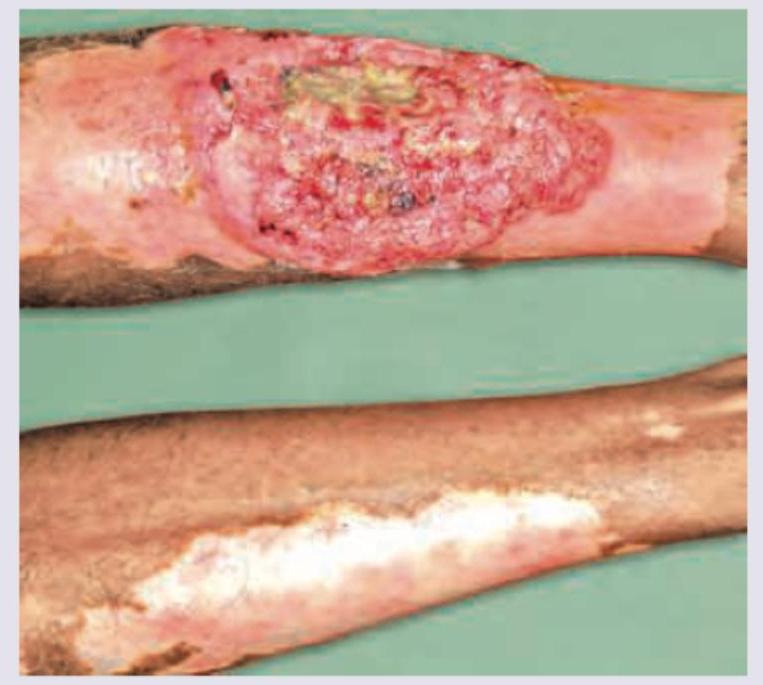
What is the most likely diagnosis based on the image provided? The patient had a snake bite at this site 5 years ago.
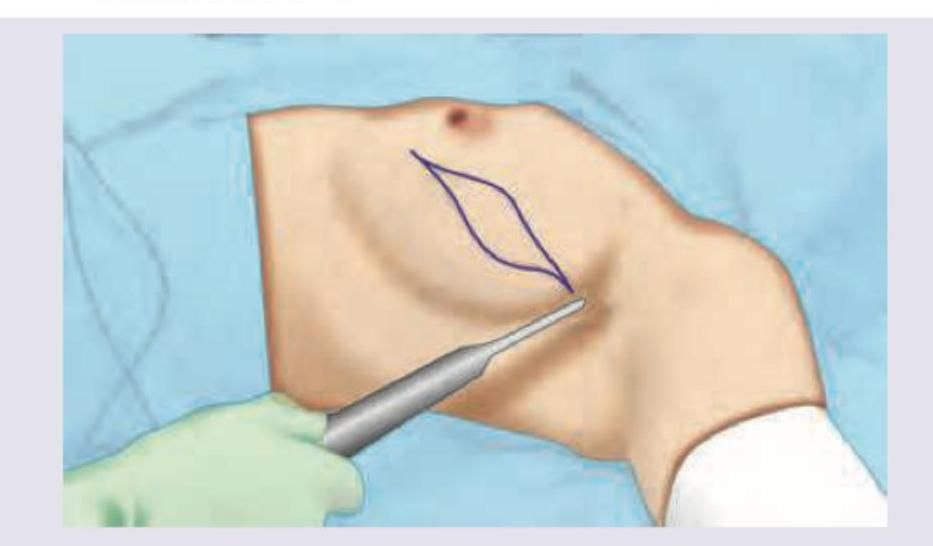
What technique has been depicted in the image shown below?
After undergoing surgery, for carcinoma of colon, a patient developed single liver metastasis of 2 cm. What would be the next treatment?
A 35-year-old HIV-positive woman (CD4 count 180/μL, on HAART) develops extensive perianal condyloma acuminata resistant to conventional treatments. HPV typing shows type 16. What is the most appropriate management approach?
A 50-year-old alcoholic patient presents with a history of waxing and waning jaundice for the past 2 months. His CT examination reveals dilatation of the common bile duct and pancreatic duct. What is the most probable diagnosis in the patient?
Which of the following cancers are correctly matched with the criteria for the minimum number of lymph nodes required for pathological staging? A. CA stomach -10 B. CA colon -12 C. CA gall bladder -6 D. CA breast -15
Marjolin's ulcer is:-
What is the most common anterior mediastinal tumor?
NOT an indication for surgery in a Ventricular septal defect
Intraoperative radiation therapy (IORT) is most commonly used in which of the following cancers?
Explanation: ***Marjolin's ulcer*** - This is a **squamous cell carcinoma** developing in a chronic wound, burn scar, or chronic inflammatory lesion, often after a long latent period (like the 5 years post-snake bite). The image shows a **fungating, ulcerative lesion** consistent with a malignant transformation in a chronic wound. - The history of a **snake bite 5 years ago** indicates a pre-existing chronic wound site, making Marjolin's ulcer the most probable diagnosis for a subsequent malignant change. *Bazin's ulcer* - Bazin's ulcer, also known as **erythema induratum**, is a chronic, recurrent panniculitis typically affecting the calves of young to middle-aged women. - It is associated with **tuberculosis**, presenting as tender, subcutaneous nodules that can ulcerate, which doesn't match the image or history. *Martorell's ulcer* - This is a form of **ischemic ulcer** caused by severe, uncontrolled hypertension, leading to microangiopathy and skin necrosis, usually on the anterior and lateral aspects of the lower leg. - While it presents as a painful ulcer, it is not typically associated with chronic trauma or previous wounds like a snake bite and lacks the fungating appearance shown. *Meleney's ulcer* - Meleney's ulcer, or **progressive bacterial synergistic gangrene**, is a rare, severe skin infection characterized by painful, undermined ulcers with a necrotic center. - It usually develops post-surgery or trauma and involves a synergistic bacterial infection, which is not suggested by the chronic nature (5 years) or the appearance of the lesion in the image.
Explanation: ***Sentinel lymph node biopsy*** - The image shows a **skin incision in the axilla**, which is the typical site for accessing **axillary lymph nodes for biopsy**. - A surgical instrument is poised to enter the incision, consistent with the procedure for **identifying and removing the sentinel lymph node**. *Brachytherapy* - This involves placing **radioactive sources** inside or next to the area requiring treatment, usually for cancer. - The image does not depict any radioactive sources or the specialized equipment used for brachytherapy. *USG* - **Ultrasonography (USG)** uses sound waves to create images of internal body structures. - The image shows a surgical incision and instrument, not an ultrasound transducer or screen. *Lateral pectoral nerve block* - A **nerve block** involves injecting an anesthetic close to a nerve to relieve pain or numb an area. - While it involves an injection, the image shows an incision in the axillary region, which is typically for surgical access, not solely for nerve block administration.
Explanation: ***Resection*** - For a **single, resectable liver metastasis** from colorectal carcinoma, surgical **resection offers the best chance of cure** and is the gold standard of treatment. - The size of the metastasis (2 cm) is well within the criteria for surgical removal, and the absence of multiple lesions or widespread disease makes it a prime candidate for curative surgery. *Radio frequency ablation* - **RFA** is typically considered for patients with **unresectable liver metastases** or those who are not surgical candidates. - While it can be effective for small lesions, it is generally preferred when resection is not possible due to factors like lesion location (e.g. adjacent to major vessels), patient comorbidities, or multiple lesions. *Chemo-radiation* - **Chemoradiation** is more commonly used in the treatment of the **primary colorectal cancer** itself, especially in locally advanced rectal cancer, or for palliative purposes in metastatic disease. - It is **not the primary curative treatment** for an isolated, resectable liver metastasis. *Acetic acid injection* - **Acetic acid injection** is a form of **chemical ablation** and is sometimes used for small liver tumors, particularly hepatocellular carcinoma. - It is generally considered **less effective and less predictable** than RFA or surgical resection for colorectal liver metastases and is not the preferred treatment for a resectable lesion.
Explanation: ***Wide surgical excision with histopathological examination*** - This is the most appropriate management due to the **extensive, treatment-resistant perianal condyloma acuminata** in an **HIV-positive patient with HPV type 16**, which carries a higher risk of **malignant transformation**. - **Surgical excision** allows for complete removal of the lesions and provides tissue for **histopathological examination** to rule out **dysplasia or squamous cell carcinoma**. *HPV vaccination* - While important for prevention, **HPV vaccination** is generally less effective as a primary treatment for **established, extensive lesions**, especially with existing infection. - It primarily aims to prevent new infections and may have some benefit in preventing recurrence, but it won't resolve the current burden of disease. *Interferon therapy* - **Interferon therapy** can be used for severe, recurrent, or difficult-to-treat warts, but its efficacy is variable and generally considered a **second-line or adjunctive treatment**. - Given the patient's **immunosuppressed status** and **resistance to conventional treatments**, a more definitive approach is needed. *Continue conservative management with topical imiquimod* - The patient has already demonstrated **resistance to conventional treatments**, suggesting that continued topical therapy with **imiquimod** is unlikely to be effective. - In an HIV-positive individual with **extensive lesions and high-risk HPV type 16**, waiting for a response to conservative therapy could delay definitive management and potentially increase the **risk of malignant progression**.
Explanation: ***Periampullary carcinoma*** - **Waxing and waning jaundice** is the **most characteristic feature** of periampullary tumors, as the tumor may intermittently obstruct and then temporarily release the **ampulla of Vater** (due to tumor friability, inflammation, or necrosis allowing temporary drainage). - The combination of **dilated common bile duct (CBD)** and **pancreatic duct (double duct sign)** indicates obstruction at the level of the ampulla. - The **intermittent nature of jaundice** is the key distinguishing feature that makes periampullary carcinoma more likely than pancreatic head carcinoma in this case. *Head of the pancreas carcinoma* - A **carcinoma of the head of the pancreas** also causes the **double duct sign** and can present with obstructive jaundice. - However, pancreatic head tumors typically cause **progressive, persistent, and painless jaundice** rather than waxing and waning jaundice, as the tumor causes constant external compression of both ducts. - This is a close differential, but the **fluctuating jaundice** favors a periampullary lesion. *Common bile duct stone* - While a **CBD stone** can cause waxing and waning jaundice due to intermittent obstruction (stone moving in and out of ampulla), it is **less likely to cause isolated dilatation of both the pancreatic duct and CBD** (double duct sign). - Stones typically cause **biliary colic, cholangitis, or pancreatitis** rather than isolated double duct dilatation. - The **double duct sign** without inflammatory features points more strongly to malignancy at the ampulla. *Cholangiocarcinoma* - **Cholangiocarcinoma** can cause biliary obstruction and jaundice, but it typically arises within the bile ducts themselves (intrahepatic or hilar). - **Distal cholangiocarcinoma** near the ampulla can mimic periampullary carcinoma, but it is less common for it to cause the degree of **pancreatic duct dilatation** seen in the double duct sign. - Cholangiocarcinoma usually causes **progressive rather than fluctuating jaundice**.
Explanation: ***B,C (Correct Answer)*** - **Colorectal cancer (B)** requires a minimum of **12 lymph nodes** for adequate pathological staging - **correctly matched** ✅ - **Gallbladder cancer (C)** requires at least **6 lymph nodes** for proper staging - **correctly matched** ✅ - These are the only two correctly matched pairs in the question - Adequate lymph node retrieval is essential to prevent **understaging** and ensure accurate prognostic assessment *A,B,C (Incorrect)* - While B and C are correct, **gastric cancer (A)** requires a minimum of **15 lymph nodes**, not 10 - The inclusion of A makes this combination incorrect *A,B,C,D (Incorrect)* - **Gastric cancer (A)** requires **15 lymph nodes**, not 10 - **incorrectly matched** - **Breast cancer (D)** requires a minimum of **10 lymph nodes**, not 15 - **incorrectly matched** - Only B and C are correctly matched *A,C,D (Incorrect)* - **Gastric cancer (A)** requires **15 lymph nodes**, not 10 - **incorrectly matched** - **Breast cancer (D)** requires **10 lymph nodes**, not 15 - **incorrectly matched** - C is correct, but A and D are both incorrectly matched
Explanation: ***Squamous cell carcinoma from scar*** - A Marjolin's ulcer is a rare but aggressive form of squamous cell carcinoma (SCC) that arises in areas of previously traumatized, chronically inflamed, or scarred skin. - Common sites include burn scars, chronic osteomyelitis tracts, pressure ulcers, and venous ulcers. - Typically has a long latency period (average 30-35 years after initial injury). - Characterized by higher rates of local recurrence and metastasis compared to conventional SCC. *Adenoma of scar* - An adenoma is a benign tumor of glandular origin and is not typically associated with scar tissue or malignant transformation in this context. - The malignancy arising in a scar is usually carcinoma, not adenoma. *Amoebic ulcer* - An amoebic ulcer is caused by the parasite *Entamoeba histolytica* and typically affects the colon, presenting as dysentery. - It is not a type of malignant transformation within a pre-existing scar. *Tubercular ulcer* - A tubercular ulcer is a manifestation of tuberculosis, often affecting the skin or mucous membranes and caused by *Mycobacterium tuberculosis*. - This is an infectious process and not a malignant transformation of scar tissue.
Explanation: ***Thymoma*** - **Thymomas** are the most common primary tumor of the **anterior mediastinum** in adults. - They originate from the epithelial cells of the **thymus gland**, which is located in the anterior mediastinum. *Bronchogenic cyst* - **Bronchogenic cysts** are typically found in the **middle mediastinum**, although they can occasionally occur in the anterior or posterior mediastinum. - They are congenital anomalies resulting from abnormal budding of the **tracheobronchial tree**. *Neurofibroma* - **Neurofibromas** are nerve sheath tumors that typically occur in the **posterior mediastinum**, arising from spinal nerves. - They are often associated with **neurofibromatosis type 1**. *Pericardial cyst* - **Pericardial cysts** are benign, fluid-filled sacs most commonly found in the **middle mediastinum**, specifically in the cardiophrenic angle. - They are usually asymptomatic and are often discovered incidentally.
Explanation: ***Eisenmenger's Syndrome*** - This condition represents **irreversible pulmonary hypertension** due to long-standing, high-volume, high-pressure shunting, leading to a reversal of the shunt (right-to-left). - In **Eisenmenger's syndrome**, the benefits of VSD closure are outweighed by the risks, as closing the defect can acutely increase **pulmonary vascular resistance (PVR)** and right ventricular overload, leading to fatal outcomes. *Suck- Rest-Suck cycle while feeding* - This symptom indicates significant **heart failure** and **poor feeding** in an infant, often due to a large VSD causing increased pulmonary blood flow and work of breathing. - It is a clear sign of clinical compromise and is generally an **indication for surgical intervention** to improve feeding and reduce symptoms. *Pulmonary: Systemic blood flow > 2:1* - A pulmonary to systemic blood flow ratio (Qp:Qs) greater than 2:1 signifies a **large left-to-right shunt** through the VSD, leading to significant volume overload in the pulmonary circulation. - This degree of shunting is a strong **indication for surgery** to prevent the development of pulmonary hypertension and right ventricular dysfunction. *Hepatomegaly* - **Hepatomegaly** (enlarged liver) in the context of a VSD often suggests **right-sided heart failure**, a common complication of large left-to-right shunts and increased pulmonary vascular resistance. - It is a clinical sign of significant cardiac dysfunction and typically indicates the need for **surgical repair** to alleviate the underlying cardiac load.
Explanation: ***Ca Pancreas*** - **Intraoperative radiation therapy (IORT)** is frequently employed for **pancreatic cancer** due to its deep-seated location and locally advanced nature at presentation. - IORT allows for a **high dose of radiation** (10-20 Gy) to be delivered directly to the tumor bed and involved lymph nodes at the time of surgery, while critical structures like the stomach, duodenum, and kidneys can be retracted or shielded. - Particularly useful in **borderline resectable or locally advanced cases** where complete resection margins are difficult to achieve. - Used in specialized centers as part of multimodal therapy to improve local control. *Ca Thyroid* - **Thyroid cancer** is generally treated with surgery (thyroidectomy) followed by **radioactive iodine (RAI) therapy** for papillary and follicular types, not typically IORT. - The thyroid gland's superficial location and high avidity for iodine make RAI an effective targeted therapy. - IORT has no established role in standard thyroid cancer management. *Ca Cervix* - **Cervical cancer** treatment involves surgery, **external beam radiation therapy (EBRT)**, and **brachytherapy**, which places radioactive sources directly into or near the tumor. - Brachytherapy is superior for cervical cancer due to excellent dose distribution to the cervix and parametrium. - IORT is not a standard approach for primary cervical cancer, though it might be considered in select recurrent cases. *Ca Breast* - For **breast cancer**, IORT has gained significant traction, particularly for **early-stage disease** (T1-T2, node-negative) as an alternative to 5-6 weeks of external beam radiation. - **TARGIT-A and ELIOT trials** have established IORT as a viable option for partial breast irradiation during breast-conserving surgery. - While increasingly used globally with dedicated devices (INTRABEAM, ELIOT), it remains a **selective option** rather than universally applied. - The indication is more specific (favorable early-stage tumors) compared to the broader applications in pancreatic cancer where dose escalation and organ sparing are critical challenges.
Cancer Biology Basics
Practice Questions
Principles of Cancer Therapy
Practice Questions
Screening and Early Detection
Practice Questions
Surgical Staging
Practice Questions
Surgical Resection Principles
Practice Questions
Lymphadenectomy
Practice Questions
Management of Metastatic Disease
Practice Questions
Combined Modality Therapy
Practice Questions
Targeted Therapy Concepts
Practice Questions
Cancer Survivorship
Practice Questions
Palliative Surgical Interventions
Practice Questions
Ethics in Cancer Care
Practice Questions
Get full access to all questions, explanations, and performance tracking.
Start For Free