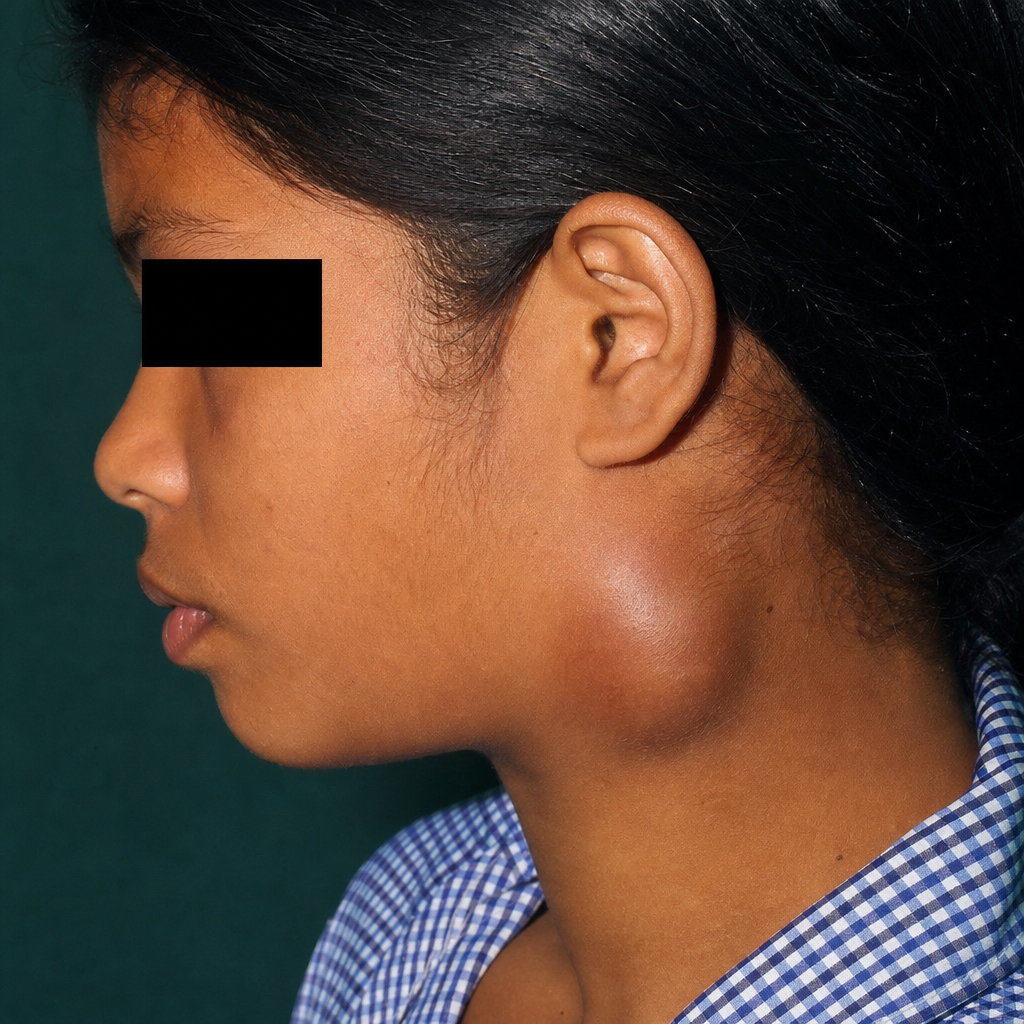
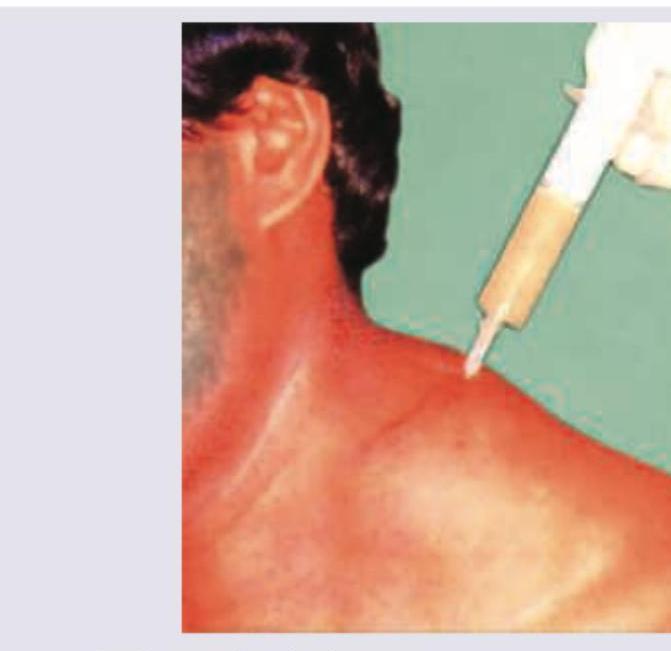
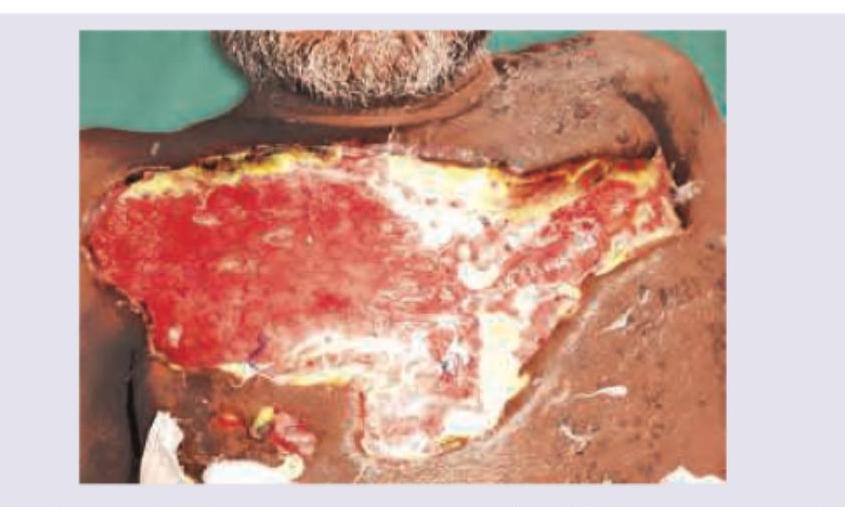
Secondary amyloidosis occurs in which of the following conditions?
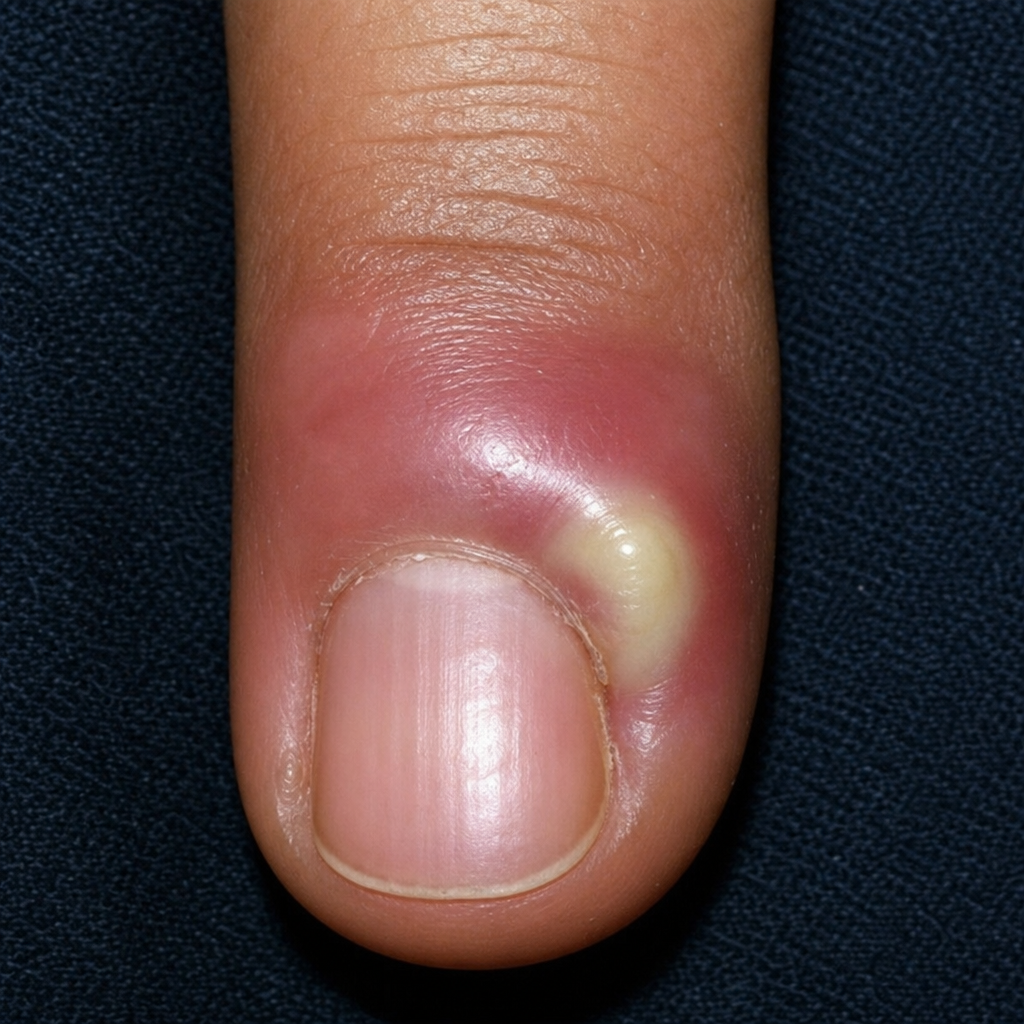
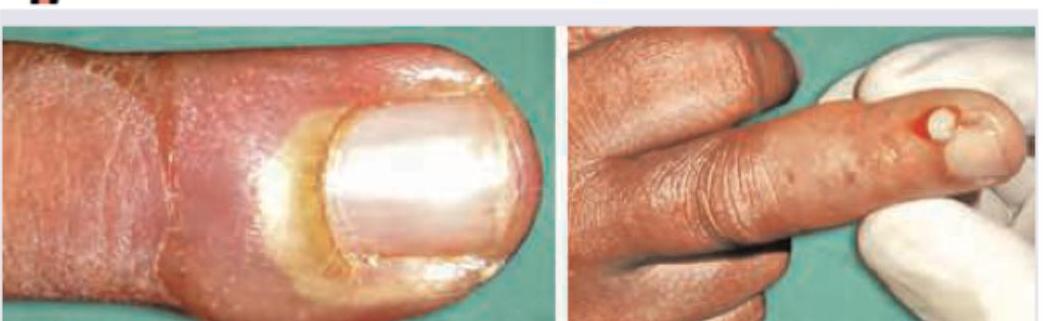
Malignant pustule occurs in which condition?
Periosteal reaction in a case of acute osteomyelitis can be seen earliest at:
What is true about primary peritonitis?
A diabetic worker sustains a stab injury to the central region of his palm. After 3 days, he develops swelling, severe pain, and inability to extend his middle and ring fingers. Pus accumulation is suspected in one of the palmar spaces. Which of the following spaces is most likely involved?
A patient with diffuse severely contaminated peritonitis underwent laparotomy and was left open after surgery. Which of the following might help?
Identify the tube/catheter shown in the figure:

What is incorrect about the image shown?

A 65-year-old patient presents with sudden pain in the scrotum associated with prostration, pallor and pyrexia. What could be the most probable diagnosis?

A patient after abdominal surgery presents with fever, chills, rigors along with pain in right hypochondrium, right shoulder along with Hoover's sign. Abdominal CT of the patient is given. What is the most likely diagnosis?

Explanation: **Explanation:** **Secondary (AA) Amyloidosis** is a systemic condition characterized by the extracellular deposition of Serum Amyloid A (SAA) protein, an acute-phase reactant. This occurs as a complication of **chronic inflammatory, infectious, or neoplastic processes.** 1. **Chronic Osteomyelitis (Option A):** Long-standing suppurative infections like chronic osteomyelitis lead to persistent stimulation of macrophages and the liver, resulting in sustained high levels of SAA protein, which eventually deposits as amyloid fibrils in organs like the kidneys and spleen. 2. **Rheumatoid Arthritis (Option B):** This is the most common cause of secondary amyloidosis in developed countries. The chronic autoimmune inflammatory state drives the overproduction of SAA. 3. **Leprosy (Option C):** In developing countries, chronic granulomatous infections such as Leprosy (specifically lepromatous leprosy) and Tuberculosis remain significant triggers for AA amyloidosis. **Why "All of the Above" is correct:** All three conditions share the common pathophysiology of **chronic inflammation**, which is the prerequisite for the development of secondary amyloidosis. **High-Yield Clinical Pearls for NEET-PG:** * **Primary Amyloidosis (AL):** Associated with Plasma Cell Dyscrasias (e.g., Multiple Myeloma). It involves light chain deposition. * **Secondary Amyloidosis (AA):** Associated with "3 Cs": **C**hronic Infections (TB, Osteomyelitis), **C**hronic Inflammation (RA, Ankylosing Spondylitis), and **C**ancer (Renal Cell Carcinoma, Hodgkin’s Lymphoma). * **Diagnosis:** The gold standard for screening is **Congo Red Staining** of an abdominal fat pad biopsy or rectal biopsy, showing **apple-green birefringence** under polarized light. * **Organ Involvement:** The **Kidney** is the most commonly involved organ in AA amyloidosis, often presenting as nephrotic syndrome.
Explanation: **Explanation:** **Malignant Pustule** is the characteristic clinical lesion of **Cutaneous Anthrax**, caused by *Bacillus anthracis*. Despite its name, it is neither malignant (neoplastic) nor a true pustule (as it contains serosanguinous fluid rather than pus). 1. **Why Anthrax is correct:** In cutaneous anthrax, the spores enter through skin abrasions. The lesion begins as a painless, itchy papule that evolves into a vesicle and eventually ruptures to form a **depressed black eschar** surrounded by significant non-pitting edema. This painless, necrotic black lesion is termed a "Malignant Pustule." 2. **Why other options are incorrect:** * **Melanoma:** While melanoma is a "malignant" skin lesion that can be dark/black, it is a neoplastic growth of melanocytes, not an acute infectious pustule. * **Gas Gangrene:** Caused by *Clostridium perfringens*, it presents with crepitus, myonecrosis, and foul-smelling discharge, but not the classic circumscribed black eschar of a malignant pustule. * **Ovarian Tumor:** These are internal neoplasms and have no clinical association with the term "malignant pustule." **High-Yield Clinical Pearls for NEET-PG:** * **Causative Agent:** *Bacillus anthracis* (Gram-positive, spore-forming, aerobic rod). * **Occupational Hazard:** Known as **"Hide-Porter’s Disease"** or "Wool-sorter’s disease" due to contact with infected animal products. * **Key Feature:** The hallmark of the lesion is that it is **painless** and associated with **extensive edema** (due to Edema Factor toxin). * **Microscopy:** Look for "Medusa head" colonies on agar and "Bamboo pole" appearance on Gram stain.
Explanation: **Explanation:** In **Acute Hematogenous Osteomyelitis**, the diagnosis is primarily clinical in the early stages because radiographic changes lag significantly behind the pathological process. **1. Why 10 days is correct:** Radiographic evidence of acute osteomyelitis requires significant bone destruction or periosteal elevation. The **periosteal reaction** (new bone formation under the elevated periosteum) typically becomes visible on a plain X-ray between **10 to 14 days** after the onset of infection. In children, it may appear slightly earlier (around 7–10 days) due to a loose periosteum, but 10 days is the standard textbook milestone for exams. **2. Why other options are incorrect:** * **5 days:** At this stage, X-rays are usually normal or show only subtle **soft tissue swelling** and blurring of fat planes. Bone changes are not yet visible. * **15 & 20 days:** While periosteal reactions are clearly visible by this time, they are not the "earliest" point of detection. By 2–3 weeks, more advanced signs like bone rarefaction and early **sequestrum** formation may begin to appear. **Clinical Pearls for NEET-PG:** * **Earliest Imaging Modality:** **MRI** is the investigation of choice as it can detect changes (marrow edema) within **24–48 hours**. * **Earliest X-ray sign:** Soft tissue swelling (appears within 3–5 days). * **Bone destruction:** At least **30–50% of bone mineral density** must be lost before lucency is visible on a plain radiograph. * **Triple Phase Bone Scan (Technetium-99m):** Shows increased uptake within 48–72 hours but is less specific than MRI. * **Commonest Organism:** *Staphylococcus aureus* across most age groups.
Explanation: **Explanation:** Primary peritonitis, also known as **Spontaneous Bacterial Peritonitis (SBP)**, is an infection of the peritoneal cavity without an evident intra-abdominal source of sepsis (like a perforated viscus). **1. Why Option D is Correct:** Primary peritonitis most commonly occurs in patients with **cirrhosis of the liver** and pre-existing ascites. The underlying mechanism involves the translocation of gut bacteria across the intestinal wall into the mesenteric lymph nodes, combined with impaired host immunity and decreased opsonic activity in the ascitic fluid. **2. Analysis of Incorrect Options:** * **Option A:** While SBP is typically monobacterial (most commonly *E. coli*), the question asks for the most definitive clinical association. In the context of NEET-PG, the association with cirrhosis is the hallmark diagnostic feature. * **Option B:** Primary peritonitis is **bacterial** from the onset. Chemical peritonitis (e.g., from a perforated peptic ulcer or bile leak) is a precursor to *secondary* peritonitis. * **Option C:** Primary peritonitis is a **medical emergency**, not a surgical one. It is treated with intravenous antibiotics (e.g., Third-generation cephalosporins like Cefotaxime). Peritoneal lavage and laparotomy are contraindicated as they increase morbidity in these fragile patients. **3. NEET-PG High-Yield Pearls:** * **Most common organism:** *Escherichia coli* (Gram-negative), followed by *Klebsiella* and *Streptococcus pneumoniae*. * **Diagnosis:** Established by an ascitic fluid **Absolute Neutrophil Count (ANC) > 250 cells/mm³**. * **Clinical Presentation:** Often subtle; look for fever, abdominal pain, or unexplained worsening of hepatic encephalopathy. * **Key Differentiator:** Secondary peritonitis is usually poly-microbial and requires surgery; Primary peritonitis is mono-microbial and requires antibiotics.
Explanation: ***B (Midpalmar space)*** - A stab wound to the central palm directly accesses the **midpalmar space**, which lies deep to the palmar aponeurosis and contains the flexor tendons for the middle, ring, and little fingers. - Infection and pus accumulation in this space lead to **flexor tenosynovitis**, causing severe pain, swelling, and inability to extend the middle and ring fingers, as their tendon sheaths are directly involved. *A (Hypothenar space)* - The **hypothenar space** is located on the ulnar side of the palm and is associated with the intrinsic muscles of the little finger. - An infection in this area would primarily cause swelling and tenderness over the hypothenar eminence and affect the **little finger**, not the middle and ring fingers. *C (Thenar space)* - The **thenar space** is on the radial side of the palm, containing the intrinsic muscles of the thumb and often the flexor tendon sheath of the index finger. - Infection here would cause significant swelling at the base of the thumb (thenar eminence) and primarily affect the function of the **thumb and index finger**. *D (Dorsal subaponeurotic space)* - This space is on the **dorsum (back) of the hand**, whereas the injury occurred on the palm. - While deep palmar space infections can cause significant dorsal swelling due to loose tissue, the primary site of pus collection from a palmar wound is a **palmar space**, not a dorsal one.
Explanation: ***VAC***- **VAC (Vacuum-Assisted Closure)** is the gold standard for managing the damage control abdomen (laparostomy) following severe peritonitis, as it actively drains contaminated fluid and reduces **peritoneal edema**.- By applying controlled **negative pressure**, VAC protects the underlying visceral contents, prevents fascial retraction, and facilitates a definitive delayed primary or secondary fascial closure.*Normal saline soaked gauze*- This traditional method provides only passive protection and is inferior because it allows **contaminated exudates** to pool within the abdomen, increasing the risk of residual infection.- It necessitates multiple, often painful, changes and does not effectively prevent **fascial retraction**, making subsequent closure more challenging than with VAC.*Prefer closure after laparotomy*- Immediate closure in the context of **severe diffuse contamination** is contraindicated due to an unacceptably high risk of septic complications and residual **intraperitoneal infection**.- Primary closure may also lead to **Abdominal Compartment Syndrome (ACS)** due to significant bowel and peritoneal edema, which has high associated morbidity and mortality.*Antibiotic soaked gauze*- Local application of **antibiotic-soaked gauze** lacks scientific support and does not replace effective systemic antibiotic therapy combined with adequate drainage.- Like NS gauze, it is unable to create a controlled environment for fluid removal or prevent **fascial domain loss**, making definitive closure difficult.
Explanation: ***Ryle's tube*** - The image clearly displays a **single-lumen tube** with an identifiable funnel-shaped connector at one end and an open-ended tip designed for insertion, consistent with a Ryle's tube. - A Ryle's tube is primarily used for **enteral feeding** or **gastric decompression**, commonly inserted via the nose. *Malecot's catheter* - A Malecot's catheter features a **flared, mushroom-shaped tip** that helps in retention within a cavity, which is not depicted in the image. - It is typically used for **drainage in nephrostomy** or cystostomy. *Foley's catheter* - A Foley's catheter is characterized by a **balloon near its tip** that is inflated to secure it in the bladder, which is absent in the image. - It also usually has two lumens; one for drainage and one for balloon inflation. *Red rubber catheter* - While red rubber catheters are flexible and made of latex, they are typically **straight catheters** used for intermittent drainage and lack the visible flanged connector seen in the image. - Also known as a Robinson catheter, it is often used for **intermittent bladder catheterization**.
Explanation: ***Microaerophilic hemolytic streptococci*** - **For Fournier's gangrene**, the primary causative agents are typically a **polymicrobial infection (aerobic and anaerobic bacteria)**, not specifically microaerophilic hemolytic streptococci. - While streptococci can be involved, it is the synergistic action of multiple bacteria, especially gram-positive, gram-negative, and anaerobes, that characterizes the infection. *Gangrene of testis* - The image shows **Fournier's gangrene**, a severe form of necrotizing fasciitis affecting the perineum and genitals. - While the infection can spread and critically affect the scrotal tissues, the **testes themselves are often spared** due to their separate blood supply. *Seen in diabetics* - **Diabetics** are at significantly **increased risk** for developing Fournier's gangrene due to their impaired immune response and microvascular complications. - Approximately 30-60% of patients with Fournier's gangrene have underlying diabetes mellitus. *Obliterative arteritis* - **Obliterative endarteritis** is a key pathological feature of Fournier's gangrene, leading to **thrombosis of small vessels** and subsequent tissue necrosis and gangrene. - This vascular compromise is crucial in the rapid progression and tissue destruction seen in this condition.
Explanation: **Fournier's gangrene** - **Fournier's gangrene** is a rapidly progressive, necrotizing fasciitis of the perineum and genital region, often presenting with sudden severe pain, prostration, pallor, and **fever (pyrexia)** in elderly patients. - The image likely shows extensive tissue necrosis and inflammation consistent with **Fournier's gangrene**, as the described symptoms and the patient's age (often associated with comorbidities like diabetes) increase suspicion for this life-threatening condition. *Torsion testis* - Testicular torsion typically presents with **acute, severe scrotal pain** and is more common in adolescents and young adults. - While it causes acute pain and possibly pallor from severe pain, it is less likely to cause widespread systemic symptoms like **pyrexia and prostration** in an elderly patient and does not involve the diffuse skin and subcutaneous tissue necrosis seen in the image. *Spermatocele* - A spermatocele is a **benign cyst** in the epididymis that usually presents as a painless mass. - It does not cause sudden pain, prostration, pallor, or pyrexia, nor does it involve tissue destruction. *Varicocele* - A varicocele is an **enlargement of veins within the scrotum** (pampiniform plexus), often described as feeling like a "bag of worms." - It typically causes a **dull ache** or heaviness, but not sudden severe pain, prostration, pallor, or pyrexia, and is not associated with the necrotic appearance.
Explanation: ***Subphrenic abscess*** - The CT scan shows a **fluid collection (abscess)** with a septated appearance located beneath the diaphragm, consistent with a **subphrenic abscess** - **Hoover's sign** (inspiratory lag of the affected hemidiaphragm) is pathognomonic for subphrenic pathology - **Referred shoulder pain** occurs due to diaphragmatic irritation transmitted via the phrenic nerve (C3, C4, C5 - "keeps the diaphragm alive") - Classic post-operative complication following **abdominal surgery**, especially upper abdominal procedures - CT shows characteristic **subdiaphragmatic location** with gas-fluid level *Liver abscess* - Would present with hepatomegaly and tender liver on examination - CT would show an **intraparenchymal liver lesion**, not a subdiaphragmatic collection - Does not typically cause Hoover's sign or diaphragmatic involvement *Acute cholecystitis* - Presents with **Murphy's sign**, not Hoover's sign - CT would show **gallbladder wall thickening, pericholecystic fluid**, not a subdiaphragmatic collection - Shoulder pain less prominent; typically right subscapular pain *Right lower lobe pneumonia* - Would show **pulmonary infiltrates** on imaging, not an intra-abdominal fluid collection - Respiratory symptoms (cough, dyspnea) would be more prominent - Does not explain the abdominal CT findings showing subdiaphragmatic collection
Surgical Site Infections
Practice Questions
Intra-abdominal Infections
Practice Questions
Soft Tissue Infections
Practice Questions
Necrotizing Soft Tissue Infections
Practice Questions
Surgical Sepsis
Practice Questions
Tetanus Prophylaxis
Practice Questions
Antimicrobial Prophylaxis
Practice Questions
Antimicrobial Therapy in Surgical Infections
Practice Questions
Surgical Drainage Procedures
Practice Questions
Infection Control in Operating Room
Practice Questions
Biofilms and Implant-Related Infections
Practice Questions
Prevention Strategies
Practice Questions
Get full access to all questions, explanations, and performance tracking.
Start For Free