The following statements are correct about burst abdomen (abdominal dehiscence) except
Which of the following statements is true regarding wound contracture ?
The earliest clinical sign of an impending burst abdomen is:
The main principle regarding removal of drain after surgery is
A 60 year old lady had a pyothorax which was treated with an intercostal chest drain. After two days, the meniscus of the fluid in the tube was not swinging during her respiratory process. What could be the likely problem?
Risk Scoring System which can be used postoperatively is:
A 60 year old lady underwent total abdominal hysterectomy. On the 3rd post operative day she suddenly became breathless while returning from washroom. Her blood pressure recorded was 80/50 mm of Hg. The most probable diagnosis is
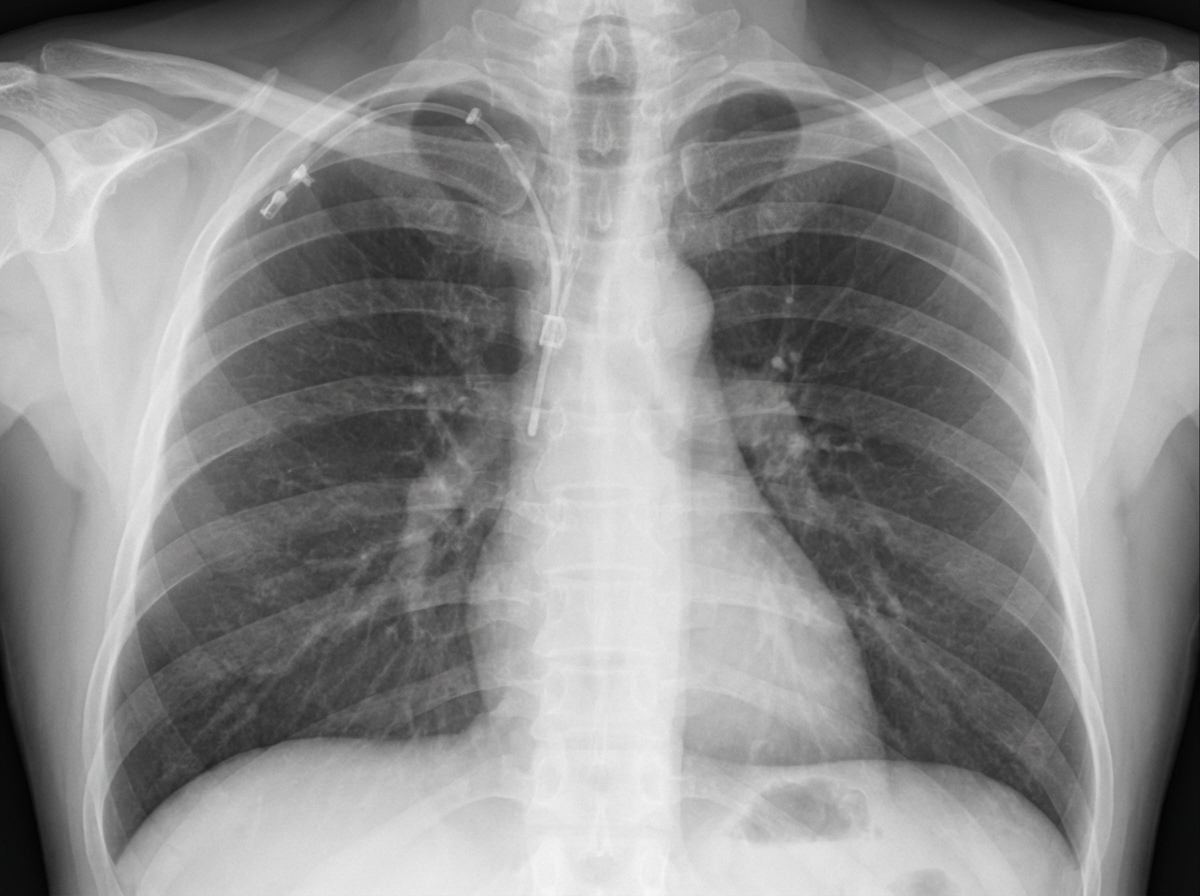
During subclavian vein puncture in a surgical ward suddenly a patient developed severe breathlessness. On auscultation breath sound was absent and the ipsilateral chest was tympanitic on percussion. The probable diagnosis is:
Stage III "Pressure sore" is full thickness skin loss extending:
Which one of the following is NOT a risk factor for development of venous thrombosis in surgical patients?
Explanation: ***Second dehiscence is very common*** - This statement is incorrect. While **dehiscence** can recur, it is not considered "very common" after proper surgical repair and addressing risk factors. - The overall incidence of **abdominal dehiscence** ranges from 0.5% to 3%, and subsequent dehiscence, though possible, is less frequent than the initial event due to stricter prophylactic measures and more careful wound closure techniques. *Manage with nasogastric aspiration and intravenous fluids* - This is a crucial initial step for managing **burst abdomen**, as it helps to decompress the gastrointestinal tract and prevent vomiting. - **Intravenous fluids** are essential for maintaining hydration and electrolyte balance, especially if the patient is experiencing fluid loss through the exposed wound. *Cover the wound with sterile towel and perform emergency surgery* - Covering the exposed viscera with a **sterile, saline-soaked towel** is vital to prevent desiccation, infection, and further injury to the bowel. - **Emergency surgery** is necessary to debride the wound, inspect the abdominal contents, and perform a secure secondary closure of the abdominal wall layers. *Peak incidence is between 6th and 8th post operative day* - This timeframe is consistent with the typical healing progression of surgical wounds, where the tensile strength of the wound is still relatively low before collagen deposition is complete. - Factors like **infection**, **increased intra-abdominal pressure**, and poor nutritional status can contribute to wound breakdown during this critical period.
Explanation: ***It is the function of specialised fibroblasts that contain actin myofilaments*** - Wound contracture is primarily mediated by **myofibroblasts**, which are specialized fibroblasts containing **actin myofilaments**. - These cells exert contractile force, pulling the wound edges together to reduce wound size. *Bacterial colonization of a wound slows the process of contraction* - **Bacterial colonization** and infection typically **impair** or **delay** wound healing, including contracture, due to inflammation and tissue damage. - A healthy, sterile wound environment encourages optimal contraction. *It may account for a 40% decrease in the size of a wound* - Wound contracture can lead to a much greater reduction in wound size, often exceeding **40%**, with some studies suggesting up to **90%** for full-thickness wounds. - The extent of contracture depends on the size, location, and depth of the wound. *It is a primary process affecting the closure of sutured wounds* - Wound contracture is a more significant mechanism for **secondary intention healing** (wounds left open to heal by granulation and epithelialization). - For **sutured wounds (primary intention)**, closure is primarily achieved by direct apposition and sealing of the wound edges; contracture plays a minor role.
Explanation: ***Serous wound discharge*** - The appearance of **serosanguinous (pinkish-yellow) fluid** leaking from the wound is often the earliest and most reliable sign. - This discharge indicates separation of fascial edges before complete dehiscence, as it can pass through small gaps in the compromised closure. *Tachycardia and high-grade fever* - These are systemic signs of **infection or sepsis**, which can predispose to wound dehiscence but are not typically the earliest direct local sign of an impending burst abdomen itself. - While infection increases risk, the direct physical sign of fascial disruption often precedes clear signs of systemic infection or is present without high fever. *Pus discharge from the wound* - **Pus discharge** signifies a localized wound infection (abscess or cellulitis) and can contribute to wound breakdown, but it is not the *earliest* sign of **fascial dehiscence** specifically. - Serous discharge indicates mechanical separation, whereas purulent discharge indicates infection, which can lead to dehiscence but is a different process. *Erythema of the wound* - **Erythema** (redness) around the wound typically indicates localized **inflammation or infection** (cellulitis). - While inflammation can compromise wound healing and increase the risk of dehiscence, it is generally not the first specific sign of impending fascial disruption.
Explanation: ***Drain should be removed as soon as it is no longer required*** - The primary principle of drain management is to remove them promptly once their purpose has been served. **Prolonged drain placement** increases the risk for complications such as **infection** and pain. - The decision to remove a drain is based on the **volume and character of the drainage**, patient comfort, and the overall clinical picture, ensuring that the benefit of removal outweighs the risk of fluid accumulation. *Keep drains as long as possible to prevent complications* - This statement is incorrect as keeping drains for an extended period significantly increases the risk of **drain infection**, **increased pain**, and potential **tract formation** that could lead to persistent fistula. - While drains can prevent early complications like **hematoma** or **seroma**, their long-term presence introduces new risks that outweigh initial benefits. *Drains kept for colo-rectal anastomosis should be removed within 2 days as they can cause complications* - The timing for drain removal after **colorectal anastomosis** is guided by clinical judgment, usually when output is minimal and clear, and there is no evidence of anastomotic leak. There is **no universal rule** that they must be removed within 2 days. - Premature removal in high-risk anastomoses could lead to **unrecognized leaks** and subsequent abdominal collections, while prolonged placement beyond necessity also carries risks. *Suction drains can be removed early* - The type of drain (suction vs. gravity) does not dictate early removal, but rather the **volume and nature of fluid collected** and the specific surgical context. - While **suction drains** are highly effective in removing fluid, their removal timing is still based on clinical criteria specific to the patient's recovery, not solely on the drain type.
Explanation: ***Chest drain blockage*** - A lack of **meniscus swinging** indicates that the chest drain is no longer effectively communicating with the pleural space, often due to a **blockage** (e.g., blood clot, fibrin). - This prevents the normal pressure changes during respiration from being transmitted to the fluid in the drain tube. *Water seal not proper* - An improper **water seal** (e.g., leak in the system, insufficient water) would typically lead to continuous **air bubbling** in the water seal chamber, not necessarily a lack of meniscus swing. - While it can affect drainage, it's not the primary reason for absent respiratory fluctuations. *No fluid in the chest drain bag* - The *absence of fluid in the collection bag* is a sign of *resolved drainage* or a *blocked tube*, but it does not directly explain the *lack of meniscus swing* in the water seal chamber. - The meniscus swing reflects pressure changes in the pleural space, not the volume in the collection bag. *High atmospheric pressure* - **Atmospheric pressure** changes are generalized and affect the entire system, not just the connection between the pleural space and the chest drain. - It would not selectively eliminate the respiratory fluctuation of the meniscus.
Explanation: ***POSSUM (Physiologic and Operative Severity Score for enUmeration of Mortality and Morbidity)*** - **POSSUM** is a risk scoring system specifically designed to predict **postoperative mortality and morbidity** based on physiological and operative factors. - It includes both **preoperative physiological variables** and **intraoperative findings** to provide a comprehensive risk assessment after surgery. *ASA (American Society of Anesthesiologists)* - The **ASA physical status classification system** is used to assess a patient's **preoperative health status** and predict anesthetic risk, not directly postoperative outcomes. - It is determined **before surgery** to categorize patients into different classes based on their overall health and presence of co-morbidities. *MET (Metabolic Equivalent Task)* - **METs** are a measure of **exercise capacity** and reflect a person's functional status, often used in preoperative cardiac risk assessment. - They are used to gauge a patient's ability to perform physical tasks, not as a direct predictor of postoperative complications. *RCRI (Revised Cardiac Risk Index)* - The **RCRI** is used to predict the risk of **major cardiac events** in patients undergoing non-cardiac surgery. - It is primarily a **preoperative tool** focused on cardiac risks, not a general predictor of all postoperative morbidity and mortality.
Explanation: ***Thromboembolism*** - Sudden onset **breathlessness** and **hypotension** in a postoperative patient are classic signs of a **pulmonary embolism (PE)**, a severe form of thromboembolism. - Surgical procedures, especially pelvic surgeries like hysterectomy, are **risk factors** for deep vein thrombosis (DVT) which can lead to PE. *Postural hypotension* - While it can cause lightheadedness or dizziness upon standing, it typically doesn't present as sudden, severe **breathlessness** and sustained **hypotension**. - Its onset is directly related to a change in position, and the patient's symptoms are more severe than usually seen with postural changes. *Transient ischaemic attack* - A TIA involves **neurological deficits** such as weakness, speech disturbance, or visual changes, which are temporary. - It does not present with sudden **breathlessness** or profound **hypotension**. *Secondary haemorrhage* - This would typically manifest as signs of **blood loss**, such as fresh bleeding from the surgical site or distended abdomen, along with features of hypovolemic shock. - While hypotension would be present, the primary symptom would not be sudden **breathlessness**.
Explanation: ***Iatrogenic pneumothorax*** - The sudden onset of breathlessness after **subclavian vein puncture** points towards an iatrogenic cause due to accidental pleural injury. - **Absent breath sounds** and **tympanitic percussion** on the ipsilateral side are classic signs of air in the pleural space. *Tension pneumothorax* - While it shares features of pneumothorax, **tension pneumothorax** would typically present with **tracheal deviation**, severe hypotension, and signs of cardiovascular collapse due to mediastinal shift. - The description lacks these critical signs of hemodynamic instability and significant mediastinal compression. *Spontaneous pneumothorax* - **Spontaneous pneumothorax** occurs without any preceding trauma or medical procedure, usually due to rupture of subpleural blebs. - The history of a recent **subclavian vein puncture** makes an iatrogenic cause much more likely than a spontaneous event. *Iatrogenic hemothorax* - **Iatrogenic hemothorax** would also be a complication of subclavian vein puncture, but it would present with **dullness to percussion** instead of tympany, and signs of hypovolemic shock if severe. - The **tympanitic percussion** directly indicates the presence of air, not blood, in the pleural cavity.
Explanation: ***into subcutaneous tissue but not through fascia*** - A **Stage III pressure ulcer** involves **full-thickness skin loss** with damage or necrosis of **subcutaneous tissue** that may extend down to, but **NOT through**, the underlying fascia. - The ulcer presents as a **deep crater** with or without undermining of adjacent tissue, slough, or eschar. - **Muscle, tendon, and bone are NOT visible or directly palpable** in Stage III ulcers. *through subcutaneous tissue into fascia* - This description is **too deep** for Stage III; fascia penetration indicates **Stage IV**. - Stage III extends **to** the fascia but does **not penetrate through** it. *through subcutaneous tissue into fascia and muscles* - This is the definition of a **Stage IV pressure ulcer**, not Stage III. - **Muscle exposure** indicates full-thickness tissue loss beyond the subcutaneous layer and signifies Stage IV. *through subcutaneous tissue into fascia, muscles and bone* - This is also **Stage IV** (most severe form with bone, tendon, or muscle exposure). - **Bone exposure** is pathognomonic of Stage IV pressure ulcers and never occurs in Stage III.
Explanation: ***Male gender*** - While there may be slight differences in **VTE incidence** between sexes, male gender is **not considered an independent risk factor** for venous thrombosis in surgical patients; rather, other comorbidities or specific surgical procedures are more influential. - Risk factors like **age, obesity, and pregnancy** are well-established and significantly increase the risk of thrombosis, unlike male gender. *Age > 60 years* - **Advancing age** is a significant risk factor for venous thrombosis due to age-related changes in coagulation factors, endothelial function, and reduced mobility. - Older patients undergoing surgery have a higher likelihood of developing **deep vein thrombosis (DVT)** and **pulmonary embolism (PE)**. *Obesity (BMI > 30 kg/m2)* - **Obesity** is a well-established risk factor for venous thrombosis due to chronic inflammation, endothelial dysfunction, and increased procoagulant factors. - Obese surgical patients have a higher risk of **VTE** compared to those with a normal BMI. *Pregnancy* - **Pregnancy** is a hypercoagulable state due to hormonal changes, increased coagulation factors, and venous stasis, significantly increasing the risk of venous thrombosis. - The risk of VTE is elevated throughout pregnancy and the **postpartum period**, especially after surgical interventions like Cesarean sections.
Preoperative Risk Assessment
Practice Questions
Perioperative Management of Comorbidities
Practice Questions
Preparation of Patient for Surgery
Practice Questions
Informed Consent Process
Practice Questions
Post-Anesthesia Care
Practice Questions
Pain Management
Practice Questions
Wound Care and Dressings
Practice Questions
Drain Management
Practice Questions
Postoperative Complications Detection
Practice Questions
Early Ambulation and Rehabilitation
Practice Questions
Enhanced Recovery After Surgery (ERAS) Protocols
Practice Questions
Discharge Planning and Follow-up
Practice Questions
Get full access to all questions, explanations, and performance tracking.
Start For Free