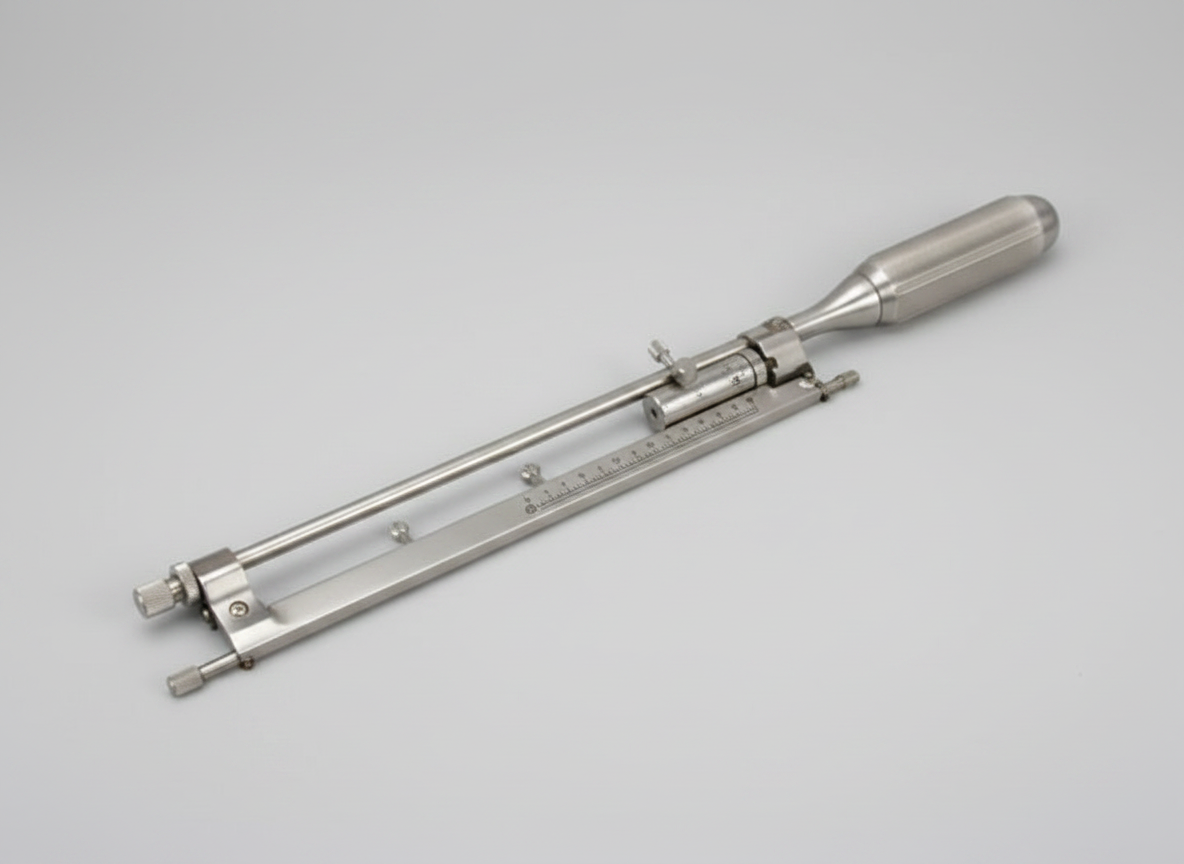
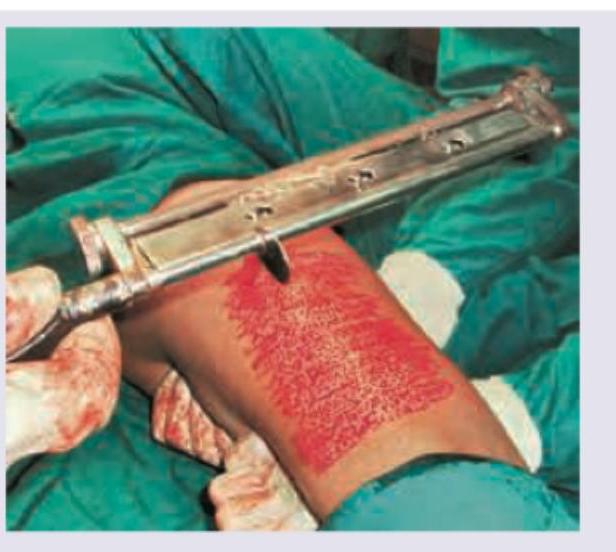
What is the typical thickness range for split-thickness skin grafts used in maxillofacial surgery?
Port wine stain is seen in which of the following conditions?
To avoid suture marks, when should sutures on the face be removed?
The Abbe-Estlander flap is used for reconstruction of which anatomical structure?
Down fracture of the zygomatic arch is a treatment modality for which condition?
Which neuromuscular preserving flap is used in lip reconstruction?
The names Manchot, Salmon, and Taylor are related to which of the following?
A free skin graft is typically rejected when transplanted onto which of the following tissues?
A 12-year-old girl presents to the emergency department following a skiing crash in which the left side of her mid torso hit a tree. She presents with left side lower chest and upper abdominal pain. She also complains of left shoulder pain. What is the most likely diagnosis?
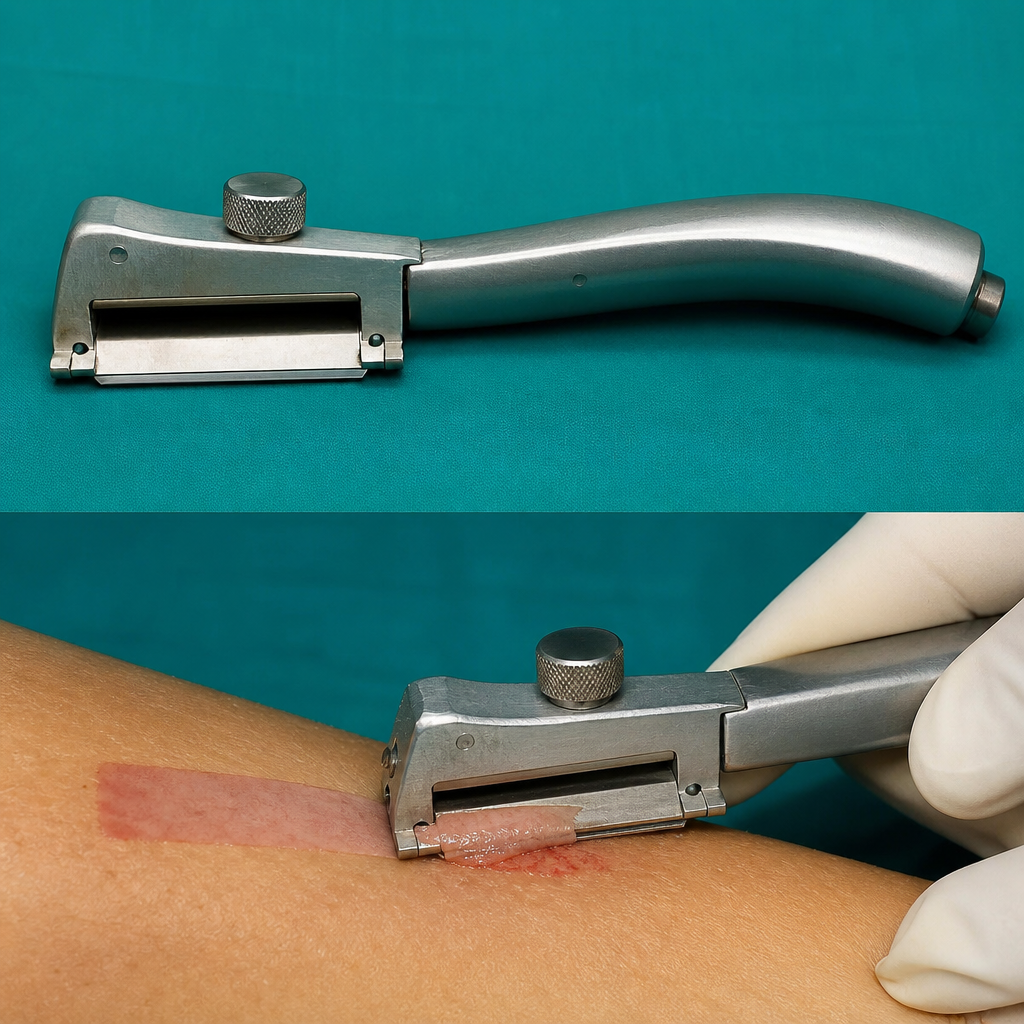
What is the name of the flap shown in the image?

Explanation: ### Explanation **1. Why Option C is Correct:** A **Split-Thickness Skin Graft (STSG)** consists of the entire epidermis and a variable portion of the underlying dermis. In maxillofacial and general reconstructive surgery, the standard thickness for an STSG ranges from **0.012 to 0.018 inches**, which translates to approximately **0.3 to 0.5 mm**. * **Intermediate thickness (0.3–0.5 mm)** is preferred because it strikes a balance: it contains enough dermis to minimize secondary contraction (shrinkage) while remaining thin enough to rely on **plasmatic imbibition** and **inosculation** for survival (revascularization) on the recipient bed. **2. Why Other Options are Incorrect:** * **Options A, B, and D:** These values (1 mm to 3 mm) are far too thick for a skin graft. The average total thickness of human skin (epidermis + dermis) varies by body site but generally ranges from 1.5 mm to 4 mm. A graft of 2–3 mm would essentially be a **Full-Thickness Skin Graft (FTSG)** or even include subcutaneous fat, which would fail to "take" via simple diffusion and would require a vascular supply (like a flap). **3. NEET-PG High-Yield Clinical Pearls:** * **Classification of STSGs:** * *Thin:* 0.15–0.3 mm (Higher "take" rate, but significant secondary contraction). * *Intermediate:* 0.3–0.45 mm (Most commonly used). * *Thick:* 0.45–0.6 mm (Better cosmesis, less contraction). * **Primary vs. Secondary Contraction:** * **Primary:** Immediate recoil after harvesting (Greater in FTSG due to elastin). * **Secondary:** Shrinkage during healing (Greater in STSG; the thinner the graft, the more it contracts). * **Donor Site Healing:** STSGs heal by **re-epithelialization** from the skin appendages (hair follicles, sweat glands) left behind in the dermis. FTSG donor sites must be closed primarily. * **Gold Standard Instrument:** The **Humby knife** or **Electric Dermatome** is typically used to harvest STSGs at these precise measurements.
Explanation: **Explanation:** **Sturge-Weber Syndrome (SWS)**, also known as encephalotrigeminal angiomatosis, is a neurocutaneous disorder characterized by the presence of a **Port-Wine Stain (PWS)**. A PWS is a congenital capillary malformation (nevus flammeus) that typically presents as a flat, purple-red patch on the face, most commonly following the distribution of the ophthalmic (V1) and maxillary (V2) branches of the trigeminal nerve. The underlying pathology involves a somatic mutation in the *GNAQ* gene, leading to malformed capillary-like vessels. **Analysis of Incorrect Options:** * **Von Hippel-Lindau (VHL) Syndrome:** Characterized by hemangioblastomas (cerebellum/retina), renal cell carcinoma, and pheochromocytoma. It does not typically feature port-wine stains. * **Denys-Drash Syndrome:** Defined by a triad of Wilms tumor, pseudohermaphroditism, and early-onset renal failure (nephropathy). * **Holt-Oram Syndrome:** An "heart-hand" syndrome involving radial ray defects (e.g., absent thumb) and cardiac septal defects (ASD/VSD). **Clinical Pearls for NEET-PG:** * **SWS Triad:** 1. Facial Port-Wine Stain; 2. Leptomeningeal angiomas (ipsilateral); 3. Glaucoma. * **Radiology:** Skull X-ray or CT may show **"Tram-track" calcifications** in the cerebral cortex due to leptomeningeal involvement. * **Management:** Pulsed Dye Laser (PDL) is the gold standard treatment for the Port-Wine Stain. * **Important Association:** If a PWS involves the eyelids, there is a high risk of associated glaucoma and intracranial involvement.
Explanation: The primary goal of facial suturing is to achieve wound closure with minimal scarring. Suture marks (cross-hatching) occur when sutures are left in place long enough for epithelialization to occur along the suture track, creating permanent "railroad track" scars. **Explanation of the Correct Answer:** * **3-5 days (Option B):** The face has an excellent vascular supply, which promotes rapid healing compared to other body parts. By day 3 to 5, the wound has gained sufficient tensile strength to remain closed without the support of percutaneous sutures, provided there is no excessive tension. Removing them within this window prevents the formation of permanent suture tracks while ensuring the wound edges are stable. **Analysis of Incorrect Options:** * **72 hours (Option A):** While some very fine sutures can be removed at 72 hours, 3-5 days is the standard clinical window. Removing all facial sutures at 72 hours may increase the risk of wound dehiscence (gaping) if the initial inflammatory phase of healing is not yet complete. * **1 week (Option C):** Leaving sutures for 7 days on the face significantly increases the risk of permanent scarring and epithelial ingrowth into the suture tracks. This duration is more appropriate for the scalp or neck. * **2 weeks (Option D):** This is the standard duration for areas under high tension or with poor blood supply, such as the back, knees, or feet. On the face, this would lead to severe, permanent disfigurement. **High-Yield Clinical Pearls for NEET-PG:** * **Suture Removal Timeline:** * **Face:** 3–5 days (to prevent scarring). * **Scalp:** 7–10 days. * **Trunk/Extremities:** 10–14 days. * **Joints/Back:** 14 days. * **Technique Tip:** To prevent dehiscence after early suture removal on the face, clinicians often apply **Steri-Strips** (adhesive tapes) for an additional 5–7 days to support the wound. * **Suture Material:** Monofilament synthetic sutures (like Prolene or Ethilon) are preferred on the face to minimize tissue reaction.
Explanation: **Explanation:** The **Abbe-Estlander flap** is a classic **cross-lip arterialized flap** used for the reconstruction of full-thickness defects of the lip. The procedure involves transferring a wedge-shaped portion of one lip (containing skin, muscle, and mucosa) to the opposite lip, based on the **labial artery** (a branch of the facial artery). * **Abbe Flap:** Specifically used for defects in the **middle** of the upper or lower lip. It is a two-stage procedure where the flap remains attached by a vascular pedicle for 2–3 weeks before being divided. * **Estlander Flap:** A variation used for defects involving the **oral commissure** (corner of the mouth). Unlike the Abbe flap, it is typically a one-stage procedure but may require secondary commissuroplasty. **Analysis of Incorrect Options:** * **B. Tongue:** Reconstruction usually involves primary closure (small defects) or microvascular free flaps like the Radial Forearm Free Flap (RFFF) for larger defects. * **C. Eyelid:** Common flaps include the **Hughes flap** (tarsoconjunctival) or **Tripier flap** (musculocutaneous). * **D. Ear:** Reconstruction often utilizes autologous costal cartilage grafts or local skin flaps like the **Nagata** or **Brent** techniques. **High-Yield Clinical Pearls for NEET-PG:** * **Vascular Basis:** The flap is based on the **inferior or superior labial artery**, which runs between the orbicularis oris muscle and the submucosa. * **Karapandzic Flap:** Another high-yield lip reconstruction flap; it is a semi-circular rotation-advancement flap that preserves the nerve and blood supply. * **Rule of Thirds:** Lip defects <1/3 are closed primarily; 1/3 to 2/3 defects often require an Abbe-Estlander flap.
Explanation: **Explanation:** **Chronic subluxation** of the Temporomandibular Joint (TMJ) occurs when the mandibular condyle moves anterior to the articular eminence and becomes unable to return to its normal position. The **down fracture of the zygomatic arch** (also known as the **Dautrey’s procedure**) is a surgical intervention designed to create a mechanical barrier. By fracturing the zygomatic arch and displacing it downward, the surgeon creates a physical obstruction that prevents the condyle from over-translating anteriorly, thereby preventing recurrent dislocation. **Analysis of Incorrect Options:** * **TMJ Ankylosis:** This involves the fusion of the joint (fibrous or bony), leading to restricted mouth opening. Treatment typically involves gap arthroplasty or interpositional arthroplasty, not the creation of a bony block. * **Condylar Fracture:** These are managed via closed reduction (maxillomandibular fixation) or open reduction with internal fixation (ORIF) using mini-plates. Down fracturing the arch would not stabilize a condylar fracture. * **Zygomatic Fracture:** These are traumatic injuries (e.g., Tripod fracture) requiring reduction and fixation to restore facial contour and volume. Down fracturing is a deliberate surgical maneuver, not a treatment for a pre-existing fracture. **High-Yield Clinical Pearls for NEET-PG:** * **Dautrey’s Procedure:** Specifically refers to the down-fracturing of the zygomatic arch for chronic subluxation. * **Eminectomy:** Another surgical option for chronic dislocation where the articular eminence is removed to allow the condyle to move freely back into the fossa. * **Safety:** When operating on the zygomatic arch, the **temporal branch of the facial nerve** is the structure most at risk.
Explanation: The **Karpandzic flap** is the correct answer because it is a **sensate, functional, and neuromuscularly intact** flap used for large lip defects (usually 1/2 to 2/3 of the lip). ### Why Karpandzic Flap is Correct: The Karpandzic technique is a **sliding neurovascular musculocutaneous flap**. Unlike other flaps that involve simple transposition, this method involves a circumoral incision that carefully preserves the **labial arteries** (blood supply) and the **branches of the facial nerve** (motor supply) and **infraorbital/mental nerves** (sensory supply). By maintaining the integrity of the orbicularis oris muscle and its innervation, it ensures the reconstructed lip retains **sphincteric function and sensation**, preventing drooling and speech impairment. ### Why Other Options are Incorrect: * **Abbe Flap:** This is a **cross-lip flap** used for central defects. It is a staged procedure where a wedge of the lower lip is transferred to the upper lip. It is initially denervated and requires a second stage to divide the pedicle. * **Webster Flap:** A modification of the Bernard flap, it uses cheek advancement to reconstruct the lower lip. While effective for total lip reconstruction, it involves significant tissue rearrangement and does not prioritize neuromuscular preservation as its primary mechanism. * **Johansen Flap:** Also known as the "staircase" or "step" flap, it is used for lower lip defects. It relies on advancing rectangular flaps but does not offer the same level of functional neuromuscular preservation as the Karpandzic. ### High-Yield Clinical Pearls for NEET-PG: * **Small defects (<1/3):** Primary closure is sufficient. * **Medium defects (1/3 to 2/3):** Karpandzic (functional) or Abbe/Estlander (transposition). * **Large defects (>2/3):** Karapandzic or Bernard-Webster flaps. * **Key Advantage of Karpandzic:** Maintenance of the **oral commissure** and **lip competence** (sphincter action). * **Key Disadvantage:** It can result in **microstomia** (small mouth opening) because it uses existing lip tissue to close the gap.
Explanation: The correct answer is **B. Arterial supply to skin flaps**. ### **Explanation** The names **Manchot, Salmon, and Taylor** are synonymous with the historical and anatomical evolution of our understanding of the **vascular territories of the skin**. 1. **Manchot (1889):** He was the first to map the skin into specific vascular territories based on the distribution of cutaneous arteries. 2. **Salmon (1936):** He refined this work using lead oxide injections and radiography, identifying approximately 80 distinct anatomical territories. 3. **Ian Taylor (1987):** He introduced the modern **"Angiosome" concept**. An angiosome is a three-dimensional block of tissue (skin, fascia, muscle, and bone) supplied by a specific source artery. This concept is the foundation of modern reconstructive surgery, allowing surgeons to design reliable skin and composite flaps. ### **Why other options are incorrect:** * **A & C:** While the skin has complex lymphatic and nerve networks, these specific researchers focused exclusively on the macro and micro-circulation (arterial supply). * **D:** Nerve supply to muscles is described by different anatomical principles (e.g., Hilton’s Law), not the angiosome theory. ### **High-Yield Clinical Pearls for NEET-PG:** * **Angiosome:** The composite unit of tissue supplied by a single source artery. * **Choke Vessels:** These are reduced-caliber vessels that connect adjacent angiosomes. They act as "safety valves" that can dilate to maintain flap viability if a neighboring source artery is cut. * **Venosome:** The corresponding venous drainage territory of a specific vein. * **Clinical Application:** The angiosome concept is vital in planning **pedicled and free flaps** (e.g., Radial Forearm Flap, ALT flap) and in managing peripheral vascular disease (revascularizing the specific angiosome where an ulcer is located).
Explanation: ### Explanation The survival of a **free skin graft** depends entirely on the vascularity of the recipient bed. For a graft to "take," it must undergo three stages: **plasmatic imbibition** (first 24–48 hours), **inosculation** (alignment of capillaries), and **revascularization** (neovascularization). **Why "None of the above" is correct:** A skin graft can successfully survive on any recipient bed that has an adequate blood supply. **Muscle, fat, and deep fascia** are all vascularized tissues capable of supporting a graft. Therefore, a graft is **not** typically rejected by any of these tissues. **Analysis of Options:** * **A. Muscle:** This is an excellent recipient bed due to its high vascularity and rich capillary network, which facilitates rapid inosculation. * **B. Fat:** While subcutaneous fat is less vascular than muscle, a healthy, non-infected layer of fat can still support a skin graft. * **C. Deep Fascia:** Fascia is a well-vascularized connective tissue that provides a stable and receptive surface for grafting. **When does a graft fail?** A graft will fail (be "rejected" or fail to take) if placed on **avascular surfaces**. High-yield examples of poor recipient beds include: 1. **Cortical bone** (without periosteum) 2. **Cartilage** (without perichondrium) 3. **Tendons** (without paratenon) 4. **Infected wounds** or tissues with heavy bacterial load (>10⁵ organisms/gram). **NEET-PG High-Yield Pearls:** * **Gold Standard:** The best recipient bed is healthy **granulation tissue**. * **Primary Contraction:** Occurs immediately after harvesting (highest in Full-Thickness Skin Grafts - FTSG). * **Secondary Contraction:** Occurs during healing (highest in Split-Thickness Skin Grafts - STSG). * **The "Take":** If a graft is placed on bare bone or tendon, a **flap** (which carries its own blood supply) is required instead of a graft.
Explanation: ### Explanation **Correct Option: D. Splenic injury** The clinical presentation of left-sided lower chest/upper abdominal pain following blunt trauma, coupled with left shoulder pain, is a classic description of **Splenic Injury**. The referred pain to the left shoulder is known as **Kehr’s sign**. It occurs due to blood in the peritoneal cavity irritating the phrenic nerve (C3-C5) at the level of the diaphragm. In pediatric and adolescent patients, the spleen is the most commonly injured organ in blunt abdominal trauma. **Analysis of Incorrect Options:** * **A. Rib fractures:** While common in blunt trauma, they do not typically cause referred shoulder pain unless associated with underlying organ injury. * **B. Liver injury:** This typically presents with **right-sided** upper abdominal pain. Referred pain from liver injury or gallbladder irritation would be felt in the **right shoulder** (Boas' sign). * **C. Ruptured diaphragm:** While it can cause shoulder pain, it is less common than splenic injury and usually presents with significant respiratory distress and bowel sounds heard in the chest cavity on auscultation. **NEET-PG High-Yield Pearls:** * **Kehr’s Sign:** Classic sign of splenic rupture (referred pain to the left shoulder). * **Ballance’s Sign:** Fixed dullness to percussion in the left flank and shifting dullness in the right flank (indicates splenic hematoma/rupture). * **Investigation of Choice:** **CECT Abdomen** is the gold standard for hemodynamically stable patients. **FAST** (Focused Assessment with Sonography for Trauma) is the initial screening tool for unstable patients. * **Management:** In children, **Non-Operative Management (NOM)** is the preferred strategy even for high-grade injuries, provided the patient is hemodynamically stable.
Explanation: ***Rhomboidal Flap*** - A **geometric transposition flap** with specific **60° and 120° angles** forming a **parallelogram shape**, designed by Limberg for precise defect closure. - Functions as a **local transposition flap** that rotates adjacent tissue into the defect, commonly used for **facial**, **trunk**, and **extremity** reconstructions. *Rotational Flap* - A **semicircular flap** that pivots around a **fixed point** to cover defects, requiring a **curved incision** rather than geometric angles. - Lacks the specific **parallelogram geometry** and **angular measurements** characteristic of the rhomboidal design. *Transposition Flap* - A **generic category** of flaps that move laterally over intervening tissue, but without the **specific 60°/120° geometry**. - The rhomboidal flap is actually a **specialized type** of transposition flap, making this option less specific. *Advancement Flap* - Involves **direct forward movement** of tissue without rotation, using **straight-line incisions** parallel to the defect. - Does not involve the **angular geometry** or **rotational movement** seen in rhomboidal flap design.
Wound Healing
Practice Questions
Skin Grafts
Practice Questions
Flap Surgery Principles
Practice Questions
Local Flaps
Practice Questions
Regional Flaps
Practice Questions
Microsurgical Techniques
Practice Questions
Tissue Expansion
Practice Questions
Breast Reconstruction
Practice Questions
Hand Surgery Basics
Practice Questions
Craniofacial Surgery Principles
Practice Questions
Aesthetic Surgery Concepts
Practice Questions
Body Contouring
Practice Questions
Get full access to all questions, explanations, and performance tracking.
Start For Free