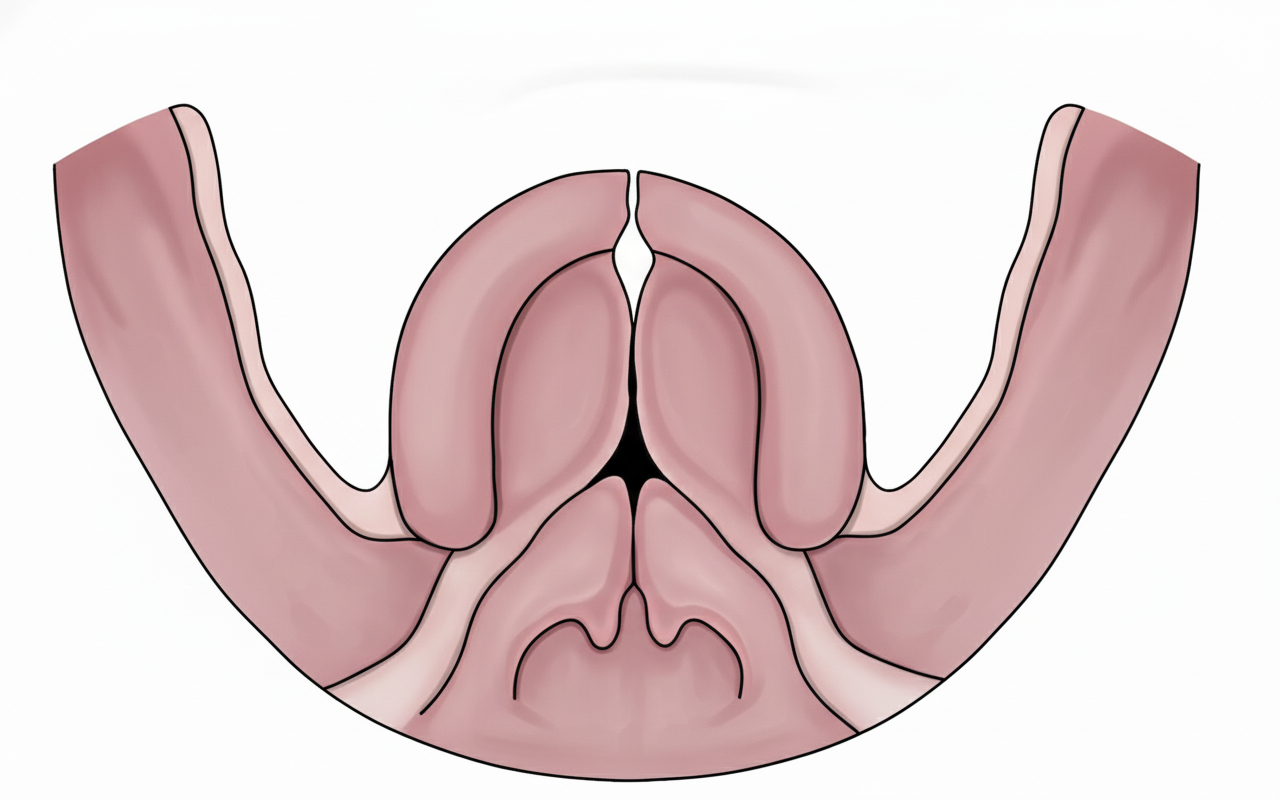
What is the characteristic of Poland Syndrome?
What will not happen with inadequate resuspension?
A male presents with multiple soft, non-fixed swellings over his body and a positive family history. What is the most likely diagnosis?
To assess the perfusion in a free flap, what is the best technique?
Blisters are characteristically seen in which type of burn?
A 70-year-old male with a known malignancy presents with elevated erythropoietin levels and a packed cell volume (PCV) of 52%. Which tumor is most likely responsible?
What is Cock's peculiar tumor?
A 7-year-old boy presents after a motorcycle crash sustained while unrestrained in the back of a minivan. His vital signs are stable, but he complains of left upper quadrant abdominal pain. A FAST scan reveals scanty fluid in the left colic gutter. An abdominal and pelvic CT scan with intravenous and oral contrast shows a splenic parenchymal blush (arterial extravasation) and a deep parenchymal tear, classifying the spleen as a grade III injury. The child remains hemodynamically stable. What is the recommended next step?
What is the most common pathology seen in the scalp?
What is true about cleft lip?
Explanation: **Explanation:** **Poland Syndrome** is a rare congenital anomaly characterized by the underdevelopment or absence of the chest wall muscles on one side of the body. The hallmark of this condition is the **absence of the sternocostal head of the Pectoralis major muscle**. 1. **Why Option A is Correct:** In Poland Syndrome, the primary defect involves the Pectoralis major. Because the underlying pectoral fascia and muscle are crucial for breast development, patients often present with **Amastia** (absence of breast tissue) or severe breast hypoplasia. Therefore, the combination of Amastia and the absence of the Pectoralis major is the defining characteristic. 2. **Why Other Options are Incorrect:** * **Options B & D:** **Athelia** refers specifically to the absence of the nipple-areola complex. While the nipple may be small or displaced in Poland Syndrome, the complete absence of the nipple (athelia) is less common than the absence of the breast gland itself (amastia). * **Options C & D:** While the **Pectoralis minor** may also be absent in severe cases, the diagnostic "must-have" feature for Poland Syndrome is the absence of the **Pectoralis major**. **NEET-PG High-Yield Pearls:** * **Laterality:** It is most commonly **unilateral** and occurs more frequently on the **right side**. * **Associated Features:** Often associated with **ipsilateral Symbrachydactyly** (short, webbed fingers). * **Etiology:** Thought to be caused by a vascular insult (interruption of blood supply) in the **subclavian artery** during the 6th week of gestation. * **Rib Defects:** May involve absence of the 2nd to 4th ribs, leading to lung herniation or paradoxical chest wall movement.
Explanation: ### Explanation This question focuses on the complications associated with **inadequate resuspension of soft tissues** during facial reconstructive or aesthetic surgeries (such as rhytidectomy or maxillofacial trauma repair). **Why Malar Prominence is the Correct Answer:** Malar prominence refers to the aesthetic projection of the cheekbones. Inadequate resuspension leads to **ptosis (sagging)** of the malar fat pad and overlying skin due to gravity. Therefore, inadequate resuspension causes a **loss of malar prominence** (flattening of the midface), rather than creating it. A prominent malar region is the *goal* of successful suspension, not a complication of its failure. **Analysis of Incorrect Options:** * **Temporal Hollowing:** This occurs when the temporal fat pad is not properly resuspended or is devascularized during surgery (often seen after coronal incisions). It results in a sunken appearance of the temples. * **Angle of Mouth Drooping:** The suspension of the SMAS (Superficial Musculoaponeurotic System) and midface tissues supports the oral commissure. Failure to resuspend these layers leads to downward migration, contributing to a "sad" expression and deepening of melolabial folds. * **Witch’s Chin (Ptosis of the Mentum):** This is a classic complication of inadequate resuspension of the mentalis muscle or soft tissues of the chin following procedures like osseous genioplasty or chin implant removal. The tissue sags inferiorly, creating a hooked appearance. **High-Yield Clinical Pearls for NEET-PG:** * **SMAS (Superficial Musculoaponeurotic System):** The critical layer in facial reanimation and lifting; it is continuous with the platysma inferiorly and the galea superiorly. * **Facial Nerve Protection:** During midface suspension, the most vulnerable branch is the **frontal (temporal) branch**, which runs along the Pitanguy’s line. * **The "Malar Mound":** Successful resuspension restores the "Ogee curve," a youthful S-shaped contour of the midface in profile.
Explanation: ### Explanation **Correct Answer: C. Muir-Torre syndrome** **Muir-Torre syndrome (MTS)** is a rare autosomal dominant condition and a clinical variant of Lynch syndrome (Hereditary Non-Polyposis Colorectal Cancer - HNPCC). It is characterized by the association of at least one **sebaceous gland tumor** (adenoma, epithelioma, or carcinoma) and/or **keratoacanthoma** with at least one **internal malignancy** (most commonly colorectal, followed by genitourinary). The "multiple soft, non-fixed swellings" in the clinical vignette refer to these sebaceous neoplasms, which often present as asymptomatic, skin-colored or yellowish nodules. A positive family history is a hallmark due to mutations in DNA mismatch repair genes (primarily *MSH2*). **Why other options are incorrect:** * **A. Dercum's disease (Adiposis Dolorosa):** Characterized by multiple, painful subcutaneous lipomas, typically occurring in postmenopausal, obese women. The swellings in the question were not specified as painful. * **B. Multiple Endocrine Neoplasia (MEN):** While MEN-1 can present with cutaneous findings like angiofibromas and lipomas, it primarily involves tumors of the parathyroid, pituitary, and pancreas. It is less likely to present solely with "multiple soft swellings" without systemic endocrine symptoms. * **D. Pierre Robin syndrome:** A congenital triad consisting of micrognathia, glossoptosis, and airway obstruction (often with a cleft palate). It does not present with multiple soft swellings over the body. **High-Yield Clinical Pearls for NEET-PG:** * **Muir-Torre Genetics:** Most commonly associated with **MSH2** (90%) and **MLH1** mutations. * **Screening:** Patients diagnosed with a sebaceous adenoma should be screened for internal malignancies via colonoscopy and imaging. * **Dercum’s Disease Mnemonic:** Remember the **"3 Ps"**—**P**ainful, **P**ursy (fatty), and **P**ost-menopausal. * **Gardner Syndrome:** Another differential for multiple swellings; it presents with sebaceous cysts, osteomas of the jaw, and intestinal polyposis.
Explanation: ### Explanation Monitoring free flap perfusion is critical for the early detection of microvascular compromise (arterial insufficiency or venous congestion). **Why the Prick Test is the Correct Answer:** The **Prick Test (Clinical Monitoring)** remains the **gold standard** and the most reliable technique for assessing flap viability. It involves pricking the flap with a 25-gauge needle. * **Normal:** Bright red blood within 2–3 seconds indicates healthy perfusion. * **Arterial Insufficiency:** No blood or very slow, pale flow. * **Venous Congestion:** Rapid, dark/cyanotic blood flow. Clinical assessment (color, temperature, capillary refill, and the prick test) is superior to most technologies because it is instantaneous, cost-effective, and highly accurate in experienced hands. **Analysis of Incorrect Options:** * **A. Pulse Oximetry:** While it measures oxygen saturation, it is often unreliable in flaps due to low pulsatile flow and difficulty in probe fixation. * **B. Laser Doppler Velocitometry:** This measures capillary blood flow using the Doppler shift. While sensitive, it is prone to "motion artifacts" and high false-alarm rates, making it less definitive than clinical assessment. * **C. Fluorescein and Dermal Fluorometry:** This involves IV injection of dye to check for fluorescence under a Wood’s lamp. It is invasive, can cause allergic reactions, and cannot be used for continuous monitoring. **Clinical Pearls for NEET-PG:** * **Most common cause of flap failure:** Venous thrombosis (more common than arterial). * **Critical Period:** Most flap failures occur within the first **24–48 hours**. * **Handheld Doppler:** Useful for identifying the "pedicle signal," but a positive signal does not always guarantee distal tissue perfusion. * **Gold Standard for Monitoring:** Clinical observation (Color, Temperature, Capillary Refill, and Prick Test).
Explanation: **Explanation:** The presence of **blisters (bullae)** is the hallmark clinical feature of **Superficial Second-Degree (Partial-thickness) burns**. In these burns, the injury extends through the epidermis into the papillary layer of the dermis. The damage to the dermo-epidermal junction leads to local inflammatory mediator release, causing increased capillary permeability. This results in fluid accumulation between the layers, manifesting as thin-walled, fluid-filled blisters. These wounds are typically pink, moist, and exquisitely painful because the sensory nerve endings remain intact and exposed. **Analysis of Incorrect Options:** * **Option A (Superficial first-degree burn):** These involve only the epidermis (e.g., sunburn). They present with erythema and pain but **no blisters**. The skin barrier remains intact. * **Option C (Third-degree burn):** These are full-thickness burns involving the entire dermis and underlying structures. The tissue appears leathery, charred, or waxy white. Because the dermal plexus and nerve endings are destroyed, these burns are **painless and do not form blisters.** * **Option D (Deep first-degree burn):** This is a misnomer in standard burn classification. First-degree burns are by definition superficial. If a burn is "deep," it is classified as second or third-degree. **NEET-PG High-Yield Pearls:** * **Pain Assessment:** Superficial 2nd-degree burns are the **most painful**; 3rd-degree burns are anesthetic (painless). * **Capillary Refill:** Present in superficial 2nd-degree; absent in deep 2nd-degree and 3rd-degree burns. * **Healing:** Superficial 2nd-degree burns usually heal within 7–14 days with minimal scarring. * **Rule of Nines:** Remember that 1st-degree burns are **excluded** from the Total Body Surface Area (TBSA) calculation for fluid resuscitation.
Explanation: ### Explanation **Correct Answer: A. Renal Cell Carcinoma (RCC)** The clinical presentation of elevated erythropoietin (EPO) and an increased packed cell volume (PCV) in the presence of a malignancy is a classic example of a **Paraneoplastic Syndrome**. **Renal Cell Carcinoma** is the most common tumor associated with ectopic EPO production. The tumor cells (specifically the clear cell variant) can inappropriately secrete erythropoietin, which stimulates the bone marrow to produce excess red blood cells, leading to **secondary polycythemia**. While the classic triad of RCC (flank pain, hematuria, and palpable mass) is seen in only 10% of cases, paraneoplastic syndromes like erythrocytosis, hypercalcemia, and Stauffer syndrome are high-yield diagnostic clues. **Why other options are incorrect:** * **Medullary Thyroid Carcinoma (B):** This tumor arises from parafollicular C-cells and typically secretes **Calcitonin**. It is associated with MEN 2A and 2B syndromes but does not cause erythrocytosis. * **Gastric Carcinoma (C) and Colorectal Carcinoma (D):** These GI malignancies are more commonly associated with **iron-deficiency anemia** due to chronic occult blood loss, rather than polycythemia. **High-Yield Clinical Pearls for NEET-PG:** * **Differential Diagnosis for Ectopic EPO Production:** Remember the mnemonic **"Potentially High Hematocrit"**: **P**heochromocytoma, **H**epatocellular carcinoma, **H**emangioblastoma (Cerebellar), and **R**enal cell carcinoma. * **Stauffer Syndrome:** A paraneoplastic manifestation of RCC characterized by reversible hepatic dysfunction (elevated ALP) in the absence of liver metastases. * **Most common histological type of RCC:** Clear cell carcinoma (originates from the proximal convoluted tubule).
Explanation: ### Explanation **Cock’s Peculiar Tumor** is a clinical misnomer. It is not a true neoplastic malignancy but rather a **chronic infection of a sebaceous cyst**, typically occurring on the scalp. #### Why Option C is Correct: When a sebaceous cyst (trichilemmal or pilar cyst) on the scalp undergoes recurrent infection and ulceration, it leads to the formation of exuberant, fleshy **granulation tissue**. This growth can break through the cyst wall, appearing as a fungating, foul-smelling mass that clinically mimics a Squamous Cell Carcinoma (SCC). The term "peculiar" refers to its deceptive appearance—it looks like a malignant tumor but is histologically benign. #### Why Other Options are Incorrect: * **Option A (Rodent Ulcer):** This refers to **Basal Cell Carcinoma (BCC)**. While it can occur on the face/nose, it typically presents as a pearly-bordered ulcer with telangiectasia, not a fungating mass arising from a cyst. * **Option B (Local Osteomyelitis):** This is an infection of the bone (e.g., Pott’s Puffy Tumor). While it involves the cranium, it presents as a fluctuant swelling due to subperiosteal abscess, not a fleshy, ulcerated cutaneous mass. * **Option D (Keratin Horn):** Also known as a cutaneous horn, this is a conical projection of cohesive keratin. While it can arise from a sebaceous cyst, it lacks the fleshy, fungating, and infected characteristics of Cock’s tumor. #### NEET-PG High-Yield Pearls: * **Commonest Site:** Scalp. * **Clinical Mimic:** Squamous Cell Carcinoma (Epithelioma). * **Key Differentiating Feature:** Cock’s tumor is soft and lacks the indurated base and everted edges characteristic of true malignancy. * **Treatment:** Complete excision of the cyst and the granulation tissue.
Explanation: ### Explanation The management of pediatric splenic trauma has shifted significantly toward **Non-Operative Management (NOM)** due to the risk of Overwhelming Post-Splenectomy Infection (OPSI). However, the presence of a **"blush" (active contrast extravasation)** on CT scan indicates ongoing arterial bleeding, which is a high-risk feature for NOM failure. **1. Why Option A is Correct:** In a hemodynamically stable child with a Grade III splenic injury and a CT "blush," the goal is to preserve the spleen while stopping the hemorrhage. **Angioembolization** is the gold standard intervention here. It allows for targeted control of the bleeding vessel (splenic artery or its branches) while maintaining the immunological function of the splenic parenchyma, boasting a high success rate in stable patients. **2. Why the Other Options are Incorrect:** * **Option B:** Immediate exploration (Splenectomy/Splenorrhaphy) is reserved for **hemodynamically unstable** patients who do not respond to initial fluid resuscitation. This child is currently stable. * **Option C:** If instability develops, the priority is surgical intervention (Laparotomy), not a liver-spleen scan. Repeated boluses without definitive hemorrhage control in an unstable patient delay life-saving surgery. * **Option D:** "Monitoring only" is appropriate for low-grade injuries without a blush. In the presence of arterial extravasation, observation alone carries a high risk of delayed rupture and sudden decompensation. ### Clinical Pearls for NEET-PG: * **Most common organ injured** in blunt abdominal trauma (BAT) in children: **Spleen**. * **CT Scan** is the investigation of choice for stable BAT patients. * **OPSI Risk:** Most common organism is *Streptococcus pneumoniae*. Post-splenectomy patients require vaccines against *Pneumococcus, H. influenzae,* and *Meningococcus*. * **Management Rule:** Hemodynamically **Stable** = NOM (± Angioembolization); Hemodynamically **Unstable** = Laparotomy.
Explanation: **Explanation:** The scalp is the most common site in the body for **sebaceous cysts** (also known as pilar or trichilemmal cysts). This is due to the high density of hair follicles and associated sebaceous glands in the scalp. These cysts arise from the outer root sheath of the hair follicle. Clinically, they are characterized by being firm, non-tender, and attached to the skin (often showing a characteristic **punctum**), but they remain mobile over the underlying aponeurosis. **Analysis of Options:** * **A. Dermoid:** While dermoid cysts (specifically external angular dermoids) are common in the head and neck region, they occur along lines of embryonic fusion. They are deep to the skin and often fixed to the periosteum, making them less common than sebaceous cysts. * **C. Hemangioma:** These are common benign vascular tumors of infancy, but they are not the most frequent pathology of the scalp across the general population. * **D. Metastasis:** The scalp can be a site for cutaneous metastasis (e.g., from follicular thyroid carcinoma or renal cell carcinoma), but this is a rare occurrence compared to benign cystic lesions. **NEET-PG High-Yield Pearls:** * **Cock’s Peculiar Tumor:** A sebaceous cyst on the scalp that suppurates and ulcerates, mimicking a Squamous Cell Carcinoma (fungating appearance). * **Turban Tumor:** Refers to a **cylindroma**, a benign adnexal tumor that can cover the entire scalp. * **Layers of Scalp:** Remember the mnemonic **SCALP** (Skin, Connective tissue, Aponeurosis, Loose areolar tissue, Periosteum). Sebaceous cysts reside in the **Skin** layer. * **Emissary Veins:** Located in the "Dangerous area of the scalp" (Loose areolar tissue), they can transmit infection from the scalp to the intracranial dural venous sinuses.
Explanation: ### Explanation **1. Why Option D is Correct:** Epidemiological studies consistently show that unilateral cleft lip is more common than bilateral, and among unilateral cases, the **left side** is affected significantly more often (ratio of approximately 2:1). While the exact embryological reason remains debated, this is a high-yield statistical fact frequently tested in surgical exams. **2. Analysis of Incorrect Options:** * **Option A:** Cleft lip occurs due to the failure of fusion between the **Maxillary process** and the **Medial Nasal process**. The frontal process contributes to the forehead, while the lateral nasal processes form the alae of the nose. * **Option B:** Cleft palate can be associated with both unilateral and bilateral cleft lips. In fact, approximately 70% of unilateral cleft lips are associated with a cleft palate. * **Option C:** Cleft lip is typically repaired at **3 to 6 months** of age, not in the neonatal period. Surgeons often follow the **"Rule of 10s"** to determine fitness for surgery (10 weeks old, 10 lbs weight, and 10 g/dL hemoglobin). **3. Clinical Pearls for NEET-PG:** * **Incidence:** Cleft lip (with or without palate) is more common in **males**, whereas isolated cleft palate is more common in **females**. * **Most Common Type:** Unilateral incomplete cleft lip. * **Surgical Technique:** The most common procedure for unilateral repair is the **Millard Rotation-Advancement Flap**. For bilateral repair, the **Manchester or Millard repair** is used. * **Cleft Palate Repair:** Usually performed between **9 to 18 months** to allow for maxillary growth but before significant speech development begins (Wardill-Kilner or Bardach technique).
Wound Healing
Practice Questions
Skin Grafts
Practice Questions
Flap Surgery Principles
Practice Questions
Local Flaps
Practice Questions
Regional Flaps
Practice Questions
Microsurgical Techniques
Practice Questions
Tissue Expansion
Practice Questions
Breast Reconstruction
Practice Questions
Hand Surgery Basics
Practice Questions
Craniofacial Surgery Principles
Practice Questions
Aesthetic Surgery Concepts
Practice Questions
Body Contouring
Practice Questions
Get full access to all questions, explanations, and performance tracking.
Start For Free