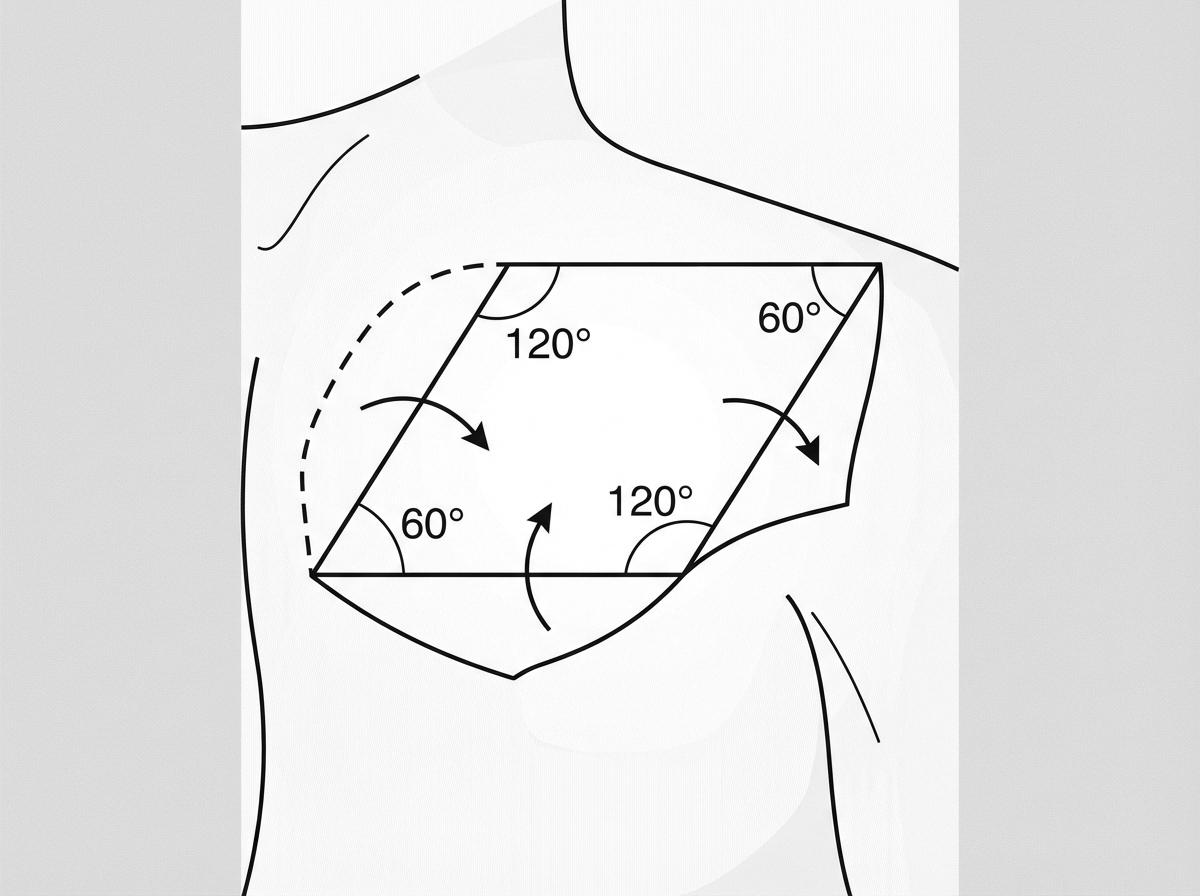
Which tissues are included in a myocutaneous flap?
All of the following are skin substitutes except?
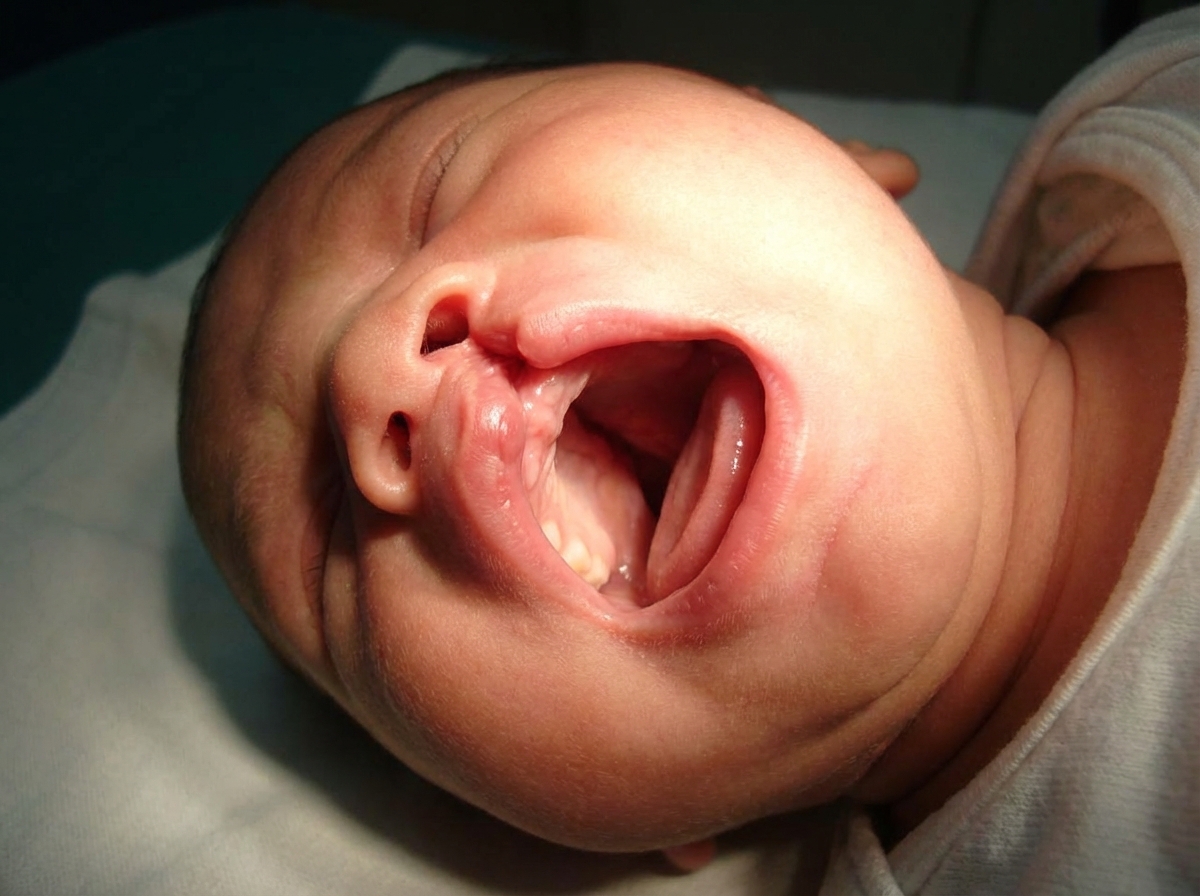
According to Veau's classification system of clefts, what group describes defects involving the soft palate up to the alveolus and usually involving the lip?
What is a Wolf's graft?
What should be the thickness of a split-thickness skin graft?
Who proposed the stripped Y classification of clefts?
Which of the following is NOT an advantage of a split-thickness skin graft?
At what age is unilateral cleft lip best repaired?
All of the following are true about carcinoma of the lip except?
What is the primary use of a dermatome?
Explanation: ### Explanation **1. Why Option D is Correct:** A **myocutaneous flap** (also known as a musculocutaneous flap) is a type of pedicled flap that consists of **skin, underlying subcutaneous tissue, and the muscle** beneath it. The defining feature of any flap—as opposed to a graft—is that it maintains its own blood supply. Therefore, it must include a **vascular pedicle** (artery and vein) that supplies the muscle, which in turn provides blood to the overlying skin via **musculocutaneous perforators**. **2. Why Other Options are Incorrect:** * **Option A (Muscle only):** This describes a **muscle flap**. It is used to provide bulk or cover exposed bone but does not include a skin component. * **Option B (Muscle and vascular pedicle):** This is also a description of a muscle flap. While a vascular pedicle is necessary for survival, the term "myocutaneous" specifically implies the inclusion of the "cutaneous" (skin) layer. * **Option C (Muscle and skin):** While these are the primary tissue layers, a flap cannot survive without its **vascular pedicle**. In surgical practice and NEET-PG terminology, the pedicle is the functional "lifeline" that distinguishes a flap from a free tissue graft. **3. Clinical Pearls & High-Yield Facts:** * **Blood Supply:** Myocutaneous flaps rely on **Type II or Type V** vascular patterns (Mathes and Nahai classification) most commonly. * **Common Examples:** * **Latissimus Dorsi (LD) flap:** Frequently used for breast reconstruction. * **Pectoralis Major Myocutaneous (PMMC) flap:** The "workhorse" flap for head and neck reconstruction. * **TRAM flap:** Transverse Rectus Abdominis Myocutaneous flap. * **Advantage:** They provide excellent bulk, a reliable blood supply, and can be used to fill deep three-dimensional defects. * **Key Distinction:** Unlike a skin graft (which relies on the recipient bed for nutrition), a flap carries its own "plumbing" (the vascular pedicle).
Explanation: ### Explanation The core concept in this question is distinguishing between **Skin Substitutes** (which replace the function/structure of the dermis or epidermis) and **Wound Dressings** (which merely provide a protective environment for healing). **1. Why Duoderm is the correct answer:** **Duoderm** is a **hydrocolloid dressing**, not a skin substitute. It consists of an adhesive layer containing gelatin, pectin, and carboxymethylcellulose. Its primary function is to maintain a moist wound environment, promote autolytic debridement, and provide a physical barrier against bacteria. It does not contain biological scaffolds or cellular components that integrate into the wound bed. **2. Analysis of Incorrect Options (Skin Substitutes):** * **Integra:** A **bilayered synthetic skin substitute**. It consists of a "neodermis" (bovine collagen and glycosaminoglycans) and a temporary "epidermis" (silicone membrane). It is widely used in major burns to provide a scaffold for dermal regeneration. * **Alloderm:** An **acellular dermal matrix (ADM)** derived from processed human cadaveric skin. The cells are removed to prevent immunogenic rejection, leaving a regenerative collagen scaffold. * **Trancyte:** A **biosynthetic skin substitute** consisting of a nylon mesh coated with porcine collagen, seeded with neonatal human fibroblasts. It is commonly used for partial-thickness burns. **Clinical Pearls for NEET-PG:** * **Gold Standard:** Autograft remains the gold standard for permanent wound closure. * **Biobrane:** Another high-yield biosynthetic dressing (silicone membrane + nylon mesh + porcine collagen). * **Apligraf:** A composite skin substitute containing both living dermis (fibroblasts) and epidermis (keratinocytes). * **Cultured Epithelial Autografts (CEA):** Used when donor sites are limited; involves growing a patient's own cells in a lab.
Explanation: **Explanation:** Veau’s classification (1931) is a classic system used to categorize cleft lip and palate based on the anatomical extent of the defect. * **Why Group C is correct:** **Group C** involves a **complete unilateral cleft** extending from the soft palate, through the hard palate and the alveolar ridge, usually involving the lip on one side. It represents a defect of both the primary and secondary palate. **Analysis of Incorrect Options:** * **Group A:** Describes a cleft involving only the **soft palate**. * **Group B:** Describes a cleft involving both the **soft and hard palate** (up to the incisive foramen), but the alveolar ridge remains intact. * **Group C:** (Correct) Complete unilateral cleft (Soft palate + Hard palate + Alveolus + Lip). * **Group D:** Describes a **complete bilateral cleft** involving the soft palate, hard palate, and the alveolar ridge on both sides. **High-Yield Clinical Pearls for NEET-PG:** * **Incisive Foramen:** This is the key anatomical landmark. Defects posterior to it involve the secondary palate; defects anterior to it involve the primary palate. * **Kernahan’s Striped Y Classification:** A more modern and widely used system that provides a graphic representation of the cleft. * **Rule of 10s (Millard):** Criteria for cleft lip repair: 10 weeks of age, 10 lbs weight, and 10 g/dL hemoglobin. * **Surgical Timing:** Cleft lip is typically repaired at **3–6 months**, while cleft palate is repaired at **9–18 months** (to allow for speech development but minimize maxillary growth inhibition).
Explanation: **Explanation:** A **Wolfe’s graft** (also known as a Wolfe-Krause graft) is a **Full-Thickness Skin Graft (FTSG)**. It consists of the entire epidermis and the complete thickness of the dermis. Unlike partial-thickness grafts, the subcutaneous fat is meticulously trimmed away from the undersurface to ensure successful revascularization (plasmatic imbibition and inosculation). **Why Option A is correct:** Wolfe’s grafts are preferred for small, cosmetically sensitive areas (like the face, eyelids, or fingers) because they undergo **minimal secondary contraction**, provide better color and texture match, and are more durable than partial-thickness grafts. **Why other options are incorrect:** * **Option B:** A partial-thickness (split-thickness) skin graft is known as a **Thiersch graft**. It includes the epidermis and a variable portion of the dermis. * **Option C:** A rotational flap is a type of local flap that moves tissue around a pivot point; it is not a graft as it maintains its own blood supply. * **Option D:** A vascularized fibular graft is a composite free flap used for mandibular reconstruction, involving bone and its pedicle (peroneal artery). **High-Yield Clinical Pearls for NEET-PG:** * **Primary Contraction:** Higher in FTSG (Wolfe’s) due to more elastin fibers in the dermis. * **Secondary Contraction:** Higher in STSG (Thiersch); FTSG shows minimal secondary shrinkage. * **Donor Site:** Must be closed primarily (e.g., post-auricular, supraclavicular, or groin) because no dermal elements remain for spontaneous healing. * **Graft Take:** FTSG has a higher metabolic demand and is more likely to fail than STSG if the wound bed is suboptimal.
Explanation: A **Split-Thickness Skin Graft (STSG)** consists of the entire epidermis and a variable portion of the underlying dermis. In clinical practice, STSGs are categorized based on their thickness: * **Thin (Thiersch-Ollier):** 0.12–0.3 mm (0.005–0.012 inches) * **Intermediate (Medium):** 0.3–0.45 mm (0.012–0.018 inches) * **Thick:** 0.45–0.75 mm (0.018–0.030 inches) **Option A (0.3-0.5 mm)** is the correct answer as it represents the standard range for an **intermediate-thickness STSG**, which is the most commonly utilized graft in general surgery. It strikes the best balance between "graft take" (revascularization) and durability. **Why the other options are incorrect:** * **Option B (0.5-0.7 mm):** This range represents a very thick STSG or a "near-full thickness" graft. While more durable, these have a higher metabolic demand and a lower success rate of "take" on poorly vascularized beds. * **Options C & D (1-1.25 mm):** These values exceed the typical thickness of human skin in most donor areas. A **Full-Thickness Skin Graft (FTSG)**, which includes the entire dermis, usually ranges from 0.8 mm to 1.1 mm depending on the anatomical site. **High-Yield Clinical Pearls for NEET-PG:** 1. **Graft Take:** The thinner the graft, the faster the "take" (via plasmatic imbibition and inosculation) because it has lower metabolic requirements. 2. **Contracture:** Thin STSGs undergo the most **secondary contraction** (shrinkage after healing), whereas FTSGs undergo the most **primary contraction** (immediate recoil after harvesting). 3. **Donor Site:** The donor site of an STSG heals by **re-epithelialization** from skin appendages (hair follicles, sweat glands) left in the dermis. FTSG donor sites must be closed primarily. 4. **Instrument:** A **Humby’s knife** or a **Dermatome** is used to harvest STSGs.
Explanation: **Explanation:** The classification of cleft lip and palate is a high-yield topic in plastic surgery. The correct answer is **Kernahan**, who, along with Stark, introduced the **"Stripped Y" classification** in 1958 (later modified by Kernahan in 1971). **Why Kernahan is Correct:** The Stripped Y classification is a symbolic diagram used to record the location and severity of clefts. The **incisive foramen** serves as the central anatomical landmark. * The upper limbs of the 'Y' represent the lip and alveolus (divided into three sections each). * The vertical stem represents the hard and soft palate. * Sections are shaded to indicate the extent of the cleft, providing a visual shorthand for clinical documentation. **Analysis of Incorrect Options:** * **Veau (A):** Proposed one of the earliest clinical classifications (Groups I-IV) based on the involvement of the soft palate, hard palate, and alveolar ridge, but did not use the "Y" diagram. * **Davis and Ritchie (C):** Classified clefts based on their position relative to the alveolar process (Pre-alveolar, Post-alveolar, and Alveolar). * **Tessier (D):** Famous for the classification of **craniofacial clefts** (numbered 0 to 14) based on their relationship to the orbit and midline, rather than simple cleft lip/palate. **Clinical Pearls for NEET-PG:** * **Incisive Foramen:** The embryological dividing point between the primary palate (anterior) and secondary palate (posterior). * **Rule of 10s (Millard):** Criteria for cleft lip repair—10 weeks old, 10 lbs weight, 10 g/dL Hemoglobin. * **LAHSAL Classification:** A common alphanumeric modification of the Y-system used internationally.
Explanation: To understand this question, one must differentiate between **Split-Thickness Skin Grafts (STSG)** and **Full-Thickness Skin Grafts (FTSG)** based on their composition and clinical behavior. ### 1. Why "Absence of contracture" is the correct answer (The Disadvantage) The correct answer is **A** because STSGs are notorious for **secondary contraction**. * **Mechanism:** Secondary contraction is the shrinkage of a healed graft over time, primarily caused by myofibroblasts. The degree of contraction is inversely proportional to the amount of dermis included in the graft. * Since STSGs contain only a portion of the dermis, they undergo significant secondary contraction (up to 40-60%). In contrast, FTSGs, which contain the entire dermis, show minimal secondary contraction. ### 2. Analysis of Incorrect Options (Advantages of STSG) * **B. Wide area of recipient can be covered:** STSGs can be "meshed" (expanded), allowing a small donor site to cover a much larger recipient area. This is vital in major burn cases. * **C. Donor area heals spontaneously:** Because the deep adnexal structures (hair follicles, sweat glands) remain in the donor site, re-epithelialization occurs spontaneously within 7–14 days. * **D. Good graft take-up:** STSGs have lower metabolic demands and faster "inosculation" (vessel connection) than FTSGs. They "take" more easily, even in less-than-ideal wound beds. ### 3. High-Yield Clinical Pearls for NEET-PG * **Primary Contraction:** Immediate recoil due to elastin fibers. **FTSG > STSG.** * **Secondary Contraction:** Delayed shrinkage due to myofibroblasts. **STSG > FTSG.** * **Thiersch Graft:** Another name for a very thin STSG. * **Gold Standard for Face/Hands:** FTSG (Wolfe Graft) is preferred to avoid contracture and provide better cosmesis. * **Donor Site Healing:** STSGs heal by **re-epithelialization**; FTSG donor sites must be closed **primarily** or with another STSG.
Explanation: The timing of cleft lip repair is a high-yield topic in NEET-PG. While traditional teaching often cited the "Rule of 10s," modern surgical practice has evolved toward slightly later repairs to optimize aesthetic outcomes and safety. ### **Why 5-6 Months is Correct** The current consensus for repairing a **unilateral cleft lip** is between **3 to 6 months** of age. In many standardized exams, including recent NEET-PG patterns, **5-6 months** is preferred because: 1. **Anatomical Maturity:** It allows the lip elements and landmarks to grow larger, facilitating a more precise surgical reconstruction (e.g., Millard’s rotation-advancement flap). 2. **Anesthetic Safety:** The infant is more robust, with a more mature respiratory system and better hemoglobin levels compared to the neonatal period. ### **Analysis of Incorrect Options** * **A (4-5 months):** While acceptable in some centers, it is less "ideal" than the 5-6 month window which allows for maximal growth before surgery. * **C & D (6-12 months):** These are considered **too late** for a primary lip repair. Delaying surgery beyond 6 months can lead to social stigma for the parents and may slightly interfere with early feeding patterns, though the primary concern is the missed opportunity for early anatomical correction. ### **High-Yield Clinical Pearls for NEET-PG** * **The Rule of 10s (Wilhelmsen and Musgrave):** Historically used to determine fitness for surgery: 10 weeks of age, 10 lbs weight, and 10 g/dL hemoglobin. * **Cleft Palate Repair:** Usually performed between **9 to 12 months** (must be completed before the child develops significant speech patterns). * **Most Common Type:** Left-sided unilateral cleft lip is more common than right-sided. * **Surgical Technique:** The **Millard Rotation-Advancement Flap** is the gold standard for unilateral repair; the **Tennison-Randall (Triangular flap)** is an alternative.
Explanation: **Explanation:** Carcinoma of the lip is the most common malignant tumor of the oral cavity, with **Squamous Cell Carcinoma (SCC)** being the predominant histological type. **1. Why Option C is the correct answer (False Statement):** The management of lip defects is determined by the size of the lesion. If the defect involves **1/3rd or less** of the lip, it can be managed by **primary closure (W-plasty or V-excision)** because the lip is highly elastic. The **Abbe-Estlander flap** is a cross-lip transposition flap used for larger defects, typically involving **1/3rd to 2/3rds** of the lip. **2. Analysis of Incorrect Options (True Statements):** * **Option A:** Like most oral malignancies, the classic presentation is a persistent, non-healing ulcer or an exophytic growth. * **Option B:** The **lower lip** (specifically the vermillion) is the most common site (approx. 90% of cases) due to chronic ultraviolet (UV) radiation exposure. Upper lip involvement is rarer and often associated with Basal Cell Carcinoma (BCC). * **Option D:** The Abbe-Estlander flap is an arterialized flap based on the **labial artery** (superior or inferior, depending on the donor lip). It is a full-thickness flap used to reconstruct one lip using tissue from the opposite lip. **High-Yield Clinical Pearls for NEET-PG:** * **Lymphatic Drainage:** The central part of the lower lip drains to **Submental nodes (Level Ia)**, while the lateral parts drain to **Submandibular nodes (Level Ib)**. * **Abbe vs. Estlander:** The **Abbe flap** is used for defects not involving the commissure (requires a second stage to divide the pedicle), whereas the **Estlander flap** is used for defects involving the **oral commissure**. * **Karapandzic Flap:** Used for large defects (> 2/3rds of the lip); it preserves the neurovascular supply but may result in microstomia.
Explanation: ### Explanation **Correct Answer: C. To harvest or excise a skin graft from a donor site.** A **dermatome** is a specialized surgical instrument designed to produce thin, uniform slices of skin from a donor area for use in reconstructive surgery. The primary mechanism involves an oscillating blade that can be adjusted to a specific depth, allowing the surgeon to harvest either **split-thickness skin grafts (STSG)** or **full-thickness skin grafts (FTSG)**. **Analysis of Options:** * **Option A (Incorrect):** While dermatomes have settings to *set* the desired thickness before cutting, they are not diagnostic tools used to *measure* the thickness of an existing graft. * **Option B (Incorrect):** The process of creating openings for expansion is called **meshing**, which is performed using a separate instrument known as a **Skin Graft Mesher**. Meshing increases the surface area of the graft and allows for the drainage of blood or serum (preventing hematoma/seroma). * **Option D (Incorrect):** Since the primary function is strictly the harvesting/excision of the graft, "All of the above" is incorrect. **Clinical Pearls for NEET-PG:** 1. **Types of Dermatomes:** * **Manual:** Humby’s knife, Blair’s knife, and Braithwaite’s knife (require manual skill to maintain uniform thickness). * **Electric/Air-powered:** Brown’s dermatome (most commonly used for consistent results). * **Drum-type:** Padgett’s dermatome (uses adhesive to lift skin; useful for irregular donor sites). 2. **STSG vs. FTSG:** Split-thickness grafts (harvested via dermatome) include the epidermis and a portion of the dermis, whereas Full-thickness grafts include the entire dermis. 3. **Donor Site Healing:** STSG donor sites heal by **re-epithelialization** from the remaining adnexal structures (hair follicles, sweat glands), while FTSG donor sites usually require primary closure.
Wound Healing
Practice Questions
Skin Grafts
Practice Questions
Flap Surgery Principles
Practice Questions
Local Flaps
Practice Questions
Regional Flaps
Practice Questions
Microsurgical Techniques
Practice Questions
Tissue Expansion
Practice Questions
Breast Reconstruction
Practice Questions
Hand Surgery Basics
Practice Questions
Craniofacial Surgery Principles
Practice Questions
Aesthetic Surgery Concepts
Practice Questions
Body Contouring
Practice Questions
Get full access to all questions, explanations, and performance tracking.
Start For Free