At what time is the optimal surgical timing for a sacrococcygeal teratoma?
What is the surgical treatment for duodenal atresia?
All of the following are suggestive of a low lesion in anorectal malformation except?
What is the indication for surgery in a child with an umbilical hernia?
Orchidopexy for incompletely descended testis is done after what age?
What is the most common intra-abdominal tumor in children under two years of age?
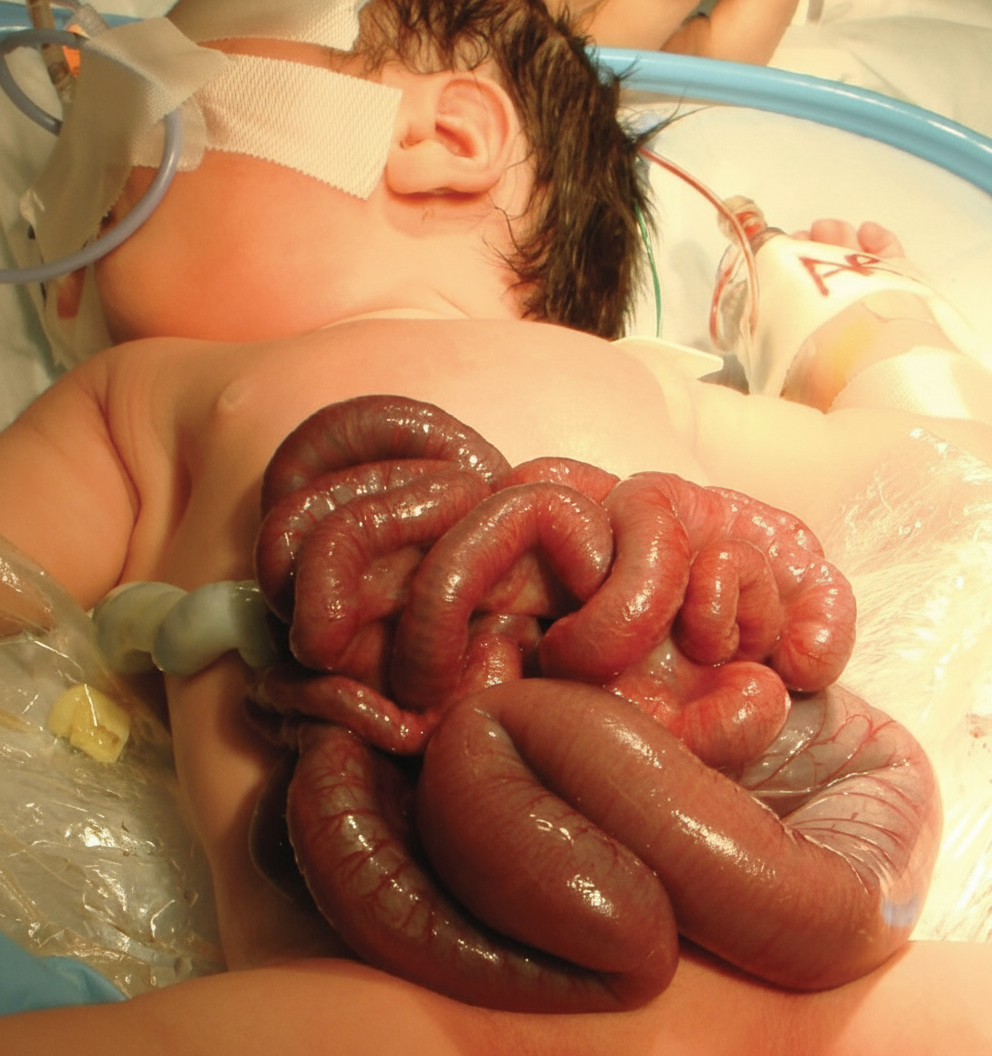
A child presented with evisceration of bowel loops coming out of a defect in the abdominal wall to the right of the umbilicus. What is the possible diagnosis?
What is the most common presentation of a double aortic arch in infants?
A 6-month-old child is brought to the clinic. The image shows the condition. What is the appropriate management protocol?

Unilateral undescended testes is ideally operated around what age?
Explanation: **Explanation:** **Sacrococcygeal Teratoma (SCT)** is the most common congenital tumor in newborns. The optimal timing for surgery is **immediately after birth** (Option A) due to two critical risks: 1. **Malignant Transformation:** While most SCTs are benign at birth, the risk of malignant change (usually to Yolk Sac Tumor) increases significantly with age. If surgery is delayed beyond the neonatal period, the incidence of malignancy rises from <10% at birth to over 50% by 2 months of age. 2. **High Output Cardiac Failure:** Large, vascular tumors can cause "vascular steal," leading to high-output heart failure and potential tumor rupture/hemorrhage during delivery or shortly after. **Why other options are incorrect:** * **Options B & C:** Waiting 2 weeks or 1 year unnecessarily exposes the infant to the risk of malignant transformation and potential rupture of the tumor. * **Option D:** Conservative management is never indicated as these tumors do not regress and carry a high mortality rate if left untreated. **High-Yield Clinical Pearls for NEET-PG:** * **Altman Classification:** Type I (predominantly external) is the most common; Type IV (entirely internal/presacral) has the highest risk of malignancy due to delayed diagnosis. * **Surgical Key:** Complete excision of the tumor **along with the coccyx** is mandatory. Failure to remove the coccyx leads to a 30-40% recurrence rate. * **Tumor Marker:** Alpha-fetoprotein (AFP) is used for monitoring recurrence post-surgery. * **Epidemiology:** More common in females (4:1 ratio).
Explanation: **Explanation:** **Duodenal Atresia** is a common cause of neonatal intestinal obstruction, characterized by the failure of recanalization of the duodenum during the 8th–10th week of gestation. **Why Duodenoduodenostomy is the Correct Answer:** The gold standard surgical treatment for duodenal atresia is a **Diamond-shaped Duodenoduodenostomy** (Kimura’s procedure). In this technique, a transverse incision is made in the proximal dilated duodenum and a longitudinal incision in the distal collapsed segment. This side-to-side anastomosis bypasses the atretic segment while preserving the normal anatomical flow and the ampulla of Vater. **Analysis of Incorrect Options:** * **Roux-en-Y procedure:** This is a diversion technique used in gastric bypass or biliary reconstruction; it is not indicated for simple intestinal atresia. * **Duodenojejunostomy:** While historically used, it is now reserved only for cases where the distal duodenum is too short or inaccessible for a direct anastomosis. It carries a higher risk of "blind loop syndrome." * **Duodenal canalization:** This is a physiological process that occurs in utero. If it fails, surgery is required; "canalization" is not a surgical procedure. **High-Yield Clinical Pearls for NEET-PG:** * **Association:** 30% of cases are associated with **Down Syndrome** (Trisomy 21). * **X-ray Finding:** The classic **"Double Bubble Sign"** (air in the stomach and proximal duodenum). * **Vomiting:** Usually **bilious** (as the atresia is typically distal to the ampulla of Vater). * **Polyhydramnios:** Frequently noted in the maternal prenatal history. * **Annular Pancreas:** This is the most common extrinsic cause leading to the same clinical presentation and treatment.
Explanation: In pediatric surgery, Anorectal Malformations (ARM) are classified into **Low, Intermediate, and High** lesions based on the relationship of the rectum to the levator ani muscle (specifically the puborectalis sling). ### Why Meconuria is the Correct Answer **Meconuria** (passage of meconium in urine) signifies a **recto-urinary fistula**, which occurs when the rectum communicates with the prostatic or bulbar urethra (in males) or the bladder neck. This anatomical communication is only possible in **High or Intermediate lesions**. In low lesions, the rectum descends through the levator muscle complex, so any fistula present will be cutaneous (perineal), not visceral. ### Explanation of Incorrect Options (Low Lesion Features) * **Bucket Handle Deformity:** A pathognomonic sign of a low lesion. It is a bridge of skin at the anal site under which a probe can be passed, often containing meconium. * **Midline Raphe Fistula:** A low lesion where a small tract runs anteriorly along the perineal raphe, often appearing as small black pearls of meconium under the skin. * **Perineal Fistula:** The most common presentation of a low lesion in both sexes. The rectum opens onto the perineum anterior to the center of the sphincter complex. ### NEET-PG High-Yield Pearls * **Invertogram (Wangensteen-Rice view):** Historically used to classify ARM; performed after **18–24 hours** of life to allow air to reach the distal rectum. * **VACTERL Association:** Most common in high lesions (Vertebral, Anal, Cardiac, Tracheo-Esophageal, Renal, Limb anomalies). * **Management:** Low lesions usually require a **primary anoplasty**. High lesions require a three-stage procedure: **Colostomy → PSARP (Posterior Sagittal Anorectoplasty/Pena’s procedure) → Colostomy closure.**
Explanation: **Explanation:** Umbilical hernias in children are common congenital defects caused by the failure of the umbilical ring to close. Unlike inguinal hernias, most pediatric umbilical hernias undergo **spontaneous closure** as the abdominal muscles strengthen and the ring narrows. **Why "All of the Above" is Correct:** Surgery (Umbilical Herniorrhaphy) is indicated when spontaneous closure is unlikely or when complications arise: * **Age (Option A):** Most hernias close by age 2. If a hernia persists beyond **3 to 4 years of age**, the likelihood of spontaneous closure significantly decreases, making surgical intervention necessary. * **Size (Option B):** The diameter of the fascial defect is a strong predictor of outcome. Defects **greater than 1.5–2 cm** in diameter are unlikely to close on their own and carry a higher risk of persistence into adulthood. * **Symptoms (Option C):** While incarceration is rare (approx. 5%), any hernia that is **symptomatic** (pain, skin changes, or episodes of incarceration/strangulation) requires prompt surgical repair regardless of age or size. **Clinical Pearls for NEET-PG:** * **Observation:** The standard management for asymptomatic hernias in infants is "watchful waiting." * **Incarceration Risk:** Umbilical hernias have a much lower risk of strangulation compared to inguinal hernias. * **Associated Conditions:** Be aware that umbilical hernias are more common in children with **Trisomy 21 (Down Syndrome)**, **Hypothyroidism**, and **Beckwith-Wiedemann Syndrome**. * **Surgical Technique:** In children, the repair is usually a simple primary closure of the fascia (Mayo’s repair is historically described, but simple transverse closure is standard). Mesh is rarely required in pediatric cases.
Explanation: **Explanation:** The management of undescended testis (cryptorchidism) is governed by the physiological timeline of testicular descent and the risk of germ cell degradation. **1. Why 1 year is the correct answer:** Most testes that are undescended at birth will complete their descent spontaneously within the first 3 to 6 months of life, driven by the postnatal "mini-puberty" surge in testosterone. If the testis has not descended by **6 months**, spontaneous descent is unlikely. Current clinical guidelines (AUA/EAU) recommend performing orchidopexy between **6 and 12 months** of age. In the context of standard textbook options for NEET-PG, **1 year** is the definitive milestone by which the surgery should be completed to prevent histological changes, such as loss of spermatogonia and Leydig cell atrophy, which begin as early as 12–18 months. **2. Why other options are incorrect:** * **Birth:** Surgery is never done at birth because there is a high probability of spontaneous descent during the first few months of life. * **2 years:** Waiting until 2 years is now considered outdated. Delaying surgery beyond 12–18 months significantly increases the risk of infertility and the potential for malignant transformation (germ cell tumors). * **5 years:** This is far too late. By age 5, irreversible damage to the germinal epithelium has usually occurred, severely compromising future fertility. **Clinical Pearls for NEET-PG:** * **Most common site:** Inguinal canal. * **Most common complication (if untreated):** Infertility (bilateral > unilateral) and Inguinal Hernia (due to patent processus vaginalis). * **Malignancy risk:** Orchidopexy does not eliminate the risk of testicular cancer (most commonly **Seminoma**), but it makes the testis accessible for clinical palpation and screening. * **Investigation of choice:** Ultrasonography is often used, but **Diagnostic Laparoscopy** is the gold standard for locating a non-palpable intra-abdominal testis.
Explanation: **Explanation:** **Neuroblastoma** is the most common extracranial solid tumor of childhood and the **most common intra-abdominal tumor in children under two years of age**. It originates from primordial neural crest cells of the sympathetic nervous system, most frequently occurring in the adrenal medulla (approx. 40%). Its peak incidence is in infancy (median age 19 months), which distinguishes it from other pediatric malignancies. **Analysis of Options:** * **Wilms’ Tumor (Nephroblastoma):** While it is the most common primary renal tumor in children, its peak incidence is between **3 to 4 years of age**. It rarely presents in children under one year. * **Hepatoblastoma:** This is the most common primary liver tumor in children, but it is significantly less frequent overall than neuroblastoma. * **Lymphoma:** While common in older children and adolescents (specifically Burkitt’s lymphoma in the abdomen), it is rare in the infant age group. **High-Yield Clinical Pearls for NEET-PG:** * **Clinical Presentation:** Neuroblastoma often presents as a firm, irregular, nodular abdominal mass that **crosses the midline** (unlike Wilms’ tumor, which is usually smooth and rarely crosses the midline). * **Diagnostic Markers:** Elevated urinary catecholamines (**VMA and HVA**) are found in 90% of cases. * **Opsoclonus-Myoclonus Syndrome:** A classic paraneoplastic syndrome ("dancing eyes, dancing feet") associated with neuroblastoma. * **Prognosis:** The **N-myc (MYCN) oncogene** amplification is the most important indicator of poor prognosis. * **Staging:** The presence of "blueberry muffin" skin nodules and massive hepatomegaly characterizes Stage 4S, which often has a favorable prognosis due to spontaneous regression.
Explanation: ### Explanation The clinical presentation of bowel loops protruding through a defect to the **right of the umbilicus** is the classic hallmark of **Gastroschisis**. **1. Why Gastroschisis is Correct:** Gastroschisis is a full-thickness paraumbilical abdominal wall defect (usually <4 cm) occurring almost exclusively to the right of a normally inserted umbilical cord. It results from an involution of the second right vitelline artery. Because there is **no peritoneal sac** covering the herniated contents, the bowel loops are directly exposed to amniotic fluid, leading to a thickened, edematous, and "matted" appearance (chemical peritonitis). **2. Why Other Options are Incorrect:** * **Exomphalos (Omphalocele):** The defect occurs **at the umbilicus** (central), and the herniated viscera are **covered by a sac** consisting of peritoneum and amnion. The umbilical cord inserts directly into the apex of the sac. * **Umbilical Hernia:** This is a protrusion through a weak umbilical ring **covered by intact skin**. It rarely presents as evisceration and usually resolves spontaneously. * **Patent Urachus:** This is a communication between the bladder and the umbilicus, leading to the discharge of **urine** from the umbilicus, not bowel evisceration. **3. NEET-PG High-Yield Pearls:** * **Gastroschisis:** Associated with **young maternal age**, smoking, and intestinal atresia (10%). It is rarely associated with chromosomal anomalies. * **Omphalocele:** Strongly associated with **chromosomal trisomies (13, 18, 21)** and syndromes like **Beckwith-Wiedemann** (macroglossia, organomegaly, hypoglycemia). * **Management:** Gastroschisis requires immediate covering with a sterile "silo" bag to prevent fluid loss and infection, followed by staged or primary surgical closure.
Explanation: **Explanation:** **Double Aortic Arch (DAA)** is the most common type of symptomatic vascular ring. It occurs when both the right and left embryonic fourth aortic arches persist, forming a complete ring around the trachea and esophagus. **1. Why Tracheal Compression is the Correct Answer:** In infants, the trachea is highly compliant and easily compressible. Because the DAA forms a tight circumferential ring, it primarily constricts the airway. This leads to **respiratory distress**, characterized by **expiratory wheezing, inspiratory stridor (often biphasic)**, and a persistent "barking" cough. These symptoms are typically more severe and present earlier than gastrointestinal symptoms because the airway is more physiologically vulnerable in infancy. **2. Analysis of Incorrect Options:** * **Option A (Dysphagia):** While the esophagus is also compressed (dysphagia lusoria), it is a muscular tube that yields more easily than the airway. Dysphagia is more common in older children or adults; in infants, respiratory symptoms almost always predominate. * **Option C (Positional hyperemia/edema):** This describes Thoracic Outlet Syndrome or Superior Vena Cava syndrome, which are not features of a congenital vascular ring. * **Option D (Bleeding):** Bleeding is not a feature of DAA. Aorto-esophageal fistulas are rare complications of long-term stenting or foreign bodies, not the primary presentation of a vascular ring. **3. NEET-PG High-Yield Pearls:** * **Gold Standard Investigation:** Contrast-enhanced CT (CECT) or MRI (to visualize the vascular anatomy). * **Initial Screening:** Barium swallow (shows bilateral indentations on the esophagus). * **Classic Sign:** "Reflex apnea" or "dying spells" during feeding. * **Surgical Management:** Division of the smaller (usually the left) arch via a left thoracotomy. * **Associated Sign:** Symptoms often improve with **neck hyperextension**, which helps pull the trachea away from the compression.
Explanation: ***Surgery after 5 years*** - **Umbilical hernias** in infants typically resolve spontaneously by age **4-5 years** as the rectus muscles strengthen and the umbilical ring closes naturally. - Surgery is indicated after **5 years of age** if the hernia persists, as spontaneous closure becomes unlikely beyond this age. *Indication of surgery if not resolved by 2 years* - Most **umbilical hernias** continue to resolve spontaneously between **2-5 years** of age, making early surgical intervention unnecessary. - The **2-year mark** is too early for surgical consideration unless there are complications like **incarceration** or **strangulation**. *Immediate surgery* - **Immediate surgery** is only indicated for complications such as **incarceration**, **strangulation**, or **bowel obstruction**. - In uncomplicated cases, **expectant management** is preferred as most umbilical hernias resolve without intervention. *Hernioplasty* - **Hernioplasty** refers to mesh repair techniques used in adult hernias, not appropriate for pediatric umbilical hernias. - Simple **herniorrhaphy** (tissue repair) is the preferred technique in children when surgery is indicated.
Explanation: ### Explanation **Correct Answer: B. 6 months of age** The management of undescended testes (cryptorchidism) is governed by the physiological timeline of testicular descent and the risk of germ cell degradation. 1. **Why 6 months is correct:** Spontaneous descent of the testes rarely occurs after the age of 3 to 4 months. By 6 months of age, if the testis has not descended, it is highly unlikely to do so spontaneously. Current international guidelines (AUA/EAU) recommend performing **Orchidopexy between 6 and 12 months of age**. Operating at 6 months minimizes the duration the testis is exposed to higher core body temperatures, which helps preserve fertility potential and reduces the risk of malignant transformation (testicular cancer). 2. **Why other options are incorrect:** * **A (2 months):** Too early. Spontaneous descent is still common during the first 3–4 months of life due to the postnatal "mini-puberty" (surge in testosterone). * **C & D (12–24 months):** While historically surgery was delayed until 1–2 years, modern evidence shows that histological changes (loss of germ cells and Leydig cell rarefaction) begin as early as 6–12 months. Delaying surgery beyond 1 year increases the risk of infertility. **Clinical Pearls for NEET-PG:** * **Most common site:** Inguinal canal (specifically just outside the external ring). * **Best Diagnostic Tool:** Physical examination is the gold standard. Imaging (USG/MRI) is generally **not** recommended for palpable testes. * **Non-palpable Testis:** Diagnostic Laparoscopy is the investigation of choice. * **Complications of UDT:** Infertility (most common), Testicular torsion, Inguinal hernia (associated Patent Processus Vaginalis), and Seminoma (most common malignancy). * **Orchidopexy** does not eliminate the risk of cancer but makes the testis accessible for screening/examination.
Neonatal Physiology
Practice Questions
Congenital Anomalies Overview
Practice Questions
Neonatal Intestinal Obstruction
Practice Questions
Necrotizing Enterocolitis
Practice Questions
Hirschsprung's Disease
Practice Questions
Anorectal Malformations
Practice Questions
Pediatric Hernias
Practice Questions
Pyloric Stenosis
Practice Questions
Biliary Atresia
Practice Questions
Pediatric Tumors
Practice Questions
Congenital Diaphragmatic Hernia
Practice Questions
Pediatric Trauma
Practice Questions
Get full access to all questions, explanations, and performance tracking.
Start For Free