Hirschsprung disease is confirmed by ?
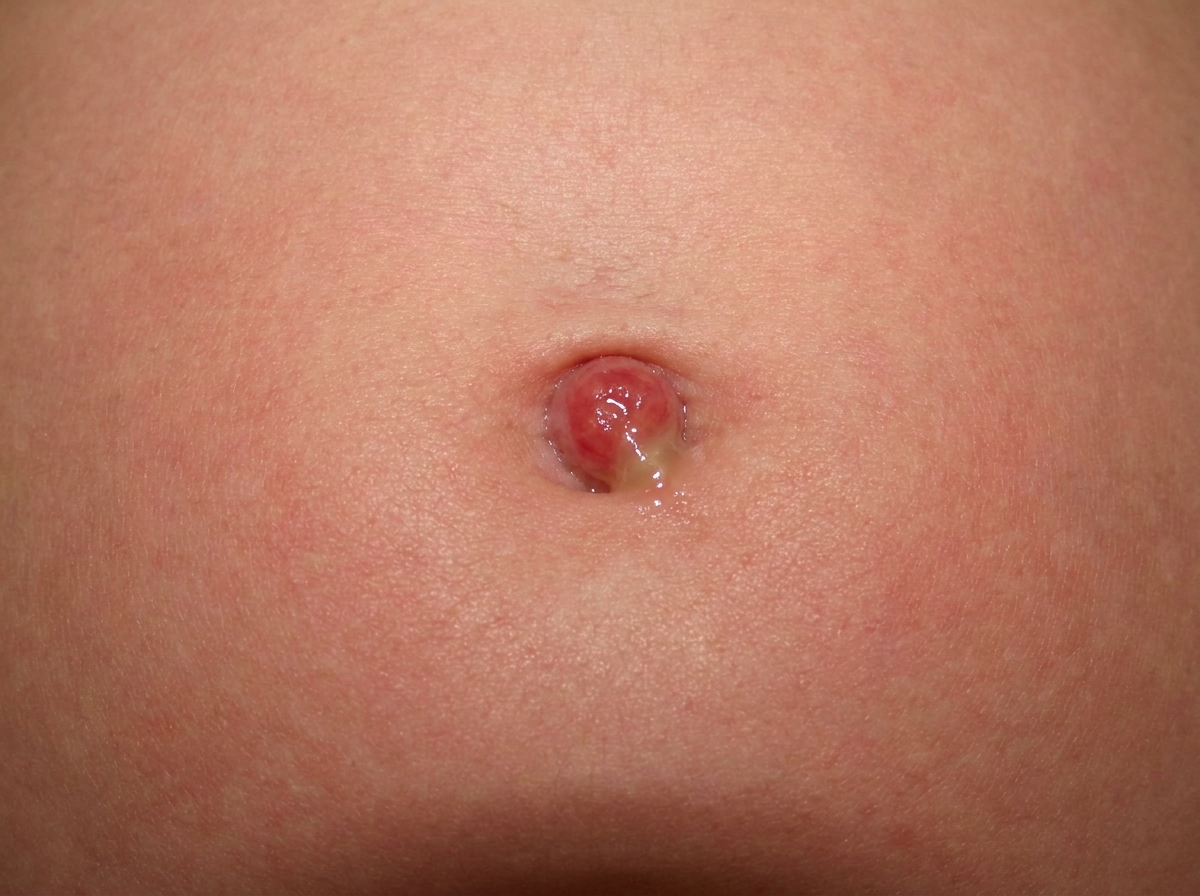
The term 'raspberry tumor' is most commonly associated with which of the following conditions?
In Congenital Diaphragmatic Hernia (CDH), the most commonly associated anomaly affects the
Best management for an inhaled foreign body in an infant is?
Biopsy in Hirschsprung's disease can be taken from which level?
The definitive surgical treatment for a congenital hydrocele is:
A 5-year-old child presents with abdominal pain and jaundice. Imaging reveals a saccular diverticulum of the extrahepatic bile duct. This condition is classified as which type of choledochal cyst?
Orchidopexy is done in cases of undescended testes at what age?
What is the most definitive indication for surgery in necrotizing enterocolitis?
What is the last resort treatment for rectal prolapse in childhood?
Explanation: ***Rectal biopsy*** - A **rectal biopsy** is the most definitive diagnostic test for Hirschsprung disease, revealing the absence of **ganglion cells** in the submucosal and myenteric plexuses. - This procedure involves taking a small tissue sample from the rectum, which is then examined under a microscope for characteristic histological changes. *Per/Rectal examination* - A **per/rectal examination** may reveal an empty rectum followed by a gush of stool and gas upon withdrawal of the finger, which is suggestive but not diagnostic. - It is a **clinical finding** that prompts further investigation but does not provide histological confirmation of aganglionosis. *Rectal manometry* - **Rectal manometry** measures pressures within the rectum and can detect the absence of the **rectoanal inhibitory reflex** (RAIR), a hallmark of Hirschsprung disease. - While highly sensitive, it is a **physiological test** indicating functional abnormalities, but it does not provide the definitive histological diagnosis of aganglionosis. *X-ray abdomen* - An **X-ray of the abdomen** may show dilated loops of bowel proximal to a narrowed, aganglionic segment, indicating intestinal obstruction. - This imaging study is useful for **initial assessment** and identifying signs of obstruction, but it is not specific for Hirschsprung disease and cannot confirm the absence of ganglion cells.
Explanation: ***Umbilical granuloma*** - An **umbilical granuloma** is a common condition in newborns, presenting as a soft, red, moist growth at the umbilicus after the umbilical cord detaches. - Its characteristic appearance, resembling a small red berry, has led to the descriptive term "**raspberry tumor**." *Umbilical fistula* - An **umbilical fistula** is an abnormal connection that can occur between the intestine or bladder and the umbilicus, leading to the discharge of stool or urine from the umbilicus. - It does not present as a fleshy, raspberry-like growth, but rather as an opening with discharge. *Meckel’s diverticulum* - **Meckel's diverticulum** is a remnant of the **vitelline duct**, typically found on the anti-mesenteric border of the ileum, and is a congenital anomaly of the small intestine. - It is an internal structure and does not manifest externally at the umbilicus as a "raspberry tumor." *Umbilical adenoma* - An **umbilical adenoma** is a rare tumor of the umbilicus, often a remnant of the **vitelline duct** or **urachus**, which can present as a reddish mass. - While it can be a reddish mass, the specific term "raspberry tumor" is not commonly associated with umbilical adenoma but rather with umbilical granuloma due to its very distinct granular appearance.
Explanation: ***Congenital heart defects*** - **Congenital diaphragmatic hernia (CDH)** is frequently associated with other congenital anomalies. - **Cardiac malformations** are the most common co-occurring defects, affecting a significant proportion of CDH patients. *Anomalies of the urinary tract* - While **urogenital anomalies** can occur with CDH, they are less prevalent than congenital heart defects. - These typically include conditions like **renal agenesis** or **hydronephrosis**. *Anomalies of the skull* - **Skull anomalies** are not a primary or common association with congenital diaphragmatic hernia. - Genetic syndromes associated with both CDH and skull anomalies are relatively rare. *Craniofacial anomalies* - **Craniofacial anomalies**, such as **cleft lip/palate**, can occur with CDH but are less common than cardiac anomalies. - These are often seen within the context of specific genetic syndromes.
Explanation: ***Bronchoscopy*** - **Bronchoscopy** is the definitive and most effective procedure for both diagnosing and removing an inhaled foreign body in an infant. - It allows direct visualization of the airways and the precise retrieval of the foreign object, preventing complications like **atelectasis** or **pneumonia**. *Tracheostomy* - **Tracheostomy** is an emergency procedure to create a surgical airway, usually reserved for severe upper airway obstruction that cannot be managed by less invasive means. - It is not the primary line of treatment for removing an inhaled foreign body, which is typically found further down in the **bronchial tree**. *Corticosteroids* - **Corticosteroids** are used to reduce inflammation and edema in the airways, but they do not remove the foreign body itself. - While they might be used as an adjunct in managing airway inflammation after removal, they are not the definitive treatment for the foreign body. *IPPV* - **Intermittent Positive Pressure Ventilation (IPPV)** is a method of respiratory support used for patients with respiratory failure. - It does not address the physical obstruction caused by an inhaled foreign body and may even push the object further into the airway or cause **pneumothorax**.
Explanation: ***2-3 cm above the dentate line*** - This is the **standard recommended site** for rectal suction biopsy in suspected Hirschsprung's disease - At this level, the biopsy reliably samples the **aganglionic segment** in most cases while avoiding the physiologically hypoganglionated zone near the dentate line - Adequate depth to examine both **submucosal and myenteric plexuses** for absence of ganglion cells - High diagnostic accuracy with minimal risk of false negatives *4 cm below dentate line* - This is **anatomically incorrect** - you cannot biopsy "below" the dentate line as this would be perianal skin, not rectal mucosa - The dentate line marks the junction between the anal canal and perianal region - This option represents an impossible biopsy location *6 cm below dentate line* - Similarly **anatomically impossible** - there is no bowel tissue 6 cm below the dentate line - This would be well outside the anal canal in the perianal skin - Not a valid biopsy site for Hirschsprung's diagnosis *At the level of dentate line* - This location is **too low** and within the physiologically hypoganglionated zone - The dentate line area normally has sparse ganglion cells even in healthy individuals - Biopsies at this level have **high false-positive rates** (may appear aganglionic when disease is not present) - Risk of sampling the internal anal sphincter, causing complications
Explanation: ***Herniotomy*** - A congenital hydrocele results from a **patent processus vaginalis (PPV)**, allowing peritoneal fluid to accumulate in the scrotum. - A **herniotomy involves the ligation and division of the PPV**, which definitively closes the communication between the peritoneal cavity and the tunica vaginalis, preventing further fluid accumulation. *Observation until 1 year* - While observation is often appropriate for congenital hydroceles, as many spontaneously resolve by **1-2 years of age**, it is not the **definitive surgical treatment**. - This approach is based on the expectation that the patent processus vaginalis may spontaneously close. *Surgical repair of hernia* - This option refers to the repair of an inguinal hernia, where abdominal contents protrude through a weakened abdominal wall. - While a **patent processus vaginalis underlies both congenital hydroceles and indirect inguinal hernias**, a hydrocele specifically implies fluid accumulation, not necessarily herniation of abdominal organs, so the term "hernia repair" is less precise for a hydrocele. *Surgical intervention for fluid drainage* - Simple fluid drainage (e.g., aspiration) provides only **temporary relief** as the fluid will reaccumulate as long as the patent processus vaginalis remains open. - This approach does not address the **underlying anatomical defect** that causes the hydrocele.
Explanation: ***Type II*** - A **Type II choledochal cyst** is characterized by a **saccular diverticulum** originating from the **extrahepatic bile duct**. - This type of cyst is a rare variant and often presents with symptoms like **abdominal pain** and **jaundice**. *Type I* - **Type I choledochal cysts** are the most common type, involving a **fusiform or cystic dilation** of the **extrahepatic bile duct**. - They do not present as a saccular diverticulum. *Type III* - **Type III choledochal cysts**, also known as **choledococele**, involve a **dilation of the intramural portion** of the common bile duct within the duodenal wall. - They are distinct from a saccular diverticulum of the extrahepatic duct. *Type IV* - **Type IV choledochal cysts** are characterized by **multiple dilations**, affecting both **intrahepatic** and **extrahepatic bile ducts**. - This widely distributed involvement differs from the localized saccular diverticulum described in the question.
Explanation: ***1 – 2 years*** - **Orchidopexy** is generally recommended between **6 and 18 months of age**, though it remains acceptable up to **2 years**. - This timeframe allows for potential spontaneous descent during the first 6 months of life while minimizing the duration of adverse effects on testicular development and function. - Early intervention (ideally before 18 months) helps prevent long-term complications of cryptorchidism, such as **infertility** and **increased risk of malignancy**. *Neonate* - Most cases of **undescended testes** in neonates are due to a **physiological delay** in descent, with spontaneous descent often occurring within the first **6 months**. - Performing surgery at the neonatal stage is considered **premature**, as observation is the initial approach. *5 years* - Delaying **orchidopexy** until 5 years of age is generally considered too late, as prolonged exposure to higher temperatures in the abdomen leads to **irreversible damage** to germ cells and an increased risk of malignancy. - The optimal window for preserving testicular function and reducing cancer risk is missed by this age. *Puberty* - Performing orchidopexy at **puberty** is significantly delayed and will not reverse the **damage to fertility potential** or the increased risk of testicular cancer that has already occurred. - By this age, the primary benefits of early intervention are largely lost, and the surgery is mainly to allow for easier **self-examination** for malignancy.
Explanation: ***Pneumoperitoneum- Stage IIIB of NEC*** - **Pneumoperitoneum** (free air in the peritoneal cavity) is the **most definitive indication** for immediate surgical intervention in necrotizing enterocolitis (NEC), as it provides radiological proof of bowel perforation. - This finding represents advanced disease (**Stage IIIB** according to the **modified Bell's staging criteria**) and is an **absolute indication for surgery**. - Pneumoperitoneum is detected on plain abdominal radiographs or cross-table lateral films and indicates full-thickness bowel necrosis with perforation. *Pneumatosis intestinalis- Stage IIA of NEC* - **Pneumatosis intestinalis** (intramural gas in the bowel wall) is a hallmark radiological sign of NEC but does **not** warrant surgery in Stage IIA. - Stage IIA is managed with **medical therapy** including NPO (nil per oral), nasogastric decompression, broad-spectrum antibiotics, and supportive care unless there are signs of clinical deterioration or progression to advanced stages. *Portal Vein gas- Stage IIB of NEC* - **Portal vein gas** indicates severe bowel ischemia and necrosis and is a concerning prognostic sign associated with advanced NEC (Stage IIB). - While it signifies severe disease, portal vein gas is **not an absolute indication for surgery** by itself; surgical intervention is based on overall clinical status, presence of peritonitis, or pneumoperitoneum. *Peritonitis- Stage IIIA of NEC* - Clinical signs of **peritonitis** (abdominal wall erythema, edema, tenderness, guarding, rigidity) indicate Stage IIIA NEC and **are also an indication for surgery**. - However, **pneumoperitoneum** is considered the **most definitive** indication as it provides objective radiological evidence of perforation, whereas peritonitis is based on clinical examination which can be challenging in premature neonates.
Explanation: ***Thiersch wiring*** - This procedure involves placing a **silver wire or non-absorbable suture** circumferentially around the anus to prevent external prolapse. - It is considered a **last resort** for rectal prolapse in children due to its potential complications and the fact that most childhood prolapses resolve spontaneously or with less invasive measures. - Reserved for cases that fail conservative treatment and minimally invasive options. *Lahaut's operation* - Lahaut's operation involves **injection of sclerosing agents** (sclerotherapy) into the perirectal tissues to induce fibrosis and fixation. - While this is a recognized minimally invasive approach for rectal prolapse, it is **not considered the last resort** in pediatric cases. - Thiersch wiring is typically reserved as the last surgical option when other measures fail. *Incision of prolapsed mucosa* - This is an **unconventional and potentially harmful** approach for rectal prolapse, as it risks severe bleeding, infection, and damage to the rectal tissue. - It does not address the underlying structural issues causing the prolapse and is not a recognized treatment. *Ripstein operation* - The Ripstein procedure (anterior sling rectopexy) is a **rectopexy** technique primarily used for **adult rectal prolapse**. - It involves fixing the rectum to the sacrum with a synthetic mesh and is generally too invasive for pediatric cases, especially when simpler options like Thiersch wiring are available.
Neonatal Physiology
Practice Questions
Congenital Anomalies Overview
Practice Questions
Neonatal Intestinal Obstruction
Practice Questions
Necrotizing Enterocolitis
Practice Questions
Hirschsprung's Disease
Practice Questions
Anorectal Malformations
Practice Questions
Pediatric Hernias
Practice Questions
Pyloric Stenosis
Practice Questions
Biliary Atresia
Practice Questions
Pediatric Tumors
Practice Questions
Congenital Diaphragmatic Hernia
Practice Questions
Pediatric Trauma
Practice Questions
Get full access to all questions, explanations, and performance tracking.
Start For Free