A 5-year-old child has a painless, midline neck swelling that moves with swallowing. What is the most likely diagnosis?
In a child with confirmed intussusception, what is the first-line therapeutic procedure?
A neonate presented with fever, lethargy, abdominal distension, vomiting, and constipation. What is the most likely diagnosis?
A 6-year-old child presents with fever, abdominal pain, and a positive McBurney's sign. What is the most likely diagnosis?
What is the most appropriate surgical treatment for a large omphalocele?
What is the best treatment for cystic hygroma?
Treatment of congenital hydrocephalus is -
In Kernahan's striped 'Y' classification, what is the main reference point?
Which one of the following is the most clinically significant consequence of undescended testis?
Most common impacted foreign body in esophagus in children is
Explanation: ***Thyroglossal duct cyst*** - A **midline neck swelling** that is **painless** and **moves with swallowing** or protrusion of the tongue is a classic presentation of a thyroglossal duct cyst. - This cyst develops from the **remnant of the embryonic thyroglossal duct**, connecting the thyroid gland to the tongue base. *Branchial cyst* - Typically presents as a **lateral neck mass**, usually anterior to the sternocleidomastoid muscle, not midline. - They are remnants of the **branchial arches** and are less likely to move with swallowing. *Dermoid cyst* - While dermoid cysts can occur in the neck and be midline, they are generally **not mobile with swallowing** because they are not attached to the hyoid bone or tongue. - They are congenital cysts formed from trapped skin elements. *Thyroid nodule* - A thyroid nodule would be located in the **lower anterior neck** over the thyroid gland, typically not as high as a thyroglossal duct cyst. - While it might move with swallowing, it is often firmer and may be associated with thyroid dysfunction or a history of radiation exposure, which is not mentioned here.
Explanation: ***Pneumatic reduction under fluoroscopy*** - This is the **first-line therapeutic procedure** for intussusception in hemodynamically stable children without peritoneal signs. - Uses air pressure to un-telescope the bowel segments, with success rates of **70-90%** in appropriately selected cases. - Performed under fluoroscopic or **ultrasound guidance** (ultrasound preferred in many centers to avoid radiation). - Contraindications include peritonitis, perforation, and shock. *Exploratory laparotomy* - Reserved as **second-line treatment** when pneumatic reduction fails (occurs in 10-30% of cases). - Also indicated when there are contraindications to reduction: **peritonitis, perforation, bowel necrosis**, or hemodynamic instability. - Allows manual reduction or bowel resection if necrotic segments are present. *Observation and supportive care* - Supportive measures (IV fluids, NG decompression, antibiotics) are **adjunctive** but not definitive treatment. - Intussusception requires **prompt intervention** as it can rapidly progress to bowel ischemia, necrosis, and perforation. - Observation alone is inadequate and risks serious complications. *Abdominal ultrasound only* - Ultrasound is the **gold standard for diagnosis**, showing the characteristic "target sign" or "pseudokidney sign." - However, it is **diagnostic only** and does not treat the intussusception. - Diagnosis must be followed by therapeutic intervention (reduction or surgery).
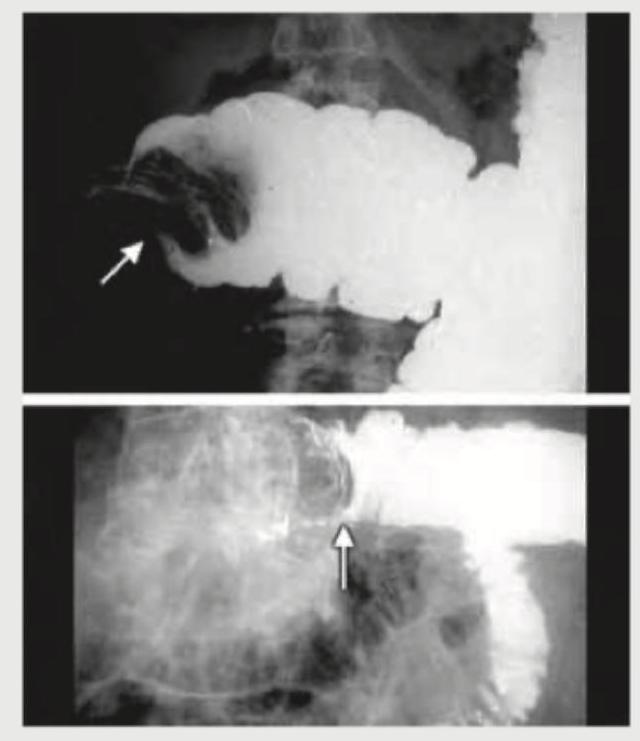
Explanation: ***Hirschsprung disease*** - The combination of **fever**, **lethargy**, abdominal distension, vomiting, and **constipation** in a neonate is highly suggestive of **Hirschsprung-associated enterocolitis (HAEC)**, a life-threatening complication of Hirschsprung disease. - HAEC presents with **systemic signs of sepsis** (fever, lethargy), **abdominal distension**, vomiting, and underlying **constipation** due to the aganglionic segment. - The presence of **constipation** as a prominent feature, along with acute systemic symptoms, makes this the most likely diagnosis. - Hirschsprung disease typically presents with failure to pass meconium in the first 24-48 hours, followed by chronic constipation, which can progress to enterocolitis. *Volvulus neonatorum* - Presents acutely with **bilious vomiting**, abdominal distension, and signs of intestinal ischemia (fever, lethargy if bowel compromise occurs). - **Key difference**: Volvulus is an acute mechanical obstruction and does **not typically present with constipation** as a primary feature—it's an acute event with bilious vomiting as the hallmark. - While fever and lethargy can occur with bowel ischemia, the symptom of constipation makes this diagnosis less likely. *Intestinal atresia* - Presents in the first few days of life with **bilious vomiting** and **abdominal distension** due to congenital obstruction. - **Constipation** may be present, but fever and severe lethargy are uncommon unless there is perforation or other complications. - The acute systemic signs (fever, lethargy) are less typical for uncomplicated atresia. *Necrotizing enterocolitis* - Primarily affects **premature infants** and presents with feeding intolerance, abdominal distension, **bloody stools**, and signs of sepsis. - While it includes fever, lethargy, and abdominal distension, **constipation** is not a typical feature—patients more commonly have bloody or altered stools. - The term neonate without mention of prematurity and the prominence of constipation make NEC less likely.
Explanation: ***Acute appendicitis*** - The classic presentation of **fever, abdominal pain**, and a **positive McBurney's sign** in a child strongly indicates acute appendicitis. - **McBurney's sign** refers to tenderness at McBurney's point, which is 2/3 of the way from the umbilicus to the anterior superior iliac spine, a hallmark of appendiceal inflammation. *Gastroenteritis* - While it can cause fever and abdominal pain, **gastroenteritis** is typically associated with **vomiting and diarrhea**, which are not mentioned here. - It does not present with a localized sign like **McBurney's tenderness**. *Meckel's diverticulitis* - **Meckel's diverticulitis** can mimic appendicitis but typically presents with **painless rectal bleeding** due to ectopic gastric mucosa or occasionally with periumbilical pain. - It is less commonly associated with a distinct McBurney's sign. *Intussusception* - **Intussusception** is characterized by sudden onset of intermittent, severe **colicky abdominal pain**, often with **currant jelly stools** (blood and mucus) and a palpable sausage-shaped mass, not typically McBurney's sign. - It is also more common in infants and toddlers, though it can occur in older children.
Explanation: ***Silo placement with gradual reduction*** - For **large/giant omphaloceles**, **silo placement** (spring-loaded silo or Silastic pouch) with **gradual reduction** is the most appropriate modern approach when primary closure is not feasible. - The silo allows for **progressive reduction of the visceral contents** back into the abdominal cavity over several days to weeks, allowing the abdominal domain to expand gradually. - This technique **minimizes intra-abdominal pressure**, reduces risk of **abdominal compartment syndrome**, and avoids respiratory and cardiovascular compromise. - The silo is progressively tightened, and once contents are reduced, definitive fascial and skin closure is performed. *Staged closure using PTFE mesh* - **PTFE mesh** or prosthetic patch repair is an alternative for large omphaloceles but is typically a **secondary option**. - It is used when silo reduction fails or for complex cases requiring reinforcement of the abdominal wall. - Mesh may be associated with complications like infection, adhesions, and need for future hernia repair. *Primary closure of the defect* - **Primary closure** is reserved for **small omphaloceles** (typically <5 cm) where the abdominal contents can be reduced and the fascial defect closed without tension. - Attempting primary closure in a **large omphalocele** can lead to **abdominal compartment syndrome** with increased intra-abdominal pressure, causing respiratory distress, renal failure, and bowel ischemia. *None of the options* - This option is incorrect as silo placement with gradual reduction is a well-established and appropriate surgical treatment for large omphaloceles.
Explanation: ***Surgical excision*** - **Complete surgical excision** is the **gold standard and definitive treatment** for cystic hygroma, offering the best chance of cure and lowest recurrence rate. - Surgery aims for **complete removal** of the lesion while preserving vital structures like nerves and blood vessels in the neck region. - **Timing**: Ideally performed between **18-24 months of age** or earlier if causing airway compromise or rapid growth. - Modern microsurgical techniques have significantly reduced complications like nerve injury. *Sclerotherapy* - **Sclerotherapy** (using agents like OK-432, doxycycline, or bleomycin) is a **second-line or adjunct treatment**, particularly useful for **macrocystic lesions**. - It is considered when complete surgical excision is difficult, for residual disease post-surgery, or in poor surgical candidates. - Has **variable success rates** (60-100% for macrocystic, lower for microcystic) and **higher recurrence** compared to complete excision. *Radiotherapy* - **Radiotherapy has NO role** in the treatment of cystic hygroma as these are benign lymphatic malformations. - Risk of **radiation-induced malignancies** and tissue damage in pediatric patients makes it contraindicated. *Chemotherapy* - **Chemotherapy is NOT indicated** for cystic hygroma as these are **benign congenital lymphatic malformations**, not malignant tumors. - Chemotherapy targets rapidly dividing malignant cells and has no effect on lymphatic malformations.
Explanation: ***Ventriculoperitoneal shunt*** - A **ventriculoperitoneal shunt** is the most common and effective treatment for congenital hydrocephalus, diverting excess **cerebrospinal fluid (CSF)** from the ventricles to the peritoneal cavity for absorption. - This surgical procedure aims to reduce **intracranial pressure** and prevent further brain damage caused by CSF accumulation. *Stereotactic radiosurgery* - This minimally invasive technique primarily treats **tumors** or **vascular malformations** in the brain, delivering high-dose radiation precisely. - It does not address the underlying **CSF flow obstruction** or **absorption issues** characteristic of hydrocephalus. *Diuretics* - Diuretics like **acetazolamide** can reduce CSF production, offering temporary or adjunctive treatment for certain forms of hydrocephalus, but they are generally **insufficient** as a primary treatment for congenital hydrocephalus. - They do not address the large-volume fluid accumulation or **obstruction** that typically requires surgical intervention in congenital cases. *Radiotherapy* - **Radiotherapy** uses radiation to destroy cancer cells and is primarily used in the treatment of **brain tumors**. - It is not a treatment for **congenital hydrocephalus**, as it does not resolve the issues of CSF accumulation or reabsorption.
Explanation: ***Incisive foramen*** - The **incisive foramen** is the central point in the Kernahan's striped 'Y' classification for cleft lip and palate. - This classification system uses the **incisive foramen** as a boundary to distinguish between primary and secondary palatal defects. *Soft palate* - While the **soft palate** can be affected in cleft conditions, it is not the main reference point for the Kernahan's striped 'Y' classification. - Defects of the **soft palate** are part of the secondary palate, but the classification's division hinges on the incisive foramen. *Hard palate* - The **hard palate** is divided into primary and secondary parts by the incisive foramen, making the foramen the key anatomical landmark in this classification. - Defects in the **hard palate** can occur, but the classification system doesn't use the entire hard palate as its primary reference. *Third molar* - The **third molar** is irrelevant to the Kernahan's striped 'Y' classification of cleft lip and palate. - This classification focuses on midfacial structures and palatal development, not on tooth development or position.
Explanation: ***Has a higher incidence of malignancy*** - **Undescended testes** (cryptorchidism) are associated with a significantly increased risk of developing **germ cell tumors**, particularly seminomas. - While other complications exist, the lifelong risk of **testicular cancer** represents the most serious clinical consequence. *Usually does not descend spontaneously at puberty.* - Spontaneous descent is most likely to occur by **6 months of age**; descent after this period, and particularly at puberty, is rare. - Waiting until puberty for descent is an outdated and potentially harmful approach due to the **increased risk of malignancy** and impaired fertility. *Orchidopexy should be performed if no descent occurs by 6 months of age.* - While early intervention is crucial, the current recommendation is to perform **orchidopexy if spontaneous descent does not occur by 6-12 months of age**. - Performing surgery earlier than 6 months is generally not recommended, as some testes may still descend spontaneously within this timeframe. *Leads to impaired sperm production due to higher internal body temperature.* - The higher temperature within the abdominal cavity or inguinal canal does indeed **impair spermatogenesis**, leading to reduced fertility. - However, while significant, **infertility** is generally considered a less immediate and life-threatening concern compared to the risk of **testicular malignancy**.
Explanation: ***Coin:*** - **Coins** are the most frequently encountered foreign bodies ingested by children, often becoming lodged in the esophagus due to their shape and size. - The **cricopharyngeal muscle** or the **aortic arch** are common impaction sites for coins in the esophagus. *Food product:* - While food products can cause esophageal obstruction in children, they are more often associated with **strictures** or underlying esophageal motility disorders. - **Smaller, chewable food items** are less likely to cause a complete or prolonged impaction compared to smooth, solid objects like coins. *Crayon:* - **Crayons** are typically made of wax and pigment, making them relatively soft and less likely to cause complete esophageal obstruction or retain a fixed position. - Their irregular shape and friable nature mean they might be more easily dislodged or pass through compared to a rigid coin. *Marble:* - **Marbles** can certainly become impacted in the esophagus, and their smooth, spherical shape poses a risk of complete obstruction. - However, they are **less commonly ingested** by children compared to coins, which are more readily available and often mistaken as playthings.
Neonatal Physiology
Practice Questions
Congenital Anomalies Overview
Practice Questions
Neonatal Intestinal Obstruction
Practice Questions
Necrotizing Enterocolitis
Practice Questions
Hirschsprung's Disease
Practice Questions
Anorectal Malformations
Practice Questions
Pediatric Hernias
Practice Questions
Pyloric Stenosis
Practice Questions
Biliary Atresia
Practice Questions
Pediatric Tumors
Practice Questions
Congenital Diaphragmatic Hernia
Practice Questions
Pediatric Trauma
Practice Questions
Get full access to all questions, explanations, and performance tracking.
Start For Free