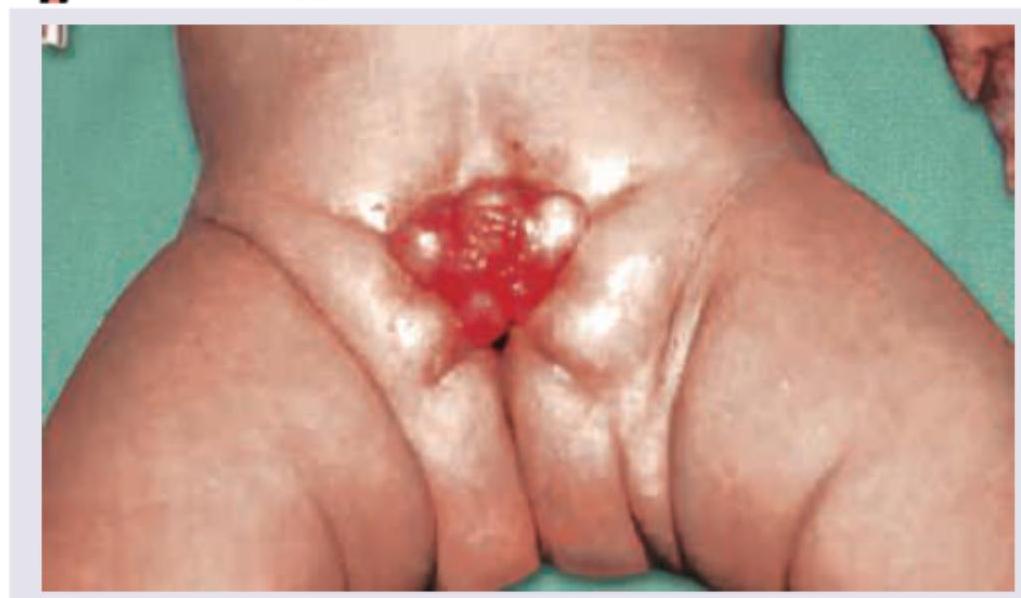
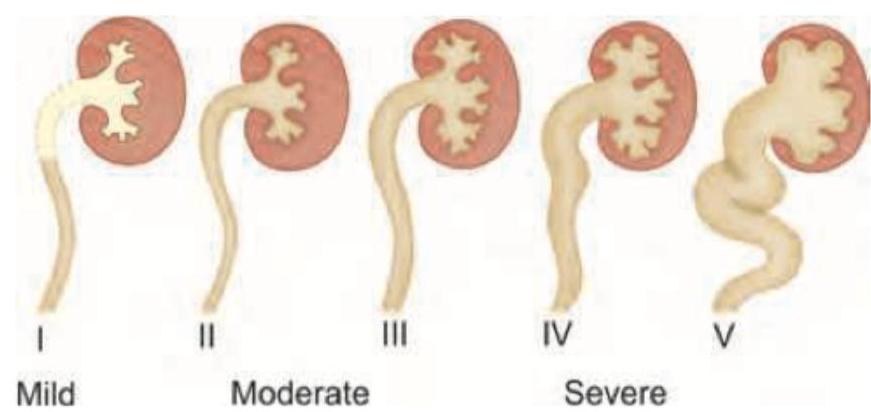
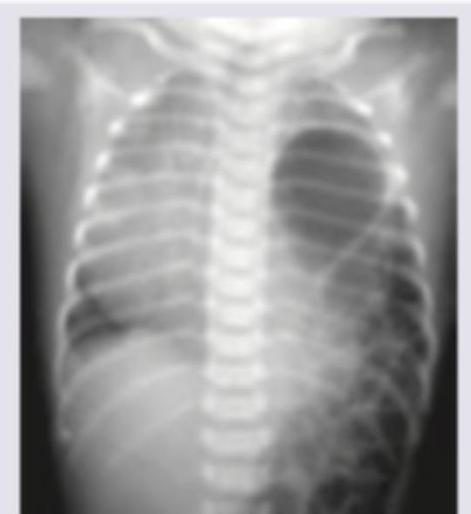
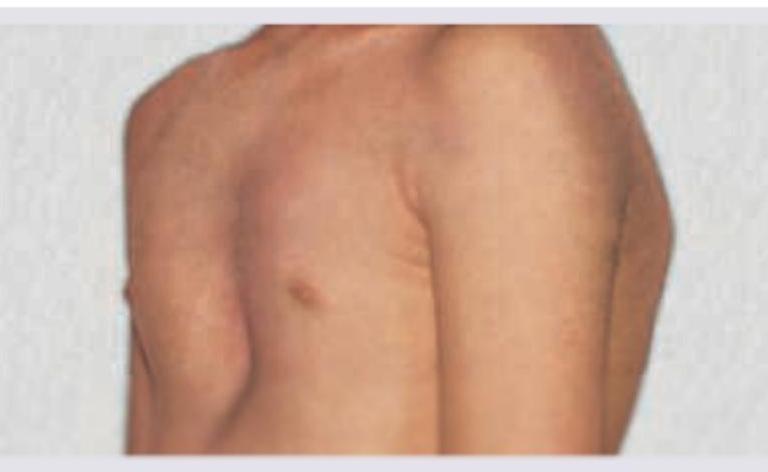
A 1-week-old previously healthy infant presents to the emergency room with the acute onset of bilious vomiting. The abdominal plain film in the emergency department (A) and the barium enema done after admission (B) are shown. Which of the following is the most likely diagnosis for this patient?

Most common cause of acute intestinal obstruction in children is
A 6 year old boy has been complaining of headache, failing to notice objects on the sides for four months. On examination he is not mentally retarded, his grades at school are good, and visual acuity is diminished in both the eyes. Visual field testing showed significant field defect. CT scan of the head showed suprasellar mass with calcification. Which of the following is the most probable diagnosis?
Tumor involves inferior vena cava, what is the staging of Wilms tumour?
What is the initial palliative treatment for Tetralogy of Fallot?
A newborn male is noted to have difficulty feeding and "turns blue and chokes when drinking formula." The prenatal records reveal that the amniotic fluid appeared normal on ultrasound. A pediatric feeding tube is passed orally to 20 cm without difficulty, with gastric secretions aspirated. Which of the following is the most likely diagnosis?
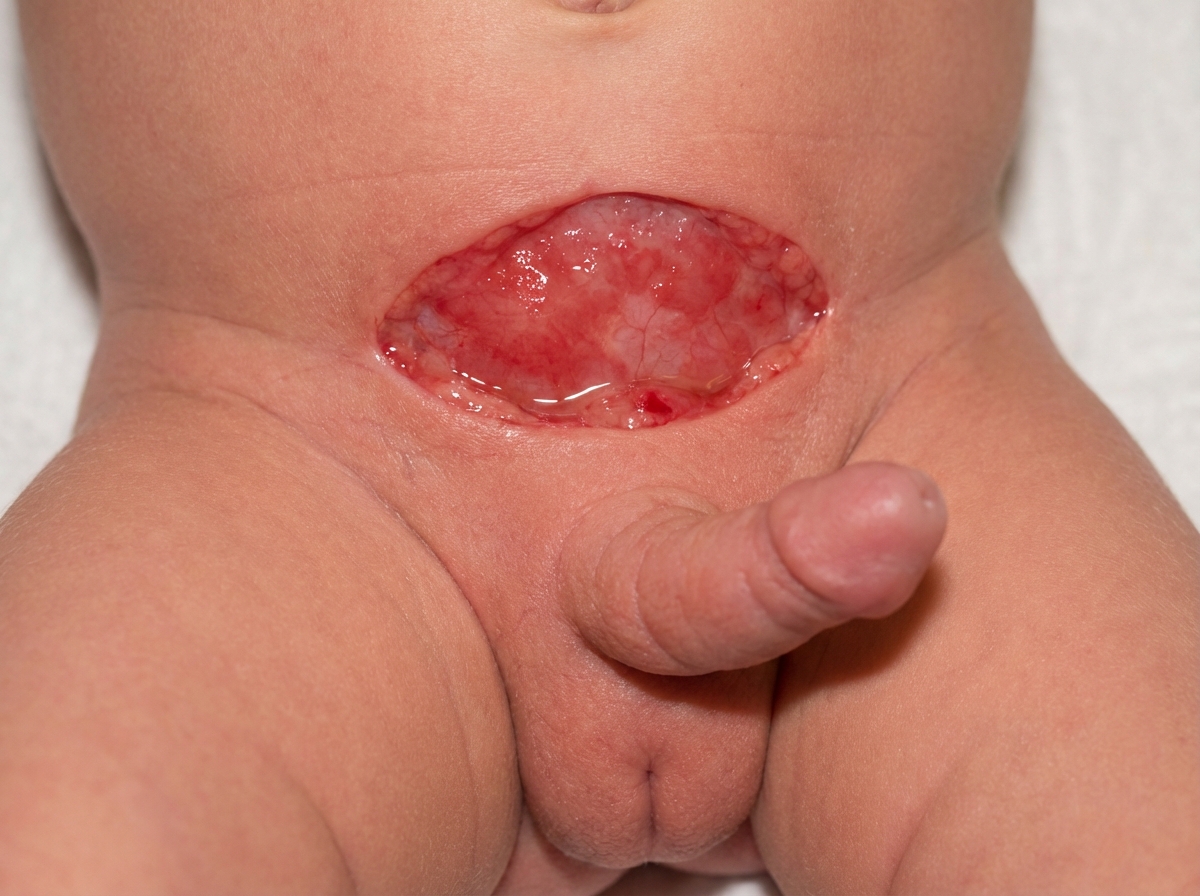
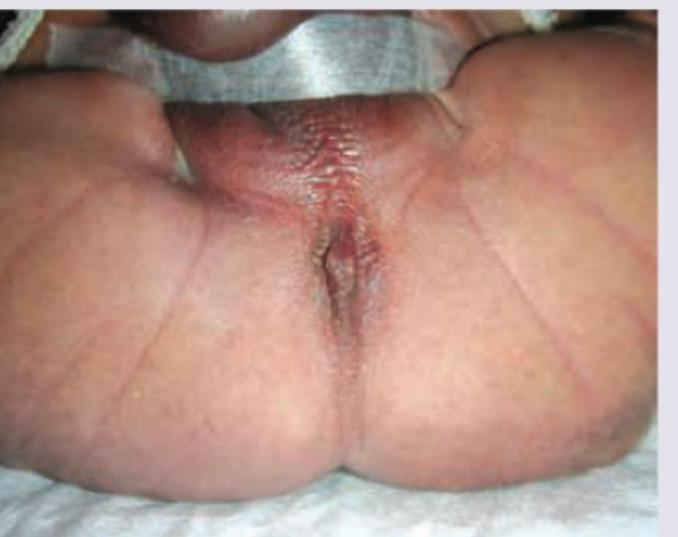
X-ray can detect congenital anorectal malformation at –
A 4-year-old child was brought to the hospital with right impalpable testis. During diagnostic laparoscopy for undescended testis, there are blind testicular vessels. What should be done next?
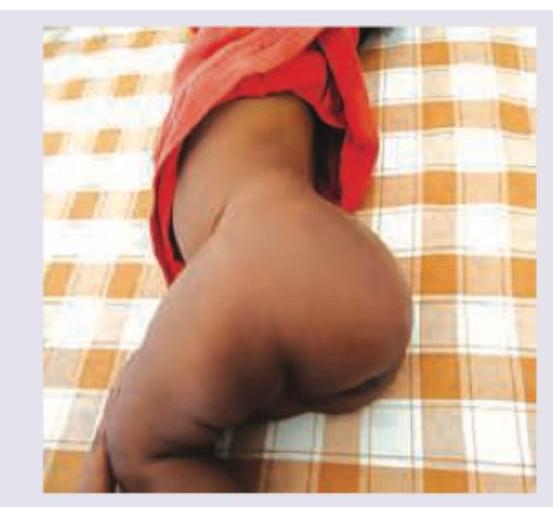
A 10 year old child came to the OPD with pain and mass in right lumbar region with no fever, with right hip flexed. The pain increased on extension and X ray showed spine changes. Most probable diagnosis is:
A 10-year-old boy came to emergency with complaints of severe pain in right scrotum that is not relieved for the past 1 hour. On examination, testicular torsion of the right side is suspected. The surgical intervention should be:
Explanation: ***Malrotation with volvulus*** - The acute onset of **bilious vomiting** in a 1-week-old infant is a **surgical emergency** and highly suggestive of intestinal obstruction, with malrotation with volvulus being a critical consideration. - The barium enema image (B) shows the **ligament of Treitz** located to the right of the midline, indicating **intestinal malrotation** and a **corkscrew pattern** of the duodenum, which is pathognomonic for **midgut volvulus**. *Hypertrophic pyloric stenosis* - Typically presents with **non-bilious projectile vomiting** and palpable **pyloric olive mass**, usually appearing between 3 to 6 weeks of age, not at 1 week with bilious vomiting. - Imaging would reveal an **elongated, narrowed pyloric channel** (string sign) and thickened pyloric muscle, not the findings seen in the barium study. *Acute appendicitis* - This is an **extremely rare diagnosis** in a 1-week-old infant and typically presents with localized pain, fever, and leukocytosis, which are not the primary symptoms described. - Acute appendicitis would not explain the **bilious vomiting** or the specific findings on the barium study related to intestinal rotation. *Jejunal atresia* - Presents with bilious vomiting and abdominal distension, often diagnosed prenatally or shortly after birth due to proximal dilation and distal collapse of the bowel. - While it causes obstruction, the barium study in jejunal atresia would show a **blind-ending jejunum** and not the distinct malrotation and volvulus features (e.g., corkscrew sign, abnormal Treitz location).
Explanation: ***Intussusception*** - **Intussusception** is the most common cause of **acute intestinal obstruction** in children, particularly between 3 months and 3 years of age. - It occurs when a segment of the intestine telescopes into an adjacent segment, leading to obstruction and potentially **ischemia**. *Inguinal hernia* - While an **incarcerated inguinal hernia** can cause intestinal obstruction, it is less common than intussusception as the primary cause of acute obstruction in children generally. - It is more frequent in **neonates and infants** but overall incidence of obstruction is lower than intussusception. *Volvulus* - **Volvulus** refers to a twisting of the intestine on its mesentery, often associated with **malrotation**, leading to obstruction and vascular compromise. - While a serious cause of obstruction, especially in neonates, it is less common overall than intussusception in the pediatric population. *None of the options* - This option is incorrect because **intussusception** is a recognized and frequent cause of acute intestinal obstruction in children.
Explanation: ***Craniopharyngioma*** - A **suprasellar mass with calcification** in a child presenting with **visual field defects** and **headaches** is highly suggestive of craniopharyngioma. - These tumors typically arise from Rathke's pouch remnants and commonly cause **endocrine dysfunction** (though not explicitly stated as present here, it's a common association) and **visual pathway compression**. *Meningioma* - **Meningiomas** are rare in children and typically present as **dural-based masses** without characteristic calcification in the suprasellar region. - They are more common in adults, especially women, and often have a slower growth pattern. *Astrocytoma* - While astrocytomas can occur in children, they are usually **intra-axial** (within the brain parenchyma) and would typically cause focal neurological deficits related to their location, rather than a suprasellar mass with specific calcification. - **Pilocytic astrocytomas** are common in the cerebellar region but not characteristically suprasellar with calcification. *Pituitary adenoma* - **Pituitary adenomas** are extremely rare in children and grow within the sella turcica, originating from pituitary cells. - While they can cause visual field defects (classically **bitemporal hemianopsia**), they are typically soft tissue masses and calcification is not a common feature.
Explanation: ***Stage III*** - **Stage III Wilms tumor** is characterized by **residual non-hematogenous tumor** confined to the abdomen, including tumor extension into the **inferior vena cava (IVC)** or other **great vessels**. - IVC involvement represents **tumor thrombus in major vessels**, which classifies the disease as Stage III even without distant metastases. - Other Stage III criteria include peritoneal contamination, lymph node involvement, positive surgical margins, or tumor spillage. *Stage I* - **Stage I Wilms tumor** is **limited to the kidney** and has been **completely resected** with clear margins. - The renal capsule is intact with no vascular invasion, making IVC involvement inconsistent with Stage I. *Stage II* - **Stage II Wilms tumor** extends **beyond the kidney** (through renal capsule into perirenal fat) but has been **completely resected** with clear margins. - This stage does not involve macroscopic tumor thrombus in major vessels like the IVC. *Stage IV* - **Stage IV Wilms tumor** involves **hematogenous metastases** to distant sites such as lungs, liver, brain, or bone. - While IVC involvement is serious, it represents local vascular extension, not distant metastasis.
Explanation: **Modified BT shunt** - The **Modified Blalock-Taussig (BT) shunt** is the initial palliative treatment for Tetralogy of Fallot, providing a reliable source of **pulmonary blood flow** in infants with severe cyanosis. - It involves connecting a **systemic artery** (subclavian or brachiocephalic artery) to the **pulmonary artery** using an interposition graft, increasing blood flow to the lungs. *Waterston shunt* - The **Waterston shunt** connects the **ascending aorta** to the **right pulmonary artery**. - It has a higher incidence of **pulmonary artery distortion** and pulmonary hypertension, making it less favorable than the modified BT shunt. *BT shunt* - The classic **Blalock-Taussig shunt** involves a direct anastomosis between the subclavian artery and the pulmonary artery. - While effective, the **Modified BT shunt** using a graft is generally preferred due to less vascular injury and improved long-term patency. *Potts shunt operation* - The **Potts shunt** connects the **descending aorta** to the **left pulmonary artery**. - Similar to the Waterston shunt, it carries a higher risk of **pulmonary artery distortion** and is rarely used today.
Explanation: ***Tracheoesophageal fistula*** - The combination of **feeding difficulties**, **cyanosis** ("turns blue"), and **choking** in a newborn, along with the ability to pass a feeding tube to 20 cm, strongly suggests a tracheoesophageal fistula (TEF), specifically a type where the **proximal esophagus ends in a blind pouch and the distal esophagus connects to the trachea**. - The **normal amniotic fluid** on prenatal ultrasound suggests that the fetus was able to swallow amniotic fluid, ruling out esophageal atresia without a fistula as the primary cause of polyhydramnios. Passage of the feeding tube to 20 cm and aspiration of gastric secretions indicates that the stomach is connected to the esophagus, but the reflux of gastric contents during feeding leads to aspiration into the trachea via the fistula. *Floppy epiglottis* - **Laryngomalacia**, or "floppy epiglottis," typically causes **stridor** (a high-pitched inspiratory sound), especially when crying or feeding, which is not the primary symptom described here. - While it can cause some feeding difficulties, **severe cyanosis and recurrent choking** during feeding are more characteristic of aspiration due to a different anatomical defect like TEF. *Zenker diverticulum* - A **Zenker diverticulum is a pharyngoesophageal pouch** that typically causes dysphagia, regurgitation of undigested food, and halitosis, primarily in **older adults**. - It is an acquired condition and **extremely rare in newborns**, making it an unlikely diagnosis for these symptoms in an infant. *Congenital heart disease* - While congenital heart disease can cause **cyanosis and feeding difficulties** due to increased metabolic demand or heart failure, it would not typically present with the specific description of **choking during feeding and successful passing of a feeding tube to the stomach with aspirated gastric secretions**. - The symptoms in this case point more directly to a **problem with the swallowing mechanism or the connection between the esophagus and the trachea**.
Explanation: ***48–72 hours*** - This timeframe is preferred for X-ray detection of **congenital anorectal malformation** because it allows for adequate **gas accumulation** in the bowel. - The gas acts as a natural contrast agent, making the distal end of the rectum visible on the X-ray and helping determine the **level of the anomaly**. *24–48 hours* - While gas may begin to accumulate by this time, it might not be sufficient to clearly delineate the **level of the rectal pouch** in all cases. - A delay is often beneficial to ensure optimal imaging conditions for **accurate surgical planning**. *Immediately after birth* - Performing an X-ray immediately after birth is often too early as there hasn't been sufficient **time for gas to fill the bowel** distal to the obstruction. - This can lead to **inaccurate assessment** of the malformation's type and level. *After 72 hours* - While sufficient gas is present, delaying beyond 72 hours may unnecessarily delay **surgical intervention**. - Additionally, if gas distension becomes excessive, it could potentially complicate the **interpretation of the exact anatomy**.
Explanation: ***Nothing is to be done*** - The presence of **blind-ending testicular vessels** on diagnostic laparoscopy is diagnostic of **vanishing testis syndrome** (testicular regression syndrome). - This finding indicates that the testis underwent **atrophy and resorption** during fetal development or early infancy, and **no viable testicular tissue remains**. - The blind vessels represent **remnant vascular structures** where the testis once existed, confirming absence of testicular tissue beyond that point. - **No further surgical exploration is required** as the laparoscopy has already provided definitive diagnosis - the testis is absent, not located elsewhere. - This completes the diagnostic and therapeutic management for this condition. *Inguinal exploration* - This would be indicated if the testicular vessels were seen **entering the internal inguinal ring**, suggesting an inguinal or high scrotal location. - With **blind-ending vessels**, the testis is confirmed absent, making inguinal exploration unnecessary and futile. - Inguinal exploration would find no testicular tissue and subject the child to unnecessary additional surgery. *Abdominal exploration* - This is not needed as **diagnostic laparoscopy has already visualized the abdomen** and identified blind vessels. - If vessels were patent and leading to an intra-abdominal testis, orchidopexy would be performed laparoscopically. - Blind vessels rule out intra-abdominal testis location. *Scrotal exploration* - This approach is only appropriate for **palpable undescended testes** in the superficial inguinal pouch or high scrotum. - The testis is **impalpable** and laparoscopy shows **no testicular tissue exists**, making scrotal exploration illogical and non-contributory.
Explanation: ***Psoas abscess*** - A **psoas abscess** can present as a lumbar mass with pain, and the classic **psoas sign** (pain on hip extension) occurs because the inflamed psoas muscle is stretched. Spine changes on X-ray suggest a potential vertebral source, such as **spinal tuberculosis (Pott's disease)**, which is a common cause of psoas abscess in children. - The absence of fever does not rule out chronic infections like tuberculosis, and the **flexed hip posture** is a common compensatory mechanism to relieve tension on the inflamed psoas muscle. *Appendicular lump in retrocecal position* - While a retrocecal appendicular lump can cause a right lumbar mass, the pain would typically worsen with hip flexion, not extension, and it is less likely to be associated with **spine changes** on X-ray. - Appendicular lumps are usually accompanied by a history of appendicitis with pain that is often more diffuse in the right lower quadrant, and may be associated with **fever and leukocytosis**. *Pyonephrosis* - **Pyonephrosis** (pus in the kidney) would typically present with significant systemic symptoms of infection, such as **fever, chills, and flank pain**. - While it can cause a flank mass, the characteristic **hip flexion and pain on extension (psoas sign)**, along with spine changes, are not typical features. *Torsion of Right undescended testis* - **Testicular torsion** presents with sudden, severe scrotal pain (or inguinal/pelvic pain if undescended) and swelling, not a lumbar mass or psoas signs. - It would also not be associated with **spine changes** on an X-ray.
Explanation: ***Immediate exploration of the affected side and operate opposite side even if asymptomatic*** - **Immediate surgical exploration** of the affected testis is crucial for **salvage**. Time is of the essence in testicular torsion; delaying intervention significantly reduces the chances of saving the testis. - The contralateral testis should also undergo **orchiopexy** (fixation) at the same time, even if asymptomatic, because the anatomical predisposition to torsion (e.g., bell-clapper deformity) is often **bilateral**. This prevents future torsion in the remaining testis. *Delayed exploration on the affected side along with the opposite side even if asymptomatic* - **Delaying exploration** in testicular torsion is contraindicated, as it drastically reduces the **viability of the testis** and increases the risk of **orchiectomy**. - While contralateral orchiopexy is correct, the delay in treating the affected side makes this option incorrect. *Immediate scrotal exploration of the affected side and operate opposite side if symptomatic* - **Immediate exploration** of the affected side is appropriate, but waiting for the contralateral side to become **symptomatic** before fixation is a major oversight. - The risk of **contralateral torsion** is high, and prophylactic fixation prevents a second surgical emergency and potential loss of the second testis. *Delay exploration and operate opposite side if symptomatic* - **Delaying exploration** of the affected testis is incorrect and results in a high rate of **testicular loss**. - Operating on the contralateral side only if symptomatic also misses the opportunity for **prophylactic orchiopexy**, leading to potential future torsion.
Neonatal Physiology
Practice Questions
Congenital Anomalies Overview
Practice Questions
Neonatal Intestinal Obstruction
Practice Questions
Necrotizing Enterocolitis
Practice Questions
Hirschsprung's Disease
Practice Questions
Anorectal Malformations
Practice Questions
Pediatric Hernias
Practice Questions
Pyloric Stenosis
Practice Questions
Biliary Atresia
Practice Questions
Pediatric Tumors
Practice Questions
Congenital Diaphragmatic Hernia
Practice Questions
Pediatric Trauma
Practice Questions
Get full access to all questions, explanations, and performance tracking.
Start For Free