Which of the following is best for the localization of Zollinger-Ellison syndrome?
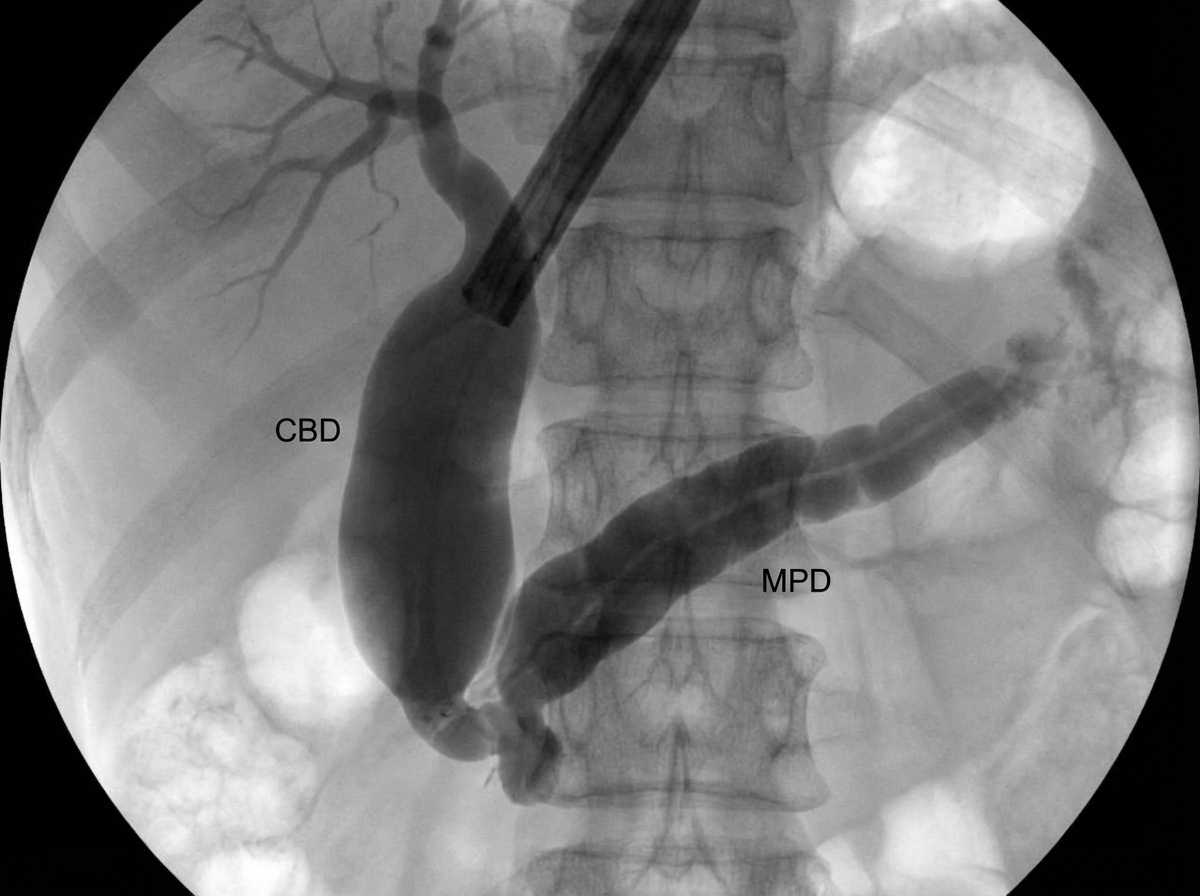
A 45-year-old female presents with recurrent epigastric abdominal pain and jaundice. Ultrasound shows clusters of cysts with lobulated margins in the head of the pancreas. MRI reveals a multicystic mass with a "bunch of grapes" appearance and a grossly dilated pancreatic duct. What is the most probable diagnosis?
What is the primary diagnostic investigation for carcinoma of the pancreas?
Which of the following are the imaging criteria for unresectable carcinoma of the pancreas?
What is a pseudopancreatic cyst?
What is the best prognosis for carcinoma of the pancreas?
Which of the following does NOT correlate with the severity of acute pancreatitis?
Which of the following is not a contraindication for resection of the head of the pancreas?
Which of the following statements is FALSE regarding intraductal papillary mucinous neoplasm?
Which of the following features favors pancreatic adenocarcinoma over non-functioning pancreatic neuroendocrine tumors (NF PET)?
Explanation: **Explanation:** Zollinger-Ellison Syndrome (ZES) is caused by a gastrin-secreting tumor (gastrinoma), typically located within the **Gastrinoma Triangle** (Passaro’s Triangle). Localization is a two-step process: biochemical diagnosis followed by anatomical localization. **1. Why Endoscopic Ultrasound (EUS) is correct:** EUS is considered the most sensitive imaging modality for localizing small gastrinomas, especially those located in the **pancreas or the duodenal wall**. It can detect lesions as small as 2–5 mm, which are often missed by conventional CT or MRI. While Somatostatin Receptor Scintigraphy (SRS/Octreoscan) or Ga-68 DOTATATE PET-CT are excellent for whole-body screening, EUS remains superior for precise regional localization and guided biopsy. **2. Why other options are incorrect:** * **Secretin Injection Test:** This is a **biochemical provocative test** used to *diagnose* ZES (a rise in serum gastrin >200 pg/mL is diagnostic). It confirms the presence of the disease but does not localize the tumor. * **Basal Gastric Acid Output (BAO):** This is a diagnostic screening tool. A BAO >15 mEq/hr is suggestive of ZES but provides no information regarding the anatomical site of the tumor. * **MRI:** While useful for detecting liver metastases, MRI has lower sensitivity than EUS or SRS for identifying small primary gastrinomas in the duodenum. **Clinical Pearls for NEET-PG:** * **Gastrinoma Triangle Boundaries:** Junction of cystic/common bile duct, junction of 2nd and 3rd parts of the duodenum, and the neck/body of the pancreas. * **Most common site:** Historically the pancreas, but more recent studies show the **duodenum** is the most common site for primary gastrinomas. * **MEN-1 Association:** 25% of ZES cases occur as part of Multiple Endocrine Neoplasia Type 1. * **Best Initial Imaging:** Ga-68 DOTATATE PET-CT (now preferred over Octreoscan). * **Most Sensitive for Pancreatic Lesions:** EUS.
Explanation: ### Explanation The correct diagnosis is **Intraductal Papillary Mucinous Neoplasm (IPMN)**. **1. Why IPMN is correct:** The key diagnostic features in this clinical vignette are the **"bunch of grapes"** appearance and the **grossly dilated pancreatic duct**. IPMNs are mucin-producing epithelial neoplasms that arise within the main pancreatic duct or its side branches. * **Main-duct IPMN:** Characterized by segmental or diffuse dilation of the main pancreatic duct (>5 mm). * **Side-branch IPMN:** Presents as a multicystic lesion (the "bunch of grapes") communicating with the duct. The presence of jaundice suggests involvement of the pancreatic head, potentially causing biliary obstruction. **2. Why other options are incorrect:** * **Serous Cystadenoma:** Typically presents with a "honeycomb" appearance and a **central stellate scar** with calcification. It does not communicate with or cause gross dilation of the pancreatic duct. * **Mucinous Cystadenoma:** Usually occurs in the **body or tail** of the pancreas in middle-aged women. It consists of large, unilocular or macrocystic lesions (usually <6 cysts) and lacks ductal communication. * **Solid Pseudopapillary Epithelial Neoplasm (SPEN):** Typically seen in **young females** ("Frantz tumor"). It appears as a large, well-circumscribed mass with both solid and cystic (hemorrhagic/necrotic) components, rather than a cluster of small cysts. **3. High-Yield Clinical Pearls for NEET-PG:** * **Pathognomonic Sign:** Visualization of mucin extruding from a "fish-mouth" ampulla during ERCP is diagnostic for IPMN. * **Malignant Potential:** Main-duct IPMNs have a much higher risk of malignancy (up to 60-70%) compared to side-branch IPMNs. * **Rule of Gender:** Remember "Mother" (Mucinous - middle-aged female), "Grandmother" (Serous - elderly female), and "Daughter" (SPEN - young female). IPMN affects males and females more equally.
Explanation: **Explanation:** **MDCT (Multidetector Computed Tomography)** is the gold standard and primary diagnostic investigation for pancreatic carcinoma. The "Pancreatic Protocol" CT involves thin-slice (0.5–1 mm) imaging during the late arterial and portal venous phases. It is preferred because it provides high-resolution details of the primary tumor, its relationship to major peripancreatic vessels (SMA, Celiac axis, Portal vein), and the presence of distant metastases. This allows for simultaneous diagnosis and **staging (resectability assessment)**, which is crucial for surgical planning. **Why other options are incorrect:** * **PET Scan:** While useful for detecting occult distant metastases, it lacks the anatomical detail required for local staging and resectability assessment. It is not a first-line diagnostic tool. * **ERCP:** Historically used for diagnosis, it is now primarily a **therapeutic** intervention. It is reserved for biliary drainage (stenting) in patients with obstructive jaundice or for obtaining brush cytology if the diagnosis is unclear. It is invasive and carries a risk of pancreatitis. * **MRCP:** Excellent for visualizing the biliary tree and pancreatic duct (showing the "Double Duct Sign"), but it is generally inferior to MDCT for assessing vascular invasion and overall resectability. **High-Yield Clinical Pearls for NEET-PG:** * **Double Duct Sign:** Simultaneous dilatation of the Common Bile Duct and Pancreatic Duct; highly suggestive of a head of pancreas or periampullary tumor. * **Tumor Marker:** **CA 19-9** is the most specific marker for monitoring prognosis and recurrence, but not for primary screening (as it can be elevated in benign jaundice). * **Courvoisier’s Law:** In a patient with obstructive jaundice, if the gallbladder is palpable, the obstruction is unlikely to be a stone (suggests malignancy).
Explanation: In pancreatic surgery, determining resectability is the most critical step in management. The goal of surgery (typically a Whipple procedure) is an **R0 resection** (microscopically negative margins). If the tumor has spread beyond the local pancreatic environment, it is deemed **unresectable**. ### **Explanation of Options:** * **Metastatic spread to vertebrae (Option A):** Any evidence of distant metastasis (M1 disease) to the liver, peritoneum, lungs, or bones (like the vertebrae) automatically classifies the tumor as unresectable. Systemic spread indicates that local surgery will not be curative. * **Invasion in the duodenal wall (Option B):** While the duodenum is removed during a Whipple procedure, extensive invasion or "en bloc" involvement that suggests fixation to posterior structures or widespread local infiltration often correlates with unresectability, especially if it involves the root of the mesentery. * **Irregular increase in density of omental fat (Option C):** This is a radiological sign of **omental caking** or peritoneal carcinomatosis. Increased density (stranding) in the omental fat suggests microscopic or macroscopic seeding of the peritoneum, which is a contraindication for resection. ### **Clinical Pearls for NEET-PG:** 1. **Vascular Criteria (High Yield):** * **Resectable:** No contact with the Celiac Axis (CA), Superior Mesenteric Artery (SMA), or Common Hepatic Artery (CHA). * **Borderline Resectable:** Solid tumor contact with the SMA or CA of **<180°**. * **Unresectable:** Solid tumor contact with the SMA or CA of **>180°** (encasement) or contact with the first jejunal branch of the SMA. 2. **Venous Involvement:** Involvement of the SMV or Portal Vein is no longer an absolute contraindication if it can be reconstructed; however, complete occlusion that is unreconstructible is a sign of unresectability. 3. **Investigation of Choice:** The gold standard for staging and resectability is a **Triple-phase Contrast-Enhanced CT (CECT)**, also known as a Pancreatic Protocol CT.
Explanation: ### Explanation A **pseudopancreatic cyst** (or pancreatic pseudocyst) is a localized collection of pancreatic fluid, rich in digestive enzymes, surrounded by a wall of fibrous or granulation tissue. **Why Option B is correct:** The most common etiology for a pseudocyst is **acute pancreatitis** (inflammation). Following an episode of inflammation, pancreatic ductal disruption occurs, leading to the leakage of secretions. Unlike true cysts, pseudocysts lack an epithelial lining; instead, the body walls off the fluid using adjacent organs (stomach, duodenum, or pancreas) and inflammatory fibrosis. **Analysis of Incorrect Options:** * **Option A:** While trauma can cause a pseudocyst, it is not the defining characteristic. Inflammation (from any cause, including alcohol or gallstones) is the primary pathophysiological driver. * **Option C:** Cysts present from birth are **congenital cysts** (e.g., polycystic disease or dermoid cysts), which possess a true epithelial lining. * **Option D:** Cysts that are tumors are classified as **cystic neoplasms** (e.g., Serous Cystadenoma, Mucinous Cystic Neoplasm, or IPMN). These are neoplastic growths, not inflammatory collections. **NEET-PG High-Yield Pearls:** * **Timeframe:** A pseudocyst typically takes **4–6 weeks** to form after an episode of acute pancreatitis. * **Location:** Most commonly found in the **lesser sac**. * **Diagnosis:** **CECT** is the gold standard for diagnosis and monitoring. * **Management:** Most resolve spontaneously. Intervention (e.g., endoscopic cystogastrostomy) is indicated only if the cyst is symptomatic, infected, or rapidly enlarging. * **Key Distinction:** If the collection occurs within the first 4 weeks and lacks a defined wall, it is termed an **Acute Peripancreatic Fluid Collection (APFC)**.
Explanation: ### Explanation The prognosis of pancreatic and peripancreatic cancers is primarily determined by the **timing of clinical presentation** and the **resectability** at the time of diagnosis. **Why Periampullary is the correct answer:** Periampullary carcinomas (which include tumors of the ampulla of Vater, distal common bile duct, and duodenum) have the **best prognosis** because they present early. Due to their anatomical location, even small tumors cause early biliary obstruction, leading to **painless progressive jaundice**. This early symptom prompts medical evaluation while the tumor is still small and localized, resulting in a higher rate of surgical resectability (Whipple’s procedure) and better 5-year survival rates (30–50%) compared to true pancreatic ductal adenocarcinoma. **Why other options are incorrect:** * **Head of Pancreas:** While these also present with jaundice, they tend to be more aggressive biologically than periampullary tumors. By the time they cause symptoms, they often involve local vessels or lymph nodes. * **Body and Tail:** These are known as the "silent killers" of the pancreas. Because they do not obstruct the bile duct early, they remain asymptomatic until they reach a large size or metastasize. They typically present with weight loss and back pain, and the majority are unresectable at the time of diagnosis, leading to the worst prognosis. **High-Yield Clinical Pearls for NEET-PG:** * **Most common periampullary tumor:** Carcinoma of the head of the pancreas (but it has the worst prognosis among the group). * **Best prognosis among periampullary tumors:** Ampullary carcinoma. * **Courvoisier’s Law:** In a patient with painless jaundice and a palpable gallbladder, the cause is unlikely to be gallstones (usually malignancy). * **Double Duct Sign:** Dilatation of both the common bile duct and the pancreatic duct on imaging, highly suggestive of a tumor in the head of the pancreas or ampulla.
Explanation: **Explanation:** The severity of acute pancreatitis is determined by the extent of pancreatic necrosis and the systemic inflammatory response, not by the magnitude of enzyme elevation. **1. Why Serum Amylase is the Correct Answer:** Serum amylase is a diagnostic marker, not a prognostic one. While it rises rapidly within 6–12 hours of onset, its absolute level **does not correlate** with the severity of the disease, the etiology, or the prognosis. A patient with mild edematous pancreatitis may have amylase levels >1000 U/L, while a patient with life-threatening necrotizing pancreatitis may have near-normal levels (especially in cases of hypertriglyceridemia or chronic alcohol abuse where pancreatic reserve is low). **2. Why the Other Options are Incorrect (Prognostic Markers):** The other three options are components of the **Ranson Criteria**, a classic scoring system used to predict severity at admission: * **Serum Glucose (>200 mg/dL):** Reflects endocrine pancreatic dysfunction and the severity of the systemic stress response. * **AST (>250 U/L):** Indicates hepatocellular injury often associated with biliary pancreatitis or systemic inflammatory response. * **Serum Calcium (<8 mg/dL):** Hypocalcemia occurs due to "saponification" (calcium soap formation in necrotic fat) and is a sign of severe disease. **Clinical Pearls for NEET-PG:** * **Most Specific Enzyme:** Serum Lipase (remains elevated longer than amylase). * **Best Imaging for Severity:** Contrast-Enhanced CT (CECT) scan (ideally done after 72 hours). * **Single Best Lab Marker for Prognosis:** C-Reactive Protein (CRP) >150 mg/L at 48 hours. * **Ranson’s Mnemonic (at admission):** **GAWOT** (Glucose, Age, WBC, AST, LDH).
Explanation: In pancreatic surgery, the goal of resection (e.g., Whipple procedure) is to achieve an **R0 resection** (microscopically negative margins). Contraindications are generally divided into absolute and relative based on the likelihood of achieving this goal and the patient's overall prognosis. ### **Explanation of the Correct Answer** **B. Ascites:** While the presence of malignant ascites is a contraindication, **ascites itself is not an absolute contraindication.** Ascites can occur due to non-malignant causes such as portal hypertension, cirrhosis, or malnutrition (hypoalbuminemia). If the ascites is not due to peritoneal carcinomatosis, the tumor may still be resectable. Therefore, it is the only option that does not automatically imply incurability. ### **Analysis of Incorrect Options** * **A. Liver Metastasis:** This represents Stage IV systemic disease. Resection of the primary tumor in the presence of distant organ metastasis does not improve survival and is an absolute contraindication. * **C. Peritoneal Seedings:** Similar to liver metastasis, peritoneal implants indicate disseminated disease. Surgery would be palliative at best and is contraindicated for curative resection. * **D. Involvement of a Major Artery:** Pancreatic head tumors are considered **unresectable** if there is contact (>180°) or encasement of the **Celiac Axis, Superior Mesenteric Artery (SMA), or Hepatic Artery.** While venous involvement (Portal vein/SMV) can often be reconstructed, major arterial involvement usually precludes an R0 resection. ### **High-Yield Clinical Pearls for NEET-PG** * **Borderline Resectable:** Defined by limited involvement of the SMV/Portal vein or <180° contact with the SMA. These patients often receive neoadjuvant chemotherapy first. * **The "Appleby Procedure":** A modified distal pancreatectomy involving celiac axis resection, sometimes used for body/tail tumors. * **Most Common Site of Metastasis:** The liver is the most common site of distant spread for pancreatic adenocarcinoma. * **Investigation of Choice:** Triple-phase contrast-enhanced CT (CECT) is the gold standard for assessing resectability.
Explanation: **Explanation:** **Intraductal Papillary Mucinous Neoplasm (IPMN)** is a pre-malignant cystic lesion of the pancreas characterized by the production of thick, "fish-mouth" mucus from the Ampulla of Vater. **Why Option D is the Correct (False) Statement:** The **Beger’s procedure** (duodenum-preserving pancreatic head resection) is a surgical technique primarily indicated for **chronic pancreatitis** with an inflammatory mass in the head. It is **not** the standard treatment for IPMN. Because IPMN has a significant malignant potential, the treatment of choice is formal oncologic resection—typically a **Whipple’s procedure** (Pancreaticoduodenectomy) for lesions in the head or a **Distal Pancreatectomy** for lesions in the body/tail. **Analysis of Other Options:** * **Option A (CEA is often raised):** Analysis of cyst fluid typically shows high levels of **Carcinoembryonic Antigen (CEA)**, which helps differentiate mucinous lesions (IPMN, Mucinous Cystadenoma) from non-mucinous ones (Serous Cystadenoma). * **Option B (Amylase can be raised):** Since IPMNs communicate directly with the pancreatic ductal system, the cyst fluid contains high levels of **amylase**, unlike Mucinous Cystadenomas which do not communicate with the duct. * **Option C (Gender Distribution):** Unlike Mucinous Cystadenomas (which occur almost exclusively in females), IPMNs occur with **equal frequency in both males and females**, typically in the 6th or 7th decade of life. **High-Yield Clinical Pearls for NEET-PG:** * **"Fish-mouth" appearance** of the papilla on ERCP is pathognomonic for IPMN. * **Main-duct IPMN** has a much higher malignancy risk (>60%) compared to **Branch-duct IPMN** (~25%). * **Worrisome features** on imaging (cyst >3cm, thickened walls) warrant surgical intervention.
Explanation: In pancreatic imaging, distinguishing between **Pancreatic Adenocarcinoma (PDAC)** and **Non-Functioning Pancreatic Neuroendocrine Tumors (NF-pNETs)** is crucial for management. ### **Why "Presence of Calcifications" is Correct** While both tumors can occasionally show calcifications, the **pattern and frequency** differ significantly. * **NF-pNETs:** Calcifications are a classic feature, occurring in approximately **20–25%** of cases. They are typically coarse, central, or "sunburst" in appearance. * **Adenocarcinoma:** Calcifications are **extremely rare** (seen in <2% of cases). If present, they are usually due to the tumor engulfing pre-existing calcifications from chronic pancreatitis rather than being produced by the tumor itself. Therefore, the presence of calcifications strongly favors a diagnosis of NF-pNET over PDAC. ### **Analysis of Incorrect Options** * **A. Tumor size <5cm:** This is not a differentiating factor. Both PDAC and NF-pNETs can present at various sizes. However, NF-pNETs are often larger at the time of diagnosis because they are "non-functioning" and do not produce early hormonal symptoms. * **C. Negative Chromogranin A:** Chromogranin A is a serum marker for **neuroendocrine** tumors. A negative result would favor PDAC, but the question asks what *feature* (usually imaging/pathology) favors the diagnosis. Furthermore, calcification is a more definitive radiological differentiator. * **D. Negative Somatostatin Receptor Scintigraphy (SRS):** SRS (Octreoscan) is highly sensitive for pNETs. A negative scan would favor PDAC, but like Option C, this is a negative finding rather than a positive feature favoring the diagnosis. ### **High-Yield Clinical Pearls for NEET-PG** * **Vascularity:** NF-pNETs are typically **hypervascular** (bright on arterial phase CT), whereas Adenocarcinoma is characteristically **hypovascular** (starchy/fibrotic). * **Ductal Signs:** PDAC often causes the **"Double Duct Sign"** (simultaneous dilatation of CBD and Pancreatic duct); pNETs rarely cause significant ductal obstruction unless very large. * **Marker of Choice:** For pNETs, **Chromogranin A** is the most sensitive serum marker; for PDAC, **CA 19-9** is used.
Pancreatic Anatomy and Physiology
Practice Questions
Acute Pancreatitis
Practice Questions
Chronic Pancreatitis
Practice Questions
Pancreatic Pseudocysts
Practice Questions
Pancreatic Adenocarcinoma
Practice Questions
Cystic Neoplasms of Pancreas
Practice Questions
Neuroendocrine Tumors of Pancreas
Practice Questions
Pancreatic Trauma
Practice Questions
Pancreatectomy Techniques
Practice Questions
Whipple Procedure
Practice Questions
Pancreatic Anastomosis
Practice Questions
Complications of Pancreatic Surgery
Practice Questions
Get full access to all questions, explanations, and performance tracking.
Start For Free