Which of the following is a cause of recurrent pancreatitis?
Which investigation is used to assess the resectability of pancreatic cancer?
A lady presented with recurrent attacks of giddiness and abdominal pain for three months. Endoscopy was normal. Her fasting blood glucose level was 40 mg/dL and insulin levels were elevated. CT abdomen showed a well-defined 8mm enhancing lesion in the head of the pancreas, with no other abnormal findings. What is the appropriate treatment plan?
Which of the following is the most common non-alcoholic cause of acute pancreatitis?
A 45-year-old female presented with vague abdominal pain. Laboratory investigations revealed normal amylase and raised CEA. A CT scan showed a hypodense lesion in the pancreas with internal septations and wall calcification. What is the most probable diagnosis?
Bluish discoloration of the flank is known as which sign?
Which investigation can itself lead to acute pancreatitis?
The given signs are seen in which of the following conditions?

Tumor of which of the following cell types results in Zollinger-Ellison syndrome?
A patient with a known history of gallstones presents with severe abdominal pain and elevated serum lipase levels, along with periumbilical ecchymosis. Which of the following values helps to predict the severity of the condition, except?
Explanation: **Explanation:** Recurrent acute pancreatitis (RAP) is defined as two or more discrete episodes of acute pancreatitis. The etiology involves any factor that causes intermittent obstruction of pancreatic juice outflow or repeated parenchymal injury. * **Gallstones (Option A):** This is the most common cause of recurrent pancreatitis. Small stones or microlithiasis (biliary sludge) can intermittently obstruct the Ampulla of Vater, causing transient reflux of bile into the pancreatic duct or increasing intraductal pressure, triggering inflammation. * **Pancreatic Divisum (Option B):** This is the most common congenital anomaly of the pancreas. It occurs when the dorsal and ventral ducts fail to fuse. The bulk of pancreatic secretions must drain through the small **minor papilla**. This "relative obstruction" leads to dorsal duct hypertension and recurrent bouts of pancreatitis. * **Pancreatic Carcinoma (Option C):** A tumor in the head of the pancreas can cause intermittent or progressive compression of the Main Pancreatic Duct (MPD). In older patients, an unexplained first or second episode of "idiopathic" pancreatitis should always be investigated to rule out an underlying malignancy. **Conclusion:** Since all three conditions can lead to repeated episodes of pancreatic inflammation through obstructive mechanisms, **Option D** is the correct answer. **High-Yield Clinical Pearls for NEET-PG:** * **Most common cause of RAP:** Gallstones/Microlithiasis. * **Most common congenital cause:** Pancreatic Divisum (Investigation of choice: **MRCP**). * **I GET SMASHED:** Use this classic mnemonic for pancreatitis causes (Idiopathic, Gallstones, Ethanol, Tumors, Scorpion sting, Microbiological, Autoimmune, Surgery/Trauma, Hypertriglyceridemia/Hypercalcemia, ERCP, Drugs). * **Workup:** If ultrasound is negative for stones in RAP, the next best steps are **Endoscopic Ultrasound (EUS)** or **MRCP** to look for occult biliary sludge or anatomical variants.
Explanation: **Explanation:** The assessment of resectability in pancreatic cancer primarily depends on the relationship of the tumor to major peripancreatic vascular structures (Superior Mesenteric Artery, Celiac axis, and Portal vein/SMV). **1. Why Contrast-Enhanced CT (CECT) is the Correct Answer:** CECT using a **dedicated pancreatic protocol** (triple-phase: arterial, pancreatic, and venous) is the **gold standard** for staging and assessing resectability. It provides high spatial resolution to detect vascular encasement, local extension, and distant metastasis (liver/peritoneum). A tumor is generally considered "resectable" if there is no distant spread and a clear fat plane exists between the tumor and major arteries. **2. Why Other Options are Incorrect:** * **MRI Abdomen:** While excellent for detecting small liver metastases (MRCP is better for biliary anatomy), it is generally not superior to CECT for initial staging and is more time-consuming and expensive. * **Ultrasound (USG):** Often the first-line screening tool for jaundice, but it is operator-dependent and limited by bowel gas. It cannot accurately assess vascular involvement or provide detailed staging. * **ERCP:** This is a **therapeutic** tool rather than a staging tool. It is used to relieve biliary obstruction (stenting) but does not provide information about the tumor's extraluminal extent or vascular invasion. **Clinical Pearls for NEET-PG:** * **Double Duct Sign:** Simultaneous dilatation of the common bile duct and pancreatic duct on imaging, highly suggestive of pancreatic head carcinoma. * **Tumor Marker:** **CA 19-9** is used for monitoring response to treatment and recurrence, not for primary diagnosis. * **Resectability Criteria:** A tumor is "Borderline Resectable" if there is limited involvement of the SMV/Portal vein that can be reconstructed, or <180° contact with the SMA. * **Investigation of choice for screening high-risk individuals:** Endoscopic Ultrasound (EUS).
Explanation: **Explanation:** The patient presents with the classic **Whipple’s Triad**: symptoms of hypoglycemia (giddiness), documented low blood glucose (40 mg/dL), and relief of symptoms upon glucose administration. Elevated insulin levels in the presence of hypoglycemia confirm an **Insulinoma**, the most common functional neuroendocrine tumor (NET) of the pancreas. **1. Why Enucleation is correct:** Most insulinomas (>90%) are benign, solitary, and small (<2 cm). The CT scan shows a small (8mm), well-defined, solitary lesion. For small, benign insulinomas that are not involving the main pancreatic duct, **enucleation** (simple excision of the tumor) is the treatment of choice as it preserves pancreatic parenchyma and endocrine/exocrine function. **2. Why other options are incorrect:** * **Enucleation with radiotherapy:** Radiotherapy has no role in the management of benign insulinomas. * **Whipple’s operation (Pancreaticoduodenectomy):** This is a major resection reserved for large, malignant tumors in the head of the pancreas or those involving the pancreatic duct. It is unnecessarily morbid for a small 8mm benign lesion. * **Administration of streptozotocin:** This is a chemotherapeutic agent used for metastatic or unresectable malignant pancreatic NETs, not for localized benign disease. **Clinical Pearls for NEET-PG:** * **Whipple’s Triad:** Diagnostic for Insulinoma. * **Localization:** 72-hour fasting test is the gold standard for diagnosis; Intraoperative Ultrasound (IOUS) is the most sensitive tool for localization. * **Rule of 10s:** 10% are malignant, 10% are multiple, 10% are associated with MEN-1 syndrome. * **Medical Management:** Diazoxide can be used to inhibit insulin release while awaiting surgery.
Explanation: **Explanation:** Acute pancreatitis is primarily caused by the premature activation of pancreatic enzymes, leading to autodigestion of the gland. Globally and in India, the two most common causes are **Gallstones** and **Alcohol**, accounting for nearly 80% of all cases. * **Gallstones (Correct Answer):** This is the **most common cause overall** (approx. 40-50%). The mechanism involves a stone obstructing the Ampulla of Vater or the common bile duct, causing back-pressure in the pancreatic duct or bile reflux into the pancreas, triggering enzyme activation. * **Thiazides:** These are a known but **rare** drug-induced cause of pancreatitis. Other common drugs include Azathioprine, Valproate, and Estrogens. * **Hypercalcemia:** High calcium levels can cause secretory precipitation in the pancreatic duct and activate trypsinogen. While a recognized cause (often associated with Hyperparathyroidism), it is significantly less common than biliary causes. * **Hyperlipidemia:** Specifically, **Hypertriglyceridemia** (Type I, IV, and V) can cause pancreatitis when levels exceed 1000 mg/dL. It is the third most common cause but lags far behind gallstones. **High-Yield Clinical Pearls for NEET-PG:** 1. **Most common cause in India:** Gallstones (followed by Alcohol). 2. **Iatrogenic cause:** Post-ERCP pancreatitis occurs in about 3-5% of procedures. 3. **Infections:** Mumps is the most common viral cause in children. 4. **Scoring:** Ranson’s Criteria and APACHE II are used to predict severity; however, **C-Reactive Protein (CRP) >150 mg/L** at 48 hours is a reliable marker of pancreatic necrosis.
Explanation: ### Explanation The clinical presentation and imaging findings point towards **Mucinous Cystadenoma (MCN)** of the pancreas. **Why Mucinous Cystadenoma is correct:** * **Demographics:** MCNs characteristically occur in middle-aged females (the "Mother" tumor). * **Tumor Markers:** Unlike serous lesions, MCNs often show **elevated Carcinoembryonic Antigen (CEA)** levels in the cyst fluid and occasionally in the serum. * **Imaging:** CT findings of a **unilocular or macrocystic lesion** with **internal septations** and peripheral **"eggshell" calcification** (wall calcification) are classic hallmarks of MCN. These tumors are typically located in the body or tail of the pancreas and do not communicate with the pancreatic duct. **Why other options are incorrect:** * **Serous Cystadenoma:** Known as the "Grandmother" tumor (older age). It typically shows a "honeycomb" appearance with a **central stellate scar** and sunburst calcification. CEA levels are characteristically low (<5 ng/mL). * **Intraductal Papillary Mucinous Neoplasm (IPMN):** These tumors **communicate with the pancreatic duct**, leading to ductal dilatation. They are more common in the head of the pancreas and occur equally in males and females. * **Acinic Cell Carcinoma:** This is a rare solid exocrine tumor, not a cystic lesion, and usually presents with features of fat necrosis (Schulz-Dale phenomenon) due to lipase release. **High-Yield Clinical Pearls for NEET-PG:** * **MCN Pathognomonic Feature:** Presence of **ovarian-type stroma** on histology. * **Cyst Fluid Analysis:** High CEA (>192 ng/mL) is the most accurate predictor of a mucinous cystic neoplasm. * **Management:** Due to high malignant potential, all MCNs should be surgically resected (e.g., Distal Pancreatectomy). * **Rule of Thumb:** * *Serous* = Benign, Honeycomb, Central scar. * *Mucinous* = Premalignant, Macrocystic, Wall calcification.
Explanation: **Explanation:** The correct answer is **Grey Turner sign**. This clinical sign is characterized by ecchymosis (bluish discoloration) of the **flanks**. It is a classic indicator of severe **acute necrotizing pancreatitis**, though it can occur in any condition involving retroperitoneal hemorrhage (e.g., ruptured abdominal aortic aneurysm or ruptured ectopic pregnancy). The underlying mechanism involves the tracking of blood from the retroperitoneum to the subcutaneous tissues of the abdominal wall. Specifically, blood spreads from the anterior pararenal space to the lateral edge of the quadratus lumborum muscle and then to the flank. **Analysis of Incorrect Options:** * **Cullen sign:** This refers to bluish discoloration around the **umbilicus**. It is caused by the tracking of retroperitoneal blood through the falciform ligament to the periumbilical area. * **Trousseau sign:** In the context of pancreatic pathology, this refers to **Trousseau sign of malignancy** (Migratory Thrombophlebitis), often associated with pancreatic adenocarcinoma. (Note: It can also refer to carpal spasm in hypocalcemia). **High-Yield Clinical Pearls for NEET-PG:** * **Fox’s Sign:** Ecchymosis involving the **inguinal ligament** (seen in retroperitoneal hemorrhage). * **Cullen and Grey Turner signs** are not pathognomonic for pancreatitis but are markers of **severity** and carry a poor prognosis (increased mortality). * These signs typically take **24–72 hours** to appear after the onset of acute pancreatitis.
Explanation: **Explanation:** **ERCP (Endoscopic Retrograde Cholangiopancreatography)** is the correct answer because it is an invasive procedure that involves cannulation of the Ampulla of Vater and the injection of contrast media into the pancreatic duct. **Post-ERCP Pancreatitis (PEP)** is the most common complication of this procedure, occurring in approximately 3% to 10% of cases. **The underlying mechanism involves:** 1. **Mechanical trauma:** Irritation of the sphincter or pancreatic duct during cannulation. 2. **Hydrostatic pressure:** High-pressure injection of contrast causing ductal distension. 3. **Chemical/Enzymatic injury:** Contrast-induced inflammation or premature activation of pancreatic enzymes within the parenchyma. **Why other options are incorrect:** * **USG (Ultrasonography):** A non-invasive imaging modality using sound waves; it has no biological effect on pancreatic tissue. * **CT scan & MRI scan:** These are cross-sectional imaging techniques. While CT uses ionizing radiation and MRI uses magnetic fields, neither involves direct manipulation or instrumentation of the pancreatic ductal system, thus they cannot trigger acute pancreatitis. **High-Yield Clinical Pearls for NEET-PG:** * **Risk Factors for PEP:** Female gender, younger age, history of recurrent pancreatitis, and Sphincter of Oddi dysfunction. * **Prevention:** Prophylactic administration of **Rectal Indomethacin** (NSAID) and placement of a temporary **pancreatic duct stent** are proven strategies to reduce the incidence of PEP. * **Diagnostic Utility:** ERCP is now primarily a **therapeutic** tool (e.g., stone extraction, stenting); MRCP is the preferred **diagnostic** modality as it is non-invasive and does not cause pancreatitis.
Explanation: ***Severe acute pancreatitis*** - **Grey Turner's sign** (flank ecchymosis) and **Cullen's sign** (periumbilical ecchymosis) are classic findings in **hemorrhagic pancreatitis** with retroperitoneal bleeding. - These signs indicate **pancreatic necrosis** and **hemorrhage**, which occur only in severe cases with significant tissue destruction. *Mild acute pancreatitis* - Presents with **abdominal pain** and **elevated pancreatic enzymes** but lacks systemic complications like hemorrhage. - **No skin discoloration** occurs as there is minimal tissue necrosis and no retroperitoneal bleeding. *Mild chronic pancreatitis* - Characterized by **recurrent abdominal pain** and **gradual pancreatic insufficiency** without acute inflammatory changes. - **No hemorrhagic complications** develop, so Grey Turner's and Cullen's signs are absent. *Severe chronic pancreatitis* - Features **advanced fibrosis**, **calcifications**, and **pancreatic insufficiency** but not acute hemorrhagic changes. - **Lacks acute inflammatory response** and hemorrhage, so these pathognomonic skin signs do not appear.
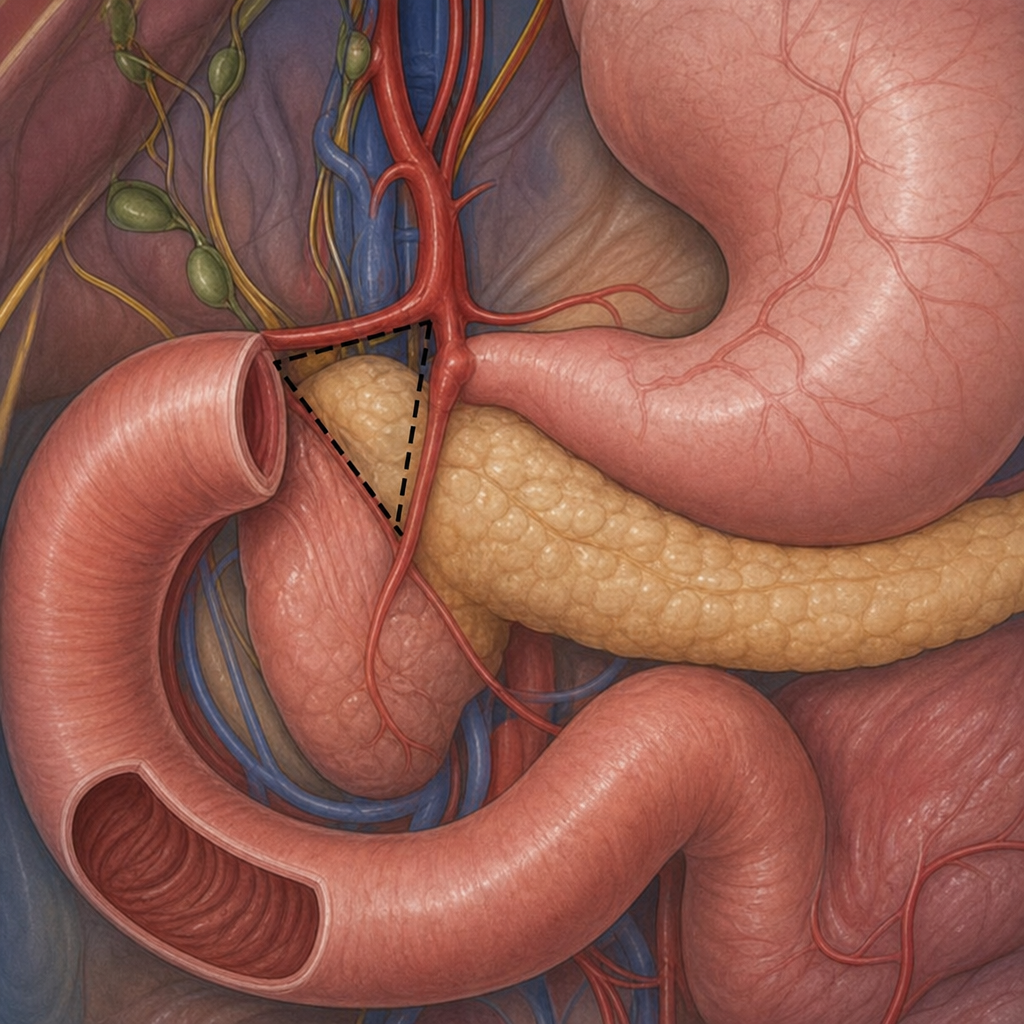
Explanation: **Explanation:** **Zollinger-Ellison Syndrome (ZES)** is caused by a gastrin-secreting neuroendocrine tumor known as a **gastrinoma**. These tumors arise from **G cells**, which are responsible for the secretion of gastrin. Gastrin stimulates the parietal cells of the stomach to produce excessive amounts of hydrochloric acid, leading to refractory peptic ulcer disease and secretory diarrhea. While G cells are normally found in the gastric antrum and duodenum, gastrinomas most commonly occur in the "Gastrinoma Triangle" (Passaro’s Triangle). **Analysis of Options:** * **Option A: ECL (Enterochromaffin-like) cells:** These cells secrete histamine in response to gastrin. While they undergo hyperplasia in ZES due to chronic gastrin stimulation, they are not the primary source of the tumor. * **Option B: Chief cells:** Located in the stomach lining, these cells secrete pepsinogen. They are not associated with neuroendocrine tumors of the pancreas or duodenum. * **Option C: G cells (Correct):** The primary cell type that secretes gastrin. Gastrinomas are tumors of these cells. * **Option D: S cells:** Located in the duodenum, these cells secrete secretin. Interestingly, the **Secretin Stimulation Test** is the most sensitive provocative test for ZES, where exogenous secretin paradoxically increases gastrin levels. **High-Yield Clinical Pearls for NEET-PG:** * **Location:** Most gastrinomas are found in the **Gastrinoma Triangle** (bounded by the cystic duct/CBD junction, the junction of the 2nd and 3rd parts of the duodenum, and the neck/body of the pancreas). * **Association:** Approximately 25% of ZES cases are associated with **Multiple Endocrine Neoplasia Type 1 (MEN1)**. * **Diagnosis:** Best initial test is fasting serum gastrin (>1000 pg/mL is diagnostic). The most sensitive imaging for localization is **Somatostatin Receptor Scintigraphy (Octreoscan)** or Gallium-68 DOTATATE PET/CT.
Explanation: ### Explanation The clinical presentation of severe abdominal pain, elevated lipase, and **Cullen’s sign** (periumbilical ecchymosis) indicates **Acute Pancreatitis**, likely of biliary origin given the history of gallstones. To predict the severity and prognosis of acute pancreatitis, clinicians use validated scoring systems, most notably the **Ranson Criteria**. **Why Serum GGT is the Correct Answer:** Serum Gamma-Glutamyl Transferase (GGT) is a marker of cholestasis or alcohol consumption. While it may be elevated in gallstone pancreatitis, it is **not** a component of any prognostic scoring system (like Ranson, APACHE II, or Glasgow-Imrie) used to predict the severity or mortality of the disease. **Analysis of Other Options (Ranson Criteria at Admission/48 hours):** * **Age (A):** Part of the admission criteria. Age >55 years (non-biliary) or >70 years (biliary) indicates higher severity. * **Serum LDH (B):** Part of the admission criteria. LDH >350 IU/L (non-biliary) or >250 IU/L (biliary) suggests significant pancreatic necrosis or inflammation. * **Base Deficit (C):** Part of the 48-hour criteria. A base deficit >4 mEq/L (non-biliary) or >5 mEq/L (biliary) reflects systemic metabolic acidosis and poor perfusion. **Clinical Pearls for NEET-PG:** * **Ranson Criteria:** Remember the mnemonic **GA LAW** (at admission: Glucose, Age, LDH, AST, WBC) and **C HOBBS** (at 48 hours: Calcium, Hct drop, Oxygen, Base deficit, BUN, Sequestration of fluid). * **Cullen’s Sign:** Periumbilical ecchymosis; **Grey Turner’s Sign:** Flank ecchymosis. Both indicate retroperitoneal hemorrhage and severe necrotizing pancreatitis. * **Most sensitive/specific marker:** Serum Lipase is preferred over Amylase due to its longer half-life and higher specificity. * **Single best prognostic marker:** C-Reactive Protein (CRP) >150 mg/L at 48 hours is a high-yield predictor of severity.
Pancreatic Anatomy and Physiology
Practice Questions
Acute Pancreatitis
Practice Questions
Chronic Pancreatitis
Practice Questions
Pancreatic Pseudocysts
Practice Questions
Pancreatic Adenocarcinoma
Practice Questions
Cystic Neoplasms of Pancreas
Practice Questions
Neuroendocrine Tumors of Pancreas
Practice Questions
Pancreatic Trauma
Practice Questions
Pancreatectomy Techniques
Practice Questions
Whipple Procedure
Practice Questions
Pancreatic Anastomosis
Practice Questions
Complications of Pancreatic Surgery
Practice Questions
Get full access to all questions, explanations, and performance tracking.
Start For Free