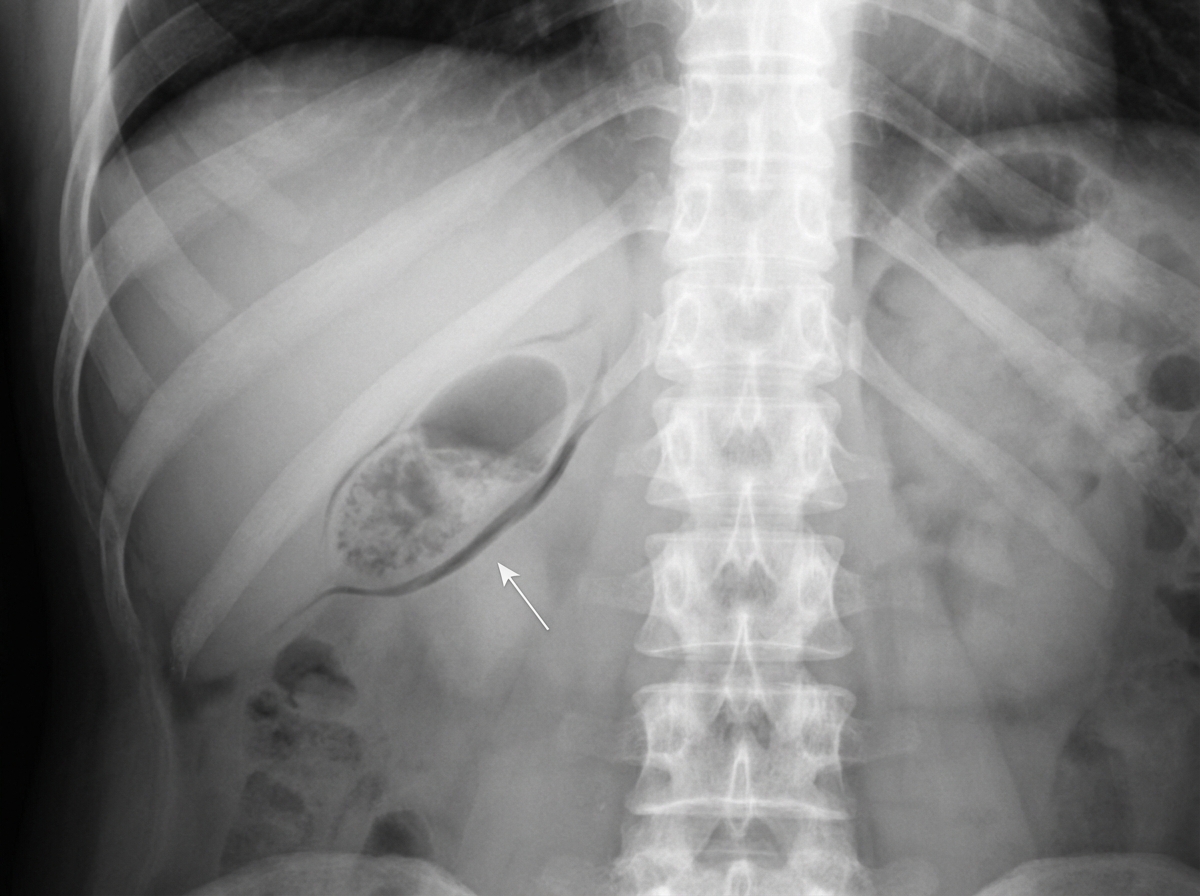
What is a common cause of obstructive jaundice?
Which of the following statements regarding common bile duct (CBD) injury is FALSE?
Which of the following is FALSE regarding gallstone ileus?
What is the procedure of choice for elective removal of common bile duct stones in most patients?
All of the following are true about Asiatic cholangitis except?
Couinaud's segments are used to divide which organ?
Cholangiocarcinoma most commonly metastasizes to which organ?
Which of the following calculi are rare in the gallbladder but common in the common bile duct?
Which of the following liver tumors always merits surgery?
A 25-year-old woman presents with intermittent vague right upper quadrant (RUQ) pain. She has been using oral contraceptive pills for six years. Abdominal CT reveals multiple low-density solid masses throughout both lobes of her liver. What is the most appropriate management for this patient?
Explanation: **Explanation:** Obstructive jaundice (surgical jaundice) occurs when there is a physical blockage in the flow of bile from the liver to the duodenum. This leads to an accumulation of conjugated bilirubin in the bloodstream. **Why Option B is Correct:** **Common Bile Duct (CBD) stones (Choledocholithiasis)** are the most common cause of obstructive jaundice worldwide. Because the CBD is the final common pathway for bile drainage into the intestine, any intraluminal obstruction here prevents bile from reaching the ampulla of Vater, leading to proximal dilatation of the biliary tree and clinical jaundice. **Why Other Options are Incorrect:** * **A. Cystic duct stone:** A stone lodged in the cystic duct causes biliary colic or cholecystitis, but it does **not** cause jaundice because bile can still flow freely from the hepatic ducts through the CBD into the duodenum. (Exception: Mirizzi Syndrome). * **C & D. Hepatitis and Liver Cirrhosis:** These are causes of **medical (hepatocellular) jaundice**. The pathology lies within the liver parenchyma (inability to conjugate or secrete bilirubin) rather than a mechanical obstruction of the extrahepatic biliary tree. **NEET-PG High-Yield Pearls:** * **Courvoisier’s Law:** In a patient with obstructive jaundice, if the gallbladder is palpable, the obstruction is unlikely to be due to a stone (it is more likely periampullary carcinoma) because stones cause chronic inflammation and a fibrosed, non-distensible gallbladder. * **Charcot’s Triad:** Jaundice + Fever + RUQ pain (indicative of Ascending Cholangitis, often due to CBD stones). * **Investigation of Choice:** **MRCP** is the gold standard diagnostic non-invasive test; **ERCP** is the gold standard for both diagnosis and therapeutic intervention (stone extraction).
Explanation: **Explanation:** The correct answer is **D** because the statement is factually incorrect. In modern surgical practice, the most common cause of Common Bile Duct (CBD) injury is **misperception of anatomy** (visual perception error), not a lack of technical skill or poor judgment. Surgeons often misidentify the CBD as the cystic duct, leading to the "classic" injury where the CBD is clipped and divided. **Analysis of Options:** * **Option A & B:** These are correct statistical facts. The incidence of CBD injury in **open cholecystectomy (0.1–0.2%)** is significantly lower than in **laparoscopic cholecystectomy (0.4–0.8%)**. Despite the "learning curve" being overcome globally, the laparoscopic rate remains higher due to the 2D view and limited haptic feedback. * **Option C:** This is correct. Studies on the "learning curve" show that the risk of biliary complications is highest during a surgeon’s first **20–50 cases**. After this threshold, the incidence stabilizes as the surgeon gains proficiency in laparoscopic dissection. * **Option D (The False Statement):** As stated, the primary culprit is **misidentification** (e.g., mistaking the CBD for the cystic duct due to inflammation or anatomical variation). **High-Yield Clinical Pearls for NEET-PG:** * **Strasberg Classification:** The most widely used system to classify laparoscopic bile duct injuries. * **Critical View of Safety (CVS):** The gold standard technique to prevent injury. It requires: (1) Clearing the hepatocystic triangle of fat/fibrous tissue, (2) Lowering the gallbladder off the liver bed (cystic plate), and (3) Seeing only two structures (cystic duct and artery) entering the gallbladder. * **Management:** If an injury is suspected post-operatively (jaundice, bile leak), the first investigation is an **Ultrasound**, but the gold standard for defining anatomy is **ERCP** or **MRCP**.
Explanation: **Explanation:** Gallstone ileus is a mechanical small bowel obstruction caused by the impaction of a large gallstone (usually >2.5 cm) that has migrated through a biliary-enteric fistula. **1. Why Option A is False (The Correct Answer):** While gallstone ileus is a complication of chronic cholecystitis, it is notoriously insidious. Only about **25% to 50%** of patients have a known prior history of symptomatic biliary disease or cholecystitis. In many cases, the formation of the fistula is "silent," and the bowel obstruction is the first clinical presentation. Therefore, the statement that 90% give a history is incorrect. **2. Analysis of Other Options:** * **Option B:** This is a classic epidemiological profile. Gallstone ileus accounts for ~1% of all mechanical bowel obstructions but is a significant cause (up to 25%) in the **elderly population (over 70 years)**, where it carries higher morbidity. * **Option C:** It presents as a **"tumbling obstruction."** As the stone moves distally, it intermittently impacts and then dislodges, causing symptoms that wax and wane before final impaction (usually at the ileocecal valve, the narrowest part). * **Option D:** The most common site of fistula formation is **cholecystoduodenal** (between the gallbladder and the first/second part of the duodenum) due to their anatomical proximity. **Clinical Pearls for NEET-PG:** * **Rigler’s Triad (on X-ray):** 1. Pneumobilia (air in the biliary tree), 2. Small bowel obstruction, 3. Ectopic gallstone (usually in the right iliac fossa). * **Bouveret Syndrome:** A specific type of gallstone ileus where the stone impacts in the duodenum, causing gastric outlet obstruction. * **Management:** The primary goal is relieving the obstruction via **enterolithotomy**. Definitive fistula repair and cholecystectomy are often deferred to a second stage, especially in unstable elderly patients.
Explanation: **Explanation:** The management of common bile duct (CBD) stones has shifted from open surgery to minimally invasive techniques. **Endoscopic Papillotomy** (also known as Endoscopic Sphincterotomy), performed via **ERCP (Endoscopic Retrograde Cholangiopancreatography)**, is currently the procedure of choice for elective CBD stone removal. **Why Endoscopic Papillotomy is Correct:** It is preferred because it is less invasive than surgery, carries a lower morbidity rate, and allows for immediate stone extraction using baskets or balloons. In the elective setting, it can be performed as a standalone procedure or as part of a two-stage management plan (ERCP followed by laparoscopic cholecystectomy). **Analysis of Incorrect Options:** * **Open Choledocholithotomy (A):** Historically the gold standard, it is now reserved for cases where endoscopic or laparoscopic methods fail, or when the anatomy is severely distorted (e.g., previous Billroth II reconstruction). * **Laparoscopic Choledocholithotomy (C):** While effective and often performed simultaneously with cholecystectomy, it requires advanced laparoscopic skills and specialized equipment. It is generally not the first-line "elective" choice compared to the widespread availability of ERCP. * **Percutaneous Choledocholithotomy (D):** This is an invasive radiological procedure reserved for patients who have failed ERCP and are unfit for surgery, or those with intrahepatic stones. **Clinical Pearls for NEET-PG:** * **Gold Standard for Diagnosis:** MRCP (Non-invasive). * **Gold Standard for Treatment:** ERCP with Sphincterotomy/Papillotomy. * **Most Common Complication of ERCP:** Post-ERCP Pancreatitis (approx. 5-10%). * **Indication for T-Tube:** After an open choledocholithotomy, a T-tube is placed to ensure biliary drainage and allow for post-operative cholangiography.
Explanation: **Asiatic Cholangitis**, also known as **Oriental Cholangiohepatitis (OCH)** or Recurrent Pyogenic Cholangitis, is a clinical syndrome characterized by the formation of multiple calcium bilirubinate stones within the intrahepatic and extrahepatic bile ducts. ### **Explanation of Options:** * **Option D (Correct Answer):** This statement is false. Asiatic cholangitis presents with the classic **Charcot’s Triad** (fright-sided abdominal pain, fever with chills, and **jaundice**). Because the disease involves extensive stone formation and strictures in the biliary tree, obstructive jaundice is a hallmark clinical feature. * **Option A:** True. Chronic infestation with parasites such as ***Clonorchis sinensis*** (liver fluke) and *Ascaris lumbricoides* leads to biliary stasis and secondary bacterial infection (*E. coli*, *Klebsiella*), which are key triggers for stone formation. * **Option B:** True. Chronic inflammation, recurrent infections, and biliary stasis associated with this condition significantly increase the risk of developing **cholangiocarcinoma**. * **Option C:** True. It is commonly referred to as Oriental Cholangiohepatitis due to its high prevalence in Southeast Asia. ### **High-Yield Clinical Pearls for NEET-PG:** * **Pathology:** Characterized by **"earthy" brown pigment stones** (calcium bilirubinate) formed due to the action of bacterial beta-glucuronidase. * **Imaging:** The **"Arrowhead Sign"** on imaging refers to the rapid tapering of peripheral intrahepatic ducts. * **Management:** The primary goal is ductal clearance and drainage. Surgical options include **Hepatoportoenterostomy** or, in localized cases (usually the left lobe), **Hepatic lobectomy**. * **Key Difference:** Unlike Western gallstone disease, OCH primarily involves the **intrahepatic ducts**, and the gallbladder is often unaffected.
Explanation: **Explanation:** **Couinaud’s classification** is the most widely used anatomical system for dividing the **liver** into functional segments. This system is based on the distribution of the portal vein, hepatic artery, and bile ducts (the Glissonian triad) and the drainage of the hepatic veins. 1. **Why Liver is Correct:** The liver is divided into **eight independent segments** (I to VIII). Each segment has its own dual vascular inflow, biliary drainage, and lymphatic vessels. * **Segment I** is the Caudate lobe. * The **Middle Hepatic Vein** divides the liver into right and left lobes. * The **Right Hepatic Vein** divides the right lobe into anterior and posterior segments. * The **Left Hepatic Vein** divides the left lobe into medial and lateral segments. * The **Portal Vein** divides the liver into superior and inferior segments. 2. **Why other options are incorrect:** * **Lung:** Divided into lobes and **bronchopulmonary segments** based on the tertiary bronchi. * **Spleen:** Divided into segments based on the branching of the splenic artery, but these do not follow Couinaud’s nomenclature. * **Kidney:** Divided into five segments (superior, inferior, anterior-superior, anterior-inferior, and posterior) based on the **segmental branches of the renal artery**. **High-Yield Clinical Pearls for NEET-PG:** * **Functional Independence:** Because each segment is independent, a surgeon can resect a specific segment (Segmentectomy) without compromising the blood supply to the remaining liver. * **Cantlie’s Line:** An imaginary line from the IVC to the gallbladder fossa that separates the true functional right and left lobes. * **Segment I (Caudate Lobe):** Unique because it receives blood from both right and left portal triads and drains directly into the IVC.
Explanation: **Explanation:** Cholangiocarcinoma (CCA) is a malignancy arising from the epithelial lining of the biliary tree. The most common site of metastasis for cholangiocarcinoma is the **liver**. **1. Why Liver is Correct:** Cholangiocarcinoma spreads primarily through three routes: direct extension, lymphatic spread, and hematogenous spread. Because of the anatomical proximity and the shared portal venous circulation, the liver is the most frequent site for both direct invasion and secondary deposits. In intrahepatic CCA, satellite nodules within the liver are common, while extrahepatic CCA frequently involves the liver via the portal system or direct infiltration. **2. Analysis of Incorrect Options:** * **Bones:** While bone metastasis can occur in advanced stages of many cancers, it is significantly less common in CCA compared to cancers like prostate, breast, or lung. * **Lung:** The lungs are the most common site for *extra-abdominal* distant metastasis, but they occur less frequently than liver involvement. * **Pancreas:** While distal cholangiocarcinoma can involve the head of the pancreas via direct local extension, it is considered a local spread rather than a common site for distant metastasis. **3. NEET-PG High-Yield Pearls:** * **Klatskin Tumor:** A hilar cholangiocarcinoma occurring at the confluence of the right and left hepatic ducts. * **Risk Factors:** Primary Sclerosing Cholangitis (most common in the West), *Clonorchis sinensis* (liver fluke), Choledochal cysts, and Caroli’s disease. * **Tumor Marker:** **CA 19-9** is the most commonly used marker (though not specific). * **Classification:** The **Bismuth-Corlette classification** is used to categorize hilar cholangiocarcinoma based on the extent of ductal involvement.
Explanation: **Explanation:** Gallstones are classified based on their composition and site of origin. The correct answer is **Brown Pigment Stones** because of their unique pathophysiology. **1. Why Brown Stones are the correct answer:** Brown pigment stones are primarily associated with **stasis and infection** (classically *E. coli* and *Clonorchis sinensis*). Bacteria produce the enzyme **beta-glucuronidase**, which deconjugates bilirubin diglucuronide into free bilirubin. This free bilirubin precipitates with calcium to form calcium bilirubinate. While they can form in the gallbladder, they are the classic **"primary" bile duct stones**, meaning they form *de novo* within the common bile duct (CBD) due to biliary stasis or recurrent pyogenic cholangitis. **2. Why other options are incorrect:** * **A. Cholesterol Stones:** These are the most common type of stones found in the **gallbladder** (Western populations). They form due to supersaturation of bile with cholesterol. If found in the CBD, they are usually "secondary" stones that have migrated from the gallbladder. * **C. Black Stones:** These are composed of pure calcium bilirubinate and are associated with **chronic hemolysis** (e.g., Spherocytosis, Sickle cell) or cirrhosis. They form almost exclusively in the **gallbladder** and do not typically form *de novo* in the CBD. **High-Yield Clinical Pearls for NEET-PG:** * **Primary CBD Stones:** Usually Brown stones (formed in the duct). * **Secondary CBD Stones:** Usually Cholesterol or Black stones (migrated from the gallbladder). * **Radiopacity:** Black stones are often radiopaque (50-75%), whereas Cholesterol and Brown stones are typically radiolucent. * **Location:** Brown stones are more common in Asian populations due to higher incidences of biliary parasites and infections.
Explanation: **Explanation:** **Hepatic Adenoma** is the correct answer because it carries a significant risk of **spontaneous rupture (hemoperitoneum)** and **malignant transformation** into hepatocellular carcinoma (HCC). These risks are particularly high for tumors >5 cm or those with specific genetic mutations (e.g., β-catenin activated). Due to these life-threatening complications, surgical resection is generally indicated, especially in symptomatic patients, men (higher malignancy risk), or women with lesions >5 cm that do not regress after stopping oral contraceptives. **Analysis of Incorrect Options:** * **Hemangioma:** The most common benign liver tumor. Most are asymptomatic and discovered incidentally. Surgery is only indicated if they are giant (>10 cm) and cause severe symptoms or complications (e.g., Kasabach-Merritt syndrome). * **Focal Nodular Hyperplasia (FNH):** A benign regenerative nodule characterized by a "central stellate scar." It has no malignant potential and a negligible risk of rupture. Conservative management is the standard of care unless the diagnosis is uncertain. * **Peliosis Hepatis:** Characterized by blood-filled lacunar spaces in the liver. It is often associated with drugs (anabolic steroids) or chronic infections (HIV, Bartonella). Management focuses on treating the underlying cause rather than surgery. **High-Yield Clinical Pearls for NEET-PG:** * **Hepatic Adenoma:** Strongly associated with **Oral Contraceptive Pills (OCP)** use and Glycogen Storage Disease Type I. * **FNH Imaging:** Shows "spoke-wheel" vascularity on angiography and a central scar on CT/MRI. * **Hemangioma Imaging:** Shows peripheral globular enhancement with "centripetal fill-in" on contrast CT. * **Rule of Thumb:** If a benign liver lesion is asymptomatic, "Leave it alone," **except** for Hepatic Adenoma.
Explanation: ### **Explanation** **Diagnosis: Hepatic Adenoma (HA)** The clinical presentation of a young female with a history of long-term oral contraceptive pill (OCP) use and multiple solid liver masses is highly suggestive of **Hepatic Adenomas**. These are benign epithelial tumors strongly associated with estrogen exposure. **1. Why Option B is Correct:** The primary management for OCP-induced hepatic adenomas is the **discontinuation of the offending agent**. Many adenomas (especially those <5 cm) undergo spontaneous regression once the hormonal stimulus is removed. A follow-up CT scan in 3–6 months is the standard protocol to monitor for regression. Surgical intervention is generally reserved for symptomatic lesions, lesions >5 cm that do not regress, or cases where malignancy (Hepatocellular Carcinoma) cannot be ruled out. **2. Why Other Options are Incorrect:** * **Option A (Embolization):** This is indicated only in acute settings, such as a ruptured adenoma causing hemodynamic instability (hemoperitoneum), to control bleeding before definitive surgery. * **Option C (Percutaneous Biopsy):** This is **contraindicated**. Hepatic adenomas are highly vascular; biopsy carries a significant risk of life-threatening hemorrhage. Furthermore, it is often difficult to histologically distinguish adenoma from well-differentiated HCC on a small core sample. * **Option D (Laparoscopic Biopsy):** Similar to percutaneous biopsy, this is avoided due to the risk of bleeding and the fact that initial management should be conservative. **3. NEET-PG High-Yield Pearls:** * **Risk Factors:** OCP use (most common), anabolic steroids, and Type I Glycogen Storage Disease (Von Gierke’s). * **Complications:** 1) Spontaneous rupture/hemorrhage (most common in lesions >5 cm or during pregnancy). 2) Malignant transformation to HCC (highest risk in the **β-catenin mutated** subtype). * **Imaging:** On CT, they typically show peripheral enhancement in the arterial phase with "washout" in the portal venous phase (resembling HCC). * **Management Rule:** If the lesion is >5 cm or persists after stopping OCPs for 6 months, surgical resection is indicated.
Liver Anatomy and Physiology
Practice Questions
Benign Liver Lesions
Practice Questions
Liver Abscess
Practice Questions
Hepatocellular Carcinoma
Practice Questions
Metastatic Liver Disease
Practice Questions
Cirrhosis and Portal Hypertension
Practice Questions
Liver Trauma
Practice Questions
Cholelithiasis and Cholecystitis
Practice Questions
Choledocholithiasis
Practice Questions
Biliary Tract Tumors
Practice Questions
ERCP and Its Complications
Practice Questions
Liver Transplantation Basics
Practice Questions
Get full access to all questions, explanations, and performance tracking.
Start For Free