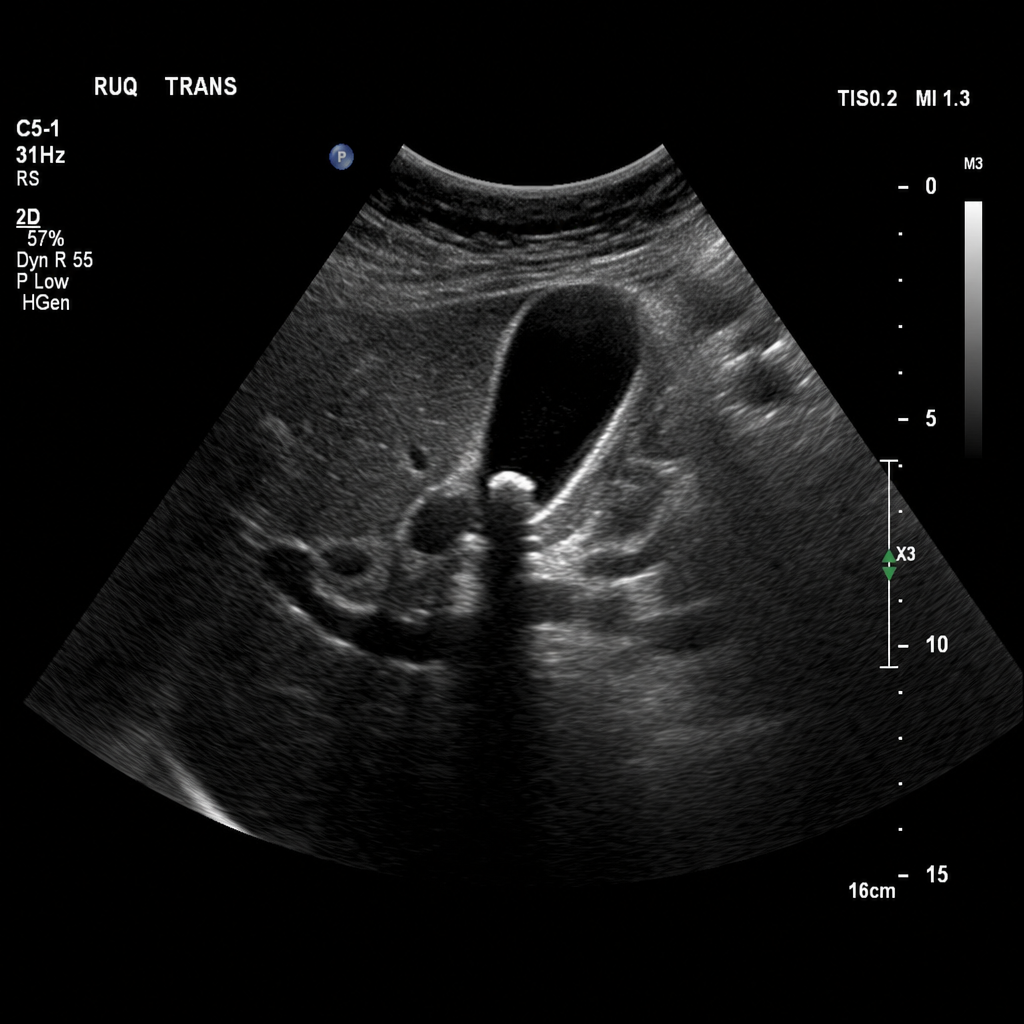
Which of the following is NOT a complication of gallstones?
The predominant constituent of pale yellow gallstones in the gallbladder is:
All of the following constitute Charcot's triad except?
Which of the following is true about hydatid cyst of the liver?
What is the initial management for asymptomatic gallstones?
Which of the following is the initial investigation of choice for evaluation of a suspected case of gall stones?
What is the most common benign tumor of the liver?
What are the indications for needle aspiration in a liver abscess?
Which of the following is the MOST common site of cholangiocarcinoma?
A Klatskin tumour is a type of cholangiocarcinoma found at which location?
Explanation: **Explanation:** The correct answer is **A. Adenocarcinoma of the ampulla of Vater**. While gallstones are a major risk factor for **Gallbladder Carcinoma** (due to chronic mucosal irritation), they are not established causative agents for periampullary cancers like adenocarcinoma of the Ampulla of Vater. Ampullary cancers are more commonly associated with genetic syndromes like Familial Adenomatous Polyposis (FAP) or sporadic mutations. **Analysis of Incorrect Options:** * **Acute intrahepatic cholangitis:** Gallstones can migrate into the Common Bile Duct (Choledocholithiasis), causing obstruction. This leads to stasis and secondary bacterial infection, which can ascend into the intrahepatic ducts (Charcot’s Triad). * **Acute pancreatitis:** This is a classic complication where a gallstone (usually <5mm) passes through the cystic duct and becomes temporarily lodged at the Sphincter of Oddi, causing reflux of bile into the pancreatic duct or increasing pancreatic ductal pressure. * **Gangrenous cholecystitis:** This occurs when severe inflammation and high intraluminal pressure from an obstructed cystic duct lead to ischemia and necrosis of the gallbladder wall. It is a surgical emergency. **Clinical Pearls for NEET-PG:** * **Saint’s Triad:** Hiatus hernia, Diverticulosis, and Gallstones. * **Mirizzi Syndrome:** Extrinsic compression of the Common Hepatic Duct by a stone impacted in the cystic duct/Hartmann’s pouch. * **Gallstone Ileus:** A mechanical bowel obstruction caused by a large gallstone entering the bowel via a cholecystenteric fistula (most common site: ileocecal valve). * **Rigler’s Triad (X-ray findings in Gallstone Ileus):** Pneumobilia, small bowel obstruction, and an ectopic gallstone.
Explanation: **Explanation:** Gallstones (cholelithiasis) are classified into three main types: cholesterol stones, pigment stones, and mixed stones. **Why Cholesterol is Correct:** Cholesterol stones are the most common type of gallstone in Western populations and are increasingly common in India. Pure cholesterol stones are typically **large, solitary, and pale yellow** or whitish in color. They form when bile becomes supersaturated with cholesterol, exceeding the solubilizing capacity of bile salts and lecithin. According to the classic description, a stone must contain at least 50–70% cholesterol to be classified as such; pure stones are >90% cholesterol. **Why the Other Options are Incorrect:** * **A. Mucin glycoprotein:** While mucin acts as a "nucleating agent" or the "glue" that helps crystals aggregate to form a stone, it is a minor structural component, not the predominant constituent. * **B & D. Calcium carbonate/phosphate:** These calcium salts are primarily found in **pigment stones** (black or brown) or as minor components in the shell of mixed stones. Pure calcium stones are rare in the gallbladder and are usually associated with stasis or infection. **High-Yield Clinical Pearls for NEET-PG:** * **The "5 F’s" Risk Factors:** Fat, Female, Fertile, Forty, and Fair. * **Radiopacity:** 80-85% of cholesterol stones are **radiolucent** (cannot be seen on X-ray), whereas most pigment stones are radiopaque due to calcium content. * **Black Pigment Stones:** Associated with chronic hemolysis (e.g., Sickle cell anemia, Spherocytosis) and cirrhosis. * **Brown Pigment Stones:** Associated with biliary tract infections (e.g., *E. coli*) and infestations (*Clonorchis sinensis*). * **Investigation of Choice:** Transabdominal Ultrasonography (USG) is the gold standard for diagnosis.
Explanation: **Explanation:** The question tests the identification of **Charcot’s Triad**, which is the classic clinical presentation of **Acute Cholangitis** (ascending infection of the biliary tree, usually due to gallstones). **1. Why Septic Shock is the correct answer:** Septic shock is not a component of Charcot’s triad. Instead, when septic shock and altered mental status are added to Charcot’s triad, it forms **Reynolds' Pentad**. Reynolds' Pentad indicates severe, life-threatening obstructive suppurative cholangitis requiring emergent biliary decompression. **2. Analysis of Incorrect Options:** * **Pain (Option A):** Right upper quadrant (RUQ) pain is a hallmark of biliary obstruction and a core component of the triad. * **Jaundice (Option C):** Obstructive jaundice occurs due to the backup of bile into the bloodstream, typically caused by choledocholithiasis. * **Fever (Option D):** Fever (often with chills and rigors) signifies the systemic inflammatory response to the ascending infection. **Clinical Pearls for NEET-PG:** * **Charcot’s Triad:** Fever + Jaundice + RUQ Pain (Present in ~50-70% of cases). * **Reynolds' Pentad:** Charcot’s Triad + Hypotension (Septic Shock) + Altered Mental Status. * **Gold Standard Investigation:** ERCP (both diagnostic and therapeutic). * **Initial Investigation of Choice:** Ultrasound of the abdomen. * **Management:** IV antibiotics, fluid resuscitation, and urgent biliary drainage (via ERCP or PTBD).
Explanation: **Explanation:** The correct answer is **C: Aspiration is safe.** Historically, aspiration of a hydatid cyst was strictly contraindicated due to the fear of anaphylactic shock or peritoneal seeding from spillage. However, with the advent of the **PAIR (Puncture, Aspiration, Injection, Re-aspiration)** technique under ultrasound or CT guidance, aspiration is now considered a safe and effective minimally invasive treatment for WHO stage CE1 and CE3a cysts. **Analysis of Options:** * **A & B:** Surgical management is **not** always indicated, and conservative "watch and wait" is appropriate for inactive, calcified cysts (CE4 and CE5). Treatment is tailored based on the WHO classification (Gharbi’s). * **D:** *Echinococcus granulosus* (dog tapeworm) is the most common cause of hydatid disease. *Echinococcus multilocularis* causes alveolar hydatid disease, which is rarer and more aggressive (mimicking malignancy). **High-Yield Clinical Pearls for NEET-PG:** * **Diagnosis:** Ultrasound is the gold standard for screening/classification. Look for the **"Water Lily sign"** (detached endocyst) or **"Honeycomb appearance"** (daughter cysts). * **Serology:** ELISA for IgG antibodies is the most sensitive screening test. * **Medical Management:** Albendazole (10-15 mg/kg/day) is given to reduce cyst tension and prevent recurrence. It is mandatory before and after PAIR or surgery. * **Surgical Gold Standard:** Total cystoperidystectomy or modified Mabit’s procedure. * **Scolicidal Agents:** Hypertonic saline (20%), 0.5% silver nitrate, or cetrimide are used during PAIR to kill the germinal layer. Formalin is no longer used due to the risk of sclerosing cholangitis.
Explanation: **Explanation:** The management of gallstones is primarily dictated by the presence or absence of symptoms. For **asymptomatic gallstones** (incidental findings on imaging), the standard of care is **observation and watchful waiting**. This is because the risk of developing symptoms or complications (like cholecystitis or pancreatitis) is low—approximately 1–2% per year—and the risks associated with surgery often outweigh the benefits in an asymptomatic patient. **Analysis of Options:** * **A. Immediate surgical intervention:** Prophylactic cholecystectomy is not indicated for most asymptomatic patients. It is reserved for specific high-risk groups (e.g., porcelain gallbladder, stones >3 cm, or patients undergoing bariatric surgery). * **B. Oral dissolution agents:** Drugs like Ursodeoxycholic acid (UDCA) have limited efficacy, high recurrence rates once stopped, and are only considered for patients with small, radiolucent stones who are unfit for surgery. * **C. Endoscopic sphincterotomy:** This is a procedure used to clear stones from the Common Bile Duct (CBD), not for treating stones localized within the gallbladder. **Clinical Pearls for NEET-PG:** * **Exceptions for surgery in asymptomatic cases:** 1. **Porcelain Gallbladder:** High risk of gallbladder carcinoma. 2. **Large Stones (>3 cm):** Increased risk of malignancy. 3. **Congenital Hemolytic Anemia:** (e.g., Hereditary Spherocytosis) to prevent pigment stone complications. 4. **Gallbladder Polyps >10 mm:** High malignant potential. * **Gold Standard Investigation:** Ultrasonography (USG) of the abdomen (sensitivity >95%). * **Most common type of stone:** Cholesterol stones (Western world); however, mixed stones are common globally.
Explanation: **Explanation:** **Ultrasonography (USG) of the abdomen** is the **initial investigation of choice** (and the gold standard screening tool) for cholelithiasis. It has a high sensitivity and specificity (>95%) for detecting gallstones. The diagnosis is based on the presence of mobile, echogenic foci within the gallbladder lumen that cast a posterior acoustic shadow. USG is preferred because it is non-invasive, cost-effective, lacks ionizing radiation, and can simultaneously assess gallbladder wall thickness and biliary tree dilatation. **Why other options are incorrect:** * **CT Scan:** While excellent for identifying complications (like gangrenous cholecystitis or perforation) and detecting common bile duct (CBD) stones, CT is less sensitive than USG for gallstones. Many gallstones are "isodense" to bile and thus invisible on a CT scan. * **MRI (MRCP):** MRCP is the gold standard for visualizing the biliary anatomy and detecting **choledocholithiasis** (CBD stones). However, due to its high cost and lack of portability, it is not used as an initial screening tool for simple gallstones. * **ERCP:** This is an invasive, therapeutic procedure. It is used for the removal of CBD stones but is never used as an initial diagnostic tool for gallbladder stones due to the risk of complications like pancreatitis. **High-Yield Clinical Pearls for NEET-PG:** * **Investigation of choice for Acute Cholecystitis:** USG (Initial); HIDA Scan (Most sensitive/Gold standard). * **Investigation of choice for Choledocholithiasis:** MRCP (Diagnostic); ERCP (Therapeutic). * **WES Triad on USG:** Wall-Echo-Shadow; seen when the gallbladder is completely filled with stones. * **Acalculous Cholecystitis:** Often seen in critically ill or ICU patients; USG shows wall thickening and pericholecystic fluid without stones.
Explanation: **Explanation:** **Hemangioma (Cavernous Hemangioma)** is the most common benign primary tumor of the liver. These are mesenchymal tumors composed of large, blood-filled endothelial-lined spaces. They are typically small, asymptomatic, and discovered incidentally on imaging (USG or CT). While they can occur at any age, they are more frequently diagnosed in women. **Analysis of Options:** * **Hepatic Adenoma:** This is a benign epithelial liver tumor strongly associated with **oral contraceptive pill (OCP)** use and anabolic steroids. While clinically significant due to the risk of rupture/hemorrhage and malignant transformation, it is much rarer than hemangioma. * **Amoeboma:** This is not a true neoplasm; it is a localized inflammatory mass (pseudotumor) caused by chronic *Entamoeba histolytica* infection, usually occurring in the cecum or colon, rarely mimicking a liver mass. * **Papilloma:** These are rare benign tumors of the biliary duct epithelium (Biliary Cystadenoma/Papilloma) and are not the most common liver tumors. **High-Yield Clinical Pearls for NEET-PG:** * **Most common benign liver tumor:** Hemangioma. * **Most common primary malignant liver tumor:** Hepatocellular Carcinoma (HCC). * **Most common liver malignancy overall:** Metastasis (usually from the GI tract). * **Imaging Gold Standard for Hemangioma:** Triphasic CT showing **peripheral globular enhancement** with "centripetal filling" (filling from the outside in). * **Management:** Most hemangiomas require no treatment unless they are "Giant" (>5-10 cm) and symptomatic. Biopsy is generally **contraindicated** due to the high risk of hemorrhage.
Explanation: ### Explanation Liver abscesses (pyogenic or amoebic) are primarily managed with antibiotics/amoebicides. However, certain clinical scenarios necessitate intervention via **Needle Aspiration** or **Percutaneous Catheter Drainage (PCD)**. **Why Option D is Correct:** The size of the abscess is a critical determinant of the risk of spontaneous rupture. According to standard surgical guidelines (including Sabiston and Bailey & Love), an abscess size **greater than 10 cm** (or sometimes cited as >5 cm in high-risk locations) is a definitive indication for aspiration. Large abscesses have a higher failure rate with medical therapy alone and carry a significant risk of intraperitoneal rupture, which can lead to life-threatening peritonitis. **Analysis of Incorrect Options:** * **A. Recurrent abscess:** Recurrence often suggests an underlying biliary pathology or an undrained focus. While it may require intervention, it is usually managed with formal drainage (PCD) or surgical exploration rather than simple needle aspiration. * **B. Left lobe abscess:** While left lobe abscesses are dangerous because they can rupture into the pericardium, the standard of care for a high-risk left lobe abscess is typically **Percutaneous Catheter Drainage (PCD)** rather than simple needle aspiration to ensure continuous decompression. * **C. Refractory to treatment after 48-72 hours:** The standard window to assess medical management failure is usually **48 to 72 hours**. If there is no clinical improvement (persistent fever/pain), intervention is indicated. However, in the context of NEET-PG, the "size criteria" (>10 cm) is considered a more absolute and high-yield indication for immediate aspiration. **High-Yield Clinical Pearls for NEET-PG:** * **Most common cause (Pyogenic):** *E. coli* (worldwide), *Klebsiella* (increasingly common). * **Most common cause (Amoebic):** *Entamoeba histolytica* (Anchovy sauce pus). * **Indications for Aspiration/Drainage:** Size >10 cm, failure of medical therapy (48-72 hrs), high risk of rupture (especially left lobe), or pregnancy (to avoid prolonged metronidazole). * **Gold Standard Investigation:** Triple-phase CT scan. * **Treatment of Choice:** Most pyogenic abscesses are now managed with **PCD + Antibiotics**. Simple needle aspiration is often reserved for diagnostic purposes or smaller, uncomplicated collections.
Explanation: **Explanation:** Cholangiocarcinoma (CCA) is a malignancy arising from the epithelial lining of the biliary tree. It is anatomically classified into three types: intrahepatic, perihilar, and distal. **Why the Hilum is Correct:** The **Hilum (Perihilar region)** is the most common site, accounting for approximately **50% to 60%** of all cases. These are specifically referred to as **Klatskin tumors**, occurring at the junction of the right and left hepatic ducts. Their strategic location leads to early obstructive jaundice, making them a frequent clinical presentation in surgical practice. **Analysis of Incorrect Options:** * **Distal biliary duct:** This is the second most common site, accounting for about **20% to 30%** of cases. These tumors occur between the junction of the cystic duct and the Ampulla of Vater. * **Intrahepatic duct:** This is the least common site, representing only **10%** of cases. These tumors often present as a liver mass rather than with early biliary obstruction. * **Multifocal:** While cholangiocarcinoma can occasionally be synchronous or multifocal (especially in the setting of Primary Sclerosing Cholangitis), it is not the standard primary anatomical distribution. **NEET-PG High-Yield Pearls:** * **Bismuth-Corlette Classification:** Used to stage perihilar (Klatskin) tumors based on the involvement of hepatic duct bifurcations. * **Risk Factors:** Primary Sclerosing Cholangitis (most common in the West), *Clonorchis sinensis* (liver fluke), and Choledochal cysts. * **Tumor Marker:** **CA 19-9** is the most commonly associated marker. * **Imaging:** MRCP is the gold standard for visualizing the extent of biliary involvement.
Explanation: ### Explanation **Correct Answer: D. At the bifurcation of the common hepatic duct into the right and left hepatic ducts** **Concept:** A **Klatskin tumor** is a specific type of **hilar cholangiocarcinoma**. It originates at the junction (bifurcation) of the right and left hepatic ducts. Because of its strategic location, it typically presents early with obstructive jaundice but is surgically challenging due to its proximity to major vascular structures (portal vein and hepatic artery) and the liver parenchyma. **Analysis of Incorrect Options:** * **Option A:** The junction of the cystic duct and common bile duct (CBD) is more distal. Tumors here are classified as distal extrahepatic cholangiocarcinomas. * **Option B:** Tumors within the CBD are categorized as **distal cholangiocarcinomas**. These are usually managed with a Whipple’s procedure (Pancreaticoduodenectomy), unlike Klatskin tumors which require hilar resection. * **Option C:** Tumors at the ampulla of Vater are **periampullary carcinomas**. These present with "fluctuating jaundice" due to the sloughing of the tumor mass. **High-Yield Clinical Pearls for NEET-PG:** * **Bismuth-Corlette Classification:** Used to stage Klatskin tumors based on extent: * **Type I:** Below the confluence. * **Type II:** Involves the confluence. * **Type IIIa/b:** Involves the confluence + Right (a) or Left (b) hepatic duct. * **Type IV:** Multicentric or involving both right and left ducts. * **Clinical Presentation:** Progressive, painless obstructive jaundice with a **non-palpable gallbladder** (Courvoisier’s Law holds true as the obstruction is proximal to the cystic duct). * **Investigation of Choice:** MRCP (to visualize the biliary tree) and Contrast-Enhanced CT (to assess vascular invasion).
Liver Anatomy and Physiology
Practice Questions
Benign Liver Lesions
Practice Questions
Liver Abscess
Practice Questions
Hepatocellular Carcinoma
Practice Questions
Metastatic Liver Disease
Practice Questions
Cirrhosis and Portal Hypertension
Practice Questions
Liver Trauma
Practice Questions
Cholelithiasis and Cholecystitis
Practice Questions
Choledocholithiasis
Practice Questions
Biliary Tract Tumors
Practice Questions
ERCP and Its Complications
Practice Questions
Liver Transplantation Basics
Practice Questions
Get full access to all questions, explanations, and performance tracking.
Start For Free