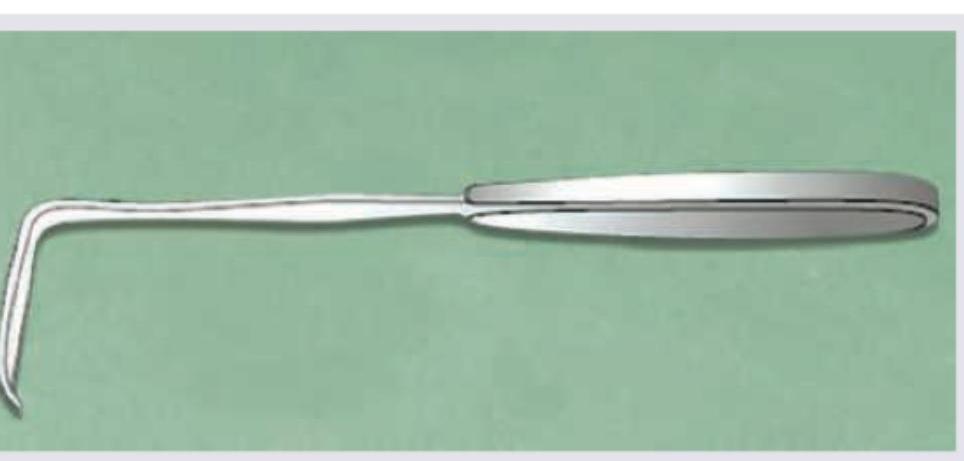
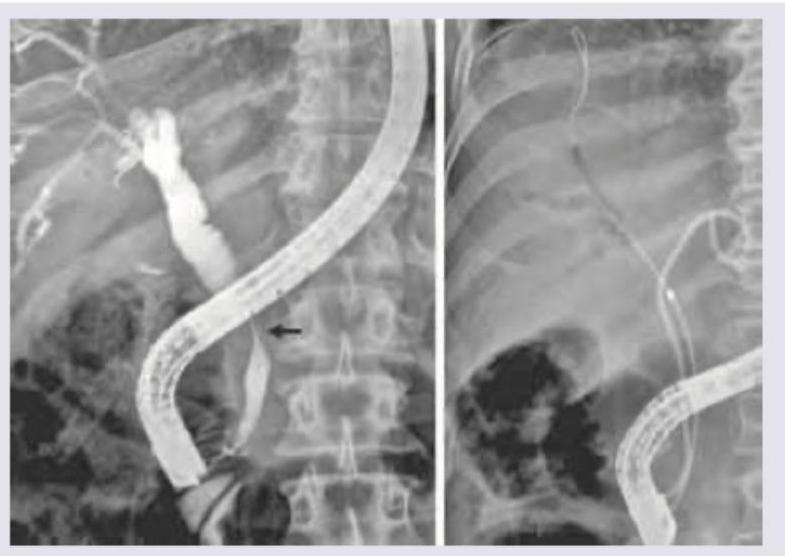
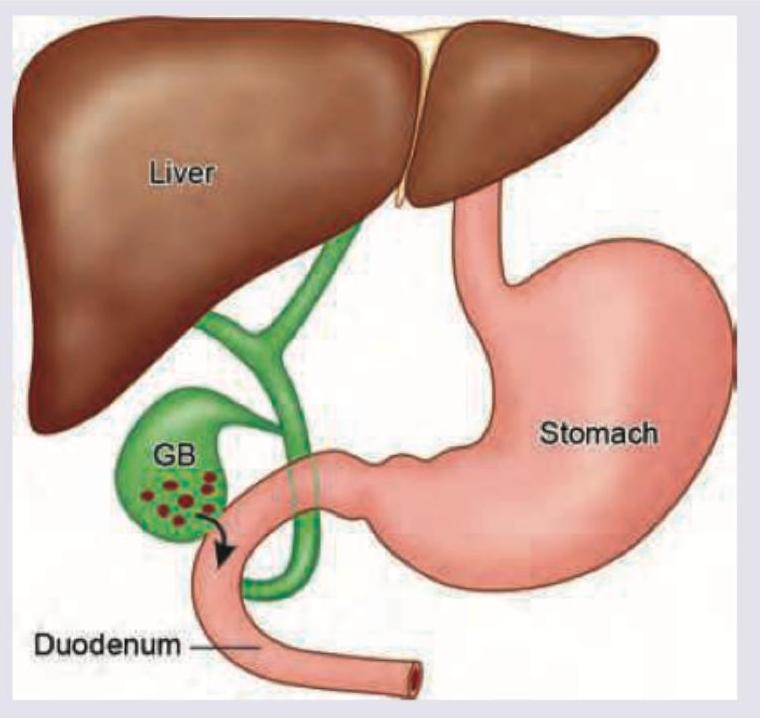
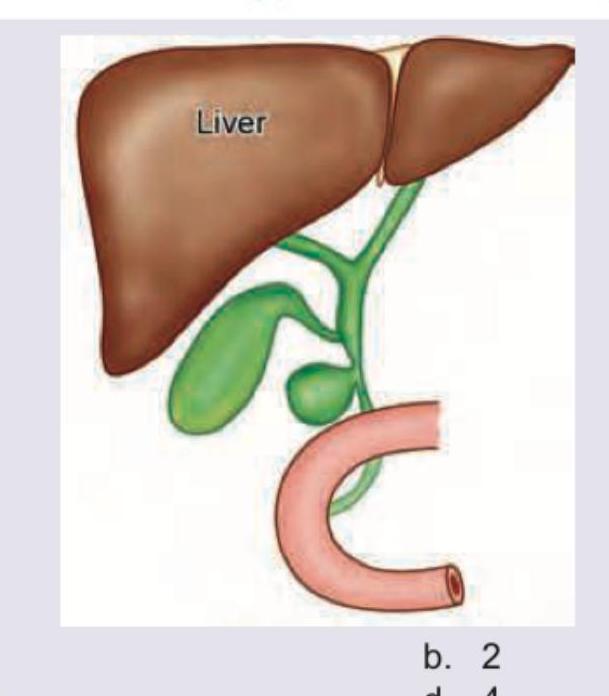
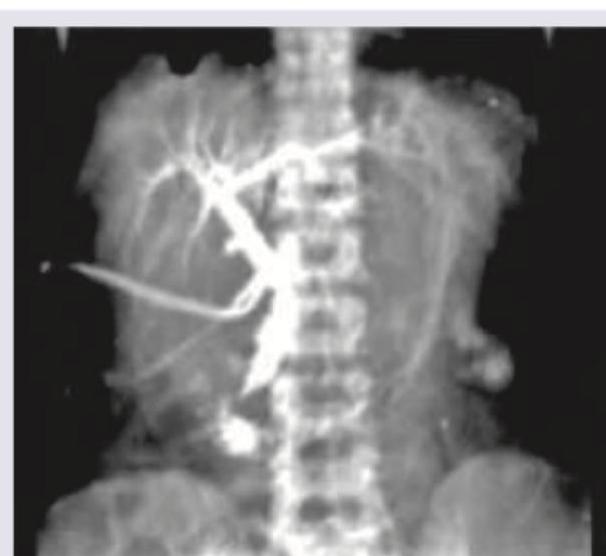
A 3 cm stone in the common bile duct near the ampulla of Vater is best removed by which of the following approaches?
A 40-year-old woman has undergone a cholecystectomy. The histopathology reveals a 3 cm adenocarcinoma in the body of the gallbladder infiltrating up to the serosa. What further management would you advise?
What is the most common cause of pyogenic liver abscess?
Saccular diverticulum of the extrahepatic bile duct in a choledochal cyst is classified as which type?
A 62-year-old alcoholic with hepatocellular carcinoma involving segment IV and VI, without metastasis, may be treated by which of the following except?
Which of the following conditions is characterized by the presence of cholesterol crystals within the gallbladder mucosa, giving it a strawberry-like appearance on gross examination?
Which of the following is NOT associated with left-sided portal hypertension?
All are true about hepatic adenoma except?
The most likely cause of fluctuating jaundice in a middle-aged or elderly man is
What is the typical survival time for unresectable Glioblastoma Multiforme (GBM)?
Explanation: **Explanation:** The management of common bile duct (CBD) stones depends on the size, number, and anatomical location of the calculi. **1. Why Trans-duodenal approach is correct:** A large stone (3 cm) located in the **distal CBD near the ampulla of Vater** is often "impacted" or too large to be extracted via standard supraduodenal choledochotomy or ERCP (which typically struggles with stones >1.5–2 cm). The **trans-duodenal approach (sphincteroplasty/sphincterotomy)** allows direct access to the most distal portion of the CBD. It is specifically indicated for large, impacted stones in the ampulla or when there is associated papillary stenosis. **2. Why other options are incorrect:** * **Supraduodenal approach:** This is the standard technique for stones in the proximal or mid-CBD. However, for a 3 cm stone lodged deep in the ampullary region, this approach carries a high risk of failure or ductal injury during attempted "blind" instrumentation. * **Chemical dissolution:** Agents like monooctanoin are historically significant but clinically obsolete due to low efficacy, toxicity, and the long duration required for dissolution. * **ESWL:** While used for gallbladder stones or difficult intrahepatic stones, ESWL is rarely the primary choice for distal CBD stones due to the risk of bowel injury and the high success rate of surgical or endoscopic interventions. **Clinical Pearls for NEET-PG:** * **Gold Standard:** ERCP with endoscopic sphincterotomy is the first-line treatment for most CBD stones. Surgery is reserved for large (>2 cm), impacted, or multiple stones. * **Choledochoduodenostomy:** Indicated for a "mega-choledochus" (CBD >2 cm) or multiple recurrent stones to provide permanent drainage. * **Trans-duodenal Sphincteroplasty:** Must be performed over a "Bakes dilator" to ensure the integrity of the pancreatic duct orifice.
Explanation: **Explanation:** The management of gallbladder cancer (GBC) discovered incidentally after cholecystectomy is determined by the **T-stage** (depth of invasion). 1. **Why Radical Cholecystectomy is correct:** The histopathology describes a 3 cm tumor infiltrating up to the **serosa**, which classifies it as **T2 disease**. * **T1a (lamina propria):** Simple cholecystectomy is sufficient. * **T1b (muscle layer) and T2 (perimuscular connective tissue/serosa):** These require a **Radical (Extended) Cholecystectomy**. * This procedure involves a wedge resection of the liver (Segments IVb and V) and a formal lymphadenectomy (cystic, pericholedochal, and hilar nodes) to ensure oncological clearance, as T2 tumors have a high rate of nodal metastasis (30-40%). 2. **Why other options are incorrect:** * **Chemotherapy & Radiotherapy (A & B):** These are used as adjuvant treatments in advanced cases or for palliation. They are not substitutes for definitive surgical resection in resectable T2 disease. * **Follow-up (D):** Observation is inadequate for T2 tumors due to the high risk of recurrence and lymphatic spread. It is only acceptable for T1a tumors. **Clinical Pearls for NEET-PG:** * **Most common site:** Fundus (60%), followed by the body (30%). * **Most common histology:** Adenocarcinoma. * **Incidental GBC:** Found in 1% of cholecystectomies; T2 is the most common stage found incidentally. * **Nevin Staging vs. TNM:** While TNM is preferred, Nevin Stage 3 (transmural) corresponds to the need for radical surgery. * **Port-site recurrence:** If the initial surgery was laparoscopic, the port sites should be monitored, though routine excision is no longer mandatory if radical surgery is performed.
Explanation: **Explanation:** Pyogenic liver abscess (PLA) occurs when bacteria seed the liver parenchyma. The most common route of infection is the **biliary tract**, accounting for approximately 40–60% of cases. **Why Option B is Correct:** Biliary tract obstruction is the leading cause of PLA. Conditions such as **strictures of the common bile duct**, choledocholithiasis, or malignancy lead to stasis of bile. This stasis promotes bacterial overgrowth (ascending cholangitis), allowing bacteria to migrate from the biliary tree into the liver parenchyma. **Analysis of Incorrect Options:** * **Option A (Diverticulitis):** This represents the **portal vein route** (pylephlebitis). While historically common due to appendicitis or diverticulitis, its incidence has decreased significantly with the advent of modern antibiotics. * **Option C & D (Subdiaphragmatic abscess & Empyema):** These represent **direct extension** from adjacent structures. While possible, they are rare causes compared to the hematogenous or biliary routes. **High-Yield Clinical Pearls for NEET-PG:** * **Most common route overall:** Biliary tract (Ascending cholangitis). * **Most common organism:** *E. coli* (Worldwide); however, *Klebsiella pneumoniae* is increasingly common, especially in diabetics. * **Most common site:** The **Right Lobe** of the liver (due to the anatomy of portal blood flow). * **Classic Presentation:** Fever with chills, RUQ pain, and jaundice (Charcot’s Triad). * **Investigation of Choice:** Contrast-Enhanced CT (CECT) scan. * **Treatment:** Percutaneous drainage (USG/CT guided) plus long-term intravenous antibiotics. Surgical drainage is reserved for ruptured or multiloculated abscesses.
Explanation: The classification of choledochal cysts is based on the **Todani Classification**, which categorizes congenital cystic dilatations of the biliary tree into five types. ### **Explanation of the Correct Answer** **Type I** is the most common variety (80–90% of cases). It involves the **extrahepatic bile duct** and is further subdivided into: * **Type Ia:** Diffuse, saccular dilatation of the entire common bile duct (CBD). * **Type Ib:** Focal, segmental, **saccular** dilatation of the CBD. * **Type Ic:** Fusiform (spindle-shaped) dilatation of the CBD. The question specifically refers to the **saccular** morphology of the extrahepatic duct, which is the hallmark of Type I (specifically Ia and Ib). ### **Why Other Options are Incorrect** * **Type II:** This is a true **diverticulum** arising from the wall of the CBD. While it is saccular, it is a discrete pouch off the side of the duct rather than a dilatation of the duct itself. * **Type III (Choledochocele):** This is a cystic dilatation of the **intraduodenal** portion of the distal CBD. * **Type IV:** Characterized by **multiple** cysts. Type IVa involves both intrahepatic and extrahepatic ducts; Type IVb involves multiple extrahepatic cysts only. ### **Clinical Pearls for NEET-PG** * **Most Common Type:** Type I. * **Caroli’s Disease:** This is **Type V**, involving multiple **intrahepatic** cysts only. * **Etiology:** Often associated with an **Anomalous Pancreaticobiliary Duct Junction (APBDJ)**, leading to the reflux of pancreatic enzymes and ductal weakening. * **Management:** Complete surgical excision with **Roux-en-Y Hepaticojejunostomy** is the gold standard (except for Type III, which may be managed endoscopically). * **Malignancy Risk:** There is a high risk of **Cholangiocarcinoma**; hence, simple drainage (cystenterostomy) is obsolete.
Explanation: **Explanation:** The management of Hepatocellular Carcinoma (HCC) is determined by the tumor stage, liver function (Child-Pugh score), and performance status. In this patient with multifocal HCC (Segments IV and VI) and underlying cirrhosis (alcoholic), the goal is to treat the tumor while managing the failing liver. **Why Cryotherapy is the correct answer:** Cryotherapy (using liquid nitrogen to freeze tissue) was historically used for liver tumors but is **no longer a standard treatment** for HCC. It is associated with high complication rates, including "cryoshock" (systemic inflammatory response, DIC, and multi-organ failure) and a high rate of local recurrence compared to modern thermal ablation techniques like Radiofrequency Ablation (RFA) or Microwave Ablation. **Analysis of other options:** * **Total Hepatectomy and Liver Transplant:** This is the **treatment of choice** for patients with cirrhosis and HCC meeting the **Milan Criteria** (one lesion <5cm or up to 3 lesions <3cm). It removes both the tumor and the pre-cancerous cirrhotic liver. * **Radiation Therapy:** While HCC is traditionally considered relatively radioresistant, modern techniques like **SBRT (Stereotactic Body Radiation Therapy)** or Yttrium-90 (Radioembolization) are effective palliative or bridging therapies for unresectable HCC. * **Chemoembolization (TACE):** Transarterial Chemoembolization is the **standard of care for intermediate-stage HCC** (large or multifocal tumors without vascular invasion or extrahepatic spread). **Clinical Pearls for NEET-PG:** * **Milan Criteria:** Single tumor ≤5 cm or 3 tumors each ≤3 cm; no vascular invasion; no extrahepatic spread. * **TACE** is the most common treatment for non-surgical HCC. * **Sorafenib/Lenvatinib:** First-line systemic targeted therapy for advanced HCC. * **AFP (Alpha-fetoprotein):** Most common tumor marker; levels >400 ng/mL are highly suggestive of HCC.
Explanation: **Explanation:** **Cholesterosis** (Option A) is a benign condition characterized by the abnormal accumulation of cholesterol esters and triglycerides within **foamy macrophages** in the lamina propria of the gallbladder wall. On gross examination, the yellow flecks of lipid deposits against the hyperemic (red) background of the gallbladder mucosa create a classic **"Strawberry Gallbladder"** appearance. It is often an incidental finding during cholecystectomy and is not necessarily associated with gallstones or elevated serum cholesterol levels. **Why other options are incorrect:** * **Adenomyomatosis (Option B):** This involves mucosal proliferation and hypertrophy of the muscularis propria, leading to the formation of intramural diverticula known as **Rokitansky-Aschoff sinuses**. It typically shows a "comet-tail artifact" on ultrasound, not a strawberry appearance. * **Polyposis (Option C):** While cholesterol polyps are the most common type of gallbladder polyps, "polyposis" refers to discrete outgrowths rather than the diffuse mucosal speckling characteristic of cholesterosis. * **Cholelithiasis (Option D):** This refers to the presence of stones within the gallbladder lumen. While stones can coexist with cholesterosis, they do not produce the specific mucosal "strawberry" pathology. **High-Yield Clinical Pearls for NEET-PG:** * **Strawberry Gallbladder:** Pathognomonic for Cholesterosis. * **Microscopy:** Look for "Foam cells" (lipid-laden macrophages) in the lamina propria. * **Rokitansky-Aschoff Sinuses:** Diagnostic hallmark of Adenomyomatosis. * **Porcelain Gallbladder:** Intramural calcification of the gallbladder wall; associated with a high risk of gallbladder carcinoma.
Explanation: **Explanation:** **Left-sided portal hypertension** (also known as **Sinistral Portal Hypertension**) is a localized form of portal hypertension caused by **splenic vein thrombosis (SVT)**. 1. **Why Option D is the Correct Answer (The "NOT" association):** In left-sided portal hypertension, the blood from the spleen cannot flow through the splenic vein. It is diverted through the short gastric veins into the submucosa of the stomach, leading to **isolated gastric varices** (specifically in the fundus). Unlike generalized portal hypertension (cirrhosis), the pressure in the portal vein itself is normal; therefore, **esophageal varices are typically absent** or minimal. Finding isolated gastric varices in a patient with normal liver function is a classic diagnostic hallmark. 2. **Analysis of Incorrect Options:** * **Option A:** The splenic vein runs along the posterior surface of the pancreas. Therefore, **pancreatitis** (acute or chronic) and **pancreatic tumors** are the most common causes of splenic vein thrombosis. * **Option B:** Since the obstruction is localized to the splenic vein, the rest of the portal system—including the **Superior Mesenteric Vein (SMV)** and the **Portal Vein**—maintains **normal pressures**. * **Option C:** **Splenectomy** is the definitive treatment. By removing the spleen, you remove the source of collateral inflow into the gastric venous system, effectively curing the condition. **High-Yield Clinical Pearls for NEET-PG:** * **Classic Triad:** Isolated gastric varices, splenomegaly, and normal liver function tests. * **Most Common Cause:** Chronic pancreatitis. * **Investigation of Choice:** Contrast-enhanced CT (CECT) or Color Doppler Ultrasound to visualize splenic vein thrombosis. * **Key Distinction:** Unlike cirrhosis, there is no caput medusae, no ascites, and no esophageal varices.
Explanation: **Explanation:** Hepatic Adenoma (HA) is a benign liver tumor arising from hepatocytes. The correct answer is **D** because hepatic adenomas are **characteristically solitary** in 70–80% of cases. When more than 10 adenomas are present, the condition is termed "hepatic adenomatosis," which is often associated with HNF-1α mutations. **Analysis of Options:** * **Option A & C:** These are true. HA is most common in **young females** (20–40 years). There is a strong, dose-dependent causal relationship with **Oral Contraceptive Pill (OCP)** usage, which promotes tumor growth and increases the risk of rupture. * **Option B:** This is true. While some are asymptomatic, many patients present with **abdominal pain** due to the expansion of the tumor or minor intratumoral hemorrhage. **High-Yield Clinical Pearls for NEET-PG:** * **Risk Factors:** OCP use (most common), anabolic steroids, and Glycogen Storage Diseases (Type I and III). * **Complications:** Unlike focal nodular hyperplasia (FNH), HA carries a significant risk of **spontaneous rupture/hemorrhage** (especially during pregnancy) and **malignant transformation** to Hepatocellular Carcinoma (HCC). * **Subtypes:** The **β-catenin activated** subtype has the highest risk of malignancy. * **Management:** Asymptomatic small tumors (<5 cm) may regress upon stopping OCPs. Surgical resection is indicated for tumors >5 cm, symptomatic lesions, or those in males (due to high malignancy risk). * **Imaging:** Classically shows "cold" spots on Technetium-99m sulfur colloid scans because they lack Kupffer cells.
Explanation: **Explanation:** The hallmark of **Peri-ampullary carcinoma** (specifically the ampullary subtype) is **fluctuating jaundice**. This occurs due to the unique pathophysiology of the tumor: as the tumor grows, it obstructs the common bile duct (CBD), causing jaundice. However, because these tumors are often friable and have a poor blood supply, the central portion undergoes **necrosis and sloughing**. This temporarily relieves the obstruction, allowing bile to flow and causing the bilirubin levels to drop (fluctuate), before the tumor regrows and obstructs the duct again. **Analysis of Incorrect Options:** * **Carcinoma of Pancreas:** Typically presents with **progressive, painless, and deepening jaundice**. Unlike ampullary tumors, pancreatic head tumors cause extrinsic, persistent compression of the CBD without periodic sloughing. * **Choledochal Cyst:** While it can cause intermittent jaundice, it is primarily a pediatric diagnosis (though it can present in adults) and is classically associated with the triad of pain, jaundice, and a palpable mass. * **Liver Fluke:** Causes biliary obstruction due to the physical presence of parasites or secondary strictures, but the jaundice is usually persistent or recurrent rather than classically "fluctuating" due to tumor necrosis. **NEET-PG High-Yield Pearls:** * **Silverman’s Sign:** The combination of fluctuating jaundice and occult blood in stools (melena) giving rise to **"Silver Stools"** is highly suggestive of peri-ampullary carcinoma. * **Courvoisier’s Law:** In the presence of jaundice, if the gallbladder is palpable, the obstruction is unlikely to be due to a stone (suggests malignancy like peri-ampullary or pancreatic CA). * **Double Duct Sign:** Seen on imaging (ERCP/MRCP) in peri-ampullary/pancreatic head CA, representing simultaneous dilatation of the CBD and the Pancreatic duct.
Explanation: **Explanation:** Glioblastoma Multiforme (GBM) is a Grade IV astrocytoma and the most aggressive primary malignant brain tumor. The prognosis is heavily dependent on the extent of surgical resection and molecular markers (like MGMT promoter methylation). **1. Why Option A is Correct:** For patients with **unresectable GBM** (where only a biopsy is possible or the tumor is in a non-operable eloquent area) and who receive no further aggressive therapy, the median survival is typically **4–6 months**. Even with palliative radiotherapy, survival in unresectable cases rarely exceeds 6–9 months. The aggressive nature of the tumor leads to rapid intracranial pressure elevation and neurological decline. **2. Why Other Options are Incorrect:** * **Option B (8–10 months):** This is often the survival range for patients who undergo subtotal resection or those who receive radiotherapy alone without chemotherapy. * **Option C & D (12–24 months):** These figures represent the "standard of care" survival. With the **Stupp Protocol** (Maximal safe surgical resection followed by concurrent Temozolomide and Radiotherapy), the median survival increases to approximately **14.6 months**. Survival beyond 2 years is generally seen only in a small subset of patients with favorable molecular profiles (e.g., IDH mutation). **Clinical Pearls for NEET-PG:** * **Most common primary brain tumor in adults:** Glioblastoma Multiforme. * **Classic Imaging Finding:** Ring-enhancing lesion with central necrosis and "Butterfly Glioma" appearance (crossing the corpus callosum). * **Histopathology:** Characterized by **pseudopalisading necrosis** and microvascular proliferation. * **Genetic Marker:** MGMT promoter methylation predicts a better response to Temozolomide (alkylating agent).
Liver Anatomy and Physiology
Practice Questions
Benign Liver Lesions
Practice Questions
Liver Abscess
Practice Questions
Hepatocellular Carcinoma
Practice Questions
Metastatic Liver Disease
Practice Questions
Cirrhosis and Portal Hypertension
Practice Questions
Liver Trauma
Practice Questions
Cholelithiasis and Cholecystitis
Practice Questions
Choledocholithiasis
Practice Questions
Biliary Tract Tumors
Practice Questions
ERCP and Its Complications
Practice Questions
Liver Transplantation Basics
Practice Questions
Get full access to all questions, explanations, and performance tracking.
Start For Free