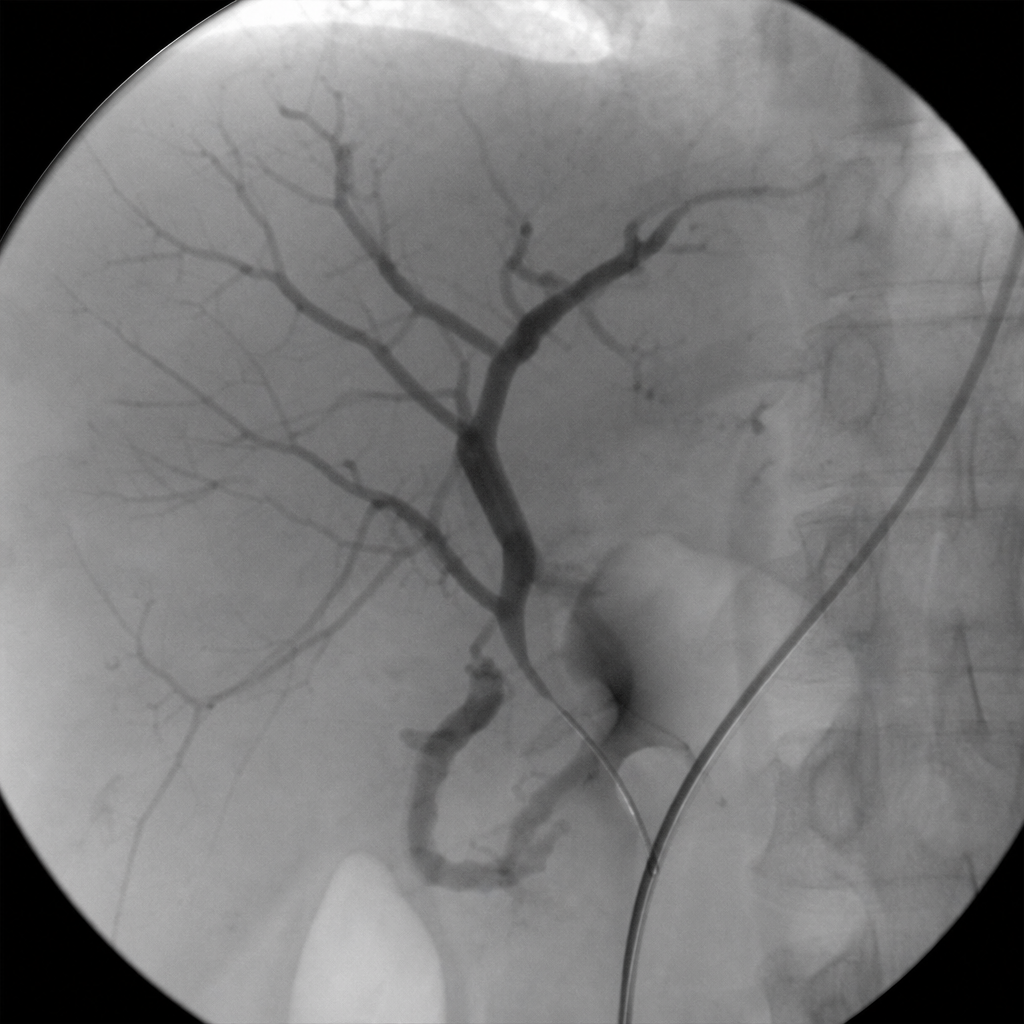
Which of the following statements is true about benign lesions of the liver?
Charcot's triad is seen in which of the following conditions?
What is true about Biliary cystic adenocarcinoma?
All of the following are true regarding common bile duct stones except:
Which of the following is false regarding hepatic adenoma?
Which of the following is NOT a risk factor for cholangiocarcinoma?
In carcinoma of the gallbladder stage M1, which of the following lymph nodes are involved?
A liver abscess most commonly ruptures into which of the following cavities?
What is the commonest type of gallbladder cancer associated with gallstones?
Choledochotomy is indicated in all of the following except in patients with:
Explanation: ### Explanation **1. Why Option A is Correct:** Hepatic Adenomas are true monoclonal neoplasms. Unlike other benign liver lesions, they carry a significant risk of **spontaneous rupture/hemorrhage** (especially if >5 cm) and a risk of **malignant transformation** into Hepatocellular Carcinoma (HCC), particularly the β-catenin mutated subtype. Therefore, surgical resection is generally recommended for symptomatic patients, men, or women with lesions >5 cm that do not regress after stopping oral contraceptives. **2. Why the Other Options are Incorrect:** * **Option B:** Focal Nodular Hyperplasia (FNH) is a **hyperplastic response** to a pre-existing vascular malformation, not a true neoplasm. While its growth can be influenced by estrogen, it is not directly caused by BCPs. Most FNH cases are asymptomatic and **do not require resection** unless they cause significant symptoms. * **Option C:** While Hemangiomas are the most common benign liver tumors overall, they are usually incidental findings. **Adenomas** are the lesions that most frequently "come to the surgeon's attention" because they necessitate clinical intervention or surgical planning due to their complication profile. * **Option D:** Nodular Regenerative Hyperplasia (NRH) is characterized by diffuse small nodules without fibrosis. It is a major cause of **non-cirrhotic portal hypertension**. The statement is technically misleading in a clinical context because NRH is defined by the *absence* of the bridging fibrosis that characterizes true cirrhosis. **Clinical Pearls for NEET-PG:** * **FNH Hallmark:** "Central Stellate Scar" on CT/MRI and "Spoke-wheel appearance" on angiography. * **Hemangioma Hallmark:** Peripheral globular enhancement with "centripetal fill-in" on delayed contrast CT. * **Adenoma Risk Factors:** Oral Contraceptive Pills (OCPs), Anabolic steroids, and Glycogen Storage Diseases (Type I and III). * **Kasabach-Merritt Syndrome:** A rare complication of giant hemangiomas involving consumptive coagulopathy and thrombocytopenia.
Explanation: **Explanation:** **Charcot’s Triad** is the classic clinical presentation of **Acute Cholangitis**, which is an infection of the biliary tree typically caused by an obstruction (most commonly gallstones). The triad consists of: 1. **Fever with chills** (due to bacteremia) 2. **Jaundice** (due to biliary obstruction) 3. **Right Upper Quadrant (RUQ) pain** (due to distension of the biliary tree) The underlying pathophysiology involves **biliary stasis** and **increased intraductal pressure**, which allows bacteria (commonly *E. coli*, *Klebsiella*) to enter the systemic circulation. **Analysis of Incorrect Options:** * **A. Acute Pancreatitis:** Typically presents with severe epigastric pain radiating to the back and vomiting. While jaundice can occur if a gallstone is the cause, the classic triad is not a defining feature. * **B. Acute Appendicitis:** Characterized by periumbilical pain migrating to the Right Iliac Fossa (McBurney’s point), nausea, and fever. Jaundice is rare unless there is associated pylephlebitis. * **C. Acute Hepatitis:** Presents with jaundice, malaise, and RUQ pain, but the acute, spiking fever with chills and the surgical emergency profile of cholangitis are absent. **High-Yield Clinical Pearls for NEET-PG:** * **Reynold’s Pentad:** If Charcot’s triad is accompanied by **Hypotension (Shock)** and **Altered Mental Status**, it indicates obstructive suppurative cholangitis, a life-threatening emergency. * **Management:** The definitive treatment for cholangitis is **biliary decompression**, usually via **ERCP** (Endoscopic Retrograde Cholangiopancreatography), along with IV antibiotics and fluids. * **Most common organism:** *Escherichia coli* is the most frequently isolated pathogen in bile cultures.
Explanation: **Explanation:** **Biliary Cystadenocarcinoma** is a rare, slow-growing malignant tumor of the biliary tract, most commonly arising from a pre-existing biliary cystadenoma. 1. **Why Option A is Correct:** **CT scan** is the primary imaging modality for diagnosis. It characteristically shows a large, multiloculated cystic mass with thick, irregular walls, internal septations, and **solid papillary projections** or mural nodules. The presence of these solid components and coarse calcifications on CT helps differentiate adenocarcinoma from its benign counterpart (cystadenoma). 2. **Why Other Options are Incorrect:** * **Option B:** While CA 19-9 can be elevated in various biliary malignancies, it is **not a specific or definitive diagnostic marker** for biliary cystic adenocarcinoma. Diagnosis relies on imaging and histopathology rather than serum markers. * **Option C & D:** Biliary cystic tumors are predominantly **intrahepatic (85%)**, usually involving the right lobe. While they can occur in the extrahepatic ducts, it is much less common. Therefore, "typically extrahepatic" is incorrect, and while "intrahepatic" is common, the most definitive "true" statement regarding clinical management in this question context is the utility of CT for diagnosis. **High-Yield Clinical Pearls for NEET-PG:** * **Demographics:** Most commonly affects middle-aged women (mean age 45–50 years). * **Pathology:** Characterized by "ovarian-like stroma" in females (a pathognomonic feature). * **Treatment:** The treatment of choice is **formal hepatic resection** (lobectomy) with clear margins. Simple aspiration or deroofing leads to a 100% recurrence rate and risk of malignant transformation. * **Prognosis:** Better than cholangiocarcinoma if completely resected.
Explanation: ### Explanation The distinction between **Retained** and **Recurrent** common bile duct (CBD) stones is based on the timing of their discovery following a cholecystectomy. **1. Why Option D is the Correct Answer (The False Statement):** * **Retained Stones:** These are stones that were present at the time of cholecystectomy but were missed. They are typically discovered within **2 years** of the surgery. * **Recurrent Stones:** These are stones that form *de novo* within the CBD due to stasis or infection. They are diagnosed when the asymptomatic period after surgery exceeds **2 years**. * Therefore, stating that retained stones are discovered *after* 2 years is factually incorrect. **2. Analysis of Other Options:** * **Option A:** Most CBD stones are **Secondary stones**, meaning they migrated from the gallbladder. Thus, they are frequently associated with cholelithiasis. * **Option B:** **Primary CBD stones** (forming in the duct itself) are typically **Brown Pigment stones**. They are associated with biliary stasis and infection (e.g., *E. coli* or *Clonorchis sinensis*), which produce bacterial glucuronidases that precipitate bilirubin. * **Option C:** In approximately **one-third** of patients with choledocholithiasis, liver function tests (LFTs) can be completely normal, especially if the obstruction is intermittent or incomplete. **3. NEET-PG High-Yield Pearls:** * **Gold Standard Investigation:** ERCP (therapeutic and diagnostic), though MRCP is the non-invasive investigation of choice. * **Primary vs. Secondary:** Secondary stones are usually **Black pigment** or **Cholesterol** stones; Primary stones are **Brown**. * **Charcot’s Triad:** Fever, Jaundice, and RUQ pain (indicates Cholangitis). * **Reynold’s Pentad:** Charcot’s Triad + Hypotension + Altered Mental Status (indicates Suppurative Cholangitis).
Explanation: ### Explanation **Hepatic Adenoma** is a benign liver tumor primarily seen in young women using oral contraceptive pills (OCPs). **1. Why Option C is False (The Correct Answer):** In hepatic adenoma, the **normal hepatic architecture is lost**. Histologically, it consists of sheets of hepatocytes without the typical portal triads, bile ducts, or Kupffer cells. This lack of supporting structure and bile ducts is a key diagnostic feature that distinguishes it from Focal Nodular Hyperplasia (FNH), where architecture is relatively preserved. **2. Analysis of Other Options:** * **Option A (Malignancy):** While rare, malignant transformation into Hepatocellular Carcinoma (HCC) occurs in approximately **5–10%** of cases, especially in the β-catenin mutated subtype and in males. * **Option B (Rupture):** Adenomas are highly vascular and lack fibrous support. Spontaneous hemorrhage or rupture occurs in about **20–25%** of cases, often presenting as acute abdominal pain or hypovolemic shock. * **Option C (Symptomatic):** Most patients are **symptomatic** at presentation, complaining of right upper quadrant pain or fullness, unlike many other benign liver lesions (like hemangiomas) which are often incidental findings. **3. NEET-PG High-Yield Pearls:** * **Risk Factors:** OCP use (most common), anabolic steroids, and Glycogen Storage Diseases (Type I and III). * **Management:** * Asymptomatic/Small (<5 cm): Discontinue OCPs and observe. * Symptomatic/Large (>5 cm)/Male patients: Surgical resection due to risk of rupture and malignancy. * **Imaging:** On Sulfur Colloid Scan, adenomas appear as **"cold defects"** because they lack Kupffer cells (unlike FNH, which appears "hot" or "isointense").
Explanation: **Explanation:** The development of **Cholangiocarcinoma (CCA)** is strongly linked to chronic inflammation and cholestasis of the biliary epithelium. **Why Choledocholithiasis is the correct answer:** While **Choledocholithiasis** (stones in the common bile duct) causes biliary obstruction, it is **not** considered a direct risk factor for cholangiocarcinoma. In contrast, **Hepatolithiasis** (intrahepatic stones) is a well-established risk factor because it leads to chronic recurrent pyogenic cholangitis and epithelial dysplasia. Simple ductal stones do not typically induce the long-term malignant transformation seen in other chronic inflammatory states. **Analysis of Incorrect Options:** * **Chronic Typhoid Carrier:** Chronic infection with *Salmonella typhi* (especially in the gallbladder and biliary tract) is associated with an increased risk of hepatobiliary malignancies due to chronic irritation and bacterial metabolites. * **Chronic Ulcerative Colitis:** This is strongly associated with **Primary Sclerosing Cholangitis (PSC)**. PSC is the most common predisposing factor for cholangiocarcinoma in the Western world. * **Parasitic Infestation:** Infections with liver flukes like ***Opisthorchis viverrini*** and ***Clonorchis sinensis*** (endemic in SE Asia) are major risk factors. They cause chronic biliary inflammation and DNA damage. **High-Yield Clinical Pearls for NEET-PG:** * **Most common site:** Perihilar (Klatskin tumor) is the most frequent location for CCA. * **Choledochal Cysts:** Type I and Type IV cysts carry a high risk of malignancy; surgical excision is mandatory. * **Tumor Marker:** **CA 19-9** is the most commonly used marker for monitoring and diagnosis. * **Thorotrast:** Historical exposure to this contrast agent is a classic, high-yield risk factor.
Explanation: **Explanation:** In the TNM staging of gallbladder carcinoma (GBC), the lymphatic spread follows a predictable sequential pattern. The involvement of lymph nodes is categorized into regional (N1, N2) and distant (M1) nodes. **1. Why Aortic Lymph Nodes are Correct:** According to the AJCC (American Joint Committee on Cancer) staging, lymph node involvement beyond the hepatoduodenal ligament is considered distant metastatic disease (**Stage IVB / M1**). The **aortic (para-aortic)**, **caval (pericaval)**, and **inter-aortocaval** lymph nodes represent the final drainage station before the thoracic duct. Once the tumor reaches these nodes, it is no longer considered localized or regionally resectable, thus classifying it as M1. **2. Analysis of Incorrect Options:** * **C. Celiac and D. Pancreaticoduodenal lymph nodes:** These are classified as **N2 (Regional) lymph nodes**. N2 nodes include those along the celiac axis, superior mesenteric artery (at its origin), and the posterior pancreaticoduodenal area. While they represent advanced nodal disease, they are still categorized under 'N' staging, not 'M1'. * **A. Superior mesenteric lymph nodes:** Similar to the celiac nodes, these are considered regional (N2) stations. **High-Yield Clinical Pearls for NEET-PG:** * **N1 Nodes:** Located along the cystic duct, common bile duct, hepatic artery, and portal vein (Hepatoduodenal ligament). * **N2 Nodes:** Periaortic, pericaval, celiac, and superior mesenteric artery nodes. * **Crucial Distinction:** In the most recent AJCC updates, while N2 nodes are technically "regional," involvement of **para-aortic nodes** specifically is universally accepted as **M1 disease** in GBC, signifying a poor prognosis and contraindication for radical curative resection. * **Most common site of distant metastasis:** Liver.
Explanation: **Explanation:** Liver abscesses, whether pyogenic or amoebic, are common surgical conditions in the Indian subcontinent. The liver is an intraperitoneal organ (except for the bare area), and its surfaces are in direct contact with the peritoneum. **1. Why Peritoneal Cavity is Correct:** The **peritoneal cavity** is the most common site for rupture because the majority of the liver's surface area is covered by the peritoneum. As an abscess expands and the overlying liver capsule (Glisson’s capsule) weakens, it typically ruptures into the immediate surrounding space—the subphrenic space or the general peritoneal cavity—leading to localized or generalized peritonitis. **2. Analysis of Incorrect Options:** * **Pleural Cavity:** This is the second most common site. Rupture occurs superiorly through the diaphragm. While common in superiorly located abscesses, it is statistically less frequent than peritoneal rupture. * **Bronchus:** This occurs when an abscess ruptures through the diaphragm and becomes walled off, forming a hepatobronchial fistula. Patients may present with "chocolate sauce" (anchovy sauce) sputum. This is a specific, less common complication. * **Pericardial Cavity:** This is a rare but life-threatening complication, typically occurring from abscesses located in the **left lobe** of the liver. **Clinical Pearls for NEET-PG:** * **Most common site of Amoebic Liver Abscess (ALA):** Right lobe (due to the bulk of the liver and the streaming effect of portal blood flow). * **Classic presentation:** Fever, right upper quadrant pain, and hepatomegaly. * **Anchovy sauce pus:** Pathognomonic for Amoebic Liver Abscess (sterile pus consisting of liquefied hepatocytes). * **Treatment of choice for ALA:** Metronidazole is the mainstay; aspiration is indicated only if the abscess is large (>10 cm), in the left lobe (risk of pericardial rupture), or fails medical therapy.
Explanation: **Explanation:** **1. Why Adenocarcinoma is Correct:** Adenocarcinoma is the most common histological type of gallbladder cancer, accounting for approximately **90-95%** of all cases. Gallstones (cholelithiasis) are the most significant risk factor, present in 70-90% of patients with gallbladder malignancy. The chronic irritation and inflammation caused by stones lead to mucosal dysplasia, which progresses to adenocarcinoma. This follows the classic inflammation-hyperplasia-metaplasia-dysplasia-carcinoma sequence. **2. Why Other Options are Incorrect:** * **Anaplastic Carcinoma:** This is a rare, highly aggressive variant (approx. 2-7%) characterized by rapid growth and a very poor prognosis. It is not the most common type. * **Squamous Cell Carcinoma:** Pure squamous cell carcinoma is rare (approx. 1-2%). While it can be associated with chronic inflammation, it occurs far less frequently than adenocarcinoma. * **Transitional Cell Carcinoma:** This type is extremely rare in the gallbladder, as the biliary tract is lined by columnar epithelium, not transitional epithelium (which is characteristic of the urinary tract). **3. NEET-PG High-Yield Pearls:** * **Risk Factors:** Gallstones >3 cm (increases risk by 10-fold), Porcelain gallbladder (calcified wall), and Choledochal cysts. * **Demographics:** Most common in females (F:M ratio 3:1) and highly prevalent in North India (Gangetic belt). * **Nevin’s Staging:** Often used for gallbladder cancer, though TNM is the standard. * **Incidental Finding:** Many cases are discovered incidentally during or after a routine cholecystectomy for gallstones. * **Metastasis:** The most common site of distant metastasis is the **Liver**.
Explanation: **Explanation:** Choledochotomy (surgical opening of the Common Bile Duct) is performed during cholecystectomy when there is a high suspicion of **Choledocholithiasis** (CBD stones). The indications for exploring the CBD are categorized into absolute and relative criteria. **Why Option D is the Correct Answer:** While **Gamma-glutamyl transferase (GGT)** is a sensitive marker for biliary obstruction, it is highly non-specific. It can be elevated due to alcohol consumption, various medications, or minor fatty liver changes. In the context of surgical decision-making for CBD exploration, GGT is **not** considered a standard clinical indication on its own. **Analysis of Incorrect Options (Indications for Choledochotomy):** * **A. Palpable CBD stones:** This is an **absolute indication**. If a stone is felt within the duct during surgery, the duct must be opened to remove it. * **B. History of jaundice or cholangitis:** These are classic clinical indicators of prior or current ductal obstruction. A history of fluctuating jaundice strongly suggests a stone acting as a "ball-valve" in the CBD. * **C. Abnormal Alkaline Phosphatase (ALP):** A significantly elevated ALP is a reliable biochemical marker for cholestasis. In surgical guidelines, an elevated ALP (along with Bilirubin) is a recognized relative indication for ductal clearance. **NEET-PG High-Yield Pearls:** * **Absolute Indications for CBD Exploration:** Palpable stones, stone seen on intraoperative cholangiogram (IOC), or a dilated CBD (>12-15 mm). * **Relative Indications:** History of jaundice/cholangitis, multiple small stones in the gallbladder (risk of migration), or elevated LFTs (specifically Bilirubin and ALP). * **Gold Standard for Diagnosis:** MRCP is the non-invasive gold standard for identifying CBD stones pre-operatively. * **Management Trend:** In modern practice, ERCP (pre-operative) followed by Laparoscopic Cholecystectomy is preferred over open choledochotomy.
Liver Anatomy and Physiology
Practice Questions
Benign Liver Lesions
Practice Questions
Liver Abscess
Practice Questions
Hepatocellular Carcinoma
Practice Questions
Metastatic Liver Disease
Practice Questions
Cirrhosis and Portal Hypertension
Practice Questions
Liver Trauma
Practice Questions
Cholelithiasis and Cholecystitis
Practice Questions
Choledocholithiasis
Practice Questions
Biliary Tract Tumors
Practice Questions
ERCP and Its Complications
Practice Questions
Liver Transplantation Basics
Practice Questions
Get full access to all questions, explanations, and performance tracking.
Start For Free