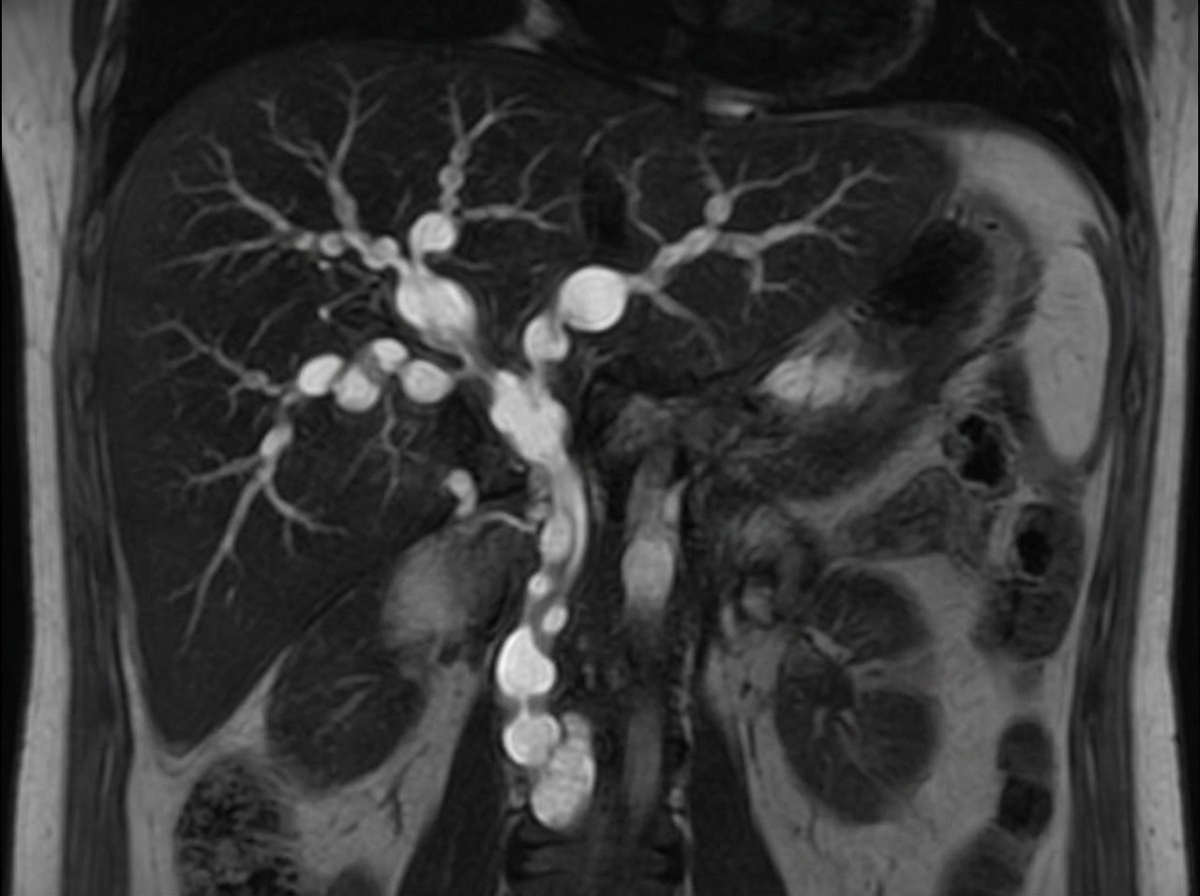
What is true about gallstone disease?
What is the most common site of gallstone impaction?
Gallstones do not typically contain which of the following substances?
What is the most common cause of pyogenic liver abscess?
Which of the following is a TRUE statement about gallstones?
What is the most common type of gall bladder stone?
Which among the following is not a feature of Hemobilia?
Which of the following is NOT an indication for cholecystectomy?
Which of the following is NOT a treatment for common bile duct stones?
Regarding hepatic artery ligation, which statement is false?
Explanation: **Explanation:** **1. Why Option B is Correct:** Acute cholecystitis is primarily a chemical inflammation triggered by cystic duct obstruction. The increased intraluminal pressure compromises the venous and lymphatic drainage of the gallbladder (GB) wall. This leads to ischemia and subsequent **mucosal ulceration**, which is a hallmark pathological feature of the disease. If the pressure continues to rise, it may progress to transmural necrosis (gangrenous cholecystitis). **2. Why Other Options are Incorrect:** * **Option A:** While perforation is a serious complication of acute cholecystitis, it is **not the typical presentation**. Perforation occurs in only about 2–10% of cases, usually following gangrene. * **Option C:** In reality, approximately **80% of gallstones are asymptomatic** (silent stones). Only about 20% of patients develop symptoms or complications over a 15-year period. * **Option D:** A mucocele (hydrops) occurs when the cystic duct is chronically obstructed, but the GB contents remain **sterile**. The bile is absorbed, and the GB becomes distended with clear, mucoid secretion from the gallbladder epithelium. If this fluid becomes infected, it is termed an **empyema**. **High-Yield Clinical Pearls for NEET-PG:** * **Murphy’s Sign:** Arrest of inspiration on deep palpation of the right hypochondrium; it is the clinical hallmark of acute cholecystitis. * **Boas’s Sign:** Hyperesthesia below the right scapula (due to phrenic nerve irritation). * **Investigation of Choice:** Ultrasonography (USG) is the initial investigation; **HIDA scan** is the most sensitive/gold standard for diagnosing acute cholecystitis. * **Treatment:** Early laparoscopic cholecystectomy is currently the preferred management.
Explanation: ### **Explanation** The question refers to the clinical entity known as **Gallstone Ileus**, a mechanical bowel obstruction caused by the impaction of a large gallstone (usually >2.5 cm) in the gastrointestinal tract. This occurs after a stone erodes through the gallbladder wall into the adjacent bowel, most commonly via a **cholecysto-duodenal fistula**. **1. Why "Proximal to the ileocecal junction" is correct:** The **terminal ileum** is the narrowest part of the small intestine and possesses relatively weaker peristaltic activity compared to the proximal segments. Consequently, the most common site for gallstone impaction (60–70% of cases) is the **ileum, specifically 60 cm proximal to the ileocecal valve**. **2. Analysis of Incorrect Options:** * **Duodeno-jejunal junction (A):** While the stone enters the duodenum first, the lumen here is wide enough to allow passage. Impaction in the duodenum is rare and leads to gastric outlet obstruction, known as **Bouveret Syndrome**. * **Distal to the ileocecal junction (C):** Once a stone passes the ileocecal valve, it usually passes through the colon and is excreted, as the colonic diameter is significantly larger than the ileum. * **Colon (D):** Impaction in the colon is rare (approx. 5%) and typically only occurs if there is a pre-existing stricture (e.g., diverticulitis or malignancy). **3. Clinical Pearls for NEET-PG:** * **Rigler’s Triad (Pathognomonic on X-ray):** 1. Pneumobilia (air in biliary tree), 2. Small bowel obstruction, 3. Ectopic radiopaque gallstone. * **Most common fistula:** Cholecysto-duodenal fistula. * **Treatment:** Enterolithotomy (proximal to the site of impaction) is the primary emergency procedure. Cholecystectomy is usually deferred.
Explanation: **Explanation:** The composition of gallstones is primarily determined by the constituents of bile. Gallstones are formed when substances like cholesterol or bilirubin become supersaturated and precipitate out of solution. **Why Oxalate is the correct answer:** **Oxalate** is not a constituent of bile; it is a metabolic byproduct primarily excreted by the **kidneys**. Therefore, calcium oxalate is the hallmark of **urinary stones (nephrolithiasis)**, not gallstones. Its presence in the biliary tract would be physiologically inconsistent with the chemical environment of the gallbladder. **Analysis of incorrect options:** * **Cholesterol (Option B):** This is the most common component of gallstones in Western populations. Stones form when cholesterol concentration exceeds the solubilizing capacity of bile salts and lecithin. * **Phosphate and Carbonate (Options C & D):** These are common inorganic components found in **pigment stones** and the "shell" of mixed stones. Calcium carbonate and calcium phosphate often precipitate along with calcium bilirubinate, especially in cases of chronic infection or stasis. **NEET-PG High-Yield Pearls:** * **Types of Gallstones:** 1. **Mixed Stones (80%):** Most common; contain cholesterol, bile pigments, and calcium salts (phosphate/carbonate). 2. **Cholesterol Stones:** Associated with the "5 F's" (Fat, Female, Fertile, Forty, Fair). 3. **Pigment Stones:** Black (hemolysis/cirrhosis) or Brown (infection/biliary stasis). * **Radiopacity:** Only about 10-15% of gallstones are radiopaque (due to calcium carbonate/phosphate), whereas 85-90% of renal stones are radiopaque (due to calcium oxalate). * **Black Pigment Stones:** Composed of pure calcium bilirubinate; they are typically small, multiple, and hard.
Explanation: **Explanation:** Pyogenic liver abscess (PLA) is a potentially life-threatening condition characterized by a pocket of pus in the liver resulting from bacterial infection. **Why Biliary Tract Infection is Correct:** In modern clinical practice, **biliary tract disease** (ascending cholangitis, cholecystitis, or biliary obstruction due to stones or malignancy) is the **most common cause** of pyogenic liver abscess, accounting for approximately 40–60% of cases. Bacteria reach the liver via the biliary tree (ascending route) due to bile stasis and increased pressure within the ducts. **Analysis of Incorrect Options:** * **Appendicitis and Colonic Diverticulitis:** Historically, appendicitis was the leading cause (via the portal vein route, known as pylephlebitis). However, with early diagnosis and antibiotics, the incidence of portal-source abscesses has significantly decreased. * **Trauma:** While blunt or penetrating trauma can lead to an abscess (via secondary infection of a hematoma), it remains a much less frequent cause compared to biliary pathology. **High-Yield Clinical Pearls for NEET-PG:** * **Most Common Organism:** *Escherichia coli* is the most common aerobe globally; however, *Klebsiella pneumoniae* is an increasingly common cause, especially in diabetics and in Southeast Asia. * **Most Common Site:** The **Right Lobe** of the liver is most frequently involved due to its larger size and the preferential flow of portal blood. * **Clinical Triad:** Charcot’s triad (fever, jaundice, and RUQ pain) is seen in only about 10% of cases; fever is the most consistent symptom. * **Investigation of Choice:** **Contrast-Enhanced CT (CECT)** is the gold standard for diagnosis. * **Treatment:** The mainstay of treatment is **percutaneous drainage** (USG/CT guided) combined with long-term intravenous antibiotics. Surgical drainage is reserved for ruptured or multiloculated abscesses.
Explanation: **Explanation:** Gallstone disease (Cholelithiasis) is a multifactorial condition involving bile composition, gallbladder motility, and patient demographics. **Why Option D is the Correct Answer:** While the classic mnemonic for gallstones is the "5 F's" (Fat, Female, Fertile, Forty, Fair), recent epidemiological trends and specific surgical datasets often highlight a significant prevalence in males within the 30-40 age bracket in certain geographical regions. However, in the context of standard surgical teaching, this option is often selected in competitive exams to highlight the shifting demographic or specific clinical presentations. **Analysis of Other Options:** * **Option A:** While lithogenic bile (supersaturated with cholesterol) is a primary factor for **cholesterol stones**, it is not a universal requirement for all stones. Pigment stones (black/brown) form due to hemolysis or infection, where bile stasis and bilirubin conjugation play a larger role than lithogenicity. * **Option B:** Gallstones are a major risk factor for **Gallbladder Carcinoma**, particularly large stones (>3 cm) or long-standing disease. Chronic irritation leads to mucosal dysplasia. * **Option C:** **Diabetes Mellitus** is a well-known risk factor for gallstones due to autonomic neuropathy leading to gallbladder stasis (hypomotility) and altered bile acid metabolism. **NEET-PG High-Yield Pearls:** * **Most common type of stone:** Cholesterol stones (Western world); however, mixed stones are very common globally. * **Black Pigment Stones:** Associated with chronic hemolysis (e.g., Hereditary Spherocytosis, Sickle Cell Anemia). * **Brown Pigment Stones:** Associated with biliary tract infections and infestations (e.g., *Clonorchis sinensis*). * **Investigation of Choice:** Transabdominal Ultrasonography (95% sensitivity for stones >2mm). * **Saint’s Triad:** Gallstones, Diverticulosis, and Hiatus Hernia.
Explanation: **Explanation:** Gallstones (cholelithiasis) are a major surgical pathology, and understanding their composition is high-yield for NEET-PG. **Why Cholesterol Stones are Correct:** Worldwide, and specifically in the Western world and most parts of India, **cholesterol stones** are the most common type, accounting for approximately **75–80%** of all gallstones. They form due to an imbalance in bile composition (supersaturation of bile with cholesterol), decreased bile salts, or gallbladder stasis. For a stone to be classified as a cholesterol stone, it must contain at least 50% cholesterol by weight. **Analysis of Incorrect Options:** * **A. Pigment Stones:** These account for about 20% of stones. They are divided into **Black** (associated with chronic hemolysis and cirrhosis) and **Brown** (associated with biliary tract infections and infestations like *Clonorchis sinensis*). While common in specific populations, they are less frequent than cholesterol stones globally. * **C & D. Oxalate Stones:** These are types of **renal (kidney) stones**, not gallstones. Calcium oxalate is the most common constituent of urinary calculi but does not form in the biliary tree. **Clinical Pearls for NEET-PG:** * **Risk Factors:** Remember the **5 F’s**: Fat, Female, Fertile, Forty, and Fair. * **Radiology:** Most cholesterol stones are **radiolucent** (not visible on X-ray) because they are primarily composed of fat. Only about 10–15% of gallstones (usually pigment or mixed stones with calcium) are radiopaque. * **Mixed Stones:** These are the most common subtype of cholesterol stones, containing calcium salts and bilirubin in addition to cholesterol. * **Investigation of Choice:** Transabdominal **Ultrasonography (USG)** is the gold standard for diagnosing gallstones, showing mobile echogenic foci with posterior acoustic shadowing.
Explanation: **Explanation:** Hemobilia refers to hemorrhage into the biliary tree. The classic presentation of hemobilia is defined by **Sande-Blom’s Triad** (also known as Quincke’s Triad), which consists of: 1. **Upper GI Bleed:** Presenting as **melena** (most common) or hematemesis. 2. **Biliary Colic:** Caused by the passage of blood clots through the bile ducts, leading to obstruction and distension. 3. **Obstructive Jaundice:** Occurs when blood clots block the common bile duct (CBD). **Why Fever is the correct answer:** Fever is **not** a component of the classic triad of hemobilia. While fever may occur if secondary cholangitis develops due to prolonged obstruction, it is not a primary or diagnostic feature of the condition itself. In contrast, melena, jaundice, and biliary colic are direct consequences of intraluminal bleeding and clot formation. **Analysis of Incorrect Options:** * **Malena (A):** This is the most common presenting symptom as blood travels through the GI tract. * **Jaundice (B):** Results from the mechanical obstruction of the CBD by clotted blood. * **Biliary Colic (D):** The gallbladder and ducts contract vigorously to expel clots, mimicking the pain of gallstones. **High-Yield Clinical Pearls for NEET-PG:** * **Most Common Cause:** Iatrogenic trauma (e.g., liver biopsy, PTBD, ERCP) is now the leading cause. Accidental blunt or penetrating trauma is the second most common. * **Investigation of Choice:** **Selective Hepatic Angiography** is the gold standard for both diagnosis and treatment. * **Management:** Most cases are managed via **Transarterial Embolization (TAE)**. Surgery is reserved for failed embolization or major vascular injuries.
Explanation: **Explanation:** The management of gallbladder polyps is primarily focused on the risk of progression to gallbladder carcinoma. The decision to perform a cholecystectomy is based on size, symptoms, and associated risk factors. **Why "Multiple gallbladder polyps" is the correct answer:** The presence of multiple polyps, by itself, is not an indication for surgery. In fact, multiple small polyps are frequently **cholesterol polyps**, which are non-neoplastic and have no malignant potential. In contrast, a solitary polyp is more likely to be a neoplastic adenoma. Therefore, multiplicity is generally considered a benign feature unless other criteria (like size) are met. **Analysis of Incorrect Options:** * **Gallbladder polyp with stone:** The presence of gallstones in a gallbladder with a polyp is a strong indication for surgery, regardless of polyp size, as chronic irritation from stones increases the risk of malignancy. * **Asymptomatic polyp >1 cm:** Any polyp larger than 10 mm (1 cm) has a significantly higher risk of being a carcinoma or a precancerous adenoma. Cholecystectomy is mandatory even if the patient is asymptomatic. * **Symptomatic gallbladder polyps:** If a patient experiences biliary colic or symptoms attributable to the polyp, cholecystectomy is indicated to provide symptomatic relief and rule out pathology. **High-Yield Clinical Pearls for NEET-PG:** * **Size Threshold:** <6 mm (Observe); 6–9 mm (Follow-up ultrasound); ≥10 mm (Cholecystectomy). * **Risk Factors for Malignancy:** Age >60 years, primary sclerosing cholangitis (PSC), sessile morphology, and solitary nature. * **PSC Exception:** In patients with Primary Sclerosing Cholangitis, **any** polyp (regardless of size) is an indication for cholecystectomy due to the extremely high risk of gallbladder cancer.
Explanation: **Explanation:** The correct answer is **D. Transjugular intrahepatic portosystemic shunt (TIPS)**. **Why TIPS is the correct answer:** TIPS is a procedure used to treat complications of **portal hypertension**, such as refractory ascites or variceal bleeding. It involves creating a low-resistance channel between the hepatic vein and the intrahepatic portion of the portal vein. It has no role in the management of choledocholithiasis (common bile duct stones). **Analysis of other options:** * **A. ESWL:** While primarily used for renal stones, ESWL can be used as an adjunct for difficult, large, or impacted CBD stones that cannot be cleared by conventional endoscopic methods. * **B. Exploration of bile duct:** This is a definitive surgical treatment. It can be performed laparoscopically or via open surgery (Choledochotomy) to manually remove stones, often followed by T-tube placement. * **C. Bile duct stenting:** Endoscopic stenting (via ERCP) is used as a temporizing measure in patients where stone extraction is unsuccessful or in elderly/frail patients to ensure biliary drainage and prevent cholangitis. **High-Yield Clinical Pearls for NEET-PG:** * **Gold Standard:** ERCP with endoscopic sphincterotomy and stone extraction is the first-line treatment for CBD stones. * **Charcot’s Triad:** Fever, jaundice, and RUQ pain indicate ascending cholangitis, a surgical emergency often caused by CBD stones. * **Reynold’s Pentad:** Charcot’s triad plus hypotension and altered mental status (indicates obstructive suppurative cholangitis). * **TIPS Contraindication:** Severe congestive heart failure and polycystic liver disease are major contraindications for TIPS.
Explanation: ### Explanation The liver has a unique dual blood supply: the **portal vein (75%)** and the **hepatic artery (25%)**. While normal hepatocytes derive oxygen from both sources, hepatic tumors (both primary and secondary) are almost exclusively dependent on the **hepatic artery** for their blood supply. **1. Why Option C is the Correct (False) Statement:** The statement "It cannot cure secondary carcinoma" is technically considered the "false" statement in the context of this classic surgical question because hepatic artery ligation (HAL) or embolization **can** occasionally result in the complete necrosis and "cure" of certain vascular secondary tumors (like neuroendocrine metastases). However, more importantly, in the context of surgical logic, HAL is a recognized palliative or therapeutic modality for both primary and secondary tumors to induce necrosis. The question implies that HAL has no role in "curing" them, whereas it is a documented (though rare) outcome compared to its "usefulness" in other conditions. **2. Analysis of Other Options:** * **Option A (True):** HAL is highly effective for **hemobilia** (bleeding into the biliary tree) resulting from trauma or pseudoaneurysms when radiological intervention fails. * **Option B (True):** While HAL induces tumor necrosis, it is generally **not useful** as a definitive treatment for primary hepatoma (HCC) because the tumor quickly develops collateral circulation, and the underlying cirrhosis makes the liver intolerant to ischemia. * **Option D (True):** HAL must be covered by **massive antibiotics**. Ischemia of the liver leads to the proliferation of anaerobic bacteria (like *Clostridium welchii*), which are normally present in the liver, potentially causing fatal gas gangrene. ### NEET-PG High-Yield Pearls * **Dual Supply:** Portal vein (75% flow, 50% $O_2$); Hepatic artery (25% flow, 50% $O_2$). * **Tumor Vascularity:** Primary and secondary liver tumors are **90-95%** dependent on the hepatic artery. * **Post-Ligation:** The liver survives after HAL due to immediate collateralization through the phrenic, cystic, and gastric arteries. * **Complication:** The most feared complication of HAL is a **liver abscess** or gas gangrene, necessitating prophylactic penicillin/metronidazole.
Liver Anatomy and Physiology
Practice Questions
Benign Liver Lesions
Practice Questions
Liver Abscess
Practice Questions
Hepatocellular Carcinoma
Practice Questions
Metastatic Liver Disease
Practice Questions
Cirrhosis and Portal Hypertension
Practice Questions
Liver Trauma
Practice Questions
Cholelithiasis and Cholecystitis
Practice Questions
Choledocholithiasis
Practice Questions
Biliary Tract Tumors
Practice Questions
ERCP and Its Complications
Practice Questions
Liver Transplantation Basics
Practice Questions
Get full access to all questions, explanations, and performance tracking.
Start For Free