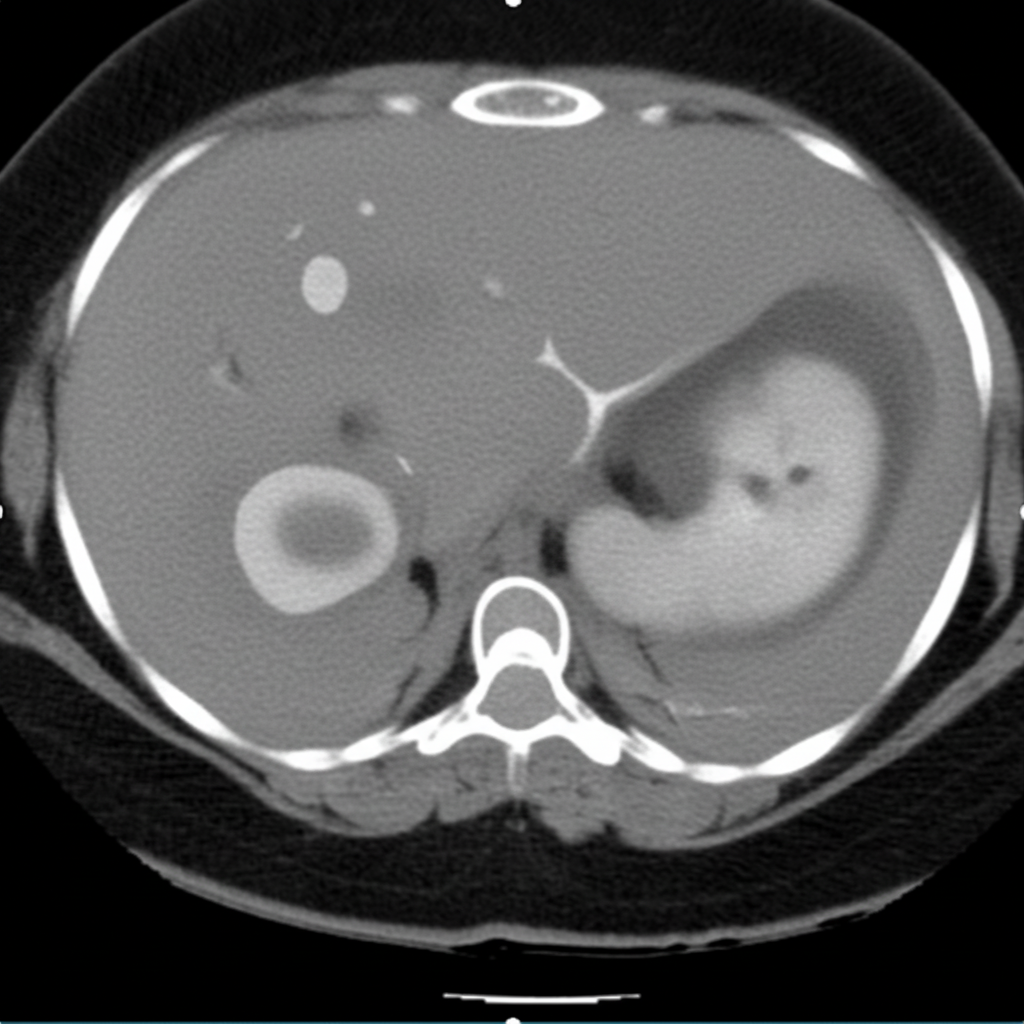
What is the most common cause of hemobilia?
Tokyo guidelines are used to assess the severity of which condition?
What is the most appropriate treatment for gallbladder carcinoma with invasion of perimuscular connective tissue, diagnosed after laparoscopic cholecystectomy?
Which of the following is NOT true regarding cholangitis?
Acalculous cholecystitis is most commonly seen in which of the following conditions?
What is the indication for medical treatment of gallstones in the A/E setting?
What is the preferred method of removal for a 3cm stone in the cystic duct?
What is the most common cause of suppurative cholangitis?
A 50-year-old chronic diabetic presents with severe abdominal pain, nausea, vomiting, and fever. Abdominal imaging shows [findings]. What is the next best step in managing this patient?

Which of the following is NOT true about Todani's modification of the Alonso-Lej classification?
Explanation: **Explanation:** **Hemobilia** refers to bleeding into the biliary tree. The correct answer is **Trauma**, which accounts for approximately 50–90% of all cases. 1. **Why Trauma is correct:** In modern clinical practice, **iatrogenic trauma** is the leading cause. This includes complications from percutaneous liver biopsies, Percutaneous Transhepatic Cholangiography (PTC), and biliary stenting. Accidental blunt or penetrating abdominal trauma follows as the second most common cause, leading to intrahepatic hematomas that communicate with the bile ducts. 2. **Why other options are incorrect:** * **Hemangioma:** While these are common benign liver tumors, they rarely bleed into the biliary system; they are more likely to remain asymptomatic or rupture intraperitoneally. * **Rupture of hepatic artery aneurysm:** This is a classic cause of hemobilia but is statistically much rarer than trauma. * **Hepatitis:** This is an inflammatory condition of the liver parenchyma and does not typically cause gross structural communication between blood vessels and bile ducts. **Clinical Pearls for NEET-PG:** * **Quinke’s Triad:** The classic presentation of hemobilia includes **biliary colic (pain), obstructive jaundice, and gastrointestinal bleeding** (melena or hematemesis). This triad is present in about 30–40% of patients. * **Investigation of Choice:** **Selective Hepatic Angiography** is the gold standard for both diagnosis and therapeutic intervention. * **Management:** The first-line treatment for significant hemobilia is **Transarterial Embolization (TAE)**. Surgery is reserved for cases where embolization fails.
Explanation: **Explanation:** The **Tokyo Guidelines (TG)**, first established in 2007 and updated in 2013 and 2018 (TG18), are the gold standard international criteria for the diagnosis and severity grading of **Acute Cholecystitis** and **Acute Cholangitis**. The guidelines utilize a combination of: 1. **Local signs of inflammation:** Murphy’s sign, RUQ pain/mass. 2. **Systemic signs of inflammation:** Fever, elevated CRP, high WBC count. 3. **Imaging findings:** Gallbladder wall thickening, pericholecystic fluid, or gallstones. **Severity Grading (TG18):** * **Grade I (Mild):** Healthy patient with only local gallbladder changes. * **Grade II (Moderate):** Associated with high WBC, palpable tender mass, or symptoms >72 hours. * **Grade III (Severe):** Associated with organ dysfunction (cardiovascular, neurological, respiratory, renal, hepatic, or hematological). **Why other options are incorrect:** * **Peptic Ulcer Disease:** Severity and risk are often assessed using the **Forrest Classification** (for bleeding) or **Rockall/Blatchford scores**. * **GERD:** Diagnosed via the **Los Angeles (LA) Classification** (endoscopic grading) or DeMeester score (pH monitoring). * **IBD:** Severity is assessed using the **Truelove and Witts criteria** (Ulcerative Colitis) or the **Crohn’s Disease Activity Index (CDAI)**. **High-Yield Clinical Pearls for NEET-PG:** * The **Management of choice** for Grade I/II Cholecystitis is **Early Laparoscopic Cholecystectomy**. * For Grade III (Severe) patients who are surgically unfit, **Percutaneous Cholecystostomy** is the preferred initial intervention. * **Charcot’s Triad** (Fever, Jaundice, RUQ pain) is used for diagnosing Acute Cholangitis within the same Tokyo Guidelines framework.
Explanation: This question addresses the management of **Incidental Gallbladder Cancer (IGBC)** discovered after laparoscopic cholecystectomy. ### **Explanation of the Correct Answer** The scenario describes a tumor with invasion into the perimuscular connective tissue, which corresponds to **Stage T2**. * **The Concept:** For T1a (mucosa only) tumors, simple cholecystectomy is sufficient. However, for **T1b (muscle layer) and T2 tumors**, there is a high risk of lymphatic spread and residual disease in the liver bed. * **The Procedure:** The standard of care is **Radical (Extended) Cholecystectomy**. This involves a formal **segmentectomy of IVb and V** (to ensure clear margins in the liver bed) and a **regional lymphadenectomy** (nodal clearance of the hepatoduodenal ligament, posterosuperior pancreaticoduodenal, and common hepatic artery nodes). ### **Why Other Options are Incorrect** * **Option A:** Incomplete. While it addresses the liver bed, it fails to perform nodal clearance, which is mandatory as T2 tumors have a 30-40% incidence of lymph node metastasis. * **Option C:** Wedge excision (2cm margin) is sometimes used, but anatomical segmentectomy (IVb/V) is preferred in modern surgical practice to ensure better oncological clearance. More importantly, "nodal clearance" is the more standard terminology for the required lymphadenectomy. * **Option D:** **Port site excision** was previously recommended but is now **discouraged**. Current evidence (and AJCC guidelines) shows it does not improve survival or decrease recurrence; it only increases wound complications. ### **High-Yield Clinical Pearls for NEET-PG** * **T1a:** Simple Cholecystectomy is enough. * **T1b, T2, T3:** Radical Cholecystectomy (IVb/V resection + Nodal clearance). * **Most common site of metastasis:** Liver (Segment IVb and V). * **Nodal Clearance:** Minimum of **6 lymph nodes** should be retrieved for adequate staging. * **Contraindication to Radical Surgery:** Presence of distant metastasis or extensive involvement of the hepatoduodenal ligament (N2 nodes).
Explanation: **Explanation:** Cholangitis is a clinical syndrome characterized by inflammation and infection of the bile ducts, usually resulting from biliary obstruction (most commonly due to choledocholithiasis). **Why "Decreased transaminases" is correct:** In acute cholangitis, there is an elevation of liver enzymes, not a decrease. Because cholangitis involves biliary obstruction and secondary hepatocellular injury due to increased intraductal pressure and infection, **Serum Transaminases (AST and ALT) are typically elevated**, often significantly. Therefore, "Decreased transaminases" is the false statement. **Analysis of other options:** * **Increased leucocyte count:** As an acute bacterial infection (commonly *E. coli*, *Klebsiella*, and *Enterococcus*), leukocytosis with a left shift is a hallmark finding. * **Increased alkaline phosphatase (ALP):** Cholangitis is a cholestatic process. Obstruction leads to the induction of ALP synthesis in the bile duct epithelium, causing a marked rise in ALP and GGT levels. * **Association with fever and chills:** Fever with rigors/chills is the most common presenting symptom (90% of cases) and is a key component of Charcot’s Triad. **Clinical Pearls for NEET-PG:** 1. **Charcot’s Triad:** Fever/Chills, Jaundice, and Right Upper Quadrant (RUQ) pain. 2. **Reynolds’ Pentad:** Charcot’s Triad + Hypotension (Shock) + Altered Mental Status. This indicates obstructive suppurative cholangitis and is a surgical emergency. 3. **Initial Management:** Aggressive fluid resuscitation and IV antibiotics. 4. **Definitive Management:** Biliary decompression, most commonly via **ERCP** (Endoscopic Retrograde Cholangiopancreatography). 5. **Tokyo Guidelines (TG18):** Used for the diagnosis and severity grading of acute cholangitis.
Explanation: ### Explanation **Acalculous cholecystitis** refers to acute inflammation of the gallbladder in the absence of gallstones. It typically occurs in critically ill patients and carries a higher morbidity and mortality rate compared to calculous cholecystitis. **The Underlying Concept:** The pathogenesis is multifactorial, primarily driven by **gallbladder stasis** and **ischemia**. In critically ill patients, factors such as prolonged fasting (leading to lack of cholecystokinin stimulation), dehydration, and the use of narcotics or positive-pressure ventilation lead to bile stasis and sludge formation. Simultaneously, systemic hypotension or sepsis causes gallbladder wall ischemia. This combination leads to chemical inflammation and potential secondary infection. **Analysis of Options:** * **A. Patients recovering from major surgery:** Postoperative states involve prolonged NPO (nothing by mouth) status and potential hypotension, leading to stasis. * **B. Trauma:** Severe trauma triggers systemic inflammatory response syndrome (SIRS) and hypovolemia, compromising gallbladder perfusion. * **C. Burns:** Major burns cause massive fluid shifts and are a classic trigger for acalculous cholecystitis due to severe dehydration and potential sepsis. Since all these conditions involve the core mechanisms of stasis and ischemia, **Option D (All of the above)** is correct. **High-Yield Clinical Pearls for NEET-PG:** * **Most common risk factor:** Prolonged fasting/Total Parenteral Nutrition (TPN). * **Diagnosis:** Ultrasound is the initial investigation (look for gallbladder wall thickening >4mm, pericholecystic fluid, and absence of stones). **HIDA scan** is the most sensitive imaging modality (non-visualization of the gallbladder). * **Treatment:** Emergent **cholecystostomy** (percutaneous drainage) is often the preferred initial step in unstable, critically ill patients. Cholecystectomy is definitive once the patient is stabilized.
Explanation: **Explanation:** The management of gallstones is primarily surgical (Laparoscopic Cholecystectomy). However, medical dissolution therapy (using bile acids like Ursodeoxycholic acid) is a niche alternative. **Why "Gallstone should be radio-opaque" is the correct answer (in the context of this specific question):** While traditional medical dissolution therapy (UDCA) requires stones to be radiolucent (cholesterol stones), this question likely refers to the **pre-requisites for Extracorporeal Shock Wave Lithotripsy (ESWL)** or specific medical interventions where the stone must be visualized under fluoroscopy. In many standardized PG exams, if medical management involves lithotripsy, the stone must be **radio-opaque** to be targeted effectively. *Note: If the question strictly refers to UDCA, radiolucency is required; however, based on the provided key, the focus is on visibility for intervention.* **Analysis of Incorrect Options:** * **A & B (Functioning GB / Radiolucent stones):** These are standard requirements for **Bile Acid Dissolution (UDCA)**. Since the key identifies "Radio-opaque" as correct, it distinguishes this from simple UDCA therapy, focusing instead on procedural medical management. * **D (Patient unfit for surgery):** While being unfit for surgery is a *reason* to choose medical over surgical management, it is a clinical status rather than a specific "indication" or prerequisite based on stone characteristics. **NEET-PG High-Yield Facts:** * **Gold Standard:** Laparoscopic Cholecystectomy is the treatment of choice for symptomatic gallstones. * **Bile Acid Therapy (UDCA):** Indicated only for small (<10mm), radiolucent, cholesterol stones in a functioning gallbladder. Success rate is low, and recurrence is high (>50%). * **Pigment Stones:** These are always radio-opaque (calcium bilirubinate) and **cannot** be dissolved medically. * **Asymptomatic Gallstones:** Generally managed by "watchful waiting" unless the patient has a porcelain gallbladder, stones >3cm, or is undergoing bariatric surgery.
Explanation: **Explanation:** The management of large or impacted stones in the biliary system depends on the anatomical location and the feasibility of endoscopic or laparoscopic techniques. **Why Supraduodenal Choledochotomy is correct:** When a large stone (3 cm) is impacted in the ductal system (specifically the cystic duct or common bile duct) and cannot be managed via simple cholecystectomy or ERCP, a **supraduodenal choledochotomy** is the preferred surgical approach. The supraduodenal portion of the common bile duct (CBD) is the most accessible part of the biliary tree. It lies in the free edge of the lesser omentum (hepatoduodenal ligament), making it the safest and most direct site for an incision to extract large calculi. **Analysis of Incorrect Options:** * **A. Transduodenal approach:** This involves a duodenotomy and sphincteroplasty. It is reserved for stones impacted at the distal end of the CBD (Ampulla of Vater) that cannot be removed from above. It carries a higher risk of duodenal leak and pancreatitis. * **C. Lithotripsy:** Extracorporeal shock wave lithotripsy (ESWL) is rarely used for biliary stones today due to high recurrence rates and the superior efficacy of endoscopic (ERCP) or surgical interventions. * **D. Chemical dissolution:** Agents like ursodeoxycholic acid are only effective for small (<1 cm), radiolucent cholesterol stones in a functioning gallbladder. They are ineffective for a 3 cm impacted stone. **High-Yield Clinical Pearls for NEET-PG:** * **Anatomy:** The CBD is divided into four parts: Supraduodenal, Retroduodenal, Infraduodenal (Paraduodenal), and Intraduodenal. * **Gold Standard:** For CBD stones, ERCP with sphincterotomy is the first-line treatment. However, if surgery is required (due to stone size or failure of ERCP), the **supraduodenal** approach is the standard. * **Closure:** After a choledochotomy, the duct is typically closed over a **T-tube** to prevent bile stasis and allow for postoperative cholangiography.
Explanation: **Explanation:** Suppurative cholangitis (Acute Ascending Cholangitis) is a surgical emergency characterized by the presence of pus under pressure within an obstructed biliary tree. **1. Why Option A is Correct:** The fundamental pathophysiology of cholangitis involves two factors: **biliary stasis** and **bacterial infection** (most commonly *E. coli*). **Choledocholithiasis (CBD stones)** is the most common cause of biliary obstruction leading to stasis. When a stone impacts the distal CBD, it creates a "closed-loop" obstruction where bacteria multiply rapidly, leading to high intraductal pressure and the systemic translocation of bacteria/toxins into the bloodstream. **2. Why Incorrect Options are Wrong:** * **B. Cancer of the ampulla of Vater:** While periampullary tumors cause biliary obstruction, they typically present with "painless progressive jaundice." While they can cause cholangitis, they are statistically less common than gallstone disease. * **C. Choledochal cyst:** These are congenital dilations of the bile duct. While they predispose patients to stasis and stones, they are a rare cause compared to primary choledocholithiasis in the general population. * **D. Empyema of gallbladder:** This refers to pus localized within the gallbladder (usually due to cystic duct obstruction). While it causes RUQ pain and fever, it does not typically cause cholangitis or jaundice unless there is secondary compression of the CBD (Mirizzi Syndrome). **High-Yield Clinical Pearls for NEET-PG:** * **Charcot’s Triad:** Fever, Jaundice, and RUQ pain (seen in 50-70% of cases). * **Reynolds’ Pentad:** Charcot’s Triad + Hypotension (Shock) + Altered Mental Status. This indicates **Obstructive Suppurative Cholangitis**, a life-threatening condition. * **Management:** The gold standard for definitive treatment is **ERCP** (Endoscopic Retrograde Cholangiopancreatography) for biliary decompression and stone extraction. * **Most common organism:** *Escherichia coli*, followed by *Klebsiella* and *Enterococcus*.
Explanation: ***Emergency cholecystectomy*** - **Emphysematous cholecystitis** in diabetics requires immediate surgical intervention due to **gas-forming organisms** (Clostridium, E. coli) that can cause **gallbladder perforation** and **sepsis**. - **Diabetic patients** have compromised immunity and poor wound healing, making delayed treatment life-threatening with high mortality rates. *ERCP* - **ERCP** is indicated for **choledocholithiasis** or **biliary obstruction**, not for **emphysematous cholecystitis** which is a **gallbladder wall infection**. - This procedure would delay necessary **surgical removal** of the infected gallbladder and does not address the underlying **gas-forming bacterial infection**. *Observation for a few days and repeat imaging* - **Observation** is contraindicated in **emphysematous cholecystitis** as it can rapidly progress to **gallbladder gangrene**, **perforation**, and **peritonitis**. - **Gas-forming organisms** proliferate quickly in diabetic patients, making conservative management extremely dangerous with potential for **septic shock**. *Elective cholecystectomy* - **Elective surgery** is inappropriate for **emphysematous cholecystitis** which is a **surgical emergency** requiring immediate intervention. - Delaying surgery even by hours can result in **gallbladder perforation**, **abscess formation**, and **life-threatening complications** in diabetic patients.
Explanation: The **Todani classification** is a modification of the Alonso-Lej system used to categorize choledochal cysts based on their location and morphology. ### **Explanation of the Correct Answer** **Option C is the correct answer because it is factually incorrect.** * **Type IVA** is defined as **multiple cysts involving both intrahepatic and extrahepatic bile ducts**. * **Choledochocele** is actually the definition for **Type III**, which involves a cystic dilation of the intraduodenal portion of the common bile duct (CBD). ### **Analysis of Other Options** * **Type I (Option A):** This is the most common type (80-90%). It involves the dilation of the extrahepatic bile duct. It is sub-classified into IA (diffuse/saccular), IB (focal/segmental), and IC (fusiform). * **Type II (Option B):** A rare form presenting as a true **diverticulum** protruding from the supraduodenal extrahepatic biliary tree. * **Type IVB (Option D):** Characterized by **multiple** dilations involving **only the extrahepatic** biliary tree. ### **High-Yield Clinical Pearls for NEET-PG** * **Most Common Type:** Type I (specifically Type IC). * **Caroli’s Disease:** This is **Type V**, characterized by multiple **intrahepatic** ductal dilations. If associated with congenital hepatic fibrosis, it is called Caroli’s Syndrome. * **Classic Triad:** Jaundice, right upper quadrant pain, and a palpable mass (seen in only 20% of patients). * **Treatment of Choice:** For Types I, II, and IV, the standard treatment is **complete cyst excision with Roux-en-Y Hepaticojejunostomy** to prevent the high risk of cholangiocarcinoma. Type III is usually managed via endoscopic sphincterotomy or excision.
Liver Anatomy and Physiology
Practice Questions
Benign Liver Lesions
Practice Questions
Liver Abscess
Practice Questions
Hepatocellular Carcinoma
Practice Questions
Metastatic Liver Disease
Practice Questions
Cirrhosis and Portal Hypertension
Practice Questions
Liver Trauma
Practice Questions
Cholelithiasis and Cholecystitis
Practice Questions
Choledocholithiasis
Practice Questions
Biliary Tract Tumors
Practice Questions
ERCP and Its Complications
Practice Questions
Liver Transplantation Basics
Practice Questions
Get full access to all questions, explanations, and performance tracking.
Start For Free