Which of the following drugs can cause failure of oral contraceptive pills (OCPs)?
Cholestasis may lead to the following complications except:
Which of the following is a common cause of acute pancreatitis?
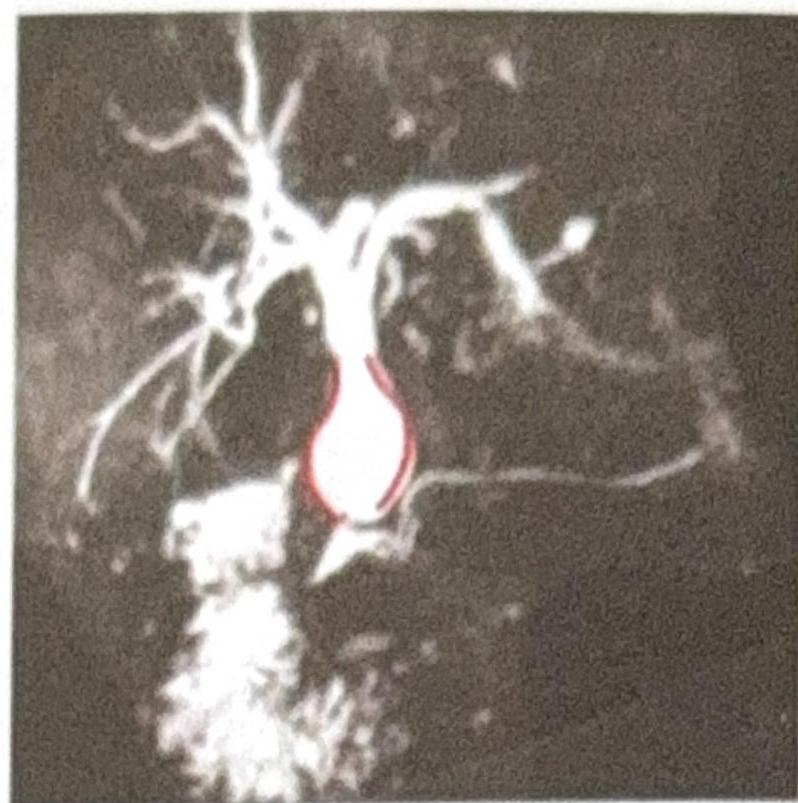
What condition does the MRCP (Magnetic Resonance Cholangiopancreatography) image indicate?
Which intervention should Nurse Bryan include in the care plan for Pierre, a client diagnosed with acute pancreatitis under his care?
Which of the following is a complication of gallstones?
What is the definitive treatment for gallstone-induced pancreatitis?
On the 5th postoperative day after laparoscopic cholecystectomy, a 50-year-old lady presented with right upper quadrant pain, fever, and a 12-cm subhepatic collection on CT. What is the best management option for this patient?
Which of the following is NOT a primary function of histamine antagonists as a drug class?
A patient with multiple gallstones shows 8 mm dilation and has 4 stones in the common bile duct (CBD). What is the best treatment modality?
Explanation: ***All of the above*** - **Rifampicin**, **Phenytoin**, and **Nevirapine** are all known to induce hepatic enzymes, leading to increased metabolism of oral contraceptive pills. - This increased metabolism reduces the circulating levels of contraceptive hormones, thereby decreasing their effectiveness and increasing the risk of **ベーシック contraceptive failure** [1]. *Rifampicin* - **Rifampicin** induces cytochrome P450 enzymes (particularly **CYP3A4**), which are responsible for metabolizing the estrogen and progestin components of OCPs. - This accelerated metabolism can significantly lower the concentrations of contraceptive hormones, making OCPs less effective and increasing the risk of **unintended pregnancy**. *Phenytoin* - **Phenytoin** is a potent inducer of hepatic microsomal enzymes, including **CYP3A4**, which metabolize steroid hormones. - Its enzyme-inducing effects can lead to faster clearance of OCP components, resulting in suboptimal hormone levels and potential **contraceptive failure** [1]. *Nevirapine* - **Nevirapine** is an antiretroviral drug that is a strong inducer of **CYP3A4**, a key enzyme in the metabolism of synthetic steroids found in OCPs. - This induction accelerates the breakdown of contraceptive hormones, reducing their efficacy and necessitating the use of **alternative contraceptive methods** or higher-dose OCPs with appropriate monitoring.
Explanation: ***Maternal jaundice*** - While cholestasis, particularly **intrahepatic cholestasis of pregnancy (ICP)**, can cause **pruritus and elevated bile acids**, clinically significant **maternal jaundice is uncommon** (occurring in only 10-25% of cases, typically mild). - Maternal jaundice is more of a **clinical manifestation** rather than a serious **complication** of concern in cholestasis. - In contrast, the **major complications of cholestasis are fetal in nature** and represent the primary clinical concerns requiring active management. *Intrauterine fetal death* - **Elevated bile acids** in the maternal circulation cross the placenta and become toxic to the fetus, significantly increasing the risk of **sudden intrauterine fetal death (IUFD)**. - The mechanism involves **fetal cardiac arrhythmias** and myocardial dysfunction due to bile acid accumulation in cardiac cells. - This is the **most serious complication** and the reason for close monitoring and early delivery in cholestasis. *Meconium stained liquor* - Cholestasis is associated with increased incidence of **meconium-stained amniotic fluid** due to fetal distress. - Elevated bile acids are thought to stimulate **fetal gut motility** and cause premature passage of meconium. - This reflects fetal compromise and increased risk of meconium aspiration syndrome. *Preterm labour* - Women with cholestasis have significantly higher rates of **spontaneous preterm labor**, necessitating planned early delivery (typically around 37 weeks). - Bile acids may have **direct effects on uterine contractility** through alterations in prostaglandin metabolism and myometrial sensitivity. - This is a recognized complication requiring obstetric intervention and monitoring.
Explanation: ***Gallstones*** - **Gallstones** are the most common cause of acute pancreatitis, as they can **obstruct the common bile duct** at the ampulla of Vater, leading to reflux of bile into the pancreatic duct [1]. - This obstruction causes **pancreatic enzyme activation** within the gland, leading to autodigestion and inflammation [1]. *Elevated serum amylase levels* - **Elevated serum amylase levels** are a diagnostic marker for acute pancreatitis, not a cause. - They indicate pancreatic injury and enzyme release but do not initiate the condition. *Acute alcohol consumption* - **Acute alcohol consumption** is a significant cause of acute pancreatitis but is the second leading cause after gallstones. - While alcohol triggers premature activation of pancreatic enzymes, it is not the *most common* cause. *None of the options* - This option is incorrect because **gallstones** are a well-established and the most common cause of acute pancreatitis [1].
Explanation: **Choledochal cyst** - The MRCP image clearly shows a **cystic dilation** of the common bile duct, which is characteristic of a choledochal cyst. - This congenital anomaly involves saccular or fusiform dilation of the bile ducts, as depicted by the **balloon-like structure** in the image. - MRCP is the **gold standard imaging modality** for diagnosing choledochal cysts, providing excellent visualization of the biliary tree anatomy. *Dilated CBD (Common Bile Duct)* - While a choledochal cyst is a type of CBD dilation, simply stating "dilated CBD" is not specific enough, as the image shows a distinct **cystic morphology** beyond just uniform dilation. - Common bile duct dilation can be caused by various factors like stones or strictures, but the **focal, bulbous appearance** points specifically to a cyst. *Acute cholecystitis* - Acute cholecystitis typically presents with signs of gallbladder inflammation, such as **gallbladder wall thickening**, pericholecystic fluid, and gallstones, which are not depicted in this MRCP. - MRCP primarily visualizes the bile ducts and does not typically show the inflammatory changes of the gallbladder wall as clearly as ultrasound or CT. *Cholangiocarcinoma* - Cholangiocarcinoma usually manifests as a **stricture** or **mass** within the bile ducts, causing upstream dilation, rather than the isolated cystic dilation seen in the image. - There is no evidence of an obstructing mass or irregular narrowing within the bile ducts that would suggest a malignancy.
Explanation: ***Maintain NPO status and use an NG tube.*** - Maintaining **NPO (nil per os) status** is crucial in acute pancreatitis to **rest the pancreas** and prevent further stimulation of enzyme secretion [1]. - An **NG tube** may be used for **gastric decompression** in cases of severe nausea, vomiting, or paralytic ileus to reduce abdominal distention and discomfort. *Administration of vasopressin and insertion of a balloon tamponade* - **Vasopressin** and **balloon tamponade** are interventions typically used for **esophageal variceal bleeding**, not directly for acute pancreatitis. - While pancreatitis can sometimes cause complications that might affect the gastrointestinal tract, these are not initial or direct treatments for the pancreatitis itself. *Preparation for a paracentesis and administration of diuretics* - **Paracentesis** and **diuretics** are interventions primarily used to manage **ascites**, which is fluid accumulation in the peritoneal cavity. - While severe pancreatitis can sometimes lead to ascites, these are not primary treatments for acute pancreatitis itself but rather for a specific complication. *Dietary plan of a low-fat diet and increased fluid intake to 2,000 ml/day* - A **low-fat diet** is appropriate for long-term management of chronic pancreatitis or after recovery from acute pancreatitis, but not during the **acute NPO phase**. - While **fluid intake** is important to prevent dehydration, the specific amount of **2,000 ml/day** may not be sufficient or appropriate depending on the patient's hydration status and fluid loss, and it doesn't address the immediate need for pancreatic rest.
Explanation: ***Cholangitis*** [2] - **Cholangitis** refers to an infection of the **biliary tree**, most commonly caused by obstruction of the bile ducts by gallstones, leading to bacterial overgrowth. [2] - The obstruction (often due to choledocholithiasis) allows bacteria from the duodenum to ascend into the biliary system, causing inflammation and infection. *Hemobilia* - **Hemobilia** is bleeding into the **biliary tract**, typically caused by trauma, iatrogenic injury (e.g., biopsy), or vascular anomalies, not directly from gallstones. - While gallstones can cause inflammation, they do not typically lead to the direct arterial or venous bleeding characteristic of hemobilia. *Acute pancreatitis* [1] - **Acute pancreatitis** can be caused by gallstones if a stone temporarily obstructs the **ampulla of Vater**, blocking both the common bile duct and the pancreatic duct. [1] - However, it's considered a complication of **choledocholithiasis** (gallstones in the common bile duct), not a direct complication of gallstones themselves. *Biliary enteric fistula* [1] - **Biliary enteric fistula** is an abnormal connection between the biliary tree and the gastrointestinal tract, usually caused by chronic inflammation and erosion by a gallstone (e.g., a **gallstone ileus**). [1] - While a direct complication of gallstones, the question asks for *a* complication, and cholangitis is a more immediate and common infectious complication directly arising from biliary obstruction.
Explanation: ***Cholecystectomy*** * **Cholecystectomy** is the definitive treatment for gallstone-induced pancreatitis because it removes the source of the obstructing gallstones (the gallbladder). * Typically, this procedure is performed once the acute inflammatory process has settled, to prevent recurrent episodes of pancreatitis. *Fasting* * **Fasting** is a supportive measure used to rest the pancreas during an acute pancreatitis attack, but it does not remove the underlying cause of gallstones. * While fasting helps alleviate pain and reduce pancreatic enzyme secretion, it is not a definitive long-term treatment. *ERCP* * **ERCP (Endoscopic Retrograde Cholangiopancreatography)** is primarily used for the *removal of obstructing common bile duct stones* in cases of gallstone pancreatitis, especially if there's evidence of cholangitis or persistent biliary obstruction. * ERCP can remove immediate obstruction but does not prevent future stone formation in the gallbladder, nor does it address the gallbladder itself as the source. *Pancreatic resection* * **Pancreatic resection** is a major surgical procedure reserved for severe complications of pancreatitis, such as necrotizing pancreatitis, or for pancreatic tumors. * It is **not** indicated for routine gallstone-induced pancreatitis and carries significant morbidity and mortality, making it inappropriate for this context.
Explanation: ***Percutaneous drainage of the collection*** - A 12-cm subhepatic collection with **right upper quadrant pain** and **fever** strongly suggests an **abscess** or **biloma**, which requires urgent drainage. - **Percutaneous drainage** is the least invasive and most effective immediate treatment for a localized, symptomatic fluid collection post-cholecystectomy. - This provides both diagnostic information (culture, bilirubin level) and therapeutic relief. *Conservative management with observation* - This patient presents with signs of **sepsis** (fever, pain) and a large fluid collection, indicating an active inflammatory or infectious process. - **Observation alone** would be inappropriate and could lead to worsening infection, sepsis, and potential rupture of the collection. *Endoscopic retrograde cholangiopancreatography (ERCP) with biliary drainage* - **ERCP** is indicated when there is a suspicion of a **bile duct injury** or **leak** that requires decompression or stenting. - While ERCP may be performed **after or alongside** percutaneous drainage if a bile leak is confirmed (to reduce biliary pressure and promote healing), the **immediate priority** for a large, symptomatic collection is drainage of the collection itself. - Percutaneous drainage addresses the acute problem (sepsis from collection) while ERCP addresses the underlying cause (bile leak, if present). *Surgical repair of the cystic duct* - **Surgical repair** would be considered if there was a confirmed **major bile duct injury** or **cystic duct stump leak** that cannot be managed endoscopically or percutaneously. - This is a more invasive approach and is not typically the first-line management for a large, symptomatic subhepatic collection, which usually requires initial drainage.
Explanation: ***Antivertigo*** - While some first-generation **H1-antihistamines** like dimenhydrinate and meclizine have **antivertigo** properties due to their anticholinergic and sedative effects, this is a specific *effect* of certain histamine antagonists, not a general *function* that all antagonists exhibit. - The question asks for an exception to the *general functions* of histamine antagonists. **Antivertigo** is not a primary, universal effect of histamine antagonism in the way the other options describe. *Antipruritic* - **H1-antihistamines** block the action of **histamine** on **H1 receptors**, which are involved in mediating itching (**pruritus**). - This is a common and primary function of **H1-antagonists** in treating allergic reactions and skin conditions. *Sedation* - First-generation **H1-antihistamines** readily cross the **blood-brain barrier** and block **H1 receptors** in the brain, leading to drowsiness and **sedation**. - This is a well-known side effect and, in some cases, a therapeutic use of these drugs. *Inhibition of gastric acid secretion* - **H2-antihistamines** (e.g., ranitidine, cimetidine) specifically block **histamine H2 receptors** on **parietal cells** in the stomach, thereby reducing **gastric acid secretion**. - This is a primary function of a distinct class of histamine antagonists used to treat acid-related disorders.
Explanation: ***ERCP followed by cholecystectomy*** - This is the **current standard of care** for managing choledocholithiasis with cholecystolithiasis - **ERCP with sphincterotomy** effectively clears CBD stones with success rates >90% - Followed by **laparoscopic cholecystectomy** (either during same admission or within 2 weeks) - This approach is **minimally invasive**, has lower morbidity, and shorter hospital stay compared to open surgery - Pre-operative ERCP is preferred when CBD stones are confirmed pre-operatively *Cholecystectomy with choledocholithotomy at the same setting* - This represents **open surgical approach** which is now largely **outdated** - Reserved only for cases where ERCP fails or is unavailable - Associated with higher morbidity, longer recovery, and larger incisions - **Laparoscopic CBD exploration** is preferred over open approach if surgical clearance is needed *ESWL (Extracorporeal Shock Wave Lithotripsy)* - ESWL is **not indicated for CBD stones** - Primarily used for **kidney stones** and occasionally for large gallbladder stones - CBD stones require endoscopic or surgical removal - Risk of stone fragments causing obstruction or pancreatitis *None of the options* - ERCP followed by cholecystectomy is the appropriate modern management - This option is not applicable as a correct option exists
Get full access to all questions, explanations, and performance tracking.
Start For Free